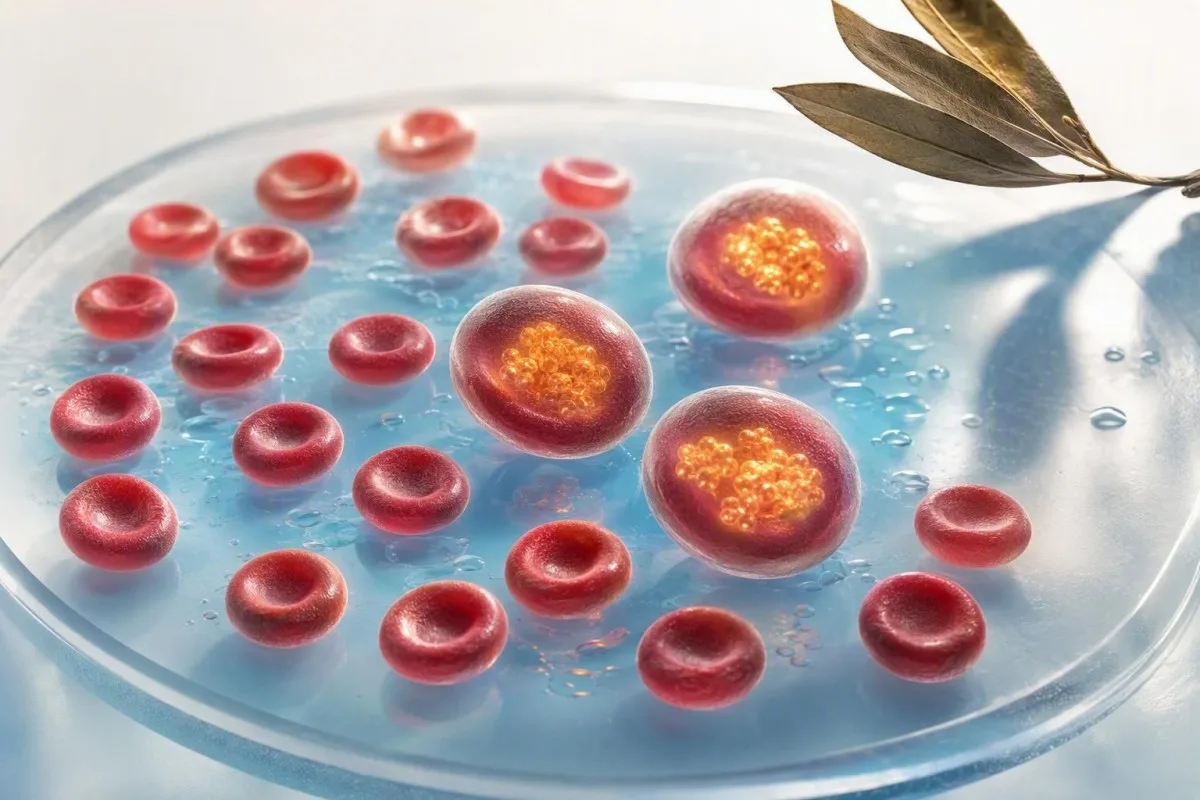
Гадәттә анемияне аңлатмый торган, гемоглобин нормаль булган очракта эритроцитлар санының түбән булуы. Күп очракта әйләнештәге һәр күзәнәк бераз зуррак була яки күбрәк гемоглобин йөртә, әмма шулай ук гидратация, йөклелек, дарулар һәм CBC үрнәгенең үзгәрүе дә моны аңлата ала.


- эритроцитлар саны (RBC) лаборатория диапазоныннан түбән, ә гемоглобин 12.0 г/дл яки югары булган (йөкле булмаган күпчелек хатын-кызларда), яки 13.0 г/дл яки югары булган (күпчелек ир-атларда) очрак — үзе генә анемия түгел.
- MCV 100 fLдан югары булса түбән RBC һәм нормаль гемоглобинның иң еш сәбәбе, чөнки азрак, ләкин зуррак күзәнәк элементлары шул ук гомуми гемоглобинны йөртә ала.
- MCH еш кына макроцитоз белән бергә арта; гемоглобин, берәмлекләрне конвертацияләгәннән соң, RBC санына MCH тапкырланганга якын.
- Йөклелекнең “суюлту” эффекты гемоглобин гадәти анемия чикләрен узганчы, беренче һәм өченче триместрларда 11.0 г/дл тирәсендә, RBC саны һәм гематокритны төшерергә мөмкин.
- Витамин B12 тикшерүе B12 якынча 200–350 pg/mL чик сызыгында булганда һәм MCV арта барганда метилмалон кислотасын кирәк булырга мөмкин.
- Алкоголь, гипотиреоз, бавыр авырулары һәм дарулар гемоглобин нормаль булып калса да MCV күтәрә ала.
- 4–12 атнадан соң кабат CBC е игътибарлырак, бер генә аз эритроцит нәтиҗәсенә караганда, әгәр кызыл тамгалы симптомнар яки башка күзәнәкләр булмаса.
- ашыгыч тикшерү кулдан килә торган сулыш, күкрәк авыртуы, колакка егылу, кара тизәк, сары, яисә тиз төшә торган гемоглобин өчен.
Нигә түбән RBC саны нормаль гемоглобин белән бергә булырга мөмкин
гемоглобин нормаль булганда, аз эритроцит нәрсә аңлата? Күпчелек очракта, бу кызыл күзәнәк элементлары гадәттәгедән зуррак дигәнне аңлата, шуңа күрә азрак күзәнәк саннары гемоглобинның тулы күләмен тәэмин итә. Шуңа күрә бер генә аз эритроцит саннары анемиягә тиң түгел, ул беренче чиратта гемоглобин концентрациясе һәм клиник контекст белән билгеләнә.
Аермалылык арифметиканы искә төшерсәң, бик аз серле була: гемоглобин концентрациясе тулы гемоглобинны күрсәтә, ә эритроцит саны кан литрында күпме күзәнәк элементлары барлыгын күрсәтә. 3,75 × 10¹²/Л күзәнәкләре һәм 32 пг MCH булган кешедә 4,50 × 10¹²/Л күзәнәкләре һәм 27 пг MCH булган кеше белән бертигез гемоглобин булырга мөмкин.
Минем клиник практикада мин еш кына бу күренешне башка сәламәт пациентта арыганлык яки еллык тикшерү өчен кан тест узганыннан соң күрәм: эритроцит 3,8, гемоглобин 13,1 г/дл, MCV 101 фл. Доктор Томас Клейнның гамәли кагыйдәсе гади – укыгыз гемоглобин, MCV, MCH, гематокрит, RDW, ак күзәнәкләр, һәм тромбоцитлар бергә, бер кызыл тамгалы отчетны хикәяне билгеләргә рөхсәт иткәнче.
Кантести - ЯИ анализы ул күзәнәк саны, зурлыгы, гемоглобин күләме һәм алдагы нәтиҗәләрне чагыштырып, анемия дип атау урынына, аз эритроцит һәм нормаль гемоглобин моделен аңлата. Бу аерма артында исәпләүләрнең тулырак аңлатмасы өчен, безнең кулланмага карагыз эритроцит саны һәм гемоглобин.
RBC саны һәм гемоглобин: чагыштырырга кирәк булган өч CBC күрсәткече
Эритроцит саны, гемоглобин һәм гематокрит бер үк әйләнүче күзәнәкләрнең төрле үзенчәлекләрен үлчи. Эритроцит саннары литрга күзәнәкләр саны буларак, гемоглобин граммнар децилитрга яки граммнар литрга, ә гематокрит күзәнәк элементлары белән кан күләменең өлеше буларак отчетлана.
Күпчелек өлкәннәр лабораториясе якынча эритроцит чикләрен куллана 3,8–5,2 × 10¹²/Л хатын-кызлар өчен һәм 4,3–5,7 × 10¹²/Л ир-атлар өчен, ләкин доклад лабораториясенең бастырылган чикләре һәрвакыт өстенлеккә ия. Гемоглобин гадәттә өлкән хатын-кызларда 12,0–15,5 г/дл һәм өлкән ир-атларда 13,5–17,5 г/дл тәшкил итә; бу чикләр биеклек, тәмәке тарту торышы, сынау ысулы һәм җирле популяция белән үзгәрә.
Гематокрит күзәнәк зурлыгына тыгыз бәйләнгән: файдалы якынчалык гематокрит (%) = эритроцит × MCV ÷ 10 монда эритроцит микролитрга миллионнар белән күрсәтелгәндә. Бу аңлата, ни өчен аз эритроцит саны нормаль гематокрит янында тора ала, әгәр MCV югары булса, һәм ни өчен кан анализында нәрсә бар бер генә нәтиҗәдән күбрәк әһәмияткә ия.
Kantesti AI саннарның санлы мөнәсәбәте физиологик яктан мәгънәле булуын тикшерә, ә аерымлыкны күрсәткәнче. Нәтиҗә техник яктан белешмә диапазоныннан читтә булырга мөмкин, әмма ул шул кеше өчен әһәмиятсез булуы да ихтимал — аеруча ул еллар буе тотрыклы булса һәм гомуми кан анализының калган күрсәткечләре нормаль булганда.
Бу үрнәкнең иң еш очрый торган аңлатмасы — макроцитоз
Макроцитоз уртача кызыл күзәнәк элементының 100 фЛдан зуррак булуын аңлата, һәм ул нормаль гемоглобин белән RBC санын түбән булуның төп аңлатмасы булып тора. Зуррак күзәнәкләр шул ук гомуми гемоглобин концентрациясен тәэмин итү өчен кирәк булган күзәнәк санын киметә.
MCV 101-105 фЛ булганда һәм гемоглобин нормаль булганда, бу еш кына йомшак макроцитоз була, ашыгыч хәл түгел. Пайдалы аерма — ул яңа, прогрессивмы, яки югары RDW белән бергә барамы, чөнки якынча 14.5%дан югары RDW күзәнәкләрнең зурлыгы күбрәк төрле булуын күрсәтә һәм үсештәге туклану дефициты, савыгу фазасы яки катнаш процесс турында ишарә ясарга мөмкин.
Aslinia, Mazza һәм Yale-ның клиник күзәтүе макроцитозның билгеләнгән сәбәпләре арасында спиртлы эчемлекләр куллануны, витамин B12 яки фолат дефицитын, даруларны, бавыр авыруларын, гипотиреозны һәм сөяк чылбыры (мәррәү) бозуларын тасвирлый (Aslinia et al., 2006). Аларның файдалы клиник фикере һаман да дөрес булып кала: MCV берүзе сәбәпне ачыкламый, һәм периферик күзәнәк үрнәге булган слайд кайвакыт овал макроцитлар, «нышаны» кебек формалар яки җитлегмәгән күзәнәкләр бармы-юкмы икәнен ачыкларга ярдәм итә.
MCH югары булуы күзәнәкләр зуррак булганда көтелә, чөнки MCH һәр күзәнәккә туры килгән гемоглобинны үлчәп тора, күзәнәк эчендәге гемоглобин концентрациясен түгел. Безнең югары MCH һәм макроцитоз һәм RDW, MCV һәм MCHC сезгә моның бертөрле зурлыктагы үрнәкме, әллә катнаш зурлыктагы үрнәкме икәнен ачыкларга ярдәм итә ала.
Нигә MCHC еш кына нормаль булып кала
MCHC гадәттә катлауланмаган макроцитозда 32-36 г/дл тирәсендә кала , чөнки ул тутырылган күзәнәкләр эчендәге гемоглобин концентрациясен үлчәп тора, күзәнәк зурлыгын түгел. Шуңа күрә нормаль MCHC белән югары MCH логик яктан туры килә: бу һәр күзәнәкнең зуррак булуын һәм күбрәк гемоглобин йөртүен әйтә, һәр күзәнәкнең гадәттән тыш тыгыз урнашкан булуын түгел.
Иртә витамин B12 яки фолат җитешмәүе булырга мөмкинме?
Витамин B12 яки фолатның иртә җитешмәүе гемоглобин төшкәнче үк макроцитоз китерергә мөмкин, ләкин 100 fLдан югары һәр MCV витамин проблемасы дигән сүз түгел. Ышанычлылык MCV күтәрелгәндә, RDW югары булганда, туклану чикләнгәндә арта, яисә симптомнар тел авыртуын, «энә кадалу» кебек сизгерлек үзгәрешләрен, хәтер үзгәрешен яки дәвамлы арыганлыкны үз эченә алса.
Зал сывороткасы B12 200дән түбән pg/mL (148 pmol/L) күп лабораторияләрдә җитешмәүне нык раслый, әмма 200–350 pg/mL нәтиҗәсе билгесез булырга мөмкин. Мети́лмалон кислотасы күзәнәк эчендәге B12 җитәрлек булмаганда арта, әмма аны шулай ук кимегән бөер функциясе дә күтәрә ала; гомоцистеин B12 яки фолат җитешмәүенең икесендә дә арта ала.
О'Лири һәм Самман B12 җитешмәүе анемиясез үк неврологик симптомнар китерергә мөмкинлеген карап чыкканнар, шуңа күрә мин гемоглобин 13.0 г/дл (O'Leary & Samman, 2010) булуга карап кына оюп калуны яки йөреш үзгәрешен кире какмыйм. Фолат җитешмәүе дә MCVны арттыра ала, ләкин фолий кислотасын берүзе кабул итү CBCны яхшырта ала, шул ук вакытта B12 белән бәйле нерв зарарлануы дәвам итә.
Тикшерү еш кына B12, фолат, ретикулоцитлар саны, тиреоид-стимуллаштыручы гормон, бавыр маркерлары һәм даруларны карап чыгу белән башлана; төгәл тәртип кешегә бәйле. Әгәр B12 түбән яки чик буенда булса, пернициоз анемияне тикшерү эчке факторга каршы антителаларны, аеруча 50 яшьтән өлкәнрәкләрдә яки автоиммун тиреоид авыруы булган кешеләрдә, үз эченә ала.
Макроцитозда алкоголь, бавыр, калкансыман биз һәм даруларның ишарәләре
Алкоголь тәэсире, гипотиреоз, бавыр дисфункциясе һәм берничә дару макроцитоз китерергә мөмкин, гемоглобин нормаль булганда да. Бу сәбәпләр шулкадәр еш очрый ки, җентекле анамнез еш кына сирәк авырулар буенча шунда ук киң спектрлы тестлардан күбрәк кыйммәт бирә.
Даими рәвештә алкоголь эчү фолат җитешмәүе булмаса да, яисә бавыр ферментларының ачык күтәрелеше булмаса да, MCVны күтәрә ала; MCV 2-4 ай эчендә абстиненциядән соң нормальләшү өчен вакыт ала, чөнки әйләнештәге күзәнәк элементлары якынча 120 көн яши. Күтәрелгән GGT яки AST өстенлеге бу ишарәне ныгыта ала, әмма бернинди дә тест алкоголь сәбәп икәнен дәлилләми; безнең GGT аңлатма өчен кулланма чикләрне аңлата.
Гипотиреоз сөяк чылбыры җитлегүен әкренәйтә һәм йомшак макроцитоз тудыра ала, кайвакыт эч катуы, салкынга түземсезлек, LDL холестеринның күтәрелүе яки хәбәр итү диапазоныннан югары TSH белән. MCV даими рәвештә 100 fLдан югары булганда һәм туклану яки алкоголь белән бәйле аңлатма күренмәсә, TSH тикшерү аеруча нигезле; тиреоид анализы аббревиатуралары буенча күзәтүне карагыз отчетта UK терминологиясе кулланылганда файдалы.
Тикшереп сөйләшергә кирәк дарулар арасында гидроксиурея, метотрексат, кайбер судан тоткарлануга каршы дарулар, антиретровируслар һәм химиотерапия бар; метформин һәм протон помпасы ингибиторлары турыдан-туры түгел, чөнки озак куллану B12 статусының начараюына китерергә мөмкин. MCV 102 fL булу сәбәпле билгеләнгән даруны туктатмагыз — сезнең табиб CBC табышын дару ни өчен билгеләнгән сәбәп белән үлчәп карарга тиеш.
Гидратация, поза һәм лаборатория вариациясе чик буендагы RBC санын күчерергә мөмкин
RBC санының бераз түбән булуы кызыл күзәнәк җитештерелешенең үзгәрүе түгел, ә үлчәү һәм плазма-күләм проблемасы булырга мөмкин. Зур күләмдә сыеклык эчү, вена эченә сыеклык кертү, үрнәк алыр алдыннан соңгы чыдамлылык күнегүләре, хәтта поза да әйләнештәге күзәнәк элементларын сыекландыра ала.
Гемоглобин һәм гематокрит еш кына кискен сыеклык йөкләнешеннән соң бераз түбәнәя, чөнки алмашлык — плазма күләме — киңәйгән, ә гомуми күзәнәк массасы үзгәрмәгән. Яхшы сәламәт кеше өчен, гемоглобин тенденциясе белән параллель булмаган ×10¹²/лнең берничә уннан бер өлеше күләмендә RBC үзгәреше, гадәттә, ике-өч охшаш үрнәктә документлаштырылган дәвамлы үзгәрешкә караганда ышандырырлык түгел.
Алдан әзерләү (pre-analytical) проблемалары да мөһим булырга мөмкин: тулы тутырылмаган EDTA трубкасы, транспортта үрнәкнең тоткарлануы, яисә салкын агглютининнар автоматлаштырылган индексларны бозырга мөмкин. Мәсәлән, салкын агглютининнар анализаторларга RBC санын ялган түбән һәм MCV яки MCHны ялган югары итеп күрсәтергә мөмкин, шуңа күрә үрнәк үрнәге аеруча ачык үрнәк күрсәтсә, лаборатория аны җылытып һәм яңадан тикшерә ала.
Кабат тикшерү өчен мөмкин булса шул ук лабораторияне кулланыгыз, 24–48 сәгать гадәттән тыш авыр күнегүләрдән тыелыгыз һәм махсус рәвештә артык су эчеп түгел, ә гадәттәгечә сусызланмаган хәлдә килегез. Безнең кулланма килүләр арасында чын кан анализы үзгәрешләрен билгеләнгән нәтиҗәнең ни өчен автомат рәвештә мәгънәле биологик үзгәрешне аңлатмавын аңлата.
Йөклелек анемия булып саналганчы RBC санын төшерә ала
Йөклелек гадәттә плазма күләмен эритроцитлар массасына караганда тизрәк киңәйтә, шуңа күрә RBC саны һәм гематокрит еш кына гемоглобин кабул ителерлек булып калса да төшә. Бу физиологик гемодилюция, һәм ул иң ачык беренче триместр ахырыннан икенче триместрга кадәр күренә.
ACOG гемоглобин өчен түбәндәге чикләрне куллана: беренче һәм өченче триместрларда 11.0 г/длдан түбән һәм икенче триместрда 10.5 г/длдан түбән йөклелектә анемияне билгеләү өчен (ACOG, 2021). Шуңа күрә 24 атнада гемоглобин 11.4 г/дл булган, йөкле булмаганнар өчен белешмә диапазоннан бераз түбән RBC саны еш кына физиологик була, әмма ул барыбер планлы пренаталь күзәтүгә лаек.
Үзгәрешләр MCV түбән булганда, RDW арта башлаганда, ферритин түбән булганда яки килүләр арасында гемоглобин төшкәндә күзәтелә; бу билгеләр гади дилюциягә караганда тимер җитешмәүгә карата борчу тудыра. Ферритин түбән 30 ng/mL йөклелектә тимер җитешмәүне дәлилләү өчен еш кулланыла, ләкин ферритин инфекция вакытында яки тукыма реакциясе вакытында күтәрелә, шуңа күрә ул камил мөстәкыйль тест түгел.
Kantesti AI — ул AI лаборатория тестларын аңлату хезмәтендә басылып чыга ул CBC нәтиҗәләрен триместрга хас контекст белән янәшә куя, һәр йөкле кешене йөкле булмаган олыларның интерваллары белән чагыштырмый. Әгәр сез көтәсез икән, безнең күзәтү шул ук көнне йөклелек лабораториясе өчен кызыл флагларны карагыз гадәти CBC соравын ашыгыч рәвештә акушерлык бәяләвен таләп иткән симптомнардан аера.
Чыдамлылыкка күнегүләр охшаш “суюлту” үрнәген китерергә мөмкин
Чыдамлык спортчылары RBC санының түбән булуын, гематокритның түбән булуын һәм кайвакыт гемоглобинның түбән булуын күрсәтергә мөмкин, чөнки күнегүләр плазма күләмен киңәйтә. Бу “спорт анемиясе” гадәттә дилюция эффекты, әмма чын тимер җитешмәү һәм энергиянең җитәрлек булмавы игътибардан читтә калырга тиеш түгел.
Атнага 60–90 км йөгерүче спортчыда RBC 3.9 × 10¹²/л, гемоглобин 13.2 г/дл һәм кислород тапшыруы бозылмаган очракта нормаль ретикулоцитлар саны булырга мөмкин. Шул ук күрсәткечләр эшчәнлекнең начараюы, авыр айлык кан китүе, ферритин 12 нг/мл булуы яки кабатланучы сөяккә бәйле стресс җәрәхәтләре булган спортчыда башкача аңлатылырга тиеш.
Дистанцион ярышлар башка буталчык факторлар өсти: аяк белән бәрелүдән гемолиз, тир белән бәйле сыеклык күчешләре, ярыштан соң ялкынсыну, һәм CK яки креатининның вакытлыча күтәрелүе. Шуңа күрә марафоннан соң 24–72 сәгать эчендә үткәрелгән тест спортчының базаль күрсәткечләрен чагылдырмаган CBC китерергә мөмкин; тренировка атнасы дәвамында тотрыклы нәтиҗәләр күбрәк файдалы.
Мин тимер тәкъдим иткәнче спортчылардан туклану, ашказаны-эчәк симптомнары, айлык вакытында югалту, биеклеккә эләгү һәм өстәмәләр турында сорыйм. Тимер буенча чыдамлык спортчысы кан анализы кулланмасы ферритин, витамин D, калкансыман биз, һәм энергия мөмкинлеге җитәрлек булмау белән бәйле мәгълүматларның бергә очрау ихтималын яктырта; алар күренештә зарарсыз булып тоелган түбән RBC саны белән бергә булырга мөмкин.
Ретикулоцитлар кайбер вакытлы RBC һәм MCV туры килмәүләрен аңлата
Ретикулоцитлар санының югары булуы MCV-ны вакытлыча арттырырга мөмкин, чөнки ретикулоцитлар җитлеккән кызыл күзәнәк элементларына караганда зуррак. Бу күптән түгел кан югалтудан соң торгызылу вакытында, гемолиз вакытында яки тимер, B12 яки фолат җитешмәүне уңышлы дәвалау вакытында булырга мөмкин.
Ретрикулоцитлар - бу нормаль рәвештә циркуляцияләүче күзәнәкләрнең якынча 0.5-2.5% тәшкил итә, ләкин анемия булганда абсолют ретикулоцитлар саны мөһимрәк. Ге normal булган югары ретикулоцитлар саны ышандыручы тергезү билгесе булырга мөмкин, ләкин ул шулай ук дәвамлы күзәнәк җимерү яки соңгы яшерен югалтуны күрсәтергә мөмкин.
игътибар таләп иткән комбинация — түбән RBC яки төшүче гемоглобин плюс югары ретикулоцитлар, күтәрелгән непрям билирубин, күтәрелгән LDH һәм түбән гаптоглобин. Бу төркем гемолизны хуплый, ә чын анемиядә ретикулоцитлар җавабының түбән булуы сөяк мие җитештерүенең кимүен күрсәтә; бу нәтиҗәләрнең берсе дә ретикулоцитлар процентына гына таянып ясалырга тиеш түгел.
Күзәнәк үрнәге төшерелгән слайд аңлашылмаган үзгәрештән соң аеруча файдалы, чөнки ул полихромазияне яки автоматлаштырылган анализатор тулысынча классификацияли алмаган морфологияне күрсәтә ала. Җитештерүнең җитәрлек булмавы белән сөяк мие җавабы арасындагы практик аерымлык өчен безнең Ретикулоцитлар үрнәкләре монда ярдәм итә; әгәр сабый алсу булса һәм сөяк чылбыры кире күтәрелмәсә, мин иртә тууны, туклану тарихын, гемолизны һәм үсеш темпын карыйм, ә безнең.
Түбән RBC үрнәге гадәти тикшерүдән күбрәкне таләп иткәндә
Гемоглобин нормаль булганда түбән RBC макроцитоз дәвамлы булса, MCV 110 fLдан артып китсә, яисә ак кан күзәнәкләре һәм тромбоцитлар да түбән булса, иртәрәк табиб каравын таләп итә. Борчылу аерым алынган RBC санында түгел; бу — күп юллы CBC үзгәреше яки прогрессив үрнәк, ул сөяк мие, бавыр, калкансыман биз яки системалы авыруны күрсәтергә мөмкин.
MCV 113 fL, RBC 3.7 × 10¹²/L, тромбоцитлар 128 × 10⁹/L һәм яңа нейтропениясе булган 72 яшьлек кеше, гемоглобин 13.0 g/dL булып калса да, вакытында табиб җитәкчелегендә тикшерүне таләп итә. Киресенчә, MCV 101 fL, аерым гына RBC 3.9 × 10¹²/L, нәтиҗәләр тотрыклы, B12 нормаль һәм симптомнар булмаган 29 яшьлек кеше еш кына ашыгыч булмаган тәртиптә бәяләнә ала.
Мөмкин булган белгеч тестларына кабат CBC (кул белән лейкоформула белән), күзәнәк үрнәге слайдына күзәтү, ретикулоцитлар, бавыр һәм калкансыман биз тикшеренүләре, B12 маркерлары, һәм кайвакыт сөяк мие бәяләве керә. Миелодиспластик синдромнар яшь белән һәм күп юллы цитопенияләр белән ешрак ихтималлаша, әмма йомшак аерым макроцитоз күп очракта алкоголь, дару, калкансыман биз авыруы яки туклану белән аңлатыла.
Kantesti түбән RBC нәтиҗәсен аеруча ачык күрсәтә, ул тромбоцитлар төшкәндә, түбән нейтрофиллар белән, MCV күтәрелгәндә яки ачык тискәре тенденция булганда күренсә. Безнең кан яман шешен тикшерү юлы ни өчен CBC яман шеш диагнозы түгел, ә башлангыч сигнал булып торуын аңлата.
Түбән RBC һәм нормаль гемоглобин өчен акыллы күзәтү планы
Тотрыклы, йомшак түбән RBC һәм нормаль гемоглобин нәтиҗәсе өчен иң яхшы чираттагы адым гадәттә кабат CBC һәм максатчан тестлар, сукырча дәвалау түгел. Вакыт саннарга, симптомнарга, йөклелек статусыңа һәм табышның яңа булуына бәйле; күп кенә тотрыклы очракларны 4-12 атнадан соң кабат тикшерергә мөмкин.
Башта хәзерге CBCны кимендә бер иске нәтиҗә белән чагыштырыгыз һәм MCV, MCH, RDW, гематокрит, ак кан күзәнәкләре, тромбоцитлар һәм анализатор флагларын тикшерегез. 2026 елның 31 июленә карата, тенденциягә беренче чират бирү алымы бер лаборатория диапазоныннан 0.1 × 10¹²/L түбән бер генә кыйммәткә реакция ясаудан күпкә клиник яктан ышанычлырак булып кала.
Әгәр макроцитоз дәвам итсә, гадәттә файдалы өстәмә тикшерүләр — B12, фолат, ретикулоцитлар, TSH, бавыр маркерлары һәм күзәнәк үрнәге слайды; ә тимер тикшеренүләре MCV түбән булганда, ферритин түбән булганда яки кан югалту ихтималы булганда иң файдалы. тимер тикшеренүләре буенча белешмә кулланма ни өчен сывороткадагы тимернең берүзе җитәрлек дәрәҗәдә үзгәреп торуы дефицитны диагностикалау өчен бик күп булуын аңлата.
Kantesti буенча без PDF отчетын, җыю датасын, ураза статусыңны, соңгы күнегүләрне, алкоголь куллануны, айлык яки йөклелек контекстын һәм даруларны һәрбер нәтиҗә янында сакларга киңәш итәбез. Безнең клиник валидация алымы AI аңлатмасы CBC туры килмәвен ачыклаганда ни өчен үрнәк тикшерүләре һәм табиб каравы мөһим булуын аңлата.
Диета һәм өстәмәләр: CBCның дөрес булмаган үрнәген дәвалаудан сакланыгыз
Гемоглобин нормаль һәм MCV югары булганда, RBC саны гына түбән булганга күрә генә тимер башламагыз. Тимер дефициты гадәттә кечерәк күзәнәкләр барлыкка китерә һәм MCVны 80 fLдан түбәнәйтергә мөмкин, ә макроцитоз башка сәбәпләр төркеменә ишарәли.
Витамин B12 табигый рәвештә хайван чыганаклы ризыкларда һәм ныгытылган продуктларда очрый, ә фолат борчакларда, яфраклы яшелчәләрдә, цитрусларда һәм ныгытылган ярмаларда күп. Ышанычлы B12 өстәмәсез, бары тик үсемлекләргә нигезләнгән катгый диета вакыт узу белән җитешмәүчелеккә китерергә мөмкин, чөнки организмдагы запастар симптомнарны берничә елга кадәр тоткарлый ала; ризык тарихы клиник яктан әһәмиятле, ә әхлакый бәяләмә түгел.
Гадәттә профилактик B12 өстәмәләре диапазоны 25-100 мкг көненә яки 1,000 мкг атнага берничә тапкыр, әмма расланган җитешмәүчелек башкача дәвалана һәм аны клиницист җитәкчелегендә башкарырга кирәк. Фолат өстәмәләре еш кына йөклелек планлаштырган кешеләр өчен көненә 400 мкг була, ләкин югары дозалы фолий кислотасы макроцитоз яки неврологик симптомнар булганда B12 тикшерүне алыштыра алмый.
Кантести - AI биомаркерларны аңлату платформасы 127 илдә кулланыла, туклыклы матдәләргә бәйле CBC үрнәкләрен лабораториянең үз берәмлекләре һәм диапазоннары белән бәйләү өчен. Ризыкка юнәлгән контекст өчен карагыз фолатка бай ризыклар һәм MCV күрсәткечләре берьюлы берничә өстәмә сатып алыр алдыннан.
CBC күзәтүен нәтиҗәлерәк итүче җиде сорау
Иң файдалы сорау “Минем RBC санын ничек күтәрергә?” түгел, ә “Минем MCV, MCH, RDW һәм алдагы CBCлар нәрсә күрсәтә?” Үрнәкләрне сорау әңгәмәне «кызыл флаг» билгесеннән алып, иң ихтимал мөһим сәбәпкә күчерә.
RBC түбән булуы яңамы, гемоглобин яки гематокрит үзгәргәнме, һәм MCV 100 fLдан югарымы яки 80 fLдан түбәнме — шуны сорагыз. Ак кан күзәнәкләре яки тромбоцитлар да диапазоннан читтәме — шуны да сорагыз, чөнки бер генә деталь дә кабат тикшерү җитәме, әллә клиницист тизрәк карап чыгарга телиме — шуны хәл итә ала.
Сезнең дарулар, алкоголь үрнәге, калкансыман биз статусы, бөер функциясе, диета, айлык югалту, йөклелек, яки күптән түгел булган авыру табышмакларны аңлата аламы — шуны сорагыз. Шулай ук киңәйтелгән тикшерү алдыннан кабат үрнәк алырга кирәкме — шуны сорау да урынлы; a кан анализы буенча икенче фикер чек-листы фикер алышуны оештырырга ярдәм итә ала.
Доктор Томас Кляйн буларак, мин пациентларны бер генә «кызыл сан» скриншоты түгел, ә чын отчетны алып килергә өндим; референс интерваллары һәм анализатор аңлатмалары мөһим. Безнең Медицина консультатив советы белем бирү интерпретацияләренә табиб күзәтчелеген тәэмин итүне хуплый, аеруча CBC үрнәкләре тотрыклы яки катнаш булганда.
Түбән RBC нәтиҗәсенең ашыгычлыгын үзгәртә торган симптомнар
Гемоглобин нормаль булганда түбән RBC саны, гадәттә, үзе генә ашыгыч ярдәм таләп итми, әмма симптомнар һәм үзгәрә баручы тенденция хәлне ашыгыч итә ала. Яңа күкрәк авыртуы, ял иткәндә сулыш кысылу, хәлсезләнү, кара нәҗес, тире яки күзләрнең саргаюы, тиз көчәя баручы көчсезлек, яки күп күләмле актив кан китү — бер генә CBC кыйммәтенә карамастан, тиз арада клиник бәяләүне таләп итә.
Анемия симптомнары, RBC саныннан бигрәк, гемоглобинның кимү тизлеге һәм тирәнлеге белән күбрәк бәйле. Әгәр кемнең гемоглобины көннәр эчендә 14.0дан 9.5 г/длга төшкән булса, RBC саны элек нормаль булган булса да, аңа ашыгыч бәяләү кирәк; ә 3.9 × 10¹²/L дәрәҗәсендәге тотрыклы RBC һәм 13.2 г/дл гемоглобин еш кына каты сулыш кысылуын аңлатмый.
Тиз арада клиницист белән элемтәгә керегез: дәвамлы арыганлык, йокысызлык (сансызлык), баланс авырлыгы, авыз авыртуы, аңлатылмаган авырлык югалту, кабатланучы инфекцияләр, җиңел күгәрү, яки CBCда бердән артык түбән күзәнәк төре күрсәтелсә. Бу табышмаклар куркыныч диагнозны раслый алмый, әмма кабат тикшерү өчен айлар көтмәскә нигез бирә.
Kantesti AI CBC тенденцияләрен оештыра һәм клиницист өчен сорауларны ачыклый ала, әмма симптомнар борчулы булганда ул тикшерүне, тарихны (анамнезны) яки ашыгыч ярдәмне алыштыра алмый. Безнең AI кан анализы технологиясе буенча кулланма үрнәкләр анализы медицина карарын яклау өчен — аны алыштыру өчен түгел — ничек эшләнгәнен аңлата.
Еш бирелә торган сораулар
RBC санының түбән булуы мөмкин, ләкин анемия булмауы да мөмкинме?
Әйе. RBC санының түбән булуы, ә гемоглобин нормаль булса, гадәттә стандарт CBC билгеләмәләре буенча сез анемияле түгел дигәнне аңлата, чөнки анемия күбесенчә гемоглобин концентрациясе буенча бәяләнә. Күпчелек олылар лабораторияләрендә хатын-кызлар өчен кимендә 12,0 г/дл, ирләр өчен 13,0 г/дл гемоглобин гадәттә анемия булмаган диапазонга керә, әмма хәбәр итүче лаборатория һәм шәхси контекст мөһим. Макроцитоз, ягъни MCV 100 фЛдан югары булганда, еш очрый торган сәбәп, чөнки зуррак күзәнәкләр азрак булганда гемоглобинның гомуми нормаль күләме йөртә ала. Клиницист күзәтү кирәкме-юкмы икәнен хәл иткәнче MCV, MCH, RDW, симптомнарны һәм алдагы CBCларны карап чыгарга тиеш.
RBC түбән һәм MCV югары булу нәрсәне аңлата?
RBC түбән, ә MCV югары булу еш кына макроцитозны аңлата: уртача эритроцитар элемент гадәттәгедән зуррак, гадәттә 100 фЛдан югары. Гадәти сәбәпләр арасында алкоголь тәэсире, витамин B12 җитешмәү, фолат җитешмәү, гипотиреоз, бавыр авырулары һәм кайбер дарулар керә. Гемоглобинның нормаль дәрәҗәсе хәзерге вакытта анемия юклыгын күрсәтә, әмма күтәрелүче MCV яки югары RDW — максатчан тикшерүгә лаек булган иртә сигнал булырга мөмкин. MCV 110 фЛдан югары булып дәвам итсә, яисә тромбоцитлар яки ак кан күзәнәкләре түбән булганда макроцитоз күзәтелсә, моны вакытында табиб каравы таләп итә.
Сусызлану RBC санының түбән булуына сәбәп була аламы?
Сусызлану гадәттә канны куерта һәм үлчәнгән RBC саны, гемоглобин һәм гематокритны киметүгә караганда күбрәк күтәрергә омтыла. Артык сыекландыру, вена эченә сыеклыклар кертү, чыдамлылыкка күнегүләр яки йөклелек белән бәйле плазма киңәюе бу концентрацияләрне эретү (дилюция) юлы белән киметергә мөмкин, әмма гомуми кызыл кан күзәнәкләре массасын киметми. 0.1–0.3 × 10¹²/л күләмендәге кечкенә RBC күчеше шулай ук гадәти биологик яки лаборатор вариацияне чагылдыра ала. Нормаль гидратлашкан һәм клиник яктан сәламәт булганда CBC-ны кабатлау чикле нәтиҗәне хәл итүнең иң ачык ысулы булып тора.
Homiladorlikda gemoglobin normal bo‘lganda RBC past bo‘lishi odatiymi?
Әйе. Йөклелек гадәттә RBC санын һәм гематокритны киметә, чөнки плазма күләме кызыл кан күзәнәкләре массасына караганда күбрәк киңәя, аеруча икенче триместрда. ACOG йөклелектә анемияне түбәндәгечә билгели: беренче һәм өченче триместрларда гемоглобин 11,0 г/длдан түбән булса, ә икенче триместрда 10,5 г/длдан түбән булса. Бу чикләрдән югары булган гемоглобин белән түбән RBC саны физиологик булырга мөмкин, әмма ферритин, MCV, RDW, симптомнар һәм үзгәреш юнәлеше әле дә тимер җитешмәүне яки башка сәбәпне ачыкларга ярдәм итә. баш әйләнү, ял иткәндә сулыш кысылу, йөрәк тибешенең сизелүе (палпитация), яисә күп кан китү булган йөкле кешеләр үзләренең акушерлык командасына тиз арада мөрәҗәгать итәргә тиеш.
Миңа түбән кызыл кан күзәнәкләре саны өчен тимер эчәргә кирәкме?
Тәкъдим ителмәгән тимерне бары тик RBC саны түбән булганга гына кабул итмәгез, аеруча гемоглобин нормаль булса һәм MCV 100 fLдан югары булса. Тимер җитешмәү күбрәк очракта микроситоз китерә: MCV якынча 80 fLдан түбән, ферритин түбән, һәм ахыр чиктә гемоглобин да төшә. Кирәк булмаган вакытта тимер эчү күңел болгану, эч катуы һәм алга таба тикшерү нәтиҗәләрен ялгыш күрсәтүгә китерергә мөмкин, ә ул B12 җитешмәүен, калкансыман биз авыруларын, спирт тәэсирен яки дарулар белән бәйле макроцитозны хәл итми. Тимер турында карар ферритин, трансферринның туену проценты, CBC күрсәткечләре, туклану һәм мөмкин булган кан югалтуга таянып кабул ителергә тиеш.
Нормаль гемоглобин белән түбән RBC кайчан кабатланырга тиеш?
Гадәттә 4–12 атна эчендә, симптомнарга, MCV күрсәткеченә, йөклелек статусыңа һәм CBCның калган өлешенә карап, нормаль гемоглобин белән тотрыклы, йомшак түбән RBC нәтиҗәсе кабат тикшерелә. Кабат тикшерү гемоглобин төшсә, MCV 110 фЛдан югары булса, лейкоцитлар яки тромбоцитлар түбән булса, яисә сары тире (җондис), оюп китү, кара нәҗес, яисә сулыш кысылу кебек симптомнар булса, тизрәк үткәрелергә тиеш. Шул ук лабораторияне куллану һәм 24–48 сәгать дәвамында гадәттән тыш авыр күнегүләрдән тыелу чагыштыруны чистарак итә ала. Сезнең табиб шул ук вакытта B12, фолат, ретикулоцитлар, TSH, бавыр анализларын яки күзәнәк үрнәге слайды өсти ала.
Бүген үк AI белән эшләнгән кан анализы тикшерүе
Дөнья буенча 2 миллионнан артык кулланучы кушылыгыз: алар Kantestiны тиз һәм төгәл лаборатория анализы өчен ышана. Кан анализы нәтиҗәләрегезне йөкләгез һәм 15,000+ биомаркерларын секундлар эчендә тулы аңлатма белән алыгыз.
📚 Сылтама бирелгән тикшеренү басмалары
Klein, T., Mitchell, S., & Weber, H. (2026). AI кан анализы анализаторы: 2,5M анализ тикшерелгән | Глобаль сәламәтлек отчеты 2026. Kantesti AI медицина тикшеренүе.
Klein, T., Mitchell, S., & Weber, H. (2026). RDW кан анализы: RDW-CV, MCV һәм MCHC буенча тулы кулланма. Kantesti AI медицина тикшеренүе.
📖 Тышкы медицина белешмәләре
⚕️ Медицина кисәтүе
Бу мәкалә бары тик белем бирү максатларында гына һәм медицина киңәше булып тормый. Диагноз һәм дәвалау карарлары өчен һәрвакыт квалификацияле сәламәтлек саклау белгеченә мөрәҗәгать итегез.
E-E-A-T ышаныч сигналлары
Тәҗрибә
Табиб җитәкчелегендә лаборатория нәтиҗәләрен аңлату эш процессларын клиник тикшерү.
Белгечлек
Лаборатория медицинасы: биомаркерларның клиник контекстта үз-үзләрен тотышын аңлау.
Авторититет
Доктор Томас Кляйн тарафыннан язылган, доктор Сара Митчелл һәм профессор доктор Ханс Вебер тарафыннан тикшерелгән.
Ышанычлылык
Ачык күзәтү юллары белән куркуны киметү өчен дәлилләргә нигезләнгән аңлату.