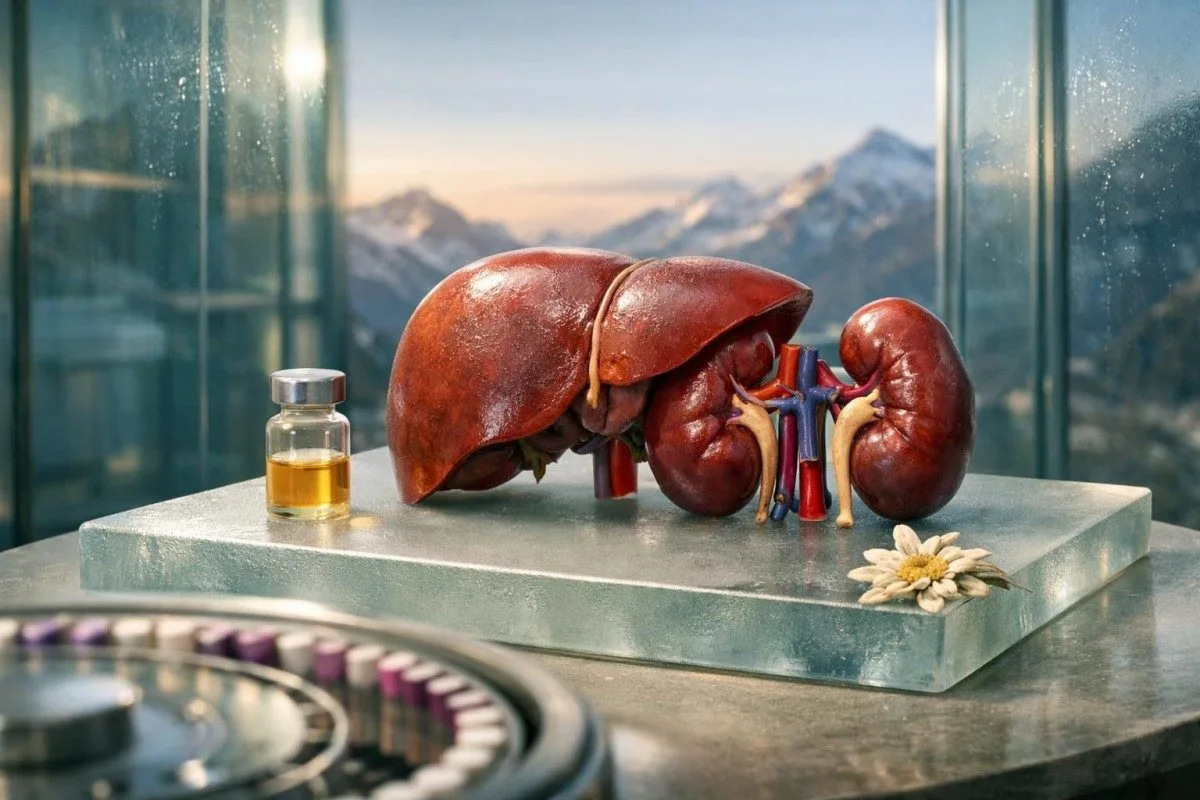
BMP answers the kidney-electrolyte question quickly. CMP asks the same question and adds liver plus protein clues that often change what I do next.


- Overlap BMP and CMP share 8 markers: sodium, potassium, chloride, CO2, glucose, calcium, BUN, and creatinine.
- CMP adds 6 extra markers: albumin, total protein, ALP, ALT, AST, and bilirubin.
- Ураза тоткан глюкоза of 100-125 mg/dL suggests prediabetes; 126 mg/dL or higher needs confirmation for diabetes.
- Potassium urgency якынча башлана <3.0 or >6.0 mmol/L, especially with weakness, palpitations, or ECG changes.
- Creatinine change of +0.3 mg/dL within 48 hours meets KDIGO criteria for possible acute kidney injury.
- Гилберт синдромы often causes isolated bilirubin around 1.3-3.0 mg/dL with normal ALT, AST, and ALP.
- Fasting is not always required, but 8-12 hours improves interpretation when glucose is the main question.
- Panels miss a lot: magnesium, CBC, ferritin, thyroid markers, lipids, and HbA1c are not included on standard BMP or CMP.
CMP blood test vs BMP at a glance
CMP blood test һәм BMP blood test share 8 chemistry markers, but a матдәләр алмашуның комплекслы панеле adds 6 liver and protein tests—albumin, total protein, ALP, ALT, AST, and bilirubin. If I mainly need electrolytes, glucose, hydration, and kidney function, I usually start with BMP; if I also want liver context, I choose CMP, and our Kantesti AI кан анализы анализаторы can interpret either panel alongside our CMP and lab abbreviation guide.
BMP is not a lesser-quality test; it is a narrower test. In clinic, I order BMP after vomiting, diarrhea, new diuretics, dehydration, palpitations, or diabetes checks because sodium, potassium, bicarbonate, glucose, BUN, and creatinine usually answer the first question fast.
CMP is BMP plus liver-protein information. As of April 6, 2026, most adult US labs still report 14 analytes on CMP and 8 on BMP, although some automatically append eGFR һәм anion gap without changing the panel name. That lab-to-lab variation confuses patients more often than the actual numbers.
The thing is, the right panel depends on the clinical decision in front of us. A person with ankle swelling and dark urine gets more value from a CMP than a BMP, while a person with heat illness after a half-marathon often needs a BMP first because the immediate risk is electrolyte shift, not subtle liver disease.
Which biomarkers overlap, and what does CMP add?
The overlap is exact in most labs: sodium, potassium, chloride, bicarbonate or CO2, glucose, calcium, BUN, and creatinine. Those eight markers cover fluid balance, acid-base status, kidney filtration, and a single-time-point glucose reading; our 15,000+ биомаркерлар буенча кулланма is useful if your report names the same analyte differently.
Sodium normal range is 135 to 145 mmol/L, potassium is 3.5 to 5.1 mmol/L, chloride is 98 to 107 mmol/L, and CO2 is 22 to 29 mmol/L in many adult labs. These numbers look simple, but together they tell me whether the body is retaining water, losing acid, compensating for lung disease, or reacting to medications like diuretics and ACE inhibitors.
CMP adds albumin, total protein, ALP, ALT, AST, and total bilirubin. Those six markers matter because they catch patterns a BMP simply cannot see—cholestasis, hepatocellular irritation, low protein states, and the very common isolated bilirubin bump of Гилберт синдромы, where total bilirubin is often 1.3 to 3.0 mg/dL with normal ALT and AST.
Here is a subtle point I wish more patients heard: CO2 on a metabolic panel is not the same thing as an arterial blood gas bicarbonate, even though it often tracks with it. And reference limits are not universal; some European labs use an ALT upper limit closer to 35 U/L, while older US reports may still label values in the 45 to 56 U/L range as normal, which is why Kantesti AI flags borderline results in context rather than by color alone.
Why some reports show eGFR or anion gap
eGFR and anion gap are often calculated extras, not ordered analytes. If your report shows them on a BMP or CMP, the lab derived them from creatinine and electrolytes; that is clinically helpful, but it does not mean the panel itself suddenly became a different test.
What the BMP blood test tells you in real practice
A BMP blood test is best for kidney function, electrolytes, acid-base clues, and glucose. It is the panel I reach for when I need to know whether the patient is dry, retaining potassium, losing bicarbonate, or drifting into hyperglycemia.
Sodium normal range is 135 to 145 mmol/L in most adults, and potassium normal range is 3.5 to 5.1 mmol/L. Sodium below 125 mmol/L or potassium above 6.0 mmol/L can turn into an urgent problem quickly, which is why even a supposedly routine BMP sometimes leads to a same-day phone call.
Creatinine normal range is roughly 0.6 to 1.3 mg/dL, but muscle mass changes the meaning. I often send patients to our creatinine interpretation guide һәм BUN guide because a creatinine of 1.3 mg/dL can be trivial in a muscular 25-year-old and more concerning in a frail 78-year-old. A rise in creatinine of 48 сәгать эчендә 0,3 мг/дл күтәрелүе meets KDIGO criteria for possible acute kidney injury.
BUN normal range is about 7 to 20 mg/dL, but BUN is a hydration marker as much as a kidney marker. High protein intake, gastrointestinal bleeding, steroid use, and dehydration can push BUN up without intrinsic kidney damage, while low BUN can show up in pregnancy, low protein intake, or advanced liver disease. Many labs now auto-report eGFR because creatinine alone misses a lot.
What the comprehensive metabolic panel adds beyond BMP
The comprehensive metabolic panel adds liver enzymes, bilirubin, albumin, and total protein. That makes CMP the better choice when symptoms point above the kidneys—right upper abdominal pain, jaundice, itching, medication monitoring, or unexplained swelling.
ALT and AST most often rise with liver cell stress, while ALP tends to rise with bile flow problems or bone activity. In practice, I look at pattern before magnitude; an ALT of 78 U/L with normal ALP suggests a different workup than an ALP of 220 U/L with normal ALT. Our liver enzyme pattern guide goes deeper into that split.
Total bilirubin normal range is usually 0.2 to 1.2 mg/dL, and values above 2 to 3 mg/dL are often visible in the eyes before the skin. A mildly high bilirubin with normal ALT, AST, and ALP is often benign Gilbert syndrome, especially after fasting, illness, or hard exercise; our билирубин күрсәткечләре is where I send anxious patients first.
Albumin normal range is about 3.5 to 5.0 g/dL, and total protein normal range is 6.0 to 8.3 g/dL. Low albumin can reflect liver synthetic problems, kidney protein loss, chronic inflammation, or inadequate intake, and it can make total calcium look falsely low because roughly 40% of serum calcium rides on albumin. If albumin is 2.8 g/dL, a measured calcium of 8.1 mg/dL may not represent true ionized hypocalcemia; our eGFR турындагы мәкаләне explains that math, the A/G ratio, and why a globulin gap above about 4.0 g/dL gets my attention.
When clinicians order BMP vs CMP after symptoms or routine screening
Doctors usually order BMP for immediate electrolyte or kidney questions, and CMP when they also need liver or protein context. In the emergency department, BMP is common after dehydration, diarrhea, heat illness, palpitations, or suspected diabetic decompensation; CMP is more common when nausea comes with dark urine, abdominal pain, or medication concerns.
Symptoms matter more than panel size. A patient with muscle cramps after starting hydrochlorothiazide needs sodium, potassium, calcium, bicarbonate, BUN, and creatinine right away, while a patient with pale stools and itching needs bilirubin and ALP just as much as creatinine.
Pre-op and medication monitoring often decide the panel. Surgeons commonly start with a targeted chemistry panel before anesthesia, especially if the patient uses diuretics, ACE inhibitors, or has diabetes; our операциягә кадәр кан анализы буенча кулланма shows how that decision is usually made. I also choose CMP more often for people taking valproate, methotrexate, terbinafine, or chronic acetaminophen overuse, because liver context actually changes what I do next.
Honestly, routine screening is one of those areas where practice varies. Some primary-care clinicians default to CMP during annual visits because it gives more context for only a small extra lab cost, while others prefer BMP unless there is a reason to look at liver proteins or bilirubin; both approaches can be reasonable if the symptoms and risk factors are clear.
Do you need to fast, and how are the labs run?
Fasting is not always required for a CMP blood test or BMP blood test, but it still matters for glucose interpretation. If the panel is being used to assess fasting glucose, I prefer 8–12 сәгать of no calories, while plain water is fine and often helpful; our кан анализы биргәнче ураза тоту буенча кулланма практик детальләрне каплый.
A nonfasting glucose can still be useful, but it answers a different question. A glucose of 108 mg/dL after breakfast is not the same as 108 mg/dL after a 10-hour fast, which is why I often pair the interpretation with our fasting glucose range explainer. ADA cutoffs still define fasting glucose of 100-125 мг/дЛ ны предиабет дип билгели һәм 126 мг/дЛ яки югарырак as diabetes if confirmed.
Most labs run BMP and CMP on serum or plasma using automated chemistry analyzers and ion-selective electrodes. Delayed sample processing can lower glucose by roughly 5% to 7% per hour in an unseparated sample, and hemolysis can falsely raise potassium and AST. Kantesti AI also down-ranks isolated glucose outliers when the report documents sample delay or hemolysis because bad samples create bad stories.
Turnaround is usually fast. Inpatients can get results within 1 to 3 hours, many outpatient labs return them the same day, and almost all routine results are back within 24 hours; if you are unsure what a pending result timeline means, our real-world lab timing guide is the clearest explanation I know.
How to interpret common abnormal CMP and BMP patterns
The safest way to read a metabolic panel is to read the pattern, not the isolated flag. A mildly abnormal single value is common; a cluster of abnormalities—such as high BUN, high creatinine, low bicarbonate, and high potassium—is what changes urgency.
A BUN/creatinine ratio above about 20 often points to dehydration or reduced kidney perfusion, not necessarily intrinsic kidney injury. I see this after stomach flu, poor oral intake, fever, and sometimes gastrointestinal bleeding, but I have also seen it in healthy people who simply did a long sauna session before labs. Our Лаборатория артефактына игътибар бирергә кирәк, чөнки ул кешеләрне һәр атна саен алдый. EDTA-га бәйле тромбоцитларның җыелуы ялган түбән нәтиҗә бирергә мөмкин; периферик мазок яки цитратлы пробиркада кабат санап карау еш кына серне ача. Әгәр киңрәк панельдә дә бөер авыруы, бавыр авыруы яки аксымнар белән бәйле аномалияләр турында ишарә булса, укучылар еш кына безнең explains why context matters more than the ratio by itself.
ALT or AST above 3 times the upper limit of normal usually deserves a medication, alcohol, and viral review. I would not overreact to a single ALT of 62 U/L after a viral illness, but I do pay attention to a rising trend or to AST that stays high after hard exercise; our ALT range guide is a useful next read. When ALP is high and the source is unclear, a GGT add-on test often tells me whether the signal is really hepatobiliary.
Low albumin changes the interpretation of calcium, and isolated bilirubin changes the differential. A measured calcium of 8.0 mg/dL with albumin 2.5 g/dL may be near normal after correction, while bilirubin of 1.8 mg/dL with normal ALT, AST, and ALP often points to Gilbert syndrome rather than liver failure. This is one of those areas where context beats red highlight boxes.
What CMP and BMP miss
CMP and BMP are useful, but they miss many common causes of fatigue, cramps, neuropathy, and chronic disease risk. Neither panel includes a complete blood count, magnesium, phosphorus, ferritin, vitamin B12, thyroid hormones, lipids, or HbA1c.
Anemia and infection are invisible on a metabolic panel. I still see patients reassured by a normal CMP even though their hemoglobin is 9.8 g/dL or their neutrophil count is markedly elevated, which is why a CBC дифференциаль кулланмасы is often the missing half of the story.
Magnesium is not included on BMP or CMP, and low magnesium can make low potassium hard to fix. If someone has palpitations, muscle twitching, or recurrent low potassium, I usually add magnesium because levels below about 1.7 мг/длдан түбән булса can matter even when the metabolic panel looks only mildly off; our магний диапазоны буенча кулланма ни өчен шулай икәнен аңлата.
Glucose on BMP or CMP is a snapshot, while HbA1c reflects roughly 3 months of exposure. A single fasting glucose of 101 mg/dL and an HbA1c of 5.8% tell me more about true metabolic risk than either number alone. The evidence is honestly mixed on how much screening every healthy adult needs, but one random normal glucose never rules out insulin resistance.
Common reasons a normal person gets an abnormal panel
False alarms on metabolic panels are common, and the usual culprits are hemolysis, dehydration, hard exercise, IV fluids, supplements, and low muscle mass. I spend a surprising amount of clinic time explaining that abnormal does not always mean sick.
Hemolyzed samples can falsely raise potassium and AST. A potassium of 5.8 mmol/L with no symptoms and a lab note about hemolysis is a very different conversation from a clean sample showing 5.8 mmol/L with muscle weakness or ECG changes. Severe hypertriglyceridemia can also cause pseudohyponatremia in labs that use indirect ion-selective electrodes, which is a nuance many top search results skip.
Exercise can distort a CMP in ways that look scary on paper. As Thomas Klein, MD, I still remember a 52-year-old marathon runner whose AST came back at 89 U/L with normal bilirubin and only minimal ALT change the morning after a race; the repeat test 5 days later was nearly normal because the source was muscle, not liver. Creatine supplements and high muscle mass can also push creatinine upward, while frailty can hide kidney disease behind a supposedly normal creatinine.
Context-aware interpretation reduces overreaction. In our analysis of more than 2 million uploaded reports across 127 countries, Kantesti AI most often catches metabolic-panel misreads when calcium is interpreted without albumin or when borderline creatinine is read without age and body size context. You can review how we benchmark those methods in our медицина валидация стандартлары.
When to repeat the panel and when to seek urgent care
Seek urgent care for severe electrolyte abnormalities, rapidly rising creatinine, or symptoms that match the lab. In adults, potassium above 6.0 mmol/L, sodium below 125 mmol/L, bicarbonate below 18 mmol/L, glucose above 300 мг/дл with symptoms, or a creatinine jump of 0.3 mg/dL in 48 hours deserve same-day medical attention.
Repeat timing depends on the pattern. I usually repeat mild dehydration-related BMP abnormalities within 24–72 сәгать, medication-related potassium changes within about 1 week, and mildly elevated liver enzymes on CMP within 2-дән 8 атнага кадәр after removing the likely trigger. If jaundice, confusion, persistent vomiting, chest symptoms, or reduced urine output are present, I do not wait on a routine repeat.
Trend data beats one isolated panel. Безнең медицина консультатив советы helped train Kantesti to compare prior labs, medication context, and reference-range drift, which is often more useful than staring at a single red value. Most patients find that a graph answers the question their lab portal never really answers: is this new, stable, or getting worse?
If you have results in a PDF or a photo, upload them rather than retyping them. You can try the кан анализы нәтиҗәсе демосы, use our secure PDF lab upload guide, or analyze the panel directly on безнең платформага йөкли аласыз. As Thomas Klein, MD, I built my review style around trend interpretation because one number almost never tells the whole story.
Research publications and clinical reading
These research publications are the next stop when a CMP blood test raises protein-balance or immune-context questions that the basic panel cannot fully answer. They also reflect how Kantesti турында оешма буларак күбрәк укый аласыз approaches medical writing: start with the lab value, then explain the physiology that makes it meaningful.
Reference 1. Кан сывороткасы аксымнары буенча кулланма: Глобулиннар, альбумин һәм A/G нисбәте буенча кан анализы. (n.d.). Zenodo. https://doi.org/10.5281/zenodo.18316300 | ResearchGate | Academia.edu. This paper is especially useful when CMP shows low albumin, a wide protein gap, or a confusing calcium result.
Reference 2. C3 C4 комплементы кан анализы һәм ANA титрлау кулланмасы. (n.d.). Zenodo. https://doi.org/10.5281/zenodo.18353989 | ResearchGate | Academia.edu. I do not order complement levels because of a mildly abnormal CMP alone, but they matter when protein shifts sit beside rashes, joint symptoms, or unexplained kidney findings.
The practical takeaway is simple. BMP answers the urgent chemistry question quickly, CMP broadens the picture to liver and protein balance, and neither should be read without symptoms, medications, and trend data.
Еш бирелә торган сораулар
CMP BMPдан яхшыракмы?
CMP (комплекслы метаболик панель) BMP (базик метаболик панель)дан автомат рәвештә яхшырак түгел; ул киңрәк. BMP 8 күрсәткечне үлчәя, ә CMP шул ук 8гә өстәп тагын 6 бавыр һәм протеин күрсәткечен дә кертә. Әгәр клиник сорау сусызлану, электролит тигезсезлеге яки бөерне күзәтү турында булса, BMP еш кына җитәрлек. Әгәр сорау бавыр симптомнарын, даруларны күзәтүне яки сәбәпсез шешенүне дә үз эченә алса, CMP гадәттә күбрәк файдалы мәгълүмат бирә.
CMP бөер функциясен дә үз эченә аламы?
Әйе, CMP составына BMP составында булган бөергә бәйле күрсәткечләр керә: BUN, креатинин һәм бөер хәлен бәяләргә ярдәм итүче электролитлар комплексы. Күп кенә лабораторияләр креатинин, яшь һәм җенес нигезендә eGFR-ны автомат рәвештә дә исәпли, әмма eGFR еш кына аерым анализатор түгел, ә чыгарылган (деривацияләнгән) кыйммәт була. 0,6дан 1,3 мг/дл тирәсе креатинин да мускул массасына карап төрлечә аңлатылырга мөмкин. Шуңа күрә бер генә аерым «нормаль диапазон» билгесенә караганда, динамика (үзгәрешләр) һәм контекст мөһимрәк.
BMP бавыр проблемаларын ачыклый аламы?
Турыдан-туры түгел. BMP составына ALT, AST, ALP, билирубин, альбумин яки гомуми аксым керми, шуңа күрә ул печәнне CMP кебек тикшереп (скрининг) бәяли алмый. Кешеның BMP күрсәткечләре бөтенләй нормаль булса да, майлы печән авыруы, гепатит, холестаз яки альбумин түбәнлеге белән бәйле проблема булырга мөмкин. Әгәр симптомнар арасында сарылык (йөдәү), куе сидек, уң өске карын өлешендә авырту яки дарулар белән бәйле печән борчылуы булса, CMP гадәттә яхшырак башлангыч анализлар җыелмасы булып тора.
CMP яки BMP тапшыру алдыннан ураза тотарга кирәкме?
CMP яки BMP өчен ураза тоту һәрвакыт кирәк түгел, әмма ураза вакытында глюкоза тикшерелсә, ул кан анализы нәтиҗәсе аңлатуын яхшырта. Мин гадәттә 8–12 сәгать калориясез ураза тәкъдим итәм; гади су ярый һәм еш кына ярдәм итә. 100–125 мг/дл ураза глюкозасы преддиабетны күрсәтә, ә 126 мг/дл яки югарырак гадәттә диабет өчен кабат раслауны таләп итә. Күп кенә бөер яки электролит тикшерүләре өчен, уразасыз да панельнең калган өлеше клиник яктан файдалы булырга мөмкин.
Ни өчен табибым миңа CMP яки BMP-ны кабатларга мөмкин?
Табиблар бу панельләрне көтелмәгән нәтиҗәләрне раслау, дәвалауны күзәтү, яисә аномалиянең яңа барлыкка килүенме яки яхшыруынмы тикшерү өчен кабатлый. Йомшак сусызлану белән бәйле үзгәрешләр еш кына 24–72 сәгать эчендә кабат тикшерелә, ә дарулар белән бәйле калий үзгәрешләре якынча 1 атна дәвамында, ә бераз күтәрелгән бавыр ферментлары 2–8 атна эчендә кабатланырга мөмкин. Гемолиз, үрнәкне эшкәртүне тоткарлау, күнегүләр һәм вена эченә сыеклыклар (IV) бер генә нәтиҗәне дә бозып күрсәтергә мөмкин. Минем тәҗрибәмдә, яхшырак контекст белән кабат панель үткәрү күп кирәксез борчылудан саклый.
Кайсы CMP яки BMP анализы нәтиҗәләре иң ашыгыч?
Иң ашыгыч метаболик панель нәтиҗәләре арасында калий 3,0 ммоль/лдан түбән яки 6,0 ммоль/лдан югары булу, натрий 125 ммоль/лдан түбән яки 155 ммоль/лдан югары булу, бикарбонат 18 ммоль/лдан түбән булу, һәм глюкоза 300 мг/длдан югары (симптомнар белән) яки 54 мг/длдан түбән булу керә. 48 сәгать эчендә креатинин 0,3 мг/длга күтәрелү яки нигез күрсәткечтән 50% югары булу да кискен бөер зарарлануы турында борчылуны арттыра. Гомуми билирубин 3,0 мг/длдан югары булу һәрвакытта да үзе генә ашыгыч хәл түгел, әмма ул сарык (җәундиц), авырту, кызышу яки куе сидек белән бергә булганда тиз арада тикшерүне таләп итә. Симптомнар һәрвакыт ашыгычлыкны арттыра.
Нигә кальций CMPда түбән булып күренергә мөмкин, ә берни дә дөрес булмаса?
CMPдагы гомуми кальций өлешчә альбумин белән ташыла, шуңа күрә альбумин түбән булса, ионлаштырылган кальций нормаль булса да, кальций түбән булып күренергә мөмкин. Альбуминнең гадәти диапазоны гадәттә 3.5–5.0 г/дЛ, һәм ул шуннан түбән төшкәч, гомуми кальцийне турыдан-туры бәяләү кыенлаша. Күп кулланыла торган карават янында төзәтү — үлчәнгән кальцийгә 0.8 өстәп, аннары 4кә тапкырлап, альбуминне алу, әмма бу формула критик авыру вакытында азрак ышанычлы. Кальций мәсьәләсе чыннан да мөһим булганда, мин фаразлау урынына ионлаштырылган кальцийне үлчәүне өстен күрәм.
Бүген үк AI белән эшләнгән кан анализы тикшерүе
Дөнья буенча 2 миллионнан артык кулланучы кушылыгыз: алар Kantestiны тиз һәм төгәл лаборатория анализы өчен ышана. Кан анализы нәтиҗәләрегезне йөкләгез һәм 15,000+ биомаркерларын секундлар эчендә тулы аңлатма белән алыгыз.
📚 Сылтама бирелгән тикшеренү басмалары
Klein, T., Mitchell, S., & Weber, H. (2026). Кан сывороткасы аксымнары буенча кулланма: Глобулиннар, альбумин һәм A/G нисбәте буенча кан анализы. Kantesti AI медицина тикшеренүе.
Klein, T., Mitchell, S., & Weber, H. (2026). C3 C4 комплемент кан анализы һәм ANA титры буенча кулланма. Kantesti AI медицина тикшеренүе.
⚕️ Медицина кисәтүе
Бу мәкалә бары тик белем бирү максатларында гына һәм медицина киңәше булып тормый. Диагноз һәм дәвалау карарлары өчен һәрвакыт квалификацияле сәламәтлек саклау белгеченә мөрәҗәгать итегез.
E-E-A-T ышаныч сигналлары
Тәҗрибә
Табиб җитәкчелегендә лаборатория нәтиҗәләрен аңлату эш процессларын клиник тикшерү.
Белгечлек
Лаборатория медицинасы: биомаркерларның клиник контекстта үз-үзләрен тотышын аңлау.
Авторититет
Доктор Томас Кляйн тарафыннан язылган, доктор Сара Митчелл һәм профессор доктор Ханс Вебер тарафыннан тикшерелгән.
Ышанычлылык
Ачык күзәтү юллары белән куркуны киметү өчен дәлилләргә нигезләнгән аңлату.