Даими кычышу тире проблемасы, дару йогынтысы яки үт агымы бозылуның беренче билгесе булырга мөмкин. Йөклелек вакытында, шул ук симптом бер үк көнне әнилек киңәшләрен таләп итә - беренче нәтиҗә нормаль булганда да.


- Үт кислоталары тесты сывороткадагы үт кушылмаларын үлчи; нәтиҗәсе 19 micromol/L яки югарырак йөклелектә, башка сәбәпләр каралганнан соң, эчендәге холестазны раслый.
- Йөклелекнең көчле холестазы иң югары үт кислоталары дигәнне аңлата 100 micromol/L яки югарырак һәм тиз акушер-җитәкчелегендәге планлаштыруны таләп итә, чөнки бу диапазонда бала үлеме куркынычы иң ачык күренә.
- Нормаль беренче нәтиҗә иртә эчке бавыр холестазын кичерми; кычыту көннәр яки кайвакыт атналар алдан барлыкка килергә мөмкин.
- Ач булмаганда алынган үрнәкләр хәзерге Бөекбритания җитәкчелегендәге холестаз шикләнгән хатын-кызлар өчен яраклы, ләкин лаборатория ысулы һәм аның үз сылтама интервалы әһәмиятле булып кала.
- Холестатик бавыр үрнәге гадәттә ишле сыекча һәм GGT артканы ALT һәм AST пропорциясеннән тыш күрсәтә; билирубин иртә нормаль булырга мөмкин.
- Шул уҡ көндә ярҙам хатын-кызларда кычыту, баланың хәрәкәтләре кимү, сары, кара тавыш, ачык төстәге тирес, кайнарлык, уң як өске корсак авыртуы яки тиз авыру хис итү өчен яраклы.
- Кабат тикшерү клиник карар, беренче тестның уңышсызлыгы түгел; симптомнар үзгәрү һәм бала тудыру вакыты якынча 1 атна эчендә канны кабат сынау кирәклеген ачыкларга ярдәм итә.
- Өстәмәләр белән үз-үзеңне дәвалама аңлашылмаган кычыту вакытында бавырны чистарту өчен сатыла; кайбер үсемлек продуктлары холестатик бавыр зыянын китереп чыгарырга яки начарларга мөмкин.
Йөкле хатын-кызга үт кислоталары тесты тиз арада кирәк булганда
A үт кислоталары кан сынавы иң мөһиме, хатын-кызларда кычыту, бигрәк тә дөяләр яки табаннарда, төнлә көчәйгәндә, яисә ачык күренмәле тире бөрешүсез барлыкка килгәндә. Шул ук көнне ана яки акушерлык командасы белән элемтәгә керегез; баланың хәрәкәтләре кимү, сары, кара тавыш, ачык төстәге тирес, кайнарлык, яисә уң як өске корсак авыртуы амбулатор тестны көтү урынына тиз баһалап карауны таләп итә.
Хатын-кыз булмаганда, озакка сузылган гомуми кычыту 6 атна ачык тире аңлатуыннан башка даруларны карауны һәм максатчан лаборатория тикшерүен таләп итә. Минем практикада, еш кына кайнар душтан соң яки йокларга ятканда бик нык көчәйгән, ләкин беренче бөрешү булмаган кычыту – тырнау эзләре диагноз түгел, ә нәтиҗә; безнең кычыткан тире кан сынавы җитәкчелеге киң экранны аңлата.
Үт кислоталары нәтиҗәсе хатын-кыз булмаган олылар өчен берүзе бер хәвефле сан түгел. Хәвеф үрнәккә бәйле: яңа сары, билирубин өстендә 3 мг/дл (51 микромль/л), корсак авыртуы белән кайнарлык, яисә буталу обструкция, инфекция яки бавыр функциясенең бозылуын күрсәтә ала һәм тиз очрашуны таләп итә.
Доктор Томас Клейн, MD, пациентларга кычытуны “коры тире” дип уйламаска киңәш итә, ул сидек яки тирес төсе үзгәргәндә кинәт башланса. Kantesti — AI қан талдауын жүргізетін анализатор ул бәяләнгән үт кислоталары нәтиҗәсен билирубин, ALT, AST, ALP, GGT, альбумин һәм симптомнар датасы янына куя; ул ана яки хезмәт күрсәтү хезмәтен алыштырмый.
Үт кислоталары каны анализы чынлыкта нәрсә үлчи
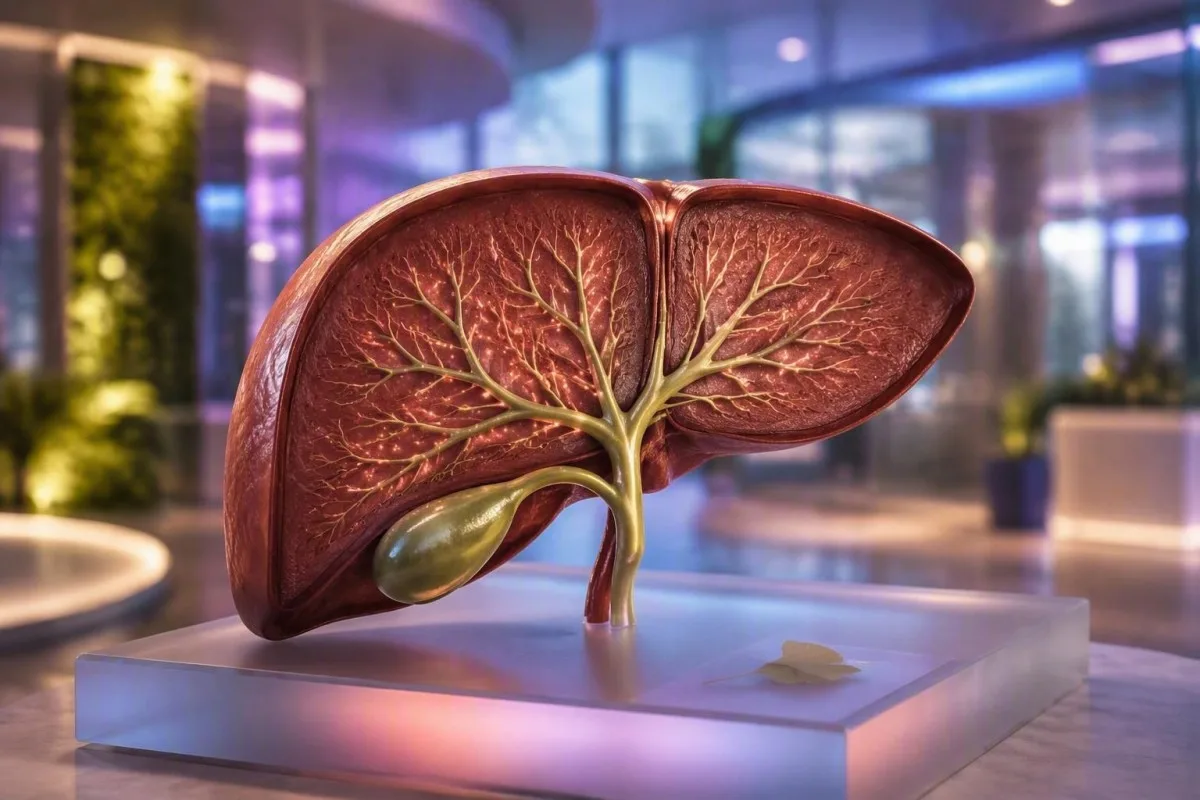
Үт кислоталары кан сынавы gallbladderда сакланган үт күләменә караганда serumда әйләнештә булган үт кислоталары концентрациясен үлчи. Югары әйләнештәге кыйммәтләр бавырның үт кислоталарын үткә нормально чыгармаганын күрсәтә, гәрчә ул сынау үзе сәбәпне ачыкламый алмый.
Үт кислоталары гепатоцитларда холестериннан ясала, эчәк бактерияләре белән модификацияләнә, аннары порталь циркуляция аша көнгә берничә тапкыр әйләнеп чыга. Бу әйләнеш ашның кыйммәтне үзгәртә алуын һәм ни өчен берничә нәтиҗә лабораториянең сынавы, үрнәк алу контексты һәм симптомнары белән укылырга тиешлеген аңлата – универсаль интернет диапазонына каршы түгел.
Күпчелек клиник лабораторияләр үлчи гомуми сарысу кислоталары, еш кына ферментлы цикл ысулы белән; алар гадәттә холик, хенодезоксихол һәм конъюгацияләнгән фракцияләрне аермыйлар. Нәтиҗә язылырга мөмкин мкмоль/л, һәм 1 мкмоль/л билирубин кыйммәте белән мг/дл алмаштырыла алмый.
Күп тестлы отчетны караучы кешеләр өчен, бавыр панеленә нәрсә керә файдалы юлдаш, чөнки сарысу кислоталары еш кына гадәти бавыр химиясыннан аерым заказ бирелә. Бу аерылу – гадәти “нормаль LFT” сәбәпле, иртә йөклелек холестазын ышанычлы рәвештә бетереп булмый.
Йөклелек үт кислоталары чикләре һәм югары нәтиҗәләр нәрсә аңлата
Йөклелектә, ач булмаган гомуми сарысу кислотасы концентрациясе 19 мкмоль/л яки аннан югары Бөекбритания практикасында диагнозны раслау өчен еш кулланыла интраһепатик холестазны диагностикалау өчен бик файдалы түгел кашыну булганда һәм бәхәсле сәбәпләр тикшерелгәндә. Пик кыйммәтләре 40-99 мкмоль/л уртача авыруны күрсәтә, ә 100 мкмоль/л яки аннан югары үле бала туу куркынычының иң ачык күренеше булган каты авыруны күрсәтә.
Праглар, кешенең күпме начар хис итүенә балл кую түгел, ә куркынычлык төркемнәре. RCOG 2022 елгы Green-top Guideline буенча, йомшак ICP дип атала 19-39 мкмоль/л, уртача ICP буларак 40-99 мкмоль/л, һәм каты ICP буларак 100 мкмоль/л яки күбрәк; һәр ана хезмәте гомуми акушерлык картинасына карап күзәтү һәм тудыру планын үзгәртә.
Ovadia et al. индивидуаль катнашучы мәгълүматлары мета-анализында үле бала тууның таралуын тапты 3.44% бер генә балалы йөклелекләр арасында, пик сарысу кислоталары кимендә 100 micromol/L, чагыштырганда 0.13% 40 micromol/L дан азрак (Ovadia et al., 2019). Нәкъ менә шушы факт сәбәпле табиблар иң югары теркәлгән кыйммәткә игътибар итә, бары тик кычыткан иң көчле булган көнге нәтиҗәгә генә түгел.
Кайбер Төньяк Америка хезмәтләре тарихи яктан куллана 10 micromol/L дан артык аномаль чик буларак, ә Бөекбритания җитәкчелеге куллана 19 micromol/L ач карынга тесты үткәрелмәгәндә. Бу өлкәләрнең берсе, анда контекст һәр лабораториянең бер үк чикне куллануын алдан әйтергә маташуга караганда күбрәк әһәмияткә ия; нәтиҗәне аның басылган интервалы һәм ана булу протоколы белән чагыштырыгыз.
Колестазны борчый торган кычынуның нинди үрнәге бар?
Холестаздан килгән кычыту еш кына бөтен тәнгә тарала, уч төбендә һәм табаннарда көчле булырга мөмкин, һәм гадәттә төнлә күбрәк борчый; ул, гадәттә, беренчел тимгелсез башлана. Бу билгеләр шик тудыра, ләкин бавыр сәбәбен расламый, чөнки экзема, котыру, йөклелек дерматозлары, калкансыман биз авырулары, бөер авырулары һәм дарулар да кычытырга мөмкин.
Гадәти ана булу клиникасы сценариенда, 32 атналык сроклы бер хатын-кыз аякларының кычытуыннан ике төн йокламыйча үткәрүен хәбәр итә, ләкин тире зарарланмаган һәм кан басымы нормада. Мин моны игътибарсыз калдырмам, чөнки иртәнге сәгатьтә феталь мониторинг ышанычлы: киләсе адым - үт кислоталары һәм бавырның биохимиясе, аннары симптомнар дәвам итсә, билгеләнгән план.
A visible rash changes the differential but does not automatically exclude ICP; people can have eczema or scratch-related skin changes and cholestasis at the same time. Take photographs before applying multiple new creams, and tell the clinician about new antibiotics, antifungals, hormones, anticonvulsants, and over-the-counter products.
Unexplained itch with yellow eyes or skin needs assessment for bilirubin patterns rather than cosmetic treatment alone. Our explanation of when bilirubin becomes concerning helps distinguish a mild isolated result from symptoms that warrant faster care.
Ни өчен нормаль беренче үт кислоталары нәтиҗәсен кабатларга кирәк булырга мөмкин
A normal bile acids result does not reliably rule out early intrahepatic cholestasis of pregnancy because itch can begin before biochemical elevation. If characteristic itching persists, clinicians commonly repeat bile acids and liver tests in about 1 атна, sooner if symptoms escalate or new warning signs appear.
The practical mistake I see is treating a first normal result as a lifetime clearance certificate. Bile acids can vary over days, and pregnancy physiology changes rapidly in the third trimester; record when itch began, where it occurs, sleep disruption, and whether a rash was present at the time of each draw.
RCOG advises repeating liver blood tests after 1 атна following diagnosis and tailoring further tests to the clinical situation. For suspected but unconfirmed disease, the same principle applies: the obstetric clinician should set the interval rather than relying on symptoms alone or on a home fetal monitor.
Килүләр арасында кан анализлары аермалары are not always biological change—assay variation, fasting status, and sample timing contribute. Kantesti AI — AI кан анализы нәтиҗәсе платформасы that can display sequential results with their dates, which makes a rising pattern easier to discuss with the clinician who knows the pregnancy.
Ач тору үт кислоталары каны анализы нәтиҗәсен үзгәртәме?
Fasting can lower serum bile acid concentrations after a meal, but suspected pregnancy cholestasis should not be delayed solely to obtain a fasting specimen. UK guidance supports ач тормыйча bile-acid testing because it better fits real-world maternity assessment and avoids missed or delayed testing.
Ask the laboratory or maternity team whether the result is fasting or non-fasting and which reference interval applies. A meal containing fat stimulates gallbladder contraction and enterohepatic circulation, so a value drawn 2–4 сәгать after eating can differ meaningfully from an early-morning fasting sample without either sample being “wrong.”
Do not deliberately eat a fatty meal to make the test positive, and do not skip food if pregnancy nausea makes fasting unsafe. The goal is an interpretable clinical measurement, not a number engineered around a threshold; the ordering team may request a repeat under more standardized conditions if the result sits close to a decision boundary.
Laboratories also vary in pre-analytic instructions, which is why a photo of the complete report is more useful than a transcribed flag. Our blood-test PDF checking guide outlines details to verify before any automated interpretation.
Югары үт кислоталарыннан соң нинди бавыр тестлары үткәрелергә тиеш?
High bile acids should usually be followed with bilirubin, ALT, AST, alkaline phosphatase, GGT, albumin, and often a full blood count and clotting assessment when liver dysfunction is suspected. A cholestatic pattern features ALP and GGT rising more than ALT and AST, but pregnancy makes ALP harder to interpret because placental ALP normally increases.
ALT and AST can be normal in ICP, mildly raised, or occasionally substantially elevated; normal transaminases do not invalidate a raised bile-acid result. Conversely, elevated ALT with normal bile acids may reflect viral hepatitis, fatty liver disease, medication injury, or another hepatocellular process rather than ICP.
ALP is produced by placenta as well as liver, so an isolated high ALP in late pregnancy is not a reliable cholestasis marker. GGT is often normal or low in typical ICP; a conspicuously high GGT can prompt clinicians to consider an alternative biliary or medication-related explanation, especially outside pregnancy.
.Әр сүзнең cholestasis liver-test pattern is useful preparation for a follow-up visit. Kantesti’s neural network reads these markers as a pattern and highlights missing complementary tests, rather than asserting that one abnormal enzyme identifies a diagnosis.
Йөклелек чигеннән тыш, тагын нәрсә югары үт кислоталарына китерә?
High bile acids outside pregnancy can result from bile duct obstruction, primary biliary cholangitis, primary sclerosing cholangitis, viral hepatitis, drug-induced liver injury, advanced fatty liver disease, and some inherited transport disorders. The next test depends on the liver pattern, symptoms, medication exposure, and whether bilirubin is conjugated.
A sudden rise with colicky upper abdominal pain, fever, and jaundice raises concern for obstruction or biliary infection and needs urgent clinical assessment, often with ultrasound. A gradual itch-plus-fatigue pattern in a middle-aged adult, particularly with high ALP and positive antimitochondrial antibodies, points clinicians toward autoimmune cholestatic disease instead.
Medication history is unusually high yield here. Antibiotics such as amoxicillin-clavulanate, anabolic agents, some antifungals, and certain herbal or bodybuilding products can produce a cholestatic pattern weeks after exposure; stopping a prescribed medicine without advice is not safe, but reporting every product is essential.
When I review this pattern, I often pair it with positive antimitochondrial antibody results only when the clinical context justifies that test. A high bile-acid number is a signal to investigate bile handling, not proof of one specific disease.
Йөклелекнең эчендәге холестазы ничек идарә ителә
Intrahepatic cholestasis of pregnancy is managed by an obstetric team using symptom treatment, repeat blood testing, assessment of other pregnancy risks, and delivery timing based chiefly on peak bile acids and gestational age. Ursodeoxycholic acid may improve maternal itch and liver biochemistry, but it has not been shown to eliminate fetal risk.
Ursodeoxycholic acid is commonly prescribed at an initial dose around 10-15 mg/kg/day, often divided into 2 or 3 doses, with adjustment under specialist supervision. The PITCHES trial found no reduction in a composite adverse perinatal outcome with routine use, though some patients experience worthwhile itch relief; that distinction matters when expectations are set.
Antenatal testing can be reassuring but cannot reliably predict or prevent every stillbirth associated with severe ICP. SMFM recommends offering delivery at 36 0/7 to 39 0/7 weeks for bile acids below 100 micromol/L and at 36 0/7 weeks for levels of 100 micromol/L or higher, with individualized exceptions (Lee et al., 2021).
Do not use antihistamines, herbal teas, or topical products as a substitute for reporting new pregnancy itch. The pregnancy lab-safe supplement guide explains why “natural” does not automatically mean liver-safe.
Кайчан югары үт кислоталары УЗИ яки белгеч тикшерүен таләп итә
High bile acids need imaging or specialist review when the liver pattern suggests obstruction, bilirubin rises, pain or fever is present, symptoms persist after pregnancy, or the clinical course is atypical for ICP. Ultrasound is commonly the first imaging test because it can assess gallstones, bile-duct dilation, and liver appearance without ionizing radiation.
In straightforward ICP, abdominal ultrasound is not always necessary because the condition is functional cholestasis rather than a blocked duct. But a total bilirubin above 34 micromol/L (2 mg/dL), focal right-upper abdominal pain, fever, or a markedly raised GGT shifts the balance toward looking for another process.
Clinicians may calculate an R ratio using ALT divided by its upper limit of normal, then divided by ALP divided by its upper limit of normal. An R ratio above 5 is hepatocellular, below 2 is cholestatic, and 2-5 is mixed; it is a useful classification tool, not a diagnosis.
For chronic liver-risk context, a FIB-4 interpretation can be informative outside pregnancy, although it is not validated as a decision tool for ICP. Pregnancy itself alters platelets and liver chemistry, so specialist judgement comes first.
Тиздән кисәтү билгеләре: кабат сынауны көтмәгез
Seek urgent same-day medical care for itching with jaundice, fever, severe right-upper abdominal pain, persistent vomiting, confusion, easy bleeding, very dark urine, pale stool, or rapidly worsening illness. In pregnancy, reduced or changed fetal movements require immediate contact with maternity services regardless of a recent bile-acid value.
A person with itching, temperature above 38.0 degrees C, jaundice, and upper abdominal pain may have biliary infection or acute liver disease; this is not a watch-and-wait scenario. Similarly, confusion, drowsiness, new bruising, or bleeding may indicate impaired liver function and warrants emergency assessment.
For pregnancy, do not wait until the next morning to report a genuine reduction in movement after the usual individual pattern has been established. Eat or drink something only if it helps you notice movement while arranging contact; it should never be used to delay a call to maternity triage.
Dark urine can reflect dehydration, medicines, bilirubin, or muscle pigment, so it needs context. Our dark urine urgent-care guide helps clarify the questions a clinician will ask, but it cannot assess fetal wellbeing.
Тудыргач үт кислоталарына нәрсә була?
Bile acids and liver tests from intrahepatic cholestasis of pregnancy usually improve after delivery and should be rechecked if symptoms or abnormal tests persist. Persistent itch, jaundice, or abnormal liver chemistry beyond 6 weeks postpartum deserves evaluation for another liver or biliary condition.
Most patients notice itch easing within days of birth, often before every laboratory marker has normalized. A follow-up liver panel and bile acids at around 6 атна is a sensible safety net in many care pathways, particularly after moderate or severe disease, although local maternity services differ in their exact schedule.
A previous ICP episode raises recurrence risk in a later pregnancy, commonly quoted as 45-90% depending on population and severity. That broad interval reflects genuine uncertainty: genetics, multiple pregnancy, assisted reproduction, and hormone exposure likely influence risk, but no single prediction test is definitive.
After recovery, keep a copy of the peak bile-acid value and date of diagnosis. It also helps to understand bilirubin patterns after pregnancy if a later result is flagged, because isolated bilirubin and cholestatic liver disease are different clinical puzzles.
Kantesti бавыр нәтиҗәләре белән үт кислоталарын ничек аңлата
Kantesti interprets a bile-acid result by checking units, the laboratory reference interval, pregnancy context, symptom flags, and accompanying liver markers rather than labelling a result in isolation. A result at or above 100 micromol/L in a reported pregnancy context should trigger immediate advice to contact the obstetric team, not a reassurance message.
Kantesti — AI белән эшләнгән кан анализы нәтиҗәләрен аңлату коралы used across more than 127 countries, so our system is designed to recognize that units, reference intervals, and maternity pathways vary by laboratory and region. It can organize the questions for the treating team, but it cannot diagnose ICP, determine delivery timing, or interpret fetal movements.
Dr. Thomas Klein, MD, and our clinical reviewers emphasize a small but vital safeguard: never upload a result without preserving the collection date, gestational week, fasting status if known, and complete laboratory page. Kantestiның медицина валидация стандартлары describe the clinical-oversight approach behind contextual lab interpretation.
If a report contains ALP, GGT, bilirubin, ALT, and AST but not bile acids, our system identifies that bile acids may be a missing test in pregnancy itch rather than inventing a value. The AI аңлату технологиясе күрсәтмәсе explains why source-document checks remain part of safe automated analysis.
Югары үт кислоталары нәтиҗәсеннән соң сораулар
After a high bile acids result, ask whether the sample was fasting or non-fasting, what the peak value is, whether the laboratory interval fits the assay, and when testing will be repeated. In pregnancy, also ask who to call for changed movements and what delivery-timing plan applies to your specific peak level and gestational age.
Bring a dated symptom timeline rather than relying on memory: onset of itch, palms or soles involved, visible rash, sleep loss, medications, supplements, urine colour, stool colour, and any pain. That list can distinguish a rising biochemical process from a persistent dermatologic one and makes repeat-test decisions much more precise.
Ask whether hepatitis screening, ultrasound, autoimmune markers, or medication changes are indicated by your liver pattern. There is no universal panel for every person with high bile acids; ordering every rare test at once creates false positives and can distract from the time-sensitive problem.
Kantesti — AI биомаркер аңлату платформасы built to help patients prepare for these conversations by preserving trends and explaining common patterns in plain language. Our Медицина консультатив советы supports physician-led review principles: an app can organize evidence, but the clinician caring for you makes the diagnostic and treatment decisions.
Үт кислоталарын аңлату артында торган тикшеренү дәлилләре һәм клиник стандартлар
As of September 15, 2026, the best-established risk threshold in intrahepatic cholestasis of pregnancy remains a peak total bile acid level of 100 micromol/L, based on individual participant data rather than itch severity alone. Evidence is less certain for lower values, where maternal symptoms and obstetric factors still guide individualized care.
Ovadia et al. pooled data from 5,269 women with ICP and showed that bile-acid concentration was more useful for stillbirth stratification than ALT, AST, or bilirubin alone (Ovadia et al., 2019). The evidence does not mean lower levels are “risk free”; it means the measurable excess stillbirth risk was concentrated most clearly at the highest peak range.
Kantesti’s research reporting follows a clinical-validation framework that separates extraction accuracy from medical interpretation and triage safety. Readers who want the organization’s broader methodology can review our клиник эш агымы мисаллары and the cited validation records below; neither should be used to self-manage pregnancy complications.
For a human second look at a confusing report, Dr. Thomas Klein recommends bringing the original PDF and symptom timeline to the clinician rather than relying on copied numbers. That simple habit catches unit errors, especially when a laboratory reports bile acids in a format unfamiliar to the patient.
Еш бирелә торган сораулар
Йөклелек вакытында нормаль үт кислоталарының кан анализы нәтиҗәсе нинди?
A non-fasting total bile acid result below 19 micromol/L does not meet the UK diagnostic threshold for intrahepatic cholestasis of pregnancy, but it does not fully exclude early disease when typical itching continues. The Royal College of Obstetricians and Gynaecologists classifies 19-39 micromol/L as mild ICP, 40-99 micromol/L as moderate ICP, and 100 micromol/L or higher as severe ICP. Laboratories and regions may use different methods or reference intervals, so the printed report and maternity team's protocol take priority. Persistent palm-and-sole itch without rash should be reported even after an initially normal result.
Нормаль бавыр ферментлары белән үт кислоталары югары була аламы?
Yes, bile acids can be elevated while ALT, AST, bilirubin, and GGT remain within their laboratory reference intervals, particularly early in intrahepatic cholestasis of pregnancy. A normal liver panel therefore does not replace a bile acids blood test when pregnancy itching is clinically suggestive. Conversely, high liver enzymes with normal bile acids can indicate another liver condition such as viral hepatitis, medication injury, or fatty liver disease. Clinicians interpret the complete liver pattern and symptoms together rather than using one test as a rule-out tool.
Эчле кислоталарны кан анализы алдыннан ач торырга кирәкме?
You should follow the ordering laboratory's instructions, but suspected pregnancy cholestasis should not be delayed simply because you have eaten. Current UK maternity guidance accepts non-fasting bile-acid testing, while food intake can still affect the numerical concentration through normal enterohepatic circulation. Record whether the sample was fasting and roughly when you last ate, especially if a result is near 19 or 40 micromol/L. Your maternity clinician may request a repeat under standardized conditions if the result and symptoms do not align.
Бала кислоталарын кабатлау кирәкме, әгәр миңа әле дә кычытса?
Persistent typical itching in pregnancy after a normal initial result commonly leads to repeat bile acids and liver tests in about 1 week, with an earlier review if symptoms worsen. The appropriate interval depends on gestational age, severity of itch, prior results, jaundice, and fetal-movement concerns. Reduced fetal movements require immediate maternity contact regardless of the planned repeat-test date or a previous result below 19 micromol/L. Do not wait for a scheduled blood draw if fever, severe abdominal pain, jaundice, or acute illness develops.
Йөклелек вакытында үт кислотасының нинди дәрәҗәсе куркыныч?
A peak total bile acid concentration of 100 micromol/L or higher is the range most consistently linked to increased stillbirth risk and is classified as severe intrahepatic cholestasis of pregnancy. In the Ovadia et al. 2019 meta-analysis, stillbirth prevalence in singleton pregnancies was 3.44% at this level, compared with 0.13% below 40 micromol/L. Any value of 19 micromol/L or higher with pregnancy itching still needs maternity-led assessment and a plan for monitoring and timing of birth. Risk depends on the peak level, gestation, multiple pregnancy, coexisting conditions, and clinical course.
Йөклелек беткәч, өт кислоталары нормаль хәлгә кайтамы?
Bile acids and itch from intrahepatic cholestasis of pregnancy usually improve after delivery, often with symptom relief in the first several days. Many maternity pathways arrange liver chemistry and sometimes bile-acid follow-up at around 6 weeks postpartum, particularly after more marked elevation. Ongoing itch, jaundice, or abnormal results beyond 6 weeks should trigger evaluation for a non-pregnancy liver or biliary condition. A prior ICP diagnosis also raises recurrence risk in future pregnancies, often estimated between 45% and 90%.
Бүген үк AI белән эшләнгән кан анализы тикшерүе
Дөнья буенча 2 миллионнан артык кулланучы кушылыгыз: алар Kantestiны тиз һәм төгәл лаборатория анализы өчен ышана. Кан анализы нәтиҗәләрегезне йөкләгез һәм 15,000+ биомаркерларын секундлар эчендә тулы аңлатма белән алыгыз.
📚 Сылтама бирелгән тикшеренү басмалары
Klein, T., Mitchell, S., & Weber, H. (2026). Kantesti LTD. (2026). Клиник валидация фреймворкы v2.0 (Медицина валидациясе бит). Zenodo. https://doi.org/10.5281/zenodo.17993721. Kantesti AI медицина тикшеренүе.
Klein, T., Mitchell, S., & Weber, H. (2026). Kantesti LTD. (2026). AI кан анализы анализаторы: 2.5M анализ тикшерелгән | Глобаль сәламәтлек отчеты 2026. Zenodo. https://doi.org/10.5281/zenodo.18175532. Kantesti AI медицина тикшеренүе.
📖 Тышкы медицина белешмәләре
Royal College of Obstetricians and Gynaecologists (2022). Intrahepatic cholestasis of pregnancy: Green-top Guideline No. 43. RCOG Green-top Guideline.
⚕️ Медицина кисәтүе
Бу мәкалә бары тик белем бирү максатларында гына һәм медицина киңәше булып тормый. Диагноз һәм дәвалау карарлары өчен һәрвакыт квалификацияле сәламәтлек саклау белгеченә мөрәҗәгать итегез.
E-E-A-T ышаныч сигналлары
Тәҗрибә
Табиб җитәкчелегендә лаборатория нәтиҗәләрен аңлату эш процессларын клиник тикшерү.
Белгечлек
Лаборатория медицинасы: биомаркерларның клиник контекстта үз-үзләрен тотышын аңлау.
Авторититет
Доктор Томас Кляйн тарафыннан язылган, доктор Сара Митчелл һәм профессор доктор Ханс Вебер тарафыннан тикшерелгән.
Ышанычлылык
Ачык күзәтү юллары белән куркуны киметү өчен дәлилләргә нигезләнгән аңлату.