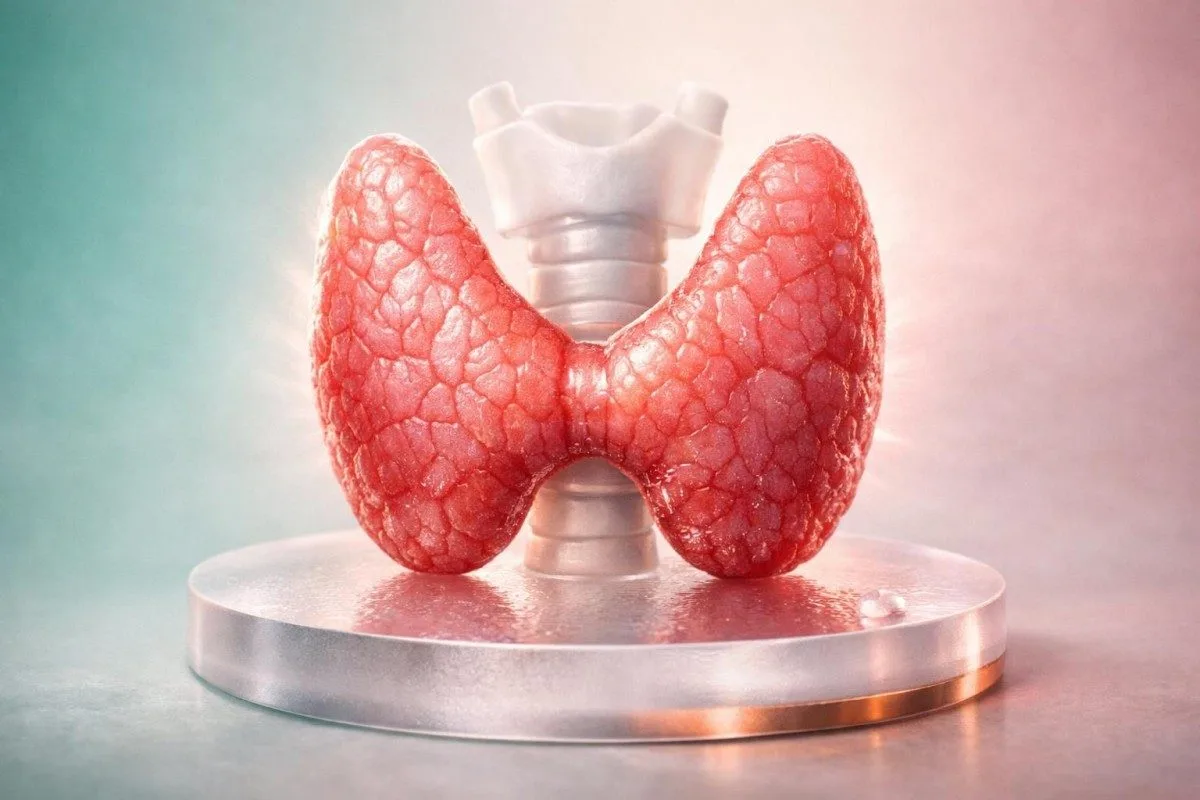
A thyroid result that looks high on an adult lab sheet may be normal for a toddler. This pediatric guide shows where the age cutoffs shift, what a full thyroid panel means, and which patterns truly need fast follow-up.


- Toddlers often have a higher TSH normal range than adults; about 0.7-6.0 mIU/L can be acceptable at ages 1-5 years.
- Teens usually fit a narrower range; roughly 0.5-4.3 mIU/L is more typical in adolescence, depending on the lab assay.
- High TSH that is persistent above 10 mIU/L deserves prompt clinical review, especially when free T4 is low.
- Newborns can have physiologically high TSH levels in the first days after birth, so adult cutoffs are especially misleading early on.
- Low TSH below 0.1 mIU/L with elevated free T4 usually points toward hyperthyroidism until proven otherwise.
- Repeat testing in 6-8 weeks is often the right move for mild isolated TSH elevation when the child is otherwise well.
- Biotin supplements at 5,000-10,000 mcg/day can falsely lower TSH on some immunoassays and confuse a thyroid panel.
- Central hypothyroidism can present with low free T4 and a normal or low-normal TSH; that pattern is not reassuring.
- Preterm infants may show a delayed TSH rise at 2-6 weeks, which is why one normal early screen may not be the whole story.
Pediatric TSH Normal Range Changes With Age
The TSH normal range in children is higher in infancy and early childhood than in adults, so an adult cutoff of 4.0-4.5 mIU/L can wrongly label a child as abnormal. A TSH of 5.0 mIU/L may be acceptable at age 2 yet borderline at age 16; what worries me more is TSH above 10 mIU/L, a low free T4, or any abnormal result in a newborn.
At Kantesti AI, our AI remaps pediatric thyroid results against age whenever the report provides enough detail. In our review of more than 2 million uploaded lab reports, child TSH levels are among the most commonly misread results because many community labs still display adult-style flags beside pediatric numbers.
A TSH normal range of roughly 0.7-6.0 mIU/L is often reasonable for ages 1-5 years, while 0.5-4.3 mIU/L is more typical in adolescents. Kapelari and colleagues showed years ago that pediatric thyroid reference intervals shift meaningfully with age, and that broad pattern still holds in 2026 even though exact cutoffs differ by assay.
As Thomas Klein, MD, I tell parents to look at age in days, not just years. A sample drawn at 4 days old and one drawn at 4 months can both be labeled 'infant' on paperwork, but their expected TSH values are not remotely the same.
If you want to sense-check a flagged result before the follow-up visit, our guide on how to read blood test results helps with units, reference intervals, and what the red highlight actually means. The practical rule is simple: age first, free T4 second, symptoms third.
Why one lab says high and another says normal
Reference intervals are assay-specific, not universal law. A borderline TSH of 4.6 mIU/L can be flagged at one lab and pass unnoticed at another because chemiluminescent platforms, calibration methods, and the age partitions each laboratory chooses are slightly different.
How to Read a Thyroid Blood Test in a Child
A pediatric thyroid blood test is interpretable only when TSH is read beside free T4. TSH tells you how strongly the pituitary is signaling, while free T4 tells you whether the thyroid is actually delivering enough hormone to the body.
A high TSH plus low free T4 usually means overt hypothyroidism. A high TSH plus normal free T4 usually means subclinical hypothyroidism, and a low TSH plus high free T4 usually means hyperthyroidism.
Free T3 is not the best first test for suspected hypothyroidism in children. I order it more often when TSH is suppressed and I am wondering about early Graves disease or the less common pattern called T3-toxicosis, where free T4 can still look normal.
Parents often see T4, FT4, T3, TPOAb, and TgAb on the same report and assume they all mean the same thing. Our blood test biomarkers guide and blood test abbreviations guide are helpful here, because free T4 may be reported as 0.9-1.7 ng/dL or 12-22 pmol/L and the number is meaningless until the unit is clear.
One pattern many parents miss is this: low free T4 with a normal or low-normal TSH is not reassuring. In my experience, that result needs clinician review because it can point to central hypothyroidism, recent severe illness, or rarely a lab artifact.
Newborn and Infant TSH Levels Need Special Interpretation
Newborn TSH levels are naturally high right after birth, and preterm infants can show a delayed rise weeks later. That is why adult cutoffs are especially misleading in babies, and why newborn screening follows different rules from a routine outpatient thyroid panel.
Right after delivery, the normal TSH surge can be dramatic. A value that would be alarming in an 8-year-old may be expected in the first 24-48 hours of life, which is why the newborn screen is interpreted against the baby's age in hours, not against adult lab cutoffs.
Congenital hypothyroidism is common enough that we screen every baby in most health systems; rates often fall around 1 in 2,000 to 1 in 3,000 births. Some infants look completely well at first, which is exactly why I never reassure parents based only on appearance when the thyroid result is clearly off.
Preterm and low-birth-weight infants are the group that catches people out. They can have a delayed TSH rise at 2-6 weeks, so a normal early screen does not always close the case, and NICU protocols often repeat testing near discharge or later in the first month.
If your baby’s result came as a scanned report or phone photo, our guide to safe PDF and image upload for lab reports explains how Kantesti AI reads the report structure without you having to manually retype units. One practical question to ask your doctor is whether the result came from a heel-prick screen or a serum test, because those are not interchangeable.
Why School-Age TSH and Teen TSH Are Not the Same
TSH narrows gradually through childhood, so the same value means different things at age 6 and age 16. In practice, a TSH of 4.7 mIU/L may be unremarkable in a younger child but worth repeating in a teenager.
For many school-age children, a rough reference interval of 0.6-4.8 mIU/L is reasonable, while teens often sit closer to 0.5-4.3 mIU/L. Some European pediatric labs use an upper teen limit closer to 4.0 mIU/L, which is one reason families get different answers when they compare reports across countries.
Puberty changes thyroid testing in a sneaky way. Total T4 can shift because thyroid-binding proteins change, especially with estrogen exposure, while TSH and free T4 usually remain the better markers for day-to-day interpretation.
Symptoms overlap badly here. A shaky, sweaty teenager with palpitations may have hyperthyroidism, anxiety, iron deficiency, stimulant use, or simply too many energy drinks, which is why I often point families to our pieces on blood tests for anxiety and fatigue-related blood work before anyone anchors too hard on the thyroid.
I also see mild TSH elevation in children with obesity, often in the 5-7 mIU/L range with a normal free T4. Most patients in that pattern do not have classic thyroid failure, and the number often improves as inflammation, sleep, and weight trajectory improve.
When a High TSH Result in a Child Deserves Follow-Up Fast
A high TSH in a child deserves quicker follow-up when it is persistent, above 10 mIU/L, or paired with a low free T4. I worry sooner if there is a goiter, slowed height velocity, constipation, cold intolerance, or positive thyroid antibodies.
A TSH of 4.5-6.9 mIU/L with normal free T4 is often mild or transient. In several pediatric follow-up studies, many of these children normalized over time without treatment, particularly after recovery from illness or after an adult reference range had been used by mistake.
The gray zone is TSH 7-10 mIU/L with normal free T4. The evidence is honestly mixed here, and in my own practice I am far more influenced by growth charts, family history, antibody status, and whether the value stays elevated on repeat testing 6-8 weeks later.
A TSH above 10 mIU/L is more likely to reflect real thyroid dysfunction, especially if TPO antibodies or thyroglobulin antibodies are positive. In older children and adolescents, Hashimoto thyroiditis is the commonest cause, and a firm rubbery goiter makes that pattern more likely.
I also look sideways at the rest of the lab report. A child with fatigue, hair shedding, or pallor may have overlapping iron issues, so our guides on what high TSH means and ferritin normal range are often useful together rather than separately.
Growth matters more than parents are often told
A fall in height velocity can be more informative than dry skin or mood changes. In a prepubertal child, growth slipping below roughly 4 cm/year makes me look much harder at persistent hypothyroidism, even when the symptoms seem vague.
Low TSH in Children: Hyperthyroidism, Recovery, or Lab Artifact?
Low TSH in children usually points to hyperthyroidism when free T4 or free T3 is high, but mild suppression is not always Graves disease. A TSH below 0.1 mIU/L with a clearly elevated free T4 deserves prompt pediatric review.
Graves disease is the commonest acquired cause of hyperthyroidism in older children and teens. The classic pattern is suppressed TSH, often below 0.01 mIU/L, with elevated free T4 and sometimes high T3, plus symptoms such as tremor, heat intolerance, weight loss, and resting tachycardia.
A mildly low TSH around 0.1-0.4 mIU/L with normal free T4 can be much less dramatic. I see that after viral illness, after steroid exposure, and occasionally in early hyperthyroidism where T3 rises before T4.
Biotin is a real troublemaker here. Supplements marketed for hair or nails often contain 5,000-10,000 mcg, and on some immunoassays they can falsely lower TSH while raising free T4 or T3, which is why I ask families about gummies before I label a child hyperthyroid.
One counterintuitive result deserves emphasis: low or normal TSH with low free T4 can suggest central hypothyroidism, not health. Our deeper guide on low TSH, free T4, and thyroid causes explains that pattern, and our article on fasting before blood tests explains why thyroid panels usually do not need fasting even though timing and supplements still matter.
Seven Common Reasons a Child’s TSH Levels Look Abnormal Once
One abnormal TSH level often reflects timing, recovery from illness, supplements, or weight changes rather than permanent thyroid disease. TSH is a moving signal, and small biologic swings can push a borderline result over a lab cutoff.
TSH follows a circadian rhythm, with higher values overnight and lower values later in the day. A borderline result can shift by roughly 0.5-1.0 mIU/L depending on collection time, which is why I prefer repeat tests drawn under similar conditions.
Recent infection is another frequent trap. If a child had fever, gastroenteritis, or a bad cold within the last couple of weeks, I often repeat thyroid tests after recovery rather than making a diagnosis off the first abnormal number; our guide to WBC normal range by age helps families see how often other markers still show the tail end of illness too.
Iodine excess is more common than parents realize. Kelp supplements, some multivitamins, contrast studies, and even a few imported cough products can distort a thyroid panel, while some anti-seizure medicines and glucocorticoids can shift thyroid results without causing true primary thyroid disease.
And sometimes the thyroid is innocent. A child with fatigue, brittle nails, or headaches may have sleep loss, iron deficiency, or another metabolic issue entirely, which is why our blood test symptoms decoder looks across the whole report rather than one red-boxed marker. Kantesti AI is especially useful when you can compare trends instead of reacting to a single outlier.
What Doctors Usually Order After an Abnormal Pediatric Thyroid Panel
After an abnormal pediatric thyroid panel, the next tests are usually repeat TSH, free T4, and thyroid antibodies. Ultrasound is not routine for every mild abnormality; I reserve it for goiter, asymmetry, nodules, or persistent unexplained results.
TPO antibodies and thyroglobulin antibodies help identify autoimmune hypothyroidism. Positive antibodies do not guarantee immediate treatment, but they do make persistent or progressive disease much more likely than a lone mildly high TSH with negative antibodies.
TRAb or TSI testing becomes useful when TSH is low and Graves disease is on the table. If the child has tremor, palpitations, weight loss, or eye changes, I add those earlier rather than waiting for a second abnormal panel.
Sometimes the thyroid panel is only half the story. A standard blood test may miss nutritional clues, so I often review hemoglobin, ferritin, and vitamin D too, and our explainers on vitamin D levels by age and hemoglobin normal range help parents interpret those side findings.
Ultrasound is useful when I can feel a goiter, when one side of the gland feels different from the other, or when the lab pattern persists without a clear explanation. One small but practical pediatric point: a thyroid nodule is less common in children than in adults, but each nodule deserves a more careful workup because the risk profile per nodule is higher.
Real-World Pediatric TSH Patterns We See Most Often
The most common real-life pattern is a mildly high TSH that normalizes, not lifelong thyroid disease. The second common pattern is autoimmune hypothyroidism in an older child with antibodies, family history, and clues that only make sense when you line the labs up over time.
A typical false alarm is a 3-year-old with TSH 5.4 mIU/L and free T4 1.2 ng/dL whose report was flagged using an adult upper limit. Repeat testing 8 weeks later when the child is well often lands around 3.0-4.0 mIU/L, and no treatment is needed.
A more convincing case is the 13-year-old with TSH 8.1 mIU/L, free T4 0.8 ng/dL, TPO antibodies 380 IU/mL, and a slowing growth curve. In that child, I am not watching just the thyroid; I am also watching LDL and non-HDL cholesterol, so our guide to lipid panel results often ends up in the same conversation.
Then there is the child whose thyroid is normal and yet everyone blames it anyway. I recently reviewed a teen with hair shedding, tiredness, and cold hands whose TSH was 2.1 mIU/L, but HbA1c was 5.8% and the wider workup looked more metabolic than thyroid-related; our explainers on HbA1c cutoffs and thyroid versus ferritin in hair loss help families see why those symptoms overlap so much.
As Thomas Klein, MD, I probably say 'treat the child, not the red box' at least once a week. Kantesti AI is most helpful when it shows the trend, the age-specific range, and the rest of the panel in one view instead of letting one highlighted result dominate the story.
What Parents Should Do After an Abnormal TSH Result
After an abnormal result, parents should first check the child’s age-specific range, then confirm whether free T4 moved in the same direction. Same-day help is warranted for infants, severe lethargy, dehydration, palpitations with faintness, or a very abnormal TSH paired with a markedly abnormal free T4.
Start with four basic questions: how old is the child exactly, what are the units, what is the lab’s stated pediatric range, and what does free T4 show. Then check whether the child was recently ill, is taking biotin, or had the blood test drawn at a very different time of day from prior tests.
Most children with TSH 4.5-6.9 mIU/L and normal free T4 do not need same-day treatment. Same-week clinical follow-up is more sensible when TSH stays above 10 mIU/L, when TSH falls below 0.1 mIU/L with high free T4, or when symptoms and growth changes fit the lab pattern.
If you want a rapid second read on the report itself, try our AI blood test platform or upload the PDF to the free blood test demo. Kantesti AI can translate pediatric units, compare prior results, and explain the broader thyroid panel in about 60 seconds across multiple languages, though it should never replace your child’s own clinician.
Parents often ask who reviews the medical logic behind our outputs. You can see the physicians behind the work on our Medical Advisory Board page and the safeguards we use on our Medical Validation & Clinical Standards page, including how age, units, and assay context are handled.
Research, Methods, and Publication Notes
Pediatric TSH interpretation relies on age-partitioned reference intervals, assay design, and repeat measurement over time. As of April 5, 2026, that remains the most defensible way to decide whether a child needs observation, more tests, or treatment.
The pediatric interval data used in everyday practice still trace back to careful age-partitioned reference work rather than a single universal cutoff. On our About Us page, you can see how Kantesti combines physician review with engineering so our interpretation engine does not treat a 2-year-old and a 16-year-old as the same endocrine patient.
Our internal product and content teams also review broader lab-report behavior across regions, which is one reason we keep updating thyroid content as reference practices evolve. The 2026 global health report is useful background if you want to understand how often endocrine panels are uploaded and why age-mismatched reference flags remain such a stubborn problem.
Formal publication links used across the Kantesti knowledge base: Kantesti LTD. (2026). AI Blood Test Analyzer: 2.5M Tests Analyzed | Global Health Report 2026. Zenodo. https://doi.org/10.5281/zenodo.18175532. ResearchGate: search record. Academia.edu: search record. Kantesti LTD. (2025). RDW Blood Test: Complete Guide to RDW-CV, MCV & MCHC. Zenodo. https://doi.org/10.5281/zenodo.18202598. ResearchGate: search record. Academia.edu: search record.
Frequently Asked Questions
What is a normal TSH for a 10-year-old?
A typical TSH normal range for a 10-year-old is roughly 0.6-4.8 mIU/L, although the exact interval depends on the lab method. A TSH of 5.0 mIU/L in a 10-year-old is usually borderline rather than an emergency, especially if free T4 is normal and the child feels well. A persistent value above 10 mIU/L or any high TSH paired with a low free T4 deserves faster follow-up.
Is TSH 5 high in a child?
A TSH of 5.0 mIU/L may be normal in a younger child and only borderline in an older child or teenager. For ages 1-5 years, values up to about 6.0 mIU/L can still sit within many pediatric reference ranges, while teens are usually judged against a narrower upper limit near 4.3 mIU/L. The result matters much more when free T4 is low, antibodies are positive, or the number stays elevated on repeat testing.
When should I worry about high TSH in my child?
High TSH becomes more concerning when it is persistent above 10 mIU/L, when free T4 is low, or when symptoms such as slowed growth, constipation, cold intolerance, or goiter are present. In newborns and young infants, even modest abnormalities move faster because thyroid hormone is critical for early brain development. A TSH above 20 mIU/L or any clearly abnormal infant result should be reviewed promptly by a pediatric clinician.
Can illness or supplements temporarily change TSH levels?
Yes. Viral illness can temporarily lower TSH during the acute phase and sometimes push it slightly up during recovery, which is why many clinicians repeat borderline results after 2-8 weeks. Biotin supplements in the 5,000-10,000 mcg range can also falsely lower TSH and falsely raise free T4 on some immunoassays, creating a misleading hyperthyroid pattern.
Does my child need to fast for a thyroid blood test?
Most children do not need fasting for a routine thyroid blood test. What matters more is consistency of timing, recent illness, and whether the child took supplements such as biotin within the previous 48-72 hours if the clinician advises holding it. For borderline results, repeating the test at a similar time of day can reduce confusing variation.
What if my child has a normal TSH but low free T4?
A normal TSH with low free T4 is not automatically reassuring. That pattern can suggest central hypothyroidism, recent severe illness, or a lab issue, and it deserves clinician review rather than simple reassurance. In practice, this is one of the more easily missed thyroid patterns because parents are told the TSH is 'normal' and assume the whole panel is normal too.
Do children with high TSH always need thyroid medicine?
No. Many children with TSH 4.5-6.9 mIU/L and normal free T4 normalize without medication, especially if the elevation followed illness or reflects age-appropriate variation. Treatment becomes more likely when TSH stays above 10 mIU/L, free T4 falls, antibodies are positive, or growth and symptoms fit hypothyroidism. In my experience, the decision is rarely made from one number alone.
Get AI-Powered Blood Test Analysis Today
Join over 2 million users worldwide who trust Kantesti for instant, accurate lab test analysis. Upload your blood test results and receive comprehensive interpretation of 15,000+ biomarkers in seconds.
📚 Referenced Research Publications
Klein, T., Mitchell, S., & Weber, H. (2026). AI Blood Test Analyzer: 2.5M Tests Analyzed | Global Health Report 2026. Kantesti AI Medical Research.
Klein, T., Mitchell, S., & Weber, H. (2026). RDW Blood Test: Complete Guide to RDW-CV, MCV & MCHC. Kantesti AI Medical Research.
⚕️ Medical Disclaimer
This article is for educational purposes only and does not constitute medical advice. Always consult a qualified healthcare provider for diagnosis and treatment decisions.
E-E-A-T Trust Signals
Experience
Physician-led clinical review of lab interpretation workflows.
Expertise
Laboratory medicine focus on how biomarkers behave in clinical context.
Authoritativeness
Written by Dr. Thomas Klein with review by Dr. Sarah Mitchell and Prof. Dr. Hans Weber.
Trustworthiness
Evidence-based interpretation with clear follow-up pathways to reduce alarm.