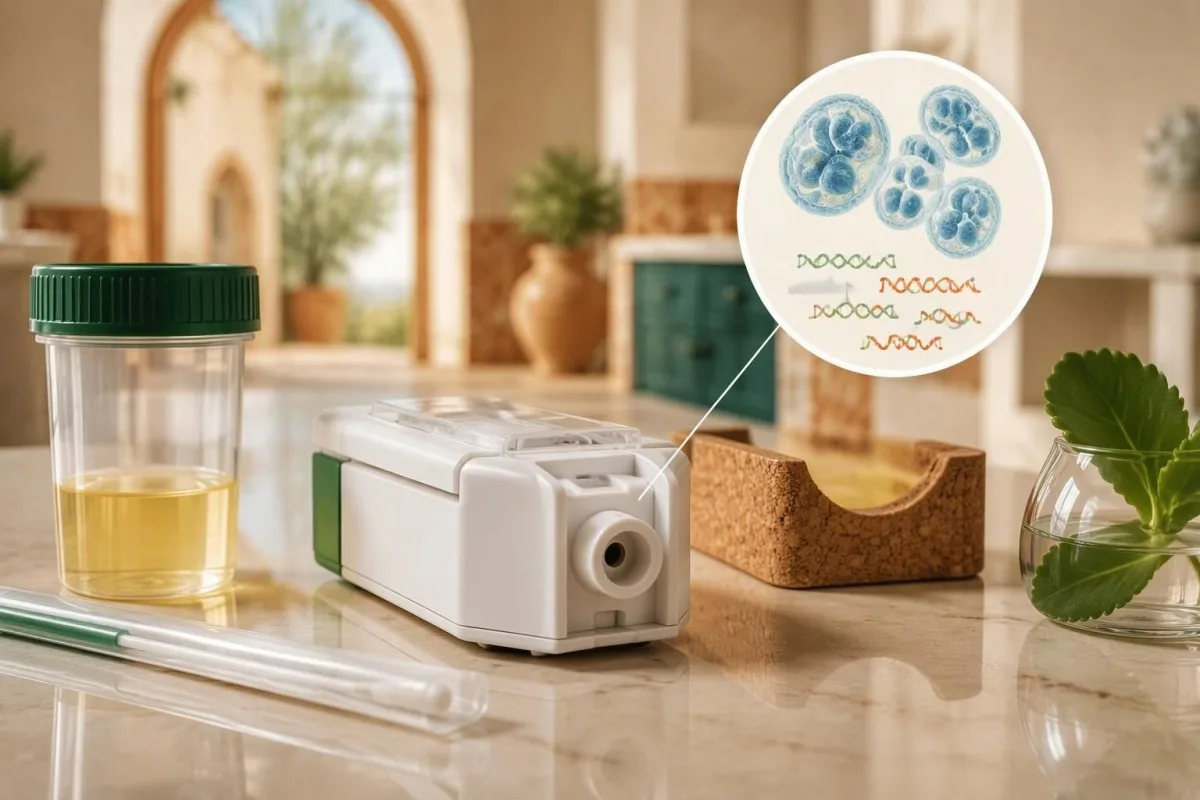
సానుకూల క్లామిడియా NAAT సాధారణంగా నమూనా సేకరించిన ప్రదేశంలో సంక్రమణ ఉందని సూచిస్తుంది; ప్రతికూల ఫలితం ప్రారంభ దశలోని ఎక్స్పోజర్ను లేదా పరీక్షించని ప్రదేశంలోని సంక్రమణను గుర్తించకపోవచ్చు. ఎక్స్పోజర్ తర్వాత సుమారు 2 వారాలకు పరీక్ష చేయడం ఒక ఆచరణాత్మక తనిఖీ సమయం; చికిత్స తర్వాత సుమారు 4 వారాలకు చికిత్స ఫలితాన్ని నిర్ధారించే పరీక్ష, 3 నెలలకు మళ్లీ సంక్రమణ కోసం చేసే పరీక్ష వేర్వేరు ప్రశ్నలకు సమాధానమిస్తాయి.


- 陽性結果 సాధారణంగా చికిత్సకు ముందు నమూనా సేకరించిన ప్రదేశంలో క్లామిడియా ఉందని సూచిస్తుంది; సంక్రమణ ఎప్పుడు మొదలైందో ఇది నిర్ధారించదు.
- విండో పీరియడ్ అనేది కచ్చితంగా ధ్రువీకరించిన కౌంట్డౌన్ కాదు: చివరి ఎక్స్పోజర్ తర్వాత సుమారు 14 రోజులకు పరీక్ష చేయడం ఒక ఆచరణాత్మక తనిఖీ సమయం మాత్రమే, హామీ కాదు.
- 陰性結果 సేకరించిన నమూనాకే వర్తిస్తుంది; 1 ప్రతికూల మూత్ర పరీక్ష వేరుగా ఉన్న మలద్వార సంక్రమణను తోసిపుచ్చదు.
- మూత్ర పరీక్ష సున్నితత్వం మహిళల్లో క్లామిడియా పరీక్షలపై 2023 మెటా-విశ్లేషణలో యోని స్వాబ్లకు 94.1%తో పోలిస్తే 86.9%గా ఉంది.
- మిగిలి ఉన్న జన్యు పదార్థం చికిత్స తర్వాత 4 వారాల్లోపు సానుకూల NAAT ఫలితాన్ని కలిగించవచ్చు; అయితే బతికున్న బ్యాక్టీరియా ఇంకా ఉందని ఇది నిరూపించదు.
- చికిత్స విజయాన్ని నిర్ధారించే పరీక్ష (టెస్ట్ ఆఫ్ క్యూర్) చికిత్సతో సంక్రమణ తొలగిందో లేదో తనిఖీ చేస్తుంది; గర్భధారణ సమయంలో చికిత్స పూర్తయిన సుమారు 4 వారాలకు చేయాలని సిఫార్సు చేస్తారు.
- మళ్లీ సంక్రమణ కోసం పరీక్ష భాగస్వాములు చికిత్స పొందారని తెలిపినప్పటికీ, చికిత్స తర్వాత సుమారు 3 నెలలకు చేయాలని సిఫార్సు చేస్తారు.
- చికిత్స తర్వాత లైంగిక సంబంధం ఒకే మోతాదు చికిత్స తర్వాత 7 రోజులు గడిచే వరకు లేదా 7 రోజుల చికిత్సా నియమాన్ని పూర్తి చేసే వరకు, లక్షణాలు తగ్గే వరకు, భాగస్వాములకు చికిత్స అందే వరకు వేచి ఉండాలి.
- తెలిసిన సంపర్కం లేదా లక్షణాలు తక్షణ క్లినికల్ మూల్యాంకనం అవసరం; వైద్య సంరక్షణ పొందడానికి 14 రోజులు వేచి ఉండకండి.
క్లామిడియా NAAT నిజంగా దేనిని గుర్తిస్తుంది?
క్లామిడియా NAAT, యాంటీబాడీలు లేదా వాపును కొలవడానికి బదులుగా, మూత్రం లేదా స్వాబ్ నమూనాలో Chlamydia trachomatis యొక్క జన్యు పదార్థాన్ని గుర్తిస్తుంది. ఫలితం నమూనా సేకరించిన సమయంలో నమూనా తీసుకున్న ప్రదేశం యొక్క స్థితిని వివరిస్తుంది; ప్రారంభ దశలో వచ్చిన నెగటివ్ ఫలితాన్ని లేదా చికిత్స తర్వాత వచ్చిన పాజిటివ్ ఫలితాన్ని అర్థం చేసుకోవడానికి 3 అదనపు వివరాలు అవసరం: సంపర్కం జరిగిన తేదీ, నమూనా తీసుకున్న ప్రదేశం, చికిత్స పూర్తయిన తేదీ.
NAAT అంటే న్యూక్లియిక్ యాసిడ్ యాంప్లిఫికేషన్ టెస్ట్, PCR అనేది NAATలోని 1 రకం మాత్రమే. కొన్ని పరీక్షా పద్ధతులు DNAను యాంప్లిఫై చేస్తాయి, మరికొన్ని RNAను లక్ష్యంగా చేసుకుంటాయి; ముఖ్యంగా యాంటీబయాటిక్స్ తీసుకున్న కొద్దికాలానికే, గుర్తించిన జీవి ఇంకా సంక్రమణకు కారణమయ్యే సామర్థ్యం కలిగి ఉందో లేదో వీటిలో ఏదీ సాధారణంగా ప్రయోగశాలకు తెలియజేయదు.
సాధారణ జననేంద్రియ క్లామిడియా పరీక్ష రక్త పరీక్ష కాదు, సాధారణ CBC లేదా CRP ఉన్నంత మాత్రాన దాన్ని తోసిపుచ్చలేము. Kantesti అనేది జతచేసిన ప్రయోగశాల నివేదికలను వివరించడంలో సహాయపడే AI రక్త పరీక్ష విశ్లేషణ సాధనం, అయితే మా సంస్థాగత నేపథ్యం రక్త పరీక్ష ఫలితాల వివరణ, నిర్దిష్ట ప్రదేశం నుంచి సేకరించిన క్లామిడియా నమూనాకు ప్రత్యామ్నాయమవుతుందనే సాక్ష్యంగా పొరబడకూడదు.
చాలా క్లామిడియా నివేదికలు, ధృవీకరించబడిన తీవ్రత స్కోరును కాకుండా, గుర్తించబడింది లేదా గుర్తించబడలేదు అనే ఫలితాన్ని అందిస్తాయి. నేను Kantestiలో చీఫ్ మెడికల్ ఆఫీసర్, MD థామస్ క్లైన్; ఈ రకమైన నివేదికను అర్థం చేసుకునేటప్పుడు, రోగ నిరూపణ గురించి చర్చించే ముందు ఆ 3 సమయం మరియు నమూనాకు సంబంధించిన వివరాలను నిర్ధారిస్తాను. గుణాత్మక ఫలితాన్ని సంఖ్యాపరమైన బ్యాక్టీరియా భారంగా పరిగణించను—ఈ తేడాను మా గుణాత్మక ఫలితాల మార్గదర్శిలో వివరించాం.
సానుకూల క్లామిడియా NAAT అంటే ఏమిటి?
చికిత్సకు ముందు వచ్చిన పాజిటివ్ క్లామిడియా NAAT సాధారణంగా, నమూనా తీసుకున్న ప్రదేశంలో క్లామిడియా ఉందని అర్థం; వైద్యుని సూచన మేరకు చికిత్స అవసరం. ఇది సంక్రమణ ఎంతకాలంగా ఉందో నిర్ధారించదు, సంక్రమణను వ్యాపింపజేసిన భాగస్వామిని గుర్తించదు, లేదా 3 రోజుల క్రితం జరిగిన సంపర్కమే ఈ ఫలితానికి కారణమని రుజువు చేయదు; పాతదైన, లక్షణాలు లేని సంక్రమణ గుర్తించబడి ఉండవచ్చు.
ధృవీకరించబడిన NAATలలో తప్పుడు పాజిటివ్ ఫలితాలు అరుదు, కానీ ఏ రోగనిర్ధారణ పరీక్షకూ 100% ప్రత్యేకత ఉండదు. ఊహించని పాజిటివ్ ఫలితం వచ్చినప్పుడు, నమూనా గుర్తింపు, ఇటీవలి చికిత్స, సంపర్కం జరిగి ఉండే అవకాశం, నమూనా సేకరణలో లేదా ప్రయోగశాలలో కలుషితం అయ్యే అవకాశం వంటివాటిని సమీక్షించాలి; వైద్యుడు అసలు ఫలితాన్ని తేలికగా కొట్టిపారేయకుండా, కొత్త నమూనా లేదా ప్రత్యామ్నాయ పరీక్ష గురించి చర్చించవచ్చు.
పాజిటివ్ ప్రిడిక్టివ్ విలువ, పరీక్షా పద్ధతి పనితీరుతో పాటు వ్యాప్తి రేటుపై కూడా ఆధారపడి ఉంటుంది. 1% వ్యాప్తి రేటు ఉన్న 10,000 మంది వ్యక్తుల కల్పిత సమూహంలో, 90% సెన్సిటివిటీ, 99.9% స్పెసిఫిసిటీ కలిగిన పరీక్ష సుమారు 90 నిజమైన పాజిటివ్లు, 10 తప్పుడు పాజిటివ్లను ఇస్తుంది—అంటే సుమారు 90% పాజిటివ్ ప్రిడిక్టివ్ విలువ; ఇది ప్రతి క్లినిక్కూ వర్తించే వాస్తవ ప్రపంచ అంచనా కాదు.
క్లామిడియా NAAT పాజిటివ్ అంటే ఏమిటో, యాంటీబాడీ పరీక్ష పాజిటివ్ ఫలితానికి భిన్నం, ఎందుకంటే ఈ పరీక్షలు వేర్వేరు విషయాలను కొలుస్తాయి. ఉదాహరణకు, 1 HSV-2 IgG ఫలితానికి ఇండెక్స్-నిర్దిష్ట నిర్ధారణ అవసరం కావచ్చు; దీనిని మా HSV యాంటీబాడీ నిర్ధారణ మార్గదర్శిలో చర్చించాం; those antibody rules should not be imported into chlamydia NAAT interpretation or used to infer infidelity.
ప్రతికూల క్లామిడియా NAAT ఎంతవరకు భరోసా ఇస్తుంది?
A negative chlamydia NAAT means the assay did not detect its target in that specimen; it does not rule out every possible infection or every exposure. Reassurance is strongest when the correct site was sampled, collection instructions were followed, and testing was not performed only a few days after exposure.
An early negative needs a timing plan rather than an absolute all-clear. For a hypothetical person tested 5 days after exposure, I would distinguish a useful baseline result from a later check around day 14; recent antibiotics, persistent symptoms, or another exposure would change that plan rather than merely restart an arbitrary countdown.
A negative urine NAAT does not exclude rectal chlamydia, and a negative vaginal swab does not exclude another unsampled site. Ask the clinic 3 direct questions: was the timing suitable, was the relevant site tested, and does the exposure history justify treatment despite a negative result?
Urinary white cells are not a substitute for chlamydia testing, even when the dipstick suggests irritation. A pattern such as leukocyte esterase without nitrites can occur with several conditions; 1 negative chlamydia NAAT should prompt evaluation for other causes of burning or discharge rather than repeated assumptions that the same organism must be responsible.
క్లామిడియా పరీక్షకు విండో పీరియడ్ ఎంత?
The chlamydia testing window period has no universally validated day-by-day sensitivity curve; around 14 days after the last exposure is a practical checkpoint used by many sexual health services. Earlier testing can detect infection, but an early negative may need repeating, especially when the exposure was recent and credible.
A 14-day checkpoint is not the same as a guarantee of detection or the incubation period for symptoms. Chlamydia may remain symptom-free, and detectable target levels vary with specimen type, organism burden, and assay; clinics may give slightly different timing advice because the evidence does not establish 1 perfect cutoff for every patient.
Known contact with a diagnosed partner warrants prompt assessment, not a mandatory 2-week wait. A clinic can test now and arrange presumptive treatment when indicated; if exposure was 3 days ago and symptoms are already present, evaluation should also consider infections or conditions that predated that encounter.
The relevant date is the most recent exposure to an untreated or potentially infected partner, not simply the first encounter. As of October 21, 2026, this article uses established CDC treatment guidance and published diagnostic evidence rather than claiming a newly verified 2026 window-period rule; our PCR timing discussion explains why detection windows differ by organism and cannot be borrowed from another infection.
క్లామిడియా మూత్ర పరీక్ష ఎంత కచ్చితమైనది?
Chlamydia urine test accuracy depends on anatomy, collection technique, and the assay; urine is not equally sensitive to every alternative specimen. In a 2023 meta-analysis, pooled chlamydia sensitivity in women was 86.9% for urine and 94.1% for vaginal swabs, supporting vaginal swabs as the preferred genital specimen when appropriate.
The 7.2-percentage-point sensitivity difference is a specimen comparison, not a universal prediction for an individual patient. Aaron et al. reported these pooled findings in Annals of Family Medicine in 2023; the studies used different assays and populations, so a clinic’s validated performance may differ, and these figures should not be applied to male urine testing.
First-catch urine is generally the preferred urine specimen for genital chlamydia NAAT, whereas midstream urine is commonly requested for bacterial urine culture. Many kits collect roughly the first 10–20 mL, but the exact volume and transfer requirements belong to the manufacturer’s instructions; collecting a large, diluted specimen is not automatically better.
Routine urine microscopy and chlamydia NAAT answer different questions, even if both start with a urine container. A specimen containing epithelial cells or white cells may help assess collection and irritation, as described in our urine sediment interpretation guide, but it cannot replace 1 specifically ordered NAAT or establish that a negative result was collected correctly.
ఎక్స్పోజర్ తర్వాత ఏ ప్రదేశం నుంచి నమూనాను పరీక్షించాలి?
Chlamydia testing should match the exposed anatomical site: genital specimens assess genital infection, and rectal specimens assess rectal infection. A single urine test does not survey the whole body; discuss vaginal, anal, and oral exposure with the clinic so the testing plan covers the relevant sites without assuming that symptoms will identify them.
A self-collected vaginal swab is an accepted genital NAAT specimen when the test and collection procedure are validated. The CDC’s 2021 guidance recognizes comparable performance between patient-collected and clinician-collected vaginal specimens in clinical settings; avoiding an examination does not mean accepting a less useful test when a suitable kit is used.
Rectal chlamydia can be present without rectal symptoms, and a genital negative does not exclude it. For someone with 2 relevant exposure sites, the practical question is whether both were assessed; rectal testing may also be considered in other circumstances through shared decision-making, rather than relying solely on a remembered history of anal intercourse.
Routine throat screening for chlamydia is not generally recommended by the CDC, although throat chlamydia found during combined testing should be treated. A combined panel may also test for gonorrhea or other organisms, but each target has its own interpretation; our ట్రైకోమోనియాసిస్ పరీక్ష మార్గదర్శినిలో explains why 1 negative STI result does not clear the rest of the panel.
మూత్రం లేదా స్వాబ్ సేకరణకు మీరు ఎలా సిద్ధం కావాలి?
Follow the specific kit’s collection, urination, storage, and transport instructions because specimen quality affects chlamydia NAAT sensitivity. Fasting is not normally required; many urine protocols ask patients not to urinate for at least 1 hour beforehand, but that interval is assay-specific rather than a universal rule.
First-catch collection usually means collecting the beginning of the stream, not performing a midstream clean-catch collection. If the clinic also wants a routine culture, ask whether it needs 2 separately collected specimens; our మూత్ర డిప్స్టిక్ గైడ్ describes a different testing pathway, and its preparation advice should not override the NAAT kit.
Home swab kits can be useful when the laboratory validates the specimen and the transport conditions are followed. Check 3 items before posting: the correct sampling site, the required transport tube, and the permitted return time; menstrual bleeding or recent local products do not automatically invalidate every test, but the kit’s restrictions still apply.
Sensitive STI information should be shared only with deliberate consent, including within family accounts. Kantesti is an AI blood test interpretation platform, and a 60-second report explanation cannot recover an untested site or infer an unrecorded exposure date; our గోప్యత మరియు డేటా మార్గదర్శకత్వం is relevant when deciding which accompanying reports to share, not a reason to upload intimate records unnecessarily.
క్లామిడియా ఫలితం సానుకూలంగా వచ్చిన తర్వాత ఏం చేయాలి?
A positive chlamydia NAAT should lead to treatment, partner management, and assessment for other STIs rather than repeated testing before acting. The CDC’s 2021 recommended regimen for uncomplicated chlamydia in nonpregnant adolescents and adults is doxycycline 100 mg orally twice daily for 7 days; pregnancy and complications change the treatment plan.
Pregnancy requires a different antibiotic decision, and leftover antibiotics are not a safe substitute for prescribed treatment. The CDC recommends azithromycin 1 g orally as a single dose during pregnancy; allergies, vomiting, missed doses, or suspected pelvic inflammatory disease require individual advice, and our యాంటీబయాటిక్స్ తర్వాత STI పరీక్షలపై చర్చ article explains why recent medication must be disclosed.
Sex should be avoided for 7 days after single-dose therapy or until completing a 7-day regimen, with symptoms resolved and partners treated. Under CDC guidance, partners from the preceding 60 days should be evaluated and treated; the most recent partner should still be assessed when the last contact was more than 60 days earlier.
People diagnosed with chlamydia should also be offered testing for gonorrhea, HIV, and syphilis, with timing tailored to exposure. A possible HIV exposure within 72 hours needs urgent assessment for post-exposure prophylaxis rather than waiting for chlamydia follow-up; our PEP తర్వాత HIV పరీక్ష guide addresses that separate schedule.
చికిత్స తర్వాత కూడా క్లామిడియా NAAT ఎందుకు సానుకూలంగా ఉండవచ్చు?
Chlamydia NAAT can remain positive after effective treatment because the assay may detect residual DNA or RNA from nonviable bacteria. The CDC advises against using NAAT less than 4 weeks after treatment completion to assess cure, because an early positive can be misleading and does not automatically demonstrate treatment failure.
Small clearance studies show that genetic targets often disappear sooner than 4 weeks, but individual clearance varies. Wind et al. followed 23 patients with chlamydia and gonorrhea coinfection in a 2016 prospective cohort: median clearance was 7 days for RNA and 6 days for DNA, with 95% clearing by days 13 and 14, respectively.
Those 23-patient results do not establish that everyone is cured by day 14 or that every early positive is harmless residue. The study involved a specific coinfected population and observed occasional isolated positive results after apparent clearance; the more cautious 4-week clinical interval accounts for variability that a median cannot capture.
A NAAT result does not directly measure contagiousness after treatment, so it should not replace the prescribed abstinence interval and partner plan. A repeat positive 10 days after completion needs a review of symptoms, adherence, and new exposure—not an automatic second antibiotic course; our PCR and timing discussion illustrates the broader distinction between detecting a target and establishing its clinical meaning.
చికిత్స ఫలితాన్ని నిర్ధారించే పరీక్ష, మళ్లీ సంక్రమణ కోసం చేసే పరీక్ష కంటే ఎలా భిన్నంగా ఉంటుంది?
A test of cure asks whether treatment cleared the original infection; reinfection retesting looks for infection acquired again after treatment. The CDC recommends a test of cure approximately 4 weeks after completion during pregnancy and reinfection retesting around 3 months after treatment for everyone treated for chlamydia.
Routine test of cure is usually unnecessary in nonpregnant people who completed an appropriate regimen and have no ongoing concerns. Adherence uncertainty, persistent symptoms, or suspected reinfection can justify follow-up testing; 4 weeks is a timing safeguard when cure testing is indicated, not an instruction for every patient to obtain another specimen.
A 3-month retest is recommended even when the patient believes every partner was treated. Reinfection can follow an untreated partner, a new partner, or another exposure, and prior chlamydia does not provide dependable protective immunity; if a 3-month visit is impossible, CDC guidance recommends retesting at the next opportunity within 12 months.
Follow-up dates should be attached to treatment completion and the clinical question, not merely to when the result appeared in an app. Kantesti’s సాంకేతిక ధ్రువీకరణ సమాచారం concerns our interpretation system and does not establish chlamydia assay accuracy; keeping a clear laboratory result timeline helps distinguish a 4-week cure check from a 3-month reinfection screen.
మళ్లీ సానుకూల ఫలితం రావడం చికిత్స విఫలమైందని అర్థమా?
A repeat positive chlamydia NAAT does not automatically mean treatment failure; possible explanations include residual genetic material, reinfection, incomplete treatment, and genuine persistence. Timing matters: a result less than 4 weeks after completion is harder to interpret, while a later positive deserves a fresh assessment rather than being dismissed as residue.
Most post-treatment chlamydia infections described in CDC guidance are attributed to reinfection rather than antibiotic failure. Review 4 details with the clinician: which medicine was taken, whether all doses stayed down, whether partners were treated, and whether sex occurred before everyone completed treatment; the answers often explain a repeat positive more usefully than changing drugs immediately.
Treatment choice matters particularly for rectal chlamydia. A randomized trial cited in the CDC’s 2021 guideline reported microbiological cure of 100% with doxycycline versus 74% with azithromycin among men who have sex with men with rectal infection; these are trial-specific results, but they help explain the preference for doxycycline outside pregnancy.
Persistent symptoms with negative repeat chlamydia testing should trigger consideration of another diagnosis, not endless chlamydia treatment. Severe rectal symptoms can require specialist assessment for lymphogranuloma venereum, which uses a longer 21-day doxycycline course when diagnosed or strongly suspected; our Ureaplasma treatment discussion also explains why finding another organism does not automatically justify antibiotics.
గర్భధారణ సమయంలో క్లామిడియా నిర్ధారణ అయితే ఏమి మారుతుంది?
Pregnancy changes both treatment selection and follow-up: chlamydia should be treated promptly, followed by a NAAT test of cure approximately 4 weeks after treatment completion. Reinfection retesting around 3 months remains necessary, and further third-trimester screening may be recommended for patients younger than 25 or those with continuing exposure risk.
A pregnancy test and a chlamydia NAAT detect unrelated targets, even when both use urine. If pregnancy is possible, tell the prescriber before treatment; 1 early negative pregnancy test may need repeating according to the exposure and menstrual history, as explained in our early pregnancy testing guide, without delaying assessment of a positive chlamydia result.
The approximately 4-week pregnancy test of cure is recommended because persistent infection has consequences for both the pregnant patient and the newborn. An earlier positive can still reflect residual targets, so scheduling at 1 or 2 weeks often creates uncertainty rather than reassurance; persistent symptoms, meanwhile, require assessment before the scheduled cure test.
Pregnancy antibody results should not be interpreted using chlamydia NAAT rules. A report such as Toxoplasma IgG in pregnancy addresses exposure and immunity questions rather than the same bacterial target; bring the actual reports and 3 dates—collection, treatment completion, and any later exposure—to the maternity or sexual health team.
పరీక్ష ప్రతికూలంగా వచ్చినప్పటికీ ఎప్పుడు లక్షణాలకు వైద్య సంరక్షణ అవసరం?
A negative chlamydia NAAT should not delay assessment of pelvic pain, fever, persistent discharge, or significant testicular symptoms. Sudden severe testicular pain, fainting with abdominal pain, or severe pain when pregnancy is possible requires emergency assessment now; waiting another 14 days for a better-timed STI specimen could miss a time-sensitive diagnosis.
Pelvic inflammatory disease is a clinical diagnosis, and a negative lower-genital chlamydia test does not exclude infection higher in the reproductive tract. A hypothetical patient with pelvic pain and tenderness after 1 negative swab needs examination and consideration of other causes; treatment, when indicated, is broader than the uncomplicated 7-day chlamydia regimen.
Not every episode of pelvic pain is an STI, and diagnostic anchoring can be dangerous. A sudden change over 1 hour, severe one-sided pain, vomiting, or collapse can point to conditions discussed in our అత్యవసర పెల్విక్ నొప్పి మార్గదర్శిని; the clinical examination matters more than trying to force those symptoms to fit a previous laboratory label.
An interpretation tool cannot safely rule out an emergency from 1 laboratory result. Kantesti is an AI-powered blood test analysis tool, not a substitute for urgent examination; the rule I would emphasize as Thomas Klein, MD, is to act on concerning symptoms before a retesting deadline, with the role of clinical oversight explained through our వైద్య సలహా బోర్డు.
పరిశోధన ప్రచురణలు మరియు ఈ ఆధారాల పరిమితులు
The chlamydia recommendations here rely on directly relevant clinical guidance and diagnostic studies, not on unrelated DOI-bearing educational guides. This October 21, 2026 article distinguishes 3 evidence questions—specimen sensitivity, treatment follow-up, and nucleic-acid clearance—because a publication addressing one cannot automatically settle the others.
The 2021 CDC STI guideline provides the treatment, partner-management, 4-week pregnancy cure-test, and 3-month reinfection-retesting recommendations. Aaron et al. (2023) provide the vaginal-versus-urine sensitivity comparison, while Wind et al. (2016) describe clearance in a small cohort; none establishes a universally conclusive 14-day post-exposure testing rule.
The first of the 2 requested educational publication records is unrelated to chlamydia diagnostic accuracy. Formal citation: B Negative Blood Type, LDH Blood Test & Reticulocyte Count Guide. (n.d.). Figshare. Its companion హీమటాలజీ మార్కర్ గైడ్తో సహా అధికారిక Kantesti DOI అవుట్పుట్లు ఉన్నాయి. concerns blood-group and cellular interpretation; the DOI and discovery links are listed separately below, without implying that the guide is a peer-reviewed NAAT validation study.
The second educational publication also does not support a chlamydia window period or cure-testing threshold. Formal citation: Diarrhea After Fasting, Black Specks in Stool & GI Guide 2026. (n.d.). Figshare. Its companion జీర్ణ సంబంధ లక్షణాల గైడ్ addresses a different clinical question; a 2026 title does not by itself establish publication date, study design, or relevance to STI testing.
Clinical claims should remain traceable to the right evidence, especially when a result could change antibiotic use. Kantesti’s వైద్య విషయాల ప్రమాణాలు describe that editorial expectation; for your own follow-up, retain 3 pieces of information—the actual assay report, the treatment completion date, and any subsequent exposure—rather than relying on a screenshot marked only positive or negative.
తరచుగా అడుగు ప్రశ్నలు
క్లామిడియా NAAT సంక్రమణను గుర్తించడానికి, బహిర్గతమైన తర్వాత ఎంత త్వరగా పరీక్షించవచ్చు?
కొంతమందిలో క్లామిడియా NAAT ద్వారా 14 రోజులకు ముందే ఇన్ఫెక్షన్ను గుర్తించవచ్చు, అయితే రోజువారీ సెన్సిటివిటీ వక్రరేఖకు సార్వత్రికంగా ధృవీకరించబడిన ఆధారం లేదు. చివరిసారి బహిర్గతమైన సుమారు 14 రోజుల తర్వాత పరీక్ష చేయించుకోవడం అనేది అనేక లైంగిక ఆరోగ్య సేవలు అనుసరించే ఆచరణాత్మక పరీక్షా సమయం మాత్రమే; ఇది కచ్చితమైన హామీ కాదు. బహిర్గతమైన కొన్ని రోజులకే చేసిన పరీక్షలో ఫలితం నెగటివ్గా వస్తే, మళ్లీ పరీక్ష చేయించుకోవాల్సి రావచ్చు. లక్షణాలు ఉన్నా లేదా నిర్ధారణ అయిన భాగస్వామితో సంపర్కం ఉన్నట్లు తెలిసినా, విండో పీరియడ్ ముగిసే వరకు వేచి ఉండకుండా వెంటనే వైద్యపరమైన అంచనా పొందాలి.
క్లామిడియా NAAT పాజిటివ్గా ఉంటే, అది ఖచ్చితంగా క్రియాశీల సంక్రమణ ఉందని అర్థమా?
చికిత్సకు ముందు క్లామిడియా NAAT పాజిటివ్గా రావడం సాధారణంగా నమూనా సేకరించిన ప్రదేశంలో సంక్రమణ ఉందని సూచిస్తుంది మరియు వైద్యుడి మార్గదర్శకత్వంలో చికిత్స అవసరమని తెలియజేస్తుంది. చికిత్స పూర్తయిన 4 వారాల్లోపు పాజిటివ్ ఫలితం వస్తే, అది జీవించలేని బ్యాక్టీరియా నుంచి మిగిలిన DNA లేదా RNA వల్ల కావచ్చు. జీవించి ఉన్న సూక్ష్మజీవులను మిగిలిపోయిన జన్యు పదార్థం నుంచి ఈ పరీక్ష సాధారణంగా వేరు చేయదు. తదుపరి చర్య సమయంపై, చికిత్సను సూచించిన విధంగా పాటించడంపై, నమూనా సేకరించిన ప్రదేశంపై, లక్షణాలపై, ఆ తర్వాత మళ్లీ సంక్రమణకు గురయ్యారా అనే దానిపై ఆధారపడి ఉంటుంది.
యోని స్వాబ్తో పోలిస్తే క్లమిడియా కోసం మూత్ర పరీక్ష ఎంత ఖచ్చితమైనది?
2023 మెటా-విశ్లేషణలో, మహిళల్లో మూత్ర నమూనాలకు క్లమిడియా పూల్డ్ సెన్సిటివిటీ 86.9%గా, యోని స్వాబ్లకు 94.1%గా నివేదించబడింది. ఇవి పూల్డ్ అధ్యయన అంచనాలు మాత్రమే; ప్రతి ప్రయోగశాల లేదా రోగికి పనితీరు గణాంకాలు ఖచ్చితంగా ఇలాగే ఉంటాయని హామీ ఇవ్వలేము. అనేక సందర్భాల్లో, ముఖ్యంగా పురుషుల జననేంద్రియ పరీక్షల కోసం, మొదటి ధార మూత్రం సరైన నమూనాగానే ఉంటుంది; అయితే మహిళల పూల్డ్ గణాంకాలను పురుషులకు వర్తింపజేయకూడదు. నమూనా సేకరణ పద్ధతి, అలాగే సరైనగా బయటపడిన ప్రదేశం నుంచి నమూనా తీసుకోవడం, నెగటివ్ ఫలితం ఎంతవరకు భరోసానిస్తుందనే దానిపై ప్రభావం చూపుతాయి.
మూత్రంలో క్లమిడియా పరీక్ష నెగెటివ్గా వచ్చినా మలాశయ ఇన్ఫెక్షన్ను గుర్తించకుండా పోవచ్చా?
మూత్రంలో క్లామిడియా NAAT నెగటివ్గా వచ్చినంత మాత్రాన మలద్వార క్లామిడియాను తోసిపుచ్చలేము, ఎందుకంటే మూత్రం మరియు మలద్వార స్వాబ్లు వేర్వేరు ప్రదేశాలను పరీక్షిస్తాయి. 2 ప్రదేశాలు సంభావ్యంగా సంక్రమణకు గురై ఉంటే, రెండింటికీ పరీక్షలు అవసరమా అనే విషయాన్ని లైంగిక ఆరోగ్య వైద్య నిపుణుడితో చర్చించండి. లక్షణాలు లేకుండానే మలద్వార సంక్రమణ సంభవించవచ్చు. సరైన సమయంలో మళ్లీ మూత్ర పరీక్ష చేయడం వల్ల మలద్వార ప్రదేశం నుంచి నమూనా సేకరించకపోవడం అనే సమస్య పరిష్కారం కాదు.
క్లామిడియా చికిత్స ఫలించిందో నిర్ధారించే పరీక్షను నేను ఎప్పుడు చేయించుకోవాలి?
గర్భధారణ సమయంలో చికిత్స పూర్తయిన సుమారు 4 వారాల తర్వాత క్లామిడియా NAAT ద్వారా నయం అయ్యిందో లేదో పరీక్ష చేయాలని సిఫార్సు చేస్తారు. తగిన చికిత్స పూర్తిచేసుకుని, మందులు సరిగ్గా వాడకపోవడం, లక్షణాలు కొనసాగడం లేదా మళ్లీ సంక్రమించడం గురించి ఆందోళనలు లేని గర్భిణులు కానివారిలో సాధారణంగా నయం అయ్యిందో లేదో పరీక్షించాల్సిన అవసరం ఉండదు. 4 వారాల కంటే ముందే పరీక్షిస్తే, మిగిలి ఉన్న బ్యాక్టీరియా జన్యు పదార్థాన్ని గుర్తించి తప్పుదారి పట్టించే పాజిటివ్ ఫలితాన్ని ఇవ్వవచ్చు. ఆ నిర్ణీత వ్యవధికి ముందే లక్షణాలు కొనసాగితే లేదా తీవ్రమైతే, వైద్యపరమైన అంచనా అవసరం.
3 నెలల తర్వాత క్లామిడియా కోసం నేను ఎందుకు మళ్లీ పరీక్ష చేయించుకోవాలి?
క్లమిడియా చికిత్స తర్వాత సుమారు 3 నెలలకు మళ్లీ పరీక్షించడం, మొదట ఇచ్చిన యాంటీబయాటిక్ చికిత్స పనిచేసిందని నిరూపించడం కంటే తిరిగి సంక్రమణ జరిగిందో లేదో తనిఖీ చేయడానికే. భాగస్వాములు చికిత్స పొందారని చెప్పినప్పటికీ, ఈ పునఃపరీక్షను CDC మార్గదర్శకాలు సిఫార్సు చేస్తున్నాయి. చికిత్స పొందని భాగస్వామి ద్వారా లేదా ఆ తర్వాత జరిగిన సంపర్కం వల్ల తిరిగి సంక్రమణ సంభవించవచ్చు; గతంలో సంక్రమణకు గురవడం నమ్మదగిన రోగనిరోధక శక్తిని కల్పించదు. 3 నెలలకు పునఃపరీక్ష చేయడం సాధ్యం కాకపోతే, 12 నెలల్లోపు తదుపరి వైద్య అవకాశం వచ్చినప్పుడు మళ్లీ పరీక్షించుకోవాలని సిఫార్సు చేయబడింది.
మళ్లీ పాజిటివ్గా వచ్చిన క్లమిడియా పరీక్ష అంటే యాంటీబయాటిక్స్ విఫలమయ్యాయని అర్థమా?
క్లామిడియా NAAT పరీక్ష మళ్లీ పాజిటివ్గా వచ్చినంత మాత్రాన యాంటీబయాటిక్ చికిత్స విఫలమైందని అర్థం కాదు. చికిత్స పూర్తయిన తర్వాత 4 వారాల్లోపు పాజిటివ్గా రావడానికి మిగిలిన DNA లేదా RNA ఒక సాధ్యమైన కారణం; ఆ తర్వాత వచ్చే పాజిటివ్ ఫలితాలకు మళ్లీ ఇన్ఫెక్షన్ సోకిందా, చికిత్స పూర్తిగా తీసుకోలేదా, లేదా ఇన్ఫెక్షన్ కొనసాగుతోందా అనే విషయాలను అంచనా వేయాలి. CDC మార్గదర్శకాల్లో చర్చించిన చికిత్సానంతర ఇన్ఫెక్షన్లలో చాలా వరకు చికిత్స వైఫల్యం కంటే మళ్లీ ఇన్ఫెక్షన్ సోకడానికే ఆపాదించబడతాయి. మీరు తీసుకున్న యాంటీబయాటిక్ విధానం, చికిత్స పూర్తిచేసిన తేదీ, మిస్ అయిన లేదా వాంతి చేసుకున్న మోతాదులు, భాగస్వామికి చికిత్స చేసిన వివరాలు, ఆ తర్వాత ఏవైనా లైంగిక సంబంధాలు ఉన్నాయా అనే విషయాలను వైద్యుడికి తెలియజేయండి.
ఈరోజే AI-శక్తితో రక్త పరీక్ష విశ్లేషణ పొందండి
తక్షణ, ఖచ్చితమైన ల్యాబ్ పరీక్ష విశ్లేషణ కోసం Kantestiని నమ్మే ప్రపంచవ్యాప్తంగా 2 మిలియన్లకు పైగా వినియోగదారులతో చేరండి. మీ రక్త పరీక్ష ఫలితాలను అప్లోడ్ చేసి, కొన్ని సెకన్లలో 15,000+ బయోమార్కర్ల సమగ్ర అర్థాన్ని పొందండి.
📚 సూచించిన పరిశోధనా ప్రచురణలు
Klein, T., Mitchell, S., & Weber, H. (2026). B నెగటివ్ రక్త రకం, LDH రక్త పరీక్ష & రెటిక్యులోసైట్ కౌంట్ గైడ్. Kantesti AI వైద్య పరిశోధన.
Klein, T., Mitchell, S., & Weber, H. (2026). ఉపవాసం తర్వాత విరేచనాలు, మలంలో నల్లటి మచ్చలు & జీర్ణశయాంతర ప్రేగు వ్యాధి గైడ్ 2026. Kantesti AI వైద్య పరిశోధన.
📖 బాహ్య వైద్య సూచనలు
Aaron K et al. (2023). Vaginal Swab vs Urine for Detection of Chlamydia trachomatis, Neisseria gonorrhoeae, and Trichomonas vaginalis: A Meta-Analysis. ఫ్యామిలీ మెడిసిన్ అన్నల్స్.
Wind CM et al. (2016). Time to clearance of Chlamydia trachomatis RNA and DNA after treatment in patients coinfected with Neisseria gonorrhoeae – a prospective cohort study. BMC Infectious Diseases.
⚕️ వైద్య నిరాకరణ
ఈ వ్యాసం కేవలం విద్యా ప్రయోజనాల కోసం మాత్రమే; ఇది వైద్య సలహాగా పరిగణించబడదు. నిర్ధారణ మరియు చికిత్స నిర్ణయాల కోసం ఎల్లప్పుడూ అర్హత కలిగిన ఆరోగ్య సంరక్షణ నిపుణుడిని సంప్రదించండి.
E-E-A-T విశ్వాస సంకేతాలు
అనుభవం
వైద్యుడి నేతృత్వంలో ల్యాబ్ ఫలితాల అర్థం చేసుకునే వర్క్ఫ్లోలపై క్లినికల్ సమీక్ష.
నైపుణ్యం
క్లినికల్ సందర్భంలో బయోమార్కర్లు ఎలా ప్రవర్తిస్తాయో అనే దానిపై ల్యాబొరేటరీ మెడిసిన్ దృష్టి.
అధికారవాదం
డాక్టర్ థామస్ క్లైన్ రాసినది; డాక్టర్ సారా మిచెల్ మరియు ప్రొఫెసర్ డాక్టర్ హాన్స్ వెబర్ సమీక్షించారు.
విశ్వసనీయత
ఆందోళనను తగ్గించేందుకు స్పష్టమైన తదుపరి చర్యల మార్గాలతో ఆధారిత (ఎవిడెన్స్-బేస్డ్) అర్థం చేసుకోవడం.