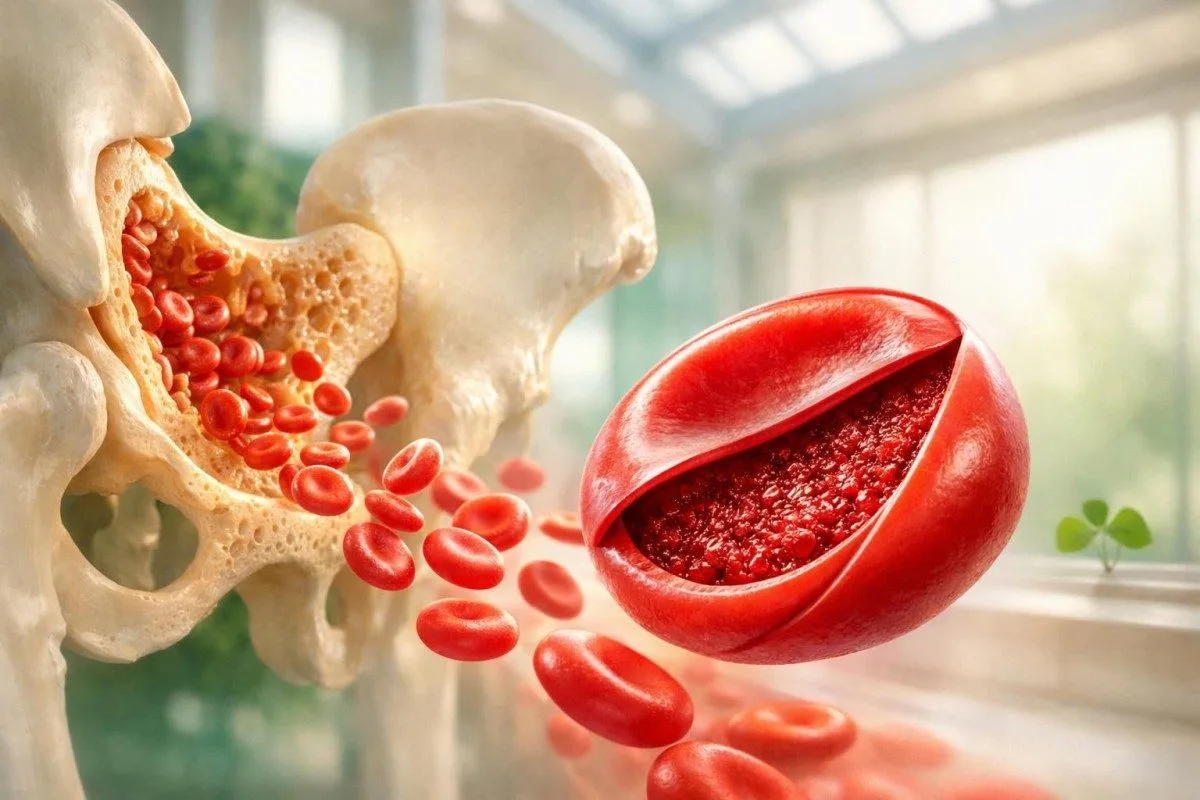
Adult men usually run 13.5-17.5 g/dL, nonpregnant women 12.0-15.5 g/dL, and pregnancy uses lower trimester cutoffs. Low hemoglobin below those thresholds means anemia in most cases, but the MCV, RDW, and red blood cell count tell you why.


- Dorosli mężczyźni usually have hemoglobin levels around 13,5–17,5 g/dL; below 13.0 g/dL meets the usual anemia cutoff.
- Dorosłe kobiyty usually have hemoglobin levels around 12.0-15.5 g/dL; below 12.0 g/dL is anemia in most nonpregnant labs.
- Pregnancy uses lower thresholds: below 11.0 g/dL in the 1st or 3rd trimester and below 10.5 g/dL in the 2nd trimester suggests anemia.
- Newborns normally run high at 14-24 g/dL, then often dip to about 10-11 g/dL by 6-8 tydni from normal physiology.
- MCV poniżej 80 fL points toward microcytic anemia, where iron deficiency and thalassemia trait are the big early suspects.
- RBC count above 5.0 x10^12/L with low MCV makes thalassemia trait more likely than simple iron deficiency.
- Ferritin under 30 ng/mL often means depleted iron stores in symptomatic adults, even before hemoglobin falls far below range.
- pilny przeglōnd is sensible for Hb under 7 g/dL, or sooner if there is chest pain, fainting, black stools, pregnancy bleeding, or breathlessness at rest.
What hemoglobin normal range actually means on a CBC
Hemoglobin normal range je zwykle 13.5-17.5 g/dL u dorosłych mężczyzn, 12.0-15.5 g/dL in nonpregnant adult women, and about 11.0 g/dL or higher in pregnancy depending on trimester. Low hemoglobin below those cutoffs means anemia in most cases, but the cause depends on the rest of the CBC — especially MCV, RDW, i red blood cell count.
Most labs report hemoglobin levels we g/dl; internationally, 12.0 g/dL equals 120 g/L. W sztuczno inteligyncyjo Kantesti, we normalize both units because patients from 127+ countries often upload CBCs in different formats and think a unit conversion is a diagnosis.
Hemoglobin matters more than a standalone red blood cell count because it reflects oxygen-carrying capacity, not just cell number. A patient can have 5.0 x10^12/L red cells and still be anemic if those cells are small or poorly filled, which is why our CBC abbreviations explainer is often the first thing I send patients after a confusing report.
I’m Thomas Klein, MD, and one mistake I still see is dismissing 11,8 g/dl in a menstruating woman as close enough. In clinic, that number can line up with hair shedding, restless legs, poor exercise tolerance, or brain fog months before the rest of the CBC looks dramatic.
How hemoglobin changes from newborn life to older age
Hemoglobin is highest at birth, falls in early infancy, then gradually separates by sex after puberty. A term newborn commonly has 14-24 g/dL, while a 6- to 8-week-old infant may drift down to about 10-11 g/dL from normal physiology alone.
That early dip is called physiologic anemia of infancy. Reticulocyte patterns help here; if an infant is pale and the marrow is not rebounding, I look at prematurity, feeding history, hemolysis, and growth velocity, and our reticulocyte and hematology markers guide gives patients a useful starting map.
Puberty changes the curve fast. Testosterone usually raises male hemoglobin by roughly 1-2 g/dL over adolescence, while menstrual losses pull the average lower in girls — one reason a borderline result at age 15-18 deserves more attention than many school screening forms give it.
Older age muddies things. Some European labs tolerate slightly lower numbers after 65 lat, but in my experience Hb 11-12 g/dL in an older adult is rarely just age; chronic kidney disease, low-grade inflammation, occult GI loss, medication effects, and marrow disorders all live in that range.
Sex, menstruation, testosterone, and pregnancy: why cutoffs differ
Sex and pregnancy change the cutoff because hormones and plasma volume change the physiology. Nonpregnant women are usually anemic below 12.0 g/dL, men below 13.0 g/dL, i pregnant patients below 11.0 g/dL in the first and third trimesters or 10.5 g/dL in the second.
Menstrual iron loss is the commonest reason I see low hemoglobin in younger adults. A typical cycle may cost about 15-30 mg of iron, but heavy bleeding can push losses much higher; our women’s health guide is especially helpful when fatigue clearly tracks with the menstrual calendar.
Testosterone has the opposite effect. It stimulates erythropoietin and marrow activity enough that men on androgen-deprivation therapy or people who stop testosterone can see hemoglobin fall by roughly 1-2 g/dL without any bleeding at all.
Here is the practical cutoff I use in prenatal care: if ferritin is under 30 ng/mL, I treat that as depleted iron stores even if hemoglobin is still 11.2 g/dL. That pre-anemia stage matters because postpartum fatigue often starts there, not at delivery; see our ferritin interpretation article.
Pregnancy by trimester
Plasma volume rises by about 40-50% in pregnancy, while red cell mass rises by about 15-25%, so dilution is expected. That is why an obstetric hemoglobin of 10.8 g/dL can be normal in one trimester and worth a closer look in another.
When a low number is truly anemia — and when it is not
A low hemoglobin result means real anemia most of the time, but not every drop reflects lost red cells. IV fluids, endurance training, and pregnancy can lower Hb by dilution, while smoking and altitude can push it up enough to hide anemia.
I see this after hospital stays all the time. After several liters of isotonic fluid, hemoglobin can fall by roughly 1-2 g/dL without any new bleeding, especially when the sample is drawn soon after infusion rather than after fluid balance settles.
The opposite happens at altitude and with smoking. At around 2,000 meters, expected hemoglobin may run about 0.5-1.0 g/dL higher than at sea level, so a result that looks normal on paper can still be relatively low for that person.
Trend beats drama. Kantesti’s neural network looks hard at prior CBCs because a move from 14.2 to 12.8 g/dL w ciōgu 6 miesiyncy is often more meaningful than a single stable 12.8, a my strōna medycznej walidacyji explains how we handle lab-to-lab reference variation.
Read hemoglobin with MCV, MCHC, RDW, and red blood cell count
The fastest way to interpret hemoglobin is to pair it with MCV, RDW, zasady „refleksowe” red blood cell count. MCV poniżej 80 fL points toward microcytic anemia, 80-100 l is normocytic, and over 100 fL suggests macrocytosis.
Niski MCV plus a relatively high RBC count is the pattern that saves people from being mislabeled as simple iron deficiency. If the RBC count is above about 5.0 x10^12/L i Mentzer index is under 13, thalassemia trait rises higher on my list than iron lack; our RDW and indices guide przechodzi przez tyn logik.
Iron deficiency usually looks messier. RDW powyzej 14.5%, falling MCH, and a low or low-normal RBC count fit iron depletion better, and the next step is not guesswork — it is an iron panel with ferritin and saturation, which we cover in our poradnik na sztudyje żelaza.
Macrocytosis has its own trap. MCV 102-110 fL makes me think of witamina B12, folate, alcohol, liver disease, hydroxyurea, or hypothyroidism, but a normal MCV does not rule those out because mixed deficiencies can average into the reference range; see our vitamin B12 test explainer.
A quick thalassemia clue
Te Mentzer index is calculated as MCV divided by RBC count. It is not diagnostic by itself, but a value under 13 nudges me toward thalassemia trait, while a value over 13 leans more toward iron deficiency.
Most likely causes of low hemoglobin by CBC pattern
The commonest causes of low hemoglobin are iron deficiency, anemia of inflammation, kidney disease, vitamin B12 or folate deficiency, blood loss, and inherited traits such as thalassemia. The CBC pattern narrows that list fast — often before a specialist sees you.
Microcytic anemia is still iron deficiency until proved otherwise in many adults, especially with fatigue, pica, hair shedding, or heavy periods. Ferritinu poniżej 15 ng/mL is highly specific for iron deficiency, and poniżej 30 ng/mL is often enough to explain symptoms in real clinic life even if the lab marks it acceptable.
Normocytic anemia makes me think of kidney disease, inflammatory illness, acute blood loss, or hemolysis. When eGFR spada poniżej 60 mL/min/1,73 m², erythropoietin production often weakens, and our kidney function guide to eGFR helps patients spot that pattern early.
Macrocytic anemia pushes the differential in a different direction. Wysoki TSH, low B12, excess alcohol, liver disease, methotrexate, and hydroxyurea all matter here; hypothyroidism alone can nudge hemoglobin down by about 0.5-1.5 g/dL, which surprises people until they read the thyroid panel article.
One thing the internet misses: combined deficiency is common. I have seen patients with ferritin 9 ng/mL and borderline B12 240 pg/mL present with a perfectly normal MCV 89 fL, then wonder why their fatigue is so intense.
Which follow-up tests matter after a low hemoglobin result
After a low hemoglobin result, the next tests should match the CBC pattern rather than follow a generic checklist. In most adults, I start with a repeat CBC, rachowanie retikulocytōw, ferytyna, wysyceniy transferyny, kreatynina, a często CRP.
If jaundice, dark urine, or a rapid drop is part of the story, add a hemolysis bundle. Bilirubin pośredni, LDH, haptoglobinō, and reticulocytes together tell you whether red cells are being destroyed, and our bilirubin guide explains why bilirubin rises when cell turnover accelerates.
If the history sounds like bleeding, the workup shifts. Heavy menstrual loss, black stools, recent surgery, and NSAID exposure usually matter more than fancy algorithms, and pre-op anemia deserves its own plan — our before-surgery blood test article covers that angle well.
The reason I do not order everything at once is simple: targeted panels are cheaper and cleaner. Kantesti AI can map these clusters within about 60 sekund, but even on paper the rule is the same — match the test to the pattern, not to panic.
One result should make you pause. When Hb is low and the white cell count is also low, I worry less about isolated iron deficiency and more about marrow suppression or systemic illness.
Tests I usually save for second-line workup
Erythropoietin levels, hemoglobin electrophoresis, and marrow studies can be very useful, but they are not my first move for every Hb 11.4 g/dL result. I order them when the CBC pattern, family history, or poor response to treatment makes the obvious explanation less likely.
Symptoms, severity, and when low hemoglobin becomes urgent
Symptoms often start when hemoglobin drops below about 10 g/dL, but the speed of the drop matters more than the absolute number. A patient who slides slowly to 8.8 g/dL may feel less short of breath than someone who falls from 14 to 10 g/dL in a week.
The classic symptoms are fatigue, shortness of breath on exertion, palpitations, headaches, poor concentration, and dizziness. Restless legs, brittle nails, and ice craving are especially suggestive of iron deficiency, and our dekodōwanje symptōmōw do testu helps patients connect those dots without overtesting.
Urgency rises with context. Hb under 7 g/dL often triggers transfusion discussions in otherwise stable adults, while many hospitals use 8 g/dL if there is active cardiovascular disease, major surgery, or ongoing bleeding — Carson and colleagues’ AABB work pushed that practice toward a restrictive threshold.
Chest pain, fainting, breathlessness at rest, pregnancy with active bleeding, or black stools deserve same-day medical help even if the number is not terrifying. If a procedure is coming up, even 10-11 g/dL can matter because postoperative outcomes worsen when anemia is ignored; see our pre-op lab guide.
Special situations that fool people: athletes, kidney disease, inflammation, and thalassemia trait
Athletes, inflammation, chronic kidney disease, and thalassemia trait can all distort how hemoglobin looks on a CBC. These are the cases where a single number misleads and pattern recognition matters most.
Endurance athletes often develop dilutional pseudoanemia because plasma volume expands. Long runs can also cause mild foot-strike cell turnover and transient ferritin shifts, while exercise may push AST into the 40-80 U/L range and muddy the picture; our AST interpretation guide helps separate muscle clues from blood clues.
Inflammation complicates iron studies because CRP and hepcidin rise together. Ferritin can look reassuring at 80-150 ng/mL and still coexist with functional iron restriction, which is why I always read ferritin beside inflammatory markers; our CRP range article explains that link.
Thalassemia trait is the classic false lead. The hemoglobin may be only mildly low at 10.5-12.5 g/dL, o MCV can sit in the 60s or low 70s, and the RBC count is often normal or high — a pattern very different from typical iron deficiency.
Kidney anemia tends to look blander. When kidney function is reduced and the reticulocyte response is inappropriately quiet, the problem is often low erythropoietin rather than missing iron, and trying to normalize Hb much above 11.5 g/dL with ESA therapy is usually avoided because thrombotic risk rises.
What to do next with your CBC result
If your hemoglobin is low, the right next step is usually confirmation plus targeted follow-up — not blind iron pills for everyone. As of April 3, 2026, my own rule is four steps: confirm the number, read the CBC pattern, look for bleeding or kidney or thyroid clues, and treat the cause.
Przy nasza platforma AI do analizy krwi, we compare your result with age, sex, pregnancy status, units, and nearby markers in about 60 sekund. That matters because 11.6 g/dL in a pregnant patient, a marathon runner, and a man with CKD do not mean the same thing.
I’m Thomas Klein, MD, and I still tell patients the same old-fashioned thing: bring the whole report, not a screenshot of one number. Our physicians review clinical standards through the Rada Doradczo Medyczno and you can read more about the organization itself on Ô Nas.
If low hemoglobin travels with low platelets or abnormal white cells, fever, night sweats, or weight loss, get medical attention quickly. Our free CBC interpretation demo is a practical place to upload the report before your appointment, and the przewodnik po białych krwinkach helps you see whether more than one blood line is off.
Most patients do best with a repeat CBC in 2–8 tygodni, not six months later, unless the cause is already obvious and treatment has started. Kantesti now supports more than 2 milijōny używoczōw globally, but the core clinical advice has not changed much in 15 years: chase the reason, not just the red flag.
Research and publication notes
Od April 3, 2026, the best way to read a low hemoglobin result is still to combine the CBC pattern with longitudinal data rather than treat the cutoff as a diagnosis by itself. That is the same approach we discuss in the Kantesti blog.
Zespół badawczy Kantesti. (2026). AI analiza krwi: 2.5M testōw przeanalizowanych | Globalny raport zdrowio 2026. Zenodo. https://doi.org/10.5281/zenodo.18175532. Dostępne także przez Brama Podszukowań i Akadymijo.edu.
Zespół Kantesti. (2025). Test krwi RDW: Kōmpletny przewodnik do RDW-CV, MCV i MCHC. Zenodo. https://doi.org/10.5281/zenodo.18202598. Dostępne także przez Brama Podszukowań i Akadymijo.edu.
I included these because RDW, MCV, and trend data are where low hemoglobin interpretation becomes genuinely useful. In my experience, the clinical miss is rarely the existence of anemia — it is missing the pattern that tells you why.
Czynsto zadawane pytania
Jaki poziōm hemoglobiny uznaje sie za anemiã?
In most adults, anemia means hemoglobin below 13.0 g/dL in men i below 12.0 g/dL in nonpregnant women. In pregnancy, the usual cutoffs are below 11.0 g/dL in the first and third trimesters and below 10.5 g/dL in the second trimester. The same values in g/L are 130 g/L, 120 g/L, i 110 or 105 g/L. Children and newborns use different ranges, so age always matters before labeling a result abnormal.
Czy 11,9 hemoglobiny je niskie dlo kobiyty?
Dla nonpregnant adult woman, 11.9 g/dL is technically just below the common 12.0 g/dL cutoff and can be clinically meaningful. In my experience, that number often pairs with low ferritin, heavy periods, hair shedding, or reduced exercise tolerance rather than being an incidental lab quirk. In pregnancy, 11.9 g/dL may still be acceptable depending on trimester because obstetric thresholds are lower. The next useful checks are usually ferritin, iron saturation, and the rest of the CBC indices.
Czy mozesz miec niskij hemoglobina, ale normalno liczbã czerwōnych krwinek?
Yes — a person can have low hemoglobin z normal red blood cell count if the cells are too small or carry too little hemoglobin. This is common in microcytic states, where MCV is under 80 fL and iron deficiency or thalassemia trait becomes more likely. A relatively high RBC count, often above 5.0 x10^12/L, with low MCV points more toward thalassemia trait than simple iron deficiency. Dilution from pregnancy or heavy IV fluids can also lower hemoglobin without true loss of red cells.
Jakie badania powiniem prosić po niskim wyniku hemoglobiny?
The first follow-up tests after a low hemoglobin result are usually a repeat CBC, rachowanie retikulocytōw, ferytyna, wysyceniy transferyny, kreatynina, a często CRP. Jeżl MCV is over 100 fL, a potem witamina B12, folate, TSH, and liver tests are reasonable next steps. If the drop was rapid or jaundice is present, the useful hemolysis bundle includes bilirubina, LDH, haptoglobinō, and reticulocytes. The right panel depends on the CBC pattern, not on the hemoglobin value alone.
Kiedy niskie hemoglobina je niebezpieczne?
Low hemoglobin becomes more concerning when symptoms or speed of decline suggest the body cannot compensate. In stable adults, Hb below 7.0 g/dL often triggers transfusion discussions, and many hospitals use 8.0 g/dL when there is cardiovascular disease, major surgery, or active bleeding. Chest pain, fainting, breathlessness at rest, pregnancy with bleeding, or black stools deserve urgent medical evaluation even if the number is higher than 7.0. A sudden drop from 14 to 10 g/dL can feel worse than a slow decline to 8.8 g/dL.
Czy ciążō zmiyńsza normalny zakres hemoglobiny?
Yes — pregnancy lowers the normal hemoglobin threshold because plasma volume expands more than red cell mass. The common obstetric cutoffs are 11.0 g/dL in the first trimester, 10.5 g/dL in the second trimester, and 11.0 g/dL again in the third trimester. A pregnant patient can still have depleted iron stores before crossing those anemia cutoffs, which is why feritin pod 30 ng/mL matters clinically. That is one of those areas where context matters more than the single number.
Czy niskie stężenie hemoglobiny zawszy oznacza niedobór żelaza?
No — iron deficiency is common, but it is not the only cause of low hemoglobin. Kidney disease, chronic inflammation, witamina B12 or folate deficiency, occult bleeding, hemolysis, hypothyroidism, thalassemia trait, and marrow disorders can all lower hemoglobin. Ferritinu poniżej 15 ng/mL strongly supports iron deficiency, but a normal ferritin does not fully exclude it when CRP je wysoke. That is why the rest of the CBC and a few targeted follow-up tests matter so much.
Zdobōdź analizō krwi z AI dzisiaj
Dołącz do wiyncyj niż 2 milionōw użytkownikōw na całym świecie, co ufajōm Kantesti za natychmiastowō i dokładnō analizō badań labolatoryjnych. Wgraj swoje wyniki badańo krwi i dostōń kompleksowō interpretacyjo biomarkerōw 15,000+ w sekundach.
📚 Publikacyje badawcze z referencjami
Klein, T., Mitchell, S., & Weber, H. (2026). AI analiza krwi: 2.5M testōw przeanalizowanych | Globalny raport zdrowio 2026. Kantesti AI Medical Research.
Klein, T., Mitchell, S., & Weber, H. (2026). Test krwi RDW: Kompletny poradnik do RDW-CV, MCV i MCHC. Kantesti AI Medical Research.
⚕️ Uchylynie ôd ôdpowiedzialności medycznyj
Ten artykuł je wyłōncznie do celōw edukacyjnych i nie stanowi porady medyczno. Zawsze skonsultuj się z wykwalifikowanym pracownikiem ochrony zdrowio w sprawie decyzji o diagnozie i leczeniu.
Sygnały zaufanio E-E-A-T
Doświadczynie
Kliniczny przeglōnd prowadzōny przez lekarza w ramach procydur interpretacyje wynikōw laboratorijnych.
Ekspertyza
Skupiyńce na medycynie laboratorijnej: jak biomarkery zachowujōm sie w klinicznym kontekście.
Autorytetność
Napisane przez dr. Thomasa Kleina z przeglōndym przez dr. Sarah Mitchell i prof. dr. Hansa Webera.
Godność
Interpretacyja na bazie dowodōw z jasnymi ścieżkami dalszego postępowania, coby zredukujōć alarm.