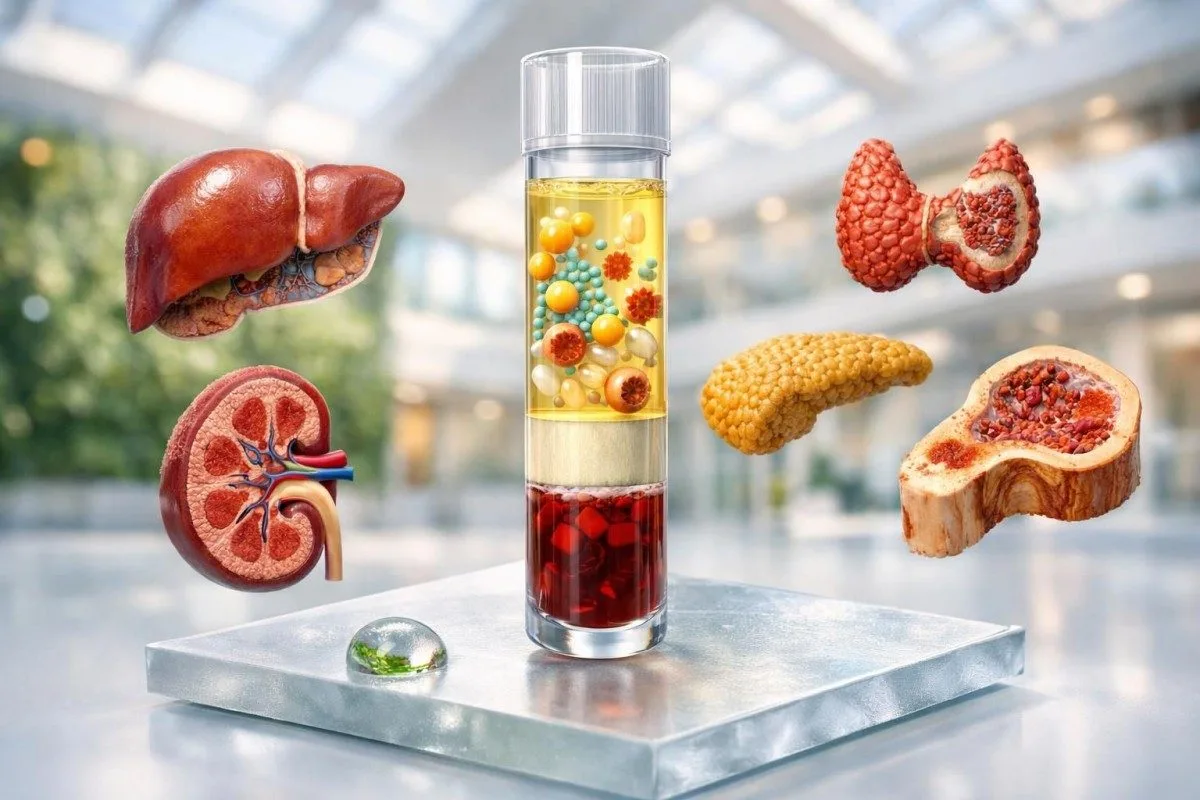
Większość paneli do samokwantyfikacyji je za szerokie, za hałaśliwe abo za niespójne, coby ci ôni wiele nauczyły. Te pożyteczne są prostsze: powtarzalne markery z czystym czasym, jasnymi progami i dość sygnału klinicznego, coby zmienić to, co robisz dalej.


- ApoB Poniżej 90 mg/dL to rozsądny cel dla wielu dorosłych; 130 mg/dL abo więcej je wyraźnie wysokie.
- Glukoza na czczo Z 70–99 mg/dL to typowe; 100–125 mg/dL pasuje do upośledzonego glukozy na czczo.
- HbA1c Poniżej 5.7% to normalnie; 5.7%–6.4% sugeruje stan przedcukrzycowy; 6.5% abo wyżej wymaga potwierdzenia.
- Insulina na czczo Powyżej ôkoło 10 µIU/mL może sugerować wczesny opór na insulinę, choć badania sie różnią.
- hs-CRP Poniżej 1.0 mg/L to niskie ryzyko; wartości powyżej 10 mg/L zwykle ôdzwierciedlają ostre chorobę abo stres tkankowy.
- Ferytyna Poniżej 30 ng/mL często znaczy wyczerpane zapasy żelaza, nawet jak hemoglobina je normalna.
- Wysycenie transferryny Poniżej 20% sugeruje ograniczenie żelaza; powyżej 45% podnosi pytania ô przeładowanie żelazym.
- eGFR Poniżej 60 mL/min/1.73 m² przez wiyncyj niż 3 miesiace wymaga oceny nyrek.
- 25-OH witamina D Z 20–50 ng/mL je adekwatne w wielu laboratoriach, ale 30–50 ng/mL to częsty praktyczny cel.
- GGT Powyżej 60 IU/L należno wziąć w kontekst, szczególnie jak ALT abo ALP też je podwyższone.
Co sprawia, że biomarker wart powtarzania w biohakerskim badaniu krwi?
Najlepsze biomarkery do powtarzania w biohakerskim badaniu krwi to ApoB abo cholesterol nie-HDL, glukoza na czczo, HbA1c, trójglicerydy, insulina na czczo, hs-CRP, ferrytyna z indeksami CBC, kreatynina z eGFR abo cystatyna C, ALT/AST/GGT, TSH z wolnym T4 oraz witamina D 25-OH. Warto je śledzić, bo zmieniają sie w sposób czytelny klinicznie w czasie ôd tygodni do miesiyncy. Losowy kortyzol, pojedyncze cytokiny i panele hormonów bez ustalonego czasu zwykle nie.
Dobry badanie krwi w ramach wellness To je nudne, ale w najlepszy możliwy sposób. Jako Thomas Klein, MD, mniej mi zależy na egzotycznych panelach, a barzij na wskaźnikach, co da się powtarznie w podobnych warunkach, na nich reagować i je interpretować bez zgadywania; dlatego zaczynam wiyncyj ludzi z biohackingym badaniym krwi skupionym na kardiometabolicznych i wskaźnikach funkcji organów.
Jeźli chcesz śledzić wyniki badańo krwi to porządnie, najpierw zbierz wprzódne dane i szukaj kierunku, a nie pojedynczych czerwonych flag. Zacznij od swojich historia badańo krwi i zapisz datę, stan na czczo, suplementy, chorobę i obciążenie treningowe abo wokoło każdej próbki.
Potym porównaj wielkość zmiany z kontekstem dookoła niej. Nasze przewodnik do porōwnywania trendōw pokazuje, czemu przesunięcie o 3 mg/dL we glukozie może być szum, a wzrost o 28 mg/dL w trójglicerydach po 12 stabilnych tygodniach je zwykle na tyle realny, że warto za nim gonić.
Kantesti AI widzi to ciągle na danych, co wnoszą ludzie z wiyncyj niż 2M użytkowników w 127+ krajach: ludzie robią ponowne badania za rychło i przesadnie reagują na drobne przesunięcia. Nasze poradnik ôdniesiyniowy ôd biomarkerōw je pożyteczne, bo rozdziela stabilne wskaźniki od tych, co mogą się wahać 15% do 30% przez straty snu, odwodnienie, suplementy abo ostre sobotnie treningi.
Trzy reguły, co używam, zanim uznam zmianę za realną
Wierzę powtarzalnemu biomarkerowi barziej, jak prawdziwe są 3 rzeczy: użyto tej samej metody labolatoryjnej, warunki pobrania były podobne i je interwencja, co moze wiarygodnie wyjaśnić zmianę. Dwa wyniki w odstępie 8–12 tygodni zwykle uczą cię barzij niż pięć losowych paneli porozrzucanych po rok.
Które markery metaboliczne faktycznie pokazują postęp?
Najlepszy zestaw trendów metabolicznych je glukoza na czczo, HbA1c, a często insulina na czczo. Glukoza na czczo 70–99 mg/dL je typowa, HbA1c poniżej 5.7% je uważany za niecukrzycowy, a insulina na czczo powyżej około 10 µIU/mL często sugeruje wczesną insulinooporność, nawet jak glukoza dalej wyglonda dobrze.
Glukoza na czczo i HbA1c dają różne odpowiedzi. Glukoza na czczo odzwierciedla wytwarzanie glukozy w wątrobie z tego poranka, a HbA1c odzwierciedla mniej wiyncyj 8–12 tygodni glikacji; HbA1c od 5.7% do 6.4% pasuje do stanu przedcukrzycowego, a 6.5% abo wyżej może diagnozować cukrzycę, jak to potwierdzić—dlatego je czytamy razem w naszym przewodniku do interpretacji stanu przedcukrzycowego.
Insulina na czczo je mniej ustandaryzowana, ale często je najwcześniejsza wskazówka, że system pracuje za mocno. Wiele laboratoriów używa zakresu referencyjnego aż do 20 abo 25 µIU/mL, ale w moim doświadczeniu wartości uporczywie powyżej około 10 µIU/mL, abo HOMA-IR powyżej 2.0 do 2.5, to tam zaczynają się pokazywać subtelne przyrosty wagi i zmęczenie po posiłku; nasze wyjaśniacz HOMA-IR przechodzi przez rachunki.
Widzę ten wzór u szczupłych pacjentów barziej, niż ludzie sie spodziewają. 34-letni kolarz może mieć glukozę na czczo 92 mg/dL i HbA1c 5.3%, ale insulina na czczo 18 µIU/mL opowiada inno historię—często po długim okresie złego snu, podjadania ultra-przetworzonych przekąsek abo agresywnego „bulkingu”.
Nie rób ponownych badań markerów glukozy po 10 dniach i nie oczekuj mądrości. Glukoza na czczo może się poprawić w 2–4 tygodnie, ale HbA1c zwykle potrzebuje około 90 dni, żeby pokazać pełny efekt diety, spadku wagi, metforminy abo lepszōgo regularnego snu.
Które markery lipidowe lepi od całkowitego cholesterolu sprawdzają sie do analizy trendów?
do profilaktyki sercowo-naczyniowej, ApoB je najbarzi miarodajny wskaźnik lipidowy do śledzynia w czasie; jak niy mozesz go dostōć, cholesterol nie-HDL je nastympny najlepszy awaryjny wybór. ApoB poniżej 90 mg/dL je sensowny dla wiela dorosłych, poniżej 80 mg/dL je często preferowany u pacjentōw z wyższym ryzykiem, a 130 mg/dL abo wiyncyj je wyraźnie wysoki.
ApoB śledzi liczbę cząsteczek miażdżycogennych, a niy ilość cholesterolu w nich, i dlatego wolę go od LDL-C, jak te dwa parametry sie rozjeżdżōm. Wytyczne cholesterolowe AHA/ACC z 2018 roku zalecajōm ApoB jako cel wtórny, jak trójglicerydy przekraczajōm 200 mg/dL (Grundy i wsp., 2019), a nasze artykuł o zakresie LDL wyjaśnia, czemu LDL-C 115 mg/dL moze jeszce niedoszacować ryzyko powiōzane z cząsteczkami.
Jak ApoB je niydostępny, cholesterol nie-HDL je praktyczny awaryjny wybór, bo obejmuje wszystkie cząsteczki zawierajōce ApoB i wymaga jedynie cholesterolu całkowitego minus HDL. Non-HDL poniżej 130 mg/dL je powszechny cel w profilaktyce pierwotnej, trójglicerydy poniżej 150 mg/dL zwykle są pożądane, a nasze przewodnik po lipidach je przydatne, jak jeden wynik sie poprawi, a reszta sie pogorszy.
Trójglicerydy są nadzwyczaj wrażliwe na timing. Jedno posiłek w restauracji, alkohol w ciōgu 48–72 godzin abo blok treningowy wyczerpujōcy glikogen moze je przesunąć o 30 do 80 mg/dL, tak że niby „zły” wynik trójglicerydów 198 mg/dL niy zawsze je historiōm przewlekłej metabolicznej.
Kantestiego Interpretacyjo podszukowań krwi napyndzanych sztucznōm inteligyncyjōm ma tu wartość, bo czyta ApoB, LDL-C, non-HDL, trójglicerydy, markery wōntroby i glukozę jako klaster. W naszym platformie wzorzec wysokich trójglicerydów plus niskie HDL plus lekko podwyższony ALT często uczy więcej niźli jakakolwiek pojedyncza odosobniona flaga.
Które markery wōntroby i regeneracyje są warte powtarzania?
Markery wōntroby, co warto powtōrzyć, to ALT, AST, i GGT; są o wiele barzi użyteczne w czasie niźli przypadkowy panel „detoksu”. ALT zwykle trzyma sie w granicach około 7–56 U/L, AST około 10–40 U/L, a GGT powyżej 60 IU/L u dorosłych często zasługuje na bliższe sprawdzenie, szczegōlnie jak ALT abo ALP też są podwyższone.
AST moze pochodzić z mięśni, nie tylko z wōntroby. U 52-letniego biegacza maratonu z AST 89 U/L, ALT 32 U/L, CK 1,200 U/L i GGT 18 U/L dzioń po wyścigu prawie zawszy wskazuje na przerzut z ćwiczeń, a nie na pierwotne uszkodzenie wōntroby, dlategō to sportowcy powinni czytać te markery rōwnocześnie z naszym artykułem o morfologii krwi po rekonwalescencji.
GGT je mniej „efektowne”, ale często bardziej pouczajōce. A GGT powyzej 60 IU/L u dorosłych zwykle wymaga przeglōndu hepatobiliarnego, szczegōlnie gdy ALP abo ALT je takze podwyzszōne, a nasze wzōrniŏki enzymōw wōntroby kierujō pomaga rozrōznić alkohol, chorobę stłuszczeniowō wōntroby, efekty lekōw i problemy z przepływem żōłci.
Tuke je niuans, kery wiele stron o wellness pomija: niektóre europejskie laboratoria stosujō nizszy górny limit dla ALT, szczegōlnie u kobiet, bo łagodne stłuszczenie wōntroby moze sie ukryć w tradycyjnym zakresie referencyjnym. W praktyce, stały dryf ALT z 18 do 34 do 46 U/L w rok ma dla mnie większe znaczenie niź jeden odosobniony ALT 52 U/L po weekendzie z NSAID i intensywnym dźwiganiem.
Przestań samodzielnie robić eksperymenty i zasięgnij porady medycznej, jeźli AST abo ALT wzrośnie do wiyncyj niz 3 razy gōrny limit referencyjny, jeźli bilirubina takze sie podnosi, abo jeźli czujesz sie zżōłknięty, słaby abo mdły. Analiza trendōw je pożyteczna; to nie je zamiana za pilnō ocenę.
Które markery nyrek przeżywają realne treningi i wahanio nawodnienia?
Dla analizy trendōw nerek, kreatynina plus eGFR je podstawowa para, a cystatyna C je mądre dopowiedzenie, jeźli masa mięśniowa abo suplementy z kreatynōm zamulajō obraz. Utrzymujōcy sie eGFR ponizej 60 mL/min/1,73 m² przez wiyncyj niz 3 miesiōce spełnia próg przewlekłej choroby nerek, podczas gdy pojedynczy skok kreatyniny po odwodnieniu abo po cięzkiej sesji z przysiadami często nie.
Kreatynina je cząstkowo markōr mięśni. W ludziach z duzymi mięśniami, duzy pobōr mięsa, kreatyna 3-5 g/dzień, abo odwodnienie moze podnōsnyć kreatyninę o 0.1 do 0.3 mg/dL bez prawdziwego uszkodzenia nerek, dlatego często łōczę podejrzany wynik z cystatyna C i nasze przewodnik po trendach nerek.
Typowo u dorosłych kreatynina je abo około 0.7-1.3 mg/dL u męzczyzn i 0.6-1.1 mg/dL u bōb, chociaz laboratoria sie rōznōm. Rōwnanie CKD-EPI z 2021 roku usunęło wspōłczynniki rasy z eGFR raportowaniō (Levey et al., 2021), a ta zmiana uczyściła porōwnywanie w czasie, ale takze sprawiła, że niektōrzy długoczasowi pacjenci zauwazyli po raz pierwszy mały, pozōrny przesuw.
A cystatyna C z grubsza 0.6-1.0 mg/L je powszechne u dorosłych, a ja to widzōm szczegōlnie pomocne u kulturystōw, starszych osōb i u ludzi na dietach z duzym białkiem. Jezeli pytanie o ryzyko nerek je prawdziwe, dodaj stosunek albuminy do kreatyniny w moczu, bo wczesne uszkodzenie nerek moze tam sie pokazać, zanim kreatynina w ogōle sie ruszy.
Nie mierz markōrōw nerek rano po wyzwaniu odwodnieniym, po sesji w saunie abo po przejezdzie/jezdzie na 30-kilometrowym dystansie i potem panikuj. Większość pacjentōw dostaje czystsze linie trendu, jak powtōrzy po 24-48 godznach normalnego nawodnienia, rutynowego pobōru soli i bez ostrego treningu na cało.
Które markery żelaza pomagają w regeneracyji, znużeniu i dostarczaniu tlenu?
Najlepszy powtōrny zestaw żelaza to ferytyna, wysyceniy transferyny, zasady „refleksowe” CBC indeksy MCV i RDW; samo żelazo w surowicy je za bardzo niestabilne. Ferrytyna ponizej 30 ng/mL zwykle znaczy wyczerpane zapasy żelaza u dorosłych, wysycenie transferyny poniżej 20% sugeruje ograniczenie żelaza, a ferrytyna powyzej 300 ng/mL u męzczyzn abo 200 ng/mL u bōb zasługuje na kontekst, zanim ktokolwiek zacznie winować nadmiar żelaza.
Ferrytyna je markōr składowania żelaza, niy miernik energii, ale niska ferrytyna często tłumaczy zmęczenie, zanim hymoglobina w ogōle spadnie. Ferrytyna poniżej 30 ng/mL mocno sugeruje wyczerpane zapasy żelaza u dorosłych, a wiele kobiet miesiōczkujōcych abo sportowcōw wytrzymałościowych ma objawy duzo przed tym, jak pojawi sie anemia; nasze przewodnik po niskiej ferrytynie przechodzi przez ten wczesny etap.
Żelazo w surowicy moze sie zmieniać z godziny na godzina, więc je to słaby samodzielny markōr trendu. Wysycenie transferryny od 20% do 45% je typowe, wartości poniżej 20% sugerujōm ograniczenie żelaza, a ferrytyna powyzej 200 ng/mL u bōb abo 300 ng/mL u męzczyzn przy wysyceniu powyzej 45% je kombinacyja, co mi kaze myśleć o nadmiarze żelaza, a niy tylko o stanie zapalnym.
Jest tu jeszcze inny pułap: ferityna je takze białko ostrej fazy. Ferityna 280 ng/mL z hs-CRP 6 mg/L i niskim wysyceniem często wskazuje na stan zapalny abo stres wōntroby, natomiast ferityna 280 ng/mL z wysyceniem 52% to co innego.
Trendy uzupełniania żelaza idō powoli. Zrób ponowne badanie ferytyna 8–12 tygodni po rozpoczęciu doustnego żelaza, a dłużej po zmianach dawki, bo badanie po 2 tygodniach zwykle mierzy bardziej timing tabletek niŏz odtworzone zapasy w tkankach.
Jaki jest najlepszy marker stanu zapalnego do śledzenia w kierunku regeneracyji i profilaktyki?
Dla prostego sygnału powrotu do zdrowia i ryzyka, hs-CRP je najbarziej uŜyte biomarker zapalenia do śledzynia w czasie. Wartości poniŏj 1.0 mg/L zwykle sō niskie, 1.0–3.0 mg/L je pośrednie, powyŏj 3.0 mg/L sugeruje większe obciōŜenie zapalne, a powyŏj 10 mg/L zwykle odzwierciedla ostre chorōbsko abo stres tkankowy, a nie subtelne ryzyko długowieczności.
hs-CRP je czułe, ale nie je swoiste. W JUPITER dorośli z LDL poniŏj 130 mg/dL, ale z hs-CRP 2.0 mg/L abo wyŜej, i tak widzieli mniej zdarzeń naczyniowych przy terapii statynami (Ridker i wsp., 2008), co je jedyn z powodōw, dla ktōrych trzymō to hs-CRP w panelach profilaktycznych, nawet jak wszystko insze wyglōnda dobrze.
Większość ludzi interpretuje lekko podwyŜone hs-CRP zbyt dramatycznie. Wynik 2.8 mg/L moŜe wynikać z otyłości trzewnej, zapalenia dziōseł, złego snu abo z tygodnia po wirusowej chorobie, wiyncz zwykle łączō to z zmianōm w pasie, spoczynkowym tętniōm i CBC, a nie traktujō jako tajemniczy sygnał toksyny; nasze porōwnanie markerōw inflamacyji pomaga z tym wzōrem.
Jeśli hs-CRP je powyŏj 10 mg/L, powtōrz je, jak ostre zagadnienie sie uspokoi, zanim uŜyjesz je do śledzynia profilaktycznego. ESR czasym je uŜyte w diagnostyce chorōb autoimmunologicznych abo przy badaniach przetrwałej infekcji, ale je za mało precyzyjne i za wolne na rutynowe „week-to-week” biohackingowe dochodzynie do zdrowia.
Miesięczne śledzynie je wystarczajōce dla wiynczości ludzi. Tygodniowe powtōrki rzadko sō pomocne, chyba Ŝe monitorujesz znany stan zapalny pod kierownictwem lekarza.
Które markery hormonów i witamin są faktycznie użyteczne w czasie?
Markery endokrynologiczne, co najbarziej warto powtōrzyć w ogōlnym badanie krwi w ramach wellness są TSH z wolne T4, i 25-hydroksy witamina D gdy w grę wchodzi ryzyko niedoboru lub suplementacja. TSH jest powszechnie cytowane na poziomie ôkoło 0,4–4,0 mIU/L, wolne T4 ôkoło 0,8–1,8 ng/dL, a 25-OH witamina D 20–50 ng/mL je adekwatne w wiela laboratoriach, choć wiela lekŏrzy dąży do 30–50 ng/mL u dorosłych z wyższym ryzykiem.
TSH je pomocne, ale samo TSH gubi zaskakujōco duzo kontekstu. TSH 4.8 mIU/L z niskō-normalnym wolnym T4 znaczy co innego niż TSH 4.8 mIU/L z mocnym wolnym T4, a nasze poradnik do badania tarczyce wyjaśnia, kiedy przeciwciała abo wolne T3 faktycznie zmieniajō historiō.
Biotyna je najczęstszy „psujōcy” czynnik w badaniach labolatoryjnych, jaki widzō u samodzielnych monitorōw. Wysokodozowe suplementy biotyny, często 5.000 do 10.000 µg na dzioń w preparatach na włosy i paznokcie, mogō zniekształcić niektóre immunoassaje, dlatego zwykle proszō pacjentōw, żeby je przestali brac na 48–72 godziny przed badaniami tarczycy.
Dla 25-OH witamina D, głōwny błąd to robienie powtōrnych badań za rychło i gonienie drobnych zmian. Nasze artykuł o badaniu witaminy D obejmuje wybōr metody, ale praktyczny punkt je prosty: sprawdź znowu po 8–16 tygodniach, uznaj poziomy powyżej 100 ng/mL za potencjalnie nadmiarowe i pamiętej, że otyłość, szerokość geograficzna zimō i złe wchłanianie przesuwajō odpowiedź na dawkę.
Surowica B12 poniżej 200 pg/mL zwykle wspiera niedobōr, ale normalne B12 260 pg/mL nie daje mi całkowitego spokoju, jeżly w grze je neuropatia, anemia, używanie metforminy abo dieta wegeńska. W takich przypadkach kwas metylomalonowy abo homocysteina mogō dodać więcej wartości niż powtarzanie B12 co miesiōc.
Które modnie laboratoria zwykle są słabe do powtarzalnego śledzenia?
Najmniej pożyteczne rutynowe trendy u zdrowych samomonitorōw to losowy kortyzol, hormōny płci bez określonego czasu, szerokie panele cytokin, panele IgG na jedzenie, oraz większość przesiewowe badania na metale ciężkie zrobione bez prawdziwej historii narażenia. Te badania nie zawsze są złe; są po prostu „szumne”, wrażliwe na czas i często oderwane od planu działania.
Rano kortyzōl je mocno zależne od czasu, a praca na zmiany może sprawić, że porządny referencyjny przedział prawie nic nie daje. Niezmierzany w czasie testosteron nie je dużo lepszy; wiyncy wytyczne wolą 2 pomiary rano, miynzy ôkoło 7 a 10 rano, bo huśtawka z dnia na dzień może być znaczna, a nasze artykuł o ślepym punkcie w AI interpretacji wyjaśnia, czemu kontekst lepszy niż pojedyncze flagi.
Dowody na szerokie panele pokarmowych IgG i ogólne przesiewy cytokin są szczerze mówiąc tak mieńko albo słabe, że nie nadają się do rutynowego samodzielnego śledzynia. Wymyślne badanie to jeszcze tylko metoda laboratoryjna, a nasze maszyny w labie kontra AI wyjaśniacz je dobrym przypomnieniem, że jakość interpretacji zależy od prawdopodobieństwa przed badaniym, czasu i tego, jakigo pytania klinicznego tak naprawdę szukasz.
W Kantesti przeglądam te przypadki brzegowe z naszym Rada Doradczo Medyczno, a rada je zwykle niespektakularna: jeźli wskaźnik niy ma stałego protokołu pobranio ani planu działania, niy rób z niego trendów co miesiōnc. Thomas Klein, MD, dostaje pytania o panele na „zmęczenie nadnerczy” prawie co tydzień, a moja odpowiedź dalej je taka, że na początek na uwadze zasługują objawy, sen, leki i stan tarczycy abo żelaza.
To jednak, badania specjalistyczne mają swoje miejsce. Jeźli masz niepłodność, nieregularne miesiōnczki, objawy erekcji, podejrzenie toksycznego narażenia, używanie sterydów abo chorobę autoimmunologiczną, dobry ukierunkowany panel hormonów abo narażenia może być bardzo pomocny.
Jak czasto powtarzać badanie krwi na dobrostan i jak je standaryzować?
Najbardziej powtarzalne biomarkery w biohackingym badaniym krwi trzeba sprawdzać co 3-6 miesiōnców, a niy co 2 tygodnie. HbA1c, ApoB, trójglicerydy, ALT, AST, GGT i hs-CRP zwykle pokazują znaczący ruch po 8-12 tygodniach, a ferrytyna i witamina D często potrzebują 8-16 tygodni, a markery tarczycy abo nerek mogą wymagać tylko 6-12 miesiōnców, chyba że zmienia się leczenie.
Najlepszy sposób, żeby poprawić analiza trendů krewnych badań to ujednolicić pobranie. Tam, gdzie to możliwe, używaj tego samego labu, rób post 8-12 godzin dla glukozy i lipidów, celuj w to samo okno rano, unikaj alkoholu przez 48-72 godziny, pomiń twarde treningi przez 24-48 godzin i przejrzyj nasze artykuly na temat zasad postu zanim zarezerwujesz.
Używaj tych samych jednostek i metod referencyjnych za każdym razem, bo grafika cię może wprowadzić w błąd. Jeźli twój raport przychodzi jako foto abo PDF, nasze instrukcja do wgrywania pokazuje, jak normalizujemy zakresy, a nasze lista kontrolna w appce pomaga ci niy przecać strony 2, komentarzy o hemolizie abo ujawnień o suplementach.
Od 22 kwietnia 2026, Kantesti AI pomogło ponad 2M użytkownikōw w 127+ krajach interpretować powtarzane panele w 75+ językach, zwykle w około 60 sekund. Historia za firmōm je na naszym stronie O nas, ale praktyczna przewaga je prostsza: nasza platforma czyta zmianę delta, współruch i kontekst specyficzny dla labu w 15,000+ biomarkerach, zamiast traktować każdą wartość jako samodzielne zdarzenie.
Zbudowali my ten workflow pod udokumentowane standardy kliniczne. Nasze medyczny ramowy system walidacyji wyjaśnia, jak sieć neuronowa Kantesti obsługuje normalizację zakresu, porównania w czasie i weryfikację przez lekarza; ten sam proces roboczy działa w środowisku zgodnym z oznaczeniem CE, HIPAA, GDPR i ISO 27001, a ty możesz to wypróbować na darmowy pokaz badania krwi przed wgraniem własnych wyników.
Jeśli chcesz szczegóły badawcze, nasze metody są opisane w Kliniczny ramowy model walidacyje v2.0. Wzorce trendów populacyjnych pojawiają się w Globalny raport zdrowio 2026. Jak Thomas Klein, MD, wolałbym, żebyś powtórzył 10 sensownych markerów, niż gonił 40 hałaśliwych.
Prosty rytm, z którym większość pacjentów realnie da sobie radę
Co 3 miesiące zwykle wystarcza dla glukozy, ApoB, trójglicerydów i hs-CRP, jeśli zmieniłeś dietę, sen, trening lub leki. Co 6 miesięcy dobrze sprawdza się przy kontroli wątroby, nerek i żelaza u osób dorosłych w innym zakresie stabilnych, a badania raz w roku często są w zupełności wystarczające, gdy trend jest już ustalony i nic istotnego się nie zmieniło.
Czynsto zadawane pytania
Co to za najlepšy panel krwi do biohackingu, keryma se powtarza co 3 miesiōnce?
Najlepszy powtarzany panel dla wiynczosc dorosłych zawiera: glukozã na czczo, HbA1c, insulinu na czczo, ApoB abo cholesterol nie-HDL, trójglicerydy, ALT, AST, GGT, kreatynina z eGFR oraz hs-CRP. Dōdaj ferritina z kōmpletno krewno ôbroz, jeżly masz znużenie, mocne treningi abo straty żelaza w miesiōncach, a dōdaj badanie tarczyce z TSH i wolnym T4, jeżly sōm w ôbrozie symptomy abo zmiany w leku. Interwał 3 miesiōnce działa, bo HbA1c ôdzwierciedla ôkoło 8–12 tygodni, a lipidy często potrzebujōm podobnego czasu, coby pokazały prawdziwō zmianã. Krótsze interwały łapiōm przeważnie szum, chyba że terapie dopiero sie zaczęła i lekarz chce bliższe kontrolowanie.
Jak czasto mam powtarzać badanie krwi w ramach wellness?
Najważniejsze markery je warte powtarzać co 3-6 miesióncy, a nie co miesiónc. Glukoza, ApoB, trójglicerydy, ALT, AST, GGT i hs-CRP często pokazujō sensownō zmianō po 8-12 tygodniach, wczas ferritina i niydostōnek witaminy D zwykle potrzebujō 8-16 tygodni po suplementacyji. Markery nerek i badanie tarczyce często sō w porzōnku co 6-12 miesióncy, jeźli se czujesz dobrze i leki sō stabilne. Prawdziwō regułō je konsekwencja: to samo badanie, podobne okno na czczo, podobne obciōżenie treningowe i podobna pora dnia.
Które biomarkery są najbarzij wiarygodne do analizowania trendōw we wynikach badańo krwi?
Najbardziej wiarygodne biomarkery do analizy trendōw na podstawie wynikōw badańo krwi to glukoza na czczo, HbA1c, ApoB abo cholesterol nie-HDL, trójglicerydy, ALT, AST, GGT, kreatynina z eGFR, hs-CRP i feritina z indeksami kōmpletno krewno ôbroz. Te markery majōm jasne jednostki, powtarzalne metody labolatoryjne i znaczenie kliniczne, jak sie w czasie przestawiōm o 10% do 20%. Feritina poniżej 30 ng/mL, hs-CRP powyżej 3 mg/L, ApoB powyżej 90 mg/dL i eGFR poniżej 60 mL/min/1.73 m² majōm wszyscy ugruntowany kontekst medyczny. Losowy kortyzol, hormōny płci niestandardowo (bez czasu) i szerokie panele cytokin sōm zwykle znacznie mniej wiarygodne do rutynowego samodzielnego śledzynia.
Czy muszã sie godoć przed každyma badaniami krwi, jak chce je śledzić?
Post jest najbōrdzij użyteczny do glukozy, trójglicerydów, insulinu na czczo i badańo żelaza, a praktyczny czas postu to 8–12 godzin, z dozwolonō wodō. Badania tarczyce, hs-CRP, kōmpletno krewno ôbroz i wiele poziōmōw witamin nie zawsze wymagajō postu, ale powtarzane warunki powinny być zgodne z badania na badanie, jeźli chcesz miec czyste trendy. Alkohol w cygu 48–72 godzin, mocne ćwiczenia w cygu 24–48 godzin i biotyna w cygu 48–72 godzin mogō zniekształcić wyniki barzij, niźli wiynczi wiynkszość ludzi. Jeźli twojōm celem je jakość trendōw, a nie jednorazowo diagnoza, to konsekwencja je tak samo waźna, jak samō zasada postu.
Które popularne labolatoria do biohakingu sōm najczōsciej słabe do powtarzanych śledzeń?
Najmniej użōteczne rutynowe testy trendów u ôsobów, co sōm ôgōlnie dobrze, to losowe testy kortyzolu, paneli testosteronu bez ôkreślōnego czasu, panele IgG na jedzenie, szerokie panele cytokinów i wiynczi testy na ciynkie metale robione bez jasnej historije narażenia. Te testy moga być jeszcze medycznie uzasadnione, ale jedynie wtedy, jak termin pobranio je precyzyjny i jak pytanio kliniczne je dokładnie ôkreślōne. Wartość testosteronu rano powinna se zwykle powtōrzyć dwa razy miyndzy 7 a 10 rano, a hs-CRP powyżej 10 mg/L nalezy powtōrzyć po tym, jak ostre chorōbsko sie ôdminie, a nie interpretować jako subtelne zapalenie związanō z dobrym samopoczucym. Jeźli test niy ma stałego protokōłu i niy ma planu działania, to przeważnie je to zły miesiynczny nawyk.
Czy ćwiczenia abo suplementy mogō zniekształcić mój trend wynikōw badańo krwi?
Tak. Twarde treningi mogō podwyższyć AST, CK, kreatyninę i hs-CRP na 24–72 godźiny, a odwodnienie może fałszywie zagęścić kilka wskaźnikōw. Kreatyna 3–5 g dziennie moze lekko podnieść kreatyninę, a biotyna 5.000–10.000 µg dziennie moze przeszkodzić w niektórych badaniach immunologicznych tarczyce i hormonōw. Żelazo wzięte tuż przed badaniym moze bardziej zniekształcić żelazo w surowicy niźli ferrytyna, a alkohol moze pchnąć trójglicerydy i GGT w złym kierunku. Dlatego spokojny próbka pobrana w rutynie je zwykle bardziej miarodajna niźli „heroiczna” próbka po treningu.
Czy mogōm porōwnać wyniki z rōżnych laboratoriów?
Możeš porōwnać wyniki z rōżnych laboratoriów, ale rob to ostrożnie, bo metody, jednostki i referencyjne interwały se rōżniōm. Kreatynina 1.1 mg/dL je zwykle porōwnywalna w nowoczesnych laboratoriach, ale ApoB, ferrytyna, TSH i witamina D mogą pokazać małe przesuniyncia wynikajōce z metody, kery wyglōndajō jak biologia, ale niy są. Jeźli musisz zmienić laboratorium, zapisz se metodę badania, przeliczaj jednostki starannie i szukaj dużyk kierunkowych zmian, a niy drobnych rōżnic w wartościach bezwzględnych. Używanie tego samego laboratorium przynajmniyj do dwuch pomiarōw bazowych robi przyszłō analizō trendōw znacznie czyściejszō.
Czy brani kreatyny sprawi, że moje krowe testy nyrkowe bydům niyporawne?
Suplementy kreatyny mogům podn solusi krowa kreatyniny, bo tajla kreatyny przeminio sie w kreatynina, a funkcjo nyrkowa niykunieczyńowo sie niy pogarszo. Powiedz swojemu lekarzowi u dawce, pij dostatecznie, a jeli kreatynina abo eGFR budzi troski, rozważ cystatinę C abo stosůnek albuminy do kreatyniny we moczu.
Czy mam przestać biotynę przed biohackingowym badaniem krwi?
Zapytaj swojego lekarza prowadzącego albo laboratorium, ale wielu ludziom zaleca się przerwać suplementy z biotyną w dużych dawkach na 48–72 godziny przed badaniem. Biotyna może zakłócać niektóre immunoassay’e związane z tarczycą, hormonami i sercem, przez co wyniki mogą wyglądać fałszywie na zbyt wysokie albo zbyt niskie.
Co powinienem zrobić, jeśli jeden biomarker nagle pogarsza się, ale czuję się całkowicie normalnie?
Nie panikuj po jednym nieoczekiwanym wyniku; powtórz badanie w swoich zwykłych, ustandaryzowanych warunkach, często w ciągu 1–4 tygodni w zależności od markera. Skontaktuj się wcześniej z lekarzem, jeśli wartość jest znacznie poza zakresem lub dotyczy nerek, wątroby, morfologii krwi albo markerów stanu zapalnego.
Zdobōdź analizō krwi z AI dzisiaj
Dołącz do wiyncyj niż 2 milionōw użytkownikōw na całym świecie, co ufajōm Kantesti za natychmiastowō i dokładnō analizō badań labolatoryjnych. Wgraj swoje wyniki badańo krwi i dostōń kompleksowō interpretacyjo biomarkerōw 15,000+ w sekundach.
📚 Publikacyje badawcze z referencjami
Kantesti SP. Z O.O. (2026). Ramy klinicznej walidacji v2.0 (strona walidacji medycznej). Zenodo.
Kantesti SP. Z O.O. (2026). AI analiza krwi: 2.5M testōw przeanalizowanych | Globalny raport zdrowio 2026. Zenodo.
📖 Zewnętrzne medyczne referencyje
⚕️ Uchylynie ôd ôdpowiedzialności medycznyj
Ten artykuł je wyłōncznie do celōw edukacyjnych i nie stanowi porady medyczno. Zawsze skonsultuj się z wykwalifikowanym pracownikiem ochrony zdrowio w sprawie decyzji o diagnozie i leczeniu.
Sygnały zaufanio E-E-A-T
Doświadczynie
Kliniczny przeglōnd prowadzōny przez lekarza w ramach procydur interpretacyje wynikōw laboratorijnych.
Ekspertyza
Skupiyńce na medycynie laboratorijnej: jak biomarkery zachowujōm sie w klinicznym kontekście.
Autorytetność
Napisane przez dr. Thomasa Kleina z przeglōndym przez dr. Sarah Mitchell i prof. dr. Hansa Webera.
Godność
Interpretacyja na bazie dowodōw z jasnymi ścieżkami dalszego postępowania, coby zredukujōć alarm.