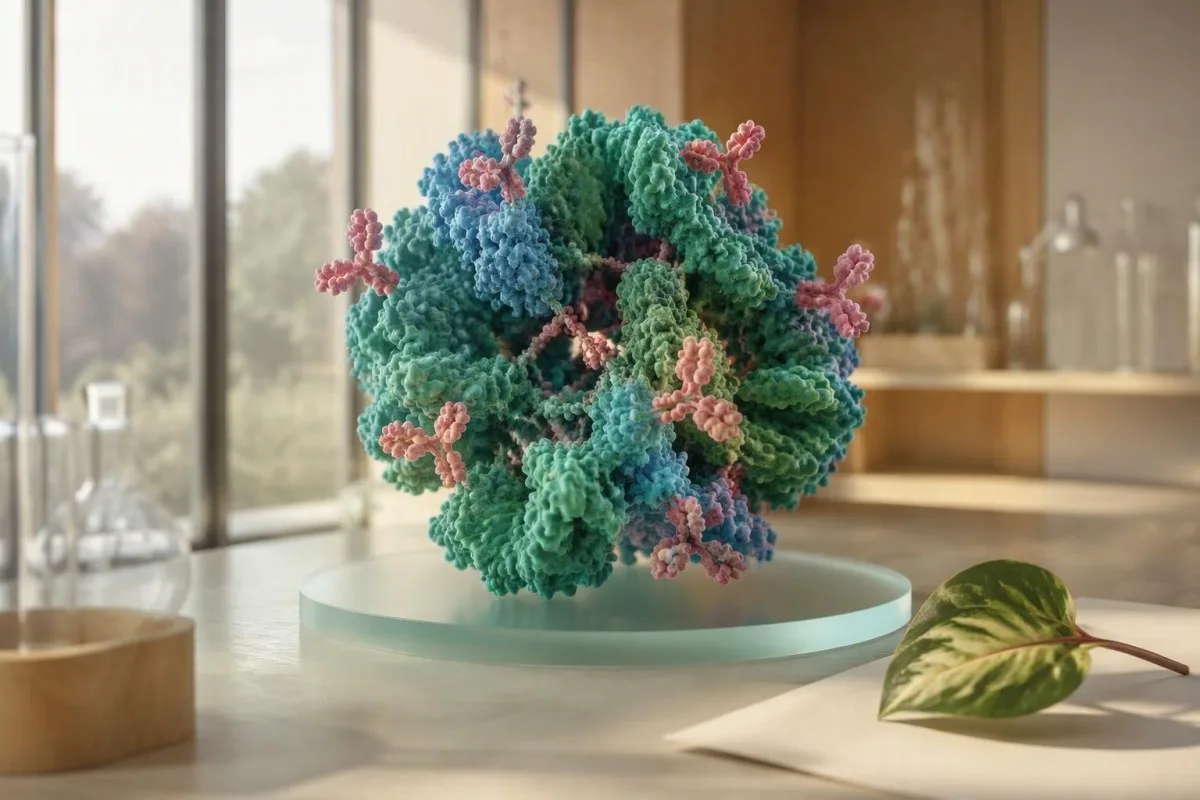
Anti-Sm je jednům z nejwjěcnych protilátek na lupus, ale laboratorne wuslědki్రుżi nětko njewyměnjaju klinisku diagnozu. Zužytkowna přezwaźba je, čeľi wuslědk pasuje k Wasym symptoma a k zwězoj Wasych testow.


- Specyfika z potwjerdzonego wuslědka anti-Sm jo zwětšego wokoło 95–99% za systemowy lupus erythematosusa.
- Czułość jo mały: jenož wokoło 5–30% ludźi z lupusem ma anti-Sm protilátky.
- ANA mjeńšej na přikład 1:80 na HEp-2 celach jo EULAR/ACR klasifikaciska zapiskowa kriteria.
- Šesć točkow se přirěźi anti-Sm protilátkam w kategoryzaciskich kriterionach za lupus EULAR/ACR 2019.
- Žadna uniwersalna titra wědomnosći sežysła, dokuli anti-Sm testy wužywaju rozrědne antigeny a unitki reportowanja.
- Kontrole nerek wobimuju urinalizu, protein-kreatinin-racio mokrocy, kreatinin/eGFR, C3, C4, CBC a anti-dsDNA.
- Pilne objawy wobimuju bónc z wulkom wdech, záchwat, zmatkowanje, widźecne krew w mokrocy abo rychle śišćone wulom mokrocy.
Co pozitivny wuslědk anti-Sm skutočnje wuznamena
An anty-Sm antyciało pozytywne wynik znaczy, że twój system odpornościowy wytworzył antyciała przeciwko białkom jądrowym Sm. Potwierdzony wynik je mocno specyficzny dla układowego tocznia rumieniowatego, często 95–99%, ale sam w sobie nie diagnozuje tocznia; objawy, wyniki badania fizykalnego, badanie moczu, morfologia krwi, dopełniacz i inne przeciwciała decydują, czy toczeń jest najlepszym wyjaśnieniem.
Używam anty-Sm jako drogowskazu diagnostycznego, a nie wyroku. Pacjent z zapalnym obrzękiem stawów, wysypką, niskim C3 i białkiem w moczu ma zupełnie inne prawdopodobieństwo tocznia niż osoba z samym zmęczeniem i jednym nisko-pozytywnym przeciwciałem. przewodnik po wynikach ANA wyjaśnia zwykły punkt wyjścia.
Nazwa Smith pochodzi od wczesnego pacjenta, a nie od genu czy choroby rodzinnej. Anty-Sm celuje w białka spliceosomu, które przetwarzają RNA wewnątrz komórek; nie mierzy bezpośrednio aktualnej aktywności choroby. Ta różnica ma znaczenie, gdy ludzie zakładają, że silniejszy wynik laboratoryjny oznacza cięższy toczeń.
Od 28 września 2026 r. wyizolowany wynik anty-Sm wymaga starannego przeglądu, a nie natychmiastowego leczenia. Z mojego doświadczenia klinicznego wynika, że cicha nieprawidłowość w moczu może mieć znacznie większe znaczenie niż sam numer przeciwciała. dr Thomas Klein widział także potwierdzone anty-Sm u osób, które nigdy nie rozwinęły klasyfikowalnego SLE.
Što přičinu Anti-Sm je specifična, ale njeje wražliwa na lupus
Anty-Sm antyciała są wysoce specyficzne, ale słabo czułe na toczeń. Około 5–30% osób z potwierdzonym SLE testuje pozytywnie, w zależności od pochodzenia, wyboru grupy badanej i metody, co oznacza, że negatywny wynik anty-Sm nie wyklucza tocznia.
Specyficzność pyta, jak rzadko test jest pozytywny bez choroby; czułość pyta, jak często wykrywa chorobę, gdy jest obecna. Anty-Sm działa bardzo dobrze pod względem specyficzności i umiarkowanie pod względem czułości. Dlatego to samo przeciwciało może być przekonującym wskazaniem, gdy jest obecne, a niepomocnym, gdy go brakuje.
Zgłaszana częstość występowania różni się w zależności od populacji. Niektóre grupy z toczniem u osób czarnoskórych, azjatyckich i latynoskich wykazują wyższą częstość występowania anty-Sm niż grupy białych Europejczyków, chociaż wzorce kierowania i metody laboratoryjne mają na to wpływ. Procent grupowa nie może przewidzieć przyszłego zaangażowania nerek, skóry ani stawów u danej osoby.
Kryteria EULAR/ACR z 2019 r. przyznają anty-Sm antyciałom 6 punktów, odzwierciedlając ich wartość rozróżniającą, ale same przeciwciała nie ustalają klasyfikacji (Aringer et al., 2019). Wyniki anty-dsDNA mogą dostarczyć bardziej użytecznego trendu aktywności u niektórych pacjentów, zwłaszcza gdy oceniana jest choroba nerek.
Kak test protilatek Anti-Sm wědomnosći
Wyniki anty-Sm nie mają uniwersalnego zakresu normy ani miana ciężkości. Laboratoria używają ELISA, multiplex bead assays, line immunoassays lub immunoprecypitacji, a każda metoda ma swoje własne negatywne, niejednoznaczne i pozytywne punkty odcięcia.
Jedno laboratorium może raportować indeks, inne arbitralne jednostki, takie jak U/mL, a inne tylko pozytywne lub negatywne. Wartość 25 U/mL w jednym laboratorium nie jest zamienna z 25 U/mL w innym miejscu. Nazwa laboratorium, przedział referencyjny i metoda analizy należą do każdej skierowania specjalistycznego.
Niskie wyniki pozytywne wymagają analizy, jeśli ANA jest negatywne lub obraz kliniczny jest niekompatybilny z toczniem. Niespecyficzne wiązanie i niezgodność analiz są rzadkie, ale prawdziwe problemy, zwłaszcza w szerokich zautomatyzowanych panelach. Czytaj więcej o testow jakościowych i ilościowych przed porównaniem wyników z różnych raportów.
Kantesti je Analizatōr podszukowań krwi sztucznyj inteligyncyje która odczytuje laboratorium raportujące, datę, powiązane markery i język raportu, zamiast traktować jedną flagę jako diagnozę. Nieoczekiwany wynik anty-Sm najlepiej postrzegać jako powód do potwierdzenia przez lekarza i przeglądu kontekstu.
Kak Anti-Sm pasuje k kategoryzaciskim kryterijam za lupus
Anty-Sm wnosi 6 punktów do kryteriów klasyfikacji SLE EULAR/ACR z 2019 r., ale wymagane jest 10 punktów i co najmniej jedno kryterium kliniczne. ANA na poziomie co najmniej 1:80 na komórkach HEp-2 jest kryterium wejścia przed zliczeniem jakichkolwiek punktów.
Classification criteria make research cohorts consistent; they do not replace a physician's diagnostic judgment. A patient may have lupus before meeting every classification feature, or may meet a numerical threshold while another illness better explains the presentation. This nuance prevents both delayed care and overdiagnosis.
Anti-Sm sits in the SLE-specific antibody domain with anti-dsDNA; only the highest item within a domain counts. Kidney biopsy class III or IV lupus nephritis scores 10 points, while fever scores 2 and acute cutaneous lupus scores 6. The numbers describe a framework, not a disease meter.
The earlier SLICC system also required immunologic and clinical evidence, reinforcing the same core principle: laboratory autoimmunity needs clinical correlation (Petri et al., 2012). Our C3, C4 i ANA kierujō shows the tests commonly read alongside anti-Sm.
Symptomy, kotrež čińja wuslědk Anti-Sm wažnišim
Anti-Sm is more clinically meaningful when it accompanies objective lupus features. These include inflammatory arthritis, photosensitive or acute rashes, mouth ulcers, serositis, cytopenias, neurologic features, proteinuria, or active urinary sediment.
Inflammatory arthritis generally causes swollen or tender joints with morning stiffness lasting 30–60 minutes or longer, rather than pain only after a busy day. Lupus rashes commonly spare the nasolabial folds, but skin findings are variable enough that photographs and dermatology review can be genuinely useful.
A history of recurrent painless mouth ulcers, sunlight-triggered rash, pleuritic chest pain, unexplained low white cells, and Raynaud-type color changes raises the pre-test probability. No single symptom is unique to SLE. Fibromyalgia, viral illness, thyroid disease, medication effects, and other autoimmune conditions can overlap.
Document patterns rather than trying to self-score lupus. A dated symptom diary, photographs of transient rash, medication list, and prior results help a rheumatologist substantially. People with cold-sensitive color changes may find our Raynaud blood-test overview useful while awaiting review.
Što přičinu mokróč a ledwinkowe testy su wažne po pozitivnosći Anti-Sm
Urinalysis and urine protein measurement are essential after a concerning lupus antibody result because kidney inflammation can be silent. Persistent proteinuria of 500 mg per 24 hours, or a urine protein-to-creatinine ratio of 500 mg/g or higher, warrants prompt specialist assessment in suspected SLE.
A normal creatinine does not fully exclude early lupus nephritis. Creatinine rises late in some people because kidney reserve is substantial, while urine protein, red-cell casts, dysmorphic red cells, or declining complement may appear earlier. First-morning urine reduces dilution variability when a ratio is being checked.
Protein can arise from fever, strenuous exercise, diabetes, urinary infection, or contamination, so persistence matters. I usually want a repeat clean-catch urine sample and microscopy when a dipstick is positive. The practical details in our urine sediment guide can help readers understand the report.
New ankle swelling, foamy urine that persists, high blood pressure, or reduced urine should not wait for a routine annual review. Kidney involvement may require immunosuppressive treatment, but treatment choice depends on biopsy class, pregnancy plans, infection risk, and kidney function—not anti-Sm status alone.
Wuslědki, kotrež reumatolodzy kontroluju
The most useful companion tests are CBC with differential, creatinine/eGFR, urinalysis, urine protein ratio, C3, C4, anti-dsDNA, ESR, and CRP. Low C3 or C4 can support immune-complex activity, but normal complement does not exclude lupus.
Complement reference intervals vary, but many laboratories list C3 around 90–180 mg/dL and C4 around 10–40 mg/dL. A low result is more persuasive when it is newly reduced from that person's own baseline and coincides with proteinuria or rising anti-dsDNA. Low complement results need pattern-based interpretation.
CBC changes may include leukopenia below 4.0 × 10⁹/L, lymphopenia below 1.0 × 10⁹/L, thrombocytopenia below 100 × 10⁹/L, or hemolytic anemia. A single borderline count after a viral illness is not equivalent to persistent immune cytopenia. Timing and repeat samples matter.
CRP is often normal or only modestly raised during uncomplicated lupus activity, whereas a markedly high CRP should widen the search for infection, serositis, or another inflammatory process. That is a clinical rule of thumb, not an absolute rule; WBC and CRP patterns can be especially helpful.
Čińi Anti-Sm težku formu lupusa abo zhoršenja?
Anti-Sm positivity does not reliably measure lupus severity, flare intensity, or treatment response. It often persists for years, so clinicians do not usually repeat it to decide whether inflammation is improving.
Some observational studies link anti-Sm with particular manifestations, including renal or neurologic disease in selected populations, but the associations are inconsistent after accounting for ancestry and coexisting antibodies. I would never forecast an individual's organ risk from anti-Sm alone. That approach creates anxiety without improving decisions.
For established lupus, trends in symptoms, examination, blood pressure, urine protein, urine sediment, creatinine, C3, C4, and anti-dsDNA are usually more actionable. A urine protein ratio that rises from 150 to 900 mg/g tells a more urgent story than a stable anti-Sm result.
Dr. Thomas Klein advises patients to ask which result will actually change the treatment plan. If the answer is anti-Sm alone, that deserves a conversation. A časová osa krevních testů can help separate biological change from a single noisy measurement.
Čińi Anti-Sm pozitivny być bjez lupusa?
Anti-Sm positivity outside lupus is unusual but possible, especially with low-level assay signals or discordant testing. A result that conflicts with a negative ANA, absent clinical features, or a different laboratory method should be reviewed before a lifelong diagnosis is considered.
Technical differences are the commonest reason two reports disagree. Solid-phase assays may detect limited protein fragments, while other methods identify different epitopes or use different thresholds. Repeating the identical panel without a clinical question can add confusion; a rheumatologist may instead request a methodologically different confirmation.
Other systemic autoimmune diseases can occasionally produce broad autoantibody reactivity, but true isolated anti-Sm positivity remains far more associated with SLE than most antibodies on an ENA panel. A positive test does not explain every symptom: thyroid disease, anemia, sleep disorders, and medication effects still deserve ordinary medical care.
Do not stop or start medication solely because of an antibody portal result. The broader principles in our positive antibody guide apply here: confirm identity, establish clinical fit, then decide whether monitoring is needed.
Kedy powjerćić abo potvrzić test Anti-Sm
Repeat anti-Sm testing is most useful when the original result is low-positive, unexpected, or technically discordant. Repeating a stable, clearly positive anti-Sm result every 3–6 months rarely adds useful information in established lupus.
Confirmation is reasonable when ANA is negative, symptoms are absent, the sample was tested as part of a large screen, or the report uses an equivocal category. Ask whether the laboratory can perform an ENA confirmation or whether a reference laboratory uses a different platform. Keep the original report; the assay name is useful data.
If symptoms are evolving, the repeat tests that usually matter more are urinalysis, urine protein ratio, CBC, creatinine, C3, C4, and anti-dsDNA. The right interval depends on findings: a patient with new proteinuria needs faster review than one with a normal examination and stable tests.
Kantesti je platforma do interpretacji wyników badań krwi AI that can place serial laboratory reports side by side and flag meaningful context changes for discussion with a clinician. It cannot diagnose lupus, but organized trends can prevent an old antibody result from overshadowing newer kidney or blood-count changes.
Leki, ćěhota a protilátky Anti-Sm
Anti-Sm antibodies do not cause drug-induced lupus and are not the main antibody used to estimate pregnancy-specific neonatal lupus risk. Anti-Ro/SSA and anti-La/SSB, rather than anti-Sm, guide fetal heart-block surveillance discussions.
Classic drug-induced lupus more often involves antihistone antibodies and usually has less kidney or central nervous system involvement than idiopathic SLE. Hydralazine, procainamide, isoniazid, minocycline, and some biologic therapies are among medicines clinicians review when symptoms emerge. Never discontinue a prescribed medicine without a prescriber.
Pregnancy is safest when lupus has been clinically quiet for at least 6 months before conception, particularly after nephritis. Anti-Sm positivity itself does not determine delivery timing, anticoagulation, or treatment. Blood pressure, urine protein, kidney function, anti-Ro/La, and antiphospholipid antibodies are usually more decision-relevant.
People planning pregnancy should also understand a positive wynik antykoagulantu toczni, which is a clotting-risk test despite its confusing name. It is biologically different from anti-Sm and does not diagnose lupus by itself.
Kóžołłe očekowaś pśi reumatologiskem pśeglědanju
A rheumatology assessment after anti-Sm positivity usually combines a detailed symptom timeline, examination, repeat targeted laboratories, and urine testing. The appointment is not simply a yes-or-no antibody interpretation; it is an assessment of current organ involvement and alternative explanations.
Bring laboratory reports rather than screenshots alone, including dates and reference ranges. Mention rashes, fevers, mouth sores, joint stiffness duration, miscarriages, clots, neurologic symptoms, medication exposures, and family history. A normal exam between episodes does not invalidate a useful photograph of a transient rash.
The clinician may request ANA by indirect immunofluorescence, ENA profile, anti-dsDNA, complement, CBC, metabolic panel, urinalysis, urine protein ratio, antiphospholipid antibodies, and selected infection or thyroid tests. Not every person needs every test; focused testing lowers incidental findings.
Kantesti je Narzędzie do analizy badań krwi oparte na AI used across 127+ countries to organize multi-laboratory reports before appointments. Readers can also review our przewodnik po biomarkerach 15,000-plus to understand which results belong to kidney, immune, and blood-count domains.
Kedy pozitivny wuslědk Anti-Sm trjeba spěšnu pomoc
Seek urgent medical assessment for chest pain with breathlessness, coughing blood, new seizure, new confusion, severe headache with neurologic symptoms, rapidly worsening swelling, or visibly bloody urine. These symptoms may reflect serious complications but are not caused by anti-Sm itself.
A sudden severe headache, weakness on one side, speech difficulty, or seizure needs emergency assessment regardless of whether lupus is confirmed. Similarly, pleuritic chest pain and shortness of breath can result from infection, pulmonary embolism, pericarditis, or other causes that cannot be distinguished safely at home.
Visible blood in urine, markedly reduced urine output, blood pressure of 180/120 mmHg or higher with symptoms, or rapidly increasing leg swelling should prompt same-day medical care. A dipstick alone cannot diagnose nephritis, but it can reveal why waiting is unwise. See our blood-in-urine guide for practical triage context.
For non-urgent situations, schedule primary-care or rheumatology follow-up rather than repeatedly searching isolated test names. The clinical standards behind our interpretation workflows are described in walidacyjo medyczno, and human assessment remains essential when autoimmune disease is possible.
Praktiska plan po pozitivnym testu Anti-Sm
The next step after anti-Sm positivity is to verify the assay, screen for organ involvement, and arrange clinician review based on symptoms. There is no evidence-based diet, supplement, or detox that can erase anti-Sm antibodies or substitute for lupus assessment.
Start by obtaining the full report: ANA method and titre, anti-Sm result and units, reference range, and all ENA antibodies. Then collect CBC, creatinine/eGFR, urinalysis, urine protein ratio, C3, C4, and anti-dsDNA if they have not been checked. One well-organized assessment is better than scattered repeated panels.
Do not assume joint pain means lupus or that normal routine blood work excludes it. Symptoms lasting more than 6 weeks, objective swelling, recurrent rash, cytopenias, proteinuria, or low complement justify specialist input. Conversely, an asymptomatic person with reassuring repeat evaluation may need observation rather than medication.
Nasz Rada Doradczo Medyczno reviews the clinical guardrails used in Kantesti's educational content. The honest bottom line is reassuringly simple: anti-Sm is a strong clue, not a diagnosis, and the rest of the clinical picture tells you what it means.
Czynsto zadawane pytania
Czy pozytywny test na przeciwciała anty-Sm bezwględnie oznacza, że mam toczeń?
Ni. Potwjeerdzony pozytywny wynik przeciwciał anti-Sm je wysoce specyficzny dlō systematycznego tocznia, powszechnie kole 95–99%, atoli diagnoza niyńdzy wymŏgo kompatybilnych klinicznych znōmkōw a wykluczynio alternatyw. System klasyfikacyje EULAR/ACR z 2019 roku daje anti-Sm 6 punktōw, a niyńdzy wymŏgo atoli 10 punktōw a jedno kliniczne kryterium po wpōśi ANA 1:80. Reumatolog bydałby musiał przibōrznōć symptōmy, mocz, CBC, funkcjō kerki, komplement a anti-dsDNA zamyjań diagnozowaniym tocznia yno z anti-Sm.
Czaś być na łupus z negatywnym testym na przeciwciała anty-Sm?
Jis. Jeno koleji 5–30% ludźi ze założonym systematycznym toczniem ma anty-Sm anticiała, wic negatywny anty-Sm wynik njepřepudli tocznia. ANA, anty-dsDNA, poziomy komplementu, białko w moczu, liczyń krowe, objawy i zoznómowanjo znajdy sōm barzij informatywne jako skombinowany wzór. Czułość zmienia sie podług rodowodu i metody badania, co je inkszy dôd, dlŏ czōgo jedyn negatywny wynik njepřećiwny.
Kajaki poziom anti-Sm je uwŏżany za wysoki?
Niy ma uniwersalnyj poziomu anti-Sm, kery by ôkreślał wysoko aktivita choroby abo ciyężki lupus. Laboratoria mogům raportować arbitralne jedności, indeksy, ôbrazy fluorescencyjne, abo po prostu pozytywne i negatywne wyniki, a jejich progi niy sům zamiyynne. Wynik powyżyj progu laboratoryjnego je klinicznie znaczący yno kej je potyrwdzony i interpretowany z symptomami i towarzyszōncymi testami. We forskjydzie do białka we moczu abo kreatyniny, titry anti-Sm niy sōm rutynowo używane do tropienia załomōw lupus.
Jakie testy powinny nastympować po pozytywnym przeciwciałe anty-Sm?
Kontrola po pozytywności anti-Sm czōsto zawiyro ANA bez pośrednij immunofluorescencji, anti-dsDNA, C3, C4, CBC z rozřóżnyniym, kreatininã/eGFR, analizã moczu, a stosůnek białka do kreatyniny we moczu. Trwajōncõ białkomoč o ilości 500 mg na 24 godziny abo stosůnek 500 mg/g abo wiyncyj we podezřywnym SLE wyrŏwi sjědno rychło ôcena specjalisty. Dokłōdny panel zoleży ôd symptōmōw, planōw ciążowych, ekspozycji na leki, a pierwotnego testu.
Czy przeciwciała anty-Sm mogom być negatywne?
Anti-Sm anticiała mogům sie wahajć ôd testa i czasami być negatywne, ale czamu tyż tela lot ostajům do wykryciy. Zmiana z pozytywnej na negatywno niy dowodzi, że lupus sie ukończōł, a stały pozytywny wynik niy dowodzi aktywnego stanu zapalnego. Klinićyści zazwyczaj śledzům symptomy, białko w moczu, kreatynina, dopełniacz, CBC, a anti-dsDNA czamu niźli mierzynie anti-Sm. Powtōrzone anti-Sm je nojprzōd przydatne, kej piyrszy wynik bōł na granicy abo klinicznie niy oczekiwany.
Je anty-Sm to samo co antykoagulant toczniowy?
Ńy. Anti-Sm to antjńůleřne ćelůmka powjůzane z systematycznym toczeńym skůrnym, podczas kej lupus anticoagulant to test na antifosfolipidowe ćelůmka powjůzany ze krzepńyńym a komplikacjami w cjůnży. Lupus anticoagulant moży być obecny z toczeńym abo bez, a anti-Sm sam we sobie ńy przewidzuje krzepńijńo. Oba testy moży wykůnać we diagnostyce autoimmunologijnyj, ale odpowjadajům na růżne pytańa klinkzne a wymogům oddźelne interpretacje.
Zdobōdź analizō krwi z AI dzisiaj
Dołącz do wiyncyj niż 2 milionōw użytkownikōw na całym świecie, co ufajōm Kantesti za natychmiastowō i dokładnō analizō badań labolatoryjnych. Wgraj swoje wyniki badańo krwi i dostōń kompleksowō interpretacyjo biomarkerōw 15,000+ w sekundach.
📚 Publikacyje badawcze z referencjami
Klein, T., Mitchell, S., & Weber, H. (2026). Testy krwi na wirus Nipah: Poradnik ô wczasnym wykrywaniu i diagnostyce 2026. Kantesti AI Medycynne Badań.
Klein, T., Mitchell, S., & Weber, H. (2026). Krewna grupa B negatywna, przewodnik do badania LDH i liczby retikulocytōw. Kantesti AI Medycynne Badań.
📖 Zewnętrzne medyczne referencyje
⚕️ Uchylynie ôd ôdpowiedzialności medycznyj
Ten artykuł je wyłōncznie do celōw edukacyjnych i nie stanowi porady medyczno. Zawsze skonsultuj się z wykwalifikowanym pracownikiem ochrony zdrowio w sprawie decyzji o diagnozie i leczeniu.
Sygnały zaufanio E-E-A-T
Doświadczynie
Kliniczny przeglōnd prowadzōny przez lekarza w ramach procydur interpretacyje wynikōw laboratorijnych.
Ekspertyza
Skupiyńce na medycynie laboratorijnej: jak biomarkery zachowujōm sie w klinicznym kontekście.
Autorytetność
Napisane przez dr. Thomasa Kleina z przeglōndym przez dr. Sarah Mitchell i prof. dr. Hansa Webera.
Godność
Interpretacyja na bazie dowodōw z jasnymi ścieżkami dalszego postępowania, coby zredukujōć alarm.