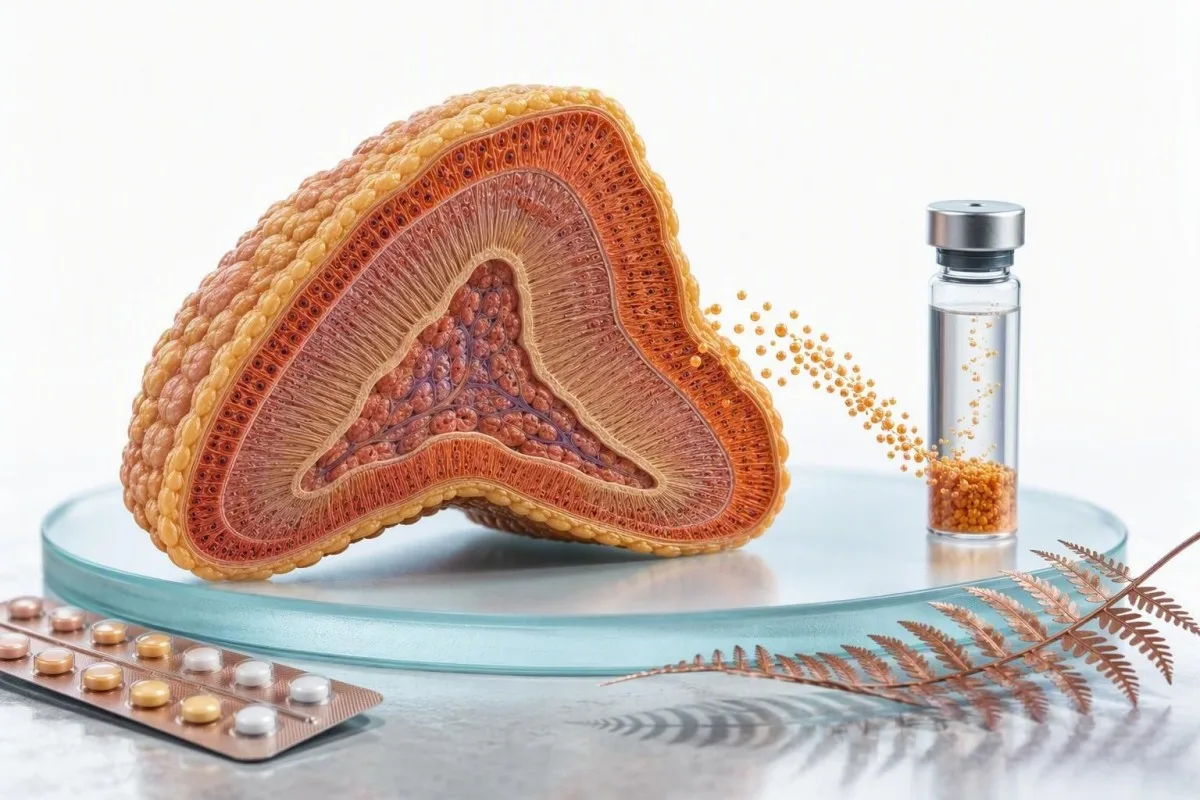
Kontracepcija može dovoljno sniziti DHEA-S da zamagli testiranje androgena, posebno kod pilula koje sadrže estrogen. Rezultat ima smisla samo kada se uzmu u obzir laboratorija, godine starosti, lekovi, simptomi i cilj testiranja.


- Kombinovane pilule obično snižavaju DHEA-S, tako da nizak rezultat tokom uzimanja etinilestradiola nije dokaz adrenalne insuficijencije.
- DHEA-S opseg je snažno zavisan od starosti; mnoge laboratorije navode otprilike 83-377 µg/dL za žene starosti 18-30 godina.
- Висок DHEA-S iznad 700 µg/dL (19.0 µmol/L) zahteva hitnu procenu od strane kliničara radi adrenalnog izvora, posebno uz brze virilizirajuće simptome.
- Progestinske metode obično imaju manje predvidive efekte na DHEA-S nego kombinovane pilule jer ne povećavaju konzistentno globulin koji vezuje polne hormone.
- Testiranje na PCOS je teško kod kombinovanih pilula; međunarodni vodič iz 2023. savetuje njihovo ukidanje na najmanje 3 meseca samo kada je procena biohemijskih androgena neophodna.
- Vreme je bitno manje za DHEA-S nego za kortizol jer DHEA-S ima dug poluživot, ali bolest, steroidni lekovi, suplementi i nedavna promena kontracepcije i dalje su važni.
- Nizak DHEA-S na kontracepciji se obično tumači zajedno sa kortizolom u 8 ujutro, ACTH-om, natrijumom, kalijumom, simptomima i izloženošću steroidima — ne samostalno.
- Поређење тренда je najkorisniji kada se za svaki test koriste ista laboratorija i isti status kontracepcije.
Kako kontracepcija menja rezultate DHEA-S testa
Kombinovana hormonska kontracepcija obično snižava DHEA-S, dok kontracepcija samo sa progestinom ima manje i manje dosledne efekte. Neočekivano nizak rezultat na kombinovanim pilulama često odražava supresiju povezanu sa lekovima, dok rezultat iznad oko 700 µg/dL (19.0 µmol/L) i dalje zaslužuje procenu za višak adrenalnih androgena bez obzira na kontracepciju.
DHEA-S se uglavnom proizvodi u korealnom korteksu, a ne u jajnicima, ali kontracepcija koja sadrži estrogen i dalje može smanjiti cirkulišuće adrenalne androgene. U mom kliničkom radu, uobičajena greška je tretiranje laboratorijske oznake kao dijagnoze umesto postavljanja pitanja o tome koji je hormonski metod bio prisutan na dan uzorkovanja. Dr Thomas Klein pregleda hormonske panele sa listom recepata otvorenim pored rezultata; taj detalj iznenađujuće često menja interpretaciju.
Kombinovana pilula suprimira hipofizne gonadotropine, povećava globulin koji vezuje polne hormone i menja šire androgeno okruženje. Ne čini svaki DHEA-S rezultat neupotrebljivim, ali može učiniti normalan do nizak rezultat slabim dokazom protiv postojećeg viška androgena. Za koristan pregled samog analita, uporedite DHEA-S sa DHEA.
Kantesti AI je АИ анализатор крви što podrazumeva DHEA-S u odnosu na starost, prijavljene lekove, srodne hormone i prethodne vrednosti umesto jednostavnog ponavljanja laboratorijske visoke ili niske oznake. Od 23. avgusta 2026. godine, nijedan pojedinačni DHEA-S broj ne može samostalno dijagnostikovati PCOS, adrenalnu insuficijenciju ili adrenalni tumor.
Praktično prvo pitanje
Pitajte da li je uzorak uzet pre početka kontracepcije, nakon promene formulacije ili tokom stabilne upotrebe najmanje 8-12 nedelja. Taj vremenski okvir je obično informativniji od jednokratne razlike od 20 µg/dL.
Šta zapravo meri DHEA-S test krvi
Test krvi na DHEA-S meri dehidroepiandrosteron sulfat, stabilni preteču adrenalnih androgena. Za razliku od nesulfatizovanog DHEA, DHEA-S se relativno malo menja tokom jednog dana jer mu je poluživot u cirkulaciji oko 7-10 sati.
DHEA-S se pretvara iz DHEA putem aktivnosti sulfotransferaze, uglavnom u zoni retikularis kore nadbubrežne žlezde. Vrednosti dostižu vrhunac u ranoj odrasloj dobi i progresivno opadaju nakon toga; vrednost od 180 µg/dL može biti neupadljiva u 45. godini, ali neočekivano niska ili visoka u drugoj starosnoj grupi. Laboratorijski rasponi stoga moraju biti specifični za uzrast i pol.
Većina laboratorija izveštava DHEA-S u µg/dL u Sjedinjenim Američkim Državama i µmol/L drugde; 1 µg/dL je približno jednako 0.0271 µmol/L. Video sam pacijente koji su nepotrebno uznemireni očiglednom 250-strukom nejednakošću kada je stvarni problem bila konverzija jedinica. Tumačenje hormonskog panel uvek treba započeti potvrdom jedinica.
DHEA-S nije pouzdano merilo 'adrenalne rezerve' kod zdrave osobe. Niska vrednost se može javiti sa starošću, izlaganjem estrogenu, glukokortikoidima, teškom bolešću, hipopituitarizmom ili adrenalnom insuficijencijom, dok se visoka vrednost može javiti kod PCOS-a, kongenitalne adrenalne hiperplazije, izlaganja lekovima ili, ređe, adrenalnog tumora.
Zašto ga kliničari često naručuju
Kliničari najčešće koriste DHEA-S da pomognu u lociranju izvora viška androgena kada su prisutni akne, hirzutizam, proređivanje kose na glavi, neredovni ciklusi ili virilizacija. Dopunjuje ukupni testosteron i 17-hidroksiprogesteron; ne zamenjuje ih.
Zašto kombinovane pilule često snižavaju DHEA-S
Kombinovane pilule koje sadrže estrogen i progestin imaju tendenciju smanjenja DHEA-S i drugih cirkulišućih androgena. Veličina smanjenja varira u zavisnosti od formulacije, početnog nivoa androgena, telesne težine i analize, tako da ne postoji korektivni faktor koji se može bezbedno primeniti na pojedinačni rezultat.
Sistematski pregled od strane Zimmerman et al. utvrdio je da kombinovani oralni kontraceptivi značajno smanjuju ukupni i slobodni testosteron i povećavaju polne hormone koji vezuju globulin; mnoge uključene studije su takođe pokazale niže koncentracije DHEA-S (Zimmerman et al., 2014). U praksi, smanjenja oko 20-40% su verovatna na nivou populacije, ali pojedinačni pacijent može imati mnogo veće ili manje promene.
Estrogena komponenta je obično glavni razlog za promene u tumačenju androgena. Jedna 28-godišnjakinja koja uzima 30 µg etinilestradiola može imati DHEA-S od 90 µg/dL što na papiru izgleda zabrinjavajuće, ali normalan jutarnji kortizol u 8 ujutro, ACTH, elektroliti i odsustvo izlaganja steroidima čine adrenalnu insuficijenciju veoma malo verovatnom. Kontekst njene terapije nije fusnota; to je kontekst rezultata.
Međunarodni vodič za PCOS iz 2023. navodi da je biohemijski hiperandrogenizam teško proceniti kod žena koje uzimaju kombinovane oralne kontraceptivne pilule jer one supresuju proizvodnju androgena i povećavaju SHBG (Teede et al., 2023). Za srodna pitanja u vezi sa estrogenom i testovima, pogledajte rezultate estrogena tokom korišćenja kontracepcije.
Da li progestinske metode menjaju DHEA-S?
Pilule koje sadrže samo progestin, implantati, injekcije i hormonski intrauterini sistemi mogu uticati na simptome androgena, ali njihov uticaj na DHEA-S je manje ujednačen nego kod kombinovanih pilula. One ne sadrže estrogen, pa generalno ne izazivaju isto izraženo povećanje SHBG-a.
Levonorgestrel intrauterini sistem deluje uglavnom lokalno i često proizvodi male sistemske promene u DHEA-S. Depot medroksiprogesteron acetat, nasuprot tome, može suprimirati jajničku aktivnost i promeniti hipotalamusno-hipofizno-adrenalno okruženje; tumačenje rezultata tokom aktivnih injekcija treba biti oprezno. Dokazi su iskreno tanji ovde nego kod kombinovanih pilula.
Progestini se razlikuju po androgenoj i antiandrogenoj aktivnosti. Ovo može promeniti akne ili rast kose bez proporcionalne promene u DHEA-S, jer je DHEA-S uglavnom adrenalnog porekla. Simptomi i naziv leka su važniji od pretpostavke da se svaka 'mini pilula' ponaša identično.
Kantesti AI je AI платформа за тумачење крвне слике koji traži od korisnika da zabeleže tačnu hormonsku metodu i datum početka pre upoređivanja DHEA-S rezultata sa starijim testovima. Poređenje od strane na stranu je najopravdanije kada status kontracepcije nije promenjen; naša водич за лабораторијски тренд објашњава зашто.
Bakarni intrauterini ulošci
Bakarni intrauterini uložak ne sadrži hormone i ne bi trebalo direktno da suprimira DHEA-S. Ako se rezultat promeni nakon prelaska sa kombinovane pilule na bakarnu kontracepciju, promena može predstavljati oporavak od supresivnog efekta pilule, a ne novog adrenalnog poremećaja.
Da li formulacija pilule ili doza prave razliku?
Da—doza etinilestradiola i tip progestina mogu uticati na rezultate povezane sa androgenima, iako se promene DHEA-S ne mogu precizno predvideti iz uputstva za pakovanje. Pilula sa nižim sadržajem estrogena i dalje može da suprimira testiranje androgena dovoljno da prikrije blagi hiperandrogenizam.
Pilule koje sadrže 20 µg u poređenju sa 30-35 µg etinilestradiola mogu proizvesti različite efekte na SHBG, ali odgovor DHEA-S nije dovoljno linearan da bi kliničar 'dodao' procenat. Formulacije drospirenona i ciproteron acetata takođe mogu poboljšati simptome posredovane androgenima kroz receptorske efekte koji nisu vidljivi samo u DHEA-S.
Важан је интервал након прекида употребе. Генерално избегавам тумачење нове ендокрине основе у првих 6-8 недеља након започињања, прекидања или промене комбиноване пилуле, осим ако питање није хитно. Поновно тестирање након стабилне изложености је боље за тумачење, посебно ако је почетни налаз био само благо изван референтног опсега.
Контрацепција такође може да промени липиде и триглицериде, тако да се хормонски панели не смеју читати изоловано од метаболичких маркера. Наша ревизија промена липида при употреби контрацепције објашњава паралелни проблем.
Немојте прекидати контрацепцију због рутинског резултата
Прекидање контрацепције само да би се лабораторијски извештај учинио чистијим може довести до нежељене трудноће, крварења или повратка симптома. Лекар који је издао налог треба да одлучи да ли дијагностичка вредност теста без таблета премашује те стварне ризике.
Kada treba testirati DHEA-S tokom korišćenja kontracepcije?
DHEA-S се обично може узимати у било које доба дана и у било ком тренутку у оквиру стабилног паковања пилула, али је јутарње узимање предност када се кортизол или ACTH наручују истовремено. Кључна временска варијабла је стабилна хормонска изложеност, а не одређени дан плацебо таблете.
DHEA-S има мање драматичну дневну варијацију него кортизол, али лабораторије често стандардизују узимање узорака ендокриних хормона између 7 и 10 ујутру. како би се направио кохерентан комбиновани надбубрежни панел. Ако је кортизол низак у 16 часова, то може бити физиолошки; ако је низак у 8 ујутру, тумачење је другачије. Погледајте јутарње и вечерње вредности кортизола.
За особе које користе комбиновану пилулу, мерење током плацебо недеље није мерење ван терапије. Промене јетрених протеина и супресија хипоталамо-хипофизно-оваријалне осе трају и после неколико плацебо дана. Тестирање током те недеље може лажно да створи осећај 'природног' хормонског снимка.
Акутна вирусна инфекција, значајно калоријско ограничење, системски глукокортикоиди и лош сан могу померити маркере повезане са надбубрежним жлездама. Забележите време узимања узорка, последњу хормонску дозу, недавну болест и суплементе; резултат без та четири детаља је много теже користити клинички.
Пост је обично непотребан
Тестирање DHEA-S генерално не захтева пост. Пост може бити затражен јер су истовремено наручени тестови на глукозу, инсулин, липиде или други тестови, а не зато што сам DHEA-S захтева празан стомак.
Referentne vrednosti DHEA-S zavise od starosti i laboratorije
Референтни интервали DHEA-S нагло опадају са старошћу, тако да опсег штампан од стране лабораторије за тестирање треба да има предност над генеричким опсегом са интернета. За жене узраста 18-30 година, уобичајени интервал је око 83-377 µg/dL, али сваки тест успоставља своје границе.
Маyо Цлиниц Лабораториес наводи женске интервале од приближно 83-377 µg/dL у узрасту од 18-30 година, 45-295 µg/dL у узрасту од 31-40 година, 27-240 µg/dL u uzrastu 41-50, a 16-195 µg/dL u uzrastu 51-60. Ovo su referentni podaci specifični za test, a ne pragovi bolesti. Neke evropske laboratorije prijavljuju niže granice u µmol/L i koriste različite imunoeseje.
Rezultat DHEA-S koji je malo izvan referentnog intervala nije automatski klinički abnormalan. Biološke varijacije, varijacije testa i nedavna promena kontracepcije mogu objasniti umereno odstupanje; značenje rezultata van opsega je često manje dramatično nego što sugerira boja portala.
Кантестијев Алат за анализу крвних тестова уз помоћ AI identifikuje nepodudarnosti jedinica i nepodudarnosti starosnih opsega pre nego što predloži dodatna pitanja. To je posebno korisno za DHEA-S jer broj kopiran bez jedinica može biti klinički besmislen.
Šta znači nizak DHEA-S rezultat tokom korišćenja kontracepcije
Nizak DHEA-S pri uzimanju kombinovane pilule je čest i nije dovoljan za dijagnozu adrenalne insuficijencije. Zaista zabrinjavajući nizak rezultat obično dolazi sa kompatibilnim simptomima i abnormalnim jutarnjim kortizolom, ACTH, natrijumom, kalijumom, ili istorijom izloženosti glukokortikoidima.
Nizak DHEA-S se javlja sa normalnim starenjem, izlaganjem oralnim estrogenima, hroničnim lečenjem glukokortikoidima, bolestima hipofize i primarnom adrenalnom insuficijencijom. Ne postoji univerzalni prag DHEA-S koji potvrđuje Adisonovu bolest. Vrednost ispod opsega je trag, a ne samostalan skrining.
Razlog zbog kojeg brinemo o niskom DHEA-S u kombinaciji sa jutarnjim kortizolom ispod 3 µg/dL (83 nmol/L), visokim ACTH, niskim natrijumom, visokim kalijumom, gubitkom težine i posturalnim simptomima je taj što grupa može ukazivati na primarnu adrenalnu insuficijenciju. Smernice Endokrinološkog društva preporučuju potvrđujući test stimulacije kortikotropinom kada je klinički izvodljivo (Bornstein i sar., 2016).
Normalan DHEA-S ne isključuje adrenalnu insuficijenciju, a nizak DHEA-S pri uzimanju pilule je ne potvrđuje. Ako je umor jedini simptom, kliničari često prvo razmatraju san, bolest štitne žlezde, nedostatak gvožđa, raspoloženje i efekte lekova; crvene zastavice niskog kortizola mogu pomoći u razlikovanju hitnih obrazaca.
Uzroci visokog DHEA-S tokom korišćenja kontracepcije
Povišena vrednost DHEA-S uprkos kombinovanoj hormonskoj kontracepciji je informativnija od niske vrednosti, jer pilula često potiskuje, a ne povećava nivo. Sindrom policističnih jajnika (PCOS) je čest, ali izraženo povećanje, brza progresija ili virilizacija zahtevaju evaluaciju usmerenu na nadbubrežne žlezde.
Uobičajeni uzroci povišenog DHEA-S uključuju PCOS, neklasičnu kongenitalnu adrenalnu hiperplaziju, poremećaje koji proizvode androgene u nadbubrežnim žlezdama i upotrebu suplemenata DHEA. Laboratorijska vrednost iznad 700 µg/dL je široko korišćen praktični prag za razmatranje neoplazme nadbubrežne žlezde, iako hitnost zavisi od simptoma, testosterona, istorije snimanja i potvrde analize.
Brzo napredujuća gruba maljavost lica, produbljivanje glasa, povećanje mišićne mase, klitoromegalija ili nova teška akna u toku meseci—ne godina—zahtevaju hitan medicinski pregled. Ove karakteristike su važne jer spor obrazac od puberteta češće odgovara PCOS-u, dok brza virilizacija izaziva zabrinutost zbog tumora ili teškog hiperandrogenog poremećaja.
Pre naprednog snimanja, obično proveravam rezultat, posebno pitam o DHEA-u bez recepta (često 25-50 mg/dan), pregledam testosteron i 17-hidroksiprogesteron i razmatram metodologiju analize. Povišeni nivoi testosterona kod žena pružaju koristan kontekst.
Da li suplementi imaju značaja?
Da. Oralni DHEA može značajno povećati DHEA-S, a mnogi pacijenti ga ne navode jer se prodaje kao suplement, a ne kao propisani lek. Prekinite uzimanje samo po savetu lekara ako je preporučen za određeno stanje.
Može li DHEA-S dijagnostikovati PCOS tokom uzimanja pilula?
DHEA-S ne može dijagnostikovati PCOS ni sa ni bez kontracepcije, a kombinovane pilule mogu otežati otkrivanje biohemijskog hiperandrogenizma. PCOS se dijagnostikuje na osnovu obrasca ovulatorne disfunkcije, viška androgena i morfološke promene jajnika ili nivoa anti-Milerovog hormona nakon isključivanja drugih stanja.
Međunarodna smernica za PCOS iz 2023. savetuje da ako je biohemijska procena androgena imperativ, kombinovana pilula treba da se prekine na najmanje 3 месеца, uz obezbeđivanje alternativne kontracepcije tokom tog perioda (Teede et al., 2023). To nije opšte uputstvo za sve sa aknama ili neredovnim ciklusima u prošlosti. To je ciljana dijagnostička odluka doneta sa lekarom.
DHEA-S je povišen kod manjine osoba sa PCOS-om i može biti normalan čak i kada je testosteron povišen. Nasuprot tome, blago povišen DHEA-S bez neredovnih ciklusa ili kliničkih znakova viška androgena ne postavlja dijagnozu PCOS-a. Najbolja procena uključuje ukupni testosteron, po mogućnosti pouzdanu analizu, procenu slobodnih androgena, prolaktin, preglede štitne žlezde i 17-hidroksiprogesteron kada je to indikovano.
Ako vam je cilj da razjasnite prethodnu dijagnozu PCOS-a, dokumentujte istoriju pre uzimanja pilula: dužinu ciklusa, početak akni, obrazac maljavosti, promenu težine i prethodne snimke. Naš članak o Testiranje na PCOS nakon prestanka korišćenja kontracepcije opisuje uobičajena pitanja o vremenu.
Simptomi se mogu lečiti pre nego što se postave dijagnoze
Nema potrebe trpeti uznemirujuće akne, hirzutizam ili jako krvarenje dok čekate idealno endokrino testiranje. Lečenje simptoma i dijagnostičko razjašnjenje mogu teći zajedno prema planu koji vodi lekar.
Kada visoki ili niski DHEA-S zahteva hitnu kontrolu
Potražite hitnu medicinsku procenu za DHEA-S iznad 700 µg/dL, brzu virilizaciju ili nizak DHEA-S praćen povraćanjem, teškom slabošću, nesvesticom, dehidracijom ili sumnjom na adrenalnu krizu. Sama brojka ređe određuje tempo nego brojka uz simptome.
Vrednost DHEA-S iznad 700 µg/dL (19.0 µmol/L), naročito uz testosteron iznad laboratorijske vrednosti, obično sledi ponovno testiranje i procena endokrinologa. Kliničari mogu koristiti snimanje nadbubrežnih žlezda nakon biohemijske potvrde, umesto skeniranja svake umerene abnormalnosti. Prvo treba isključiti smetnje analize i suplemente.
Moguća nadbubrežna kriza je hitan slučaj. Jaki abdominalni simptomi, ponovljeno povraćanje, konfuzija, kolaps, nizak krvni pritisak ili nemogućnost zadržavanja tečnosti zahtevaju hitnu medicinsku pomoć, posebno kod osoba sa poznatom bolešću nadbubrežnih žlezda ili nedavnim prestankom uzimanja steroida. Kućni hormonski rezultati nikada ne smeju odložiti hitno lečenje.
Kantesti AI ističe kombinacije visokog rizika, ali ne dijagnostikuje bolest nadbubrežnih žlezda niti zamenjuje hitnu procenu. Pacijenti mogu videti zašto se kortizol, ACTH, elektroliti i DHEA-S čitaju zajedno u našem obrazac kortizola i ACTH.
Koji testovi objašnjavaju neočekivani DHEA-S rezultat
Najkorisnije kontrolne analize zavise od toga da li je DHEA-S nizak ili visok. Visoki rezultati obično podrazumevaju ukupni testosteron, 17-hidroksiprogesteron i reviziju medikacije; niske vrednosti podrazumevaju kortizol u 8 ujutru, ACTH i procenu elektrolita kada simptomi podržavaju sumnju na nadbubrežne žlezde.
Za sumnju na višak androgena, kliničari često ponavljaju DHEA-S koristeći istu laboratoriju, mere ukupni testosteron visokokvalitetnom metodom i dobijaju 17-hidroksiprogesteron u 7-9 ujutru. za skrining neklasične kongenitalne adrenalne hiperplazije. Bazni 17-hidroksiprogesteron iznad otprilike 200 ng/dL (6 nmol/L) često dovodi do ACTH stimulacionog testiranja, iako laboratorijske granične vrednosti variraju.
Kod moguće nadbubrežne insuficijencije, istovremeni jutarnji kortizol i ACTH su značajniji od samog DHEA-S. Endokrinološko društvo smatra da je vršni kortizol ispod 18 µg/dL (500 nmol/L) nakon 30 ili 60 minuta nakon standardne stimulacije od 250 µg kortikotropina sugestivan za nadbubrežnu insuficijenciju, podložan tumačenju specifičnom za analizu (Bornstein i sar., 2016).
Ne zaboravite ne-endokrine uzroke: promene albumina, akutne bolesti i laboratorijske varijacije mogu zakomplikovati šire panele. Ako se rezultat naglo promenio, naš vodič za razliku u nalazu krvi objašnjava zašto je ponavljanje pod uporedivim uslovima često razumno.
Kako se pripremiti za pouzdaniji DHEA-S test krvi
Pouzdano testiranje DHEA-S počinje sa tačnom listom lekova i suplemenata, stabilnom kontracepcijom i jutarnjim uzimanjem uzorka kada se naručuje i kortizol ili ACTH. Obično ne morate da budete na posebnom postu za DHEA-S.
Obavestite laboratoriju i kliničara o kombinovanim pilulama, metodama samo sa gestagenima, estrogenskim flasterima, steroidnim inhalatorima, prednizonu, hidrokortizonu, testosteronu i DHEA suplementima. Čak i inhalacioni ili topikalni glukokortikoid može biti relevantan kod osetljive osobe ako je izloženost značajna ili dugotrajna. Ponesite fotografiju etiketa ako nazivi nisu sigurni.
Izbegavajte započinjanje ili prekidanje suplementacije DHEA-om danima pre testiranja samo da biste uticali na rezultat. Za osnovnu procenu, kliničari obično traže da se DHEA ne uzima najmanje 48–72 сата, ali odgovarajući interval zavisi od doze i kliničkog pitanja. Propisani kortikosteroidi nikada se ne smeju naglo prekidati bez lekarskog saveta.
Kad god je moguće, koristite istu laboratoriju za ponovno testiranje. Različiti imunoeseji i metode masene spektrometrije mogu dati nejednake rezultate, posebno blizu gornje granice; vreme uzimanja krvi i efekti lekova vrede se snimiti uz svaki uzorak.
Kako uporediti DHEA-S rezultate tokom vremena
Trend DHEA-S je najvažniji kada su starost, laboratorijska metoda, kontracepcija, suplementi i uslovi uzorkovanja slični. Pad od 25% nakon početka kombinovanih pilula može se očekivati, dok porast koji se ponavlja tokom stabilnih testova zaslužuje reviziju.
DHEA-S prirodno opada sa godinama, tako da bi godišnja poređenja trebalo tumačiti u odnosu na opseg prilagođen uzrastu, a ne na fiksni lični cilj. Jedna vrednost od 210 µg/dL u dobi od 27 godina i 165 µg/dL u dobi od 31 godine mogu biti sasvim uobičajene, posebno ako je drugi test usledio nakon početka primene kombinovanih pilula.
Dr Tomas Klajn je otkrio da je najvažnija napomena u vremenskoj liniji hormona često 'počela pilulu 10 nedelja ranije', a ne sam rezultat. Naš radni tok podataka upoređuje prijavljene datume uzorkovanja i promene lekova pre nego što proglasi klinički značajnim trend biomarkera.
Kantesti AI podržava pregled trendova na osnovu otpremljenih izveštaja i koristi laboratorijske intervale, umesto da pretpostavlja da svaka zemlja drugačije izveštava o DHEA-S. Klinički pristup iza tih provera opisan je u našem прегледа медицинске валидације.
Simptomi i prateći hormoni koji menjaju interpretaciju
Interpretacija DHEA-S se materijalno menja kada je uparena sa simptomima i pratećim markerima. Visok DHEA-S sa brzim rastom kose i visokim testosteronom je zabrinjavajućiji od samog visokog DHEA-S; nizak DHEA-S sa normalnim jutarnjim kortizolom je obično manje zabrinjavajući.
Akne, hirzutizam i neredovni ciklusi ukazuju na višak androgena, ali ne identifikuju njegov izvor. Testosteron je češće jajničkog ili mešovitog porekla, dok je DHEA-S bolji marker adrenalne proizvodnje androgena. Kada su oba značajno povišena, brzina promene simptoma postaje posebno važna.
Umor, nizak libido i loše raspoloženje su nespecifični. DHEA-S se ponekad prodaje kao objašnjenje za sve tri, ali ja ga ne bih tako koristio; funkcija štitne žlezde, feritin, san, depresija, efekti lekova i reproduktivna faza mogu biti korisniji. Pogledajte našu pažljivu analizu krvnih testova za nizak libido.
Kantesti AI može organizovati prateće biomarkere za diskusiju, ali interpretacija ostaje klinički razgovor. Naš Медицински саветодавни одбор pomaže u postavljanju pravila za eskalaciju obrazaca koji zahtevaju lekara, a ne automatsko uveravanje.
Dokazi, ograničenja i bezbedni sledeći koraci nakon vašeg rezultata
Bezbedan sledeći korak nakon neočekivanog rezultata DHEA-S je obično potvrda i kontekst, a ne samolečenje ili nagle promene kontracepcije. Izražene elevacije, brza virilizacija i mogući simptomi adrenalne krize zahtevaju pravovremenu procenu lekara; blage izolovane promene često zahtevaju planirano ponovno testiranje.
Najbolji direktni dokazi za kombinovane pilule odnose se na njihov širok efekat snižavanja androgena, dok su dokazi koji upoređuju svaku formulaciju samo progestina i dalje ograničeni. Zimmerman et al. (2014) podržava opreznu interpretaciju vrednosti androgena na kombinovanim kontraceptivima, a Teede et al. (2023) daje praktičan pristup povlačenja od tri meseca samo kada je biohemijsko testiranje PCOS neophodno.
Kantesti AI je услузи за тумачење лабораторијских тестова заснованој на AI-у dizajniran da učini kontekst medikacije, jedinice, starosni opseg i povezane testove vidljivim pre nego što pacijent razgovara o rezultatima sa lekarom. To nije endokrini dijagnostički servis i nijedan AI izlaz se ne sme koristiti za početak DHEA, prestanak propisanih hormona ili odlaganje hitne pomoći. Saznajte kako je naša metodologija izgrađena u Vodič kroz AI tehnologiju.
Radi transparentnosti, naša istraživačka biblioteka takođe sadrži dve Kantesti publikacije o koagulaciji i serumskim proteinima. One nisu dokaz za efekte DHEA-S ili kontracepcije i ne treba ih koristiti za donošenje endokrinih odluka: Klein, T. (2026). aPTT нормални опсег: Д-димер, протеин Ц, водич за згрушавање крви. Zenodo. ДОИ, ResearchGate, Academia.edu; Klein, T. (2026). Водич за серумске протеине: Тест крви за глобулине, албумин и однос А/Г. Zenodo. ДОИ, ResearchGate, Academia.edu.
Често постављана питања
Da li kontracepcija snižava DHEA-S?
Kombinovana hormonska kontracepcija estrogen-progestin često snižava DHEA-S, mada se promene razlikuju od osobe do osobe i od formulacije do formulacije. Populaciona istraživanja obično pokazuju smanjenje androgena u opsegu od 20-40%, ali nijedan kliničar ne može precizno izračunati nereagovanu vrednost dodavanjem fiksnog procenta. Niska vrednost DHEA-S tokom korišćenja kombinovane pilule stoga nije dovoljna za dijagnozu adrenalne insuficijencije. Ako se sumnja na bolest nadbubrežnih žlezda, lekari obično procenjuju kortizol u 8 ujutro, ACTH, elektrolite, simptome i izloženost steroidima.
Могу ли да тестирам ДХЕА-С док пијем пилуле?
DHEA-S možete testirati dok uzimate pilulu, ali rezultat se mora tumačiti kao vrednost tokom terapije. Kombinovane pilule mogu suzbiti proizvodnju androgena i povisiti polne hormone koji vezuju globulin, što može maskirati blagi bihemijski hiperandrogenizam. Međunarodni smernice za PCOS iz 2023. godine savetuju prestanak uzimanja kombinovane pilule na najmanje 3 meseca samo ako je procena bihemijskog androgena neophodna, uz razmatranje alternativne kontracepcije. Nemojte prekidati kontracepciju bez razgovora o prevenciji trudnoće i kontroli simptoma sa Vašim lekarom.
Који ниво DHEA-S је опасно висок код жена?
Nivo DHEA-S iznad oko 700 µg/dL, što odgovara približno 19,0 µmol/L, obično zahteva hitnu procenu radi stanja koje proizvodi androgene nadbubrežne žlezde. Hitnost raste kada se rezultat pojavi uz brzi rast grube kose, produbljivanje glasa, jaku novu akne, povećanje mišićne mase ili povišen testosteron. Umereno visoki rezultat ispod 700 µg/dL češće je objašnjen PCOS-om, suplementima ili varijacijom analize, ali i dalje zahteva kontekst. Ponovljeno testiranje i prateći testovi vođeni kliničarem obično prethode snimanju.
Шта значи низак DHEA-S на контрацепцији?
Niska vrednost DHEA-S pri kombinovanim hormonskim kontraceptivima češće odražava supresiju androgena povezanu sa estrogenom, nego disfunkciju nadbubrežnih žlezda. Ne postoji univerzalni prag niske vrednosti DHEA-S koji dijagnostikuje Adisonovu bolest. Više zabrinutosti postoji kada se niska vrednost DHEA-S javi uz jutarnji kortizol ispod 3 µg/dL, visoku vrednost ACTH, nizak nivo natrijuma, visok nivo kalijuma, neželjeni gubitak težine ili ortostatsku vrtoglavicu. Potvrdno testiranje nadbubrežnih žlezda treba da organizuje lekar, a ne da se zasniva samo na DHEA-S.
Da li DHEA-S treba meriti na dan placebo pilule?
Merenje DHEA-S tokom nedelje placebo pilula se i dalje generalno smatra rezultatom dobijenim dok se pilula uzima. Hormonski i efekti na jetrene proteine kombinovane kontracepcije ne nestaju nakon nekoliko neaktivnih tableta. Sam DHEA-S ima poluživot cirkulacije od otprilike 7-10 sati, a širi endokrini efekti kontracepcije traju duže od toga. Za testiranje trendova, koristite sličnu fazu pakovanja pilula i zabeležite formulaciju i vreme prikupljanja.
Da li suplementi DHEA-a dovode do povišenog DHEA-S?
Da, oralni dodaci DHEA mogu znatno povisiti DHEA-S, uključujući doze koje se obično prodaju kao 25 mg ili 50 mg dnevno. Ljudi često izostavljaju ove proizvode sa svojih lista lekova jer su u nekim zemljama dostupni bez recepta. Kliničar vas može zamoliti da prekinete uzimanje DHEA na 48-72 sata pre planiranog osnovnog testa, ali vremenski period zavisi od doze i dijagnostičkog cilja. Nemojte prekidati propisanu hormonsku terapiju ili kortikosteroide bez lekarskog saveta.
Укључите AI анализу крвне слике данас
Придружите се више од 2 милиона корисника широм света који верују Kantesti-у за тренутну и прецизну анализу лабораторијских тестова. Отпремите своје резултате крвне слике и добијте свеобухватно тумачење 15,000+ биомаркера за неколико секунди.
📚 Референциране научне публикације
Klajn, T., Mičel, S., i Veber, H. (2026). Klein, T. (2026). Нормални опсег aPTT: Водич за D-Dimer и згрушавање крви протеином C. Zenodo.. Kantesti AI Medical Research.
Klajn, T., Mičel, S., i Veber, H. (2026). Klein, T. (2026). Vodič za serumske proteine: Globulini, albumin i A/G odnos laboratorijski test. Zenodo.. Kantesti AI Medical Research.
📖 Спољне медицинске референце
⚕️ Медицинска одрицање одговорности
Овај чланак је само у образовне сврхе и не представља медицински савет. За одлуке о дијагнози и лечењу увек се консултујте са квалификованим здравственим радником.
Е-Е-А-Т сигнали поверења
Искуство
Клиничка ревизија процеса тумачења лабораторијских налаза коју води лекар.
Експертиза
Фокус на лабораторијску медицину: како се биомаркери понашају у клиничком контексту.
Ауторитативност
Написао др Томас Клајн, уз рецензију др Саре Мичел и проф. др Ханса Вебера.
Поузданост
Тумачење засновано на доказима, са јасним путевима праћења како би се смањила узнемиреност.