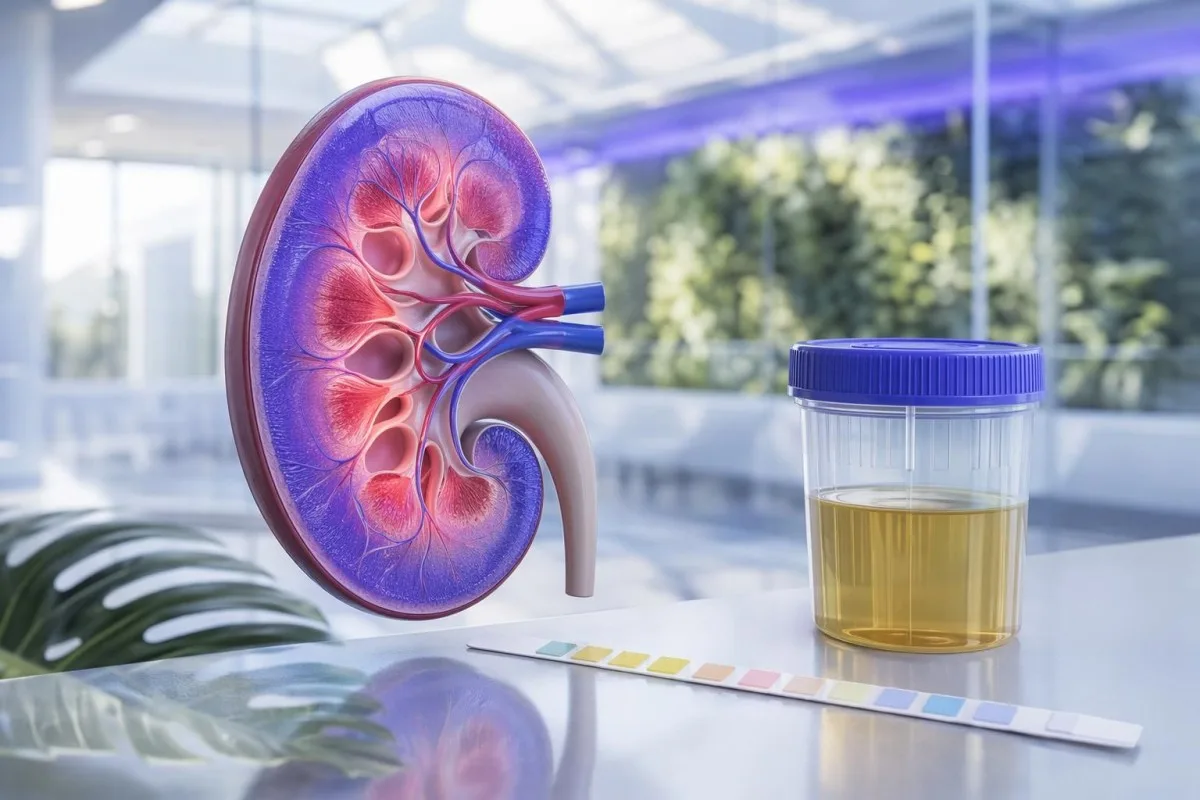
Trace හෝ 1+ ප්රෝටීන් බොහෝවිට තාවකාලික විය හැක, නමුත් දිගටම පවතින proteinuria සඳහා urine ACR එකක් අවශ්ය වේ. 2+ හෝ 3+ ප්රෝටීන්, ඉදිමීම, අධි රුධිර පීඩනය, මුත්රාවේ රුධිරය, හෝ ගර්භණී වෙනස්කම් වැනි දේවල් ඉක්මනින් සැලකිල්ලට ගත යුතුය.


- Trace ප්රෝටීන් මුත්රා dipstick එකකින් බොහෝවිට පෙන්වන්නේ විජලනය, ව්යායාම, උණ, හෝ සාන්ද්රිත මුත්රාවක් බවයි; සාමාන්යයෙන් එය පළමු උදෑසන මුත්රා සාම්පලයකින් නැවත පරීක්ෂා කරයි.
- 1+ ප්රෝටීන් බොහෝ dipstick වලදී සාමාන්යයෙන් 30 mg/dL පමණට සමාන වේ; නමුත් සාන්ද්රණය සහ urine specific gravity නිසා එය ඇත්තට වඩා වැඩි හෝ අඩු ලෙස පෙනෙන්නට පුළුවන.
- 2+ ප්රෝටීන් බොහෝවිට 100 mg/dL පමණට සමාන වන අතර, විශේෂයෙන් එය දිගටම පවතී නම්, සාමාන්යයෙන් urine albumin-to-creatinine ratio එකකින් තහවුරු කළ යුතුය.
- 3+ ප්රෝටීන් බොහෝවිට 300 mg/dL පමණට සමාන වන අතර, විශේෂයෙන් ඉදිමීම, අධි රුධිර පීඩනය, අඩු eGFR, හෝ මුත්රාවේ රුධිරය සමඟ තිබේ නම්, කාලෝචිත වෛද්ය ඇගයීමක් අවශ්ය වේ.
- මුත්රා ACR 30 mg/g ට අඩු, හෝ 3 mg/mmol ට අඩු නම්, සාමාන්යයෙන් සාමාන්ය හෝ මෘදු ලෙස වැඩි වූ albumin excretion ලෙස සැලකේ.
- මධ්යස්ථ ලෙස ඉහළ ගිය ACR 30-300 mg/g, හෝ 3-30 mg/mmol නම්, දියවැඩියාව හෝ අධි රුධිර පීඩනයේදී වකුගඩු හානියේ පළමු මැනිය හැකි ලක්ෂණය විය හැක.
- බරපතල ලෙස ඉහළ ගිය ACR 300 mg/g ට වැඩි, හෝ 30 mg/mmol ට වැඩි නම්, සාමාන්යයෙන් සරල සහතික කිරීමකට වඩා වකුගඩු කේන්ද්ර කරගත් ඇගයීමක් අවශ්ය වේ.
- ගර්භණී සමයේ ප්රෝටීනූරියා සති 20කට පසුව රුධිර පීඩනය 140/90 mmHg හෝ ඊට වැඩි වීමක් ඇතිවීමෙන් ප්රීඑක්ලැම්ප්සියා (preeclampsia) ඇතිවිය හැකි බව පෙන්වයි; සාමාන්ය පරීක්ෂණ හමුවක් එනතුරු බලා නොසිටිය යුතුය.
- හදිසි ලක්ෂණ මුහුණේ හෝ කකුල්වල නව ඉදිමීම, හුස්ම ගැනීමේ අපහසුව, දැඩි හිසරදය, දෘශ්ය ලක්ෂණ, ඉතා ඉහළ රුධිර පීඩනය, මුත්රා අඩුවීම, හෝ කොලා වර්ණයේ මුත්රා වීම ඇතුළත් වේ.
මුත්රාවේ ප්රෝටීන් සාමාන්යයෙන් අදහස් කරන්නේ කුමක්ද
මුත්රාවේ ප්රෝටීන් යන්නෙන් අදහස් වන්නේ මුත්රා ඩිප්ස්ටික් (urine dipstick) හෝ රසායනාගාර පරීක්ෂණය මගින් බොහෝවිට රුධිරයේම රැඳිය යුතු ප්රෝටීන් හඳුනාගෙන ඇති බවයි. Trace හෝ 1+ තාවකාලික විය හැක; 2+ හෝ 3+ වඩාත් සැලකිලිමත් විය යුතු අතර, ඕනෑම දිගටම පවතින ප්රතිඵලයක් සාමාන්යයෙන් urine albumin-to-creatinine ratio (මුත්රා ඇල්බියුමින්-ක්රියේටිනීන් අනුපාතය) මගින් තහවුරු කළ යුතුය; එය සාමාන්යයෙන් මුත්රා ACR.
2026 ජූනි 22 වන විට, මගේ සාමාන්ය ප්රවේශය සරලයි: පිරිසිදු තත්ත්වයන් යටතේ මෘදු (mild) ප්රතිඵලයක් නැවත කරන්න, දිගටම පවතින ඕනෑම දෙයක් ප්රමාණවත් කරන්න, සහ රෝග ලක්ෂණ හෝ ගර්භණීභාවය සම්බන්ධ නම් වේගයෙන් ක්රියා කරන්න. Kantesti යනු AI රුධිර පරීක්ෂණ ප්රතිඵල වේදිකාව විසින් නිර්මාණය කර ඇති කන්ටෙස්ටි ලිමිටඩ් මුත්රා සොයාගැනීම් eGFR, creatinine, albumin, glucose, HbA1c, සහ රුධිර පීඩන රටා සමඟ සම්බන්ධ කිරීමට උපකාරී වන.
ඩිප්ස්ටික් එකක් මුළු වකුගඩු අවදානම මැනන්නේ නැත. එය ප්රධාන වශයෙන් albumin හඳුනාගන්නා අතර, කුඩා ප්රෝටීන, light chains, හෝ අඩු සාන්ද්රණයේ albumin අලාභය (dilute low-grade albumin loss) මඟහැරිය හැක; අපගේ මුත්රා පරීක්ෂණ මාර්ගෝපදේශය ධනාත්මක තීරුවක් (positive strip) සහ ප්රමාණාත්මක මුත්රා ප්රතිඵලයක් සමහර විට එකිනෙකට නොගැලපෙන්නේ ඇයිද යන්න පැහැදිලි කරයි.
මගේ සායනයේදී, උණුසුම් 18 km පුහුණු ධාවනයකින් පසු trace ප්රෝටීන් ඇති වයස අවුරුදු 29ක ධාවකයෙකු, දියවැඩියාව ඇති වයස අවුරුදු 63ක කෙනෙකුට වඩා වෙනස් රෝගියෙකි—ඒ කෙනාට වළලු ඉදිමීම, eGFR 52 mL/min/1.73 m², සහ 2+ ප්රෝටීන් ඇත. Thomas Klein, MD, මෙම රටා දෙක දෙස ඉතා වෙනස් ලෙස බලන්නේ අවදානම තීරුවේ එක් කොටුවක (single square) නොව, එකතු වන (cluster) තත්ත්වයන් තුළ ඇති නිසාය.
urinalysis ප්රතිඵලවල Trace, 1+, 2+ සහ 3+ ප්රෝටීන්
ඩිප්ස්ටික් මගින් ප්රෝටීන් මට්ටම් යනු දළ සාන්ද්රණ පරාසයන් (rough concentration bands) මිස නිවැරදි දෛනික ප්රෝටීන් අලාභය (exact daily protein loss) නොවේ. බොහෝ තීරු (strips) කියවන්නේ trace ආසන්න වශයෙන් 10-20 mg/dL, 1+ ආසන්න වශයෙන් 30 mg/dL, 2+ ආසන්න වශයෙන් 100 mg/dL, සහ 3+ ආසන්න වශයෙන් 300 mg/dL ලෙසය; නමුත් නිෂ්පාදකයන් සහ මුත්රා සාන්ද්රණය වෙනස් වීමෙන් අර්ථය වෙනස් විය හැක.
A trace ප්රෝටීන් ඉතා සාන්ද්රිත මුත්රාවක ඇති ප්රතිඵලයක්, මුත්රා විශේෂ ගුරුත්වය (urine specific gravity) 1.030 සිට 1.015 දක්වා ආපසු එන විට අතුරුදහන් විය හැක. 1+ ප්රෝටීන් ජලමය (watery) මුත්රාවක ඇති ප්රතිඵලයක්, දියවීම අඩු (dehydrated) මුත්රාවක trace ප්රෝටීන් තිබීමට වඩා මට වැඩි සැලකිල්ලක් ඇති කරයි; මන්ද dilution නිසා ප්රෝටීන් හඳුනාගැනීම දුෂ්කර විය යුතුය.
A 2+ ප්රෝටීන් ප්රතිඵලය ස්වයංක්රීයව වකුගඩු අසමත්වීම (kidney failure) බවට පත් නොවේ; නමුත් මාස ගණනක් නොසලකා හැරිය යුතුද නැත. රෝගීන් රසායනාගාර ද්වාරවල (lab portals) සංකේත, තරු, හෝ වර්ණ කොටු (color blocks) දකින විට, මම බොහෝවිට ඔවුන්ව අපගේ අසාමාන්ය ප්රතිඵල කියවීම (reading abnormal results) පිළිබඳ මාර්ගෝපදේශයට යොමු කරමි. මන්ද එම සලකුණ (flag) ඔබට සිදු වූ දේ කියන්නේ, හේතුව නොවේ.
A 3+ ප්රෝටීන් ප්රතිඵලය බොහෝවිට එඩීමා (edema) සොයා බැලීමට තරම් ඉහළ සාන්ද්රණයක්, අධි රුධිර පීඩනය (hypertension), අඩු සෙරුම් ඇල්බියුමින් (serum albumin), අඩු eGFR, සහ මුත්රාවල රුධිරය (blood in urine) ඇතිවීම යන කරුණු සලකා බැලීමට හේතු වේ. නෙෆ්රොටික්-පරාස ප්රෝටීනියුරියා (nephrotic-range proteinuria) තුළ, මුළු ප්රෝටීන් පිටකිරීම සාමාන්යයෙන් දිනකට 3.5 gට වඩා වැඩිය; එය ඩිප්ස්ටික් (dipstick) මගින් නිවැරදිව ප්රමාණනය කළ හැකි ප්රමාණයට වඩා බොහෝ දුරයි.
urine ACR සමඟ නැවත පරීක්ෂා කළ යුත්තේ කවදාද
ඩිප්ස්ටික් මත ප්රෝටීන් දිගටම පවතී නම්, 1+ හෝ ඊට වැඩි ලෙස පෙනේ නම්, හෝ දියවැඩියාව (diabetes), අධි රුධිර පීඩනය (hypertension), අඩු eGFR, ගර්භණී අවදානම (pregnancy risk), හෝ ඉදිමීම (swelling) ඇති කෙනෙකු තුළ සිදුවේ නම්, නැවත පරීක්ෂා කිරීම සඳහා මුත්රා ACR (urine ACR) වඩාත් කැමති පරීක්ෂණයයි. පළමු උදෑසන මුත්රා ACR මගින් දියවීම සහ ක්රියාකාරකම් නිසා ඇතිවන වැරදි උච්චාවචන (false swings) අඩු වේ.
KDIGO 2024 ඇල්බියුමින් අලාභය (albuminuria) A1 ලෙස 30 mg/gට අඩු, A2 ලෙස 30-300 mg/g අතර, සහ A3 ලෙස 300 mg/gට වැඩි ලෙස වර්ගීකරණය කරයි; mmol/mmol සමාන අගයන් පිළිවෙලින් 3ට අඩු, 3-30, සහ 30ට වැඩි වේ. ඒ වර්ගීකරණයයි අපි මුත්රා ACR පැහැදිලි කිරීම (urine ACR explainer) ඩිප්ස්ටික් වර්ණය පමණක් නොව අවදානම් කාණ්ඩ (risk categories) කෙරෙහි අවධානය යොමු කරන්නේ.
ලක්ෂණ නොමැතිව trace හෝ 1+ ප්රෝටීන් සඳහා, දියවීම, උණ, හෝ ව්යායාම likely වූවා නම් සාමාන්යයෙන් 1-2 සති ඇතුළත පිරිසිදු-අල්ලාගත් පළමු උදෑසන සාම්පලයක් නැවත කරමි. සති 3ක් පමණ කාලයක් තුළ සාම්පල 3කින් 2කක ප්රෝටීන් පෙනෙන්නේ නම්, එම වචනය persistent proteinuria ලෙස සැලකේ.
Kantesti AI, ACR අර්ථකථනය කරන්නේ සෙරුම් ක්රියේටිනින් (serum creatinine), eGFR, HbA1c, CRP, ඇල්බියුමින්, සහ ඖෂධ ඉතිහාසය (medication history) සමඟින්ය; මන්ද ඒ විස්තර නොමැතිව ඇල්බියුමින් අලාභය (albuminuria) අධික ලෙස හෝ අඩු ලෙස අර්ථකථනය කිරීම පහසුය. මෙහි ඇති සාක්ෂි (evidence) සම්පූර්ණයෙන්ම පිළිවෙළට නැත; සෞඛ්ය සම්පන්න 22 හැවිරිදි කෙනෙකු තුළ හුදකලා 1+ ප්රෝටීන් සඳහා වේගවත්ම මාර්ගය ගැන වෛද්යවරුන් එකඟ නොවෙයි, නමුත් ඔවුන් සාමාන්යයෙන් 300 mg/gට වැඩි persistent ACR ගැන එකඟ නොවෙන්නේ නැත.
මුත්රා ප්රෝටීන් ඉහළ දැමිය හැකි තාවකාලික හේතු
තාවකාලික ප්රෝටීනූරියා බර අභ්යාසයෙන්, උණෙන්, විජලනයෙන්, මානසික ආතතියෙන්, සීතලට නිරාවරණයෙන්, හෝ මෑතකාලීන ආසාදනයකින් පසුව ඇති විය හැක. මෙම හේතු සාමාන්යයෙන් ප්රේරකය පහවූ විට වැඩිදියුණු වන අතර, ඒ නිසා කාලය සහ නැවත සාම්පල ගැනීම වැදගත් වේ.
අභ්යාසයෙන් ඇතිවන ප්රෝටීනූරියා සාමාන්යයෙන් කෙටි කාලයකට පමණක් පවතින අතර බොහෝ විට පැය 24-48 තුළ ඉවත් වේ. දිගු ධාවන, CrossFit සැසි, සහ හමුදා යෝග්යතා පරීක්ෂණවලින් පසු, විශේෂයෙන් මුත්රා විශේෂ ගුරුත්වය 1.025ට වඩා වැඩි වූ විට, මම trace සිට 1+ දක්වා ප්රෝටීන් දක්වා ඇති බව දැක ඇත; අපගේ මාර්ගෝපදේශය ව්යායාම-ආශ්රිත විකල්ප ස්වයංක්රීය මාරු එම රටාවේ රුධිර පරීක්ෂණ පැත්ත පැහැදිලි කරයි.
උණ දින කිහිපයක් සඳහා ග්ලෝමරුලර් පාරගම්යතාවය වැඩි කළ හැකි අතර, ශ්වසන හෝ මුත්රා ආසාදනයක් රෝග ලක්ෂණ වැඩි වූ පසු dipstick පරීක්ෂාවේදී මෘදු ප්රෝටීන් ඉතිරි කර තැබිය හැක. ප්රායෝගික පියවර වන්නේ, මුත්රාවේ ලේ තිබීම, පැත්තේ වේදනාව (flank pain), හෝ මුත්රා නිමැවුම අඩුවීම වැනි රතු කොඩි නොමැති නම්, උණේ උච්ච අවස්ථාවේදී මුත්රා නැවත පරීක්ෂා කිරීමෙන් වැළකීමයි.
Orthostatic proteinuria යනු විශේෂිත නමුත් සැබෑ සොයාගැනීමකි; විශේෂයෙන් නව යොවුන්විය සහ තරුණ වැඩිහිටියන් තුළ. ප්රෝටීන් දවසේ පසුව පෙනී යයි, නමුත් පළමු උදෑසන මුත්රා තුළ නොපෙනේ; දෛනික මුළු ප්රෝටීන් සාමාන්යයෙන් 1 g/දිනට අඩුය. මෙම වෙනස අනවශ්ය රූපගත කිරීම්වලින් බොහෝ පවුල් ගණනාවක් පුදුම සහගත ලෙස බේරා ගනී.
වෛද්යවරුන් මුලින්ම පරීක්ෂා කරන වකුගඩු හේතු
මුත්රාවේ දිගටම පවතින ප්රෝටීන් ග්ලෝමරුලර් වකුගඩු රෝගයෙන්, දියවැඩියා වකුගඩු රෝගයෙන්, අධි රුධිර පීඩන හේතුවෙන් වකුගඩු හානිවලින්, tubulointerstitial රෝගයෙන්, හෝ ඖෂධ ආශ්රිත හානිවලින් පැමිණිය හැක. ACR, eGFR, මුත්රා ලේ, රුධිර පීඩනය, සහ සෙරුම් ඇල්බියුමින් යන සංයෝජනය සාමාන්යයෙන් දිශාව පෙන්වයි.
ග්ලෝමරුලර් හේතු බොහෝ විට ඇල්බියුමින් ප්රමුඛ ප්රෝටීනූරියා නිපදවයි, මන්ද පෙරීමේ බාධකය එය විය යුතු තරමට වඩා “ලීක්” වීම වැඩි වේ. මුත්රාවේ ලේ සමඟ ප්රෝටීනූරියා ඇතිවී, රතු සෛල කැස්ට් (red cell casts) දක්නට ලැබේ නම්, සරල නැවත dipstick පරීක්ෂාවකට වඩා වැඩි හදිසි බවකින් යුත් ඇගයීමක් අවශ්ය වේ.
ක්රියේටිනින් මුලදී සාමාන්යවම පැවතිය හැක, විශේෂයෙන් වකුගඩු “reserve” වැඩි අය තුළ. ඒ නිසා අපගේ ලිපිය ක්රියේටිනින් ඉහළ යාමට පෙර වකුගඩු වෙනස්කම් ඇල්බියුමින් අධිකවීම, cystatin C, සහ තත්ත්ව ප්රවණතා (trends) ගැන අවධානය යොමු කරයි; තනි ක්රියේටිනින් අගයක් ගැන පමණක් නොවේ.
NICE CKD මාර්ගෝපදේශය බොහෝ වැඩිහිටි වකුගඩු-අවදානම් මාර්ගයන් තුළ ප්රෝටීනූරියා හඳුනා ගැනීමට සහ නිරීක්ෂණය කිරීමට reagent-strip ප්රෝටීන් පමණක් වෙනුවට ACR භාවිතා කිරීම නිර්දේශ කරයි (NICE, 2021). සරලව කිවහොත්, සාමාන්ය ලෙස පෙනෙන ක්රියේටිනින් අගයක් සහ නැවත නැවතත් අසාමාන්ය ACR එකක් තිබුණත් එය වැදගත් වකුගඩු සංඥාවක් විය හැක.
දියවැඩියාව, අධි රුධිර පීඩනය සහ පරිවෘත්තීය අවදානම් රටා
දියවැඩියාව සහ අධි රුධිර පීඩනය යනු මුත්රාවේ දිගටම පවතින ඇල්බියුමින් සඳහා වඩාත් පොදු නිදන්ගත හේතු දෙකකි. රෝග ලක්ෂණ පෙනීමට පෙරම ACR අසාමාන්ය විය හැක; බොහෝ විට eGFR තවමත් 60 mL/min/1.73 m²ට ඉහළින් තිබියදීය.
දියවැඩියාවේදී, ACR 30-300 mg/g බොහෝ විට වඩාත් මුල්ම මැනිය හැකි වකුගඩු-අවදානම් අනතුරු කලාපය වේ. HbA1c 7.0%ට ඉහළින් තිබේ නම්, systolic රුධිර පීඩනය 130-140 mmHgට ඉහළින් තිබේ නම්, හෝ triglycerides ඉහළ නම්, මම එය වඩාත් බැරෑරුම් ලෙස සලකමි; අපගේ දියවැඩියා රුධිර පරීක්ෂණ මාර්ගෝපදේශය වකුගඩු අවදානම සමඟ ගමන් කරන රුධිර සලකුණු (blood markers) ගැන පැහැදිලි කරයි.
අධි රුධිර පීඩනය ආශ්රිත ප්රෝටීනූරියා මුලදී සාමාන්යයෙන් මධ්යස්ථය, නමුත් රුධිර පීඩනය නැවත නැවතත් 140/90 mmHgට ඉහළින් පවතින අතර ACR 30 mg/gට ඉහළින්ම පවතින විට එම රටාව සැලකිලිමත් විය යුතුය. KDIGO 2024 eGFR සහ ඇල්බියුමින් අධිකවීම යන කාණ්ඩ දෙකම භාවිතා කරයි, මන්ද එකම eGFR අගයක් ACR 10 mg/gට සාපේක්ෂව සහ 600 mg/gට සාපේක්ෂව ඉතා වෙනස් අවදානමක් දරන්නට හැකි බැවිනි (KDIGO CKD Work Group, 2024).
කන්ටෙස්ටි යනු AI මගින් බලගැන්වූ රුධිර පරීක්ෂණ විශ්ලේෂණ මෙවලම 127+ රටවල සිටින අය භාවිතා කරන අතර, අපගේ neural network ග්ලූකෝස්, HbA1c, ක්රියේටිනින්, පොටෑසියම්, ඇල්බියුමින්, සහ ලිපිඩ් ප්රතිඵල වකුගඩු-අවදානම් කණ්ඩායමක් වෙත යොමු වන විට එය හඳුනා ගැනීමට පුහුණු කර ඇත. මෙය වකුගඩු රෝගය නිර්ණය නොකරයි, නමුත් රෝගීන්ට ඔවුන්ගේ වෛද්යවරයා වෙත වඩා පිරිසිදු ප්රශ්නයක් ගෙන ඒමට උපකාරී වේ.
UTI, මුත්රාවේ රුධිරය සහ සාම්පල දූෂණය
මුත්රා මාර්ග ආසාදනයක් (UTI), දෘශ්යමාන හෝ අණුක (microscopic) ලේ, මාසික අපවිත්රතාවය (menstrual contamination), ශුක්රාණු (semen), හෝ දුර්වල ලෙස එකතු කරන ලද සාම්පලයක් මුත්රා ප්රෝටීන් අසාමාන්ය ලෙස පෙනෙන්නට හේතු විය හැක. බාධා කරන ගැටලුව ඉවත් වූ පසු ප්රෝටීන් නැවත පරීක්ෂා කළ යුතුය.
UTIs සාමාන්යයෙන් එකම සාම්පලයට leukocytes, nitrites, ලේ, සහ යම් ප්රෝටීන් එකතු කරයි. nitrites හෝ leukocyte esterase ධනාත්මක නම්, මම ප්රෝටීන් ප්රතිඵලය වෙනස් ලෙස අර්ථකථනය කර, බොහෝ විට ප්රතිකාරයෙන් පසු සති 1-2ක් ගත වන තෙක් නැවත පරීක්ෂා කිරීම බලා සිටිමි; අපගේ પેશાબ કલ્ચર માર્ગદર્શિકા colony counts සහ mixed growth පැහැදිලි කරයි.
මුත්රාවේ ලේ තිබීම hemoglobin සහ plasma ප්රෝටීන් එකට සාම්පලයට ඇතුල් වීම නිසා ප්රෝටීන් පෑඩ් (protein pad) ඉහළ යා හැක. දැඩි අභ්යාසයෙන් පසු ලේ සමඟ ප්රෝටීන් පෙන්වන dipstick එකක්, අධි රුධිර පීඩනය, ඉහළ යන ක්රියේටිනින්, හෝ රතු සෛල කැස්ට් සමඟ ලේ සහිත ප්රෝටීන් පෙන්වීමට වඩා සාමාන්යයෙන් අඩු සැලකිලිමත් විය හැක.
එකතු කිරීමේ ක්රමය රෝගීන්ට කියන තරම් වැදගත් නොවන බවක් නොවෙයි. මැද ධාරා පිරිසිදු-අල්ලාගැනීම (midstream clean-catch) සාම්පලයක් වැරදි ධනාත්මක (false positives) අඩු කරයි. පළමු උදෑසන මුත්රා (first-morning urine) දහවල් කාලයේ ප්රෝටීන් වෙනස්වීම (daytime protein swing) මඟින් රෝගීන්ට සහ වෛද්යවරුන්ට වැරදි මඟ පෙන්විය හැකි අවස්ථා වළක්වයි.
proteinuria සමඟ ඇති රෝග ලක්ෂණ—ඉක්මන් සැලකිල්ල අවශ්ය
ඉදිමීම (swelling) සමඟ, හුස්ම ගැනීමේ අඩුව (shortness of breath), ඉතා ඉහළ රුධිර පීඩනය (very high blood pressure), මුත්රා අඩුවීම (reduced urination), කොලා වර්ණ මුත්රා (cola-colored urine), පපුවේ අසහනය (chest discomfort), දැඩි හිසරදය (severe headache), ව්යාකූලත්වය (confusion), හෝ නව දුර්වලතාව (new weakness) ඇති විට ප්රෝටීනූරියාවට (proteinuria) ඉක්මන් ප්රතිකාර අවශ්ය වේ. එම ලක්ෂණ මඟින් ප්රතිඵලය වඩා පුළුල් වකුගඩු (kidney), රුධිර නාල (vascular), හෝ සම්පූර්ණ ශරීර (systemic) ගැටලුවක කොටසක් විය හැකි බව පෙන්වයි.
කකුල් වළලු (ankle), ඇස් වට (eyelid), හෝ මුහුණ (face) නවින් ඉදිමීම 2+ හෝ 3+ ප්රෝටීන් සමඟ තිබේ නම් එය කඩිනම්ව නැවත පරීක්ෂා කිරීම ලැබිය යුතුය. හේතුව වන්නේ බර ඇල්බියුමින් අහිමිවීම (heavy albumin loss) මඟින් සෙරුම් ඇල්බියුමින් (serum albumin) දළ වශයෙන් 3.0 g/dL ට පහළට වැටිය හැකි වීමයි. අපගේ මාර්ගෝපදේශය ඉදිමීම සහ රසායනාගාර (lab) සලකුණු ඇල්බියුමින්, වකුගඩු සලකුණු (kidney markers), අක්මා පරීක්ෂණ (liver tests), සහ හෘද සලකුණු (heart markers) එකට පරීක්ෂා කරන්නේ ඇයිද යන්න පැහැදිලි කරයි.
මුත්රාවේ ප්රෝටීන් සමඟ 180/120 mmHg ට වැඩි රුධිර පීඩනය (blood pressure) එකම දිනේ වෛද්ය තත්ත්වයක් (same-day medical situation) වේ. පුද්ගලයා අමුතු ලෙස හොඳින් දැනුණත් එය එසේමය. හේතුව ප්රෝටීනය පමණක් නොවේ; එය උග්ර වකුගඩු ආතතිය (acute kidney strain), රුධිර නාල හානි (vascular injury), ආඝාත අවදානම (stroke risk), හෝ ගර්භණී-සම්බන්ධ අධි රුධිර පීඩනය (pregnancy-related hypertension) ඇති විය හැකි බවයි.
තෙත්/පෙන (foamy) මුත්රාව තනිවම විශ්වාස කළ නොහැක. මම දැක තිබෙනවා පෙන ඉතා දර්ශනීය ලෙස තිබුණත් ACR සාමාන්ය (normal ACR) රෝගීන්. තවත් රෝගීන් ACR 1000 mg/g ට වැඩි තිබුණත් පෙන කිසිසේත්ම නොදැක්කා. ලක්ෂණ උපකාරී වුවත්, ප්රමාණාත්මක පරීක්ෂණය (quantitative testing) තීරණය කරයි.
ගර්භණී සමයේ මුත්රාවේ ප්රෝටීන්
ගර්භණී වීමේ සති 20 කට පසුව මුත්රාවේ ප්රෝටීන් තිබීම, රුධිර පීඩනය 140/90 mmHg හෝ ඊට වැඩි නම් වඩාත් සැලකිලිමත් විය යුතුය. එවැනි අවස්ථාවක වෛද්යවරු preeclampsia ගැන සිතන අතර, සාමාන්යයෙන් dipstick පමණක් මත රඳා නොසිට ACR, PCR, හෝ පැය 24 මුත්රා (24-hour urine) මඟින් ප්රෝටීන් තහවුරු කරයි.
ACOG Practice Bulletin No. 222 අනුව preeclampsia හි ප්රෝටීනූරියාව ලෙස 24 පැය තුළ 300 mg හෝ ඊට වැඩි ප්රමාණයක්, ප්රෝටීන්-ක්රියේටිනින් අනුපාතය (protein-to-creatinine ratio) 0.3 හෝ ඊට වැඩි, හෝ ප්රමාණාත්මක ක්රම ලබාගත නොහැකි විට dipstick 2+ පමණක් (ACOG, 2020) ලෙස දක්වා ඇත. රුධිර පීඩන සීමා (blood pressure thresholds) සහ නිවසේ කියවීම් (home readings) සඳහා අපගේ ගර්භණී BP මාර්ගෝපදේශය ප්රයෝජනවත් සහයකයෙකි.
දැඩි හිසරදය (severe headache), දෘශ්ය ලක්ෂණ (visual symptoms), දකුණු ඉහළ උදර වේදනාව (right upper abdominal pain), හුස්ම ගැනීමේ අඩුව, හදිසි ඉදිමීම, කලලයේ චලනය අඩුවීම (reduced fetal movements), හෝ 160/110 mmHg හෝ ඊට වැඩි රුධිර පීඩනයක් තිබේ නම් එකම දිනේ ඇගයීම (Same-day assessment) සුදුසුය. 100,000/µL ට අඩු platelets, 1.1 mg/dL ට වැඩි creatinine, හෝ අක්මා එන්සයිම (liver enzymes) ඉහළ සීමාවට වඩා දෙගුණයකට (twice the upper limit) වැඩි වීම මෙම සැලකිල්ලට බර වැඩි කරයි.
මගේ අත්දැකීම අනුව, ගර්භණී සමයේ අනතුරුදායක රටාව (dangerous pregnancy pattern) සති 24 දී තනිවම එක් වරක් පමණක් පෙනෙන ප්රෝටීන් ප්රතිඵලයක් (one lonely trace protein result) නොවේ. එය එකතුවක් (cluster) ලෙස පෙනේ: රුධිර පීඩනය ඉහළ යාම, නව ලක්ෂණ, ප්රෝටීනූරියාව වැඩිවීම, platelets පහළ යාම, creatinine ඉහළ යාම, හෝ කලල වර්ධනය පිළිබඳ සැලකිල්ල.
ළමුන්, ක්රීඩකයන් සහ orthostatic proteinuria
ළමුන්, නව යොවුන් වයස්කරුවන්, සහ දිගු දුර ධාවක ක්රීඩකයන් (endurance athletes) බොහෝ විට අහිතකර නොවන (benign) හෝ තාවකාලික ප්රෝටීනූරියාවක් (transient proteinuria) දක්වයි. එහෙත් එය දිගටම පැවතීම තවමත් වැදගත්ය. orthostatic proteinuria හෝ exercise proteinuria සැක කරන විට තීරණාත්මක සාම්පලය වන්නේ පළමු උදෑසන මුත්රා (first-morning urine) ය.
orthostatic proteinuria වයස්ගත වැඩිහිටියන් තුළ අඩු වශයෙන් දක්නට ලැබේ. නමුත් නව යොවුන් වයස්කරුවන් තුළ දහවල් කාලයේ ප්රෝටීන් (daytime protein) පැහැදිලි කළ හැක. රුධිර පීඩනය සහ මුත්රා ක්ෂුද්ර පරීක්ෂණය (urine microscopy) සාමාන්ය නම්, පළමු උදෑසන මුත්රාවේ ප්රෝටීන්-ක්රියේටිනින් අනුපාතය (protein-to-creatinine ratio) දළ වශයෙන් 0.2 mg/mg ට පහළ වීම බොහෝ ළමා රෝග මාර්ගෝපදේශවල (pediatric pathways) සාමාන්යයෙන් සැනසිලිදායක (reassuring) වේ.
ක්රීඩකයන් දැඩි පුහුණු සැසි (hard sessions) වලින් පසුව තාවකාලික ප්රෝටීන් (temporary protein), ketones, ඉහළ specific gravity, සහ ව්යායාම-සම්බන්ධ creatinine හෝ CK වෙනස්කම් (exercise-related creatinine or CK changes) පෙන්විය හැක. මෙම රටාව අපගේ මැරතන් ධාවක ලැබ් මාර්ගෝපදේශය (marathon runner lab guide), සමඟ අතිච්ඡාදනය වේ. එහිදී hydration, මාංශ පේශි ආතතිය (muscle stress), සෝඩියම් (sodium), සහ වකුගඩු සලකුණු (kidney markers) සියල්ලටම සන්දර්භය (context) අවශ්ය වේ.
මම සාමාන්යයෙන් ක්රීඩකයන්ට උපදෙස් දෙන්නේ දැඩි පුහුණුවක් නොකර පැය 48ක් පසු මුත්රා නැවත ලබාගෙන පරීක්ෂා කරන ලෙසත්, hydration සාමාන්ය ලෙස පවත්වා ගන්නා ලෙසත්ය. විවේකයෙන් පසුවත් ප්රෝටීන් පවතින්නේ නම්, හෝ රුධිරය (blood), අධි රුධිර පීඩනය (hypertension), හෝ eGFR පහළ යාමක් (eGFR decline) තිබේ නම්, එය පුහුණු ආකාරයේ (training artifact) දෝෂයක් ලෙස තවදුරටත් නොසලකමි.
පින්තූරය සම්පූර්ණ කරන රුධිර පරීක්ෂණ
ප්රෝටීනූරියාව (Proteinuria) creatinine, eGFR, urea හෝ BUN, electrolytes, සෙරුම් ඇල්බියුමින් (serum albumin), HbA1c, lipids, CBC, CRP, සහ සමහර විට autoimmune markers වැනි රුධිර පරීක්ෂණ සමඟ අර්ථකථනය කරයි. මුත්රාව පමණක් සාමාන්යයෙන් කතාව සම්පූර්ණයෙන් කියන්නේ නැත.
renal function panel එකක් සාමාන්යයෙන් creatinine, eGFR, urea හෝ BUN, සෝඩියම් (sodium), පොටෑසියම් (potassium), bicarbonate, කැල්සියම් (calcium), පොස්පේට් (phosphate), සහ ඇල්බියුමින් (albumin) ඇතුළත් කරයි. රට සහ රසායනාගාරය අනුව මෙය වෙනස් විය හැක. අපගේ වකුගඩු පැනල මාර්ගෝපදේශය පොටෑසියම් (potassium) සහ bicarbonate වකුගඩු ප්රතිඵලයක හදිසිභාවය (urgency) වෙනස් කළ හැක්කේ ඇයිද යන්න පෙන්වයි.
අඩු සෙරුම් ඇල්බියුමින් සහ වැඩි මුත්රා ප්රෝටීන් ප්රමාණය ශරීරය ලිවර් එකට ප්රතිස්ථාපනය කිරීමට හැකිවීමට වඩා වේගයෙන් ප්රෝටීන් නැතිවෙමින් පවතින බවට ඉඟි කරයි. ඇල්බියුමින් 3.0 g/dL පමණට වඩා පහළට වැටෙන අතර මුත්රා ප්රෝටීන් බරපතල ලෙස වැඩි නම්, වෛද්යවරුන් එඩීමා, ඉහළ LDL කොලෙස්ටරෝල්, සහ කැටි ගැසීමේ අවදානම වැනි නෙෆ්රොටික් සින්ඩ්රෝම් ලක්ෂණ සොයයි.
කන්ටෙස්ටි යනු AI biomarker interpretation platform අපගේ ජෛව සලකුණු (biomarker) ආවරණය සඳහා, අපේ. Thomas Klein, MD, සහ අපගේ වෛද්ය කණ්ඩායම තවමත් AI ප්රතිදානය තීරණ සහාය ලෙස පමණක් සලකයි; රෝගියා පරීක්ෂා කළ හැකි වෛද්යවරයෙකුට ආදේශකයක් ලෙස නොවේ.
ACR, PCR, eGFR සහ පැය 24ක මුත්රා: වෙනස්කම් මොනවාද
ACR මගින් ඇල්බියුමින් නැතිවීම මැනේ, PCR මගින් මුළු ප්රෝටීන් නැතිවීම ඇස්තමේන්තු කරයි, eGFR මගින් පෙරීමේ හැකියාව ඇස්තමේන්තු කරයි, සහ පැය 24ක මුත්රා මගින් දෛනික පිටවීම මැනේ. මෙම පරීක්ෂණ විවිධ ප්රශ්නවලට පිළිතුරු දෙන නිසා, එක් සාමාන්ය ප්රතිඵලයක් තවත් අසාමාන්ය එකක් සම්පූර්ණයෙන්ම අවලංගු කරන්නේ නැත.
මුත්රා ACR මුල් ඇල්බියුමින් කාන්දු වීම සඳහා වඩාත් සුදුසුය, විශේෂයෙන් දියවැඩියාව සහ අධි රුධිර පීඩනයේදී. මුත්රා PCR ප්රයෝජනවත් වන්නේ ඇල්බියුමින් නොවන ප්රෝටීන තිබිය හැකි විට හෝ මුළු ප්රෝටීන් බර වැදගත් වන විටය; අපගේ eGFR වයස් මාර්ගෝපදේශය වයස සමඟ පෙරීමේ ඇස්තමේන්තු වෙනස් වන්නේ කෙසේදැයි පැහැදිලි කරයි.
පැය 24ක මුත්රා එකතු කිරීම කරදරකාරී විය හැකි නමුත් සමහර විට ව්යාකූල spot ප්රතිඵල පැහැදිලි කරයි. සාමාන්ය මුළු මුත්රා ප්රෝටීන් සාමාන්යයෙන් දිනකට 150 mg/dayට අඩු වන අතර, නෙෆ්රොටික්-පරාසයේ ප්රෝටීනූරියා සාමාන්යයෙන් දිනකට 3.5 g/dayට වඩා වැඩිය.
යූරියා සහ ක්රියේටිනින් රටා තවත් ස්ථරයක් එක් කරයි. අපගේ පර්යේෂණ මත පදනම් වූ BUN/creatinine අනුපාත මාර්ගෝපදේශය විජලනය, ඉහළ ප්රෝටීන් ආහාර ගැනීම, ආමාශ-අන්ත්ර ද්රව අහිමි වීම, හෝ වකුගඩු රුධිර ප්රවාහය වෙනස් වීම නිසා තත්ත්වය ව්යාකූල විය හැකි විට ප්රයෝජනවත් වේ.
නැවත මුත්රා පරීක්ෂණයක් සඳහා සූදානම් වන්නේ කෙසේද
නැවත මුත්රා ප්රෝටීන් පරීක්ෂණයක් සඳහා, පළමු උදෑසන පිරිසිදු-අල්ලාගත් (clean-catch) සාම්පලයක් භාවිතා කරන්න, පැය 24-48ක් සඳහා දැඩි ව්යායාමයෙන් වළකින්න, සාමාන්ය ලෙස ජලය පානය කරන්න, සහ හැකි නම් ක්රියාකාරී උණක් හෝ මාසික දූෂණයක් ඇති අවස්ථාවේ පරීක්ෂා කිරීමෙන් වළකින්න. ඔබේ වෛද්යවරයා ඔබට එසේ කිරීමට කියන්නේ නැත්නම් නියම කර ඇති ඖෂධ නතර නොකරන්න.
සාමාන්ය ජලය පානය කිරීම යනු තද කහ පැහැති මුත්රාය; බලෙන් වැඩි ජලය පානය කිරීම නොවේ. පරීක්ෂණයට හරියටම පෙර ලීටර් 2-3ක් පානය කිරීම ඇල්බියුමින් දියකර ව්යාජ සහතිකයක් ඇති කළ හැකි අතර, විජලනය ප්රෝටීන් සාන්ද්රණය කර dipstick පරීක්ෂණයේ මායිම් තත්ත්වයක් trace හෝ 1+ දක්වා තල්ලු කළ හැක.
පෙර මුත්රා පරීක්ෂණය (urinalysis), ACR, ක්රියේටිනින්, eGFR, රුධිර පීඩන කියවීම්, සහ ඖෂධ ලැයිස්තුව නැවත පැමිණීමේදී රැගෙන එන්න. අපගේ මාර්ගෝපදේශය on අසාමාන්ය රුධිර පරීක්ෂණ නැවත කිරීම ඉතා ඉක්මනින් හෝ වෙනස් තත්ත්වයන් යටතේ නැවත පරීක්ෂා කිරීම පැහැදිලි බවට වඩා ශබ්දයක් (noise) ඇති කරන්නේ ඇයිද යන්න පැහැදිලි කරයි.
ඖෂධ සම්බන්ධතාවය වැදගත් වේ. NSAIDs, lithium, ඇතැම් ප්රතිජීවක, ඇතැම් වෛරස් නාශක, ප්රතිශක්තිකරණ ප්රතිකාර, සහ contrast exposure වකුගඩු සලකුණු (kidney markers) වලට බලපෑම් කළ හැකි අතර, ACE inhibitors සහ ARBs සති කිහිපයක් සිට මාස කිහිපයක් තුළ albuminuria අඩු කළ හැක.
Kantesti proteinuria රටා අර්ථකථනය කිරීමට උපකාර කරන්නේ කෙසේද
Kantesti මුත්රා ප්රෝටීන් සොයාගැනීමක් වටා රුධිර පරීක්ෂණ සන්දර්භය සංවිධානය කිරීමෙන් උපකාර කරයි: eGFR, creatinine, albumin, glucose, HbA1c, lipids, electrolytes, inflammation markers, සහ පෙර ප්රවණතා (prior trends). වඩාත් ආරක්ෂිත අර්ථකථනය වන්නේ dipstick මත පදනම් වූ එක-පියවර කියවීමක් නොව, pattern මත පදනම් වූ විශ්ලේෂණයකි.
Kantesti හි neural network එක ප්රෝටීනූරියා (proteinuria) පිළිබඳ සැලකිල්ලක් හුදකලාද නැතිනම් පුළුල් අවදානම් සංඥාවක කොටසක්ද යන්න පරීක්ෂා කරයි, සහ අපගේ ක්රමවේදයන් විස්තර කර ඇත්තේ තාක්ෂණික මාර්ගෝපදේශය. eGFR 96, ACR 8 mg/g, සාමාන්ය රුධිර පීඩනය, සහ මෑතකදී උණ (fever) ඇති 1+ dipstick එකක් සාමාන්යයෙන් ACR 220 mg/g සහ HbA1c 8.4% සහිත 1+ ප්රෝටීන් වලින් වෙනස් ලෙස හැසිරේ.
අපගේ සායනික පාලනය (clinical governance) වැදගත් වන්නේ වෛද්ය අර්ථකථනය යනු pattern recognition පමණක් නොවන නිසාය. Kantesti AI අපගේ වෛද්ය වලංගුකරණය, හි විස්තර කර ඇති ප්රමිතීන්ට අනුව සමාලෝචනය කරනු ලබන අතර, ගර්භණීභාවය, මුත්රා අඩුවීම (reduced urination), දැඩි අධි රුධිර පීඩනය (severe hypertension), හෝ වකුගඩු සලකුණු වේගයෙන් නරක අතට හැරීම (rapidly worsening kidney markers) තිබේ නම් අපගේ වෛද්යවරුන් සංරක්ෂණාත්මක (conservative) ලෙස ඉක්මන් වැඩිදියුණු කිරීම (escalation) උපදෙස් දෙයි.
ප්රධාන කරුණ: මෘදු (mild) සහ පැහැදිලි කළ හැකි ප්රෝටීන් නැවත පරීක්ෂා කරන්න; ACR සමඟ නොනැසී පවතින ප්රෝටීන් ප්රමාණවත් කරන්න; සහ රෝග ලක්ෂණ, ගර්භණීභාවය, ඉහළ රුධිර පීඩනය, මුත්රාවේ රුධිරය (blood in urine), හෝ eGFR අඩුවීම (falling eGFR) සමඟ 2+ හෝ 3+ ප්රෝටීන් සඳහා ඉක්මනින් ක්රියා කරන්න. අපගේ වෛද්ය උපදේශක මණ්ඩලය එම ප්රවේශමත් වැඩපිළිවෙල (workflow) ගොඩනැගුවේ වකුගඩු රෝගයක් මගහැරීම, අමතර එක් මුත්රා පරීක්ෂණයක් නැවත කිරීමකට වඩා නරක නිසාය.
නිතර අසන ප්රශ්න
මුත්රාවල ඇති සීරුමය ප්රෝටීන් (trace protein) බරපතලද?
මුත්රාවල ප්රෝටීන් සුළු ප්රමාණයක් තිබීම බොහෝ විට බරපතල නොවන තත්ත්වයක් වන අතර, විජලනය, උණ, දැඩි ව්යායාම, හෝ සාන්ද්රිත මුත්රා ඇතිවූ විට එක් වරක් පමණක් දක්නට ලැබෙන්නේ නම් එය බොහෝවිට ගැටලුවක් නොවේ. ඩිප්ස්ටික්ස් මගින් සාමාන්යයෙන් 10-20 mg/dL පමණ ප්රමාණයේ ප්රෝටීන් සුළු ප්රමාණයක් හඳුනාගත හැකි අතර, පළමු උදෑසන මුත්රා නැවත පරීක්ෂා කිරීමේදී එය අතුරුදහන් විය හැක. ප්රෝටීන් සුළු ප්රමාණය 2ක් හෝ ඊට වැඩි පරීක්ෂණවලදී දිගටම පවතී නම්, අධි රුධිර පීඩනය සමඟ ඇතිවන්නේ නම්, හෝ මුත්රාවල රුධිරය, ඉදිමීම, හෝ අඩු වූ GFR/eGFR සමඟ ඇතිවන්නේ නම් එය වඩාත් වැදගත් වේ.
మూత్రයේ 1+ ප්රෝටීන් තිබීමෙන් අදහස් කරන්නේ කුමක්ද?
මුත්රයේ 1+ ප්රෝටීන් තිබීම සාමාන්යයෙන් අදහස් කරන්නේ ඩිප්ස්ටික් මගින් ආසන්න වශයෙන් 30 mg/dL ප්රෝටීන් හඳුනාගත් බවයි; නමුත් නිශ්චිත අගය තීරුව සහ මුත්රයේ සාන්ද්රණය අනුව වෙනස් විය හැක. එක් 1+ ප්රතිඵලයක් තාවකාලික විය හැකි නමුත්, ස්ථිරව පවතින 1+ ප්රෝටීන් සාමාන්යයෙන් මුත්ර ACR මගින් තහවුරු කළ යුතුය. ACR අගය 30-300 mg/g, හෝ 3-30 mg/mmol නම්, වෛද්යවරු එය මධ්යස්ථ ලෙස වැඩි වූ ඇල්බියුමිනූරියා ලෙස හඳුන්වයි.
මුත්රාවල ප්රෝටීන් 2+ හෝ 3+ ගැන මට කවදා කනස්සල්ල විය යුතුද?
මුත්රාවල 2+ හෝ 3+ ප්රෝටීන් තිබීම, ලපයක් (trace) හෝ 1+ තිබීමට වඩා වැඩි අවධානයට ලක්විය යුතුය; මන්ද බොහෝ ඩිප්ස්ටික්ස් 2+ අගය ආසන්න වශයෙන් 100 mg/dL සහ 3+ අගය ආසන්න වශයෙන් 300 mg/dL ලෙස ඇස්තමේන්තු කරයි. 2+ හෝ 3+ ප්රෝටීන් සමඟ ඉදිමීම, මුත්රාවල රුධිරය, ඉහළ රුධිර පීඩනය, හුස්ම ගැනීමේ අසීරුතාව, මුත්රා අඩුවීම, ගර්භණීභාවය, හෝ අඩු eGFR තිබේ නම් ඔබ ඉක්මනින් වෛද්ය උපදෙස් ලබාගත යුතුය. අවදානම පැහැදිලි කිරීමට සාමාන්යයෙන් භාවිතා වන්නේ මුත්රා ACR, මුත්රා PCR, රුධිර පීඩන පරීක්ෂාව, ක්රියේටිනින්, eGFR, සහ සෙරුම් ඇල්බියුමින් වේ.
මුත්රයේ ACR මට්ටම කුමක්ද අසාමාන්ය ලෙස සැලකෙන්නේ?
මුත්රයේ ACR අගය 30 mg/g ට අඩු හෝ 3 mg/mmol ට අඩු නම් සාමාන්යයෙන් සාමාන්ය සිට මෘදු වශයෙන් වැඩිවූ ලෙස සැලකේ. ACR අගය 30-300 mg/g හෝ 3-30 mg/mmol අතර නම් එය මධ්යස්ථ වශයෙන් වැඩිවූ අතර මුල් වකුගඩු අවදානම් සලකුණක් විය හැක. ACR අගය 300 mg/g ට වඩා හෝ 30 mg/mmol ට වඩා නම් එය දැඩි ලෙස වැඩිවූ අතර තහවුරු වුවහොත් සාමාන්යයෙන් වකුගඩු කේන්ද්ර කරගත් නැවත සමාලෝචනයක් අවශ්ය වේ.
විජලනය මුත්රාවල ප්රෝටීන් ඇතිවීමට හේතු විය හැකිද?
ඔව්, විජලනය නිසා මුත්රාවේ ඇති ප්රෝටීන් ප්රමාණය වැඩි ලෙස පෙනෙන්නට පුළුවන්, මන්ද මුත්රාව වඩාත් සාන්ද්රිත වීම නිසාය. ආසන්න වශයෙන් 1.025ට ඉහළ මුත්රා විශේෂ ගුරුත්වය බොහෝ විට අදහස් කරන්නේ සාම්පලය සාන්ද්රිත බවයි, සහ සාමාන්ය ජලනයෙන් පසු 1+ හෝ සුළු (trace) ප්රෝටීන් ප්රතිඵලය අතුරුදහන් විය හැක. බලහත්කාරයෙන් අධික ජලනය කිරීම හොඳ විසඳුමක් නොවේ, මන්ද එය සාම්පලය තනුක කර සැබෑ ඇල්බියුමින් කාන්දුවක් වසන් කළ හැකි බැවිනි.
ගර්භණී සමයේදී මුත්රාවල ප්රෝටීන් තිබීම යන්නෙන් අදහස් කරන්නේ කුමක්ද?
ගර්භණී සමයේ මුත්රාවල ඇති ප්රෝටීනය 20 සති පසු විශේෂයෙන් සැලකිලිමත් විය යුතුය; රුධිර පීඩනය 140/90 mmHg හෝ ඊට වැඩි නම්. ප්රීඑක්ලැම්ප්සියා ආශ්රිත ප්රෝටීනූරියාව බොහෝ විට 24 පැය තුළ 300 mg හෝ ඊට වැඩි ලෙස, ප්රෝටීන්-ක්රියේටිනින් අනුපාතය 0.3 හෝ ඊට වැඩි ලෙස, හෝ ප්රමාණාත්මක පරීක්ෂණ ලබාගත නොහැකි විට ඩිප්ස්ටික් 2+ ලෙස අර්ථ දක්වයි. දැඩි හිසරදය, දෘශ්ය ලක්ෂණ, දකුණු ඉහළ උදර වේදනාව, හුස්ම ගැනීමේ අපහසුව, හදිසි ඉදිමීම, කලලයේ චලනය අඩුවීම, හෝ රුධිර පීඩනය 160/110 mmHg හෝ ඊට වැඩි වීම එකම දිනේ ඇගයීමක් අවශ්ය කරයි.
UTI (மೂத்திர பாதை தொற்று) එකක් මුත්රයේ ප්රෝටීන් ඇතිවීමට හේතු විය හැකිද?
UTI එකක් මුත්රාවල ප්රෝටීන් ඇතිවීමට හේතු විය හැක, මන්ද ආසාදනය, මුත්රා සුදු රුධිර සෛල, සහ රුධිරය ඩිප්ස්ටික් ප්රතිඵලයට බලපෑ හැක. ප්රෝටීන් සාමාන්යයෙන් UTI රෝග ලක්ෂණ සුවවීමෙන් පසු හෝ ප්රතිකාරය අවසන් වීමෙන් පසු සති 1-2ක් තුළ නැවත පරීක්ෂා කළ යුතුය, විශේෂයෙන් මුල් පරීක්ෂණයේ nitrites, leukocyte esterase, හෝ රුධිරය ද පෙන්වා තිබුණේ නම්. ආසාදනය ඉවත් වූ පසුත් ප්රෝටීන් පවතින්නේ නම් urine ACR හෝ PCR මගින් පරීක්ෂා කළ යුතුය.
මගේ මුත්රා වල ප්රෝටීන් හමු වුවහොත් මම ප්රෝටීන් ආහාරයට ගැනීම අඩු කළ යුතුද?
තනිවම අඩු ප්රෝටීන් සහිත ආහාර වේලක් ආරම්භ නොකරන්න. හේතුව පැහැදිලි කරන අතරතුර බොහෝ අය සමබර ආහාර වේලක් පවත්වා ගත යුතුය; වකුගඩු රෝගය තහවුරු වුවහොත්, වෛද්යවරයකුට හෝ වකුගඩු රෝග පිළිබඳ විශේෂඥ පෝෂණවේදියෙකුට ඔබේ වකුගඩු ක්රියාකාරිත්වය සහ සමස්ත සෞඛ්යයට අනුව ප්රෝටීන් සහ ලුණු පරිභෝජනය සකස් කළ හැකිය.
ඖෂධ මගින් මුත්රාවල ප්රෝටීන් ඇති විය හැකිද?
ඔව්. ඉබුප්රොෆෙන් හෝ නැප්රොක්සෙන් වැනි ප්රති-ආසාදන වේදනා නාශක ඖෂධ සමහර විට වකුගඩු වෙත ලේ ගලායාම අඩු කර ප්රෝටීන් කාන්දු වීමට දායක විය හැකිය, විශේෂයෙන් විජලනය හෝ පවතින වකුගඩු රෝගයක් තිබේ නම්. නියම කර ඇති ඖෂධ තනිවම නවත්වන්න එපා; ඒවා සමාලෝචනය කිරීමට ඔබේ වෛද්යවරයා හෝ ඖෂධවේදියාගෙන් විමසන්න.
අදම AI බලයෙන් රුධිර පරීක්ෂණ විශ්ලේෂණය ලබාගන්න
තත්පර කිහිපයකින් ක්ෂණික හා නිවැරදි රසායනාගාර පරීක්ෂණ විශ්ලේෂණය සඳහා Kantesti විශ්වාස කරන ලොව පුරා මිලියන 2කට වැඩි පරිශීලකයන්ට එක්වන්න. ඔබගේ රුධිර පරීක්ෂණ ප්රතිඵල උඩුගත කර, තත්පර කිහිපයකින් 15,000+ ජෛව සලකුණු පිළිබඳ සවිස්තර අර්ථකථනය ලබාගන්න.
📚 යොමු කර ඇති පර්යේෂණ ප්රකාශන
ක්ලයින්, ටී., මිචෙල්, එස්., සහ වෙබර්, එච්. (2026). මුත්රා පරීක්ෂණයේ Urobilinogen: සම්පූර්ණ මුත්රා විශ්ලේෂණ මාර්ගෝපදේශය 2026. Kantesti AI වෛද්ය පර්යේෂණ.
ක්ලයින්, ටී., මිචෙල්, එස්., සහ වෙබර්, එච්. (2026). යකඩ අධ්යයන මාර්ගෝපදේශය: TIBC, යකඩ සන්තෘප්තිය සහ බන්ධන ධාරිතාව. Kantesti AI වෛද්ය පර්යේෂණ.
📖 බාහිර වෛද්ය යොමු
KDIGO CKD Work Group (2024). KDIGO 2024 වකුගඩු රෝග (Chronic Kidney Disease) ඇගයීම සහ කළමනාකරණය සඳහා වූ සායනික ප්රායෝගික මාර්ගෝපදේශය. Kidney International.
ජාතික සෞඛ්ය හා සත්කාරීත්ව විශිෂ්ටතා ආයතනය (2021). නිදන්ගත වකුගඩු රෝගය: ඇගයීම සහ කළමනාකරණය. NICE Guideline NG203.
⚕️ වෛද්ය වියාචනය
මෙම ලිපිය අධ්යාපනික අරමුණු සඳහා පමණක් වන අතර වෛද්ය උපදෙස් ලෙස නොසැලකේ. රෝග නිદાન සහ ප්රතිකාර තීරණ සඳහා සෑම විටම සුදුසුකම් ලත් සෞඛ්ය සේවා සපයන්නෙකුගෙන් උපදෙස් ලබාගන්න.
E-E-A-T විශ්වාස සංඥා
අත්දැකීම්
වෛද්යවරයා විසින් මෙහෙයවන ලද රසායනාගාර අර්ථකථන ක්රියාවලි පිළිබඳ සමාලෝචනය.
ප්රවීණතාව
සායනික සන්දර්භය තුළ ජෛව සලකුණු (biomarkers) හැසිරෙන ආකාරය පිළිබඳ රසායනාගාර වෛද්ය විද්යා අවධානය.
අධිකාරීත්වය
ආචාර්ය තෝමස් ක්ලයින් විසින් ලියන ලද අතර ආචාර්ය සාරා මිචෙල් සහ මහාචාර්ය ආචාර්ය හෑන්ස් වෙබර් විසින් සමාලෝචනය කරන ලදී.
විශ්වසනීයත්වය
අනතුරු ඇඟවීම් අඩු කිරීමට පැහැදිලි පසුකැඳවීම් මාර්ග සහිත සාක්ෂි-පාදක අර්ථකථනය.