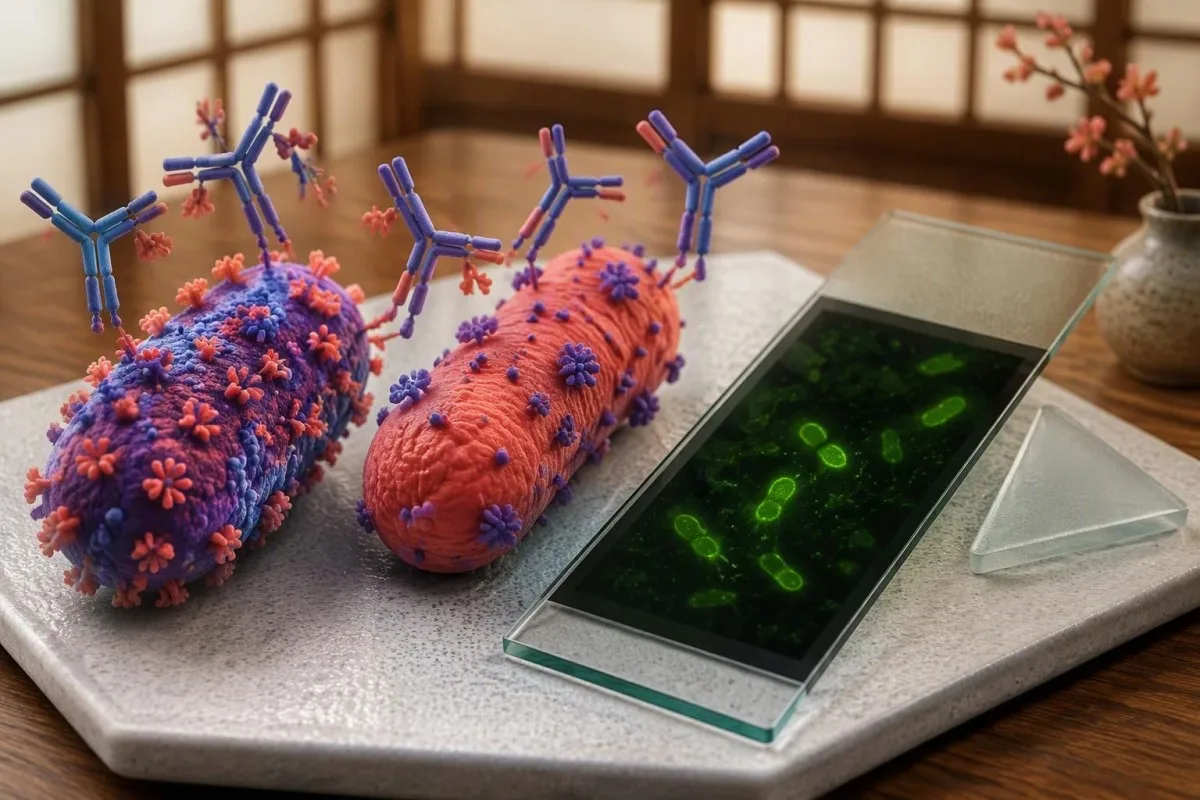
مرحلي II IgG اڪثر ڪري تازي انفيڪشن جي حمايت ڪري ٿو؛ بلند مرحلي I IgG هڪ مختلف سوال اٿاري ٿو. نموني جو وقت، ليبارٽري جو طريقو، ۽ مستقل فوڪس جو ثبوت طئي ڪري ٿو ته ڪهڙو نتيجو اصل ۾ ڇا مطلب آهي.


- Q بخار جون اينٽي باڊيز Coxiella burnetii ڏانهن هڪ مدافعتي ردعمل ظاهر ڪن ٿيون؛ 1 مثبت نتيجو اڪيلو فعال انفيڪشن قائم نٿو ڪري سگهي.
- مرحلو II IgG عام طور تي تيز Q بخار ۾ غالب هوندو آهي، پر هڪ واحد مثبت ٽائيٽر اڳوڻي رابطي کي پڻ ظاهر ڪري سگهي ٿو.
- جوڙي جا نمونا تقريباً 3-6 هفتا پري گڏ ڪيا ويا، مرحلي II IgG ۾ چار ڀيرا اضافو ڏيکارين ٿا جيڪو تازي انفيڪشن جي حمايت ڪري ٿو.
- چار ڀيرا اضافو 1:64 کان 1:256 تائين مطلب آهي، 1:64 کان 1:128 تائين نه؛ قابل اعتماد مقابلي لاءِ ساڳئي طريقي، ترجيحي طور تي ساڳئي ليبارٽري جي ضرورت آهي.
- مرحلو I IgG IFA پاران 1:1024 تي يا ان کان مٿي مستقل انفيڪشن جي تشخيص جي قيمت جو اشارو آهي، اهو پاڻ ۾ تشخيص ناهي.
- ليبارٽري جي حدون مختلف آهن: ESC اينڊو ڪارڊائٽس جو معيار فيز I IgG 1:800 کان وڌيڪ استعمال ڪري ٿو، جيڪو هر ليبارٽري جي رپورٽنگ اسڪيل سان مٽائي نٿو سگهجي.
- ابتدائي PCR بيماري جي پهرين 2 هفتن ۾، خاص ڪري اينٽي بايوٽيڪس شروع ڪرڻ کان اڳ يا ٿوري دير بعد تمام گهڻو ڪارائتو آهي.
- وڌيڪ خطري وارا مريض والو جي بيماري، ويسلر گرافٽ يا انيوريسم، حمل، ۽ ڪجهه قسم جي مدافعتي گھٽتائي شامل آهن.
- هنگامي علامتون جيئن ته سخت سانس جي تڪليف، انتشار، بي هوشي، يا نيون نيورولوجيڪل خسارن کي ورجائيندڙ اينٽي باڊيز جو انتظار ڪرڻ بجاءِ فوري طور تي تشخيص جي ضرورت آهي.
Q بخار جي اينٽي باڊي جو مثبت نتيجو ڇا مطلب آهي؟
Q بخار جون اينٽي باڊيز Coxiella burnetii جي مزاحمتي جواب ڏيکاري ٿو. فيز II IgG عام طور تي تازي تيز انفيڪشن ۾ غالب هوندو آهي؛ فيز I IgG ۾ وڏي واڌ خاص طور تي فوڪل انفيڪشن جي تشخيص جي لائق آهي. ڪو به نمونو اڪيلو فعال بيماري جو تشخيص نٿو ڪري: علامتون، ليبارٽري-خاص حدون، جوڙيل نمونا، ۽ ڪڏهن ڪڏهن PCR يا اميجنگ جي ضرورت هوندي آهي.
هڪ رپورٽ چئي ٿي Coxiella burnetii IgG مثبت گهڻو ڪري مريضن جي توقع کان هڪ تنگ سوال جو جواب ڏئي ٿو: ان ٽيسٽ ذريعي اينٽي باڊيز ڳوليون ويون. اهو قائم نٿو ڪري ته نمائش ڪڏهن ٿي، ڇا جيو موجود آهن، يا علاج جي ضرورت آهي؛ اهي 3 الڳ الڳ ڪلينيڪل سوال آهن، ۽ انهن کي هڪ ۾ گڏ ڪرڻ غير ضروري پريشاني پيدا ڪري ٿو.
مان توماس ڪلين، چيف ميڊيڪل آفيسر جي حيثيت سان لکان ٿو، ۽ منهنجو پهريون رپورٽ پڙهڻ وارو سوال اهو آهي ته ڇا نتيجو معيارو آهي يا ان ۾ اصل ڊلائيوشن ٽائٽر شامل آهي. فرق ان نتيجي جي ڀرسان ڳاڙهي پرچم کان وڌيڪ اهميت رکي ٿو: 1:64 ۽ 1:1024 ٻنهي کي ممڪن طور تي مثبت سڏيو وڃي ٿو، پر اهي مختلف گفتگو شروع ڪن ٿا. اسان جي وضاحت مثبت اينٽي باڊي جا نتيجا انهي وسيع فرق کي ڍڪي ٿي.
Kantesti هڪ AI بلڊ ٽيسٽ تجزيوڪار آهي جيڪو فيز-خاص نتيجن کي نموني جي تاريخن ۽ ٻين ليبارٽري جي نتيجن سان گڏ رکڻ ۾ مدد ڪري ٿو، بجاءِ 1 پرچم لڳل نتيجي کي تشخيص طور علاج ڪرڻ جي. بابت معلومات اسان جي تنظيم ۾ خدمت جي حوالي سان وضاحت ڪري ٿو؛ شڪي Q بخار اڃا تائين هڪ ڪلينيڪل جي ضرورت آهي جيڪو نمائش، امتحان جي نتيجن، ۽ ماهر ٽيسٽ جي ضرورت جو اندازو لڳائي سگهي.
Q بخار جا مرحلا 1 ۽ 2 اصل ۾ ڇا بيان ڪن ٿا؟
Q بخار فيز 1 ۽ فيز 2 Coxiella burnetii جي اينٽي جينڪ شڪلن کي بيان ڪن ٿا، نه ته 2 تسلسل جا مرحلا جن مان هر مريض گذري ٿو. فيز I جيو ۾ مڪمل ڊگھائي سطح ليپوپولي سackerرائڊ هوندي آهي؛ فيز II اينٽي جين ليبارٽري جي موافقت دوران پيدا ٿيندڙ ننڍي شڪل جي عڪاسي ڪري ٿو.
فيز II IgG عام طور تي تيز Q بخار دوران وڌيڪ نمايان ٿئي ٿو, ، جڏهن ته اعلي فيز I IgG جاري فوڪل انفيڪشن سان گڏ ٿي سگهي ٿو. اهي انجمنون ڪارائتو آهن، پر حتمي نه آهن: ٻنهي اينٽي باڊي گروپن تيز بيماري کانپوءِ وڌي سگهن ٿا، ۽ فيز II IgG ڪافي رهي سگهي ٿو جيتوڻيڪ جڏهن هڪ جاري فوڪس موجود هجي (Andersen et al., 2013).
رومن اعداد I ۽ II کي عام طور تي رپورٽن تي نمبر 1 ۽ 2 سان تبديل ڪيو ويندو آهي؛ اهي ساڳئي اينٽي جين جي زمرے ڏانهن اشارو ڪن ٿا. اهي گڏ نه ٿيڻ گهرجن IgG بمقابله IgM, ، جيڪي اينٽي باڊي ڪلاس بيان ڪن ٿا. هڪ عام امونوگلوبولين تشريح گائيڊ وضاحت ڪري ٿو ته ڇو ڪل IgG ڳڻپ ۽ جيو-خاص IgG الڳ الڳ ماپ آهن.
اجيب فیز I-سے-فیز II کا موازنہ ایک اشارہ ہے، خود مختار درجہ بندی کا اصول نہیں، اور کوئی عالمگیر تشخیصی 1:1 تناسب نہیں ہے۔ نامزد اینٹیجن کے امتزاج کے برعکس جو استعمال ہوتے ہیں EBV اينٽي باڊي جا نمونا, ، Q بخار کی تشریح کا انحصار زیادہ تر آخری ٹائٹر، وقت کے ساتھ ان کی تبدیلی، اور فوکل طبی مسئلہ کی موجودگی یا عدم موجودگی پر ہوتا ہے۔.
توهان Q بخار جي اينٽي باڊي جي ٽائيٽرز ۽ ليب جي حدن کي ڪيئن پڙهو ٿا؟
Q بخار کے اینٹی باڈی ٹائٹر عام طور پر سب سے زیادہ سیرم ڈائلون کی اطلاع دیتے ہیں جو بالواسطہ امیونو فلوروسین، یا IFA کے ذریعہ رد عمل ظاہر کرتا ہے۔ 1:256 کا نتیجہ 1:64 سے زیادہ ہے؛ یہ ڈائلون کے اختتامی نقطے ہیں، mg/dL یا IU/mL میں اینٹی باڈی کی مقدار نہیں۔.
ڈینومینیٹر ظاہر کرتا ہے کہ سیرم کتنا پتلا کیا گیا تھا: 1:256، 1:64 سے زیادہ ڈائلون پر رد عمل ظاہر کرتا ہے۔ لیبارٹریز مختلف ڈائلون پر جانچ شروع کر سکتی ہیں اور مختلف اینٹیجن کی تیاریوں یا پڑھنے کے طریقہ کار کا استعمال کر سکتی ہیں، لہذا ایک لیبارٹری کا مثبت اشارہ خود بخود دوسری لیبارٹری کے استعمال شدہ طبی معنی پر نہیں لگایا جا سکتا۔.
اسکریننگ کی مثبتیت اور طبی فیصلے کی حد ایک ہی چیز نہیں ہیں۔. ایک لیبارٹری ایک کم اختتامی نقطے کو قابلِ دریافت کے طور پر درجہ بندی کر سکتی ہے، جبکہ ایک رہنما اصول مستقل انفیکشن کی تحقیقات کو متحرک کرنے کے لیے بہت زیادہ فیز I ویلیو استعمال کرتا ہے؛ ELISA انڈیکس 2.4 کو آسانی سے IFA ٹائٹر 1:1024 میں تبدیل نہیں کیا جا سکتا۔.
3 تفصیلات طلب کریں: جانچ کا طریقہ، فیز کے مخصوص اختتامی نقطے، اور لیبارٹری کا تشریحی تبصرہ۔ ہماری بحث کوالیٹیٹیو بمقابلہ کوانٹیٹیٹیو ٽيسٽنگ کی وضاحت کرتی ہے کہ مثبت/منفی رپورٹس چار گنا اضافہ کیوں نہیں دکھا سکتی؛ اگر موازنہ کی ضرورت ہو، تو معالج کو نامناسب اسکریننگ اسس کی تکرار کے بجائے ایک ریفرنس لیبارٹری کے ذریعے کوانٹیٹیٹیو IFA کی درخواست کرنی پڑسکتی ہے۔.
ڇو جوڙي جا نمونا تازي Q بخار جي سڃاڻپ ڪرڻ ۾ مدد ڪن ٿا؟
جوڙي جا سيرم نمونا فیز II IgG میں چار گنا یا اس سے زیادہ اضافہ دکھا کر حالیہ Q بخار کی شناخت کر سکتا ہے۔ CDC کا تشخیصی طریقہ کار بیماری کے ابتدائی مراحل میں جمع کیے گئے ایک شدید نمونے کا موازنہ تقریباً 3-6 ہفتے بعد جمع کیے گئے ایک کنولیسنٹ نمونے سے کرتا ہے (Anderson et al., 2013)۔.
1:64 کان 1:256 تائين واڌ چار ڀيرا آهي؛ 1:64 کان 1:128 صرف ٻه ڀيرا آهي. ڪيتريون ئي IFA طريقا ڊبلنگ ڊليوشن استعمال ڪن ٿا، تنهنڪري چار ڀيرا واڌ 2 ڊليوشن جي قدمن کي ڍڪي ٿي. اها ضرورت تشخيصي پڙهڻ ۾ ننڍي فرق کان هڪ بامعني اينٽي باڊي واڌ کي فرق ڪرڻ ۾ مدد ڪري ٿي، جيتوڻيڪ مڪمل ڪلينڪل ڪهاڻي ضروري رهي ٿي.
ٻئي نموني کي ترجيحي طور تي ساڳي ليبارٽري ۾ وڃڻ گهرجي، ساڳي طريقي سان استعمال ڪندي، ۽ رن-ٽو-رن جي فرق کي گهٽائڻ لاءِ گڏ آزمائي سگهجن ٿا. هڪ ليبارٽري مان 1:128 نتيجو ٻئي هنڌ 1:256 کان پوءِ، حياتياتي ترقي جو قابل اعتماد ثبوت ناهي؛ اسان جو رت جي جاچ جو ٽائيم لائن گائيڊ وضاحت ڪري ٿو ته هر مقابلي تي ماپ جي حالتون ڇو شامل هجن.
بيماري جي 4 هفتا پوءِ گڏ ڪيل پهرين نموني ۾ اڳ ۾ ئي هڪ اعليٰ مرحلي II جي ٽائٽر ڏيکارجي سگهي ٿي، جنهن جي ڪري وڌيڪ چار ڀيرا واڌ لاءِ گهٽ جڳهه بچي ٿي. ان صورتحال ۾ واڌ ڏيکارڻ ۾ ناڪامي تازي انفيڪشن کي رد نٿي ڪري؛ شروعاتي نمونو ترقي پذير ردعمل کي پڪڙڻ لاءِ تمام دير سان هو، ۽ PCR پڻ گهٽ حساس ٿي سگهي ٿو.
Kantesti تي، مفيد مقابلو صرف اڳوڻي بمقابله بعد ۾ ناهي: اهو آهي نموني جي تاريخ بمقابله علامتن جي شروعات جي تاريخ, ، اينٽي بايوٽيڪل ٽائمنگ کي ٽئين حواله نقطي جي طور تي شامل ڪندي. ڪلينڪل کي ٻڌايو ته پهرين نموني 3rd ڏينهن تي ورتي وئي هئي يا 23rd ڏينهن تي، ۽ پڇو ته ڇا ذخيرو ٿيل اصل نموني کي ٻئي نموني سان گڏ ٻيهر آزمائي سگهجي ٿو.
ڇا هڪ مثبت IgG نتيجو پراڻي انفيڪشن جي نمائندگي ڪري سگهي ٿو؟
Coxiella burnetii IgG جو هڪ مثبت نتيجو گذريل نمائش کي ظاهر ڪري سگهي ٿو, ، ڇاڪاڻ ته اينٽي باڊيون مهينن يا سالن تائين برقرار رهي سگهن ٿيون. هڪ الڳ مرحلو II IgG نتيجو تازي انفيڪشن کي دوري واري کان قابل اعتماد طور تي فرق نٿو ڪري سگهي، جيتوڻيڪ عددي ٽائٽر متاثر ڪندڙ لڳي.
فعال Q بخار جو امڪان آزمائش جي ترتيب جي سبب سان تبديل ٿئي ٿو. لائف اسٽاڪ جي نمائش کانپوءِ تازي بخار سان گڏ ڪنهن ماڻهوءَ ۾ 1:256 جو مرحلو II ٽائٽر ساڳي نتيجي جي ڀيٽ ۾ مختلف مطلب رکي ٿو جيڪو هڪ صحتمند ماڻهوءَ ۾ ٿڪاوٽ جي وڏي تحقيق دوران آزمائشي ڪيو ويو؛ ليبارٽري جو نمبر تبديل نه ٿيو آهي، پر پري ٽيسٽ جو امڪان تبديل ٿي ويو آهي.
IgM پاڻ ئي سوال جو جواب نٿو ڏئي: اهو برقرار رهي سگهي ٿو ۽ عام طور تي Q بخار جي آزمائش ۾ IgG کان گهٽ مخصوص آهي. هڪ مثبت IgM گڏوگڏ هڪ اڪيلو مثبت IgG اڃا به ٽائمنگ ۽ ڪلينڪل تشريح جي ضرورت آهي، نه ته سادي نئين انفيڪشن جو ليبل؛ فرق ڪجهه مسئلن سان مشابهت رکي ٿو جن تي بحث ڪيو ويو آهي CMV IgG تشريح, ، جيتوڻيڪ جاندارن کي مختلف تشخيصي قاعدن جي ضرورت آهي.
هڪ اڪيلو وڌايل مرحلو II IgG ٽائٽر ڪلينڪ طور تي مطابقت رکندڙ ڪيس ۾ هڪ ممڪن اڪيوت تشخيص جي حمايت ڪري سگهي ٿو، پر ليبارٽري جي رپورٽنگ فريم ورڪ کي چڪاسڻ گهرجي. CDC جي 2013 جي رهنمائي ۾ ان سيٽنگ ۾ گهٽ ۾ گهٽ 1:128 جو مرحلو II IgG ٽائٽر جي حمايت جي طور تي بحث ڪيو ويو آهي؛ اهو هر ايسي يا هر غير علامتي مريض لاءِ 1:128 کي عالمگير تشخيصي حد نه بڻائي ٿو.
منفي نتيجي کان پوءِ PCR ۽ ورجائي ٽيسٽنگ ڪڏهن ڪارآمد آهي؟
Coxiella burnetii PCR اڪيوت بيماري جي شروعات ۾ تمام گهڻو مفيد آهي, ، اڪثر تقريباً پهرين 2 هفتن دوران ۽ اينٽي بايوٽيڪس شروع ٿيڻ کان اڳ يا ٿوري دير بعد. پهرين هفتي دوران اينٽي باڊيون اڪثر ڪري ناڪاري هونديون آهن، تنهن ڪري شروعاتي ناڪاري سيرولوجي جو نتيجو Q بخار کي رد نٿو ڪري سگهي.
PCR بيڪٽيريل جنياتي مواد ڳولي ٿو، جڏهن ته IFA ميزبان جي اينٽي باڊي جي ردعمل کي ماپي ٿو؛ تنهن ڪري اهي آزمائشون فائدي جي مختلف ونڊوز رکن ٿيون. 5th ڏينهن تي هڪ ناڪاري اينٽي باڊي جو نتيجو ۽ هڪ مثبت PCR اڪيوت Q بخار سان مڪمل طور تي مطابقت رکي سگهي ٿو، ۽ بعد ۾ مثبت IgG جو مطلب اهو ناهي ته پهرين اينٽي باڊي ايسي خراب ٿي وئي.
اينٽي بايوٽيڪل نمائش PCR جي حساسيت کي گهٽائي سگهي ٿي, ، ۽ گهٽجڻ وارو بيڪٽيريل مادو بيماري جي بعد ۾ ڳولڻ کي پڻ محدود ڪري ٿو. 18th ڏينهن تي هڪ ناڪاري PCR، خاص طور تي علاج کان پوء، هڪ سٺي ٽائمنگ واري شروعاتي نموني وانگر خارج ڪرڻ وارو وزن نٿو رکي؛ ٽائمنگ پڻ ساڳيءَ طرح اهم آهي شروعاتي ڊينگي جي جاچ, although the actual tests and organisms differ.
Clinicians should not delay appropriate treatment for strongly suspected acute Q fever while waiting 3–6 weeks for convalescent antibodies. Record the exact antibiotic start date and ask which specimen type the reference laboratory accepts; serum, whole blood, and tissue testing have different uses, and a late negative blood PCR cannot by itself exclude a persistent focal infection.
ڪهڙا رابطا ۽ علامتون Q بخار کي وڌيڪ ممڪن بڻائين ٿيون؟
Q fever becomes more plausible after exposure to aerosolized material from infected livestock, particularly sheep, goats, or cattle and their birth products. Acute illness commonly begins about 2–3 weeks after exposure and may cause fever, severe headache, pneumonia, or hepatitis without a distinctive rash.
Directly touching an animal is not required for Q fever exposure, because contaminated dust can be inhaled. A useful 3-week history includes farm visits, veterinary work, abattoir work, lambing or kidding environments, and nearby livestock activity; a patient who says they never handled animals may still have an exposure worth discussing.
Fever after animal contact has more than 1 possible explanation, and broadening the differential can prevent a positive Q fever antibody result from becoming an anchor. Unpasteurized dairy exposure or occupational animal contact may also prompt brucellosis testing interpretation. Freshwater or floodwater exposure may instead strengthen the case for leptospirosis test timing.
An ALT of 180 IU/L with fever may support a hepatitis presentation, but it does not identify Coxiella as the cause; acute Q fever can also occur with a normal white-cell count. Our جگر جي ٽيسٽ جي مخفف گائيڊ helps separate markers of liver injury from organism-specific testing, and normal routine results should not override a convincing exposure history.
ڪڏهن بلند مرحلو I IgG خاص ماهر جي تشخيص جي ضرورت آهي؟
Elevated phase I IgG warrants evaluation when it reaches a method-specific concerning threshold, rises over time, or accompanies relevant symptoms or risk factors. CDC guidance uses phase I IgG at least 1:1024 by IFA together with an identifiable persistent focus to diagnose chronic Q fever (Anderson et al., 2013).
Phase I IgG at or above 1:1024 is not a treatment order. Some patients develop substantial phase I responses after acute infection without demonstrable persistent disease, so clinicians look for endocarditis, vascular infection, or another focal site rather than prescribing prolonged therapy based on the number alone; a stable patient usually needs coordinated assessment, not panic.
جي 2023 ESC endocarditis guideline lists a phase I IgG titer greater than 1:800 as a major microbiological criterion for infective endocarditis (Delgado et al., 2023). That criterion belongs within a complete endocarditis evaluation; different dilution series and reference-laboratory methods help explain why 1:800 and 1:1024 appear in different documents without being universally interchangeable.
The Dutch consensus separates proven, probable, and possible chronic Q fever using combinations of serology, PCR, imaging, and clinical risk factors, rather than one antibody result alone (Wegdam-Blans et al., 2012). This is a useful corrective to the idea that antibodies directly measure disease severity, an issue also discussed in high ASO titer interpretation.
A Kantesti explanation should frame a phase I result of 1:2048 as a follow-up trigger, not a declaration of endocarditis. Fever, weight loss, night sweats, a known valve problem, an aortic aneurysm, or a vascular graft changes the urgency; conversely, a result below 1:1024 should not dismiss persistent focal infection when clinical suspicion is substantial.
ڪلينيشن مستقل فوڪل Q بخار جي تحقيق ڪيئن ڪن ٿا؟
Persistent focal Q fever requires a search for an anatomical site of ongoing infection, most often a heart valve or an abnormal vascular site. Evaluation may combine phase-specific IFA, PCR, echocardiography, vascular imaging, and specialist-directed FDG-PET/CT; no single test answers all of these questions.
A normal transthoracic echocardiogram does not exclude Q fever endocarditis, because vegetations may be small or absent and prosthetic material can complicate imaging. Transoesophageal echocardiography may be needed when suspicion remains; 1 reassuring scan should not automatically close the investigation in someone with compatible serology and a high-risk cardiac history.
Vascular grafts and aneurysms create a second major diagnostic pathway, sometimes without obvious cardiac findings. CT angiography or FDG-PET/CT may help identify the relevant focus, while tissue PCR can be informative if material becomes available for clinical reasons; clinicians should not obtain invasive tissue solely because an isolated phase I titer is 1:1024.
Routine blood cultures often remain negative in Q fever endocarditis, so culture-negative disease does not mean there is no infection. Bartonella is another organism considered in this setting, and our Bartonella titer explanation describes why targeted serology differs from ordinary culture; the selected tests depend on exposure history and the broader endocarditis differential.
Tell the laboratory when Q fever is suspected, because Coxiella culture requires specialized facilities and should not be requested casually. Our culture result interpretation guide explains what standard cultures can establish; a negative blood PCR, negative routine cultures, and 1 normal echocardiogram still need to be weighed against the patient's overall risk and imaging findings.
Q بخار جي رابطي يا انفيڪشن کان پوءِ ڪنهن کي وڌيڪ نگراني جي ضرورت آهي؟
People with valve disease, prosthetic valves, vascular grafts, aneurysms, pregnancy, or certain forms of immunosuppression need closer clinical attention after Q fever. Persistent infection develops in a minority of patients—commonly described as fewer than 5% overall—but that average does not describe an individual high-risk patient.
A valve history can matter more than a twofold titer difference, so the clinician needs to know about prosthetic valves, congenital valve abnormalities, and previously documented valve disease. Not every incidental murmur carries the same risk; the practical question is whether a structural abnormality has been established and whether baseline cardiac assessment is appropriate.
Pregnancy changes both risk assessment and treatment choices, and compatible symptoms or newly concerning serology deserve prompt discussion with obstetric and infectious-disease teams. Q fever serology is not the same test as the routine pregnancy antibody screen, which assesses antibodies against red-cell antigens; 1 positive result on either report needs its own distinct clinical pathway.
Immunosuppression can alter symptoms and antibody responses, so a low titer should not be used as automatic reassurance in a symptomatic transplant recipient or someone receiving substantial immune-suppressing treatment. A person with no recalled acute illness can still have persistent focal Q fever; missing a memorable fever 6 months earlier does not exclude the diagnosis.
عام مرحلا I ۽ مرحلا II IgG نمونا ڇا مشورو ڏين ٿا؟
Common Q fever antibody patterns suggest possibilities rather than establish diagnoses. Low phase I IgG with rising phase II IgG supports recent infection; stable phase II IgG may represent past exposure; high phase I IgG raises concern for a persistent focus when the clinical circumstances fit.
Consider an illustrative—not an actual patient—case: a 34-year-old veterinary worker has fever for 5 days, phase I IgG below detection, and phase II IgG of 1:64. If phase II IgG reaches 1:256 after 4 weeks using the same IFA method, that fourfold rise supports recent Q fever; the first low result did not mean the illness was mild.
Another hypothetical patient feels well and has phase II IgG of 1:256 with phase I IgG of 1:32, unchanged on a properly timed repeat. That pattern is compatible with prior exposure, but stability alone cannot establish the precise date of infection; 2 results obtained after antibodies have plateaued may miss the earlier rise entirely.
A third example is a 68-year-old with an aortic graft, weight loss, phase I IgG of 1:2048, and phase II IgG of 1:4096. Phase II remaining higher does not exclude persistent infection; the graft history and high phase I endpoint warrant specialist evaluation, and this is exactly where a simplistic phase-I-greater-than-phase-II rule can fail.
Kantesti is an AI blood test interpretation platform that can help organize these phase-specific values and their dates, but the report should never substitute a pattern label for a clinical diagnosis. Our ڪلينڪل معيار ۽ تصديق page describes the broader evaluation framework; an automated explanation cannot locate a vascular focus or independently exclude endocarditis.
Q بخار جي اينٽي باڊيز ڪڏهن ٻيهر چڪاسجي؟
Repeat testing depends on the question being asked: approximately 3–6 weeks helps confirm recent infection, while longer follow-up checks for persistent disease in selected patients. CDC guidance describes assessment around 6 months for lower-risk patients and closer monitoring at 3, 6, 12, 18, and 24 months for higher-risk groups.
Weekly antibody testing usually adds little, because IgG changes more slowly than symptoms and ordinary inflammatory markers. A repeat after 7 days may show a small fluctuation without settling whether infection is recent or persistent; worsening clinical symptoms require reassessment now, not a decision to wait until the next planned serology date.
Follow-up should preserve the original report, laboratory method, phase I and phase II values, symptom dates, and antibiotic history. Our معني خيز ليبارٽري موازني guide explains the value of consistent measurement conditions; a switch from a 1:800-based reference scale to a 1:1024-based scale should be identified before anyone labels the difference a true rise.
Kantesti can help organize a result timeline, but a 60-second explanation is not equivalent to 24 months of specialist surveillance. Our AI ٽيڪنالاجي گائيڊ explains the report-processing context; the clinician should individualize follow-up for pregnancy, cardiac or vascular risk, persistent symptoms, and the exact national or reference-laboratory protocol being used.
ڇا مثبت اينٽي باڊيز جو مطلب آهي ته توهان کي اينٽي بايوٽيڪس جي ضرورت آهي؟
Positive Q fever antibodies do not automatically justify antibiotics. Symptomatic acute Q fever is commonly treated with doxycycline 100 mg twice daily for 14 days in appropriate adults, while confirmed persistent focal infection requires specialist-directed prolonged treatment; pregnancy and pediatric care require separate decisions.
Q fever endocarditis treatment is measured in months, not days, and commonly combines doxycycline with hydroxychloroquine under specialist supervision. CDC guidance describes at least 18 months for native-valve infection and 24 months for prosthetic-valve infection; drug interactions, retinal monitoring, clinical response, and serological trends matter, so these durations are not instructions for self-treatment.
Persistent fatigue after acute Q fever is not synonymous with persistent focal infection, and a positive IgG result does not prove that ongoing bacterial activity explains fatigue. A separate evaluation may uncover anemia or another contributor; our مڪمل آئرن اسٽڊيز گائيڊ is relevant when hemoglobin or iron markers are abnormal, but iron results neither confirm nor exclude Coxiella infection.
There is no established supplement, dietary plan, or detox regimen that reliably clears Q fever IgG, and a titer of 1:256 does not create a nutrient prescription. New dark urine, jaundice, or renal abnormalities need their own assessment; our پيشاب جي جاچ (urinalysis) جي تشريح گائيڊ explains complementary findings without implying that urinary markers can diagnose Q fever.
توهان کي پنهنجي ملاقات ۾ ڇا آڻڻ گهرجي ۽ اڳتي ڇا پڙهڻ گهرجي؟
Bring the full laboratory report, not just the word positive, plus symptom-onset dates, exposure history, medication dates, and relevant cardiac or vascular records. As of October 11, 2026, the central distinction remains unchanged: antibodies support an assessment, but 1 result cannot independently establish recent or persistent focal Q fever.
Write down 4 questions: Which method was used? Are the phase I and phase II values actual endpoints? Is a paired sample needed? Does my history warrant a search for a persistent focus? Include the exact laboratory cutoff, because saying the result was high omits the detail that distinguishes a low screening positive from a phase I titer of 1:2048.
Kantesti is an AI-powered blood test analysis tool that can support preparation for that discussion, but urgent symptoms should bypass report upload and routine interpretation. Severe breathlessness, confusion, fainting, new neurological symptoms, or serious chest pain require immediate medical assessment; even 1 of these symptoms matters more than waiting for a second antibody sample.
My checklist as Thomas Klein, Chief Medical Officer at Kantesti LTD, separates report explanation from diagnosis and treatment. Information about our طبي مشاورتي ڍانچي describes the organization of clinical input; this article does not represent a personal consultation, and any claim of independent review should be confirmed through the publication's actual editorial records.
The following 2 associated publications concern complementary laboratory interpretation, not the evidence for Q fever thresholds or treatment. Their DOI identifiers are supplied below for traceability; they should not be read as substitutes for the CDC, ESC, and Dutch consensus references cited in this article.
Kantesti. (n.d.). Urobilinogen in urine test: Complete urinalysis guide 2026. Zenodo. DOI: 10.5281/zenodo.18226379. A ResearchGate رڪارڊ ڳولا ۽ Academia تي اشاعت جي ڳولا are discovery links, not verified hosted copies. Kantesti. (n.d.). Iron studies guide: TIBC, iron saturation & binding capacity. Zenodo. DOI: 10.5281/zenodo.18248745. The corresponding ResearchGate تي اشاعت جي ڳولا ۽ Academia record search likewise do not establish independent peer review.
وچان وچان سوال ڪرڻ
Coxiella burnetii IgG مثبت جو مطلب ڇا آهي؟
Coxiella burnetii IgG پازیٽو مطلب آهي ته اها جانچ Q بخار جو سبب بڻجندڙ جاندار جي خلاف اينٽي باڊيز ڳولي لڌيون. هڪ پازيٽو نتيجو تازي انفيڪشن يا مهينن کان سالن اڳ جي نمائش کي ظاهر ڪري سگهي ٿو ۽ اڪيلو فعال بيماري قائم نٿو ڪري. تشريح ۾ مرحلو I ۽ مرحلو II جا نتيجا، ليبارٽري جو طريقو، علامتون، ۽ نموني جي وقت جي ضرورت آهي. اٽڪل 3-6 هفتا پري جا جوڙيل نمونا تازي انفيڪشن جي سڃاڻپ ۾ مدد ڪري سگهن ٿا.
Q بخار مرحلي I ۽ مرحلي II IgG ۾ ڇا فرق آهي؟
Q بخار جي مرحلي I ۽ مرحلي II IgG 2 ڪارسيلا برنيٽي جي 2 اينٽيجينڪ شڪلن کي سڃاڻي ٿو نه ته مريض جي بيماري جي 2 مقرر مرحلن کي. مرحلو II IgG عام طور تي شديد انفيڪشن دوران غالب رهي ٿو، جڏهن ته واضح طور تي وڌايل مرحلو I IgG مستقل فوڪل انفيڪشن جي باري ۾ پريشاني پيدا ڪري ٿو. CDC جي رهنمائي سي 1:1024 کان گهٽ نه IPC پاران مرحلي I IgG جي استعمال سان گڏ مستقل فوڪس جي ثبوت سان گڏ آهي. 2 ٽائٽرز جي نسبي سائيز پاڻمرادو مستقل انفيڪشن جو تشخيص يا خارج نٿو ڪري سگهي.
Q بخار جي اينٽي باڊي جي ٽيٽر ۾ چار ڀيرا واڌ ڇا سمجهيو ويندو آهي؟
Q بخار جي اينٽي باڊي جي ٽائٽر ۾ چار ڀيرا واڌ جو مطلب آهي ته آخري نقطو 4 جي فيڪٽر سان وڌي ٿو، جهڙوڪ فيز II IgG 1:64 کان 1:256 تائين وڌي ٿو. 1:64 کان 1:128 تائين تبديلي صرف ٻه ڀيرا آهي ۽ اهو معيار پورو نٿو ڪري. جوڙي واريون اڪيوت ۽ ڪنوليسنٽ نمونيون گهڻو ڪري 3-6 هفتا جي وقفي سان گڏ ڪيون وينديون آهن. ساڳئي IFA طريقي سان ۽ ترجيحي طور تي ساڳئي ليبارٽري سان مقابلو تمام گهڻو ڀروسي لائق آهي.
ڇا فيز I IgG ٽائٽر 1:1024 جي معنيٰ آھي ڪرونڪ Q بخار؟
IFA ذريعي 1:1024 جي پي اي ايف فیز I IgG ٽائيٽر، مستقل فوڪل Q بخار جي تشخيص جي لاءِ اھم آھي، نه پاڻ ۾ تشخيص. CDC جي ھدايت ۾ 1:1024 يا ان کان مٿي فيز I IgG ٽائيٽر شامل آھي، گڏوگڏ سڃاتل مستقل فوڪس، جيئن ته اينڊو ڪارڊائٽس يا واسڪولر انفيڪشن. 2023 ESC اينڊو ڪارڊائٽس گائيڊ لائن اينڊو ڪارڊائٽس جي مڪمل تشخيص جي اندر هڪ وڏي مائڪروبايولوجيڪل معيار جي طور تي 1:800 کان وڌيڪ فيز I IgG ٽائيٽر استعمال ڪري ٿي. ليبارٽريون مختلف آھن، تنھنڪري ڪنھن به حد کي لاڳو ڪرڻ کان اڳ رپورٽ جي طريقي ۽ تشريح کي چڪاسڻ گھرجي.
ڇا Q بخار جي اينٽي باڊيز انفيڪشن جي شروعات ۾ نيگٽو ٿي سگهن ٿيون؟
اڪيوت بيماري جي پهرين هفتي دوران Q بخار جا اينٽي باڊيز نيگٽو ٿي سگهن ٿا. Coxiella burnetii PCR اڪثر ڪري پهرين 2 هفتن دوران تمام گهڻو مفيد هوندو آهي، خاص طور تي اينٽي بايوٽڪ علاج شروع ٿيڻ کان اڳ يا ٿوري دير بعد. اڪيوت نموني کان 3-6 هفتا پوءِ گڏ ڪيل ڪنويلسينٽ جو دير سان نمونو تشخيصي اينٽي باڊي ۾ واڌارو ڏيکاري سگهي ٿو. ڪنهن به ڪلينڪ کي ڪنهن ٻئي نموني جو انتظار ڪرڻ جي ڪري سخت شڪي اڪيوت Q بخار جي مناسب علاج ۾ دير نه ڪرڻ گهرجي.
Q بخار جا اينٽي باڊيز ڪيتري وقت تائين مثبت رهن ٿا، ۽ انهن کي علاج جي ضرورت آهي؟
Q بخار جا اينٽي باڊيز ٻنھي مھينن يا سالن تائين مثبت رھي سگھن ٿا، جنھن ڪري مستقل IgG لاءِ خود بخود اينٽي بايوٽڪس جي ضرورت ناهي. مناسب بالغن ۾، علامتن واري تيز Q بخار جو علاج عام طور تي 14 ڏينھن تائين 100 mg ڊوڪسي سائيڪلن ٻه ڀيرا روزانو سان ڪيو ويندو آھي، جڏھن ته تصديق ٿيل مستقل ڌيان واري انفيڪشن لاءِ ماھر جي هدايت سان ڊگھي مدي واري علاج جي ضرورت پوندي آھي. اينٽي باڊي رجحانات نگرانيءَ جو صرف ھڪڙو حصو آھن ۽ آزاد طور تي علاج يا علاج جي ناڪاميءَ کي قائم نٿا ڪري سگهن. حمل، ٻارن، دوائن جي رابطن، ۽ دل جي يا رت جي نالين جي بيماري لاءِ انفرادي خيال جي ضرورت پوندي آھي.
اڄ ئي AI-طاقتور خون جي جاچ جو تجزيو حاصل ڪريو
دنيا ڀر ۾ 2 ملين کان وڌيڪ استعمال ڪندڙن ۾ شامل ٿيو جيڪي فوري ۽ درست ليب ٽيسٽ تجزيو لاءِ Kantesti تي ڀروسو ڪن ٿا. پنهنجا خون جي جاچ جا نتيجا اپلوڊ ڪريو ۽ سيڪنڊن ۾ 15,000+ بائيو مارڪرز جي جامع تشريح حاصل ڪريو.
📚 حوالا ڏنل تحقيقي اشاعتون
ڪلين، ٽي.، مچل، ايس.، ۽ ويبر، ايڇ. (2026). پيشاب جي جاچ ۾ Urobilinogen: مڪمل پيشاب جو تجزيو گائيڊ 2026. Kantesti AI Medical Research.
ڪلين، ٽي.، مچل، ايس.، ۽ ويبر، ايڇ. (2026). لوھ جي مطالعي جي ھدايت: TIBC، لوھ جي سنترپتي ۽ پابند ڪرڻ جي صلاحيت. Kantesti AI Medical Research.
📖 ٻاهرين طبي حوالا
Anderson A et al. (2013). Diagnosis and Management of Q Fever—United States, 2013: Recommendations from CDC and the Q Fever Working Group. MMWR Recommendations and Reports.
Delgado V et al. (2023). 2023 ESC Guidelines for the management of endocarditis. European Heart Journal.
Wegdam-Blans MCA et al. (2012). Chronic Q fever: review of the literature and a proposal of new diagnostic criteria. جرنل آف انفيڪشن.
⚕️ طبي دستبرداري
هي آرٽيڪل صرف تعليمي مقصدن لاءِ آهي ۽ طبي مشورو نٿو بڻجي. تشخيص ۽ علاج جي فيصلن لاءِ هميشه ڪنهن قابل صحت فراهم ڪندڙ سان صلاح ڪريو.
E-E-A-T اعتماد جا سگنل
تجربو
ڊاڪٽر جي نگرانيءَ هيٺ ليبارٽري نتيجن جي تشريح واري عمل جو جائزو.
ماهر
ليبارٽري دوائن جو ڌيان ان ڳالهه تي ته بايو مارڪرز ڪلينڪل حوالي سان ڪيئن رويو ڏيکارين ٿا.
اختيار
ڊاڪٽر ٿامس ڪلين لکيو، ۽ ڊاڪٽر ساره مچل ۽ پروف. ڊاڪٽر هانس ويبر طرفان جائزو ورتل.
اعتبار
ثبوتن تي ٻڌل تشريح، جنهن سان خبرداري گهٽائڻ لاءِ واضح پيرويءَ جا رستا موجود هجن.