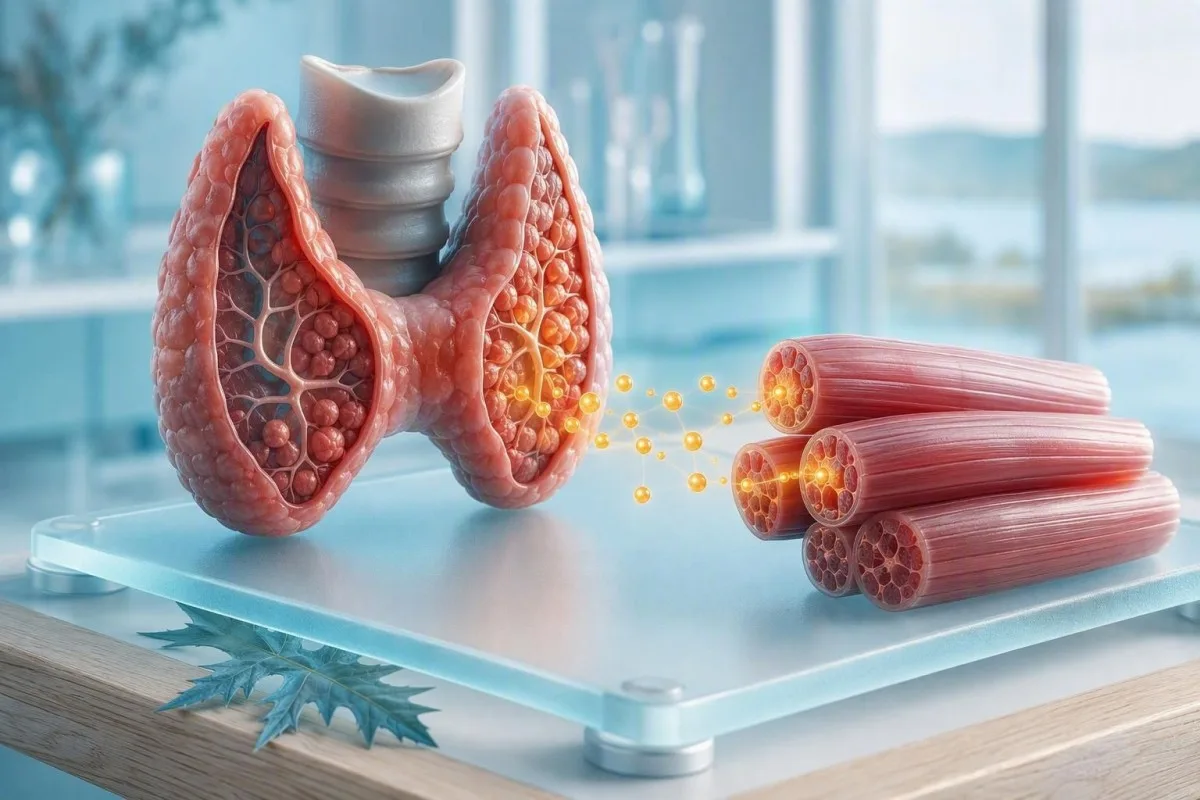
Un nivel scăzut de T3 liber poate însoți oboseală, dispoziție scăzută, greutate musculară și senzație de frig, dar reflectă adesea boală sau deficit de energie, mai degrabă decât o glandă tiroidă hipoactivă. Rezultatele înconjurătoare TSH și T4 liber contează de obicei mai mult decât T3 liber singur.


- T3 liber scăzut cauzează frecvent simptome nespecifice; oboseala, dispoziția scăzută și intoleranța la efort au explicații mult mai comune.
- Interval tipic pentru adulți este de aproximativ 2,0-4,4 pg/mL (3,1-6,8 pmol/L), dar intervalul de referință al laboratorului de raportare este singurul comparator valid.
- TSH normal plus T4 liber normal cu T3 liber scăzut indică de obicei boală, subnutriție sau efect medicamentos, mai degrabă decât hipotiroidism primar.
- Boală acută poate scădea T3 în 24-48 de ore prin reducerea conversiei T4 în T3; acest lucru este adesea reversibil în timpul recuperării.
- Restricția calorică de aproximativ 800-1.200 kcal/zi sau pierderea rapidă în greutate pot scădea T3 fără insuficiență tiroidiană permanentă.
- hipotiroidism central se suspectează atunci când T4 liber este scăzut și TSH este scăzut, normal sau doar ușor crescut; T3 liber singur nu o poate stabili.
- Precauții la tratament contează: ghidurile profesionale nu recomandă administrarea de routine de liothyronine pentru un rezultat izolat de T3 scăzut în afara îngrijirii medicale specializate.
- Repetarea testării este cel mai util după recuperare, aport alimentar stabil și o revizuire a medicației, de obicei la 6-8 săptămâni după o schimbare semnificativă a tratamentului tiroidian.
Simptomele asociate cu nivelul scăzut de T3 liber, ce pot și ce nu pot explica
Simptome de T3 liber scăzut pot include recuperare lentă după efort, dureri musculare, motivație scăzută, constipație, sensibilitate la frig și ceață mentală, dar niciunul nu este suficient de specific pentru a diagnostica hipotiroidismul. În activitatea mea clinică, Thomas Klein, MD, a văzut pacienți care au atribuit un T3 liber de 2,6 pg/mL fiecărui simptom, când deficitul de fier, lipsa de somn, depresia sau o dietă recentă au fost cauza mai acționabilă.
T3 liber este fracțiunea biologic activă a hormonului care circulă în afara proteinelor de legare, dar reprezintă o parte mică și fluctuantă a fiziologiei tiroidiene. Majoritatea laboratoarelor indică aproximativ 2.0-4.4 pg/mL sau 3.1-6.8 pmol/L la adulți, în timp ce unele teste europene stabilesc o limită inferioară mai aproape de 2,3 pg/mL; comparați numai cu intervalul tipărit lângă rezultatul dvs. în pentru intervalul T3 liber.
Reclamațiile musculare sunt plauzibile atunci când acțiunea tiroidiană este cu adevărat scăzută, deoarece T3 influențează enzimele mitocondriale, utilizarea glicogenului și expresia miozinei. Un pacient care dezvoltă slăbiciune musculară simetrică la nivelul coapselor, reflexe încetinite, piele uscată, bradicardie sub 60 bătăi/minut, și un TSH crescut prezintă un model hipotiroidian mai convingător decât o persoană cu picioare obosite după trei sesiuni de antrenament intense.
Simptomele de dispoziție merită aceeași reținere. Dispoziția scăzută, ruminația anxioasă și problemele de concentrare se suprapun cu bolile tiroidiene, dar un singur T3 liber scăzut nu poate distinge o boală endocrină de depresia majoră, deficitul de B12, anemie sau restricția cronică de somn; indicii din analizele de sânge legate de starea de spirit pot ajuta la conturarea unei revizuiri mai largi.
Interpretarea testului pentru T3 liber începe cu TSH și T4 liber
Interpretarea testului de T3 liber este cea mai sigură atunci când TSH și T4 liber sunt citite mai întâi. Un TSH ridicat cu un T4 liber scăzut susține hipotiroidismul primar, în timp ce un T3 liber scăzut cu TSH și T4 liber normale de obicei nu.
La adulții netratați, un TSH peste limita superioară a laboratorului, adesea 4.0-4.5 mIU/L, plus T4 liber scăzut indică hipotiroidism primar mult mai fiabil decât T3 liber. Ghidul American Thyroid Association condus de Jonklaas recomandă utilizarea TSH ca marker principal pentru managementul majorității hipotiroidismelor primare (Jonklaas et al., 2014); vezi ghidul nostru în limbaj simplu pentru abrevierile analizelor tiroidiene.
Un TSH normal nu este o eliberare generală. Bolile hipofizare sau hipotalamice pot provoca hipotiroidism central, unde T4 liber este scăzut, dar TSH este scăzut, normal sau ușor crescut și biologic slab; acest model necesită evaluarea medicului, în special în caz de dureri de cap, modificări ale câmpului vizual, sodiu scăzut sau alte anomalii ale hormonilor hipofizari.
Kantesti este o Analizor de teste de sânge AI care citește T3 liber alături de TSH, T4 liber, medicamente și valori anterioare, mai degrabă decât să trateze un semnal izolat ca diagnostic. Această distincție previne o greșeală comună și costisitoare: presupunerea că un TSH normal face automat ca fiecare simptom de oboseală să fie non-medical.
De ce boala poate cauza un nivel scăzut de T3 cu TSH normal
T3 scăzut cu TSH normal apare frecvent în timpul bolilor sistemice acute sau cronice, deoarece corpul transformă mai puțin T4 în T3. Acest model se numește sindromul bolii non-tiroidiene sau sindromul bolii eutiroide și nu înseamnă automat că glanda tiroidă a cedat.
Citokinele inflamatorii, aportul redus de calorii, creșterea cortizolului și activitatea modificată a deiodinazei pot reduce T3 în 24-48 ore unei boli semnificative. În terapie intensivă, T3 scăzut apare adesea înainte ca TSH să se schimbe; Fliers și colegii descriu acest lucru ca un răspuns metabolic adaptativ și uneori maladaptiv, mai degrabă decât o simplă insuficiență a glandei tiroidiene (Fliers et al., 2015).
Severitatea contează mai mult decât un singur prag. O persoană cu pneumonie, CRP de 120 mg/L, albumină de 28 g/L și T3 liber sub limită are o problemă fundamental diferită față de un ambulatoriu altfel sănătos, cu aceeași valoare T3; revizuirea noastră explică de ce testarea de recuperare este adesea mai potrivită decât tratamentul hormonal imediat. sindromul bolii eutiroidiene explică de ce testarea recuperării este adesea mai prudentă decât tratamentul hormonal imediat.
Kantesti AI semnalează un panel tiroidian cu model de boală ca un context de urmărire, nu ca o recomandare de prescripție. Dacă T3 scăzut însoțește febră, dificultăți de respirație, confuzie, dureri în piept, leșin sau saturație de oxigen sub 92%, problema urgentă este evaluarea clinică a bolii în sine, nu o încercare de a corecta un număr de laborator.
Restricția calorică este o cauză frecventă a nivelului scăzut de T3 liber
Restricția calorică poate scădea T3 liber chiar și atunci când tiroida este normală structural. Modificarea este deosebit de comună după pierderea rapidă în greutate, post prelungit, antrenament de anduranță cu disponibilitate energetică scăzută sau diete care furnizează prea puțin carbohidrați și proteine totale.
În studiile controlate de subnutriție, T3 circulant poate scădea cu aproximativ 30-50% în decurs de 1-2 săptămâni, în timp ce T3 invers crește și TSH poate rămâne normal. Acesta este un semnal de conservare a energiei: hormonul tiroidian mai puțin activ reduce cheltuielile energetice de repaus, ceea ce este frustrant în timpul pierderii în greutate, dar nu o dovadă că o persoană necesită medicamente tiroidiene.
Văd adesea acest lucru la alergători care și-au crescut kilometrajul în timp ce mănâncă 1.400 kcal zilnic, apoi raportează mâini reci, recuperare slabă, amenoree sau scăderea libidoului. În acest context, evaluați aportul energetic, feritina, vitamina D, CBC și istoricul leziunilor, alături de analize tiroidiene; ghidul nostru de laborator RED-S pentru sportivi ghid de laborator RED-S pentru atleți acoperă modelul mai larg.
Nu încercați să “remediați” un T3 scăzut legat de dietă cu iod, alge marine sau liothyronină auto-prescrisă. Restaurarea disponibilității energetice adecvate, adesea pe parcursul 6-12 săptămâni, este de obicei prima intervenție, în timp ce excesul de iod poate agrava bolile tiroidiene autoimune; contextul alimentar practic se găsește în articolul nostru despre nutriția tiroidiană articol nutriție tiroidiană.
Medicamente și suplimente care modifică rezultatele T3 liber
Glucocorticoizii, dopamina, amiodarona și unii agenți de contrast pot reduce conversia T4-T3 sau suprima TSH. Medicamentele pot crea, prin urmare, un model de T3 liber scăzut fără hipotiroidism primar și nu ar trebui niciodată oprite fără sfatul medicului prescriptor.
Dozele de prednison în jur de 20 mg/zi sau mai mari, perfuziile cu dexametazonă și dopamină pot scădea TSH și T3 tranzitoriu. Amiodarona conține iod substanțial și inhibă enzimele deiodinază, deci poate crește T4 liber în timp ce scade T3; acest model discordant necesită un clinician care cunoaște indicația cardiacă, nu un răspuns casual la supliment.
Biotina este o problemă diferită: produce de obicei fals ridicată T3 liber și T4 liber cu TSH fals scăzut în imunoanalize susceptibile, mai degrabă decât un T3 scăzut real. Produsele pentru păr și unghii în doze mari conțin în mod obișnuit 5.000-10.000 micrograme; multe laboratoare recomandă întreruperea biotinei timp de cel puțin 48 de ore înainte de testare, dar urmați instrucțiunile laboratorului sau ale medicului prescriptor.
Kantesti este o serviciul de interpretare a testelor de laborator AI care solicită utilizatorilor să înregistreze doza de medicament tiroidian, ora administrării, suplimentele și imagistica de contrast recentă la încărcarea unui rezultat. Pentru pacienții care deja iau levotiroxină, un plan de retestare la schimbarea mărcii este, în general, mai util decât urmărirea T3 liber zi de zi.
Limitele de dozare pot face ca T3 liber să fie mai puțin concludent decât pare
Testele pentru T3 liber sunt tehnic mai puțin fiabile la capătul inferior decât TSH în testarea de rutină ambulatorie. Modificările proteinelor, bolile grave, sarcina și interferențele specifice testului pot modifica fracțiunea liberă măsurată fără a corespunde acțiunii tiroidiene tisulare.
Imunoanalizele de rutină pentru T3 liber estimează o concentrație mică, nelegată, mai degrabă decât să măsoare direct acțiunea celulară a hormonului. Două laboratoare pot raporta legitim valori diferite de la aceeași persoană, deoarece anticorpii, calibrarea și intervalele de referință diferă; atunci când urmăriți o tendință, folosiți același laborator ori de câte ori este posibil.
Sarcina crește globulina de legare a tiroxinei, iar bolile hepatice sau renale severe modifică legarea proteinelor și metabolismul. Imunoanalizele pentru hormonii liberi pot fi mai puțin fiabile în aceste situații, motiv pentru care îngrijirea sarcinii subliniază în mod obișnuit interpretarea TSH și T4 liber specifice trimestrului; comparați metodele în ghidul nostru T4 liber versus T4 total.
Un rezultat devine mai credibil atunci când condițiile preanalitice sunt stabile: același laborator, recoltare dimineața dacă este posibil, fără febră acută și fără modificări bruște ale suplimentelor. O mișcare de 0,2 pg/mL peste o limită de referință poate fi o variație analitică și biologică obișnuită, nu o deteriorare semnificativă.
Când nivelul scăzut de T3 liber indică o boală tiroidiană reală
T3 liber scăzut ridică îngrijorare pentru o boală tiroidiană reală atunci când însoțește TSH crescut, T4 liber scăzut sau simptome persistente cu constatări de examinare de susținere. Tiroidita Hashimoto este o cauză comună, dar anticorpii identifică riscul și cauza; nu ne spun cât de severe vor fi simptomele.
Un TSH persistent peste 10 mIU/L este, în general, un prag de tratament mai puternic decât un T3 scăzut izolat, în special atunci când T4 liber este scăzut. Anticorpii TPO pozitivi susțin tiroidita autoimună, totuși unii oameni rămân eutiroizi ani de zile; explicația noastră despre anticorpii TPO cu TSH normal ajută la evitarea supradiagnosticării.
Semnele fizice adaugă probabilitate utilă. O gușă fermă, nedureroasă, reflexe gleznei încetinite, păr aspru, creștere inexplicabilă a LDL și un istoric familial de boală tiroidiană autoimună fac o explicație tiroidiană mai plauzibilă, în timp ce simptomele fluctuante cu TSH și T4 liber normale justifică adesea un diagnostic diferențial mai larg.
Din experiența mea, severitatea simptomelor și TSH nu se aliniază perfect. Un pacient cu TSH 18 mIU/L se poate simți încă destul de bine, în timp ce altul cu TSH 3,5 mIU/L se poate lupta cu deficit de fier, traumatisme, menopauză sau insomnie; analizele de sânge ar trebui să ghideze conversația, nu să o încheie.
Simptomele musculare necesită mai mult decât o explicație tiroidiană
Simptomele musculare hipotiroidiene sunt de obicei graduale, simetrice și însoțite de alte semne tiroidiene. Slăbiciunea focală nouă, căderea unei părți a feței, dificultăți la înghițire, urină colorată ca o băutură de cola sau durere cu agravare rapidă necesită o evaluare diferită și uneori urgentă.
Hipotiroidismul poate crește modest creatin kinaza deoarece metabolismul muscular mai lent și reînnoirea membranară permit scurgerea enzimelor. CK poate ajunge la 1.000 UI/L sau mai mult în boala manifestă, dar o creștere a CK după exercițiu intens, statine, boală virală sau leziuni prin strivire are un diagnostic diferențial diferit; vezi când CK crescut necesită îngrijire urgentă.
O distincție clinică practică este funcția. Dificultatea de a te ridica în mod repetat de pe un scaun, de a urca scările sau de a ridica obiecte deasupra capului pe parcursul mai multor luni sugerează slăbiciune proximală și merită investigată; crampele doar după deshidratare sau un antrenament lung indică mai frecvent probleme legate de fluide, magneziu, sodiu, încărcarea antrenamentului sau condiționare.
TTPC AI analizează valorile tiroidiene alături de CK, feritină, hemoglobină, electroliți și markeri renali atunci când aceste teste sunt disponibile. Rezultatul său bazat pe tipare este conceput pentru a sprijini vizita la medic, iar noi standardele noastre de validare medicală descriem de ce nicio interpretare automată nu ar trebui să înlocuiască un examen neurologic.
Dispoziția, memoria, colesterolul și greutatea sunt indicii contextuale
Stare proastă, gândire mai lentă, creștere în greutate și un nivel mai ridicat de colesterol LDL pot apărea în hipotiroidismul manifest, dar sunt indicii slabe atunci când TSH și T4 liber sunt normale. Combinația este mai convingătoare decât orice simptom individual sau valoare scăzută a T3 liber.
Hormonul tiroidian afectează activitatea receptorului hepatic pentru LDL, astfel încât hipotiroidismul manifest netratat poate crește colesterolul LDL și trigliceridele. O creștere bruscă a LDL de 1 mmol/L (39 mg/dL) alături de un TSH crescut merită o evaluare tiroidiană înainte de a presupune un eșec dietetic; ghidul nostru pentru creșteri neașteptate ale LDL explică alți factori contributivi comuni.
Simptomele cognitive necesită calibrare. Hipotiroidismul poate încetini viteza de procesare, dar pierderea progresivă a memoriei, rătăcirea în locuri familiare, halucinațiile vizuale sau schimbările de personalitate nu ar trebui explicate printr-un T3 la limită; o investigație sensibilă poate include CBC, B12, glucoză, revizuirea medicamentelor și evaluare neurologică țintită.
Un rezultat scăzut al T3 liber nu stabilește “rezistență tiroidiană”, “oboseală suprarenaliană” sau necesitatea hormonilor compuși. Dovezile pentru adăugarea de T3 la pacienții cu simptome persistente în ciuda unui TSH normal sunt, sincer, mixte, iar ghidul ATA nu recomandă terapia combinată de rutină pentru toți pacienții (Jonklaas et al., 2014).
Când și cum să repetați un rezultat scăzut pentru T3 liber
Repetați un rezultat scăzut al T3 liber după ce factorul declanșator, probabil temporar, s-a stabilizat, mai degrabă decât să testați în mod repetat la fiecare câteva zile. Pentru un ambulatoriu stabil, fără simptome alarmante, repetarea TSH și T4 liber împreună cu T3 liber în aproximativ 6-8 săptămâni este adesea rezonabilă dacă aportul caloric, medicația și starea bolii s-au stabilizat.
Testați din nou mai devreme atunci când TSH este marcat anormal, T4 liber este sub limită, este implicată o sarcină sau simptomele se agravează. După o modificare a dozei de levotiroxină, TSH are în general nevoie de aproximativ 6 săptămâni pentru a atinge o nouă stare de echilibru; testarea în ziua a 10-a măsoară în principal tranziția, nu efectul final.
Înregistrați detaliile care schimbă interpretarea: infecție în cele 2 săptămâni anterioare, lipsă de somn, durata postului, consum de alcool, suplimente noi, expunere la steroizi, momentul administrării dozei și dacă proba provine de la același laborator. Nostra pentru momentul recoltării analizelor de sânge este util deoarece povestea din jurul valorii poate fi la fel de informativă ca și valoarea în sine.
AI poate plasa un nou panou tiroidian lângă panourile anterioare și poate identifica dacă TSH a scăzut de la 1,8 la 5,6 mIU/L sau dacă doar T3 liber a fluctuat în jurul unui nivel de bază neschimbat. Acest lucru este deosebit de util pentru persoanele care au rezultate pe parcursul mai multor ani, dar fără o cronologie clară.
Întrebări de adresat medicului despre nivelul scăzut de T3 liber
Cea mai bună vizită la medic începe cu panoul complet, cronologia simptomelor, medicamentele și modificările recente ale stării de sănătate. Întrebarea dacă modelul sugerează boală tiroidiană primară, hipotiroidism central, boală non-tiroidiană sau deficit de energie produce o consultație mult mai utilă decât întrebarea doar despre tratamentul cu T3.
Aduceți raportul real, nu un număr transcris. Unitățile contează: 1 pg/mL echivalează cu aproximativ 1,54 pmol/L pentru T3, iar un rezultat aparent scăzut poate fi o neînțelegere a unității sau a intervalului de referință; al nostru pentru rezultate în afara intervalului arată de ce indicatorul nu este un diagnostic.
Întrebările utile includ: Am fost bolnav sau nu am consumat suficiente calorii? Este T4 liber scăzut? Este TSH adecvat pentru T4 liber? Am nevoie de anticorpi TPO, feritină, B12, CBC, testare pentru boala celiacă sau o evaluare a hipofizei? Un medic poate întreba, de asemenea, despre modificări menstruale, alăptare, dureri de cap, utilizarea steroizilor și istoricul familial autoimun.
Kantesti este o Instrument de analiză a analizelor de sânge bazat pe AI conceput pentru a organiza aceste întrebări în cadrul PDF-urilor mari de laborator și a rezultatelor longitudinale. Cititorii pot afla cum organizația noastră gestionează supravegherea clinică pe Despre noi, dar o interpretare de laborator rămâne doar o componentă a diagnosticului medical.
Semnale de alarmă: când nivelul scăzut de T3 nu ar trebui gestionat singur
Solicitați evaluare medicală promptă atunci când apar hormoni tiroidieni scăzuți, însoțiți de confuzie, hipotermie, leșin, simptome toracice, dificultăți severe de respirație, complicații ale sarcinii sau simptome suspecte ale hipofizei. Aceste situații necesită examen clinic și, uneori, teste urgente; un rezultat online nu poate determina cauza în mod sigur.
Caracteristicile de urgență ale hipotiroidismului sever pot include alterarea conștienței, o temperatură centrală sub 35°C, edem marcat, bradicardie și hiponatremie, deși aceasta este rară. O persoană cu aceste caracteristici necesită îngrijiri de urgență, în special după o intervenție chirurgicală tiroidiană, tratament cu radioiod sau întreruperea terapiei de substituție hormonală prescrise.
Semnele de alarmă hipofizare includ un nou cefalee persistentă, pierderea vederii periferice, hipotensiune arterială inexplicabilă, hipoglicemie recurentă sau libido scăzut, cu T4 liber scăzut și TSH neelevat. Ghidul din 2018 al Asociației Europene a Tiroidelor, condus de Persani, recomandă confirmarea T4 liber scăzut pe cel puțin două determinări în timp ce se exclude efectele testării și ale bolilor non-tiroidiene (Persani et al., 2018).
Nu obțineți liothyronine din surse nereglementate și nu creșteți levothyroxine deoarece T3 liber este scăzut. Excesul de T3 poate declanșa palpitații, anxietate, fibrilație atrială și pierdere osoasă; medicii din cadrul echipei noastre Consiliul consultativ medical subliniază tratamentul supervizat, ghidat de diagnostic.
Utilizarea unui rezultat scăzut pentru T3 liber fără a urmări un număr perfect
Un rezultat scăzut de T3 liber este cel mai util ca un indiciu pentru a întreba ce s-a schimbat în organism, nu ca un obiectiv independent de optimizat. Începând cu 21 august 2026, practica tiroidiană standard se bazează în continuare în principal pe TSH și T4 liber pentru diagnostic și ajustarea dozei la majoritatea adulților.
Ierarhia practică este simplă: mai întâi se identifică hipotiroidismul manifest sau hipotiroidismul central; apoi se caută boli, deficit caloric și medicamente; apoi se investighează alte cauze ale simptomelor. Această secvență evită o capcană familiară în practică – tratarea unui indicator de laborator în timp ce anemia, apneea în somn, depresia, durerea cronică sau supraantrenamentul continuă necontrolate.
Un TSH stabil între aproximativ 0,4 și 4,0 mIU/L și un T4 liber normal fac ca hipotiroidismul primar semnificativ să fie mai puțin probabil, deși nu invalidează simptomele. Urmăriți somnul, pulsul, tranzitul intestinal, greutatea corporală, aportul alimentar și antrenamentul alături de rezultate; ghidul nostru ghid pentru urmărirea longitudinală a analizelor de laborator explică cum să detectați o tendință reală.
Kantesti AI interpretează panourile tiroidiene prin regulile sale contextuale și comparația tendințelor, mai degrabă decât să promită un diagnostic dintr-un singur biomarker. Pentru cititorii interesați de modul în care este construită și verificată această metodologie, ghidul nostru Ghid pentru tehnologia AI descrie măsurile de siguranță; majoritatea pacienților consideră că un plan calm și repetabil este mai util decât urmărirea unei cifre idealizate de T3.
Întrebări frecvente
Un nivel scăzut de T3 liber poate cauza anxietate sau depresie?
Nivelul scăzut de T3 liber se poate suprapune cu depresia, gândirea lentă, lipsa de motivație și uneori anxietatea, dar nu dovedește că hormonul tiroidian este cauza. Hipotiroidismul evident este mai probabil atunci când T4 liber este scăzut și TSH este peste limita de laborator, adesea peste 4,0-4,5 mIU/L. Depresia și anxietatea trebuie evaluate în continuare pe baza propriilor merite, incluzând somnul, medicamentele, consumul de substanțe, statusul B12, statusul fierului și problemele legate de siguranță. Este necesar ajutor urgent de sănătate mintală pentru gânduri de auto-vătămare, indiferent de rezultatele tiroidiene.
Ce înseamnă un T3 scăzut cu un TSH normal?
T3 scăzut cu TSH normal reflectă cel mai adesea o boală non-tiroidiană, restricție calorică, recuperare post-operatorie sau efecte medicamentoase, mai degrabă decât hipotiroidism primar. Un interval tipic de T3 liber la adulți este de aproximativ 2,0-4,4 pg/mL, dar intervalul laboratorului individual determină dacă un rezultat este de fapt scăzut. Dacă T4 liber este, de asemenea, scăzut, cu un TSH normal sau scăzut, medicii iau în considerare hipotiroidismul central și evaluează contextul pituitar. Repetarea panelului după recuperare și nutriție stabilă este adesea mai informativă decât inițierea imediată a tratamentului cu T3.
Poate postul să scadă T3 liber?
Da, postul prelungit și restricția calorică substanțială pot scădea T3 liber în 1-2 săptămâni, uneori cu 30-50%, în timp ce TSH rămâne în limite. Corpul reduce conversia T4-în-T3 în timpul deficitului energetic și poate crește T3 invers ca parte a conservării metabolice. Un post scurt peste noapte pentru o analiză de laborator de rutină are, de obicei, un efect mult mai mic decât câteva zile de post sau pierdere rapidă în greutate. Persoanele cu oboseală, menstruații lipsă, leziuni recurente sau recuperare slabă după efort ar trebui să discute despre disponibilitatea redusă de energie cu un medic.
Ar trebui să iau T3 dacă T3 liber este scăzut?
Un rezultat izolat de T3 liber scăzut nu este, în sine, un motiv pentru a lua liothyronină sau alte medicamente cu T3. Ghidul din 2014 al Asociației Americane a Tiroidelor recomandă levotiroxina ca tratament standard pentru hipotiroidismul primar stabilit și nu recomandă terapia combinată de rutină pentru toți pacienții cu simptome persistente. T3 poate provoca palpitații, tremurături, insomnie, fibrilație atrială și pierdere osoasă atunci când doza este excesivă. Deciziile de tratament ar trebui să urmeze TSH complet, T4 liber, diagnostic, statutul de sarcină, istoricul cardiac și sfatul specialistului.
Cât durează până când T3 liber se recuperează după o boală?
T3 liber de obicei începe să se recupereze pe parcursul zilelor până la câteva săptămâni după ce boala acută, deficitul caloric sau efectul medicamentelor se rezolvă, dar recuperarea variază în funcție de severitatea bolii. În bolile sistemice severe, T3 poate rămâne scăzut în timp ce CRP este ridicat sau nutriția și mobilitatea sunt încă precare. Pentru pacienții ambulatori stabili, o repetare a TSH, T4 liber și T3 liber în aproximativ 6-8 săptămâni este un interval practic comun. T4 liber persistent scăzut, TSH crescut sau agravarea simptomelor ar trebui să determine o reevaluare clinică mai devreme.
Este periculos un nivel scăzut de T3 liber în timpul sarcinii?
T3 liber nivel scăzut în sarcină necesită interpretare cu intervale specifice trimestrului, deoarece proteinele de legare și performanța testelor se modifică substanțial. Hipotiroidismul matern este evaluat în principal cu TSH și T4 liber sau o metodă T4 totală adecvată sarcinii, nu doar cu T3 liber. Un TSH ridicat cu T4 liber scăzut justifică evaluare obstetricală sau endocrină promptă, deoarece hipotiroidismul manifest netratat poate afecta rezultatele materne și fetale. Pacientele gravide nu trebuie să modifice medicația tiroidiană sau să înceapă suplimente de iod fără îndrumarea medicului obstetrician.
Obține astăzi analiză de sânge cu AI
Alătură-te a peste 2 milioane de utilizatori din întreaga lume care au încredere în Kantesti pentru analiza instantanee și precisă a analizelor de laborator. Încarcă rezultatele analizelor tale de sânge și primește o interpretare completă a biomarkerilor 15,000+ în câteva secunde.
📚 Publicații de cercetare citate
Klein, T., Mitchell, S., & Weber, H. (2026). Kantesti LTD. (2026). Analizor de teste sanguine AI: 2,5 milioane de teste analizate | Raport global de sănătate 2026. Zenodo. https://doi.org/10.5281/zenodo.18175532. ResearchGate: https://www.researchgate.net/. Academia.edu: https://www.academia.edu/.. Kantesti AI Medical Research.
Klein, T., Mitchell, S., & Weber, H. (2026). Kantesti LTD. (2026). Test sanguin RDW: Ghid complet pentru RDW-CV, MCV și MCHC. Zenodo. https://doi.org/10.5281/zenodo.18202598. ResearchGate: https://www.researchgate.net/. Academia.edu: https://www.academia.edu/.. Kantesti AI Medical Research.
📖 Referințe medicale externe
⚕️ Declarație medicală
Acest articol are doar scop educațional și nu constituie sfat medical. Consultă întotdeauna un furnizor calificat de servicii medicale pentru decizii privind diagnosticarea și tratamentul.
Semnale de încredere E-E-A-T
Experienţă
Revizuire clinică condusă de medici a fluxurilor de lucru pentru interpretarea analizelor.
Expertiză
Focalizare pe medicina de laborator asupra modului în care biomarkerii se comportă în context clinic.
Autoritate
Scris de dr. Thomas Klein, cu revizuire de dr. Sarah Mitchell și prof. dr. Hans Weber.
Încredere
Interpretare bazată pe dovezi, cu căi clare de urmărire pentru a reduce alarmele.