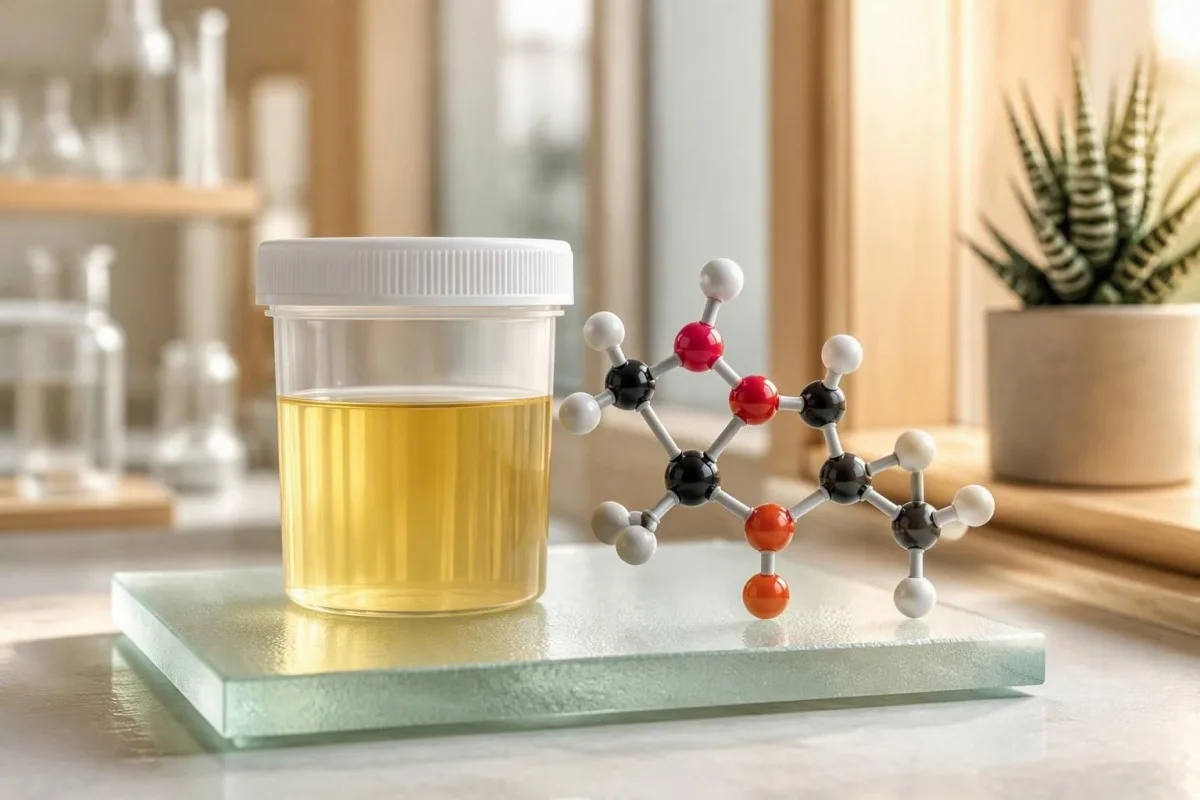
Шээсээр EtG үр дүн нь согтолт, архинд донтох, эсвэл архи уусан тодорхой өдрийг бус, харин саяхан архи уусан эсэхийг бүртгэдэг. Эмч нар үүнийг ямар нэгэн зүйлийг нотлох чадвараас хэтрэлгүйгээр хэрхэн уншдагийг энд тайлбарласан байна.


- EtG утга: Шээсэнд агуулагдах этил глюкуронид нь шууд архины метаболит бөгөөд эерэг үр дүн нь саяхан архи уусан байдлыг дэмждэг боловч ур чадварыг алдагдлыг тогтоодоггүй.
- Ердийн хугацаа: Шээсэнд агуулагдах 500 нг/мл EtG хязгаар нь ихэвчлэн ойролцоогоор 24-48 цагийн турш их хэмжээний архи уусан байдлыг илрүүлдэг бол бага хязгаар нь илүү удаан хугацаанд эерэг байж болно.
- Ердийн хязгаар: Лабораториуд ихэвчлэн 100, 200, 500, эсвэл 1,000 нг/мл ашигладаг; лабораторийн тогтоосон хязгаар нь үр дүнг эерэг гэж мэдээлдэг эсэхийг шийддэг.
- Цусаар эсвэл шээсээр: Цусан дахь архины агууламж нь одоогоор эргэлдэж буй архийг илэрхийлдэг бол шээсний EtG нь архи өөрөө арилсны дараах этилийн спиртийн нөлөөллийг илэрхийлдэг.
- Санамсаргүй байдлаар нөлөөлөх нь: Ам зайлагч, гар ариутгагч, эм, исгэх зэрэг нь заримдаа бага EtG утгыг өгч болно, ялангуяа 100 нг/мл-ийн хязгаарт ойрхон байвал.
- Тунг тооцох боломжгүй: EtG-ийн агууламжаар уусан шилний тоо, уусан цагийг тодорхойлох эсвэл хэн нэгэн хөдөлмөргүй байсан эсэхийг найдвартай тодорхойлж чадахгүй.
- Креатинины нөхцөл байдал: Маш шингэрүүлсэн шээс нь EtG-ийн агууламжийг бууруулж болно; шээсний креатинин нь лабораторийн шинжилгээний концентрацийг тодорхойлоход тусалдаг.
- Эмнэлзүйн дараагийн алхам: Хэрэв EtG-ийн үр дүн нь хууль, ажил эрхлэлт, эсвэл эмчилгээний үр дагаварыг авчрах бол хязгаар, цуглуулах цаг, баталгаажуулах арга, EtS, болон дээжийн хүчинтэй байдлын талаар асуу.
Шээсээр EtG-ийн бодит хэмжилт
Шээсний EtG нь бие махбод нь этилийн спиртийг боловсруулсны дараа үүссэн метаболитыг хэмждэг тул одоогийн согтолтыг илэрхийлэхээс илүүтэйгээр саяхан этилийн спирттэй харьцсан байдлыг илтгэнэ. 2026 оны 9-р сарын 15-ны байдлаар энэ ялгаа нь EtG шинжилгээний хамгийн ашигтай хэсэг хэвээр байна: архи нь цуснаас алга болж болох боловч EtG нь шээсэнд илэрч болдог.
EtG гэдэг нь этил глюкуронид, бөгөөд энэ нь этилийн спиртийн бага хэсэг нь элэгэнд глюкуроны хүчилтэй нийлсний дараа үүсдэг. Ихэнх этилийн спирт нь архины дегидрогеназаар исэлддэг; зөвхөн 0.02%-ээс 0.06%-ийн хэмжээ нь EtG хэлбэрээр ялгардаг боловч орчин үеийн масс-спектрометрийн аргууд үүнийг 100 нг/мл-д илрүүлж чаддаг. Энэ аналитик мэдрэмж нь тустай боловч энэ нь нөхцөл байдал чухал болох шалтгаан юм.
Миний эмнэлзүйн ажилд хамгийн олон удаа сонсдог буруу ойлголт бол “Миний EtG эерэг байна, тиймээс шинжилгээ нь би согтуу байсан гэж хэлж байна.” Энэ нь тийм биш юм. Kantesti нь AI цусны шинжилгээний анализатор юм, мөн бидний тайлангууд нь шууд архины биомаркеруудыг шээсний токсикологиос зориудаар тусад нь авч үздэг, учир нь шээсний EtG-ийн үр дүн нь цусан дахь архины агууламж ч биш, мөн үйл ажиллагааны хөдөлмөргүй байдлын хэмжигдэхүүн ч биш юм.
EtG нь ихэвчлэн лабораторийн хязгаарын эсрэг эерэг эсвэл сөрөг гэж тайлагнагддаг бөгөөд зарим хөтөлбөрүүд тоон концентрацийг мөн тайлагнадаг. Дээж өөрөө анхаарал татахуйц зүйл юм: шээсний дээжийг тайлбарлах нь цуглуулах чанар, гадаад байдал, хувийн жин, креатинин, мөн дээжийг хэр боломжтой байдлаар шингэрүүлсэн эсэхээс эхэлнэ.
EtG болон EtS нь хосолсон маркерууд юм
Этил сульфат (EtS) нь EtG-тэй хамт хэмжиж болох өөр нэгэн жижиг шууд этилийн спиртийн метаболит юм. Нэгдмэл EtG болон EtS үр дүн нь этилийн спирттэй харьцсан байдлыг баталгаажуулдаг бөгөөд тусгаарлагдсан хязгаарын EtG үр дүн нь цуглуулах, хадгалах, санамсаргүй байдлаар нөлөөлөх асуудлуудыг илүү сайтар хянах шаардлагатай.
Шээсээр EtG ба цусан дахь алкоголь хэмжих шинжилгээ
Цусан дахь архины шинжилгээ нь одоогоор архи байгаа эсэхийг хариулдаг; шээсний EtG нь саяхан архитай харьцсан эсэхийг хариулдаг. Хоёр шинжилгээ нь өөр өөр биологийн цагтай бөгөөд хоорондоо орлуулж болохгүй.
A blood alcohol concentration, often expressed as mg/dL or g/dL, falls as ethanol is metabolised at an average rate near 15 to 20 mg/dL per hour in many adults, although rates vary. A BAC of 80 mg/dL indicates alcohol in circulation at the time of sampling; an EtG result does not. That is why a later positive EtG cannot reconstruct an earlier BAC.
Urine EtG can outlast blood alcohol by one to several days, particularly after repeated or heavy intake. In a study of volunteers, Jatlow et al. found that EtG detection depended strongly on dose and cutoff selection, rather than following a fixed “80-hour rule” (Jatlow et al., 2006). A one-size detection promise is clinically unsound.
I advise patients to read the test name before interpreting the flag. A report labelled EtG is a metabolite test, while a result labelled ethanol, BAC, or serum alcohol is a direct measurement; our guide to чанарын болон хэмжээст шинжилгээ explains why those report formats convey very different certainty.
Why EtG cannot establish impairment
Impairment is assessed at a particular time through observed function, clinical examination, and where relevant a contemporaneous alcohol concentration. A urine EtG concentration of 2,000 ng/mL collected the next morning cannot show whether a person was impaired at 09:00, 18:00, or at any other specific hour.
EtG шинжилгээний бодит илрүүлэлтийн хугацаа
A urine EtG detection window is commonly about 24 to 48 hours at a 500 ng/mL cutoff after heavier drinking, but it can be shorter after a small exposure and longer at lower cutoffs. No laboratory value can identify an exact last-drink time.
At a 100 х/мл cutoff, EtG may detect low-level exposure into the next day and sometimes beyond; this greater sensitivity also increases vulnerability to incidental sources. At 500 нг/мл-ээс, many programmes aim for greater specificity for beverage alcohol exposure, though even this threshold does not guarantee a particular number of drinks or a 48-hour window in every person.
Body size, liver function, urine concentration, dose, drinking pattern, time since exposure, and assay method all shift the result. A person who drinks several standard drinks over one evening may remain positive longer than someone with a single drink, but rapid water loading can lower the concentration without changing whether exposure occurred. The элэгний шинжилгээний товчлолын гарын авлага is useful if a clinician is also reviewing liver-related blood markers.
The phrase “EtG detects alcohol for 80 hours” has become sticky online. It is not a dependable promise for light or isolated drinking. In my experience, people facing a monitored test are better served by asking the laboratory for its cutoff and collection time than by relying on an internet timetable.
EtG хязгаарын түвшин утгыг хэрхэн өөрчилдөг
EtG cutoff levels are policy choices that balance sensitivity against false-positive risk, not medical severity bands. A result of 450 ng/mL is negative at a 500 ng/mL laboratory and positive at a 100 ng/mL laboratory.
The most common urine EtG cutoffs are 100, 200, 500, and 1,000 ng/mL. Lower thresholds are useful when a programme wants to detect any plausible recent exposure, while 500 ng/mL is often selected to reduce the effect of routine environmental ethanol. Neither approach is universally right; the purpose of testing should be stated openly.
A cutoff does not transform a result into proof. A concentration of 600 ng/mL is only 100 ng/mL above a 500 ng/mL threshold, so sample concentration and analytic method matter more than many people realise. Check the report for an immunoassay screen versus LC-MS/MS confirmation, because confirmation is more analytically specific.
A urine sample with low creatinine may be diluted, whether deliberately or simply because the person drank a large volume of water. Urine creatinine below 20 mg/dL is commonly used as a specimen-validity concern in workplace testing, although programme rules differ; Шээсний хувийн жин supplies complementary evidence about dilution.
Cutoffs are not clinical risk categories
EtG values do not have a normal range analogous to cholesterol or glucose. They are threshold results tied to the test's intended purpose, and a higher number does not diagnose alcohol use disorder, liver damage, or dangerous intoxication.
EtG шээсний шинжилгээний үр дүнг аюулгүй унших нь
A negative EtG result means the concentration was below that laboratory's cutoff at collection; it does not prove lifelong abstinence or exclude earlier drinking. A positive result supports recent exposure but needs timing, specimen, and test-method context.
Start with five details: collection date and time, reported cutoff, numeric result if available, method, and urine creatinine or specific gravity. A negative result at 500 ng/mL collected 60 hours after drinking says something very different from a negative result at 100 ng/mL collected 12 hours after a suspected exposure.
For treatment monitoring, clinicians should compare serial samples rather than make sweeping conclusions from one value. Kantesti нь AI цусны шинжилгээний тайлал платформ that can organise related liver, nutrition, and metabolic results over time, but it does not convert a urine EtG finding into a diagnosis or a legal opinion. Patterns are more informative than isolated flags.
A positive EtG result also does not automatically explain elevated ALT, AST, GGT, or triglycerides. Alcohol can contribute, but so can fatty liver disease, medicines, exercise, viral illness, and metabolic conditions; this is why our article on blood markers after stopping alcohol focuses on trends and competing explanations.
When a repeat sample is reasonable
A promptly collected repeat specimen may clarify an unexpected low positive, especially where the result sits near the cutoff and consequences are substantial. The original result remains part of the record, but a repeat with documented collection conditions can reveal whether a pattern persists.
Амны шингэн эсвэл гар ариутгагч нь EtG-ийн эерэг үр дүнг өгч чадах уу?
Incidental ethanol exposure can occasionally produce low urine EtG concentrations, particularly near a 100 ng/mL cutoff, but it is a less convincing explanation for sustained or clearly high confirmed results. The answer depends on amount, frequency, timing, and the laboratory threshold.
Alcohol-containing mouthwash, liquid medicines, fermented foods, topical products, and repeated occupational hand-sanitiser exposure are the usual concerns. I have seen patients focus on one mouthwash rinse while overlooking a prescription elixir taken four times daily; documenting every product and its ethanol content is more useful than guessing after a result arrives.
Experimental work has found that intense sanitizer exposure can produce detectable EtG in some circumstances, especially with low thresholds. The Substance Abuse and Mental Health Services Administration advised caution when interpreting low positive EtG results because incidental exposure and pre-analytical factors can occur (SAMHSA, 2012). A 500 ng/mL cutoff is commonly used partly to reduce this ambiguity.
If abstinence monitoring matters, use alcohol-free mouthwash and personal products for the entire monitoring period, retain package details, and disclose necessary ethanol-containing medicines before collection. Unexpected results should also trigger a check for laboratory result errors rather than an assumption of wrongdoing.
Fermentation after collection
Improperly stored urine can undergo microbial changes that complicate ethanol-related testing, particularly when ethanol itself is measured. Refrigeration, prompt transport, and confirmatory testing reduce uncertainty; EtS may be helpful when EtG degradation is a concern.
Шалгалт, баталгаажуулалт ба EtS
Immunoassay EtG testing is fast but can be less specific than confirmatory LC-MS/MS testing; a consequential positive deserves clarity about the method used. EtS is often tested alongside EtG to strengthen interpretation.
Many laboratories begin with an иммунозаялтаар screen, which uses antibodies to detect EtG above a preset cutoff. A positive screen may then be confirmed by liquid chromatography-tandem mass spectrometry, or LC-MS/MS, which identifies molecules by their mass and fragmentation pattern. The latter is especially relevant where employment, licensing, or family-court decisions are involved.
EtS often tracks with EtG after beverage alcohol exposure, but it has its own limitations and detection characteristics. A laboratory may report EtG positive and EtS negative because of timing, differing cutoffs, specimen handling, or assay variation; that mismatch is a reason for expert review, not a shortcut to a conclusion.
Kantesti AI нь AI-д суурилсан цусны шинжилгээний анализ хийх хэрэгсэл юм, not a forensic toxicology laboratory. We can help patients recognise when a report needs method-level clarification and connect related blood data, while the originating laboratory must answer questions about confirmation, chain of custody, and analytical uncertainty; see our urine dipstick guide for the broader difference between screening and diagnostic urine tests.
Шингэн алдалт, бөөр ба шингэрүүлсэн шээсний дээж
Hydration changes urine EtG concentration because it changes urine volume, not because water removes EtG from the body on demand. Dilute samples can produce lower concentrations and may be flagged through creatinine or specific gravity.
A person who drinks 2 litres of water shortly before collection may produce a more dilute specimen than usual. The EtG concentration in ng/mL can fall even though recent ethanol exposure occurred. This is why clinicians should not compare two EtG numbers without looking at the accompanying urine creatinine and collection circumstances.
Reduced kidney function can also alter urinary excretion and complicate assumptions about the detection window. An eGFR below 60 mL/min/1.73 m² persisting for 3 months meets a chronic kidney disease definition, and people with impaired renal function should not be given rigid EtG clearance predictions; our low eGFR symptoms guide explains when kidney results need clinical follow-up.
Do not attempt to “flush” a test. Apart from being unreliable, excessive water intake can cause dangerous hyponatraemia. A properly collected sample reflects real-world physiology better than a specimen distorted by unusual fluid intake.
Creatinine adjustment is not universal
Some programmes review EtG relative to urine creatinine, while others use the raw ng/mL result and specimen-validity rules. Ask which approach your laboratory uses before comparing values across different organisations.
EtG яагаад согтолт эсвэл ур чадварыг алдагдлыг нотолж чадахгүй вэ
EtG cannot establish intoxication, impairment, driving ability, consent, or the exact time of alcohol use because it persists after ethanol has cleared. Those questions require contemporaneous clinical observations and, when appropriate, direct alcohol measurement.
The biological reason is simple: EtG is a downstream metabolite. A person can have a BAC of 0 mg/dL and a positive urine EtG 24 hours later. Conversely, a person may be impaired by alcohol while a later urine sample is unavailable or diluted, making EtG a poor substitute for an observed-time assessment.
Dr Thomas Klein has reviewed many laboratory reports where a single number was treated as a complete story. It never is. A confirmed EtG result supports prior ethanol exposure, but it cannot distinguish one episode from several, calculate standard drinks, or identify whether alcohol caused a symptom such as fatigue, anxiety, or elevated liver enzymes.
When alcohol-related liver injury is a clinical concern, GGT above the laboratory upper limit is nonspecific and cannot confirm alcohol use by itself. Pairing GGT with AST, ALT, bilirubin, medication history, and imaging is more defensible; our GGT тайлбарлах гарын авлага explains those competing causes.
Clinical language matters
“Consistent with recent exposure” is accurate wording for a positive EtG result; “proves intoxication” is not. Patients should ask that distinction be preserved in clinical, occupational, and legal documentation.
Элэгний цусан дахь шинжилгээтэй хамт EtG-ийн үр дүн
EtG and liver tests measure different things: EtG reflects recent ethanol exposure, while ALT, AST, GGT, bilirubin, albumin, and INR reflect potential organ stress or function. A normal liver panel does not negate a positive EtG, and a raised liver enzyme does not prove alcohol use.
ALT and AST can rise after alcohol exposure, but modest elevations are common with metabolic dysfunction-associated steatotic liver disease, strenuous exercise, medicines, and viral infections. AST:ALT ratios above 2 can occur in alcohol-associated hepatitis, yet the ratio alone is neither sensitive nor diagnostic. Symptoms such as jaundice, vomiting, confusion, or abdominal swelling require urgent in-person assessment.
For a longer alcohol-exposure perspective, clinicians may consider phosphatidylethanol (PEth) in blood, which often reflects repeated drinking over roughly 2 to 4 weeks rather than a single recent event. PEth has its own interpretation limits, including transfusion-related considerations, so it should be selected for a defined clinical question rather than used reflexively.
Kantesti AI interprets liver results by looking for patterns across bilirubin, enzymes, proteins, blood counts, and kidney markers rather than assigning causation from one abnormality. Our practical элэгний шинжилгээний самбарын гарын авлага shows which combinations warrant a clinician’s review.
Symptoms outweigh a screening result
Seek urgent care for yellow skin or eyes, vomiting blood, black stools, severe abdominal pain, new confusion, seizures, or severe withdrawal symptoms. An EtG result is never the triage tool for these emergencies.
EtG шээсний шинжилгээнд шударгаар бэлтгэх нь
The safest preparation is to follow collection instructions, avoid non-essential ethanol-containing products when abstinence is required, and report all medicines and exposures before testing. Attempts to manipulate hydration or specimens can create medical and administrative problems.
Ask in advance whether the test uses EtG alone or EtG plus EtS, whether confirmation is automatic, and whether the cutoff is 100, 200, 500, or 1,000 ng/mL. If you use a liquid medication, record the brand, dose, schedule, and ethanol content. This documentation is particularly useful when a low positive result is unexpected.
Use your typical fluid intake. Overhydrating does not reliably make EtG negative and can lead to a sample labelled dilute; underhydrating can make collection unpleasant and may concentrate many urine analytes. Patients who need urine testing for other reasons can review our guide to 24 цагийн шээсний цуглуулгын алдаанууд for the broader principles of accurate collection.
For tests with major consequences, I favour transparent chain-of-custody procedures, a documented medication list, and confirmatory testing where appropriate. Our standards are reviewed through эмнэлгийн баталгаажуулалт, but individual workplace and legal programmes may apply their own rules.
EtG-ийн эерэг үр дүн гарсан тохиолдолд юу хийх вэ
After a positive EtG result, request the exact value, cutoff, method, collection time, and urine-validity data before drawing conclusions. This information determines whether the result is a low-level screen, a confirmed exposure marker, or a finding that needs repeat testing.
If the result is unexpected, write down all alcohol-containing exposures in the preceding 72 hours, including oral rinses, cough mixtures, topical products, fermented drinks, and medicines. Do not alter that account after the fact; contemporaneous details are more credible and clinically useful than a vague reconstruction several days later.
If alcohol use is becoming difficult to control, a positive EtG can be an opening for care rather than a moral verdict. In the UK, primary care, local drug and alcohol services, and urgent mental-health support can assess withdrawal risk; abrupt cessation after heavy daily drinking may require supervised management because seizures and delirium are real risks.
Kantesti’s pattern-based reports can help prepare questions about associated nutrition or liver results, but they cannot replace addiction medicine, toxicology, or legal advice. For practical examples of how our tools are used within care pathways, see clinical workflow scenarios.
EtG-ийн үр дүн таны түүхтэй зөрчилдвөл
A result that conflicts with your history should trigger verification, not panic: check identity, timing, cutoff, specimen concentration, assay type, and confirmation status. Discordance is uncommon but medically meaningful when the consequences are serious.
The first practical question is whether the reported finding was a screen or a confirmed quantitative result. A second is whether the sample was unusually dilute, poorly stored, or collected near the period of an unavoidable ethanol-containing medicine. These facts do not erase a result, but they change the confidence a clinician should attach to it.
False negatives are possible after enough time has passed, at higher cutoffs, after light exposure, or in dilute urine. False positives are less likely with confirmatory LC-MS/MS than with screening alone, but analytical and pre-analytical error are never literally zero. Good laboratory practice means acknowledging that uncertainty.
For patients comparing several reports, Kantesti is an AI lab test interpretation service that can organise dates and related blood markers without hiding differences between laboratories. The AI технологийн заавар explains why source documents, reference intervals, and test methods remain visible in responsible interpretation.
Жирэмсэн, бөөрний өвчин, өсвөр үеийнхний EtG шинжилгээ
EtG interpretation requires extra caution in pregnancy, reduced kidney function, and adolescents because the clinical stakes are higher and a test result alone cannot explain risk or behaviour. Testing should always have a clear consent and care purpose.
In pregnancy, alcohol avoidance is recommended because no established safe amount or safe timing has been identified, but an EtG result still cannot quantify fetal exposure or predict an outcome. A supportive, non-punitive clinical conversation is more likely to improve care than treating a urine metabolite as a complete account of behaviour.
For adolescents, developmental stage, family safety, confidentiality rules, and possible coercion change how testing should be used. Parents should not treat a home or clinic result as a disciplinary tool without considering clinical support; our discussion of Хүүхдэд зориулсан AI тайлбар explains why paediatric laboratory context is different.
People with chronic kidney disease may have unpredictable urinary metabolite handling, while people taking ethanol-containing medicines may have unavoidable exposure. These groups benefit from laboratory medicine or addiction-medicine input rather than rigid interpretations based on a generic detection table.
Лаборатори эсвэл эмчээс асуух асуултууд
The best questions are concrete: What cutoff was used, was the result confirmed, when was the sample collected, were EtS and creatinine measured, and what conclusion can the test not support? Asking these five questions prevents most avoidable misunderstandings.
Ask whether the laboratory follows a screening-then-confirmation workflow and whether the result is expressed in ng/mL. Ask whether the programme has a policy for ethanol-containing medicines and personal-care products. If a result is being used beyond healthcare, ask who is qualified to interpret uncertainty and chain-of-custody details.
Bring other relevant results, especially liver enzymes, complete blood count, kidney function, and medicines. A clinician may also assess sleep, mood, nutrition, withdrawal symptoms, and safety; an EtG number alone cannot do this work. Dr Thomas Klein’s practical rule is simple: use the test to start a precise conversation, never to end one.
Kantesti’s clinical material is overseen with input from our Эмнэлгийн зөвлөх зөвлөл. If you need a human medical decision, a treating clinician who knows your history remains the appropriate person to make it.
EtG шинжилгээний талаар өвчтөний эрх ашгийг нэн тэргүүнд тавих нь
A positive urine EtG result supports recent ethanol exposure above a stated cutoff, while a negative result means only that EtG was below that cutoff at collection. Neither outcome establishes impairment, exact drinking quantity, alcohol use disorder, or a precise last-drink time.
If you remember one number, make it the cutoff: 100 ng/mL and 500 ng/mL answer materially different monitoring questions. If you remember one limitation, make it this: urine EtG lasts longer than blood alcohol, which is exactly why it cannot describe whether you were impaired at a particular moment.
Most patients find that a calm review of timing, products, hydration, method, and confirmation makes an alarming report far more understandable. When an unexpected result affects treatment, work, or family matters, request the original laboratory documentation and seek qualified review promptly.
Kantesti Ltd, the organisation behind Kantesti, provides privacy-focused lab-result education across 127+ countries, while clinical judgement stays with licensed professionals. You can read more about our clinical mission and governance on our “Бидний тухай” хуудсанд.
Байнга асуудаг асуултууд
EtG шээсэнд хэр удаан байдаг вэ?
Шээс дэх EtG нь лабораторийн 500 нг/мл цуурайлах хязгаарт хүндрүүлсэн ууснаас хойш ойролцоогоор 24-48 цагийн турш илэрч болох боловч бага хэмжээгээр хэрэглэсний дараа болон 100 нг/мл цуурайлах хязгаарт илэрэх хугацаа нь урт байж болно. Тун, шээсний шингэлт, бөөрний үйл ажиллагаа, цуглуулах цаг, болон шинжилгээ нь илрүүлэлтэд нөлөөлдөг. Эерэг EtG үр дүн нь сүүлчийн уусан цагийг нарийвчлан тогтоож чадахгүй. Тайланд хэвлэгдсэн лабораторийн цуурайлах хязгаар нь үр дүнг тайлбарлахад шаардлагатай.
EtG-ийн ямар түвшинг эерэг гэж үзэх вэ?
EtG түвшинг лабораторийн мэдээлэх хязгаарлалт, ихэвчлэн 100, 200, 500, эсвэл 1,000 нг/мл-д хүрсэн эсвэл түүнээс давсан үед эерэг гэж үзнэ. 450 нг/мл-ийн үнэ цэнэ нь 100 нг/мл хөтөлбөрт эерэг боловч 500 нг/мл хөтөлбөрт сөрөг байна. Эдгээр хязгаарлалтууд нь эмнэлзүйн ноцтой байдлын ангилал биш, туршилтын бодлогын түвшин юм. Өндөр EtG агууламж нь тодорхой тооны уусан архи, согтолтыг нотлохгүй.
Нэг удаагийн уух нь EtG шинжилгээг эерэг гаргаж чадах уу?
Нэг стандарт аяга спирт нь Шээсний EtG шинжилгээг эерэг болгож чадна, ялангуяа шинжилгээг ойрын хугацаанд авсан тохиолдолд болон лаборатори нь 100 нг/мл гэх мэт мэдрэмтгий хязгаарлалтыг ашигладаг бол. 500 нг/мл хязгаарлалтын үед нэг аяга спиртийн хэмжээг цаг хугацаа өнгөрөх тусам бага найдвартай илрүүлдэг боловч хувь хүний харьцангуй байдал нь их байдаг. Усны хэрэглээ, шээсний концентраци, биеийн хэмжээ, шинжилгээний загвар нь бүгд үр дүнд нөлөөлдөг. Аливаа эмч нэг EtG концентрациас тухайн хүний уусан спиртийн хэмжээг найдвартай тооцоолж чадахгүй.
Гар ариутгагч эсвэл ам зайлах ус нь EtG шинжилгээг эерэг үр дүнтэй болгож чадах уу?
Шатдаггүй спирт агуулсан амны шингэн, шингэн эм, эсвэл гар ариутгагч бодисыг давтан хэрэглэх нь зарим тохиолдолд, ялангуяа 100 нг/мл орчим байх үед шээсэнд агуулагдах EtG-ийн бага хэмжээг гаргах шалтгаан болдог. 500 нг/мл-ээс хамаагүй өндөр тогтоогдсон үр дүн эсвэл давтан өндөр үр дүн гарсан тохиолдолд энэ тайлбар нь бага үр дүнтэй болдог боловч ямар ч концентраци нь дангаараа согтууруулах ундаа уусан гэдгийг нотлох боломжгүй юм. SAMHSA нь санамсаргүй байдлаар нөлөөлөх, лабораторийн хүчин зүйлс байдаг тул бага эерэг EtG үр дүнг тайлбарлахдаа болгоомжтой байхыг зөвлөсөн. Шинжилгээ хийхээс өмнө бүтээгдэхүүнийг баримтжуулах нь зөв арга юм.
EtG тест эерэг гарвал би согтуу байсан гэсэн үү?
Эерэг EtG шинжилгээ нь тухайн хүн цуглуулалтын үед эсвэл өмнө нь заасан тодорхой цагт согтуу байсан гэсэн үг биш юм. EtG нь цусан дахь спирт арилсан ч үлдэж болох шээсэнд ялгардаг бодис бөгөөд цусан дахь спиртийн хэмжээ нь цуглуулалтын үед эргэлдэж буй этанолыг хэмждэг. Согтолтыг тогтооход цаг хугацаатай холбоотой эмнэлзүйн ажиглалт, шаардлагатай үед тухайн үед шууд спирт хэмжих шаардлагатай. EtG нь жолооны чадвар, зөвшөөрөл, эсвэл үйл ажиллагааны алдагдал зэргийг тогтоож чадахгүй.
Миний EtG дүн хүлээгдээгүй байдлаар эерэг гарвал яах ёстой вэ?
Гэнэтийн эерэг EtG үр дүнг нарийвчилсан агууламж, хязгаар, цуглуулсан цаг, туршилтын арга, шээсний креатинин эсвэл тодорхой жин, баталгаажуулалтын байдал зэргийг үндэслэн хянаж үзэх ёстой. Өмнөх 48-72 цагийн хугацаанд хэрэглэсэн архи агуулсан бүх эм, хувийн арчилгааны бүтээгдэхүүнийг жагсааж, үр дагавар нь чухал бол холбогдох сав баглаа боодлыг хадгална уу. Хэрэв бага эерэг үр дүн түүхтэй зөрчилдвөл давтан дээж авах нь тохиромжтой байж боловч энэ нь эхний туршилтыг өөрчлөхгүй. Хэрэв үр дүн нь эрүүл мэндийн тусламж үйлчилгээ, ажил эрхлэлт, эсвэл хуулийн асуудалд нөлөөлж байвал эмч, лабораторийн эмчилгээний мэргэжилтэн, эсвэл донтох эмчилгээний мэргэжилтэнтэй холбогдоно уу.
Өнөөдөр AI-аар дэмжигдсэн цусны шинжилгээний тайлал аваарай
Лабораторийн шинжилгээний агшин зуур, үнэн зөв тайлалд итгэдэг дэлхийн 2 сая гаруй хэрэглэгчтэй нэгдээрэй. Цусны шинжилгээний хариугаа байршуулж, 15,000+ биомаркеруудын цогц тайллыг хэдхэн секундын дотор аваарай.
📚 Иш татсан судалгааны нийтлэлүүд
Клейн, Т., Митчелл, С., ба Вебер, Х. (2026). Kantesti. (2026). Urobilinogen in Urine Test: Complete Urinalysis Guide 2026. Zenodo. https://doi.org/10.5281/zenodo.18226379. Kantesti AI Медикл Рисерч.
Клейн, Т., Митчелл, С., ба Вебер, Х. (2026). Kantesti. (2026). Iron Studies Guide: TIBC, Iron Saturation & Binding Capacity. Zenodo. https://doi.org/10.5281/zenodo.18248745. Kantesti AI Медикл Рисерч.
📖 Гадаад эмнэлгийн лавлагаа
Wurst FM et al. (2003). Ethyl glucuronide—the direct ethanol metabolite on the threshold from science to routine use. Addiction.
Substance Abuse and Mental Health Services Administration (2012). The role of biomarkers in the treatment of alcohol use disorders. SAMHSA Advisory.
⚕️ Эмнэлгийн мэдэгдэл
Энэ нийтлэл зөвхөн боловсролын зорилготой бөгөөд эмнэлгийн зөвлөгөө биш болно. Оношилгоо, эмчилгээний шийдвэр гаргахдаа мэргэшсэн эрүүл мэндийн үйлчилгээ үзүүлэгчтэй заавал зөвлөлдөнө.
E-E-A-T итгэлийн дохио
Туршлага
Эмчийн удирдлагатай лабораторийн тайлалын ажлын урсгалын клиник хяналт.
Мэргэшсэн байдал
Биомаркерууд клиникийн нөхцөлд хэрхэн ажиллаж/өөрчлөгдөж байгаад чиглэсэн лабораторийн анагаах ухаан.
Эрх мэдэл
Доктор Томас Клейн бичсэн, Доктор Сара Митчелл, Проф. Доктор Ханс Вебер нар хянан тохиолдуулсан.
Найдвартай байдал
Сэрэмжлүүлгийг бууруулахын тулд тодорхой дараагийн алхамтай, нотолгоонд суурилсан тайлал.