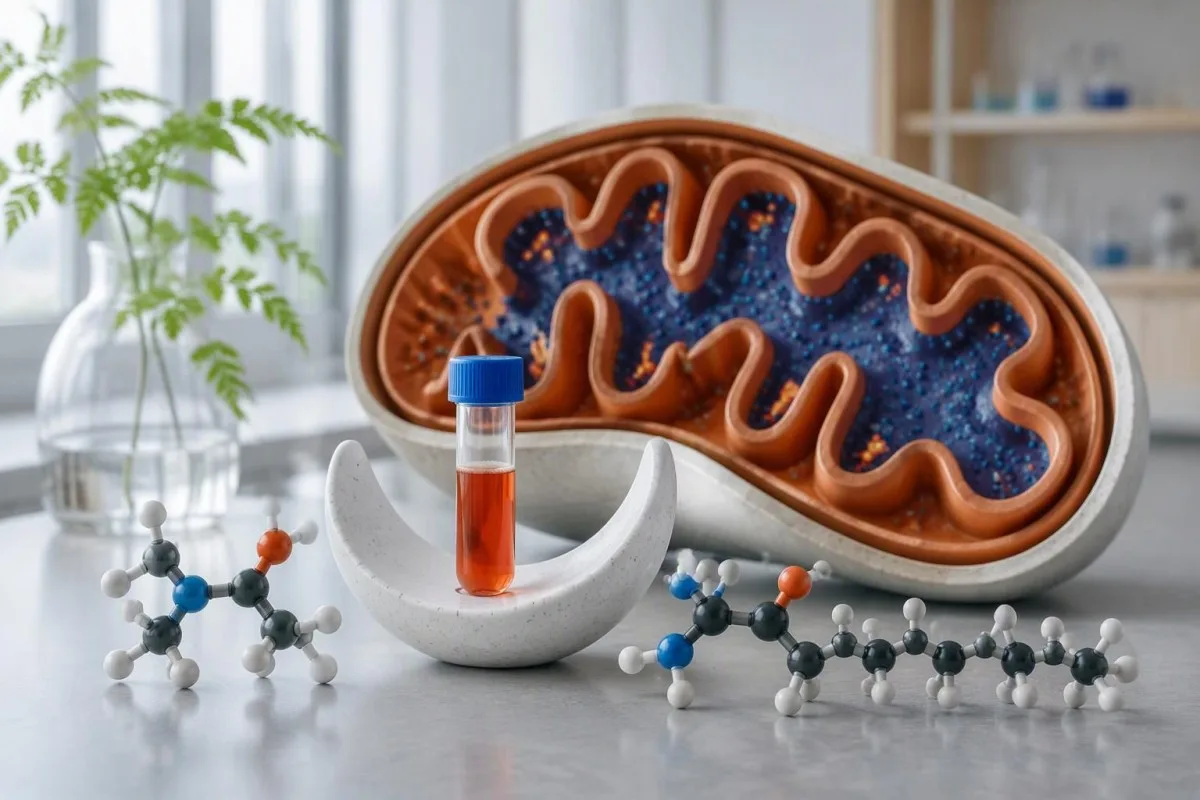
Чөлөөт карнитин нь эфиржүүлээгүй хэсгийг хэмждэг; нийт карнитин нь чөлөөт болон ацил-холбогдсон хэлбэрийг агуулдаг. Тэдний харьцаа нь хомсдолыг тэнцвэр алдагдсан байдлаас ялгахад тусалдаг боловч шалтгааныг өөрөө тодорхойлж чадахгүй.


- Чөлөөт карнитин нь эфиржүүлээгүй фракц юм; насанд хүрэгчдийн сийвэнгийн түгээмэл хэрэглэгддэг хэмжээ нь 25–54 µmol/L боловч танай лабораторийн хэмжээ давуу эрхтэй.
- Нийт карнитиний хэмжээ нь чөлөөт болон эфиржүүлсэн карнитинийг агуулдаг; нийт хэвийн үр дүн нь бага чөлөөт карнитинийг нууж болно.
- Ацил ба чөлөөт харьцаа нь (нийт − чөлөөт) ÷ чөлөөт гэж тооцогддог, хэрэв хоёулаа нэг шинжилгээний дээж болон нэгжийг ашигласан бол.
- Лабораторийн өөр өөр хязгаарууд чухал: 0.60-ийн харьцаа нь 0.40-ыг хязгаар болгож ашигладаг лабораторид тэмдэглэгдэж болох боловч 0.80-ыг ашигладаг лабораторид тэмдэглэгдэхгүй.
- Хүчтэй шавхагдал ойролцоогоор 5 µmol/L-ээс доош байдаг чөлөөт карнитин нь анхдагч карнитиний дутагдлыг илтгэх боловч хоёрдогч шалтгаануудыг мөн үнэлэх ёстой.
- Эмийн тойм эмчилгээг зогсоохын өмнө эмчтэй зөвлөлдөх хэрэгтэй; валпроат болон пивалат агуулсан эмүүдийг оруулах ёстой.
- Мэргэшсэн шинжилгээ зөвхөн нийт карнитины хэмжилтийн оронд ганцаарчилсан ацилкарнитинууд, шээсний органик хүчил, генетикийн шинжилгээг агуулж болно.
- 2 дахин дараах байдлаар ойлгомжгүй байдал, давтан бөөлжих, унах эсвэл булчингийн хүчтэй сулрах зэрэг нь шуурхай үнэлгээ шаардлагатай; 54 мг/дл эсвэл 3.0 ммоль/л-ээс доош глюкоз нь ноцтой дагалдах шинж тэмдэг юм.
Карнитиний цусны шинжилгээнд үнэндээ юу хэмждэг вэ?
A карнитины цусны шинжилгээ чөлөөт карнитин, ихэвчлэн нийт карнитиныг хэмждэг; нийт нь ацилкарнитинууд гэж нэрлэгддэг чөлөөт ба эфирийн хэлбэрийг агуулдаг. ацил-чөлөөт харьцаа тэдгээрийн тэнцвэрийг тодорхойлдог тул нийт карнитины хэвийн хэмжээ нь бага чөлөөт карнитинтэй хамт оршиж болно; хэвийн бус хэв маяг нь автоматаар нэмэлт тэжээл биш, шалтгаантай холбоотой хяналтыг шаарддаг.
Чөлөөт карнитин нь чөлөөт бамбай булчирхайн даавраас ялгаатай ойлголт юм. Энд “чөлөөт” гэдэг нь ацил бүлэгт холбогдоогүй карнитин гэсэн үг бөгөөд зүгээр л цусанд эргэлдэж буй уургийн бүлэгт холбогдоогүй карнитин биш юм; эдгээр утгыг андуурч ойлгох нь тоог харахаас өмнө тайлбарыг алдахад хүргэж болзошгүй юм.
A нийт 40 мкмоль/л, чөлөөт карнитин 15 мкмоль/л асуудлыг харуулж байна: нийт нь насанд хүрэгчдийн хязгаарт байж болох ч чөлөөт фракц нь түүнээс доогуур байдаг. Тооцоолсон эфирийн фракц нь 25 мкмоль/л тул асуулт нь яагаад эргэлдэж буй усан сангийн ихэнх хэсэг нь эфиржилттэй байгаа вэ гэдэг юм.
Кантести бол AI цусны шинжилгээний анализатор нь чөлөөт, нийт болон тооцоолсон карнитины үр дүнг лабораторийн өөрийн лавлагаа хязгаартай хамт зохион байгуулахад тусалж чадна. Манай байгууллага ба эмнэлзүйн хандлага нь үндэслэл өгдөг; би ямар нэгэн 1 үр дүнг онош болгон эмчлэхээс өмнө анхны тайлан, эмчилгээний жагсаалт, шинж тэмдгийн түүхийг авахыг хүсэх болно.
Яагаад чөлөөт болон нийт карнитин өөр өөр мэдээлэл өгдөг вэ?
Чөлөөт карнитин ба нийт карнитин нь өөр өөр асуултад хариулдаг: чөлөөт нь эфиргүй эргэлдэж буй усан санг хэмждэг бол нийт нь тэрхүү усан сан ба эфирийн хэлбэрийг хэмждэг. Карнитин нь урт гинжит өөхний хүчлийн бүлгийг митохондри руу шилжүүлэхэд тусалдаг боловч сийвэнгийн концентраци нь митохондрийн үйл ажиллагаа эсвэл булчингийн эрчим хүчний үйлдвэрлэлийн шууд хэмжилт биш юм.
Карнитины шаттл нь CPT I, карнитин-ацилкарнитины транслоказ ба CPT II-ийг агуулдаг. CPT I нь митохондрийн гаднах мембран дээр ацилкарнитиныг үүсгэдэг, транслоказ нь түүнийг дотоод мембранаар дамжуулдаг, харин CPT II нь ацил бүлгийг митохондрийн дотор коэнзим А руу буцаан шилжүүлдэг; энэ дараалал нь 1 эргэлдэж буй усан сангийн хэмжилт нь боломжит бүх согогийг олж тогтоож чадахгүй байдгийг тайлбарладаг.
Биеийн ихэнх карнитин нь сийвэнд биш, харин эдэд, ялангуяа араг ясны болон зүрхний булчинд хадгалагддаг. Лонго, Амат ди Сан Филиппо ба Паскуали нар 2006 оны тоймдоо тээврийн согог ба шаттлын согог нь өөр өөр биохимийн хэв маягийг хэрхэн үүсгэдэгийг тайлбарласан; тиймээс сийвэнгийн бага утгыг эд эсийн бүрэн бүртгэл биш, харин эргэлдэж буй ул мөр гэж тайлбарлах хэрэгтэй (Лонго болон бусад, 2006).
Карнитин нь креатин эсвэл креатинин биш, ижил төстэй бичлэгээс үл хамааран. Энэ нь ердийн үндсэн эсвэл цогц бодисын солилцооны бүхээгт багтдаггүй; бидний тайлбар what metabolic panels include helps clarify why a separate carnitine request may be needed even after 2 routine chemistry panels.
Чөлөөт болон нийт карнитиний хэвийн хэмжээ хэд вэ?
Carnitine reference intervals depend on age, specimen and laboratory method. One commonly used adult plasma set is free carnitine 25–54 µmol/L, total carnitine 34–78 µmol/L, esterified carnitine 5–30 µmol/L and an esterified-to-free ratio of 0.10–0.80; these are examples, not universal diagnostic cutoffs.
A laboratory reference interval describes a comparison population, not a treatment boundary. Free carnitine of 24 µmol/L against a lower limit of 25 µmol/L is a different clinical proposition from 4 µmol/L, even though both carry the same low flag; symptoms, reproducibility and the other fractions determine how quickly to investigate.
Infant and child results require age-specific interpretation. A newborn screening value from a dried laboratory spot cannot simply be compared with an adult plasma interval of 25–54 µmol/L; specimen composition, screening methodology and maternal carnitine status can all affect the apparent discrepancy between 2 reports.
Reference-range disagreement is not necessarily laboratory error. Some laboratories use broader free-carnitine intervals or a different ratio upper limit; our guide to out-of-range laboratory results explains why I prefer the printed interval over a search-engine cutoff, especially when a result is only 1–2 µmol/L outside range.
Ацил ба чөлөөт карнитиний харьцааг хэрхэн тооцдог вэ?
The acyl to free carnitine ratio is esterified carnitine divided by free carnitine. When esterified carnitine is calculated from the same sample, the formula is (total carnitine − free carnitine) ÷ free carnitine; the result is unitless, and it is not the same as total divided by free.
Total 50 µmol/L and free 40 µmol/L produce a ratio of 0.25. First subtract 40 from 50 to obtain esterified carnitine of 10 µmol/L, then divide 10 by 40; dividing total directly by free would instead give 1.25, an entirely different quantity that could falsely alarm a reader.
A high ratio can reflect a small denominator rather than a large esterified concentration. Total 20 µmol/L and free 5 µmol/L yield esterified carnitine of 15 µmol/L and a ratio of 3.0; the striking feature is severe free-pool depletion, even though 15 µmol/L may fall within the laboratory’s esterified interval.
Calculated ratios inherit measurement and transcription errors. If rounding gives total slightly below free, the negative difference is not a real biological acyl pool; check units, dates and source values using our PDF extraction error checklist before comparing 2 results, and ask the laboratory about unexplained inconsistencies.
Чөлөөт карнитин бага байхад нийт карнитин хэвийн байж чадах уу?
Normal total carnitine does not exclude low free carnitine. The esterified fraction can keep the combined total within range while the free fraction falls; for example, total 40 µmol/L and free 15 µmol/L produce esterified carnitine of 25 µmol/L and an acyl-to-free ratio of approximately 1.67.
Proportionate depletion can produce a reassuring-looking ratio. Total 28 µmol/L and free 22 µmol/L give esterified carnitine of 6 µmol/L and a ratio of 0.27; both total and free may be low against the example adult intervals, so a ratio within range must not cancel those concentration findings.
A ratio of 0.50 is not automatically evidence of a metabolic disorder. Total 60 µmol/L and free 40 µmol/L generate esterified carnitine of 20 µmol/L; that balance may be acceptable under a laboratory interval extending to 0.80, whereas a laboratory using 0.40 would flag it and require contextual review.
Pattern changes are more useful when sampling conditions remain comparable. A fall in free carnitine from 35 to 15 µmol/L after a medication change carries a different meaning from 2 measurements collected at different points in an acute illness; our guide to уулзалтын хоорондох утгын ач холбогдолтой өөрчлөлтүүдийн заавар explains that distinction without assuming every numerical shift is disease progression.
Удамшлын өвчнөөс гадна ямар шалтгаанаар чөлөөт карнитин багасдаг вэ?
Low free carnitine can result from reduced intake or synthesis, urinary losses, dialysis, medication effects or secondary depletion during other metabolic disorders. An adult free-carnitine result of 20 µmol/L therefore does not, by itself, distinguish nutritional depletion from renal loss or increased formation and elimination of acylcarnitines.
Plant-based diets generally supply less preformed carnitine than diets containing animal foods. Healthy adults can synthesize carnitine from amino-acid precursors and conserve it through the kidneys; a free value of 23 µmol/L in a well vegan adult should not automatically prompt a high-dose prescription or a conclusion that the diet is inadequate.
Prematurity, prolonged nutrition support and substantial malnutrition change the interpretation. In a patient receiving long-term parenteral nutrition, 2 questions matter separately: whether the formulation provides carnitine and whether illness, organ function or losses have changed requirements; simply adding dietary meat is neither a feasible nor a sufficient answer in that setting.
Renal tubular dysfunction can cause carnitine wasting even when filtration looks relatively preserved. A low result accompanied by urinary glucose without hyperglycemia, phosphate loss or unexplained acidosis needs a renal assessment; our plant-based nutrient assessment guide addresses the separate nutritional question, including why 1 low marker does not prove a generalized deficiency state.
Ямар эмүүд нь карнитинийг анхаарч үзэх шаардлагатай вэ?
Valproate and pivalate-containing medicines are particularly relevant when free carnitine is low. Medication review should consider exposure, dose changes, nutrition and symptoms rather than the carnitine value alone; free carnitine of 18 µmol/L in a person taking valproate warrants a different discussion from the same result without that exposure.
Valproate can contribute to carnitine depletion and hyperammonemic toxicity, but routine supplementation is not appropriate for every user. Lheureux and colleagues’ 2005 Critical Care review discusses the biochemical rationale and limitations of the evidence; overdose, encephalopathy and selected high-risk situations are different from an otherwise well adult with 1 mildly low value (Lheureux et al., 2005).
New confusion, vomiting or unusual drowsiness during valproate treatment needs prompt assessment. Clinicians may check ammonia, liver chemistry and valproate exposure even if free carnitine is above 25 µmol/L, because a normal carnitine concentration does not rule out toxicity; patients should not independently stop an antiseizure medicine while waiting for an explanation.
Pivalate can increase urinary carnitine loss through pivaloylcarnitine formation. Some medicines contain pivoxil or related pivalate-generating groups, so the exact generic drug name matters; our medication trend monitoring guide can help organize 2 dated reports around an exposure, but a prescriber or pharmacist must decide whether treatment should change.
Бөөрний өвчин болон диализ нь карнитиний үр дүнг хэрхэн өөрчилдөг вэ?
Kidney dysfunction can alter carnitine clearance, while hemodialysis can remove circulating free carnitine. The resulting pattern depends on residual kidney function, dialysis timing and supplementation; a free value of 20 µmol/L before a session is not directly interchangeable with 20 µmol/L immediately after one.
Reduced clearance can increase some acylcarnitines without proving an inherited oxidation defect. A ratio of 0.90 in advanced kidney disease needs comparison with the laboratory interval and the wider renal picture; otherwise, a retention-related pattern could be mistaken for a primary metabolic condition and trigger unnecessary genetic testing.
Dialysis-related carnitine treatment is a nephrology decision, not a general supplement recommendation. Symptoms such as cramps and fatigue have multiple competing causes, and a numerical rise after supplementation does not establish clinical benefit; our kidney disease staging guide explains why eGFR and urine ACR answer different questions from 1 carnitine result.
A useful dialysis comparison records the session and treatment schedule. Ask whether each of 2 samples was collected before or after dialysis and before or after prescribed carnitine; the BUN and creatinine interpretation guide supplies complementary renal context, but neither the BUN/creatinine ratio nor eGFR can quantify carnitine stores.
Карнитин бага байх нь анхдагч тээврийн эмгэгийг хэзээ илтгэдэг вэ?
Persistent, markedly low free carnitine—often below approximately 5 µmol/L—raises concern for primary carnitine deficiency, especially with cardiomyopathy, hypoglycemia or suggestive family history. Primary carnitine deficiency involves impaired OCTN2 transport associated with SLC22A5 variants; a mildly low value alone is not enough to diagnose it.
Primary carnitine deficiency can present beyond infancy, including in adults with few symptoms. El-Hattab and Scaglia’s 2015 review describes the clinical spectrum and the role of biochemical and genetic assessment; 2 low results plus a credible renal-wasting or family pattern are more informative than assuming every adult case must resemble a newborn crisis (El-Hattab and Scaglia, 2015).
A low newborn screening carnitine result can reflect maternal deficiency as well as infant disease. That is why the follow-up pathway may assess 2 people—the infant and mother—rather than treating the screening result as a diagnosis; supplementation before confirmatory sampling should be coordinated with the metabolic team, without delaying treatment when the infant is unwell.
Specialists may assess urinary loss, SLC22A5 variants and, in selected unresolved cases, transport function. A family history of unexplained cardiomyopathy or sudden death increases concern even if the current patient feels well; our discussion of children’s interpretation safety limits explains why adult intervals such as 25–54 µmol/L must not guide pediatric decisions.
Ацилкарнитиний профайл нь харьцаагаар нь хэмжихээс хэзээ илүү ашигтай байдаг вэ?
An acylcarnitine profile is more useful when the question is which metabolic pathway may be affected. Free and total carnitine summarize pools, whereas a profile measures individual species such as C8, C14:1 or C16; a ratio of 1.20 cannot reveal which species accounts for the imbalance.
Specific acylcarnitine patterns guide, but do not independently establish, metabolic diagnoses. C8 enrichment can support investigation for medium-chain acyl-CoA dehydrogenase deficiency, while C14:1 can support investigation for very-long-chain acyl-CoA dehydrogenase deficiency; the full pattern, ratios, clinical setting and confirmatory tests matter more than 1 isolated species (Longo et al., 2006).
Normal results between episodes do not exclude every fatty-acid oxidation disorder. Recurrent illness-associated hypoglycemia with unexpectedly low ketones is a stronger referral signal than a modest ratio elevation alone; our beta-hydroxybutyrate interpretation guide explains why a ketone result of 0.2 mmol/L must be interpreted against the simultaneous glucose and feeding state.
Specialist evaluation may combine acylcarnitines, urine organic acids, glucose, ketones, ammonia, lactate and genetics. Repeated exercise-associated episodes with creatine kinase above 1,000 IU/L also change the differential, although exercise itself can elevate CK; our high creatine kinase guide explains the muscle assessment, and clinicians should never provoke an episode through unsupervised fasting.
Карнитиний давтан шинжилгээнд хэрхэн бэлдэх вэ?
A repeat carnitine test is most useful when specimen type, laboratory and sampling conditions are comparable. Record meals, supplements, illness and medication timing; there is no universal fasting or supplement washout rule, and a result of 22 µmol/L should not prompt a self-directed prolonged fast to “confirm” deficiency.
Recent L-carnitine supplementation can raise the circulating value and obscure the untreated baseline. Give the clinician the product, dose in mg and last-dose time, including acetyl-L-carnitine products; our explanation of supplements before laboratory testing helps separate ordinary preparation advice from a medication interruption that requires approval.
Repeat timing depends on the reason for testing, not a fixed calendar rule. An otherwise well adult with free carnitine of 24 µmol/L may have a planned outpatient repeat after a reversible issue is addressed, whereas 4 µmol/L with weakness should not wait weeks for a routine redraw; prescribed carnitine should not be withheld simply to produce an untreated number.
Acute illness and treatment can make 2 samples biologically different even with perfect laboratory technique. Dextrose, feeding and recovery may change a metabolic profile, so emergency teams may collect diagnostic specimens early when feasible without delaying care; our illness and medication timeline guide explains why the timestamp belongs beside the concentration.
Яагаад бүх хэвийн бус үр дүнг карнитиний нэмэлтээр эмчилдэггүй юм бэ?
An abnormal carnitine result does not establish that an over-the-counter supplement will help. Treatment depends on the cause: confirmed primary deficiency, selected secondary deficiencies and certain toxicology situations differ from unexplained fatigue with free carnitine of 23 µmol/L; raising a plasma concentration is not the same as improving health.
Treatment for confirmed primary carnitine deficiency often uses weight-based prescription levocarnitine. El-Hattab and Scaglia describe doses around 100–200 mg/kg/day, adjusted to clinical response and laboratory monitoring; those specialist doses are not a self-treatment template, and a consumer serving of 500 mg or 1,000 mg does not address every reason a free value may be low.
Carnitine is not automatically beneficial in every fatty-acid oxidation disorder. In some long-chain disorders, clinicians are cautious about increasing potentially harmful long-chain acylcarnitine pools; our lab-guided fatigue supplement guide addresses the broader distinction between correcting a demonstrated need and trying 2 products while the actual diagnosis remains unresolved.
Levocarnitine can cause nausea, diarrhea or a fishy odor, and drug interactions require review. INR monitoring may need closer attention in people taking warfarin, and reported seizure events warrant discussion in susceptible patients; before prescribing 1 course, I would want a treatment goal, a monitoring plan and a clear reason that diet or medication review alone is insufficient.
Ямар шинж тэмдгүүд нь карнитиний хэвийн бус үр дүнг яаралтай байдлыг илтгэдэг вэ?
Urgency depends on symptoms and accompanying chemistry, not the carnitine flag alone. Confusion, collapse, repeated vomiting, inability to maintain intake, new cardiac symptoms or severe muscle weakness need prompt assessment; glucose below 54 mg/dL, or 3.0 mmol/L, is a serious finding whether carnitine is low or normal.
Symptomatic hypoglycemia should be treated without waiting for a carnitine assay. A conscious person able to swallow can follow their established rapid-carbohydrate plan, but confusion, seizures or inability to swallow require emergency help; our low glucose causes guide explains why medication exposure and illness remain common explanations even when glucose is below 70 mg/dL.
Severe muscle weakness with dark urine needs assessment for muscle breakdown and kidney complications. Free carnitine of 18 µmol/L does not explain away that presentation or establish the cause; our бараан шээсний анхааруулах шинжүүдийн тухай гарын авлага help distinguish a color observation from the need to check CK, kidney function, potassium and hydration.
A known or suspected metabolic disorder changes the advice during vomiting or poor intake. Follow the individual emergency regimen and contact the metabolic team early, particularly for children; conversely, 1 borderline result in an asymptomatic adult is usually an outpatient investigation, and a ratio of 0.45 without other abnormalities should not be presented as an impending crisis.
Давтан үзлэгт юу авчрах ёстой вэ, мөн AI юу тайлбарлахад тусалж чадах вэ?
Bring the complete report, laboratory intervals, medication and supplement list, symptoms and collection conditions to follow-up. As of October 3, 2026, there is no universally accepted acyl-to-free cutoff that diagnoses a metabolic disorder; a ratio of 0.60 still needs interpretation alongside concentrations, age, kidney function and the clinical question.
Кантести бол AI цусны шинжилгээний тайлал платформ that can help explain why free carnitine of 15 µmol/L deserves attention even when total carnitine is 40 µmol/L. Our technology and interpretation guide describes the workflow; checking units, calculations and source values remains necessary before any explanation is used in care.
AI-generated context is not confirmation of an inherited disorder or a prescribing instruction. Манай clinical standards and limitations describe the boundaries of interpretation; I’m Thomas Klein, Kantesti’s Chief Medical Officer, and my editorial approach is to separate 3 questions: whether the result is reliable, whether depletion is present and what evidence identifies its cause.
A useful appointment should end with an agreed next step, not merely a renamed abnormality. Ask whether the plan is repeat testing, medication review, renal assessment or metabolic referral, and what would change that plan; Kantesti’s medical advisory board information describes our physician advisory roles, but this article does not document an individual consultation or completed patient-specific review.
Keep the original laboratory terminology
Кантести бол AI-аар ажилладаг цусны шинжилгээний үр дүнгийн шинжилгээний хэрэгсэл that can help organize related measurements without treating every ratio as interchangeable. Our biomarker terminology guide supports that distinction; as Thomas Klein, I would want all 3 reported quantities—free, total and ratio—preserved exactly, including whether the laboratory called the numerator “acyl” or “esterified.”
Research publications and source boundaries
The 2 Zenodo publications below provide background on other laboratory measurements, not direct evidence for carnitine treatment. The RDW and red-cell guide may help when fatigue also prompts a CBC review; carnitine-specific reasoning in this article instead draws on the separately listed peer-reviewed references, and discovery links do not verify indexing or peer review.
Байнга асуудаг асуултууд
Карнитиний цусны шинжилгээ юу харуулдаг вэ?
Карнитиныг цусан дахь шинжилгээгээр ихэвчлэн чөлөөт болон нийт карнитины хэмжээг хэмждэг бөгөөд эфиржсэн концентраци эсвэл ацил-чөлөөт харьцааг тайлагнадаг эсвэл тооцдог. Чөлөөт карнитин нь эфиржүүлээгүй байдаг бол нийт карнитин нь чөлөөт болон эфиржсэн хэлбэрийг агуулдаг. Насанд хүрэгчдийн плазмын түгээмэл хэрэглэгддэг интервал нь чөлөөт карнитиний хувьд 25–54 µmol/L, нийт карнитиний хувьд 34–78 µmol/L байдаг боловч лабораторийн тусгай интервалууд илүү чухалчилна. Шинжилгээ нь хомсдол эсвэл өөрчлөгдсөн тэнцвэрийг илрүүлж чаддаг боловч эмнэлзүйн контекстгүйгээр шалтгааныг тогтоож чадахгүй.
Нийт карнитиний хэмжээ хэвийн байвал чөлөөт карнитиний хэмжээ бага байж болох уу?
Чөлөөт карнитин нь бүр лабораторийн лавлагааны хязгаарт багтсан ч нийт карнитин бага байж болно. Нийт 40 мкмоль/л, чөлөөт 15 мкмоль/л нь 25 мкмоль/л эфиржсэн хэсэг болон ойролцоогоор 1.67 ацил-чөлөөт харьцааг үлдээдэг. Нийтлэлийн байдал нь эфиржсэн хэлбэрүүд нь нийтэд нөлөөлдөг тул буурсан чөлөөт хувийг нуудаг. Эмийн нөлөө, бөөрний функц, болон бодисын солилцооны шалтгаануудыг нийт байдлыг хэвийн гэж үзэхийн оронд авч үзэх хэрэгтэй.
Ацил-бас чөлөөт карнитин харьцааг хэрхэн тооцдог вэ?
Ацил ба чөлөөт карнитиний харьцаа нь эфиржсэн карнитинийг чөлөөт карнитинд хуваах харьцаа юм. Хэрэв эфиржсэн карнитинийг нийт ба чөлөөт хэмжээнээс тооцоолбол (нийт – чөлөөт) ÷ чөлөөт гэснийг ашиглана уу, үүнд хоёр концентрацийг ижил шинжилгээний дээжээс ижил нэгжээр авна. Нийт 50 мкмоль/л ба чөлөөт 40 мкмоль/л нь 0.25 харьцааг өгнө. Нийтийг чөлөөтөд хуваавал 1.25 гарна, энэ нь ижил харьцаа биш юм.
Ацил/чөлөөт карнитиний харьцаа 0.4-ээс дээш байвал хэвийн бус уу?
0.4-аас дээш ацил/чөлөөт карнитиний харьцаа нь зөвхөн тухайн хязгаарт тулгуурласан лабораторийн эсвэл эмнэлзүйн хүрээтэй харьцуулахад хэвийн бус байна. Зарим насанд хүрэгчдийн лабораторийн интервал нь ойролцоогоор 0.8 хүртэл үргэлжилдэг тул 0.6-ийн харьцааг нэг тайланд тэмдэглэж, нөгөөд нь тэмдэглэхгүй байж болно. Өндөр харьцаа нь чөлөөт карнитиний бууралт, эфиржсэн карнитиний өсөлт эсвэл аль алиныг нь илэрхийлж болно. Ямар ч нэг харьцааны хязгаар нь удамшлын бодисын солилцооны эмгэгийг бие даан оношлохгүй.
Карнитиний бага хэмжээ нь надад нэмэлт тэжээл уух хэрэгтэй гэсэн үү?
Чөлөөт карнитин бага байх нь шууд л эмийн сангуудаас авах бэлдмэл хэрэглэх нь зүйтэй гэсэн үг биш юм. 23 µmol/L гэх мэт бага зэрэг бага үзүүлэлтийг лабораторийн хязгаар, эм хэрэглэлт, хоол тэжээл, бөөрний үйл ажиллагаа, шинж тэмдгүүдтэй харьцуулан үнэлэх хэрэгтэй. Тогтвортой, ойролцоогоор 5 µmol/L-аас доош чөлөөт карнитин нь шуурхай эмнэлзүйн шинжилгээ хийлгэхийг шаарддаг боловч энэ нь өөрөө шалтгааныг тогтоохгүй. Заавал эмчийн жороор олгох левокарнитин нь тодорхой нөхцлүүдэд тохиромжтой байдаг ба урт гинжит тосны хүчлийн исэлдэлтийн зарим эмгэг нь мэргэжилтний анхаарлыг шаарддаг.
Хэвийн бус карнитингийн шинжилгээний хариу үед бодисын солилцооны эмчээс шинжилгээ хийлгэх шаардлагатай вэ?
Карнитины хэвийн бус байдал нь их, удаан үргэлжлэх, эсвэл дахилтат гипогликеми, кардиомиопати, дасгалтай холбоотой булчингийн гэмтэл, эсвэл гэр бүлийн түүхтэй холбоотой байвал бодисын солилцооны эмчээр үзүүлэх нь зүйтэй. Хоёрдогч шалтгааныг авч үзсэний дараа тогтмол, ойролцоогоор 5 мкмоль/л-ээс доош чөлөөт карнитин нь тээврийн эмгэгийн өвөрмөц шинж тэмдэг болно. Давтан үзлэгт зөвхөн чөлөөт ба нийт карнитинээс гадна хувьчилсан ацилкарнитинууд, шээсний органик хүчлүүд болон генетик шинжилгээ орно. Төөрөх, унах, эсвэл глюкоз 54 мг/дл-ээс доогуур байвал гадаад үзлэгийн хүлээлтийн оронд яаралтай үнэлгээ хийх шаардлагатай.
Өнөөдөр AI-аар дэмжигдсэн цусны шинжилгээний тайлал аваарай
Лабораторийн шинжилгээний агшин зуур, үнэн зөв тайлалд итгэдэг дэлхийн 2 сая гаруй хэрэглэгчтэй нэгдээрэй. Цусны шинжилгээний хариугаа байршуулж, 15,000+ биомаркеруудын цогц тайллыг хэдхэн секундын дотор аваарай.
📚 Иш татсан судалгааны нийтлэлүүд
Клейн, Т., Митчелл, С., ба Вебер, Х. (2026). Маргаан голчлон 20–40 ng/mL-ийн “оновчтой” бүсэд, ялангуяа тусгай бүлгүүдэд төвлөрдөг.. Kantesti AI Медикл Рисерч.
Клейн, Т., Митчелл, С., ба Вебер, Х. (2026). BUN/Креатинины харьцааны тайлбар: Бөөрний үйл ажиллагааны шинжилгээний гарын авлага. Kantesti AI Медикл Рисерч.
📖 Гадаад эмнэлгийн лавлагаа
Longo N, Amat di San Filippo C, Pasquali M. (2006). Disorders of carnitine transport and the carnitine cycle. American Journal of Medical Genetics Part C: Seminars in Medical Genetics.
Lheureux PER et al. (2005). Science review: Carnitine in the treatment of valproic acid-induced toxicity—what is the evidence?. Critical Care.
El-Hattab AW, Scaglia F. (2015). Carnitine Deficiency Disorders: Clinical Diagnosis and Management. Molecules.
⚕️ Эмнэлгийн мэдэгдэл
Энэ нийтлэл зөвхөн боловсролын зорилготой бөгөөд эмнэлгийн зөвлөгөө биш болно. Оношилгоо, эмчилгээний шийдвэр гаргахдаа мэргэшсэн эрүүл мэндийн үйлчилгээ үзүүлэгчтэй заавал зөвлөлдөнө.
E-E-A-T итгэлийн дохио
Туршлага
Эмчийн удирдлагатай лабораторийн тайлалын ажлын урсгалын клиник хяналт.
Мэргэшсэн байдал
Биомаркерууд клиникийн нөхцөлд хэрхэн ажиллаж/өөрчлөгдөж байгаад чиглэсэн лабораторийн анагаах ухаан.
Эрх мэдэл
Доктор Томас Клейн бичсэн, Доктор Сара Митчелл, Проф. Доктор Ханс Вебер нар хянан тохиолдуулсан.
Найдвартай байдал
Сэрэмжлүүлгийг бууруулахын тулд тодорхой дараагийн алхамтай, нотолгоонд суурилсан тайлал.