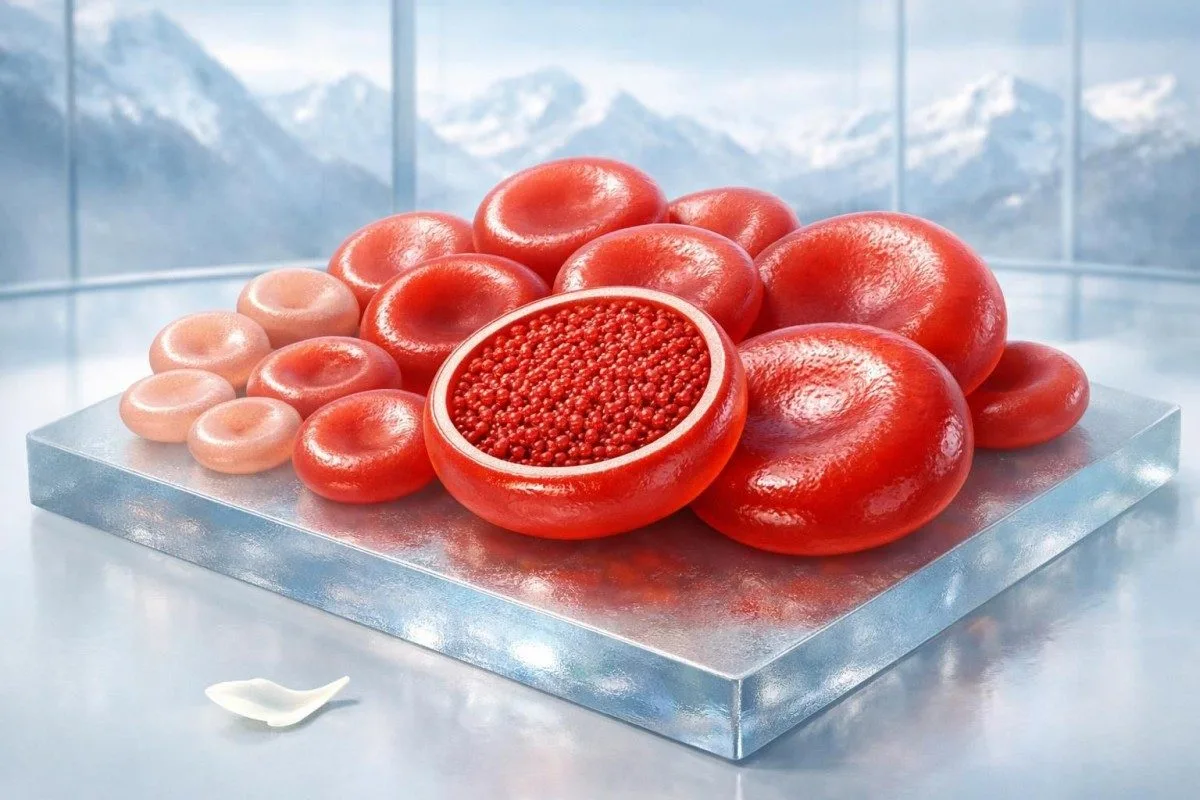
An MCH blood test below about 27 pg usually means each red blood cell is carrying too little hemoglobin, most often from iron deficiency or thalassemia trait. A value above about 33 pg usually points to larger red cells from B12 or folate deficiency, alcohol use, liver disease, hypothyroidism, or certain medicines. And yes, MCH can matter even when hemoglobin still looks close to normal.


- MCH normal range is usually 27-33 pg in adults, but some labs use 26-34 pg.
- Low MCH below 27 pg often suggests iron-poor red cells or thalassemia trait.
- High MCH above 33 pg usually reflects larger red cells, not excess iron.
- Near-normal hemoglobin does not rule out iron deficiency; ferritin under 30 ng/mL often changes management.
- Thalassemia clue is low MCH with low MCV, normal ferritin, and an RBC count above about 5.0 x10^12/L.
- B12 clue is high MCH with MCV above 100 fL, numbness, tingling, or balance symptoms.
- Urgent review is needed if anemia comes with chest pain, fainting, black stools, or hemoglobin under 8 g/dL.
- Best next tests often include ferritin, transferrin saturation, reticulocyte count, B12, folate, TSH, CRP, and sometimes hemoglobin electrophoresis.
What the MCH blood test actually measures
MCH tells you the average amount of hemoglobin inside each red blood cell. The usual adult range is about 27-33 picograms per cell, and values below 27 pg often show up before anemia is obvious on hemoglobin alone.
The MCH blood test is a calculation, not a separate molecule. It comes from hemoglobin divided by the RBC count, multiplied by 10, and on Kantesti AI blood test analyzer we read it as part of a whole-CBC pattern rather than as a standalone diagnosis.
That formula explains a common patient puzzle: hemoglobin can sit at 12.1 g/dL or 13.0 g/dL and still hide a problem if the average cell is underfilled. A result like MCH 25.9 pg means each cell is carrying less hemoglobin than expected, even if the total amount in circulation has not yet dropped far enough to trip a lab alert.
I'm Thomas Klein, MD, and this is one of the CBC findings I probably explain most often. A tired 34-year-old with heavier periods, reduced exercise tolerance, and hair shedding may have a borderline-looking hemoglobin, but a falling MCH often tells me the marrow is already making iron-poor cells.
MCH becomes clinically useful when it travels with MCV, MCHC, RDW, RBC count, and reticulocytes. If you want the wider map first, our CBC differential guide helps decode where MCH fits.
MCH normal range: why one lab says 27 and another says 26
The adult MCH normal range is usually 27-33 pg, but some laboratories report 26-34 pg or 27-32 pg. That small difference is usually about analyzer method and local reference populations, not about a different disease threshold.
As of April 9, 2026, most adult CBC reports still place the lower MCH cutoff around 27 pg. Kantesti AI stores the lab-specific interval when available, which matters because a value of 26.8 pg can be flagged in one lab and pass quietly in another; for context on units and markers, see our biomarker guide.
Unlike glucose or triglycerides, MCH does not require fasting. A tiny shift from 29.4 to 28.9 pg with a stable hemoglobin and RBC count is usually just analytical noise, while a drop from 29 to 26 pg over several months is a real pattern I take seriously.
The thing is, a reference range is not the same as your healthy baseline. Patients with past results clustered around 31-32 pg who drift into the high 20s may be telling us something early, and our abbreviation guide is useful if your report is packed with CBC shorthand.
Low MCH usually means one of three anemia patterns
Low MCH most often points to iron deficiency, thalassemia trait, or a milder iron-restricted pattern from chronic inflammation. Those three can look similar on the CBC but behave very differently once you check ferritin, iron saturation, and the RBC count.
Iron deficiency becomes very likely when ferritin is under 15 ng/mL, and many clinicians investigate actively when ferritin is under 30 ng/mL, especially if transferrin saturation is under 20%. Camaschella's review in the New England Journal of Medicine still matches day-to-day practice: ferritin is very specific when low, but inflammation can make a normal-looking ferritin falsely reassuring; our ferritin range guide goes deeper on that nuance.
Thalassemia trait often shows low MCH, low MCV, and an RBC count above about 5.0 x10^12/L with ferritin that is normal or even high. In that pattern, the marrow is producing many small cells rather than too few cells, which is why the full iron studies guide matters before anyone reaches for iron tablets.
Chronic inflammation creates a softer, trickier pattern. Serum iron may be low, ferritin may sit at 50-200 ng/mL, CRP may be elevated, and the MCH may drift down only slightly because the problem is not a lack of total iron but a lack of iron availability to the marrow.
I see this pattern quite often in autoimmune disease, chronic infection, kidney disease, and inflammatory bowel disease. The reason we worry about low MCH plus a normal-or-high ferritin is that together they suggest iron is being trapped away from red cell production, whereas low ferritin alone usually points to depleted stores.
A fast iron deficiency versus thalassemia check
A practical shortcut is this: low MCH + high RDW + low ferritin usually favors iron deficiency, while low MCH + normal RDW + high RBC count leans toward thalassemia trait. It is not perfect, but in clinic it often gets you 80% of the way before confirmatory testing.
Can you have low MCH when hemoglobin is still near normal?
Yes. Low MCH with near-normal hemoglobin is one of the earliest CBC clues to iron deficiency, mild thalassemia trait, or a mixed nutritional issue, and it is exactly why I do not dismiss a report just because hemoglobin has not crossed the anemia line yet.
A hemoglobin of 12.5 g/dL with MCH 26.1 pg is not a normal reassurance if ferritin is 9 ng/mL. In menstruating adults, frequent blood donors, people with celiac disease, chronic acid suppression, or occult gastrointestinal loss, this is often the point where symptoms begin even though the lab has not yet stamped the word anemia on the page.
Smoking, dehydration, and living at altitude can keep hemoglobin artificially respectable for a while. Endurance athletes do the opposite—plasma expansion can make hemoglobin look lower than expected—so the practical takeaway is that MCH adds signal when hemoglobin is being pushed around by volume status or oxygen adaptation.
Some of the earliest symptoms are annoyingly nonspecific: reduced exercise capacity, poor concentration, hair shedding, brittle nails, headaches, or restless legs. A lot of patients tell me they felt off for months before anyone noticed the CBC trend, which is why our RDW guide and this review of fatigue labs tend to answer more real questions than the isolated hemoglobin flag.
RDW is particularly helpful here. When RDW rises above about 14.5%, it suggests a mixed population of older normal cells and newer iron-poor cells, and that combination can precede a clear hemoglobin drop by weeks or months.
High MCH: why bigger red cells change the anemia pattern
High MCH usually means the average red blood cell is larger and carries more total hemoglobin, not that the blood is richer or better oxygenated. Most labs flag above 33 pg as high, and values above 34-35 pg push the work-up toward macrocytosis rather than iron deficiency.
The common causes are vitamin B12 deficiency, folate deficiency, alcohol use, liver disease, hypothyroidism, and medicines such as hydroxyurea, methotrexate, and zidovudine. When MCH is high, I almost always check whether the MCV is above 100 fL, because that makes a macrocytic process much more likely.
B12 deficiency can produce MCH values in the 34-37 pg range while hemoglobin still looks only mildly reduced. Lindenbaum's classic NEJM work made an important point that still holds up: neurologic symptoms can appear without dramatic anemia, so numb feet, balance trouble, or memory change deserve a real look at our B12 guide.
Alcohol and liver disease create a pattern that many patients find surprising. You can see high MCH, high MCV, and only mild anemia—or no obvious anemia at all—and if AST, GGT, or bilirubin are drifting as well, our liver enzyme guide becomes more useful than another bottle of iron.
One extra nuance: reticulocytes are naturally a little larger than mature red cells, so MCH can bump up during recovery from blood loss or hemolysis. In other words, a mildly high MCH is not always bad news; sometimes it means the marrow is actively responding.
How to read MCH with MCV, MCHC, RDW, RBC count, and reticulocytes
MCH becomes far more accurate when paired with the rest of the red cell indices. In practice, MCH plus MCV tells me the cell size pattern, MCHC tells me concentration, RDW tells me variability, and reticulocytes tell me timing.
Low MCH + low MCV usually means microcytic, hypochromic production. High MCH + high MCV usually means macrocytosis, and normal MCH with abnormal symptoms sometimes means you are looking at an early or mixed process rather than a clean textbook category.
Add the RBC count and the picture sharpens fast. Low MCH, low MCV, high RBC count leans toward thalassemia trait, while low MCH, low MCV, low or normal RBC count is more typical of iron deficiency; if you are unsure where anemia cutoffs begin, our hemoglobin thresholds provide the age, sex, and pregnancy context.
The MCHC normal range is usually 32-36 g/dL. If MCH is low but MCHC is still normal, I think early or mild change; if both are low, the cells are more clearly underfilled and the anemia pattern is usually more established.
Reticulocyte timing matters more than many patients realize. A reticulocyte percentage of about 0.5-2.5% is typical in adults, and rising reticulocytes after treatment often show marrow recovery before the hemoglobin is obviously better; our reticulocyte guide helps with that piece.
A practical pattern shortcut
Kantesti AI tends to flag three high-yield combinations: low MCH with high RDW, low MCH with high RBC count, and high MCH with low reticulocytes. Those three patterns catch a surprising amount of early iron deficiency, thalassemia trait, and underproduction macrocytosis before the report looks dramatic.
When MCH can mislead even careful readers
MCH is useful, but it can absolutely mislead you in mixed deficiencies, after transfusion, or when the analyzer is fooled. This is one of those CBC areas where context matters more than the number.
MCH can look reassuringly normal in mixed deficiency states. Iron deficiency tends to pull the value down while B12 or folate deficiency pushes it up, so the average can land at 29-31 pg even when both problems are present and the patient is symptomatic.
Recent transfusion blurs interpretation for weeks because donor cells circulate beside your own cells. After a unit of packed red cells, I usually trust the story only when I line the CBC up with the transfusion date, symptoms, and pre-transfusion indices rather than treating the post-transfusion MCH as a clean baseline.
Laboratory artifacts exist and they are not rare. Cold agglutinins, marked hyperglycemia, and extreme leukocytosis can falsely raise MCV and secondarily MCH, which is why a manual review or repeat sample sometimes changes the whole impression.
Thomas Klein, MD, in everyday clinic mode: if the number does not fit the patient, I repeat it before I label it. A routine standard blood test can miss these subtleties, and our guide on read blood tests explains why averages can hide mixed biology.
When abnormal MCH needs prompt medical attention
An abnormal MCH is rarely an emergency by itself, but it becomes urgent when it travels with severe symptoms or rapidly worsening anemia. Chest pain, fainting, shortness of breath at rest, black stools, or new neurologic symptoms change the timetable immediately.
Seek urgent assessment if hemoglobin is under 8 g/dL, if there is active gastrointestinal bleeding, or if hemoglobin has dropped by more than 2 g/dL over a short interval. MCH helps classify the anemia, but it is the severity and speed of change that usually determine urgency.
Low MCH plus pica, restless legs, brittle nails, headaches, or exercise intolerance makes iron deficiency much more likely. High MCH plus numbness, tingling, poor balance, sore tongue, or heavy alcohol use pushes the work-up toward B12, folate, thyroid, and liver causes.
Adults over 50 with recurrent low MCH and no obvious menstrual explanation often need a search for hidden blood loss from the stomach or colon. We do not say that because MCH itself diagnoses cancer—it does not—but because iron-restricted red cell production can be the first lab clue of chronic bleeding.
If you are not sure which symptoms deserve first priority, our symptoms decoder is a sensible starting point. The physicians on our Medical Advisory Board review that red-flag language closely because over-reassurance and over-alarm are both bad medicine.
How Kantesti AI interprets the MCH blood test in real life
Kantesti AI does not read MCH in isolation. Our platform cross-checks it against hemoglobin, hematocrit, MCV, MCHC, RDW, RBC count, ferritin, iron saturation, B12, folate, CRP, and liver markers when those values are present.
That context changes everything. An MCH of 26.7 pg means one thing when ferritin is 8 ng/mL, something else when ferritin is 120 ng/mL and the RBC count is high, and something else again when B12 is low and the MCV is being pulled in the opposite direction.
On our platform, patients can upload a CBC as a phone photo or PDF and receive a plain-English interpretation in about 60 seconds. If you want the mechanics, our walkthroughs on PDF lab upload and photo scan analysis show how that works.
Kantesti serves users in 127+ countries and 75+ languages, so our AI has to cope with the messy reality of mixed units, different reference intervals, and very different report layouts. We publish those clinical standards in Medical Validation because hematology interpretation should be auditable, not mysterious.
As Thomas Klein, MD, I worry less about a single off-range MCH than about a pattern repeating over time without explanation. If you want the broader logic behind our AI-powered blood test interpretation, the next section points you toward the technical background and the free demo.
What to do next, plus the research links we use internally
The next step after an abnormal MCH is usually clarification, not guesswork. In practice that means repeating the CBC when needed, then choosing targeted add-ons such as ferritin, transferrin saturation, reticulocyte count, B12, folate, TSH, or a smear review based on the pattern.
If you want a fast second pass on your own report, try our free blood test demo. If you want to understand who is behind the clinical review, start with About Us and our technical explainer on AI lab interpretation.
As of April 9, 2026, my practical rule is simple: an isolated MCH abnormality gets attention when it is persistent, symptomatic, or supported by ferritin, MCV, RDW, reticulocytes, B12, or bleeding history. Most patients do best when we answer the pattern first and only then decide whether treatment is iron, B12, folate, thyroid work-up, liver evaluation, genetics, or watchful follow-up.
Kantesti AI Medical Team. (2026). Urobilinogen in Urine Test: Complete Urinalysis Guide 2026. Zenodo. https://doi.org/10.5281/zenodo.18226379. ResearchGate | Academia.edu.
Kantesti AI Medical Team. (2026). Iron Studies Guide: TIBC, Iron Saturation & Binding Capacity. Zenodo. https://doi.org/10.5281/zenodo.18248745. ResearchGate | Academia.edu.
Frequently Asked Questions
What is a normal MCH on a blood test?
A normal MCH on a blood test is usually about 27-33 picograms per red blood cell in adults. Some laboratories use 26-34 pg or 27-32 pg, so the lab's own reference interval matters. A value just outside range is not a diagnosis by itself, but a persistent result below 27 pg or above 33 pg usually deserves interpretation alongside MCV, MCHC, RDW, RBC count, and hemoglobin.
Can you have low MCH without anemia?
Yes, low MCH can appear before hemoglobin drops far enough to meet anemia criteria. This is common in early iron deficiency, mild thalassemia trait, and some mixed nutritional states. A patient can have hemoglobin around 12-13 g/dL, MCH under 27 pg, ferritin under 30 ng/mL, and still have symptoms such as fatigue, hair shedding, or reduced exercise tolerance.
What causes high MCH?
High MCH usually reflects macrocytosis, meaning the average red blood cell is larger than normal and therefore carries more total hemoglobin. Common causes include vitamin B12 deficiency, folate deficiency, alcohol use, liver disease, hypothyroidism, and medicines such as hydroxyurea or methotrexate. Most labs flag high MCH above about 33 pg, and the next question is usually whether the MCV is above 100 fL.
Is low MCH always iron deficiency?
No, low MCH is not always iron deficiency. Thalassemia trait, chronic inflammation, chronic kidney disease, and uncommon disorders such as sideroblastic processes can also lower MCH. Iron deficiency becomes much more likely when ferritin is under 15-30 ng/mL or transferrin saturation is under 20%, whereas thalassemia trait often shows a high RBC count with normal iron stores.
Which tests should I order if MCH is abnormal?
The most useful next tests depend on whether MCH is low or high, but ferritin, transferrin saturation, RDW, reticulocyte count, and a repeat CBC are common starting points. Low MCH often leads to ferritin, iron, TIBC, CRP, and sometimes hemoglobin electrophoresis. High MCH often leads to vitamin B12, folate, TSH, liver enzymes, alcohol review, medication review, and occasionally a smear or reticulocyte count.
How fast can MCH change after iron or B12 treatment?
MCH usually does not normalize overnight because red blood cells live for about 120 days. Reticulocytes can start rising within 5-10 days after effective iron or B12 treatment, hemoglobin often improves by about 1-2 g/dL over 2-4 weeks in a good response, and MCH may take several weeks to months to fully settle as older cells are replaced. If MCH is not improving at all, the diagnosis, absorption, adherence, or ongoing blood loss may need to be revisited.
Does high MCH mean too much iron?
No, high MCH does not usually mean excess iron. High MCH most often means the red cells are larger, not that iron levels are elevated. Iron overload is assessed with ferritin, transferrin saturation, and clinical context, while high MCH points clinicians more often toward B12, folate, thyroid, liver, alcohol, medication, or marrow-related causes.
Get AI-Powered Blood Test Analysis Today
Join over 2 million users worldwide who trust Kantesti for instant, accurate lab test analysis. Upload your blood test results and receive comprehensive interpretation of 15,000+ biomarkers in seconds.
📚 Referenced Research Publications
Klein, T., Mitchell, S., & Weber, H. (2026). Urobilinogen in Urine Test: Complete Urinalysis Guide 2026. Kantesti AI Medical Research.
Klein, T., Mitchell, S., & Weber, H. (2026). Iron Studies Guide: TIBC, Iron Saturation & Binding Capacity. Kantesti AI Medical Research.
⚕️ Medical Disclaimer
This article is for educational purposes only and does not constitute medical advice. Always consult a qualified healthcare provider for diagnosis and treatment decisions.
E-E-A-T Trust Signals
Experience
Physician-led clinical review of lab interpretation workflows.
Expertise
Laboratory medicine focus on how biomarkers behave in clinical context.
Authoritativeness
Written by Dr. Thomas Klein with review by Dr. Sarah Mitchell and Prof. Dr. Hans Weber.
Trustworthiness
Evidence-based interpretation with clear follow-up pathways to reduce alarm.