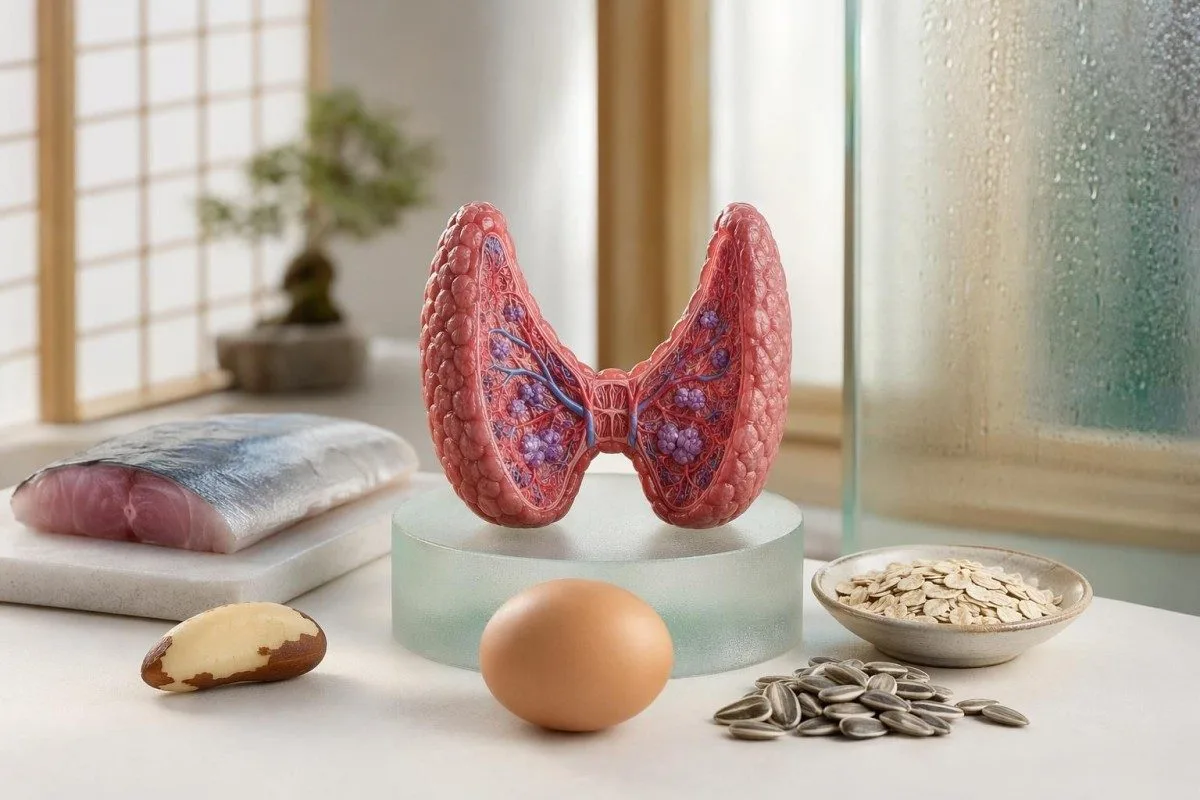
ເຊເລນຽມສາມາດຊ່ວຍຕ່ອມໄທລອຍໄດ້, ແຕ່ຂະໜາດທີ່ໃຊ້ໄດ້ມີຈຳນວນນ້ອຍ ແລະ ເສັ້ນຂອບເກີນຂະໜາດຈະໃກ້ກວ່າທີ່ຫຼາຍຄົນຄິດ. ແຜນທີ່ສະຫຼາດທີ່ສຸດເລີ່ມຈາກອາຫານ, ອາການ, ແລະບໍລິບົດການກວດໄທລອຍໃນຫ້ອງທົດລອງ.


- ອາຫານທີ່ມີເຊເລນຽມສູງ ປະກອບມີ Brazil nuts, tuna, sardines, eggs, turkey, chicken, shrimp, beef, oats, brown rice, ແລະ sunflower seeds.
- ຄວາມຕ້ອງການເຊເລນຽມຂອງຜູ້ໃຫຍ່ ແມ່ນປະມານ 55 µg/ມື້ ສຳລັບຜູ້ໃຫຍ່ສ່ວນໃຫຍ່, 60 µg/ມື້ ໃນໄລຍະຖືພາ, ແລະ 70 µg/ມື້ ໃນໄລຍະໃຫ້ນົມລູກ.
- ຂີດຈຳກັດສູງສຸດ ໃນສະຫະລັດແມ່ນ 400 µg/ມື້ ສຳລັບຜູ້ໃຫຍ່; ອົງການຄຸ້ມຄອງອາຫານແລະຢາຂອງເອີຣົບ (European Food Safety Authority) ກຳນົດຂີດຈຳກັດສູງສຸດສຳລັບຜູ້ໃຫຍ່ຕ່ຳກວ່າຢູ່ທີ່ 255 µg/ມື້.
- ການປ່ຽນແປງຂອງຕ່ອມໄທລອຍ ຂຶ້ນກັບເອນໄຊມ໌ດີໂອດິນາເຊທີ່ມີຊີເລນຽມ ທີ່ປ່ຽນ T4 ເປັນ T3 ທີ່ເປັນກິດ ແລະ ປິດກັ້ນຮໍໂມນໄທຣອຍທີ່ເກີນຈຳນວນ.
- ຊີເລນຽມໃນເລືອດ ມັກຖືກຕີຄວາມປະມານ 70–150 µg/L, ແຕ່ຊ່ວງອ້າງອີງຈະແຕກຕ່າງຕາມປະເທດ, ວິທີການກວດຂອງຫ້ອງທົດລອງ, ແລະວ່າວັດແທກ plasma ຫຼືເລືອດທັງໝົດ.
- ຂໍ້ສັນຍານຂາດແຄນ ອາດປະກອບມີ ເມື່ອຍລ້າ, ຜົມຮ່ວງລົງ, ພູມຄຸ້ມກັນອ່ອນແອ, T3 ຕ່ຳແຕ່ຢູ່ໃນຊ່ວງປົກກະຕິ, ແລະ ພູມຕ້ານທານໄທຣອຍທີ່ແພ້ຕໍ່ຕົນເອງທີ່ຮ້າຍແຮງຂຶ້ນ, ແຕ່ອາການເຫຼົ່ານີ້ທັບຊ້ອນກັບບັນຫາເລື່ອງທາດເຫຼັກ, B12, ວິຕາມິນດີ, ແລະ ໄອໂອດີນ.
- ຂໍ້ສັນຍານເກີນ ປະກອບມີ ເລັບແຕກງ່າຍ, ຜົມຫຼົ່ນ, ລົມຄ້າຍກະທຽມ, ລົດຊາດໂລຫະ, ຄື່ນໄສ້, ຖອກທ້ອງ, ຄວາມຫງຸດຫງິດ, ແລະ ບາງຄັ້ງມີອາການທາງເສັ້ນປະສາດ.
- ກ່ອນເສີມອາຫານ ກວດ TSH, free T4, ພູມຕ້ານທານໄທຣອຍ, ເວລາກິນຢາ, ການໃຊ້ biotin, ການເຮັດວຽກຂອງໝາກໄຂ່ຫຼັງ, ສະຖານະການຖືພາ, ແລະ ການກິນອາຫານ.
- ໝາກຖົ່ວ Brazil ເປັນປະໂຫຍດແຕ່ບໍ່ແນ່ນອນ; ໝາກໜຶ່ງອາດມີຊີເລນຽມປະມານ 10–200+ µg ຂຶ້ນກັບດິນ.
ອາຫານທີ່ມີເຊເລນຽມສູງອັນໃດຊ່ວຍໃນການປ່ຽນແປງຮໍໂມນຂອງຕ່ອມໄທລອຍ?
ອາຫານທີ່ມີເຊເລນຽມສູງ ທີ່ຊ່ວຍໃນການປ່ຽນຮໍໂມນໄທຣອຍ ລວມມີ ໝາກຖົ່ວ Brazil, ປາທູນາ, ປາຊາດີນ, ໄຂ່, ໄก່ງວງ, ໄກ່, ກຸ້ງ, ຊີ້ນງົວ, ເຂົ້າໂອດ, ເຂົ້າສີນ້ຳຕານ, ແລະ ແກ່ນດອກຕາເວັນ. ຊີເລນຽມຊ່ວຍໃຫ້ເອນໄຊມ໌ດີໂອດິນາເຊປ່ຽນ T4 ເປັນ T3 ທີ່ເປັນກິດ, ແຕ່ຜູ້ໃຫຍ່ສ່ວນໃຫຍ່ຕ້ອງການພຽງ 55 µg/ມື້ ແລະຄວນຫຼີກລ້ຽງການເກີນ 400 µg/ມື້ ເປັນປະຈຳ. ກ່ອນເສີມອາຫານ ໃຫ້ກວດກາບກວດໄທຣອຍ ແລະ ບໍລິບົດການກິນ. ດ້ວຍ Kantesti AI, ແພລດຟອມຂອງພວກເຮົາອ່ານແບບຮູບແບບຂອງໄທຣອຍ ແທນທີ່ຈະປິ່ນປົວຊີເລນຽມເປັນການແກ້ໄຂທີ່ມີອຳນາດ.
ຂ້ອຍແມ່ນ Thomas Klein, MD, ແລະແບບຮູບແບບທີ່ຂ້ອຍເຫັນບໍ່ບ່ອຍສຸດແມ່ນງ່າຍໆ: ຄົນເອົາເມັດຊີເລນຽມ 200 µg ເພາະວ່າອ່ານວ່າຊີເລນຽມ “ດີສຳລັບໄທຣອຍ,” ໃນຂະນະທີ່ອາຫານຂອງພວກເຂົາມີປາ, ໄຂ່, ແລະ multivitamins ຢູ່ແລ້ວ. ນັ້ນອາດຍູ້ການຮັບເຂົ້າໃກ້ຂີດຈຳກັດສູງສຳລັບຜູ້ໃຫຍ່ໄວກວ່າທີ່ຄາດໄວ້, ໂດຍສະເພາະຖ້າມີການກິນໝາກຖົ່ວ Brazil. ຖ້າເລື່ອງໄທຣອຍຂອງທ່ານມີ TSH ສູງ, free T4 ຕ່ຳ, ຫຼືມີຄວາມເປັນບວກຂອງພູມຕ້ານທານ, ຂອງພວກເຮົາ ການກວດໄທລອຍ ອະທິບາຍວ່າ ທັງໝົດຂອງແບບຮູບແບບ ຊະນະກວ່າທາດອາຫານພຽງຢ່າງດຽວເພາະຫຍັງ.
ຕ່ອມໄທຣອຍມີຊີເລນຽມຕໍ່ກຣາມຂອງເນື້ອເຍື່ອຫຼາຍກວ່າຫຼາຍອະໄວຍະວະ ເພາະມັນໃຊ້ໂປຣຕີນທີ່ມີຊີເລນຽມ ເພື່ອຈັດການການເປີດໃຊ້ຮໍໂມນ ແລະຄວາມເຄັ່ງຕຶງອອກຊິເດຊັນ. ວິທີທີ່ເນັ້ນອາຫານກ່ອນ ມັກຈະໃຫ້ 55–100 µg/ມື້ ໂດຍບໍ່ມີຈຸດສູງທີ່ມາຈາກແຄບຊູນຂະໜາດສູງ. ຊ່ວງນີ້ພຽງພໍສຳລັບຜູ້ໃຫຍ່ຫຼາຍຄົນ ຍົກເວັ້ນຖ້າມີການດູດຊຶມບໍ່ດີ, ການຟອກໄຂ່ຫຼັງ (dialysis), ການກິນອາຫານຈຳກັດຫຼາຍ, ຫຼືການໄດ້ຮັບຊີເລນຽມຈາກດິນຕ່ຳຫຼາຍ ທີ່ປ່ຽນສົມຜົນ.
ນັບແຕ່ວັນທີ 29 ເມສາ 2026, ຂ້ອຍຍັງບໍ່ແນະນຳເສີມຊີເລນຽມ ພຽງແຕ່ອີງຕາມອາການ. ອາການຂາດແຄນທາດອາຫານ ທັບຊ້ອນກັນຢ່າງໜັກ: ເມື່ອຍລ້າອາດເປັນ ferritin ຕ່ຳ, B12 ຕ່ຳ, ຂາດເວລານອນ, hypothyroidism, ພາວະຊຶມເສົ້າ, ການອັກເສບຊຳເຮື້ອ, ຫຼືທັງໝົດຂ້າງເທິງ. ຄຳຖາມທີ່ເປັນປະໂຫຍດບໍ່ແມ່ນ “ຊີເລນຽມດີບໍ?” ແຕ່ແມ່ນ “ອາຫານຂອງຄົນນີ້, ການກວດໄທຣອຍ, ແລະ ປັດໃຈສ່ຽງ ຊີ້ບອກວ່າມີຄວາມສ່ຽງຂາດຊີເລນຽມ ຫຼື ສ່ຽງເກີນ?”
ເຊເລນຽມຊ່ວຍແນວໃດໃນການປ່ຽນ T4 ເປັນ T3 ທີ່ເຄື່ອນໄຫວ
ຊີເລນຽມຊ່ວຍໃນການປ່ຽນຮໍໂມນໄທຣອຍ ເພາະເອນໄຊມ໌ iodothyronine deiodinases ມີ selenocysteine ແລະ ເອົາອະຕອມໄອໂອດີນອອກຈາກຮໍໂມນໄທຣອຍ. deiodinases ປະເພດ 1 ແລະ ປະເພດ 2 ຊ່ວຍໃນການປ່ຽນ T4 ເປັນ T3 ທີ່ເປັນກິດ; deiodinase ປະເພດ 3 ປິດກັ້ນຮໍໂມນໄທຣອຍ ເມື່ອຮ່າງກາຍຕ້ອງການຊະລໍາການສົ່ງສັນຍານ.
TSH ປົກກະຕິຂອງຜູ້ໃຫຍ່ມັກຖືກລາຍງານປະມານ 0.4–4.0 mIU/L, ແຕ່ຕົວເລກນັ້ນບໍ່ສາມາດຢືນຢັນຄວາມພຽງພໍຂອງຊີເລນຽມໄດ້. ຂ້ອຍເຄີຍເຫັນຄົນເຈັບທີ່ TSH 2.1 mIU/L ແລະ free T3 ຕ່ຳ ໃນເວລາຈຳກັດຄາລໍຣີ່ຢ່າງໜັກ, ແລະຊີເລນຽມບໍ່ແມ່ນບັນຫາຫຼັກ. ຖ້າທ່ານຢາກໄດ້ແບບຮູບແບບຮໍໂມນທີ່ເລິກກວ່າ, ຄູ່ມືຂອງພວກເຮົາກ່ຽວກັບ ລະດັບ T3 ແລະ T4 ອະທິບາຍເຖິງເຫດຜົນວ່າ T3 ຕໍ່າສາມາດເກີດຂຶ້ນໄດ້ ເຖິງແມ່ນວ່າ TSH ເບິ່ງປົກກະຕິກໍຕາມ.
ຕ່ອມໄທລອຍຜະລິດ T4 ເປັນສ່ວນໃຫຍ່ ເຊິ່ງເປັນ prohormone; ສ່ວນໃຫຍ່ຂອງ T3 ທີ່ມີຄວາມເຄື່ອນໄຫວ ທີ່ໃຊ້ໂດຍເນື້ອເຍື່ອ ຖືກຜະລິດຢູ່ນອກຕ່ອມໄທລອຍ ໃນຕັບ, ໝາກໄຂ່ຫຼັງ, ກ້າມເນື້ອລຳຕົ້ນ, ແລະ ສະໝອງ. deiodinases ທີ່ຂຶ້ນກັບ selenium ແມ່ນສ່ວນໜຶ່ງຂອງເຄື່ອງຈັກການປ່ຽນແປງນັ້ນ, ແຕ່ ພະຍາດ, glucocorticoids, ການອົດອາຫານ, ການກິນຄາບອາຫານຄາບຕ່ຳ, ພະຍາດຕັບ, ແລະ ການເຖົ້າແກ່ ກໍສາມາດຫຼຸດຄວາມພ້ອມໃຊ້ຂອງ T3 ໄດ້ຄືກັນ. ນັ້ນແມ່ນເຫດຜົນທີ່ການເສີມ selenium ໂດຍບໍ່ກວດເບິ່ງສະພາບທາງຄລີນິກ ອາດຈະພາດຕົວກະຕຸ້ນຕົວຈິງ.
ການທົບທວນຂອງ Rayman ປີ 2012 ໄດ້ອະທິບາຍ selenium ວ່າເປັນສານອາຫານທີ່ມີຊ່ວງຄວາມພໍດີແຄບ: ຂາດເກີນໄປຈະທຳໃຫ້ການເຮັດວຽກຂອງ selenoprotein ເສຍຫາຍ, ແຕ່ ຫຼາຍເກີນໄປອາດກໍ່ໃຫ້ເກີດພິດ ແລະ ອາດມີຄວາມສ່ຽງດ້ານການແປງສະພາບການເຜົາຜານໃນຄົນທີ່ມີ selenium ພຽງພໍຢູ່ແລ້ວ (Rayman, 2012). ເວົ້າແບບງ່າຍໆ, selenium ປະພຶດໜ້ອຍລົງແບບວິຕາມິນ C ແລະ ຫຼາຍຂຶ້ນແບບການກຳນົດຂະໜາດຢາຂອງຕ່ອມໄທລອຍ — ພໍດີແມ່ນດີ, ແຕ່ ບໍ່ແມ່ນວ່າຫຼາຍກວ່າຈະດີກວ່າສະເໝີ.
ເບິ່ງສັນຍານການປ່ຽນແປງທີ່ຂ້ອຍຊອກຫາ
T3 ອິດສະຫຼະຕໍ່າພ້ອມກັບ TSH ປົກກະຕິ ແລະ T4 ອິດສະຫຼະປົກກະຕິ ບໍ່ຄ່ອຍເປັນການວິນິດໄສ selenium ທີ່ຊັດເຈນ. ຂ້ອຍຈະເບິ່ງກ່ອນອື່ນສຳລັບພະຍາດທີ່ເພີ່ງເກີດໃໝ່, ການກິນບໍ່ພຽງ, ການຝຶກໜັກເກີນ, ການປ່ຽນແປງຂອງເອນໄຊມ໌ຕັບ, ການເຮັດວຽກຂອງໝາກໄຂ່ຫຼັງ, ແລະ ຜົນກະທົບຈາກຢາ ກ່ອນຈະແນະນຳເມັດ selenium.
ອາຫານທີ່ມີເຊເລນຽມສູງທີ່ດີທີ່ສຸດ ແລະ ຂະໜາດການຮັບປະທານທີ່ເປັນໄປໄດ້ຈິງ
ອາຫານທີ່ມີ selenium ສູງທີ່ສຸດແມ່ນ ອາຫານທະເລ, ໝາກ Brazil nuts, ໄຂ່, ສັດປີກ, ຊີ້ນ, ນົມ, ທັນຍາພືດ, ແລະ ເມັດພືດ, ແຕ່ ປະລິມານ selenium ຂອງມັນປ່ຽນແປງຢ່າງຫຼວງຫຼາຍຕາມດິນ ແລະ ອາຫານລ້ຽງສັດ. Brazil nut ໜຶ່ງອາດໃຫ້ selenium ໄດ້ເຖິງທັງມື້, ໃນຂະນະທີ່ໄຂ່ປົກກະຕິມັກໃຫ້ປະມານ 15 µg.
Brazil nuts ແມ່ນອາຫານທີ່ທຸກຄົນຈື່ຈຳ, ແລະ ມີເຫດຜົນດີ: ຂະໜາດຮັບປະທານ 28 g ອາດມີປະມານ 544 µg ໃນບາງຖານຂໍ້ມູນອາຫານ, ເຊິ່ງເກີນຂອບເທິງຂອງຜູ້ໃຫຍ່ສະຫະລັດ 400 µg/ມື້ ແລ້ວ. ຈຸດທີ່ຕ້ອງລະວັງຄືຄວາມແປປ່ຽນ. ໃນຄລີນິກ, ຂ້ອຍບອກໃຫ້ຄົນເຈັບປະຕິບັດ Brazil nuts ເໝືອນເປັນອາຫານເສີມທີ່ເຂັ້ມຂຸ້ນ, ບໍ່ແມ່ນກິນແບບຂອງຫວ່າງທົ່ວໄປ.
ທູນາ, ປາຊາດີນ, ກຸ້ງ, ແຊລມອນ, ໄก່ງວງ, ໄກ່, ຊີ້ນງົວ, ໄຂ່, cottage cheese, oats, ເຂົ້າ, lentils, ແລະ ແກ່ນໝາກຕາເວັນ ໃຫ້ການໄດ້ຮັບ selenium ທີ່ສະໝ່ຳສະເໝີກວ່າ. ອາຫານທະເລມັກໃຫ້ 40–90 µg ຕໍ່ການຮັບປະທານ, ໃນຂະນະທີ່ທັນຍາພືດອາດຊ່ວຍໃຫ້ 5–25 µg ຂຶ້ນກັບວ່າມັນຖືກປູກຢູ່ໃສ. ຖ້າ TSH ຂອງທ່ານຢູ່ໃນຂອບເຂດ, ເບິ່ງຂອງພວກເຮົາ ຄູ່ມືຊ່ວງ TSH ກ່ອນຈະສົມມຸດວ່າ selenium ຈາກອາຫານແມ່ນສ່ວນທີ່ຂາດ.
ເປົ້າໝາຍທີ່ເປັນໄປໄດ້ແບບງ່າຍໆ ແຕ່ໄດ້ຜົນ: ອາຫານໂປຣຕີນທີ່ມີ selenium ສູງມື້ລະ 1 ຢ່າງ, ພ້ອມທັນຍາພືດທັງເມັດ ຫຼື ໄຂ່ ຖ້າທ່ານກິນໄດ້. ຄົນເຈັບສ່ວນໃຫຍ່ມັກຈະໄດ້ຜົນດີກວ່າການກິນເມັດ 200 µg ເປັນເວລາເປັນເດືອນໂດຍບໍ່ມີພື້ນຖານ.
ການຂາດເຊເລນຽມອາດຮູ້ສຶກແນວໃດ
ຂາດ selenium ສາມາດເຮັດໃຫ້ເກີດຄວາມເມື່ອຍລ້າ, ກ້າມເນື້ອອ່ອນແຮງ, ຜົມຮ່ວງລົງ, ຕິດເຊື້ອເລື້ອຍ, ບັນຫາດ້ານຄວາມເປັນລູກ, ແລະ ຄວາມຜິດປົກກະຕິຂອງຮໍໂມນຕ່ອມໄທລອຍ, ແຕ່ ອາການເຫຼົ່ານີ້ບໍ່ຈຳເພາະ. ລາຍຊື່ອາການດຽວກັນອາດມາຈາກຂາດເຫຼັກ, ຂາດ B12, ຂາດວິຕາມິນດີ, ການອັກເສບຊຳເຮື້ອ, ຫຼື ພະຍາດຕ່ອມໄທລອຍທີ່ບໍ່ໄດ້ຮັກສາ.
ການຂາດທາດເຊເລນຢ່າງແທ້ຈິງແມ່ນບໍ່ພົບຫຼາຍໃນຫຼາຍປະເທດທີ່ລາຍຮັບສູງ, ແຕ່ບໍ່ແມ່ນຫາຍາກໃນຄົນທີ່ມີການດູດຊຶມບໍ່ດີ (malabsorption), ໄດ້ຮັບອາຫານທາງເສັ້ນຍາວນານ (parenteral nutrition), ມີປະຫວັດຜ່າຕັດບາຣິອາທຣິກ (bariatric surgery), ໂລກລຳໄສ້ອັກເສບ (inflammatory bowel disease), ການຟອກໄຂ່ຫຼັງ (dialysis), ຫຼື ອາຫານທີ່ຈຳກັດຫຼາຍ. ການກວດເລືອດເຊເລນໃນເຊລັມ (serum selenium) ຕ່ຳກວ່າປະມານ 70 µg/L ມັກຖືກປິ່ນປົວວ່າມີສະຖານະຕ່ຳ, ແຕ່ຫ້ອງທົດລອງແຕກຕ່າງກັນ. ສຳລັບບໍລິບົດກວ້າງຂຶ້ນກ່ຽວກັບ ອາການຂອງການຂາດສານອາຫານ, ຂອງພວກເຮົາ ແມ່ນມີປະໂຫຍດເມື່ອມີຫຼາຍສານອາຫານຂຍັບຕົວໄປພ້ອມກັນ ເປັນປະໂຫຍດຫຼາຍກວ່າການກວດສອບອາການແບບບັນຊີ.
ໂລກ Keshan, ໂຣກກ້າມຊີ້ນຫົວໃຈອ່ອນແອຈາກການຂາດເຊເລນ (selenium-deficiency cardiomyopathy) ທີ່ເຄີຍຖືກອະທິບາຍໃນພື້ນທີ່ຂາດເຊເລນຂອງຈີນ, ແມ່ນຕົວຢ່າງຮ້າຍແຮງທີ່ຄລາສສິກ. ສ່ວນໃຫຍ່ຂອງຄົນທີ່ຄົ້ນຫາຫົວຂໍ້ນີ້ບໍ່ໄດ້ມີໂລກ Keshan; ພວກເຂົາມີຄວາມເມື່ອຍລ້າ, ຜົມຫຼົ່ນ, ຫຼື ພູມຕ້ານທານຕໍ່ໄທລອຍ (thyroid antibodies) ແລະຕ້ອງການຄຳອະທິບາຍດ້ານໂພຊະນາການ. ນັ້ນແມ່ນຈຸດທີ່ການອ່ານຜົນກວດແບບລະມັດລະວັງຊ່ວຍປ້ອງກັນການຄາດເກີນ.
ໃນການວິເຄາະຂອງພວກເຮົາກ່ຽວກັບການອັບໂຫຼດການກວດເລືອດ 2M+, ພວກເຮົາມັກເຫັນ ferritin ຕ່ຳ, ວິຕາມິນດີ (vitamin D) ຕ່ຳ, B12 ຢູ່ໃນຂອບເຂດກຳກວດ (borderline), ຫຼື TSH ຜິດປົກກະຕິ ຢູ່ຄຽງກັບການກິນເຊເລນທີ່ເປັນໄປໄດ້ຢ່າງດີ. Kantesti ຈະຊີ້ທຸກຄຳອະທິບາຍທີ່ແຂ່ງກັນເຫຼົ່ານັ້ນ ເພາະວ່າການຂາດເຊເລນມັກບໍ່ໄດ້ເດີນຄູ່ກັບອາການດຽວທີ່ຊັດເຈນ.
ອາການທີ່ຄວນກວດສອບກວ້າງຂຶ້ນ
ຜົມຫຼົ່ນພ້ອມກັບຄວາມເມື່ອຍລ້າ ຄວນຈະກະຕຸ້ນໃຫ້ກວດ ferritin, ການກວດເລືອດຄົບຖ້ວນ (CBC), TSH, free T4, vitamin D, ແລະ B12 ກ່ອນຈະໄປສູ່ເຊເລນ. ferritin ຕ່ຳກວ່າ 30 ng/mL ສາມາດເຮັດໃຫ້ມີອາການຜົມຫຼົ່ນໄດ້ ເຖິງແມ່ນວ່າ hemoglobin ຍັງປົກກະຕິ.
ເບິ່ງສັນຍານຈາກການກວດໃນຫ້ອງທົດລອງອັນໃດທີ່ສຳຄັນກ່ອນກິນເຊເລນຽມ
ການກວດກ່ອນເລີ່ມກິນເສີມທີ່ເປັນປະໂຫຍດສຸດແມ່ນ TSH, free T4, ບາງຄັ້ງ free T3, ພູມຕ້ານທານ TPO, ພູມຕ້ານທານ Tg, CBC, ferritin, B12, vitamin D, ການກວດການເຮັດວຽກຂອງໝາກໄຂ່ຫຼັງ, ເອນໄຊຕັບ (liver enzymes), ແລະສະຖານະເຊເລນ (selenium status) ຖ້າມີ. ການກວດເຊເລນຈະເປັນປະໂຫຍດຫຼາຍທີ່ສຸດ ເມື່ອການກິນແປກປົກກະຕິ, ອາການບໍ່ມີຄຳອະທິບາຍ, ຫຼື ໄດ້ໃຊ້ເສີມແລ້ວ.
ຫຼາຍຫ້ອງທົດລອງລາຍງານເຊເລນໃນເລືອດຂອງຜູ້ໃຫຍ່ (adult serum ຫຼື plasma) ປະມານ 70–150 µg/L, ແຕ່ບໍ່ມີຊ່ວງອ້າງອີງທົ່ວໂລກອັນດຽວ. ເຊເລນໃນເລືອດທັງໝົດ (whole blood selenium) ສະທ້ອນສະຖານະໄລຍະຍາວກວ່າ serum, ແລະ selenoprotein P ອາດຈະຄ້າງຢູ່ປະມານ 120–125 µg/L ໃນບາງສະພາບການວິໄຈ. Kantesti’s ຄູ່ມື biomarker ຊ່ວຍໃຫ້ຜູ້ໃຊ້ແຍກປະເພດການກວດ, ໜ່ວຍ (unit), ແລະຊ່ວງອ້າງອີງ ກ່ອນຈະດຳເນີນການ.
ເມື່ອຂ້ອຍທົບທວນແຜງທີ່ສະແດງ TSH 5.8 mIU/L, free T4 ຕ່ຳແຕ່ຢູ່ໃນຂອບປົກກະຕິຕ່ຳ, ແລະ TPOAb 650 IU/mL, ເຊເລນບໍ່ແມ່ນການປິ່ນປົວອັນດັບທຳອິດຂອງຂ້ອຍ. ຮູບແບບນີ້ຊີ້ວ່າມີຄວາມສ່ຽງໂລກ hypothyroidism ຈາກພູມຕ້ານທານ (autoimmune hypothyroidism), ແລະຄົນເຈັບຕ້ອງມີການຕິດຕາມໄທລອຍທາງຄລີນິກ. ການເລືອກອາຫານທີ່ມີເຊເລນອາດເປັນໄປໄດ້; ການປ່ຽນ levothyroxine ດ້ວຍ Brazil nuts ບໍ່ແມ່ນ.
ບັນບັນທຶກຂອງໝາກໄຂ່ຫຼັງ ແລະຕັບມີຄວາມສຳຄັນ ເພາະເຊເລນຖືກຈັດການຜ່ານທາງທາງເມຕາໂບລິຊຶມ (metabolic) ແລະການຂັບອອກ (excretory) ຫຼາຍທາງ. ຄົນເຈັບທີ່ມີ eGFR 32 mL/min/1.73 m² ແລະມີອາການປວດທ້ອງອື່ນ (nausea) ຈາກເສີມຫຼາຍຢ່າງ ຕ້ອງມີການສົນທະນາທີ່ແຕກຕ່າງຈາກຄົນສຸຂະພາບອາຍຸ 28 ປີ ທີ່ເປັນມັງສະວິລັດ (vegan) ແລະກິນຕ່ຳ.
ເຊເລນຽມຊ່ວຍຕ່ອມໄທລອຍອັກເສບແບບ Hashimoto ບໍ?
ເຊເລນອາດຊ່ວຍຫຼຸດລະດັບພູມຕ້ານທານ thyroid peroxidase ໃນບາງຄົນເຈັບ Hashimoto’s, ແຕ່ຫຼັກຖານສຳລັບການດີຂຶ້ນຂອງອາການ, ການດີຂຶ້ນຂອງ TSH, ຫຼືການປ້ອງກັນ hypothyroidism ຍັງບໍ່ສະໝໍ່າສະເໝີ. ເຊເລນຈາກອາຫານເປັນໄປໄດ້ສຳລັບການກິນຕ່ຳ; ການເສີມຂະໜາດສູງແບບຍາວນານບໍ່ຄວນເຮັດໂດຍອັດຕະໂນມັດ.
ການວິເຄາະອภິມວິທະຍາ meta-analysis ຂອງ Toulis et al. ປີ 2010 ໃນວາລະ Thyroid ພົບວ່າ ການເສີມ selenium ອາດຈະຫຼຸດຄວາມເຂັ້ມຂອງພູມຕ້ານທານ TPO ໃນ autoimmune thyroiditis, ໂດຍສະເພາະຫຼັງຈາກຜ່ານໄປຫຼາຍເດືອນ, ແຕ່ຜົນລັບທາງຄລີນິກຍັງບໍ່ແນ່ນອນຫຼາຍ (Toulis et al., 2010). ຂ້ອຍເຄີຍເຫັນ TPOAb ຫຼຸດຈາກ 900 ເປັນ 520 IU/mL ໃນຂະນະທີ່ຄົນເຈັບບໍ່ຮູ້ສຶກຕ່າງອັນໃດ ແລະ TSH ກໍເກືອບບໍ່ຂຍັບຂຶ້ນ. ພູມຕ້ານທານເປັນຂໍ້ມູນຊີ້ນໍາ, ບໍ່ແມ່ນເຄື່ອງວັດອາການ.
ຜົນ TPOAb ທີ່ສູງກວ່າຈຸດຕັດຂອງຫ້ອງທົດລອງ — ມັກ 35 IU/mL, ແມ່ນວ່າຈຸດຕັດຈະແຕກຕ່າງກັນ — ເພີ່ມໂອກາດຂອງພະຍາດຕ່ອມໄທລອຍແບບ autoimmune. ຖ້າ TSH ກໍກໍາລັງສູງຂຶ້ນດ້ວຍ, ອ່ານຄູ່ມືຂອງພວກເຮົາກ່ອນ ຮູບແບບຂອງ TSH ທີ່ສູງ ກ່ອນຈະໃຊ້ການຫຼຸດລົງພູມຕ້ານທານເປັນເປົ້າໝາຍພຽງຢ່າງດຽວ. ເຫດຜົນແມ່ນທາງຄລີນິກ: TSH ແລະ free T4 ກໍານົດຄວາມພ້ອມໃຊ້ຂອງຮໍໂມນຕ່ອມໄທລອຍໂດຍກົງກວ່າການອ້າງອີງຈາກຄ່າພູມຕ້ານທານຢ່າງດຽວ.
ຜູ້ກວດທາງການແພດຂອງພວກເຮົາຢູ່ Kantesti ມາດຕະຖານທາງຄລີນິກ ຖືວ່າ selenium ເປັນຕົວປັບປ່ຽນ (modifier), ບໍ່ແມ່ນການວິນິດໄສ. ຖ້າມີ Hashimoto’s, ຄໍາຖາມຫຼັກຍັງຄົງເປັນ: ການເຮັດວຽກຂອງຕ່ອມໄທລອຍ, ອາການ, ແຜນການຖືພາ, goiter, ເວລາການໃຊ້ຢາ, ແລະວ່າການຂາດອື່ນໆກໍາລັງເພີ່ມຄວາມເຫື່ອລ້າບໍ.
ອາການທີ່ອາດຈະໄດ້ເຊເລນຽມຫຼາຍເກີນໄປ
selenium ຫຼາຍເກີນໄປອາດເຮັດໃຫ້ເລັບແຕກງ່າຍ, ຜົມຮ່ວງ, ລົມຄ້າຍກະທຽມ, ລົດຄ້າຍໂລຫະ, ຄື່ນໄສ້, ທ້ອງສຽບ, ການປ່ຽນແປງຂອງຜິວ, ຄວາມຫງຸດຫງິດ, ແລະອາການທາງເສັ້ນປະສາດ. ການກິນຕໍ່ເນື່ອງທີ່ເກີນ 400 µg/day ໃນຜູ້ໃຫຍ່ແມ່ນບໍ່ປອດໄພຕາມຄໍາແນະນໍາຂອງສະຫະລັດ, ແລະບາງອົງການຂອງເອີຣົບໃຊ້ຂອບເທິງທີ່ຕໍ່າກວ່າ 255 µg/day.
ສ່ວນທີ່ຍາກແມ່ນວ່າ ທັງ selenium ເກີນແລະ selenium ຂາດ ສາມາດປາກົດເປັນການຫຼົ່ນຜົມ ແລະຄວາມເຫື່ອລ້າໄດ້ທັງສອງຢ່າງ. ການເສີມ 200 µg ບວກກັບ Brazil nuts ສອງໜ່ວຍ ອາດພາໃຫ້ຄົນໜຶ່ງເກີນ 400 µg/day, ໂດຍສະເພາະຖ້າພວກເຂົາກິນອາຫານທະເລດ້ວຍ ຫຼື ກິນມັນຕິມິນຫຼາຍຊະນິດ. ຂອງພວກເຮົາ ຄູ່ມືເວລາການກິນອາຫານເສີມ ເປັນປະໂຫຍດ ເພາະວ່າການສະສົມອາຫານເສີມມັກຈະຊ່ອນສານທີ່ຊໍ້າກັນ.
ພິດ selenium, ຫຼື selenosis, ປົກກະຕິຈະຖືກວິນິດໄສຈາກປະຫວັດການກິນ, ອາການ, ແລະຄວາມເຂັ້ມຂອງ selenium ທີ່ສູງ ຫຼາຍກວ່າການເບິ່ງສັນຍານທົດສອບເຄມີປະຈໍາທີ່ອັນດຽວ. ຄ່າເອນໄຊມ໌ຕັບອາດປົກກະຕິ. ການກວດເລືອດຄົບຖ້ວນອາດປົກກະຕິ. ການກວດທີ່ເບິ່ງຄ້າຍປົກກະຕິນັ້ນ ອາດເຮັດໃຫ້ຄົນຖືກປອບໃຈຜິດໆ ໂດຍບໍ່ຮູ້ຕົວວ່າກໍາລັງກິນຜະລິດຕະພັນຫຼາຍຢ່າງທີ່ຊ້ອນກັນຢ່າງງຽບໆ.
ໃນການປฏิบັດ, ຂ້ອຍຢຸດ selenium ທີ່ບໍ່ຈໍາເປັນກ່ອນ, ເອົາ Brazil nuts ອອກໄປສອງສາມອາທິດ, ແລ້ວກວດຄືນອາການພ້ອມກັບລະດັບ selenium ຖ້າການສัมຜັດເດີມສູງ. ຖ້າມີອາການຊາ, ອ່ອນແອ, ອາເຈັບຮຸນແຮງ, ສັບສົນ, ຫຼື ຂາດນໍ້າຢ່າງຊັດເຈນ ປາກົດຂຶ້ນ, ນັ້ນບໍ່ແມ່ນບັນຫາຈາກໂພສບລັອກ — ຕ້ອງໄດ້ຮັບການດູແລທາງການແພດດ່ວນ.
ເຫດຜົນທີ່ຕ້ອງຕີຄວາມໝາຍທັງໂອໄອດີນ ແລະ ເຊເລນຽມໄປພ້ອມກັນ
ໂອໄອໂອດິນ ແລະ ເຊເລນຽມ ເຮັດວຽກໃນລະບົບໄທລອຍດຽວກັນ ດັ່ງນັ້ນການປ່ຽນອັນໜຶ່ງໂດຍບໍ່ກວດອີກອັນ ອາດກັບກັນໄດ້. ໂອໄອໂອດິນ ຈຳເປັນຕໍ່ການສ້າງ T4 ແລະ T3 ໃນຂະນະທີ່ ເຊເລນຽມ ຊ່ວຍໃນການກະຕຸ້ນ, ປິດກັ້ນ, ແລະ ປົກປ້ອງເນື້ອເຍື່ອຈາກການປະສົມສານເຄມີຂອງຮໍໂມນໄທລອຍ.
ອາຫານຕ່ຳໂອໄອໂອດິນ ສາມາດເພີ່ມ TSH ໄດ້ ເພາະວ່າໄທລອຍບໍ່ສາມາດຜະລິດວັດຖຸຕັ້ງຕົວຮໍໂມນໄດ້ພຽງພໍ. ສະພາບຕ່ຳເຊເລນຽມ ອາດຈະເຮັດໃຫ້ຄວາມເຄັ່ງຂອງອອກຊິເດຊັນ (oxidative stress) ແຍ່ລົງ ແລະ ປ່ຽນແປງການປ່ຽນຮູບ. ການປະສົມນີ້ ມີຄວາມແຕກຕ່າງທາງຄລີນິກຈາກການຂາດແຄ້ນຢ່າງໃດຢ່າງໜຶ່ງຢ່າງດຽວ ເພາະສະນັ້ນ “ສ່ວນຊ່ວຍຮອງຮັບໄທລອຍ” ທີ່ປະສົມໂອໄອໂອດິນພ້ອມເຊເລນຽມ ອາດຈະມີຄວາມສ່ຽງໃນຜູ້ປ່ວຍທີ່ມີພູມຕ້ານທານເປັນບວກ.
ບາງຄົນທີ່ເປັນ Hashimoto’s ບາງຄັ້ງຮູ້ສຶກແຍ່ລົງຫຼັງຈາກໄດ້ໂອໄອໂອດິນຂະໜາດສູງ ໂດຍສະເພາະເມື່ອການກິນປ່ຽນຈາກຕ່ຳຫຼາຍໄປສູງຫຼາຍຢ່າງທັນທີ. ຖ້າ free T4 ຕ່ຳ ແລະ TSH ສູງ ສະຖານະໂອໄອໂອດິນອາດກ່ຽວຂ້ອງ; ຖ້າ TSH ຕ່ຳ ມີອາການໃຈສັ່ນ (palpitations) ແລະ free T4 ສູງ ໂອໄອໂອດິນອາດຈະເຮັດໃຫ້ບັນຫາຮ້າຍແຮງຂຶ້ນ. ໄທລອຍບໍ່ໄດ້ຮັບຮອງການຄາດເດົາ.
ຂ້ອຍມັກຈະຈັບຄູ່ການສົນທະນາເລື່ອງເຊເລນຽມ ກັບການທົບທວນການຂາດແຄ້ນທີ່ກວ້າງກວ່າ ເພາະວ່າ ທາດເຫຼັກ, ວິຕາມິນດີ, B12, ສັງກະສີ (zinc), ແລະ ການກິນໂປຣຕີນ ສາມາດປ່ຽນວ່າອາການຂອງໄທລອຍຮູ້ສຶກແນວໃດ. ບົດຄວາມຂອງພວກເຮົາກ່ຽວກັບ ການກວດເລືອດສຳລັບຄວາມເມື່ອຍ ໃຫ້ລາຍຊື່ທີ່ເປັນປະໂຫຍດ ເມື່ອຄວາມເມື່ອຍລ້າແມ່ນຂໍ້ຮ້ອງຮຽນຫຼັກ.
ຮູບແບບການກວດຕ່ອມໄທລອຍທີ່ປ່ຽນແປງການສົນທະນາເລື່ອງເຊເລນຽມ
ເຊເລນຽມ ມີຄວາມກ່ຽວຂ້ອງຫຼາຍຂຶ້ນ ເມື່ອພົບວ່າມີພູມຕ້ານທານໄທລອຍ, ການກິນຕ່ຳ, ສະຖານະເຊເລນຽມຕ່ຳ, ຫຼື ການປ່ຽນຈາກ T4 ໄປ T3 ບົກພ່ອງ ປາກົດພ້ອມກັນ. ເຊເລນຽມ ມີໂອກາດຈະບໍ່ແມ່ນສາເຫດອະທິບາຍອາການ ເມື່ອ TSH, free T4, free T3, ພູມຕ້ານທານ, ການກວດການເຮັດວຽກຂອງທາດເຫຼັກ (iron studies), ແລະ B12 ທັງໝົດຢູ່ໃນລະດັບທີ່ເປັນທີ່ໜ້າເຊື່ອຖື.
TSH ສູງກວ່າ 10 mIU/L ພ້ອມ free T4 ຕ່ຳ ມັກຈະຕ້ອງການການຈັດການໄທລອຍໂດຍກົງ ບໍ່ແມ່ນການທົດລອງດ້ວຍອາຫານ. TSH ລະຫວ່າງ 4.5 ຫາ 10 mIU/L ພ້ອມ free T4 ປົກກະຕິ ເປັນເຂດທີ່ບໍ່ຊັດເຈນ ຊຶ່ງອາຍຸ, ອາການ, ພູມຕ້ານທານ, ແຜນການຖືພາ, ແລະ ການກວດຊ້ຳ ມີຄວາມສຳຄັນ. ສຳລັບຮູບແບບທີ່ກົງກັນຂ້າມ, ຂອງພວກເຮົາ ຄູ່ມື TSH ຕໍ່າ ອະທິບາຍວ່າ ເມື່ອໄທລອຍເປັນພາວະເຮັດວຽກເກີນ, ຂະໜາດຢາ, ຫຼື ການແຊກແຊງຂອງການວັດແທກ (assay) ມີບົດບາດເຂົ້າມາ.
free T3 ຊວນໃຫ້ຕີຄວາມເກີນໄປ. free T3 ຕ່ຳ ໃນໄລຍະເປັນໄຂ້ຫວັດ (influenza), ຫຼັງຈາກແລ່ນມາຣາທອນ, ຫຼື ໃນອາຫານ 900 kcal ມັກຈະສະທ້ອນສະພາບຮ່າງກາຍທີ່ປັບຕົວ (adaptive physiology) ຫຼາຍກວ່າການຂາດເຊເລນຽມ. ຂໍ້ສັນຍານທາງຄລີນິກຄື ເວລາ: ຖ້າ T3 ຕ່ຳປາກົດຫຼັງຈາກຄວາມກົດດັນຮຸນແຮງ (acute stress) ແລະ ຟື້ນຕົວໃນ 4–8 ອາທິດ ການວິນິດໄສດ້ວຍການເສີມອາຫານ (supplement) ອາດຈະຈັດການໄດ້ງ່າຍເກີນໄປ.
Biotin ສາມາດທຳໃຫ້ TSH ຕ່ຳຢ່າງຜິດ ແລະ ທຳໃຫ້ຜົນຮໍໂມນໄທລອຍບາງຢ່າງສູງຢ່າງຜິດ ຂຶ້ນກັບການອອກແບບຂອງການວັດແທກ (assay). ຖ້າມີຄົນກິນ biotin 5,000–10,000 µg ເພື່ອຜົມ ປົກກະຕິຂ້ອຍຢາກໃຫ້ຢຸດຢ່າງນ້ອຍ 48–72 ຊົ່ວໂມງ ກ່ອນການກວດໄທລອຍຊ້ຳ; ຄູ່ມືການກວດໄທລອຍດ້ວຍ biotin ຂອງພວກເຮົາ ຄູ່ມືການກວດໄທລອຍດ້ວຍ biotin ກວມເອົາກົນໄກ.
ແຜນເຊເລນຽມເນັ້ນອາຫານກ່ອນ ທີ່ບໍ່ເກີນຂະໜາດ
ແຜນເຊເລນຽມຈາກອາຫານທີ່ປອດໄພ ມັກຈະຕັ້ງເປົ້າໃຫ້ມີອາຫານທີ່ມີເຊເລນຽມສູງ 1 ຢ່າງຕໍ່ມື້ ແທນທີ່ຈະກິນແຄບຊູນຂະໜາດສູງທຸກມື້. ສຳລັບຜູ້ໃຫຍ່ສ່ວນໃຫຍ່ 55–100 µg/ມື້ ຈາກອາຫານ ພຽງພໍທີ່ຈະຊ່ວຍຮອງຮັບ selenoproteins ໂດຍບໍ່ເຂົ້າໃກ້ຄວາມເປັນພິດ.
ມື້ດຽວທີ່ງ່າຍອາດມີໄຂ່ສອງຟອງໃນຕອນເຊົ້າ, ອາຫານທີ່ເປັນໄກ່ງວງຫຼືຖົ່ວເລນໃນຕອນທ່ຽງ, ແລະປາຊາດີນຫຼືປາແຊລມອນໃນຕອນແລງ. ນັ້ນອາດໄປຢູ່ໃກ້ 80–150 µg ຂຶ້ນກັບປະລິມານສ່ວນແລະທີ່ມາຂອງອາຫານ. ຖ້າໃຊ້ໝາກຖົ່ວບຣາຊິນ (Brazil nuts) ຂ້ອຍມັກໃຫ້ໝາກດຽວໜຶ່ງຫຼາຍຄັ້ງຕໍ່ອາທິດ ແທນທີ່ກິນທຸກມື້.
ນີ້ແມ່ນເຫດຜົນໜຶ່ງທີ່ວ່າພວກເຮົາ ຄຳແນະນຳການເສີມ AI ເລີ່ມຈາກບັນທຶກຂໍ້ມູນຈາກຫ້ອງທົດລອງ ແລະສັນຍານຈາກອາຫານ ແທນການຍູ້ໃຫ້ກິນຢາທົ່ວໄປ. ຄົນເຈັບທີ່ກິນປາທູນາສອງຄັ້ງຕໍ່ອາທິດຢູ່ແລ້ວ ແລະກິນມັລຕິວິຕາມິນອາດບໍ່ຕ້ອງເພີ່ມ selenium ເລີຍ. ອີກຄົນເຈັບທີ່ມີການດູດຊຶມບໍ່ດີ ແລະ selenium ໃນເລືອດຕໍ່າ ອາດຈະຕ້ອງໄດ້ຮັບການທົດແທນຢ່າງມີການກຳກັບ.
ສຳລັບຄົນທີ່ກິນ levothyroxine, ອາຫານທີ່ມີ selenium ບໍ່ຈຳເປັນຕ້ອງແຍກຢ່າງເຂັ້ມງວດຄືກັບຢາເມັດທີ່ມີ calcium ຫຼື iron. ແຕ່ຂ້ອຍແນະນຳໃຫ້ຮັກສາຢາທາງໄທລອຍໃຫ້ສະໝ່ຳສະເໝີ: ກິນທ້ອງຫວ່າງ, ໃນເວລາດຽວກັນທຸກມື້, ແລະຫ່າງ 30–60 ນາທີກ່ອນອາຫານເຊົ້າ ຍົກເວັ້ນຖ້າຜູ້ສັ່ງຢາໃຫ້ຄຳແນະນຳອື່ນ.
ໃຜຄວນເພີ່ມຄວາມລະວັງເປັນພິເສດກັບອາຫານທີ່ມີເຊເລນຽມ ຫຼື ເມັດສົມທົບ?
ຄົນທີ່ຕ້ອງການ selenium ເພີ່ມຕ້ອງເຕືອນລະວັງ ລວມມີ: ຜູ້ກິນອາຫານແບບບໍ່ກິນສັດ (vegans) ທີ່ມີຄວາມຫຼາກຫຼາຍຂອງທັນຍາພືດຕໍ່າ, ຄົນຖືພາ, ຄົນທີ່ເປັນໂລກໄຕ, ຜູ້ທີ່ຟອກເລືອດ (dialysis), ຄົນທີ່ມີການດູດຊຶມບໍ່ດີ, ແລະຜູ້ໃດກໍຕາມທີ່ກິນມັລຕິວິຕາມິນ ຫຼືຢາເສີມສຳລັບຕ່ອມໄທລອຍຢູ່ແລ້ວ. ຂະໜາດດຽວກັນອາດເໝາະສົມສຳລັບຄົນໜຶ່ງ ແຕ່ອາດເກີນສຳລັບອີກຄົນໜຶ່ງ.
ຜູ້ກິນອາຫານແບບບໍ່ກິນສັດ (vegans) ສາມາດຕອບສະໜອງ selenium ໄດ້ຜ່ານທັນຍາພືດ, ຖົ່ວ, ແກ່ນ, ແລະໝາກຖົ່ວບຣາຊິນ (Brazil nuts) ແຕ່ຄວາມແປປ່ຽນຂອງດິນ ເຮັດໃຫ້ຄາດຄະເນການຮັບເຂົ້າໄດ້ຍາກ. ຜູ້ກິນ vegan ທີ່ກິນທັນຍາພືດທ້ອງຖິ່ນທີ່ມີ selenium ຕໍ່າເປັນຫຼັກ ອາດຈະກິນໄດ້ບໍ່ພໍ; ອີກຄົນທີ່ໃຊ້ໝາກຖົ່ວບຣາຊິນ (Brazil nuts) ທຸກມື້ ອາດຈະກິນໄດ້ຫຼາຍເກີນ. ຂອງພວກເຮົາ ກວດລາຍການເລືອດສຳລັບ vegan ປະກອບມີ B12, ferritin, ວິຕາມິນ D, iodine, ແລະຕົວຊີ້ວັດຂອງຕ່ອມໄທລອຍ ຄຽງຄູ່ກັບການທົບທວນອາຫານ.
ການຖືພາປ່ຽນເກນສຳລັບການຕັດສິນໃຈ ເພາະວ່າຮູບແບບຕ່ອມໄທລອຍທີ່ຕ່ຳກວ່າ ແລະສູງກວ່າ ສາມາດສົ່ງຜົນຕໍ່ຜົນລັບຂອງແມ່ ແລະລູກໃນທ້ອງ. ຄວາມຕ້ອງການ selenium ເພີ່ມຂຶ້ນເປັນປະມານ 60 µg/ມື້ ໃນການຖືພາ ແຕ່ວິຕາມິນກ່ອນຄອດມັກຈະມີ selenium ຢູ່ແລ້ວ. ຂ້ອຍບໍ່ມັກໃຫ້ເພີ່ມ selenium ໃນການຖືພາ ຖ້າບໍ່ຊັດເຈນວ່າບັນທຶກດ້ານສູດຕະກຳການອຸບັດເຫດ (obstetric) ຫຼືດ້ານຕ່ອມໄທລອຍ (endocrine) ແມ່ນຫຍັງ.
ໂລກໄຕແມ່ນອີກເສັ້ນທາງໜຶ່ງ. ຜູ້ປ່ວຍ dialysis ບາງຄົນມີ selenium ຕໍ່າ ແຕ່ການເຮັດວຽກຂອງໄຕທີ່ຫຼຸດລົງ, ພາລະການເສີມອາຫານ, ຄວາມເບື່ອອາຫານປ່ຽນແປງ, ແລະລາຍຊື່ຢາ ເຮັດໃຫ້ການກຳນົດເອງສ່ຽງ. ຖ້າ eGFR ຕໍ່າກວ່າ 60 mL/min/1.73 m², ຂ້ອຍຢາກໃຫ້ຄຳເຫັນຈາກແພດກ່ອນເພີ່ມແร่ທາດຈຸລະພາກຕໍ່ເນື່ອງ.
ຜົມຫຼົ່ນ ແລະ ຄວາມເມື່ອຍ: ເຊເລນຽມ ຫຼື ຢ່າງອື່ນ?
ຜົມຫຼົ່ນ ແລະ ຄວາມເມື່ອຍ ເປັນສັນຍານທີ່ອ່ອນຂອງ selenium ຕໍ່າ ຍົກເວັ້ນຈະເກີດພ້ອມກັບການກິນຕໍ່າ, ຜົນກວດ selenium ໃນເລືອດຕໍ່າ, ພູມຕ້ານທານຕ່ອມໄທລອຍ, ຫຼືຂໍ້ພົບອື່ນທີ່ຊ່ວຍຢືນຢັນ. ສາເຫດທີ່ພົບເລື້ອຍກວ່າແມ່ນ: ຂາດເຫຼັກ, ການເຮັດວຽກຂອງຕ່ອມໄທລອຍຜິດປົກກະຕິ, ຂາດວິຕາມິນດີ, ຂາດ B12, ການອັກເສບ, ແລະຜົນກະທົບຈາກຢາ.
ferritin ຕໍ່າກວ່າ 30 ng/mL ແມ່ນສັນຍານທີ່ພົບເລື້ອຍຂອງການຫຼົ່ນຜົມ ເຖິງແມ່ນ hemoglobin ຍັງຢູ່ໃນລະດັບປົກກະຕິ. B12 ຕໍ່າກວ່າປະມານ 200 pg/mL ມັກຈະຂາດ ໃນຂະນະທີ່ 200–350 pg/mL ຍັງອາດມີອາການໃນຄົນເຈັບບາງຄົນ ເມື່ອ methylmalonic acid ສູງ. ຂອງພວກເຮົາ ຄູ່ມືການກວດເລືອດສຳລັບຜົມຫຼົ່ນ ສະໜອງລຳດັບການກວດໃນຫ້ອງທົດລອງທີ່ເປັນປະໂຫຍດ.
ການໄດ້ຮັບຊີເລນເກີນກໍສາມາດເຮັດໃຫ້ຜົມຫຼົ່ນໄດ້ ເຊິ່ງເຮັດໃຫ້ຄົນຕົກໃຈ. ຄົນເຈັບອາຍຸ 43 ປີທີ່ຂ້ອຍໄດ້ທົບທວນມາ ມີເລັບບາງແຕກ, ຜົມຫຼົ່ນອອກ, ແລະ TSH ປົກກະຕິ; ເບາະແມ່ນ “ແຄບຊູນບຳລຸງຕ່ອມໄທລອຍ” ບວກກັບໝາກບຣາຊິລ 3 ໜ່ວຍໃນທຸກເຊົ້າ. ຊີເລນຂອງນາງສູງ ບໍ່ແມ່ນຕ່ຳ.
ນີ້ແມ່ນເຫດຜົນທີ່ຄຳວ່າ ອາຫານທີ່ຊ່ວຍຕ່ອມໄທລອຍ ສາມາດທຳໃຫ້ສັບສົນໄດ້. ອາຫານຊ່ວຍສະໜອງຊີວະວິທະຍາ; ມັນບໍ່ໄດ້ແທນທີ່ການຕ້ານພູມຄຸ້ມກັນຂອງ autoimmune thyroiditis, ຕ່ອມໄທລອຍອັກເສບຫຼັງຄອດ (postpartum thyroiditis), ບັນຫາການດູດຊຶມຢາ, ພະຍາດຕ່ອມທີ່ຢູ່ສະໝອງ (pituitary disease), ຫຼືການລົບກວນຈາກການວິເຄາະ (assay interference).
ເມື່ອໃດທີ່ບໍລິບົດການກວດເລືອດມີຄວາມສຳຄັນກ່ອນການເສີມອາຫານ
ບໍລິບົດການກວດເລືອດມີຄວາມສຳຄັນກ່ອນການເສີມຊີເລນ ເມື່ອຜົນກວດຕ່ອມໄທລອຍຢູ່ໃນຂອບເຂດກຳກວດ, ອາການບໍ່ຈຳເພາະ, ພູມຕ້ານທານເປັນບວກ, ການເຮັດວຽກຂອງໝາກໄຂ່ຫຼັງຫຼຸດລົງ, ອາດຈະຖືພາ, ຫຼືມີການໃຊ້ເສີມຢູ່ແລ້ວ. ການຕັດສິນທີ່ປອດໄພທີ່ສຸດລວມກັນຜົນການກວດ, ອາຫານ, ເວລາກິນຢາ, ແລະປະຫວັດແນວໂນ້ມ.
ເຄືອຂ່າຍ neural network ຂອງ Kantesti ປຽບທຽບຜົນປັດຈຸບັນກັບຄ່າເກົ່າ, ຊ່ວງອ້າງອີງ, ໜ່ວຍ, ອາຍຸ, ເພດ, ແລະຢາທີ່ລາຍງານ. ມັນສຳຄັນ ເພາະ TSH 4.8 mIU/L ຄັ້ງໜຶ່ງຫຼັງຈາກເຈັບໄຂ້ໄວຣັສ ບໍ່ເຫມືອນກັບ TSH 4.8, ຫຼັງຈາກນັ້ນ 6.1, ແລ້ວ 7.4 mIU/L ໃນໄລຍະ 1 ປີ. ຂອງພວກເຮົາ ຄູ່ມືການກວດເລືອດສ່ວນບຸກຄົນ ອະທິບາຍວ່າ ພື້ນຖານ (baseline) ຂອງທ່ານສາມາດມີຂໍ້ມູນຫຼາຍກວ່າ “ປ້າຍເຕືອນ” ຈາກຫ້ອງທົດລອງໄດ້ແນວໃດ.
ເວລາຂ້ອຍ, Thomas Klein, ທົບທວນແຜງກວດຕ່ອມໄທລອຍ ຂ້ອຍຖາມເລື່ອງເວລາກິນ levothyroxine, biotin, ການສຳຜັດກັບ iodine, ຄອນທຣາສ CT ທີ່ຜ່ານມາ, amiodarone, lithium, ການຖືພາ, ແລະການປ່ຽນແປງນ້ຳໜັກ ກ່ອນຈະສົນທະນາເລື່ອງຊີເລນ. ລາຍລະອຽດເຫຼົ່ານີ້ບໍ່ແມ່ນເລື່ອງບໍ່ສຳຄັນ. ມັນສາມາດປ່ຽນຜົນຈາກ “ບັນຫາສານອາຫານ” ເປັນ “ຜົນກະທົບຂອງຢາ” ຫຼື “ກວດຊ້ຳໃຫ້ຖືກຕ້ອງ”.”
ການອັກເສບກໍທຳໃຫ້ການຕີຄວາມເຂົ້າໃຈສັບສົນ. CRP ສູງກວ່າ 10 mg/L ອາດມາພ້ອມກັບພະຍາດສຸກເສີນ ແລະ ພະຍາດສຸກເສີນສາມາດຫຼຸດ T3 ຊົ່ວຄາວໄດ້. ຖ້າຄົນໜຶ່ງກວດຕ່ອມໄທລອຍ ແລະກວດສານອາຫານໃນເວລາມີການຕິດເຊື້ອ ຂ້ອຍມັກຈະກວດຕົວຊີ້ບາງຢ່າງຊ້ຳອີກ 4–8 ອາທິດຕໍ່ມາ ກ່ອນຈະຕັດສິນວ່າຂາດ.
ເຊເລນຽມເຂົ້າກັນກັບຢາຕ່ອມໄທລອຍ ແລະ ສານອາຫານອື່ນໆແນວໃດ
ອາຫານທີ່ມີຊີເລນປົກກະຕິບໍ່ໄດ້ບລັອກການດູດຊຶມ levothyroxine ແຕ່ການກຳນົດການເສີມອາດສ້າງບັນຫາທາງອ້ອມ. ຄາວຊຽມ, ເຫຼັກ, ແມກນີຊຽມ, ຜົງໄຍອາຫານ, ຕົວຈັບກັບກົດນ້ຳບີ (bile-acid binders), ແລະບາງຢາລົດກົດໃນກະເພາະ (antacids) ສາມາດຫຼຸດການດູດຊຶມ levothyroxine ໄດ້ ຖ້າກິນໃກ້ເກີນໄປກັບເວລາຂອງຢາ.
Levothyroxine ມັກແຍກອອກຈາກຄາວຊຽມ ຫຼື ເຫຼັກ ຢ່າງນ້ອຍ 4 ຊົ່ວໂມງ ເພາະການກິນພ້ອມກັນອາດທຳໃຫ້ການດູດຊຶມຫຼຸດລົງ. ຊີເລນບໍ່ແມ່ນຜູ້ກໍ່ບັນຫາທີ່ຄຸ້ນເຄີຍແບບຄລາສສິກ ແຕ່ຜະລິດຕະພັນ “ບຳລຸງຕ່ອມໄທລອຍ” ທີ່ປະສົມກັນມັກຈະມີເຫຼັກ, ຄາວຊຽມ, iodine, tyrosine, ສະໝຸນໄພ, ຫຼື biotin ຂະໜາດສູງ. ປ້າຍຂວດ ບໍ່ແມ່ນຊີເລນຢ່າງດຽວ ແມ່ນບັນຫາ.
ຖ້າ TSH ສູງຂຶ້ນຫຼັງຈາກຄົນໜຶ່ງເລີ່ມຊຸດເສີມ ຂ້ອຍບໍ່ໄດ້ສົມມຸດວ່າຕ່ອມໄທລອຍແຍ່ລົງ. ຂ້ອຍກວດວ່າຢາປ່ຽນຈາກ 6:30 ໂມງເຊົ້າຢ່າງດຽວ ເປັນ 7:00 ໂມງ ພ້ອມກາເຟ, collagen, ຄາວຊຽມ, ແລະ multivitamin ຫຼືບໍ່. ສຳລັບລາຍລະອຽດເພີ່ມເຕີມ, ຂອງພວກເຮົາ ເວລາກິນ levothyroxine ອະທິບາຍວ່າ ເປັນຫຍັງ TSH ມັກຈະຕ້ອງໃຊ້ເວລາ 6–8 ອາທິດ ເພື່ອປັບຕົວຫຼັງຈາກການປ່ຽນຂະໜາດຢາ ຫຼືການດູດຊຶມ.
Marcocci et al. ສະແດງວ່າ ການໃຫ້ sodium selenite 100 µg ມື້ລະ 2 ເທື່ອ ຊ່ວຍປັບປຸງຄຸນນະພາບຊີວິດ ແລະຊະລໍການດຳເນີນໄປຂອງ mild Graves’ orbitopathy ໃນໄລຍະ 6 ເດືອນ ແຕ່ຂໍ້ຄົ້ນພົບນັ້ນບໍ່ໄດ້ໝາຍຄວາມວ່າ ຄົນເຈັບຕ່ອມໄທລອຍທຸກຄົນຄວນກິນຊີເລນ (Marcocci et al., 2011). ປະເພດຂອງໂລກມີຄວາມສຳຄັນ. ຂະໜາດຢາ ແລະໄລຍະເວລາກໍມີຄວາມສຳຄັນເຊັ່ນກັນ.
Kantesti ປ່ຽນຄຳຖາມເລື່ອງເຊເລນຽມໃຫ້ເປັນຂັ້ນຕອນຕໍ່ໄປທີ່ປອດໄພກວ່າ
ການວິເຄາະເລືອດດ້ວຍ AI ຂອງ Kantesti ຕີຄຳຖາມເລື່ອງຊີເລນ ແລະຕ່ອມໄທລອຍ ໂດຍອ່ານຮູບແບບຜົນກວດທັງໝົດ ບໍ່ແມ່ນໂດຍປິ່ນປົວສານອາຫານຢ່າງດຽວເປັນຄຳຕອບ. ແພລດຟອມຂອງພວກເຮົາກວດຕົວຊີ້ຕ່ອມໄທລອຍ, ເບາະຂໍ້ມູນດ້ານໂພຊະນາການ, ບັນບົດການເຮັດວຽກຂອງໝາກໄຂ່ຫຼັງ ແລະການເຮັດວຽກຂອງຕັບ, ການອັກເສບ, ຢາ, ແລະແນວໂນ້ມ ໃນປະມານ 60 ວິນາທີຫຼັງອັບໂຫຼດ.
ອັບໂຫຼດ PDF ຫຼືຮູບພາບໄປທີ່ ລອງໃຊ້ການວິເຄາະກວດເລືອດ AI ຟຣີ, ແລະ AI ຂອງພວກເຮົາສາມາດຊີ້ເບາະຮູບແບບເຊັ່ນ TSH ສູງພ້ອມພູມຕ້ານທານເປັນບວກ, ferritin ຕ່ຳພ້ອມຜົມຫຼົ່ນ, ຫຼືເບາະຄວາມສ່ຽງຈາກການເສີມ ເມື່ອການກິນຊີເລນເບິ່ງຄືວ່າເກີນ. ນີ້ບໍ່ແມ່ນການແທນທີ່ຄົນໃຫ້ຄຳແນະນຳຂອງທ່ານ ແຕ່ມັນໃຫ້ຄຳຖາມທີ່ຊັດເຈນຂຶ້ນ ເພື່ອນຳໄປສົນທະນາໃນມື້ພົບແພດ.
ເຄື່ອງວິເຄາະການກວດເລືອດດ້ວຍ AI ຂອງ Kantesti ຖືກນຳໃຊ້ໃນ 127+ ປະເທດ ແລະ 75+ ພາສາ ດັ່ງນັ້ນການແປງໜ່ວຍມີຄວາມສຳຄັນສຳລັບພວກເຮົາ. ຊີເລນອາດປາກົດເປັນ µg/L, ng/mL, ຫຼື µmol/L ຂຶ້ນກັບຫ້ອງທົດລອງ ແລະ ພູມຕ້ານທານຕ່ອມໄທລອຍໃຊ້ຈຸດຕັດຕ່າງກັນໃນແຕ່ລະ assay. ນັ້ນແມ່ນຈຸດທີ່ຄົນມັກເຮັດຄວາມຜິດພາດທີ່ຫຼີກໄດ້ ເວລາອ່ານຜົນດ້ວຍຕົນເອງ.
ທ່ານໝໍ ແລະຜູ້ທົບທວນຂອງພວກເຮົາ ທີ່ລາຍຊື່ຜ່ານທີ່ ຄະນະທີ່ປຶກສາທາງການແພດ, ຮັກສາຄຳແນະນຳດ້ານໂພຊະນາການໃຫ້ອະນຸລັກ ເມື່ອຫຼັກຖານມີຄວາມບໍ່ສອດຄ່ອງ. ຊີເລນແມ່ນຕົວຢ່າງທີ່ດີ: ມີປະໂຫຍດ, ວັດໄດ້, ເປັນຈິງທາງຊີວະວິທະຍາ — ແລະຍັງງ່າຍທີ່ຈະເສີມເກີນໄປ.
ສິ່ງພິມວິຈັຍຂອງ Kantesti ແລະ ການຕີຄວາມໝາຍຜົນໃນຫ້ອງທົດລອງຢ່າງມີຄວາມຮັບຜິດຊອບ
ຄຳແນະນຳຊີເລນຢ່າງຮັບຜິດຊອບ ຂຶ້ນກັບການອ່ານຜົນກວດເລືອດຢ່າງຖືກຕ້ອງ ແລະນັ້ນແມ່ນເຫດຜົນທີ່ Kantesti ເຜີຍແຜ່ງານວິຈັຍທີ່ເນັ້ນໃສ່ວິທີການ ກ່ຽວກັບການອ່ານຜົນກວດເລືອດ, ບັນບົດຂອງ biomarker, ແລະການຢືນຢັນທາງຄລີນິກ. ການຕັດສິນເລື່ອງຊີເລນມັກບໍ່ໄດ້ແຍກອອກຈາກກັນ; ມັນຢູ່ພາຍໃນຮູບແບບຂອງຕ່ອມໄທລອຍ, ໝາກໄຂ່ຫຼັງ, ການກວດເລືອດຄົບຖ້ວນ, ເຫຼັກ, ແລະໂພຊະນາການ.
Kantesti LTD, ບໍລິສັດຂອງອັງກິດ ເລກທີ 17090423, ສ້າງ AI ດ້ານການແພດຂອງພວກເຮົາດ້ວຍການກຳກັບໂດຍແພດ, ການທົດສອບມາດຕະຖານທີ່ຈັດເປັນລະບົບ, ແລະການຈັດການຊ່ວງອ້າງອີງລະດັບສາກົນ. ທ່ານສາມາດອ່ານຂໍ້ມູນເພີ່ມເຕີມກ່ຽວກັບພວກເຮົາໄດ້ທີ່ ກ່ຽວກັບ Kantesti. ວຽກການກວດສອບທີ່ກວ້າງຂຶ້ນຂອງພວກເຮົາ ກໍມີໃຫ້ຜ່ານການຈັດພິມມາດຕະຖານທີ່ລົງທະບຽນໄວ້ກ່ອນ ໃນ ເຄື່ອງຈັກ AI Kantesti.
Kantesti Medical Research Group. (2025). ການກວດເລືອດ RDW: ຄູ່ມືສົມບູນກ່ຽວກັບ RDW-CV, MCV ແລະ MCHC. Zenodo. DOI: 10.5281/zenodo.18202598. ResearchGate: ບັນທຶກຄູ່ມື RDW. Academia.edu: ຄັງເກັບຄູ່ມື RDW.
Kantesti Medical Research Group. (2025). ອະທິບາຍອັດຕາສ່ວນ BUN/Creatinine: ຄູ່ມືການກວດການເຮັດວຽກຂອງໝາກໄຂ່ຫຼັງ. Zenodo. DOI: 10.5281/zenodo.18207872. ResearchGate: ບັນທຶກຄູ່ມືການກວດການເຮັດວຽກຂອງໝາກໄຂ່ຫຼັງ. Academia.edu: ຄັງເກັບຄູ່ມືໝາກໄຂ່ຫຼັງ.
ສະຫຼຸບທ້າຍ: ໃຫ້ໃຊ້ ອາຫານທີ່ມີເຊເລນສູງ ກ່ອນ, ຫຼີກລ້ຽງການເສີມຂະໜາດສູງແບບຕໍ່ເນື່ອງ ຖ້າບໍ່ມີເຫດຜົນ, ແລະອ່ານການກວດໄທລອຍໃນບໍລິບົດ. ຖ້າຜົນຂອງທ່ານຢູ່ໃນແພລດຟອມ/ພອດທັນ ແລະທ່ານບໍ່ແນ່ໃຈວ່າມັນໝາຍເຖິງຫຍັງ, ແພລດຟອມຂອງພວກເຮົາ ສາມາດຊ່ວຍຈັດລຽງແບບແຜນກ່ອນທີ່ທ່ານຈະຕັດສິນໃຈເລືອກການເສີມອາຫານ.
ຄໍາຖາມທີ່ຖາມເລື້ອຍໆ
ອາຫານຊະນິດໃດທີ່ມີເຊເລນຽມສູງສຸດສຳລັບສຸຂະພາບຂອງຕ່ອມໄທລອຍ?
ໝາກຖົ່ວບຣາຊິລ, ປາທູນາ, ປາຊາດີນ, ກຸ້ງ, ປາແຊລມອນ, ໄຂ່, ໄก່ງວງ, ໄກ່, ຊີ້ນງົວ, ໂອດ, ເຂົ້າສີ່ນ້ຳຕານ, ເລນທິນ, ແລະ ແກ່ນດອກຕາເວັນ ແມ່ນອາຫານທີ່ພົບໄດ້ທົ່ວໄປທີ່ມີຊີເລນສູງ ເພື່ອຊ່ວຍການຮອງຮັບຕໍ່ມະເຮັງໄທລອຍ. ໝາກຖົ່ວບຣາຊິລແມ່ນແຫຼ່ງທີ່ເຂັ້ມຂຸ້ນສຸດ, ໂດຍໜຶ່ງໜ່ວຍມັກໃຫ້ປະມານ 50–90 µg ແລະ ບາງຄັ້ງອາດຫຼາຍກວ່ານັ້ນຫຼາຍ. ຜູ້ໃຫຍ່ສ່ວນໃຫຍ່ຕ້ອງການພຽງ 55 µg/ມື້, ດັ່ງນັ້ນ ແຜນການກິນອາຫານເປັນຫຼັກ ມັກຈະເໝາະກວ່າການເສີມຂະໜາດສູງທຸກມື້.
ຂ້ອຍຄວນກິນເຊເລນຽມປະລິມານເທົ່າໃດ ເພື່ອຊ່ວຍໃນການປ່ຽນແປງຂອງໄທລອຍ?
ຜູ້ໃຫຍ່ທີ່ບໍ່ຖືພາສ່ວນຫຼາຍຕ້ອງການປະມານ 55 µg/ມື້ ຂອງ selenium ແລະຫຼາຍຄົນສາມາດຮັບໄດ້ຈຳນວນນັ້ນຜ່ານອາຫານ. ຂະໜາດການເສີມແບບມີການຄວບຄຸມມັກເປັນ 100–200 µg/ມື້, ແຕ່ການຮັບເປັນປະຈຳຢູ່ເໜືອ 400 µg/ມື້ ແມ່ນບໍ່ປອດໄພຕາມຄຳແນະນຳຂອງສະຫະລັດ. ອົງການຄວາມປອດໄພດ້ານອາຫານແຫ່ງເອີຣົບ (European Food Safety Authority) ກຳນົດຂີດຈຳກັດສູງສຳລັບຜູ້ໃຫຍ່ທີ່ຕ່ຳກວ່າແມ່ນ 255 µg/ມື້, ດັ່ງນັ້ນແຜນການເສີມຄວນນັບລວມໝາກ Brazil nuts, ວິຕາມິນຫຼາຍຊະນິດ, ແລະອາຫານທະເລ.
ເຊເລນຽມສາມາດຫຼຸດລົງພູມຕ້ານທານ TPO ໃນໂຣກ Hashimoto ໄດ້ບໍ?
ການໃຊ້ Selenium ອາດຊ່ວຍຫຼຸດລົງລະດັບພູມຕ້ານທານ TPO ໃນບາງຄົນທີ່ເປັນໂຣກທາຍໄທຣອຍອັກເສບ Hashimoto, ແຕ່ການດີຂຶ້ນຂອງອາການແລະການດີຂຶ້ນຂອງ TSH ບໍ່ແນ່ນອນສະເໝີກັນ. ການວິເຄາະອภິມານ (meta-analyses) ພົບວ່າລະດັບພູມຕ້ານທານຫຼຸດລົງຫຼັງຈາກຫຼາຍເດືອນ, ແຕ່ຈຳນວນພູມຕ້ານທານບໍ່ໄດ້ສະເໝີໄປທີ່ຈະສະທ້ອນວ່າຄົນເຈັບຮູ້ສຶກແນວໃດ. ຖ້າ TSH ສູງກວ່າຊ່ວງປົກກະຕິ ຫຼື free T4 ຕ່ຳ, ການດູແລທາງການແພດສຳລັບຕ່ອມໄທຣອຍໂດຍສະເພາະຈະມີຄວາມສຳຄັນຫຼາຍກວ່າການພະຍາຍາມຫຼຸດລົງພູມຕ້ານທານຢ່າງດຽວ.
ອາການຂອງການຂາດທາດເຊເລນຽມມີຫຍັງແດ່?
ອາການທີ່ອາດຈະສະແດງການຂາດເຊເລນລວມມີ ຄວາມເມື່ອຍລ້າ, ກ້າມເນື້ອອ່ອນແອ, ຜົມຫຼົ່ນ, ການຕິດເຊື້ອເລື້ອຍໆ, ບັນຫາດ້ານການມີລູກ, ແລະ ຄວາມຜິດປົກກະຕິຂອງຮໍໂມນໄທລອຍ. ອາການເຫຼົ່ານີ້ບໍ່ຈຳເພາະ ແລະ ມັກຈະທັບຊ້ອນກັບການຂາດ ferritin ຕ່ຳ, ຂາດວິຕາມິນ B12, ຂາດວິຕາມິນດີ, ບັນຫາດ້ານໄອໂອດີນ, ແລະ ໂລກຂອງໄທລອຍ. ການກວດເຊເລນໃນເຊລັມຫຼືໃນພລາສມາທີ່ຕ່ຳກວ່າປະມານ 70 µg/L ສາມາດຊ່ວຍຢືນຢັນສະຖານະເຊເລນຕ່ຳ ເມື່ອອາຫານແລະພາບຄລີນິກສອດຄ່ອງກັນ.
ອາການຂອງການມີເຊເລນຫຼາຍເກີນໄປມີຫຍັງແດ່?
ການໄດ້ຮັບ selenium ຫຼາຍເກີນໄປ ສາມາດເຮັດໃຫ້ເລັບແຕກງ່າຍ, ຜົມຫຼົ່ນ, ມີກິ່ນປາກແບບກະທຽມ, ລົດຊາດແບບໂລຫະ, ຮາກ, ຖ່າຍທ້ອງ, ອາລົມຫງຸດຫງິດ, ການປ່ຽນແປງຂອງຜິວໜັງ, ແລະ ອາການທາງປະສາດ. ຄວາມສ່ຽງຂອງພິດຈະເພີ່ມຂຶ້ນ ເມື່ອອາຫານເສີມ, ໝາກ Brazil nuts, ແລະ ມັລຕິວິຕາມິນ ດັນການໄດ້ຮັບໃຫ້ເກີນ 255–400 µg/ມື້ ເປັນເວລາດົນ. ລະດັບ selenium ສູງກວ່າ 150–200 µg/L ຄວນໃຫ້ທົບທວນຢ່າງລະມັດລະວັງກ່ຽວກັບການໄດ້ຮັບ ແລະ ອາການ, ໃນຂະນະທີ່ລະດັບສູງກວ່າ 300 µg/L ແມ່ນມີຄວາມໜ້າກັງວົນຫຼາຍກວ່າ.
ຂ້ອຍຄວນກວດເຊເລນກ່ອນຈະເລີ່ມເສີມອາຫານບໍ?
ການກວດດ້ວຍ Selenium ມີປະໂຫຍດຫຼາຍທີ່ສຸດ ຖ້າທ່ານມີການດູດຊຶມບໍ່ດີ, ການຟອກໄຕ (dialysis), ອາຫານທີ່ຈຳກັດຫຼາຍ, ອາການທີ່ບໍ່ສາມາດອະທິບາຍໄດ້, ການກິນອາຫານເສີມປະລິມານສູງ, ຫຼື ສົງໄສວ່າມີການໄດ້ຮັບເກີນຈາກ Brazil nuts ຫຼື ຜະລິດຕະພັນກ່ຽວກັບຕ່ອມໄທລອຍ. ສຳລັບການກັງວົນຕ່ອມໄທລອຍທົ່ວໄປ, ການກວດ TSH, free T4, ພູມຕ້ານທານຕ່ອມໄທລອຍ, ferritin, B12, ຂາດວິຕາມິນດີ, ກວດການເຮັດວຽກຂອງໝາກໄຂ່ຫຼັງ, ແລະ ເວລາການກິນຢາ ມັກຈະໃຫ້ຂໍ້ມູນທີ່ນຳໄປໃຊ້ໄດ້ຫຼາຍກວ່າ. ການກວດຈະມີຄຸນຄ່າຫຼາຍຂຶ້ນ ເມື່ອການຕັດສິນໃຈເລື່ອງ selenium ບໍ່ຊັດເຈນຈາກປະຫວັດການກິນອາຫານ.
ອາຫານທີ່ມີທາດເຊເລນສູງ ສາມາດທົດແທນຢາກວດໄທລອຍໄດ້ບໍ?
ອາຫານທີ່ມີສານເຊເລນສູງບໍ່ສາມາດແທນການກິນ levothyroxine ຫຼືການຮັກສາຕ້ານໄທລອຍເມື່ອມີໂລກຂອງຕ່ອມໄທລອຍ. ເຊເລນຊ່ວຍໃນການປະມວນຜົນຂອງຮໍໂມນຕ່ອມໄທລອຍ, ແຕ່ມັນບໍ່ໄດ້ຊ່ວຍແກ້ໄຂສູງ TSH, ຕ່ຳ free T4, ໂລກ Graves’, ຫຼືພາວະ hypothyroidism ຈາກ Hashimoto’s ໄດ້ຢ່າງເຊື່ອຖືໄດ້. ຖ້າ TSH ສູງກວ່າ 10 mIU/L ຫຼື free T4 ຕ່ຳກວ່າຊ່ວງ, ບໍ່ຄວນຊັກຊ້າການຮັກສາຕ່ອມໄທລອຍທີ່ແນະນຳໂດຍແພດ ເພື່ອທົດລອງດ້ານອາຫານ.
ການປຸງແຕ່ງອາຫານຫຼຸດຜ່ອນເຊເລນຽມໃນອາຫານບໍ?
ໂດຍທົ່ວໄປແລ້ວເຊເລນຽມຈະຄົງທີ່ໃນການອົບ, ການປີ້ງ, ຫລືການຜັດ, ສະນັ້ນໄຂ່, ສັດປີກ, ແລະປາທີ່ປຸງສຸກແລ້ວກໍ່ຍັງຄົງຄິດໄລ່ເປັນການບໍລິໂພກໄດ້. ການຕົ້ມອາດເຮັດໃຫ້ເຊເລນຽມບາງສ່ວນຕົກລົງໃນນ້ຳຕົ້ມ; ຄວນນຳນ້ຳດັ່ງກ່າວໄປໃຊ້ໃນແກງຫຼືສະເຕັກເມື່ອເປັນໄປໄດ້.
ຂ້ອຍຈຳເປັນຕ້ອງຢຸດ selenium ກ່ອນການກວດເລືອດ thyroid ບໍ?
ໂດຍປົກກະຕິບໍ່. Selenium ບໍ່ໄດ້ແຊກແຊງໂດຍກົງກັບການກວດ TSH, free T4, ຫຼື free T3 ແບບດຽວກັນກັບ biotin ຂະໜາດສູງ, ດັ່ງນັ້ນໃຫ້ຮັກສາອາຫານປົກກະຕິຂອງທ່ານໄວ້ ຍົກເວັ້ນຖ້າຜູ້ປິ່ນປົວຂອງທ່ານຂໍໃຫ້ຢຸດການເສີມ.
តើការកំណត់កម្រិតសេលេនីញ៉ូមខុសគ្នាសម្រាប់កុមារដែលមានអង្គបដិប្រាណក្រពេញទីរ៉ូអ៊ីតដែរឬទេ?
បាទ/ចាស។ កុមារត្រូវការសេលេនីញ៉ូមតិចជាងមនុស្សពេញវ័យ ហើយថេប្លេត 100–200 µg សម្រាប់មនុស្សពេញវ័យ អាចច្រើនពេក អាស្រ័យលើអាយុ និងរបបអាហារ។ សូមប្រើអាហារជាមុន ហើយសួរអ្នកព្យាបាលកុមារមុននឹងផ្តល់អាហារបំប៉នសម្រាប់ក្រពេញទីរ៉ូអ៊ីតណាមួយ។.
ຮັບການວິເຄາະຜົນກວດເລືອດດ້ວຍ AI ທັນທີ
ເຂົ້າຮ່ວມຜູ້ໃຊ້ຫຼາຍກວ່າ 2 ລ້ານຄົນທົ່ວໂລກ ທີ່ໄວ້ໃຈ Kantesti ສຳລັບການວິເຄາະການກວດເລືອດທີ່ທັນທີ ແລະຖືກຕ້ອງ. ອັບໂຫຼດຜົນກວດເລືອດຂອງທ່ານ ແລະຮັບການຕີຄວາມໝາຍຢ່າງຄົບຖ້ວນຂອງ biomarker 15,000+ ໃນວິນາທີ.
📚 ບົດຄວາມວິຈັຍທີ່ອ້າງອີງ
Klein, T., Mitchell, S., & Weber, H. (2026). ການກວດເລືອດ RDW: ຄູ່ມືຄົບຖ້ວນສຳລັບ RDW-CV, MCV ແລະ MCHC. ການຄົ້ນຄວ້າທາງການແພດຂອງ AI Kantesti.
Klein, T., Mitchell, S., & Weber, H. (2026). ຄຳອະທິບາຍກ່ຽວກັບອັດຕາສ່ວນ BUN/Creatinine: ຄູ່ມືການທົດສອບການເຮັດວຽກຂອງໝາກໄຂ່ຫຼັງ. ການຄົ້ນຄວ້າທາງການແພດຂອງ AI Kantesti.
📖 ເອກະສານອ້າງອີງທາງການແພດພາຍນອກ
⚕️ ຂໍ້ສັງເກດທາງການແພດ
ບົດຄວາມນີ້ມີຈຸດປະສົງເພື່ອການສຶກສາເທົ່ານັ້ນ ແລະບໍ່ແມ່ນຄຳແນະນຳທາງການແພດ. ຄວນປຶກສາຜູ້ໃຫ້ບໍລິການດ້ານສຸຂະພາບທີ່ມີຄຸນວຸດທິສະເໝີ ສຳລັບການວິນິດໄຊ ແລະ ການຕັດສິນໃຈດ້ານການຮັກສາ.
ສັນຍານຄວາມໄວ້ໃຈ E-E-A-T
ປະສົບການ
ການທົບທວນຄລີນິກຂອງແພດຜູ້ນຳພາ ກ່ຽວກັບຂັ້ນຕອນການຕີຄວາມໝາຍຜົນການກວດໃນຫ້ອງທົດລອງ.
ຄວາມຊ່ຽວຊານ
ວິຊາການແພດທົດລອງ (ການແພດທາງຫ້ອງທົດລອງ) ເນັ້ນໃສ່ວ່າຕົວຊີ້ວັດ (biomarkers) ມີພຶດຕິກຳແນວໃດໃນບັນບົດທາງຄລີນິກ.
ຄວາມເປັນອຳນາດ
ຂຽນໂດຍທ່ານດຣ. Thomas Klein ໂດຍມີການກວດທານໂດຍທ່ານດຣ. Sarah Mitchell ແລະ ສາດສະດາຈານດຣ. Hans Weber.
ຄວາມໜ້າເຊື່ອຖື
ການຕີຄວາມໝາຍອີງຕາມຫຼັກຖານດ້ວຍເສັ້ນທາງຕິດຕາມທີ່ຊັດເຈນ ເພື່ອຫຼຸດການຕົກໃຈ.