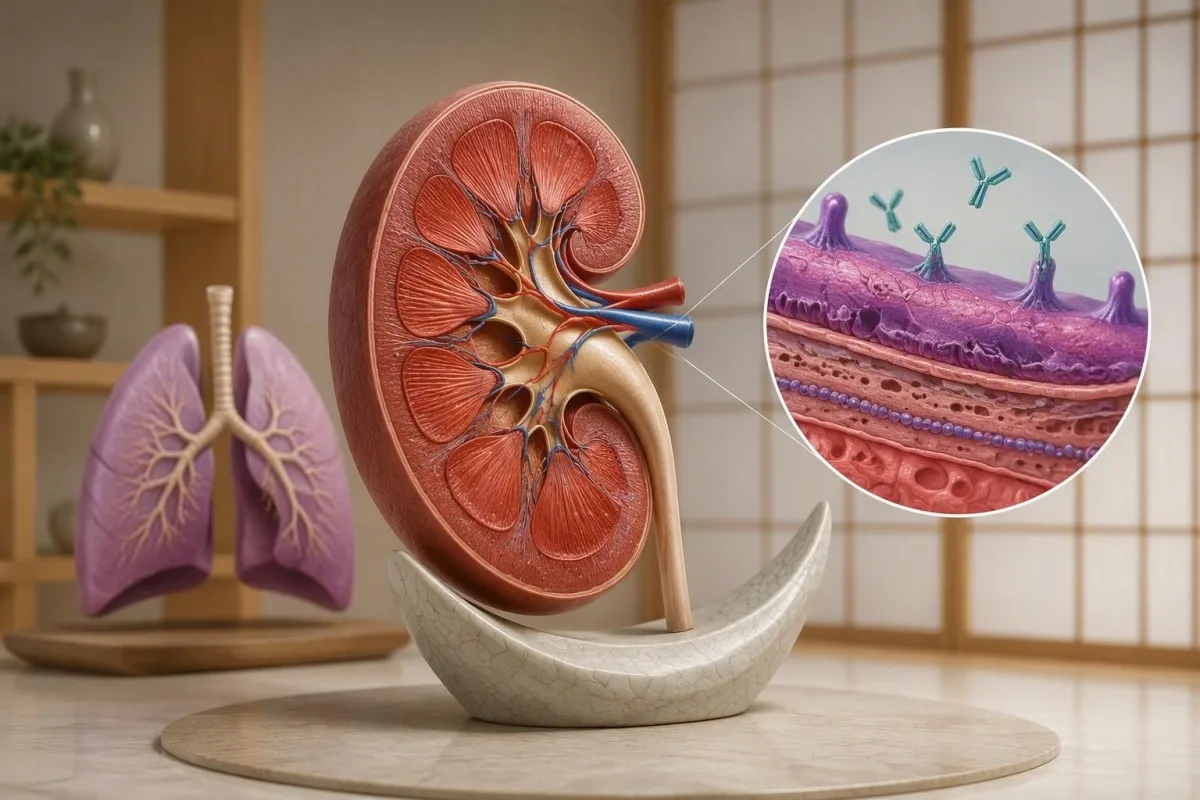
ຜົນກວດຫາພູມຕ້ານທານນີ້ສາມາດຊີ້ບອກເຖິງຄວາມຜິດປົກກະຕິຂອງໝາກໄຂ່ຫຼັງທີ່ຮຽກຮ້ອງໃຫ້ມີການປິ່ນປົວຢ່າງຮີບດ່ວນ—ແມ່ນແຕ່ໃນເວລາທີ່ການຫາຍໃຈຮູ້ສຶກປົກກະຕິ. ການວິນິດໄສແມ່ນຂຶ້ນກັບວິທີການຂອງຫ້ອງທົດລອງ, ຜົນການກວດຍ່ຽວ, ການເຮັດວຽກຂອງໝາກໄຂ່ຫຼັງ, ແລະບາງຄັ້ງການກວດເນື້ອເຍື່ອ.


- ພູມຕ້ານທານ anti-GBM ທີ່ເປັນບວກ ສະໜັບສະໜູນພະຍາດ anti-GBM ທີ່ເປັນໄປໄດ້ ແຕ່ບໍ່ສາມາດຢືນຢັນການວິນິດໄສໄດ້ຈາກຜົນການກວດຫ້ອງທົດລອງພຽງເທື່ອດຽວ.
- ພະຍາດທີ່ກ່ຽວຂ້ອງກັບໝາກໄຂ່ຫຼັງເທົ່ານັ້ນ ເປັນໄປໄດ້: ການມີສ່ວນຮ່ວມຂອງປອດເກີດຂຶ້ນໃນປະມານ 40–50% ຂອງກໍລະນີທີ່ລາຍງານແບບຄລາດສິກ, ບໍ່ແມ່ນທຸກຄົນ.
- ການບາດເຈັບແບບຉຸດທັນທີຂອງໝາກໄຂ່ຫຼັງ ລວມມີຄຣີເອຕີນິນເພີ່ມຂຶ້ນຢ່າງໜ້ອຍ 0.3 mg/dL, ຫຼື 26.5 µmol/L, ພາຍໃນ 48 ຊົ່ວໂມງ; ເຄັດລັບນີ້ບໍ່ສະເພາະເຈาะຈົງກັບພະຍາດ anti-GBM.
- ອາການສຸກເສີນ ລວມມີອາການໄອເປັນເລືອດ, ຫາຍໃຈບໍ່ສະດວກ, ຫຼືປະລິມານຍ່ຽວຫຼຸດລົງຢ່າງຮຸນແຮງ; ໄປພົບແພດສຸກເສີນ ແທນທີ່ຈະລໍຖ້າຜົນການກວດຫາພູມຕ້ານທານຄືນອີກ.
- ການກວດຈຸລະພາບໃນປັດສະວະ ສາມາດລະບຸ red-cell casts, ເຊິ່ງສະໜັບສະໜູນການມີເລືອດອອກຈາກເຄື່ອງກອງໝາກໄຂ່ຫຼັງ ແທນທີ່ຈະເປັນການຕິດເຊື້ອໃນກະເພາະປັດສະວະທົ່ວໄປ.
- ຄ່າຕັດຂອງພູມຕ້ານທານ แตกต่างกันไปตามการตรวจ: ผล 21 U/mL จะมีความหมายก็ต่อเมื่อเทียบกับช่วงอ้างอิงของห้องปฏิบัติการนั้นๆ.
- โรคบวกสองครั้ง หมายถึงการตรวจพบแอนติ-GBM แอนติบอดีและ ANCA ร่วมกัน ซึ่งอาจส่งผลต่อการเฝ้าระวังการกลับเป็นซ้ำและการรักษาในระยะยาว.
- ពេលវេលានៃការព្យាបាល มีความสำคัญ: ผู้เชี่ยวชาญอาจเริ่มการรักษาก่อนการยืนยันเมื่อลักษณะทางคลินิกบ่งชี้อย่างชัดเจนว่าเป็นโรคที่ลุกลามอย่างรวดเร็ว.
- ระยะเวลาปลูกถ่าย โดยทั่วไปต้องการให้แอนติ-GBM แอนติบอดีไม่สามารถตรวจพบได้นานอย่างน้อย 6 เดือน ตามแนวทาง KDIGO ปี 2021.
ພູມຕ້ານທານ anti-GBM ທີ່ເປັນບວກໝາຍຄວາມວ່າແນວໃດແທ້?
ພູມຕ້ານທານ anti-GBM ທີ່ເປັນບວກ อาจบ่งชี้ถึงโรคแอนติ-กลอเมอรูลาร์ เบสเมนต์ เมมเบรน ซึ่งเป็นภาวะภูมิต้านตนเองที่สามารถทำลายตัวกรองไตได้อย่างรวดเร็วและบางครั้งก็ทำลายปอดได้ด้วย ตัวบ่งชี้นี้เพียงอย่างเดียวไม่สามารถยืนยันกลุ่มอาการ Goodpasture ได้ โปรดติดต่อแพทย์ผู้สั่งตรวจวันนี้ หากมีอาการไอเป็นเลือด หายใจลำบาก หรือปัสสาวะลดลงอย่างมาก ซึ่งต้องได้รับการประเมินฉุกเฉิน.
แอนติ-GBM อธิบายถึงเป้าหมายของแอนติบอดี ไม่ใช่การวินิจฉัยที่สมบูรณ์: กลอเมอรูลาร์ เบสเมนต์ เมมเบรน เป็นส่วนหนึ่งของเกราะป้องกันการกรองของไต โรคคลาสสิกส่วนใหญ่เกี่ยวข้องกับแอนติบอดีต่อโดเมนที่ไม่ใช่คอลลาเจนของสายอัลฟ่า-3 ของคอลลาเจนประเภท IV ซึ่งเป็นโครงสร้างที่พบในถุงลมในปอดเช่นกัน ดังนั้น การตอบสนองทางภูมิคุ้มกันแบบเดียวกันจึงสามารถส่งผลต่อ 2 อวัยวะที่มีอาการแตกต่างกันมาก.
ผมชื่อ Thomas Klein, Chief Medical Officer ที่ Kantesti คำถามแรกของผมคือผลนี้มาพร้อมกับหลักฐานของการบาดเจ็บของอวัยวะหรือไม่ แทนที่จะเป็นว่าธงบ่งชี้ของห้องปฏิบัติการดูน่าตกใจเพียงใด ผลบวกเล็กน้อยเพียงครั้งเดียวร่วมกับค่าครีเอตินินที่คงที่นั้นแตกต่างจากผลบวกบวกกับค่าครีเอตินินที่เพิ่มขึ้นในช่วง 48 ชั่วโมง แม้ว่าทั้งสองกรณีจะต้องได้รับการติดตามโดยแพทย์แทนที่จะเป็นการยืนยันอย่างสบายๆ.
ແຄນເທສຕີ ເປັນ AI ເຄື່ອງວິເຄາະເລືອດ ที่สามารถช่วยอธิบายผลแอนติ-GBM ร่วมกับค่าครีเอตินิน อิเล็กโทรไลต์ และช่วงอ้างอิงของห้องปฏิบัติการ แต่ไม่สามารถยืนยันโรคไตจากภูมิต้านตนเองได้ องค์กร และวัตถุประสงค์ของเรา อธิบายบทบาททางการศึกษาดังกล่าว คู่มือของเราเกี่ยวกับ ຜົນການກວດແອນຕິບອດທີ່ເປັນບວກ อธิบายว่าเหตุใดเครื่องหมายภูมิคุ้มกันที่เป็นบวก 1 อย่างจึงไม่เหมือนกับการวินิจฉัย.
ພະຍາດ anti-GBM ແມ່ນຄືກັນກັບໂລກ Goodpasture ບໍ?
โรคแอนติ-GBM รวมถึงโรคที่ส่งผลต่อไตอย่างเดียว โรคที่ส่งผลต่อปอดอย่างเดียว และโรคที่ส่งผลต่อทั้งสองอวัยวะ กลุ่มอาการ Goodpasture มักหมายถึงการรวมกันของโรคไตอักเสบและเลือดออกในปอด แม้ว่าแพทย์จะใช้ชื่อนี้อย่างไม่สม่ำเสมอ ประมาณ 40–60% ของกรณีแอนติ-GBM คลาสสิกมีปัญหาเกี่ยวกับปอด ดังนั้นการใช้คำศัพท์ไม่ควรกำหนดว่าการประเมินไตเป็นเรื่องเร่งด่วนหรือไม่.
ชื่อ กลุ่มอาการ Goodpasture สามารถอธิบายถึงอาการที่เกิดกับปอดและไตได้ แทนที่จะพิสูจน์สาเหตุ โรคหลอดเลือดอักเสบที่เกี่ยวข้องกับ ANCA และโรคอื่นๆ ก็สามารถทำให้เกิดการอักเสบของไตพร้อมกับการมีเลือดออกในถุงลมได้ ดังนั้นการวินิจฉัยกลุ่มอาการ Goodpasture จึงต้องการการระบุสาเหตุที่ชัดเจน การทบทวนของ McAdoo และ Pusey ในปี 2017 แยกความแตกต่างระหว่างกลุ่มอาการทางคลินิกออกจากโรคแอนติ-GBM ที่เกี่ยวข้องกับแอนติบอดี.
โรคแอนติ-GBM นั้นหายาก, โดยมีอุบัติการณ์ประมาณ 1 รายต่อประชากรหนึ่งล้านคนต่อปีในประชากรที่มักถูกอ้างถึง แม้ว่าการประมาณการจะแตกต่างกันไปตามสถานที่และการตรวจหาผู้ป่วยก็ตาม ความหายากนี้มีความสำคัญเมื่อตีความผลการคัดกรองที่ไม่คาดคิด: แม้แต่การทดสอบที่ดีก็อาจให้ผลบวกลวงได้เมื่อใช้กับผู้ที่มีหลักฐานทางคลินิกของโรคนี้เพียงเล็กน้อย.
eGFR ที่ต่ำระหว่างอาการป่วยนี้อาจสะท้อนถึง ການບາດເຈັບໄຕສຸກເສີນ (acute kidney injury), ไม่ใช่ระยะเรื้อรังที่จัดตั้งขึ้น โรคไตเรื้อรังโดยทั่วไปต้องการความผิดปกติที่คงอยู่นานอย่างน้อย 3 เดือน; ของเรา kidney staging guide explains that distinction, but a rapidly changing result needs an acute assessment rather than being filed under a long-term CKD label.
ເປັນຫຍັງການບາດເຈັບຂອງໝາກໄຂ່ຫຼັງຈຶ່ງສາມາດເກີດຂຶ້ນໄດ້ໂດຍບໍ່ມີອາການຂອງປອດ?
Kidney-only anti-GBM disease occurs because antibody access and tissue vulnerability differ between kidney filters and lung air sacs. A normal breathing pattern does not protect the kidneys or exclude this diagnosis. Since only approximately 40–60% of classic cases involve the lungs, waiting for a cough can delay treatment.
The glomerular filtration barrier is continuously exposed to circulating plasma under filtration pressure, whereas the lung's alveolar–capillary barrier has different structural protections. Antibody binding also depends on whether relevant collagen epitopes are accessible; this is not simply a situation where antibodies circulate to 1 organ but somehow fail to reach the other.
Smoking and hydrocarbon exposure are associated with pulmonary involvement in anti-GBM disease, and respiratory illness may influence the lung barrier's susceptibility. Those associations do not allow a precise personal risk calculation: a nonsmoker can develop lung involvement, while a smoker may have kidney-only disease, so 0 respiratory symptoms should never be used as a rule-out test.
Consider an illustrative patient with creatinine increasing from 0.9 to 1.8 mg/dL over several days, microscopic urine blood, and no cough at all. That combination needs urgent nephrology assessment because filtration has changed substantially; our สัญญาณเตือน eGFR ต่ำ also explain why significant kidney impairment can initially feel surprisingly quiet.
ຄວນອ່ານຄ່າຕົວເລກຂອງການກວດຫາພູມຕ້ານທານ anti-GBM ແນວໃດ?
ໄດ້ anti-GBM antibody test must be interpreted using the reporting laboratory's method, units, and cutoff. There is no universal positive concentration that can be transferred between every assay. For example, 21 U/mL is only slightly above a cutoff of 20 U/mL—but that example is not a recommended diagnostic threshold.
Immunoassays may use different antigen preparations and measurement systems, with results reported as U/mL, IU/mL, an index, or a qualitative positive. A result of 30 on an index assay cannot be meaningfully compared with 30 U/mL from another laboratory; the distinction between ການກວດຫາແບບຄຸນນະພາບ ແລະ ປະລິມານ is particularly useful here.
Low-level positivity deserves more scrutiny when urine findings and kidney function are normal, but a high concentration still cannot measure irreversible damage by itself. I would examine 3 details before interpreting a trend: whether the same assay was used, whether treatment had begun, and whether the laboratory describes the change as analytically meaningful.
Kantesti AI cannot repair an incorrect transcription of a laboratory result, so verify the value, units, reference interval, and collection date against the original report. Our PDF transcription checklist covers those checks; a missing decimal can turn 2.1 into 21 and change the apparent significance of an antibody measurement.
ຜົນການກວດຫາພູມຕ້ານທານ anti-GBM ທີ່ເປັນບວກສາມາດຜິດພາດຫຼືເຮັດໃຫ້ເຂົ້າໃຈຜິດໄດ້ບໍ?
A false-positive or clinically misleading anti-GBM result is possible, particularly when positivity is weak and the clinical picture does not fit. A clinician may request confirmation using another method. However, 1 repeat antibody test must not delay assessment when creatinine is rising, urine contains blood, or respiratory symptoms suggest lung involvement.
Pretest probability changes what a positive result means: a person tested for rapidly progressive kidney disease has a different starting likelihood from someone given a broad autoimmune screen without symptoms. Analytical interference, nonspecific reactivity, and differences in antigen recognition can complicate interpretation; repeating the same assay 2 times may reproduce the same problem rather than resolve it.
A reportedly normal urine test should be examined carefully, because a dipstick is not the same as microscopy and a negative result may reflect timing or specimen limitations. Clinicians often pair urine dipstick interpretation with sediment examination and protein measurement; 1 clean-looking urine sample cannot describe everything happening inside the kidney.
Creatinine, urine microscopy, and a urine albumin-to-creatinine or protein-to-creatinine ratio provide complementary information during confirmation. An ACR of at least 3 mg/mmol, approximately 30 mg/g, is abnormal but does not identify anti-GBM disease; our urine creatinine ratio guide explains why dilution-adjusted measurements are more useful than urine concentration alone.
ຜົນການກວດຍ່ຽວໃດຊີ້ບອກເຖິງການບາດເຈັບຂອງເຄື່ອງກອງໝາກໄຂ່ຫຼັງ?
Hematuria, proteinuria, dysmorphic red cells, and red-cell casts can support glomerular injury when anti-GBM antibodies are positive. Red-cell casts are especially concerning because they form within kidney tubules. An isolated finding of 3 or more red cells per high-power field warrants clinical interpretation, but does not establish the cause.
เม็ดเลือดแดงในปัสสาวะแบบจุลทรรศน์ may appear before urine visibly changes color, so clear urine is not evidence that the kidney filters are unaffected. Conversely, a dipstick positive for blood can reflect hemoglobin or myoglobin without intact red cells; comparing the dipstick with 1 microscopy result helps distinguish these possibilities, particularly after intense exercise or muscle injury.
Protein loss in anti-GBM disease does not have to reach the nephrotic range, conventionally around 3.5 g per 24 hours in adults, to be clinically serious. A patient can have rapidly progressive kidney injury with a much smaller protein measurement; focusing only on whether urine protein is dramatically elevated can miss the more urgent creatinine trajectory.
Sample quality matters because delayed examination can make cellular elements and casts harder to identify, and menstrual contamination can complicate hematuria interpretation. Our ຄູ່ມືການກວດຕະກອນໃນປັດສະວະ explains the principal patterns; if the first specimen is inconclusive, clinicians may request a fresh sample rather than assume 0 reported casts means no glomerular disease.
ການປ່ຽນແປງການເຮັດວຽກຂອງໝາກໄຂ່ຫຼັງໃດເຮັດໃຫ້ຜົນການກວດດ່ວນ?
A rising creatinine level makes positive anti-GBM antibodies more urgent, especially alongside urine blood or protein. Standard acute kidney injury criteria include a rise of at least 0.3 mg/dL, or 26.5 µmol/L, within 48 hours, or at least 1.5 times baseline within 7 days; these criteria do not identify the underlying cause.
An apparently normal creatinine can still represent acute kidney injury if it has risen substantially from a low baseline. An increase from 0.6 to 1.0 mg/dL over 48 hours meets the absolute rise criterion even if 1.0 is inside the laboratory's adult reference interval; the comparison with baseline is therefore more informative than the flag alone.
Estimated GFR equations are less reliable during rapidly changing kidney function because they assume a relatively steady creatinine concentration. Our การเปรียบเทียบบุญและครีเอตินีน explains additional influences such as dehydration and protein intake, but those alternatives do not safely explain away a 2-fold creatinine increase accompanied by positive anti-GBM antibodies and glomerular urine findings.
Kantesti, ເຊິ່ງເປັນ ແພລດຟອມການອ່ານຜົນກວດເລືອດຂອງ AI, can organize dated laboratory results so a creatinine change over 48 hours is easier to recognize; treatment decisions still require a clinician. Urine output below 0.5 mL/kg/hour for 6 hours also meets a standard AKI criterion, although patients should seek help for markedly reduced urine without attempting a precise home calculation.
ອາການໃດຮຽກຮ້ອງໃຫ້ໄດ້ຮັບການດູແລສຸກເສີນ ແທນທີ່ຈະເປັນການສົ່ງຕໍ່ຕາມປົກກະຕິ?
Coughing up blood, new breathlessness, low oxygen, or markedly reduced urine output require emergency assessment when anti-GBM disease is possible. New oxygen saturation at or below 92% at sea level is concerning, but a normal home reading does not exclude lung bleeding. Do not wait for the antibody result to be repeated.
Alveolar hemorrhage can occur without obvious coughing up blood because blood remains within the air sacs rather than reaching the mouth. New breathlessness, an unexplained hemoglobin fall, and new lung imaging abnormalities can therefore be more informative than 0 visible blood; our shortness of breath testing guide explains why respiratory assessment requires more than a single laboratory marker.
Severe kidney injury can produce dangerous potassium accumulation, fluid overload, and acid–base disturbance before an antibody diagnosis is finalized. Potassium at or above 6.5 mmol/L generally requires emergency management; lower levels may also be urgent with AKI or ECG changes, as discussed in our potassium escalation guide.
Chest symptoms, confusion, fainting, or an abrupt fall in urine output should be described clearly to emergency services, including the known positive anti-GBM result. Bring the report and any creatinine measurements from the previous 7 days if readily available, but do not delay departure to gather paperwork; the clinical team can investigate and stabilize complications at the same time.
ຜູ້ຊ່ຽວຊານຢືນຢັນການວິນິດໄສພະຍາດ anti-GBM ແນວໃດ?
Anti-GBM disease diagnosis combines serology with evidence of kidney or lung injury, and kidney biopsy often provides decisive information when safe and appropriate. Typical findings include crescentic glomerulonephritis and linear IgG staining along the glomerular basement membrane. These are 2 different observations: tissue injury and the pattern of antibody deposition.
Kidney biopsy can help establish the mechanism of injury and estimate how much potentially recoverable tissue remains, but no single microscopic feature should be read without context. Linear staining can occasionally occur in other settings, and atypical anti-GBM disease may differ from the classic pattern; specialists interpret light microscopy, immunofluorescence, and clinical findings together rather than treating 1 image as definitive.
ໄດ້ KDIGO 2021 glomerular diseases guideline recommends starting treatment without delay when anti-GBM disease is strongly suspected, even before confirmation. That does not mean every isolated positive result needs immediate immunosuppression: a patient with rapidly worsening kidney function has a different risk balance from someone with stable creatinine and an equivocal antibody on 2 separate assays.
The broader assessment usually includes ANCA, a full blood count, electrolytes, urine studies, and investigations for alternative immune-mediated kidney disease. ANA, anti-dsDNA, and complement may be useful when lupus is a possibility; our ຄູ່ມືການຕີຄວາມ anti-dsDNA explains why a second positive antibody can suggest an alternative or additional process rather than simply confirming the first.
ຈະເປັນແນວໃດເມື່ອ ANCA ກໍ່ເປັນບວກເຊັ່ນກັນ?
โรคบวกสองครั้ง means a patient has both anti-GBM antibodies and ANCA, usually assessed through MPO-ANCA and PR3-ANCA testing. The acute presentation may resemble anti-GBM disease, while later relapse risk can resemble ANCA-associated vasculitis. Those 2 antibody systems therefore affect both immediate treatment and the longer-term follow-up plan.
McAdoo and colleagues' 2017 Kidney International cohort compared 37 double-positive patients with isolated anti-GBM disease and ANCA-associated vasculitis groups. The double-positive group showed features of both conditions, including clinically relevant later relapses; this is why disappearance of the anti-GBM antibody does not automatically justify stopping every form of immune monitoring or maintenance treatment.
An MPO test is not always an MPO-ANCA test: some laboratories offer myeloperoxidase concentration assays for other purposes, which do not answer the same autoimmune question. Confirm that the report identifies antibodies against MPO or PR3; there are 2 major antigen-specific ANCA targets, and a generic enzyme measurement should not be used to classify double-positive disease.
Complement levels can help explore competing diagnoses, but normal C3 and C4 do not exclude anti-GBM disease or ANCA-associated vasculitis. Our low complement interpretation guide explains how reduced complement may point toward another immune process; these 2 results refine the differential diagnosis rather than functioning as a safety check that rules out kidney injury.
ພະຍາດ anti-GBM ໄດ້ຮັບການປິ່ນປົວແນວໃດ, ແລະໝາກໄຂ່ຫຼັງສາມາດຟື້ນຕົວໄດ້ບໍ?
Classic anti-GBM disease is usually treated with plasma exchange, glucocorticoids, and cyclophosphamide, although specialists adapt treatment to presentation and recovery potential. KDIGO 2021 describes cyclophosphamide for approximately 2–3 months and glucocorticoids for about 6 months. Kidney recovery depends heavily on function and tissue damage when treatment begins.
Plasma exchange removes circulating antibodies, while immunosuppression reduces further antibody production and tissue-directed immune activity. Treatment often continues until anti-GBM antibodies are undetectable, commonly involving daily exchanges over approximately 2–3 weeks, though duration is individualized; antibody disappearance does not instantly repair scarred kidney tissue or guarantee that dialysis can be stopped.
KDIGO allows carefully selected exceptions to intensive treatment when a patient needs dialysis at presentation, has 100% crescents or more than 50% globally sclerotic glomeruli on an adequate biopsy, and has no pulmonary hemorrhage. These criteria require specialist judgment, not self-interpretation: lung involvement, sampling uncertainty, and the amount of viable tissue can change the treatment balance.
Treatment monitoring includes blood counts, kidney function, infection risk, and drug-specific precautions; changes across 2 visits may reflect medication effects rather than renewed autoimmune injury. Kantesti can help arrange those results chronologically, but our คู่มือแนวโน้มความปลอดภัยของยา is educational support—not authorization to alter steroids, cyclophosphamide, or a specialist's plasma-exchange schedule.
ຕ້ອງຕິດຕາມແນວໃດຫຼັງຈາກພູມຕ້ານທານກາຍເປັນລົບ?
A negative anti-GBM result after treatment does not mean follow-up can stop, because kidney recovery, medication toxicity, and possible ANCA overlap still need assessment. KDIGO 2021 recommends postponing kidney transplantation until anti-GBM antibodies have remained undetectable for at least 6 months. The monitoring schedule is individualized rather than a universal monthly timetable.
Relapse is uncommon in isolated classic anti-GBM disease, but double-positive disease needs a different long-term strategy because ANCA-associated vasculitis can recur. New urine blood, worsening creatinine, or recurrent breathlessness after 1 apparently successful treatment course deserves assessment; clinicians should not assume every new abnormality is relapse, but should not dismiss it merely because an earlier antibody test was negative.
ໄດ້ 6-month antibody-negative interval before transplantation concerns recurrence risk, not simply recovery from the original hospitalization. Transplant teams also consider clinical stability, infection risk, cardiovascular health, and other eligibility factors; a person can be antibody-negative while still requiring dialysis, and that does not mean the original treatment failed to control the immune process.
Diet and supplements cannot remove anti-GBM antibodies or replace immune treatment, and impaired filtration changes the safety of many over-the-counter products. Our ຄູ່ ມື ຄວາມ ປອດ ໄພ ຂອງ ອາ ຫານ ເສີມ ຫມາກ ໄຂ່ຫຼັງ explains common concerns; potassium-containing products, herbal mixtures, and high-dose nutrients deserve review when eGFR is reduced, even if only 1 ingredient is advertised as kidney-supporting.
ການຕີຄວາມໝາຍຂອງ AI ສາມາດຊ່ວຍຫຍັງໄດ້ — ແລະສິ່ງໃດຕ້ອງເປັນທາງການແພດ?
AI interpretation can help organize an anti-GBM report, but cannot diagnose Goodpasture syndrome or decide whether emergency treatment is needed. The most useful handoff includes the antibody method, creatinine trend, urine findings, and symptoms. A change over 48 hours can matter more than the report's color-coded positive flag.
ແຄນເທສຕີ ເປັນ ບໍລິການຕີຄວາມຜົນການກວດຂອງ AI that can explain the relationship between anti-GBM antibodies and accompanying laboratory findings when those results are supplied. Our ຄຳອະທິບາຍເຕັກໂນໂລຍີ describes the interpretation workflow; the original report remains the source for 3 essentials—value, unit, and reference interval—and an AI summary is not independent confirmation.
A technical benchmark is not a clinical diagnosis study, and a tool that explains reports cannot assess lung sounds, examine urine itself, or interpret a kidney biopsy firsthand. Our ມາດຕະຖານທາງການແພດແລະການກວດສອບຄວາມຖືກຕ້ອງ page provides methodological context; even excellent performance on 1 reporting task does not establish safety for every rare autoimmune presentation.
A note from Thomas Klein: the practical question to ask your clinician is, 'Do these antibodies come with evidence of kidney or lung injury, and how quickly should I be assessed?' As of 6 ຕຸລາ 2026, this article cites KDIGO 2021 guidance and the named studies below; ask for an explicit plan today rather than leaving a positive result without a follow-up pathway.
ການອ້າງອີງທາງການແພດ, ການຄົ້ນຄ້ວາທີ່ກ່ຽວຂ້ອງ, ແລະຂໍ້ຈຳກັດຂອງແຫຼ່ງຂໍ້ມູນ
The anti-GBM recommendations in this article are supported by 3 directly relevant clinical references, listed separately from our 2 related Zenodo resources. The Zenodo materials concern coagulation and serum proteins; they are supporting laboratory education, not trials, clinical guidelines, or evidence that establishes a Goodpasture syndrome diagnosis.
KDIGO 2021 supplies the treatment and transplantation recommendations; McAdoo and Pusey 2017 explains classic disease mechanisms and presentations; McAdoo and colleagues 2017 addresses double-positive outcomes. These 3 sources answer different questions, and no general protein or coagulation guide can substitute for them; Kantesti's ຂໍ້ມູນຄຳແນະນຳທາງການແພດ describes the clinical expertise relevant to interpreting medical content.
aPTT Normal Range: D-Dimer, Protein C Blood Clotting Guide. (n.d.). Zenodo. DOI: 10.5281/zenodo.18262555. This related coagulation interpretation resource explains laboratory concepts relevant to treatment safety, not anti-GBM confirmation; ResearchGate discovery search ແລະ Academia.edu discovery search are search links, not verified publication profiles.
Serum Proteins Guide: Globulins, Albumin & A/G Ratio Blood Test. (n.d.). Zenodo. DOI: 10.5281/zenodo.18316300. This related serum protein resource explains why albumin and globulins add context without measuring anti-GBM activity; ຄົ້ນຫາສິ່ງພິມຂອງ ResearchGate ແລະ ค้นหาสิ่งพิมพ์ใน Academia.edu likewise do not establish independent peer review of either of these 2 resources.
ຄໍາຖາມທີ່ຖາມເລື້ອຍໆ
ການມີພູມຕ້ານທານ anti-GBM ທີ່ເປັນບວກໝາຍຄວາມວ່າຂ້ອຍເປັນພະຍາດ Goodpasture ບໍ?
Anti-GBM Antibodies ທີ່ເປັນບວກ ສະໜັບສະໜູນຄວາມເປັນໄປໄດ້ຂອງພະຍາດ anti-GBM ແຕ່ບໍ່ໄດ້ຢັ້ງຢືນພະຍາດ Goodpasture syndrome ດ້ວຍຕົວມັນເອງ. ການວິນິດໄສຮຽກຮ້ອງໃຫ້ມີການປະເມີນການເຮັດວຽກຂອງໝາກໄຂ່ຫຼັງ, ຜົນການກວດຍ່ຽວ, ແລະຄວາມເປັນໄປໄດ້ຂອງການມີສ່ວນຮ່ວມຂອງປອດ, ໂດຍການກວດຊີ້ນໝາກໄຂ່ຫຼັງມັກຈະໃຫ້ຫຼັກຖານທີ່ສຳຄັນ. ການມີສ່ວນຮ່ວມຂອງປອດເກີດຂຶ້ນໃນປະມານ 40–60% ຂອງກໍລະນີທີ່ລາຍງານຕາມແບບປົກກະຕິ, ດັ່ງນັ້ນພະຍາດທີ່ມີພຽງແຕ່ໝາກໄຂ່ຫຼັງກໍເປັນໄປໄດ້. ຕິດຕໍ່ແພດທີ່ສັ່ງໃຫ້ທັນທີ, ແລະຊອກຫາການປິ່ນປົວສຸກເສີນສຳລັບການໄອເປັນເລືອດ, ຫາຍໃຈສັ້ນແບບໃໝ່, ຫຼືການຫຼຸດລົງຢ່າງຫຼວງຫຼາຍຂອງຍ່ຽວ.
ພະຍາດ anti-GBM ສາມາດສົ່ງຜົນກະທົບຕໍ່ไต ໂດຍບໍ່ມີອາການໄອໄດ້ບໍ?
Anti-GBM disease ທີ່ສາມາດທຳລາຍ ໝາກໄຂ່ຫຼັງ ໄດ້ໂດຍບໍ່ມີອາການໄອ ຫຼື ອາການປອດອື່ນໆ ທີ່ເຫັນໄດ້ຊັດເຈນ. ເນື່ອງຈາກ ໝາກໄຂ່ຫຼັງ ແລະ ຖົງລົມປອດ ມີຄວາມແຕກຕ່າງກັນໃນເລື່ອງ ພູມຕ້ານທານເຂົ້າເຖິງ ແລະ ຄວາມອ່ອນໄຫວ, ດັ່ງນັ້ນ ການມີສ່ວນຮ່ວມຂອງອະໄວຍະວະໜຶ່ງ ບໍ່ໄດ້ຮຽກຮ້ອງໃຫ້ມີການມີສ່ວນຮ່ວມຂອງອີກອັນໜຶ່ງ. ການເພີ່ມຂຶ້ນຂອງ creatinine ຢ່າງໜ້ອຍ 0.3 mg/dL, ຫຼື 26.5 µmol/L, ພາຍໃນ 48 ຊົ່ວໂມງ ຖືວ່າເປັນມາດຖານການບາດເຈັບ ໝາກໄຂ່ຫຼັງ ສ້ວຍຄະຕິ ແລະ ຕ້ອງການການຕີຄວາມໝາຍຢ່າງຮີບດ່ວນ ເມື່ອພົບ ພູມຕ້ານທານ anti-GBM ເປັນບວກ. ການຫາຍໃຈປົກກະຕິ ບໍ່ຄວນຊັກຊ້າການປະເມີນ ໝາກໄຂ່ຫຼັງ.
ລະດັບພູມຄ້ານ ຕໍ່ຕ້ານ GB M ທີ່ຖືວ່າເປັນບວກແມ່ນເທົ່າໃດ?
ຄ່າຕັດການຂອງພູມຕ້ານທານ anti-GBM ທີ່ເປັນບວກແມ່ນຂຶ້ນກັບການວິເຄາະຂອງຫ້ອງທົດລອງ ແລະ ໜ່ວຍທີ່ລາຍງານ. ບໍ່ມີເງື່ອນໄຂ U/mL ຫຼື IU/mL ສາກົນດຽວທີ່ໃຊ້ໄດ້ກັບທຸກຫ້ອງທົດລອງ. ເພື່ອເປັນຕົວຢ່າງ, 21 U/mL ແມ່ນສູງກວ່າຄ່າຕັດການຂອງຫ້ອງທົດລອງ 20 U/mL ພຽງເລັກນ້ອຍ, ແຕ່ຕົວເລກເຫຼົ່ານັ້ນບໍ່ຄວນນຳໃຊ້ກັບການວິເຄາະອື່ນ. ຄວາມຮີບດ່ວນແມ່ນຂຶ້ນກັບການບາດເຈັບຂອງไตຫຼືປອດທີ່ມາພ້ອມ, ບໍ່ແມ່ນຄວາມເຂັ້ມຂຸ້ນຂອງພູມຕ້ານທານພຽງຢ່າງດຽວ.
ຜົນກວດພົບເຫັນພູມຕ້ານທານຕໍ່ GB GBM ທີ່ເປັນບວກສາມາດຜິດພາດໄດ້ບໍ?
ການກວດພົບແอนຕີ້-GBM Antibody ທີ່ເປັນບວກອາດເຮັດໃຫ້ເຂົ້າໃຈຜິດໄດ້ເນື່ອງຈາກມີການແຊກແຊງຂອງການວິເຄາະ, ປະຕິກິລິယာທີ່ບໍ່ສະເພາະ, ຫຼື ຄວາມເປັນໄປໄດ້ທາງຄລີນິກຂອງພະຍາດຕໍ່າ. ຜົນບວກທີ່ອ່ອນແອ, ສະພາບການເຮັດວຽກຂອງไตທີ່ໝັ້ນຄົງ ແລະ ຜົນການກວດຍ່ຽວທີ່ເປັນປົກກະຕິ ອາດຈະກະຕຸ້ນໃຫ້ຢືນຢັນໂດຍໃຊ້ວິທີທີສອງ. ການກວດຊໍ້າດ້ວຍການວິເຄາະດຽວກັນ 2 ຄັ້ງ ອາດເຮັດໃຫ້ເກີດບັນຫາການວິເຄາະດຽວກັນ, ດັ່ງນັ້ນແພດອາດຈະປຶກສາການກວດແບບອື່ນກັບຫ້ອງທົດລອງ. ການຢືນຢັນຕ້ອງບໍ່ຊັກຊ້າການປະເມີນທີ່ຮີບດ່ວນເມື່ອການເຮັດວຽກຂອງไตຮ້າຍແຮງຂຶ້ນ ຫຼື ມີອາການຂອງປອດ.
ອາການຂອງພະຍາດ anti-GBM ໃດທີ່ຂ້ອຍຄວນໄປຮັບການປິ່ນປົວສຸກເສີນ?
coughing up blood, new or worsening breathlessness, markedly reduced urine output, confusion, or fainting warrant emergency assessment when anti-GBM disease is suspected. new oxygen saturation at or below 92% at sea level is concerning, although a normal home reading does not exclude lung involvement. potassium at or above 6.5 mmol/L generally requires emergency management, and lower levels can also be dangerous with acute kidney injury or ECG changes. do not wait for a repeat antibody test before seeking help.
ພະຍາດ anti-GBM ສາມາດປິ່ນປົວໄດ້ບໍ, ແລະ ຂ້ອຍສາມາດປ່ຽງຖ່າຍ ໝາກໄຂ່ຫຼັງ ໄດ້ບໍ?
ພະຍາດ Anti-GBM ສາມາດປິ່ນປົວໄດ້, ໂດຍທົ່ວໄປໃຊ້ການແລກປ່ຽນ plasma, glucocorticoids, ແລະ cyclophosphamide, ແຕ່ການຟື້ນຕົວຂອງไตແມ່ນຂຶ້ນກັບຄວາມຮຸນແຮງແລະໄລຍະເວລາຂອງການບາດເຈັບກ່ອນການປິ່ນປົວ. KDIGO 2021 ອະທິບາຍການປິ່ນປົວດ້ວຍ cyclophosphamide ປະມານ 2-3 ເດືອນ ແລະ glucocorticoids ປະມານ 6 ເດືອນ, ດ້ວຍການປັບປ່ຽນເປັນສ່ວນບຸກຄົນໂດຍຜູ້ຊ່ຽວຊານ. ຜູ້ທີ່ມີຄວາມລົ້ມເຫຼວຂອງไตທີ່ບໍ່ສາມາດແກ້ໄຂໄດ້ອາດຈະຖືກພິຈາລະນາປູກຖ່າຍ. KDIGO ແນະນຳໃຫ້ລໍຖ້າຈົນກ່ວາ anti-GBM antibodies ບໍ່ສາມາດກວດພົບໄດ້ຢ່າງໜ້ອຍ 6 ເດືອນກ່ອນການປູກຖ່າຍ.
ຮັບການວິເຄາະຜົນກວດເລືອດດ້ວຍ AI ທັນທີ
ເຂົ້າຮ່ວມຜູ້ໃຊ້ຫຼາຍກວ່າ 2 ລ້ານຄົນທົ່ວໂລກ ທີ່ໄວ້ໃຈ Kantesti ສຳລັບການວິເຄາະການກວດເລືອດທີ່ທັນທີ ແລະຖືກຕ້ອງ. ອັບໂຫຼດຜົນກວດເລືອດຂອງທ່ານ ແລະຮັບການຕີຄວາມໝາຍຢ່າງຄົບຖ້ວນຂອງ biomarker 15,000+ ໃນວິນາທີ.
📚 ບົດຄວາມວິຈັຍທີ່ອ້າງອີງ
Klein, T., Mitchell, S., & Weber, H. (2026). ລະດັບປົກກະຕິຂອງ aPTT: D-Dimer, ໂປຣຕີນ C ຄູ່ມືການແຂງຕົວຂອງເລືອດ. ການຄົ້ນຄວ້າທາງການແພດຂອງ AI Kantesti.
Klein, T., Mitchell, S., & Weber, H. (2026). ຄູ່ມືໂປຣຕີນໃນເລືອດ: ການກວດເລືອດກ່ຽວກັບໂກລບູລິນ, ອາລະບູມິນ ແລະ ອັດຕາສ່ວນ A/G. ການຄົ້ນຄວ້າທາງການແພດຂອງ AI Kantesti.
📖 ເອກະສານອ້າງອີງທາງການແພດພາຍນອກ
Kidney Disease: Improving Global Outcomes Glomerular Diseases Work Group (2021). ຄູ່ມືການປະຕິບັດທາງຄລີນິກ KDIGO 2021 ສຳລັບການຈັດການພະຍາດ Glomerular. Kidney International.
McAdoo SP and Pusey CD (2017). Anti-Glomerular Basement Membrane Disease. วารสารทางคลินิกของ American Society of Nephrology.
McAdoo SP et al. (2017). Patients double-seropositive for ANCA and anti-GBM antibodies have varied renal survival, frequency of relapse, and outcomes compared to single-seropositive patients. Kidney International.
⚕️ ຂໍ້ສັງເກດທາງການແພດ
ບົດຄວາມນີ້ມີຈຸດປະສົງເພື່ອການສຶກສາເທົ່ານັ້ນ ແລະບໍ່ແມ່ນຄຳແນະນຳທາງການແພດ. ຄວນປຶກສາຜູ້ໃຫ້ບໍລິການດ້ານສຸຂະພາບທີ່ມີຄຸນວຸດທິສະເໝີ ສຳລັບການວິນິດໄຊ ແລະ ການຕັດສິນໃຈດ້ານການຮັກສາ.
ສັນຍານຄວາມໄວ້ໃຈ E-E-A-T
ປະສົບການ
ການທົບທວນຄລີນິກຂອງແພດຜູ້ນຳພາ ກ່ຽວກັບຂັ້ນຕອນການຕີຄວາມໝາຍຜົນການກວດໃນຫ້ອງທົດລອງ.
ຄວາມຊ່ຽວຊານ
ວິຊາການແພດທົດລອງ (ການແພດທາງຫ້ອງທົດລອງ) ເນັ້ນໃສ່ວ່າຕົວຊີ້ວັດ (biomarkers) ມີພຶດຕິກຳແນວໃດໃນບັນບົດທາງຄລີນິກ.
ຄວາມເປັນອຳນາດ
ຂຽນໂດຍທ່ານດຣ. Thomas Klein ໂດຍມີການກວດທານໂດຍທ່ານດຣ. Sarah Mitchell ແລະ ສາດສະດາຈານດຣ. Hans Weber.
ຄວາມໜ້າເຊື່ອຖື
ການຕີຄວາມໝາຍອີງຕາມຫຼັກຖານດ້ວຍເສັ້ນທາງຕິດຕາມທີ່ຊັດເຈນ ເພື່ອຫຼຸດການຕົກໃຈ.