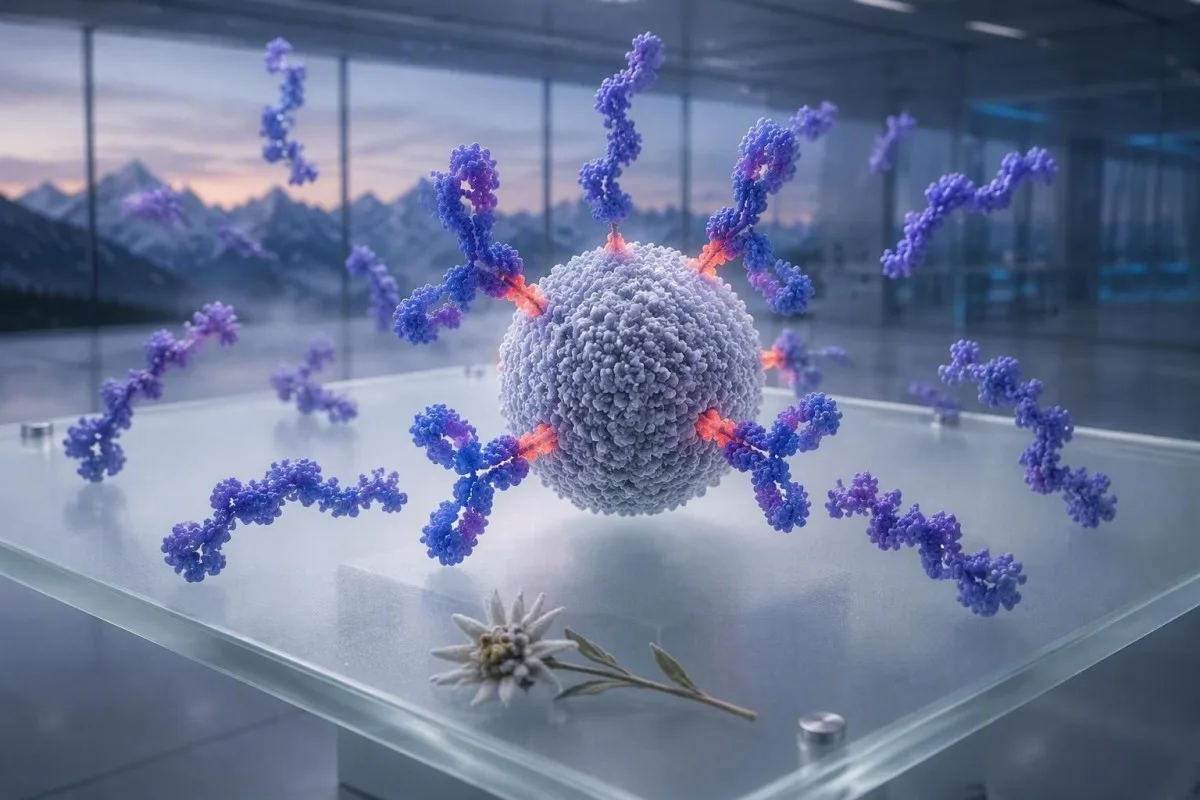
CA 15-3 is chiefly a monitoring marker for some people with established breast cancer, not a test that can diagnose cancer or recurrence on its own. The number matters less than its direction, the laboratory method, symptoms, scans, and treatment history.


- CA 15-3 role: This marker is used mainly to follow known metastatic breast cancer, not to screen healthy people.
- Typical reference limit: Many laboratories report CA 15-3 below 30 U/mL as within range, although assay-specific limits can be 25 to 32 U/mL.
- One high result: A result of 38 U/mL cannot diagnose recurrence; repeat testing and clinical context are required.
- Тренд маанилүү: A persistent rise across two or more tests done by the same laboratory is usually more informative than a single value.
- Жакшы себептер (зыянсыз себептер): Liver disease, reduced kidney function, pregnancy, benign breast conditions, and inflammatory illness can raise CA 15-3.
- Not every cancer releases it: Some metastatic breast cancers produce little or no detectable CA 15-3, even when disease is active.
- Early-treatment caution: CA 15-3 can rise during the first 4–6 жуманын ичинде көрсөтөт after a new systemic treatment without proving treatment failure.
- Шашылыш белгилер: New breathlessness, severe back pain, weakness, jaundice, or persistent neurological symptoms need prompt clinical assessment regardless of the marker level.
What CA 15-3 Can and Cannot Tell You
CA 15-3 test results cannot diagnose breast cancer or confirm recurrence from one blood sample. CA 15-3 is most useful as a serial marker in a person already being treated for breast cancer, particularly metastatic disease; a rise may prompt a clinician to check symptoms, examination findings, and imaging. In my practice, the difficult conversations usually start with a modest isolated rise, and the answer is very often “we need one more piece of information,” not “this proves anything.”
CA 15-3 measures circulating fragments of MUC1, a glycoprotein expressed by epithelial cells. Some breast cancers shed more MUC1-related material into circulation, but normal and non-cancerous tissues can contribute too; that overlap is why the test has poor screening specificity. Kantesti is an AI кан анализи анализатору that reads a CA 15-3 value alongside its laboratory range, prior values, and companion tests rather than treating a red flag as a diagnosis.
Routine CA 15-3 surveillance is not recommended for asymptomatic people after curative treatment for early-stage breast cancer. The American Society of Clinical Oncology follow-up guideline advises against routine tumour-marker testing in this setting because earlier marker detection has not shown a survival benefit (Khatcheressian et al., 2013). For a practical explanation of why marker movement after treatment needs restraint, read our guide to көтөрүлүп жаткан шишик маркерлери.
A value below 30 U/mL does not rule out active breast cancer, and a value above 30 U/mL does not establish it. This asymmetry catches people out: the marker can be normal in a progressing cancer and high in someone with no cancer activity at all. As Thomas Klein, MD, I tell patients that CA 15-3 is a follow-up clue, not a verdict.
CA 15-3 Reference Ranges, Units, and Laboratory Methods
Most CA 15-3 laboratories use a reference upper limit near 30 U/mL, but the printed range on your own report is the one to use. The assay detects MUC1-associated epitopes, and different manufacturers do not always produce interchangeable values.
CA 15-3 is reported in units per millilitre, written U/mL. Жыйынтык 29 U/mL in a laboratory whose upper limit is 30 U/mL is technically within range, but a rise from 9 to 29 U/mL may still be relevant in a patient whose cancer previously tracked with the marker. The opposite can occur as well: 34 U/mL may be unimportant if it has remained near that value for years.
Some European laboratories set the upper reference limit at 25 U/mL, while many use 30 U/mL же 32 U/mL. Do not compare a 2024 value from one assay directly with a 2026 result from another without checking the method; our explanation of сапаттык жана сандык тесттер covers why a number can look more definitive than it is.
There is no clinically reliable “critical CA 15-3 level” that automatically proves metastatic recurrence. 30 мкмоль/л-ден жоғары 100 Ед/млден жогору generally deserve timely oncology review, especially when rising, yet even this range needs corroboration with imaging and a search for liver or other non-malignant causes.
Why One Elevated Result Cannot Diagnose Recurrence
A single high CA 15-3 result cannot diagnose recurrence because normal biological fluctuation and assay variation can move the number. Clinicians look for a reproducible trend, ideally from the same laboratory, before attaching major significance to a small change.
A change from 27 to 36 U/mL is a 33% increase, but it still may not represent a meaningful biological change. Specimen handling, calibration, antibody interference, and ordinary within-person variation all contribute noise. A laboratory’s delta-check process is designed to identify implausible shifts; our article on лабораториядагы күтүүсүз өзгөрүүлөр ошол эле принципти тереңирээк түшүндүрөт.
I have seen patients obtain a CA 15-3 of 41 U/mL during a viral illness, then 28 U/mL six weeks later without any cancer-directed intervention. That is not a promise that every rise is benign; it is a real-world reason to avoid accelerating from one number to a conclusion.
A repeat test is usually most useful when it uses the same method and is paired with the original clinical question. Your oncology team may repeat it in 2 to 6 weeks, order liver and kidney tests, or bring imaging forward depending on your symptoms, cancer subtype, and how closely CA 15-3 reflected disease in the past.
How Oncologists Read a CA 15-3 Trend
A sustained upward CA 15-3 trend is more concerning than a lone abnormal result, particularly when the rise aligns with symptoms or imaging. The useful question is not “is it high?” but “is it consistently changing beyond this patient’s usual range?”
Three values such as 18, 31, and 58 U/mL over 8 to 12 weeks carry more clinical weight than 18 followed by 34 and then 20 U/mL. The first pattern suggests a directional signal, while the second may reflect ordinary variation or a temporary physiological trigger. Timing matters: compare values obtained before treatment, during treatment, and after an intercurrent illness separately.
Kantesti AI can organize repeated values into a time sequence, but a trend alert is a prompt for medical review, not an imaging diagnosis. Our кан анализин салыштыруу боюнча колдонмо explains why comparing the percentage change, date interval, and laboratory method is safer than simply colouring the highest value red.
A marker rise accompanied by new focal bone pain, persistent cough, weight loss, or abnormal liver enzymes deserves faster assessment than the same rise without clinical change. The reason is pattern convergence: each independent clue shifts the probability, whereas CA 15-3 alone has limited diagnostic power.
Non-Cancer Causes of High CA 15-3 Levels
High CA 15-3 levels can occur without cancer because MUC1-related proteins are not exclusive to malignant cells. Liver dysfunction is one of the more clinically relevant explanations, but benign breast conditions, pregnancy, inflammatory disorders, and impaired kidney function can also contribute.
Cirrhosis, hepatitis, cholestasis, and other liver conditions can raise CA 15-3, sometimes substantially. When bilirubin, alkaline phosphatase, GGT, or ALT are abnormal at the same time, clinicians first consider hepatic clearance and biliary disease rather than assuming cancer progression. See our breakdown of боор панелинин жыйынтыктары for the patterns that help separate these possibilities.
Pregnancy and lactation can increase MUC1-related antigen levels, so CA 15-3 has little value for cancer surveillance during these periods without specialist interpretation. Endometriosis, benign breast disease, sarcoidosis, systemic lupus erythematosus, and other inflammatory conditions have also been reported in association with elevation, although the evidence is uneven and individual predictions are poor.
Reduced renal function may change marker concentrations or their clearance, especially when eGFR is below 60 мл/мин/1.73 м². A modest marker rise plus declining eGFR is a different clinical picture from the same marker rise with stable kidney function; our аз eGFR симптомдук көрсөткүчү explains when kidney results need prompt attention.
Why Active Breast Cancer Can Have a Normal CA 15-3
Normal CA 15-3 test results do not rule out active or recurrent breast cancer because not all tumours release enough measurable MUC1 antigen. This limitation is especially important when someone has never had a marker rise that tracked with their disease.
CA 15-3 sensitivity is higher in metastatic disease than in early breast cancer, but it remains incomplete even in advanced disease. A normal level of 17 U/mL can coexist with radiographic progression, which is why scans and symptoms remain central. Duffy et al. described the central problem well: serum breast-cancer markers are adjuncts whose clinical value depends heavily on setting and serial use (Duffy et al., 2010).
This is one reason oncologists often establish whether CA 15-3 was “informative” at baseline. If a patient had extensive measurable disease with CA 15-3 of 12 U/mL, repeating it every month is unlikely to provide useful surveillance; imaging intervals and symptom review will do more clinical work.
Tumour biology matters more than people are often told. Different molecular subtypes, disease sites, and individual patterns of antigen shedding produce different marker behaviour, much as CEA behaves inconsistently across cancers; our article on high CEA symptoms explores the broader limits of serum tumour markers.
CA 15-3 After Surgery, Chemotherapy, or New Treatment
CA 15-3 may transiently rise after a new cancer treatment, so an early increase does not automatically mean treatment failure. In metastatic disease, clinicians commonly avoid using the marker alone to declare progression during the first 4 to 6 weeks of a newly started therapy.
Treatment-related cell turnover can briefly increase circulating MUC1-associated antigen. The ASCO metastatic-breast-cancer biomarker guideline advises that CA 15-3, CA 27-29, and CEA may be used as adjuncts, but cautions against acting solely on marker changes in the first 4 to 6 weeks after therapy begins (Van Poznak et al., 2015).
After surgery, the result is rarely a useful standalone “all clear” test. Postoperative physiology, complications, changes in liver tests, and the lack of a preoperative marker baseline all complicate interpretation; the same caution applies to laboratory shifts after hospital care, discussed in our guide to post-discharge blood changes.
As Thomas Klein, MD, I am particularly cautious when a patient brings an isolated result drawn within days of chemotherapy, an infection, or a hospital admission. A result should be plotted against the treatment date, scan date, steroid exposure, liver tests, and symptoms before anyone uses words such as “response” or “progression.”
Who Should—and Should Not—Have CA 15-3 Testing
CA 15-3 testing is generally reserved for selected people with known breast cancer, especially metastatic disease, rather than used for population screening. It is not a substitute for mammography, breast examination, diagnostic imaging, or evaluation of a new symptom.
People without a prior breast-cancer diagnosis should not use CA 15-3 as a reassurance test or a self-screening test. A false-positive result can trigger anxiety and unnecessary imaging, while a normal result can falsely reassure someone who should have a symptom assessed. Risk-based screening has a different purpose; our guide to cancer-family-history blood tests explains what blood testing can and cannot contribute.
In metastatic breast cancer, CA 15-3 may help monitor treatment when it was elevated at baseline and when imaging cannot be performed frequently. It should sit beside clinical assessment and imaging, not replace them. Kantesti is an AI биомаркер чечмелөө платформасы that can identify whether serial CA 15-3 values were obtained with comparable units and reference limits, helping patients bring a clearer timeline to their oncology visit.
A clinician may decide not to order CA 15-3 at all, and that can be excellent care. The test should answer a specific management question—such as whether a previously informative marker is moving consistently—not simply fill an empty line on a laboratory requisition.
What Usually Happens After a Rising CA 15-3 Result
A rising CA 15-3 result usually leads to confirmation and clinical assessment, not immediate treatment changes. The next step depends on the size and speed of the rise, the patient’s symptoms, liver and kidney results, and whether the marker previously mirrored documented disease.
A sensible first check is whether the sample used the same assay and whether liver and renal markers changed concurrently. Clinicians may repeat CA 15-3 in 2ден 6 жумага чейин, review the complete blood count and liver panel, and examine for new symptoms. In a person with known metastatic disease, they may also move scheduled CT, PET-CT, bone imaging, or MRI earlier.
Imaging is chosen for the clinical question, not because a marker passed an arbitrary threshold. New persistent spinal pain may lead to targeted MRI, while jaundice and a raised alkaline phosphatase may require liver and biliary imaging; our дарыгерге баруу үчүн лабораториялык жыйынтык кыскача баяндамасы can help patients record dates, symptoms, medicines, and prior scans.
A treatment change should not be based on CA 15-3 alone in the absence of other evidence of progression. That principle prevents both overtreatment after a false signal and undertreatment when a marker remains deceptively normal.
False High Results and Laboratory Interference
Laboratory interference can occasionally produce misleading CA 15-3 test results, especially when the result sharply conflicts with the clinical picture. Heterophile antibodies, human anti-animal antibodies, and differences between assay platforms are uncommon but real reasons for a surprising elevation.
An unexpected jump from 22 to 190 U/mL without symptoms or imaging change should prompt laboratory verification before clinical decisions are made. The laboratory may re-run the specimen, dilute it, test a fresh sample, or use an alternative assay platform. This is not “denial” of a result; it is sound analytical medicine.
Biotin is a frequent concern with some immunoassays, but its effect depends on the assay design and cannot be assumed for every CA 15-3 method. Bring a complete supplement list, including hair-and-nail products containing 5,000 ден 10,000 микрограмм of biotin, to the laboratory or oncology team. Our guide to кан анализдеринен мурда кошумчалар explains why timing and assay design matter.
A visibly hemolysed sample is not a classic cause of high CA 15-3, but any compromised specimen deserves caution. If the report flags sample quality or the result makes no biological sense, a clean redraw is often more useful than serially debating one questionable number.
The Liver, Kidneys, and Inflammation: Context That Changes Meaning
Abnormal liver, kidney, or inflammatory results can change the meaning of a high CA 15-3 level because these conditions affect antigen release, clearance, and clinical probability. A marker should never be interpreted as a separate island on a report.
CA 15-3 of 46 U/mL with bilirubin 42 micromol/L and alkaline phosphatase 310 IU/L needs a different first conversation than CA 15-3 of 46 U/mL with normal liver tests. The former may reflect cholestasis, liver involvement, or both, so the pattern directs the work-up. Our explanation of холестаздын кан үлгүлөрү details why ALP, GGT, and bilirubin are read together.
CRP and ESR can support the presence of inflammation, but neither can explain a CA 15-3 rise by itself. A high CRP after pneumonia may make a temporary inflammatory contribution plausible, whereas a normal CRP does not exclude cancer activity. This is one of those areas where context matters more than the number.
Кантести - бул AI лабораториялык тест чечмелөө кызматы аркылуу жарыяланат designed to surface these adjacent laboratory patterns, including eGFR, bilirubin, ALP, ALT, and CRP, for discussion with a clinician. It does not determine whether a marker rise represents recurrence; that decision requires oncology expertise, imaging, and the patient in front of us.
Symptoms That Need Prompt Review Regardless of CA 15-3
New concerning symptoms need medical assessment even when CA 15-3 is normal, and a high CA 15-3 without symptoms is usually not an emergency by itself. Urgency is driven by the symptom pattern and potential organ involvement, not by a marker threshold alone.
Seek urgent same-day medical advice for new severe back pain with leg weakness, loss of bladder or bowel control, sudden breathlessness, chest pain, confusion, or jaundice. These symptoms can indicate problems requiring rapid assessment whether CA 15-3 is 12 U/mL же 120 Ед/мл. For symptom-specific triage, see our guide to көкүрөк оорусуна кан тесттерин.
Persistent bone pain that wakes you at night, a worsening cough, unintentional weight loss, abdominal swelling, or new headaches should be discussed promptly with the oncology team. Most such symptoms will not represent metastatic progression, but waiting for the next scheduled marker draw is not the right safety net.
Do not let a normal marker override a physical change you can feel. People sometimes postpone calling because their CA 15-3 is “fine”; that is precisely the use the test was never designed for.
How to Prepare for a CA 15-3 Follow-Up Appointment
The most useful CA 15-3 follow-up visit includes a dated trend, the laboratory reference ranges, treatment dates, symptoms, and recent imaging—not only the latest number. A short, structured record reduces confusion when values come from several laboratories or countries.
Write down each CA 15-3 value, unit, laboratory name, collection date, and the printed upper limit. Add chemotherapy, endocrine therapy, targeted treatment, surgery, radiotherapy, acute infections, hospital admissions, and major medication changes from the preceding 8 жума. The temporal relationship is often the hidden clue.
Include companion results where available: bilirubin, ALP, GGT, ALT, AST, creatinine, eGFR, calcium, full blood count, CRP, and CEA. Our узунунан байкоо жүргүзүлгөн кан анализи боюнча колдонмо shows how a personal baseline can be clinically more useful than a generic reference interval.
If you upload a report, verify that the extracted CA 15-3 value and units match the original PDF before discussing it with a clinician. Kantesti AI supports trend organization in approximately 60 секундда, but the source report and your oncology team remain the authority for clinical decisions.
How Kantesti Frames CA 15-3 Results Safely
Kantesti frames CA 15-3 as a contextual follow-up marker and does not label a single elevated result as cancer recurrence. This is deliberate: safe interpretation requires the assay range, prior values, treatment timeline, symptoms, and relevant organ-function results.
Kantesti AI identifies whether a CA 15-3 value is outside its reported laboratory interval and whether serial values show a possible directional change. Our system is built to highlight questions for a clinician—such as whether bilirubin rose at the same time—not to replace oncology assessment. Read about the clinical standards behind this approach in our медициналык тастыктоо боюнча сереп.
Privacy matters with cancer records. Kantesti uses GDPR-aligned, privacy-focused handling for uploaded laboratory documents, and its multilingual workflow can help families across more than 127 өлкөдөгү organize results before an appointment. A well-organized record is useful; a confident-looking algorithmic diagnosis without clinical verification is not.
The safest interpretation is often a bounded one: “this value is mildly elevated and merits repeat or oncology review,” rather than “this means recurrence.” Биздин AI технология боюнча колдонмо describes how extracted lab data are checked against report context and reference information.
The Bottom Line: A Follow-Up Signal, Not a Diagnosis
CA 15-3 is most helpful when it is a previously informative marker that rises consistently in someone with known breast cancer; it cannot confirm recurrence by itself. As of September 13, 2026, major oncology guidance still supports using it only as an adjunct to clinical review and imaging, not as a standalone decision-maker.
Ask three questions when you see a high result: is this a real repeated change, could liver or kidney disease explain it, and does it match symptoms or imaging? Those questions are more clinically useful than searching for a universal dangerous cutoff. Kantesti's medical content is reviewed with input from our Медициналык кеңеш, but your treating oncology team knows the biological details of your cancer and should direct follow-up.
For broader context on laboratory names, methods, and reference ranges, consult our кан анализинин биомаркер боюнча колдонмосу. Two Kantesti research resources are listed below for transparency about evidence-based laboratory interpretation methods; they do not validate CA 15-3 as a screening test and should not be used to self-diagnose.
Do not change cancer treatment, delay symptom assessment, or request emergency imaging solely because of one CA 15-3 result. Most patients find that plotting the result beside prior values and then speaking to their oncology nurse or clinician turns a frightening red flag into a manageable, specific next step.
Көп берилүүчү суроолор
CA 15-3 деңгээлинин жогору деп эсептелгени кайсы?
Көпчүлүк лабораториялар CA 15-3ти болжол менен 30 U/мл жогору деп эсептешет, бирок анализине жараша жогорку чектер болжол менен 25тен 32 U/млге чейин өзгөрөт. Ошондуктан 35 U/мл мааниси эмчек рагынын кайталанышынын далили эмес, жеңил көтөрүлүш болуп саналат. 100 U/мл жогору баалуулуктар, айрыкча алар көбөйүп жатса, онкологиялык кароону тездетип турушу мүмкүн, бирок симптомдор, текшерүү, сүрөттөө жана кайталап текшерүүсүз кайталанууну диагноздоо үчүн эч кандай CA 15-3 чеги жок.
Рактан башка учурларда да CA 15-3 жогору болушу мүмкүнбү?
Ооба, CA 15-3 раксыз эле жогорулашы мүмкүн. Боор оорусу, холестаз, бөйрөк функциясынын төмөндөшү, кош бойлуулук, лактация, эмчектин залалсыз оорулары жана кээ бир сезгенүү же аутоиммундук шарттар жогорулаган натыйжага салым кошо алат. 40 U/mL CA 15-3 мааниси, анормалдуу билирубин жана ишкер фосфатазасы менен, боордун кадимки тесттери менен бирдей мааниден башкача баалоону талап кылат. Ошол эле лабораториялык ыкма менен кайталап текшерүү көбүнчө биринчи акылдуу кадам болуп саналат.
CA 15-3 жогорулашы ар дайым эле эмчек рагынын кайталанганын билдиреби?
Жок, CA 15-3түн жогорулашы ар дайым эле эмчек рагынын кайтып келгенин билдирбейт. 8-12 жуманын ичинде 18ден 31ге, анан 58 U/mLге чейинки ырааттуу өсүш, 38 U/mL болгон бир эле натыйжага караганда көбүрөөк тынчсызданууну жаратат. Жада калса, туруктуу өсүштү да симптомдар, боор жана бөйрөк тесттери, дарылоонун убактысы жана сүрөттөө менен салыштырып текшерүү керек. Онколог топтору прогрессияны аныктоо үчүн CA 15-3тү жалгыз колдонушпайт.
Can CA 15-3 be normal if breast cancer has spread?
Yes, metastatic breast cancer can be present with a normal CA 15-3 result. Some cancers release little MUC1-associated antigen, and some individuals never have an informative CA 15-3 elevation even with measurable disease. A result below 30 U/mL therefore cannot rule out recurrence or progression. New symptoms such as focal bone pain, breathlessness, jaundice, or neurological changes still require medical review.
How soon should CA 15-3 be repeated after a high result?
The repeat interval depends on clinical circumstances, but a clinician may repeat a mildly unexpected CA 15-3 elevation in about 2 to 6 weeks using the same laboratory method. Earlier review is appropriate when the result is rising quickly, exceeds prior baseline substantially, or occurs with concerning symptoms or abnormal liver tests. After a new systemic treatment begins, marker changes during the first 4 to 6 weeks are interpreted cautiously. Your oncology team should set the interval because they know whether CA 15-3 has tracked your disease before.
Can chemotherapy make CA 15-3 rise?
CA 15-3 can rise temporarily after chemotherapy or another new systemic cancer treatment. Treatment-related cellular turnover may increase circulating MUC1-associated antigen before the marker falls, which is why ASCO guidance recommends caution when interpreting marker changes during the first 4 to 6 weeks of therapy. A single early increase should not be used alone to declare that treatment has failed. Clinicians combine the marker with symptoms, examination, and planned imaging.
Бүгүн AI менен күчөтүлгөн кан анализин талдоону алыңыз
Дүйнө жүзү боюнча 2 миллиондон ашык колдонуучу Kantestiти заматта, так лабораториялык анализ талдоосу үчүн ишенет. Кан анализиңизди жүктөп, бир нече секунд ичинде 15,000+ биомаркерлеринин комплекстүү чечмелөөсүн алыңыз.
📚 Шилтемеленген изилдөө басылмалары
Кляйн, Т., Митчелл, С., & Вебер, Х. (2026). Темирди изилдөө боюнча колдонмо: TIBC, темирдин каныккандыгы жана байланыштыруу жөндөмдүүлүгү. Kantesti AI медициналык изилдөө.
Кляйн, Т., Митчелл, С., & Вебер, Х. (2026). aPTT нормалдуу диапазону: D-димер, С протеини боюнча кандын уюшу боюнча колдонмо. Kantesti AI медициналык изилдөө.
📖 Тышкы медициналык шилтемелер
⚕️ Медициналык эскертүү
Бул макала билим берүү максатында гана жана медициналык кеңеш болуп саналбайт. Диагноз коюу жана дарылоо чечимдери үчүн дайыма квалификациялуу саламаттыкты сактоо адисине кайрылыңыз.
E-E-A-T ишеним сигналдары
Тажрыйба
Дарыгер жетектеген лабораториялык чечмелөө иш процесстерин клиникалык кароо.
Экспертиза
Биомаркерлер клиникалык контекстте кандай жүрөрүнө лабораториялык медицина багыты.
Авторитеттүүлүк
Доктор Томас Клейн жазган, доктор Сара Митчелл жана профессор доктор Ханс Вебер тарабынан каралган.
Ишенимдүүлүк
Тынчсызданууну азайтуу үчүн так кийинки кадамдар менен далилге негизделген чечмелөө.