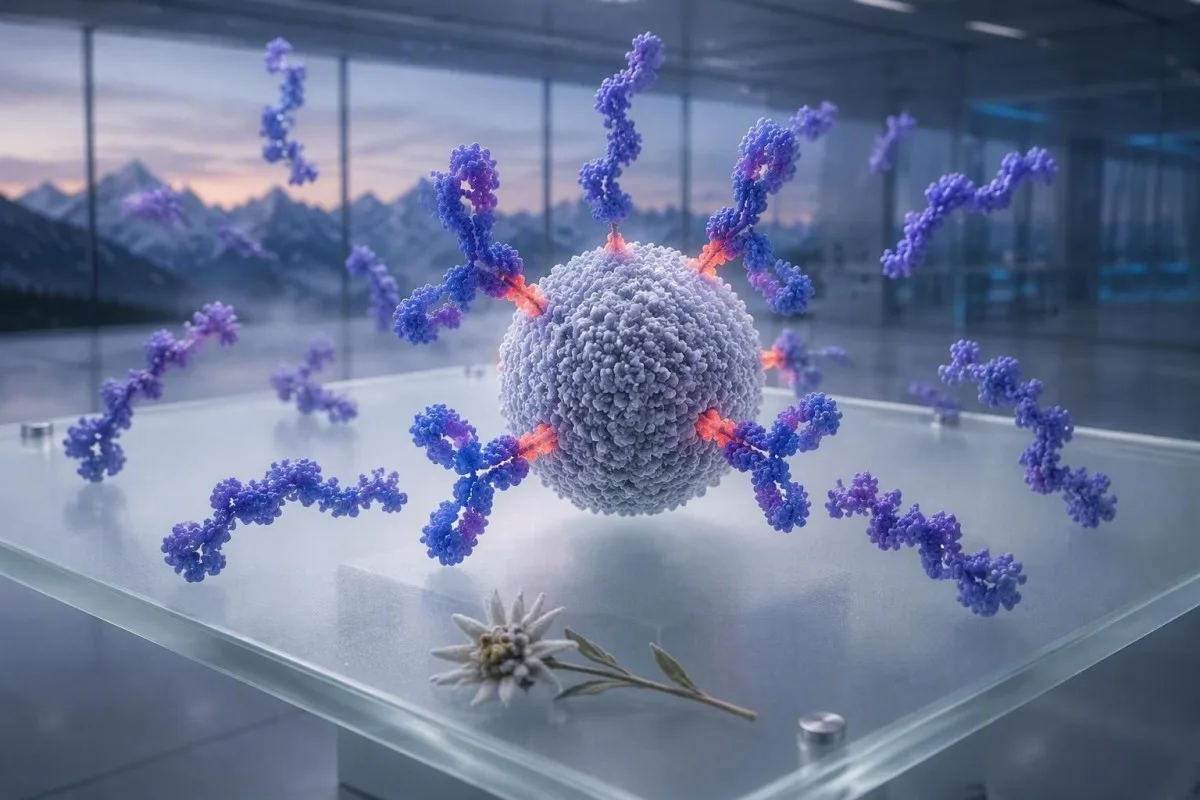
Is e CA 15-3 prìomh chomharra sgrùdaidh do chuid de dhaoine le aillse broilleach stèidhichte, chan e deuchainn a dh ’fhaodadh aillse no ath-chuairt a dhearbhadh leis fhèin. Is e an stiùireadh nas cudromaiche na an àireamh, an dòigh obair-lann, comharraidhean, sganaidhean, agus eachdraidh làimhseachaidh.


- Dreuchd CA 15-3: Tha am marbhadh seo air a chleachdadh sa mhòr-chuid gus aillse broilleach aillseach aithnichte a leantainn, chan ann airson daoine fallain a sgrìonadh.
- Crìoch iomraidh àbhaisteach: Bidh mòran obair-lann ag aithris CA 15-3 gu h-ìosal 30 U/mL mar taobh a-staigh raon, ged a dh ’fhaodadh crìochan sònraichte assay a bhith 25 gu 32 U/mL.
- Aon toradh àrd: Toradh bho 38 U/mL chan urrainn a bhith a’ dearbhadh tilleadh; feumar deuchainn ath-aithris agus co-theacsa clionaigeach.
- Tha cudrom air an gluasad: Mar as trice tha àrdachadh leantainneach thar dà dheuchainn no barrachd a rinn an aon obair-lann nas fhiosaiche na aon luach.
- Adhbharan neo-mhillteach: Faodaidh tinneas grùthan, gnìomh dubhaig lag, torrachas, suidheachaidhean broilleach neo-aillseach, agus tinneas sèid CA 15-3 a thogail.
- Chan eil a h-uile aillse ga leigeil ma sgaoil: Bidh cuid de aillsean broilleach meatastatach a’ dèanamh glè bheag no gun CA 15-3 sam bith a ghabhas lorg, eadhon nuair a tha tinneas gnìomhach.
- Rabhadh tràth-leigheas: Faodaidh CA 15-3 àrdachadh tron chiad 4 gu 6 seachdainean às deidh làimhseachadh siostaim ùr gun a bhith a’ dearbhadh fàilligeadh leigheis.
- Comharraidhean èiginneach: Feumaidh dùmhlachd ùr, pian cùil dona, laigse, buidheachas, no comharran dìonach leantainneach measadh clionaigeach sgiobalta ge bith dè an ìre comharra.
Na dh’fhaodas agus nach urrainn CA 15-3 innse dhut
Chan urrainn do thoraidhean deuchainn CA 15-3 aillse broilleach a dhearbhadh no tilleadh a dhearbhadh bho aon sampall fala. Tha CA 15-3 as fheumail mar chomharra sreathach ann an neach a tha mar-thà gan làimhseachadh airson aillse broilleach, gu sònraichte tinneas meatastatach; faodaidh àrdachadh a bhrosnachadh do neach-clionaigeach sgrùdadh a dhèanamh air comharraidhean, toraidhean sgrùdaidh, agus ìomhaighean. Nam chleachdadh, mar as trice bidh na còmhraidhean duilich a“ tòiseachadh le àrdachadh beag singilte, agus tha am freagairt gu math tric ”tha feum againn air aon phìos fiosrachaidh a bharrachd,“ chan e ”tha seo a’ dearbhadh dad.”
Bidh CA 15-3 a’ tomhas phàirtean cuairteachaidh de MUC1, glycoprotein a tha air a chur an cèill le ceallan epithelial. Bidh cuid de aillsean broilleach a’ rùsgadh barrachd stuth co-cheangailte ri MUC1 a-steach do chuairteachadh, ach faodaidh nèapraigean àbhaisteach agus neo-aillseach cur ris cuideachd; is e an ùine sin as coireach gu bheil droch shònrachadh sgrìonaidh aig an deuchainn. Kantesti na Anailisiche deuchainn fala AI a leughas luach CA 15-3 còmhla ris an raon obair-lann aige, luachan roimhe, agus deuchainnean companach seach a bhith a’ làimhseachadh bratach dhearg mar dhearbhadh.
Chan eilear a’ moladh sgrùdadh CA 15-3 cunbhalach airson daoine gun chomharran às deidh leigheas slànachaidh airson aillse broilleach tràth. Tha an stiùireadh leantainn Ameireaganach a’ Comann airson Oncology Clionaigeach a’ moladh an aghaidh deuchainn comharran tumhair cunbhalach sa t-suidheachadh seo leis nach do nochd lorgaidh comharra na bu thràithe buannachd ann am mairsinn (Khatcheressian et al., 2013). Airson mìneachadh practaigeach air carson a dh’ fheumas gluasad comharra às deidh leigheas a bhith air a chuingealachadh, leugh an stiùireadh againn gu comharran tumhair a’ sìor fhàs.
Chan eil luach gu h-ìosal 30 U/mL a’ dùnadh a-mach aillse broilleach gnìomhach, agus luach os cionn 30 U/mL chan eil e ga stèidheachadh. Tha an neo-chunbhalachd seo a’ glacadh dhaoine: faodaidh an comharra a bhith àbhaisteach ann an aillse a tha a’ fàs agus àrd ann an cuideigin gun ghnìomhachd aillse idir. Mar Thomas Klein, MD, tha mi ag innse do dh’ euslaintich gu bheil CA 15-3 na chomharra leantainn, chan e breith.
Raointean iomraidh, aonadan, agus dòighean obair-lann CA 15-3
Bidh a’ mhòr-chuid de obair-lannan CA 15-3 a’ cleachdadh crìoch àrd iomraidh faisg air 30 U/mL, ach is e an raon clò-bhuailte air an aithisg agad fhèin an tè a chleachdas tu. Tha an sgrùdadh a’ lorg epitopes co-cheangailte ri MUC1, agus chan eil luchd-saothrachaidh eadar-dhealaichte an-còmhnaidh a’ toirt a-mach luachan a ghabhas atharrachadh.
CA 15-3 is reported in units per millilitre, written U/mL. Toradh de 29 U/mL in a laboratory whose upper limit is 30 U/mL is technically within range, but a rise from 9 to 29 U/mL may still be relevant in a patient whose cancer previously tracked with the marker. The opposite can occur as well: 34 U/mL may be unimportant if it has remained near that value for years.
Some European laboratories set the upper reference limit at 25 U/mL, while many use 30 U/mL no 32 U/mL. Do not compare a 2024 value from one assay directly with a 2026 result from another without checking the method; our explanation of deuchainnean càileachdail an aghaidh deuchainnean meudachd covers why a number can look more definitive than it is.
There is no clinically reliable “critical CA 15-3 level” that automatically proves metastatic recurrence. Luachan os cionn às dèidh làimhseachadh aillse colorectal airidh air ath-sgrùdadh ann an àm, gu h-àraidh ma tha e a’ dol suas air deuchainn ath-aithriseach. Chan eil CA 19-9 os cionn generally deserve timely oncology review, especially when rising, yet even this range needs corroboration with imaging and a search for liver or other non-malignant causes.
Carson nach urrainn aon toradh àrdaichte ath-chuairt a dhearbhadh
A single high CA 15-3 result cannot diagnose recurrence because normal biological fluctuation and assay variation can move the number. Clinicians look for a reproducible trend, ideally from the same laboratory, before attaching major significance to a small change.
A change from 27 to 36 U/mL is a 33% increase, but it still may not represent a meaningful biological change. Specimen handling, calibration, antibody interference, and ordinary within-person variation all contribute noise. A laboratory’s delta-check process is designed to identify implausible shifts; our article on atharrachaidhean obann ann an deuchainnean-lann a’ mìneachadh an aon phrionnsapal.
I have seen patients obtain a CA 15-3 of 41 U/mL during a viral illness, then 28 U/mL six weeks later without any cancer-directed intervention. That is not a promise that every rise is benign; it is a real-world reason to avoid accelerating from one number to a conclusion.
A repeat test is usually most useful when it uses the same method and is paired with the original clinical question. Your oncology team may repeat it in 2 to 6 weeks, order liver and kidney tests, or bring imaging forward depending on your symptoms, cancer subtype, and how closely CA 15-3 reflected disease in the past.
Mar a leughas oncologists gluasad CA 15-3
A sustained upward CA 15-3 trend is more concerning than a lone abnormal result, particularly when the rise aligns with symptoms or imaging. The useful question is not “is it high?” but “is it consistently changing beyond this patient’s usual range?”
Three values such as 18, 31, and 58 U/mL over 8 to 12 weeks carry more clinical weight than 18 followed by 34 and then 20 U/mL. The first pattern suggests a directional signal, while the second may reflect ordinary variation or a temporary physiological trigger. Timing matters: compare values obtained before treatment, during treatment, and after an intercurrent illness separately.
Kantesti AI can organize repeated values into a time sequence, but a trend alert is a prompt for medical review, not an imaging diagnosis. Our stiùireadh coimeas deuchainn fala explains why comparing the percentage change, date interval, and laboratory method is safer than simply colouring the highest value red.
A marker rise accompanied by new focal bone pain, persistent cough, weight loss, or abnormal liver enzymes deserves faster assessment than the same rise without clinical change. The reason is pattern convergence: each independent clue shifts the probability, whereas CA 15-3 alone has limited diagnostic power.
Adhbharan neo-aillseach de ìrean àrda CA 15-3
High CA 15-3 levels can occur without cancer because MUC1-related proteins are not exclusive to malignant cells. Liver dysfunction is one of the more clinically relevant explanations, but benign breast conditions, pregnancy, inflammatory disorders, and impaired kidney function can also contribute.
Cirrhosis, hepatitis, cholestasis, and other liver conditions can raise CA 15-3, sometimes substantially. When bilirubin, alkaline phosphatase, GGT, or ALT are abnormal at the same time, clinicians first consider hepatic clearance and biliary disease rather than assuming cancer progression. See our breakdown of toraidhean pannal grùthan for the patterns that help separate these possibilities.
Pregnancy and lactation can increase MUC1-related antigen levels, so CA 15-3 has little value for cancer surveillance during these periods without specialist interpretation. Endometriosis, benign breast disease, sarcoidosis, systemic lupus erythematosus, and other inflammatory conditions have also been reported in association with elevation, although the evidence is uneven and individual predictions are poor.
Reduced renal function may change marker concentrations or their clearance, especially when eGFR is below a’ moladh CKD, fo. A modest marker rise plus declining eGFR is a different clinical picture from the same marker rise with stable kidney function; our treoir comharran eGFR ìosal explains when kidney results need prompt attention.
Carson a dh ’fhaodadh aillse broilleach gnìomhach a bhith aig CA 15-3 àbhaisteach
Normal CA 15-3 test results do not rule out active or recurrent breast cancer because not all tumours release enough measurable MUC1 antigen. This limitation is especially important when someone has never had a marker rise that tracked with their disease.
CA 15-3 sensitivity is higher in metastatic disease than in early breast cancer, but it remains incomplete even in advanced disease. A normal level of 17 U/mL can coexist with radiographic progression, which is why scans and symptoms remain central. Duffy et al. described the central problem well: serum breast-cancer markers are adjuncts whose clinical value depends heavily on setting and serial use (Duffy et al., 2010).
This is one reason oncologists often establish whether CA 15-3 was “informative” at baseline. If a patient had extensive measurable disease with CA 15-3 of 12 U/mL, repeating it every month is unlikely to provide useful surveillance; imaging intervals and symptom review will do more clinical work.
Tumour biology matters more than people are often told. Different molecular subtypes, disease sites, and individual patterns of antigen shedding produce different marker behaviour, much as CEA behaves inconsistently across cancers; our article on high CEA symptoms explores the broader limits of serum tumour markers.
CA 15-3 às deidh obair-lannsa, ceimigeachd, no làimhseachadh ùr
CA 15-3 may transiently rise after a new cancer treatment, so an early increase does not automatically mean treatment failure. In metastatic disease, clinicians commonly avoid using the marker alone to declare progression during the first 4 to 6 weeks of a newly started therapy.
Treatment-related cell turnover can briefly increase circulating MUC1-associated antigen. The ASCO metastatic-breast-cancer biomarker guideline advises that CA 15-3, CA 27-29, and CEA may be used as adjuncts, but cautions against acting solely on marker changes in the first 4 to 6 weeks after therapy begins (Van Poznak et al., 2015).
After surgery, the result is rarely a useful standalone “all clear” test. Postoperative physiology, complications, changes in liver tests, and the lack of a preoperative marker baseline all complicate interpretation; the same caution applies to laboratory shifts after hospital care, discussed in our guide to post-discharge blood changes.
As Thomas Klein, MD, I am particularly cautious when a patient brings an isolated result drawn within days of chemotherapy, an infection, or a hospital admission. A result should be plotted against the treatment date, scan date, steroid exposure, liver tests, and symptoms before anyone uses words such as “response” or “progression.”
Cò bu chòir - agus nach bu chòir - deuchainn CA 15-3 fhaighinn
CA 15-3 testing is generally reserved for selected people with known breast cancer, especially metastatic disease, rather than used for population screening. It is not a substitute for mammography, breast examination, diagnostic imaging, or evaluation of a new symptom.
People without a prior breast-cancer diagnosis should not use CA 15-3 as a reassurance test or a self-screening test. A false-positive result can trigger anxiety and unnecessary imaging, while a normal result can falsely reassure someone who should have a symptom assessed. Risk-based screening has a different purpose; our guide to cancer-family-history blood tests explains what blood testing can and cannot contribute.
In metastatic breast cancer, CA 15-3 may help monitor treatment when it was elevated at baseline and when imaging cannot be performed frequently. It should sit beside clinical assessment and imaging, not replace them. Kantesti is an àrd-ùrlar mìneachaidh biomarcadairean AI that can identify whether serial CA 15-3 values were obtained with comparable units and reference limits, helping patients bring a clearer timeline to their oncology visit.
A clinician may decide not to order CA 15-3 at all, and that can be excellent care. The test should answer a specific management question—such as whether a previously informative marker is moving consistently—not simply fill an empty line on a laboratory requisition.
Dè thachras mar as trice às deidh toradh CA 15-3 a tha ag èirigh
A rising CA 15-3 result usually leads to confirmation and clinical assessment, not immediate treatment changes. The next step depends on the size and speed of the rise, the patient’s symptoms, liver and kidney results, and whether the marker previously mirrored documented disease.
A sensible first check is whether the sample used the same assay and whether liver and renal markers changed concurrently. Clinicians may repeat CA 15-3 in 2 gu 6 seachdainean, review the complete blood count and liver panel, and examine for new symptoms. In a person with known metastatic disease, they may also move scheduled CT, PET-CT, bone imaging, or MRI earlier.
Imaging is chosen for the clinical question, not because a marker passed an arbitrary threshold. New persistent spinal pain may lead to targeted MRI, while jaundice and a raised alkaline phosphatase may require liver and biliary imaging; our obair-lann aig tadhal dotair can help patients record dates, symptoms, medicines, and prior scans.
A treatment change should not be based on CA 15-3 alone in the absence of other evidence of progression. That principle prevents both overtreatment after a false signal and undertreatment when a marker remains deceptively normal.
Toraidhean àrda ceàrr agus buaireadh obair-lann
Laboratory interference can occasionally produce misleading CA 15-3 test results, especially when the result sharply conflicts with the clinical picture. Heterophile antibodies, human anti-animal antibodies, and differences between assay platforms are uncommon but real reasons for a surprising elevation.
An unexpected jump from 22 to 190 U/mL without symptoms or imaging change should prompt laboratory verification before clinical decisions are made. The laboratory may re-run the specimen, dilute it, test a fresh sample, or use an alternative assay platform. This is not “denial” of a result; it is sound analytical medicine.
Biotin is a frequent concern with some immunoassays, but its effect depends on the assay design and cannot be assumed for every CA 15-3 method. Bring a complete supplement list, including hair-and-nail products containing 5,000 gu 10,000 micrograman of biotin, to the laboratory or oncology team. Our guide to stuthan cur-ris mus dèan thu deuchainnean fala explains why timing and assay design matter.
A visibly hemolysed sample is not a classic cause of high CA 15-3, but any compromised specimen deserves caution. If the report flags sample quality or the result makes no biological sense, a clean redraw is often more useful than serially debating one questionable number.
An grùthan, na dubhagan, agus sèid: Co-theacsa a dh ’atharraicheas brìgh
Abnormal liver, kidney, or inflammatory results can change the meaning of a high CA 15-3 level because these conditions affect antigen release, clearance, and clinical probability. A marker should never be interpreted as a separate island on a report.
CA 15-3 of 46 U/mL with bilirubin 42 micromol/L and alkaline phosphatase 310 IU/L needs a different first conversation than CA 15-3 of 46 U/mL with normal liver tests. The former may reflect cholestasis, liver involvement, or both, so the pattern directs the work-up. Our explanation of pàtrain fala cholestasis details why ALP, GGT, and bilirubin are read together.
CRP and ESR can support the presence of inflammation, but neither can explain a CA 15-3 rise by itself. A high CRP after pneumonia may make a temporary inflammatory contribution plausible, whereas a normal CRP does not exclude cancer activity. This is one of those areas where context matters more than the number.
Tha Kantesti na seirbheis eadar-mhìneachaidh deuchainn-lann AI designed to surface these adjacent laboratory patterns, including eGFR, bilirubin, ALP, ALT, and CRP, for discussion with a clinician. It does not determine whether a marker rise represents recurrence; that decision requires oncology expertise, imaging, and the patient in front of us.
Comharraidhean a dh ’fheumas ath-sgrùdadh sgiobalta ge bith dè an CA 15-3
New concerning symptoms need medical assessment even when CA 15-3 is normal, and a high CA 15-3 without symptoms is usually not an emergency by itself. Urgency is driven by the symptom pattern and potential organ involvement, not by a marker threshold alone.
Seek urgent same-day medical advice for new severe back pain with leg weakness, loss of bladder or bowel control, sudden breathlessness, chest pain, confusion, or jaundice. These symptoms can indicate problems requiring rapid assessment whether CA 15-3 is 12 U/mL no Faighnich an urrainn do dheuchainnean grùthan no bile an toradh a mhìneachadh. Ma tha CA 19-9. For symptom-specific triage, see our guide to deuchainnean fala airson pian broilleach.
Persistent bone pain that wakes you at night, a worsening cough, unintentional weight loss, abdominal swelling, or new headaches should be discussed promptly with the oncology team. Most such symptoms will not represent metastatic progression, but waiting for the next scheduled marker draw is not the right safety net.
Do not let a normal marker override a physical change you can feel. People sometimes postpone calling because their CA 15-3 is “fine”; that is precisely the use the test was never designed for.
Mar a nì thu ullachadh airson dreuchd leanachaidh CA 15-3
The most useful CA 15-3 follow-up visit includes a dated trend, the laboratory reference ranges, treatment dates, symptoms, and recent imaging—not only the latest number. A short, structured record reduces confusion when values come from several laboratories or countries.
Write down each CA 15-3 value, unit, laboratory name, collection date, and the printed upper limit. Add chemotherapy, endocrine therapy, targeted treatment, surgery, radiotherapy, acute infections, hospital admissions, and major medication changes from the preceding 8 seachdainean. The temporal relationship is often the hidden clue.
Include companion results where available: bilirubin, ALP, GGT, ALT, AST, creatinine, eGFR, calcium, full blood count, CRP, and CEA. Our stiùireadh deuchainn fala fad-ùine shows how a personal baseline can be clinically more useful than a generic reference interval.
If you upload a report, verify that the extracted CA 15-3 value and units match the original PDF before discussing it with a clinician. Kantesti AI supports trend organization in approximately 60 diog, but the source report and your oncology team remain the authority for clinical decisions.
Mar a chuireas Kantesti toraidhean CA 15-3 air dòigh gu sàbhailte
Kantesti frames CA 15-3 as a contextual follow-up marker and does not label a single elevated result as cancer recurrence. This is deliberate: safe interpretation requires the assay range, prior values, treatment timeline, symptoms, and relevant organ-function results.
Kantesti AI identifies whether a CA 15-3 value is outside its reported laboratory interval and whether serial values show a possible directional change. Our system is built to highlight questions for a clinician—such as whether bilirubin rose at the same time—not to replace oncology assessment. Read about the clinical standards behind this approach in our geàrr-shealladh dearbhaidh meidigeach.
Privacy matters with cancer records. Kantesti uses GDPR-aligned, privacy-focused handling for uploaded laboratory documents, and its multilingual workflow can help families across more than 127 dùthaich organize results before an appointment. A well-organized record is useful; a confident-looking algorithmic diagnosis without clinical verification is not.
The safest interpretation is often a bounded one: “this value is mildly elevated and merits repeat or oncology review,” rather than “this means recurrence.” Ar stiùireadh teicneòlais AI describes how extracted lab data are checked against report context and reference information.
Am prìomh bheachd: Soidhne leanachaidh, chan e dearbhadh
CA 15-3 is most helpful when it is a previously informative marker that rises consistently in someone with known breast cancer; it cannot confirm recurrence by itself. As of September 13, 2026, major oncology guidance still supports using it only as an adjunct to clinical review and imaging, not as a standalone decision-maker.
Ask three questions when you see a high result: is this a real repeated change, could liver or kidney disease explain it, and does it match symptoms or imaging? Those questions are more clinically useful than searching for a universal dangerous cutoff. Kantesti's medical content is reviewed with input from our Bòrd Comhairleachaidh Meidigeach, but your treating oncology team knows the biological details of your cancer and should direct follow-up.
For broader context on laboratory names, methods, and reference ranges, consult our stiùireadh bith-chomharra fala. Two Kantesti research resources are listed below for transparency about evidence-based laboratory interpretation methods; they do not validate CA 15-3 as a screening test and should not be used to self-diagnose.
Do not change cancer treatment, delay symptom assessment, or request emergency imaging solely because of one CA 15-3 result. Most patients find that plotting the result beside prior values and then speaking to their oncology nurse or clinician turns a frightening red flag into a manageable, specific next step.
Ceistean Bitheanta
Dè an ìre de CA 15-3 a tha air a mheas mar ìre àrd?
Tha mòran obair-lann a’ meas gu bheil CA 15-3 os cionn timcheall air 30 U/mL air a thogail, ged a tha na crìochan àrda ag atharrachadh bho timcheall air 25 gu 32 U/mL a rèir an dearbhaidh. Mar sin, is e luach de 35 U/mL a thogail gu socair, chan e dearbhadh air tilleadh aillse broilleach. Gu tric bidh luachan os cionn 100 U/mL a’ brosnachadh ath-sgrùdadh oncòlais nas tràithe, gu sònraichte ma tha iad a’ dol am meud, ach chan urrainn do dhuine sam bith CA 15-3 a dhearbhadh gun chomharran, sgrùdadh, ìomhaigh, agus deuchainn ath-aithris.
An urrainn do CA 15-3 a bhith àrd às aonais aillse?
Seadh, faodaidh CA 15-3 a bhith air a thogail gun aillse. Faodaidh tinneas grùthan, cholestasis, gnìomh dubhaig lùghdaichte, torrachas, bainneachadh, tinneasan broilleach neo-aillseach, agus cuid de chumhachan sèid no autoimmune cur ri toradh àrd. Feumaidh luach CA 15-3 de 40 U/mL le bilirubin agus phosphatase alcaileach mì-àbhaisteach measadh eadar-dhealaichte bhon aon luach le deuchainnean grùthan àbhaisteach. Gu tric is e ath-dheuchainn leis an aon dòigh obair-lann an ceum ciallachaidh as tràithe.
An àrdachadh ann an CA 15-3 an-còmhnaidh a’ ciallachadh gun do thill aillse broilleach?
Chan eil, chan eil àrdachadh ann an CA 15-3 an-còmhnaidh a' ciallachadh gun do thill aillse broilleach. Tha àrdachadh cunbhalach thairis air dà no trì tomhais, mar eisimpleir 18 gu 31 gu 58 U/mL thairis air 8 gu 12 seachdainean, nas draghail na aon toradh fa leth de 38 U/mL. Feumar eadhon àrdachadh leantainneach a dhearbhadh an aghaidh comharran, deuchainnean grùthan is dubhaig, ùine làimhseachaidh, agus ìomhaighean. Chan eil sgiobaidhean oncology a' cleachdadh CA 15-3 a-mhàin gus adhartas a dhearbhadh.
Am faod CA 15-3 a bhith àbhaisteach ma tha aillse broilleach air sgaoileadh?
Seadh, faodaidh aillse broilleach meatastatach a bhith ann le tòstadh CA 15-3 àbhaisteach. Bidh cuid de dh' aillsean a' leigeil a-mach glè bheag de antigen co-cheangailte ri MUC1, agus cha bhi àrdachadh fiosrachail air CA 15-3 aig cuid de dhaoine fiù 's le tinneas a ghabhas tomhas. Mar sin, chan urrainn tòstadh fo 30 U/mL cur às do thinneas a thilleas no a dh' fhàsas. Feumaidh comharraidhean ùra mar phian cnàmh fòcasach, giorrad analach, buidheachas, no atharrachaidhean nearbhach a bhith air am measadh leis an dotair fhathast.
Dè cho luath 's a bu chòir CA 15-3 ath-aithris an dèidh toradh àrd?
Tha an ùine ath-aithris an urra ris an t-suidheachadh clionaigeach, ach faodaidh neach-clionaigeach àrdachadh CA 15-3 a tha neo-fhaicsinneach ath-aithris mu 2 gu 6 seachdainean a’ cleachdadh an aon dòigh obair-lann. Tha ath-sgrùdadh nas tràithe iomchaidh nuair a tha an toradh a’ fàs gu luath, nas àirde na an ìre roimhe gu mòr, no a’ tachairt le comharran draghail no deuchainnean grùthan neo-àbhaisteach. Às deidh tòiseachadh air làimhseachadh siostamach ùr, thathas a’ mìneachadh atharrachaidhean comharran anns a’ chiad 4 gu 6 seachdainean gu faiceallach. Bu chòir don sgioba oncology agad an ùine a shuidheachadh oir tha fios aca an robh CA 15-3 air a bhith a’ leantainn do thinneas roimhe seo.
An urrainn do chemotherapy CA 15-3 a thogail?
Faodaidh CA 15-3 èirigh gu sealach an dèidh ceimiteirapi no làimhseachadh ùr eile airson aillse an t-siostaim. Faodaidh tionndadh cheallan co-cheangailte ri làimhseachadh an antigen co-cheangailte ri MUC1 a tha a' cuairteachadh a mheudachadh mus tuit an comharra, is e sin as coireach gu bheil stiùireadh ASCO a' moladh a bhith faiceallach nuair a thathar a' mìneachadh atharrachaidhean air comharran anns a' chiad 4 gu 6 seachdainean den leigheas. Cha bu chòir àrdachadh tràth singilte a chleachdadh leis fhèin gus a ràdh gu bheil an làimhseachadh air fàiligeadh. Bidh luchd-clionaigeach a' cothlamadh an t-samhladh le comharran, sgrùdadh, agus ìomhaighean planaichte.
Faigh Mion-sgrùdadh Deuchainn Fala le Cumhachd AI an-diugh
Thig còmhla ri còrr is 2 mhillean neach air feadh an t-saoghail a tha a’ earbsa Kantesti airson mion-sgrùdadh sa bhad, ceart air deuchainnean obair-lann. Luchdaich suas na toraidhean deuchainn fala agad agus faigh mìneachadh coileanta air biomarcair 15,000+ ann an diogan.
📚 Foillseachaidhean Rannsachaidh le Iomraidhean
Klein, T., Mitchell, S., & Weber, H. (2026). Stiùireadh Sgrùdaidhean Iarainn: TIBC, Sàthadh Iarainn & Comas Ceangail. Rannsachadh Leigheis AI Kantesti.
Klein, T., Mitchell, S., & Weber, H. (2026). Raon Àbhaisteach aPTT: D-Dimer, Pròtain C Stiùireadh air Clotadh Fuil. Rannsachadh Leigheis AI Kantesti.
📖 Iomraidhean Meidigeach Taobh a-muigh
⚕️ Àicheadh Meidigeach
Tha an artaigil seo dìreach airson adhbharan foghlaim agus chan eil e a’ dèanamh comhairle mheidigeach. Cuir fios an-còmhnaidh gu solaraiche cùram slàinte teisteanasach airson co-dhùnaidhean breithneachaidh is leigheis.
Comharran earbsa E-E-A-T
Eòlas
Lèirmheas clionaigeach air a stiùireadh le lighiche air sruthan-obrach mìneachaidh obair-lann.
Eòlas
Fòcas air leigheas obair-lann air mar a bhios bith-chomharraidhean (biomarkers) a’ giùlan ann an co-theacsa clionaigeach.
Ùghdarrasachd
Air a sgrìobhadh le Dr. Thomas Klein le ath-sgrùdadh le Dr. Sarah Mitchell agus Prof. Dr. Hans Weber.
Earbsachd
Mìneachadh stèidhichte air fianais le slighean leanmhainn soilleir gus dragh a lughdachadh.