
A VEGF blood test can help investigate unexplained neuropathy and possible POEMS syndrome. An elevated result supports—not confirms—the diagnosis, and serum versus plasma sampling can substantially change the number.

핵심 요점
- VEGF blood test measures vascular endothelial growth factor, usually reported in pg/mL; it is not included in a routine complete blood count.
- POEMS syndrome testing requires both polyneuropathy and a monoclonal plasma-cell disorder, plus at least 1 other major criterion and 1 minor criterion.
- Serum VEGF above 1,000 pg/mL strongly supports POEMS in the appropriate neuropathy and monoclonal-protein setting, but this threshold is not transferable to plasma.
- Serum versus plasma matters because platelets release VEGF during clotting; serum concentrations can be approximately 10 times plasma concentrations.
- High VEGF levels can also occur with iron deficiency, hypoxia, inflammatory conditions and some cancers; the result is not a general cancer screening test.
- 정상 결과 does not completely exclude POEMS, particularly after corticosteroids or other treatment; medication timing belongs in the interpretation.
- 추세 비교 requires the same specimen type and preferably the same laboratory; 1 ng/mL equals 1,000 pg/mL.
- Urgent weakness progressing over hours or days, breathing difficulty or trouble swallowing needs immediate assessment rather than waiting for a repeat VEGF measurement.
What does a VEGF blood test actually tell you?
그만큼 VEGF blood test measures vascular endothelial growth factor, a protein involved in vessel growth and permeability. It can support a POEMS syndrome evaluation in unexplained neuropathy, but even serum VEGF above 1,000 pg/mL does not establish the diagnosis without the required clinical findings.

VEGF testing generally measures VEGF-A, rather than every member of the VEGF protein family. Increased vascular permeability helps explain why POEMS can involve leg swelling, abdominal fluid or fluid around the lungs alongside nerve symptoms; the concentration is usually reported in pg/mL, 그리고 1 ng/mL equals 1,000 pg/mL.
A vascular endothelial growth factor test is a targeted investigation, not a routine wellness marker or a direct measurement of nerve damage. For example, 1,200 pg/mL means very different things in serum and plasma, and neither number tells you whether the plasma-cell disorder required for classic POEMS is present. Our 바이오마커 해석 가이드 explains why specimen details belong beside the result.
칸테스티는 AI 혈액검사 분석기 that helps readers organize laboratory results and questions for clinical follow-up; a VEGF result of 1,200 pg/mL still requires the laboratory's specimen type, reference interval and clinical context. We explain our role in 저희 기관 개요는. An AI explanation cannot replace the neurological examination, monoclonal-protein testing or specialist assessment needed to interpret this particular marker.
When does unexplained neuropathy justify VEGF testing?
VEGF testing is most useful when progressive peripheral neuropathy has features suggesting POEMS, especially conduction slowing plus a monoclonal protein, unexplained swelling or a high platelet count. A platelet count above 450 × 10^9/L can add a clue, but it also complicates serum VEGF interpretation.
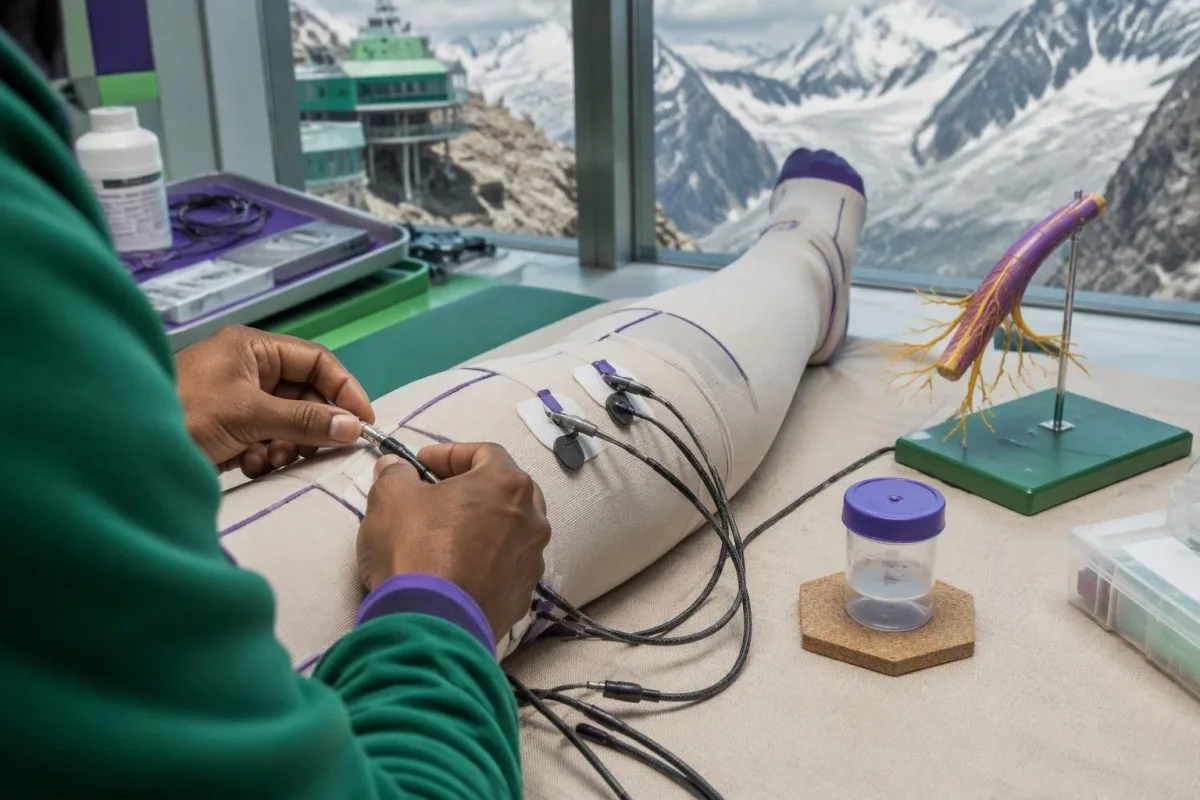
POEMS neuropathy often affects both legs, combines sensory symptoms with weakness and can produce prominent distal motor impairment. Nerve conduction studies may show 2 overlapping processes: demyelinating features and axonal loss. That combination is more informative than numbness alone, particularly when the person also has edema, skin changes or an abnormal monoclonal-protein investigation.
Common, treatable neuropathy causes still need assessment before a rare syndrome dominates the discussion. A hypothetical person with vitamin B12 of B12 may need confirmatory metabolic testing, while supplement-related copper deficiency can cause a different neurological pattern; the laboratory range and examination determine the next step. Our borderline B12 interpretation guide explains why a low-normal B12 result deserves context.
The monoclonal protein's type changes the differential diagnosis: IgM paraproteins can point toward an anti-MAG-associated neuropathy, whereas POEMS usually involves a lambda-restricted plasma-cell disorder. These are not interchangeable explanations for the same symptoms. Our anti-MAG neuropathy explanation describes an alternative pathway; ask the clinician which features made VEGF useful in your particular investigation.
Why serum and plasma VEGF results are not interchangeable
Serum VEGF is usually substantially higher than plasma VEGF because platelets release VEGF while the sample clots. Serum values can be approximately 10배 plasma values, but there is no dependable conversion factor for an individual result (D'Sa et al., 2022).

Serum is obtained after clotting; plasma is separated from an anticoagulated sample. Consequently, serum VEGF reflects circulating VEGF plus VEGF released during specimen preparation, while plasma measurement is also affected by residual platelets and handling. A serum result of 1,500 pg/mL cannot be converted reliably into 150 pg/mL plasma simply by dividing by 10.
Both specimen types can be clinically useful when interpreted with the correct assay-specific evidence. Some specialist services use serum because their diagnostic and monitoring experience is built around it; others use plasma with a carefully controlled processing protocol. The decision is not that 1 specimen is universally correct—it is that the specimen, threshold and clinical question must match.
Before comparing reports, check whether both say serum or both say plasma, whether the units match and whether the laboratories changed. General specimen-quality warnings, explained in our 샘플 간섭 가이드, are a separate issue from platelet release. A reduction from 1,600 pg/mL serum to 160 pg/mL plasma may reflect the specimen change rather than improvement.
What counts as high VEGF on a laboratory report?
There is no universal normal range for VEGF across serum, plasma and assay methods. A published serum study used 771 pg/mL as its elevated threshold, while specialist POEMS guidance discusses serum VEGF above 1,000 pg/mL in a specific clinical setting—not as a general screening cutoff.

Pihan et al. reported 100% sensitivity and 91% specificity for raised serum VEGF in their neuropathy cohort, supporting its usefulness when POEMS is clinically suspected (Pihan et al., 2018). These figures describe a selected clinical population and its laboratory method; they do not mean that an elevated result gives an individual a 91% probability of POEMS.
D'Sa et al. describe serum VEGF above 1,000 pg/mL as highly informative when conduction-slowing neuropathy and a lambda monoclonal plasma-cell disorder are already present (D'Sa et al., 2022). The threshold exists because it separates patterns in specialist cohorts, not because VEGF suddenly becomes harmful at 1,001 pg/mL. Values near the boundary require attention to assay variation and confounders.
The table separates published decision points from your laboratory's own reference interval; it is deliberately not an emergency severity scale. Our 범위 초과 결과 설명 clarifies that distinction. A result of 2,000 pg/mL deserves explanation, but symptoms and the associated findings—not that number alone—determine urgency.
| 수준 | 범위 | 의미 |
|---|---|---|
| Within the reporting laboratory's interval | Laboratory-specific pg/mL | Use the interval printed for that specimen and assay; treatment can reduce VEGF despite an underlying POEMS diagnosis. |
| Published serum research threshold | ≥771 pg/mL serum | Threshold used in the Pihan neuropathy study; not a universal serum reference limit and not applicable to plasma. |
| Specialist POEMS-supporting pattern | >1,000 pg/mL serum | Strongly supports POEMS when the appropriate neuropathy and lambda plasma-cell disorder are present; does not diagnose POEMS alone. |
| Marked elevation requiring context | ≥2,000 pg/mL serum | Can occur in POEMS or substantial confounding conditions, including hypoxia and iron deficiency; no universal VEGF emergency cutoff exists. |
How elevated VEGF fits the POEMS diagnostic criteria
Classic POEMS diagnosis requires both mandatory major criteria, at least 1 additional major criterion and at least 1 minor criterion. Elevated VEGF is an additional major criterion; it cannot replace either polyneuropathy or a monoclonal plasma-cell disorder (D'Sa et al., 2022).

그만큼 2 mandatory major criteria are polyneuropathy and a monoclonal plasma-cell proliferative disorder, typically lambda-restricted. The additional major criteria are elevated VEGF, sclerotic bone lesions and Castleman disease. The acronym describes a recognizable pattern, but a person does not need every letter of POEMS to be present to satisfy the formal criteria.
Minor criteria include organ enlargement, extravascular fluid overload, endocrinopathy, characteristic skin changes, papilledema and thrombocytosis or polycythemia. At least 1 minor criterion is required in the classic framework, and common diabetes or thyroid disease alone is not sufficiently discriminating endocrine evidence. Our 면역고정 검사 결과 안내 자료는 explains how a small monoclonal band can contribute to the assessment.
A hypothetical person with neuropathy, serum VEGF of 2,400 pg/mL and edema has a compelling reason for specialist investigation, but still needs evidence of the required plasma-cell disorder. A normal free light-chain ratio does not exclude POEMS because the clone can be small and intact immunoglobulin findings may be more revealing. Our free light-chain ratio explanation helps distinguish supportive testing from exclusion testing.
Why a small monoclonal protein can matter more than its size
A small or difficult-to-detect monoclonal protein can still be clinically significant in suspected POEMS. A hypothetical M-protein of 0.3 g/dL should not be dismissed merely because it is much smaller than concentrations associated with some other plasma-cell disorders.

Serum protein electrophoresis, serum immunofixation, urine studies and free light-chain testing answer related but different questions. 1 negative electrophoresis result is not equivalent to a negative complete monoclonal-protein evaluation; immunofixation can detect a small band that electrophoresis does not clearly quantify. Our M-spike interpretation guide explains why detection and measurement should be separated.
Bone marrow examination may identify only a limited plasma-cell population, and a focal skeletal abnormality can contain the relevant clone even when marrow sampling is unrevealing. A clinician therefore interprets 3 evidence streams together: protein studies, tissue findings and imaging. The question is whether a monoclonal plasma-cell disorder explains the syndrome, not whether one screening test crossed a large numerical threshold.
칸테스티는 AI 혈액검사 결과 해석 플랫폼 that can help make laboratory terminology easier to understand, but 0.3 g/dL of monoclonal protein cannot be labeled harmless from its size alone. Our AI 기술 설명 describes the interpretation workflow. A suspected POEMS clone requires specialist integration of blood and urine findings with neurological and imaging evidence.
How clinicians distinguish POEMS from CIDP and other neuropathies
POEMS can resemble chronic inflammatory demyelinating polyradiculoneuropathy, or CIDP, on nerve conduction testing. Features such as a lambda monoclonal protein, edema, skin changes and serum VEGF above 1,000 pg/mL shift the evaluation toward POEMS rather than establishing CIDP from conduction slowing alone.

A demyelinating-looking study does not identify 1 specific disease by itself. In POEMS, severe lower-limb axonal loss, prominent distal weakness and systemic features can help distinguish the pattern from typical CIDP; elevated cerebrospinal-fluid protein may occur in both and therefore cannot settle the distinction. Treatment response is another clue, not a substitute for the complete diagnostic criteria.
Different neurological patterns call for different investigations rather than a broad panel of rare-disease antibodies. A sensory neuronopathy or additional autonomic features may prompt a targeted paraneoplastic assessment, while 1 mildly elevated VEGF result does not justify assuming a cancer-related neuropathy. Our anti-Hu result explanation illustrates why the neurological phenotype and confirmatory workup matter.
Fabry disease is another targeted differential when neuropathic symptoms occur with compatible kidney, cardiac or other characteristic findings; its testing pathway is different from POEMS. 2 people with burning feet may require entirely different evaluations if one has small-fiber symptoms and the other has progressive weakness with conduction slowing. Our Fabry testing guide 중증 고혈당도 삼투적으로 세포를 일시적으로 부풀게 할 수 있습니다. 그리고 많은 웹사이트가 암시하는 것과 달리, 탈수는 보통 MCV 자체보다 헤모글로빈과 헤마토크리트에 더 큰 영향을 줍니다. 다만 전체 CBC 해석을 흐리게 만들 수는 있는데, 탈수 관련 “거짓으로 높게” 나오는 현상에 대한.
What else can cause high VEGF levels?
High VEGF levels can occur with iron deficiency, hypoxia, inflammatory disorders and some cancers, as well as POEMS. In selected patients, iron deficiency or hypoxic conditions can produce serum concentrations around or above 2,000 pg/mL, so a marked elevation is not automatically diagnostic (D'Sa et al., 2022).
Iron deficiency is particularly relevant because iron availability affects oxygen-sensing pathways, and iron deficiency can also increase platelet counts. A hypothetical ferritin of 8 ng/mL with anemia offers a plausible confounder, but it does not erase a concurrent neuropathy or monoclonal band. Our 완전한 철분 검사 가이드 explains why ferritin, transferrin saturation and the blood count should be read together.
Obstructive sleep apnea and chronic lung disease can increase VEGF through hypoxic signaling, although the size and consistency of the effect vary. A daytime oxygen saturation of 97% does not exclude intermittent nocturnal desaturation; the sleep history and respiratory assessment may therefore matter. Pihan et al. specifically emphasized considering iron deficiency and hypoxic conditions when interpreting elevated serum VEGF (Pihan et al., 2018).
An acute inflammatory illness can make a borderline or unexplained result harder to interpret, and 1 VEGF measurement is not a validated way to locate or exclude a cancer. Clinicians use symptoms, examination and targeted investigations rather than treating VEGF as a universal cancer marker. Our WBC 및 CRP 비교 explains why accompanying inflammatory results provide context without supplying a definitive cause.
How collection and handling can change a VEGF result
VEGF results depend on the collection tube, clotting conditions, separation protocol and residual platelet content. 혈소판 수치가 600 × 10^9/L makes serum platelet release especially relevant, but no validated bedside formula can correct VEGF simply by dividing by the platelet count.

The requesting service should obtain the laboratory's specific handling instructions before collection, especially for plasma VEGF. Anticoagulant choice, separation timing, centrifugation and freezing requirements differ between assays; 1 generic tube recommendation is not safe for every laboratory. Ask whether the sample followed the laboratory's validated protocol rather than assuming all VEGF samples are processed like a routine chemistry panel.
A contemporaneous complete blood count helps interpret platelet-related effects, but the count itself can occasionally be misleading. Platelet clumping can produce an artificially low count, potentially hiding thrombocytosis when the laboratory reviews a value below 150 × 10^9/L 미만이면. 우리의 혈소판 응집 설명 describes this separate laboratory problem; the laboratory should resolve it rather than the patient calculating a correction.
Fasting is not universally required for VEGF itself, although other tests collected at the same visit may require it. Keep the 2 instructions separate: preparation for the associated panel and processing of the VEGF specimen. Record recent illness, corticosteroid exposure and treatment dates on the clinical history, and do not stop prescribed medication to produce a supposedly more accurate result.
Three hypothetical VEGF results—and different next steps
The same VEGF concentration can lead to different next steps depending on specimen type and associated findings. These 3 hypothetical examples demonstrate interpretation principles; they are not real patient cases and do not define universal treatment or retesting rules.

Example 1: A 54-year-old has progressive distal weakness, conduction slowing, a lambda monoclonal band, edema and serum VEGF of 2,800 pg/mL. That combination warrants prompt neurology and hematology assessment because it connects the mandatory POEMS findings with an additional major and a possible minor criterion. Repeating VEGF may be useful, but it should not become a reason to postpone the wider evaluation.
Example 2: A 42-year-old has serum VEGF of 1,100 pg/mL, 페리틴이 7 ng/mL, 혈소판 520 × 10^9/L and no demonstrated plasma-cell disorder. Clinicians would investigate the iron deficiency and the neurological symptoms while checking whether the specimen and assay were appropriate. A repeat after the relevant confounder is addressed can be informative, but persistent or progressive weakness still needs its own assessment.
Example 3: A report changes from 1,500 pg/mL serum 에게 140 pg/mL plasma at another laboratory. When using Kantesti AI to review these reports, retain both specimen labels; the apparent 91% reduction cannot be called a treatment response. Our 방문 간 검사 결과 비교 explains why methodological differences must be excluded before interpreting a biological trend.
Which tests usually follow a suspicious VEGF result?
A suspicious VEGF result leads to a coordinated neurological, plasma-cell and systemic evaluation—not another VEGF measurement alone. Clinicians usually investigate 3 linked questions: the neuropathy pattern, the monoclonal disorder and the additional features needed to establish or exclude POEMS.

Neurological assessment may include nerve conduction studies, electromyography and targeted testing for alternative neuropathy causes. Plasma-cell investigation commonly includes serum and urine immunofixation, electrophoresis and free light chains, followed by tissue assessment when indicated. A hypothetical albumin of 3.1 g/dL can help assess edema or systemic illness, but it is not a standalone POEMS criterion; our 혈청 단백질 해석 가이드 explains the accompanying chemistry.
Imaging evaluates sclerotic skeletal abnormalities, organ enlargement and lymph nodes, with CT or PET-CT selected by the specialist team. 1 small sclerotic focus may matter even if it is not strongly active on PET, so structural CT findings and functional imaging should be read together. A suspicious focal abnormality may guide tissue examination when the monoclonal disorder is difficult to demonstrate elsewhere.
The remaining workup is directed by symptoms and examination: eye assessment for papilledema, endocrine testing, renal studies and cardiopulmonary evaluation may all be relevant. A platelet count of 480 × 10^9/L can support a minor criterion once other causes are considered, while fluid overload requires assessment of competing cardiac, renal and hepatic explanations. Ask which tests are establishing criteria and which are measuring disease impact.
When should VEGF be repeated or tracked over time?
Repeat VEGF testing is useful when an unexpected result needs confirmation or when established POEMS is being monitored. There is no universal retesting interval for an unexplained elevation; specialist monitoring often uses intervals measured in months, such as 3–6개월, depending on treatment phase and clinical status.
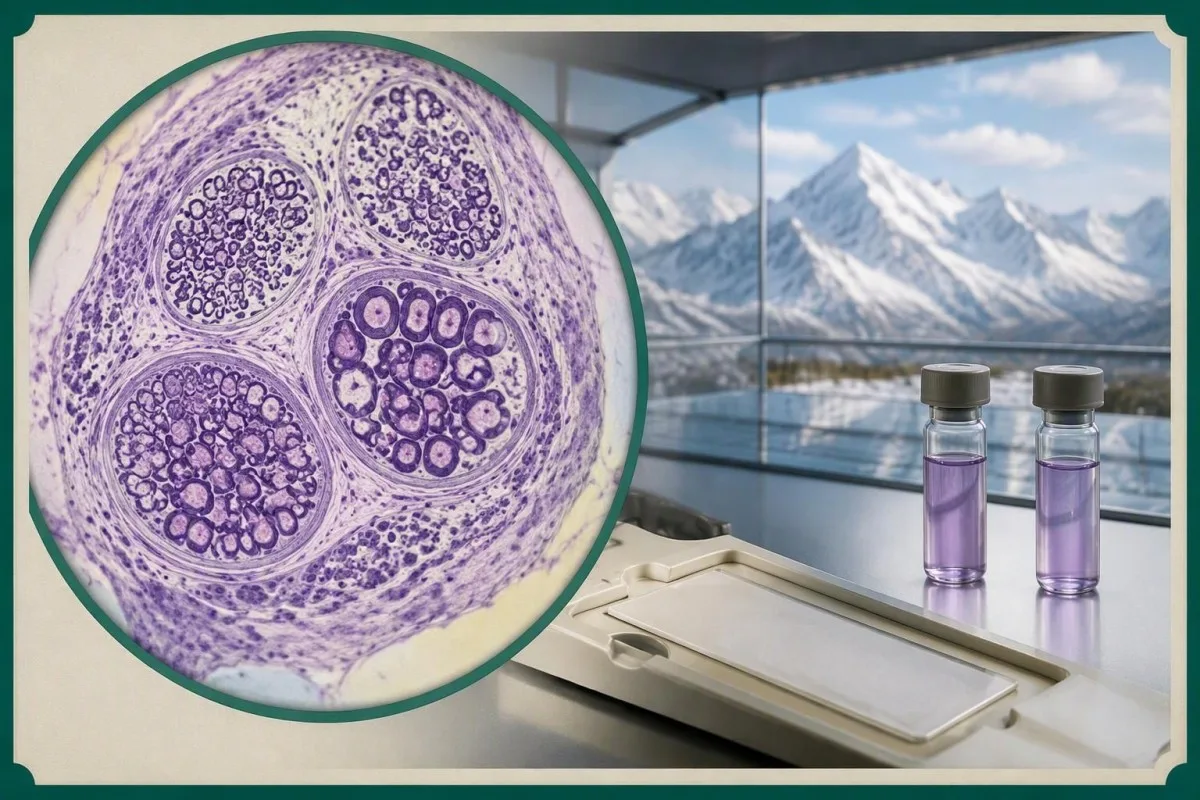
Corticosteroids and plasma-cell-directed treatment can lower VEGF, making the date of collection clinically significant. A hypothetical result falling from 3,200 to 900 pg/mL serum after treatment is potentially encouraging if the assay is comparable, but it does not prove complete disease control. Symptoms, monoclonal-protein findings, fluid status and the specialist response framework remain part of the assessment.
Neurological recovery can lag behind biochemical improvement because injured axons recover slowly and some deficits may persist. A decline in VEGF within the first 3개월 이상 should therefore not be expected to produce matching improvement in walking or sensation. Conversely, new weakness or swelling deserves review even when VEGF is lower; the biomarker is a monitoring component, not permission to ignore clinical deterioration.
Kantesti's trend analysis can help organize dated reports, but a change from 900 to 1,200 pg/mL is only interpretable after specimen, method and clinical circumstances are checked. Our 혈액검사 타임라인 가이드 explains how illness and medication dates affect comparison. Record the specimen type beside every VEGF value, and ask the treating team what magnitude or pattern of change should prompt contact.
When should symptoms take priority over the VEGF number?
Rapidly worsening weakness, breathing difficulty, trouble swallowing, chest pain or sudden visual symptoms need urgent medical assessment regardless of VEGF. Weakness progressing over 24–48시간 should not wait for a send-away laboratory result or a planned repeat appointment.

Fast progression is not the usual timetable for chronic POEMS neuropathy and can indicate another urgent neurological disorder. 1 new breathing or swallowing problem changes the level of concern even if the earlier VEGF result was normal. Our rapid weakness warning guide explains symptoms that warrant immediate evaluation; contact local emergency services for severe breathing difficulty or other emergency features.
Established POEMS treatment targets the underlying plasma-cell disorder, with local radiotherapy or systemic treatment selected according to its distribution and the person's condition. VEGF is a useful disease marker, but suppressing the VEGF pathway alone is not established standard POEMS treatment. A serum result of 2,500 pg/mL is therefore not a reason to request an anti-VEGF drug or attempt to lower the number with supplements.
Kantesti's explanations are not an emergency triage substitute, and 1 reassuring laboratory result cannot overrule a concerning symptom pattern. Our 책임감 있는 AI 원칙은 describe the need for human clinical judgment. For slower progression, ask for a defined specialist plan and contact instructions; for abrupt deterioration, seek assessment first and bring the reports if available.
Using AI and research without overcalling a POEMS diagnosis
칸테스티는 AI 바이오마커 해석 플랫폼 that can help explain why a VEGF result needs clinical context, but it cannot confirm POEMS from 1 laboratory value. The safest output is a structured set of questions about the specimen, assay, neuropathy, monoclonal testing and confounders.

A useful review retains 5 details with the VEGF value: specimen type, units, reference interval, collection date and relevant treatment or illness history. Add the neurological findings and monoclonal-protein results before drawing conclusions. Our 기술 및 임상 표준 distinguish evaluation of interpretation technology from the specialist evidence required to diagnose an individual medical condition.
The Kantesti research publications listed below concern multilingual hantavirus triage across 해석된 보고서 50,000건 and an automated benchmark using 10만 개 합성 케이스. Their subject matter does not establish VEGF-specific sensitivity, specificity or validation for diagnosing POEMS, and synthetic benchmarking is not equivalent to prospective testing in people with suspected POEMS. These publications should therefore be read as engineering context, separate from the condition-specific medical references.
Our publisher is Kantesti Ltd, 영국 회사 등록번호 17090423; organizational identity does not replace diagnostic evidence. For this topic, the relevant medical sources are the 2018 serum VEGF neuropathy study 그리고 2022 comprehensive POEMS review, cited separately below. Bring the original laboratory report to the treating team: preserving the specimen and assay information is often more useful than attaching a disease label to an isolated elevation.
자주 묻는 질문
VEGF 혈액 검사 수치가 높으면 POEMS 증후군이 있다는 뜻인가요?
VEGF 혈액 검사 수치가 높다고 해서 그것만으로 POEMS 증후군을 진단할 수는 없습니다. 전형적인 POEMS 증후군은 다발신경병증과 단클론 형질세포 질환이 모두 있어야 하며, 여기에 추가 주요 기준이 최소 1개, 부차 기준이 1개 충족되어야 합니다. 신경학적 소견과 단클론 단백질 소견이 적절한 상황에서 혈청 VEGF가 1,000 pg/mL를 초과하면 진단을 강력히 뒷받침합니다. 철 결핍, 저산소증, 검체 취급 및 기타 질환도 여전히 고려해야 합니다.
VEGF 혈액 검사의 정상 범위는 얼마인가요?
The normal VEGF range depends on the specimen and laboratory assay, so the reporting laboratory's interval should be used. A published serum study used 771 pg/mL as its elevated threshold, and specialist POEMS guidance discusses serum values above 1,000 pg/mL in a specific clinical context. Neither number is a universal plasma cutoff. Check the specimen type, units and reference interval before comparing results from different laboratories.
혈청 VEGF가 혈장 VEGF보다 높은 이유는 무엇인가요?
Serum VEGF is higher because platelets release VEGF while the laboratory specimen clots. Serum concentrations can be approximately 10 times plasma concentrations, but the difference varies with platelet content and processing. A serum result of 1,500 pg/mL cannot be reliably converted to 150 pg/mL plasma by dividing by 10. Follow-up comparisons should use the same specimen type and preferably the same laboratory.
Can iron deficiency or sleep apnea cause high VEGF levels?
Iron deficiency and hypoxic conditions, including obstructive sleep apnea, can increase VEGF without establishing POEMS. Selected patients with these confounders can have serum values around or above 2,000 pg/mL. A daytime oxygen saturation of 97% does not exclude intermittent oxygen drops during sleep. Clinicians assess iron studies, respiratory history and the neurological findings rather than assuming either a benign explanation or POEMS from the number alone.
Can a normal VEGF result rule out POEMS syndrome?
A normal VEGF result does not completely rule out POEMS syndrome, especially after corticosteroids or other treatment. Published high sensitivity estimates come from selected patient cohorts and particular assays, not every clinical circumstance. The diagnostic framework still requires assessment of the 2 mandatory major criteria and additional major and minor findings. A strongly suggestive clinical pattern warrants specialist review even when one VEGF result is within range.
Do I need to fast or stop medication before a VEGF blood test?
Fasting is not universally required for VEGF itself, but associated tests collected at the same visit may have separate instructions. The collecting service should follow the laboratory's exact specimen and handling protocol because serum and plasma processing differ. Do not stop corticosteroids or other prescribed medication to influence the result; instead, record the dose and timing. For repeat testing, preserving the same specimen type is more useful than trying to compare 2 differently prepared samples.
혈액검사 결과 보는법
검사실 보고서를 업로드하면 Kantesti의 AI가 몇 초 안에 각 바이오마커를 쉬운 말로 설명합니다. 전 세계 200만 명 이상이 사용하고 있습니다.
참고 자료
- Klein, T., Mitchell, S., & Weber, H. (2026). 다국어 AI 지원 임상 의사결정 지원을 활용한 초기 한타바이러스 분류: 설계, 엔지니어링 검증 및 해석된 혈액검사 보고서 50,000건을 통한 실제 배포. Kantesti AI 의학 연구. DOI
- Klein, T., Mitchell, S., & Weber, H. (2026). 100,000개의 합성 테스트 케이스에서 Kantesti 혈액검사 해석 엔진에 대한 사전 등록, 루브릭 기반 자동 기술 벤치마크. Kantesti AI 의학 연구. DOI
- Pihan M et al. (2018). Raised VEGF: High sensitivity and specificity in the diagnosis of POEMS syndrome. Neurology: Neuroimmunology & Neuroinflammation. DOI
- D'Sa S et al. (2022). Comprehensive Diagnosis and Management of POEMS Syndrome. HemaSphere. DOI
- 200만+분석한 검사
- 127+국가
- 100+언어
의료진 소개


E-E-A-T 신뢰 신호
경험
의사가 주도하는 검사 해석 워크플로 임상 검토.
전문적 지식
임상 맥락에서 바이오마커가 어떻게 거동하는지에 대한 검사실 의학 중심.
권위
Thomas Klein 박사의 의학적 검토를 거쳤으며, Sarah Mitchell 박사와 Hans Weber 교수의 기여가 있었습니다.
신뢰성
경고를 줄이기 위한 명확한 후속 경로가 포함된 근거 기반 해석.




의학적 면책 조항
이 글은 교육 목적만을 위한 것이며 의학적 조언을 구성하지 않습니다. 진단 및 치료 결정에는 항상 자격을 갖춘 의료 전문가와 상담하세요.
게시됨 · 편집팀에 문의
Kantesti Ltd 발행, 잉글랜드 및 웨일스에 등록된 회사, 회사 번호. 17090423, 런던, 영국.
