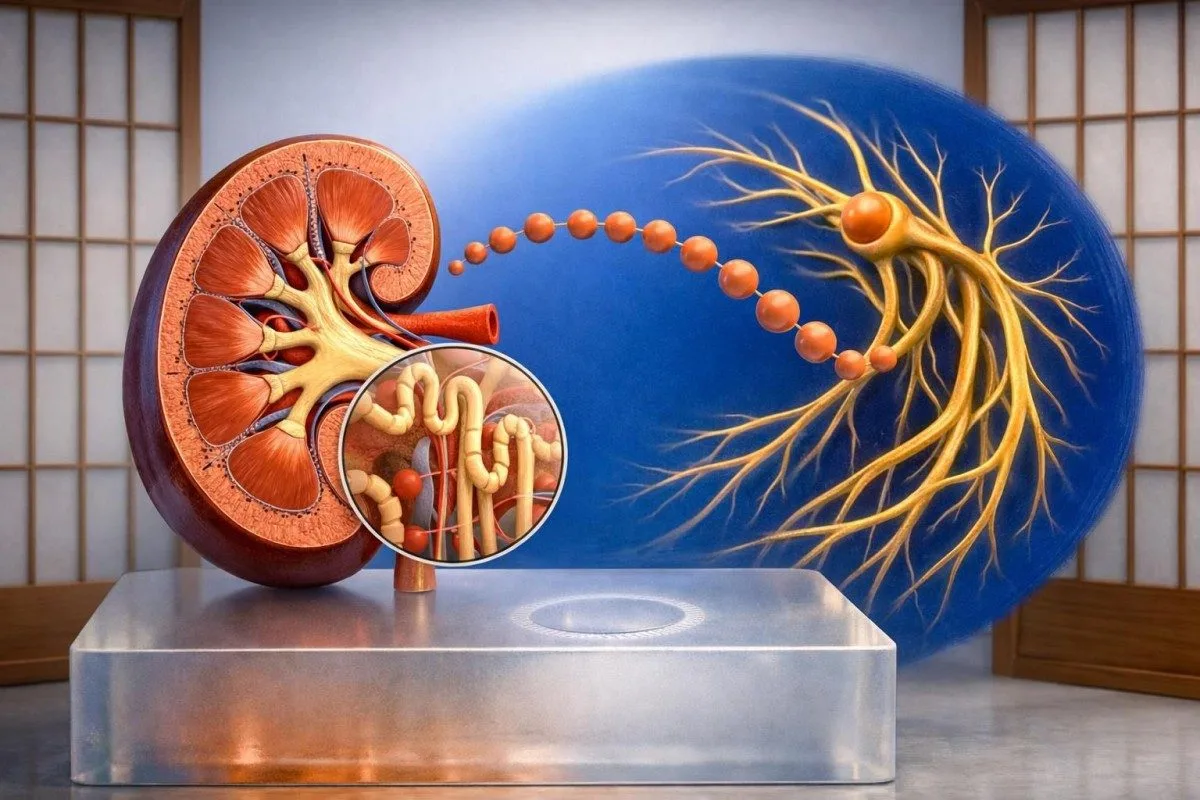
Low potassium usually means your body is losing potassium through urine, vomiting, diarrhea, or certain medicines faster than you are replacing it. A result around 3.4 mmol/L is often mild; below 3.0 mmol/L, or any weakness, palpitations, or fainting, deserves prompt medical review.


- Viðmiðunarsvið for serum potassium is usually 3.5-5.0 mmól/L in adults; some labs use 3.6-5.1 mmol/L.
- Mild hypokalemia er venjulega 3.0-3.4 mmol/L and is often caused by diuretics, vomiting, diarrhea, or low magnesium.
- Urgent hypokalemia er venjulega below 2.5 mmol/L or any low result with palpitations, fainting, chest pain, or marked weakness.
- Ábending frá lyfjum: thiazide and loop diuretics are among the most common hypokalemia causes seen in routine outpatient labs.
- Magnesium link: potassium is often hard to correct when magnesium is below about 1.7 mg/dL.
- Kidney clue: a spot urine potassium above roughly 20 mmol/L during hypokalemia often suggests renal potassium wasting.
- Rhythm risk rises when low potassium appears with heart disease, digoxin use, low magnesium, or ECG changes such as U waves.
- Næsta skref: mild, symptom-free results may only need a repeat test and medication review; symptomatic or lower values often need same-day care.
- Kantesti AI interprets low potassium beside magnesium, bicarbonate, chloride, creatinine, glucose, and medication history rather than treating it as a stand-alone red flag.
What does a low potassium blood test mean in real life?
Low potassium usually means your body is losing potassium faster than you replace it, most often through diuretics, vomiting, diarrhea, or a kidney loss pattern. A result of 3.4 mmol/L is often mild if you feel well, but below 3.0 mmol/L or any palpitations, fainting, or muscle weakness deserves prompt medical review. I'm Thomas Klein, MD, and when I review a panel on Kantesti AI, I never treat potassium as a lonely number. I read it beside the rest of the chemistry panel, especially the clues explained in our BMP vs CMP guide.
Serum potassium normal range is 3.5-5.0 mmól/L in most adult labs, though some European labs use 3.6-5.1 mmol/L. As of April 7, 2026, most U.S. and UK labs still report potassium in mmól/L, and for potassium that number is identical to mEq/L because the ion carries a single charge. Only about 2% of total body potassium sits in the bloodstream, so a small serum drop can reflect a much larger body deficit or, sometimes, only a temporary shift into cells.
Í yfirferð okkar á meira en 2 million uploaded lab reports, a potassium of 3.3-3.4 mmol/L is far more likely to travel with a common explanation than a rare endocrine disease. Kantesti AI interprets that pattern alongside bicarbonate, chloride, creatinine, glucose, and medication clues across 15,000+ biomarkers and derived signals; that is why our clinicians lean on , vegna þess að and a CE-marked workflow rather than a single red arrow.
The thing is, potassium is an electrical stability electrolyte. Mild lows can cause no symptoms at all, but low potassium plus heart disease, digoxin use, or a long-QT pattern changes the conversation quickly. If you have chest pain, syncope, severe weakness, or a racing irregular pulse, do not wait for a routine message reply.
Af hverju ein tala getur villt um fyrir
A potassium value is only part of the story because serum potassium can fall from true depletion or from a shift into cells. That distinction matters: the first points toward losses and replacement needs, while the second often pushes me to ask about insulin, albuterol, thyroid excess, or alkalosis before I assume total body potassium is profoundly low.
When is a slightly low potassium harmless, and when is it not?
A slightly low potassium result, usually 3.3 to 3.4 mmol/L, is often not dangerous if you feel well, the ECG is normal, and there is an obvious short-term cause. It matters much more when the value is falling, when magnesium is also low, or when you have heart disease, kidney disease, or heavy medication use.
I see this after a stomach bug all the time: potassium 3.4 mmol/L, bicarbonate 22 mmól/L, creatinine normal, symptoms already fading. Many clinicians simply recheck within days, encourage fluids and food, and review the drug list. If you want the surrounding chemistry translated into plain English, our leiðarvísir um magnesíumgildi is helpful because low magnesium and low potassium often arrive as a pair.
Not every low result reflects a true body deficit. Insúlín, stórir skammtar albuterol, and metabolic alkalosis can push potassium into cells, dropping the serum number by roughly 0.3-0.8 mmol/L without the same degree of total body loss. Palmer and Clegg made a similar point in the New England Journal of Medicine years ago: risk lives in the mix of level, symptoms, and cause, not in the number alone from a standard chemistry panel.
One under-discussed pitfall is pseudohypokalemia. In severe leukocytosis, especially white cell counts above about 100 x 10^9/L, delayed sample processing can let cells absorb potassium in the tube and produce a falsely low result. It is uncommon, but when the lab makes no clinical sense, I ask how the sample was handled before I label someone hypokalemic.
Hverjar eru algengustu orsakir blóðkalíumlækkunar?
Low potassium most often comes from urinary losses, GI losses, or potassium shifting into cells. The commonest culprits are loop and thiazide diuretics, vomiting, diarrhea, and low magnesium; persistent cases make me look harder at kidneys and hormones.
Vomiting and diarrhea are classic hypokalemia causes, but they do not lower potassium in exactly the same way. Diarrhea usually causes direct stool potassium loss and often drags bicarbonate down, while vomiting often creates metabolic alkalosis that makes the kidneys spill more potassium later. Our Leiðbeiningar um meltingarfæraeinkenni explains that fluid-and-electrolyte pattern in more detail.
When potassium is low and urine potassium stays high, the kidneys may be the ones wasting it. A spot urine potassium above roughly 20 mmol/L during hypokalemia often points toward renal loss, especially if bicarbonate is elevated or blood pressure is high. That is when I look closely at creatinine interpretation, medication use, and sometimes aldosterone-renin testing.
A few patterns are easy to miss. Primary aldosteronism can show up as hypertension plus potassium below 3,5 mmól/L even before anyone mentions adrenal hormones; Gitelman syndrome often brings low magnesium, cramps, and salt craving; and thyrotoxic periodic paralysis can cause sudden weakness after a heavy carbohydrate meal or rest after exercise. Those are not everyday cases, but they are the cases you do not want to miss.
How clinicians sort renal vs non-renal loss
Low potassium with low urine potassium usually suggests losses outside the kidney or poor intake. Low potassium with high urine potassium suggests renal wasting from diuretics, mineralocorticoid excess, tubulopathies, or certain antibiotics. The reason we care is practical: day 1 treatment may look similar, but week 2 workup is completely different.
What low potassium symptoms matter most, and when is it urgent?
Low potassium symptoms range from none at all to dangerous rhythm problems. The classic symptoms are fatigue, muscle cramps, constipation, tingling, and palpitations; severe cases can cause marked weakness, paralysis, or arrhythmia.
Symptoms correlate only loosely with the number. I have seen patients at 3.2 mmol/L feel awful because magnesium was 1,4 mg/dL and they were dehydrated, while others at 2.9 mmol/L felt nearly normal until an ECG showed flattened T waves and a U wave. That mismatch is why symptom severity and ECG matter as much as the result.
Heart rhythm risk rises when low potassium meets other electrical stressors such as low magnesium, digoxin, congenital long QT, active vomiting, or structural heart disease. Use our einkennaafkóðara as a checklist, but seek same-day care rather than home guessing if you feel an irregular beat, near-fainting, or chest discomfort. Our physicians on the Læknisfræðileg ráðgjafarnefnd review these red-flag patterns because potassium is one of the few routine labs that can become urgent quickly.
Muscle symptoms deserve respect too. Progressive leg weakness, trouble climbing stairs, or new constipation can be the first clue that potassium is below 3.0 mmol/L, and sudden flaccid weakness can occur in periodic paralysis even when total body stores are not profoundly depleted. Thomas Klein, MD, tells patients one plain thing here: weakness plus palpitations is never a wait-a-week story.
What ECG changes doctors look for
Hypokalemia can produce T-wave flattening, ST depression, prominent U waves, and ventricular ectopy. No single ECG sign is perfectly sensitive, but a changing ECG in a symptomatic patient lowers my threshold for monitored treatment very quickly.
Which other tests help explain a low potassium result?
The best companion tests for low potassium are magnesium, bicarbonate or CO2, chloride, creatinine, eGFR, glucose, and sometimes urine potassium. These markers tell us whether the problem is kidney loss, GI loss, a transcellular shift, or a larger endocrine pattern.
A low magnesium level can make hypokalemia refractory. In practice, potassium below 3,5 mmól/L with magnesium below about 1,7 mg/dL often corrects slowly until both are treated, because the kidney keeps leaking potassium. This is one reason Kantesti AI never interprets potassium in isolation.
Kidney markers add context, not just safety. A rising creatinine or reduced eGFR changes how aggressively we replace potassium, because a person with impaired filtration can swing from low to high faster than expected. The companion leiðbeiningum um BUN/creatinine hlutfall is useful if dehydration may be part of the story.
Acid-base clues are underrated. Low bicarbonate with diarrhea suggests gastrointestinal loss, while high bicarbonate with hypertension makes me think about vomiting, remote diuretic use, or mineralocorticoid excess. If glucose is high and insulin has recently been given, the low potassium blood test meaning may be shift first, deficit second rather than pure depletion.
If your doctor orders urine potassium or urine chloride
A spot urine potassium-to-creatinine ratio above about 13 mEq/g creatinine supports renal potassium wasting, although labs report it differently. In metabolic alkalosis, a urine chloride below 20 mmol/L often supports vomiting or remote diuretic use, while higher values suggest ongoing diuretic effect or mineralocorticoid disorders.
Who has less margin for error with a low potassium level?
Some people have much less margin for error with low potassium. Adults with heart disease, older adults on several medicines, people with kidney disorders, heavy alcohol use, eating disorders, and endurance athletes after GI losses are the groups I worry about most.
Older patients often look deceptively stable. A 76-year-old on hydrochlorothiazide, a proton pump inhibitor, and poor appetite can drift from 3.6 to 3.1 mmol/L over weeks, then show up complaining only of fatigue or lightheadedness. That is why I often point readers to our þreyturannsóknarhandbókin when potassium is part of a broader pattern.
Athletes are a special case. Sweat contains potassium, but not usually enough by itself to cause major hypokalemia; in my experience the real triggers are vomiting, diarrhea, restrictive eating, or a large insulin surge after heavy carbohydrate intake. A man over 50 with palpitations after a long race deserves at least the same respect as someone working through our men over 50 test checklist.
Women can be missed too, especially when symptoms get labeled as stress. Recurrent cramps, constipation, or weakness around dieting, laxative use, or persistent vomiting should prompt a real lab review, not casual reassurance. Our women in their 30s checklist is written for exactly that I-know-something-is-off situation.
A quick word on thyroid-related paralysis
Thyrotoxic periodic paralysis is uncommon but memorable. It disproportionately affects men, often appears with potassium below 3.0 mmol/L, and can follow rest after exercise or a high-carbohydrate meal; the potassium drop may reflect a cellular shift more than a giant total-body deficit.
What should you do next after a low potassium result?
The right next step depends on the number and the symptoms. 3.3 to 3.4 mmol/L without symptoms is often a repeat-test-and-review-medications problem; below 3.0 mmol/L, any ECG change, or any weakness or palpitations usually needs same-day clinician input.
Start with three questions: what medicines changed in the last 2 vikur, have you had vomiting or diarrhea, and do you have weakness, constipation, palpitations, or fainting. If you want a structured second look, upload the report to Kantesti's free demo and our AI will map potassium against the rest of the panel in about 60 sekúndum.
Do not self-prescribe large potassium doses because more potassium is not automatically safer. Over-the-counter tablets are often only 99 mg each in the U.S., while prescription potassium chloride is usually written in 10-20 mEq units; mixing those up creates real confusion. On our Túlkun blóðprufa með gervigreind, we flag that unit mismatch because it leads to real medication errors.
If a clinician prescribes replacement, oral KCl is the usual choice when chloride is low or vomiting is involved. Very roughly, 10 mEq of oral potassium may raise serum potassium by about 0.1 mmol/L, but the response is highly variable; low magnesium, ongoing diarrhea, insulin use, or kidney disease can make that estimate wrong in either direction.
When IV potassium is used
IV potassium is generally reserved for severe hypokalemia, inability to take oral therapy, or active arrhythmia risk. Peripheral infusions are often limited to about 10 mEq per hour, en 20 mEq per hour usually requires continuous cardiac monitoring and closer supervision.
When is diet enough, and when are pills or prescriptions more realistic?
Food is enough for many mild cases, but diet alone rarely fixes moderate or severe hypokalemia. Potatoes, beans, lentils, yogurt, bananas, kiwi, avocado, and spinach can add potassium, yet ongoing kidney or GI losses usually need more than food.
A medium baked potato with skin provides roughly 900 mg of potassium, a cup of cooked lentils about 730 mg, a cup of yogurt around 500-600 mg, and a medium banana about 420 mg. As Thomas Klein, MD, I spend a surprising amount of clinic time explaining that bananas are not the whole potassium story. Salt substitutes can contain substantial potassium chloride, so people with CKD or ACE inhibitor or ARB use should ask before using them.
Diet works best when the short-term cause has ended and the deficit is mild. If you are still losing potassium through diarrhea or a diuretic, adding one banana a day is a nice habit but not real treatment. Our Ráðleggingar um fæðubótarefni fyrir gervigreind section explains why magnesium, hydration, and protein intake sometimes matter just as much as potassium grams on paper.
I also tell patients not to chase one nutrient while ignoring the rest of the panel. Low albumin, low magnesium, poor intake, or an eating-disorder pattern can make potassium repletion sluggish and relapse-prone. If you are building a smarter long-term plan, our hvernig á að lesa niðurstöður blóðprufa guide helps you connect the dots.
How much potassium adults usually need
As of April 7, 2026, the U.S. adequate intake for potassium is 3,400 mg/day for adult men and 2,600 mg/day for adult women. Intake targets are not treatment targets; a patient starting at 2.8 mmol/L often needs prescription therapy even if the diet is excellent.
Research publications and where Kantesti fits
Kantesti is not just a reader of lab flags; we publish and clinically review lab education so results are interpreted in context. If your potassium result is confusing or seems to conflict with symptoms, a human follow-up still matters and AI should speed understanding, not replace care.
I built this article the way I review real panels: potassium beside magnesium, kidney markers, acid-base clues, and the medication list. That same approach sits behind our clinical team and the Hafðu samband pathway when a report needs a deeper human explanation.
These two publications are broader lab references rather than hypokalemia treatment trials, but they show how we structure patient-first interpretation across biomarkers. Citation 1: Kantesti AI. (2026). Þvagþéttniþvagefni í þvagprófi: Leiðarvísir um heildarþvaggreining 2026. Zenodo. DOI: https://doi.org/10.5281/zenodo.18226379. Skráning á ResearchGate: Rannsóknarhlið. Academia listing: Academia.edu.
Citation 2: Kantesti AI. (2026). Leiðbeiningar um járnrannsóknir: TIBC, járnmettun og bindingargeta. Zenodo. DOI: https://doi.org/10.5281/zenodo.18248745. Skráning á ResearchGate: Rannsóknarhlið. Academia listing: Academia.edu.
Algengar spurningar
Hvað þýðir lágur kalíumstyrkur á blóðprufu?
Lág kalíumgildi á blóðprufu þýðir oft að líkaminn sé að missa kalíum um þvag, uppköst, niðurgang eða ákveðin lyf hraðar en þú ert að bæta það upp. Venjulegt bil fyrir kalíum í sermi er yfirleitt 3,5–5,0 mmól/L og gildi undir 3,5 mmól/L kallast blóðkalíumlækkun (hypokalemia). Niðurstaða um 3,4 mmól/L er oft væg, sérstaklega ef þér líður vel og orsökin er augljós, en gildi undir 3,0 mmól/L eða hvers kyns máttleysi, hjartsláttarónot eða yfirlið krefjast tafarlausrar endurskoðunar. Heilbrigðisstarfsfólk túlkar töluna í samhengi við magnesíum, bíkarbónat, nýrnastarfspróf, glúkósa og lyfja- og sjúkrasögu, frekar en að skoða hana ein og sér.
Er kalíum 3,4 hættulegt?
Kalíumgildi upp á 3,4 mmól/L er venjulega væg blóðkalíumlækkun og er oft ekki bráðaaðstæða ef þér líður vel, hjartalínuritið (EKG) er eðlilegt og skammtímaskýring liggur fyrir, svo sem niðurgangur eða þvagræsilyf. Það verður meira áhyggjuefni ef gildið er á niðurleið, magnesíum er lágt eða ef þú ert með hjartasjúkdóm, notar digoxín, finnur fyrir hjartsláttarónotum, ert máttlaus eða færð yfirlið. Margir læknar endurathuga niðurstöðuna innan nokkurra daga frekar en vikna ef orsökin er ekki augljós. Meðferð sama dag er öruggari þegar einkenni eða áhyggjur af hjartsláttartruflunum eru til staðar.
Hverjar eru algengustu orsakir blóðkalíumlækkunar?
Algengustu orsakir blóðkalíumlækkunar eru tíazíð- eða lykkjuþvagræsilyf, uppköst, niðurgangur, léleg næringarinntaka og lágt magnesíum. Insúlín, albúteról og alkalósa geta einnig lækkað mælt kalíum með því að flytja það inn í frumur, stundum um það bil 0,3–0,8 mmól/L. Sjaldgæfari en mikilvægar orsakir eru meðal annars frumkomið ofnæmisaldósterónheilkenni, Gitelman-heilkenni, misnotkun hægðalyfja og skjaldkirtingartengd lotukrampi. Restin af efnarannsóknarspjaldinu hjálpar oft til við að greina á milli þessara mynstra.
Getur lágt magnesíum haldið kalíum niðri?
Já, lítið magnesíum getur haldið kalíumgildum lágum jafnvel þótt þú sért að taka kalíumuppbót. Magnesíum undir um 1,7 mg/dL getur aukið nýrnaleiðni kalíums (kalíumtap) um fjarlæga nýrnapípu, þannig að kalíumuppbót getur varla hreyft sermisgildið fyrr en magnesíum er leiðrétt. Þess vegna getur sjúklingur tekið 20–40 mEq af kalíumklóríði og samt verið í kringum 3,0–3,2 mmol/L. Læknar athuga oft bæði raflausnirnar saman af einmitt þessari ástæðu.
Hvenær ætti ég að fara á bráðamóttöku (ER) vegna einkenna um lágt kalíum?
Þú ættir að leita bráðrar aðstoðar ef kalíum er lágt og þú ert með brjóstverk, yfirlið, mikla máttleysi, mæði, rugl eða hraðan óreglulegan hjartslátt. Kalíum undir 2,5 mmól/L er almennt talið alvarlegt og þarf oft eftirlit og meðferð, sérstaklega ef magnesíum er lágt eða hjartasjúkdómur er til staðar. Jafnvel vægari tala getur verið bráð ef hjartalínurit (EKG) er óeðlilegt eða einkennin eru veruleg. Í minni reynslu er samsetningin máttleysi ásamt hjartsláttarónotum það sem aldrei ætti að láta fram hjá sér fara.
Ætti ég að borða banana eða taka kalíumuppbót?
Bananar geta hjálpað, en mataræði eitt og sér virkar venjulega best við vægum tilfellum eftir að undirliggjandi tap hefur hætt. Meðalbanani inniheldur um 420 mg af kalíum, en bökuð kartafla með hýði um það bil 900 mg og einn bolli af soðnum linsum um 730 mg, þannig að kartöflur og belgjurtir endurbyggja oft inntöku hraðar. Kalíum á lyfseðli er oft skrifað sem 10–20 mEq kalíumklóríð, sem er mjög ólíkt lausasölutöflum upp á 99 mg. Fólk með nýrnasjúkdóm eða þá sem nota saltuppbót ætti að spyrja lækni áður en það bætir við miklu magni af kalíum.
Getur nýrnasjúkdómur eða lyf valdið lágum kalíum?
Já, lyf valda oft lágum kalíumgildum og sum nýrnavandamál geta líka gert það. Tíazíð- og lykkjuþvagræsilyf eru meðal algengustu orsaka lyfja, en nýrnapíplusjúkdómar og ofgnótt steinefnabarkstera (mineralocorticoid) geta valdið því að nýrun skilji út kalíum jafnvel þótt inntaka sé nægileg. Langvinn nýrnasjúkdómur veldur oftar háu kalíumgildi en lágum, en sjúklingur með langvinnan nýrnasjúkdóm sem er líka á þvagræsilyfjum, er að kasta upp eða borðar illa getur samt orðið fyrir lágkalíumlækkun. Nýrnamerki eins og kreatínín og eGFR hjálpa til við að ákvarða bæði orsökina og hversu örugglega er hægt að bæta upp kalíum.
Fáðu AI-knúna greiningu á blóðprufum í dag
Vertu með yfir 2 milljónir notenda um allan heim sem treysta Kantesti fyrir tafarlausa og nákvæma greiningu á blóðprufum. Hladdu upp niðurstöðum blóðrannsókna þinna og fáðu yfirgripsmikla túlkun á 15,000+ lífmerkjum á sekúndum.
📚 Tilvísuð rannsóknarútgáfa
Klein, T., Mitchell, S., & Weber, H. (2026). Þvagþéttniþvagefni í þvagprófi: Leiðarvísir um heildarþvaggreining 2026. Kantesti AI Medical Research.
Klein, T., Mitchell, S., & Weber, H. (2026). Leiðbeiningar um járnrannsóknir: TIBC, járnmettun og bindingargeta. Kantesti AI Medical Research.
⚕️ Fyrirvari vegna læknisfræðilegra mála
Þessi grein er eingöngu til fræðslu og felur ekki í sér læknisráðgjöf. Leitaðu alltaf til hæfs heilbrigðisstarfsmanns vegna ákvarðana um greiningu og meðferð.
E-E-A-T traustmerki
Reynsla
Læknastýrð klínísk yfirferð á vinnuferlum við túlkun rannsóknarniðurstaðna.
Sérþekking
Áhersla á rannsóknarstofulækningar: hvernig lífmarkarar hegða sér í klínísku samhengi.
Yfirvald
Skrifað af Dr. Thomas Klein með yfirferð Dr. Sarah Mitchell og próf. Dr. Hans Weber.
Traustleiki
Rökstudd túlkun byggð á gögnum með skýrum eftirfylgnileiðum til að draga úr ávörun.