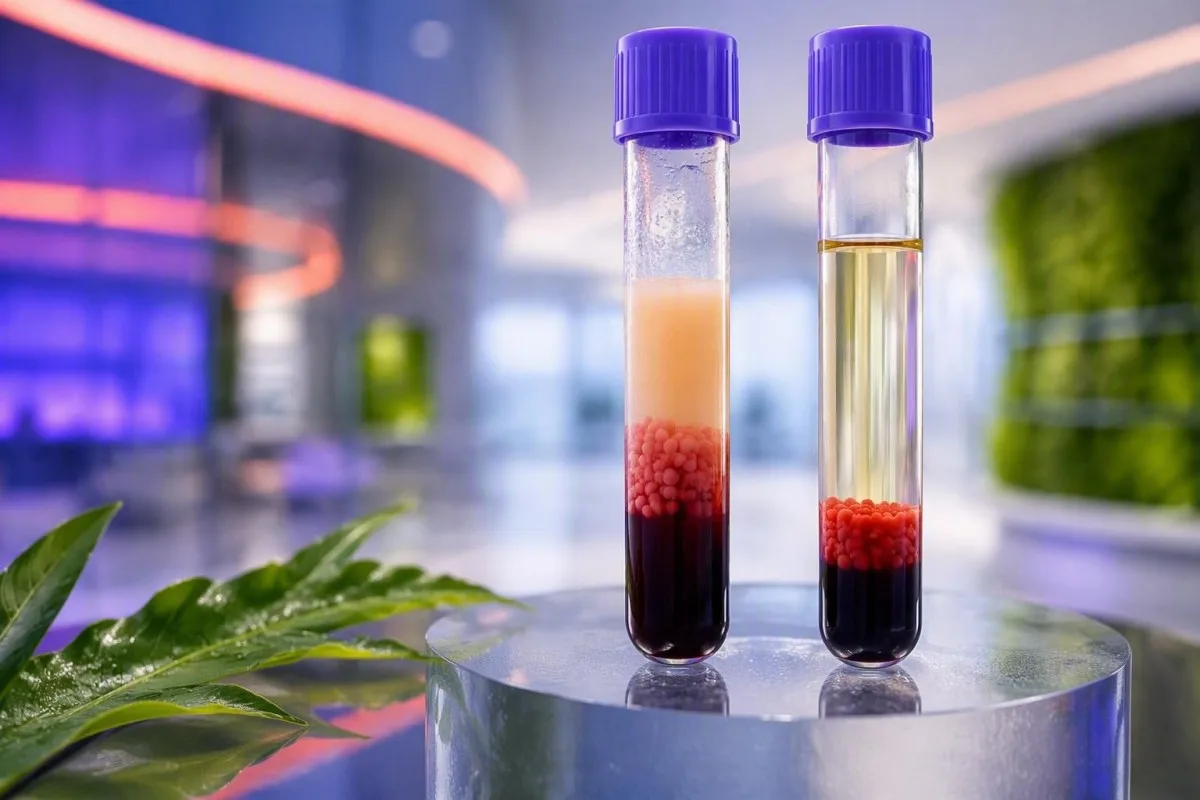
Կանաչավուն լաբորատոր նմուշը հաճախ արտացոլում է շրջանառու տրիգլիցերիդներով հարուստ մասնիկներ, այլ ոչ թե վերցման ինքնին խնդիր։ Գործնական հարցն այն է, թե արդյոք ամե՞ղությունը կապված է սննդի հետ, թե՞ կլինիկական նշանակության հիպերտրիգլիցերիդեմիայի նշան է։.


- Ճարպոտ արյան նմուշ նշանակում է, որ շիճուկը կամ պլազմայի ավելի կաթնային տեսք ունի, քանի որ տրիգլիցերիդներով հարուստ լիպոպրոտեինները ցրում են լույսը լաբորատոր վերլուծության ժամանակ։.
- Ծոմապահության պայմաններում կրկնակի վերցում սովորաբար լավագույնս կատարվում է 8-12 ժամ առանց կալորիաների ընդունման, երբ տրիգլիցերիդները անսպասելիորեն բարձր են կամ լաբորատորիան հայտնում է վերլուծական միջամտության մասին։.
- Տրիգլիցերիդներ՝ 500 մգ/դլ-ից բարձր (5.6 mmol/L) արժեքները հրատապ կլինիկական հետազոտության կարիք ունեն, քանի որ ենթաստամոքսային գեղձի բորբոքման ռիսկը զգալիորեն աճում է, երբ արժեքները մոտենում են 1000 մգ/դլ-ի։.
- Հաշվարկված LDL-C ոչ հուսալի է դառնում, երբ տրիգլիցերիդները գերազանցում են 400 մգ/դլ (4.5 mmol/L)՝ օգտագործելով ավանդական Friedewald հաշվարկը։.
- Կեղծ հիպոնատրեմիա կարող է առաջանալ ծանր ճարպոտության դեպքում՝ օգտագործելով ոչ-ուղղակի իոնային-սելեկտիվ էլեկտրոդային մեթոդներ; ուղղակի ISE թեստավորումը չի ազդվում այս ծավալային տեղահանման կեղծման վրա։.
- Ամպամած արյան նմուշ կարող է հաջորդել հարուստ կերակուր, ալկոհոլի օգտագործում, անվերահսկելի դիաբետ, հղիություն, որոշակի դեղամիջոցներ կամ ժառանգական լիպիդային խանգարումներ:.
- Չդադարեցնեք նշանակված դեղերը մինչև նոր արյան վերցումը, եթե թեստը պատվիրած բժիշկը հատուկ չի ասել ձեզ դա անել:.
- Արտակարգ ախտանիշներ շատ բարձր տրիգլիցերիդներով ներառում են մշտական epigastric ցավ, փսխում, տենդ կամ հեղուկ չպահելու անկարողություն:.
Ինչ է նշանակում ճարպոտ նմուշը գործնական առումով
A լիպեմիկ արյան նմուշ ը սերմ կամ պլազմա է, որը հայտնվում է ամպամած կամ կաթնային, քանի որ այն պարունակում է հարուստ տրիգլիցերիդներով հարուստ մասնիկներ, հիմնականում chylomicrons և շատ ցածր խտության լիպոպրոտեին: Մարդկանց մեծ մասում վերջին ճարպային ուտեստը բացատրությունն է. ուրիշների մոտ, արտաքին տեսքը վաղ նախազգուշացում է, որ տրիգլիցերիդները պահանջում են պատշաճ գնահատում:.
Լաբորատորիան սովորաբար նույնացնում է լիպեմիան նմուշը ցենտրիֆուգելուց հետո, երբ բջջային տարրերը նստում են, իսկ հեղուկ մասը մնում է ամպամած: Ուտելուց հետո կարող է առաջանալ բաց, կրեմի նման շերտ, մինչդեռ միատեսակ կաթնային նմուշը ավելի մտահոգիչ է տրիգլիցերիդների նշանակալի բարձրացման համար: Սա նույնը չէ, ինչ հեմոլիզ արյան վերցումից հետո, որը սերմը դարձնում է վարդագույնից կարմիր:.
Ոչ-ուրցի տրիգլիցերիդների արդյունքը 175 մգ/դլ-ից (2.0 մմոլ/լ) ցածր, ընդհանուր առմամբ համարվում է ընդունելի սրտանոթային ռիսկի գնահատման համար, բայց տեսանելի ամպամածությունը կարող է առաջանալ տարբեր կոնցենտրացիաներում, քանի որ մասնիկների չափը նույնքան կարևոր է, որքան տրիգլիցերիդների բացարձակ արժեքը: Սեպտեմբերի 13-ի, 2026 թվականի դրությամբ, ես չէի եզրակացնի տրիգլիցերիդների թիվը միայն նմուշի արտաքին տեսքից. լաբորատորիաները օգտագործում են տարբեր լիպեմիկ ինդեքսներ և վերլուծիչներ:.
Կանտեստին մի է AI արյան անալիզատոր որը կարդում է հաշվետու տրիգլիցերիդների կոնցենտրացիան, ուրցի կարգավիճակը և հարակից գլյուկոզայի կամ լյարդի արդյունքները միասին, այլ ոչ թե լաբորատոր մեկնաբանությունը համարելով ախտորոշում: Դոկտոր Թոմաս Քլայնի պրակտիկ կանոնը պարզ է. ամպամածությունը նախևառաջ որակի նշագիծ է, այնուհետև մետաբոլիկ հուշում:.
Lipemia ախտորոշում չէ
Lipemia-ն նկարագրում է նմուշի օպտիկական տեսքը, ոչ թե հիվանդությունը: Օգտակար հաջորդ քայլը transients post-meal lipemia-ն տարանջատելն է persistent hypertriglyceridemia-ից՝ կրկնելով fasting lipid panel-ը սովորական, ոչ թե crash-diet պայմաններում:.
Ինչու ամեխ սերումը կարող է փոխել լաբորատոր արդյունքները
Lipemia-ն խանգարում է թեստերին հիմնականում լույսի ցրման, շիճուկի ջրային մասը տեղափոխելու կամ վերլուծիչի կողմից մաքուր ռեակցիա չչափելու միջոցով: Ռիսկը կախված է մեթոդից, ամպամածության աստիճանից և անհատական լաբորատորիայի վավերացված միջամտության սահմաններից:.
Ֆոտոմետրիկ վերլուծությունները չափում են, թե որքան լույս է անցնում կամ կլանվում նմուշի կողմից. կասեցված լիպիդային մասնիկները խեղաթյուրում են այդ ազդանշանը: Վերլուծությունից կախված, բիլիրուբինի, կրեատինինի, ընդհանուր սպիտակի, կալցիումի, ֆոսֆատի, մագնիումի և որոշ լյարդի ֆերմենտների արդյունքները կարող են տեղափոխվել վերև կամ ներքև: Nikolac (2014) բացատրում է, որ կողմնակալության ուղղությունը և չափը մեթոդից կախված են, ուստի ոչ մի համընդհանուր ուղղիչ գործոն անվտանգ չէ:.
Ծանր լիպեմիան կարող է առաջացնել կեղծ հիպոնատրեմիա երբ նատրիումը չափվում է անուղղակի իոն-ընտրովի էլեկտրոդով: Ուղղակի ISE մեթոդները, որոնք սովորաբար օգտագործվում են արյան գազի վերլուծիչներում, չափում են նատրիումի ակտիվությունը առանց նույն նոսրացման արտեդիֆեկտի և նախընտրելի են, երբ արդյունքը հակասում է կլինիկական պատկերին. տես մեր ուղեցույցը ցածր նատրիումի նախազգուշական նշանները.
Իմ փորձից ելնելով, ամենից խուսափելի սխալը այն է, որ ենթադրել, թե լիպեմիկ նմուշի յուրաքանչյուր ոչ նորմալ արժեք կեղծ է: 850 մգ/դլ տրիգլիցերիդների արդյունքը կլինիկորեն նշանակալի է, նույնիսկ եթե լաբորատորիան ճնշում է հաշվարկված LDL-C-ն, և այն արժանի է նույն շաբաթվա բժշկական վերանայմանը:.
Ո՞ր արյան անալիզներն են առավելապես ազդված ճարպոտությունից
Lipemia-ն առավել հաճախ վնասում է լույսի վրա հիմնված քիմիական թեստերը և հաշվարկված լիպիդային արժեքները, մինչդեռ շատ բջջային հաշվարկների չափումներ մնում են օգտագործելի: Լաբորատորիան կարող է թողարկել արդյունք միջամտության մեկնաբանությամբ, վերագործարկել այն մշակումից հետո, օգտագործել այլընտրանքային մեթոդ կամ խնդրել թարմ նմուշ:.
Հաշվարկված LDL խոլեստերին չպետք է հուսալ, երբ տրիգլիցերիդները 400 մգ/դլ-ից (4.5 մմոլ/լ) ավելի բարձր են դասական Friedewald հավասարումով: Ուղղակի LDL-C, ոչ-HDL-C կամ ապոլիպոպրոտեին B-ն կարող են ապահովել ավելի պարզ ռիսկի գնահատական. մեր բացատրությունը ApoB-ի և ApoA1-ի հարաբերության մասին ցույց է տալիս, թե ինչու մասնիկների չափումները կարող են օգնել:.
Amylase-ը և lipase-ը արժանի են հատուկ խնամքի ծանր hypertriglyceridemia-ում, քանի որ լիպեմիան կարող է խանգարել որոշ ֆերմենտային վերլուծությունների, այնուամենայնիվ, որովայնի ախտանիշները կարող են ազդարարել ենթաստամոքսային գեղձի բորբոքը, նույնիսկ եթե մեկ ֆերմենտի արդյունքը ակնկալվածից պակաս տպավորիչ է թվում: Մշտական epigastric ցավը, գումարած 1000 մգ/դլ-ից (11.3 մմոլ/լ) ավելի բարձր տրիգլիցերիդները, պահանջում են հրատապ գնահատում, ոչ թե տնային վերաթեստավորում:.
Kantesti AI-ն այն ԱԻ լաբորատոր թեստի մեկնաբանման ծառայությունում that flags the combination of a lipemic comment, triglycerides, glucose, sodium method notes, and missing LDL-C as a data-quality pattern. It cannot determine the analyzer method from every PDF, so the laboratory comment still matters.
Ե՞րբ պետք է կրկնվի ճարպոտ արյան անալիզը
Repeat a lipemic specimen when the laboratory says interference could affect a clinically important result, when triglycerides are unexpectedly high, or when fasting status was unclear. A stable person without urgent symptoms can usually repeat testing after an 8-12 hour overnight fast within days to a few weeks, depending on the result.
If the only issue is a mildly cloudy non-fasting sample and triglycerides are below 400 mg/dL, a clinician may accept the panel and repeat fasting later for clarification. The 2018 AHA/ACC cholesterol guideline supports non-fasting screening in many settings but advises fasting measurement when triglycerides are 400 mg/dL or higher (Grundy et al., 2019).
A redraw should happen sooner—often within 24-72 hours—when sodium, bilirubin, creatinine, or pancreatic enzymes may guide an immediate treatment decision. Do not wait for a routine fasting redraw if you have vomiting, severe abdominal pain, confusion, marked thirst, or rapidly worsening illness.
For a reliable repeat, record the last calorie-containing food or drink, alcohol in the prior 48 hours, recent strenuous exercise, acute illness, and any new medication. These details often explain why blood results differ between visits.
Ինչպես պատրաստվել հուսալի, ծոմապահության պայմաններում կրկնակի վերցմանը
The best preparation for a repeat lipid-related sample is 8-12 hours without food or caloric drinks, normal water intake, and no alcohol for 48-72 hours. Keep your usual prescribed medicines unless the ordering clinician gives different instructions.
Water is encouraged because dehydration can concentrate several analytes and make comparison harder. Black coffee, tea, juice, milk, collagen drinks, and chewing gum can all alter fasting conditions; plain water is the cleanest option. Our detailed посібник із голодування перед аналізом крові covers supplement-specific exceptions.
Avoid deliberately eating an ultra-low-fat dinner to “pass” the test. I ask patients to eat a typical evening meal, finish it at least 8 hours before collection, and avoid alcohol for 2-3 days because alcohol can sharply raise triglycerides in susceptible people.
A 45-year-old patient I reviewed had triglycerides of 620 mg/dL after a celebratory dinner and drinks, then 218 mg/dL on a careful fasting repeat. That improvement was reassuring, but 218 mg/dL still deserved attention—it was not permission to dismiss the first sample.
Ե՞րբ ճարպոտությունը ավելի շատ բան է մատնանշում, քան վերջին ընդունած սնունդը
Persistent lipemia after an overnight fast commonly reflects insulin resistance, diabetes, alcohol exposure, obesity-related metabolic dysfunction, hypothyroidism, kidney disease, pregnancy, medicines, or an inherited lipid disorder. A single cloudy specimen cannot identify which cause applies.
Poorly controlled diabetes is a common driver because insulin deficiency or resistance reduces triglyceride clearance and increases liver VLDL production. A fasting glucose of 126 mg/dL (7.0 mmol/L) or higher on two separate tests supports diabetes, while an HbA1c of 6.5% or higher may confirm it when assay conditions are appropriate; review բարձր ծոմ պահած ինսուլինի հուշումներ համատեքստում։.
Hypothyroidism, oral estrogen, retinoids, corticosteroids, atypical antipsychotics, HIV therapies, beta blockers, thiazides, and some immunosuppressants can increase triglycerides. Never discontinue a medicine to improve a laboratory result without clinician input; the safer question is whether the medicine changed the interpretation or follow-up plan.
Familial chylomicronemia syndrome is rare and often produces triglycerides persistently above 880 mg/dL (10 mmol/L), recurrent abdominal pain, and marked lipemia from a young age. More commonly, several smaller genetic tendencies combine with diabetes, diet, or alcohol—what lipid specialists call multifactorial chylomicronemia.
Տրիգլիցերիդների մակարդակները, որոնք փոխում են բուժման հրատապությունը
Triglycerides of 500 mg/dL or higher require prompt follow-up, and levels of 1,000 mg/dL or higher can precipitate acute pancreatitis, especially with abdominal symptoms. Cardiovascular risk also rises with remnant particles at lower elevations, but pancreatitis prevention becomes the immediate priority at the higher range.
The European Society of Cardiology and European Atherosclerosis Society identify triglycerides above 880 mg/dL (10 mmol/L) as a threshold where pancreatitis prevention becomes particularly urgent (Mach et al., 2020). In real practice, I become concerned well before that number if a person has abdominal pain, diabetes, pregnancy, alcohol use, or prior pancreatitis.
Triglycerides between 150 and 499 mg/dL are usually managed by addressing secondary causes, body weight where relevant, dietary carbohydrate quality, and overall cardiovascular risk. Non-HDL cholesterol equals total cholesterol minus HDL-C and remains interpretable when LDL-C cannot be calculated; see خطر کلسترولِ باقیمانده.
A lipemic serum sample does not itself cause pancreatitis. It is the underlying extreme triglyceride concentration, often with chylomicron accumulation, that creates risk. That distinction helps patients avoid panicking about the laboratory appearance while still acting on a dangerous number.
Ծոմապահության ընդդեմ ոչ-ծոմապահության լիպիդային թեստերի. ի՞նչն է փոխվում
Non-fasting lipid testing is appropriate for many routine cardiovascular assessments, but fasting testing is more useful when triglycerides are high, a sample is visibly lipemic, or clinicians need a reproducible baseline. After ordinary meals, triglycerides can rise substantially for 4-8 hours.
Chylomicrons carry dietary fat from the intestine after meals, while VLDL carries triglycerides made by the liver. A heavy, high-fat meal can cause a temporary cloudy blood sample even in someone without chronic dyslipidemia, although repeated marked lipemia should not be written off as normal.
For trend monitoring, use the same conditions whenever possible: similar fasting duration, morning collection, usual diet the prior week, and no unusual alcohol intake. This matters more than chasing a single “perfect” value, as explained in our longitudinal lab baseline guide.
Կանտեստին մի է AI-ով աշխատող արյան թեստի վերլուծության գործիք used to compare lipid results across time while retaining the collection context entered by the user. A trend based on two fasting samples is often more clinically honest than comparing a fasting result with a non-fasting result from a holiday weekend.
Ի՞նչ կարող է անել լաբորատորիան՝ մինչև կրկնակի վերցում խնդրելը
Laboratories may manage lipemia by measuring a lipemia index, using an alternate assay, ultracentrifuging the specimen, performing a high-speed clearing process, or reporting a qualified result. A redraw is not always necessary, but the laboratory’s validated procedure determines what is defensible.
Ultracentrifugation can remove chylomicrons from some samples, but it is not universally available and may alter analytes that partition with lipids. Dilution or serum blanking can help certain assays, yet neither approach fixes every measurement. That is why a comment such as “result may be affected by lipemia” should not be ignored.
Direct ISE sodium, enzymatic methods less sensitive to turbidity, or a different analyzer can sometimes provide a usable answer without recollection. The clinician should ask the lab which method was used rather than guessing from the report. This is especially relevant to electrolyte-panel results.
Kantesti AI does not alter, correct, or overwrite laboratory values. Our role is to highlight uncertainty and prompt the right question: was this number analytically verified, method-limited, or best repeated under fasting conditions?
Հղիություն, դիաբետ, երեխաներ և ժառանգական լիպիդային խանգարումներ
Lipemia needs more individualized interpretation in pregnancy, diabetes, children, and people with prior pancreatitis or suspected inherited lipid disorders. The same triglyceride number can carry different practical risk depending on the clinical setting.
Triglycerides normally rise in pregnancy, especially during the third trimester, but values above 500 mg/dL (5.6 mmol/L) warrant obstetric and medical review because the trajectory can accelerate. Patients with previous severe hypertriglyceridemia should have a pre-pregnancy plan rather than waiting for a lipemic sample; see our overview of հղիության արյան անալիզի կարմիր դրոշները.
In type 1 diabetes with insulin deficiency, triglycerides can rise dramatically alongside high glucose and ketones. Glucose above 250 mg/dL (13.9 mmol/L) with ketones, nausea, abdominal pain, deep breathing, or drowsiness needs urgent evaluation, regardless of whether the sample is cloudy.
In children, triglycerides above 500 mg/dL should prompt pediatric assessment for diabetes, medication effects, familial disorders, and dietary causes. A pediatric lipid result must be interpreted against age-specific reference intervals, not adult thresholds alone.
Դեղորայք, հավելումներ և ալկոհոլ. ի՞նչ պետք է բացահայտել
Alcohol, certain prescription medicines, and some supplements can contribute to high triglycerides or make a redraw less interpretable. Tell the clinician and laboratory what you took, but do not independently withhold prescribed treatment.
Alcohol can raise triglycerides within hours to days, particularly in people with insulin resistance or existing hypertriglyceridemia. A 48-72 hour alcohol-free interval before a planned fasting lipid panel is reasonable unless this conflicts with medical advice, and it produces a more useful baseline than a last-minute lifestyle change.
High-dose corticosteroids, retinoids, estrogen-containing therapies, and some antipsychotics are frequent medication contributors. Fish-oil products can lower triglycerides over time, but starting or increasing them immediately before repeat testing obscures the baseline; our օմեգա-3 հավելումների ուղեցույցը explains where evidence is strongest.
Biotin does not usually create lipemia, but it can interfere with selected immunoassays. Bring an accurate supplement list, including powdered drinks and “metabolic” blends, because hidden calories and ingredients are surprisingly common.
Ինչպես մեկնաբանել ճարպոտությունը գլյուկոզայի, լյարդի և երիկամների արդյունքների հետ
A lipemic sample becomes more informative when interpreted with glucose, HbA1c, ALT, AST, GGT, non-HDL cholesterol, ApoB, thyroid tests, and kidney function. The pattern identifies possible causes more reliably than triglycerides alone.
Triglycerides above 200 mg/dL with low HDL-C, elevated fasting glucose, increased ALT, and central weight gain often suggests insulin resistance or metabolic syndrome. An ALT value above the laboratory upper limit does not prove fatty liver, but it should prompt discussion of alcohol, medicines, metabolic risk, and possibly imaging; read our լյարդի թեստերի մեկնաբանման ուղեցույցը.
An elevated creatinine in a highly lipemic sample should be interpreted cautiously if the laboratory reports interference. eGFR is calculated from creatinine and can inherit that uncertainty; a repeat or cystatin C may clarify renal function in the right clinical context.
Dr. Thomas Klein advises against treating an isolated low sodium, low bicarbonate, or odd bilirubin result as a diagnosis when the report flags severe lipemia. Ask whether the result was confirmed by an alternative method, then interpret the entire panel—not one alarming flag.
Ինչպես օգտագործել ճարպոտ արդյունքը՝ առանց չափից դուրս արձագանքելու
A lipemic laboratory comment should trigger verification, not panic: identify the triglyceride value, check whether any result was suppressed or qualified, assess symptoms, and arrange the appropriate repeat or clinical review. The result is useful precisely because it tells you where certainty ends.
Save the complete report, including sample-quality comments and reference intervals, before repeating the test. A photo of the specimen note may be as clinically useful as the numeric panel because it tells the reviewing clinician why a result may be less reliable; our PDF-ի վերբեռնման ճշտության ստուգաթերթիկ can help preserve that context.
Kantesti AI interprets uploaded results in about 60 seconds by identifying report flags, units, and related biomarker patterns, but it does not replace a clinician evaluating symptoms or prescribing therapy. Our բժշկական վավերացման չափանիշները describe the safeguards and limits behind that distinction.
If the report shows triglycerides at or above 1,000 mg/dL, or if severe abdominal pain accompanies any markedly elevated triglyceride result, seek same-day medical advice. For routine uncertainty, the next sensible step is often an ordinary overnight fast and a properly timed redraw—not a drastic diet or self-treatment.
Հարցեր, որ պետք է տալ՝ մինչև ձեր արյան անալիզը կրկնակի վերցնելը
Before repeating a lipemic specimen, ask whether the original triglyceride result was valid, which analytes were affected, whether fasting is required, and how soon the redraw should occur. Clear questions prevent both unnecessary repeat testing and missed urgent risk.
Ask: “Which results were analytically affected, and were any confirmed by another method?” This is particularly useful for sodium, creatinine, bilirubin, and calculated LDL-C. Do not assume every result needs repeating just because serum looked cloudy.
Ask whether you should add HbA1c, fasting glucose, TSH, ApoB, non-HDL-C, liver enzymes, or a repeat lipid panel. The answer depends on your medical history, family history, pregnancy status, alcohol exposure, medicines, and prior triglyceride levels; ։ emphasizes clinician-led decisions for high-risk patterns.
Kantesti, a privacy-focused AI blood test interpretation platform, can help organize the questions and compare the redraw with your prior results across 75+ languages. Still, a platform cannot assess abdominal tenderness, dehydration, or acute illness through a report—those require direct clinical care.
Անվտանգ կրկնակի վերցման պլան և այն ախտանիշները, որոնք չպետք է սպասեն
Most people with a meal-related lipemic specimen need a routine fasting repeat, while people with triglycerides above 500 mg/dL need prompt medical follow-up and those with abdominal symptoms may need urgent care. The correct timing is driven by the triglyceride value, symptoms, and which assays were compromised.
For a stable adult with an unexpected cloudy non-fasting sample, repeat the lipid panel after 8-12 hours fasting, normal hydration, and 48-72 hours without alcohol. Keep meals typical during the preceding week, and avoid a punishing workout the day before. Our տրիգլիցերիդներ ուտելուց հետո ուղեցույցում gives more detail on expected post-meal changes.
Call a clinician promptly for fasting triglycerides of 500 mg/dL or more. Seek urgent care for persistent upper abdominal pain, vomiting, fever, rapid breathing, confusion, or inability to drink—particularly with known triglycerides above 1,000 mg/dL.
The reassuring part is that a cloudy blood sample is often fixable with better timing. The more serious part is that it can reveal a treatable metabolic problem before it causes symptoms. That is a worthwhile reason to repeat it properly.
Հաճախակի տրվող հարցեր
Ի՞նչ է նշանակում լիպեմիկ արյան նմուշ։
A lipemic blood sample means the serum or plasma contains enough triglyceride-rich lipoprotein particles to look cloudy or milky after processing. It commonly follows a recent fatty meal, but fasting lipemia can reflect diabetes, alcohol exposure, medicines, pregnancy, hypothyroidism, kidney disease, or inherited lipid disorders. The sample appearance does not reliably predict the triglyceride number, so the reported value and laboratory interference comment should guide next steps. A fasting repeat after 8-12 hours is commonly used when results are unexpected or important assays may be affected.
Պետք է կրկնեմ լիպեմիայի արյան թեստը։
A lipemia blood test should be repeated when the laboratory reports interference with a clinically important analyte, when fasting status was unclear, or when triglycerides are unexpectedly elevated. A stable person can often repeat the sample after 8-12 hours without calories and 48-72 hours without alcohol. Triglycerides of 500 mg/dL or higher warrant prompt clinician contact rather than waiting weeks for a routine redraw. Triglycerides at or above 1,000 mg/dL, especially with upper abdominal pain or vomiting, require same-day medical advice.
Կարո՞ղ է լիպեմիկ նմուշը պատճառ դառնալ նատրիումի կեղծ ցածր մակարդակի։
A severely lipemic specimen can produce falsely low sodium, called pseudohyponatremia, when a laboratory uses an indirect ion-selective electrode method. The artifact occurs because excess lipids reduce the water fraction of the sample used in the calculation, not because body sodium is necessarily low. Direct ion-selective electrode testing, such as a blood-gas analyzer method, is generally not affected by this volume-displacement issue. A low sodium result with severe lipemia should be interpreted alongside symptoms, serum osmolality, glucose, and the laboratory method.
Որքա՞ն ժամանակ անց ուտելուց հետո արյունը մնում է լիպեմիկ:
Post-meal lipemia often peaks about 3-6 hours after a fat-containing meal and can persist for 8 hours or longer, depending on meal size, alcohol intake, insulin sensitivity, and baseline triglycerides. Chylomicrons are the main dietary fat-carrying particles responsible for this temporary turbidity. An 8-12 hour overnight fast usually clears ordinary meal-related lipemia enough for a reliable fasting lipid panel. Persistent cloudiness after that interval deserves evaluation for elevated fasting triglycerides or another secondary cause.
Որո՞նք են մշուշոտ արյան նմուշում ոչ ճիշտ արդյունքներ տվող թեստերը։
A cloudy blood sample can affect photometric chemistry assays because lipid particles scatter light, but the exact tests and direction of error vary by analyzer. Creatinine, bilirubin, calcium, phosphate, magnesium, total protein, and some enzyme tests can be vulnerable, while calculated LDL-C is unreliable with triglycerides above 400 mg/dL using the Friedewald equation. Severe lipemia can also cause pseudohyponatremia on indirect sodium methods. The laboratory comment is more reliable than a generic list because each laboratory validates interference differently.
Կարո՞ղ եմ ջուր խմել լիպեմիկ արյան նմուշը կրկնելուց առաջ։
Yes, plain water is appropriate and usually helpful before a fasting redraw because dehydration can make several results harder to compare. For an 8-12 hour fast, avoid food and caloric drinks such as juice, milk, sweetened coffee, protein shakes, and alcohol. Continue prescribed medicines unless the ordering clinician instructs otherwise, because stopping treatment can create a more dangerous and less interpretable result. Record any supplements, alcohol use within 72 hours, acute illness, and unusually intense exercise before the sample.
Ստացեք AI-ով աշխատող արյան անալիզի վերլուծություն այսօր
Միացեք ավելի քան 2 միլիոն օգտատերերի ամբողջ աշխարհում, ովքեր վստահում են Kantesti-ին՝ լաբորատոր թեստերի ակնթարթային, ճշգրիտ վերլուծության համար։ Վերբեռնեք ձեր արյան անալիզի արդյունքները և ստացեք 15,000+ բիոմարկերների համապարփակ մեկնաբանություն վայրկյանների ընթացքում։.
📚 Հղված հետազոտական հրապարակումներ
Klein, T., Mitchell, S., & Weber, H. (2026). Կանանց առողջության ուղեցույց. Ձվազատում, դաշտանադադար և հորմոնալ ախտանիշներ.։ Kantesti AI Medical Research.
Klein, T., Mitchell, S., & Weber, H. (2026). Բազմալեզու AI-ի օգնությամբ կլինիկական որոշում կայացնելու աջակցություն հանտավիրուսի վաղ տրիաժի համար․ նախագծում, ինժեներական վավերացում և իրական աշխարհում կիրառում 50 000 մեկնաբանված արյան թեստի հաշվետվություններում.։ Kantesti AI Medical Research.
📖 Արտաքին բժշկական հղումներ
⚕️ Բժշկական հրաժարում
Այս հոդվածը միայն կրթական նպատակների համար է և չի հանդիսանում բժշկական խորհրդատվություն։ Ախտորոշման և բուժման որոշումների համար միշտ խորհրդակցեք որակավորված բուժաշխատողի հետ։.
E-E-A-T վստահության ազդանշաններ
Փորձառություն
Բժշկի կողմից ղեկավարվող կլինիկական վերանայում՝ լաբորատոր մեկնաբանության աշխատանքային հոսքերի համար։.
Մասնագիտություն
Լաբորատոր բժշկության կենտրոնացում՝ այն բանի վրա, թե ինչպես են բիոմարկերները դրսևորվում կլինիկական համատեքստում։.
Հեղինակություն
Գրված է դոկտոր Թոմաս Քլայնի կողմից՝ դոկտոր Սառա Միթչելի և պրոֆեսոր դոկտոր Հանս Վեբերի կողմից վերանայմամբ։.
Հուսալիություն
Ապացույցների վրա հիմնված մեկնաբանություն՝ հստակ հետագա քայլերի ուղիներով՝ ահազանգերը նվազեցնելու համար։.