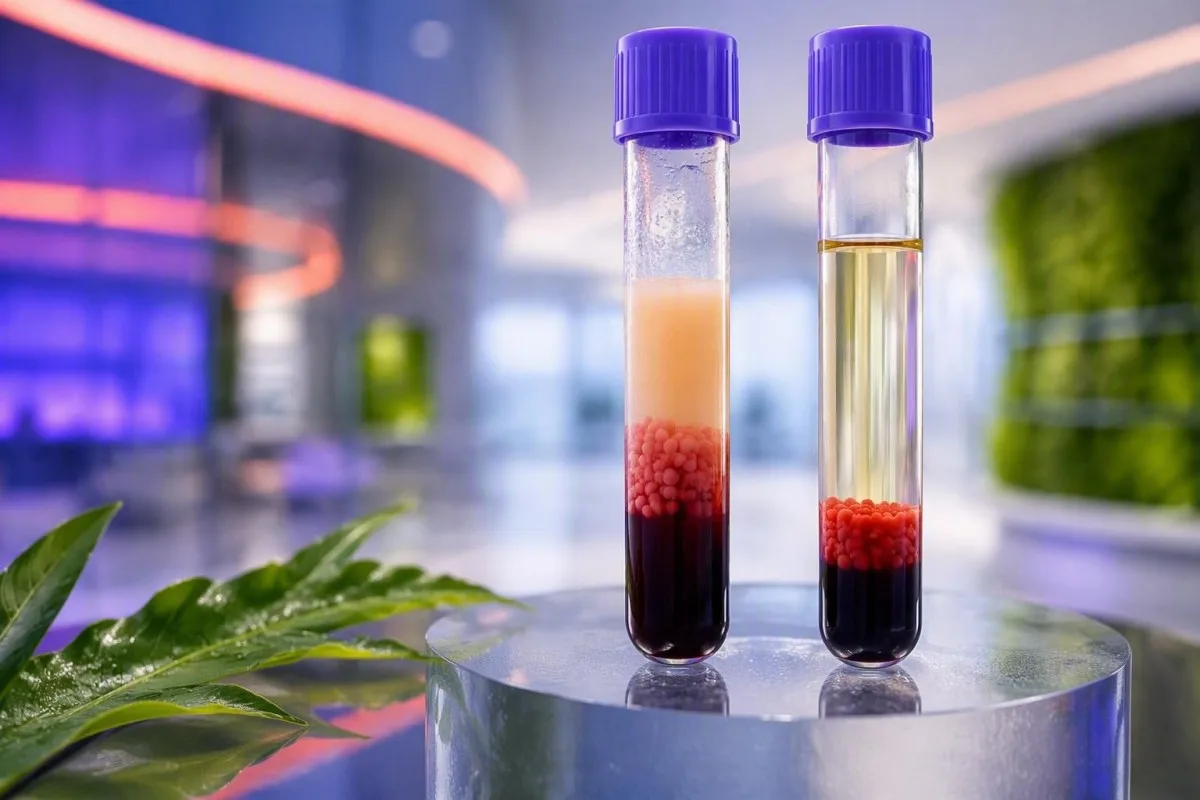
Хмарны лабараторны ўзор часта адлюстроўвае цыркулюючыя ліпід-багатыя часціцы, а не праблему са зборам аналізу. Практычнае пытанне заключаецца ў тым, ці звязана хмарнасць з прыёмам ежы, ці гэта прыкмета клінічна значнай гіпертрыгліцерыдэміі.


- Ліпемічны ўзор крыві азначае, што сыроватка або плазма выглядае малочна з-за таго, што ліпід-багатыя ліпапратэіны рассейваюць святло падчас лабараторнага аналізу.
- Паўторны аналіз нашча звычайна лепш рабіць праз 8-12 гадзін без ужывання калорый, калі трыгліцерыды нечакана высокія або лабараторыя паведамляе аб аналітычным умяшанні.
- Трыгліцэрыды вышэй за 500 мг/дл (5,6 ммоль/л) патрабуюць неадкладнага клінічнага назірання, паколькі рызыка панкрэатыту значна ўзрастае, калі ўзровень набліжаецца да 1000 мг/дл.
- Разліковы LDL-C становіцца ненадзейным, калі трыгліцерыды перавышаюць 400 мг/дл (4,5 ммоль/л) пры выкарыстанні традыцыйнага разліку па Фрыдэвальду.
- Псеўдагіпонатрыемія можа ўзнікаць пры моцнай ліпеміі пры выкарыстанні непрамых іёнаселектыўных электродных метадаў; прамое тэсціраванне ISE не закранаецца гэтым артэфактам аб'ёмнага зрушэння.
- Мутны ўзор крыві можа з'явіцца пасля багатай ежы, ужывання алкаголю, некантралюемага дыябету, цяжарнасці, прыёму некаторых лекаў або спадчынных парушэнняў ліпіднага абмену.
- не спыняйце прызначаныя лекі перад паўторным заборай, калі толькі лекар, які прызначыў аналіз, адмыслова не загадае вам зрабіць гэта.
- Неадкладныя сімптомы пры вельмі высокім узроўні трыгліцерыдаў уключаюць пастаянны боль у верхняй частцы жывата, ваніты, ліхаманку або немагчымасць утрымліваць вадкасць.
Што азначае ліпемічны ўзор у практычным сэнсе
A липемический ўзор крыві - гэта ўзор сыроваткі або плазмы, які выглядае мутным або малочным, таму што ён утрымлівае шмат часціц, багатых трыгліцерыдамі, галоўным чынам хіломікронаў і ліпапратэінаў вельмі нізкай шчыльнасці. У большасці людзей тлумачэннем з'яўляецца нядаўняя тлустая ежа; у іншых з'яўленне з'яўляецца раннім папярэджаннем аб неабходнасці належнай ацэнкі трыгліцерыдаў.
Лабараторыя звычайна выяўляе липемию пасля цэнтрыфугавання ўзору, калі клеткавыя элементы асядаюць, а вадкая фракцыя застаецца непразрыстай. Бледны, крэмавы пласт можа з'явіцца пасля ежы, у той час як аднастайна малочны ўзор выклікае больш занепакоенасць з-за значнага павышэння ўзроўню трыгліцерыдаў. Гэта не тое ж самае, што гемоліз пасля забору крыві, які мае тэндэнцыю рабіць сыроватку ружовай да чырвонай.
Вынік трыгліцерыдаў не наташчак ніжэй за 175 мг/дл (2,0 ммоль/л) звычайна лічыцца прымальным для ацэнкі сардэчна-сасудзістых рызык, але бачная непразрыстасць можа з'яўляцца пры розных канцэнтрацыях, таму што памер часціц мае такое ж значэнне, як і абсалютнае значэнне трыгліцерыдаў. Па стане на 13 верасня 2026 года я б не рабіў высновы аб колькасці трыгліцерыдаў толькі па знешнім выглядзе ўзору; лабараторыі выкарыстоўваюць розныя індэксы липемии і аналізатары.
Кантэсці — гэта Аналізатар крыві са штучным інтэлектам які чытае паведамлены ўзровень трыгліцерыдаў, статус наташчак і звязаныя з ім вынікі ўзроўню глюкозы або печані разам, а не разглядае лабараторны каментар як дыягназ. Практычнае правіла доктара Томаса Кляйна простае: мутнасць - гэта спачатку маркер якасці, а потым метабалічная падказка.
Липемия - гэта не дыягназ
Липемия апісвае аптычны выгляд узору, а не хваробу. Карысным наступным крокам з'яўляецца адрозненне часовай постпрандыяльнай липемии ад пастаяннай гіпертрыгліцерыдэміі шляхам паўтарэння панэлі ліпідаў наташчак ва ўмовах звычайнага харчавання, а не строгай дыеты.
Чаму хмарная сыроватка можа змяняць лабараторныя вынікі
Липемия ўплывае на аналізы галоўным чынам шляхам рассейвання святла, выцяснення воднай часткі сыроваткі або перашкаджаючы аналізатару чыста вымяраць рэакцыю. Рызыка залежыць ад метаду, ступені мутнасці і правераных мяжоў уплыву асобнай лабараторыі.
Фотометрычныя аналізы вымяраюць, колькі святла праходзіць праз узор або паглынаецца ім; падвешаныя часціцы ліпідаў скажаюць гэты сігнал. У залежнасці ад аналізу, вынікі для білірубіну, крэатыніну, агульнага бялку, кальцыю, фасфату, магнію і некаторых ферментаў печані могуць змяняцца ўверх ці ўніз. Ніколак (2014) тлумачыць, што кірунак і памер памылкі залежыць ад метаду, таму ніякі каэфіцыент карэкцыі не з'яўляецца бяспечным.
Цяжкая липемия можа выклікаць псеўдагiпанаўтрыемiю пры вымярэнні натрыю непрамым іёнаселектыўным электродам. Прамыя метады ISE, якія часта выкарыстоўваюцца ў аналізатарах крыві, вымяраюць актыўнасць натрыю без таго ж разбаўлення, і пераважныя, калі вынік супярэчыць клінічнай карціне; гл. наша кіраўніцтва па попереджувальні ознаки низького натрію.
Паводле майго вопыту, найбольш пазбягальная памылка - гэта меркаваць, што кожнае ненармальнае значэнне ў липемическом узоры з'яўляецца несапраўдным. Вынік трыгліцерыдаў 850 мг/дл мае клінічнае значэнне, нават калі лабараторыя прыгнятае разлічаны LDL-C, і ён патрабуе медыцынскага агляду на тым жа тыдні.
На якія аналізы крыві ліпемія ўплывае найбольш
Липемия часцей за ўсё парушае хімічныя аналізы на аснове святла і разлічаныя значэнні ліпідаў, у той час як многія вымярэнні колькасці клетак застаюцца прыдатнымі. Лабараторыя можа выдаць вынік з каментаром аб уплыве, паўтарыць яго пасля апрацоўкі, выкарыстаць альтэрнатыўны метад або запытаць новы ўзор.
Разліковы халестэрын LDL не варта разлічваць, калі ўзровень трыгліцерыдаў перавышае 400 мг/дл (4,5 ммоль/л) па класічным ураўненні Фрыдзэвальда. Прамы LDL-C, не-HDL-C або апаліпапратэін B могуць забяспечыць больш ясную ацэнку рызыкі; наша тлумачэнне суадносін ApoB да ApoA1 паказвае, чаму вымярэнні часціц могуць дапамагчы.
Амілаза і ліпаза патрабуюць асаблівай увагі пры цяжкай гіпертрыгліцерыдэміі, таму што липемия можа ўплываць на некаторыя ферментатыўныя аналізы, аднак сімптомы жывата могуць сведчыць аб панкрэатыце, нават калі адзін вынік фермента выглядае менш уражлівым, чым чакалася. Пастаянны боль у верхняй частцы жывата плюс трыгліцерыды вышэй за 1000 мг/дл (11,3 ммоль/л) патрабуюць тэрміновай ацэнкі, а не хатняга паўторнага аналізу.
Kantesti AI — гэта сервісі інтерпретації тестів ШІ that flags the combination of a lipemic comment, triglycerides, glucose, sodium method notes, and missing LDL-C as a data-quality pattern. It cannot determine the analyzer method from every PDF, so the laboratory comment still matters.
Калі трэба паўтарыць аналіз крыві на ліпемію
Repeat a lipemic specimen when the laboratory says interference could affect a clinically important result, when triglycerides are unexpectedly high, or when fasting status was unclear. A stable person without urgent symptoms can usually repeat testing after an 8-12 hour overnight fast within days to a few weeks, depending on the result.
If the only issue is a mildly cloudy non-fasting sample and triglycerides are below 400 mg/dL, a clinician may accept the panel and repeat fasting later for clarification. The 2018 AHA/ACC cholesterol guideline supports non-fasting screening in many settings but advises fasting measurement when triglycerides are 400 mg/dL or higher (Grundy et al., 2019).
A redraw should happen sooner—often within 24-72 hours—when sodium, bilirubin, creatinine, or pancreatic enzymes may guide an immediate treatment decision. Do not wait for a routine fasting redraw if you have vomiting, severe abdominal pain, confusion, marked thirst, or rapidly worsening illness.
For a reliable repeat, record the last calorie-containing food or drink, alcohol in the prior 48 hours, recent strenuous exercise, acute illness, and any new medication. These details often explain why blood results differ between visits.
Як падрыхтавацца да надзейнага паўторнага аналізу нашча
The best preparation for a repeat lipid-related sample is 8-12 hours without food or caloric drinks, normal water intake, and no alcohol for 48-72 hours. Keep your usual prescribed medicines unless the ordering clinician gives different instructions.
Water is encouraged because dehydration can concentrate several analytes and make comparison harder. Black coffee, tea, juice, milk, collagen drinks, and chewing gum can all alter fasting conditions; plain water is the cleanest option. Our detailed посібник щодо голодування перед аналізом крові covers supplement-specific exceptions.
Avoid deliberately eating an ultra-low-fat dinner to “pass” the test. I ask patients to eat a typical evening meal, finish it at least 8 hours before collection, and avoid alcohol for 2-3 days because alcohol can sharply raise triglycerides in susceptible people.
A 45-year-old patient I reviewed had triglycerides of 620 mg/dL after a celebratory dinner and drinks, then 218 mg/dL on a careful fasting repeat. That improvement was reassuring, but 218 mg/dL still deserved attention—it was not permission to dismiss the first sample.
Калі ліпемія сведчыць пра нешта большае, чым нядаўняя ежа
Persistent lipemia after an overnight fast commonly reflects insulin resistance, diabetes, alcohol exposure, obesity-related metabolic dysfunction, hypothyroidism, kidney disease, pregnancy, medicines, or an inherited lipid disorder. A single cloudy specimen cannot identify which cause applies.
Poorly controlled diabetes is a common driver because insulin deficiency or resistance reduces triglyceride clearance and increases liver VLDL production. A fasting glucose of 126 mg/dL (7.0 mmol/L) or higher on two separate tests supports diabetes, while an HbA1c of 6.5% or higher may confirm it when assay conditions are appropriate; review прыкметы высокага інсуліну нашча у кантэксце.
Hypothyroidism, oral estrogen, retinoids, corticosteroids, atypical antipsychotics, HIV therapies, beta blockers, thiazides, and some immunosuppressants can increase triglycerides. Never discontinue a medicine to improve a laboratory result without clinician input; the safer question is whether the medicine changed the interpretation or follow-up plan.
Familial chylomicronemia syndrome is rare and often produces triglycerides persistently above 880 mg/dL (10 mmol/L), recurrent abdominal pain, and marked lipemia from a young age. More commonly, several smaller genetic tendencies combine with diabetes, diet, or alcohol—what lipid specialists call multifactorial chylomicronemia.
Узровень трыгліцерыдаў, які змяняе неадкладнасць лячэння
Triglycerides of 500 mg/dL or higher require prompt follow-up, and levels of 1,000 mg/dL or higher can precipitate acute pancreatitis, especially with abdominal symptoms. Cardiovascular risk also rises with remnant particles at lower elevations, but pancreatitis prevention becomes the immediate priority at the higher range.
The European Society of Cardiology and European Atherosclerosis Society identify triglycerides above 880 mg/dL (10 mmol/L) as a threshold where pancreatitis prevention becomes particularly urgent (Mach et al., 2020). In real practice, I become concerned well before that number if a person has abdominal pain, diabetes, pregnancy, alcohol use, or prior pancreatitis.
Triglycerides between 150 and 499 mg/dL are usually managed by addressing secondary causes, body weight where relevant, dietary carbohydrate quality, and overall cardiovascular risk. Non-HDL cholesterol equals total cholesterol minus HDL-C and remains interpretable when LDL-C cannot be calculated; see рызыку рэшткавага халестэрыну.
A lipemic serum sample does not itself cause pancreatitis. It is the underlying extreme triglyceride concentration, often with chylomicron accumulation, that creates risk. That distinction helps patients avoid panicking about the laboratory appearance while still acting on a dangerous number.
Аналізы ліпідаў нашча і не нашча: што мяняецца
Non-fasting lipid testing is appropriate for many routine cardiovascular assessments, but fasting testing is more useful when triglycerides are high, a sample is visibly lipemic, or clinicians need a reproducible baseline. After ordinary meals, triglycerides can rise substantially for 4-8 hours.
Chylomicrons carry dietary fat from the intestine after meals, while VLDL carries triglycerides made by the liver. A heavy, high-fat meal can cause a temporary cloudy blood sample even in someone without chronic dyslipidemia, although repeated marked lipemia should not be written off as normal.
For trend monitoring, use the same conditions whenever possible: similar fasting duration, morning collection, usual diet the prior week, and no unusual alcohol intake. This matters more than chasing a single “perfect” value, as explained in our longitudinal lab baseline guide.
Кантэсці — гэта Інструмент аналізу вынікаў аналізу крыві з падтрымкай AI used to compare lipid results across time while retaining the collection context entered by the user. A trend based on two fasting samples is often more clinically honest than comparing a fasting result with a non-fasting result from a holiday weekend.
Што можа зрабіць лабараторыя, перш чым папрасіць паўторны аналіз
Laboratories may manage lipemia by measuring a lipemia index, using an alternate assay, ultracentrifuging the specimen, performing a high-speed clearing process, or reporting a qualified result. A redraw is not always necessary, but the laboratory’s validated procedure determines what is defensible.
Ultracentrifugation can remove chylomicrons from some samples, but it is not universally available and may alter analytes that partition with lipids. Dilution or serum blanking can help certain assays, yet neither approach fixes every measurement. That is why a comment such as “result may be affected by lipemia” should not be ignored.
Direct ISE sodium, enzymatic methods less sensitive to turbidity, or a different analyzer can sometimes provide a usable answer without recollection. The clinician should ask the lab which method was used rather than guessing from the report. This is especially relevant to electrolyte-panel results.
Kantesti AI does not alter, correct, or overwrite laboratory values. Our role is to highlight uncertainty and prompt the right question: was this number analytically verified, method-limited, or best repeated under fasting conditions?
Цяжарнасць, дыябет, дзеці і спадчынныя парушэнні ліпіднага абмену
Lipemia needs more individualized interpretation in pregnancy, diabetes, children, and people with prior pancreatitis or suspected inherited lipid disorders. The same triglyceride number can carry different practical risk depending on the clinical setting.
Triglycerides normally rise in pregnancy, especially during the third trimester, but values above 500 mg/dL (5.6 mmol/L) warrant obstetric and medical review because the trajectory can accelerate. Patients with previous severe hypertriglyceridemia should have a pre-pregnancy plan rather than waiting for a lipemic sample; see our overview of “червоні прапорці” у аналізі крові під час вагітності.
In type 1 diabetes with insulin deficiency, triglycerides can rise dramatically alongside high glucose and ketones. Glucose above 250 mg/dL (13.9 mmol/L) with ketones, nausea, abdominal pain, deep breathing, or drowsiness needs urgent evaluation, regardless of whether the sample is cloudy.
In children, triglycerides above 500 mg/dL should prompt pediatric assessment for diabetes, medication effects, familial disorders, and dietary causes. A pediatric lipid result must be interpreted against age-specific reference intervals, not adult thresholds alone.
Лекі, дабаўкі і алкаголь: што трэба паведаміць
Alcohol, certain prescription medicines, and some supplements can contribute to high triglycerides or make a redraw less interpretable. Tell the clinician and laboratory what you took, but do not independently withhold prescribed treatment.
Alcohol can raise triglycerides within hours to days, particularly in people with insulin resistance or existing hypertriglyceridemia. A 48-72 hour alcohol-free interval before a planned fasting lipid panel is reasonable unless this conflicts with medical advice, and it produces a more useful baseline than a last-minute lifestyle change.
High-dose corticosteroids, retinoids, estrogen-containing therapies, and some antipsychotics are frequent medication contributors. Fish-oil products can lower triglycerides over time, but starting or increasing them immediately before repeat testing obscures the baseline; our даведнік па дадатку з амега-3 explains where evidence is strongest.
Biotin does not usually create lipemia, but it can interfere with selected immunoassays. Bring an accurate supplement list, including powdered drinks and “metabolic” blends, because hidden calories and ingredients are surprisingly common.
Як інтэрпрэтаваць ліпемію разам з вынікамі аналізаў глюкозы, печані і нырак
A lipemic sample becomes more informative when interpreted with glucose, HbA1c, ALT, AST, GGT, non-HDL cholesterol, ApoB, thyroid tests, and kidney function. The pattern identifies possible causes more reliably than triglycerides alone.
Triglycerides above 200 mg/dL with low HDL-C, elevated fasting glucose, increased ALT, and central weight gain often suggests insulin resistance or metabolic syndrome. An ALT value above the laboratory upper limit does not prove fatty liver, but it should prompt discussion of alcohol, medicines, metabolic risk, and possibly imaging; read our кіраўніцтва па аналізах печані.
An elevated creatinine in a highly lipemic sample should be interpreted cautiously if the laboratory reports interference. eGFR is calculated from creatinine and can inherit that uncertainty; a repeat or cystatin C may clarify renal function in the right clinical context.
Dr. Thomas Klein advises against treating an isolated low sodium, low bicarbonate, or odd bilirubin result as a diagnosis when the report flags severe lipemia. Ask whether the result was confirmed by an alternative method, then interpret the entire panel—not one alarming flag.
Як выкарыстоўваць ліпемічны вынік, не рэагуючы празмерна
A lipemic laboratory comment should trigger verification, not panic: identify the triglyceride value, check whether any result was suppressed or qualified, assess symptoms, and arrange the appropriate repeat or clinical review. The result is useful precisely because it tells you where certainty ends.
Save the complete report, including sample-quality comments and reference intervals, before repeating the test. A photo of the specimen note may be as clinically useful as the numeric panel because it tells the reviewing clinician why a result may be less reliable; our чэк-ліст дакладнасці загрузкі PDF can help preserve that context.
Kantesti AI interprets uploaded results in about 60 seconds by identifying report flags, units, and related biomarker patterns, but it does not replace a clinician evaluating symptoms or prescribing therapy. Our стандарты медыцынскай валідацыі describe the safeguards and limits behind that distinction.
If the report shows triglycerides at or above 1,000 mg/dL, or if severe abdominal pain accompanies any markedly elevated triglyceride result, seek same-day medical advice. For routine uncertainty, the next sensible step is often an ordinary overnight fast and a properly timed redraw—not a drastic diet or self-treatment.
Пытанні, якія трэба задаць перад паўторным аналізам крыві
Before repeating a lipemic specimen, ask whether the original triglyceride result was valid, which analytes were affected, whether fasting is required, and how soon the redraw should occur. Clear questions prevent both unnecessary repeat testing and missed urgent risk.
Ask: “Which results were analytically affected, and were any confirmed by another method?” This is particularly useful for sodium, creatinine, bilirubin, and calculated LDL-C. Do not assume every result needs repeating just because serum looked cloudy.
Ask whether you should add HbA1c, fasting glucose, TSH, ApoB, non-HDL-C, liver enzymes, or a repeat lipid panel. The answer depends on your medical history, family history, pregnancy status, alcohol exposure, medicines, and prior triglyceride levels; нашай медыцынскай кансультатыўнай радзе emphasizes clinician-led decisions for high-risk patterns.
Kantesti, a privacy-focused AI blood test interpretation platform, can help organize the questions and compare the redraw with your prior results across 75+ languages. Still, a platform cannot assess abdominal tenderness, dehydration, or acute illness through a report—those require direct clinical care.
План бяспечнага паўторнага аналізу і сімптомы, якія не павінны чакаць
Most people with a meal-related lipemic specimen need a routine fasting repeat, while people with triglycerides above 500 mg/dL need prompt medical follow-up and those with abdominal symptoms may need urgent care. The correct timing is driven by the triglyceride value, symptoms, and which assays were compromised.
For a stable adult with an unexpected cloudy non-fasting sample, repeat the lipid panel after 8-12 hours fasting, normal hydration, and 48-72 hours without alcohol. Keep meals typical during the preceding week, and avoid a punishing workout the day before. Our кіраўніцтве па трыгліцерыдах пасля ежы gives more detail on expected post-meal changes.
Call a clinician promptly for fasting triglycerides of 500 mg/dL or more. Seek urgent care for persistent upper abdominal pain, vomiting, fever, rapid breathing, confusion, or inability to drink—particularly with known triglycerides above 1,000 mg/dL.
The reassuring part is that a cloudy blood sample is often fixable with better timing. The more serious part is that it can reveal a treatable metabolic problem before it causes symptoms. That is a worthwhile reason to repeat it properly.
Часта задаваныя пытанні
Што азначае липемический ўзор крыві?
A lipemic blood sample means the serum or plasma contains enough triglyceride-rich lipoprotein particles to look cloudy or milky after processing. It commonly follows a recent fatty meal, but fasting lipemia can reflect diabetes, alcohol exposure, medicines, pregnancy, hypothyroidism, kidney disease, or inherited lipid disorders. The sample appearance does not reliably predict the triglyceride number, so the reported value and laboratory interference comment should guide next steps. A fasting repeat after 8-12 hours is commonly used when results are unexpected or important assays may be affected.
Ці варта мне паўтарыць аналіз крыві на липемию?
A lipemia blood test should be repeated when the laboratory reports interference with a clinically important analyte, when fasting status was unclear, or when triglycerides are unexpectedly elevated. A stable person can often repeat the sample after 8-12 hours without calories and 48-72 hours without alcohol. Triglycerides of 500 mg/dL or higher warrant prompt clinician contact rather than waiting weeks for a routine redraw. Triglycerides at or above 1,000 mg/dL, especially with upper abdominal pain or vomiting, require same-day medical advice.
Ці можа ліпемічны ўзор выклікаць памылкова нізкі ўзровень натрыю?
A severely lipemic specimen can produce falsely low sodium, called pseudohyponatremia, when a laboratory uses an indirect ion-selective electrode method. The artifact occurs because excess lipids reduce the water fraction of the sample used in the calculation, not because body sodium is necessarily low. Direct ion-selective electrode testing, such as a blood-gas analyzer method, is generally not affected by this volume-displacement issue. A low sodium result with severe lipemia should be interpreted alongside symptoms, serum osmolality, glucose, and the laboratory method.
Як доўга пасля прыёму ежы кроў застаецца ліпемічнай?
Post-meal lipemia often peaks about 3-6 hours after a fat-containing meal and can persist for 8 hours or longer, depending on meal size, alcohol intake, insulin sensitivity, and baseline triglycerides. Chylomicrons are the main dietary fat-carrying particles responsible for this temporary turbidity. An 8-12 hour overnight fast usually clears ordinary meal-related lipemia enough for a reliable fasting lipid panel. Persistent cloudiness after that interval deserves evaluation for elevated fasting triglycerides or another secondary cause.
Якія аналізы з'яўляюцца недакладнымі ў памутнелым узоры крыві?
A cloudy blood sample can affect photometric chemistry assays because lipid particles scatter light, but the exact tests and direction of error vary by analyzer. Creatinine, bilirubin, calcium, phosphate, magnesium, total protein, and some enzyme tests can be vulnerable, while calculated LDL-C is unreliable with triglycerides above 400 mg/dL using the Friedewald equation. Severe lipemia can also cause pseudohyponatremia on indirect sodium methods. The laboratory comment is more reliable than a generic list because each laboratory validates interference differently.
Ці магу я піць ваду перад паўторным узяццем ліпемічнага аналізу крыві?
Yes, plain water is appropriate and usually helpful before a fasting redraw because dehydration can make several results harder to compare. For an 8-12 hour fast, avoid food and caloric drinks such as juice, milk, sweetened coffee, protein shakes, and alcohol. Continue prescribed medicines unless the ordering clinician instructs otherwise, because stopping treatment can create a more dangerous and less interpretable result. Record any supplements, alcohol use within 72 hours, acute illness, and unusually intense exercise before the sample.
Атрымаць аналіз крыві з AI сёння
Далучайцеся больш чым да 2 мільёнаў карыстальнікаў па ўсім свеце, якія давяраюць Kantesti для імгненнага, дакладнага аналізу лабараторных тэстаў. Загрузіце вынікі аналізу крыві і атрымайце поўную інтэрпрэтацыю біямаркераў 15,000+ за лічаныя секунды.
📚 Публікацыі даследаванняў са спасылкамі
Кляйн, Т., Мітчэл, С., і Вебер, Г. (2026). Кіраўніцтва па жаночым здароўі: авуляцыя, менапаўза і гарманальныя сімптомы. Kantesti AI Medical Research.
Кляйн, Т., Мітчэл, С., і Вебер, Г. (2026). Шматмоўная AI-падтрымка пры прыняцці клінічных рашэнняў для ранняга трыажу хантавірусу: дызайн, інжынерная валідацыя і разгортванне ў рэальных умовах для 50 000 прааналізаваных справаздач аб аналізах крыві. Kantesti AI Medical Research.
📖 Знешнія медыцынскія спасылкі
⚕️ Медыцынская адмова ад адказнасці
Гэты артыкул прызначаны толькі для адукацыйных мэт і не з’яўляецца медычнай парадай. Заўсёды кансультуйцеся з кваліфікаваным спецыялістам аховы здароўя для прыняцця рашэнняў па дыягностыцы і лячэнні.
Сігналы даверу E-E-A-T
Вопыт
Клінічны агляд, які вядзе лекар, працэсаў інтэрпрэтацыі лабараторных паказчыкаў.
Экспертыза
Фокус лабараторнай медыцыны на тым, як біямаркеры паводзяць сябе ў клінічным кантэксце.
Аўтарытэтнасць
Напісана доктарам Томасам Кляйнам, з аглядам доктара Сара Мітчэл і праф. доктара Ганса Вебера.
Надзейнасць
Інтэрпрэтацыя на аснове доказаў з выразнымі шляхамі далейшых дзеянняў, каб паменшыць трывогу.