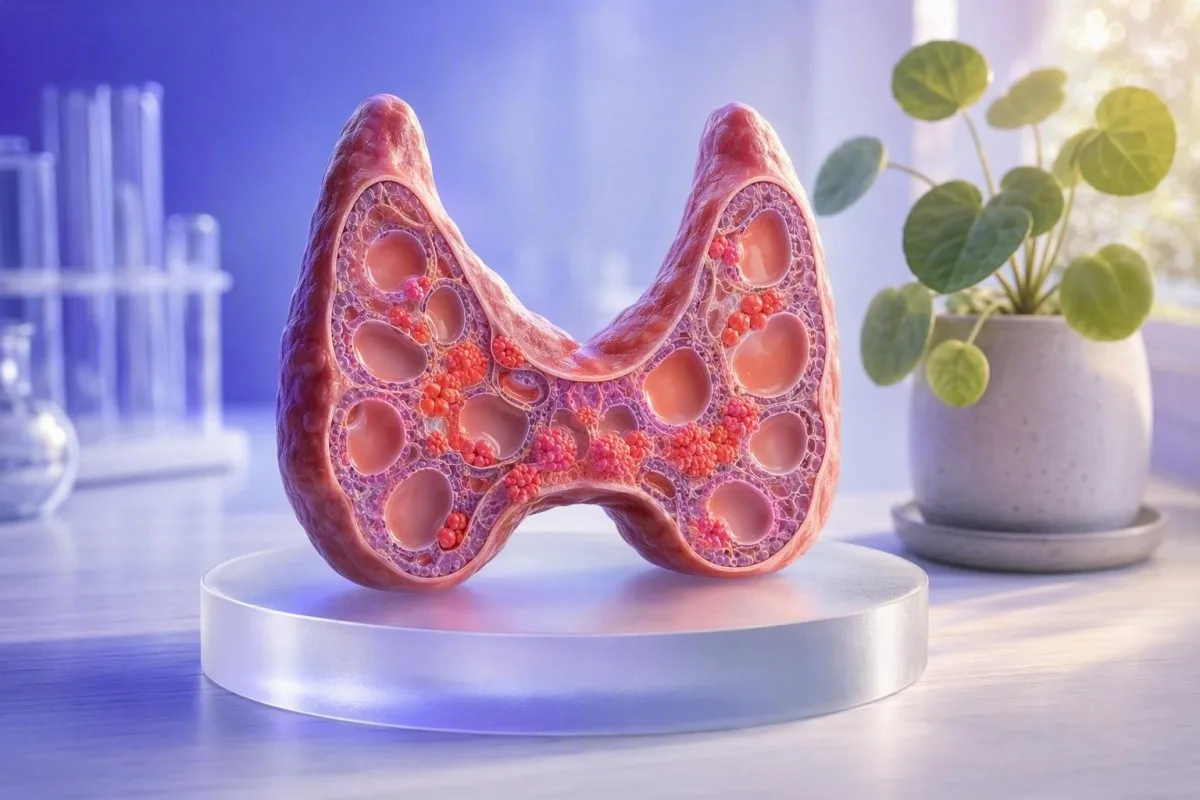
A TPO-ellenanyagok gyakran korai jelét adják az autoimmun pajzsmirigybetegségnek, nem pedig olyan diagnózist, amely önmagában kezelést igényel. A hasznos következő lépés az, hogy idővel nyomon kövessük a pajzsmirigyfunkciót és az egyéni kockázati tényezőket.


- Magas TPO-ellenanyagok többnyire a pajzsmirigy-peroxidáz autoimmun felismerését tükrözik, leggyakrabban Hashimoto-thyreoiditist.
- A laboratóriumi határértékek eltérnek: sok vizsgálat negatívnak tekinti a 34 IU/mL alatti eredményeket, de a vizsgálatot végző laboratórium saját felső határértéke az egyetlen érvényes küszöb.
- A normál TSH megváltoztatja a sürgősséget: a pozitív pajzsmirigy-peroxidáz antitestek normál TSH mellett általában megfigyelést igényelnek, nem levotiroxint.
- A TSH a kontrollvizsgálat: a legtöbb nem terhes felnőtt normál TSH mellett körülbelül 12 hónap múlva ismételt TSH-t igényel, nem sorozatszerű antitestméréseket.
- A kombinált kockázat számít: a megemelkedett TSH és a pajzsmirigyellenes antitestek együtt jobban jelzik a progressziót, mint bármelyik eredmény önmagában; a Whickham-adatok alapján a két markerrel rendelkező nők esetében az éves progresszió kb. 4,3% volt.
- A terhesség szorosabb ellenőrzést igényel: a TPO-pozitív nőknél a TSH-t akkor kell ellenőrizni, amikor a terhesség igazolódik, majd kb. minden 4. héten át a terhesség közepéig.
- Kerülje a túlzott jódbevitelt: a jódot tartalmazó moszat (kelp) készítmények súlyosbíthatják az autoimmun pajzsmirigyaktivitást; a felnőttek számára az Egyesült Államokban a tolerálható felső beviteli szint napi 1 100 mikrogramm.
- Az antitest-szint nem károsodási pontszám: a 600 IU/mL-es eredmény nem jelenti megbízhatóan, hogy több tünettel vagy gyorsabb pajzsmirigy-elégtelenséggel jár, mint a 80 IU/mL-es eredmény.
Mit jelentenek valójában a magas TPO-ellenanyagok
A magas TPO-ellenanyagok leggyakrabban azt jelentik, hogy az immunrendszer felismerte a pajzsmirigy-peroxidázt, egy olyan enzimet, amely a pajzsmirigyhormon előállításához szükséges; ez az autoimmun pajzsmirigybetegség, többnyire a Hashimoto-kór, markere, nem pedig toxin vagy pajzsmirigyhormon-eredmény. A pozitív eredmény évekkel megelőzheti a kóros TSH-t, ezért a klinikusok a funkciót és a kockázatot követik, nem pedig az antitest-szám csökkentésére törekednek.
A pajzsmirigy-peroxidáz segíti a jódnak a tirozin-maradékokhoz való kapcsolását a T4 és T3 szintézise során. A TPO-ellenanyagok nem gátolják a pajzsmirigyhormon-termelést egy „rendes”, dózisfüggő módon; hanem egy olyan immunfolyamatot jeleznek, amely fokozatosan megváltoztathatja a pajzsmirigyszövetet, ezért a TSH és a szabad T4 nagyobb azonnali klinikai jelentőséggel bír.
Amikor átnézek egy olyan panelt, amelyben 240 IU/mL TPO-ellenanyag szerepel, 1,6 mIU/L TSH mellett, megnyugtatom a beteget, hogy ez ma nem hipotireózis. Dr. Thomas Klein gyakorlati szabálya egyszerű: elmenteni az eredményt, ellenőrizni a tüneteket és a családi anamnézist, majd a következő TSH alapján eldönteni, változik-e a biológia.
Az Kantesti AI egy AI vérvizsgálati analizátor amely a pajzsmirigy-peroxidáz elleni antitesteket a TSH, a szabad T4, az életkor, a nem, a terhességi státusz és a korábbi értékek mellett olvassa, nem pedig úgy kezel egyetlen jelzett sort diagnózisként. Az alapvető vizsgálati szókincshez a mi útmutatónk a pajzsmirigyfunkciós vizsgálatok magyarázza, miért adnak ezek a markerek különböző válaszokat különböző kérdésekre.
Miért emelkednek a pajzsmirigy-peroxidáz elleni antitestek
A magas TPO-ellenanyagok leggyakoribb okai az öröklött hajlam, a női nem, más autoimmun betegségek, a jód-túladagolás vagy a gyors jódexpozíció, valamint a terhesség körüli immunváltozások. Egyetlen stresszes hét, rossz alvás vagy egyetlen étel ritkán magyaráz meg egy valóban pozitív eredményt.
A Hashimoto-thyreoiditis családokban csoportosul, és gyakran együtt jár 1-es típusú cukorbetegséggel, coeliakiával, vitiligóval, perniciózus anémiával és autoimmun mellékvese-betegséggel. Caturegli és munkatársai a Hashimotót T-sejt-domináns pajzsmirigyfolyamatként írják le, ahol mérhető antitestek szolgálnak hasznos, de nem teljes mértékű perifériás támpontként (Caturegli és mtsai, 2014).
A jód árnyalt kérdés. A fiziológiás jód szükséges, ugyanakkor a hirtelen magas bevitel moszatporokból, kontrasztanyag-expozícióból vagy egyes kiegészítőkből genetikai szempontból fogékony embereknél növelheti a pajzsmirigy-antigén stresszt; egy napi 500 mikrogrammot biztosító kiegészítő nem automatikusan biztonságosabb, mert “természetes”-ként árulják. Lásd a gyakorlati áttekintésünket a jódgazdag élelmiszerekről mielőtt koncentrált moszatkészítményeket adna hozzá.
A vírusos megbetegedés átmenetileg fokozhatja az immunaktivitást, de általában lehetetlen bizonyítani, hogy egyetlen fertőzés okozta az illető antitestjeit. A védhetőbb klinikai kérdés az, hogy a TSH elmozdult-e például 1,2-ről 4.8 mIU/L-re 12 hónap alatt, nem pedig az, hogy az antitest-eredménynek van-e drámai eredettörténete.
Hogyan értelmezzünk egy TPO-ellenanyag-értéket túlreagálás nélkül
Nincs egyetemes normál tartomány a pajzsmirigy-peroxidáz elleni antitestekre, mert a laboratóriumok különböző immunvizsgálatokat, kalibrátorokat és jelentési egységeket használnak. Sok laboratórium a negatív küszöbértéket kb. 34 IU/mL-nél alkalmazza, míg mások 9 IU/mL-t, 60 IU/mL-t, vagy vizsgálatspecifikus indexet használnak.
A 38 IU/mL érték, amely egy 34 IU/mL-es küszöbérték felett van, és az 1 200 IU/mL érték egyaránt a pajzsmirigy autoimmunitását támogatja, de egyik sem állapítja meg önállóan, hogy mennyi működő pajzsmirőszövet maradt. Az antitestvizsgálatokat leginkább pozitívnak, negatívnak vagy a küszöb közelében bizonytalannak érdemes értelmezni—nem pedig a pajzsmirigy-károsodás pontos százalékaként.
Eltérő eredmények előfordulnak. A tiroglobulin elleni antitestek pozitívak lehetnek, ha a TPO-ellenes antitestek negatívak, és a Hashimoto-kórban szenvedők egy kis kisebbségénél egyetlen antitest sem mutatható ki; magyarázatunk tiroglobulin-ellenanyagok azt, hogy miért kiegészítik egymást a két vizsgálat, és miért nem felcserélhetők.
Ugyanabban a laboratóriumban végzett ismételt vizsgálat javítja a trendek összehasonlíthatóságát, bár a TPO-ellenes antitestek rutinszerű ismétlése ritkán hasznos. Az Kantesti AI egy AI vérvizsgálat-értelmező platform amely minden egyes eredménynél megtartja a laboratóriumi referencia-intervallumot; ez egy apró részlet, amely megakadályozza egy látszólagos változás kialakulását, amelyet csupán a vizsgálatok (assay-ek) váltása okozna.
Mit jelezhet a TPO-pozitivitás még a hormonok változása előtt
A pozitív TPO-ellenes antitestek előre jelezhetik a hypothyreosis jövőbeni nagyobb kockázatát akkor is, ha a TSH és a szabad T4 normális, de nem képesek megjósolni a pontos hónapot vagy évet, amikor pajzsmirigyhormon-pótlásra szükség lesz. A legerősebb jel az antitestpozitivitás, amely emelkedő vagy már eleve magas TSH-val társul.
A Whickham-felmérés utánkövetésében azoknál a nőknél, akiknél mind a megemelkedett TSH, mind a pajzsmirigy elleni antitestek emelkedettek voltak, a becsült 4,3% éves kockázat a nyílt hypothyreosis kialakulására, szemben azzal, hogy a megemelkedett TSH önmagában 2,6%/év kockázatot jelentett. Ez a régebbi, de még mindig meghatározó közösségi adatbázis továbbra is szemlélteti a klinikai alapelvet: a páros eltérések több jelentéssel bírnak, mint egy izolált antitesteredmény (Vanderpump és mtsai, 1995).
A szubklinikai hypothyreosis azt jelenti, hogy a TSH a laboratóriumi tartomány felett van, miközben a szabad T4 normális. A 6,2 mIU/L TSH pozitív TPO-ellenes antitestekkel nem sürgősségi állapot, de több figyelmet érdemel, mint a 2,0 mIU/L TSH, mert nagyobb az esélye a tartós pajzsmirigy-alulműködésnek; cikkünk határérték körüli TSH ismerteti a szokásos ismételt vizsgálatok logikáját.
Az ultrahang kimutathat diffúzan heterogén, hypoechogen mirigyet, amely krónikus autoimmun thyreoiditisszel összhangban van, azonban a képalkotás nem szükséges pusztán azért, mert az antitestek pozitívak. Általában akkor kérek ultrahangot, ha tapintható megnagyobbodás van, aszimmetrikus nyaki eltérés, kompressziós tünet vagy csomó észlelhető—nem pedig az antitestek „osztályozása” céljából.
Magas TPO-ellenanyagok tünetei: miért a funkcióból erednek a tünetek
A magas TPO-ellenes antitestek önmagukban általában nem okoznak azonosítható tüneteket; a tünetek akkor jelentkeznek, amikor a pajzsmirigyfunkció alacsony lesz, esetenként magas egy gyulladásos felszabadulási fázis során, vagy ha egy másik állapot is fennáll. A fáradtság önmagában nem bizonyítja, hogy az antitesteredmény klinikailag aktív.
A tipikus hypothyreoid jellemzők közé tartozik a hidegintolerancia, a székrekedés, a lassabb gondolkodás, a száraz bőr, a gyakoribb/súlyosabb menstruáció, a rekedtség, az izomfájdalmak és a fokozatos testsúlygyarapodás. Ezek gyakori tünetek sok más kórképben is: a vashiány, az alvási apnoe, a depresszió, a gyógyszerek hatásai, a menopauza és az alacsony B12 gyakran meglepően hasonlóan néz ki a rendelőben.
Egy olyan beteg, akinek TPO-ellenes antitestje 90 IU/mL, TSH-ja 1,9 mIU/L, és súlyos kimerültséget tapasztal, szélesebb körű kivizsgálást igényel, nem pedig reflexből pajzsmirigy-gyógyszer felírást. Általában teljes vérkép, ferritin, B12, glükóz, gyógyszerszedés, alvás és hangulat áttekintését végzem; útmutatónk a hidegintoleranciára vonatkozó vérvizsgálatokról bemutatja, hogyan fedik egymást ezek a támpontok.
Rövid ideig tartó szívdobogásérzés, remegés, hőintolerancia vagy váratlan testsúlycsökkenés előfordulhat egy korai “hashitoxicosis” fázisban, de a tartós biokémiai hyperthyreosis kivizsgálást igényel Graves-kór vagy más ok irányában. A szabad T4 a referencia-tartomány felett van, miközben a TSH 0,1 mIU/L alatt van, azaz elnyomott időben történő klinikai felülvizsgálatot igényel, az általunk magas szabad T4 útmutatóban leírtak szerint.
A magas TPO-ellenanyagok önmagukban veszélyesek?
A magas TPO-ellenanyagok közvetlenül nem veszélyesek: önmagukban nem okoznak pajzsmirigy-vihart, rákot, vagy orvosi vészhelyzetet. Jelentőségük mint kockázati jelző abban áll, hogy a jövőben pajzsmirigy-rendellenesség alakulhat ki, különösen terhesség alatt vagy amikor a TSH emelkedni kezd.
A szám érzelmileg nyugtalanító lehet, különösen akkor, ha a lelet “magas”-ként, piros színnel van jelölve. A tapasztalatom szerint a hasznos megfogalmazás ez: “bizonyíték pajzsmirigy-autoimmunitásra, mérhető követési tervvel”, nem pedig az, hogy “a pajzsmirigyem minden nap megtámadja magát”.”
A pozitív TPO-ellenanyagok más autoimmun diagnózisokkal is összefüggnek, de tünetmentes, jól lévő személynél a széles körű ellenanyag-szűrés nem rutinszerű. A specifikus támpontok célzott vizsgálatot irányítanak: a krónikus hasmenés vagy a vashiány indokolhat cöliákia-értékelést, míg a makrocitózis vagy a neuropátia B12-vizsgálatot tehet szükségessé; a perniciózus anaemia jelei egy hasznos példát jelentenek.
Kantesti’s Mesterséges intelligencia-alapú vérvizsgálat-elemző eszköz az olyan mintázatokat azonosítja, mint a pozitív TPO-ellenanyagok, emelkedő TSH, alacsony szabad T4 és makrocitózis, mint utánkövetési kiváltó okot, nem pedig úgy, hogy az ellenanyagok önmagukban diagnózist generálnának. A különbség azért fontos, mert a felesleges kezelés új problémát okozhat—alacsony TSH-t a túlzott levotiroxin miatt.
Melyik kontrollvizsgálatok a legfontosabbak
A TSH a fő utánkövetési vizsgálat pozitív TPO-eredmény után; a szabad T4 akkor kerül hozzáadásra, ha a TSH eltérő, a tünetek jelentősek, vagy terhesség is érintett. A szabad T3-t általában nem szükséges monitorozni a feltételezett Hashimoto-pajzsmirigy-alulműködés esetén.
Normál TSH-val és nincs aggasztó tünettel rendelkező, nem terhes felnőtt esetén a TSH ismétlése 6–12 hónap múlva ésszerű megközelítés; a rövidebb időköz a magas-normál vagy emelkedő TSH-hoz illeszkedik. Ha a megerősítéskor a TSH 10 mIU/L felett van, a legtöbb irányelv a levotiroxin-kezelést támogatja, mert az spontán normalizálódás valószínűsége csökken, és a klinikai kockázat nő.
A szabad T4 segít elkülöníteni a szubklinikus betegséget a manifeszt pajzsmirigy-alulműködéstől. A manifeszt primer pajzsmirigy-alulműködés általában magas TSH-t mutat, miközben a szabad T4 a laboratóriumi referencia-tartomány alsó határa alatt van, míg az alacsony szabad T4 alacsonyra nem emelkedő TSH mellett más aggodalomra ad okot—hipofízis eredetű vagy súlyos, nem pajzsmirigyből származó betegségre—és klinikai értékelést igényel.
A trend akkor hasznosabb, ha valódi. Betegség, a laboratóriumi vizsgálat megváltozása és a normál biológiai variáció a TSH-t mérsékelten eltolhatja, ezért javasoljuk az olvasóknak, hogy a mi vérvizsgálati eltérés útmutatónk segítségével hasonlítsák össze az időzítést és a körülményeket.
Terhesség és teherbe esés: szorosabb pajzsmirigy-ellenőrzés
A TPO-pozitív, terhes nők esetében a TSH-t a terhesség igazolásakor kell ellenőrizni, majd körülbelül minden 4. héten a terhesség közepéig, ezt követően legalább egyszer a 30. hét körül. A terhesség megváltoztatja a pajzsmirigyhormon-igényt, mielőtt sokan észrevennék a tüneteket.
A 2017-es American Thyroid Association terhességi irányelv szoros TSH-ellenőrzést javasol a pajzsmirigyellenes antitestekkel rendelkező, euthyreoid nők esetében, mert a normális prekoncepciós eredmény nem feltétlenül marad érvényben, ahogy nő a hormonigény (Alexander et al., 2017). A TSH-célértékek az elérhető esetekben trimeszter- és laboratóriumspecifikus tartományokat használnak; a nem terhes referencia-intervallum alkalmazása egy lényeges emelkedést figyelmen kívül hagyhat.
A terhesség alatti kezelési döntések egyénre szabottak. A levotiroxin általában javasolt TPO-pozitív nők számára, ha a TSH a terhességre vonatkozó felső határérték felett van, míg a 2,5 mIU/L és a felső határérték közötti TSH esetén a kezelés kevésbé egyértelmű, és a termékenységi előzményektől, a korábbi veszteségtől, a helyi iránymutatásoktól és a kezelőorvos mérlegelésétől függ.
Ne kezdjen kelpet, nagy dózisú szelént vagy “pajzsmirigy-támogató” keverékeket, amíg teherbe próbálkozik, anélkül hogy átnézné a hozzávalókat. A mért adagú terhességi jódbevitel különbözik a kiszámíthatatlan tengeri moszatkivonatoktól; a mi prekoncepciós vérvizsgálati útmutatónk felsorolja azokat a vizsgálatokat, amelyek fogamzás előtt értelmesek.
Jód, szelén és kiegészítők: a nyomon követés gyakori hibái
Sem a jódmegszorítás, sem a nagy dózisú szelén nem kezeli megbízhatóan a magas TPO-antitesteket, és a túlzott jód arra hajlamos személyeknél ronthatja az autoimmun pajzsmirigy-rendellenességet. A legtöbb betegnek megfelelő étrendi jódbevitelre van szüksége, nem egy agresszív “pajzsmirigy-protokollra”.”
Az Egyesült Államokban a felnőttek számára a jód tolerálható felső beviteli szintje napi 1 100 mikrogramm, bár az egyéni fogékonyság eltérő, és egyeseknél már alacsonyabb, tartós bevitel mellett is pajzsmirigy-rendellenesség alakulhat ki. Egy kelp kapszula többféle, akár a standard multivitaminban gyakran használt 150 mikrogramm többszörösét is tartalmazhatja, ezért a termékcímkék alapos átvizsgálást érdemelnek.
A szelénnel végzett vizsgálatok, gyakran napi 200 mikrogramm 3–6 hónapon át, egyes tanulmányokban csökkentették a TPO-antitest-koncentrációkat, de a tünetekre, vetélésre és a hypothyreosis megelőzésére vonatkozó eredmények továbbra is ellentmondásosak. Nem javaslom, hogy a szelént pusztán egy alacsonyabb titer eléréséért szedjék; a krónikusan túlzott bevitel hajhullást, törékeny körmöket, gyomor-bélrendszeri panaszokat és neuropathiát okozhat.
A biotin zavarhat egyes pajzsmirigyhormon-immunvizsgálatokat, különösen a TSH-t és a szabad T4-et, bár a hatások a vizsgálat kialakításától és az adagtól függenek. Kérdezze meg a laboratóriumot vagy a kezelőorvost, hogy a nagy dózisú biotint érdemes-e 48–72 órára felfüggeszteni a vizsgálat előtt; a mi pajzsmirigy-kiegészítő biztonsági útmutatónk ad egy gyakorlati ellenőrzőlistát.
Diéta, coeliakia jelei és ellenőrizendő tápanyageredmények
A kiegyensúlyozott étrend nem szünteti meg a TPO-antitesteket, de a vashiány, a B12-hiány, a coeliakia és az elégtelen fehérjebevitel felerősíthetik azokat a tüneteket, amelyeket tévesen a Hashimoto-kórra fognak. Egy valódi hiányosság rendezése javíthatja a közérzetet akkor is, ha az antitestek továbbra is pozitívak maradnak.
A ferritin … alatt 15 ng/mL erősen támogatja a kimerült vastárolók jelenlétét a legtöbb felnőttnél, míg a 15 és 30 ng/mL közötti értékek még klinikailag relevánsak lehetnek a tünetektől és a gyulladástól függően. A hajhullás, a terhelhetőség csökkenése, a nyugtalan láb szindróma és a fáradtság javulhat a vas rendezésével, de a vas pótlását csak az ok azonosítása után szabad megkezdeni.
A coeliakia gyakoribb az autoimmun pajzsmirigybetegségben, mint az általános populációban, bár a legtöbb TPO-antitesttel rendelkező embernek nincs coeliakiája. A tartós puffadás, hasmenés, megmagyarázhatatlan alacsony ferritin, testsúlycsökkenés vagy egy elsőfokú rokon coeliakiával az IgA szöveti transzglutamináz vizsgálatot teszi ésszerűbbé; az alacsony IgA vizsgálat buktatói megmagyarázzák, miért fontos az össz-IgA.
Ne kezdjen gluténmentes étrendet a coeliakia vizsgálata előtt, hacsak egy klinikus nem javasolta, mert a glutén megvonása után az antitestvizsgálatok hamisan megnyugtatóvá válhatnak. A rendelőben láttam olyan betegeket, akik hónapokat töltöttek megszorító diétákkal, csak hogy elveszítsék az esélyt egy tiszta diagnosztikus válaszra.
Miért nem kezelik az orvosok kizárólag az antitest-szintet
A levotiroxin pótolja a hiányzó pajzsmirigyhormont; nem kezeli a magas TPO-antitest-eredményt olyan személynél, akinek normális a TSH-ja és normális a szabad T4-értéke. Ha kizárólag az antitestek csökkentése érdekében indítják el, az igazolt haszon nélkül teszi ki az embereket a túlt kezelésnek.
A primer hypothyreosis kezelési célértéke általában egy referencia-tartományon belüli TSH, amelyet a terhesség, életkor, tünetek és klinikai kontextus szerint kell módosítani. A gyógyszeres kezelés utáni alacsonyabb antitestszám nem bizonyítja, hogy az immunfolyamat kontroll alatt áll, és a tartósan magas érték sem bizonyítja, hogy a kezelés sikertelen.
A túlpótlás nem jelentéktelen. A levotiroxinnal elnyomott TSH, ha 0.1 mIU/L hozzájárulhat palpitációkhoz, idősebb felnőtteknél a pitvarfibrilláció kockázatához, menopauza után csontvesztéshez és szorongás-szerű tünetekhez; a gyógyszeradag módosítását általában 6–8 hét múlva egy TSH-ellenőrzésnek kell követnie.
Néhány európai klinikus hajlandóbb terápiás próba megbeszélésére, ha a TSH tartósan 4–10 mIU/L, és a tünetek jelentősek, míg mások hosszabb megfigyelést választanak. Ez a nézetkülönbség őszinte bizonytalanság, nem rossz ellátás; szabad T4-ről a teljes T4-hez képest tisztázza az eredményt, amely általában irányítja ezt a döntést.
Különleges helyzetek: gyógyszerek, betegség és meglepő eredmények
Az amiodaron, a lítium, az interferon-alapú kezelés, az immunellenőrzési pont gátló terápia és a magas jódexpozíció feltárhatja vagy ronthatja a pajzsmirigy autoimmunitását, ezért ezekben a helyzetekben a TSH-monitorozást egyénre kell szabni. A váratlan antitesteredményt mindig a gyógyszerekkel és a vizsgálati módszerrel összhangban kell értelmezni.
A lítium gátolhatja a pajzsmirigyhormon-felszabadulást, és összefügg a hypothyreosissal, különösen azoknál, akiknél pajzsmirigy autoantitestek is jelen vannak. Az amiodaron jelentős mennyiségű jódot tartalmaz, és hypothyreosist vagy thyrotoxicosist is előidézhet; egyik gyógyszert sem szabad önállóan leállítani, mert az indikáció életmentő lehet.
Az akut kórházi betegség csökkentheti a T3-at, és néha átmenetileg megváltoztathatja a TSH-t is anélkül, hogy krónikus primer pajzsmirigybetegséget jelentene. Súlyos betegség alatt végzett vizsgálatok gyakran zavaró vizsgálati panelt eredményeznek, ezért ha a klinikai helyzet engedi, előnyösebb egy stabil ambuláns kontroll ismétlés; lásd a euthyreoid sick szindróma.
Ritka esetben heterofil antitestek vagy más immunglobulinok okozta vizsgálati interferencia valószerűtlen laboratóriumi eredményeket produkálhat. Ha a TPO-érték élesen ellentmond a klinikai képnek, megismételhető egy másik vizsgálati platformon, de ez ritka, és nem lehet az alapértelmezett magyarázat minden pozitív tesztre.
Gyakorlati monitorozási ütemterv pozitív TPO-ellenanyagok után
A legtöbb olyan felnőttnél, akiknél a TPO-antitestek pozitívak, a TSH normális, és nincs terhességi terv, nincs szükség TSH-ra évente egyszer; a 3–6 havonta történő ismételt vizsgálat akkor megfelelőbb, ha a TSH emelkedik, a tünetek változnak, vagy terhességet terveznek. Az antitest-titerek ismétlése általában nem szükséges.
Ésszerű ütemezés: normális TSH 2,5 mIU/L alatt és stabil tünetek esetén, kontroll 12 hónap múlva; TSH 2,5–4,5 mIU/L vagy egyértelmű felfelé sodródás esetén, kontroll 3–6 hónap múlva; igazoltan a tartomány feletti TSH esetén hozzá kell adni a szabad T4-et, és megszervezni a kezelőorvosi felülvizsgálatot. Az egyéni tényezők bármelyik irányba elmozdíthatják ezeket az időközöket.
Minden egyes eredmény mellett tárold a dátumot, a laboratóriumot, a TSH-t, a szabad T4-et, a terhességi státuszt, a gyógyszeradagolást és a főbb betegséget. Az Kantesti AI képes a sorozatban mért pajzsmirigyeredményeket kontextusba helyezve rendszerezni, miközben a labortrend-graphunk megmutatja, miért kevésbé informatív gyakran egyetlen elszigetelt pont, mint egy meredekség.
Dr. Thomas Klein azt javasolja, hogy a megváltozott TSH-t ismételjék meg, mielőtt élethosszig tartó gyógyszeres döntést hoznának, ha a személy klinikailag jól van, és az eredmény csak enyhén kóros. A kivétel a terhesség, a kifejezett tünetek, vagy az olyan magas TSH, amely mellett a késlekedés nem biztonságos.
Kérdések, amelyeket érdemes feltenni a pajzsmirigy-kontroll időpontjában
A legjobb követő időpont a pajzsmirigyfunkcióra, a tünetekre, a gyógyszer- és kiegészítő-expozícióra, a terhességi tervekra és a következő TSH időzítésére fókuszál—nem arra, hogy hogyan lehetne „eltüntetni” a TPO-antitesteket. Ha a korábbi eredményeket időrendben hozzák, a megbeszélés sokkal hatékonyabbá válik.
Hasznos kérdések közé tartoznak: Változik-e a TSH-m ugyanahhoz a laboratóriumi referencia-tartományhoz képest? Ma szükségem van szabad T4-re? Beleillik-e a fáradtságom vashiányba, B12-hiányba, alvási problémákba vagy gyógyszerhatásokba? Korábban kell-e ellenőrizni, mert terhességet tervezek? Ezek a kérdések egy homályos vörös zászlót döntési útvonallá alakítanak.
Kérj mielőbbi orvosi tanácsot súlyos palpitációk, mellkasi fájdalom, ájulás, kifejezett nehézlégzés, zavartság, gyorsan növekvő nyaki duzzanat vagy új nyelési nehézség esetén. Ezek a jellemzők nem várhatók az izolált TPO-pozitivitásból, és saját érdemeik alapján értékelést igényelnek; a miénk útmutató a szívdobogásérzés miatti vérvizsgálathoz elmagyarázza a szokásos párhuzamos kivizsgálás menetét.
Az Kantesti AI támogatja az eredmény megértését, de nem helyettesíti a vizsgálatot, a diagnózist vagy a felírást. Klinikusainkat és módszertanunkat a következőkön keresztül felülvizsgálják: orvosi validálási standardokat, és az olvasók láthatják az általunk végzett munka mögött álló független szakértelmet a Orvosi Tanácsadó Testület.
A lényeg egy pozitív pajzsmirigy-peroxidáz teszt után
A pozitív TPO-ellenanyag-teszt korai autoimmun pajzsmirigy-gyanúra utal: monitorozza a TSH-t, szükség esetén adjon szabad T4-et, és ne kezelje az ellenanyagszámot önmagában. 2026. augusztus 3-ától ez továbbra is a leginkább bizonyítékokon alapuló módja annak, hogy jelentős változást észleljünk, miközben elkerüljük a szükségtelen kezelést.
Az eredmény akkor a legfontosabb, ha emelkedő TSH-val, alacsony szabad T4-gyel, terhességgel, erős autoimmun családi kórtörténettel vagy a változó pajzsmirigy-állapotnak megfelelő tünetekkel együtt jelenik meg. A stabil, normális TSH megnyugtató – még akkor is, ha a TPO-eredmény számszerűen magas.
Tartsuk unalmasan és mérhetően a kiegészítőket. A standard táplálkozás, a megfelelő jódbevitel és a dokumentált hiányállapotok kezelése biztonságosabb, mint a nagy dózisú jód, szelén vagy a nem szabályozott “glanduláris” termékek, amelyeket az ellenanyagszám csökkentése köré marketingelnek.
A pajzsmirigy-markerek strukturáltabb áttekintéséhez a szélesebb panelen belül az Kantesti egy AI laboratóriumi leletértelmező szolgáltatás időbeli laboratóriumi kontextus összehasonlítására szolgál. A mi vérvizsgálati biomarkerek útmutatója elmagyarázza, hogyan illeszkedik egy pajzsmirigy-eredmény az adott személy egészségügyi adatainak többi részébe.
Gyakran Ismételt Kérdések
Mik a leggyakoribb okai a magas TPO-antitesteknek?
A magas TPO-antitestek leggyakoribb okai: a Hashimoto-thyreoiditis, az öröklött autoimmun hajlam, a női nem, más autoimmun betegségek, valamint a jódexcessz azoknál, akik fogékonyak rá. A laboratórium jelentési határértékénél magasabb eredmény—gyakran kb. 34 IU/mL, bár a tartományok eltérhetnek—inkább pajzsmirigy-autoimmunitást valószínűsít, mintsem hogy igazolná a jelenlegi hypothyreosist. A terhesség és a szülés utáni időszak feltárhatja a korábban tünetmentes pajzsmirigy-autoimmunitást. A TSH és a szabad T4 meghatározza, hogy most szükséges-e kezelés.
Lehetnek magasak a TPO-antitestek normális TSH mellett?
Igen, a TPO-antitestek évekig magasak lehetnek, miközben a TSH normális marad; ezt az állapotot gyakran euthyreoid pajzsmirigy-autoimmunitásnak nevezik. Ebben a helyzetben a legtöbb nem várandós felnőttnek nincs szüksége levotiroxinra, és a TSH-t körülbelül 6–12 hónap múlva érdemes megismételni. A növekvő TSH, különösen 4–5 mIU/L felett, növeli annak valószínűségét, hogy pajzsmirigy-alulműködés alakul ki. A terhesség fokozottabb ellenőrzést igényel, általában 4 hetente a terhesség közepéig.
Veszélyesek a magas TPO-antitestek?
A magas TPO-antitestek önmagukban nem veszélyesek, és nem igényelnek sürgősségi ellátást. Azt jelzik, hogy nagyobb a hosszú távú esélye az autoimmun hypothyreosis kialakulásának, különösen akkor, ha a TSH is emelkedett, vagy terhesség alatt. Az antitestkoncentráció nem megbízhatóan méri a tünetek súlyosságát: a 800 IU/mL nem feltétlenül károsabb, mint a 80 IU/mL. Sürgősségi ellátás indokolt mellkasi fájdalom, ájulás, súlyos nehézlégzés vagy jelentős szívdobogás esetén, de nem egyetlen, izolált antitesteredmény miatt.
Újra kell vizsgálni a TPO-antitesteket?
A rutinszerű, ismételt TPO-antitestvizsgálat általában nem szükséges, mert a titerek változása ritkán befolyásolja a kezelési döntéseket. A klinikusok általában a TSH-t monitorozzák, és szabad T4-et adnak hozzá, ha a TSH eltérő, ha a tünetek megváltoznak, vagy ha terhesség is érintett. Az antitestek ismétlése indokolt lehet, ha az eredeti vizsgálat határérték közelében volt vagy technikailag megkérdőjelezhető, különösen akkor, ha más laboratóriumi vizsgálati módszert alkalmaznak. A 6–12 hónapos TSH-ellenőrzési időköz klinikailag hasznosabb, mint a havi antitestvizsgálatok.
Csökkenthetem a TPO-antitesteket szelénnel vagy étrenddel?
A napi 200 mikrogramm szelén egyes rövid vizsgálatokban csökkentette a TPO-ellenanyag-titert, de nem akadályozta következetesen a hypothyreosis kialakulását, és nem javította a beteg számára fontos kimeneteleket. A túlzott szelén hajhullást, körömeltéréseket, gyomor-bélrendszeri tüneteket és idegrendszeri problémákat okozhat, ezért nem szabad felelőtlenül alkalmazni. A normál, változatos étrend és a túlzott jódbevitel kerülése védhetőbb, mint a nagy dózisú kiegészítők. A moszat (kelp) készítmények napi szinten meghaladhatják az 1 100 mikrogramm jódot, és arra hajlamos személyeknél ronthatják a pajzsmirigy működészavarát.
Milyen TSH-szintnél szokás általában kezelést mérlegelni pozitív TPO-antitestek esetén?
A kezelést általában akkor javasolják, ha a TSH tartósan 10 mIU/L felett van, még akkor is, ha a szabad T4 még normális, mert ilyenkor nagyobb az esélye a manifeszt hypothyreosis kialakulásának. A 4 és 10 mIU/L közötti TSH esetén a pozitív TPO-antitestek, a tünetek, az életkor, a kardiovaszkuláris kontextus és a terhességi tervek segítenek eldönteni, hogy megfigyelés vagy levotiroxin-kezelés javasolt-e. Terhességben a kezelési küszöbértékek alacsonyabbak, és ahol elérhetők, trimeszterenkénti referencia-tartományokat kell alkalmazni. A normális TSH önmagában, pozitív TPO-antitestekkel együtt, általában nem indokolja a kezelést.
Végezzen mesterséges intelligencia által támogatott vérvizsgálat-elemzést még ma
Csatlakozzon világszerte több mint 2 millió felhasználóhoz, akik az Kantesti-t bízzák meg azonnali, pontos laborvizsgálat-elemzésért. Töltse fel a vérvizsgálat eredményeit, és kapjon átfogó értelmezést az 15,000+ biomarkerekről másodpercek alatt.
📚 Hivatkozott kutatási publikációk
Klein, T., Mitchell, S., & Weber, H. (2026). BUN/kreatinin arány magyarázata: Vesefunkciós teszt útmutató. Kantesti mesterséges intelligencia orvosi kutatás.
Klein, T., Mitchell, S., & Weber, H. (2026). Urobilinogén a vizeletvizsgálatban: Teljes vizeletvizsgálati útmutató 2026. Kantesti mesterséges intelligencia orvosi kutatás.
📖 Külső orvosi hivatkozások
Vanderpump MPJ és mtsai. (1995). A pajzsmirigybetegségek előfordulása a közösségben: a Whickham-felmérés húszéves utánkövetése. Clinical Endocrinology.
⚕️ Orvosi nyilatkozat
A cikk kizárólag oktatási célokat szolgál, és nem minősül orvosi tanácsadásnak. A diagnózisra és a kezelési döntésekre vonatkozóan mindig konzultáljon szakképzett egészségügyi szolgáltatóval.
E-E-A-T bizalmi jelzések
Tapasztalat
Orvosok által vezetett klinikai áttekintés a laboratóriumi értelmezési munkafolyamatokról.
Szakértelem
Laboratóriumi medicina fókusz: hogyan viselkednek a biomarkerek klinikai környezetben.
Tekintélyesség
Dr. Thomas Klein írta, Dr. Sarah Mitchell és Prof. Dr. Hans Weber általi felülvizsgálattal.
Megbízhatóság
Bizonyítékokon alapuló értelmezés, világos követési útvonalakkal a riadalom csökkentésére.