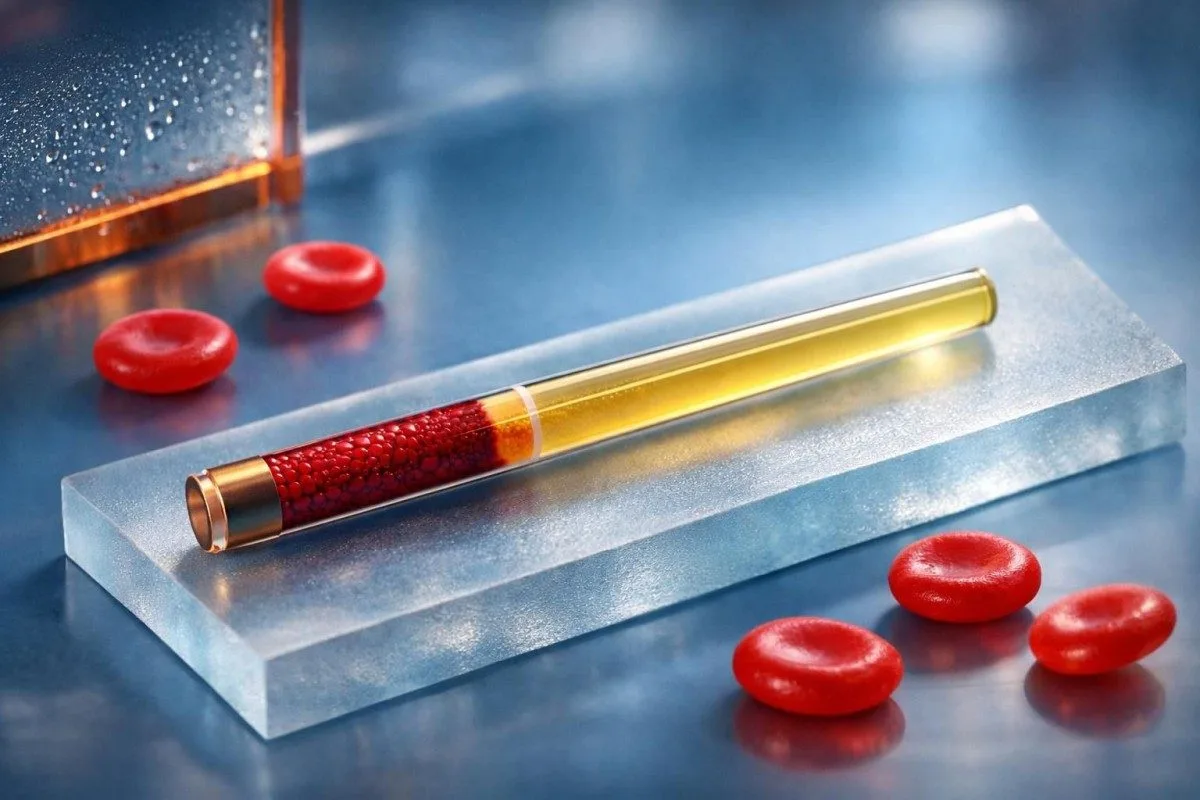
Hematocrit measures the percentage of your blood made up by red cells. Low hematocrit usually points to anemia, dilution, pregnancy, or reduced kidney-driven red-cell production; high hematocrit more often reflects dehydration, altitude, smoking, sleep apnea, testosterone therapy, or—less commonly—a marrow disorder.


- Normal range is roughly 41-50% in adult men and 36-44% in adult women, though some labs use slightly wider cutoffs.
- Low hematocrit with MCV below 80 fL often suggests iron deficiency or thalassemia until proven otherwise.
- High hematocrit above 49% in men or 48% in women should be repeated and interpreted with hydration, oxygen status, and medication history.
- Dehydration effect can raise hematocrit by about 2-5 percentage points without creating any new red cells.
- Rule of three means hematocrit is often about 3 times hemoglobin in normocytic blood; a big mismatch deserves a closer look.
- Reticulocytes matter: a count above about 120 × 10^9/L suggests marrow response to blood loss or hemolysis, while very low retics suggest underproduction.
- Pregnancy commonly lowers hematocrit by 2-4 points because plasma volume expands faster than red-cell mass.
- Urgent review is wise when hematocrit is below 24% or above 55%, or when symptoms such as chest pain, fainting, or neurologic changes are present.
What hematocrit levels actually measure on a CBC
Hematocrit is the percentage of your circulating blood volume occupied by red blood cells. In most adult labs, hematocrit normal range is about 41-50% for men and 36-44% for women, but the number shifts with pregnancy, age, altitude, and lab method.
Hematocrit tells you how much of the tube is red-cell volume after the liquid portion is accounted for. On a routine CBC in Kantesti AI, it sits beside hemoglobin and RBC count, and it is one of the quickest ways to spot dilution, anemia, or concentrated blood on standard blood test panels.
Most modern analyzers do not literally spin every sample; they calculate hematocrit from RBC count × MCV ÷ 10. That detail matters because a falsely high MCV from sample aging, severe hyperglycemia, or cold agglutinins can distort hematocrit, which is one reason we publish our clinical validation methods openly.
As Thomas Klein, MD, I still use the old bedside cross-check that hematocrit is usually about three times the hemoglobin, give or take 3 percentage points, in a normocytic sample. If hemoglobin is 12 g/dL and hematocrit comes back 42%, I slow down—either the cells are unusually large, the sample sat too long, or the analyzer needs a second look.
Why two labs can differ by a point or two
Some European labs use male upper limits near 52% and female upper limits near 46%, while many US labs print 50% and 44%. As of April 6, 2026, the practical takeaway is simple: a 1-2 point difference by lab is common, but a 6-point jump from your own baseline usually means more than a tiny miss against a printed range.
Low hematocrit: what it usually means and what to check next
Low hematocrit usually means anemia, dilution, recent blood loss, kidney underproduction of red cells, or a nutrient problem. The fastest way to sort it out is to read hematocrit with hemoglobin, MCV, reticulocytes, and iron markers rather than staring at the percentage alone.
Low hematocrit means either too few red cells or too much plasma. If hematocrit is low and hemoglobin ranges are also low, clinicians call that anemia; if hemoglobin stays normal, I think first about dilution from pregnancy, IV fluids, or overhydration before I assume disease.
A hematocrit under about 36% in adult women or 41% in adult men is below many lab ranges, but the cause matters more than the label. MCV below 80 fL points toward iron deficiency or thalassemia, and ferritin under 30 ng/mL strongly supports iron deficiency in most outpatients; our guides to ferritin ranges and iron study patterns are where I usually send patients next.
Normocytic low hematocrit, with MCV 80-100 fL, often shows up in chronic inflammation, kidney disease, recent blood loss, or early iron deficiency. Macrocytosis, meaning MCV above 100 fL, pushes me toward B12 deficiency, folate deficiency, alcohol effect, liver disease, or hypothyroidism—and neurologic symptoms can appear before the anemia looks dramatic.
Reticulocytes separate underproduction from loss
Reticulocyte count makes low hematocrit much easier to interpret. Low hematocrit with a reticulocyte response under 1% or an absolute count under roughly 75 × 10^9/L suggests underproduction, while a brisk response above 120 × 10^9/L points more toward blood loss or hemolysis.
High hematocrit: common causes, serious causes, and when persistence matters
High hematocrit most often reflects dehydration, altitude exposure, smoking, sleep apnea, or testosterone use. A persistent value above 49% in men or 48% in women deserves a more deliberate workup because true erythrocytosis and polycythemia enter the conversation at that point.
High hematocrit means less plasma, more red cells, or both. A persistent value above 49% in men or 48% in women is one of the WHO thresholds used when doctors start thinking seriously about polycythemia vera, and your report may list the marker as HCT or PCV in common CBC abbreviations.
A single high result is not the same thing as disease. Vomiting, diarrhea, sauna use, hard exercise, diuretics, or fasting before a morning draw can push hematocrit up a few points, which is why on our platform we look hard at trend data rather than one isolated flag.
Symptoms change the urgency. Once hematocrit climbs into the mid-50s, patients are more likely to describe headache, facial flushing, blurred vision, or a heavy pressure-like feeling after hot showers; that is when hyperviscosity starts to feel clinically real, not just theoretical.
A pattern many people miss
High hematocrit with low MCV is easy to misread. I see that mix in iron-deficient polycythemia, long-term smoking, and some thalassemia traits—the red-cell mass can be high while individual cells are small, so the story is more complicated than a single bolded lab flag.
Dehydration versus a true red-cell increase: how to tell the difference
Dehydration raises hematocrit by shrinking plasma volume, not by creating new red cells. A real red-cell increase stays abnormal after rehydration, while a dehydration-driven result often normalizes within days once fluid balance is corrected.
Moderate dehydration can lift hematocrit by about 2-5 percentage points over several hours, especially after vomiting, diarrhea, fever, or endurance exercise. I often verify the context with creatinine trends, because volume loss can nudge kidney markers in the same direction.
CBC alone rarely settles the dehydration question. A BUN/creatinine ratio above 20, higher albumin, mildly high sodium, and concentrated urine with a specific gravity above about 1.020 all lean toward volume loss, which is why I pair hematocrit with the BUN/creatinine ratio and a good urinalysis review.
Overhydration can do the reverse and make hematocrit look low. A liter or two of IV fluid, aggressive water loading before a fasting test, or late pregnancy can drop the percentage even though total red-cell mass has barely changed.
A practical repeat-test rule
If a high hematocrit normalizes after a day or two of normal hydration, the story is usually plasma volume. If it stays high on a repeat CBC 1-2 weeks later, I start looking for hypoxia, medication effects, or marrow causes instead of blaming water intake.
Altitude, smoking, sleep apnea, and testosterone: why hematocrit can run high
Altitude exposure, smoking, untreated sleep apnea, and testosterone therapy all push the body toward making more red cells. The mechanism is usually higher erythropoietin signaling in response to lower effective oxygen delivery.
Living above about 1,500-2,000 meters can raise hematocrit over weeks to months, not overnight. At our AI blood test platform we see this pattern regularly in reports from higher-altitude regions, and the rise is usually modest unless there is also dehydration or lung disease.
Smoking is a sneaky one. Carbon monoxide reduces effective oxygen delivery, so the kidney responds by increasing erythropoietin, and untreated obstructive sleep apnea can do something similar—often producing hematocrit values in the 48-52% range rather than extreme numbers.
Testosterone therapy deserves its own checkbox on the intake form. In my experience, injectable testosterone raises hematocrit more than transdermal formulations, the effect often appears within 3-6 months, and many endocrine practices intervene when hematocrit exceeds 52-54%.
Why athletes can be confusing
Altitude training complicates interpretation because athletes may gain red-cell mass over a training block while losing iron stores at the same time. If ferritin drops below roughly 30-50 ng/mL, performance can slide even while hematocrit looks respectable on paper.
How to read hematocrit with hemoglobin, RBC count, MCV, RDW, reticulocytes, platelets, and WBCs
Hematocrit makes the most sense when you read it beside hemoglobin, RBC count, MCV, RDW, reticulocytes, platelets, and white cells. That pattern tells you whether the problem is cell size, cell number, marrow response, dilution, inflammation, or blood loss.
I start with hemoglobin, RBC count, and the CBC companion markers, because hematocrit alone misses whether you have too few cells, unusually small cells, or a distribution problem. A hemoglobin of 10 g/dL usually pairs with a hematocrit near 30% in normocytic blood; when it does not, I ask why.
MCV tells you cell size and RDW tells you size variability. Low hematocrit + low MCV + high RDW is the classic iron-deficiency trio, while low hematocrit + high MCV pushes me toward B12, folate, alcohol, or liver causes; our RDW guide explains why variability often rises before anemia looks severe.
Reticulocytes show whether the marrow is trying. As Thomas Klein, MD, I pay close attention to a reticulocyte count above 2.5% or an absolute count above 120 × 10^9/L when hematocrit is low, because that usually means blood loss or hemolysis rather than simple underproduction; see our reticulocyte explainer for the mechanics.
Platelets and white cells add another layer. Low hematocrit + high platelets often fits iron deficiency or inflammation, while low hematocrit + low platelets + low white count is a marrow problem until proven otherwise; the platelet count ranges and WBC reference chart help patients spot that bigger pattern.
A mismatch that should make you pause
If hematocrit is unexpectedly low but MCHC is above 36 g/dL, I think about lab artifact, cold agglutinins, or sample handling before I chase rare disease. When the hemoglobin-to-hematocrit rule of three breaks badly, something technical or structural is often hiding in plain sight.
Pregnancy, age, and athletic training: when the normal range shifts
Reference ranges for hematocrit change with pregnancy, newborn status, aging, and athletic training. A number that looks low or high in one group can be completely expected in another.
During pregnancy, plasma volume expands more than red-cell mass, so hematocrit commonly falls by 2-4 percentage points. Many obstetric practices focus more on hemoglobin thresholds—often below 11 g/dL in the first and third trimesters and below 10.5 g/dL in the second—than on the percentage alone; our women's health guide gives that wider context.
Newborns are their own world. A neonatal hematocrit up to about 65% can be normal shortly after birth, while older adults may run slightly lower because kidney erythropoietin output, chronic inflammation, nutrition, and medication burden all shift the baseline.
Athletes confuse people all the time. Endurance training can create so-called sports pseudoanemia because plasma expands, but a dehydrated post-race blood draw can briefly push hematocrit the other way—same athlete, opposite result, different timing.
When abnormal hematocrit levels need urgent follow-up
Urgent follow-up makes sense when hematocrit is very low, very high, or paired with concerning symptoms. Chest pain, shortness of breath at rest, fainting, neurologic symptoms, black stool, or sudden bleeding always matter more than the lab flag by itself.
Same-day review is wise when hematocrit is below 24% or above 55%, or when any abnormal value comes with chest pain, fainting, shortness of breath at rest, or stroke-like symptoms. Numbers matter, but symptoms tell me how fast to move.
Inflammation and infection muddy the picture. Low hematocrit with a raised CRP often reflects anemia of inflammation, while dehydration from fever or poor intake can temporarily concentrate the blood; if the white count also shifts, our high neutrophils guide helps explain why that pattern often points away from a primary marrow disorder.
Before surgery, anesthetists usually care more about hemoglobin, bleeding risk, heart disease, and symptoms than a standalone hematocrit. A mildly low value does not automatically cancel an operation, but our pre-op lab guide shows why trending the CBC before the procedure can change planning.
Clotting clues that raise my concern
High hematocrit with itching after hot water, redness in the hands, unexplained clot history, or persistent headache deserves a conversation about erythrocytosis even if the number is only borderline. I worry more when high hematocrit travels with high platelets or high white cells.
What to do after you see an abnormal result on your report
The right next step after an abnormal hematocrit is usually a repeat CBC plus a few targeted tests, not guesswork. Trend, hydration, symptoms, iron status, kidney function, oxygen exposure, and medications explain far more than the percentage alone.
At Kantesti, our AI interprets hematocrit alongside hemoglobin, RBC count, MCV, RDW, ferritin, creatinine, CRP, age, sex, pregnancy status, and prior trends from the same report. That is the only way to tell whether a 34% hematocrit means iron deficiency, pregnancy dilution, kidney disease, or just too much water before the draw.
That layered approach matters because edge cases are common. In our physician review workflow with the Medical Advisory Board, we flag patterns like low hematocrit with normal hemoglobin, high hematocrit with low MCV, and impossible rule-of-three mismatches before suggesting next tests; I mention this because, as Thomas Klein, MD, I see more harm from overreacting to one borderline number than from calmly confirming the pattern.
If your result came as a PDF or photo, you can use our secure lab report upload to get a structured read in about 60 seconds. As of April 6, 2026, Kantesti AI has analyzed more than 2 million blood-test reports across 127+ countries, which gives our trend engine a very good feel for real-world lab variation.
Most patients do best with a simple plan: hydrate normally, repeat the CBC if the result was unexpected, and then add iron studies, reticulocytes, kidney markers, or oxygen-related evaluation only if the pattern persists. If you want a quick second look before your appointment, try our free blood test demo.
Research publications and deeper reading
These publications matter because hematocrit rarely stands alone; reticulocytes, broader CBC context, and diagnostic workflow shape the interpretation. They are not substitutes for formal guidelines, but they are useful if you want the surrounding hematology logic in a more research-style format.
Klein, T. (2026). Nipah Virus Blood Test: Early Detection & Diagnosis Guide 2026. Zenodo. https://doi.org/10.5281/zenodo.18487418. ResearchGate. Academia.edu.
Klein, T. (2026). B Negative Blood Type, LDH Blood Test & Reticulocyte Count Guide. Figshare. https://doi.org/10.6084/m9.figshare.31333819. ResearchGate. Academia.edu.
The second paper is the closer fit because reticulocyte response is one of the fastest ways to tell whether low hematocrit comes from underproduction or active loss. A hematocrit of 28% with reticulocytes at 0.4% tells a very different story from the same hematocrit with reticulocytes at 4.5%; for more physician-reviewed lab articles, browse the Kantesti blog.
Frequently Asked Questions
What is a normal hematocrit level for adults?
Normal adult hematocrit is usually about 41-50% in men and 36-44% in women, although some labs use slightly different upper limits such as 52% and 46%. Pregnancy, altitude, smoking status, and hydration can shift the baseline by a few points. Newborns can be normal up to about 65%, so age matters. A trend over time is often more useful than one borderline result.
Can dehydration cause high hematocrit?
Yes. Dehydration can raise hematocrit by roughly 2-5 percentage points because plasma volume shrinks, even though the body has not made any extra red cells. That pattern is more likely when BUN/creatinine ratio is above 20, urine is concentrated, or the test followed vomiting, diarrhea, fever, or hard exercise. If the value stays high after normal hydration and a repeat CBC, doctors start looking for hypoxia, testosterone effect, or true erythrocytosis.
Is low hematocrit always anemia?
No. Low hematocrit often reflects anemia, but it can also come from dilution after IV fluids, pregnancy-related plasma expansion, or overhydration before the test. Clinicians define anemia more reliably by hemoglobin than hematocrit because hemoglobin shifts less with fluid changes. If hematocrit is low but hemoglobin is still normal, I usually recheck hydration status, recent fluids, and companion CBC markers before labeling it anemia.
What hematocrit level is dangerously high?
There is no single universal danger line, but hematocrit above 55% generally deserves prompt medical review, especially if headache, visual changes, chest pain, shortness of breath, or neurologic symptoms are present. Persistent hematocrit above 49% in men or 48% in women is already high enough to trigger a more careful evaluation for causes such as smoking, sleep apnea, testosterone use, or polycythemia vera. Risk depends on symptoms, clot history, and whether platelets or white cells are elevated too.
Why does pregnancy lower hematocrit?
Pregnancy commonly lowers hematocrit because plasma volume expands more than red-cell mass, a normal physiologic change sometimes called hemodilution. The drop is often about 2-4 percentage points, and many obstetric practices focus more on hemoglobin thresholds than on hematocrit alone. Hemoglobin below 11 g/dL in the first and third trimesters or below 10.5 g/dL in the second trimester usually prompts a closer look at iron status. A low hematocrit in pregnancy is common, but iron deficiency is common too, so context matters.
Which CBC markers should I check with hematocrit?
The most helpful CBC companions are hemoglobin, RBC count, MCV, RDW, reticulocytes, platelets, and white-cell count. Hematocrit is usually about three times hemoglobin in normocytic blood, so a large mismatch can suggest macrocytosis, microcytosis, or even laboratory artifact. MCV below 80 fL points toward microcytic causes such as iron deficiency, while MCV above 100 fL raises concern for B12 deficiency, folate deficiency, alcohol effect, or liver disease. Reticulocytes tell you whether the marrow is responding, and platelets or white cells can reveal inflammation or marrow involvement.
Can altitude or testosterone raise hematocrit?
Yes. Living at altitude above about 1,500-2,000 meters can raise hematocrit over weeks to months because the body increases erythropoietin to improve oxygen delivery. Testosterone therapy can also raise hematocrit, often within 3-6 months, and many endocrine practices intervene once it exceeds about 52-54%. In my experience, injectable testosterone produces larger hematocrit jumps than transdermal forms.
Get AI-Powered Blood Test Analysis Today
Join over 2 million users worldwide who trust Kantesti for instant, accurate lab test analysis. Upload your blood test results and receive comprehensive interpretation of 15,000+ biomarkers in seconds.
📚 Referenced Research Publications
Klein, T., Mitchell, S., & Weber, H. (2026). Nipah Virus Blood Test: Early Detection & Diagnosis Guide 2026. Kantesti AI Medical Research.
Klein, T., Mitchell, S., & Weber, H. (2026). B Negative Blood Type, LDH Blood Test & Reticulocyte Count Guide. Kantesti AI Medical Research.
⚕️ Medical Disclaimer
This article is for educational purposes only and does not constitute medical advice. Always consult a qualified healthcare provider for diagnosis and treatment decisions.
E-E-A-T Trust Signals
Experience
Physician-led clinical review of lab interpretation workflows.
Expertise
Laboratory medicine focus on how biomarkers behave in clinical context.
Authoritativeness
Written by Dr. Thomas Klein with review by Dr. Sarah Mitchell and Prof. Dr. Hans Weber.
Trustworthiness
Evidence-based interpretation with clear follow-up pathways to reduce alarm.