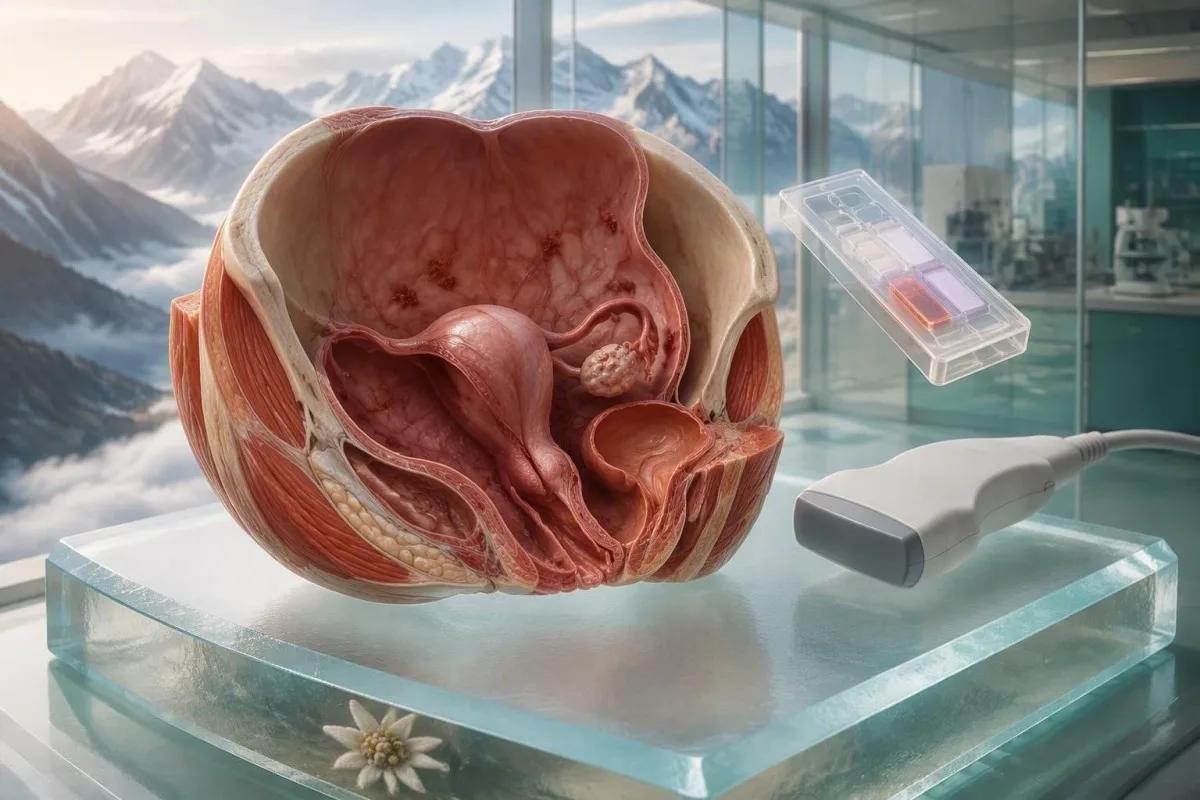
Faodaidh deuchainnean fala a bhith a’ comharrachadh anemia, torrachas, galar thyroid, sè, agus suidheachaidhean eile a tha coltach ri endometriosis—ach chan urrainn gin dhiubh sin dearbhadh endometriosis leis fhèin. Am measg a’ phlana deuchainn as fheumail tha eachdraidh comharraidhean, sgrùdadh, obair-lann cuimsichte, agus ìomhaighean eòlaiche.


- Gun aon deuchainn fala urrainn endometriosis a dhearbhadh no a chuir às, a’ gabhail a-steach toradh CA-125 àbhaisteach.
- CA-125 dh’fhaodadh e a bhith nas àirde na crìoch àrd obair-lann de timcheall air 35 U/mL ann an endometriosis, ach bidh e cuideachd a’ fàs le ùine, fibroids, torrachas, galar pelvic, agus mòran thinneasan neo-aillseach.
- cunntas fala slàn (CBC) agus ferritin urrainn cion iarainn a lorg bho bhlàr trom menstrual; tha ferritin fo 15 ng/mL a’ toirt taic làidir do stòran iarainn air an lughdachadh ann an inbhich eile a tha fallain.
- deuchainn torrachais tha e èiginneach airson pian ùr bhoilg le ùine a chailltear oir feumaidh torrachas ectopic measadh sgiobalta.
- Transvaginal ultrasound urrainn endometriomas ovarian agus tinneas domhainn a lorg ann an làmhan eòlach, ach chan eil sgan àbhaisteach a’ cur às do endometriosis uachdarach.
- MRI tha e nas fheumail airson a bhith a’ mapadh endometriosis domhainn a tha fo amharas mus tèid làimhseachadh iom-fhillte a dhèanamh, seach mar a’ chiad dheuchainn uile-choitcheann.
- Laparoscopy thathas a’ beachdachadh air nuair a mhaireas comharraidhean, tha ìomhaighean àicheil no neo-shoilleir, agus tha làimhseachadh sònraichte neo-èifeachdach, neo-iomchaidh, no air a dhiùltadh.
- Tha ùine nan comharran cudromach: pian bhoilg rothach, pian le gnè, neo-thorrachas, agus pian a thòisicheas ron ùine, bidh iad a’ togail amharas clionaigeach eadhon nuair a tha toraidhean obair-lann cunbhalach àbhaisteach.
An urrainn do dheuchainn fala endometriosis a dhearbhadh?
Chan urrainn do dheuchainn fala sam bith airson endometriosis an tinneas a dhearbhadh leis fhèin bho 21 Sultain, 2026. Faodaidh CA-125 agus comharran fala eile airson endometriosis cur ri ìomhaigh clionaigeach no dearbhadh builean leithid dìth iarainn, ach chan urrainn dhaibh endometriosis a sgaradh gu earbsach bho thinneasan coltach.
Is e endometriosis clò coltach ri lìnigeadh an uterus a tha a’ fàs taobh a-muigh an àite aige, agus bidh tasgaidhean beaga uachdarach gu tric a’ leigeil a-mach cus glè bheag de stuth a ghabhas tomhas a-steach don chuairteachadh airson deuchainn fala earbsach. Mar sin, chan eil toradh àbhaisteach a’ ciallachadh gu bheil am pian air a mhac-meanmna no gu bheil endometriosis a dhìth. Is e seo prìomh adhbhar a tha dearbhadh air a bhith a’ toirt bhliadhnaichean gu ruige seo.
Nam eòlas clionaigeach, mar as trice tha an dearbhadh meallta a’ tighinn bho chunntas fala làn agus CRP a tha gu tur àbhaisteach. Faodaidh na toraidhean sin a bhith dearbhte ann an dòigh eadar-dhealaichte - tha iad a’ dèanamh anemia trom, sèid siostaim mhòr, no galar geur nas coltaiche - ach chan eil iad a’ dèanamh deuchainn airson endometriosis pelvic.
Tha Thomas Klein, MD, a’ comhairleachadh a bhith a’ làimhseachadh dàta obair-lann mar aon ìre de fhianais: mar as trice tha pàtran comharran, sgrùdadh pelvic, càileachd ultrasound, amasan torachais, agus freagairt ri làimhseachadh nas cudromaiche na aon chomharra. Ar stiùireadh bith-chomharra fala urrainn do luchd-euslainteach a chuideachadh a thuigsinn dè a tha toradh ainmichte a’ tomhas mus bi coinneamh clionaigeach ann.
Carson a tha comharra sìmplidh fhathast do-ruigsinneach
Feumaidh comharra sgrìonaidh feumail a bhith aig an dà chuid àrd-mhothachadh agus àrd-shònrachd; tha comharran bith-fiosrachaidh airson endometriosis air fàiligeadh, mar as trice, aon no an dà dheuchainn thar ìrean cearcall menstrual agus fo-sheòrsan galair. Thàinig an ath-sgrùdadh Cochrane le Nisenblat et al. (2016) gu co-dhùnadh nach robh comharra fala sam bith aig cruinneas gu leòr gus obair-lann no ìomhaigh a chuir an àite ann an dearbhadh cunbhalach.
CA-125 airson endometriosis: co-theacsa feumail, gun dearbhadh
Chan e deuchainn dhiagnostach a th’ ann an CA-125 airson endometriosis. Faodaidh luach os cionn timcheall air 35 U/mL tachairt le tinneas meadhanach no farsaing, gu sònraichte endometriomas ovarian, ach tha mòran dhaoine le endometriosis dearbhte a’ faighinn luachan taobh a-staigh an raon obair-lann aca.
Is e pròtain a th’ ann an CA-125 a thèid a leigeil ma sgaoil bho ghrunn fhighean, a’ gabhail a-steach lìnigeadh an abdomen agus a’ chiste; chan eil e air a dhèanamh a-mhàin le endometriosis. Faodaidh ùine, adenomyosis, fibroids, cysts ovarian neo-àbhaisteach, torrachas, tinneas grùthan, galar pelvic, agus cuid de aillsean a mheudachadh. Tha toradh de 48 U/mL rè ùine trom a’ ciallachadh rud gu tur eadar-dhealaichte na an aon toradh às deidh menopause.
Tha ùine na mhion-fhiosrachadh nach eil air a chleachdadh gu leòr. Ma thaghas neach-clionaigeach CA-125 airson adhbhar sònraichte, faodaidh a tharraing tron ùine a dhèanamh mìneachadh nas fhuaime; tha ath-aithris air àrdachadh beag neo-inntinneach às deidh don ùine a bhith seachad nas fhiosraiche na bhith a’ freagairt air aon àireamh. Airson deasbad cuimsichte air toradh àrdaichte, faic an stiùireadh againn air nuair a tha CA-125 àrd.
Tha Kantesti na Anailisiche deuchainn fala AI a chuireas CA-125 còmhla ris an raon iomraidh, aois, co-theacs cearcall a chaidh aithris, agus toraidhean obair-lann co-cheangailte; chan eil e a’ comharrachadh neach mar a tha endometriosis bho CA-125 a-mhàin. Chan urrainn do ghluasad a tha a’ sìor fhàs de CA-125 cuideachd an adhbhar a dhearbhadh às aonais ath-sgrùdadh clionaigeach.
Comharran fala eile airson endometriosis a tha gan sgrùdadh
Chan eil comharra fala eile - a’ gabhail a-steach cytokines, microRNAs, CA 19-9, no HE4 - aig cruinneas dearbhte gu leòr airson dearbhadh cunbhalach air endometriosis. Tha soidhnichean rannsachaidh inntinneach, ach chan fhaod toradh a tha ri fhaighinn gu malairteach a bhith an àite measadh eòlaiche.
Researchers have studied interleukin-6, CA 19-9, microRNAs, circulating endometrial cells, and panels of proteins because endometriosis has immune and inflammatory features. The trouble is biological overlap: the same markers shift with a viral illness, higher body weight, adenomyosis, autoimmune disease, normal ovulation, and sample-handling differences.
HE4 is sometimes ordered alongside CA-125 when an adnexal mass needs risk assessment, not to diagnose endometriosis. Kidney function can raise HE4 independently, which is why an abnormal result should be read with creatinine and eGFR; our explanation of HE4 result limits covers that pitfall.
A multi-marker panel may eventually improve triage, particularly if it includes symptoms and imaging features rather than serum chemistry alone. For now, a test marketed as definitive deserves a careful question: what independent study compared it against expert imaging or surgically confirmed disease, and in which patient population?
Deuchainnean fala a chuidicheas le bhith a’ cur às do thinneasan coltach ris
Blood tests help most by finding conditions that mimic or coexist with endometriosis. The initial panel is selected by symptoms: pregnancy test for delayed periods, CBC and ferritin for heavy bleeding, thyroid tests for cycle change, and targeted inflammation or coeliac testing when history points there.
A urine or serum hCG test is the first safety test for reproductive-age patients with pelvic pain, delayed bleeding, or unexpected spotting. A negative urine test is usually reliable from the expected period onward, but a quantitative serum hCG may be used when timing is uncertain or clinicians need to assess possible ectopic pregnancy.
TSH is reasonable when fatigue, constipation, hair change, weight change, or unusual cycle spacing suggests thyroid disease. Most adult laboratories use a TSH reference interval around 0.4-4.0 mIU/L, though pregnancy-specific targets are lower and results must be interpreted with free T4 when abnormal; see our guide to hypothyroidism fo-chlionaigeach.
CRP and ESR are not endometriosis tests. A CRP above 10 mg/L can reflect many processes, but fever, escalating pain, high CRP, and neutrophilia should shift attention toward acute infection or another urgent abdominal cause rather than assuming a routine endometriosis flare.
CBC agus sgrùdaidhean iarainn nuair a tha ùine trom
A CBC and ferritin test can detect iron depletion caused by heavy menstrual bleeding, a frequent consequence of adenomyosis, fibroids, or endometriosis-associated bleeding. Ferritin below 15 ng/mL strongly supports iron deficiency in a person without major inflammation, even before hemoglobin falls.
Hemoglobin below 120 g/L in a non-pregnant adult woman meets the World Health Organization definition of anemia, although symptoms such as breathlessness and reduced exercise tolerance can appear with ferritin depletion first. Mean corpuscular volume may remain normal early on, so a normal MCV does not clear iron stores.
Ferritin is also an acute-phase reactant. In someone with raised CRP, a ferritin of 30 ng/mL can still be compatible with iron deficiency, and transferrin saturation below 20% adds useful evidence. The combination—not a single borderline ferritin—is what I look for in practice.
Kantesti AI interprets CBC, ferritin, serum iron, transferrin saturation, and CRP as a pattern, helping users prepare concise questions for their clinician. Our articles on ferritin ìosal ron anemia agus comharran rabhaidh sèid menstrual trom explain when fatigue or bleeding needs more timely care.
Nuair a dh’atharraicheas comharraidhean caolaidh am plana deuchainn
Cyclical bowel pain can occur with endometriosis, but persistent diarrhea, rectal bleeding, weight loss, or raised inflammatory markers should prompt evaluation for bowel disease as well. Stool tests often outperform blood tests when inflammatory bowel disease is a concern.
Fecal calprotectin below 50 micrograms/g in adults makes active inflammatory bowel disease less likely, while a value above 250 micrograms/g usually warrants more direct gastrointestinal assessment. Endometriosis alone does not reliably cause high fecal calprotectin, which is clinically helpful when symptoms overlap.
Coeliac serology, typically tissue transglutaminase IgA with total IgA, is reasonable for persistent diarrhea, bloating, iron deficiency, or a family history of coeliac disease. Testing while still eating gluten matters; removing gluten first can create a false-negative result. Our guide to a gluten challenge before coeliac tests a’ mìneachadh a’ chùis mu àm.
The ESHRE guideline notes that symptoms alone cannot reliably locate endometriosis, especially when bowel symptoms dominate (Becker et al., 2022). In my experience, the pattern of pain worsening predictably in the days before menstruation is informative, but it never cancels red flags such as visible blood in stool or unintentional 5% weight loss.
Nuair a chuidicheas ultrasound le breithneachadh air endometriosis
A specialist transvaginal ultrasound can identify ovarian endometriomas and many deep endometriosis features, but a normal ultrasound does not exclude superficial disease. The clinician's training and the requested protocol often matter more than the machine model.
Endometriomas often have a characteristic internal appearance on ultrasound, and experienced operators can assess mobility of pelvic structures, tenderness mapping, and signs of deep disease. A standard scan performed for general pelvic symptoms may not include this focused assessment, so asking whether the service evaluates for deep endometriosis is sensible.
Ultrasound is also excellent for finding look-alikes: fibroids, adenomyosis features, hydrosalpinx, and ovarian cysts. It cannot see every cause of pain, and it cannot reliably rule out tiny superficial deposits; a report saying "normal" should be read as "no abnormality seen on this examination," not "endometriosis excluded."
For patients comparing tests, Thomas Klein, MD, recommends recording cycle day, hormonal contraception, and the exact pain location before the scan. This brief context improves the referral question more than repeating non-specific inflammatory blood markers.
Nuair a tha MRI an ath dheuchainn cheart
MRI is most useful when clinicians suspect deep endometriosis, need a map before specialist treatment, or have an ultrasound result that does not explain significant symptoms. MRI is not routinely needed for every person with painful periods.
MRI can evaluate areas that are hard to characterize by ultrasound and can help surgical teams anticipate involvement near bowel, bladder, nerves, or other deep pelvic structures. Preparation protocols differ: some centers use bowel preparation or antispasmodic medication, while others do not, so follow local instructions rather than copying advice from a forum.
A negative MRI does not exclude superficial endometriosis, just as a negative ultrasound does not. The 2022 ESHRE guideline recommends imaging in the diagnostic work-up while emphasizing that negative imaging cannot rule out the disease (Becker et al., 2022).
If an MRI report contains unfamiliar terms, compare it with symptoms and previous scans instead of searching each phrase in isolation. Our women's health testing guide may help organize the reproductive-health questions worth bringing to a specialist.
Nuair a thathas a’ beachdachadh air laparoscopy
Laparoscopy is considered when symptoms remain clinically significant and imaging is negative, uncertain, or insufficient for a treatment decision. It can directly inspect pelvic surfaces and may allow treatment during the same procedure, but it is not automatically the first step.
The decision depends on pain severity, fertility plans, prior operations, the likelihood of deep disease, and whether hormonal treatment is acceptable. ESHRE moved away from calling laparoscopy the universal diagnostic gold standard because expert imaging plus symptom-guided treatment is appropriate for many patients.
A procedure can miss disease if lesions are subtle, inaccessible, or not recognized, and pathology confirmation depends on what is sampled. Conversely, finding a small area of endometriosis does not prove it explains every symptom; coexisting pelvic floor dysfunction, irritable bowel syndrome, and bladder pain can amplify pain.
A useful pre-operative question is: "What result would change our plan?" That question exposes whether surgery is being considered for diagnosis, treatment, fertility planning, or exclusion of an alternative problem—and those are not interchangeable goals.
Comharraidhean a thogas amharas a dh’aindeoin obair-lann àbhaisteach
Normal routine blood work does not outweigh a classic endometriosis symptom pattern. Pain beginning before menstruation, pain during sex, cyclical pain with bowel movements or urination, infertility, and a family history together deserve a structured assessment.
The timing of pain is often more diagnostic than its intensity score. I have seen patients describe a 7-day arc: deep pelvic ache 48 hours before bleeding, bowel pain on days 1 to 3, then gradual relief. That repeatable arc is more informative than a CRP of 2 mg/L.
Painful periods are common, but a change from manageable cramps to pain that causes missed work, vomiting, faintness, or escalating use of analgesia warrants evaluation. Symptoms can begin in adolescence, and clinicians should not assume severe pain is normal simply because a pelvic examination is unremarkable.
Tha Kantesti na àrd-ùrlar mìneachaidh deuchainn fala AI that can preserve longitudinal lab context while users track symptoms separately; blood results cannot quantify pain or replace examination. For unexplained persistent pain, our overview of deuchainnean fala airson pian nach eil air a mhìneachadh outlines sensible laboratory boundaries.
An urrainn do dheuchainnean hormon endometriosis a dhearbhadh?
Estradiol, progesterone, LH, FSH, AMH, and testosterone tests do not diagnose endometriosis. They can be useful for a separate question—ovulation, ovarian reserve, menopause, PCOS, or fertility planning—when timed and interpreted correctly.
Estradiol and progesterone change substantially across a 28-day cycle, so an isolated value without cycle day has limited meaning. A progesterone level drawn about 7 days after ovulation can support recent ovulation, but the correct day varies with cycle length and ovulation timing.
AMH estimates ovarian reserve rather than egg quality and does not diagnose endometriosis. Ovarian endometriomas and ovarian surgery can affect reserve, which makes AMH potentially relevant in fertility counseling but not in deciding whether pain represents endometriosis.
People stopping hormonal contraception often receive broad hormone panels too soon. If the clinical aim is to investigate PCOS or a cycle disorder, our guide to PCOS blood tests after contraception a’ mìneachadh carson a dh’atharraicheas àm an eadar-mhìneachadh.
Deuchainn nuair a tha endometriosis agus torrachas a’ dol thairis
Endometriosis can affect fertility, but no blood marker can tell whether it is the cause for an individual couple. Fertility assessment usually combines ovulation history, semen analysis, tubal assessment when indicated, ultrasound, and an individualized endometriosis evaluation.
For people under 35, infertility is usually defined as 12 months of unprotected intercourse without pregnancy; for those aged 35 or older, assessment commonly starts after 6 months. Earlier referral is appropriate with absent periods, known tubal disease, prior pelvic surgery, severe symptoms, or a partner with known fertility concerns.
AMH can help plan fertility treatment but should not be used as a yes-or-no fertility test. A low AMH result may predict fewer eggs retrieved during stimulation, while spontaneous conception remains possible; our article on low AMH causes and timing gives the nuance many reports omit.
A normal semen analysis does not rule out female-factor infertility, and normal female hormone tests do not rule out endometriosis. The value of a consultation is integration—two individually "normal" work-ups can still point to a coherent next step.
Plana deuchainn practaigeach airson endometriosis a tha fo amharas
The best next test depends on the symptom that needs an answer first. For most patients, a pregnancy test when relevant, CBC and ferritin for heavy bleeding, a focused pelvic ultrasound, and referral to an endometriosis-aware clinician form a more useful starting plan than a broad biomarker panel.
Bring a 2- to 3-cycle diary that notes bleeding volume, pain location, bowel and urinary symptoms, pain with sex, missed activities, medication doses, and whether symptoms are cyclical. Include prior imaging reports and the actual laboratory numbers rather than only flags; reference intervals vary by laboratory.
Tha Kantesti na Inneal mion-sgrùdaidh deuchainn fala le cumhachd AI that can organize CBC, iron, thyroid, and other available results in roughly 60 seconds, but its output is educational support rather than a diagnosis or treatment plan. Users should verify unusual results with the reporting laboratory and discuss them with their treating clinician.
For a safe handoff, make a one-page list of questions: What alternatives are still plausible? Was the ultrasound tailored to endometriosis? Is MRI likely to change management? What are the advantages and downsides of empirical treatment versus laparoscopy? Our liosta-sgrùdaidh airson cruinneas toraidh AI is useful before sharing a report.
Nuair a dh’ fheumas pian bhoilg cùram meidigeach èiginneach
Sudden severe pelvic or abdominal pain, fainting, shoulder-tip pain, fever, persistent vomiting, a positive pregnancy test, or very heavy bleeding requires urgent assessment rather than an endometriosis blood test. These symptoms can signal ectopic pregnancy, ovarian torsion, appendicitis, serious infection, or significant blood loss.
Seek emergency care for soaking a pad or tampon every hour for 2 consecutive hours, passing large clots with dizziness, or feeling faint. A hemoglobin result can lag behind sudden volume loss, so clinicians assess pulse, blood pressure, symptoms, examination findings, and repeat testing when needed.
Fever of 38.0°C or above with worsening pelvic pain is not typical evidence of routine endometriosis alone. Acute symptoms may require pregnancy testing, urinalysis, CBC, CRP, ultrasound, and sometimes cross-sectional imaging on the same day; our guide to urinalysis versus urine culture explains one common branch of that work-up.
Kantesti's medical content is reviewed against clinical standards, but emergencies belong with local urgent-care services, not online interpretation. Readers can learn how our clinical governance is assessed through our frèam-obrach dearbhaidh meidigeach agus coinneachadh ris na dotairean air ar Bòrd Comhairleachaidh Meidigeach.
Ceistean Bitheanta
Am faod CA-125 breithneachadh a thoirt air endometriosis?
Chan urrainn do CA-125 endometriosis a dhearbhadh oir chan eil e sònraichte don chumha sin. Bidh mòran obair-lann a' cleachdadh crìoch iomraidh àrd faisg air 35 U/mL, ach faodaidh endometriosis, menstruation, fibroids, adenomyosis, torrachas, galar pelvic, galar grùthan, agus cuid de aillsean uile àrdachadh. Bidh toradh àbhaisteach CA-125 cuideachd a' tachairt ann am mòran dhaoine le endometriosis air a dhearbhadh le lannsa. Bidh luchd-clionaigeach a' cleachdadh CA-125 mar fhiosrachadh co-theacsail a-mhàin, chan ann mar dheuchainn seasamhach 'tha' no 'chan eil'.
An urrainn do endometriosis deuchainnean fala neo-àbhaisteach adhbhrachadh?
Bidh endometriosis gu tric a’ toirt adhbhar do dheuchainnean fala àbhaisteach, gu sònraichte nuair a tha an tinneas eu-domhainn. Faodaidh bleeding làidir mìosach leantainn gu dìth iarainn, le ferritin fo 15 ng/mL a’ toirt taic làidir do stòrasan iarainn air an lughdachadh nuair a tha sè air falbh, agus hemoglobin fo 120 g/L a’ coinneachadh ris a’ chrìoch àbhaisteach airson anemia ann am boireannaich inbheach nach eil trom. Faodaidh CRP agus ESR a bhith àbhaisteach no air an togail gu beag, ach cha mhòr nach eil gin den dà dheuchainn a’ dearbhadh endometriosis. Bu chòir toraidhean neo-àbhaisteach stiùireadh a thoirt seachad ann an rannsachadh airson duilgheadasan no suidheachaidhean eile seach a bhith air am faicinn mar dhearbhadh air endometriosis.
Dè an deuchainn as fheàrr airson endometriosis?
Chan eil aon deuchainn as fheàrr airson gach taisbeanadh de endometriosis. Gu tric is e sganadh ultrasound thairis air a’ bhànag, a chaidh a dhèanamh le eòlaiche, a’ chiad deuchainn ìomhaigh leis gum faod e endometriomas ovarian agus comharran den tinneas domhainn a chomharrachadh, agus faodaidh MRI cuideachadh le bhith a’ mapadh an tinneas domhainn a thathas a’ tomhas mus tèid làimhseachadh speisealta a dhèanamh. Chan eil ìomhaigh àbhaisteach a’ dùnadh a-mach endometriosis uachdarach. Thathas a’ beachdachadh air laparoscopy nuair a tha comharraidhean fhathast cudromach agus nach eil measadh neo-ionnsaigheach a’ toirt freagairt no slighe leigheis iomchaidh.
An urrainn do ultrasound àbhaisteach rud sam bith a dhèanamh a thaobh endometriosis?
Chan eil ultrasound àbhaisteach comasach air endometriosis a dùnadh a-mach leis gum faodadh tasgaidhean beaga uachdarach a bhith neo-fhaicsinneach. Tha ultrasound nas cruinne airson endometriomas ovarian agus cuid de phàtranan endometriosis domhainn nuair a thèid a dhèanamh le neach-obrachaidh air a thrèanadh ann an measadh pelvic cuimsichte. Tha stiùireadh ESHRE 2022 ag ràdh nach eil ìomhaigh dhioghaltach a' dùnadh a-mach endometriosis. Mar sin, tha comharran rothaireachd leantainneach airidh air leantainn eadhon às dèidh sgan àbhaisteach.
Am bu chòir dhomh deuchainnean hormon fhaighinn airson a bhith a' gabhail a-steach endometriosis?
Chan eil deuchainnean hormona leithid estradiol, progesterone, LH, FSH, agus AMH a' lorg endometriosis. Faodaidh iad a bhith feumail nuair a tha neach-clionaigeach a' measadh ovulation, stòras ovarian, menopause, PCOS, no neo-thorrachas còmhla ri endometriosis a tha fo amharas. Mar as trice tha progesterone as ciallach timcheall air 7 latha an dèidh ovulation, chan ann air latha sònraichte den mìosachan airson a h-uile duine. Feumar mìneachadh a dhèanamh air toraidhean a rèir ùine a' chearbaill agus cleachdadh cungaidh hormona.
Cuin bu chòir pian anns a' chliabh a bhith air a làimhseachadh mar èiginn?
Feasgar pian mòr anns a’ chuisle le faoineachd, pian aig ceann nan guailnean, fiabhras de 38.0°C no nas àirde, cur a-mach leantainneach, deuchainn torrachais deimhinneach, no fuil glè throm a dh’fheumas measadh meidigeach èiginneach. Leabhar a lìonadh no tampon a lìonadh a h-uile uair airson 2 uair a thìde às a chèile, gu sònraichte le dizziness no laigse, na stairsneach practaigeach airson cùram sgiobalta. Faodaidh na comharran sin a bhith a’ comharrachadh torrachas ectopic, toinneamh ovàraidh, apendicitis, galar, no call fala mòr seach lasadh àbhaisteach de endometriosis. Na feithear ri CA-125 no toraidhean fala eile san oifis aig an t-suidheachadh sin.
Faigh Mion-sgrùdadh Deuchainn Fala le Cumhachd AI an-diugh
Thig còmhla ri còrr is 2 mhillean neach air feadh an t-saoghail a tha a’ earbsa Kantesti airson mion-sgrùdadh sa bhad, ceart air deuchainnean obair-lann. Luchdaich suas na toraidhean deuchainn fala agad agus faigh mìneachadh coileanta air biomarcair 15,000+ ann an diogan.
📚 Foillseachaidhean Rannsachaidh le Iomraidhean
Klein, T., Mitchell, S., & Weber, H. (2026). Kantesti LTD. (2026). A Pre-Registered, Rubric-Based Automated Technical Benchmark of the Kantesti Blood-Test Interpretation Engine on 100,000 Synthetic Test Cases. Figshare. ResearchGate: https://www.researchgate.net/ Academia.edu: https://www.academia.edu/. Rannsachadh Leigheis AI Kantesti.
Klein, T., Mitchell, S., & Weber, H. (2026). Kantesti LTD. (2026). Clinical Validation Framework v2.0 (Medical Validation Page). Zenodo. ResearchGate: https://www.researchgate.net/ Academia.edu: https://www.academia.edu/. Rannsachadh Leigheis AI Kantesti.
📖 Iomraidhean Meidigeach Taobh a-muigh
⚕️ Àicheadh Meidigeach
Tha an artaigil seo dìreach airson adhbharan foghlaim agus chan eil e a’ dèanamh comhairle mheidigeach. Cuir fios an-còmhnaidh gu solaraiche cùram slàinte teisteanasach airson co-dhùnaidhean breithneachaidh is leigheis.
Comharran earbsa E-E-A-T
Eòlas
Lèirmheas clionaigeach air a stiùireadh le lighiche air sruthan-obrach mìneachaidh obair-lann.
Eòlas
Fòcas air leigheas obair-lann air mar a bhios bith-chomharraidhean (biomarkers) a’ giùlan ann an co-theacsa clionaigeach.
Ùghdarrasachd
Air a sgrìobhadh le Dr. Thomas Klein le ath-sgrùdadh le Dr. Sarah Mitchell agus Prof. Dr. Hans Weber.
Earbsachd
Mìneachadh stèidhichte air fianais le slighean leanmhainn soilleir gus dragh a lughdachadh.