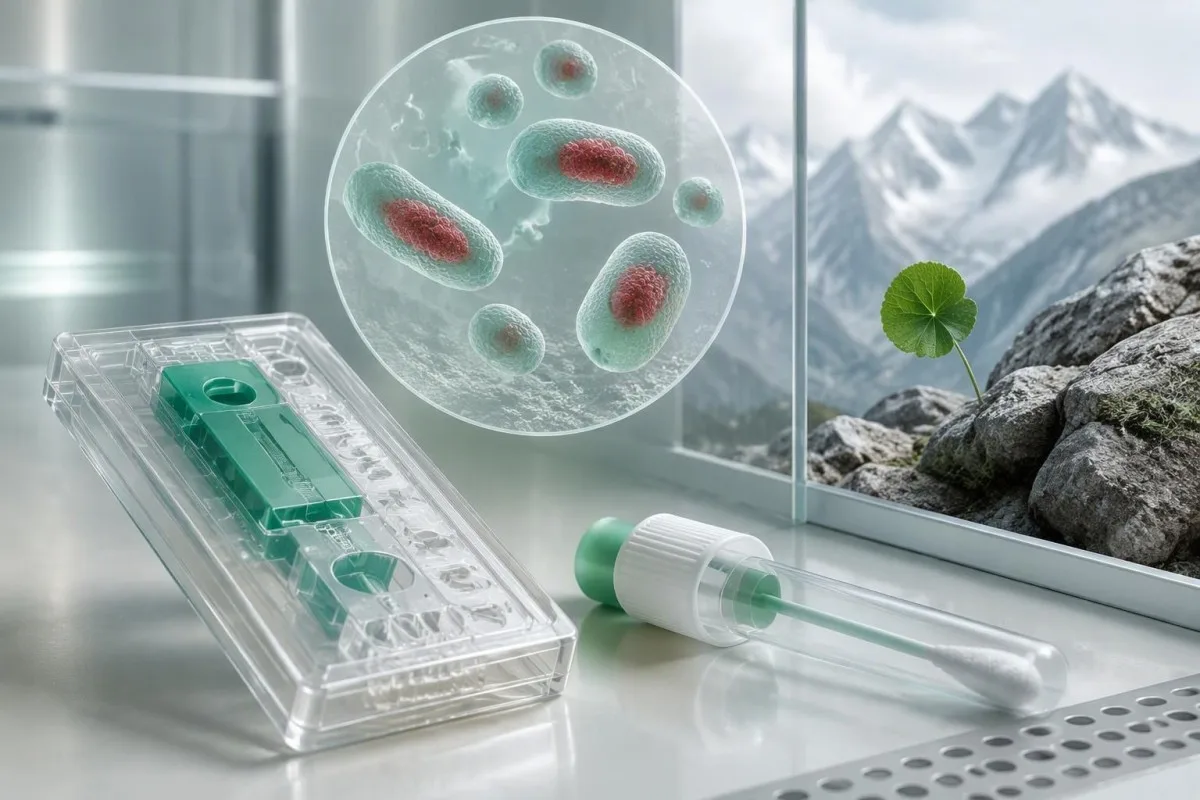
A positive ureaplasma test usually does not require antibiotics, particularly when you have no symptoms. Even with symptoms, detection alone cannot establish the cause: the decision depends on inflammation, other diagnoses, the sample site, and your clinical circumstances.


- Positive does not mean causal: PCR detects genetic material; it does not establish that Ureaplasma caused your symptoms.
- Two species, different evidence: Ureaplasma parvum and Ureaplasma urealyticum should not be treated as interchangeable clinical findings.
- No symptoms usually means no treatment: Routine screening, antibiotics, partner treatment, and repeat PCR are generally discouraged for incidental genital detection.
- Objective urethritis matters: At least 10 white blood cells per high-power field in spun first-void urine can support urethral inflammation; it does not identify the organism.
- No universal PCR cutoff exists: A cycle threshold or copies/mL result cannot independently establish a treatment indication.
- Treat a diagnosed syndrome: CDC guidance recommends doxycycline 100 mg twice daily for 7 days for nongonococcal urethritis, not for every positive Ureaplasma result.
- Pregnancy needs separate reasoning: Routine treatment of vaginal Ureaplasma colonization has not been shown to prevent preterm birth reliably.
- Urgent symptoms outrank the panel: Fever of 38°C or higher with pelvic or flank pain, severe testicular pain, or pregnancy-related warning symptoms needs prompt assessment.
What does a positive Ureaplasma test actually mean?
A positive ureaplasma test means the laboratory detected Ureaplasma in the submitted specimen; it does not automatically diagnose an infection requiring antibiotics. In a genital swab or urine sample, the result may reflect colonization rather than the explanation for burning, discharge, or discomfort.
Sample location changes interpretation. Detection on a vaginal swab is not equivalent to detection in joint fluid or another normally sterile site, and neither result should be interpreted without the clinical history. The laboratory answers a detection question; the clinician must answer a causation question.
من دکتر توماس کلاین, Chief Medical Officer, and my starting point is three questions: Why was the test ordered, what symptoms are present, and what objective findings support the suspected condition? A report with five organisms listed can distract from the one diagnosis that actually explains the symptoms.
Kantesti is an AI blood test analyzer that helps explain accompanying laboratory findings without treating a genital PCR result as a prescription. A white cell count or CRP result may contribute context, but neither can prove that Ureaplasma is the responsible organism.
برای پیشینه بالینی ما, the distinction matters: interpretation should reduce unnecessary intervention, not create a new diagnosis from every highlighted result. If antibiotics have already been prescribed, ask what diagnosis they are treating before changing the plan; sometimes the indication is urethritis, not the organism name.
Ureaplasma colonization vs infection: what separates them?
کلونیزاسیون means an organism is present without established disease attributable to it; عفونت requires a clinically meaningful connection between the organism and illness. Ureaplasma can inhabit the lower genital tract without symptoms, so presence alone is a weak basis for assigning blame.
Ureaplasma comprises two commonly reported species: U. parvum and U. urealyticum. U. urealyticum has a possible role in some cases of male urethritis, particularly with a high organism burden, whereas U. parvum is not an established routine explanation for urethritis. That distinction is often lost when reports simply say Ureaplasma spp.
A useful comparison is باکتریهای بدون علائم ادراری, but the treatment rules are not identical. Standard asymptomatic bacteriuria guidance concerns conventional urinary bacteria and specific circumstances; its pregnancy exceptions should not be transferred automatically to a positive genital Ureaplasma PCR.
Symptoms and colonization can coexist without a causal relationship. A person can carry Ureaplasma while experiencing contact irritation, bacterial vaginosis, a conventional urinary infection, or pelvic-floor dysfunction. Two findings occurring together do not establish which one came first or whether one produced the other.
Horner et al. (2018), writing for the European STI Guidelines Editorial Board, advised against routine testing and treatment of U. parvum, U. urealyticum, and Mycoplasma hominis in asymptomatic or symptomatic adults. Their concern was not that symptoms are imaginary; it was that detecting common carriage can divert care toward an unproven target.
Why can multiplex PCR panels make Ureaplasma look more important?
Multiplex PCR panels detect several organisms at once, but analytical detection is not the same as clinical relevance. When a panel includes common colonizers alongside established pathogens, identical-looking positive flags can make very different results appear equally actionable.
PCR detects nucleic acid, not necessarily viable organisms or tissue damage. A technically correct positive can therefore have little clinical significance; this is different from an analytical false positive. The same interpretive problem appears in محدودیتهای تست میکروبیوم, where detecting a microbe does not establish a treatable disorder.
A qualitative result cannot establish a high organism burden. Ask whether the assay distinguishes the two Ureaplasma species and whether it measures quantity at all; our explanation of نتایج کیفی در مقابل کمی covers why a positive flag and a numerical measurement answer different questions.
There is no universally validated Ureaplasma cycle-threshold cutoff that mandates treatment. Cycle thresholds depend on the assay, specimen volume, collection technique, extraction efficiency, and instrument, so a value of 25 from one system is not interchangeable with 25 from another. Even copies/mL need an appropriate clinical context.
The practical question is whether adding Ureaplasma improved the diagnostic decision. If a broad panel detects chlamydia and Ureaplasma, the established pathogen usually supplies the actionable diagnosis; the extra flag does not automatically justify a second antibiotic, a longer course, or repeated testing until every target disappears.
When might Ureaplasma matter in men with urethritis?
U. urealyticum may contribute to a subset of male urethritis cases, but most detections do not establish that role. Clinically relevant consideration requires objective urethral inflammation, exclusion of better-established causes, and, where specialist testing is pursued, attention to species and organism burden.
CDC criteria include at least 10 white blood cells per high-power field in spun first-void urine as evidence supporting urethritis. A positive leukocyte esterase result can also support inflammation, although neither finding identifies Ureaplasma. A leukocyte esterase explanation helps distinguish an inflammatory signal from an organism-specific diagnosis.
Urethral-smear thresholds vary with clinical setting. CDC guidance describes thresholds of at least 2 white cells per oil-immersion field in higher-prevalence settings or at least 5 in lower-prevalence settings; these are microscopy criteria, not interchangeable with ordinary urine microscopy. Sample type and magnification matter more than the bare number.
Consider a hypothetical 29-year-old with burning, discharge, and documented urethritis whose panel detects U. urealyticum. I would first check gonorrhea and chlamydia testing, exposure history, and whether persistent symptoms warrant Mycoplasma genitalium testing—not assume the additional positive explains everything. Trichomonas testing depends on the population and sexual exposure.
First-void urine and midstream urine answer different questions. First-void specimens are commonly used for urethral STI assessment, while midstream specimens support conventional urinary evaluation; follow the assay’s collection instructions. Our راهنمای رسوب ادرار explains why cells, contamination, and collection method must be interpreted together.
Does a positive Ureaplasma test explain vaginal or cervical symptoms?
Ureaplasma detection does not establish the cause of vaginal symptoms or cervicitis. CDC guidance states that there is no specific evidence for a role of U. parvum or U. urealyticum in cervicitis and does not recommend testing for these organisms in that evaluation.
Cervicitis evaluation prioritizes chlamydia and gonorrhea and assessment for bacterial vaginosis and trichomoniasis. Mycoplasma genitalium testing can be considered in appropriate circumstances, particularly recurrent cervicitis. Workowski et al. (2021) explicitly separate these established diagnostic pathways from incidental Ureaplasma detection.
A negative wet mount does not reliably exclude trichomoniasis. CDC reports wet-mount sensitivity of roughly 44–68% compared with culture, and sensitivity falls as examination is delayed; molecular testing can therefore change management when symptoms persist. Our راهنمای آزمایش تریکومونیازیس توضیح داده شده است explains the specimen and timing issues.
Vaginal pH above 4.5 can support bacterial vaginosis or trichomoniasis in the right setting, but it is not a Ureaplasma treatment threshold. Discharge appearance, odor, microscopy, examination, and targeted tests carry more diagnostic weight than a colonizer flag; menopausal tissue changes and product irritation can produce symptoms without an STI.
HPV screening and Ureaplasma PCR assess different questions. A positive Ureaplasma result does not replace a Pap test or explain an abnormal HPV result, as our HPV and Pap interpretation discusses. For persistent symptoms, an examination often adds more value than ordering another broader microbial panel.
Which tests are more useful when symptoms continue?
Persistent symptoms need a targeted reassessment, not automatic repeat Ureaplasma testing. Depending on the symptom pattern, useful investigations include gonorrhea and chlamydia NAAT, conventional urine culture, evaluation for vaginitis, pregnancy testing, and selected testing for Mycoplasma genitalium or trichomoniasis.
A negative routine urine culture does not exclude every cause of urinary burning. Ureaplasma requires specialized methods, but gonorrhea, chlamydia, irritation, stones, and bladder or pelvic-floor disorders may also escape a standard culture. The appropriate response is to revisit the differential diagnosis, not declare Ureaplasma responsible by elimination alone.
Normal inflammatory markers cannot rule out localized urethritis, cervicitis, or pelvic inflammatory disease. Some laboratories use CRP below 5 mg/L as a reference limit, but a result within that limit does not clear the genital tract. Our discussion of عدم تطابق WBC و CRP explains why location and timing matter.
Kantesti is an AI blood test interpretation platform that places CBC and CRP findings alongside their diagnostic limitations. A normal CBC cannot settle a genital PCR treatment decision, and an elevated CRP cannot identify Ureaplasma as the source. Neither should override an examination or an appropriate organism-specific test.
A useful symptom diary records three things: whether discomfort occurs during urination, whether there is discharge or irritation between visits to the bathroom, and whether products or sexual activity trigger it. Those distinctions help separate urethral inflammation from skin irritation or pelvic pain; they are often more informative than another identical positive panel.
Why do guidelines discourage routine Ureaplasma testing and treatment?
Routine Ureaplasma testing and treatment are discouraged because common carriage, uncertain causation, and antibiotic harms weaken the benefit of screening. Finding more organisms is not automatically better care when the extra result has no validated pathway to improved symptoms or outcomes.
The European 2018 position statement recommends against routine Ureaplasma testing in both asymptomatic and symptomatic adults. Horner et al. also cautioned that widespread testing and subsequent treatment can select resistance in Ureaplasma, established STI pathogens, and the wider microbiota. This is an antibiotic-stewardship recommendation, not dismissal of patient discomfort.
CDC’s 2021 guidance and the European statement overlap but have different scope. CDC explicitly discourages Ureaplasma testing in cervicitis evaluation and describes inconsistent evidence in urethritis; the European statement provides a broader warning about routine testing and treatment. Neither creates a universal antibiotic indication from a positive genital PCR.
از ۱۹ اکتبر ۲۰۲۶, the recommendations cited in this article are the named 2021 CDC guidance and 2018 European position statement, rather than an assumed new 2026 guideline. A recent webpage date does not make its underlying evidence new; readers should distinguish publication freshness from an actual change in clinical recommendations.
Clinical validation must evaluate the decision, not just detection accuracy. An assay can identify Ureaplasma accurately while a treatment recommendation based on it remains unsupported. Our چارچوب اعتبارسنجی بالینی reflects that distinction: sensitivity and specificity alone cannot establish that treating a commonly carried organism benefits a patient.
Does Ureaplasma need treatment, and which antibiotics are used?
Most incidental genital Ureaplasma findings do not need antibiotics. Treatment may be appropriate for a separately diagnosed syndrome such as nongonococcal urethritis, or for an unusual specialist-confirmed infection, but the indication should be stated clearly before discussing the drug.
CDC recommends doxycycline 100 mg by mouth twice daily for 7 days for nongonococcal urethritis. That regimen treats the syndrome according to its likely causes; it is not a recommendation to treat every positive Ureaplasma test. Pregnancy, allergies, interactions, and the actual diagnosis require a prescriber’s assessment.
Ureaplasma lacks a cell wall, so penicillins and cephalosporins do not directly treat it. Susceptibility to other antibiotic classes varies by organism and region, and a standard detection PCR usually does not supply susceptibility results. A longer course cannot be assumed to solve resistance or prove that the initial organism caused symptoms.
Unnecessary antibiotics can cause diarrhea, candidiasis, allergic reactions, and resistance selection. New diarrhea after treatment deserves assessment rather than an automatic second prescription; تفسیر نتیجه C. diff illustrates another setting where detecting an organism is not enough to establish the treatment decision.
Medication interactions can matter more than the panel flag. Patients taking warfarin may need closer INR monitoring after an antibiotic starts, as explained in تغییرات INR پس از آنتیبیوتیکها. Do not self-start doxycycline, azithromycin, or leftover medication; improvement after a drug also does not reliably prove Ureaplasma causation.
Do partners need treatment, and should you repeat the test?
An isolated positive Ureaplasma result does not automatically justify partner antibiotics or a test of cure. Partner management and sexual precautions should follow any diagnosed STI or urethritis syndrome, rather than treating Ureaplasma carriage as equivalent to chlamydia or gonorrhea.
Ureaplasma detection cannot establish when acquisition occurred or prove infidelity. Genital carriage may persist without symptoms, and a first positive result may simply reflect the first time someone was tested. Two partners with different results may also have different specimen sites, collection quality, or assays.
Confirmed nongonococcal urethritis has its own partner guidance. CDC recommends evaluation and appropriate presumptive treatment for partners from the preceding 60 days, with management directed toward likely pathogens such as chlamydia. That recommendation belongs to the urethritis diagnosis; it should not be copied onto an asymptomatic incidental Ureaplasma finding.
After urethritis treatment, CDC advises avoiding sex until both partners have been treated and symptoms resolve. This means completing a 7-day regimen, or waiting 7 days after a single-dose regimen where that regimen is appropriate. Incidental carriage alone does not establish the same required abstinence interval.
Routine repeat PCR is not recommended simply to demonstrate eradication of genital Ureaplasma. An early molecular result may detect residual genetic material, while later detection may still represent carriage; neither automatically calls for another course. Our testing after antibiotic treatment explains why follow-up timing must be specific to the organism and test.
What changes during pregnancy or a fertility evaluation?
Pregnancy or fertility concerns do not make every genital Ureaplasma result a treatment indication. Associations with adverse outcomes deserve attention, but they do not establish that screening and treating lower-genital-tract colonization improves pregnancy or fertility outcomes.
The Cochrane review by Raynes-Greenow et al. (2011) found insufficient evidence to support treating vaginal Ureaplasma colonization to prevent preterm birth. The review included one trial involving 1,071 women, and preterm-birth outcomes were not reported. A large participant count does not compensate for a missing outcome that patients actually care about.
Lower-tract carriage is not equivalent to an intra-amniotic infection. A positive vaginal swab does not prove that organisms have reached the pregnancy compartment, and lower-tract PCR alone cannot estimate an individual’s delivery risk. Fever, contractions, fluid leakage, and obstetric examination change the decision far more than carriage by itself.
Consider a hypothetical couple preparing for fertility care who receive two positive Ureaplasma results but have no symptoms. I would ask what outcome the proposed antibiotics are expected to improve and whether established fertility investigations are complete; تفسیر آزمایش مایع منی addresses measurable findings that may change the workup.
Conventional asymptomatic bacteriuria screening in pregnancy follows a separate evidence base. Do not substitute a Ureaplasma panel for the urine culture your maternity team requests. If an antibiotic is being considered, disclose pregnancy or the possibility of pregnancy before treatment; drug selection and specialist exceptions cannot safely be decided from the positive flag.
When is Ureaplasma a genuinely important specialist finding?
Ureaplasma can occasionally cause clinically significant disease outside the usual colonization setting. Detection from a normally sterile site, severe immune compromise, selected transplant complications, or neonatal illness requires specialist interpretation; these situations are not equivalent to an incidental genital swab.
Invasive Ureaplasma disease has been described in people with impaired antibody defenses. Persistent unexplained joint inflammation or systemic illness in that setting may prompt specialized molecular testing because conventional cultures can miss the organism. Our نتیجهٔ ایمونوگلوبولین explains why IgG, IgA, and IgM need interpretation together.
Ureaplasma has been associated with hyperammonemia syndrome after lung transplantation. New confusion or neurological deterioration in a recent transplant recipient is an urgent clinical problem, not a reason to interpret a home genital panel. Ammonia testing, specimen selection, and specialist-directed antimicrobial treatment belong within emergency transplant care.
Neonatal and obstetric invasive disease require their own protocols. Evidence linking Ureaplasma to some complications in premature infants does not establish a benefit from treating every asymptomatic adult carrier. The patient population, sampling compartment, illness severity, and intended treatment outcome are all different.
The useful dividing line is not simply positive versus negative; it is colonized surface versus suspected invasive disease. If a report comes from joint fluid or another normally sterile site, contact the treating team promptly rather than applying the reassurance appropriate for genital carriage. Conversely, rare case reports should not frighten an otherwise well adult into unnecessary treatment.
Which symptoms need urgent care despite an incidental result?
Severe pain, fever, pregnancy warning symptoms, or systemic illness need timely assessment regardless of the Ureaplasma result. A colonization explanation must not become reassurance that delays evaluation for pelvic inflammatory disease, kidney infection, ectopic pregnancy, torsion, or another urgent condition.
Fever of 38°C or higher with pelvic pain, flank pain, vomiting, or marked deterioration warrants same-day medical assessment. Sudden severe testicular pain requires emergency evaluation even without fever because torsion is time-sensitive. A positive panel cannot distinguish these emergencies, and waiting for a second PCR adds no protection.
Pelvic pain with a possible pregnancy needs prompt assessment, especially with bleeding, faintness, or shoulder-tip pain. These symptoms may indicate ectopic pregnancy even when an early home pregnancy test was negative. Our urgent pelvic pain guide explains why symptoms and examination outweigh a microbial flag.
Normal CBC or CRP results do not exclude pelvic inflammatory disease or a surgical emergency. Clinicians may treat suspected pelvic inflammatory disease before every test returns because delay can worsen outcomes. That treatment decision addresses a clinical syndrome; it should not later be misrepresented as proof that Ureaplasma caused the episode.
Persistent but nonurgent symptoms still deserve follow-up when they recur, interfere with sleep or sex, or fail to improve after a prescribed course. Seek an examination rather than cycling through antibiotics indefinitely, and bring the full report—not just the positive line. The negative targets, collection site, and treatment history may change the next step.
How should you review a positive result with your clinician?
Review the result by identifying the sample, the diagnosed syndrome, the alternative causes, and the proposed treatment benefit. Kantesti is an AI-powered blood test analysis tool that can help organize accompanying laboratory context, but it cannot establish genital Ureaplasma causation or replace a clinical examination.
رویکرد من بهعنوان دکتر توماس کلاین, is to ask four practical questions: Was this targeted testing or an expanded panel, does the report distinguish species, is inflammation documented, and which established causes were assessed? If treatment is proposed, ask whether its goal is symptom relief, management of a defined syndrome, or eradication of carriage.
Kantesti AI should not turn normal or abnormal blood markers into an organism-specific antibiotic recommendation. A CRP trend can reflect changing inflammation without identifying its cause; a normal count cannot certify that genital symptoms are harmless. Our توضیح فناوری هوش مصنوعی describes the role of contextual interpretation rather than autonomous prescribing.
Sexual-health reports deserve careful data handling. Before sharing a PDF or photo, consider removing unnecessary identifiers and unrelated partner details; our حریم خصوصی و رویههای داده explain the relevant safeguards. A laboratory document may contain much more sensitive information than the single result you want explained.
Bring three items to the appointment: the complete laboratory report, a brief symptom timeline, and the names and dates of previous antibiotics. That simple preparation can reveal specimen mismatches, treatment of an unconfirmed diagnosis, or a missing targeted test. Most importantly, agree on what improvement should look like and when persistent symptoms will trigger reassessment.
Medical evidence, clinical oversight, and research publications
The clinical recommendations here come from directly relevant sexual-health guidance and a pregnancy evidence review, not from unrelated repository publications. The distinction protects readers from mistaking a DOI, a research-platform listing, or a recent publication date for proof that antibiotics help genital Ureaplasma carriage.
Three external sources support the principal medical discussion: Horner et al. (2018), Workowski et al. (2021), and Raynes-Greenow et al. (2011). They address routine testing, syndrome-based management, and pregnancy uncertainty respectively; none supplies a universal PCR quantity or cycle-threshold value that obligates treatment.
Medical oversight should make uncertainty visible. ما هیئت مشاوران پزشکی provides information about the clinicians involved in clinical governance; readers should still verify the relevance of each cited source. This article does not claim that an unrelated laboratory guide validates Ureaplasma testing or antibiotic selection.
Kantesti’s repository resources include an early viral diagnosis guide, associated with Zenodo DOI 10.5281/zenodo.18487418. It is included below as a separate educational publication, not as evidence for Ureaplasma treatment, and its viral diagnostic discussion should not be transferred to genital bacterial carriage.
A separate hematology interpretation guide is associated with Figshare DOI 10.6084/m9.figshare.31333819. The formal repository citations below use title-first, undated formatting because authorship and publication dates were not supplied; ResearchGate and Academia.edu links are discovery searches, not verified duplicate records.
سوالات متداول
آزمایش اورهآپلاسما در من مثبت است و هیچ علامتی ندارم. آیا به آنتیبیوتیک نیاز دارم؟
آزمایش مثبت اورهآپلاسما در دستگاه تناسلی در فرد بدون علامت، عموماً به آنتیبیوتیک نیاز ندارد. Ureaplasma parvum و Ureaplasma urealyticum میتوانند بدون ایجاد بیماری در مجرای تناسلی کلونیزه شوند و بیانیه موضعی اروپا در سال ۲۰۱۸ با آزمایش و درمان روتین مخالفت میکند. ناقلبودن اتفاقی بهتنهایی بهطور خودکار مستلزم درمان شریک جنسی یا تکرار PCR نیست. بارداری، نقص ایمنی شدید یا شناسایی در محلی که بهطور طبیعی استریل است، به ارزیابی بالینی جداگانه نیاز دارد.
آیا PCR مثبت اورهآپلاسما، وجود عفونت را ثابت میکند؟
مثبت بودن PCR اورهآپلاسما ثابت میکند که آزمایش ماده ژنتیکی هدف خود را در نمونه تشخیص داده است، نه اینکه اورهآپلاسما باعث عفونت شده باشد. دو گونهای که معمولاً گزارش میشوند، U. parvum و U. urealyticum، از نظر ارتباط بالینی شواهد متفاوتی دارند. تفسیر نتیجه به علائم، التهاب عینی، محل نمونهگیری و تشخیصهای جایگزین بستگی دارد. هیچ آستانه همگانی برای چرخه یا تعداد نسخه در میلیلیتر، نیاز به آنتیبیوتیک را تعیین نمیکند.
آیا اورهآپلاسما میتواند هنگام ادرار کردن باعث سوزش شود؟
U. urealyticum ممکن است در برخی موارد اورتریت مردان نقش داشته باشد، اما نتیجه مثبت بهتنهایی نمیتواند سوزش ادرار را توضیح دهد. سوزاک، کلامیدیا، Mycoplasma genitalium، عفونت معمول دستگاه ادراری و تحریک غیرعفونی از جمله احتمالات دیگر هستند. وجود دستکم ۱۰ گلبول سفید در هر میدان با بزرگنمایی زیاد در نمونه ادرار اولِ جریانِ سانتریفیوژشده میتواند طبق معیارهای CDC مؤید اورتریت باشد، اما عامل مسئول را مشخص نمیکند. علائم پایدار به بررسی هدفمند نیاز دارند، نه درمان خودکار اورهآپلاسما.
در صورت نیاز واقعی به درمان، از چه آنتیبیوتیکهایی استفاده میشود؟
انتخاب آنتیبیوتیک باید بر اساس تشخیص مشخص باشد، نه صرفاً یک نتیجه مثبت اورهآپلاسما. راهنمای CDC برای اورتریت غیرگونوکوکی، داکسیسایکلین ۱۰۰ میلیگرم، دو بار در روز بهمدت ۷ روز را توصیه میکند؛ اما این رژیمی مبتنی بر سندرم است، نه درمانی عمومی برای اورهآپلاسما. اورهآپلاسما دیواره سلولی ندارد، بنابراین پنیسیلینها و سفالوسپورینها مستقیماً آن را درمان نمیکنند. بارداری، تداخلهای دارویی، مقاومت و بیماری تهاجمی غیرمعمول، مستلزم ارزیابی پزشک تجویزکننده یا متخصص هستند.
Does my partner need treatment after my positive Ureaplasma test?
An isolated positive Ureaplasma result does not automatically require partner antibiotics and cannot prove infidelity or establish when acquisition occurred. Partner management changes if a clinician diagnoses urethritis or an established STI. For confirmed nongonococcal urethritis, CDC guidance addresses partners from the preceding 60 days and recommends appropriate evaluation and presumptive treatment. That rule should not be applied automatically to asymptomatic Ureaplasma carriage.
Should Ureaplasma be treated during pregnancy?
A positive vaginal Ureaplasma test during pregnancy does not automatically require antibiotics. A Cochrane review published in 2011 included one trial involving 1,071 women and found insufficient evidence to support treatment of vaginal colonization to prevent preterm birth. Routine urine culture screening for conventional asymptomatic bacteriuria is a separate issue. Fever of 38°C or higher, contractions, fluid leakage, or significant pain warrants prompt obstetric assessment rather than interpretation of the PCR result alone.
Do I need another Ureaplasma test after antibiotics?
Routine repeat PCR is generally not recommended solely to prove eradication of incidental genital Ureaplasma. An early positive molecular test may detect residual genetic material, while later detection may still represent colonization. Persistent symptoms after a prescribed 7-day urethritis regimen require reassessment of the diagnosis, adherence, exposure, and alternative pathogens rather than automatic additional antibiotics. Follow-up testing for a confirmed STI should use that organism’s specific recommendations.
همین امروز آنالیز آزمایش خون با هوش مصنوعی را دریافت کنید
به بیش از 2 میلیون کاربر در سراسر جهان بپیوندید که Kantesti را برای تحلیل فوری و دقیق آزمایشهای آزمایشگاهی مورد اعتماد قرار میدهند. نتایج آزمایش خون خود را بارگذاری کنید و در عرض چند ثانیه، تفسیر جامع 15,000+ از نشانگرهای زیستی را دریافت کنید.
📚 انتشارات پژوهشی ارجاعشده
کلاین، تی.، میچل، اس.، و وبر، اچ. (۲۰۲۶). آزمایش خون ویروس نیپا: راهنمای تشخیص و شناسایی زودهنگام ۲۰۲۶. پژوهش پزشکی مبتنی بر هوش مصنوعی Kantesti.
کلاین، تی.، میچل، اس.، و وبر، اچ. (۲۰۲۶). راهنمای گروه خونی B منفی، آزمایش خون LDH و شمارش رتیکولوسیت. پژوهش پزشکی مبتنی بر هوش مصنوعی Kantesti.
📖 منابع پزشکی خارجی
Raynes-Greenow CH et al. (2011). Antibiotics for ureaplasma in the vagina in pregnancy. پایگاه داده کاکرینِ مرورهای نظاممند.
⚕️ سلب مسئولیت پزشکی
این مقاله فقط برای اهداف آموزشی است و توصیه پزشکی محسوب نمیشود. برای تصمیمهای مربوط به تشخیص و درمان، همیشه با یک ارائهدهنده مراقبتهای بهداشتی واجد شرایط مشورت کنید.
سیگنالهای اعتماد E-E-A-T
تجربه
بازبینی بالینی مبتنی بر نظر پزشک از فرایندهای تفسیر آزمایشگاه.
تخصص
تمرکز بر پزشکی آزمایشگاهی و اینکه نشانگرهای زیستی در زمینه بالینی چگونه رفتار میکنند.
اقتدارگرایی
نوشتهشده توسط دکتر توماس کلاین، با بازبینی توسط دکتر سارا میچل و پروفسور دکتر هانس وبر.
قابل اعتماد بودن
تفسیر مبتنی بر شواهد با مسیرهای پیگیری روشن برای کاهش هشدارها.