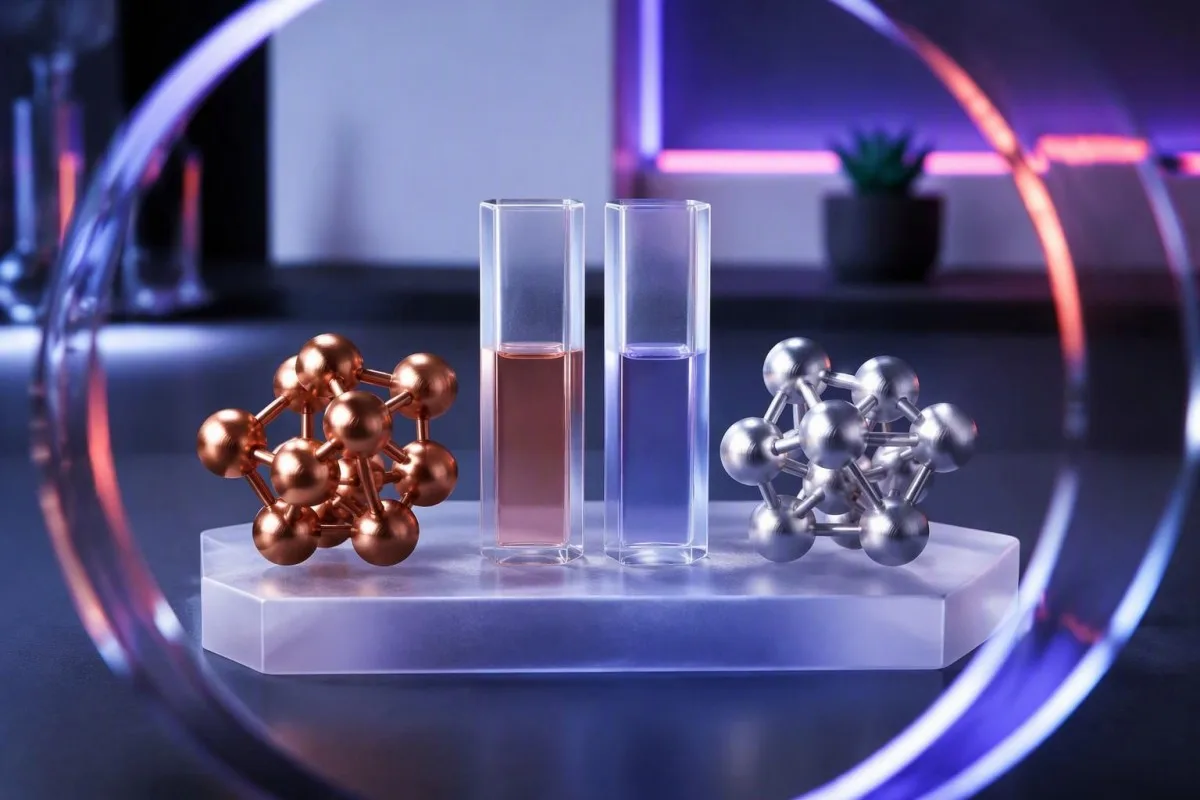
Суадносіны медзі да цынку - гэта разлічаны паказчык, а не дыягназ. Індывідуальныя значэнні медзі і цынку, маркеры запалення, печаначныя тэсты, лекі і ўмовы адбору проб звычайна больш важныя, чым само суадносіны.


- Разлік: Суадносіны медзі да цынку - гэта медзь сыроваткі або плазмы, падзеленая на цынк, з выкарыстаннем аднолькавых адзінак для абодвух вынікаў.
- Няма ўніверсальнага дыяпазону: Даследаванні часта апісваюць прыблізна 0,7-1,3 як шырокую зону адліку для дарослых, але лабараторыі не выкарыстоўваюць адзін правераны дыягнастычны паказчык.
- Высокае суадносіны: Высокае суадносіны медзі і цынку звычайна адлюстроўвае фізіялогію вострай фазы: медзь павышаецца з церулаплазмінам, у той час як цыркулюючы цынк падае падчас інфекцыі ці запалення.
- Нізкае суадносіны: Нізкае суадносіны можа ўзнікнуць пры даданні цынку, нізкім спажыванні медзі, парушэнні ўсмоктвання або незвычайна нізкім церулаплазміне; гэта само па сабе не пацвярджае недахоп медзі.
- Дазоўка цынку: Спажыванне цынку 50 мг/сут або больш на працягу некалькіх тыдняў можа парушыць засваенне медзі, асабліва калі прымаць без маніторынгу медзі.
- Падрыхтоўка: Паўтарыце тэставанне, калі вы пачуваецеся добра, у ідэале раніцай пасля 8-12-гадзіннага галадання і пасля рэгістрацыі прынятых дабавак за папярэднія 48 гадзін.
- Лепшы кантэкст: Супастаўце суадносіны з CRP, церулаплазмінам, поўным аналізам крыві, фератынам, пячоначнымі ферментамі, альбумінам і асобнымі значэннямі медзі і цынку.
- Тэрміновасць: Новыя цяжкасці з хадой, здранцвенне, выяўленая анемія, жаўтуха, спутанность свядомасці або хуткае пагаршэнне слабасці патрабуюць ацэнкі лекара, а не самалячэння, арыентаванага на суадносіны.
Што насамрэч вымярае суадносіны медзі да цынку
Суадносіны медзі да цынку - гэта медзь, падзеленая на цынк у адным і тым жа ўзоры крыві; яно можа адлюстроўваць адносны зрух паміж двума мінераламі, але не можа дыягнаставаць запаленне, перагрузку меддзю або дэфіцыт само па сабе. Суадносіны, блізкае да 1,0, часта сустракаецца ў здаровых дарослых, аднак не існуе міжнародна прынятай клінічнай мэты. Па стане на 24 верасня 2026 года я б разглядаў яго як маркер кантэксту, а не як паказчык для аптымізацыі.
Напрыклад, медзь 110 мкг/дл, падзеленая на цынк 80 мкг/дл, дае суадносіны 1,38. Гэты лік можа выглядаць высокім, таму што медзь павысілася, цынк знізіўся, або абодва змяніліся; арыфметыка не можа сказаць нам, што менавіта. Несупадзенне адзінак вымярэння з'яўляецца надзіва распаўсюджанай прычынай бязглуздых вынікаў, асабліва калі медзь паведамляецца ў мкмоль/л, а цынк у мкг/дл.
За 15 гадоў майго агляду лабараторных панэляў ізаляванае суадносіны рэдка мяняла лячэнне. Суадносіны 1,45 з CRP 32 мг/л падчас рэспіраторнай інфекцыі азначае нешта зусім іншае, чым 1,45 з CRP ніжэй за 1 мг/л і пастаяннае нізкае спажыванне цынку. Наш кіраўніцтва па падрыхтоўцы да тэсціравання цынку пояснює, чому умови збору мають значення.
Кантэсці — гэта Аналізатар крыві са штучным інтэлектам які чытае суадносіны медзі да цынку разам з яго складовымі значэннямі, рэферэнтнымі інтэрваламі і звязанымі маркерамі, замест таго, каб прысвойваць дыягназ ад аднаго разлічанага ліку. Гэта адрозненне абараняе пацыентаў ад распаўсюджанай памылкі: лячэння суадносін пры ігнараванні анеміі, захворванняў печані або нядаўняй інфекцыі.
Выкарыстоўвайце аднолькавыя адзінкі перад разлікам
Сыроватачную медзь часта паведамляюць як 70-140 мкг/дл, або прыкладна 11-22 мкмоль/л, у дарослых; сыроватачны цынк звычайна складае каля 70-120 мкг/дл, або 11-18 мкмоль/л. Пераўтварыце адзін вынік перад дзяленнем, калі лабараторыя паведамляе розныя адзінкі.
Ці існуе нармальны дыяпазон для гэтага разлічанага маркера?
Ніякія прафесійныя рэкамендацыі не ўстанаўліваюць аднаго дыягнастычнага нармальнага дыяпазону для суадносін медзі да цынку ў усіх дарослых. Шматлікія назіральныя даследаванні выкарыстоўваюць значэнні вакол 0,7-1,3 або 0,7-1,5 як апісальныя рэферэнтныя дыяпазоны, але ўзрост, пол, метад аналізу, эстрагеннае ўздзеянне і запаленчае нагрузка змяняюць размеркаванне.
Суадносіны вышэй за 1,3 або 1,5 часам пазначаюцца як высокія ў даследчых установах, але гэтая маркіроўка не раўназначная захворванню. Вынік медзі 140 мкг/дл і цынку 90 мкг/дл дае 1,56, тады як абодва значэнні могуць па-ранейшаму знаходзіцца ў межах пазначаных інтэрвалаў гэтай лабараторыі. Вось чаму высокае суадносіны медзі і цынку павінна выклікаць пытанні, а не паніку.
Больш карысныя парогі звычайна з'яўляюцца асобнымі значэннямі. Сыроватачны цынк ніжэй за прыкладна 70 мкг/дл заслугоўвае агляду ў стабільнага дарослага, у той час як сыроватачная медзь ніжэй за прыкладна 70 мкг/дл павінна інтэрпрэтавацца разам з церулаплазмінам і поўным аналізам крыві. Рэферэнтныя межы адрозніваюцца ў залежнасці ад лабараторыі, таму спачатку выкарыстоўвайце інтэрвал справаздачы.
Суадносіны таксама становіцца менш стабільным на сваіх экстрэмумах. Цынк 45 мкг/дл і медзь 135 мкг/дл даюць 3,0, але клінічная задача - асобна растлумачыць нізкі цынк і высокую медзь. Глядзіце нашу кіраўніцтва па прычынах нізкага цынку for the practical differential.
Што можа выклікаць высокае суадносіны медзі і цынку?
A high copper zinc ratio most often occurs when inflammation raises ceruloplasmin-bound copper and lowers circulating zinc. Acute infection, chronic inflammatory disease, estrogen exposure, pregnancy, liver or biliary conditions, and low zinc intake can create this pattern.
Ceruloplasmin carries roughly 90-95% of serum copper, and the liver produces more of it during an acute-phase response. Zinc is redistributed from plasma into tissues during that same response. The result can be a markedly higher ratio even when total-body copper stores are not excessive.
A 38-year-old with influenza-like symptoms, CRP 48 mg/L, copper 156 µg/dL, and zinc 58 µg/dL does not need a detox protocol; she needs recovery and an appropriately timed repeat. The same logic applies when WBC and CRP disagree: a single marker is a snapshot, not a verdict.
Persistently high ratios when CRP is normal deserve a more deliberate review of diet, supplements, alcohol use, estrogen-containing medication, liver tests, and symptoms. Dr. Thomas Klein would also check whether the assay was serum versus plasma, because pre-analytical differences can cloud comparisons across laboratories.
Што можа выклікаць нізкае суадносіны медзі і цынку?
A low copper zinc ratio usually reflects low copper, high zinc exposure, or both; it does not prove a copper deficiency state. The pattern is most concerning when low copper accompanies anemia, low neutrophils, sensory changes, or an elevated zinc intake.
Zinc induces intestinal metallothionein, a protein that binds copper strongly inside enterocytes. When those cells are shed, copper is lost rather than absorbed. Fosmire's clinical review described copper deficiency after excessive zinc exposure and remains a useful warning against prolonged high-dose self-treatment (Fosmire, 1990).
The US adult recommended dietary allowance for copper is 900 µg/day, while the tolerable upper intake level for zinc is 40 mg/day from all sources. A cold remedy, multivitamin, denture adhesive, and standalone zinc product can quietly add up. Our guide to сімптомамі высокага ўзроўню цынку covers the neurologic and blood-count clues.
Malabsorption from coeliac disease, inflammatory bowel disease, bariatric surgery, chronic diarrhoea, or prolonged parenteral nutrition can lower copper independent of zinc. A low ratio in those settings should lead to a measured work-up, not automatic copper tablets; copper excess is unsafe in some liver disorders.
Чаму інфекцыя можа сказіць суадносіны на працягу некалькіх дзён
Acute immune activation can increase the copper to zinc ratio within days because copper and zinc move in opposite directions during the acute-phase response. A ratio obtained with fever, a new cough, dental inflammation, a flare of arthritis, or after major surgery is usually poor evidence of baseline nutrition.
CRP below 3 mg/L makes major acute inflammation less likely, although it does not exclude every inflammatory condition. CRP above 10 mg/L is a practical reason to postpone nutrition conclusions, particularly if zinc is low and copper is high. ESR may remain raised for weeks after CRP normalises, so it is less useful for timing a redraw.
Kantesti AI — гэта Платформа AI для расшыфроўкі аналізу крыві that flags a copper-zinc pattern differently when CRP, neutrophils, or ferritin suggest an active inflammatory state. In our review workflow, a ratio becomes more informative after the inflammatory context is made visible, not before.
Ferritin can rise as an acute-phase protein too, which is why normal or high ferritin does not automatically exclude iron-restricted red-cell production. The pattern is easier to understand with transferrin and inflammation у разлік.
Як стан печані і церулаплазмін змяняюць вынікі медзі
Liver status changes total serum copper because the liver makes ceruloplasmin, the main copper-carrying protein. High copper with high ceruloplasmin often reflects acute-phase biology or estrogen effects; low copper with low ceruloplasmin requires a different differential diagnosis.
A low ceruloplasmin result is not synonymous with Wilson disease. It can occur with poor protein intake, malabsorption, severe liver synthetic dysfunction, nephrotic protein loss, and rare inherited conditions. Wilson disease assessment may include 24-hour urinary copper, eye examination, genetic testing, and specialist interpretation rather than a copper-zinc ratio.
Cholestatic patterns matter because biliary copper excretion is a major route of elimination. Elevated alkaline phosphatase, GGT, direct bilirubin, itching, pale stools, or dark urine should shift attention to a liver and bile-duct evaluation; our верхняй мяжы для нецяжарных у позні тэрмін. Вось чаму клініцысты звычайна больш за ўсё арыентуюцца на AST, ALT, білірубін, жоўцевыя кіслоты, калі выяўлены сверб, на колькасць трамбацытаў і на схему, апісаную ў нашым тлумачыць гэты ўзор.
Кантэсці — гэта Інструмент аналізу вынікаў аналізу крыві з падтрымкай AI that connects copper findings with ALT, AST, ALP, GGT, bilirubin, albumin, and platelet trends. The ratio alone cannot distinguish a supplement effect from altered hepatic protein production.
Эстраген, цяжарнасць і ўплыў этапу жыцця
Estrogen exposure and pregnancy commonly raise serum copper by increasing ceruloplasmin, so a higher copper zinc ratio can be physiologic in those settings. Oral contraceptives, menopausal hormone therapy, and pregnancy should be documented before calling copper elevated.
Copper typically rises across pregnancy and can exceed non-pregnant laboratory intervals without indicating toxicity. Zinc may fall modestly because of plasma-volume expansion and fetal demands, which pushes the ratio upward further. Trimester-specific interpretation is safer than comparing a pregnant person's result to a general adult range.
Hormonal contraception may also raise CRP in some users, adding another layer to interpretation. A mildly high ratio with no symptoms in a person taking an estrogen-containing pill is often a repeat-and-context situation, not a reason to stop prescribed medication. See our explanation of кантрацэпцыя і CRP for this overlooked interaction.
Heavy menstrual bleeding can lower iron stores and coexist with a zinc or copper issue, but it does not itself explain a ratio. If periods are heavy enough to cause fatigue, dizziness, or clots, read our heavy bleeding warning guide and arrange clinical review.
Як падрыхтавацца да больш дакладнага аналізу крыві на суадносіны медзі і цынку
For a comparable copper zinc ratio blood test, test when you are clinically well, use the same laboratory, and collect a morning fasting sample when possible. An 8-12 hour fast is often preferred for zinc, although individual laboratory instructions take priority.
Avoid vigorous endurance exercise for 24 hours before a planned repeat, and record illness, alcohol intake, menstrual status, and any infusion or contrast exposure. Do not stop prescribed medicines without advice. Ask the ordering clinician whether nonessential mineral supplements should be held for 24-48 hours; the correct interval depends on the product and clinical question.
Trace-element testing is unusually vulnerable to contamination. Collection tubes, laboratory processing, hemolysis, and delayed separation can change reported concentrations, while hemolysis may release zinc from cellular elements and falsely increase it. A ratio that abruptly shifts without a clinical explanation deserves a redraw, not a supplement reaction.
Kantesti AI can compare results over time, but a trend is only interpretable when the sampling conditions are reasonably alike. Our кіраўніцтва па часавых рамках аналізу крыві offers a useful checklist for recording those conditions.
Якія наступныя аналізы робяць анамальныя суадносіны карыснымі?
The best follow-up for an imbalanced ratio usually includes repeat copper and zinc, CRP, ceruloplasmin, a full blood count, and liver tests. Add ferritin, transferrin saturation, albumin, and alkaline phosphatase when symptoms, diet, or liver context warrant them.
Copper deficiency can cause normocytic or macrocytic anemia, neutropenia, and sometimes marrow changes that resemble myelodysplastic syndromes. A CBC with differential is therefore more clinically valuable than repeating the ratio alone. New numbness, unsteady walking, or loss of vibration sense warrants prompt assessment because neurologic recovery may lag behind correction.
Ceruloplasmin is especially useful when copper is low or unexpectedly high, but it is itself an acute-phase reactant. Albumin below 35 g/L may point toward reduced protein status or systemic illness and can alter interpretation of several trace-mineral results. Consider a поўны перанальны профіль when copper is persistently high.
A 24-hour urine copper collection is not a screening test for a mildly high ratio. It is usually reserved for a clinician-directed Wilson disease or copper-overload evaluation, where collection quality, liver status, and specialist context are decisive.
Сімптомы і заканамернасці, якія не павінны чакаць паўторнага аналізу суадносін
Progressive numbness, gait imbalance, new weakness, severe fatigue with low blood counts, jaundice, confusion, or severe abdominal symptoms needs timely medical assessment. These features may signal neurologic, hematologic, hepatic, or infectious illness that a copper to zinc ratio cannot safely sort out.
Copper deficiency neuropathy can resemble vitamin B12 deficiency: tingling, impaired balance, sensory loss, and difficulty walking may develop gradually. Check B12, methylmalonic acid when appropriate, folate, CBC, copper, and zinc rather than assuming one supplement explains every symptom. Our кіраўніцтва па B12 на мяжы outlines where B12 testing can mislead.
Seek urgent care for yellow skin or eyes, dark urine with pale stools, fever with confusion, severe vomiting, chest pain, or rapidly progressive weakness. These are not expected effects of a mildly high or low ratio. They need assessment based on symptoms and core laboratory or imaging findings.
Dr. Thomas Klein's practical rule is simple: never let a calculated micronutrient ratio delay evaluation of a red flag. Ratios can support a clinical story; they should not become the story.
Змены, арыентаваныя на ежу, якія дазваляюць пазбегнуць празмернага карэкціравання суадносін
A food-first approach is reasonable for mild, stable abnormalities once illness and liver context have been considered. Copper-rich foods include cashews, sesame, lentils, cocoa, shellfish, and mushrooms, while zinc-rich foods include beans, dairy, eggs, seafood, nuts, and seeds.
The aim is adequate intake of both minerals, not driving the ratio toward a particular decimal. Adults need about 8 mg/day of zinc for most women and 11 mg/day for most men, compared with 900 µg/day of copper. Vegetarian diets can be adequate, although high phytate intake may reduce zinc absorption and deserves dietitian-level attention when results stay low.
Pairing zinc-containing plant foods with soaking, fermenting, sprouting, or leavening can reduce phytate and modestly improve mineral availability. Extreme elimination diets are a recurring cause of trace-mineral confusion in my clinic. Our foods rich in copper guide provides practical serving ideas.
Avoid self-prescribing copper if you have unexplained elevated liver enzymes, a family history of Wilson disease, or prior copper overload assessment. Likewise, avoid long-term zinc above 40 mg/day without a clinician's reason and monitoring plan.
Як Kantesti інтэрпрэтуе суадносіны ў клінічным кантэксце
Kantesti interprets a copper to zinc ratio by checking whether copper, zinc, CRP, ceruloplasmin, blood counts, and liver markers support the same explanation. A calculated result becomes safer when it is treated as one node in a pattern, with original laboratory units preserved.
Our AI does not diagnose Wilson disease, infection, copper deficiency, or liver disease from this calculation. It can identify discordant combinations worth discussing with a clinician—for example, low copper plus anemia and neutropenia, or high copper plus raised CRP and normal liver markers. That is a triage function, not a replacement for medical care.
Kantesti has supported more than 2 million users across 127+ countries, so our interpretation logic keeps units, local reference intervals, language, and longitudinal change visible. For readers interested in quality controls, our падыход да клінічнай валідацыі describes how outputs are evaluated against medical oversight.
Before uploading any report, correct transcription errors and include the date, fasting status, medicines, and supplements. The чэк-ліст загрузкі PDF is particularly useful for trace-element reports, where an omitted unit can invert the apparent meaning.
Калі паўтарыць аналіз і што спытаць у лекара
Repeat a copper-zinc panel about 4-8 weeks after resolving an acute illness or changing a clinician-approved supplement plan, unless symptoms or severe abnormalities require earlier care. The most useful request is not “How do I fix the ratio?” but “What explains the copper and zinc values together?”
Bring the exact product labels and doses, a timeline of symptoms, alcohol use, dietary restrictions, gastrointestinal surgery, and prior results. Ask whether CRP was elevated, whether ceruloplasmin changes the copper interpretation, and whether CBC or liver results suggest a different priority. Those questions prevent a broad nutrition discussion from missing a medical diagnosis.
If both individual values are in range, you feel well, CRP is low, and the ratio is only mildly outside a research reference band, observation is often reasonable. If copper or zinc is frankly abnormal, or the value changes substantially between comparable draws, investigate the component result first. Our lab-change interpretation guide explains why small numerical shifts may be analytical noise.
Kantesti's medical content is reviewed with clinician oversight; readers can meet the physicians and scientific advisers on our Медыцынская кансультатыўная рада. Bottom line: use the ratio as a prompt for context, not as permission to self-treat.
Даследчы кантэкст, клінічныя абмежаванні і заўвагі да публікацый
The copper to zinc ratio is a research-associated nutrition and inflammatory marker, not a stand-alone screening test endorsed by major guidelines for the general population. Its main value is hypothesis generation: it can point toward inflammation, supplement imbalance, altered copper transport, or nutritional risk that must be checked with standard clinical testing.
The evidence is honestly mixed because studies use different specimen types, populations, cutoffs, and endpoints. A ratio that predicts risk in frail older adults or hospital cohorts may not apply to an active 29-year-old with normal CRP. That limitation is not a flaw in the patient; it is a limitation of external validity.
For method-focused reading, Kantesti's work on multilingual clinical decision support documents how laboratory interpretation needs explicit uncertainty and escalation pathways. This matters most for calculated markers, where a clean-looking number can conceal unreliable inputs.
Dr. Thomas Klein recommends using published evidence to guide questions, then using your clinician and validated local laboratory data to guide decisions. Research references below include Kantesti publications required for transparency and external literature that directly informs zinc-copper physiology.
Часта задаваныя пытанні
Якое добрае суадносіны медзі да цынку?
A copper to zinc ratio around 0.7-1.3 is often described in adult research cohorts, but there is no single validated clinical target for every laboratory or person. The ratio is calculated by dividing copper by zinc measured in the same units, such as 100 µg/dL divided by 80 µg/dL for a ratio of 1.25. A result slightly outside a research band is not diagnostic when copper and zinc are individually within range and CRP is elevated. Clinicians interpret the ratio with symptoms, medicines, supplements, ceruloplasmin, liver tests, and inflammatory markers.
Ці азначае высокае суадносіны медзі і цынку запаленне?
A high copper zinc ratio can suggest inflammation because ceruloplasmin-bound copper often rises while circulating zinc falls during an acute-phase response. CRP above 10 mg/L makes this explanation more plausible, especially during fever, a recent infection, surgery, or an inflammatory disease flare. The ratio cannot identify the source of inflammation or distinguish infection from autoimmune disease. Repeat testing after recovery, with CRP measured at the same time, is usually more informative than starting supplements immediately.
Ці могуць цынкавыя дабаўкі знізіць колькасць медзі?
Yes, sustained zinc supplementation can lower copper absorption by increasing intestinal metallothionein, which binds copper within intestinal cells. Zinc doses of 50 mg/day or more for several weeks are a well-recognised risk, while the US adult tolerable upper intake level is 40 mg/day from all sources. Copper deficiency may cause anemia, low neutrophils, numbness, gait imbalance, or fatigue, but symptoms have many possible causes. Anyone using long-term zinc should review total intake from lozenges, multivitamins, powders, and denture products with a clinician.
Ці трэба мне галадаць перад аналізам крыві на суадносіны медзі і цынку?
An 8-12 hour morning fast is commonly preferred for a copper zinc ratio blood test because serum zinc is more sensitive to recent food intake and time of day than copper. Testing should ideally be deferred during fever, acute infection, or shortly after strenuous exercise because inflammatory and stress physiology can distort both measurements. Do not stop prescribed medicines without medical advice. Ask the laboratory or clinician whether nonessential mineral supplements should be paused for 24-48 hours before collection.
Ці азначае нізкае суадносіны медзі і цынку дэфіцыт медзі?
A low copper zinc ratio does not prove copper deficiency because it may result from high zinc exposure, low ceruloplasmin, assay variation, or a transient change in either value. Serum copper below approximately 70 µg/dL alongside low ceruloplasmin, anemia, or neutropenia is more concerning than the ratio alone. Clinicians often repeat copper and zinc and add a CBC, CRP, liver tests, albumin, and ceruloplasmin. Copper supplements should not be started blindly when liver disease or copper-handling disorders are possible.
Ці можа захворванне печані выклікаць высокі ўзровень медзі ў аналізе крыві?
Liver conditions can alter serum copper because the liver makes ceruloplasmin and excretes copper into bile. High total copper with high ceruloplasmin may occur during inflammation, cholestasis, pregnancy, or estrogen therapy and does not alone prove copper overload. Low copper and low ceruloplasmin can occur with impaired protein synthesis or malnutrition, while Wilson disease needs specialist-directed testing such as urine copper and clinical assessment. ALT, AST, ALP, GGT, bilirubin, albumin, platelet count, and symptoms provide more diagnostic value than the ratio.
Калі варта паўтарыць аналіз на парушэнне суадносін медзі і цынку?
A mildly abnormal copper zinc ratio is often repeated 4-8 weeks after acute illness resolves or after a clinician-approved adjustment to a supplement regimen. Use the same laboratory, collect at a similar morning time, and document fasting, exercise, illness, hormone therapy, and supplements so the two results can be compared fairly. Repeat sooner when copper or zinc is markedly abnormal, or when anemia, neutropenia, neurologic symptoms, jaundice, or worsening weakness are present. An abnormal ratio never replaces urgent assessment for red-flag symptoms.
Атрымаць аналіз крыві з AI сёння
Далучайцеся больш чым да 2 мільёнаў карыстальнікаў па ўсім свеце, якія давяраюць Kantesti для імгненнага, дакладнага аналізу лабараторных тэстаў. Загрузіце вынікі аналізу крыві і атрымайце поўную інтэрпрэтацыю біямаркераў 15,000+ за лічаныя секунды.
📚 Публікацыі даследаванняў са спасылкамі
Кляйн, Т., Мітчэл, С., і Вебер, Г. (2026). Kantesti LTD. (2026). Women's Health Guide: Ovulation, Menopause & Hormonal Symptoms. Figshare.. Kantesti AI Medical Research.
Кляйн, Т., Мітчэл, С., і Вебер, Г. (2026). Kantesti LTD. (2026). Шматмоўная ШІ-дапамога для падтрымкі клінічных рашэнняў пры раннім трыяжы на хантавірус: дызайн, інжынерная валідацыя і разгортванне ў рэальных умовах на працягу 50 000 інтэрпрэтаваных справаздач аналізаў крыві. Figshare.. Kantesti AI Medical Research.
📖 Знешнія медыцынскія спасылкі
⚕️ Медыцынская адмова ад адказнасці
Гэты артыкул прызначаны толькі для адукацыйных мэт і не з’яўляецца медычнай парадай. Заўсёды кансультуйцеся з кваліфікаваным спецыялістам аховы здароўя для прыняцця рашэнняў па дыягностыцы і лячэнні.
Сігналы даверу E-E-A-T
Вопыт
Клінічны агляд, які вядзе лекар, працэсаў інтэрпрэтацыі лабараторных паказчыкаў.
Экспертыза
Фокус лабараторнай медыцыны на тым, як біямаркеры паводзяць сябе ў клінічным кантэксце.
Аўтарытэтнасць
Напісана доктарам Томасам Кляйнам, з аглядам доктара Сара Мітчэл і праф. доктара Ганса Вебера.
Надзейнасць
Інтэрпрэтацыя на аснове доказаў з выразнымі шляхамі далейшых дзеянняў, каб паменшыць трывогу.