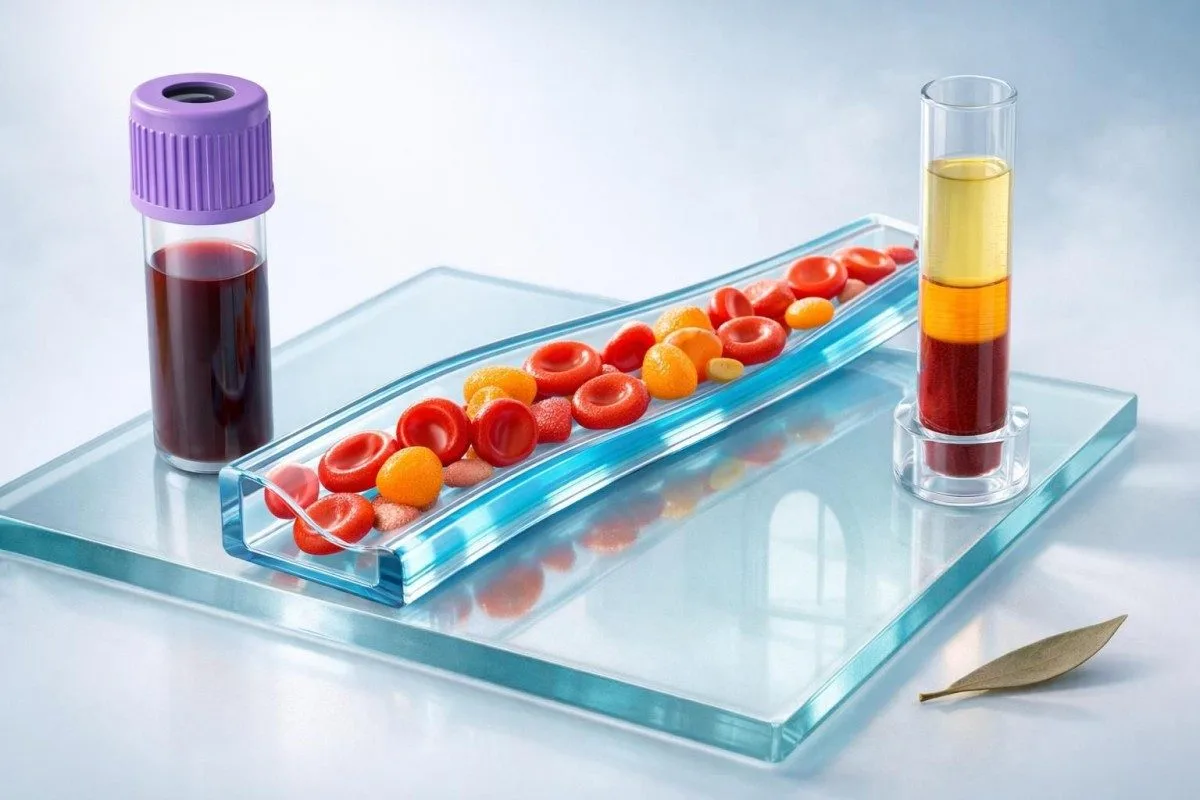
সামান্য অস্বাভাৱিক ৰঙা তেজকণাৰ গণনা (RBC) বেছিভাগ সময়ে পৰিস্থিতিৰ ওপৰত নিৰ্ভৰ কৰে, বিপদজনক বিপৰ্যয় নহয়। এই ৰোগী-কেন্দ্ৰিক গাইডে দেখুৱায়—RBC বেছি বা কম হ’লে কেতিয়া পানিশূন্যতা, উচ্চতা (altitude), আৰম্ভণিৰ ৰক্তহীনতা (early anemia), বা কিবা এটা যাৰ বাবে সঠিক পৰীক্ষা-নিৰীক্ষা (workup) লাগিব পাৰে।.


- প্ৰাপ্তবয়স্ক মহিলা সাধাৰণতে তলত নামি আহে 4.2-5.4 মিলিয়ন কোষ/µL; adult men সাধাৰণতে তলত নামি আহে 4.7-6.1 মিলিয়ন কোষ/µL.
- উচ্চ RBC তেতিয়াহে বেছি গুৰুত্ব পায় যেতিয়া মহিলাসকলৰ ক্ষেত্ৰত 48%ৰ ওপৰত বা পুৰুষৰ ক্ষেত্ৰত 52%ৰ ওপৰত হ’লে হেমাট’ক্ৰিট বেছি পুনৰ পৰীক্ষাত।.
- কম RBC লগতে উচ্চ RDW হিম’গ্ল’বিন স্পষ্টভাৱে কম হোৱাৰ আগতেই ই এক ক্লাছিক আৰম্ভণিৰ লৌহ-অভাব (iron-deficiency)ৰ ধৰণ।.
- MCV 80 fL তকৈ তলত মাইক্র’চাইটোছিছ (microcytosis)ৰ ইংগিত দিয়ে; MCV 100 fL তকৈ ওপৰত মেক্ৰ’চাইটোছিছ (macrocytosis) সূচায়।.
- পানীলগা বাস্তৱ জগতৰ পৰীক্ষাত প্ৰায় 3-10% RBC, হিম’গ্ল’বিন, আৰু হেমাট’ক্ৰিট বৃদ্ধি কৰিব পাৰে।.
- 1,500-2,000 মিটাৰৰ ওপৰৰ উচ্চতা কেইসপ্তাহমানৰ ভিতৰত শাৰীৰিকভাৱে ৰঙা তেজকণাৰ গণনা বৃদ্ধি কৰিব পাৰে।.
- Ferritin 30 ng/mL ৰ তলত প্ৰায়ে লৌহৰ অভাৱক সমৰ্থন কৰে; 20% তকৈ কম ট্ৰান্সফেৰিন ছেটুৰেচন যুক্তিটো অধিক শক্তিশালী কৰে।.
- তৎক্ষণাৎ মূল্যায়ন লক্ষণসমূহ গুৰুতৰ হ’লে আৰু হিম’গ্ল’বিন ৮ g/dL ৰ তলত থাকিলে অধিক সম্ভাৱনা থাকে অথবা হেমাট’ক্ৰিট 56% অতিক্ৰম কৰিলে.
বয়স, লিংগ, আৰু গৰ্ভাৱস্থাৰ ভিত্তিত স্বাভাৱিক RBC গণনা কিমান ধৰা হয়?
দ্য... RBC ৰ স্বাভাৱিক পৰিসৰ প্ৰাপ্তবয়স্কৰ ক্ষেত্ৰত সাধাৰণতে প্ৰায় মহিলাৰ বাবে 4.2-5.4 মিলিয়ন কোষ/µL আৰু পুৰুষৰ বাবে 4.7-6.1 মিলিয়ন কোষ/µL. । সেই সীমাৰ ঠিক বাহিৰত থকা এটা ফল স্বয়ংক্ৰিয়ভাৱে বিপদজনক নহয়; পানী-জমা (হাইড্ৰেচন), উচ্চতা, গৰ্ভাৱস্থা, আৰু লেবৰেটৰী পদ্ধতিয়ে ইয়াক সলনি কৰিব পাৰে, সেয়েহে মই ইয়াক পৰৱৰ্তীভাৱে হিম’গ্লবিন, হেমাট'ক্ৰাইট, এম চি ভি, আৰু আৰ ডি ডব্লিউ ৰ কাষত পঢ়োঁ—এটা নিশ্চিত কথা কোৱাৰ আগতে।.
আমাৰ পৰ্যালোচনা কাৰ্যপ্ৰবাহত কান্টেষ্টি এ আই, ত মই দেখোঁ যে উল্লেখিত পৰিসীমা হিচাপে 4.2-5.4 x10^6/µL এটা পৰীক্ষাগাৰত আৰু 4.0-5.2 x10^12/L আন এখনত দিয়া থাকে। সাধাৰণতে ই বেলেগ জীৱবিজ্ঞানৰ তুলনাত একক (units) আৰু এনালাইজাৰ কেলিব্ৰেচনৰ বাবেহে হয়, আৰু ত থকা আমাৰ লেখাটোৱে কিয় স্বাভাৱিক পৰিসীমাই বিভ্ৰান্ত কৰিব পাৰে—সেয়া ব্যাখ্যা কৰে যে সীমাৰ কাষখনেই কাহিনীৰ সম্পূৰ্ণ কথা নহয়।.
শিশুসকল সাধাৰণতে 4.1-5.5 মিলিয়ন/µL, ৰ আশে-পাশে থাকে, আনহাতে নবজাতকসকল 4.8-7.1 মিলিয়ন/µL ত অধিক উচ্চতাত থাকিব পাৰে, কাৰণ ভ্ৰূণীয় জীৱনে অধিক অক্সিজেন-বহন ক্ষমতা দাবী কৰে। গৰ্ভাৱস্থাত প্লাজমা ভলিউমে ৰেড ব্লাড কোষৰ ভৰৰ তুলনাত বেছি দ্ৰুতভাৱে বৃদ্ধি পোৱাৰ বাবে RBC গণনা প্ৰায়ে উচ্চ-3 ৰ পৰা নিম্ন-4 মিলিয়ন/µL পৰিসীমালৈ গতি কৰে, সেয়েহে মই আমাৰ হিম’গ্ল’বিন ৰেঞ্জ চাৰ্ট ইয়াক এনিমিয়া বুলি কোৱাৰ আগতে।.
১৭ এপ্ৰিল, ২০২৬ তাৰিখলৈকে বেছিভাগ লেবে এতিয়াও RBC-ক এটা গণনা, হিচাপে ৰিপ’ৰ্ট কৰে, ৰোগ নিৰ্ণয় হিচাপে নহয়। ড° থমাছ ক্লেইন, এম ডি হিচাপে মই ৰোগীক কওঁ যে এটা মাত্র RBC ফলাফলে পাঁচটা CBC মাৰ্কাৰ একেলগে একে ধৰণে সলনি হোৱা এটা ধৰণৰ তুলনাত কম ডায়াগন’ষ্টিক মূল্য বহন কৰে। 8-12 সপ্তাহ.
আপোনাৰ লেবে কিয় million/µLৰ সলনি x10^12/L ব্যৱহাৰ কৰিব পাৰে
সেই একক দুটা গণিতগতভাৱে সমান। এটা RBC 4.8 x10^12/L ৰ ফলাফল একে 4.8 million/µL, ৰ সৈতে, আৰু মই দেখিছোঁ যে একক সলনিৰ চিন্তাই অৰ্থপূৰ্ণ জৈৱিক সলনিৰ তুলনাত বহু বেছি দেখা যায়।.
কেতিয়া এটা উচ্চ RBC গণনাই সত্যিই গুৰুত্ব পায়?
A উচ্চ RBC গণনাখন গুৰুত্বপূৰ্ণ হয় যেতিয়া ই স্থায়ী হয় আৰু হিম’গ্লবিন অথবা হেমাট'ক্ৰাইট, ৰ সৈতে বৃদ্ধি পায়, বিশেষকৈ যদি হেমাট’ক্ৰিট 52% ৰ ঠিক ওপৰত থাকিলে অথবা মহিলাৰ বাবে 48%. ৰ ওপৰত থাকে। আটাইতকৈ সাধাৰণ ব্যাখ্যাবোৰ হ’ল ডিহাইড্ৰেচন, উচ্চতাত বাস কৰা, ধূমপান, শুই থাকোঁতে শ্বাস বন্ধ হোৱা (sleep apnea), টেষ্ট’ষ্টেৰন ব্যৱহাৰ, আৰু কমকৈ ক’ম মজ্জাৰ সমস্যা যেনে polycythemia vera.
হেম’কনচেণ্ট্ৰেচন সাধাৰণ। গৰম দিন, গেষ্ট্ৰ’এণ্টেৰাইটিছ, উপবাস, ছাউনা ব্যৱহাৰ, বা ডাইইউৰেটিকছে RBC, হিম’গ্ল’বিন, আৰু হেমাট’ক্ৰিট প্ৰায় 3-10%, গতিকে মই সঘনাই স্বাভাৱিক তৰল পদাৰ্থ আৰু বিশ্ৰামৰ পিছত পুনৰ পৰীক্ষা কৰিবলৈ কওঁ; আমাৰ পানিশূন্যতা-সম্পৰ্কীয় ভুলকৈ অধিক (dehydration-related false highs) সেই ধৰণটোৰ মাজেৰে যায়।.
উচ্চতা বেলেগ ধৰণে কাম কৰে কাৰণ পৰিৱৰ্তনটো লেহেমীয়া আৰু জৈৱিকভাৱে উদ্দেশ্যপ্ৰণোদিত। প্ৰায় 1,500-2,000 মিটাৰ ওপৰত বাস কৰিলে ৰ ওপৰত থাকিলে ইৰিথ্ৰ’প’ইটিন বৃদ্ধি কৰিব পাৰে আৰু কেইসপ্তাহমানৰ ভিতৰত ক্ৰমে ৰঙা তেজকণাৰ সংখ্যা ওপৰলৈ তুলিব পাৰে—সেইবাবেই কাগজত পৰ্বতবাসী আৰু সহনশীলতা ক্ৰীড়াবিদসকলে বহু সময়ত 'সীমান্তীয়ভাৱে উচ্চ' যেন দেখা যায়; আমাৰ তেজ পৰীক্ষা ক্ৰীড়াবিদসকলে অনুসৰণ কৰিব লাগে সেই শাৰীৰবৃত্তীয় দিশটো সামৰি লয়।.
স্থায়ী ইৰিথ্ৰ’চাইটোছিছৰ বাবে উচিতভাৱে কাম-কাজ (workup) কৰাটো প্ৰয়োজন, কাৰণ polycythemia vera সূক্ষ্মভাৱে দেখা দিব পাৰে, বিশেষকৈ যদি তেজত লৌহৰ অভাৱে হিম’গ্ল’বিন কিমান উচ্চ হ’ব লাগে তাক ঢাকি ৰাখে। Tefferi আৰু Barbui (2021) এ গুৰুত্ব আৰোপ কৰিছিল যে চিকিৎসকে কেৱল RBC গণনাৰ বাহিৰলৈ চাই , CALR, ইৰিথ্ৰ’প’ইটিন, অক্সিজেনৰ অৱস্থা, আৰু বাকী CBC-টোও পৰীক্ষা কৰিব লাগে—কাৰণ নিৰ্ধাৰণ কৰাৰ আগতে।.
যেতিয়া RBC আৰু হেমাট'ক্ৰাইট পুনৰ পৰীক্ষাত অন্তত ২-৪ সপ্তাহ ব্যৱধানত উচ্চ হৈ থাকে, তেতিয়া সংকেতটো বহু বেছি বাস্তৱ হৈ পৰে। ভ্ৰমণৰ পিছত, কম শুই থকাৰ বাবে, বা পানিশূন্যতাৰ বাবে একবাৰেই সামান্য উচ্চ RBC দেখা পোৱাটো তেনেকুৱা শক্তিশালী প্ৰমাণ নহয়।.
উচ্চ RBC মানেই polycythemia vera একে নহয়
সেই পাৰ্থক্যটো গুৰুত্বপূৰ্ণ। মই পৰ্যালোচনা কৰা বেছিভাগ উচ্চ RBC ফলাফল দ্বিতীয়িক পানিশূন্যতা, অক্সিজেনৰ অৱস্থা, বা ঔষধৰ প্ৰভাৱৰ বাবে—প্ৰাথমিক হাড়ৰ মজ্জাৰ (bone marrow) ৰোগৰ বাবে নহয়।.
কম RBC গণনাই সাধাৰণতে কি বুজায়?
A কম RBC গণনাই সাধাৰণতে ৰক্তহীনতা, পাতল হোৱা (dilution), বা ৰঙা তেজকণিকা উৎপাদন কমি যোৱাৰ কথা বুজায়, কিন্তু সঠিক নিৰ্ণয় নিৰ্ভৰ কৰে হিম’গ্লবিন আৰু কোষৰ আকাৰৰ ওপৰত. । প্ৰাপ্তবয়স্কৰ ক্ষেত্ৰত মহিলাৰ প্ৰায় অথবা 4.2 মিলিয়ন/µL তকৈ তলত পুৰুষৰ 4.7 মিলিয়ন/µL তকৈ তলত.
কম RBC এ এটা একক ৰোগৰ পৰিৱৰ্তে মজ্জাত উৎপাদন কমি যোৱা, তেজক্ষৰণ, বা পুষ্টিৰ অভাৱক প্ৰতিফলিত কৰিব পাৰে। হিম’গ্লবিন, বিশ্ব স্বাস্থ্য সংস্থাৰ (World Health Organization) নিৰ্দেশনাতো ৰক্তহীনতা সংজ্ঞায়িত কৰা হয় কেৱল RBC ৰে নহয়—সাধাৰণতে, গৰ্ভধাৰণ নকৰা মহিলাত 12.0 g/dL তলত, আৰু পুৰুষত 13.0 g/dL তলত গৰ্ভাৱস্থাত 11.0 g/dL তলত.
(World Health Organization, 2011)। সেইবাবেই সুস্থ ৰোগীৰ ক্ষেত্ৰত সামান্য কম RBC এ কেৱল অধিক ঘনিষ্ঠভাৱে চোৱাৰ সংকেত দিব পাৰে, কিন্তু একে RBC ৰ সৈতে কম হিম’গ্ল’বিন থাকিলে কথাবাৰ্তা সলনি হৈ যায়। 20% মোৰ ক্লিনিকত আটাইতকৈ সাধাৰণ ধৰণটো হৈছে আৰম্ভণিৰ লৌহৰ অভাৱ—বিশেষকৈ মাহেকীয়া হোৱা প্ৰাপ্তবয়স্ক, সন্তান জন্মৰ পিছৰ (postpartum) ৰোগী, ঘনাই তেজ দান কৰা লোক, আৰু দৌৰবিদসকলৰ মাজত। RBC কমি যোৱা, RDW বৃদ্ধি পোৱা, আৰু প্ৰায় তলৰ transferrin saturation (ট্ৰান্সফেৰিন সন্তৃপ্তি) দেখা দিব পাৰে—ফেৰিটিন স্পষ্টভাৱে কম হোৱাৰ আগতেই। সেইবাবেই আমাৰ স্বাভাৱিক ফেৰিটিনৰ সৈতে কম লৌহ সন্তৃপ্তি (low iron saturation) সম্পৰ্কীয় গাইডে.
ৰোগীসকলক ভুলভাৱে আশ্বস্ত (false reassurance) হোৱাৰ পৰা বচাবলৈ সহায় কৰে। নিউ ইংলেণ্ড জাৰ্নেল অফ মেডিচিন Camaschella ৰ 18 এনজি/এমএল, হিমোগ্ল’বিন 2015 চনৰ (Camaschella, 2015) ৰিভিউৱে এতিয়াও আটাইতকৈ স্পষ্টভাৱে সোঁৱৰাই দিয়ে যে লৌহৰ অভাৱ হৈছে যোগানৰ (supply) ৰোগ—ইয়াৰ আগতে ই গুৰুতৰ ৰক্তহীনতাৰ ৰোগ নহয় (Camaschella, 2015)। মই এনে ৰোগী দেখিছোঁ যাৰ ফেৰিটিন, 12.4 g/dL.
হিম’গ্ল’বিন (hemoglobin) আৰু হেমাট’ক্ৰিট (hematocrit)ৰ সৈতে RBC কেনেকৈ পঢ়িব?
আছিল, আৰু যাৰ RBC “সামান্য তলত” (barely low) আছিল—তথাপিও তেওঁলোকৰ কেশ সৰি যোৱা, বুক ধপধপ কৰা (palpitations), আৰু ব্যায়াম সহ্যক্ষমতা কমি যোৱাৰ সমস্যা ইতিমধ্যে আছিল। আৰ বি চি, হিম’গ্লবিন, আৰু হেমাট'ক্ৰাইট আপুনি.
এই তুলনাই বুজাই দিয়ে কিয় RBC count কেৱল RBC, হিম’গ্ল’বিন, আৰু হেমাট’ক্ৰিটৰ তিনিটাৰ তুলনাত কম তথ্যসমৃদ্ধ।.
হেমাট’ক্ৰিট সাধাৰণতে হিম’গ্ল’বিনৰ লগত প্ৰায় তিনিগুণ হিম’গ্ল’বিনৰ মানৰ সৈতে মিলি থাকে, গতিকে হিম’গ্ল’বিনৰ ১২ g/dL প্ৰায়ে এটা হেমাট’ক্ৰিটৰ ওচৰত অৱস্থিত হয় 36%, পদ্ধতি অনুসৰি অলপ কম-বেছি। যদি আপুনি সমীকৰণটোৰ আয়তন (ভলিউম) দিশটো আৰু গভীৰভাৱে চাব বিচাৰে, আমাৰ হেমাট’ক্ৰিট গাইড পঢ়া যোগ্য, আৰু আমাৰ চিকিৎসা বৈধতা মানদণ্ড এ দেখুৱাইছে যে আমাৰ পেটাৰ্ন ইঞ্জিনে কেনেকৈ অসামঞ্জস্য (মিছমেচ) চিনাক্ত কৰে।.
এটা আচৰিতভাৱে উপযোগী সূত্ৰ হৈছে স্বাভাৱিক বা উচ্চ RBC কিন্তু কম MCV আৰু কম MCHC; এই সংমিশ্ৰণে মোক সাধাৰণ আয়ৰণৰ অভাৱতকৈ থেলাছেমিয়া ট্ৰেইটৰ দিশে বেছি টানি আনে। CBC-ৰ অধিক বিস্তৃত প্ৰসংগত, আমাৰ 15,000-বায়োমাৰ্কাৰ গাইড এ দেখুৱাইছে যে RBC কিদৰে সূচক (indices), বৃক্কৰ চিন (renal markers), প্ৰদাহ (inflammation), আৰু পুষ্টিৰ লগত সম্পৰ্কিত।.
মই এই ধৰণটো পৰিয়ালবোৰত সদায়েই দেখা পাওঁ। এজন অভিভাৱকক কোৱা হয় যে তেওঁলোক 'কিছুটা ৰক্তহীন (anemic),' কিন্তু RBC গণনা হৈছে 5.6 মিলিয়ন/µL, MCV হৈছে 72 fL, আৰু ফেৰিটিন স্বাভাৱিক — এইটো অন্যথা প্ৰমাণ নোহোৱালৈকে সাধাৰণ আয়ৰণৰ অভাৱ নহয়।.
MCV আৰু RDW এ আৰম্ভণিৰ ৰক্তহীনতাৰ ধৰণ কেনেকৈ প্ৰকাশ কৰে?
MCV আৰু RDW এ হিম’গ্ল’বিন স্পষ্টভাৱে অস্বাভাৱিক হোৱাৰ আগতেই প্ৰাৰম্ভিক ৰক্তহীনতা (anemia) উন্মোচন কৰে।. MCV 80 fL তকৈ তলত এ মাইক্ৰ’চাইটোছিছ (microcytosis) সূচায়, MCV 100 fL তকৈ ওপৰত macrocytosis সূচায়, আৰু প্ৰায় 14.5%-ৰ ওপৰত RDW এ আপোনাক ক’ব যে ৰক্তকণিকাবোৰৰ আকাৰ ক্ৰমাৎ অসমান হৈ পৰিছে।.
প্ৰাৰম্ভিক আয়ৰণৰ অভাৱ সাধাৰণতে এটা উচ্চ RDW প্ৰথমে দিয়ে, তাৰ পিছত এম চি ভি, কমি যায়, আৰু তাৰ পিছত হিম’গ্ল’বিন কমে। এই ক্ৰমটো গুৰুত্বপূৰ্ণ কাৰণ ফেৰিটিন 30 ng/mL তলত থাকিলেও মানুহে পাঠ্যপুথিৰ ৰক্তহীনতাৰ (anemia) মানদণ্ড পূৰণ নকৰাৰ আগতেই লক্ষণ (symptoms) দেখুৱাব পাৰে; আমাৰ MCV গাইড এ সেই আকাৰৰ পৰিৱৰ্তনবোৰ বিশ্লেষণ কৰি দিয়ে।.
মেক্ৰ’চাইটোছিছ বেলেগ। যেতিয়া MCV 100-105 fL, ওপৰলৈ উঠে, B12, মই ভিটামিন B12 পৰীক্ষাৰ ব্যাখ্যাতা বিশেষকৈ ইয়াত সহায়ক।.
RDW হৈছে প্ৰাথমিক চিকিৎসাত কম ব্যৱহৃত এটা অন্যতম সূত্ৰ। এটা স্বাভাৱিক RDW কম MCV আৰু উচ্চ RDW বেছিকৈ RDW ব্যাখ্যাৰ সূচী দেখুৱাইছে কিয় এই বিভাজনটো চিকিৎসাগতভাৱে সুবিধাজনক।.
এটা সূক্ষ্ম ফান্দ: মিশ্ৰিত অভাৱবোৰে এটা স্বাভাৱিক MCV সৃষ্টি কৰিব পাৰে, কিয়নো সৰু আৰু ডাঙৰ কোষবোৰে ইটোৱে সিটোক গড় কৰি পেলায়। যেতিয়া মই স্বাভাৱিক MCVৰ সৈতে উঠি থকা RDW আৰু সীমান্তৱৰ্তী হিম’গ্ল’বিন দেখা পাওঁ, তেতিয়া মই ৰোগীক অতি সোনকালে আশ্বস্ত কৰাৰ পৰিৱৰ্তে সক্ৰিয়ভাৱে চাই থাকোঁ—আয়ৰণ আৰু B12 দুয়োটাৰ অভাৱ একেলগে আছে নে নাই।.
স্বাভাৱিক MCVৰ ফান্দ
এটা নিশ্চিত নহয় যে স্বাভাৱিক MCV থাকিলেই ৰঙা-তেজৰ (red-cell) জৈৱবিদ্যা স্বাভাৱিক। ই কেৱল দুটা বিপৰীত ধৰণৰ অস্বাভাৱিকতা গড়ে গড়ে মিলি যোৱাৰ কথাও বুজাব পাৰে—এইটো আৰম্ভণিৰ-এনিমিয়াৰ আটাইতকৈ সহজে এৰাই যোৱা ধৰণৰ এটা।.
পানিশূন্যতা, উচ্চতা, আৰু ব্যায়ামে RBCৰ ফলাফল কেনেকৈ বেঁকা (skew) কৰিব পাৰে?
পানিশূন্যতা (dehydration) আৰু উচ্চতা (altitude) RBC ফলাফল যথেষ্ট পৰিমাণে বেঁকা কৰিব পাৰে, যাৰ ফলত ব্যাখ্যা সলনি হয়। সামান্য পানী কমিলে RBC, হিম’গ্ল’বিন, আৰু হেমাট’ক্ৰিট কৃত্ৰিমভাৱে বেছি যেন দেখাব পাৰে, আনহাতে অতিপানী (overhydration), গৰ্ভাৱস্থা, আৰু endurance training এ সেইবোৰ শৰীৰৰ সঁচা ৰঙা-তেজৰ ভৰৰ তুলনাত কম যেন দেখুৱাব পাৰে।.
বমি, ডায়েৰিয়া, বা দীঘল দূৰত্বৰ বিমান-যাত্ৰা (long-haul flight) থকা কেৱল অলপ অসুখতো তেজ ঘনীভূত (concentrate) হৈ RBC গণনা ওপৰলৈ ঠেলি দিব পাৰে—প্ৰায় 0.2-05 মিলিয়ন/µL কিছুমান মানুহৰ ক্ষেত্ৰত। যদি অ্যালবুমিন (albumin) ও উচ্চ-স্বাভাৱিক (high-normal) পৰ্যায়ত থাকে, তেন্তে hemoconcentration ৰ কাহিনীটো আৰু শক্তিশালী হয়; অ্যালবুমিন আৰু পানীৰ অৱস্থাৰ সূত্ৰসমূহৰ ওপৰত আমাৰ লেখাটো এলবুমিন আৰু হাইড্ৰেচনৰ সূত্ৰ এ CBC ৰ সৈতে ভালদৰে মিলি যায়।.
ওলোটা ঘটনাও হয়। Endurance training এ plasma volume প্ৰায় 10-20%, বৃদ্ধি কৰিব পাৰে, যাৰ ফলত অক্সিজেন যোগান ঠিকেই থাকিলেও “sports pseudoanemia” বুলি কোৱা ধৰণৰ এনিমিয়া যেন দেখা দিব পাৰে; আৰু Kantesti AI ত আপলোড কৰা 2M+ ৰো অধিক রিপোর্টৰ আমাৰ বিশ্লেষণত, fit মানুহক 'তোমাৰ RBC কম' বুলি কোৱা হোৱাৰ আটাইতকৈ সাধাৰণ কাৰণসমূহৰ ভিতৰত এটাই এইটো; আপোনাৰ ব্যক্তিগত baseline কিয় গুৰুত্বপূৰ্ণ আপোনাৰ ব্যক্তিগত বেছলাইন কিয় গুৰুত্বপূৰ্ণ কিয় সেইটো ব্যাখ্যা কৰে।.
Altitude (উচ্চতা) বেছি ধীৰ। 2,500 মিটাৰ উচ্চতাত এটা সপ্তাহান্ত থাকিলে সাধাৰণতে সোমবাৰে আপোনাৰ CBC ক সলনি নকৰে, কিন্তু কেইবাখনো সপ্তাহ তাত থাকিলে সলনি হ’ব পাৰে—সেইবাবেই মই কেৱল তেজ লোৱাৰ দিনা তেওঁলোক ক’ত আছিল সেইটো নকৰি, টেষ্টৰ আগতে ৰোগীসকলে ক’ত শুই আছিল সেইটো সুধোঁ। 2,500 meters সদায় CBC সলনি কৰিব নোৱাৰে, কিন্তু কেইসপ্তাহ ধৰি এনেকুৱা অৱস্থাত থাকিলে সলনি কৰিব পাৰে, এইবাবেই মই সুধোঁ যে ৰোগীসকলে ক'ত শুই আছিল ২-৪ সপ্তাহ তেজৰ নমুনা লোৱাৰ দিনটোতহে নহয়, পৰীক্ষাৰ পূৰ্বেই.
এটা ব্যৱহাৰিক পুনৰ-টেষ্ট নিয়ম
যদি অস্বাভাৱিকতা মৃদু হয় আৰু আপুনি ভাল অনুভৱ কৰে, তেন্তে আগদিনা শাস্তিমূলক (punishing) workout নকৰাকৈ আৰু স্বাভাৱিক পানীৰ (normal fluids) পিছত CBC পুনৰ কৰাটো প্ৰায়ে আচৰিত ধৰণে স্পষ্ট কৰি দিয়ে। ২৪-৭২ ঘণ্টাৰ ভিতৰত সাধাৰণ পানী আৰু আগৰ দিনা নিৰ্মম অনুশীলন নকৰাকৈয়া আচৰিতভাৱে স্পষ্ট কৰা সম্ভৱ।.
কোনবোৰ লক্ষণ বা CBCৰ ধৰণে দ্ৰুত অনুসৰণ (faster follow-up)ৰ প্ৰয়োজন?
তৎক্ষণাৎ অনুসৰণ (urgent follow-up) কেৱল RBC ৰ ওপৰত নহয়—লক্ষণ (symptoms) আৰু সম্পূৰ্ণ CBC ৰ ওপৰত বেছি নিৰ্ভৰ কৰে। কম RBC ৰ সৈতে বুকৰ বিষ (chest pain), অজ্ঞান হোৱা (fainting), বিশ্ৰামত শ্বাসকষ্ট (shortness of breath at rest), ক’লা পায়খানা (black stools), বা অধিক ৰক্তক্ষৰণ (heavy bleeding) থাকিলে দ্ৰুত মূল্যায়ন লাগে, আৰু বেছি RBC ৰ সৈতে অধিক মূল্যায়নৰ প্ৰয়োজন, আৰু উচ্চ RBC লগতে মূৰৰ বিষ (headache), দৃষ্টিৰ পৰিৱর্তন (visual changes), মুখৰ ৰঙা-হোৱা (facial flushing), বা clotting ৰ লক্ষণ থাকিলেও সেইদিনাই পৰামৰ্শ ল’ব লাগিব।.
স্থিতিশীল প্ৰাপ্তবয়স্কসকলৰ ক্ষেত্ৰত সাধাৰণতে চিন্তা তীব্ৰভাৱে বৃদ্ধি পায় যেতিয়া হিম’গ্ল’বিন 8 g/dL-তকৈ তললৈ নামে, আৰু বহুতো চিকিৎসালয়ে প্ৰায় ৭ g/dL, ৰ আশে-পাশে ৰক্ত সঞ্চালন (transfusion) বিবেচনা কৰে, যদিও হৃদৰোগ, গৰ্ভাৱস্থা, বা সক্ৰিয় ৰক্তক্ষৰণে সেই সীমা সলনি কৰিব পাৰে। যদি লক্ষণসমূহেই আপোনাক পৰীক্ষালৈ ঠেলি আনিছিল, তেন্তে আমাৰ তেজৰ পৰীক্ষাৰ লক্ষণ ডিকোডাৰ হৈছে এটা বুদ্ধিমান আৰম্ভণিৰ মানচিত্ৰ।.
RBC কমি যোৱাটো আৰু বেছি চিন্তাজনক হয় যেতিয়া শ্বেত তেজকণিকা (white blood cells) একেদৰে কম থাকে, কিয়নো তেতিয়া ডিফাৰেনচিয়েল ডায়াগন’ছিছ অধিক বিস্তৃত হৈ হাড়ৰ মজ্জা দমন (marrow suppression), ঔষধৰ প্ৰভাৱ, ভাইৰেল ৰোগ, বা ৰক্তজনিত (hematologic) ৰোগৰ দিশলৈ যায়। CBC-ৰ WBC ৰ স্বাভাৱিক পৰিসৰ ৰ এটা সৰল পৰীক্ষাই ক’লে মই বুজি পাওঁ—সমস্যাটো কেৱল একেটাহে নে এটা ডাঙৰ CBC ধৰণৰ অংশ।.
হেমাট’ক্ৰিট প্ৰায় 56%, ৰ ওপৰত থকা উচ্চ RBC, নতুন স্নায়বিক (neurologic) লক্ষণ, বা জমাট বাঁধাৰ (clotting) লক্ষণ—এইবোৰক মই বেছিদিনৰ বাবে ৰোগীক অপেক্ষা কৰাই থকাটো ভাল নাপাওঁ। আনকি পিছত দেখা গ’লেও যে ই polycythemia vera নহয়, বৰং secondary erythrocytosis—তথাপিও viscosity-ৰ (ঘনত্বজনিত) ঝুঁকি যথেষ্ট বাস্তৱ যাতে দ্ৰুত মূল্যায়ন ন্যায্য হয়।.
উচ্চ বা কম RBC গণনা বুজাবলৈ কোনবোৰ অনুসৰণমূলক পৰীক্ষাই সহায় কৰে?
অস্বাভাৱিক RBC গণনাৰ বাবে সৰ্বোত্তম অনুসৰণ (follow-up) পৰীক্ষাসমূহ হৈছে ফেৰিটিন, transferrin saturation, ৰেটিকুলোচাইটৰ সংখ্যা, ক্ৰিয়েটিনিন বা eGFR, আৰু স্থায়ীভাৱে উচ্চ RBC থাকিলে, ইৰিথ্ৰ’প’ইটিন আৰু কেতিয়াবা , CALR. । মোৰ অভিজ্ঞতাত, reticulocyte count যোগ কৰাটো হাড়ৰ মজ্জাই কিমান জোৰে ঘূৰি আহিবলৈ চেষ্টা কৰিছে নে মাত্ৰ কম সঁহাৰি দিছে—সেইটো জানিবলৈ সৰ্বাধিক দ্ৰুত উপায়।.
কম RBC-ৰ ক্ষেত্ৰত ferritin 30 ng/mL তলত থাকিলে সাধাৰণতে লৌহৰ অভাৱজনিত (iron deficiency) সমস্যাক সমৰ্থন কৰে, কিন্তু ferritin-এ সোঁজাকৈ 'স্বাভাৱিক' যেন দেখা দিব পাৰে যেতিয়া inflammation থাকে। সেইবাবেই মই iron studies-টো এটা গোট হিচাপে পছন্দ কৰোঁ—iron, TIBC, আৰু saturation একেলগে—আৰু আমাৰ TIBC আৰু iron saturation-এ ৰ যুক্তিটো সহজ ভাষাত বুজাই দিয়ে।.
A ৰেটিকুলোচাইটৰ সংখ্যা এ আপোনাক ক’ব যে হাড়ৰ মজ্জাই ক্ষতিপূৰণ (compensating) দিছে নে নাই। উচ্চ reticulocytes-এ ৰক্তক্ষৰণ বা পুনৰুদ্ধাৰ (recovery) সূচায়, আনহাতে কম reticulocytes-এ লৌহৰ অভাৱ, B12 বা folate-ৰ অভাৱ, বৃক্কৰ ৰোগ (kidney disease), বা হাড়ৰ মজ্জাৰ সমস্যা (marrow trouble)ৰ পৰা হোৱা কম উৎপাদন (underproduction) সূচায়; আমাৰ ৰেটিকুলোচাইট ব্যাখ্যাকাৰী এ সেই ধৰণটো পঢ়া সহজ কৰি তোলে।.
উচ্চ RBC-ৰ ক্ষেত্ৰত মই সাধাৰণতে oxygen saturation, sleep apnea screening, ধূমপানৰ ইতিহাস, testosterone পৰ্যালোচনা, erythropoietin, আৰু কেতিয়াবা JAK2 পৰীক্ষা যোগ কৰোঁ—বিশেষকৈ যদি এই বৃদ্ধি ২টা পৃথক CBC-ত. ৰ ওপৰত স্থায়ী থাকে। Tefferi আৰু Barbui (2021)-এ একে কথাই কৈছে: স্থায়ী erythrocytosis হৈছে এটা ধৰণভিত্তিক (pattern) নিৰ্ণয়, এটা কেৱল-এটা-সংখ্যাভিত্তিক (one-number) নিৰ্ণয় নহয়।.
যেতিয়া ৰোগীয়ে আমাৰ প্লেটফৰ্মলৈ এটা CBC আপলোড কৰে, interpretation layer-টো আমাৰ সৈতে পৰ্যালোচনা কৰা হৈছিল। মেডিকেল এডভাইজাৰী ব’ৰ্ড গতিকে অনুসৰণৰ পৰামৰ্শসমূহে এটা একক out-of-range চিহ্নৰ পৰিৱৰ্তে সম্পূৰ্ণ আৰ্হিটোৰ লগত বান্ধ খাই থাকে। Kantesti AI এ চিকিৎসকক প্ৰতিস্থাপন নকৰে, কিন্তু কোনবোৰ অনুপস্থিত পৰীক্ষাই ছবিখন অধিক স্পষ্ট কৰিব—সেইবোৰ উলিয়াই আনিবলৈ ই অতি ভাল।.
দুটা অস্বাভাৱিক CBC ৰ পিছত মই কি যোগ কৰোঁ
দ্বিতীয়বাৰ অস্বাভাৱিক ফলাফল পোৱাৰ পিছত মই দিশ আৰু কাৰণ-প্ৰণালী (mechanism) সম্পৰ্কে বহু বেছি আগ্ৰহী হৈ পৰোঁ। তেতিয়াই বৃক্ক কাৰ্যক্ষমতা, অক্সিজেন অৱস্থা, ৰেটিকুলোচাইট, ফেৰিটিন, saturation, আৰু কেতিয়াবা molecular পৰীক্ষা—ঐচ্ছিকৰ পৰা প্ৰকৃততে উপযোগীলৈ পৰিণত হয়।.
কিয় এটা একক RBC ফলাফলতকৈ ধাৰাবাহিকতা (trends) বেছি গুৰুত্বপূৰ্ণ?
ধাৰা (trends) গুৰুত্বপূৰ্ণ কাৰণ স্থিৰভাৱে ক্ৰমে সলনি হোৱা ধৰণ এটা সীমান্তৰ (borderline) একবাৰীয়া ফলাফলতকৈ বেছি অৰ্থবহ হ’ব পাৰে। মই মনোযোগ দিওঁ যেতিয়া RBC প্ৰায় 0.3-0.5 মিলিয়ন/µL বৃদ্ধি সাধাৰণতে ভাল খবৰ, যদিও ফলাফলটো কম-স্বাভাৱিক (low-normal) হৈ থাকিলেও, আৰু এটা 3-6 মাহ, বিশেষকৈ যদি হিম’গ্ল’বিন, হেমাট’ক্ৰিট, MCV, বা RDW একে দিশত সলনি হয়।.
লেবৰেটৰীসমূহৰ মাজত মেচিনৰ পাৰ্থক্য বাস্তৱ, আৰু সময়ো গুৰুত্বপূৰ্ণ। যদি আপুনি উপবাসৰ পিছত, workout কৰাৰ পিছত, আৰু নিশা শিফটৰ পিছত লোৱা ফলাফল তুলনা কৰে, তেন্তে আপুনি নিজকে ভুলকৈ বুজাব পাৰে—সেয়ে মই ৰোগীক অনুৰোধ কৰোঁ যে তেওঁলোকৰ অনলাইন লেব ৰেকৰ্ডত নিজৰ তাৰিখ আৰু পদ্ধতিৰ (method) বিৱৰণ সংৰক্ষণ কৰি ৰাখক কেৱল স্মৃতিত থকা স্ক্ৰিনশ্বট তুলনা কৰাৰ পৰিৱৰ্তে।.
ইয়াতেই Kantesti ৰ trend logic এ সহায় কৰে। Kantesti ৰ ক্লিনিকেল টিমত, আমি trend analysis গঢ়ি তুলিছিলোঁ কাৰণ পৃথক পৃথক cutoffs এ আৰম্ভণিৰ সৰু সৰু সলনি (early drift) এৰি দিয়ে, আৰু সেয়া বাস্তৱ ৰোগীৰ ক্ষেত্ৰত মানুহে ভাবাতকৈ বহু বেছি বাৰে ঘটে।.
ডাঃ থমাছ ক্লেইন হিচাপে, মই তেতিয়াহে বেছি প্ৰভাৱিত হওঁ যেতিয়া এটা RBC 4.8 ৰ পৰা 4.2 মিলিয়ন/µL লৈ নামি যায় আৰু RDW 13.2% ৰ পৰা 15.1% লৈ বৃদ্ধি পায়—লেবৰেটৰীৰ তলৰ সীমা (lower limit) কাষে কাষে মাত্ৰ কাটিছে (barely clips) এনে এটা একক ফলাফলতকৈ। কাহিনীটো slope ত।.
অস্বাভাৱিক RBC ফলাফল পোৱাৰ পিছত আপুনি কি কৰিব লাগে?
অস্বাভাৱিক RBC ফলাফল পোৱাৰ পিছত সৰ্বাধিক সুৰক্ষিত পৰৱৰ্তী পদক্ষেপ হৈছে—ডায়াগন’ছিছ ধৰি লোৱাৰ আগতে context নিশ্চিত কৰা। সিদ্ধান্ত লোৱাৰ আগতে লক্ষণসমূহ, শেহতীয়া অসুস্থতা, পানী/হাইড্ৰেচন, উচ্চতা (altitude), ধূমপান, মাহেকীয়া বা GI ৰক্তক্ষৰণ, testosterone বা diuretics দৰে ঔষধ, আৰু CBC ৰ বাকী অংশ একে লগত মিলিছে নে নাই—চেক কৰক।.
যদি ফলাফল কেৱল সামান্য বেছি/কম হয় আৰু আপুনি ভাল অনুভৱ কৰে, তেন্তে একে ধৰণৰ পৰিস্থিতিত পুনৰ CBC কৰাটো বহু সময়ত যুক্তিসংগত। মই সাধাৰণতে ৰোগীক কওঁ—স্বাভাৱিকভাৱে হাইড্ৰেট থাকক, আগদিনা কঠোৰ workout নকৰক, আৰু সম্ভৱ হ’লে একে লেব ব্যৱহাৰ কৰক। এটা পুনৰ পৰীক্ষা (repeat test) Kantesti ঠিক এই ধৰণৰ pattern পঢ়াৰ বাবে গঢ়ি তোলা হৈছিল। আপুনি গঠনমূলক পৰ্যালোচনাৰ বাবে রিপোর্ট আপলোড কৰিব পাৰে.
আৰু যদি প্ৰথমে চাব খোজে যে logic কেনেকৈ কাম কৰে, তেন্তে চেষ্টা কৰক আমাৰ AI তেজ পৰীক্ষা প্লেটফৰ্ম Most patients do best with three questions: Is this real or contextual, is it new for me, and what extra tests would change management? That is the framework I use clinically, and it is the same framework Kantesti AI applies when it reviews a CBC. বিনামূলীয়া তেজ পৰীক্ষাৰ ডেমো চেষ্টা কৰা।.
বেছিভাগ ৰোগী তিনিটা প্ৰশ্নৰে ভাল পায়: এইটো সঁচা নে প্ৰাসংগিক, মোৰ বাবে নতুন নে, আৰু কোনটো অতিৰিক্ত পৰীক্ষাই ব্যৱস্থাপনাক সলনি কৰিব? মই চিকিৎসাগতভাৱে ব্যৱহাৰ কৰা পৰিকাঠামো ইয়াতে, আৰু AI য়ে CBC নিৰীক্ষণ কৰোঁতে একে পৰিকাঠামো ব্যৱহাৰ কৰে।.
চিকিৎসক থমাছ ক্লেইন হিচাপে, MD, মই সৎকৈ ক’ম: RBC ব্যাখ্যা সেইবোৰ ক্ষেত্ৰৰ ভিতৰত এটা য’ত নিশ্চিততা কেতিয়াবা ভুৱা হ’ব পাৰে। সামান্য অস্বাভাৱিক গণনাই নিজে নিজে প্ৰায় একো নুবুজাবও পাৰে, কিন্তু সৰু পৰিৱর্তন, লক্ষণ, আৰু MCV বা RDW ৰ পৰিৱর্তনে প্ৰথম সূত্ৰ হ’ব পাৰে যে কিবা গুৰুত্বপূৰ্ণ বিকাশ হৈ আছে।.
সঘনাই সোধা প্ৰশ্ন
প্ৰাপ্তবয়স্কসকলৰ বাবে স্বাভাৱিক RBC গণনা কিমান?
এজন স্বাভাৱিক প্ৰাপ্তবয়স্কৰ RBC গণনা সাধাৰণতে প্ৰায় মহিলাৰ বাবে 4.2-5.4 মিলিয়ন কোষ/µL আৰু পুৰুষৰ বাবে 4.7-6.1 মিলিয়ন কোষ/µL, যদিও কিছুমান লেব’ৰেটৰীয়ে একে মানসমূহ x10^12/L. হিচাপে প্ৰকাশ কৰে। 4.1-5.5 মিলিয়ন/µL, ৰ আশে-পাশে থাকে, আৰু নবজাতকত অধিক হ’ব পাৰে। লেব’ৰেটৰীৰ নিজা reference interval এতিয়াও গুৰুত্বপূৰ্ণ, কিয়নো analyzer পদ্ধতি আৰু স্থানীয় জনসংখ্যাই সঠিক পৰিসীমা সলনি কৰিব পাৰে।.
পানিশূন্যতাই উচ্চ RBC গণনা কৰিব পাৰেনে?
হয়। পানিশূন্যতাই RBC গণনা, হিম’গ্ল’বিন, আৰু হেমাট’ক্ৰিটক মিছাকৈ উচ্চ যেন দেখুৱাব পাৰে, কিয়নো তেজৰ তৰল অংশ কমি যায়, আৰু বাস্তৱত এই বৃদ্ধি প্ৰায় 3-10%. । মই এইটো gastroenteritis, বেছি ঘাম, diuretic ব্যৱহাৰ, উপবাস, বা দীঘলীয়া ভ্ৰমণৰ পিছত দেখা পাওঁ। যদি বৃদ্ধি মৃদু হয় আৰু ব্যক্তিজনে ভাল অনুভৱ কৰে, তেন্তে স্বাভাৱিক তৰল পদাৰ্থ আৰু সুস্থতাৰ পিছত CBC পুনৰ কৰা প্ৰায়ে প্ৰথমতে আটাইতকৈ যুক্তিসংগত পদক্ষেপ। উচ্চ albumin বা BUN ৰ ধৰণে একে পানিশূন্যতাৰ কাহিনী সমৰ্থন কৰিব পাৰে।.
উচ্চতাইনে ৰঙা তেজকণাৰ সংখ্যা বৃদ্ধি কৰিব পাৰেনে?
হয়। প্ৰায় 1,500-2,000 মিটাৰ ওপৰত বাস কৰিলে ওপৰত বাস কৰিলে erythropoietin উদ্দীপিত হ’ব পাৰে আৰু কেইসপ্তাহমানৰ ভিতৰত ক্ৰমে ৰঙা ৰক্তকণাৰ সংখ্যা বৃদ্ধি হ’ব পাৰে, কিয়নো অক্সিজেনৰ চাপ কম। পাহাৰৰলৈ সপ্তাহান্তীয়া ভ্ৰমণে সাধাৰণতে পৰৱৰ্তী দিনাই নাটকীয় CBC পৰিৱর্তন সৃষ্টি নকৰে, কিন্তু দীৰ্ঘম্যাদী সংস্পৰ্শই কৰিব পাৰে। এই কাৰণেই ক্ৰীড়াবিদ, হাইকাৰ, আৰু পাহাৰৰ বাসিন্দাসকলৰ বহু সময়ত RBC কেতিয়াবা উচ্চ-স্বাভাৱিক বা মৃদুভাৱে উচ্চ দেখা যায়। কেঁচা সংখ্যাটোককৈ পৰিস্থিতিটো বেছি গুৰুত্বপূৰ্ণ।.
মোৰ RBC কম কিন্তু হিম’গ্ল’বিন স্বাভাৱিক কিয়?
স্বাভাৱিক হিম’গ্ল’বিনৰ সৈতে কম RBC আৰম্ভণিৰ iron deficiency ত দেখা দিব পাৰে, fluid overload ৰ সময়ত, গৰ্ভাৱস্থাত, endurance training ৰ পিছত, বা সাধাৰণ জৈৱিক আৰু লেব’ৰেটৰী ভিন্নতাৰ বাবে। ৰঙা ৰক্তকণাবোৰ সাধাৰণতকৈ সৰু বা ডাঙৰ হ’লো দেখা দিব পাৰে, কিয়নো গণনা আৰু অক্সিজেন কঢ়িয়াই অনা ভৰৰ পৰিমাণ একে কথাটো ঠিক একে ধৰণে মাপা নহয়। সেই পৰিস্থিতিত মই এম চি ভি, আৰ ডি ডব্লিউ, ৰ ওপৰত বিশেষকৈ মন দিওঁ, আৰু , কিন্তু নিশাৰ ভিতৰত নহয়।. ৰ ওপৰত trend ডাটা চাওঁ। স্থিৰ স্বাভাৱিক হিম’গ্ল’বিনে তৎক্ষণাৎ চিন্তা কমায়, কিন্তু সদায়ে কাম-কাজ শেষ নকৰে।.
উচ্চ RBC গণনা সদায়ে পলিসাইথেমিয়া নেকি?
নহয়। বেছিভাগ উচ্চ RBC ফল polycythemia vera নহয় আৰু বেছিভাগ সময়তে পানিশূন্যতা, ধূমপান, sleep apnea, উচ্চতা সংস্পৰ্শ, বা testosterone থেৰাপিৰ দ্বাৰাই বেছি বুজাব পাৰি। অন্তত 2 টা CBC ত এই বৃদ্ধি টিকি থাকিলে ধৰণটো অধিক চিন্তাজনক হৈ পৰে, ৰ সৈতে বৃদ্ধি পায়, বিশেষকৈ যদি হেমাট’ক্ৰিট 52% ৰ ঠিক ওপৰত থাকিলে অথবা মহিলাৰ বাবে 48%. । তেতিয়া চিকিৎসকসকলে বহু সময়ত অক্সিজেনৰ অৱস্থা, erythropoietin, আৰু কেতিয়াবা , CALR. পৰীক্ষা কৰে। মূৰৰ বিষ, মুখৰ ৰঙা পৰা, বা clotting ইতিহাসৰ দৰে লক্ষণে কাম-কাজ অধিক তৎক্ষণাৎ কৰিবলগীয়া কৰি তোলে।.
মোৰ RBC কম থাকিলে মই কোনবোৰ পৰীক্ষা বিচাৰিব লাগে?
কম RBC ৰ বাবে সাধাৰণতে আটাইতকৈ উপযোগী পৰৱৰ্তী পৰীক্ষাসমূহ হৈছে ফেৰিটিন, transferrin saturation, ৰেটিকুলোচাইটৰ সংখ্যা, B12, ফোলেট, আৰু ক্ৰিয়েটিনিন বা eGFR. ferritin তলত 30 ng/mL আৰু transferrin saturation তলত 20% যিয়ে iron deficiency অধিক সম্ভাৱনাময় কৰে, আনহাতে কম reticulocyte count এ দেখুৱায় যে bone marrow কোষ কম উৎপাদন কৰি আছে। যদি MCV উচ্চ হয়, তেন্তে B12 আৰু folate বিশেষভাৱে গুৰুত্বপূৰ্ণ হৈ পৰে। যদি বৃক্কৰ কাৰ্যক্ষমতা কমে, তেন্তে কম RBC এ iron হেৰুওৱাৰ পৰিৱর্তে অপৰ্যাপ্ত erythropoietin সংকেতৰ ফল প্ৰতিফলিত কৰিব পাৰে।.
ৰক্তদানৰ পৰা মোৰ RBC সংখ্যা কিমান দিনলৈ প্ৰভাৱিত হ’ব পাৰে?
সম্পূৰ্ণ ৰক্তদান কৰিলে অস্থায়ীভাৱে ৰক্তকোষৰ ভৰ কম হয় আৰু কেইসপ্তাহমানলৈ আপোনাৰ হিমোগ্লোবিন বা RBC সংখ্যা সাধাৰণ স্তৰতকৈ তলত ৰাখিব পাৰে। পৰীক্ষা কৰাৰ সময়ত চিকিৎসক বা ৰক্তদান সেৱাক জনাওক; নিৰন্তৰ ভাগৰ, উশাহ লোৱাত কষ্ট, বা বাৰম্বাৰ কম মানৰ বাবে আইৰণ পৰীক্ষা আৰু চিকিৎসাৰ পৰামৰ্শৰ প্ৰয়োজন হ’ব পাৰে।.
শ্বাস-নিদ্ৰা বন্ধ (sleep apnea) মোৰ ৰেড ব্লাড চেল (RBC) গণনাক প্ৰভাৱিত কৰিব পাৰেনে?
হয়। নিদ্ৰাৰ সময়ত অক্সিজেনৰ পুনঃপুনঃ কমি যোৱাই শৰীৰক অধিক ৰেড ব্লাড চেল তৈয়াৰ কৰিবলৈ সংকেত দিব পাৰে, সেয়ে কণ্ঠস্বৰ (snoring), শ্বাস-প্ৰশ্বাসত দেখা দিয়া বন্ধ হোৱা (witnessed pauses in breathing), পুৱা মূৰৰ বিষ (morning headaches), বা দিনৰ সময়ৰ নিদ্ৰালুতা (daytime sleepiness) আপোনাৰ চিকিৎসকক জনোৱাটো মূল্যৱান।.
মোৰ RBC গণনা কম হলে মই আয়ৰণৰ সম্পূৰক ল’ব লাগিবনে?
কেৱল RBC গণনা কম বুলি আয়ৰণ আৰম্ভ নকৰিব; আয়ৰণ মূলত আয়ৰণৰ ঘাটতি থাকিলে সহায় কৰে। বিশেষকৈ যদি আপোনাৰ মাহেকীয়া অধিক হয়, পেটৰ লক্ষণ থাকে, বা আলচাৰ (ঘাঁ) ৰ ইতিহাস থাকে তেন্তে প্ৰথমে আপোনাৰ চিকিৎসকৰ সৈতে ferritin আৰু transferrin saturation সম্পৰ্কে সোধক।.
আজিয়েই AI-চালিত তেজ পৰীক্ষাৰ বিশ্লেষণ লাভ কৰক
বিশ্বজুৰি ২ মিলিয়নতকৈ অধিক ব্যৱহাৰকাৰীয়ে বিশ্বাস কৰা Kantesti-ত যোগদান কৰক—তাৎক্ষণিক আৰু সঠিক লেব পৰীক্ষাৰ বিশ্লেষণৰ বাবে। আপোনাৰ তেজ পৰীক্ষাৰ ফলাফল আপলোড কৰক আৰু কেইছেকেণ্ডমানৰ ভিতৰতে 15,000+ বায়’মাৰ্কাৰৰ সম্পূৰ্ণ ব্যাখ্যা লাভ কৰক।.
📚 উদ্ধৃত গৱেষণা প্ৰকাশনা
Klein, T., Mitchell, S., & Weber, H. (2026)।. আইৰন ষ্টাডিজ গাইড: টি আই বি চি, আইৰন চেচুৰেচন আৰু বান্ধনি ক্ষমতা.। Kantesti AI Medical Research.
Klein, T., Mitchell, S., & Weber, H. (2026)।. aPTT স্বাভাৱিক পৰিসৰ: D-ডাইমাৰ, প্ৰটিন C তেজ জমা হোৱাৰ গাইড.। Kantesti AI Medical Research.
📖 বাহ্যিক চিকিৎসা সম্পৰ্কীয় উৎসসমূহ
এনিমিয়া নিৰ্ণয় আৰু গুৰুতৰতা মূল্যায়নৰ বাবে হিম’গ্ল’বিন ঘনত্ব. ।.বিশ্ব স্বাস্থ্য সংস্থা।.
Tefferi A., Barbui T. (2021). Polycythemia vera আৰু essential thrombocythemia: ৰোগ নিৰ্ণয়, risk-stratification আৰু ব্যৱস্থাপনা সম্পৰ্কীয় 2021 আপডেট.। American Journal of Hematology।.
⚕️ চিকিৎসা অস্বীকাৰ
এই লেখাটো কেৱল শিক্ষামূলক উদ্দেশ্যৰ বাবে, আৰু ই চিকিৎসাজনিত পৰামৰ্শ নহয়। ৰোগ নিৰ্ণয় আৰু চিকিৎসাৰ সিদ্ধান্তৰ বাবে সদায় যোগ্য স্বাস্থ্যসেৱা বিশেষজ্ঞৰ সৈতে পৰামৰ্শ কৰক।.
E-E-A-T বিশ্বাস সংকেত
অভিজ্ঞতা
চিকিৎসক-নিৰ্দেশিত লেব ব্যাখ্যা কাৰ্যপ্ৰবাহৰ ক্লিনিকেল পৰ্যালোচনা।.
বিশেষজ্ঞতা
ক্লিনিকেল পৰিপ্ৰেক্ষিতত বায়’মাৰ্কাৰসমূহ কেনেকৈ আচৰণ কৰে—সেই বিষয়ে লেবৰেটৰী মেডিচিনৰ গুৰুত্ব।.
কৰ্তৃত্বশীলতা
ড° থমাছ ক্লেইনৰ দ্বাৰা লিখিত; ড° ছাৰাহ মিচেল আৰু প্ৰফ. ড° হান্স ৱেবাৰৰ দ্বাৰা পৰ্যালোচনা।.
বিশ্বাসযোগ্যতা
স্পষ্ট অনুসৰণ পথৰ সৈতে প্ৰমাণ-ভিত্তিক ব্যাখ্যা—আতংক কমাবলৈ।.