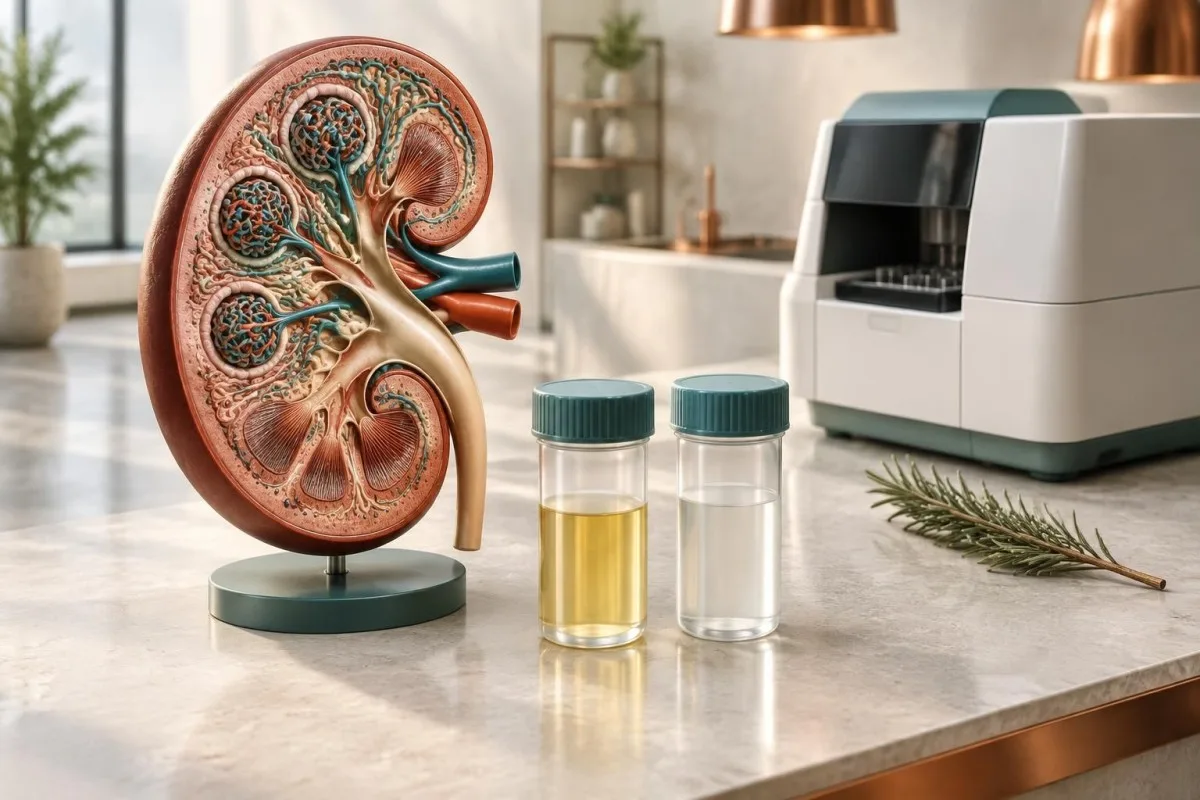
تحليل عيّنة بول عشوائية يقدر يقدّر شحال كيتفقد من البروتين فالنهار، ولكن الرقم ما كيكونش عندو معنى إلا تقرا مع الوحدات ديالو، وظروف جمع العيّنة، ووظيفة الكلاوي، والحالة السريرية.

أهم الخلاصات
- شنو كيقيس: نسبة البروتين للكرياتينين فعيّنة بول عشوائية كتقدّر طرح البروتين بلا ما تحتاج تجمع البول لمدة 24 ساعة محددة؛ 1 g/g كيعادل تقريبا 1 g ديال البروتين فالنهار.
- النتيجة المعتادة عند البالغين: نسبة أقل من 150 mg/g، أو 0.15 mg/mg، كتعتبر غالبا ضمن المعدل المعتاد عند البالغين اللي ماشي حوامل، مع أن المختبرات تقدر تختلف.
- نتيجة مرتفعة: نسبة البروتين للكرياتينين فالبول اللي كثر من 500 mg/g كتستاهل غالبا مراجعة طبية، والقيم اللي كثر من 3,500 mg/g كتدخل فالنطاق النفروزي.
- الوحدات مهمة: 0.3 g/g كيساوي 300 mg/g وحوالي 34 mg/mmol؛ هادو طرق مختلفة لعرض نفس النسبة، ماشي مستويات مختلفة لفقدان البروتين.
- الجمع مهم: السخانة، التمارين المجهدة، التهاب المسالك البولية، الجفاف، الحيض والتلوث يقدرو يطلّعو النتيجة ديال عينة البول العشوائية مؤقتاً.
- البروتين مقابل الألبومين: البروتين الكلي كيشمل الألبومين وبروتينات أخرى، لذلك نسبة البروتين ونسبة الألبومين للكرياتينين كيجاوبو على أسئلة مرتبطة ولكن مختلفة.
- المتابعة: ارتفاع البروتين المستمر، وجود الدم فالبول، ارتفاع ضغط الدم، انخفاض eGFR أو التورم غالباً كيتطلبو إعادة التحليل وتقييم أوسع للكليتين.
شنو كيقيس بالضبط معدل البروتين فعيّنة بول عشوائية
A نسبة البروتين للكرياتينين فالبول كتقدّر شحال من البروتين كيتفقد فالبول بمقارنة بروتين البول بكرياتينين البول فنفس العينة. غالباً كتتفسر نتيجة 1 g/g على أنها تقريباً 1 g ديال البروتين المطروح فالنهار، مع أنها غير تقدير وماشي قياس مباشر ديال 24 ساعة.
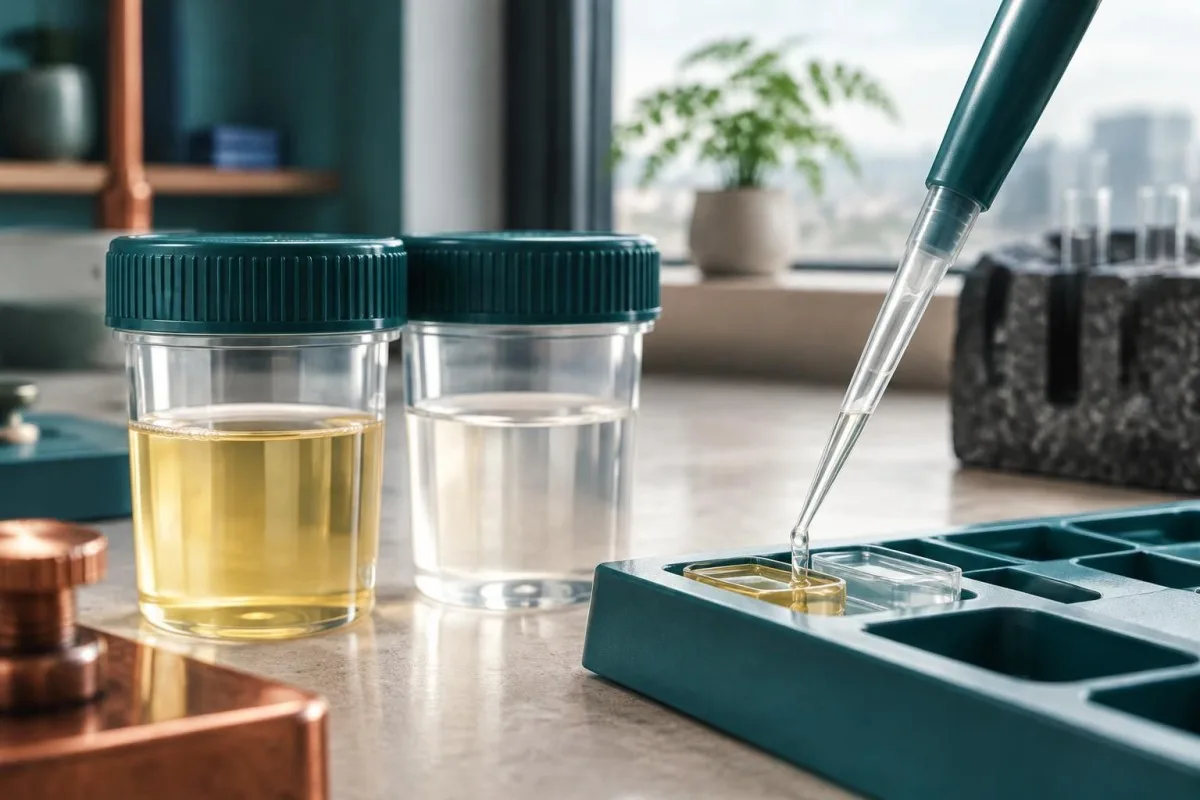
النسبة كتخدم حيت تركيز البول كيتبدل على مدار النهار، بينما الكرياتينين كيعطي تصحيح تقريبي للتخفيف. مثلاً، 120 mg ديال البروتين فعينة مركزة و40 mg ديال البروتين فعينة مخففة يقدرو يعطيو نسبة متشابهة إلا كانت تراكيز الكرياتينين مختلفة بنفس التناسب.
نسبة البروتين للكرياتينين فعيّنة عشوائية من البول ما كتقيسش تصفية الكليتين مباشرة. النسبة كتعكس مرور البروتين للبول، بينما معدل الترشيح الكبيبي المقدّر، وكرياتينين المصل وسيستاتين C كيقيسو فعالية الكليتين فتنقية جزيئات الفضلات الصغيرة.
Kantesti هو محلل لتحاليل الدم بالذكاء الاصطناعي كيقدر ينظم كرياتينين المصل وeGFR والألبومين والغلوكوز حدّ النسبة البولية المذكورة؛ ولكن ما كيقدرش يعوّض تحليل البول ولا فحص الطبيب. القرّاء اللي كيقارنو بين عدة مؤشرات مخبرية يقدرو يلقاو أن ديالنا دليل مرجعي للمؤشرات الحيوية مفيد لفهم شنو من النتائج جاي من الدم وشنو جاي من البول.
علاش وحدات نسبة البروتين للكرياتينين فالبول كتبدّل المعنى
نفس نسبة البروتين للكرياتينين فالبول ممكن تبان بوحدات mg/g ولا mg/mg ولا g/g ولا mg/mmol، لذلك خاص نقراو الوحدة قبل ما نحكمو على النتيجة. حسابيا، 300 mg/g كتساوي 0.3 mg/mg و0.3 g/g، بينما كتساوي تقريبا 34 mg/mmol.

فالصيغ الشائعة للتبليغ، 1 mg/mg كتساوي 1 g/g، و1 g/g كتساوي تقريبا 113 mg/mmol ديال الكرياتينين. للتحويل العملي، كنضربو g/g فحوالي 113 باش نقدّرو mg/mmol، يعني 0.15 g/g كتساوي تقريبا 17 mg/mmol.
ما خاصش نخلطو بين نتيجة 0.8 g/g و0.8 mg/g؛ الأولى كتساوي 800 mg/g وهي أعلى بزاف من الناحية السريرية. الفرق هو 1,000 مرة، وهادشي علاش غياب السابقة يقدر يقلب التفسير كامل.
حتى تركيز الكرياتينين فالبول ممكن يتعلّم عليه على أنه منخفض أو مرتفع بشكل غير معتاد، خصوصا فالبول المخفف بزاف، وعند الناس اللي عندهم كتلة عضلية قليلة، أو البالغين اللي عندهم عضلات كثيرة، أو اللي توقيت جمع البول عندهم غير معتاد. دليلنا على الكرياتينين في البول والتخفيف كيشرح علاش المقام يقدر يخلي النسبة أقل استقرارا.
المعدلات المعتادة لنسبة البروتين للكرياتينين فالبول عند البالغين
عند البالغين اللي ماشي حوامل، نسبة البروتين للكرياتينين فالبول اللي أقل من 150 mg/g، أو 0.15 g/g، كتستعمل غالبا كحد مرجعي أعلى عملي. النتائج اللي فوق 500 mg/g كتثير قلق أكثر من الارتفاعات الحدّية، ولكن حتى حدّ واحد ما كيشخّصش مرض الكلى المزمن بلا ما تستمر الحالة أو تكون كاينة نتائج أخرى كتدعمها.
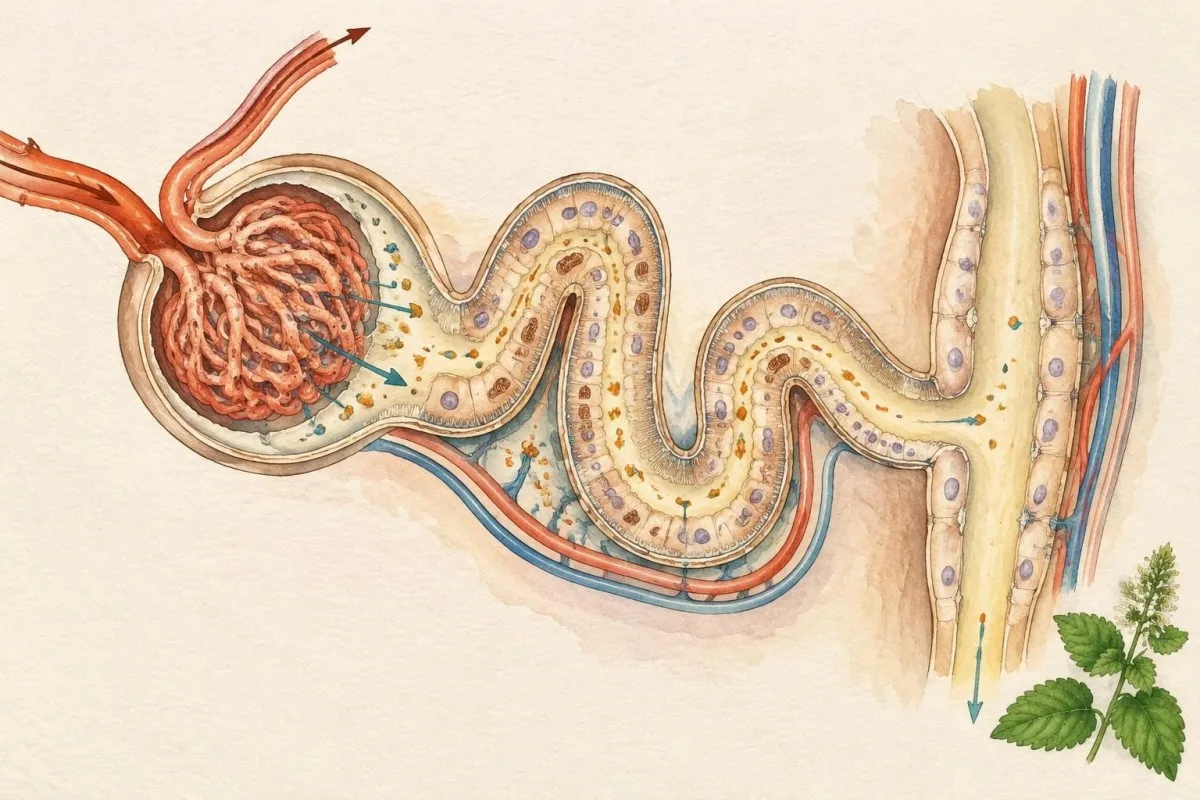
هاد الفئات هي مناطق عملية للتفسير، وماشي مراحل موحّدة عالميا للمرض. كيشدد دليل KDIGO لعام 2024 لمرض الكلى المزمن على تأكيد النتائج غير الطبيعية ودمج البيلة الألبومينية وeGFR ورواسب البول والتاريخ السريري، عوض اعتبار نسبة وحدة تشخيصا (KDIGO, 2024).
نسبة 220 mg/g تقدر تعكس ارتفاعا مؤقتا بسبب الرياضة عند شي واحد، وبداية مرض الكلى عند شي واحد آخر. الفرق كيبان غالبا من خلال إعادة العينة ديال أول بول الصباح، وقياس ضغط الدم، ومعرفة واش النسبة كاتبقى غير طبيعية لمدة 3 شهور على الأقل.
المرافق لتحليل البول كيساعد يميّز قياس البروتين على نتائج شريط تحليل البول، اللي كتتأثر بتركيز البول وكتكشف بالأساس على الألبومين. بعض المختبرات كتستعمل حدود قرار مختلفة شوية، لذلك خاص المجال المرجعي المطبوع يبقى جزء من التفسير.
| المستوى | النطاق | شنو كتعني |
|---|---|---|
| غالباً منخفض | <150 mg/g (<0.15 g/g; <17 mg/mmol) | غالباً كيكون داخل النطاق المعتاد عند البالغين، ولكن الأعراض والنتائج الأخرى ديال البول حتى هي مهمة. |
| مرتفع بشكل خفيف | 150-500 mg/g (0.15-0.50 g/g) | يقدر يكون مؤقت أو عندو أهمية سريرية؛ غالباً كيتطلب إعادة التحليل ومراعاة السياق. |
| مرتفع بوضوح | 500-3,500 mg/g (0.50-3.50 g/g) | غالباً كيتطلب تقييماً مركزاً على الكليتين، خصوصاً مع وجود دم فالبول، ضغط دم مرتفع أو eGFR منخفض. |
| نطاق البروتين فالمدى النفروزي | >3,500 mg/g (>3.50 g/g; >396 mg/mmol) | كيتطلب تقييماً سريرياً عاجلاً بسبب الفقدان الكبير للبروتين واحتمال وجود مرض كبيبي. |
نسبة البروتين للكرياتينين مقارنة بنسبة الألبومين للكرياتينين
نسبة البروتين إلى الكرياتينين كتقيس مجموع بروتين البول، بينما نسبة الألبومين إلى الكرياتينين كتقيس الألبومين بالخصوص. هاد الفرق مهم حيث عينة البول تقدر تحتوي على الألبومين، بروتينات صغيرة الوزن الجزيئي، أجزاء من الغلوبولينات المناعية أو بروتينات جاية من المسالك البولية.

غالباً كتكون نسبة الألبومين إلى الكرياتينين هي المفضلة للكشف على الزيادات الصغيرة فالتسرّب الكبيبي للألبومين، خصوصاً عند مرضى السكري وارتفاع ضغط الدم. نسبة PCR ديال 400 mg/g ونسبة ACR ديال 30 mg/g ما كيوصفوش نفس نمط البروتين، حيث يقدر يكون معظم البروتين الكلي من نوع آخر غير الألبومين.
نسبة PCR مرتفعة بشكل غير متناسب مع نسبة ACR منخفضة نسبياً تقدر تشير لفقدان البروتينات الأنبوبية، أو بروتينات الفائض، أو مساهمة المسالك البولية، مع أن طرق المختبر ووقت أخذ العينة يقدرو حتى هما يفسرو عدم التطابق. مثلاً، PCR ديال 1,000 mg/g مع ACR ديال 80 mg/g كيتطلب استقصاءات مختلفة على PCR وACR اللي بجوج قريبين من 1,000 mg/g.
راسب البول يقدر يزيد طبقة أخرى من المعلومات: كريات الدم الحمراء، الأسطوانات والخلايا الأنبوبية يقدرو يشيرو لعملية نشطة حتى إلا كانت النسبة غير 250 mg/g. الشرح ديالنا على نتائج رواسب البول كيوضح علاش الفحص المجهري يقدر يبدل أهمية نتيجة كمية.
كيفاش ظروف جمع العيّنة كتأثر على نتيجة عيّنة البول العشوائية
A spot urine protein creatinine ratio is most interpretable when collected as a clean, preferably first-morning sample after avoiding unusual exertion. Fever, dehydration, urinary infection, menstruation, semen contamination and heavy exercise can produce temporary protein elevations that may fall within days.
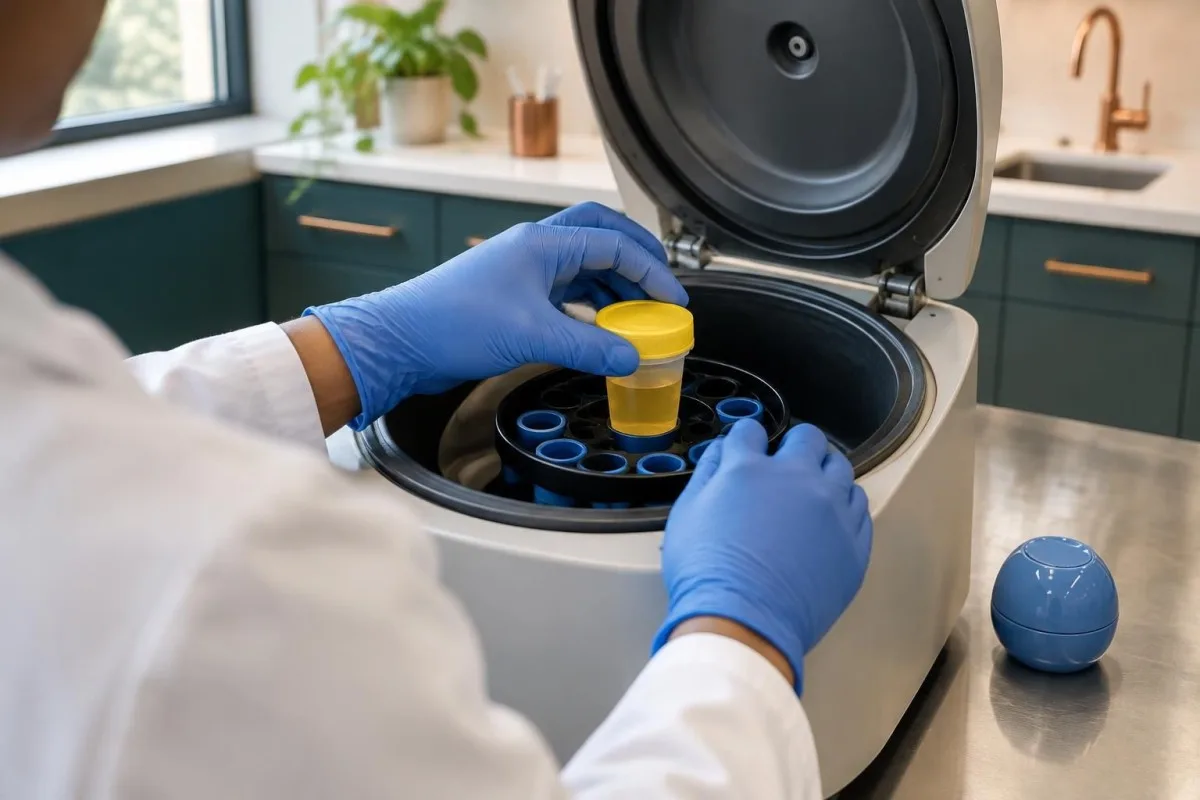
First-morning urine is often useful because it has been in the bladder for several hours and is less affected by daytime activity. A sample taken immediately after a long run may show a higher ratio than one collected after 24 to 48 hours of normal activity.
A dilute sample can create a ratio that is mathematically valid but less dependable when urine creatinine is very low. A practical collection plan includes washing hands, using the laboratory container, avoiding the first few seconds of flow when instructed and recording whether exercise or illness occurred within the previous 24 hours.
Persistent foamy urine is not proof of proteinuria, because rapid flow and concentrated urine can create bubbles, but foam that continues across several days deserves testing. Our article on البول الرغوي المستمر explains when appearance should be replaced by measurement.
شنو كيسبّب ارتفاع نسبة البروتين للكرياتينين فالبول
A high urine protein creatinine ratio can arise from glomerular leakage, tubular reabsorption problems, excess circulating proteins or inflammation below the kidneys. The reason clinicians combine the ratio with urine microscopy, eGFR and blood pressure is that the same numerical result can come from very different mechanisms.

Glomerular disorders often allow albumin and larger proteins to cross the filtration barrier, sometimes producing PCR values above 1,000 mg/g. Tubular disorders may produce smaller protein increases, while overflow states such as monoclonal light-chain production may require tests that a routine dipstick does not detect well.
A urinary infection can increase protein through inflammatory material and blood cells, particularly when leukocytes or nitrites are present. Treating an infection and repeating the ratio after approximately 1 to 2 weeks may clarify whether the elevation was temporary, although the exact interval depends on symptoms and clinical advice.
Protein without infection can also accompany high blood pressure, diabetes, autoimmune disease, heart failure or medication-related kidney stress. The presence of bacteria alone does not prove a symptomatic infection; our guide to bacteria in urine without symptoms explains why culture and symptoms must be considered together.
كيفاش الأطباء كيفسّرو نتيجة مرتفعة
A high urine protein creatinine ratio becomes more concerning when it is persistent, rising or accompanied by reduced eGFR, blood in urine, cellular casts, swelling or high blood pressure. A single value of 600 mg/g is a signal for assessment, not a diagnosis of irreversible kidney disease.
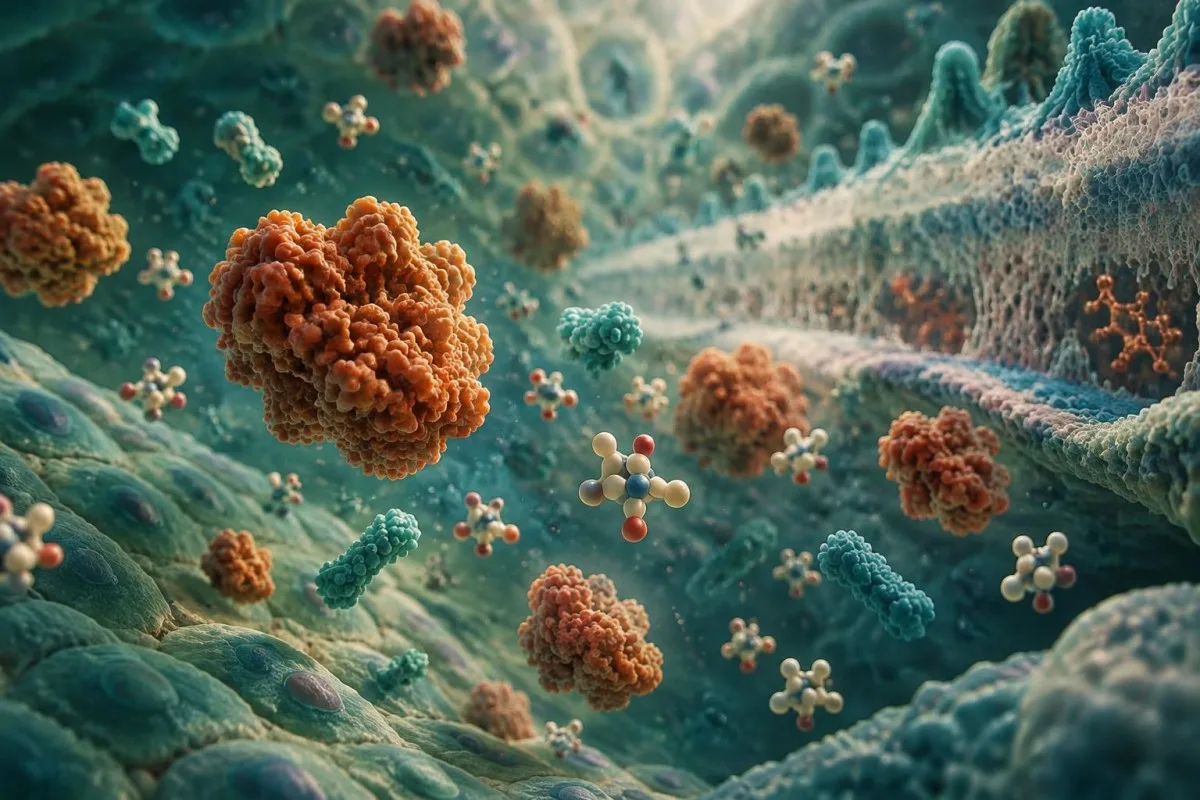
Magnitude changes the urgency: 180 mg/g is borderline in many adult laboratories, 900 mg/g is clearly abnormal, and 4,000 mg/g enters the nephrotic-range zone. The reason nephrotic-range values receive faster attention is that substantial protein loss can lower blood albumin and contribute to edema, altered lipids and clotting complications.
The pattern matters more than a solitary peak. For example, a hypothetical 52-year-old marathon runner with a PCR of 700 mg/g after a race and 90 mg/g on a rested first-morning repeat has a different risk profile from someone with 700 mg/g on three samples over 3 months.
The 2021 KDIGO glomerular disease guideline recommends disease-specific evaluation when proteinuria is substantial or accompanied by active urine sediment; it does not treat every elevated ratio as the same condition (KDIGO, 2021). A temporary eGFR reduction after dehydration can also distort the picture, as described in our دليل الجفاف و eGFR.
إمتى خاص تعاود تحليل نسبة البروتين فالبول
Clinicians commonly repeat an unexpected urine protein creatinine ratio when the patient is well, the sample was not first-morning, or a temporary trigger could explain the result. Confirmation is particularly useful for borderline values between 150 and 500 mg/g, while very high results or red-flag symptoms should not wait for routine monitoring.

A repeat may be arranged within days to weeks after strenuous exercise, fever or urinary symptoms have resolved. Chronic kidney disease generally requires an abnormal kidney marker lasting at least 3 months, so a result on day 1 alone cannot establish chronicity.
Repeating the same test is not always enough. If PCR remains high, clinicians may add ACR, urine microscopy, serum creatinine and eGFR, electrolytes, albumin, glucose and blood pressure; if a monoclonal protein is suspected, serum or urine electrophoresis and free-light-chain testing may be considered.
Trends should use comparable conditions whenever possible, such as first-morning samples from the same laboratory. Our دليل توقيت تحاليل الدم explains why illness, exercise, medication changes and timing can make two nearby results look more different than they truly are.
شنو تحاليل الدم اللي كتعطي سياق للنسبة
Serum creatinine, eGFR, albumin, electrolytes, glucose and blood pressure are the main companion data for a urine protein ratio. A high PCR with normal eGFR still deserves attention, while a high PCR plus falling eGFR or low serum albumin usually raises the urgency.
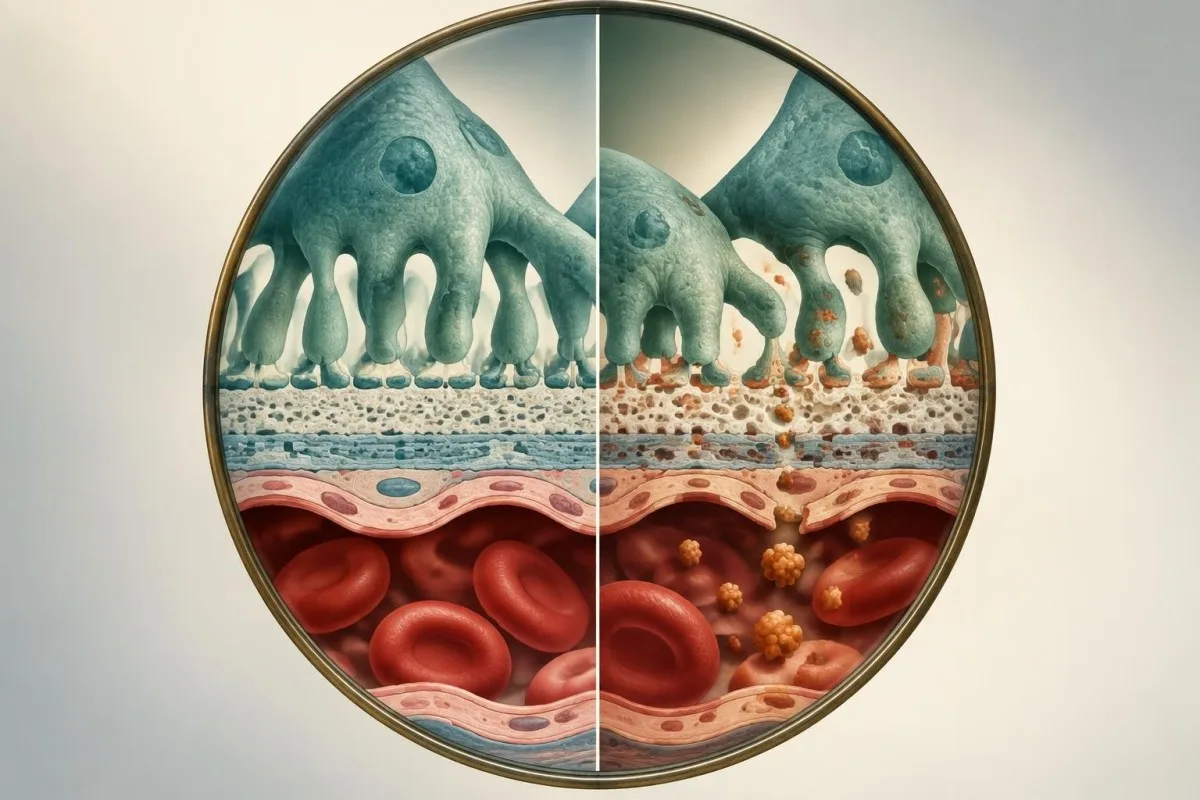
Serum creatinine can appear reassuring in a person with low muscle mass because creatinine production is lower, while a muscular adult may have a higher baseline without kidney disease. An eGFR of 58 mL/min/1.73 m² and PCR of 800 mg/g create a more concerning combination than either result viewed alone.
Low serum albumin below approximately 3.0 g/dL alongside PCR above 3,500 mg/g suggests that protein loss may be physiologically significant, although liver disease, nutrition and inflammation can also lower albumin. The reason clinicians ask about swelling is that reduced plasma oncotic pressure can shift fluid into tissues.
BUN and creatinine are influenced by hydration, diet and muscle turnover, so they do not quantify urinary protein. Our دليل نسبة BUN إلى الكرياتينين explains why those blood markers should not be substituted for a urine protein measurement.
شنو كتعني النسبة أثناء الحمل
During pregnancy, a urine protein creatinine ratio of 0.3 g/g, or 300 mg/g, is commonly used as a threshold for significant proteinuria when assessing hypertensive disorders. The ratio must be interpreted with blood pressure, symptoms, platelet count, liver enzymes, creatinine and gestational age rather than used alone.
A pregnant person with blood pressure of 145/95 mmHg and PCR of 0.34 g/g needs prompt clinical assessment, even if the urine appearance is normal. Severe headache, visual change, upper abdominal pain, sudden swelling or shortness of breath require urgent maternity advice because they can indicate maternal organ involvement.
The evidence on the exact spot-ratio threshold is not perfectly uniform, especially near 0.3 g/g and in different populations. A systematic review by Côté and colleagues in the BMJ found that spot protein-to-creatinine testing can reduce the need for timed collection, but clinical context still determines whether additional testing is needed (Côté et al., 2008).
Pregnancy changes kidney filtration and can alter the meaning of creatinine-based estimates, so non-pregnant reference assumptions may mislead. The related دليل GFR ديال الحمل ديالنا describes why pregnancy-specific review is preferable to applying adult cutoffs mechanically.
كيفاش السن والكتلة العضلية كيأثرو على النسبة
The creatinine denominator makes a spot urine protein ratio less straightforward in children, frail older adults, highly muscular people and those with low muscle mass. Two people with the same protein excretion can receive different ratios if their daily creatinine production differs substantially.

In small children, clinicians often adjust interpretation for age and body surface area rather than applying adult limits such as 150 mg/g. A toddler result of 0.2 mg/mg cannot be interpreted in the same way as a healthy adult result of 0.2 mg/mg without pediatric reference data.
An older adult with low muscle mass may have low urine creatinine and an apparently high ratio from a modest protein concentration. Conversely, a heavily muscled adult may have a larger creatinine denominator that makes the ratio look lower than the absolute protein concentration might suggest.
A family history of kidney disease, especially with ancestry-associated risk variants, can alter the threshold for investigation. Our overview of 0 اختبار جيني لـ APOL1 explains one example of inherited risk without implying that a ratio alone identifies a genetic cause.
أعراض كتخلي النسبة المرتفعة أكثر استعجالا
A high urine protein creatinine ratio needs faster medical review when it occurs with swelling, breathlessness, markedly reduced urine output, visible blood in urine, severe headache or very high blood pressure. Many kidney conditions cause no symptoms at ratios below 1,000 mg/g, so feeling well does not rule out persistent protein loss.
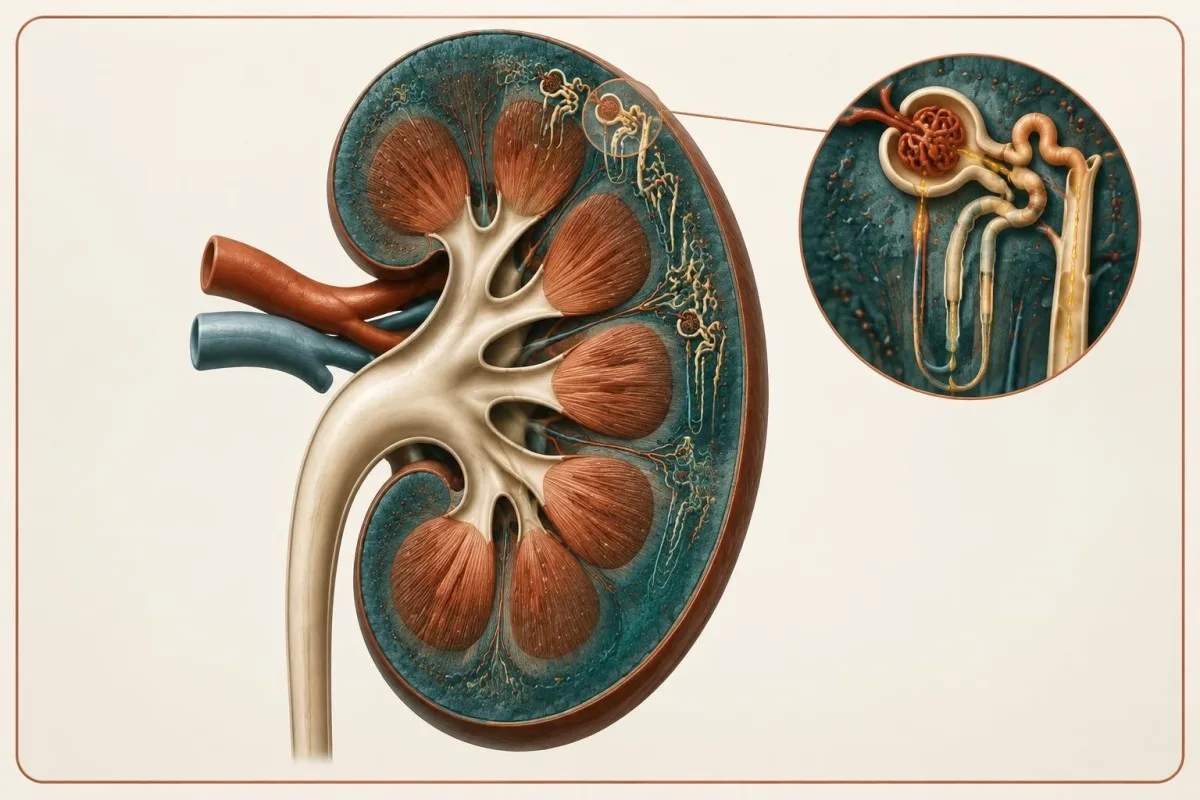
Sudden facial or ankle swelling with PCR above 3,500 mg/g may indicate heavy protein loss, especially when serum albumin is below 3.0 g/dL. New breathlessness can reflect fluid accumulation and should not be attributed to the urine result without prompt assessment.
Visible tea-colored or pink urine, reduced urine output over 12 hours, confusion or severe flank pain needs urgent care regardless of whether PCR is 100 mg/g or 1,000 mg/g. The ratio can be modest when blood or inflammation is the dominant clue.
Persistent protein with an eGFR below 30 mL/min/1.73 m² generally warrants specialist involvement under many referral pathways, though local criteria differ. Our low-eGFR warning guide explains why symptoms and filtration level can change the speed of evaluation.
شنو الفحوصات الإضافية اللي ممكن تجي من بعد
Persistent or substantial proteinuria may lead to repeat ACR and PCR, urine microscopy, kidney ultrasound, immune testing, protein electrophoresis or specialist review. The specific sequence depends on whether the pattern is albumin-dominant, blood-associated, nephrotic-range, tubular or linked to another illness.
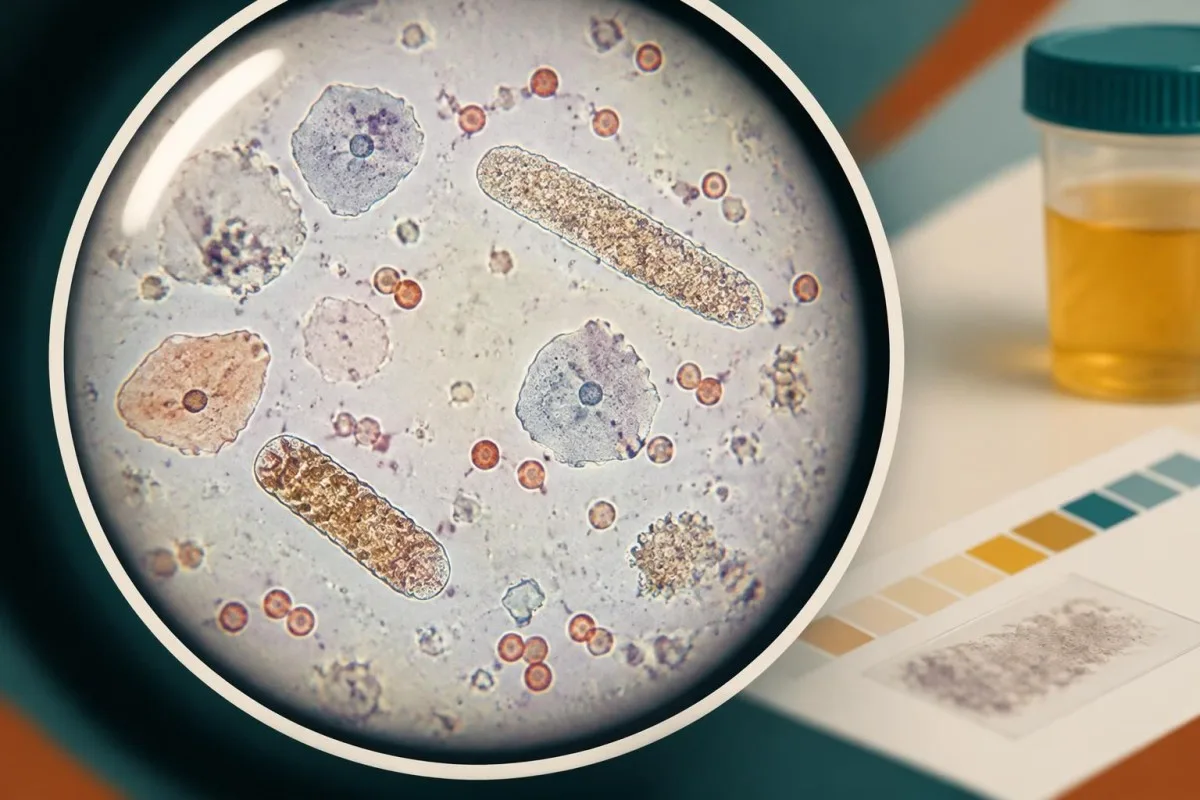
Albumin-dominant protein with red-cell casts may prompt assessment for glomerular inflammation, including complement levels and autoimmune antibodies. Marked protein with little blood may point clinicians toward diabetes, membranous disease or another filtration-barrier disorder, but these patterns are not diagnostic by themselves.
A kidney ultrasound can assess size, obstruction and structural features, while a biopsy is reserved for selected cases where tissue information would change treatment. A PCR of 2.0 g/g does not automatically mean biopsy; age, eGFR, ACR, sediment and treatment options all influence that decision.
Anti-PLA2R antibodies can support evaluation of some membranous nephropathy patterns, but a positive result still requires clinical interpretation. Our article on PLA2R antibody results explains why one specialized test cannot replace the wider kidney assessment.
كيفاش الأدوية والحالات الصحية كيأثرو على المتابعة
Management of an elevated urine protein creatinine ratio targets the underlying cause and often includes blood-pressure control, diabetes care, medication review and avoidance of preventable kidney stress. Treatment decisions should follow confirmation and clinical assessment rather than a self-calculated ratio alone.

Clinicians may review non-steroidal anti-inflammatory drugs, contrast exposure, supplements and medicines that alter kidney filtration or potassium balance. An adult with PCR of 900 mg/g, eGFR of 52 and potassium of 5.5 mmol/L needs a different plan from someone with PCR of 900 mg/g and stable potassium of 4.2 mmol/L.
Angiotensin-converting enzyme inhibitors, angiotensin receptor blockers and selected newer kidney-protective medicines can reduce albuminuria in appropriate patients, but they require individualized monitoring. A change in serum creatinine or potassium after starting treatment may be clinically expected in some situations yet unsafe in others.
Kantesti is an AI blood test interpretation platform that can place repeated creatinine, eGFR, potassium, albumin and glucose results into a trend view; it does not prescribe treatment or decide whether a medicine is safe. Medication changes should be discussed with the prescriber, particularly when eGFR is below 60 mL/min/1.73 m².
كيفاش تنظم نتائج تحاليل البول والدم ديالك
A urine protein ratio is easiest to interpret when the report includes its unit, collection date, urine creatinine concentration, laboratory reference interval and related blood results. A structured timeline can reveal whether a value of 250 mg/g is isolated, recurring or rising over 6 months.
Before interpreting a report, record whether the sample was first-morning, whether you had fever or strenuous exercise, and whether urinary symptoms or menstruation were present. Also record serum creatinine, eGFR, ACR, albumin, potassium and blood pressure from the same period when available.
Kantesti is an AI-powered blood test analysis tool that helps explain related blood biomarkers in context, but a urine ratio may not be available in every blood-test report. Our دليل تقنية الذكاء الاصطناعي describes why automated interpretation can organize data while still leaving clinical decisions to qualified professionals.
Do not compare 0.25 g/g from one laboratory directly with 25 mg/mmol from another without conversion; those values are approximately 250 mg/g and 25 mg/mmol, respectively. If the report lacks a unit or appears internally inconsistent, ask the laboratory or clinician to verify the original result before drawing conclusions.
إمتى تتاصل بطبيب بخصوص النتيجة ديالك
Contact a clinician about a urine protein creatinine ratio above the laboratory range, especially if it exceeds 500 mg/g or persists on repeat testing. Seek urgent advice for heavy protein-range results with swelling, breathlessness, very high blood pressure, visible urine discoloration or markedly reduced urine output.
A result of 160 mg/g without symptoms may be handled differently from 1,600 mg/g with blood in urine, but both should be interpreted rather than ignored. The first may need a clean repeat sample; the second may need blood tests, microscopy and timely kidney review.
Bring the complete report rather than only the flagged number, including units, reference interval and urine creatinine. A clinician also needs medication doses, recent illness, exercise history and pregnancy status because those details can alter the probability of a transient or clinically significant result.
Kantesti can help users organize blood-test trends before an appointment, while our حول التحقق الطبي explains the role of clinical standards and oversight in automated interpretation. AI-generated context should support, not delay, care when warning symptoms are present.
أسئلة متكررة
شنو هو المعدل الطبيعي ديال نسبة البروتين للكرياتينين فالبول؟
النسبة بين البروتين والكرياتينين فالبول إلا كانت أقل من 150 mg/g، أو 0.15 g/g، كتعتبر غالباً ضمن المعدل المعتاد عند البالغين اللي ماشي حوامل. بعض المختبرات كتعتمد مجالات مرجعية مختلفة، والنتيجة اللي كتبان عادية ما كتنفيش مرض الكلي إلا كان الدم فالبول، أو الأسطوانات البولية، أو انخفاض eGFR، أو ارتفاع ضغط الدم. الاختلالات اللي كاتبقى مستمرة لمدة 3 شهور على الأقل عندها أهمية أكثر من نتيجة حدّية معزولة وحدة.
واش نسبة البروتين للكرياتينين فالبول ديال 0.3 مرتفعة؟
النسبة ديال 0.3 g/g كتساوي 300 mg/g، وكتفوت القيمة المرجعية المعتادة عند البالغين، اللي هي 150 mg/g. فالحمل، كيتستعمل 0.3 g/g غالباً كعتبة باش يتحدد واش كاين بروتين بزاف فالبول عند تقييم ارتفاع ضغط الدم، وهادشي كيحتاج تقييم طبي سريع فالسياق ديالو. خارج الحمل، الأطباء غالباً كيعيدو التحليل وكيشوفو eGFR، وفحص البول بالمجهر، وضغط الدم والألبومين قبل ما يحددو شنو كتعني النتيجة.
شنو كتعني نسبة البروتين للكرياتينين فال尿 إلا كانت طالعة؟
ارتفاع نسبة البروتين إلى الكرياتينين فالبول كيعني بلي كاين بروتين كثر من المعتاد مقارنةً مع كرياتينين البول، ولكن بوحدها ما كتحددش السبب. القيم اللي فوق 500 mg/g غالباً كتستدعي تقييم مركز على الكلي، بينما القيم اللي فوق 3,500 mg/g كتدخل فالنطاق النفروتي. الرياضة، السخانة، العدوى، الجفاف، أمراض الكبيبات، أمراض الأنابيب والبروتينات الفائضة كلها تقدر تسبب نتائج مرتفعة.
واش نسبة البروتين للكرياتينين فالبول كتقدر تعوّض جمع البول لمدة 24 ساعة؟
نسبة البروتين للكرياتينين فعيّنة بول عشوائية كتقدّر غالباً فقدان البروتين اليومي بلا ما تكون الحاجة لجمع البول لمدة 24 ساعة، و1 g/g كتعادل تقريباً 1 g فالنهار. كتكون أقل موثوقية إلا كان مستوى الكرياتينين فالبول منخفض بزاف ولا مرتفع بزاف، أو كانت ظروف الجمع غير معتادة، أو إلا تبدّل طرح البروتين بسرعة. يقدر الطبيب مع ذلك يطلب جمع البول لمدة محددة إلا كانت النتيجة العشوائية ما متوافقةش مع الأعراض، مستويات الألبومين ولا فحوصات أخرى.
من بعد شحال خاص يتعاود تحليل نسبة البروتين المرتفعة فالبول؟
النتيجة الحدّية غير المتوقعة بين 150 و500 mg/g غالباً كيتعاود التحليل ديالها من بعد ما تزول العوامل المؤقتة بحال السخانة، أعراض المسالك البولية ولا المجهود البدني الشاق، وغالباً فمدة كتتراوح بين أيام وأسابيع حسب النصيحة الطبية. مرض الكلى المزمن كيتطلب استمرار وجود خلل فالكلى لمدة 3 شهور على الأقل، ونتيجة وحدة ما كتقدرش تثبت أنه مزمن. النسب المرتفعة بزاف، التورّم، تغيّر لون البول بشكل واضح ولا نقص كمية البول كتتطلب تقييم طبي، وما خاصش يتسنى موعد إعادة التحليل الروتينية.
شنو الفرق بين PCR وACR فالبول؟
PCR كيقيس مجموع البروتين فالبول، بينما ACR كيقيس الألبومين بوحدو. PCR ديال 1,000 mg/g مع ACR ديال 80 mg/g كيشير لنمط مختلف ديال البروتينات مقارنةً بـPCR وACR اللي بجوج قراب لـ1,000 mg/g. الأطباء كيقارنو بيناتهم باش ياخدو بعين الاعتبار تسرّب الألبومين من الكبيبات، والبروتينات الأنبوبية، والبروتينات الزائدة، أو المساهمة ديال المسالك البولية.
خذ شرح لنتائج تحليل الدم ديالك
حمّل تقرير التحاليل ديالك، وكيشرح AI ديال Kantesti كل مؤشر حيوي بلغة بسيطة فثواني. كايستعملوه أكثر من 2 مليون شخص فالعالم.
مراجع
- كلاين، ت.، ميتشل، س.، و ويبر، هـ. (2026). اختبار أوبوريلينوجين في البول: دليل تحليل البول الكامل 2026. الأبحاث الطبية ديال Kantesti AI. DOI
- كلاين، ت.، ميتشل، س.، و ويبر، هـ. (2026). دليل دراسات الحديد: TIBC، تشبع الحديد، وقدرة الارتباط. الأبحاث الطبية ديال Kantesti AI. DOI
- KDIGO (2024). إرشادات الممارسة السريرية KDIGO 2024 لتقييم وتدبير مرض الكلى المزمن. Kidney International. DOI
- KDIGO (2021). KDIGO 2021 Clinical Practice Guideline for the Management of Glomerular Diseases. Kidney International. DOI
- Côté AM et al. (2008). Diagnostic accuracy of urinary spot protein:creatinine ratio for proteinuria in hypertensive pregnant women: systematic review. BMJ. DOI ببميد
- 2 مليون+الاختبارات المُحلَّلة
- 127+بلدان
- 100+اللغات
نبذة عن الفريق الطبي


إشارات الثقة E-E-A-T
خبرة
مراجعة سريرية يقودها الأطباء لسير عمل تفسير التحاليل.
خبرة
تركيز طب المختبر على كيفية سلوك الـ biomarkers في السياق السريري.
السلطة
راجعها طبياً الدكتور Thomas Klein، بمساهمات من الدكتورة Sarah Mitchell والأستاذ الدكتور Hans Weber.
الجدارة بالثقة
تفسير قائم على الأدلة مع مسارات متابعة واضحة لتقليل الإنذار.


إخلاء المسؤولية الطبية
هذه المقالة لأغراض تعليمية فقط ولا تشكل نصيحة طبية. استشر دائمًا مقدم رعاية صحية مؤهلًا لاتخاذ قرارات التشخيص والعلاج.
نُشر · تواصل مع فريق التحرير
منشور من طرف Kantesti Ltd، مسجل في إنجلترا وويلز، رقم الشركة. 17090423, ، لندن، المملكة المتحدة.
