A small rise or fall is one piece of the picture—not a diagnosis. The test method, time between samples and your symptoms all change how clinicians read it.

ዋና ዋና ነጥቦች
- Small change: A small rise or fall in high sensitivity troponin can reflect test variation or heart muscle injury; the delta alone cannot diagnose or exclude a heart attack.
- የአደጋ ጊዜ ምልክቶች፡ New or ongoing chest pain or pressure needs emergency assessment. Call 999 in the UK, 911 in the US, or your local emergency number.
- Delta: The absolute delta is the later result minus the earlier result, usually reported in ng/L; its significance depends on the assay and sampling interval.
- የጊዜ አከፋፈል፡ Some validated emergency pathways repeat testing after 1 or 2 hours, but early presentation or an unclear result can require further testing.
- Upper limit: A result above the assay-specific 99th percentile indicates myocardial injury, not necessarily a heart attack.
- መለኪያ አሃዶች፦ 1 ng/mL equals 1,000 ng/L. Confirm units before comparing results or calculating a change.
- Context: The ECG, symptoms, examination and other findings matter alongside serial troponin results.
Why do clinicians compare serial high sensitivity troponin results?
Serial high sensitivity troponin results show whether a marker of heart muscle injury is rising, falling or relatively stable. A small change may be measurement variation or part of an injury pattern; by itself, it cannot confirm or rule out a heart attack.

Cardiac troponin I and cardiac troponin T are proteins associated with heart muscle cells. High-sensitivity assays can measure very low concentrations, including detectable levels in many people without a heart attack.
A heart attack is one cause of myocardial injury, but injury can occur without a blocked coronary artery. The 2018 Fourth Universal Definition requires evidence of acute myocardial injury together with evidence of reduced blood flow to the heart to diagnose myocardial infarction (Thygesen et al., 2018).
A clinician may order an ECG and repeat sampling as part of the assessment rather than treating one number as a verdict. Our guide to የደረት ህመም የደም ምርመራዎች explains how the tests fit into urgent care.
What does a troponin delta mean?
የ ትሮፖኒን ዴልታ is the difference between two results taken at specified times. An absolute delta uses the same concentration units as the results; a relative delta expresses the change as a percentage of the first result.
In a purely hypothetical example, a result of 10 ng/L followed by 12 ng/L has an absolute delta of +2 ng/L and a relative change of 20%. Neither calculation says whether that change is clinically significant without knowing the assay, collection interval and the person's symptoms.
Percentage changes can look large when the starting value is small: a rise from 2 to 4 ng/L is 100%, although the absolute difference is only 2 ng/L. Near low concentrations, an absolute change is often more informative than a percentage, but a laboratory's validated pathway determines how it is used.
A falling result matters too. For example, 40 to 35 ng/L is a delta of −5 ng/L; depending on the clinical setting, a falling pattern can occur after an earlier peak, so it should not automatically be dismissed as recovery.
Compare like with like: 0.012 ng/mL equals 12 ng/L, not 0.012 ng/L. If the report says less than a detection limit rather than giving an exact result, do not substitute zero to calculate your own delta; ask the clinical team how the result is handled.
Which troponin thresholds apply to your lab report?
The applicable high sensitivity troponin thresholds depend on the specific assay, its reporting units and the pathway used by the treating service. There is no universal number that defines a meaningful delta for every test and time interval.
የ ከ99ኛው መቶኛ ከፍተኛ የማጣቀሻ ገደብ is derived from a reference population: approximately 99% of that selected group have results at or below the limit. A result above the relevant limit indicates myocardial injury, but it does not identify its cause.
Some assays and clinical services use sex-specific upper reference limits because troponin distributions differ between reference populations. Which cutoff appears on a report depends on the assay and local policy; the lab's range should not be replaced with a number copied from another hospital.
A reference limit is not the same as an emergency rule-out cutoff. A validated pathway may use a low initial concentration, a later concentration and an assay-specific change over 1 or 2 hours, while a higher decision threshold may support a different action.
Check whether the report says high-sensitivity troponin I or T and record the assay name if available. For broader context about laboratory measurements, the የባዮማርከር መመሪያ can help you identify the terminology, but it cannot choose an emergency pathway for you.
How do timing, symptoms and the ECG change interpretation?
Timing changes the meaning of a small troponin delta because a sample taken soon after symptoms begin may precede a detectable rise. Clinicians combine sample times with symptom onset, the ECG and the overall risk assessment.

The 2021 AHA/ACC chest pain guideline recommends repeat high-sensitivity troponin measurement at 1 to 3 hours when serial testing is indicated (Gulati et al., 2021). Individual services may use a validated 0/1-hour or 0/2-hour pathway, and some patients need additional samples beyond the initial pathway.
Consider two hypothetical patients with the same 8-to-9 ng/L change over 1 hour. One arrives shortly after symptoms begin, while the other is assessed many hours later; the same delta cannot be interpreted identically without considering where each person might be on the rise-and-fall curve.
An ECG can show urgent changes even before a troponin result is elevated. A normal or nondiagnostic first ECG also does not by itself exclude a heart attack, so the team may repeat it or pursue further evaluation when symptoms remain concerning.
Tell the clinician when symptoms first started, whether they stopped and returned, and when each sample was collected. Pericarditis symptoms can also involve chest pain, but symptoms alone cannot reliably distinguish its cause.
What if troponin is elevated but changes only slightly?
An elevated troponin with little change can reflect chronic myocardial injury, but it is not automatically harmless and does not exclude an acute problem. The baseline concentration, timing and clinical picture determine what further assessment is needed.
Chronic kidney disease, heart failure and structural heart disease can be associated with persistently elevated troponin. Kidney disease can also coexist with a heart attack, so clinicians should not assume an elevated result is only due to kidney function.
The 2018 Fourth Universal Definition describes stable elevated troponin as a pattern consistent with chronic myocardial injury, whereas a rise or fall supports acute injury (Thygesen et al., 2018). The degree of change that separates these patterns is not a universal, assay-independent rule.
A hypothetical result of 48 ng/L followed by 49 ng/L may be above one assay's reference limit, but the numbers alone cannot establish whether the person is stable, has been sampled late after a peak, or needs more observation. Prior results can help only when their assay, units and clinical circumstances are comparable.
If kidney function is part of your history, ask how your creatinine and eGFR affect the assessment. The guide to low eGFR covers kidney-related warning signs, while the BUN እና ክሬአቲኒን መመሪያ ይመልከቱ explains why those measures answer different questions from troponin.
What else can raise troponin or affect a small change?
Troponin can rise with myocarditis, heart failure, pulmonary embolism, serious infection or a mismatch between the heart's oxygen supply and demand. Analytical variation and occasional assay interference can also complicate interpretation of a small change.
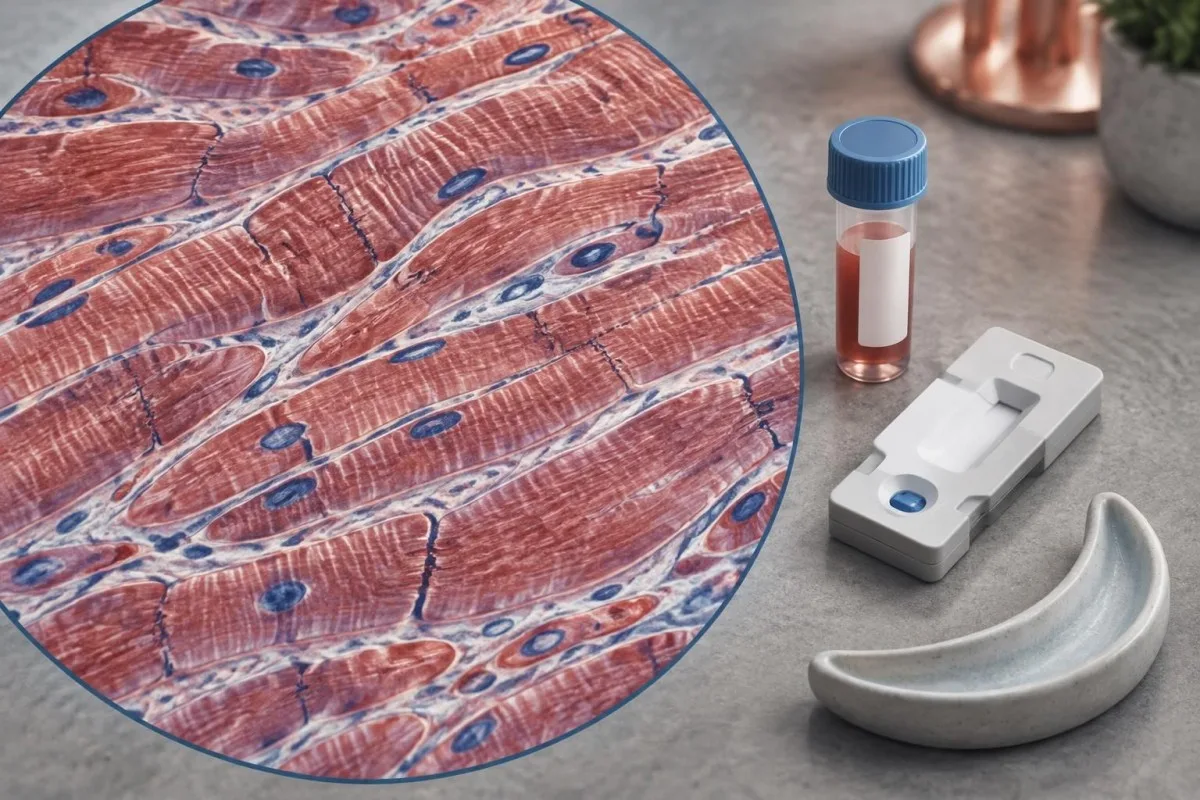
A rise or fall in troponin indicates an acute injury pattern when the clinical and analytical context supports it, but it does not name the cause. A heart attack diagnosis also requires evidence of ischemia, such as compatible symptoms, ECG findings or imaging evidence.
For example, a rapid heart rhythm or severe anemia can contribute to an oxygen supply-and-demand mismatch. Myocarditis can also release troponin; our explanation of myocarditis testing limits describes why no single blood result establishes that diagnosis.
Small differences may reflect ordinary analytical and biological variation, particularly near an assay's low measuring range. Less commonly, interfering antibodies, biotin or sample problems can produce misleading results; the effect depends on the method, and the laboratory can investigate a result that does not fit the clinical picture.
Tell the treating team about supplements, including high-dose biotin, but do not delay emergency evaluation while trying to stop one. የናሙና የደም መፍሰስ is another laboratory issue whose effect varies by test and should be assessed by the lab.
When does chest pain need emergency care?
New or ongoing chest pain, pressure or tightness needs emergency assessment, even if a prior troponin was normal or changed only slightly. Call 999 in the UK, 911 in the US, or your local emergency number; do not wait for another result at home.

Call emergency services especially if chest discomfort comes with shortness of breath, sweating, nausea, faintness, or discomfort spreading to the arm, back, neck or jaw. Symptoms can be less typical, including breathlessness or unusual fatigue without prominent chest pain.
Do not drive yourself if emergency transport is available; follow the dispatcher's instructions. If symptoms recur after discharge, seek emergency help rather than relying on the previous 1-hour or 2-hour result.
Serious alternatives to a heart attack can also cause chest symptoms. For example, a pulmonary embolism may occur alongside deep vein thrombosis symptoms, but absence of leg swelling does not make chest pain safe to ignore.
What should you ask about your serial troponin results?
Ask which assay was used, what the sample times were and how the full clinical assessment affected the decision. Those details make a small troponin change more useful than the delta alone.

Bring both results with units and collection times, along with the time your symptoms started. Ask whether the result was above the assay's 99th percentile, whether more testing was considered and what the ECG showed.
Request a clear follow-up plan: who will review outstanding results, whether any further heart tests are planned, and what symptoms mean you should return immediately. A small change over 1 hour does not answer those questions on its own.
For non-urgent review, keeping older reports together may help your clinician identify a comparable baseline, but results from different troponin methods should not be treated as interchangeable. Read our የሕክምና ይዘት መስፈርቶች for how educational material is developed, and our clinical oversight information for its limitations.
ተደጋግመው የሚጠየቁ ጥያቄዎች
Is a small change in high sensitivity troponin normal?
A small high sensitivity troponin change can occur from analytical or biological variation, but it is not automatically normal or harmless. A difference of 2 ng/L has to be interpreted using the specific assay, sampling interval, starting value and symptoms. The result alone cannot diagnose or exclude a heart attack.
What does a troponin delta of 2 ng/L mean?
A troponin delta of 2 ng/L means the later concentration differs from the earlier one by 2 ng/L if both results use the same units. Whether that change matters depends on the direction, assay, time between samples and the validated pathway used. For new or ongoing chest pain, seek emergency assessment rather than interpreting the delta at home.
Can troponin be normal early in a heart attack?
Yes. High sensitivity troponin can be below a decision threshold early after symptoms begin, before a detectable rise has occurred. Clinicians may repeat the test after 1 to 3 hours or use another validated pathway, alongside an ECG and clinical assessment. Ongoing concerning symptoms can require further evaluation even after initially reassuring results.
Does elevated troponin always mean a heart attack?
No. Troponin above an assay's 99th percentile upper reference limit indicates myocardial injury, which has multiple possible causes. A heart attack requires evidence of acute injury together with evidence of ischemia, such as compatible symptoms or ECG changes. Kidney disease, heart failure and myocarditis can also be associated with elevated troponin.
What is the difference between ng/L and ng/mL for troponin?
One ng/mL is equal to 1,000 ng/L. For example, 0.012 ng/mL and 12 ng/L represent the same concentration. Check units and the assay name before comparing serial troponin results, because changing methods can make a numerical comparison misleading.
Can a falling troponin result rule out a heart attack?
No. A falling high sensitivity troponin result can occur after an earlier peak, including after a heart attack. For example, a fall from 40 to 35 ng/L is a delta of −5 ng/L but does not identify when the elevation began or why it occurred. Clinicians interpret the pattern with symptoms, ECG findings and other evidence.
የደም ምርመራ ውጤት እንዴት ማንበብ
የላቦራቶሪ ሪፖርትዎን ይስቀሉ፤ የKantesti AI እያንዳንዱን ባዮማርከር በቀላል ቋንቋ በጥቂት ሰከንዶች ውስጥ ያብራራል። በዓለም ዙሪያ ከ2 ሚሊዮን በላይ ሰዎች ይጠቀሙበታል።.
ማጣቀሻዎች
- ክላይን፣ ቲ.፣ ሚቸል፣ ኤስ.፣ እና ዌበር፣ ኤች. (2026)።. የRDW የደም ምርመራ፦ ስለ RDW-CV፣ MCV እና MCHC ሙሉ መመሪያ።. የKantesti AI የሕክምና ምርምር።. የዶአይ
- ክላይን፣ ቲ.፣ ሚቸል፣ ኤስ.፣ እና ዌበር፣ ኤች. (2026)።. BUN/ክሬቲኒን ሬሾ ተብራርቷል፡ የኩላሊት ተግባር ምርመራ መመሪያ።. የKantesti AI የሕክምና ምርምር።. የዶአይ
- Thygesen K et al. (2018). Fourth Universal Definition of Myocardial Infarction (2018). የደም ዝውውር።. የዶአይ
- Gulati M et al. (2021). 2021 AHA/ACC/ASE/CHEST/SAEM/SCCT/SCMR Guideline for the Evaluation and Diagnosis of Chest Pain. የደም ዝውውር።. የዶአይ
- 2ሚ+የተተነተኑ ምርመራዎች
- 127+አገሮች
- 100+ቋንቋዎች
ስለ የሕክምና ቡድኑ


የE-E-A-T እምነት ምልክቶች
ልምድ
በሐኪም መሪነት የላቦራቶሪ ትርጓሜ የስራ ፍሰቶች ክሊኒካዊ ግምገማ።.
ባለሙያነት
በክሊኒካዊ አውድ ውስጥ ባዮማርከሮች እንዴት እንደሚሰሩ ላይ የላቦራቶሪ ሕክምና ትኩረት።.
ስልጣን ያለው
በዶ/ር ቶማስ ክላይን በሕክምና የተገመገመ፣ ከዶ/ር ሳራ ሚቼል እና ከፕሮፌሰር ዶ/ር ሃንስ ዌበር አስተዋጽኦ ጋር።.
አስተማማኝነት
ለማስጠንቀቂያ ምላሽ መቀነስ ግልጽ የቀጣይ መንገዶች ያለው በማስረጃ የተደገፈ ትርጓሜ።.





የሕክምና ማስተባበያ
ይህ ጽሑፍ ለትምህርታዊ ዓላማ ብቻ ነው እና የሕክምና ምክር አይደለም። ለምርመራ እና ለሕክምና ውሳኔዎች ሁልጊዜ ብቁ የጤና ባለሙያን ያማክሩ።.
ታትሟል · የአርትዖት ቡድኑን ያነጋግሩ
በKantesti Ltd የታተመ፣ በእንግሊዝና ዌልስ የተመዘገበ፣ የኩባንያ ቁጥር. 17090423, ፣ ለንደን፣ ዩናይትድ ኪንግደም።.
