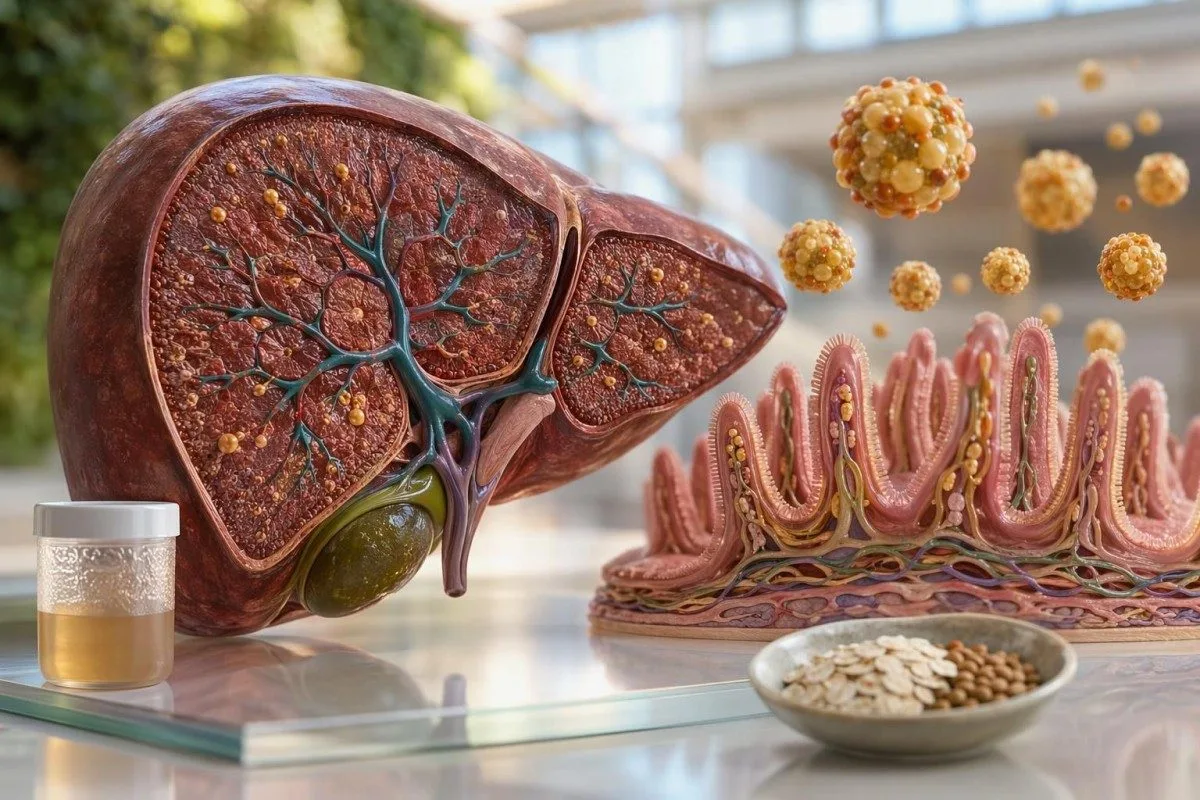
Diet can move cholesterol labs, but not every marker changes at the same speed. The useful question is not just what to eat; it is which lab should improve, by how much, and when to test again.


- Soluble fiber at 5-10 g/day can lower LDL-C by roughly 5-10%, especially from oats, barley, beans, lentils and psyllium.
- Plant sterols at 1.5-2 g/day often reduce LDL-C by about 7-10%, but they do not replace statins when cardiovascular risk is high.
- Triglycerides below 150 mg/dL fasting are generally normal; values of 500 mg/dL or higher raise pancreatitis concern and need prompt medical review.
- Non-HDL cholesterol is total cholesterol minus HDL-C, and it captures LDL plus remnant particles that often rise with insulin resistance.
- ApoB measures the number of atherogenic particles; ApoB of 130 mg/dL or higher is a risk-enhancing level in the 2018 AHA/ACC cholesterol guideline.
- hs-CRP below 1 mg/L suggests lower vascular inflammatory risk, 1-3 mg/L is intermediate, and above 3 mg/L is higher risk if infection is not present.
- Recheck timing is usually 6-12 weeks after a serious diet change, while triglycerides may shift within 2-4 weeks after alcohol or sugar reduction.
- Mediterranean diet benefits often appear in inflammation, blood pressure and event risk even when LDL falls only modestly.
- DASH diet for blood pressure can lower systolic pressure by about 5 mmHg in many adults and may help LDL when saturated fat is also reduced.
Which foods lower cholesterol fastest?
The most reliable foods that lower cholesterol are oats, barley, beans, lentils, nuts, extra-virgin olive oil, fatty fish, soy protein, fruit rich in pectin, and foods fortified with plant sterols. In practice, LDL-C usually moves after 6-12 weeks, triglycerides can shift within 2-4 weeks, and ApoB or non-HDL cholesterol tell us whether particle risk truly improved. You can upload a lipid panel to foods that lower cholesterol analysis if you want a fast pattern read.
When I review a cholesterol panel, I do not ask only whether someone ate oatmeal twice. I ask whether LDL-C, non-HDL-C, ApoB, triglycerides, glucose, TSH and liver enzymes changed in the same biological direction; our lipid panel guide explains why that pattern matters more than one isolated result.
A common clinical example: a 49-year-old with LDL-C 164 mg/dL, triglycerides 118 mg/dL and hs-CRP 0.7 mg/L may respond well to saturated-fat replacement and soluble fiber. A different 49-year-old with LDL-C 132 mg/dL, triglycerides 310 mg/dL and fasting insulin 18 µIU/mL needs a carbohydrate, alcohol and insulin-resistance plan first.
As of May 3, 2026, I still see people overestimate single foods and underestimate consistency. Three grams of oat beta-glucan daily is meaningful; one bowl of oats on Sunday is not a treatment plan.
Thomas Klein, MD perspective: the best diet result is not a perfect LDL number after one heroic month. It is a repeatable drop in ApoB-containing particles without worsening A1c, kidney markers, iron status or thyroid control.
The labs that actually move after diet changes
LDL-C, non-HDL-C, ApoB, triglycerides and hs-CRP are the five lab markers I track most often after cholesterol-focused nutrition changes. HDL-C may rise slightly with weight loss and exercise, but chasing HDL alone has not reliably lowered cardiovascular events.
LDL-C estimates the cholesterol mass inside LDL particles, while ApoB counts the number of atherogenic particles. Kantesti AI interprets lipid results by checking these markers together with age, sex, units, fasting status and repeated trends from uploaded reports.
Non-HDL-C is calculated as total cholesterol minus HDL-C. A non-HDL-C value below 130 mg/dL is often considered desirable for lower-risk adults, but higher-risk patients usually need lower targets; our biomarker guide shows how reference intervals differ from treatment goals.
Triglycerides are the lab I expect to move fastest when someone stops sweet drinks, late-night snacking or regular alcohol. LDL-C often takes longer because LDL particles circulate for several days and liver receptor activity changes gradually.
hs-CRP is useful only when interpreted cleanly. An hs-CRP of 8 mg/L after a dental infection or hard race tells me almost nothing about an anti-inflammatory diet; I usually repeat it at least 2 weeks after recovery.
LDL cholesterol: what food can realistically change
LDL-C usually falls 5-20% with a well-built cholesterol-lowering diet, depending on the starting diet and genetics. The strongest food moves are replacing saturated fat, adding soluble fiber, using plant sterols, and choosing unsaturated fats instead of butter, cream, coconut oil or processed meat.
Soluble fiber works partly by trapping bile acids in the gut, which forces the liver to pull more cholesterol from circulation. Three grams per day of beta-glucan from oats or barley can lower LDL-C by about 5-7% in many adults.
Plant sterols and stanols compete with cholesterol absorption in the intestine. At 1.5-2 g/day, they commonly reduce LDL-C by 7-10%, but I avoid presenting them as magic because they do little for triglycerides or glucose.
The saturated-fat swap matters more than most people expect. Replacing 2 tablespoons of butter with olive oil or a small handful of nuts changes hepatic LDL receptor signalling; our LDL range guide covers why a result of 118 mg/dL can be fine for one person and too high for another.
A 61-year-old patient once brought me a perfect food diary and an LDL-C that barely moved from 178 to 171 mg/dL after 10 weeks. His ApoB stayed high and his father had a heart attack at 52, so food helped his overall health, but medication discussion was still the honest next step.
Non-HDL and ApoB show particle risk beyond LDL
Non-HDL-C and ApoB often reveal residual risk when LDL-C looks acceptable, especially in people with high triglycerides, insulin resistance or fatty liver. Non-HDL-C captures cholesterol in LDL, VLDL and remnant particles; ApoB counts the particles themselves.
The 2018 AHA/ACC cholesterol guideline lists ApoB ≥130 mg/dL as a risk-enhancing factor, particularly when triglycerides are ≥200 mg/dL (Grundy et al., 2019). In my experience, this is the patient whose LDL-C may look only mildly high while particle number is not mild at all.
Non-HDL-C is simple and cheap because it needs no extra assay. A practical target is often about 30 mg/dL higher than the LDL-C goal, so an LDL-C goal of <100 mg/dL pairs with non-HDL-C <130 mg/dL.
ApoB targets differ across guidelines and regions. Some European cardiology groups use ApoB goals near <65 mg/dL for very-high-risk patients, while many US reports simply flag broad reference intervals; this is why our ApoB blood test guide focuses on risk context rather than a single universal cutoff.
If diet lowers LDL-C by 12 mg/dL but ApoB drops from 126 to 92 mg/dL, I pay attention. That suggests fewer circulating atherogenic particles, which is often a better biological win than the LDL number alone; see our non-HDL cholesterol article for the same concept using standard lipid panels.
Triglycerides respond to carbs, alcohol and timing
Triglycerides often improve within 2-4 weeks when patients reduce alcohol, refined starches, sweet drinks and late-night calories. A fasting triglyceride level below 150 mg/dL is generally normal, while 500 mg/dL or higher needs prompt review because pancreatitis risk rises.
Triglycerides are not just fat eaten at lunch. They are strongly influenced by liver production of VLDL particles, insulin resistance, alcohol metabolism and the timing of the last meal.
A non-fasting triglyceride value above 175 mg/dL is often considered abnormal in contemporary clinical practice. If a patient ate a high-fat meal 2 hours before testing, I repeat fasting before labelling it a durable risk pattern.
Omega-3-rich fish twice weekly is reasonable for cardiovascular eating, but prescription-dose omega-3 is a different medical decision. For food alone, I see the biggest triglyceride drops when patients remove liquid sugar and alcohol; our high triglycerides guide explains why the pattern matters.
One small but telling clue: triglycerides that fall from 290 to 145 mg/dL while HDL-C rises from 38 to 45 mg/dL usually means insulin biology improved. LDL-C may temporarily rise during weight loss, so I wait for weight stability before overreacting.
Mediterranean diet benefits go beyond LDL
Mediterranean diet benefits include lower cardiovascular event risk, better blood pressure, improved glycaemic patterns and often lower inflammatory tone, even when LDL-C changes only modestly. The lab story is usually broader than a single cholesterol value.
The PREDIMED trial reported fewer major cardiovascular events in high-risk adults assigned to a Mediterranean diet supplemented with extra-virgin olive oil or nuts (Estruch et al., 2018). The LDL-C shift was not dramatic for everyone, which is exactly the point: event risk can improve through several pathways.
In our platform, AI-powered blood test interpretation often flags Mediterranean-style wins outside the lipid panel. I look for lower hs-CRP, lower fasting glucose, improved ALT in fatty liver patterns, and a gentler triglyceride-to-HDL ratio.
Extra-virgin olive oil is not an LDL drug. It replaces saturated fat, brings polyphenols, and helps people stay on a diet that includes vegetables, legumes and fish; the compliance effect is clinically underrated.
If hs-CRP falls from 3.6 to 1.4 mg/L after 12 weeks of Mediterranean eating and weight loss, I believe that change more if the patient had no infection, no recent injury and no autoimmune flare. Our guide to inflammation blood tests shows why timing matters.
Portfolio foods: oats, beans, nuts, soy and sterols
The Portfolio diet lowers LDL by combining several modest food effects into one stronger pattern: viscous fiber, nuts, soy protein and plant sterols. In the Jenkins JAMA trial, a dietary portfolio produced meaningful LDL-C reductions over 6 months compared with low-saturated-fat advice alone (Jenkins et al., 2011).
I usually describe the Portfolio diet as a cholesterol prescription written in groceries. A typical day might include oats or barley, 30 g of nuts, beans or lentils, soy protein, and sterol-fortified food if appropriate.
The clinical trick is dose. Five almonds are not the same intervention as 30 g of mixed nuts daily, and one spoon of hummus is not the same as a cup of lentils providing meaningful viscous fiber.
Some patients get bloating when they jump from 12 g to 35 g of fiber overnight. I prefer adding 5 g/week, with water and attention to constipation, especially in older adults or anyone taking iron.
Kantesti nutrition outputs can connect food plans to repeated labs, but they should not ignore symptoms. If a supposedly cholesterol-friendly diet worsens IBS, appetite or protein intake, our personalized nutrition plans need adjustment.
DASH diet for blood pressure and lipid spillover
DASH diet for blood pressure is strongest for lowering blood pressure, but it can also improve LDL-C when low-fat dairy, legumes, fruits, vegetables and lower saturated fat replace processed foods. The lipid effect is usually modest, while the blood-pressure effect can be clinically obvious.
In many adults, DASH-style eating lowers systolic blood pressure by about 5 mmHg, and the drop can be larger in hypertension. That matters because LDL-C 120 mg/dL carries more risk when blood pressure is 154/92 mmHg than when it is 112/70 mmHg.
DASH is not automatically low-cholesterol if someone adds cheese-heavy meals or large amounts of coconut products. The version I use for lipids keeps saturated fat low, uses beans frequently, and includes potassium-rich foods unless kidney disease or medications make potassium risky.
For patients taking ACE inhibitors, ARBs, spironolactone or with eGFR below 45 mL/min/1.73 m², I check potassium before pushing high-potassium food aggressively. Our blood pressure range guide gives the blood-pressure side of that risk calculation.
DASH and Mediterranean patterns can overlap beautifully. The practical plate is not exotic: half vegetables, one quarter beans or fish, one quarter minimally processed grain, olive oil or nuts for fat, and very little processed meat.
Anti-inflammatory diet markers: hs-CRP, ESR and ferritin traps
An anti-inflammatory diet is best tracked with hs-CRP when vascular risk is the question, but ESR, ferritin, white blood cell count and liver enzymes may explain why inflammation appears high. hs-CRP above 3 mg/L suggests higher vascular inflammatory risk only when acute illness is absent.
hs-CRP below 1 mg/L is generally low cardiovascular inflammatory risk, 1-3 mg/L is intermediate, and above 3 mg/L is higher risk if repeated when well. A value above 10 mg/L usually pushes me to look for infection, injury or inflammatory disease rather than diet failure.
Ferritin is a classic trap. It can rise from iron overload, fatty liver, alcohol use, infection or inflammation, so a ferritin of 420 ng/mL does not automatically mean someone ate too much red meat.
ESR moves slowly and is affected by age, sex, anaemia and immunoglobulins. If hs-CRP is normal but ESR is high, I look for anaemia, kidney disease, autoimmune patterns or protein abnormalities before claiming the diet is inflammatory.
Patients often ask whether turmeric, berries or green tea will lower hs-CRP. Maybe a little, but the bigger change usually comes from weight loss, better sleep, smoking cessation and replacing refined carbohydrates; our hs-CRP comparison explains why the exact test name matters.
When should you recheck labs after changing food?
Most cholesterol labs should be rechecked 6-12 weeks after a meaningful diet change, because LDL-C, non-HDL-C and ApoB need time to stabilise. Triglycerides can improve in 2-4 weeks, but I still prefer a full repeat lipid panel after at least 6 weeks unless the starting value was very high.
If LDL-C is 155 mg/dL and the patient starts 10 g/day psyllium plus a saturated-fat reduction, I usually recheck at 8 weeks. Testing at 10 days is mostly noise and often discourages people who are doing the right work.
If triglycerides are 650 mg/dL, I do not wait 12 weeks casually. I assess alcohol, diabetes, medications and symptoms promptly, because triglycerides ≥500 mg/dL can raise pancreatitis risk.
ApoB is worth repeating with the lipid panel after 8-12 weeks, especially when baseline triglycerides were above 200 mg/dL. If ApoB barely moves despite improved LDL-C, the diet may have lowered cholesterol mass more than particle number.
For borderline results, repeat timing should include lab variability. Our article on repeating abnormal labs explains why a 6 mg/dL LDL-C shift may be less meaningful than a consistent 25 mg/dL trend.
Set a clean baseline: fasting, weight loss and medicines
A clean baseline makes diet results easier to trust. For cholesterol follow-up, record fasting status, recent illness, weight change, alcohol intake, medication changes, supplement use and whether the same laboratory method was used.
Non-fasting lipid panels are acceptable for many screening situations, but triglycerides and calculated LDL-C can shift after meals. If triglycerides are high or the result will guide treatment, I often repeat fasting for 9-12 hours.
Weight loss can transiently disturb lipid numbers. During rapid fat loss, LDL-C may rise temporarily in some patients, so I prefer rechecking after weight has been stable for 2-4 weeks if the result is not urgent.
Medications matter. Steroids, oral oestrogens, isotretinoin, some antipsychotics, HIV medicines and poorly controlled hypothyroidism can push lipids in the wrong direction regardless of food quality.
Kantesti asks users to preserve context because units and timing change interpretation. Our non-fasting cholesterol guide is useful when a result looks worse simply because breakfast happened first.
Personalized food choices by lab pattern
The best cholesterol-lowering food plan depends on the lab pattern, not just the cholesterol number. High LDL-C with normal triglycerides is different from high triglycerides with insulin resistance, and both differ from high LDL-C plus high Lp(a).
High LDL-C with triglycerides below 100 mg/dL often responds to saturated-fat reduction, sterols and soluble fiber. If ApoB remains high, I think about inherited LDL receptor biology rather than blaming the patient.
High triglycerides with low HDL-C often points toward insulin resistance. Fasting insulin above about 15 µIU/mL, rising HbA1c or a high waist-to-height ratio changes my food advice toward carbohydrate quality, protein adequacy and earlier dinner timing.
Fatty liver patterns add another clue. ALT above 40 IU/L with high triglycerides and fasting glucose suggests the liver is overproducing VLDL particles, so cholesterol advice must include liver-directed nutrition.
Kantesti AI connects these patterns rather than treating LDL, glucose and ALT as separate silos. Our HOMA-IR guide is a useful companion when triglycerides are the loudest abnormality.
When food is not enough for high cholesterol
Food is powerful, but LDL-C ≥190 mg/dL, known cardiovascular disease, diabetes with high risk, or very high ApoB often need medication discussion as well. Diet still matters in those cases, but it should not delay proven treatment when absolute risk is high.
LDL-C ≥190 mg/dL raises concern for familial hypercholesterolaemia until proven otherwise. I have seen lean runners with excellent diets and LDL-C above 220 mg/dL; that is not a willpower problem.
The Cholesterol Treatment Trialists meta-analysis found that each 1 mmol/L, or about 39 mg/dL, LDL-C reduction lowers major vascular events by roughly 22% across many statin trials, though that specific paper is about medication rather than food. The same biological principle explains why durable LDL lowering matters.
High Lp(a) is another reason not to overpromise diet. Lp(a) is strongly inherited and often changes little with food, so the strategy is to control every modifiable risk factor around it.
If a patient has chest pain, prior stroke, diabetes with kidney disease or LDL-C near 190 mg/dL, I want a clinician involved. Our guide to high cholesterol risk explains why the same LDL number can mean different things in different people.
How Kantesti tracks lipid trends without overreading noise
Kantesti tracks lipid trends by comparing repeated values, units, fasting status and related biomarkers rather than reacting to one flagged number. A 4 mg/dL LDL-C change may be ordinary variation, while a repeated 25 mg/dL ApoB drop is more convincing.
Our AI blood test analyzer reads uploaded PDFs or photos and normalises units such as mmol/L and mg/dL before trend comparison. That matters because LDL-C 3.4 mmol/L and 131 mg/dL are essentially the same clinical result.
The reason we worry about ApoB plus triglycerides is that together they suggest many circulating atherogenic particles. LDL-C alone can understate that risk when particles are cholesterol-poor but numerous.
Kantesti clinical standards are reviewed by physicians and benchmarked against specialty rubrics; details are available in our medical validation materials. For readers who want the technical paper trail, see our population-scale AI engine benchmark.
I tell patients not to celebrate or panic over tiny shifts. A triglyceride drop from 240 to 142 mg/dL after 6 weeks is real enough to discuss; an HDL-C rise from 47 to 49 mg/dL is usually not the headline.
Safety checks before you intensify a cholesterol diet
Before intensifying a cholesterol diet, check for red flags: triglycerides ≥500 mg/dL, LDL-C ≥190 mg/dL, unexplained weight loss, kidney disease, eating disorder history, pregnancy, or medication interactions. Food advice should never make a vulnerable patient less safe.
Very-low-fat diets can worsen adherence and may raise carbohydrate intake enough to increase triglycerides. Very-low-carbohydrate diets can lower triglycerides but raise LDL-C substantially in a subset of people, especially lean active adults.
Kidney disease changes the food conversation. A patient with eGFR 38 mL/min/1.73 m² should not automatically load potassium-rich foods or protein powders because a cholesterol article suggested beans and nuts.
Thyroid disease is a quiet driver of LDL-C. Untreated hypothyroidism can raise LDL-C and ApoB, so a TSH above the lab range deserves attention before declaring diet failure.
Thomas Klein, MD rule of thumb: if the plan requires fear, punishment or extreme restriction, it will usually fail by month 3. A safer plan lowers saturated fat, adds fiber gradually, protects protein intake and keeps labs moving in the right direction.
Kantesti research publications and safe next steps
The safest next step is to compare your baseline and follow-up labs after 6-12 weeks of consistent diet change, then discuss high-risk patterns with a clinician. Kantesti can interpret lipid trends quickly, but urgent symptoms or very high values still need medical care.
You can try a no-cost upload through Try Free AI Blood Test Analysis and get an interpretation in about 60 seconds. For complex cardiovascular risk, our doctors and advisors review clinical standards through the Medical Advisory Board.
Kantesti LTD is a UK medical AI company serving users in more than 127 countries, with privacy and security standards built for sensitive health data. You can read more about our organisation on About Us or start from Kantesti AI if you are tracking cholesterol, inflammation and metabolic labs together.
Kantesti AI Medical Team. (2026). RDW Blood Test: Complete Guide to RDW-CV, MCV & MCHC. Zenodo. https://doi.org/10.5281/zenodo.18202598. ResearchGate: https://www.researchgate.net/search/publication?q=RDW%20Blood%20Test%20Complete%20Guide%20to%20RDW-CV%20MCV%20MCHC. Academia.edu: https://www.academia.edu/search?q=RDW%20Blood%20Test%20Complete%20Guide%20to%20RDW-CV%20MCV%20MCHC.
Kantesti AI Medical Team. (2026). BUN/Creatinine Ratio Explained: Kidney Function Test Guide. Zenodo. https://doi.org/10.5281/zenodo.18207872. ResearchGate: https://www.researchgate.net/search/publication?q=BUN%2FCreatinine%20Ratio%20Explained%20Kidney%20Function%20Test%20Guide. Academia.edu: https://www.academia.edu/search?q=BUN%2FCreatinine%20Ratio%20Explained%20Kidney%20Function%20Test%20Guide.
Frequently Asked Questions
How long after changing my diet should I recheck cholesterol labs?
Most people should recheck LDL-C, non-HDL-C, ApoB and triglycerides 6-12 weeks after a consistent cholesterol-lowering diet change. Triglycerides can improve within 2-4 weeks after reducing alcohol, sugar or refined starches, but a full lipid panel is easier to interpret after at least 6 weeks. If triglycerides are 500 mg/dL or higher, or LDL-C is 190 mg/dL or higher, medical review should not wait for a routine diet trial.
Which foods lower LDL cholesterol the most?
The foods with the most reliable LDL-lowering effect are oats, barley, beans, lentils, psyllium, nuts, soy protein and foods fortified with 1.5-2 g/day plant sterols or stanols. Soluble fiber at 5-10 g/day can lower LDL-C by roughly 5-10%, while plant sterols often lower LDL-C by about 7-10%. Replacing butter, cream, coconut oil and processed meat with olive oil, nuts, fish and legumes can add another meaningful LDL reduction.
Can a Mediterranean diet lower ApoB?
A Mediterranean diet can lower ApoB in some patients, especially when it replaces saturated fat and refined carbohydrates rather than simply adding olive oil to the same diet. ApoB reflects the number of atherogenic particles, so it may improve when LDL-C, VLDL remnants and triglyceride-rich particles fall together. I usually recheck ApoB after 8-12 weeks because particle patterns need time to stabilise.
Do triglycerides need a fasting blood test?
Triglycerides can be screened non-fasting, but a fasting test is often better when the result is high or treatment decisions depend on it. A fasting triglyceride level below 150 mg/dL is generally normal, while a non-fasting value above about 175 mg/dL may deserve follow-up. If triglycerides are 500 mg/dL or higher, clinicians usually evaluate promptly because pancreatitis risk becomes part of the conversation.
What inflammation lab should I track with an anti-inflammatory diet?
hs-CRP is the most practical inflammation marker for vascular risk tracking when someone is testing an anti-inflammatory diet. hs-CRP below 1 mg/L suggests lower inflammatory risk, 1-3 mg/L is intermediate, and above 3 mg/L is higher risk if the person is not acutely ill. Values above 10 mg/L usually suggest infection, injury or another inflammatory process rather than a simple diet signal.
When is diet not enough to lower cholesterol?
Diet may not be enough when LDL-C is 190 mg/dL or higher, ApoB remains very high, cardiovascular disease is already present, or inherited risk markers such as high Lp(a) are present. Food changes still improve risk, but delaying medication discussion can be unsafe in high-risk patients. The decision depends on absolute risk, family history, blood pressure, diabetes, kidney function and repeated lipid trends.
Get AI-Powered Blood Test Analysis Today
Join over 2 million users worldwide who trust Kantesti for instant, accurate lab test analysis. Upload your blood test results and receive comprehensive interpretation of 15,000+ biomarkers in seconds.
📚 Referenced Research Publications
Klein, T., Mitchell, S., & Weber, H. (2026). RDW Blood Test: Complete Guide to RDW-CV, MCV & MCHC. Kantesti AI Medical Research.
Klein, T., Mitchell, S., & Weber, H. (2026). BUN/Creatinine Ratio Explained: Kidney Function Test Guide. Kantesti AI Medical Research.
📖 External Medical References
⚕️ Medical Disclaimer
This article is for educational purposes only and does not constitute medical advice. Always consult a qualified healthcare provider for diagnosis and treatment decisions.
E-E-A-T Trust Signals
Experience
Physician-led clinical review of lab interpretation workflows.
Expertise
Laboratory medicine focus on how biomarkers behave in clinical context.
Authoritativeness
Written by Dr. Thomas Klein with review by Dr. Sarah Mitchell and Prof. Dr. Hans Weber.
Trustworthiness
Evidence-based interpretation with clear follow-up pathways to reduce alarm.