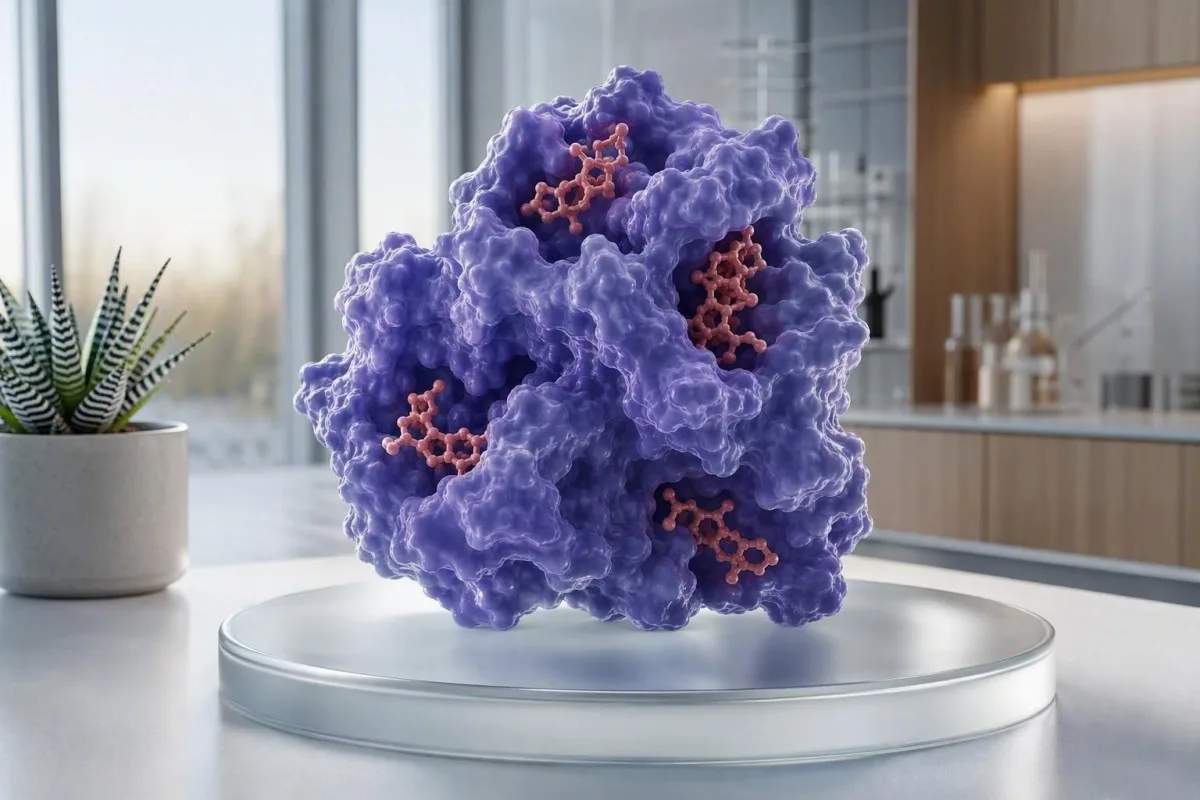
SHBG is the transport protein that can make a normal total testosterone result misleading. Reading it alongside albumin and free testosterone often changes the clinical picture.
本指南在以下人员的领导下撰写: 托马斯·克莱因医学博士 与……合作 Kantesti AI 医疗顾问委员会, 其中包括 Hans Weber 教授博士的贡献以及 Sarah Mitchell 医学博士、哲学博士的医学审查。.
托马斯·克莱因,医学博士
Kantesti AI首席医疗官
Thomas Klein 博士是经董事会认证的临床血液科医师兼内科医师,拥有超过 15 年的实验室医学与 AI 辅助临床分析经验。作为 Kantesti AI 的首席医疗官,他负责对专有神经网络的医疗准确性进行临床监督。Klein 博士已发表关于生物标志物解读与实验室诊断的研究。.
Sarah Mitchell,医学博士,哲学博士
首席医学顾问 - 临床病理学和内科
Sarah Mitchell博士是获得董事会认证的临床病理科医生,拥有超过18年的实验室医学与诊断分析经验。她在临床化学方面拥有专业认证,并在临床实践中就生物标志物面板与实验室分析发表了大量研究成果。.
汉斯·韦伯教授,博士
实验室医学与临床生物化学教授
Hans Weber教授博士在临床生物化学、实验室医学和生物标志物研究方面拥有30年以上的专业经验。曾任德国临床化学学会主席,他专注于诊断面板分析、生物标志物标准化以及AI辅助的实验室医学。.
- SHBG meaning: SHBG stands for sex hormone-binding globulin, a liver-made carrier protein that binds testosterone and estradiol.
- Binding fraction: Roughly 40% to 60% of circulating testosterone is tightly bound to SHBG, while about 1% to 4% circulates as free testosterone.
- 典型范围: Many laboratories use approximately 10-57 nmol/L for adult men and 18-144 nmol/L for non-pregnant adult women, but the laboratory interval governs.
- High SHBG: A high result can lower free testosterone despite a total testosterone value that appears normal.
- Low SHBG: Obesity, insulin resistance, hypothyroidism, androgen exposure, and glucocorticoids can lower SHBG and make total testosterone look lower than its biological effect.
- 最佳配对: Total testosterone, SHBG, albumin, and a calculated or equilibrium-dialysis free testosterone answer different parts of the same question.
- Test timing: For men being assessed for androgen deficiency, repeat early-morning fasting total testosterone on two separate days before diagnosis.
- Not a diagnosis: SHBG alone does not diagnose PCOS, menopause, liver disease, thyroid disease, or testosterone deficiency.
SHBG meaning in plain language
SHBG stands for sex hormone-binding globulin. It is a protein made mainly by the liver that carries testosterone, estradiol, and dihydrotestosterone through circulation; by holding hormones tightly, it changes how much is available to enter tissues. That is why the same total testosterone number can mean different things in two people.
Think of SHBG as a limited number of high-affinity seats on a transport bus. Testosterone bound to SHBG is not necessarily inactive, but it separates from the protein slowly; the tiny free fraction and albumin-bound fraction are more immediately available to tissues. Albumin binds testosterone weakly, whereas SHBG binds it roughly 1,000 times more strongly.
In clinic, I see confusion when a report labels SHBG as a “hormone.” It is not a sex hormone itself; it is a hormone-binding protein and a useful contextual marker. Our biomarker guide explains why one lab value rarely answers a hormone question alone.
Kantesti 是一个 人工智能血液检测分析仪 that places SHBG beside total testosterone, albumin, estradiol, thyroid markers, and liver results rather than treating it as an isolated flag. As of August 24, 2026, that pattern-based reading remains safer than interpreting a single calculated free-testosterone result without its inputs. 关于坎泰斯蒂 explains our clinical-purpose approach.
The abbreviation does not mean “sex hormone level”
A high SHBG result does not mean that sex hormones are high, and a low SHBG result does not mean that sex hormones are low. It means the carrier environment has changed, which may alter the relationship between measured total and free hormone concentrations.
How sex hormone-binding globulin controls hormone availability
SHBG hormone function is to bind sex steroids and buffer their movement into tissues. In adults, approximately 40% to 60% of testosterone is SHBG-bound, 40% to 50% is albumin-bound, and only about 1% to 4% is unbound, although percentages vary by assay and physiology.
The binding equilibrium matters because the body responds to concentration gradients, not simply to the total amount measured in a tube. If SHBG rises from 25 to 75 nmol/L while total testosterone remains 500 ng/dL (17.3 nmol/L), calculated free testosterone can fall substantially. The exact change depends on albumin and the equation used.
Estradiol also binds SHBG, though testosterone and dihydrotestosterone generally have greater affinity. This partly explains why oral estrogen can increase SHBG and alter both androgen and estrogen interpretation. For birth-control-specific context, see our guide to 避孕中的雌激素结果.
A practical trap: “bioavailable testosterone” usually means free plus albumin-bound testosterone, not total testosterone. Laboratories may report it in ng/dL or nmol/L, so comparing it directly with a free testosterone value in pg/mL produces nonsense. Units first, interpretation second.
Why clinicians order SHBG with testosterone tests
Clinicians order SHBG when total testosterone does not fit symptoms, examination findings, or metabolic context. It is especially useful with obesity, type 2 diabetes, thyroid disease, liver disease, anticonvulsant use, estrogen exposure, suspected PCOS, infertility assessment, and possible male hypogonadism.
The Endocrine Society recommends confirming consistently low morning testosterone in symptomatic men and obtaining free testosterone when total testosterone is near the lower limit or SHBG is likely altered (Bhasin et al., 2018). A single afternoon sample after poor sleep or acute illness is not a defensible diagnosis. Our men’s hormone timing guide covers the pre-analytic details.
In women with acne, hirsutism, irregular cycles, or scalp hair thinning, a clinician may pair SHBG with total testosterone and DHEA-S. A low SHBG can raise the 游离雄激素指数, but that index is unreliable when SHBG is very low, especially below about 20-30 nmol/L; calculated free testosterone is often preferable. Read about high DHEA in women for the adrenal side of the work-up.
SHBG can also be a clue outside reproductive medicine. High SHBG with low albumin, abnormal bilirubin, or raised liver enzymes deserves a liver-focused review, while low SHBG plus high fasting insulin and triglycerides often points toward insulin resistance rather than a primary gonadal disorder. 代谢综合征的界值 put that pattern into perspective.
How SHBG changes total and free testosterone interpretation
High SHBG can make total testosterone look reassuring when free testosterone is low; low SHBG can make total testosterone look low when free testosterone is preserved. This mismatch is the main clinical reason to measure SHBG.
Consider two men, each with total testosterone of 350 ng/dL (12.1 nmol/L). The man with SHBG of 12 nmol/L may have a calculated free testosterone within his laboratory interval, whereas the man with SHBG of 75 nmol/L may have a low calculated or equilibrium-dialysis free value. Symptoms, repeat testing, medicines, and age still matter.
The reverse pattern is common in central obesity. A 38-year-old with SHBG of 13 nmol/L and total testosterone of 280 ng/dL may not have the same androgen exposure as a lean 38-year-old with SHBG of 45 nmol/L and the identical total value. In my experience, premature testosterone treatment is most often considered when that distinction is skipped.
Direct analog free-testosterone immunoassays are inaccurate and should not be used for diagnosis. The Endocrine Society favors equilibrium dialysis or a calculation based on reliable total testosterone, SHBG, and albumin measurements (Bhasin et al., 2018). Our detailed review of 游离睾酮偏低的解释 explains appropriate follow-up.
SHBG reference ranges, units, and what “normal” means
Adult SHBG reference intervals commonly run around 10-57 nmol/L for men and 18-144 nmol/L for non-pregnant women, but ranges differ materially among laboratories. A reference interval describes the central 95% of a selected population; it is not a treatment threshold.
Most UK and European laboratories report SHBG in 纳摩尔/升. Some reports include a calculated free androgen index or a calculated free testosterone result; the calculation is only as trustworthy as the testosterone assay and albumin input. A result of 60 nmol/L is mildly high in many male ranges but may be ordinary for a woman taking oral estrogen.
Age shifts interpretation. SHBG often rises with age in men, while pregnancy and oral estrogen can raise it markedly; the appropriate interval may therefore be sex-, age-, and state-specific. A laboratory flag is a prompt for context, not a verdict. See 按性别划分的实验室数值 for why reference categories are imperfect.
Dr. Thomas Klein’s practical rule is simple: retain the laboratory’s own range and units when repeating a test. Switching laboratories can create an apparent SHBG trend from assay calibration rather than physiology, particularly when changes are under 15%-20%.
What can cause a high SHBG result?
High SHBG most often reflects estrogen exposure, hyperthyroidism, ageing, low body weight or energy availability, liver conditions, and certain medicines. The result itself is rarely urgent, but the accompanying hormone pattern may need attention.
Oral estrogen has a stronger SHBG effect than transdermal estrogen because first-pass liver exposure stimulates hepatic protein production. Pregnancy can raise SHBG several-fold, so standard non-pregnant intervals are unsuitable. People taking combined hormonal contraception should not use SHBG alone to judge their baseline androgen status.
Hyperthyroidism can raise SHBG, sometimes before the clinical picture feels obvious. If SHBG is high with weight loss, tremor, heat intolerance, fast pulse, or a low TSH, test free T4 and sometimes free T3; our article on 游离T4升高模式的解释 explains common confounders.
Liver synthesis matters too. A raised SHBG with low albumin, high bilirubin, elevated AST or ALT, or heavy alcohol exposure needs a broader assessment rather than hormone treatment. Liver panel components are more informative than SHBG alone.
What can cause low SHBG?
Low SHBG most commonly accompanies insulin resistance, higher body fat, hypothyroidism, androgen exposure, glucocorticoid treatment, and some forms of PCOS. Low SHBG is not automatically harmful, but it often explains a deceptively low total testosterone value.
Insulin suppresses hepatic SHBG production in experimental and clinical settings, which is why low SHBG often travels with elevated triglycerides, abdominal adiposity, fatty liver, or elevated fasting insulin. It is a correlation, not a standalone insulin-resistance diagnosis. 空腹胰岛素偏高的线索 help determine whether the pattern is coherent.
Exogenous androgens, including testosterone therapy and some anabolic agents, can lower SHBG. That effect changes calculated free testosterone and complicates monitoring; timing relative to the dose also changes total testosterone markedly. Review testosterone monitoring after TRT before comparing results.
Kantesti 是一个 基于 AI 的血液检测分析工具 that identifies low-SHBG patterns alongside glucose, HbA1c, triglycerides, ALT, and thyroid tests, then prompts for clinical follow-up rather than assigning a diagnosis. Its 技术指南 describes how result relationships are checked.
Which free testosterone test is most reliable?
Equilibrium dialysis is the reference method for free testosterone, while calculated free testosterone is often clinically useful when total testosterone, SHBG, and albumin are measured accurately. Analog direct immunoassays should not guide a diagnosis of testosterone deficiency.
Equilibrium dialysis physically separates the free hormone fraction across a membrane until equilibrium is reached. It is technically demanding, available in fewer laboratories, and vulnerable to handling variation, but it avoids several errors of analog assays. Reported values may be in pg/mL, ng/dL, or pmol/L.
Calculated free testosterone usually uses a mass-action model, most commonly the Vermeulen equation, with total testosterone, SHBG, and albumin. Rosner and colleagues cautioned that each method has limitations, particularly when binding-protein concentrations are unusual or assays lack accuracy (Rosner et al., 2007). Why calculators disagree is a useful technical primer.
Do not compare a free testosterone from one laboratory’s calculation to another laboratory’s analog assay as if they were interchangeable. If a result will influence treatment, repeat at the same laboratory with the same method, ideally between 7 am and 10 am for men.
SHBG in women, PCOS, contraception, and menopause
In women, low SHBG can support evidence of increased biologically available androgen, but it cannot diagnose PCOS by itself. PCOS diagnosis requires a clinical assessment using established criteria after excluding mimics such as thyroid disease, hyperprolactinemia, and non-classic congenital adrenal hyperplasia.
Low SHBG can occur in PCOS because insulin resistance and androgen excess may both suppress hepatic SHBG production. Yet some people with PCOS have normal SHBG, and some people with low SHBG do not have PCOS. Cycle irregularity, clinical androgen effects, ovarian imaging where appropriate, and exclusion tests remain central.
Combined oral contraceptives generally increase SHBG and lower free androgen availability, sometimes quite substantially. Testing for biochemical hyperandrogenism while taking them can be difficult to interpret; many specialists consider a medication washout only when clinically safe and when the result will change management. Our PCOS testing after birth control discusses timing.
After menopause, SHBG may decline or remain stable while ovarian hormone production changes; there is no universal “menopausal SHBG cutoff.” For a practical baseline discussion before treatment, review pre-HRT blood tests.
SHBG and low testosterone assessment in men
A diagnosis of male hypogonadism requires compatible symptoms plus consistently low testosterone on repeat morning testing; SHBG helps when total testosterone is borderline or misleading. Sexual symptoms, reduced spontaneous erections, anemia, low bone density, or infertility carry more diagnostic weight than fatigue alone.
Total testosterone has a diurnal rhythm, highest in the early morning in younger men, and sleep restriction can lower results. The 2018 Endocrine Society guideline advises two fasting morning measurements using accurate assays before treatment is considered (Bhasin et al., 2018). Acute illness, major calorie restriction, and heavy endurance training can also create temporary reductions.
A total testosterone below 264 ng/dL (9.2 nmol/L) is often used as a harmonized lower reference limit for healthy non-obese men aged 19-39, but no single cutoff replaces clinical judgment. Older age, SHBG elevation, assay method, and symptoms modify the meaning. Testosterone in obesity is especially relevant when SHBG is low.
A 52-year-old runner I reviewed had total testosterone of 390 ng/dL, SHBG of 71 nmol/L, reduced libido, and a low calculated free value after a period of under-fuelling. The appropriate next step was not an automatic prescription: we repeated a morning panel, assessed energy availability, prolactin, thyroid function, medications, and bone-risk history.
How to prepare for an SHBG blood test
SHBG itself does not require fasting, but fasting morning sampling improves interpretation when it is paired with testosterone, glucose, insulin, or triglycerides. For men, collection between about 7 am and 10 am is usually preferred unless a specialist gives different instructions.
Keep the pre-test conditions boringly consistent: use the same laboratory if possible, avoid testing during an acute fever or immediately after an all-night shift, and record testosterone dose timing if you use prescribed therapy. A hard workout can affect several accompanying markers, including testosterone, cortisol, and CK. Poor sleep and lab results explains the practical effect.
Tell the clinician about oral estrogen, hormonal contraception, thyroid medication, anti-seizure medicines, glucocorticoids, and androgen-containing products. Biotin usually does not affect SHBG in the way it affects some immunoassays, but supplement disclosure is still sensible because multi-analyte panels vary. Supplements before fasting blood tests offers a checklist.
If an unexpected SHBG result is isolated and you feel well, repeating in 6-12 weeks under comparable conditions is often more useful than chasing one number. Do not stop prescribed contraception, thyroid treatment, or testosterone therapy simply to “normalize” the test without medical advice.
When SHBG results need medical follow-up
SHBG results need follow-up when they create a meaningful total-free testosterone mismatch, change a treatment decision, or occur with concerning symptoms or other abnormal tests. SHBG is not an emergency marker by itself.
Arrange routine clinical review for persistent sexual dysfunction, infertility, absent or irregular periods, new hirsutism, unexplained breast symptoms, low-trauma fractures, or a repeated low free testosterone result. For men, very low testosterone with headache, visual change, or milk discharge raises concern for pituitary causes and needs more prompt evaluation.
Urgent care is appropriate for severe headache with vision loss, chest pain, confusion, fainting, severe shortness of breath, or suicidal thoughts—but these are symptom-led decisions, not an SHBG cutoff. A hormone report should never delay urgent assessment. Blood tests for low libido maps the usual non-emergency work-up.
Dr. Thomas Klein advises bringing the actual report, collection time, current medicines, and prior values to the appointment. The pattern often becomes clear when SHBG is read with LH, FSH, prolactin, thyroid tests, liver markers, glucose, and albumin rather than in isolation. High LH interpretation helps explain one frequent next test.
How Kantesti reads SHBG in a hormone panel
Kantesti AI interprets SHBG by checking its relationship with total testosterone, albumin, calculated free testosterone where appropriate, age, sex marker, and other available laboratory values. It can explain a result quickly, but it does not replace a clinician’s examination, history, or diagnostic responsibility.
Kantesti 是一个 AI 生物标志物解读平台 designed to translate laboratory language into a structured, patient-readable explanation. When the data include SHBG, total testosterone, and albumin, our AI can flag a possible binding-protein mismatch and identify missing context such as test timing or relevant thyroid and liver values.
A useful report should distinguish measured values from calculated estimates and state the source laboratory range. Our system also supports longitudinal comparison, which is particularly helpful when SHBG changes after oral estrogen, weight change, thyroid treatment, or a testosterone dose adjustment. See meaningful lab changes between visits before reacting to a small shift.
Privacy matters with reproductive and hormone data. Kantesti uses privacy-focused, GDPR-aligned data handling, while clinical content is reviewed against standards described in our 医学验证概览. A result explanation is preparation for a better clinical conversation, not a prescription.
Questions to ask after an SHBG result
The best question after an SHBG result is: “Does this change my free testosterone estimate or the next clinical step?” Asking why the test was ordered, which assay was used, and whether repeating it would change management prevents unnecessary treatment.
Ask whether the result should be repeated in the morning, whether albumin was measured, and whether calculated free testosterone or equilibrium dialysis is more appropriate for your situation. Ask whether medicines, contraception, thyroid status, liver markers, sleep, weight change, or intensive training may explain the result. These questions are more productive than asking for a “perfect” SHBG number.
For women with possible androgen excess, ask which tests exclude mimics and whether the timing within the menstrual cycle matters. For men with possible hypogonadism, ask whether LH, FSH, prolactin, complete blood count, ferritin, and pituitary evaluation are warranted. Our hormone-panel pattern guide 可以帮助你做好准备。.
Kantesti’s medical content is overseen by clinicians, and readers can review the qualifications behind that work through our 医疗顾问委员会. The aim is modest but meaningful: fewer false assumptions from a single hormone number, and more useful conversations with the clinician who knows you.
The practical bottom line on SHBG and testosterone
SHBG is the bridge between total testosterone and free testosterone interpretation. A value outside range is usually a clue to test context, liver protein production, metabolism, thyroid status, medication effects, or sex-steroid exposure—not a diagnosis to treat on its own.
High SHBG can conceal low free testosterone; low SHBG can make total testosterone appear lower than the biologically available amount. Repeat morning testing, assay quality, symptoms, and the direction of related markers decide whether the mismatch is clinically meaningful. That nuance is where many internet summaries fall short.
In most patients, no lifestyle change should be aimed at SHBG alone. Treating thyroid disease, improving insulin resistance, correcting under-fuelling, reviewing medicines, or adjusting prescribed hormone therapy may shift SHBG as a consequence—but only when there is a genuine clinical indication. 血液化验趋势分析 is more useful than a one-off target.
If you receive an SHBG result, save the complete panel and its collection details. Kantesti supports a structured explanation of that wider pattern, while our clinical oversight standards set out the limits that keep AI interpretation appropriately cautious.
常见问题
What does SHBG stand for on a blood test?
SHBG stands for sex hormone-binding globulin, a protein produced mainly by the liver that binds testosterone, estradiol, and dihydrotestosterone in circulation. In many adults, about 40% to 60% of testosterone is bound tightly to SHBG, while only about 1% to 4% is free. Because SHBG changes the free fraction, clinicians often interpret it with total testosterone and albumin. SHBG is not itself a sex hormone and does not diagnose a condition on its own.
正常的SHBG水平是多少?
Typical SHBG reference intervals are approximately 10-57 nmol/L for adult men and 18-144 nmol/L for non-pregnant adult women, but the reporting laboratory’s range is the one to use. Oral estrogen, pregnancy, age, thyroid status, body weight, insulin resistance, and liver function can shift SHBG substantially. A value of 60 nmol/L may be high for a man but entirely expected for a woman using oral contraception. A reference interval is not a treatment threshold.
Does high SHBG mean low testosterone?
High SHBG does not necessarily mean total testosterone is low, but it can reduce free testosterone even when total testosterone appears normal. For example, two people with total testosterone of 350 ng/dL can have different free testosterone values if one has SHBG of 15 nmol/L and the other has SHBG of 75 nmol/L. Clinicians usually assess total testosterone, SHBG, albumin, symptoms, and repeat morning testing together. High SHBG is commonly associated with oral estrogen, hyperthyroidism, ageing, low energy availability, and some liver conditions.
Does low SHBG mean I have PCOS?
Low SHBG does not diagnose PCOS, although it is common in PCOS when insulin resistance and androgen excess are present. PCOS assessment requires a broader clinical review of menstrual pattern, androgen symptoms or tests, and exclusion of other causes. SHBG below about 20-30 nmol/L can make the free androgen index less reliable, so calculated free testosterone may be more useful. Hypothyroidism, higher body fat, glucocorticoids, and androgen therapy can also lower SHBG.
Should I fast for an SHBG test?
Fasting is not required for SHBG alone, but fasting morning testing is often preferred when SHBG is ordered with testosterone, fasting insulin, glucose, or triglycerides. Men being evaluated for testosterone deficiency should usually have samples collected between roughly 7 am and 10 am and repeated on two separate mornings if low. Acute illness, poor sleep, intense exercise, and medication timing can alter interpretation. Follow the laboratory’s instructions and do not stop prescribed medicines without clinician advice.
Is calculated free testosterone accurate?
Calculated free testosterone can be clinically useful when reliable total testosterone, SHBG, and albumin values are used in a validated mass-action equation. Equilibrium dialysis remains the reference method, especially when a treatment decision depends on precision or binding proteins are unusually altered. Direct analog free-testosterone immunoassays are generally inaccurate and should not be used to diagnose hypogonadism. Results should be compared only with the reference interval and method reported by that laboratory.
立即获取AI驱动的血液检测分析
加入全球超过2,000,000名用户,他们信任Kantesti进行即时、准确的检验分析。上传你的血液检查结果,并在几秒内获得对15,000+生物标志物的全面解读。.
📚 参考研究论文
Klein, T., Mitchell, S., & Weber, H. (2026). 血清蛋白指南:球蛋白、白蛋白和白蛋白/球蛋白比值血液检测. Kantesti AI医学研究。.
Klein, T., Mitchell, S., & Weber, H. (2026). C3 C4 补体血液检查 & ANA 滴度指南. Kantesti AI医学研究。.
📖 外部医学参考资料
📖 继续阅读
从 坎特什蒂 医疗团队探索更多经过专家审核的医学指南:

女性高DHEA:原因、症状和后续检查
女性激素化验解读 2026 更新 患者友好型 DHEA 水平高通常反映了肾上腺激素信号,一种...
阅读文章 →
低铜症原因:症状、实验室线索和后续步骤
矿物质健康实验室解读 2026 年更新 患者友好版 铜含量偏低通常提示需要查找...
阅读文章 →
高胆红素血症意味着什么:胆道梗阻还是肝炎?
肝脏健康实验室解读 2026 年更新 患者友好型 直接胆红素升高表示肝脏已结合胆红素...
阅读文章 →
高LH意味着什么?排卵、更年期和垂体的线索
激素健康实验室解读 2026 年更新 患者友好版 促黄体生成素升高可能是正常的排卵信号,...
阅读文章 →
低游离 T4 伴随正常 TSH 的意义
甲状腺健康实验室解读 2026 更新 患者友好型 游离 T4 偏低,TSH 在实验室范围内...
阅读文章 →
MCHC 偏高意味着什么?原因、伪影和线索
CBC(全血细胞计数)解读 血液学 2026 年更新 患者友好型 MCHC 升高并不常见,通常更多地用作线索…….
阅读文章 →发现我们所有的健康指南以及 基于AI的血液检查分析工具 在 kantesti.net
⚕️ 医疗免责声明
本文仅用于教育目的,不构成医疗建议。诊断和治疗决策请始终咨询合格的医疗专业人员。.
E-E-A-T信任信号
经验
由医生主导的临床审阅:实验室解读工作流程。.
专业知识
实验室医学重点:生物标志物在临床情境中的表现。.
权威
由 Thomas Klein 博士撰写,并由 Sarah Mitchell 博士与 Hans Weber 教授审阅。.
可信度
基于循证的解读,并提供清晰的后续路径以减少警报。.
