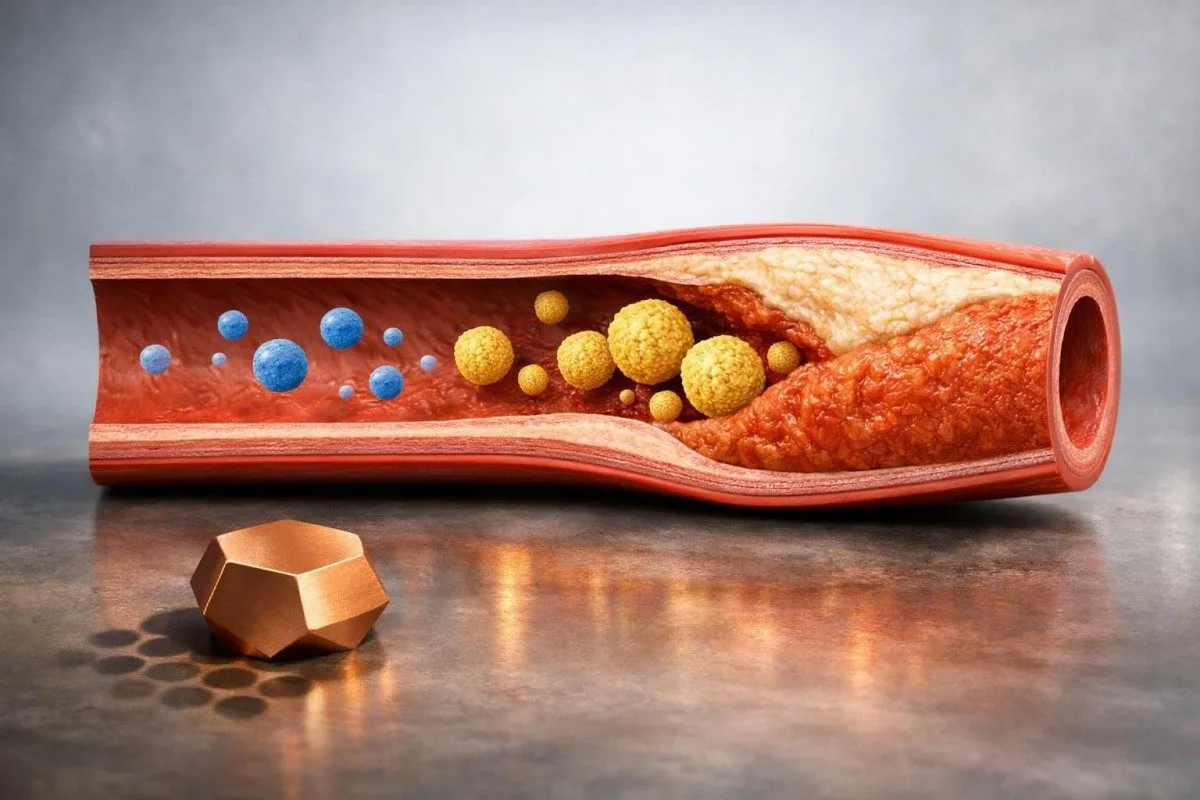
A high total cholesterol result is only the opening clue. The real answer sits in LDL, HDL, triglycerides, non-HDL cholesterol, and the risk factors surrounding the panel.


- Total cholesterol above 200 mg/dL (5.2 mmol/L) is a flag, not a diagnosis; heart risk depends on the rest of the lipid panel.
- LDL cholesterol of 190 mg/dL (4.9 mmol/L) or higher usually prompts treatment discussion and evaluation for familial hypercholesterolemia.
- HDL cholesterol below 40 mg/dL in men or 50 mg/dL in women is unfavorable, but very high HDL does not cancel a high LDL.
- Triglycerides under 150 mg/dL (1.7 mmol/L) are normal; 500 mg/dL or higher raises pancreatitis risk.
- Non-HDL cholesterol equals total cholesterol minus HDL and often predicts risk better when triglycerides are elevated.
- ApoB above 130 mg/dL suggests a high burden of atherogenic particles, even when total cholesterol looks only mildly high.
- Fasting status changes triglycerides more than total cholesterol; nonfasting meals often shift TG by about 20-30 mg/dL.
- Secondary causes such as hypothyroidism, kidney disease, liver disease, menopause, and some medications can raise cholesterol without diet being the main problem.
A high total cholesterol result is a clue, not the diagnosis
High total cholesterol on a blood test means one part of your lipid panel is above the usual cutoff, often over 200 mg/dL (5.2 mmol/L), but it does not by itself define your heart risk. At Kantesti AI we see every week that the answer sits in the full lipid pattern. Our lipid panel pattern explainer breaks down how LDL, HDL, triglycerides, and non-HDL cholesterol change the meaning of one high total value.
Most laboratories flag total cholesterol above 200 mg/dL, with 200-239 mg/dL called borderline high and 240 mg/dL or higher called high. As of April 11, 2026, that lab flag is still common, but the real question is whether the cholesterol is riding mostly inside harmful particles or being inflated by a high HDL fraction.
The total-to-HDL ratio can add a little texture, although I rarely treat from the ratio alone. A ratio under about 3.5 is generally reassuring and a ratio above 5 is less favorable, but modern decisions rest more on LDL, non-HDL, apoB, and overall risk.
We still see people panic over a single red number after a holiday, a crash diet, or the first test in years. When I, Thomas Klein, MD, review a panel, I always ask whether the result fits the rest of the story and whether the person was due for testing in the first place, which is why timing from our cholesterol testing age guide matters more than most lab portals suggest.
Total cholesterol by itself is almost never an emergency. What makes me speed up the workup is LDL 190 mg/dL or higher, triglycerides 500 mg/dL or higher, or a total cholesterol above 300 mg/dL, because those patterns raise concern for familial hypercholesterolemia or a secondary medical cause.
How to read LDL, HDL, and triglycerides in the same panel
LDL cholesterol is usually the main treatment target because it delivers cholesterol into artery walls; HDL is mostly a risk marker, and triglycerides often reflect insulin resistance, alcohol intake, or excess refined carbohydrate. In routine practice, LDL under 100 mg/dL (2.6 mmol/L) is a reasonable aim for many adults, while triglycerides under 150 mg/dL (1.7 mmol/L) are considered normal.
LDL under 100 mg/dL is a reasonable goal for many adults, 130-159 mg/dL is clearly above ideal, and 190 mg/dL or higher usually triggers treatment discussion because it raises suspicion for familial hypercholesterolemia, which affects about 1 in 250 people. If your question is really about isolated LDL elevation, our LDL with normal HDL explainer goes deeper into that pattern.
HDL below 40 mg/dL in men and below 50 mg/dL in women is generally considered low. Old teaching treated HDL above 60 mg/dL as a protective bonus, but newer cohort data show a U-shaped curve, so an HDL of 95 mg/dL does not erase an LDL of 170 mg/dL.
Triglycerides are the lipid fraction most influenced by insulin resistance, alcohol, recent food, and rapid weight change. A triglyceride level under 150 mg/dL is normal, 200-499 mg/dL is high, and 500 mg/dL or higher raises pancreatitis risk; if that is your issue, start with our triglyceride range guide.
The pattern of high triglycerides plus low HDL often tells me more about heart risk than a mildly high total cholesterol alone. That combination commonly travels with abdominal fat, fatty liver, and insulin resistance, so I often pair lipid interpretation with insulin markers like our HOMA-IR guide.
LDL is still the number most often treated
LDL cholesterol remains the primary drug target in most 2026 practice pathways because LDL particles enter the arterial wall and help build plaque. That is why a panel with total cholesterol 210 mg/dL and LDL 165 mg/dL worries me more than total cholesterol 230 mg/dL and LDL 125 mg/dL.
Why non-HDL cholesterol often predicts risk better
Non-HDL cholesterol often gives a cleaner answer than total cholesterol because it counts all cholesterol inside atherogenic particles, not just LDL. You calculate it as total cholesterol minus HDL, and values below 130 mg/dL are acceptable for many lower-risk adults, while 160 mg/dL or higher deserves a closer look.
Non-HDL is especially useful when triglycerides are high because calculated LDL can look better than the biology really is. In our experience at our AI blood test platform, high total cholesterol with a normal-looking LDL often stops being reassuring once non-HDL is calculated.
Then there is apoB, the particle-count measurement many patients never get offered. ApoB above 130 mg/dL is high, 90 mg/dL or lower is a decent aim for many primary-prevention patients, and it often outperforms LDL-C when metabolic syndrome is sitting in the background.
Sniderman and other lipid researchers have argued for years that particle number tracks arterial exposure better than cholesterol mass. Put plainly, many small particles carrying modest cholesterol can be riskier than fewer particles carrying the same total cholesterol.
A pattern I see a lot is total 212, LDL 118, HDL 52, triglycerides 210, which produces non-HDL 160 and often an elevated apoB. When that same person also has HbA1c 6.0%, the lipid panel starts reading like an early insulin-resistance story, not just a diet issue, and our HbA1c cutoff guide helps frame that piece.
Why apoB changes the conversation
ApoB measures the number of atherogenic particles, not simply how much cholesterol they carry. If LDL-C looks average but apoB is high, I usually think insulin resistance, smaller particles, or triglyceride-rich remnants rather than a harmless lipid pattern.
When total cholesterol is high but heart risk stays modest
A high total cholesterol result does not always equal high short-term heart risk when HDL is high, triglycerides are low, blood pressure is normal, and there is no diabetes or strong family history. Even so, I do not brush off LDL above 160 mg/dL, because risk accumulates over decades, not just over the next 10 years.
A classic example is the healthy 58-year-old postmenopausal woman with total cholesterol 236, LDL 144, HDL 77, triglycerides 73, normal glucose, and no smoking history. Her number is not ideal, but her immediate treatment decision may depend more on family history, blood pressure, and whether the broader executive health panel shows other risk enhancers.
Athletes can confuse the picture. During rapid fat loss or strict low-carbohydrate eating, some lean people show a sharp LDL rise with very low triglycerides; the evidence around so-called lean mass hyper-responders is honestly mixed, and I still treat very high LDL seriously.
Here is the nuance many summaries leave out: a good-looking pattern today can still carry long lifetime exposure if it started at age 25 instead of 55. A 35-year-old with LDL 165 mg/dL has more artery-years ahead than a 75-year-old with the same LDL, even if the short-term risk calculator looks calm.
Most patients find that the useful question is not whether the lab marked total cholesterol in red. The useful question is whether the pattern suggests excess apoB particles, metabolic dysfunction, or simply a high HDL contribution.
Why fasting status and LDL calculation can change the story
Fasting status changes triglycerides much more than it changes total cholesterol or HDL. In most adults, a nonfasting meal raises triglycerides by roughly 20-30 mg/dL, while total cholesterol usually shifts only a little.
LDL on a standard report is often not directly measured at all; it is calculated from total cholesterol, HDL, and triglycerides using the Friedewald formula. That math becomes unreliable when triglycerides are above 400 mg/dL, and it gets shakier when LDL is already very low on treatment.
Newer Martin-Hopkins calculations and direct LDL assays help in tricky panels, but not every lab uses them. Some European labs are quicker to highlight non-HDL in nonfasting samples for exactly this reason.
I repeat a panel when the number does not fit the person — say, LDL jumps 45 mg/dL in a month with no clear reason, or triglycerides land at 380 mg/dL after a wedding weekend. If you are planning a repeat draw, our fasting before blood tests guide is the practical one to read.
Alcohol the night before, acute infection, pregnancy, corticosteroids, and recent major weight loss can all skew interpretation. One isolated abnormal test is information, not a verdict.
Medical causes of high cholesterol that are not just diet
High cholesterol is not always about diet. Hypothyroidism, diabetes, chronic kidney disease, nephrotic syndrome, cholestatic liver disease, menopause, and several medications can raise LDL or triglycerides even when food habits are fairly reasonable.
When I see LDL rise by 40-60 mg/dL without an obvious lifestyle change, I check thyroid function early. A TSH above the reference range can reduce LDL-receptor activity and push cholesterol higher, so patients with fatigue, constipation, or cold intolerance should review our high TSH guide.
Liver disease matters too, though the pattern depends on the disease. Cholestatic disorders can raise total cholesterol through lipoprotein-X, while fatty liver more often travels with high triglycerides, which is why I cross-check the liver function test pattern guide before blaming diet alone.
Kidney disease can shift lipids in less obvious ways. Nephrotic-range protein loss can push LDL dramatically upward, and chronic kidney disease changes baseline cardiovascular risk even when the lipid numbers look only moderately abnormal.
Medication effects are common and under-discussed: prednisone, isotretinoin, cyclosporine, tacrolimus, some antipsychotics, older beta-blockers, and certain HIV therapies can all worsen lipids. If cholesterol rises alongside abnormal enzymes, our elevated liver enzymes guide is often the next stop.
The numbers that usually change treatment decisions
LDL-C of 190 mg/dL or higher usually changes treatment decisions even if you feel well. Diabetes between ages 40 and 75, or a 10-year ASCVD risk of 7.5% or higher, also commonly pushes clinicians toward medication rather than diet alone.
US practice still leans on the 2018 ACC/AHA guideline and 2022 ACC expert consensus, while European practice remains more target-driven. In Europe, LDL goals of under 55 mg/dL for very high risk and under 70 mg/dL for high risk are common; in UK primary care, a non-HDL reduction greater than 40% after statin start is often used as a practical benchmark.
Coronary artery calcium can break a tie. A CAC score of 0 can justify waiting in selected intermediate-risk adults, but not usually if the patient smokes, has diabetes, has a striking family history, or has LDL 190 mg/dL or higher.
Medication response is more predictable than many people think. Moderate-intensity statins lower LDL by about 30-49%, high-intensity statins by 50% or more, and ezetimibe can add another 15-25% reduction on top of that.
We review these decisions with physician oversight from our Medical Advisory Board, because the same LDL number can mean different things in a 32-year-old with FH versus a 72-year-old with a CAC score of 0. This is one of those areas where context matters more than the red highlight.
When a calcium score changes the plan
A CAC score above 100 or above the 75th percentile for age and sex usually strengthens the case for treatment. Pencina, Nasir, and MESA investigators helped make that approach mainstream because calcium imaging reclassifies borderline-risk patients better than total cholesterol alone.
What to do after one abnormal cholesterol panel
After one high cholesterol result, the next step is usually confirmation and context, not panic. Most patients need a repeat lipid panel, blood pressure review, glucose review, medication check, and a family history that goes beyond heart disease runs in the family.
Lifestyle still matters, just not in the simplistic way people are often told. Soluble fiber 10-15 g/day can lower LDL by roughly 5-10%, plant sterols 2 g/day can lower LDL by about 7-12%, and losing 5-10% of body weight often drops triglycerides by 20% or more.
Exercise works best when the goal is metabolic improvement rather than chasing a single total cholesterol number. 150 minutes per week of moderate activity and two sessions of resistance training often improve triglycerides, insulin sensitivity, and waist circumference before total cholesterol moves much.
The diet point that changes behavior is this: replacing saturated fat with unsaturated fat lowers LDL more reliably than simply avoiding egg yolks, and cutting alcohol or refined carbs can lower triglycerides fast. Most patients do better with a repeatable pattern than with a two-week perfect diet before the next draw.
If you want a fast second opinion, upload your report to our free blood test demo; Kantesti reads PDF and photo reports in about a minute, calculates non-HDL automatically, and flags patterns that deserve a doctor visit. If your lab gave you a file, our PDF upload guide explains the cleanest way to share it. If you prefer your phone camera, our photo scan explainer shows what works best.
How Kantesti AI interprets high cholesterol in context
Kantesti AI interprets high cholesterol by looking at the whole risk pattern, not just the total cholesterol line. Our model weighs LDL, HDL, triglycerides, non-HDL, age, sex, glycemic markers, liver and thyroid clues, medication patterns, and prior trends before it writes a plain-language explanation.
That approach mirrors how clinicians actually think. A panel with total cholesterol 225, LDL 129, HDL 44, triglycerides 260, HbA1c 5.9%, and ALT 52 U/L tells a different story from total cholesterol 225, LDL 129, HDL 82, triglycerides 71, even though the total is identical.
On our About Us page, you can see the scale behind that workflow: 2M+ users, 127+ countries, 75+ languages, and a 2.78T-parameter health model built around real lab reports. Kantesti operates with CE Mark and HIPAA, GDPR, and ISO 27001 controls, which matters when patients upload sensitive laboratory files.
Kantesti also normalizes unit differences across labs. If you want to see which analytes our system tracks, browse the 15,000+ biomarker guide. To see how the model reasons through discordant lipids, the AI technology guide walks through the workflow.
The practical benefit is simple: patients come to the appointment already knowing whether the high total cholesterol is being driven by LDL, by triglyceride-rich particles, by a secondary medical issue, or by a high HDL contribution. That shortens the conversation in a good way.
Research publications and clinical methodology
These methodology references are not cholesterol papers, but they show the citation standard we use when building structured lab explanations across biomarkers. Patients compare lipid panels across years and labs, so consistent reference logic matters more than it sounds.
Iron Studies Guide: TIBC, Iron Saturation & Binding Capacity. (2026). Zenodo. DOI link. ResearchGate listing: ResearchGate. Academia.edu listing: Academia.edu. The lipid connection is methodological rather than topic-specific, but the paper models how we explain related indices as one interpretive system.
aPTT Normal Range: D-Dimer, Protein C Blood Clotting Guide. (2026). Zenodo. DOI link. ResearchGate listing: ResearchGate. Academia.edu listing: Academia.edu. Again, the topic is different, but the structure is the same: define the analyte, explain the cutoff, then show what changes interpretation.
For lipids, we apply that same method: define the unit, explain the threshold, and then show what reframes the number. Our physician-reviewed framework and performance controls are outlined in Medical Validation & Clinical Standards.
Bottom line: what does high cholesterol mean on a blood test? Usually that you need the whole pattern, not a food-guilt spiral. If total cholesterol is high because LDL or non-HDL are high, heart risk rises; if total cholesterol is high because HDL is high, the answer is often less dramatic.
Frequently Asked Questions
Is total cholesterol of 240 always dangerous?
No. A total cholesterol of 240 mg/dL is classified as high, but risk depends on what is inside that total. If HDL is 85 mg/dL and triglycerides are 70 mg/dL, the result often means something very different from total 240 with LDL 170 mg/dL and triglycerides 220 mg/dL. The next numbers to check are LDL, non-HDL, triglycerides, blood pressure, glucose, smoking status, and family history.
Can a high HDL level make total cholesterol look high?
Yes. HDL is part of total cholesterol, so an HDL of 80-90 mg/dL can push total above 200 mg/dL even when LDL is only modestly elevated. That pattern is usually less concerning than total cholesterol 240 mg/dL driven by LDL 170 mg/dL or triglycerides 220 mg/dL. Still, very high HDL does not cancel out a high LDL, and newer data suggest HDL above about 90 mg/dL is not automatically protective.
What is a good non-HDL cholesterol number?
Non-HDL cholesterol is total cholesterol minus HDL cholesterol, and it captures all apoB-containing particles. For many lower-risk adults, under 130 mg/dL is acceptable, while under 100 mg/dL is often preferred if risk is high. A non-HDL result of 160 mg/dL or higher deserves closer attention, especially when triglycerides exceed 150 mg/dL. It is one of the most useful free calculations on a standard lipid panel.
Should I fast before repeating a cholesterol test?
Not always. Nonfasting lipid panels are acceptable for most screening because total cholesterol and HDL change very little after a meal, but fasting can help if triglycerides are high or if the first result looked odd. I usually ask for a fasting repeat when triglycerides are above about 200-400 mg/dL, when LDL seems discordant, or when treatment decisions depend on the exact number. If triglycerides are above 400 mg/dL, calculated LDL becomes less reliable.
What other blood tests help explain high cholesterol?
The most useful companion tests are HbA1c or fasting glucose, TSH, liver enzymes, creatinine or eGFR, and sometimes urine protein. These help uncover diabetes, hypothyroidism, kidney disease, and cholestatic liver disease, all of which can raise cholesterol by 20-60 mg/dL or more. ApoB and lipoprotein(a) add extra risk information when the standard lipid panel does not match the clinical picture. In practice, a sudden rise in LDL often makes more sense after one of those tests is reviewed.
When should I suspect genetic high cholesterol?
Genetic high cholesterol becomes more likely when LDL cholesterol is 190 mg/dL or higher, when total cholesterol is above 300 mg/dL, or when close relatives had early heart disease. Familial hypercholesterolemia affects about 1 in 250 people and often shows up in people who exercise, stay lean, and still have stubbornly high LDL. Tendon xanthomas are uncommon but classic when present. If LDL is that high on more than one test, do not assume diet is the whole explanation.
Do high triglycerides matter if LDL is normal?
Yes. Triglycerides of 200-499 mg/dL often signal insulin resistance, fatty liver, excess alcohol, or uncontrolled diabetes even when LDL looks acceptable. Very high triglycerides of 500 mg/dL or more raise pancreatitis risk, and levels above 1000 mg/dL can become urgent. A normal LDL does not neutralize that problem because non-HDL and apoB burden may still be high. In real clinic work, high triglycerides plus low HDL is one of the commonest underappreciated risk patterns.
Get AI-Powered Blood Test Analysis Today
Join over 2 million users worldwide who trust Kantesti for instant, accurate lab test analysis. Upload your blood test results and receive comprehensive interpretation of 15,000+ biomarkers in seconds.
📚 Referenced Research Publications
Klein, T., Mitchell, S., & Weber, H. (2026). Iron Studies Guide: TIBC, Iron Saturation & Binding Capacity. Kantesti AI Medical Research.
Klein, T., Mitchell, S., & Weber, H. (2026). aPTT Normal Range: D-Dimer, Protein C Blood Clotting Guide. Kantesti AI Medical Research.
⚕️ Medical Disclaimer
This article is for educational purposes only and does not constitute medical advice. Always consult a qualified healthcare provider for diagnosis and treatment decisions.
E-E-A-T Trust Signals
Experience
Physician-led clinical review of lab interpretation workflows.
Expertise
Laboratory medicine focus on how biomarkers behave in clinical context.
Authoritativeness
Written by Dr. Thomas Klein with review by Dr. Sarah Mitchell and Prof. Dr. Hans Weber.
Trustworthiness
Evidence-based interpretation with clear follow-up pathways to reduce alarm.