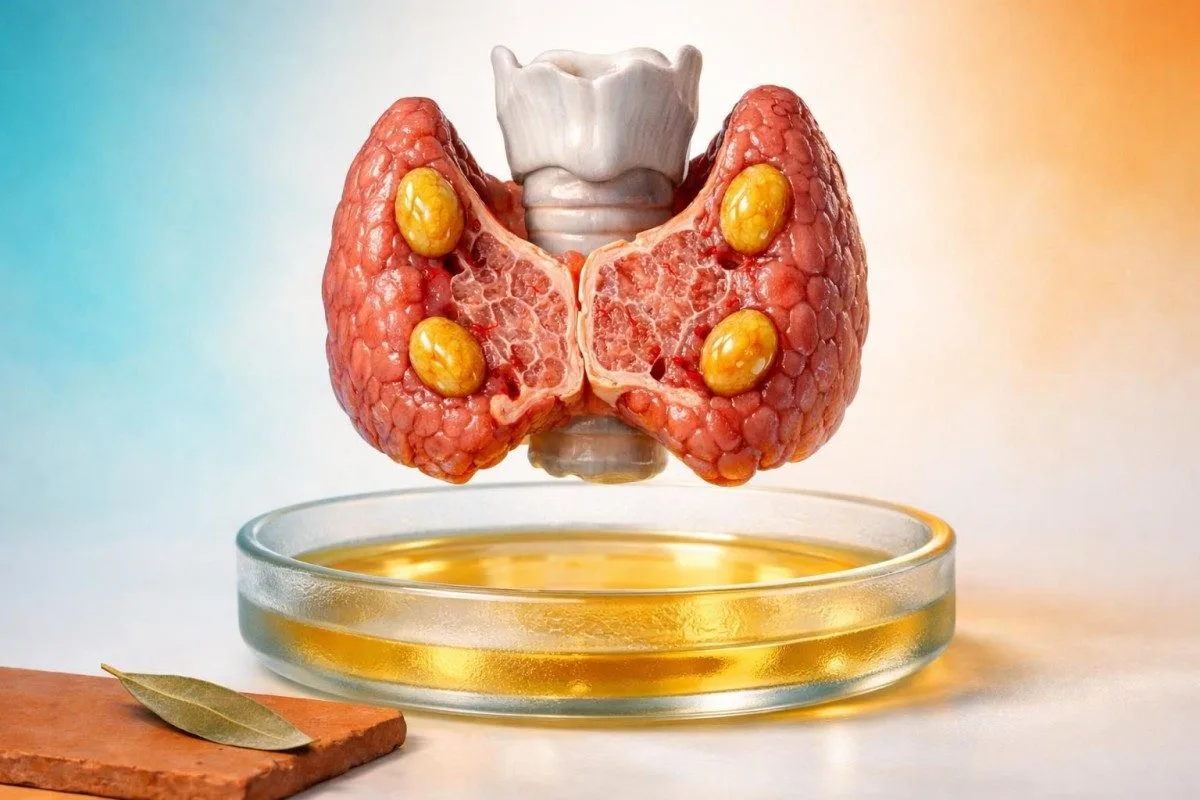
A high calcium result usually means either a temporary concentration effect such as dehydration, or true hypercalcemia from parathyroid disease, supplements, certain medicines, or less commonly cancer. The next step is to confirm whether the number reflects total or ionized calcium and repeat the test if the context does not fit.


- Normal range Total serum calcium is usually 8.6-10.2 mg/dL (2.15-2.55 mmol/L) in adults; repeated values above 10.5 mg/dL merit context.
- Urgent threshold Calcium at 14.0 mg/dL or higher is a medical urgency, especially with confusion, vomiting, or dehydration.
- Ionized calcium Normal ionized calcium is roughly 1.12-1.32 mmol/L; order it when albumin or pH may distort total calcium.
- Common outpatient cause Persistent mild hypercalcemia with a non-suppressed PTH often points to primary hyperparathyroidism.
- Dehydration effect Hemoconcentration can create a mild false high, especially when albumin, sodium, or hematocrit also run high.
- Supplement clue Vitamin D toxicity usually shows 25-OH vitamin D above 150 ng/mL; calcium carbonate over 2,000-3,000 mg/day can also raise calcium.
- Cancer pattern Rapidly rising calcium above 13 mg/dL with low PTH, weight loss, or bone pain needs urgent evaluation.
- Repeat timing If you feel well and calcium is 10.3-11.2 mg/dL, many clinicians repeat total calcium, albumin, and creatinine within 1-2 weeks.
High calcium on a CMP: what the result usually means
A high calcium result on a CMP usually means one of four things: the sample was concentrated by dehydration, the lab measured high total calcium because albumin is high, you have a true calcium-regulating disorder such as primary hyperparathyroidism, or—less often—there is a medication, supplement, or cancer-related cause. When our Kantesti AI blood test analyzer reviews a high calcium on CMP, we first check the exact number, albumin, creatinine, and whether the result needs confirmation with repeat or ionized calcium.
A CMP reports total calcium, not the biologically active fraction. Roughly 45% of circulating calcium is ionized, about 40% is albumin-bound, and the rest is complexed to citrate or phosphate, which is why our medical validation standards place albumin and pH beside calcium before calling a result truly abnormal. At Kantesti, our medical review workflow—led by Thomas Klein, MD—does not interpret calcium in isolation.
I see this pattern after fasting, hard exercise, and sauna use. A patient with calcium 10.7 mg/dL, albumin 5.1 g/dL, and otherwise unremarkable chemistry often normalizes on repeat once hydration is better; if you are unsure what else a chemistry panel is capturing, our CMP vs BMP guide helps place calcium in context.
When patients ask what causes high calcium in blood, I usually start with dehydration, parathyroid disease, supplements, and cancer-related causes because that short list explains most cases. In our review of more than 2 million uploaded lab reports, isolated calcium flags are usually mild, and our piece on dehydration false highs shows why albumin, sodium, and context matter.
What level counts as high calcium in adults?
Adult total serum calcium is usually 8.6-10.2 mg/dL (2.15-2.55 mmol/L). Many labs flag 10.3-10.5 mg/dL as high, but I worry more when calcium is 12.0 mg/dL (3.0 mmol/L) or higher, or when even a mild elevation persists on repeat.
Because Kantesti sees reports from 127+ countries, unit mix-ups are common. A value of 2.62 mmol/L is about 10.5 mg/dL, and that small conversion error has caused more unnecessary panic messages than almost anything else on our blood test biomarkers guide.
Some labs report total calcium as Ca, others as tCa, and ionized as iCa, which is why our blood test abbreviations guide exists. Some European labs use an upper limit of 2.55 mmol/L, while a few North American labs still flag only above 10.5 mg/dL, so the same sample may look high in one portal and normal in another.
Corrected calcium = measured calcium + 0.8 x (4.0 - albumin g/dL) is still taught, but the evidence is honestly mixed. Payne's formula can overcall hypercalcemia in CKD, cirrhosis, and older adults, so I treat corrected calcium as a screening tool and ionized calcium as the tie-breaker when the story feels off. The high calcium blood test meaning is very different at 10.4 mg/dL than at 13.4 mg/dL.
Can dehydration make calcium look high?
Yes—dehydration can make total calcium look mildly high by concentrating proteins and solutes in the sample. This usually causes a small bump, often around 10.3-10.9 mg/dL, not a dramatic level of 13 or 14 mg/dL.
When dehydration is the driver, the rest of the chemistry often tells on itself. If sodium is high or upper-normal, our sodium guide often helps patients see that the same hydration story is showing up in more than one marker.
A classic setup is the early-morning fasted patient who also exercised hard before phlebotomy. I recently reviewed a runner with calcium 10.8 mg/dL, albumin 5.0 g/dL, and a high-normal hematocrit; after 48 hours of normal fluids and no workout before the repeat, calcium came back 9.9 mg/dL.
Here is the nuance: dehydration rarely explains a calcium of 13.5 mg/dL. When the number is clearly high, or when symptoms are prominent, I stop blaming concentration and start looking for PTH, cancer-related, vitamin D, medication, or kidney drivers.
When repeat testing or ionized calcium matters
An ionized calcium test matters when albumin is abnormal, proteins are unusual, kidney disease changes the chemistry, or the symptoms do not match the total calcium. In those situations, total calcium can mislead you in both directions.
Ionized calcium is the active fraction, and it becomes more useful when albumin or globulins are abnormal. Patients with high total protein, monoclonal proteins, or low albumin can have misleading total calcium, which is why our serum proteins guide matters more than people expect here.
Acid-base status shifts ionized calcium within minutes. Ionized calcium falls by roughly 0.04 to 0.05 mmol/L for every 0.10 rise in pH, and CKD adds another layer because patients with lower GFR often have phosphate, calcitriol, and protein changes that distort total calcium; our creatinine guide helps frame that kidney piece.
In practice, I order ionized calcium when total calcium is only slightly high but albumin is clearly abnormal, when symptoms do not match the number, or when a patient is critically ill. Kantesti AI flags those discordant patterns automatically because a corrected total calcium alone can be falsely reassuring or falsely alarming.
Parathyroid causes: the most common reason for true mild hypercalcemia
Persistent mild hypercalcemia in an otherwise stable adult most often points to primary hyperparathyroidism. The key lab clue is simple: when calcium is high, PTH should be low, so a normal or high-normal PTH is usually inappropriate.
Primary hyperparathyroidism is the most common outpatient cause of persistent mild hypercalcemia. When calcium is high, PTH should be low; if you have calcium 10.8 mg/dL and PTH 48 pg/mL, that normal-looking PTH is biochemically inappropriate, and our PTH guide walks through that pattern.
The 2022 Fifth International Workshop statement led by Bilezikian in the Journal of Bone and Mineral Research still guides most practice as of 2026. I worry more when high calcium travels with low phosphate, kidney stones, osteoporosis at the distal radius, or eGFR below 60 mL/min/1.73 m² than when the calcium alone is 10.4 or 10.5 mg/dL.
A woman in her early 60s stays in my mind: calcium 10.9 mg/dL, PTH 54 pg/mL, phosphate 2.3 mg/dL, and years of borderline kidney stones. Our Medical Advisory Board reviews these cases the same way I do in clinic—PTH must be interpreted against calcium, not against the lab's reference interval alone.
How urine calcium separates FHH from parathyroid disease
A 24-hour urine calcium can prevent the wrong diagnosis. A calcium/creatinine clearance ratio below 0.01 suggests familial hypocalciuric hypercalcemia, while a ratio above 0.02 fits primary hyperparathyroidism better, although thiazides, CKD, and vitamin D deficiency can blur the middle ground.
Supplements, vitamin D, antacids, and medications that raise calcium
Common reversible causes of high calcium include calcium supplements, vitamin D excess, thiazide diuretics, lithium, and sometimes heavy antacid use. The dose and the formulation matter more than most patients realize.
Supplements and medications are common, fixable causes of mild hypercalcemia. Elemental calcium above about 2,000 to 3,000 mg/day—especially as calcium carbonate plus absorbable alkali—can cause the classic milk-alkali syndrome, and many patients do not realize that a 1,250 mg tablet often contains only 500 mg of elemental calcium.
Vitamin D toxicity usually shows a 25-hydroxyvitamin D level above 150 ng/mL, not just 35 or 45 ng/mL. Our vitamin D levels chart helps here, and I remind patients that standard doses of 800 to 2,000 IU/day rarely cause frank hypercalcemia in adults with normal kidneys. The Endocrine Society's older guidance still shapes practice, but this is one of those areas where specialists genuinely disagree on how high is too high before toxicity becomes the real concern.
Thiazide diuretics can nudge calcium upward by increasing renal calcium reabsorption, while lithium can reset the parathyroid calcium-sensing threshold. If you upload your regimen to our AI supplement recommendations, Kantesti cross-checks the dose, form, and biomarker pattern rather than blaming one tablet in isolation.
Vitamin A excess is a quieter culprit that even good clinicians occasionally miss. I ask about retinol-heavy skin products, cod liver oil, fortified shakes, and chewable antacids because the overlap is surprisingly messy.
When high calcium raises concern for cancer-related hypercalcemia
Cancer-related hypercalcemia becomes more likely when calcium rises fast, reaches 13-14 mg/dL or higher, and PTH is suppressed. It is less common than parathyroid disease in outpatient practice, but it usually makes people sicker, faster.
Cancer-related hypercalcemia is less common than parathyroid disease in a routine outpatient portal, but it is more urgent when it appears. In adults, malignancy and primary hyperparathyroidism still explain well over 90% of true hypercalcemia, and our article on cancer-related lab clues explains why rapidly rising calcium deserves a different level of concern.
The usual pattern is calcium above 13 to 14 mg/dL, suppressed PTH, dehydration, and symptoms evolving over days or a few weeks. PTHrP-mediated hypercalcemia is common in squamous cancers, osteolytic disease can drive calcium up from bone, and lymphoma can raise calcitriol; an abnormal alkaline phosphatase can support high bone turnover, though it is not mandatory.
Stewart's classic New England Journal review remains clinically useful: patients with malignancy-associated hypercalcemia are usually sicker than patients with primary hyperparathyroidism at the same visit. A stable 10.6 mg/dL in someone who feels well is one story; 13.8 mg/dL with weight loss, constipation, and acute kidney injury is a very different story.
This is why I get uneasy when the calcium rise is new, fast, and accompanied by low PTH. That combination should not wait a month for routine follow-up.
Other causes of high calcium in blood that clinicians sometimes miss
Other causes of high calcium in blood include hyperthyroidism, granulomatous disease, prolonged immobilization, tertiary hyperparathyroidism, and familial hypocalciuric hypercalcemia. These are less common, but they are where a lot of confusing cases live.
If TSH is suppressed, thyroid overactivity belongs on the list. Our low TSH guide is the next stop, and I usually pair it with free T4 interpretation because thyroid-driven calcium elevations are often modest rather than dramatic.
Granulomatous disease is easy to miss because the vitamin D pattern is unusual. The key clue is extra-renal 1-alpha hydroxylase activity making more calcitriol, so PTH is low, 25-OH vitamin D may be ordinary, and calcium can worsen after supplements or heavy sun exposure.
Immobilization matters more than many sites admit. I see it after spinal injury, prolonged casting, or weeks of bed rest, particularly in younger patients with high bone turnover and in adults who already have dehydration or kidney impairment.
Familial hypocalciuric hypercalcemia is the quiet mimic and usually should not be sent straight to surgery. Lifelong calcium around 10.5 to 11.5 mg/dL, low urine calcium, and relatives with the same pattern push me toward FHH rather than a parathyroid adenoma.
Symptoms, ECG clues, and when high calcium is urgent
Symptoms become more likely as calcium rises, but the fit is imperfect. Confusion, vomiting, severe constipation, marked thirst, frequent urination, and weakness are the practical red flags—especially once calcium reaches 12 mg/dL and above.
Hypercalcemia symptoms often overlap with dehydration and other chemistry problems. Constipation, nausea, thirst, frequent urination, muscle weakness, and mental slowing are common, and our electrolyte panel guide helps explain why the symptoms can feel broader than one number on the report.
On ECG, the classic clue is a shortened QT interval, although you do not need an ECG change to be symptomatic. When magnesium is low or borderline, weakness and palpitations often feel worse, which is why I also check the magnesium range before assuming calcium is acting alone.
My rule of thumb is practical, not dramatic: calcium above 12 mg/dL with vomiting, confusion, severe constipation, or reduced urine output deserves same-day medical contact. Calcium at 14.0 mg/dL or higher, especially with dehydration or kidney disease, usually needs emergency evaluation and IV fluids.
One of the easiest misses is the older adult whose constipation and confusion get blamed on a urine infection. If the calcium is high, read the chemistry before you read the story.
What to do after an unexpectedly high calcium result
The next step after an unexpected high calcium result is to confirm it with context, not panic. As of April 11, 2026, our AI-powered blood test interpretation workflow treats mild asymptomatic calcium of 10.3 to 11.2 mg/dL very differently from 13 to 14 mg/dL with symptoms, because the repeat plan depends on the pattern rather than the flag alone.
If you feel well and the elevation is mild, I usually repeat total calcium, albumin, and creatinine within 1 to 2 weeks, ideally after normal hydration and no extra calcium tablets the morning of the test. If you want a fast second read before that repeat, try our free blood test demo so you know whether to ask for PTH, phosphate, or ionized calcium.
When the context is muddy, I add PTH, 25-OH vitamin D, phosphate, and sometimes ionized calcium or a 24-hour urine calcium. Our blood test photo scan is useful when patients only have a phone picture of a portal result and want trend analysis instead of a one-line lab flag.
When Thomas Klein, MD, signs off a calcium review, the first questions are simple: is this total or ionized calcium, is PTH appropriately suppressed, and do albumin or medications explain the number. If you want to see who built the clinical guardrails behind that logic, our About Us page explains how Kantesti combines physician review with neural-network trend analysis.
Most patients find this sequence calming because it turns a scary portal alert into a short checklist. A good calcium workup is rarely exotic; it is just careful.
Research publications that support calcium interpretation
These references matter because calcium interpretation often depends on albumin, globulins, and immune-mediated differentials, not calcium alone. Our clinical framework for what does high calcium mean keeps those related biomarkers in view when a CMP flag looks out of proportion to how sick someone feels.
Klein, T. (2025). Serum Proteins Guide: Globulins, Albumin & A/G Ratio Blood Test. Zenodo. https://doi.org/10.5281/zenodo.18316300. Also available on ResearchGate and Academia.edu.
Klein, T. (2025). C3 C4 Complement Blood Test & ANA Titer Guide. Zenodo. https://doi.org/10.5281/zenodo.18353989. Also available on ResearchGate and Academia.edu.
I included these because false or misleading calcium elevations often travel with abnormal proteins or immune disorders. They are not substitutes for hypercalcemia guidelines, but they help explain why one isolated number can mislead.
Frequently Asked Questions
Is calcium 10.5 mg/dL high?
A calcium of 10.5 mg/dL is borderline high in many adult labs, although some use 10.2 and others 10.5 mg/dL as the upper limit. One isolated 10.5 mg/dL result does not prove disease, especially if albumin is high or you were dehydrated. If you feel well, many clinicians repeat total calcium with albumin and creatinine within 1 to 2 weeks. Persistent values above 10.5 mg/dL deserve a PTH check.
Can dehydration cause high calcium on a CMP?
Yes, dehydration can cause a mild high total calcium on a CMP by concentrating albumin and other solutes in the laboratory sample. This effect usually raises calcium only a little, often into the 10.3 to 10.9 mg/dL range rather than 13 or 14 mg/dL. If albumin, sodium, or hematocrit are also high, the dehydration explanation becomes more convincing. Repeat testing after normal hydration often settles the question.
When should ionized calcium be checked instead of total calcium?
Ionized calcium is especially useful when albumin is low or high, total protein is abnormal, acid-base status is changing, or kidney disease makes total calcium unreliable. The normal ionized calcium range is roughly 1.12 to 1.32 mmol/L in most adult labs. Corrected calcium formulas can misclassify patients in CKD, cirrhosis, or critical illness. If the symptoms do not match the total calcium, ionized calcium is often the better test.
Does high calcium mean cancer?
No, high calcium does not automatically mean cancer. In outpatient medicine, persistent mild hypercalcemia is more often caused by primary hyperparathyroidism than malignancy. Cancer-related hypercalcemia becomes more concerning when calcium rises quickly, is above about 13 to 14 mg/dL, and PTH is suppressed. Weight loss, dehydration, confusion, bone pain, or acute kidney injury make urgent evaluation more important.
What PTH pattern suggests a parathyroid problem?
When calcium is high, PTH should normally be suppressed. A PTH that is high or even just normal-looking in the setting of calcium 10.8 to 11.2 mg/dL is often inappropriate and suggests primary hyperparathyroidism. For example, calcium 10.9 mg/dL with PTH 45 to 55 pg/mL fits that pattern better than a truly suppressed PTH would. A 24-hour urine calcium may then help separate primary hyperparathyroidism from familial hypocalciuric hypercalcemia.
Can vitamin D or calcium supplements raise calcium?
Yes, supplements can raise calcium, especially when doses stack up from several products. Calcium carbonate plus absorbable alkali can cause milk-alkali syndrome when elemental calcium intake reaches roughly 2,000 to 3,000 mg/day. Vitamin D toxicity usually shows a 25-hydroxyvitamin D level above 150 ng/mL, not just a level in the 40s or 50s. Thiazide diuretics and lithium can also push calcium upward.
When is high calcium an emergency?
High calcium is an emergency when the level reaches about 14.0 mg/dL or higher, or when lower levels come with confusion, vomiting, marked dehydration, severe weakness, or reduced urine output. Calcium above 12 mg/dL with symptoms deserves same-day medical contact even if you are not sure of the cause. People with kidney disease, cancer, or significant dehydration need faster assessment because they can worsen quickly. Emergency treatment often starts with IV fluids and cause-specific therapy.
Get AI-Powered Blood Test Analysis Today
Join over 2 million users worldwide who trust Kantesti for instant, accurate lab test analysis. Upload your blood test results and receive comprehensive interpretation of 15,000+ biomarkers in seconds.
📚 Referenced Research Publications
Klein, T., Mitchell, S., & Weber, H. (2026). Serum Proteins Guide: Globulins, Albumin & A/G Ratio Blood Test. Kantesti AI Medical Research.
Klein, T., Mitchell, S., & Weber, H. (2026). C3 C4 Complement Blood Test & ANA Titer Guide. Kantesti AI Medical Research.
⚕️ Medical Disclaimer
This article is for educational purposes only and does not constitute medical advice. Always consult a qualified healthcare provider for diagnosis and treatment decisions.
E-E-A-T Trust Signals
Experience
Physician-led clinical review of lab interpretation workflows.
Expertise
Laboratory medicine focus on how biomarkers behave in clinical context.
Authoritativeness
Written by Dr. Thomas Klein with review by Dr. Sarah Mitchell and Prof. Dr. Hans Weber.
Trustworthiness
Evidence-based interpretation with clear follow-up pathways to reduce alarm.