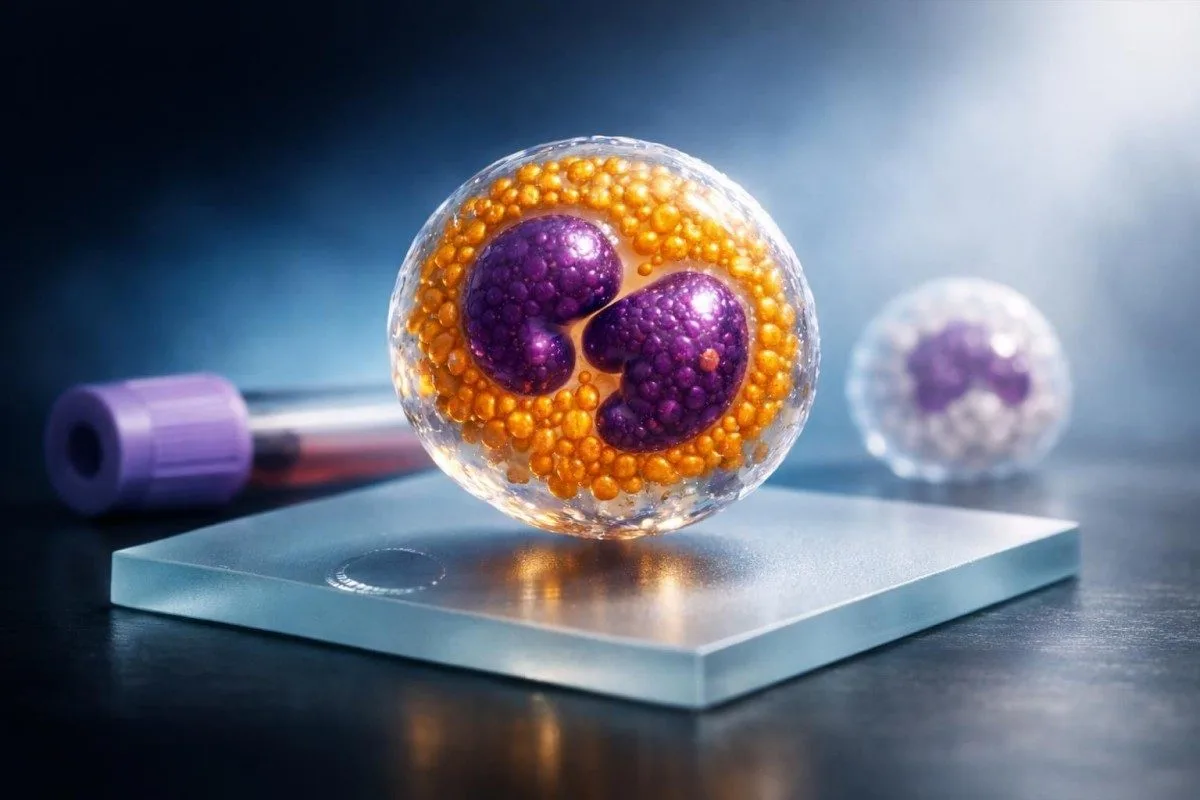
Most high eosinophils results come from allergies, asthma, eczema, or a recent medication effect; worms are less common unless travel, soil exposure, or the right symptoms are present. The number that matters most is the absolute eosinophil count: under 500 cells/µL is usually normal, 500-1500 is mild, and 1500 or higher deserves a more structured work-up.


- Absolute eosinophil count kadınlarda 12-150 ng/mL’dir 0-500 cells/µL veya 0.0-0.5 ×10^9/L; the absolute count is more useful than the percentage.
- Mild eosinophilia means 500-1500 cells/µL and most often reflects allergy, asthma, eczema, or a medication effect.
- Hypereosinophilia generally means AEC ≥1500 cells/µL on repeat testing and warrants evaluation for organ involvement, parasites, autoimmune disease, or marrow disorders.
- Asthma phenotype thresholds of 150 cells/µL Ve 300 cells/µL are often used in respiratory clinics, even though they are below hematology cutoffs.
- Drug red flags include eosinophils plus rash, fever, facial swelling, or ALT/AST more than 2 times the upper limit.
- Parasite testing often requires 3 stool samples on different days; Strongyloides IgG is often more informative than a single stool test.
- Urgent range genellikle >5000 cells/µL or any eosinophilia with chest pain, breathlessness, fainting, weakness, or a rapidly spreading rash.
- Interpretation trap: 7% eosinophils can be normal if WBC is low and elevated if WBC is high; always calculate the absolute count.
- Steroid effect can suppress eosinophils within 24-48 saat civarında en yüksek seviyeye ulaşır., so a normal result after prednisone may hide the earlier abnormality.
What a high eosinophils result means on a differential blood test
A high eosinophils result most often reflects allergy, asthma, eczema, or a medication effect; worms are a smaller but real slice, mainly after travel or soil exposure. Adult absolute eosinophil count (AEC) genellikle 0-500 cells/µL veya 0.0-0.5 ×10^9/L, and that absolute number matters more than the percentage reported on a CBC diferansiyel kılavuzumuza or by our Kantesti AI kan testi analizörü.
itibarıyla 9 Nisan 2026, most hematology references still group 500-1500 cells/µL as mild eosinophilia, 1500-5000 cells/µL as moderate, and more than 5000 cells/µL as severe. The 1500 cells/µL threshold matters because persistent counts at or above that level are where clinicians start worrying more seriously about tissue injury, and some European labs even flag anything above 0.4 ×10^9/L.
Sonuç 7% eosinophils can be normal if the total white cell count is low. If the total Beyaz kan hücresi dır 3.0 ×10^9/L, then 7% gives an AEC of about 210/µL; if the WBC is 12.0 ×10^9/L, that same 7% gives roughly 840/µL, which is elevated, so I always cross-check the beyaz hücre sayımı.
In my clinic, I worry much less about an isolated 620/µL in a hay fever season than I do about 1800/µL plus abnormal liver tests, shortness of breath, or numb feet. The reason is simple: eosinophils alone are often benign, but eosinophils plus organ clues start to look like a real disease process rather than a background allergy.
Why laboratories confuse patients here
Some labs emphasize the percentage, others emphasize the absolute count, and patients understandably panic when only the percentage is flagged. The practical rule is easy: use the absolute eosinophil count to decide whether the elevation is real, and use the percentage only as supporting context.
Allergy, asthma, and eczema patterns that usually look benign
Allergy, asthma, and eczema usually cause mild eosinophilia, often in the 500-1500 cells/µL range, and the count tends to rise and fall with symptoms rather than climb steadily. If the history sounds atopic—sneezing, wheeze, itchy skin, nasal polyps—I usually compare the lab with the symptom pattern in our semptom çözücümüz.
Simple seasonal allergy can produce an AEC in the 600-900/µL range, but plenty of symptomatic patients have a completely normal CBC. Eosinophils also drift through the day because cortisol suppresses them, so two samples drawn at different times can differ by a few hundred cells per microliter without anything dangerous happening.
In respiratory clinics, blood eosinophils of 150 cells/µL Ve 300 cells/µL are often used to phenotype eosinophilic asthma and help decide on inhaled steroid intensity or biologic therapy. That is a different question from hematology, which is why a patient can be told their asthma is 'eosinophilic' even when the general lab report says the count is still inside or just above the reference band on a standard blood panel.
Eczema can push eosinophils upward, especially when the skin surface area involved is large, but plain atopic dermatitis rarely explains a persistent AEC above 1500/µL in my experience. When that happens, I stop blaming the skin and start revisiting medicines, scabies exposure, eosinophilic gastrointestinal symptoms, and occasionally autoimmune disease.
A useful asthma nuance
Toplam IgE can be high in allergic disease, but normal IgE does not exclude eosinophilic asthma. I see that mismatch often in adults already using inhaled steroids, because treatment can blunt one signal while symptoms stay very real.
When high eosinophils are caused by a medication
A medication reaction is a major cause of high eosinophils, and it becomes urgent when the count rises with rash, fever, facial swelling, swollen nodes, or abnormal liver tests. When eosinophils travel with rising ALT or AST, I review our liver enzyme red flags before I call it allergy.
The usual culprits are beta-lactam antibiotics, sulfonamides, allopurinol, lamotrigine, carbamazepine, minocycline, proton-pump inhibitors, and some NSAIDs. The timing helps more than patients expect: many reactions appear 5 days to 8 weeks after a new medicine, and the paired karaciğer fonksiyon testi paterninde often becomes abnormal before the eosinophil count reaches its peak.
DRESS syndrome often shows up 2-6 hafta after the culprit drug starts. Eosinophils may be only modestly high at first, but ALT or AST more than 2 times the upper limit of normal, rising creatinine, fever, or facial swelling should move this out of the 'watch it' category and into urgent medical review.
There is a modern twist here that many generic articles miss: dopamin can suppress eosinophils within 24-48 saat civarında en yüksek seviyeye ulaşır., so a normal repeat CBC after urgent care does not erase the earlier signal. And dupilumab can transiently raise eosinophils in some patients during the first few months, whereas anti-IL-5 therapies usually lower them—a distinction our biyobelirteç referans kütüphanemize flags because it changes the differential.
Do worms really cause eosinophilia, and what pattern suggests them?
Worms can raise eosinophils, but mostly tissue-invasive helminths do; many common bowel infections and pinworms do not. If there is travel, barefoot soil exposure, or unexplained wheeze plus abdominal complaints, I compare the CBC with the exposure clues in our GI semptom rehberimiz.
The classic exposure stories involve residence or travel in tropical or subtropical regions, gardening or walking barefoot on contaminated soil, untreated water, or specific food exposures. Strongyloides, hookworm, schistosomiasis, toxocariasis, and trichinellosis are much more likely to produce eosinophilia than routine viral gastroenteritis or a short-lived food poisoning episode.
A stool ova-and-parasite exam usually needs 3 separate samples collected on different days, because one sample easily misses intermittent shedding. Strongyloides IgG serology is often more sensitive than routine stool testing when exposure is plausible, and that one detail changes management all the time in real practice.
Here is the trap I wish more patients knew about: before giving steroids for 'asthma' or a rash, we should think about Strongyloides in exposed people because steroids can trigger hyperinfection. Oddly, the eosinophil count can fall or normalize once illness becomes severe, so a late normal CBC does not reliably rule the parasite out.
When stool tests are negative
A negative first stool study does not end the story if the travel history is convincing. In my experience, repeated stool testing plus serology is the combination that finds the cases we otherwise miss.
When eosinophils point beyond allergy: autoimmune disease, adrenal issues, or hypereosinophilic syndromes
Persistent eosinophils above 1500 cells/µL push us beyond simple allergy and toward autoimmune disease, adrenal insufficiency, eosinophilic organ disease, or hypereosinophilic syndromes. When the story includes sinus trouble, neuropathy, kidney findings, or vasculitic symptoms, I widen the lens with our autoimmune pattern guide.
ESR, sistemik belirtilerle seyreden birkaç inflamatuvar durumda klinik olarak hâlâ faydalıdır. eosinophilic granulomatosis with polyangiitis, adult-onset asthma and chronic sinus disease usually come first, and eosinophils are often above 1000/µL. ANCA is positive in only about 30-40% of cases, so a negative ANCA does not safely exclude the diagnosis when the clinical story fits.
A hypereosinophilic syndrome is not defined by the count alone; it requires eosinophilia plus evidence of organ involvement, often in the heart, lungs, skin, gut, or nervous system. When the count stays ≥1500/µL, I often add troponin, echocardiography, serum tryptase, vitamin B12, and a peripheral smear, along with inflammation markers such as the sed hızı.
One overlooked clue is adrenal insufficiency. Low cortisol removes a normal brake on eosinophils, so eosinophilia with fatigue, weight loss, dizziness on standing, and low sodium on a sodium panel deserves endocrine follow-up, especially if morning cortisol is low.
And there is a counterintuitive point: eosinophilic esophagitis can exist with normal or only mildly raised blood eosinophils. So if someone has food sticking, chest discomfort after eating, or long-standing reflux symptoms, a modest CBC does not rule that disorder out.
Which next tests doctors usually order after a high eosinophils result
The next tests after a high eosinophils blood test are usually a repeat CBC with differential, medication and travel review, and basic organ screens such as creatinine, ALT, AST, and urinalysis. If you are staring at a lab PDF, our PDF upload tool helps separate a one-off blip from a pattern.
For a mild isolated AEC of 500-1500/µL in a well patient, repeating the test in 1-4 hafta is common practice. A peripheral smear and a careful read of the whole report matter; our how-to-read results guide shows why eosinophils rarely make sense in isolation.
The second wave is targeted rather than random. Allergy-dominant histories point toward total IgE and sometimes pulmonary testing, parasite exposures point toward stool O&P x3 Ve Strongyloides IgG, and systemic symptoms push toward ESR/CRP, ANA/ANCA, B12, tryptase, troponin, chest imaging, and sometimes molecular testing örneğin FIP1L1-PDGFRA.
I tell patients to bring a real timeline: every prescription, supplement, steroid burst, pet exposure, travel date, and new over-the-counter product from the last 3 aydan uzun sürmesi. In my experience, the forgotten antibiotic from six weeks ago solves the puzzle as often as the expensive test does.
Tests we order selectively, not automatically
Bone marrow studies, molecular panels, and cardiac imaging are not first-line for every mildly abnormal CBC. They become appropriate when eosinophils are persistent, above 1500/µL, or paired with symptoms, anemia, thrombocytopenia, or organ injury markers.
How other lab results change the meaning of eosinophils
Other lab changes often tell you whether eosinophils are innocent or not. Eosinophilia paired with high neutrophils, anemia, abnormal platelets, or cholestatic liver tests means something very different from an isolated mild rise, so I cross-check our guide to yüksek nötrofiller before I reassure anyone.
Ne zaman nötrofiller and eosinophils are both high, I think about inflammation, steroid rebound, smoking-related airway irritation, or mixed infection more than seasonal allergy alone. When monositler rise too, chronic inflammation or a recovery phase becomes more plausible, and the monocyte pattern can be surprisingly useful.
Eosinophils plus abnormal bilirubin, ALT, ALP, veya GGT push me back toward drug injury, liver-fluke exposure, or eosinophilic biliary disease rather than pollen. A rising direct bilirubin deserves its own read in our bilirubin, because jaundice changes the urgency.
Düşük olan hemoglobin or abnormal trombosit sayısı beside eosinophilia makes me consider marrow disease, occult bleeding, or a broader inflammatory process. That is why I still review the hemoglobin range Ve platelet count pattern before I label a persistent result as benign.
Two interpretation traps deserve a mention. Children can run slightly higher eosinophil counts than adults, and pregnancy usually tends to lower eosinophils because endogenous steroid levels rise—so a new elevation in pregnancy gets my attention more, not less.
When high eosinophils need urgent or same-week care
High eosinophils need fast care when the AEC is above 1500 cells/µL with symptoms, veya above 5000 cells/µL even if the symptoms seem vague. If you want a quick first pass before clinic, you can upload the report to our free interpretation demo, but chest pain, breathlessness, weakness, fainting, or a fast-spreading rash are same-day issues.
What worries me most is evidence of organ involvement: shortness of breath, oxygen drop, chest discomfort, palpitations, dark urine, new numbness, confusion, or severe abdominal pain. Eosinophilic myocarditis can begin with fatigue or mild chest tightness and then accelerate, so cardiopulmonary symptoms always lower my threshold for urgent assessment.
Clinicians do disagree on the exact emergency cutoff, and the evidence is honestly mixed because context matters more than the number alone. Still, counts above 5000/µL, or lower counts paired with organ symptoms, deserve prompt evaluation; some of the clearest examples show up in real-world hasta vaka hikâyelerimiz where eosinophils were the first clue.
One more trap: giving steroids before thinking about Strongyloides can calm the eosinophils while the underlying infection worsens. If exposure is plausible and the patient is stable, I prefer parasite testing before or alongside steroids rather than days afterward.
How Kantesti AI interprets eosinophils in clinical context
Kantesti AI bunu eozinofiller best when it sees the whole panel, because the same AEC means different things beside low WBC, high ALT, or abnormal platelets. On Kantesti, our model weighs pattern context, symptom inputs, and prior trends rather than tagging every eosinophil rise as allergy.
We built Kantesti for exactly this sort of ambiguous result. Our platform has been used by more than 2 milyon kullanıcı karşısında 127'den fazla ülke Ve 75+ dil, and the clinical framework behind eosinophil interpretation sits inside the standards described on Hakkımızda ve bizim tıbbi doğrulama sayfası.
I, Thomas Klein, MD, still review edge cases with our physicians because persistent eosinophilia can fool both doctors and algorithms. The human oversight is public through our Tıbbi Danışma Kurulu, and in YMYL medicine that kind of transparency matters.
Kantesti's neural network compares the differential blood test with liver, kidney, inflammatory, and nutrition markers, then surfaces the most plausible branches of the differential. If you want the mechanics, our Yapay zeka teknolojisi rehberi explains how trend analysis can separate seasonal atopy from a steadily rising eosinophil trajectory powered by our 2.78T-parameter health AI.
Araştırma yayınları ve metodoloji notları
Related Kantesti publications show how we document lab interpretation methodology and DOI-linked references across biomarkers. They are not eosinophil papers, but the editorial process is the same one used in articles on our tıbbi blogumuza and by ekibimizi ziyaret edin. as of 9 Nisan 2026.
Kantesti Medical Editorial Team. (2025). aPTT normal range: D-dimer, protein C blood clotting guide. Zenodo. https://doi.org/10.5281/zenodo.18262555. Ayrıca şu adreste mevcuttur: ResearchGate Ve Academia.edu.
Kantesti Medical Editorial Team. (2025). Serum proteins guide: Globulins, albumin & A/G ratio blood test. Zenodo. https://doi.org/10.5281/zenodo.18316300. Ayrıca şu adreste mevcuttur: ResearchGate Ve Academia.edu.
The practical reason for listing these here is methodological. Eosinophils make the most sense when interpreted as part of a pattern, and that same whole-panel logic runs through how Kantesti writes, reviews, and updates laboratory education across biomarkers.
Sıkça Sorulan Sorular
Kan tahlilinde 7% eozinofiller yüksek mi?
7% eozinofil sonucu tek başına otomatik olarak yüksek değildir; çünkü yüzde oranından daha çok mutlak eozinofil sayısı önemlidir. Eğer toplam WBC 3,0 ×10^9/L ise, 7% yaklaşık 210 hücre/µL’ye karşılık gelir ve bu normaldir; WBC 12,0 ×10^9/L ise, aynı 7% yaklaşık 840 hücre/µL’ye karşılık gelir ve bu yüksektir. Çoğu laboratuvar, yetişkinlerde mutlak eozinofil sayısını 0-500 hücre/µL aralığını normal kabul eder. Bu nedenle doktorlar, eozinofiliğin gerçekten olup olmadığına karar vermeden önce mutlak sayımı hesaplar.
Alerjiler tek başına yüksek eozinofillere neden olabilir mi?
Evet, yalnızca alerjiler yüksek eozinofillere neden olabilir; ancak genellikle çok yüksek sayılardan ziyade hafif eozinofiliye yol açarlar. Uygulamada alerji, astım ve egzama çoğu zaman mutlak eozinofil sayısını 500-1500 hücre/µL aralığında üretir ve değer, semptom alevlenmelerine göre dalgalanabilir. 1500 hücre/µL’nin üzerindeki kalıcı bir değer, basit saman nezlesi için daha az tipiktir ve genellikle ilaçlar, parazitler, otoimmün hastalıklar veya organa özgü eozinofilik bozukluklar açısından daha yakından incelemeyi gerektirir. Normal IgE, alerjiyi dışlamaz ve yüksek IgE, bunun kesin kanıtı değildir.
Solucanlar her zaman eozinofilleri yükseltir mi?
Hayır, solucanlar her zaman eozinofilleri yükseltmez. Strongyloides, kancalı kurt, şistozomiyazis, toksokariyazis ve trikinellozis gibi dokuya invaziv helmintler eozinofiliye daha sık neden olur; kıl kurdu ve birçok yaygın bağırsak enfeksiyonu ise neden olmayabilir. Dışkıda yumurta ve parazit incelemesi (stool ova-and-parasite exam) çoğu zaman 3 ayrı örnek gerektirir; çünkü tek bir örnek, aralıklı dökülmeyi kaçırabilir. Maruziyet olası olduğunda Strongyloides IgG serolojisi, rutin dışkı incelemesine göre çoğu zaman daha duyarlıdır.
Hangi ilaçlar sıklıkla eozinofiliye neden olur?
Bazı yaygın ilaçlar eozinofiliye neden olabilir; özellikle antibiyotikler, sülfonamidler, allopurinol, lamotrijin veya karbamazepin gibi antikonvülzanlar, proton pompa inhibitörleri, minosiklin ve bazı NSAİİ’ler. İlaçla ilişkili eozinofili çoğu zaman yeni bir ilaç başlandıktan 5 gün ile 8 hafta sonra ortaya çıkar. Döküntü, ateş, yüzde şişme, lenf bezi şişmesi, anormal karaciğer enzimleri veya böbrek hasarı ile birlikte olduğunda daha endişe vericidir. Prednizon, eozinofilleri 24-48 saat içinde baskılayabilir; bu nedenle daha sonra yapılan normal bir CBC her zaman daha önceki bir ilaç reaksiyonunu tamamen ortadan kaldırmaz.
Yüksek eozinofiller konusunda ne zaman endişelenmeliyim?
Mutlak eozinofil sayısı tekrarlı testlerde 1500 hücre/µL veya daha yüksekse ya da eozinofili düzeyi göğüs ağrısı, nefes darlığı, bayılma, halsizlik, koyu renkli idrar, şiddetli karın ağrısı veya hızla yayılan döküntü ile birlikte ortaya çıkıyorsa daha fazla endişelenmelisiniz. Birçok klinisyen, özellikle belirtiler varsa 5000 hücre/µL üzerindeki değerleri acil olarak değerlendirir. Kalıcı eozinofili akciğerleri, kalbi, cildi, bağırsakları veya sinirleri etkileyebilir; bu nedenle belirtiler, sayı kadar önemlidir. Eozinofili, organ belirtileriyle birlikteyse aynı gün içinde değerlendirilmek makul olur.
Yüksek eozinofiller sonucundan sonra genellikle hangi testler yapılır?
Genellikle bir sonraki adımlar; diferansiyelli tam kan sayımı (CBC) tekrarı, mutlak eozinofil sayısının hesaplanması ve ilaçların, takviyelerin, seyahatin ve steroid kullanımının gözden geçirilmesidir. Doktorlar sıklıkla organ tutulumu veya kemik iliğiyle ilgili ipuçlarını araştırmak için kreatinin, ALT, AST, idrar tahlili ve bazen de periferik yayma ekler. Öyküye bağlı olarak takip testleri; toplam IgE, 3 ayrı gün boyunca dışkıda yumurta ve parazit incelemeleri, Strongyloides IgG, ESR veya CRP, ANA veya ANCA, vitamin B12, triptaz, troponin ve göğüs görüntülemeyi içerebilir. En iyi değerlendirme, “her şeyi tarayan” bir panel olarak değil, mevcut örüntüye hedeflenerek yapılır.
Bugün Yapay Zekâ Destekli Kan Tahlili Analizini Alın
Anlık ve doğru laboratuvar testi analizi için Kantesti’ye güvenen dünya genelindeki 2 milyondan fazla kullanıcıya katılın. Kan testi sonuçlarınızı yükleyin ve saniyeler içinde 15,000+ biyobelirteçlerinin kapsamlı yorumunu alın.
📚 Kaynak Gösterilen Araştırma Yayınları
Klein, T., Mitchell, S., & Weber, H. (2026). aPTT Normal Aralığı: D-Dimer, Protein C Kan Pıhtılaşma Kılavuzu. Kantesti Yapay Zeka Tıbbi Araştırma.
Klein, T., Mitchell, S., & Weber, H. (2026). Serum Proteinleri Rehberi: Globulinler, Albumin ve A/G Oranı Kan Testi. Kantesti Yapay Zeka Tıbbi Araştırma.
⚕️ Tıbbi Uyarı
Bu makale yalnızca eğitim amaçlıdır ve tıbbi tavsiye niteliği taşımaz. Tanı ve tedavi kararları için her zaman yetkin bir sağlık hizmeti sağlayıcısına danışın.
E-E-A-T Güven Sinyalleri
Deneyim
Hekim liderliğinde laboratuvar yorumlama iş akışlarının klinik incelemesi.
Uzmanlık
Klinik bağlamda biyobelirteçlerin nasıl davrandığına odaklanan laboratuvar tıbbı.
Otorite
Dr. Thomas Klein tarafından yazılmış; Dr. Sarah Mitchell ve Prof. Dr. Hans Weber tarafından gözden geçirilmiştir.
Güvenilirlik
Alarmı azaltmaya yönelik net takip yollarıyla kanıta dayalı yorumlama.