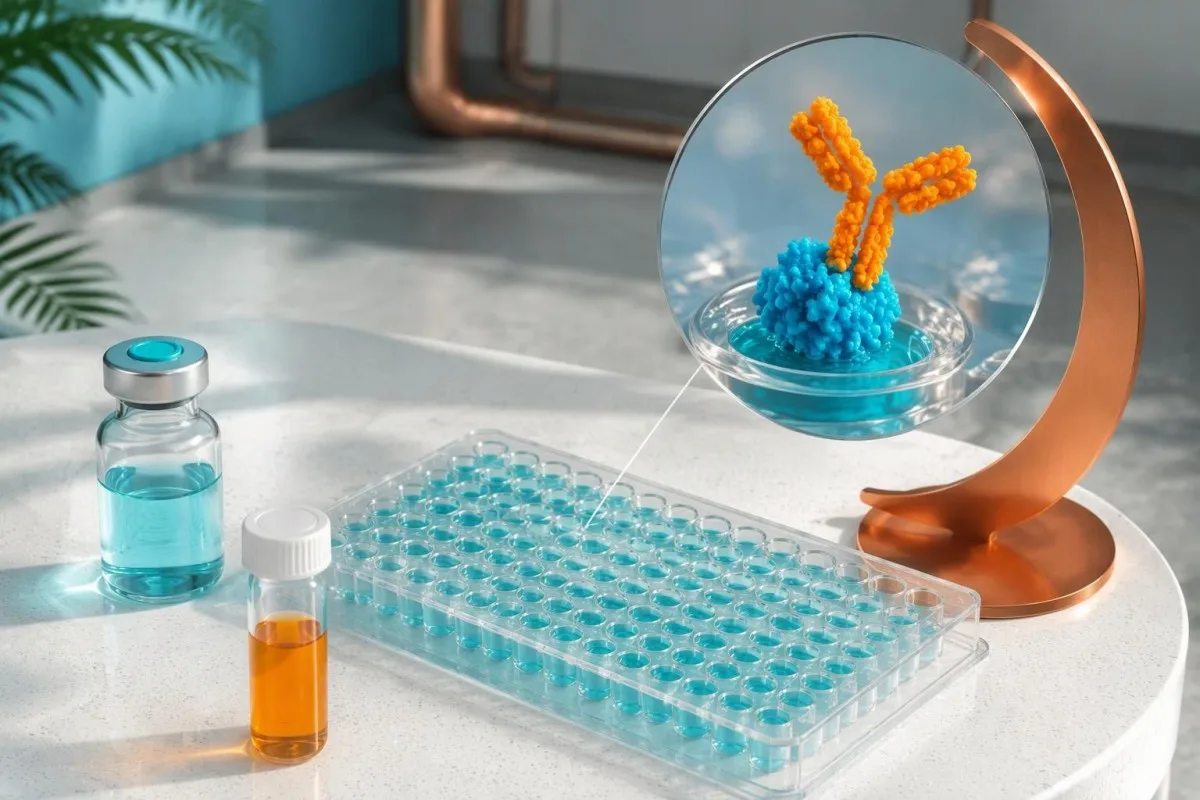
A protective antibody result does not automatically cancel a booster. Your laboratory method, vaccination record and any recent wound determine what happens next.

ముఖ్యాంశాలు
- Tetanus immunity test results can support an assessment of protection, but they do not replace vaccination records or urgent wound assessment.
- Assay thresholds differ: approximately 0.01 IU/mL is a historical minimum for neutralization assays, while many routine immunoassays use 0.1 IU/mL.
- Routine US boosters are generally given every 10 years after a completed primary series; a protective titer does not automatically change that schedule.
- Dirty or major wounds can require a US booster when the last tetanus-containing dose was 5 or more years ago.
- Clean, minor wounds can require a US booster when the last tetanus-containing dose was 10 or more years ago.
- Tetanus immune globulin is indicated for certain dirty or major wounds, including unknown or incomplete vaccination histories; the US preventive dose is 250 IU intramuscularly.
- యూనిట్ మార్పిడి matters: 0.1 IU/mL equals 100 IU/L or 100 mIU/mL, not 0.1 IU/L.
- వేచి ఉండకండి for an antibody result after a concerning wound, or with jaw stiffness, swallowing difficulty or muscle spasms.
Does a tetanus immunity test mean you can skip a booster?
A tetanus immunity test can show whether measured antitoxin exceeds your laboratory’s protection threshold, but it does not automatically mean you can skip a booster. Vaccination history and wound type guide immediate prevention; wound cleaning, vaccination and possible tetanus immune globulin should not wait for antibody testing.
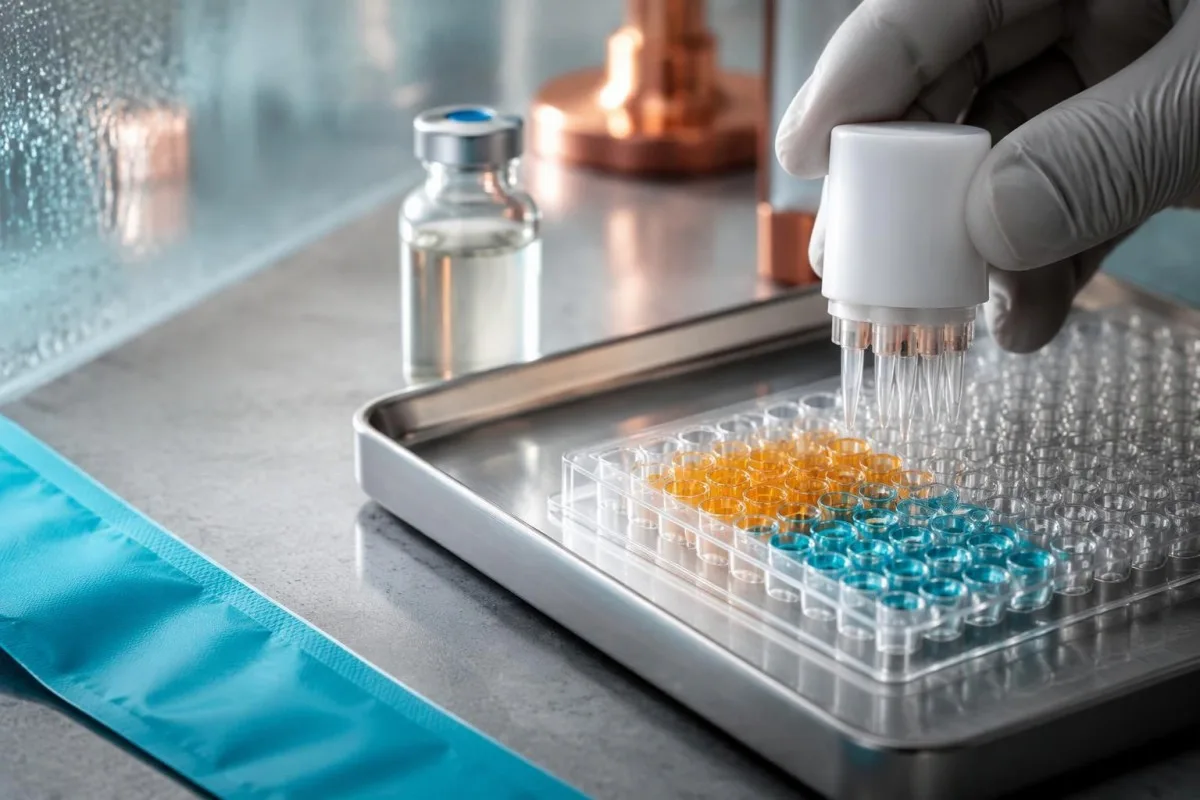
Protection is not a simple yes-or-no promise attached to 1 laboratory number. A result above the assay cutoff supports circulating antibody protection at the sampling time, but cannot establish how many vaccine doses you received or guarantee that protection will persist for another 10 years.
Routine vaccination decisions and emergency prevention answer 2 different questions: whether your long-term schedule is complete, and whether today’s exposure needs action. A soil-contaminated puncture with an uncertain vaccine history belongs in the second category, even if an antibody sample has already been sent.
కాంటెస్టి అనేది ఒక AI రక్త పరీక్ష విశ్లేషణకారి that can help explain a reported tetanus antitoxin concentration and its laboratory-specific cutoff. Our interpretation should preserve distinctions such as 0.01 versus 0.1 IU/mL rather than treating every positive report as equivalent; our సంస్థ మరియు ఉద్దేశ్యం explain where that support fits.
For a practical first step, gather 3 details: the exact result and units, the date of your last tetanus-containing vaccine, and whether your primary series is documented. If there is a recent wound, add its timing and contamination details—and seek assessment rather than waiting to complete the paperwork.
What does a tetanus antibody test actually measure?
A tetanus antibody test usually measures IgG antibodies directed against tetanus toxin or toxoid, commonly reported in IU/mL. It assesses one part of vaccine-related immunity; it is not a test for the organism in a wound and does not diagnose active tetanus.
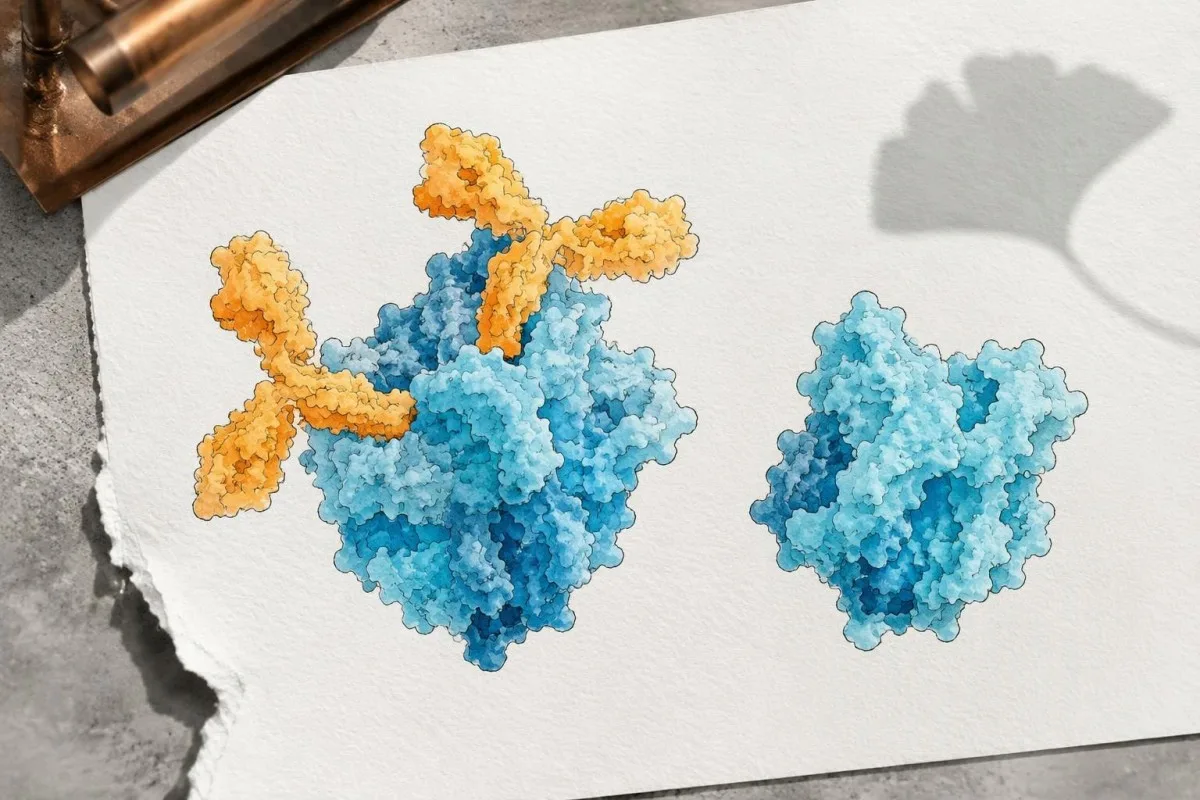
Tetanus illness results from tetanospasmin, a toxin produced by Clostridium tetani under suitable local conditions. Vaccination uses detoxified toxin, called toxoid, to generate antibodies against that toxin; measuring those antibodies addresses a different question from culturing organisms or detecting microbial DNA.
Binding and neutralization are 2 related but nonidentical properties. Many routine assays measure how strongly antibodies bind an assay antigen, whereas neutralization methods assess functional toxin-blocking activity; calibration into international units helps comparison but does not make every method biologically interchangeable.
A positive antibody result does not mean you have tetanus, and a low result does not mean you are currently infected. Our guide to different antibody result meanings explains why protective antibodies, exposure antibodies and autoimmune antibodies require different reasoning.
Recovering from tetanus does not reliably create protective immunity, because an amount of toxin sufficient to cause illness may be too small to stimulate an adequate antibody response. Consequently, a person treated for tetanus still needs vaccination planning rather than assuming that 1 episode substitutes for a completed series.
Which tetanus antitoxin levels suggest protection?
Tetanus antitoxin levels చుట్టూ 0.01 IU/mL have historically been considered a minimum protective concentration with toxin-neutralization methods. Many routine binding immunoassays use 0.1 IU/mL, or another assay-validated cutoff, because low-level binding results do not correspond perfectly to functional neutralization.

The WHO’s 2017 tetanus vaccine position paper distinguishes the approximately 0.01 IU/mL minimum associated with in vivo neutralization from the higher concentrations commonly applied to ELISA interpretation. These thresholds reflect measurement limitations as well as biology—not disagreement about where a universal immunity switch sits.
A result of 0.05 IU/mL cannot be called protective simply because it exceeds 0.01 IU/mL when the reporting immunoassay uses 0.1 IU/mL. Ask which method produced the number and which cutoff the laboratory validated; importing a neutralization threshold into an unrelated binding assay can create false reassurance.
Higher concentrations generally provide more antibody reserve, but there is no universal antitoxin concentration that guarantees protection for a specific future duration. A value of 1.0 IU/mL is not a personalized certificate to postpone every booster for 20 years, and high vaccine-related antibodies are not themselves a toxicity diagnosis.
Do not transfer protection cutoffs between vaccines. The interpretation framework for rabies antibody thresholds involves a different pathogen, assay and preventive program; tetanus decisions must use tetanus-specific evidence and local guidance.
| స్థాయి | పరిధి | దాని అర్థం |
|---|---|---|
| Very low measured antitoxin | <0.01 IU/mL | Below the historical minimum used with neutralization methods; review vaccination history and the laboratory interpretation. |
| Method-dependent zone | 0.01 to <0.1 IU/mL | May exceed a neutralization-based minimum but remain below a routine immunoassay’s protective cutoff; methods are not interchangeable. |
| Common immunoassay protection threshold | ≥0.1 IU/mL | Supports protection when this is the reporting laboratory’s validated threshold; does not replace wound prophylaxis guidance. |
| Higher measured concentration | ≥1.0 IU/mL | Indicates a higher concentration of measured antibody; no universal booster-deferral interval or harmful upper limit follows from this number alone. |
How do you read tetanus immunity test results correctly?
Read tetanus immunity test results by checking the concentration, units, assay method and laboratory interpretation together. 0.1 IU/mL equals 100 IU/L or 100 mIU/mL; a unit mismatch can make an apparently similar result differ by a factor of 1,000.

Quantitative and qualitative reports provide different information. A report saying protective contains less detail than one giving 0.34 IU/mL with its cutoff; a result reported as <0.10 IU/mL means the value is below that reporting limit, not that the exact concentration is zero.
Imagine 2 laboratories reporting the same hypothetical sample as 0.09 and 0.11 IU/mL. Without information about assay precision, calibration and uncertainty, crossing a 0.10 IU/mL boundary does not prove a meaningful biological change; borderline results deserve contextual review rather than a dramatic immune-status reversal.
Kantesti AI should read 0.1 IU/mL differently from 0.1 IU/L, and retain any less-than or greater-than sign in the source report. Our బయోమార్కర్ రిఫరెన్స్ గైడ్ provides broader context for why units and laboratory-specific interpretation belong alongside the numerical result.
Before comparing 2 dates, establish whether the laboratory changed methods or whether vaccination occurred between samples. Our explanation of quantitative and qualitative reports can help you formulate a useful question: what did this assay actually measure, and how confidently?
Who benefits from tetanus immunity testing?
Tetanus immunity testing is most useful in selected specialist assessments, particularly when clinicians evaluate antibody production or an unusual vaccine response. It is not routinely necessary before scheduled boosters, and an antibody result does not by itself reconstruct a missing 3-dose primary-series record.

An immunologist may compare tetanus antibodies before and approximately 4–8 weeks after a vaccine challenge to assess response to a protein antigen. The timing and interpretation should follow the specialist’s protocol; testing only a few days after vaccination can miss a developing response.
A weak response to 1 vaccine antigen is not a complete diagnosis of immunodeficiency. Clinicians may consider total immunoglobulins, responses to other antigens, infection patterns and immunosuppressive medication together; our తరచుగా సంక్రమణ పరీక్ష మార్గదర్శకం explains that broader work-up.
Baseline concentration changes how a post-vaccine result is judged. A hypothetical rise from 0.02 to 0.40 IU/mL is 20-fold, while 1.5 to 2.0 IU/mL is only about 1.3-fold; the smaller fold-change does not automatically indicate failure when substantial antibody was already present.
Total IgG and tetanus-specific IgG answer 2 separate questions: how much immunoglobulin circulates overall, and whether antibodies recognize a particular antigen. Review our IgG, IgA మరియు IgM విశ్లేషణ before assuming that normal total IgG guarantees normal vaccine responses.
When is a routine booster due in different countries?
In the United States, adults with a completed primary series generally receive Td or Tdap every 10 years, with at least one Tdap dose if not previously received. UK and WHO schedules differ, so a protective titer should not be used to invent a universal booster interval.

The 2018 ACIP recommendations describe a US adult catch-up series of 3 tetanus-containing doses when vaccination is incomplete or unknown: the first dose, a second at least 4 weeks later, and a third 6–12 months after the second. Long gaps generally do not require restarting documented doses (Liang et al., 2018).
The UK Green Book describes a 5-dose routine course and does not generally recommend automatic 10-yearly boosters after that course is complete. Additional vaccination can still be considered for relevant travel or injuries; being complete on the routine schedule is not identical to having no wound-related prevention needs.
WHO recommends 6 tetanus-containing vaccine doses across childhood and adolescence to provide long-term protection: 3 primary doses followed by 3 boosters (WHO, 2017). These national and global approaches differ partly in schedule design and policy, not because an antibody result means something entirely different at a border.
A vaccine-specific rule must stay vaccine-specific. For example, hepatitis B antibody decisions use anti-HBs concentrations and different occupational protocols; you cannot borrow a hepatitis B booster rule to interpret tetanus antitoxin.
Why should wound care never wait for antibody testing?
Wound care should begin promptly, because tetanus prevention depends on cleaning the affected area, assessing vaccine history and providing indicated prophylaxis—not waiting for a titer. Laboratory turnaround may take days, while an antibody result cannot reverse toxin that has already bound to nerve tissue.

All wounds should be cleaned, with foreign material removed and devitalized tissue managed by a clinician when needed. Tetanus incubation is commonly 3–21 days, but that range is not a safe waiting period for prevention; lack of symptoms immediately after injury does not establish safety.
Deep punctures, retained debris and damaged tissue can create conditions favorable to toxin production. A hypothetical puncture that looks tiny at the surface may deserve more attention than a larger superficial scrape, because depth and local tissue conditions matter more than visible size alone.
Jaw stiffness, difficulty swallowing, painful muscle spasms or breathing problems require emergency assessment, regardless of a previous protective antibody report. Tetanus is a clinical diagnosis, and a reassuring unrelated laboratory value should not override symptoms; the same diagnostic caution appears in our limits of reassuring laboratory results.
If you were injured 1 or more days ago, contact a clinician rather than assuming prevention is now too late. Bring the injury date, contamination details and vaccine records; clinicians can determine whether wound management, vaccination or immune globulin is still indicated.
How do wound type and your last dose change booster advice?
Under US guidance, a person with a completed primary series needs a tetanus-containing vaccine for a clean, minor wound if the last dose was 10 or more years ago. . dirty or major wounds, the interval is 5 or more years.

If the primary series is complete and the last tetanus-containing dose was less than 5 years ago, US guidance does not recommend another dose for either wound category. This decision rests on documented vaccination, not on demonstrating a new antitoxin concentration after each injury (Liang et al., 2018).
Dirty or major wounds include penetrating or puncture wounds, wounds containing soil, feces or saliva, and injuries with devitalized tissue, such as certain burns or crush injuries. An animal bite and a garden puncture can therefore enter the same prevention category despite looking very different.
People with an unknown history, no previous tetanus vaccination or an incomplete primary series should receive an indicated tetanus-containing vaccine for any wound category. For dirty or major wounds, clinicians must also assess immune globulin eligibility; 1 vaccine dose does not immediately substitute for a completed series.
Kantesti should not interpret a normal white-cell count or CRP as evidence that tetanus prophylaxis is unnecessary. Our discussion of WBC మరియు CRP ఫలితాల్లో తేడాలు helps explain why general inflammatory markers do not answer this toxin-specific prevention question.
When might you need tetanus immune globulin?
Tetanus immune globulin, or TIG, provides immediate passive antibodies for selected exposures. US guidance recommends 250 IU intramuscularly for dirty or major wounds in people with unknown, absent or incomplete vaccination histories, and in people with HIV or severe immunodeficiency regardless of vaccination history.

TIG is not recommended for clean, minor wounds under US guidance. Its role is different from vaccination: the injected antibodies provide temporary protection, while tetanus toxoid stimulates an active immune response; when both are indicated, clinicians administer them at separate sites.
Antitoxin can neutralize toxin that remains unbound, but cannot neutralize toxin already attached to nerve endings. That distinction explains why waiting 2–3 days for a send-out antibody result can be the wrong workflow when wound assessment already establishes a prophylaxis indication.
Dosing and eligibility vary internationally. The UK Green Book includes 250 IU for some prophylaxis situations and 500 IU in specified circumstances, such as delayed presentation beyond 24 hours or particular higher-risk injuries; the US 250 IU figure should not be presented as a worldwide rule.
Antibiotics are not recommended solely to prevent tetanus after an injury, although a clinician may treat a separate wound infection. A penicillin allergy label does not automatically change TIG eligibility; our పెనిసిలిన్ అలెర్జీని పునఃపరిశీలించే మార్గదర్శి addresses that different medication-safety question.
Can recent vaccination or immune globulin alter the result?
Recent vaccination can raise tetanus antitoxin levels, while TIG or immunoglobulin products can introduce passively acquired antibodies. A positive result after either exposure may not represent the same immune state as a baseline sample collected before treatment.
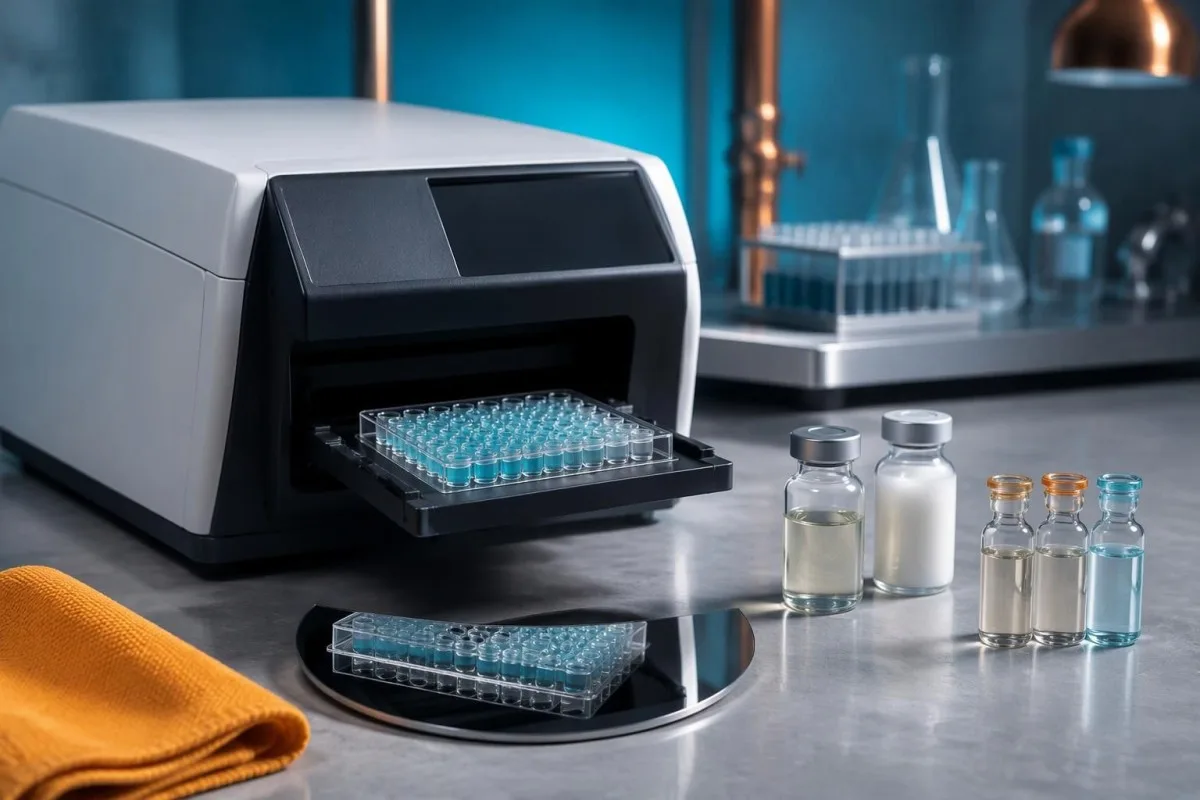
A sample collected immediately after a booster may still resemble baseline because antibody production takes time. If an immunologist wants to assess vaccine response, a planned interval such as 4–8 weeks is more informative than choosing a convenient date without documenting when vaccination occurred.
TIG and intravenous immunoglobulin can make vaccine-antibody testing difficult to interpret because the assay cannot reliably identify whose antibodies it is measuring. Their effects can persist for weeks or months; there is no single universally valid washout interval for every product, dose and clinical question.
కాంటెస్టి అనేది ఒక AI రక్త పరీక్ష ఫలితాలు అర్థం ప్లాట్ఫారమ్ that can place a 0.1 IU/mL cutoff beside the sample date and a documented recent treatment. The relevant question is not merely whether the result increased, but whether that increase reflects vaccination, passive antibody administration or a method change.
Record 3 dates before interpreting a trend: vaccination, immune globulin administration and sample collection. Our రక్త పరీక్ష టైమ్లైన్ గైడ్ explains why treatment-related changes should be separated from spontaneous biological trends.
What do common result-and-wound combinations mean?
The same tetanus antitoxin result can lead to different actions when vaccination records and wounds differ. These hypothetical examples use a laboratory cutoff of 0.1 IU/mL and US prevention rules; they are illustrations, not individualized treatment instructions.

Example 1: a 42-year-old has 0.35 IU/mL, a documented completed series and a soil-contaminated puncture; the last vaccine was 6 years ago. The result supports measured protection, but US wound guidance still indicates a booster because the dirty-wound interval is at least 5 years.
Example 2: a 57-year-old has 0.60 IU/mL but cannot document any primary series and presents with a contaminated puncture. The positive result does not automatically replace history-based prevention; vaccination and TIG assessment should proceed without waiting for a second antibody test.
Example 3: a 31-year-old has a clean superficial cut, a completed series and a last dose 3 years ago. US guidance does not indicate another tetanus vaccine for that wound; measuring a titer adds little to this already clear vaccination-history decision.
Example 4: a well adult has 0.08 IU/mL on an assay using 0.1 IU/mL, no wound and incomplete records. This is a nonemergency opportunity to review catch-up vaccination or a specialist question—not proof of tetanus; mumps immunity result interpretation similarly illustrates why a laboratory label and a vaccination decision are not always interchangeable.
Do pregnancy, age or immune suppression change the decision?
Pregnancy, childhood and immune suppression can change vaccine planning, but none makes an antibody test a substitute for wound assessment. In the United States, Tdap is recommended during every pregnancy at 27–36 weeks, primarily to protect the newborn against pertussis, even when tetanus antibodies are protective.

A tetanus antitoxin concentration of 1.0 IU/mL does not cancel pregnancy Tdap because that recommendation addresses another vaccine component and transfer of antibodies to the infant. Our whooping cough testing explanation distinguishes pertussis disease testing from this preventive vaccination purpose.
Children need age-appropriate tetanus-containing vaccines rather than adult products chosen from a titer alone. US routine DTaP begins at 2 months of age, and later catch-up choices depend on age and previous doses; maternal antibodies in early infancy are not proof that a child completed vaccination.
Severe immune suppression may weaken vaccine responses even when historical doses are documented. For dirty or major wounds, US guidance includes TIG for people with HIV or severe immunodeficiency; neither a remembered 3-dose series nor a single antibody result should replace individualized clinical assessment.
Age-specific interpretation requires more than applying an adult cutoff to every child’s report. Our discussion of పిల్లల కోసం AI వివరణ explains why vaccine product, developmental stage and clinical oversight belong beside any numerical result.
How can you use your result safely during follow-up?
Use your tetanus immunity test to prepare a focused follow-up discussion, not to self-authorize booster avoidance. Preserve the original report and assemble 4 ముఖ్యాంశాలు: assay cutoff, vaccine history, recent wound details, and any vaccination or immune globulin given before sampling.

కాంటెస్టి అనేది ఒక AI ఆధారిత రక్త పరీక్ష విశ్లేషణ సాధనం that can explain why 0.08 IU/mL may fall below one assay’s cutoff without diagnosing your immune function from that result alone. Our క్లినికల్ వాలిడేషన్ విధానం describes the importance of evaluation and oversight; no automated explanation should override an urgent prevention indication.
A useful clinician question contains 2 parts: does this result support protection on this assay, and does my vaccination or wound history still require action? Keeping the questions separate prevents a protective label from swallowing a schedule-based decision.
When sharing a report with Kantesti, retain clinically useful information such as units, reference comments and the collection date, while considering whether unnecessary identifiers need to be included. Our గోప్యత, డేటా సమాచారాన్ని explains data-handling choices; protect other family members’ information when organizing shared records.
For an AI-generated explanation, verify 3 things against the original document: the exact value, the units and any inequality sign. Our guide to AI వైద్య వివరణలను తనిఖీ చేయడం also encourages checking whether the advice distinguishes routine follow-up from wound-related urgency.
Research publications and the limits of tetanus evidence
Tetanus prevention recommendations are supported by vaccine guidance and clinical evidence, not by unrelated laboratory publications. The 2017 WHO position paper, 2018 ACIP recommendations and UK Green Book underpin the distinctions in this article; the 2 additional DOI-linked publications below concern other testing topics.

The WHO’s approximately 0.01 IU/mL neutralization-based minimum is a correlate of protection, not an absolute guarantee for every exposure. Wound protocols incorporate vaccination history and exposure characteristics because practical prevention cannot be reduced to one threshold, particularly when assay uncertainty and incomplete records coexist.
The 2018 ACIP document supports history-based wound prevention and adult catch-up planning, while the UK Green Book uses a different routine schedule and wound-risk framework. Readers should use the recommendations for their own healthcare jurisdiction rather than combining a 5-dose UK schedule with selected US rules without clinical guidance.
Kantesti’s 2 DOI-linked publications listed below cover complement/ANA interpretation and Nipah testing; neither is a tetanus immunity study or validation of a tetanus cutoff. Our కంప్లిమెంట్ మరియు ANA గైడ్ is included as related laboratory education, not evidence for tetanus booster decisions.
There are 2 limits to keep visible: an antitoxin concentration cannot predict an individual’s exact remaining years of protection, and this educational article cannot determine whether a particular wound needs TIG. Our వైద్య విషయాల ప్రమాణాలు explain how source attribution and clinical boundaries should remain explicit.
తరచుగా అడిగే ప్రశ్నలు
రక్షణాత్మక ధనుర్వాతం ప్రతిరక్షక స్థాయి అంటే ఏమిటి?
0 సంరక్షణాత్మక ధనుర్వాత యాంటీబాడీ స్థాయి పరీక్షా పద్ధతిపై ఆధారపడి ఉంటుంది: టాక్సిన్ను నిర్వీర్యం చేసే పద్ధతులతో సంబంధం ఉన్న చారిత్రక కనిష్ఠ స్థాయి సుమారు 0.01 IU/mL కాగా, అనేక సాధారణ ఇమ్యునోఅస్సేల్లో 0.1 IU/mL ఉపయోగిస్తారు. మరో పద్ధతికి చెందిన పరిమితిని వర్తింపజేయకుండా, ఫలితాన్ని నివేదించే ప్రయోగశాల ధృవీకరించిన కట్ఆఫ్ను ఉపయోగించండి. కట్ఆఫ్ కంటే ఎక్కువ ఫలితం, నమూనా తీసుకున్న సమయంలో రక్తప్రసరణలో యాంటీబాడీలు రక్షణనిస్తున్నాయని సూచిస్తుంది; అయితే భవిష్యత్తులో నిర్దిష్ట సంఖ్యలో సంవత్సరాలపాటు రక్షణ ఉంటుందని హామీ ఇవ్వదు. నివారణకు టీకాల చరిత్ర, గాయం అంచనా ఇప్పటికీ మార్గనిర్దేశం చేస్తాయి.
నా టిటర్ పాజిటివ్గా ఉంటే, నాకు టెటనస్ బూస్టర్ అవసరమా?
టెటనస్ టైటర్ పాజిటివ్గా ఉన్నంత మాత్రాన బూస్టర్ అవసరం ఆటోమేటిక్గా తొలగిపోదు. యునైటెడ్ స్టేట్స్లో, ప్రాథమిక టీకాల శ్రేణిని పూర్తిచేసిన తర్వాత సాధారణంగా ప్రతి 10 సంవత్సరాలకు Td లేదా Tdap బూస్టర్లను సిఫార్సు చేస్తారు. మురికి లేదా పెద్ద గాయాల విషయంలో, చివరి డోస్ తీసుకుని 5 లేదా అంతకంటే ఎక్కువ సంవత్సరాలైతే, ప్రయోగశాల ఫలితం రక్షణ ఉందని సూచించినప్పటికీ బూస్టర్ అవసరం. ఇతర దేశాల్లో సాధారణ టీకా షెడ్యూళ్లు భిన్నంగా ఉంటాయి, కాబట్టి మీ స్థానిక మార్గదర్శకాలను పరిశీలించండి.
Should I wait for a tetanus immunity test after stepping on a nail?
Do not wait for a tetanus immunity test before seeking assessment after a puncture wound. US guidance recommends a booster for a dirty or major wound when a completed-series patient’s last dose was 5 or more years ago. Unknown or incomplete vaccination history can also require tetanus immune globulin, usually 250 IU intramuscularly under US prophylaxis guidance. Cleaning, removal of foreign material and clinical assessment should proceed promptly.
What does a tetanus antitoxin result of 0.08 IU/mL mean?
A tetanus antitoxin result of 0.08 IU/mL is below a laboratory cutoff of 0.1 IU/mL, but its interpretation depends on the specific assay. It should not be called protective merely because it exceeds the historical 0.01 IU/mL neutralization-based minimum. Without a recent wound, review vaccination records and the reason for testing with your clinician. With a concerning wound, do not delay indicated prevention while clarifying the number.
Can tetanus immune globulin make an antibody test positive?
Tetanus immune globulin can make an antibody test positive because it supplies passively acquired antitoxin. The US preventive TIG dose is generally 250 IU intramuscularly when indicated for a dirty or major wound. A result collected after TIG may reflect administered antibodies rather than your own vaccine response, and this effect can last for weeks or months. Tell the laboratory or clinician when TIG or another immunoglobulin product was given.
Can a tetanus antibody test diagnose tetanus?
A tetanus antibody test does not diagnose active tetanus or establish whether Clostridium tetani is present in a wound. Even a result above 0.1 IU/mL on an assay using that cutoff should not override concerning symptoms. Jaw stiffness, difficulty swallowing, muscle spasms or breathing problems require urgent clinical assessment. Tetanus diagnosis is clinical, and prevention decisions depend on the wound and vaccination history.
మీ రక్త పరీక్ష ఫలితాలు ఎలా చదవాలో తెలుసుకోండి
మీ ల్యాబ్ నివేదికను అప్లోడ్ చేయండి; Kantesti యొక్క AI ప్రతి బయోమార్కర్ను సులభమైన భాషలో క్షణాల్లో వివరిస్తుంది. ప్రపంచవ్యాప్తంగా 2 మిలియన్లకు పైగా ప్రజలు ఉపయోగిస్తున్నారు.
ప్రస్తావనలు
- క్లైన్, టి., మిచెల్, ఎస్., & వెబర్, హెచ్. (2026). C3 C4 కాంప్లిమెంట్ రక్త పరీక్ష & ANA టైటర్ మార్గదర్శిని. Kantesti AI వైద్య పరిశోధన. డిఓఐ
- క్లైన్, టి., మిచెల్, ఎస్., & వెబర్, హెచ్. (2026). నిపా వైరస్ రక్త పరీక్ష: ముందస్తు గుర్తింపు & నిర్ధారణ మార్గదర్శిని 2026. Kantesti AI వైద్య పరిశోధన. డిఓఐ
- World Health Organization (2017). Tetanus vaccines: WHO position paper – February 2017. Weekly Epidemiological Record.
- Liang JL et al. (2018). Prevention of Pertussis, Tetanus, and Diphtheria with Vaccines in the United States: Recommendations of the Advisory Committee on Immunization Practices (ACIP). MMWR Recommendations and Reports. డిఓఐ
- UK Health Security Agency (n.d.). Tetanus: the green book, chapter 30. Immunisation against infectious disease.
- 2మి+విశ్లేషించిన పరీక్షలు
- 127+దేశాలు
- 100+భాషలు
వైద్య బృందం గురించి


E-E-A-T విశ్వాస సంకేతాలు
అనుభవం
వైద్యుడి నేతృత్వంలో ల్యాబ్ ఫలితాల అర్థం చేసుకునే వర్క్ఫ్లోలపై క్లినికల్ సమీక్ష.
నైపుణ్యం
క్లినికల్ సందర్భంలో బయోమార్కర్లు ఎలా ప్రవర్తిస్తాయో అనే దానిపై ల్యాబొరేటరీ మెడిసిన్ దృష్టి.
అధికారవాదం
డా. థామస్ క్లైన్ వైద్యపరంగా సమీక్షించారు; డా. సారా మిచెల్ మరియు ప్రొ. డా. హాన్స్ వెబర్ సహకారం అందించారు.
విశ్వసనీయత
ఆందోళనను తగ్గించేందుకు స్పష్టమైన తదుపరి చర్యల మార్గాలతో ఆధారిత (ఎవిడెన్స్-బేస్డ్) అర్థం చేసుకోవడం.



వైద్య నిరాకరణ ప్రకటన
ఈ వ్యాసం కేవలం విద్యా ప్రయోజనాల కోసం మాత్రమే; ఇది వైద్య సలహాగా పరిగణించబడదు. నిర్ధారణ మరియు చికిత్స నిర్ణయాల కోసం ఎల్లప్పుడూ అర్హత కలిగిన ఆరోగ్య సంరక్షణ నిపుణుడిని సంప్రదించండి.
ప్రచురించబడింది · సంపాదకీయ బృందాన్ని సంప్రదించండి
ఇంగ్లాండ్ మరియు వేల్స్లో నమోదైన Kantesti Ltd ద్వారా ప్రచురించబడింది, కంపెనీ నంబర్. 17090423, లండన్, యునైటెడ్ కింగ్డమ్.
