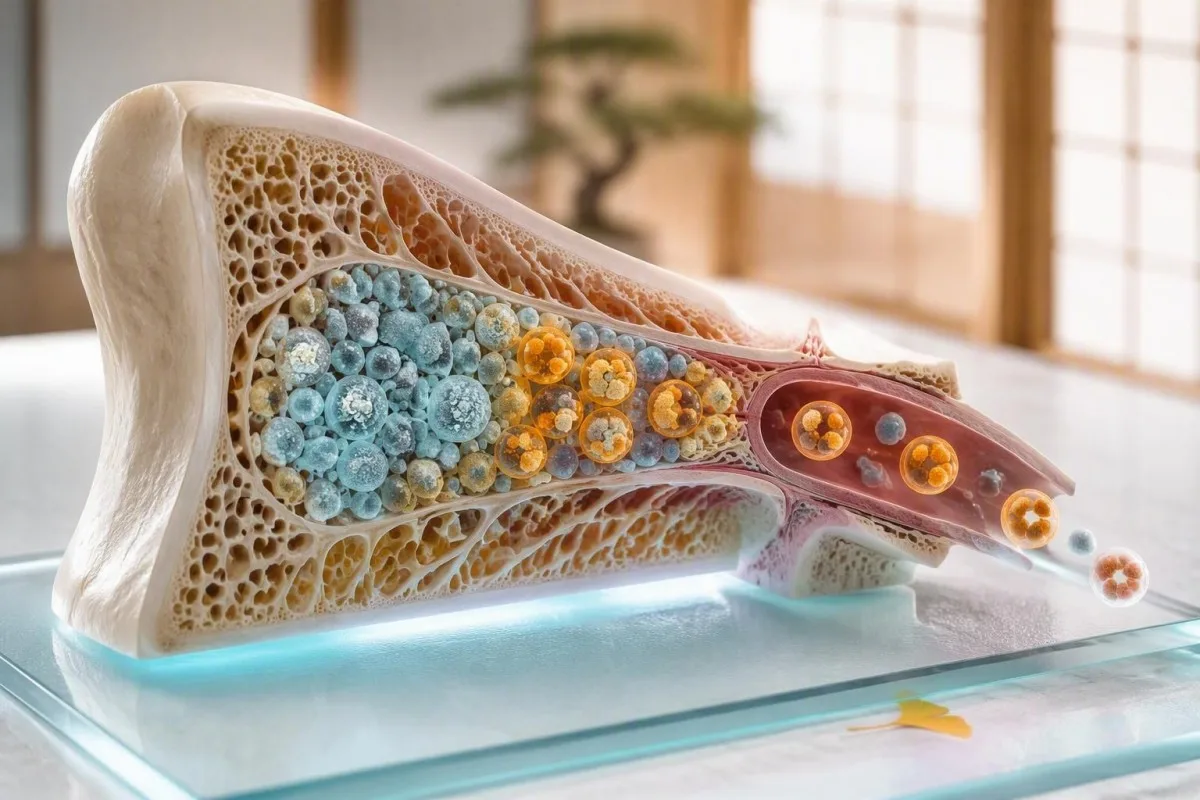
Stały niski ANC może być normalny, gdy odzwierciedla liczbę neutrofilów związaną z Duffy-null (DANC), szczególnie jeśli czujesz się dobrze, a inne linie krwinek są normalne. Kluczem jest potwierdzenie stabilnego wzorca, jednocześnie nie ignorując nowych objawów, gorączki lub zmian w hemoglobinie i płytkach krwi.


- DANC to dziedziczny, związany z ACKR1 wzorzec niższej liczby krążących neutrofilów, który zazwyczaj nie zwiększa ryzyka infekcji.
- ANC 1,0–1,5 × 10⁹/L to łagodna neutropenia; u zdrowej osoby z DANC może to być ich normalny poziom wyjściowy.
- ANC poniżej 0,5 × 10⁹/L wiąże się ze znacznie wyższym ryzykiem infekcji i wymaga pilnej oceny klinicznej, niezależnie od pochodzenia etnicznego lub statusu Duffy.
- genotyp Duffy-null często wynika z dwóch kopii wariantu ACKR1 rs2814778 i występuje w wielu populacjach afrykańskich, bliskowschodnich, arabskich, karaibskich i mieszanych.
- potwierdzenie badania krwi DANC może zapobiec niepotrzebnym powtórnym badaniom, procedurom szpiku kostnego, opóźnieniom leczenia i nieodpowiednim ograniczeniom zawodowym.
- Fieber ôd 38.0°C abo wicej z ANC poniyzij 0.5 × 10⁹/L je sytuacyjům, kieryj trza sie zajoć tela samygo dziyń.
- Stabilny izolowany niski ANC je krzepjym jeno, kej hemoglobina, płytki, wykryćowa znaka, medykamentowó historyja, a infection history tyż pasujō.
- łagodna etniczno neutropenia je stary termin; DANC je barszij precyzyjny, bo mechanizm je genetyczny, a niy rasowy.
Co tak naprawdę oznacza liczba neutrofilów Duffy-Null
Duffy-null zwōny liczba neutrofilōw (DANC) ôznaczŏ, że Ôsoba mo genetyczńy ustōniōno niższõ liczbã krōżōcych absolutnych neutrofilōw, zwykle bez zaburōnyj obrony immunologicznyj. W praktyce, ANC kole 1.0–1.5 × 10⁹/L kere ôstało stabilne bez lotôw, może być normalne dlo tyj Ôsoby.
Neutrofile sōm krōtkożyjōnce bōłe krwinky, kiere szybko przelywajō sie miyndzy szpikym, krōwiōm, śledzionōm, a tkōnkami. DANC wydŏwŏ sie ôdmiynić, kaj niykere neutrofile sie znojdyjō, a niy ino obniżōć zapŏs niykere neutrofilōw; ta rozmajta pomŏgŏ wytłōmaczyć, dlŏ czego wikszość chorych Ôsōb niy ma nawrotowych, groźnych infectyjōw.
Stary mōń łagodna neutropenia etniczna bōł dobrze zamyslōny, ale niy precyzyjny. Może niyświŏdōmie sugerować, że samce ancōkstwo je diagnozō; bardziży pożyteczne pytań je, czy Ôsoba mo Duffy-null genotyp, stabilny izolowany niski ANC, a niy ma klinicznyj dowodō zaburōnyj obrony gospodŏrza. Nasz ANC przeglōnd wytłōmaczy, kej absolutnŏ liczba je rachowanŏ.
Ôd 18 wrześńa 2026 roku, niy kere Ôsoby dzisioj widza skierowane na alarmujōncō “nisko bielō krwinki” pojedynczy CBC, chociōż wcześńijsze wyniki pokŏzujō ANC wartości ôd 1.1, 1.2, a 1.0 × 10⁹/L przez piyńć lot. Ta dłōgŏ zapis ôd chōb mŏ być bardziży informatywnŏ niż jednŏkrotny laboratoriumowy flag.
Czamu liczba mo ôkŏzywać sie niszŏ
Standardowy CBC mjeżi krōżōnce neutrofile we pobranyj krōwi, a niy wszyjske dostympne neutrofile we szpiku abo tkōnkach. DANC je dlŏ tego problemym przedziału referencyjnego, jak biologyjny problem: populacyjnie ôbitōny dolny limit laboratoryjny może niy pasować do dziedzicznego bazowego poziōmu Ôsoby.
Jak genetyka ACKR1 tworzy wzorzec DANC
DANC je nojbarzij zwiōzany z homozygotycznościōm dlŏ ACKR1 rs2814778 Duffy-null wariant, kery zabraniŏ ekspresji antygenu Duffy na czerwōnych krwinkach. Ten dziedziczny wariant niy ôznaczo, że Ôsoba mo choroba krōwi.
Receptor antygenu Duffy dlŏ chemokin, dzisioj zwany ACKR1, is expressed on red cells and specialized vascular cells. The rs2814778 promoter variant disrupts red-cell expression; two copies are commonly called Duffy-null. Reich and colleagues identified this variant as a major genetic determinant of lower neutrophil counts in African Americans (Reich et al., 2009).
The evolutionary story is interesting but should not be overinterpreted in clinic. Duffy-null status historically reduced susceptibility to Plasmodium vivax malaria in many settings, yet it does not protect against every malaria species and it is not a substitute for travel prevention or prompt assessment of fever.
Kantesti je Analizatōr podszukowań krwi sztucznyj inteligyncyje that reads ANC beside total white cells, hemoglobin, platelets, prior CBCs, and reported medicines rather than treating one out-of-range flag as a diagnosis. That is the safest way to interpret a DANC-like pattern.
Genetics are not the whole work-up
A Duffy-null result supports DANC, but it does not make later illness impossible. New anemia, falling platelets, enlarged lymph nodes, night sweats, or a sharp ANC fall from a usual 1.2 do 0.4 × 10⁹/L still require ordinary medical evaluation.
Kto może mieć DANC — i dlaczego wygląd nie jest testem
DANC occurs in people with many ancestral backgrounds, particularly African, Middle Eastern, Arabian, Caribbean, and admixed heritage. A clinician cannot reliably identify DANC by appearance, surname, nationality, or self-described race.
Duffy-null status is frequent in some populations and uncommon in others, but population frequency is not an individual diagnosis. In my experience, the most avoidable error is either assuming every low ANC in a Black patient is DANC or overlooking DANC in a patient whose family background is mixed or not discussed.
The relevant phenotype may be seen from childhood onward. A child or adult with ANC values persistently near 0.9–1.5 × 10⁹/L, normal growth or function, no unusual infections, and normal hemoglobin and platelets is very different from someone whose neutrophils have dropped over weeks.
A CBC differential also needs correct arithmetic. ANC equals total white cells multiplied by the neutrophil percentage, including bands where reported; a white count of 3.0 × 10⁹/L with 40% neutrophils gives an ANC of 1.2 × 10⁹/L. See our guide to składowe CBC.
Progi ANC: Kiedy niski oznacza łagodny, poważny lub pilny
Dla dorosłych, mild neutropenia is ANC 1.0–1.5 × 10⁹/L, moderate neutropenia is 0.5–1.0 × 10⁹/L, a ciynżka neutropenia je below 0.5 × 10⁹/L. Infection risk rises most sharply below 0.5 × 10⁹/L, especially when the decline is new or treatment-related.
These cutoffs are useful triage tools, not personality tests for the immune system. A stable ANC of 0.9 × 10⁹/L in a person with confirmed DANC and no infection history may be managed very differently from an ANC of 0.9 × 10⁹/L that fell from 3.5 during chemotherapy, after a new medicine, or alongside mouth ulcers.
ANC poniży 0.2 × 10⁹/L is often called profound neutropenia and deserves particular caution. At that range, bacterial and fungal risk can become substantial because the marrow reserve and tissue response may be limited; DANC alone rarely explains a new profound result.
One nuance patients rarely hear: reference ranges are statistical, usually capturing the central 95% of a laboratory population. A flag means “unusual in that comparison group,” not “dangerous,” as our article on wynikōw poza zakresem omawia.
Rozróżnienie DANC od niepokojącej neutropenii
DANC is most likely when low ANC is isolated, stable, inherited, and unaccompanied by recurrent severe infections. Concerning neutropenia is more likely when the count is falling, other cell lines are abnormal, or symptoms point to infection, autoimmunity, nutritional deficiency, drug toxicity, or marrow disease.
The combination matters. Low ANC plus low hemoglobin, platelets below 150 × 10⁹/L, high MCV, abnormal cells on a film, or an enlarged spleen is not a simple DANC pattern. I would also ask about weight loss, fevers, oral sores, recurrent skin infections, alcohol intake, and a detailed medication and supplement list.
Transient viral suppression is common. EBV, influenza, COVID-19, hepatitis viruses, HIV, and several other infections can lower ANC for days to weeks; a repeat CBC after recovery often clarifies the picture. Reactive lymphocytes or changing lymphocyte counts can provide a helpful clue, as explained in our viral CBC guide.
Copper deficiency is a less obvious mimic, particularly after bariatric surgery or prolonged high-dose zinc use. Neutropenia with anemia and neurologic symptoms should prompt copper assessment; zinc doses above the usual dietary range can quietly worsen copper balance over months.
The medication question clinicians should ask
Antithyroid medicines, clozapine, sulfasalazine, trimethoprim-sulfamethoxazole, some anticonvulsants, chemotherapy, and immunosuppressants can lower neutrophils. Never stop a prescribed medicine solely because an app or laboratory flag says “low”; contact the prescriber, because the safe response varies enormously by drug and ANC.
Co może, a czego nie może potwierdzić badanie krwi DANC
A DANC blood test usually means testing for Duffy phenotype or ACKR1 genotype alongside repeat CBC results. A Duffy-null result supports the explanation for a stable low ANC, but it does not rule out a separate acquired illness.
Testing methods differ by laboratory. Some services use red-cell Duffy antigen phenotyping, while others test the ACKR1 rs2814778 genotype; recent transfusion can complicate red-cell phenotype interpretation because donor red cells may be measured instead of the patient’s usual cells.
For an uncomplicated adult, I usually want at least two or three CBCs separated by weeks or months, a symptom and infection history, medication review, and confirmation that hemoglobin and platelets are stable. A peripheral film, B12, folate, copper, viral tests, or autoimmune testing are selected based on clues rather than ordered reflexively.
Kantesti AI je platforma do interpretacji wyników badań krwi AI that can organize repeat results into a trend, but it cannot diagnose DANC from a photograph of one CBC. Its proper role is to identify the pattern worth discussing with the clinician who knows the person and can order genetic or phenotype testing. Our wskazówki dotyczące trendu badań krwi shows why baselines matter.
Czy DANC zwiększa ryzyko infekcji?
DANC by itself does niy appear to increase the risk of typical bacterial or viral infections in otherwise healthy people. The reassuring evidence applies to stable, isolated DANC—not to severe new neutropenia or to people receiving immune-suppressing treatment.
Hsieh and colleagues reported that African American patients with lower baseline neutrophil counts could safely receive chemotherapy when clinical management reflected their baseline rather than a one-size-fits-all threshold (Hsieh et al., 2010). That does not mean every protocol can be changed independently; oncology teams still weigh regimen-specific risk and prior complications.
A practical question is not “Have you ever had a cold?” Nearly everyone has. I ask about repeated pneumonia, deep tissue infections, hospitalization for infection, persistent mouth ulcers, periodontal infections, or fevers that seem unusually frequent or severe. Those findings make a pure DANC explanation less comfortable.
DANC should not lead to “immune booster” supplements or preventive antibiotics. Most people need neither, and unnecessary zinc, herbal products, or antibiotics can create their own laboratory and clinical problems. For recurrent illness, start with a structured frequent-infections work-up.
Kiedy niski ANC wymaga natychmiastowej pomocy medycznej
Temperatura wynoszŏca 38.0°C (100.4°F) abo wiyncyj przy ANC ponizej 0,5 × 10⁹/L requires same-day urgent medical advice, often emergency assessment. Do not assume DANC explains fever, chills, confusion, breathlessness, or a rapidly worsening sore throat.
Seek urgent care for fever, shaking chills, new confusion, low blood pressure symptoms, severe weakness, shortness of breath, or a rapidly spreading skin change. For patients on chemotherapy, transplant medicines, clozapine, or high-dose steroids, the treatment team’s fever instructions override general online advice.
A single unexpectedly low count should sometimes be repeated promptly because specimen handling, recent illness, and analyzer flags can mislead. But repeating a CBC must never delay assessment when the person is febrile and clinically unwell—clinical condition beats laboratory neatness.
Dr. Thomas Klein’s rule from years of reviewing abnormal CBCs is simple: a stable number can wait; a sick person cannot. If the ANC is 0.4 × 10⁹/L and a patient feels well, the plan may be very different from the same result with a temperature of 38.5°C.
Symptomy, kery sōm mńijij specyficzne
Fatigue alone does not prove neutropenia is clinically significant. Iron deficiency, low B12, thyroid disease, poor sleep, depression, infection, and medicines are far more common explanations, so the rest of the CBC and history still deserve attention.
DANC u dzieci, młodzieży i w ciąży
DANC can be present from childhood, but low ANC in children and during pregnancy still needs age- and situation-specific interpretation. Adult reference intervals should not be copied onto paediatric results, and a new low count in pregnancy is not automatically DANC.
Children naturally have changing white-cell patterns as lymphocyte proportions shift with age. A paediatrician considers growth, recurrent infections, developmental history, medications, ethnic and family history, and serial counts before labeling chronic neutropenia; a single ANC of 1.1 × 10⁹/L may have a different meaning at age 2 than at age 42.
Pregnancy often causes neutrophil counts to rise rather than fall, especially later in gestation. A low ANC with hypertension, anemia, low platelets, liver-test abnormalities, or systemic symptoms should be assessed promptly rather than attributed to a pre-existing baseline; our overview of HELLP laboratory patterns explains why combinations matter.
Families sometimes ask whether siblings should be tested. If several well relatives have the same stable pattern, that history is useful, but genetic testing is generally most valuable when it will alter a child’s evaluation, treatment eligibility, school documentation, or specialist decision-making.
Dlaczego DANC ma znaczenie w leczeniu farmakologicznym, chirurgii i opiece onkologicznej
Recognizing DANC can prevent inappropriate treatment delays when a person has a lower but stable baseline ANC. It should not be used to bypass safety monitoring for medicines that can cause abrupt or profound neutropenia.
For chemotherapy, a pre-treatment ANC threshold such as 1,5 × 10⁹/l may exclude some people with DANC despite a low infection risk at their baseline. Hsieh et al. (2010) argued for lower, individualized thresholds in appropriate patients, yet oncology teams must consider the exact regimen, expected marrow suppression, prior febrile neutropenia, and local protocol.
Before elective surgery, surgeons usually care more about active infection, the depth and cause of neutropenia, and the procedure than a mildly low stable ANC alone. An isolated baseline ANC of 1.1 × 10⁹/L is not automatically a reason to cancel a planned operation, but the anesthetic and surgical team should see the documented trend.
Kantesti je Narzędzie do analizy badań krwi oparte na AI used to compare CBC results across time and identify potential medication-related changes for clinician review. We built those trend functions with medical oversight; our podejście do walidacji klinicznej describes the boundaries between decision support and medical care.
Powszechne błędne przekonania o “łagodnej etnicznej neutropenii”
The phrase “benign ethnic neutropenia” does not mean every low ANC is harmless, and it does not mean race is a laboratory diagnosis. DANC is the more accurate term when a genetic, stable, clinically benign pattern is established.
Myth: “A normal immune system always has ANC above 1.5 × 10⁹/L.” Reality: conventional reference intervals were not built around every genetic baseline, and healthy Duffy-null individuals often fall below that cutoff. The same issue arises with many laboratory references, including neutrophil ranges by age.
Myth: “DANC means no doctor should investigate a low count.” Reality: DANC can coexist with B12 deficiency, autoimmune disease, infection, medicine toxicity, or hematologic illness. The diagnosis reduces unnecessary alarm only after the rest of the story is coherent.
Myth: “Low ANC causes tiredness.” Neutropenia itself typically does not cause fatigue; fatigue comes from its cause, an intercurrent infection, anemia, sleep disruption, or another condition. This distinction saves patients from chasing the wrong explanation.
Praktyczny plan obserwacji dla stabilnego niskiego ANC
For stable, isolated mild low ANC, the usual plan is to confirm the trend, review medications and infections, and document DANC when testing supports it. The follow-up interval depends on the actual count, age, symptoms, and whether any other CBC value is changing.
Bring prior CBCs, including results from years ago and from different laboratories, to the appointment. Record dates of infections, fevers, new prescriptions, supplements, recent viral illnesses, alcohol changes, pregnancy, and intense exercise; this modest timeline can explain a surprising amount of apparent variability.
When ANC is 1.0–1.5 × 10⁹/L and everything else is normal, a clinician may repeat the CBC in several weeks to months rather than order invasive testing immediately. When ANC is 0.5–1.0 × 10⁹/L, earlier review is commonly sensible, particularly if the result is new or the person has symptoms.
Nasz przewodnik po różnicach w badaniach krwi covers biological variation: a change of 0.2 × 10⁹/L is not always a meaningful clinical decline. What matters is a sustained trajectory, not endless testing to chase decimal places.
Testy, które lekarze mogą stosować, gdy DANC jest niepewne
When DANC is uncertain, clinicians choose tests based on the pattern rather than ordering every possible investigation. Repeat CBC with differential, peripheral film, medication review, and targeted nutritional, viral, or autoimmune tests are common first steps.
A peripheral cell sample slide can reveal immature white cells, dysplasia, blasts, toxic change, or platelet clumping that a numeric CBC cannot fully explain. A normal film does not prove DANC, but an abnormal film shifts the question away from a simple inherited reference-range difference.
B12, folate, copper, liver tests, HIV testing, hepatitis testing, EBV studies, ANA, and immunoglobulins are selected when symptoms or accompanying results warrant them. For example, neutropenia plus macrocytosis may justify a borderline B12 assessment, while dry eyes, joint symptoms, and low counts may justify autoimmune review.
Bone-marrow examination is not routine for an otherwise well person with lifelong, isolated mild neutropenia and a Duffy-null result. It becomes more reasonable with unexplained cytopenias, abnormal film findings, progressive decline, constitutional symptoms, or concern for marrow failure.
Bezpieczne stosowanie sztucznej inteligencji do analizy krwi z wynikiem niskiego ANC
AI can help organize a low ANC result, but it cannot determine whether you are safe to stay home when you have fever or severe symptoms. The best use is pattern recognition, trend comparison, and preparation for a clinician conversation.
Kantesti AI can extract CBC data from a report and compare ANC, total white cells, hemoglobin, platelets, MCV, and dates across prior tests. A clinically useful output should say what is known, identify uncertainty, and flag fever with severe neutropenia as urgent—not reassure indiscriminately.
Privacy matters with genetic and laboratory data. Kantesti is an usłudze interpretacyji testów AI designed around privacy-focused, GDPR-aligned data handling, but users should still remove unnecessary identifiers when sharing results and confirm that any transcription from a photo is correct.
Dr. Thomas Klein recommends using AI-generated summaries to ask better questions: “Is this my baseline?”, “Are other cell lines changing?”, “Could a medicine explain this?”, and “Would Duffy testing alter management?” For how our doctors oversee these boundaries, see the Rada Doradczo Medyczno.
Podsumowując: niski ANC może być normalny, ale kontekst decyduje
A low ANC can be normal in DANC when it is stable, isolated, genetically supported, and not associated with unusual infections. A newly low, falling, severe, or symptomatic ANC should be treated as a clinical problem until a clinician establishes otherwise.
The most reassuring pattern is boring: ANC values near 1.0–1.5 × 10⁹/L over time, normal hemoglobin and platelets, no recurrent serious infections, and Duffy-null confirmation where available. That pattern may spare a person unnecessary alarm, referrals, and interruptions to work, travel, surgery, or treatment.
The most concerning pattern is change: ANC falling toward 0,5 × 10⁹/L, fever, mouth ulcers, recurrent infections, anemia, thrombocytopenia, enlarged spleen, or a new medicine. DANC is a reason to interpret carefully, never a reason to ignore a red flag.
At Kantesti, we try to make laboratory results more understandable without pretending a reference range is a verdict. Our przewodnik po technologii AI explains how contextual interpretation is designed to support—not replace—clinical judgment.
Czynsto zadawane pytania
Je ANC 1,2 normalno kej bydziesz Duffy-null?
ANC 1,2 × 10⁹/l, co je noрмаlne dlŏ ludźi z potwierdzōnym neutrofilowym liczba zwŏzanym z Duffy-null, kej je stale ôb czas, hemoglobina a liczba trombocytōw sōm noormalne, a niy ma historyje dziwnych abo czōstych powŏżnych infekcyji. Ta wartŏść je w obrōbie konwencyjnyj łagodnyj neutropenije, kerej definicyja je 1,0–1,5 × 10⁹/l, ale konwencyjne ôbryńdzyce ôdniesyniŏ niy pasujōm do kierejkolwiek dziedziczōnyj bazowej. Klinicysta poradziy miec nadzōr nad medykamentami, ôstatnimi infekcyjami, symptōmami a przōdnyma CBC, zanim przypisze wynik DANC. Nowe ANC 1,2 × 10⁹/l zasuguje na wiyncyj uwagi niż stale bez życie wartŏść 1,2 × 10⁹/l.
Kaj je rozdíl mezi DANC a benigní etnicku neutropenijó?
Duffy-null zwiazany z ilōm neutrofilōw, abo DANC, je preferowanōm wspōłczesnōm ôkresōniymu na genetycznie zwōniōno ôbloże mōjszych krōżōnōcych neutrofilōw bez zwiōkszōnego ryzyka infekcji u wiynkszości inkszych zdrowych ôsōb. Benign ethnic neutropenia je starszym ôkresōniym, kōmunikujōcym podobno kliniczno obserwacyjōm, atoli niyprawidłowō oparty na szerokich kategoriach rasowych zamiast na statusie ACKR1/Duffy a indywidualnym ôblowym patternie CBC. DANC je czōsto zwōniōno z dwōma kopijami wariant ACE R1 rs2814778. Żodna etykieta niy powiyn być użyto do ignorowaniŏ gorōczki, spadajōcego ANC, anemije, trombocytopenije abo ANC pōniżyj 0.5 × 10⁹/L.
Czy Duffy-null neutrofile mogům powodować częste infekcje?
Ôstrożnie, liczebność neutrofilōw typu Duffy-null sama we sobje niy mo zwykle przyczyńym czōstych infekcyjōw, skuli tego, iże niszy zmierzōnōno ANC niy ôznaczŏ samōm z siebie wadliwego spōłdziałaniŏ neutrofilōw abo tela że niyma dostatecznych neutrofilōw w tkōnkach. Badania łączōnce allel Duffy-null z niszym liczbōm neutrofilōw, wsōmliczajōnc Reich et al. (2009), niy porōdziły syndromu wrodzōnyj ôbniżōnyj odporności. Nawracajōnce zapalynie płuc, głymbokie infekcyjōw skōry, stałe ôstrōdki w gębie, abo wciepńiyńcia do szpitala z powōdu infekcyjōw powinny przōno wezwać do sprawdzyniŏ inakszyj przyczyny. Obraz kliniczny je barzij wŏżny, niy ôd tyn czyjś ANC je trocha poniżyj 1,5 × 10⁹/L.
Mona bych miała genetyczne testy na DANC?
Genetyczne testy fenotypu Duffy sům nojbarzij użyteczne, kej potwierdzony DANC wytłómaczy medyczne decyzyje, take kej unikanie zbędnych testów hematologicznych, udokumyntowanie bazowego poziomu przed chemioterapiōm, abo wyklaryfikowanie ciōnglegōgo izolowanego niskiŏ ANC. Testowanie na wariant ACKR1 rs2814778 mŏże wspiyrać DANC, a fenotypowe testowanie czerwōnych krwinek mŏże być barzij nĕrligibilne pōmiōmy transfuzji. Wiele ôsōb ze stabilnymi wertami ANC ôd 1.0–1.5 × 10⁹/L a poradnōm historyjōm klinicznōm niy potrzebuje ôbsej Ôbedniów testōw ôd rŏzu. Twojōch klinicjōn mŏże decydować, czy jakiere wynŏjdek by ôdmienił ôpieka miast zwykŏgo dołożyniym informacyje.
Kedy je niski ANC stanem zagrożenia?
Nisko ANC robi śje kłopōtym ôbôwatelnym, kej je z ôbgōłem ôbôdzōnŏ z febrōm abo z ôbgōłem systemowym, zwōszcza kej ANC je poniżyj 0.5 × 10⁹/L. Temperatura 38.0°C (100.4°F) abo wyżyj ze srogoj neutropeniōm potrziybuje tygo samego dnia nagōnej porady lekarskej, bo srogi zakażyni mo ôbōwōd srogi, a mogże mieć blŏżo ôznaki. Dźgajōnce dreszcze, zamōlesziyni, brzuszne bolōnki, srogo słabosć, abo szybko pogarszajōnce sie klōnōwe abo skōrne ôznaki tyż potrziyjōm nagōnego ôceny. Znōmy DANC niy szkodzi tyj nagōnyj regule.
Czy niski ANC z DANC może wpływać na chemioterapię albo operację?
DANC może mieć wpływ na decyzje dotyczące chemioterapii lub procedur elektywnych, ponieważ ogólne progi ANC, często 1,5 × 10⁹/L, mogą nie odzwierciedlać normalnego ryzyka infekcji u pacjenta. Hsieh i wsp. (2010) opisali bezpieczne podawanie chemioterapii z wykorzystaniem indywidualnych rozważań dotyczących liczby neutrofilów wyjściowych u odpowiednich pacjentów, ale decyzje dotyczące leczenia pozostają specyficzne dla schematu i muszą być podejmowane przez zespół onkologiczny. W przypadku operacji stabilne, izolowane ANC około 1,1 × 10⁹/L nie jest automatycznie dyskwalifikujące, chociaż zespół będzie rozważał aktywną infekcję, przyczynę neutropenii, rodzaj procedury i inne wyniki CBC. Pacjenci powinni przed opóźnieniem leczenia dostarczyć wcześniejsze CBC i dokumentację testu Duffy.
Zdobōdź analizō krwi z AI dzisiaj
Dołącz do wiyncyj niż 2 milionōw użytkownikōw na całym świecie, co ufajōm Kantesti za natychmiastowō i dokładnō analizō badań labolatoryjnych. Wgraj swoje wyniki badańo krwi i dostōń kompleksowō interpretacyjo biomarkerōw 15,000+ w sekundach.
📚 Publikacyje badawcze z referencjami
Klein, T., Mitchell, S., & Weber, H. (2026). Klein, T. (2026). Seryczne Bjelice Przewodnik: Globuliny, Albuminy & A/G Stosunek Zdrój Krawi Test. Zenodo.. Kantesti AI Medycynne Badań.
Klein, T., Mitchell, S., & Weber, H. (2026). Klein, T. (2026). C3 C4 Complement Blood Test & ANA Titer Guide. Zenodo.. Kantesti AI Medycynne Badań.
📖 Zewnętrzne medyczne referencyje
⚕️ Uchylynie ôd ôdpowiedzialności medycznyj
Ten artykuł je wyłōncznie do celōw edukacyjnych i nie stanowi porady medyczno. Zawsze skonsultuj się z wykwalifikowanym pracownikiem ochrony zdrowio w sprawie decyzji o diagnozie i leczeniu.
Sygnały zaufanio E-E-A-T
Doświadczynie
Kliniczny przeglōnd prowadzōny przez lekarza w ramach procydur interpretacyje wynikōw laboratorijnych.
Ekspertyza
Skupiyńce na medycynie laboratorijnej: jak biomarkery zachowujōm sie w klinicznym kontekście.
Autorytetność
Napisane przez dr. Thomasa Kleina z przeglōndym przez dr. Sarah Mitchell i prof. dr. Hansa Webera.
Godność
Interpretacyja na bazie dowodōw z jasnymi ścieżkami dalszego postępowania, coby zredukujōć alarm.