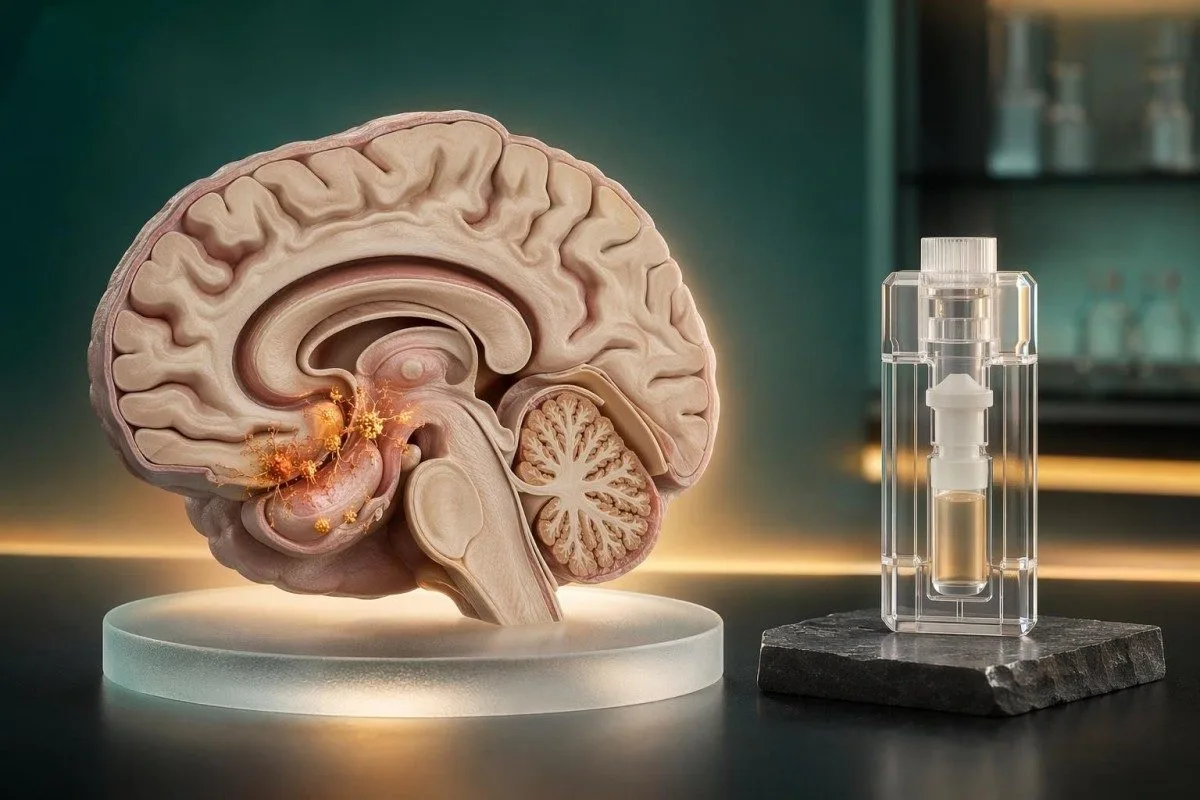
Phosphorylated tau blood tests are becoming useful Alzheimer’s biomarkers, but they are not a home diagnosis. The result only makes sense beside symptoms, age, kidney function, cognitive testing and the exact assay used.


- P-tau blood test results can support Alzheimer’s disease risk assessment, especially in people with persistent memory or thinking symptoms, but they do not diagnose dementia by themselves.
- P-tau217 generally shows stronger accuracy for Alzheimer’s amyloid pathology than p-tau181, with many studies reporting AUC values around 0.90–0.96 in symptomatic cohorts.
- No universal normal range exists for p-tau blood tests as of May 2, 2026; cutoffs depend on the assay, platform, units and lab validation.
- Amyloid PET images amyloid plaque burden in the brain, while a p-tau blood test measures a circulating protein signal linked to Alzheimer-type tau phosphorylation.
- CSF testing measures brain and spinal fluid biomarkers such as Aβ42/40, p-tau and total tau, but it requires lumbar puncture and specialist handling.
- Intermediate results are common; two-cutoff strategies often leave about 20–40% of patients needing PET, CSF or repeat specialist review.
- Лажни позитивни налази can occur with kidney disease, older age, acute neurological injury and assay interference, so eGFR, symptoms and medications matter.
- Кантести АИ can organize p-tau results beside routine labs such as B12, TSH, HbA1c, CRP and eGFR, but suspected Alzheimer’s disease still needs clinician-led assessment.
What a p-tau blood test actually measures
A p-tau blood test measures phosphorylated tau proteins in blood that can rise when Alzheimer-type brain changes are present. It is best used as an Alzheimer’s clue in people with cognitive symptoms, not as a stand-alone diagnosis. At Кантести АИ, our role is to help interpret the number in context, not turn one biomarker into a label.
Tau is a normal nerve-cell protein, but phosphorylated tau means phosphate groups have been added at specific sites such as threonine 181, 217 or 231. A p-tau181 result is not interchangeable with p-tau217; in my clinic notes I treat them almost like different tests, because their diagnostic performance and cutoffs differ.
The result is usually reported in пг/мЛ, ng/L or assay-specific units, and no global reference range exists as of May 2, 2026. A p-tau blood test result without the assay name is like a cholesterol result without units — technically interesting, clinically unsafe.
I see a recurring pattern: a 64-year-old patient uploads a high p-tau value after months of word-finding problems, then assumes dementia is certain. The safer next step is to compare the result with cognitive testing and reversible contributors such as B12 deficiency, thyroid disease and sleep disruption; our guide to brain fog lab patterns covers those common mimics.
Why phosphorylated tau can rise in Alzheimer’s disease
Phosphorylated tau rises in Alzheimer’s disease because amyloid-related brain biology appears to trigger abnormal tau modification and spread. The blood signal is tiny, often measured in single-digit пг/мЛ, but modern immunoassays can detect it with enough precision to separate many Alzheimer-pattern cases from non-Alzheimer causes of symptoms.
The sequence is not as tidy as textbook diagrams imply. Some people develop amyloid plaques years before symptoms, while p-tau markers tend to rise closer to downstream Alzheimer biology and clinical conversion; that timing is why p-tau can feel more actionable than amyloid alone.
P-tau217 is often more tightly linked to amyloid and tau PET positivity than p-tau181. Palmqvist et al. reported in JAMA that plasma p-tau217 discriminated Alzheimer’s disease from other neurodegenerative disorders with high accuracy, and that paper changed how many memory clinics thought about blood biomarkers (Palmqvist et al., 2020).
Kantesti AI тумачи brain health biomarkers by checking whether p-tau is being viewed alone or beside inflammation, kidney function, glucose metabolism and hematology. Our водич за биомаркере explains why a single flagged result is rarely as informative as a pattern.
How accurate is p-tau testing in symptomatic adults?
In adults with memory symptoms, p-tau217 blood testing can reach diagnostic accuracy close to specialist amyloid or tau tests, with many cohorts reporting AUC values around 0.90–0.96. Accuracy is lower in low-risk screening situations because false positives matter much more when the starting probability of Alzheimer pathology is small.
The word accuracy hides several numbers. Sensitivity tells us how often the test catches Alzheimer-type pathology; specificity tells us how often it avoids wrongly flagging people without that pathology. A test with 90% sensitivity and 90% specificity sounds excellent, but in a low-risk 55-year-old with a 10% pre-test probability, the positive predictive value is only about 50%.
Janelidze et al. showed in Nature Medicine that plasma p-tau181 was associated with Alzheimer’s disease and longitudinal progression, but it was not perfect and did not replace clinical assessment (Janelidze et al., 2020). In our reviews, the most dangerous mistake is treating a borderline p-tau result as more certain than a careful history from a spouse or adult child.
Kantesti’s clinical standards are built around pattern recognition and uncertainty bands, not binary verdicts. The methods behind our blood-test reasoning are described in медицинска валидација, including why we flag discordant results rather than smoothing them away.
P-tau181, p-tau217 and p-tau231 are not the same test
P-tau181, p-tau217 and p-tau231 measure phosphorylation at different tau sites, so their results cannot be compared using one shared cutoff. P-tau217 currently has the strongest clinical momentum for Alzheimer’s pathology, p-tau181 has broader published history, and p-tau231 may rise earlier in some preclinical studies.
A p-tau181 value of 3.5 pg/mL and a p-tau217 value of 0.55 pg/mL do not mean one is seven times more abnormal than the other. They are different analytes, often different antibodies, and sometimes different sample-preparation methods.
Clinicians disagree on how aggressively to use p-tau231 because the evidence is promising but less settled in routine clinical pathways. In my experience, specialists are more comfortable acting on p-tau217 or a validated p-tau217/Aβ42 ratio than on p-tau231 alone.
This is also why generic reference-range habits can mislead. Our article on нормалне вредности крвне слике explains the same problem in everyday labs: the flag is not the diagnosis, and the unflagged value is not always reassuring.
How p-tau blood testing differs from amyloid PET
A p-tau blood test measures a circulating protein signal, while amyloid PET directly images amyloid plaque burden in the brain using a tracer scan. PET is more anatomically specific, but it is expensive, less available, and still does not prove that every symptom is caused by Alzheimer’s disease.
Amyloid PET can show whether amyloid plaques are present, but many older adults with positive amyloid scans remain cognitively stable for years. That is why a positive amyloid PET in an 82-year-old with depression and sleep apnea still needs interpretation, not automatic attribution.
Blood p-tau is attractive because it is faster and easier to repeat. A repeat p-tau result 6–12 months later may help a specialist judge whether a biological signal is stable, rising or inconsistent with the clinical story.
Cost and access change the sequence. In many health systems, p-tau may become a triage test before PET; our practical piece on цени крвног теста explains why the cheapest test is not always the most efficient if it leads to unclear follow-up.
How p-tau differs from spinal fluid Alzheimer testing
CSF Alzheimer testing measures biomarkers in cerebrospinal fluid, usually Aβ42 or Aβ42/40 ratio, p-tau and total tau. A p-tau blood test is less invasive, but CSF still has value when the blood result is intermediate, discordant or being used to decide on disease-modifying treatment.
A typical lumbar puncture collects roughly 10–15 mL of cerebrospinal fluid, and many patients tolerate it better than they expect. Still, it is a procedure, and people on anticoagulants, those with spinal anatomy issues, or patients with severe anxiety need individualized planning.
CSF Aβ42/40 ratio is often more stable than Aβ42 alone because it corrects partly for individual differences in total amyloid production. In specialist clinics, a low CSF Aβ42/40 ratio plus high p-tau is a stronger Alzheimer pattern than either marker in isolation.
The practical issue is record keeping. If a patient has blood p-tau in one lab, CSF in another and MRI elsewhere, storing dates and reports safely matters; our digital lab record tips are written for exactly this scattered-report problem.
Who should consider an Alzheimer’s blood test?
Један Alzheimer’s blood test is most reasonable for adults with persistent cognitive symptoms after basic medical causes have been checked. It is not a routine wellness screen for healthy 35-year-olds, and it should be ordered or interpreted by a clinician who can arrange cognitive testing and follow-up.
I am more interested in p-tau when a patient has 6–12 months of progressive short-term memory change, repeated missed appointments, getting lost on familiar routes, or impaired work performance. A single week of stress-related forgetfulness is a different clinical animal.
Adults over 65 with new cognitive symptoms have a much higher pre-test probability than adults under 50 without symptoms. That difference changes everything: the same positive result can be highly informative in one person and anxiety-producing noise in another.
For older adults planning routine health checks, I usually start with reversible contributors before specialty biomarkers: CBC, CMP, TSH, B12, folate, HbA1c, lipids and sometimes CRP. Our guide to senior routine labs gives the broader checklist.
Why specialist interpretation beats self-diagnosis
Self-diagnosis from a p-tau blood test is risky because the result changes meaning with age, symptoms, assay type, kidney function and pre-test probability. A specialist can decide whether the number supports Alzheimer’s disease, another dementia, depression, medication effect, sleep disorder or a mixed picture.
A 72-year-old retired teacher with a high p-tau217, abnormal delayed recall and progressive functional decline is a very different case from a 48-year-old executive with panic attacks, normal cognitive screening and one borderline p-tau181. The lab value may look similar; the diagnosis does not.
The 2024 Alzheimer’s Association revised criteria describe Alzheimer’s disease biologically, but clinical care still requires judgment about symptoms, stage, competing illness and patient goals (Jack et al., 2024). I, Thomas Klein, MD, have seen families harmed by premature certainty almost as often as by delayed testing.
Kantesti’s medical content and safety policies are reviewed by clinicians; you can read more about our doctors on the Медицински саветодавни одбор. That clinical layer matters because a cognitive blood test should reduce confusion, not create a new source of fear.
What can make a p-tau result misleading?
A p-tau result can be misleading when kidney function is reduced, the patient is very old, the sample handling is poor, the assay is new, or another neurological event has occurred. False negatives can also happen early in disease or when the wrong biomarker is used for the clinical question.
Kidney disease is one of the practical confounders I check first. If the , нарочито када је, several circulating proteins can accumulate, and very low eGFR values may make biomarker interpretation less reliable.
A recent stroke, head injury, seizure, severe systemic illness or delirium can scramble the cognitive picture. P-tau is more Alzheimer-linked than nonspecific neuronal injury markers, but real patients rarely arrive with one clean variable.
When Kantesti AI reviews a p-tau upload, our system looks for context markers such as creatinine, eGFR, CRP, HbA1c and CBC abnormalities. If kidney numbers are part of the issue, our водич за eGFR према узрасту helps explain why a technically normal creatinine can still hide reduced filtration in older adults.
How low, intermediate and high p-tau results are reported
Many p-tau reports use low, intermediate and high probability zones rather than one clean normal-abnormal line. This two-cutoff approach can classify many patients as likely negative or likely positive, while leaving about 20–40% needing PET, CSF or repeat evaluation.
A low-probability p-tau result does not rule out every cause of cognitive decline. It mainly lowers the chance that Alzheimer-type amyloid/tau biology is driving the current symptoms, especially when symptoms and cognitive testing are mild or nonspecific.
An intermediate result is not a failed test. It is an honest uncertainty zone, and I often prefer that to a forced positive or negative label generated from a shaky cutoff.
Trend interpretation needs the same assay over time. Our article on варијабилности крвних тестова explains why switching labs can create an apparent biomarker jump that is really a methods change.
Routine labs that should sit beside p-tau
Routine labs should sit beside p-tau because many treatable problems can worsen memory, attention and processing speed. Before calling symptoms Alzheimer’s disease, clinicians commonly check B12, TSH, CBC, CMP, HbA1c, calcium, sodium, liver enzymes and inflammatory markers.
Vitamin B12 deficiency can cause cognitive symptoms even when hemoglobin is normal. A serum B12 below 200 pg/mL is usually deficient, but neurologic symptoms can appear in the 200–400 pg/mL borderline range, especially when methylmalonic acid is high.
Thyroid dysfunction is another quiet mimic. A TSH above 10 mIU/L with low free T4 is overt hypothyroidism in most adult contexts, and severe hypothyroidism can look like depression, slowed thinking or early dementia.
Our AI does not treat a cognitive blood test as a sealed box. Kantesti’s neural network checks adjacent patterns, and readers can review the separate guides on Недостатак B12 без анемије и тумачење крвне слике for two of the most common reversibles.
What usually happens after a positive p-tau result?
After a positive p-tau result, the usual next steps are cognitive testing, medication review, neurological examination, MRI or CT when appropriate, and sometimes amyloid PET or CSF confirmation. The goal is to confirm biology, stage symptoms and avoid missing another treatable diagnosis.
Most memory clinics use tools such as MoCA, MMSE or more detailed neuropsychological testing. A MoCA score below 26/30 can be abnormal, but education level, language and hearing problems can shift interpretation.
Brain MRI is often used to look for vascular disease, prior silent strokes, mass effect, normal-pressure hydrocephalus patterns or hippocampal atrophy. Imaging cannot diagnose Alzheimer’s disease alone, but it can stop clinicians from missing a second process.
Mood and medication review are not polite extras. Sedatives, anticholinergic bladder medicines, alcohol overuse and untreated sleep apnea can all worsen cognition; our mental health lab guide explains why medical causes should be checked before assuming a primary brain disorder.
Why biomarker confirmation matters before treatment
Biomarker confirmation matters before Alzheimer treatment because disease-modifying therapies target amyloid biology and carry real risks. A person without confirmed amyloid pathology is unlikely to benefit from amyloid-directed treatment and may still face monitoring burdens and adverse effects.
Modern amyloid-targeting therapies require careful patient selection, baseline brain imaging and surveillance for amyloid-related imaging abnormalities, often called ARIA. In trials, ARIA risk was higher in people with APOE ε4, especially ε4 homozygotes, so genetics may enter the discussion.
A high p-tau result may help decide who should receive confirmatory PET or CSF before treatment. It should not be used alone to start a therapy that requires imaging surveillance and specialist risk counselling.
Medication timing also matters. Anticoagulants, antiplatelet therapy, sedatives and interacting prescriptions can affect diagnostic planning; our временски оквир праћења терапије is useful when families are trying to organize medication lists before a memory-clinic visit.
How Kantesti AI helps organize cognitive blood test results
Kantesti AI helps organize a cognitive blood test report by reading the assay name, units, flags and surrounding labs in about 60 seconds. Our AI blood test platform can make the report easier to discuss with a doctor, but it does not replace a neurologist or memory-clinic assessment.
Users upload a PDF or photo, and our system extracts values such as p-tau, Aβ42/40, creatinine, eGFR, B12, TSH, HbA1c and CRP when present. The most helpful output is often not the p-tau comment itself, but the list of missing context that should be discussed with a clinician.
I, Dr Thomas Klein, see AI as a sorting tool for medical reasoning, not a replacement for bedside judgment. Our article on AI tumačenje ograničenja explains why symptoms, examination findings and imaging cannot be inferred from a laboratory PDF.
If you want to see how your standard labs are organized before a consultation, you can try the бесплатну AI анализу крвне слике. For general lab interpretation beyond Alzheimer’s biomarkers, наша AI анализа крвне слике платформа supports more than 15,000 biomarkers across routine and specialty reports.
Bottom line and Kantesti research publications
The bottom line is simple: a p-tau blood test can be a powerful Alzheimer’s clue, but it is not a self-diagnosis. The most reliable use is specialist-guided interpretation in a symptomatic person, with confirmatory testing when results will change treatment, planning or family decisions.
A practical rule I use: if a p-tau result would change major decisions — treatment, driving, work, finances or living arrangements — it deserves a clinician-led pathway. That usually means cognitive testing, review of reversible causes, and sometimes PET or CSF confirmation.
Kantesti LTD is a UK health-AI company, and our work is described on О нама. Our internal validation work is also registered publicly; the Kantesti AI engine benchmark is available through Figshare with DOI documentation at clinical validation DOI.
Kantesti LTD. (2026). Clinical Validation of the Kantesti AI Engine (2.78T) on 100,000 Anonymised Blood Test Cases Across 127 Countries: A Pre-Registered, Rubric-Based, Population-Scale Benchmark Including Hyperdiagnosis Trap Cases — V11 Second Update. Figshare. https://doi.org/10.6084/m9.figshare.32095435. ResearchGate link: https://www.researchgate.net/search/publication?q=Clinical%20Validation%20of%20the%20Kantesti%20AI%20Engine. Academia.edu link: https://www.academia.edu/search?q=Clinical%20Validation%20of%20the%20Kantesti%20AI%20Engine.
Kantesti LTD. (2026). Women’s Health Guide: Ovulation, Menopause & Hormonal Symptoms. Figshare. https://doi.org/10.6084/m9.figshare.31830721. ResearchGate link: https://www.researchgate.net/search/publication?q=Women%27s%20Health%20Guide%20Ovulation%20Menopause%20Hormonal%20Symptoms. Academia.edu link: https://www.academia.edu/search?q=Women%27s%20Health%20Guide%20Ovulation%20Menopause%20Hormonal%20Symptoms.
Често постављана питања
Да ли p-tau тест крви може да дијагностикује Алцхајмерову болест?
Преглед крви за p-tau не може сам по себи да дијагностикује Алцхајмерову болест, али може снажно да поткрепи или ослаби сумњу када постоје симптоми. p-tau217 је у многим истраживачким кохортама са симптомима показивао AUC вредности око 0,90–0,96, што је високо, али није савршено. И даље је потребна дијагноза на основу клиничке историје, когнитивног тестирања, искључивања реверзибилних узрока и понекад amyloid PET или CSF тестирања.
Који p-tau тест крви је најтачнији за Алцхајмерову болест?
P-tau217 је тренутно p-tau крвни маркер са најјачим доказима за откривање амилоидне патологије типа Алцхајмерове болести у многим студијама. P-tau181 је добро проучен и користан, али често се показује нешто слабије од p-tau217 у разликовању Алцхајмерове болести од других неуродегенеративних стања. P-tau231 може порасти рано, али рутински клинички гранични критеријуми су мање развијени од 2. маја 2026. године.
Који је нормалан опсег p-tau крвног теста?
Не постоји универзални нормални опсег за p-tau тест крви јер сваки тест има своја антитела, калибрацију, јединице и популацију за валидацију. Неки извештаји користе pg/mL, неки ng/L, а неки дају категорију вероватноће уместо једноставног референтног интервала. Најсигурније тумачење захтева назив теста, старост, симптоме, функцију бубрега и то да ли лабораторија обезбеђује граничне вредности за ниску, средњу и високу вероватноћу.
Да ли је p-tau тест крви бољи од амилоид ПЕТ-а?
Преглед крви p-tau је лакши, јефтинији и скалабилнији од амилоид ПЕТ-а, али не приказује мозак директно. Амилоид ПЕТ снима оптерећење плаковима, док p-tau мери сигнал циркулишућег протеина повезан са биологијом Алцхајмеровог типа. У пракси, p-tau се може користити као тест за тријажу, док се ПЕТ резервише за интермедијарне резултате или одлуке о терапији која модификује ток болести.
Да ли бубрежна болест може утицати на резултате p-tau крвне анализе?
Болест бубрега може отежати тумачење неких биомаркера у крви који се односе на мозак, јер смањена филтрација може да промени концентрације протеина у циркулацији. eGFR испод 60 mL/min/1.73 m² треба да буде разлог за опрез, а веома ниске вредности eGFR могу учинити гранични резултат p-tau мање поузданим. Клиничари треба да размотре креатинин, eGFR, старост и присутне коморбидне болести пре него што p-tau третирају као сигнал специфичан за Алцхајмерову болест.
Да ли здрави одрасли треба да раде p-tau тест крви за скрининг?
Здрави одрасли без когнитивних симптома генерално не би требало да користе p-tau тестирање из крви као случајни скрининг. Чак и веома осетљив и специфичан тест (90%) може имати позитивну предиктивну вредност око 50% када је пре-тест вероватноћа само 10%. Тестирање је корисније када симптоми, старост и когнитивна процена већ повећавају вероватноћу Алцхајмеровог типа патологије.
Шта треба да урадим ако је мој p-tau крвни тест висок?
Висок p-tau у крвном тесту треба да доведе до прегледа код лекара, а не до панике или самодијагнозе. Понесите цео извештај, назив анализе, јединице, списак лекова, резултате тестова функције бубрега, B12, преглед штитне жлезде (TSH), HbA1c и све резултате когнитивног скрининга код неуролога или у меморијску амбуланту. Ако ће резултат утицати на лечење или важне животне одлуке, могу се препоручити потврдне анализе амилоид PET или CSF.
Укључите AI анализу крвне слике данас
Придружите се више од 2 милиона корисника широм света који верују Kantesti-у за тренутну и прецизну анализу лабораторијских тестова. Отпремите своје резултате крвне слике и добијте свеобухватно тумачење 15,000+ биомаркера за неколико секунди.
📚 Референциране научне публикације
Klein, T., Mitchell, S., & Weber, H. (2026). Клиничка валидација Kantesti AI мотора (2.78T) на 100,000 анонимизованих случајева крвних тестова у 127 земаља: унапред регистрован, рубрик-вођен, бенчмарк на нивоу популације који укључује „hyperdiagnosis“ „trap“ случајеве — V11 Second Update. Kantesti AI Medical Research.
Klein, T., Mitchell, S., & Weber, H. (2026). Women’s Health Guide: Ovulation, Menopause & Hormonal Symptoms. Kantesti AI Medical Research.
📖 Спољне медицинске референце
Janelidze S et al. (2020). Plasma P-tau181 in Alzheimer’s Disease: Relationship to Other Biomarkers, Differential Diagnosis, Neuropathology and Longitudinal Progression to Alzheimer’s Dementia. Nature Medicine.
Jack CR Jr et al. (2024). Revised Criteria for Diagnosis and Staging of Alzheimer’s Disease: Alzheimer’s Association Workgroup. Alzheimer’s & Dementia.
⚕️ Медицинска одрицање одговорности
Овај чланак је само у образовне сврхе и не представља медицински савет. За одлуке о дијагнози и лечењу увек се консултујте са квалификованим здравственим радником.
Е-Е-А-Т сигнали поверења
Искуство
Клиничка ревизија процеса тумачења лабораторијских налаза коју води лекар.
Експертиза
Фокус на лабораторијску медицину: како се биомаркери понашају у клиничком контексту.
Ауторитативност
Написао др Томас Клајн, уз рецензију др Саре Мичел и проф. др Ханса Вебера.
Поузданост
Тумачење засновано на доказима, са јасним путевима праћења како би се смањила узнемиреност.