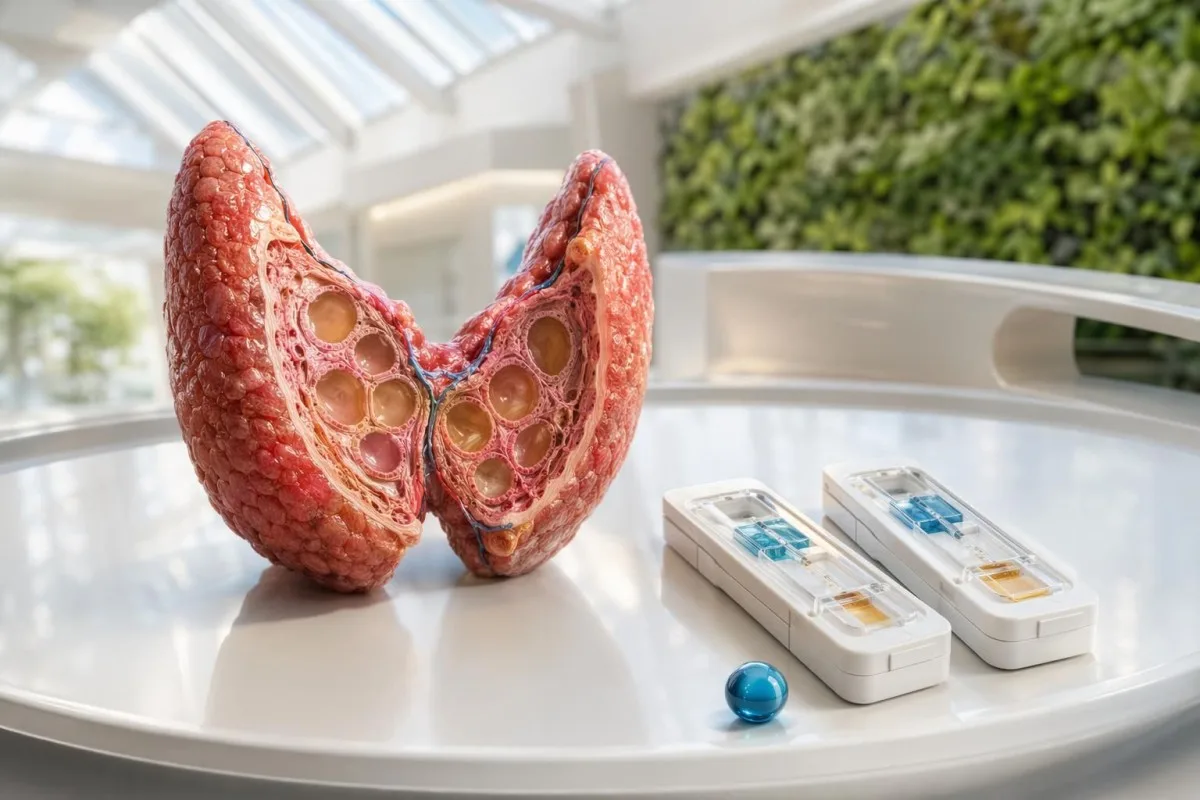
Pas operacionit të tiroides, të njëjtat vlera laboratorike mund të nënkuptojnë gjëra shumë të ndryshme. Objektivi varet nga fakti nëse është hequr një pjesë apo e gjithë tiroidja, pse është hequr dhe nëse shtypja e TSH është e qëllimshme.


- Tiroidektomia totale zakonisht kërkon levotiroksinë gjatë gjithë jetës, sepse trupi nuk ka më ind tiroides për të prodhuar T4.
- Tiroidektomia e pjesshme mund të mos kërkojë mjekim, por TSH zakonisht duhet të kontrollohet rreth 6-8 javë pas operacionit.
- Kirurgjia e tiroides beninje zakonisht synon TSH rreth 0.5-2.5 mIU/L, megjithëse shumë laboratorë e listojnë 0.4-4.0 mIU/L si normale.
- Ndjekja pas kancerit të tiroides mund të synojë në mënyrë të qëllimshme uljen e TSH nën 0.1-0.5 mIU/L, në varësi të rrezikut të rikthimit dhe moshës.
- Nivelet e T4 të lirë shpesh interpretohen kundrejt TSH; një interval tipik referencë për të rritur është rreth 0.8-1.8 ng/dL ose 10-23 pmol/L.
- kontrollet e dozës së levotiroksinës zakonisht duhet të ndodhin 6-8 javë pas fillimit ose ndryshimit të dozës, sepse TSH mbetet pas T4.
- nivelet e T3 dhe T4 nuk janë po aq të dobishme pas tiroidektomisë; T4 e lirë dhe TSH zakonisht udhëheqin dozimin më me besueshmëri sesa T3.
- Nevojitet ndjekje urgjente nevojitet për T4 të lirë shumë të lartë me dhimbje gjoksi, të fikët, fibrilacion të ri atrial, dobësi të rëndë, shtatzëni, ose TSH mbi 10 mIU/L me T4 të ulët të lirë pas tiroidektomisë totale.
Çfarë nënkupton një analizë gjaku për tiroiden pas operacionit të tiroides
Pas një tiroidektomie të pjesshme, një test i tiroides kontrollon nëse lobusi i mbetur i tiroides po prodhon mjaftueshëm hormon; pas një tiroidektomie totale, kontrollon nëse levotiroksina po zëvendëson në mënyrë të sigurt gjëndrën që mungon. Për kirurgji beninje, shumica e mjekëve synojnë TSH rreth 0.5-2.5 mIU/L me T4 të lirë brenda intervalit; pas kancerit të tiroides, TSH mund të shtypet qëllimisht, shpesh nën 0.1-0.5 mIU/L, në varësi të rrezikut të rikthimit.
Unë jam Thomas Klein, MD, Shef i Mjekësisë në Kantesti, dhe modeli që shoh më shpesh nuk është një rezultat laboratorik i çuditshëm — është një rezultat krejtësisht logjik që po gjykohet kundrejt objektivit të gabuar. Një TSH prej 0.08 mIU/L mund të jetë trajtim i tepruar i rrezikshëm te një 72-vjeçar me gushë beninje, ndërsa mund të jetë shtypje e përshtatshme te një 42-vjeçar me kancer të diferencuar të tiroides me rrezik të lartë.
Që nga 14 maj 2026, i yni Analizuesi i testit të gjakut Kantesti AI lexon analizat e tiroidektomisë duke ndarë llojin e operacionit, arsyen e operacionit, kohën e dozës, simptomat, moshën, statusin e shtatzënisë dhe vlerat e mëparshme përpara se të komentojë TSH ose T4 të lirë. Kjo ka rëndësi sepse një flamur i vetëm i kuq në një raport analize shpesh injoron nëse TSH e ulët ishte planifikuar.
Një pikënisje praktike: TSH është termostati i dozës, T4 e lirë është niveli i hormonit qarkullues dhe simptomat janë kontrolli i sigurisë. Nëse dëshironi një udhëzues më të gjerë për të lexuar modelet sesa flamuj të izoluar, udhëzuesi ynë për numrat e analizave të gjakut shpjegon pse një vlerë e vetme jonormale rrallë tregon të gjithë historinë.
Si ndryshojnë objektivat laboratorike pas heqjes së pjesshme dhe totale të tiroides
Tiroidektomia e pjesshme lë ind tiroide funksional pas, ndaj TSH mund të normalizohet pa mjekim; tiroidektomia totale heq gjëndrën që prodhon hormonin, ndaj levotiroksina zakonisht është e domosdoshme. Kontrolli i parë i rëndësishëm i TSH zakonisht bëhet 6-8 javë pas operacionit ose ndryshimit të dozës.
Pas lobektomisë, afërsisht 15-30% e të rriturve zhvillojnë hipotiroidizëm brenda vitit të parë, me rrezikun më të lartë kur TSH para operacionit ishte mbi 2.5 mIU/L ose kur antitrupat e Hashimotos ishin pozitivë. U them pacientëve se lobusi i mbetur nuk është “i plogët”; thjesht mund të mos ketë rezervë të mjaftueshme.
Pas tiroidektomisë totale, një TSH e zbulueshme nuk do të thotë se gjëndra është rritur sërish. Zakonisht do të thotë se doza e levotiroksinës është shumë e ulët, përthithja është jokonsistente, ose analiza u mor përpara se doza të arrinte gjendje të qëndrueshme, gjë që zgjat rreth 6 javë për shumicën e të rriturve.
Këtu ka rëndësi edhe diagnoza fillestare. Dikush i operuar për sëmundjen e Graves mund të ketë një TSH që qëndron i ulët për 2-3 muaj edhe kur T4 e lirë bie, ndërsa dikush me tiroidit autoimun mund të shkojë më shpejt lart; artikulli ynë për shenja të sëmundjes së tiroides mbulon këto modele para operacionit.
Objektivat e TSH pas heqjes së tiroides për arsye beninje
Pas heqjes së tiroides për sëmundje beninje, objektivi i zakonshëm është një TSH brenda intervalit normal, shpesh rreth 0.5-2.5 mIU/L nëse simptomat dhe T4 i lirë përputhen. Shtypja rutinë e TSH nuk nevojitet pas tiroidektomisë beninje dhe mund të rrisë rreziqet për ritmin e zemrës dhe kockat.
Shumica e laboratorëve raportojnë intervale referimi të TSH për të rritur rreth 0.4-4.0 mIU/L, por objektivat pas tiroidektomisë shpesh janë më të ngushta sepse mjeku përcakton dozën. Në klinikën time, një TSH prej 3.8 mIU/L pas tiroidektomisë totale mund të jetë teknikisht normale, por prapë mund të jetë shumë e lartë nëse pacienti ka intolerancë ndaj të ftohtit, kapsllëk dhe T4 i lirë afër kufirit të poshtëm.
Një TSH nën 0.1 mIU/L pas tiroidektomisë beninje nuk është shenjë e metabolizmit të mirë. Te të rriturit mbi 60 vjeç, shtypja e vazhdueshme e TSH nën 0.1 mIU/L shoqërohet me rrezik më të lartë për fibrilacion atrial, sidomos kur T4 i lirë qëndron në të tretën e sipërme të intervalit.
Koha e ndryshon historinë. Një TSH e marrë 10 ditë pas rritjes së levotiroksinës shpesh është mashtruese, sepse T4 i lirë ndryshon brenda ditësh, por TSH mund të ketë nevojë për 6-8 javë; tek ne udhëzuesi normal i TSH jep kontekst sipas moshës dhe kohës.
Kur shtypja e TSH është e qëllimshme pas kancerit të tiroides
Shtypja e TSH pas kancerit të tiroides do të thotë dhënia e mjaftueshme e levotiroksinës për ta mbajtur TSH më të ulët se zakonisht, sepse TSH mund të stimulojë disa qeliza të kancerit të tiroides. Udhëzimi i vitit 2015 i American Thyroid Association rekomandon përshtatjen e shtypjes sipas rrezikut të rikthimit, jo përdorimin e një objektivi të vetëm për të gjithë (Haugen et al., 2016).
Ndjekja e kancerit të diferencuar të tiroides me rrezik të lartë mund të përdorë TSH nën 0.1 mIU/L, ndërsa sëmundja me rrezik të ndërmjetëm shpesh synon 0.1-0.5 mIU/L. Pacientët me rrezik të ulët që janë pa sëmundje shpesh lejohen të qëndrojnë më afër 0.5-2.0 mIU/L, sepse dëmet e shtypjes afatgjatë mund të tejkalojnë përfitimin teorik.
Çështja është se shtypja nuk është thjesht një numër. Së fundmi rishikova një 58-vjeçare me TSH 0.03 mIU/L, T4 të lirë 1.9 ng/dL, dridhje dhe palpitacione të reja; historia e saj e kancerit justifikonte njëfarë shtypjeje, por jo një dozë që ta çonte në tirotoksikozë simptomatike.
A mund të humbasë sëmundje aktive. pas operacionit për kancer mund të përfshijë edhe tiroglobulinën dhe antitrupat ndaj tiroglobulinës, por këto janë shënues monitorimi, jo shënues doze. Për një pamje më të gjerë se kur T4 i lirë, T3 dhe antitrupat shtojnë vlerë, shihni tonë panelin e tiroides.
Nivelet e T4 të lirë: kur ato kanë përparësi ndaj TSH
Nivelet e T4 të lirë tregojnë T4 aktive qarkulluese të disponueshme për indet dhe janë më të dobishme kur TSH është me vonesë, e pabesueshme, e shtypur qëllimisht, ose nuk përputhet me simptomat. Një interval i zakonshëm referencë për T4 të lirë te të rriturit është rreth 0.8-1.8 ng/dL, afërsisht 10-23 pmol/L, në varësi të laboratorit.
T4 i lirë mund të rritet brenda disa ditësh nga rritja e levotiroksinës, ndërsa TSH mund të vazhdojë të pasqyrojë dozën e mëparshme për 6 javë. Kjo është arsyeja pse një panel i hershëm pas ndryshimit të dozës me TSH normale, por T4 të lirë të lartë, ende mund të shpjegojë dridhjen, pagjumësinë ose rrahjet e shpejta të zemrës.
Disa laboratorë evropianë raportojnë T4 të lirë si 12-22 pmol/L, ndërsa shumë raporte në stilin amerikan tregojnë 0.8-1.8 ng/dL. Një T4 e lirë prej 24 pmol/L është vetëm pak mbi kufirin e një laboratori, por te një 80-vjeçar me fibrilacion atrial ajo peshon më shumë sesa i njëjti rezultat në një plan të ngushtë monitoruar për shtypjen e kancerit.
Kur rishikoj një rezultat që tregon TSH të ulët dhe T4 të lirë normale, pyes nëse analiza u mor para ose pas dozës së mëngjesit të levotiroksinës. Udhëzuesi ynë i dedikuar nivelet e T4 të lirë shpjegon pse një analizë e marrë 2 orë pas dozës mund të duket artificialisht e lartë.
Kontrolli i dozës së levotiroksinës: koha, doza dhe rivlerësimet
Kontrollet e dozës së levotiroksinës pas tiroidektomisë zakonisht duhet të bëhen 6-8 javë pasi të fillohet terapia ose të ndryshohet doza. Një dozë tipike e plotë zëvendësuese pas tiroidektomisë totale është rreth 1.6 mcg/kg/ditë, por të moshuarit dhe personat me sëmundje të zemrës shpesh fillojnë shumë më ulët.
Një i rritur 70 kg pas tiroidektomisë totale mund të fillojë afërsisht me 112 mcg në ditë, ndërsa një 82-vjeçar i dobët me sëmundje koronare mund të fillojë me 25-50 mcg dhe të rrisë ngadalë. Jonklaas et al. rekomanduan levotiroksinën si terapi standarde për hipotiroidizmin dhe theksuan dozimin e individualizuar, jo rregullimet vetëm sipas simptomave (Jonklaas et al., 2014).
Dozimi i bazuar në peshë e mbivlerëson nevojën te disa pacientë me obezitet, sepse masa trupore pa dhjam parashikon më mirë kërkesën hormonale sesa pesha totale. Kam parë një tejkalim prej 1.6 mcg/kg me 25-50 mcg/ditë kur doza llogaritej nga pesha reale pa marrë parasysh moshën, historinë kardiake dhe objektivin e TSH.
Ndryshimet e dozës më të vogla se 12.5-25 mcg/ditë mund të kenë rëndësi. Nëse TSH-ja juaj u ul nga 8.5 në 0.2 mIU/L pas një rritjeje prej 50 mcg, kjo nuk ishte një rregullim i vogël; artikulli ynë për afatet kohore të levotiroksinës tregon pse rivlerësimi shumë herët shkakton “kërcime” të shmangshme të dozës.
Nivelet T3 dhe T4: pse zakonisht T3 nuk është objektivi i dozës
nivelet e T3 dhe T4 interpretohen ndryshe pas tiroidektomisë, sepse levotiroksina zëvendëson T4 dhe trupi e shndërron T4 në T3 në inde. TSH dhe T4 e lirë zakonisht udhëheqin më mirë zëvendësimin sesa T3 totale, përveç rasteve të sëmundjeve të pazakonta, sëmundjes së hipofizës ose terapisë së kombinuar të drejtuar nga specialisti.
T3 totale mund të jetë e ulët gjatë kufizimit të kalorive, sëmundjeve të rënda, përdorimit të glukokortikoideve dhe gjatë rikuperimit nga stresi i madh, edhe kur zëvendësimi i tiroides është i mjaftueshëm. Ky model i “T3 të ulët” është i zakonshëm pas hospitalizimit dhe nuk duhet të nxisë automatikisht liotironinë.
Terapia e kombinuar T4/T3 mbetet kontroverse. Dëshmitë janë sinqerisht të përziera: disa pacientë raportojnë më shumë energji, por provat nuk kanë treguar në mënyrë të qëndrueshme epërsi, dhe T3 mund të krijojë pike që provokojnë palpitacione kur nivelet në serum rriten shpejt.
T3 reverse rrallë është e dobishme për menaxhimin rutinë të dozës pas tiroidektomisë. Nëse raporti juaj liston T3 të ulët me TSH normale dhe T4 të lirë normale, lexoni fillimisht kontekstin; artikulli ynë nivelet e T3 dhe T4 shpjegon modelet e sëmundjes dhe të dietës që zakonisht e ngatërrojnë këtë rezultat.
Gabimet në kohën e marrjes së ilaçeve dhe suplementeve që shtrembërojnë rezultatet
Përthithja e levotiroksinës ulet lehtësisht nga kalciumi, hekuri, suplementet me magnez, fibra, lidhësit e acideve biliare dhe disa ilaçe që ulin aciditetin. Shumica e pacientëve duhet ta ndajnë levotiroksinën nga kalciumi ose hekuri të paktën 4 orë dhe ta marrin vazhdimisht me ujë.
Një TSH prej 9.0 mIU/L pas tiroidektomisë totale mund të duket si nën-dozim, por unë fillimisht pyes për mëngjesin, kafenë, kalciumin, hekurin dhe tabletat e humbura. TSH-ja e një pacienti ra nga 11.6 në 2.1 mIU/L pa ndryshuar dozën pasi e zhvendosi karbonatin e kalciumit nga mëngjesi në darkë.
Biotina është një problem më vete, sepse mund të shtrembërojë disa imunanaliza, duke e bërë TSH-në të duket falsisht e ulët dhe T4 të lirë të duket falsisht e lartë. Produktet me dozë të lartë për flokët dhe thonjtë shpesh përmbajnë 5,000-10,000 mcg, dhe shumë mjekë u kërkojnë pacientëve të ndalojnë biotinën për 48-72 orë para analizave të tiroides, megjithëse platformat laboratorike ndryshojnë.
Mos e hamendësoni se cili suplement e shkaktoi ndryshimin. Udhëzuesi ynë test i tiroides me biotinë mbulon ndërhyrjen e analizës (assay), dhe udhëzuesi ynë praktik për koha e suplementit shpjegon pse kalciumi, hekuri dhe magnezi zakonisht kanë nevojë për ndarje në kohë.
Modelet e mbidozimit: TSH e ulët, T4 e lartë, puls i shpejtë
Mbi-zëvendësimi pas tiroidektomisë zakonisht shfaqet si TSH e shtypur me T4 të lirë të lartë ose në kufi të lartë, sidomos kur simptomat përfshijnë palpitacione, dridhje, intolerancë ndaj nxehtësisë, pagjumësi ose humbje peshe të pashpjeguar. Një TSH nën 0.1 mIU/L është shqetësuese kur shtypja nuk ishte planifikuar.
Rreziku nuk është teorik. TSH e vazhdueshme nën 0.1 mIU/L mund të rrisë rrezikun e fibrilacionit atrial te të rriturit e moshuar, dhe T4 e lirë në kufi të lartë është lidhur me densitet më të ulët kockor te pacientët pas menopauzës kur ekspozimi vazhdon për vite.
Simptomat kanë rëndësi sepse jo të gjithë me tepricë biokimike ndihen “të ndezur”. Një vrapues maratonë, pulsi në qetësi që rritet nga 48 në 74 rrahje në minutë pas rritjes së dozës, mund të jetë mbi-dozuar edhe nëse analiza tregon vetëm T4 të lirë në kufirin e sipërm.
Rrahje të reja të parregullta të zemrës, të fikët, shtrëngim në gjoks ose vështirësi në frymëmarrje nuk duhet të presin për një takim rutinë te endokrinologu. Udhëzuesi ynë për analizat e rrahjeve të parregullta të zemrës shpjegon pse kaliumi, magnezi, hemoglobina dhe rezultatet e tiroides shpesh rishikohen së bashku.
Modelet e nën-dozimit: TSH e lartë, T4 e ulët, rikuperim i ngadaltë
Nën-zëvendësimi pas tiroidektomisë totale zakonisht shfaqet si TSH e lartë me T4 të lirë të ulët ose në kufi të ulët. Një TSH mbi 10 mIU/L pas tiroidektomisë totale shpesh kërkon rishikim nga mjeku, sidomos me lodhje, intolerancë ndaj të ftohtit, kapsllëk, depresion, ënjtje ose rritje të kolesterolit LDL.
Një T4 i lirë nën interval me TSH mbi 10 mIU/L nuk është një problem mirëqenieje që duhet rregulluar me suplemente. Zakonisht do të thotë se doza, përthithja, përputhshmëria (adherenca) ose aksesi te recetat kërkon korrigjim mjekësor, sepse trupi nuk ka rezervë tiroide pas heqjes totale.
Zëvendësimi i pamjaftueshëm mund të përkeqësojë edhe rezultatet e lipideve. Shpesh shoh që kolesteroli LDL rritet me 20-40 mg/dL gjatë hipotiroidizmit të rëndësishëm, pastaj përmirësohet pasi TSH kthehet në objektiv, gjë që mund të parandalojë vendime të parakohshme për statina në raste kufitare.
Intoleranca ndaj të ftohtit dhe lodhja janë të zakonshme, por jo specifike, ndaj modeli ka rëndësi. Nëse simptomat vazhdojnë pavarësisht një TSH-je të arsyeshme, është e mençur të kontrollohen ferritina, B12, vitamina D, CBC dhe testet e funksionit të veshkave; udhëzuesi ynë udhëzuesi i analizave për intolerancën ndaj të ftohtit dhe analizat për lodhje mbulon këto mbivendosje.
Shtatzënia, mosha dhe sëmundjet shoqëruese e ndryshojnë objektivin
Shtatzënia, mosha më e madhe, sëmundjet e zemrës, rreziku për osteoporozë, fëmijëria dhe ndryshimet e mëdha në peshë mund t’i zhvendosin të gjitha objektivat e analizave pas tiroidektomisë. Pacientet shtatzëna pa tiroiden zakonisht kanë nevojë për monitorim më të shpejtë, shpesh çdo 4 javë në tremujorin e parë, sepse nevojat për levotiroksinë mund të rriten me 25-30%.
Në shtatzëni, shumë klinicistë synojnë objektiva të TSH-së specifike për tremujorin, zakonisht nën 2.5 mIU/L në tremujorin e parë kur intervalet lokale nuk janë të disponueshme. Një paciente pas tiroidektomisë totale duhet të kontaktojë klinicistin e saj sa më shpejt që konfirmohet shtatzënia, jo pas skanimit të parë rutinë.
Të moshuarit kanë nevojë për kujdesin e kundërt. Një TSH prej 0.05 mIU/L mund të jetë e pranueshme për ndjekje të përzgjedhur pas kancerit, por te një 84-vjeçare me osteoporozë dhe histori të fibrilacionit atrial, klinicistët shpesh e zbusin objektivin për të ulur dëmin.
Fëmijët dhe adoleshentët pas tiroidektomisë kanë nevojë për mbikëqyrje pediatrike endokrinologjike, sepse rritja, puberteti dhe ndryshimet në peshë e ndryshojnë shpejt dozimin. Për vlera specifike për shtatzëninë, artikulli ynë intervali i TSH gjatë shtatzënisë jep kontekstin sipas tremujorit, ndërsa kujdestarët mund të përdorin udhëzuesin tonë për të ndjekur prindërit që plaken pa humbur historikun e trendit.
Kur rezultatet laboratorike pas tiroidektomisë kërkojnë ndjekje urgjente nga mjeku
Nevojitet ndjekje urgjente kur analizat pas tiroidektomisë përputhen me simptoma të rrezikshme, jo thjesht sepse është shënuar një vlerë. Kërkoni këshillë mjekësore të së njëjtës ditë për T4 të lirë të lartë me dhimbje gjoksi, të fikët, fibrilacion të ri atrial, dobësi të rëndë, konfuzion, shtatzëni, ose TSH shumë të lartë me T4 të lirë të ulët pas tiroidektomisë totale.
Një TSH prej 25 mIU/L me T4 të lirë të ulët pas tiroidektomisë totale është ndryshe nga i njëjti TSH te dikush me gjëndër të paprekur, sepse nuk ka prodhim rezervë të hormonit. Nëse pacientja është shtatzënë, e moshuar, e hutuar, ose e ënjtur rëndë, nuk do të prisja 3 muaj për ta rivlerësuar.
T4 e lirë shumë e lartë mbi intervalin e laboratorit plus takikardi, dridhje, temperaturë ose diarre mund të përfaqësojë një tepricë klinikisht të rëndësishme, sidomos kur TSH është nën 0.01 mIU/L. Udhëzimi i NICE për sëmundjet e tiroides rekomandon vlerësimin e simptomave dhe ashpërsisë biokimike së bashku, në vend që të trajtohet vetëm shenja e analizës (NICE, 2019).
Mos i injoroni simptomat e kalciumit menjëherë pas tiroidektomisë totale, edhe pse kalciumi nuk është pjesë e një paneli tiroide. Ndjesi shpimi rreth gojës, ngërçe të duarve ose spazma në ditët e para deri në javët e para mund të sugjerojnë kalcium të ulët pas shqetësimit të gjëndrave paratiroide dhe kërkon kontakt urgjent me klinicistin; udhëzuesi ynë vlerat kritike të analizave të gjakut shpjegon si vlerësohet urgjenca.
Pse trendet janë më të rëndësishme se një panel i vetëm i tiroides
Leximi i panelit të tiroides bazuar në trend është më i sigurt pas tiroidektomisë, sepse TSH mund të mbetet prapa, T4 e lirë mund të rritet pas marrjes së dozës dhe platformat laboratorike përdorin intervale të ndryshme reference. Një ndryshim real zakonisht nënkupton një zhvendosje të përsëritur në të njëjtin drejtim gjatë 6–12 javëve, jo një sinjalizim i vetëm kufitar.
E shoh këtë model vazhdimisht në analizën tonë të ngarkimeve të analizave të gjakut nga 2M+: një pacient panikon për TSH 4.3 mIU/L, por tre vlerat e mëparshme ishin 4.1, 3.9 dhe 4.4 në të njëjtën dozë. Kjo është variabilitet, jo domosdoshmërisht përkeqësim.
Laboratorë të ndryshëm mund të zhvendosin T4 të lirë me 10-20%, sepse analizat imunologjike nuk janë identike dhe ndryshimet në proteinat lidhëse mund të ndikojnë në rezultatet e hormonit total. Nëse ndryshoni laboratorin, krahasoni njësitë dhe intervalet e referencës përpara se të kërkoni ndryshim doze.
Kantesti AI krahason njësitë, sinjalizon artefakte të mundshme të kohës dhe ndan shtypjen e pritshme nga trajtimi i paqëllimtë i tepërt kur ngarkohen PDF ose foto të mëparshme. Tonë krahasimit të analizave të gjakut artikulli dhe variabilitetin e analizave tregon si të dalloni lëvizjen e vërtetë.
Si lexon AI Kantesti analizat pas tiroidektomisë në mënyrë të sigurt
Kantesti AI interpreton rezultatet e tiroidektomisë duke kombinuar TSH, T4 të lirë, T3 nëse është i pranishëm, kohën e marrjes së ilaçit, llojin e operacionit, moshën, statusin e shtatzënisë, simptomat dhe trendet e mëparshme. Platforma jonë nuk diagnostikon rikthim të kancerit dhe nuk ndryshon receta; ajo i ndihmon pacientët të përgatitin pyetje më të sigurta dhe më specifike për mjekun e tyre.
Interpretimi ynë i analizave të gjakut me AI është ndërtuar për njohje modelesh, jo për hamendësim nga një numër i vetëm. Kur një raport tregon TSH 0.04 mIU/L, rrjeti nervor i Kantesti pyet nëse kjo është një objektiv i synuar për shtypjen e kancerit, një artefakt nga biotina, një marrje gjaku pas dozës, apo një zëvendësim i paqëllimtë i tepërt.
Kantesti është i shënuar me CE, në përputhje me HIPAA dhe GDPR dhe i certifikuar sipas ISO 27001; standardet tona klinike përshkruhen në vërtetim mjekësor. Daljet komplekse pas tiroidektomisë shqyrtohen gjithashtu kundrejt rregullave të mbajtura me mbikëqyrje nga mjekët nga bordi këshillimor mjekësor.
Ju mund të ngarkoni një PDF ose foto dhe të merrni një shpjegim të asistuar nga AI në rreth 60 sekonda përmes platforma jonë e analizës së gjakut me AI. Nëse dëshironi ta testoni me analizën tuaj të gjakut për tiroiden ose me një raport tjetër laboratorik, provoni analizë e lirë e gjakut faqe.
Shënime për publikimet kërkimore dhe provat klinike të përdorura këtu
Objektivat mjekësore në këtë artikull vijnë nga udhëzimet e tiroides dhe rishikimi nga mjekët, ndërsa publikimet kërkimore të Kantesti përshkruajnë inxhinierinë tonë më të gjerë të interpretimit me AI. Vendimet për dozën pas tiroidektomisë i takojnë ende mjekut që ju trajton, veçanërisht pas kancerit, shtatzënisë ose simptomave jonormale kardiake.
Objektivat e shtypjes së kancerit të tiroides më sipër bazohen kryesisht në udhëzimin e American Thyroid Association nga Haugen et al., botuar në Thyroid në 2016, dhe parimet e zëvendësimit me levotiroksinë vijnë nga punimi i grupit të punës së ATA nga Jonklaas et al., botuar në Thyroid në 2014. I kam aplikuar këto intervale me kujdes këtu, sepse pacientët realë rrallë përshtaten në mënyrë perfekte në kutitë e udhëzimeve.
Kantesti LTD është një kompani në Mbretërinë e Bashkuar dhe sfondi, qeverisja dhe misioni ynë mjekësor përshkruhen në Rreth Kantestit. Për transparencë, puna e publikuar e Kantesti me AI përfshin: Kantesti AI. (2026). Multilingual AI Assisted Clinical Decision Support for Early Hantavirus Triage: Design, Engineering Validation, and Real-World Deployment Across 50,000 Interpreted Blood Test Reports. Figshare. https://doi.org/10.6084/m9.figshare.32230290.
Një publikim i dytë Kantesti nuk është specifik për tiroiden, por tregon qasjen tonë të strukturuar ndaj edukimit laboratorik: Kantesti AI. (2026). Urobilinogen në Testin e Urinës: Udhëzuesi i Plotë i Analizës së Urinës 2026. Zenodo. https://doi.org/10.5281/zenodo.18226379. Në praktikë, i përdor këto rezultate kërkimore si transparencë inxhinierike, ndërsa interpretimi pas tiroidektomisë mbetet i ankoruar në udhëzimet endokrinologjike dhe në historinë operative të pacientit.
Pyetje të Shpeshta
Çfarë niveli i TSH konsiderohet normal pas tiroidektomisë totale?
Pas tiroidektomisë totale për sëmundje beninje, shumë klinicistë synojnë një TSH rreth 0.5–2.5 mIU/L, megjithëse shumë laboratorë listojnë 0.4–4.0 mIU/L si intervalin e përgjithshëm të referencës për të rriturit. Pas kancerit të tiroides, objektivi mund të jetë më i ulët, shpesh 0.1–0.5 mIU/L ose edhe nën 0.1 mIU/L në raste të përzgjedhura me rrezik të lartë. Objektivi i duhur varet nga arsyeja e operacionit, mosha, rreziku për ritmin e zemrës, rreziku për kockat dhe simptomat.
Kur duhet ta përsëris një test gjaku për tiroiden pasi të kem ndryshuar levotiroksinën?
Një test gjaku për tiroiden zakonisht përsëritet 6-8 javë pas fillimit ose ndryshimit të levotiroksinës, sepse TSH ka nevojë për kohë që të arrijë një gjendje të re të qëndrueshme. T4 e lirë mund të ndryshojë brenda disa ditësh, ndaj testimi i hershëm mund të jetë i dobishëm vetëm kur simptomat sugjerojnë trajtim të tepërt ose trajtim të pamjaftueshëm. Testimi shumë herët shpesh çon në ndryshime të panevojshme të dozës dhe në rezultate të paqëndrueshme.
Pse më është i ulët TSH pas tiroidektomisë?
TSH i ulët pas tiroidektomisë mund të nënkuptojë edhe shtypje të qëllimshme të TSH-së, dozë të tepërt të levotiroksinës, efekte nga koha e marrjes së dozës së fundit, interferencë nga biotina ose rikuperim i vonuar pas hipertiroidizmit të mëparshëm. Nëse TSH është nën 0.1 mIU/L dhe shtypja nuk ishte planifikuar, rezultati duhet të rishikohet bashkë me T4 të lirë, pulsin, simptomat dhe kohën e marrjes së ilaçit. Dhimbja në gjoks, të fikët, ose rrahje të reja të parregullta të zemrës me T4 të lartë të lirë kërkojnë ndjekje urgjente nga mjeku.
A më duhet T4 falas apo vetëm TSH pas heqjes së gjëndrës tiroide?
Pacientët më të qëndrueshëm pas tiroidektomisë monitorohen kryesisht me TSH, por T4 i lirë është i dobishëm kur TSH është i shtypur, simptomat nuk përputhen me TSH, analiza kontrollohet shpejt pas një ndryshimi doze, ose mund të jetë e mundur një sëmundje e hipofizës. Një interval i zakonshëm referencë për T4 të lirë tek të rriturit është rreth 0.8-1.8 ng/dL ose 10-23 pmol/L. T4 i lirë ndihmon gjithashtu në zbulimin e mbidozimit (mbirekomandimit) kur TSH mbahet qëllimisht i ulët pas kancerit të tiroides.
A janë nivelet e T3 dhe T4 të dobishme pas tiroidektomisë?
Nivelet e T3 dhe T4 nuk janë njësoj të dobishme pas tiroidektomisë, sepse levotiroksina zëvendëson T4 dhe indet e shndërrojnë T4 në T3 sipas nevojës. TSH dhe T4 e lirë zakonisht udhëheqin më mirë dozimin sesa T3 totale në ndjekjen rutinë. T3 e ulët mund të ndodhë gjatë sëmundjes, agjërimit, kufizimit të kalorive ose përdorimit të steroideve, edhe kur zëvendësimi me levotiroksinë është i përshtatshëm.
Cilat rezultate të analizave të tiroides janë urgjente?
Modelet laboratorike urgjente për tiroidektominë përfshijnë T4 të lirë të lartë me dhimbje në gjoks, të fikët, fibrilacion të ri atrial, dridhje të rënda ose vështirësi në frymëmarrje. Një TSH mbi 10 mIU/L me T4 të lirë të ulët pas tiroidektomisë totale kërkon rishikim të menjëhershëm, veçanërisht gjatë shtatzënisë, te të moshuarit ose kur simptomat janë të rënda. Ndjesi shpimi gjilpërash rreth gojës ose ngërçe në dorë pas operacionit të tiroides mund të tregojnë kalcium të ulët dhe duhet trajtuar si urgjente, edhe pse kalciumi nuk është pjesë e një paneli të tiroides.
Pse mund të urdhërojë mjeku im testimin e tiroglobulinës pas operacionit për kancer të tiroides?
Pas tiroidektomisë totale për kancer të diferencuar të tiroides, tiroglobulina mund të ndihmojë në monitorimin e indit tiroide të mbetur ose të rikthyer. Ajo interpretohet së bashku me antitrupat ndaj tiroglobulinës, imazherinë dhe kategorinë tuaj të rrezikut për kancerin, jo si zëvendësim për testimin e TSH ose T4 të lirë.
A mund të ndryshojë ndërrimi i markës së levotiroksinës rezultatet e analizave të gjakut të tiroides pas tiroidektomisë?
Po, disa persona vërejnë ndryshime të vogla në TSH pas kalimit nga një levotiroksinë me emër tregtar te një gjenerike, ose mes gjenerikëve të ndryshëm. Nëse bëhet një ndërrim, pyesni nëse kontrolli i përsëritur i TSH dhe T4 e lirë pas 6-8 javësh është i përshtatshëm.
Merrni sot analizë të analizave të gjakut me AI
Bashkohuni me mbi 2 milionë përdorues në mbarë botën që i besojnë Kantesti për analizë të menjëhershme dhe të saktë të analizave laboratorike. Ngarkoni rezultatet e analizave të gjakut dhe merrni interpretim gjithëpërfshirës të biomarkerëve të 15,000+ brenda sekondash.
📚 Publikime kërkimore të cituara
Klein, T., Mitchell, S., & Weber, H. (2026). Mbështetje vendimmarrëse klinike e asistuar nga AI multilinguale për tregimin e hershëm të Hantavirusit: Dizajn, Validim Inxhinierik dhe Vendosje Reale në më shumë se 50,000 Raporte të Analizave të Gjakut të Interpretuara. Kantesti Kërkim Mjekësor me AI.
Klein, T., Mitchell, S., & Weber, H. (2026). Testi i Urobilinogjenit në Urinë: Udhëzues i plotë për Analizën e Urinës 2026. Kantesti Kërkim Mjekësor me AI.
📖 Referenca të jashtme mjekësore
NICE (2019, i përditësuar më 2023). Sëmundjet e tiroides: vlerësimi dhe menaxhimi. Udhëzimi NICE NG145.
⚕️ Mohim përgjegjësie mjekësore
Ky artikull është vetëm për qëllime edukative dhe nuk përbën këshilla mjekësore. Gjithmonë konsultohuni me një ofrues të kualifikuar të kujdesit shëndetësor për vendimet e diagnozës dhe trajtimit.
Sinjalet e Besimit E-E-A-T
Përvoja
Rishikim klinik i udhëhequr nga mjeku i flukseve të punës për interpretimin e analizave.
Ekspertizë
Fokus i mjekësisë laboratorike mbi mënyrën se si sillen biomarkerët në kontekstin klinik.
Autoritariteti
Shkruar nga Dr. Thomas Klein me rishikim nga Dr. Sarah Mitchell dhe Prof. Dr. Hans Weber.
Besueshmëria
Interpretim i bazuar në prova, me rrugë të qarta për ndjekje për të reduktuar alarmin.