
Repeated vomiting usually raises bicarbonate because the body loses stomach hydrochloric acid and chloride-rich fluid. A low result after vomiting is less typical and may point to dehydration-related tissue stress, ketosis, diarrhea, kidney disease, or a mixed acid-base disorder.

Ključne ugotovitve
- Typical range: Adult serum bicarbonate, often reported as total CO2, is commonly 22-29 mmol/L, although some laboratories use approximately 21-31 mmol/L.
- High bicarbonate after vomiting: A result above 29 mmol/L commonly fits vomiting-related metabolic alkalosis, especially when chloride and potassium are low.
- Low bicarbonate blood test: A value below 22 mmol/L is not the usual isolated effect of vomiting and needs assessment for ketosis, lactic acidosis, diarrhea, kidney disease, or a mixed disorder.
- Useful companion results: Chloride, potassium, sodium, creatinine, urea or BUN, glucose, magnesium, ketones, lactate, and anion gap help identify the cause.
- Urine clue: Urine chloride below 20 mmol/L often supports chloride-depletion alkalosis from vomiting, while a value above 20 mmol/L suggests another process or recent treatment.
- Ponovno testiranje: A mildly abnormal result may be repeated within 24-72 hours after symptoms and hydration improve, but timing depends on the number, symptoms, kidney function, and treatment.
- Nujni simptomi: Confusion, fainting, severe weakness, very little urine, rapid or deep breathing, chest pain, severe abdominal pain, or inability to keep fluids down require urgent medical assessment.
What a bicarbonate blood test measures after vomiting
A bicarbonate blood test usually estimates serum total CO2, which is mainly bicarbonate rather than dissolved respiratory carbon dioxide. In adults, a common reference interval is 22-29 mmol/L; after repeated vomiting, a result above 29 mmol/L often reflects metabolic alkalosis, while a result below 22 mmol/L suggests another or additional acid-producing process.
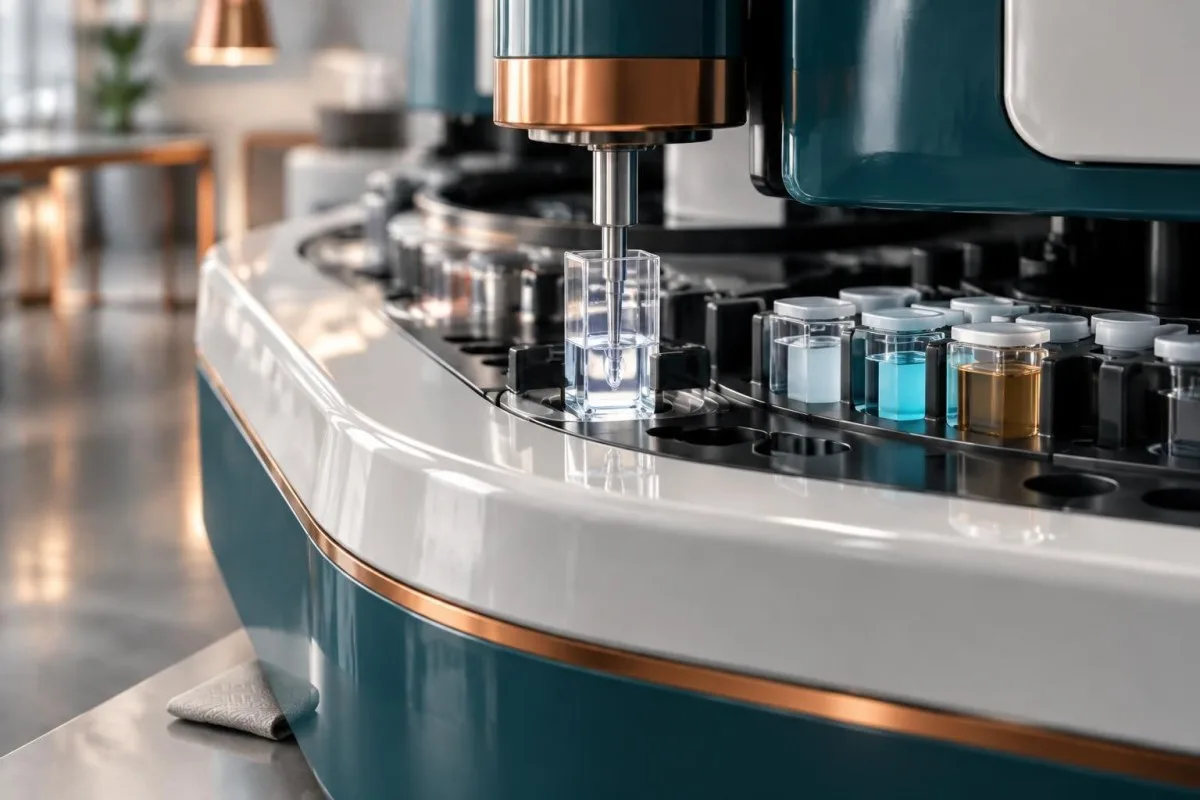
A routine metabolic panel reports total CO2 in mmol/L, and approximately 95% or more of that measured pool is bicarbonate under ordinary conditions. The result is therefore different from the partial pressure of CO2 on an arterial blood gas, which is reported in mmHg and reflects ventilation.
Vomiting can increase bicarbonate because gastric fluid contains hydrochloric acid; losing that acid leaves relatively more bicarbonate in the extracellular fluid. The acid-base framework described by Adrogué and Madias in the New England Journal of Medicine shows why pH, bicarbonate, carbon dioxide, chloride, and volume status must be interpreted together rather than in isolation.
Laboratories do not all use identical intervals: one may flag bicarbonate below 22 mmol/L, while another may use 21 mmol/L as its lower limit or 30 mmol/L as its upper limit. The printed reference range on the same report therefore matters more than a generic internet cutoff.
A chemistry-panel total CO2 result can also be affected by specimen handling, including prolonged exposure of the tube to air or delayed processing. If a surprising value does not fit the symptoms, repeating the panel and checking a blood gas may be more informative than assuming the number represents a lasting body change.
Why total CO2 does not mean lung CO2
Total CO2 on a chemistry panel and pCO2 on a blood gas answer different questions. A total CO2 of 34 mmol/L indicates increased measured bicarbonate or total dissolved CO2, whereas a pCO2 of 34 mmHg indicates lower respiratory carbon dioxide; the two numbers should never be treated as interchangeable.
For a broader explanation of how individual markers fit into a laboratory panel, see this Referenčni vodnik za biomarkerje.
Why vomiting commonly causes high bicarbonate
Vomiting commonly raises bicarbonate through loss of gastric hydrochloric acid, chloride depletion, and contraction of the circulating fluid volume. The kidneys then conserve sodium and water through the renin-angiotensin-aldosterone system, but this response can increase urinary hydrogen and potassium loss, sustaining alkalosis when vomiting continues.
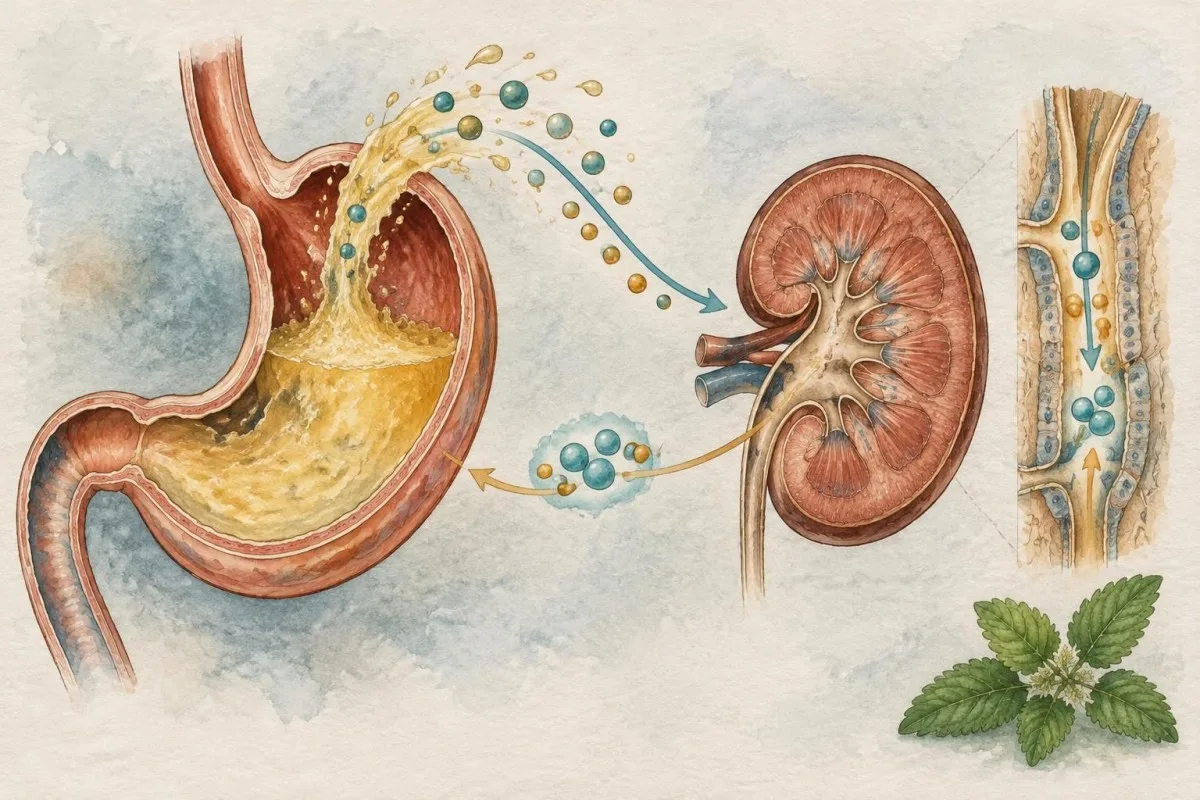
Each episode of gastric-fluid loss removes hydrogen ions and chloride ions; the remaining bicarbonate becomes relatively concentrated as extracellular fluid volume falls. This is why a bicarbonate result of 32-36 mmol/L may appear with chloride around 85-95 mmol/L and potassium below 3.5 mmol/L after substantial vomiting.
Volume depletion activates aldosterone, which helps the kidney retain sodium but promotes hydrogen and potassium secretion in the distal nephron. The result can be a self-reinforcing pattern: chloride depletion limits bicarbonate excretion, while low potassium encourages intracellular hydrogen movement and further renal acid secretion.
Urine chloride can help distinguish vomiting-related alkalosis from other causes. A urine chloride below 20 mmol/L often supports chloride-responsive alkalosis from vomiting or remote diuretic use, whereas a value above 20 mmol/L can suggest active diuretic effect, mineralocorticoid excess, or a chloride-resistant process.
Urine chloride is not a perfect test. Recent intravenous saline, kidney impairment, ongoing diuretic use, and mixed disorders can change the result within hours, so it should be interpreted alongside serum chloride, potassium, blood pressure, and the timing of the last vomiting episode.
A worked example of chloride-depletion alkalosis
Imagine a hypothetical 52-year-old adult who has vomited repeatedly for 36 hours and has bicarbonate 35 mmol/L, chloride 88 mmol/L, potassium 3.1 mmol/L, and urine chloride 9 mmol/L. That combination supports vomiting-related, chloride-responsive metabolic alkalosis more strongly than a bicarbonate result of 35 mmol/L alone.
Urine concentration and collection details can alter interpretation, so the urinalysis testing guide is useful background when reviewing urine sodium, chloride, and concentration results together.
How to interpret high bicarbonate after vomiting
High bicarbonate after vomiting is usually interpreted by severity and by its companion electrolytes, not by the bicarbonate number alone. A result of 30-34 mmol/L is often mild, 35-39 mmol/L is more substantial, and a persistent value of 40 mmol/L or higher deserves prompt clinical review, particularly with weakness, confusion, abnormal potassium, or kidney dysfunction.

A bicarbonate result of 30-34 mmol/L may occur after a short period of vomiting or modest volume depletion, while 35-39 mmol/L more often indicates sustained gastric losses, diuretic exposure, or a second alkalosis-promoting factor. No universal critical threshold exists because symptoms, pH, kidney function, and the speed of change matter.
A result above 40 mmol/L is markedly high for most adult laboratory intervals and can accompany significant alkalemia, especially when the blood pH exceeds 7.55. Such a result does not prove that vomiting is the only cause; severe potassium depletion, mineralocorticoid excess, and alkali ingestion remain possible.
For example, a hypothetical bicarbonate of 33 mmol/L with chloride 91 mmol/L, potassium 3.4 mmol/L, normal creatinine, and improving symptoms has a different risk profile from bicarbonate 33 mmol/L with potassium 2.6 mmol/L, creatinine rising, and persistent vomiting. The reason the second pattern is more concerning is that potassium and kidney changes can impair cardiac and neuromuscular function.
Antacid exposure can add to vomiting-related alkalosis, especially when large amounts of calcium carbonate or sodium bicarbonate are used. Record all non-prescription products and doses; a single chewable tablet is not equivalent to repeated doses over several days, and clinicians need the actual product rather than the word antacid.
| Raven | Razpon | Kaj pomeni |
|---|---|---|
| Običajni referenčni razpon za odrasle | Deljeno med BMP in CMP; nizke vrednosti kažejo na metabolično acidozo ali izgubo bikarbonata. | Usually within range, but the printed laboratory interval and the rest of the panel still matter. |
| Rahlo povišan | 30-34 mmol/L | May fit early or moderate vomiting-related alkalosis, volume contraction, diuretics, or alkali exposure. |
| Zmerno visoko | 35-39 mmol/L | More substantial alkalosis is possible; check chloride, potassium, creatinine, pH, treatment history, and symptoms. |
| Zelo povišano | 40 mmol/L or higher | Needs prompt clinical review, especially with low potassium, confusion, weakness, kidney impairment, or ongoing fluid loss. |
Why the printed reference range still matters
A bicarbonate value of 30 mmol/L may be flagged by one laboratory and accepted by another, because adult reference intervals commonly span approximately 21-31 mmol/L. Trends, symptoms, and paired electrolytes are more reliable than treating the flag symbol as a diagnosis.
If sodium is also high, thirst and confusion add urgency; this high sodium result guide explains why water loss and sodium concentration must be considered together.
Why a low bicarbonate blood test can follow vomiting
A low bicarbonate blood test is not the expected isolated result of vomiting; it usually signals a second process or a different primary cause. Values below 22 mmol/L may reflect starvation or diabetic ketoacidosis, lactic acidosis from poor perfusion, diarrhea occurring alongside vomiting, kidney disease, renal tubular acidosis, or a mixed respiratory and metabolic disorder.

The anion gap helps identify unmeasured acids. Using sodium minus chloride minus bicarbonate, an example result of sodium 140 mmol/L, chloride 100 mmol/L, and bicarbonate 18 mmol/L gives an anion gap of 22 mmol/L, above the commonly cited 8-12 mmol/L range when potassium is excluded.
Starvation ketosis can develop after roughly 12-24 hours of very limited intake and may lower bicarbonate, particularly when vomiting prevents carbohydrate replacement. In diabetes, a glucose level of 200 mg/dL or higher with ketones and acidosis requires urgent assessment because diabetic ketoacidosis can progress even when the initial glucose is not extremely high.
Lactate may rise when dehydration reduces tissue perfusion, but a normal lactate does not exclude every serious cause of low bicarbonate. Diarrhea can produce bicarbonate loss from the intestine, and kidney disease can reduce acid excretion; these causes can coexist with vomiting rather than replace it.
Hypoalbuminemia can hide a high anion gap because albumin is a major unmeasured negative charge in plasma. A commonly used correction adds approximately 2.5 mmol/L to the measured anion gap for every 1 g/dL that albumin is below 4 g/dL, although laboratories and clinicians differ in their preferred formula.
Ketones make the low result easier to interpret
A hypothetical adult with vomiting, bicarbonate 17 mmol/L, anion gap 20 mmol/L, glucose 88 mg/dL, and moderate urine ketones may have starvation ketosis, but the diagnosis still depends on pH, beta-hydroxybutyrate, hydration, and the clinical examination. A glucose of 350 mg/dL with bicarbonate 17 mmol/L is a substantially different emergency pattern.
The distinction between nutritional ketosis and ketoacidosis is explained in this vodnik po beta-hidroksibutiratu, medtem ko urine ketone results show why urine testing can lag behind blood ketone changes.
A renal cause can mimic gastrointestinal loss
Renal tubular acidosis usually produces bicarbonate below 22 mmol/L with a normal or only mildly increased anion gap, depending on the type and the clinical setting. A persistent low result after vomiting has stopped warrants consideration of this pattern, especially when potassium is low or kidney tests are abnormal.
The renal tubular acidosis laboratory guide explains why urine pH and potassium can add information that a standard chemistry panel cannot provide.
Which electrolytes and kidney tests clarify the pattern
Chloride and potassium usually provide the quickest clues to vomiting-related alkalosis, while creatinine, urea or BUN, sodium, magnesium, glucose, and ketones test for dehydration and competing acid-base processes. The combination is more informative than any single CO2 blood test result because each value answers a different physiological question.

Low chloride and low potassium support vomiting-related alkalosis, but potassium below 3.0 mmol/L is more concerning than a borderline value of 3.4 mmol/L. Hypokalemia can cause muscle weakness, constipation, palpitations, and rhythm disturbances; Gennari's New England Journal of Medicine review describes why potassium depletion requires attention to magnesium and ongoing losses.
Sodium reflects water balance rather than vomiting severity alone. A high sodium result can indicate water deficit, whereas a normal sodium result does not rule out major chloride and potassium depletion; serum sodium may remain normal when losses and replacement fluids are proportionate.
Urea or BUN and creatinine help assess kidney perfusion and filtration. A BUN-to-creatinine ratio above approximately 20 can support reduced effective circulating volume in the right context, but gastrointestinal bleeding, high protein intake, steroids, and chronic kidney disease can also change the ratio.
Magnesium below approximately 0.70 mmol/L, or below the local laboratory range, can make hypokalemia difficult to correct. Glucose, beta-hydroxybutyrate, lactate, albumin, and phosphate can reveal starvation, diabetic ketoacidosis, tissue hypoperfusion, or an unrecognised nutritional problem when bicarbonate is low.
Reading kidney markers after dehydration
Creatinine can rise temporarily after fluid loss and may fall after rehydration, but a rising result is not automatically benign. A hypothetical creatinine increase from 80 to 125 micromol/L over 48 hours, together with low urine output, needs clinician review even if bicarbonate is only 31 mmol/L.
The Vodilo razmerja BUN proti kreatininu explains how the ratio is calculated, and this discussion of a GFR test after dehydration covers why kidney estimates can change with fluid status.
When blood gas testing adds useful information
An arterial or venous blood gas is useful when bicarbonate is markedly abnormal, symptoms are significant, or the chemistry panel suggests a mixed disorder. It provides pH and pCO2, allowing clinicians to determine whether a high bicarbonate represents metabolic alkalosis and whether breathing is compensating appropriately.

Normal arterial pH is commonly about 7.35-7.45, although a near-normal pH can conceal two opposing disorders. A person may have metabolic alkalosis from vomiting plus respiratory alkalosis from pain, fever, or pregnancy, producing a deceptively acceptable pH.
For metabolic alkalosis, expected respiratory compensation is approximately a 0.7 mmHg rise in pCO2 for each 1 mmol/L increase in bicarbonate above 24, with an uncertainty of roughly 5 mmHg. If bicarbonate is 34 mmol/L, expected pCO2 is near 47 mmHg, often considered approximately 42-52 mmHg; a much lower or higher value suggests an additional respiratory disorder.
A venous blood gas can often estimate pH and pCO2 for screening, but arterial sampling may be preferred when oxygenation or severe instability is a concern. The choice depends on symptoms, pulse oximetry, circulation, and local clinical practice rather than on bicarbonate alone.
Sample type and laboratory method affect interpretation. The bicarbonate calculated by a blood-gas analyser may differ slightly from chemistry-panel total CO2 because the instruments use different methods, so a small discrepancy of 1-3 mmol/L is not automatically an error.
A practical compensation example
Suppose a hypothetical result shows bicarbonate 36 mmol/L, pH 7.52, and pCO2 39 mmHg. The pCO2 is lower than the expected value of about 48 mmHg, which suggests a second respiratory alkalosis rather than uncomplicated vomiting alone.
The arterial blood gas results guide explains how pH, pCO2, bicarbonate, and oxygen should be read as a set.
When to repeat bicarbonate and related tests
Repeat testing is often reasonable after vomiting improves, but the timing depends on the degree of abnormality, symptoms, kidney function, potassium, and whether treatment has started. A mild bicarbonate result of 30-34 mmol/L in a recovering person may be rechecked within 24-72 hours under clinician guidance, whereas bicarbonate below 18 mmol/L, above 40 mmol/L, or accompanied by serious symptoms needs faster assessment.

Treatment can change bicarbonate quickly, so the repeat sample should record when vomiting stopped, when fluids were taken, and whether intravenous saline, antiemetics, diuretics, or antacids were used. Chloride-containing fluids may lower bicarbonate as the kidneys regain the ability to excrete excess base.
There is no single evidence-based retesting interval for every adult with vomiting. A stable person with improving symptoms and bicarbonate 30 mmol/L may receive a different plan from someone with bicarbonate 30 mmol/L, potassium 2.8 mmol/L, a rising creatinine, or an abnormal ECG.
Repeat the test at the same laboratory when possible because reference intervals and analytical methods differ. Comparing 35 mmol/L today with 31 mmol/L after rehydration is more useful when the units, specimen type, and laboratory method are consistent.
Medication review can prevent a misleading interpretation. Loop and thiazide diuretics can promote alkalosis, while topiramate and some other medicines can lower bicarbonate; sodium-glucose cotransporter-2 inhibitors can increase concern for ketoacidosis during prolonged poor intake, even when glucose is not dramatically elevated.
Pregnancy and prolonged vomiting need a lower threshold for review
Pregnancy-related vomiting can cause dehydration, electrolyte depletion, ketosis, and nutritional deficiency within a shorter period than many adults expect. Persistent vomiting, inability to keep fluids down, reduced urine, dizziness, or ketones in pregnancy should be discussed promptly rather than waiting several days for a routine repeat.
The hyperemesis gravidarum laboratory guide outlines why bicarbonate, potassium, ketones, kidney markers, and liver tests may be checked together.
Use trends rather than isolated flags
A change of 6 mmol/L in bicarbonate may be clinically meaningful even when both values remain within a broad reference interval, particularly if chloride and potassium change in the same direction. Laboratory trends should support, not replace, a clinician's assessment of hydration, blood pressure, urine output, and ongoing vomiting.
Information about laboratory quality, limitations, and responsible interpretation is available in these standardi za medicinske vsebine.
When vomiting and abnormal bicarbonate need urgent care
Urgent assessment is needed when vomiting is accompanied by confusion, fainting, severe weakness, rapid or deep breathing, chest pain, severe abdominal pain, very little urine, blood or coffee-ground material in vomit, or inability to keep fluids down. A bicarbonate result alone does not determine emergency severity, but bicarbonate below 18 mmol/L, above 40 mmol/L, potassium below 3.0 mmol/L, or rising creatinine increases concern.

Confusion, fainting, seizures, or new severe weakness can indicate clinically significant alkalemia, electrolyte disturbance, dehydration, low blood glucose, or another illness. Rapid or deep breathing with bicarbonate below 18 mmol/L raises concern for metabolic acidosis and should not be dismissed as anxiety.
Very low urine output over approximately 8-12 hours, especially with dark urine or dizziness, can signal substantial fluid depletion or acute kidney injury. People with heart failure, advanced kidney disease, diabetes, adrenal disease, or pregnancy may deteriorate with less fluid loss and should seek advice earlier.
Do not try to correct a high or low bicarbonate result by taking sodium bicarbonate, potassium, or large amounts of salt without medical advice. The wrong supplement can worsen alkalosis, potassium imbalance, fluid overload, or kidney injury, and potassium replacement can be dangerous when kidney function is reduced.
Before contacting a clinician, write down the vomiting duration, number of episodes, fluid intake, urine output, medications, antacids, diabetes status, pregnancy possibility, and the exact bicarbonate, chloride, potassium, sodium, creatinine, glucose, and ketone results. This information often shortens the path from an isolated flag to the correct acid-base explanation.
What to do while arranging assessment
If the person is alert and able to swallow, small frequent sips of an appropriate oral rehydration solution may be more tolerable than a large glass at once, but persistent vomiting still needs medical review. Avoid alcohol, concentrated sugary drinks, and unprescribed bicarbonate products while the cause is uncertain.
When laboratory interpretation involves accuracy limits, medical review, or safety decisions, the informacije o klinični validaciji explains why a result should be treated as decision support rather than a diagnosis.
Pogosta vprašanja
Kakšna je normalna raven bikarbonata po bruhanju?
Običajno referenčno območje bikarbonata ali skupnega CO2 pri odraslih je 22–29 mmol/L, čeprav nekateri laboratoriji uporabljajo približno 21–31 mmol/L. Ponavljajoče se bruhanje pogosto zviša izvid nad 29 mmol/L, ker se izgublja želodčna klorovodikova kislina. Klorid pod 95 mmol/L in kalij pod 3,5 mmol/L lahko podpirata na bruhanje povezano metabolno alkalozo, vendar ostajata odločilna referenčno območje, navedeno na izvidu, in klinični kontekst.
Ali lahko bruhanje povzroči nizko vrednost bikarbonata v krvnem testu?
Samo bruhanje običajno zviša bikarbonat, zato rezultat pod 22 mmol/L kaže na drug ali dodaten proces. Stradanje s ketozo, diabetična ketoacidoza, laktacidoza, driska, ledvična bolezen, ledvična tubularna acidoza ali mešana respiratorna motnja lahko po bruhanju znižajo bikarbonat. Anionska vrzel nad lokalnim referenčnim območjem, pozitivni ketoni, glukoza 200 mg/dL ali več oziroma naraščajoči laktat zahtevajo hitro zdravniško oceno.
Ali je raven bikarbonata 34 mmol/L po bruhanju nevarna?
Raven bikarbonata 34 mmol/L je nad običajno zgornjo mejo za odrasle, ki znaša 29 mmol/L, in lahko kaže na metabolno alkalozo, povezano z bruhanjem. Tveganje je odvisno od pH, kalija, klorida, delovanja ledvic, simptomov in tega, ali se vrednost zvišuje. Rezultat 34 mmol/L skupaj s kalijem 2,6 mmol/L, zmedenostjo, omedlevico ali trajajočo izgubo tekočine zahteva hitrejšo oceno kot enaka raven bikarbonata ob izboljšanju simptomov in normalnih spremljajočih izvidih.
Why is potassium low when bicarbonate is high after vomiting?
High bicarbonate and low potassium often occur together because vomiting causes chloride and fluid loss, while kidney hormones increase distal hydrogen and potassium secretion. Potassium below 3.5 mmol/L is low, and a result below 3.0 mmol/L is more concerning because weakness and heart-rhythm problems become more likely. Magnesium, urine chloride, kidney function, diuretic use, and the duration of vomiting help identify the mechanism.
How soon should bicarbonate be rechecked after vomiting?
A mildly high bicarbonate result of 30-34 mmol/L may be repeated within 24-72 hours after vomiting and hydration improve, if a clinician considers the person stable. Bicarbonate below 18 mmol/L, above 40 mmol/L, potassium below 3.0 mmol/L, rising creatinine, confusion, fainting, or inability to keep fluids down calls for earlier assessment rather than routine retesting. The interval should account for treatment, kidney disease, diabetes, pregnancy, and ongoing losses.
Does low CO2 on a blood test mean a lung problem?
Low CO2 on a chemistry panel usually means low total CO2 or bicarbonate, not necessarily low respiratory carbon dioxide. A total CO2 below 22 mmol/L can reflect metabolic acidosis from ketones, lactate, diarrhea, or kidney disease, while respiratory CO2 is assessed as pCO2 in mmHg on a blood gas. A pCO2 around 35-45 mmHg may be normal even when bicarbonate is abnormal, so both results must be interpreted separately.
Poskrbite, da vam razložijo rezultate krvnih preiskav
Naložite svoj laboratorijski izvid in AI Kantesti bo v nekaj sekundah preprosto razložil vsak biomarker. Uporablja ga več kot 2 milijona ljudi po vsem svetu.
Reference
- Klein, T., Mitchell, S., & Weber, H. (2026). Test urobilinogena v urin: popoln vodnik za urinalizo 2026. Kantesti AI Medical Research. DOI
- Klein, T., Mitchell, S., & Weber, H. (2026). Vodnik po preiskavah železa: TIBC, nasičenost z železom in sposobnost vezave. Kantesti AI Medical Research. DOI
- Adrogué HM and Madias NE (1998). Management of life-threatening acid-base disorders. First of two parts. The New England Journal of Medicine. DOI PubMed
- Gennari FJ (1998). Hypokalemia. The New England Journal of Medicine. DOI PubMed
- 2 milijona+Analizirani testi
- 127+Države
- 100+Jeziki
O zdravstveni ekipi


E-E-A-T zaupanja vredni signali
Izkušnje
Zdravniški klinični pregled delovnih postopkov za interpretacijo laboratorijskih izvidov.
Strokovno znanje
Laboratorijska medicina s poudarkom na tem, kako se biomarkerji obnašajo v kliničnem kontekstu.
Avtoritativnost
Zdravstveno pregledal dr. Thomas Klein, s prispevki dr. Sarah Mitchell in prof. dr. Hansa Webra.
Zanesljivost
Interpretacija na podlagi dokazov z jasnimi nadaljnjimi potmi za zmanjšanje alarmiranja.






Zdravstvena omejitev odgovornosti
Ta članek je namenjen izobraževalnim namenom in ne predstavlja medicinskega nasveta. Za odločitve o diagnozi in zdravljenju se vedno posvetujte z usposobljenim izvajalcem zdravstvenih storitev.
Objavljeno · Obrnite se na uredniško ekipo
Izdala družba Kantesti Ltd, registrirana v Angliji in Walesu, matična št. 17090423, London, Združeno kraljestvo.
