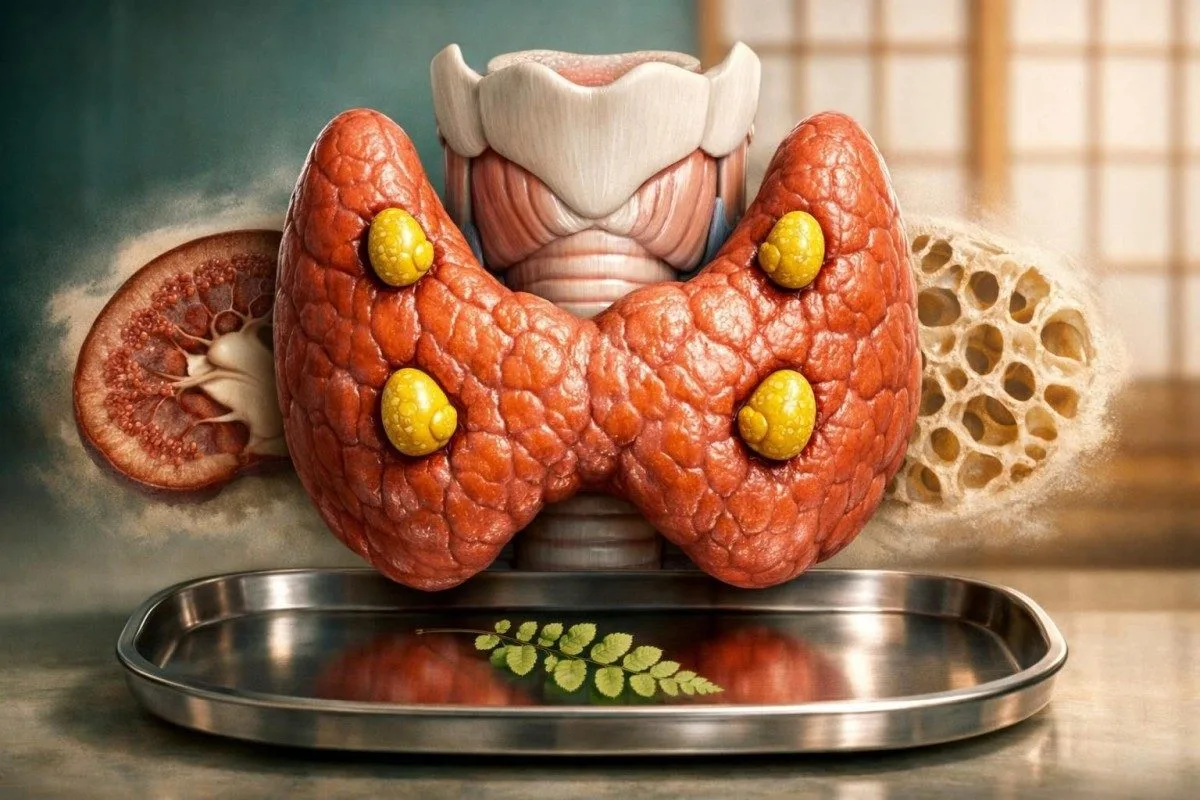
A single PTH number rarely answers the real question. The pattern with calcium, vitamin D, kidney function, phosphate, and urine calcium usually tells the story.


- PTH reference range is commonly 15-65 pg/mL (1.6-6.9 pmol/L), but assay-specific ranges vary by lab.
- High calcium + PTH above 20-25 pg/mL is usually inappropriately unsuppressed and should raise concern for primary hyperparathyroidism.
- High PTH + low or normal calcium most often reflects secondary hyperparathyroidism from vitamin D deficiency, chronic kidney disease, low calcium intake, or malabsorption.
- Low PTH + high calcium points away from the parathyroids and toward malignancy, vitamin D excess, granulomatous disease, or other non-parathyroid causes.
- Low PTH + low calcium suggests hypoparathyroidism; magnesium below about 1.6 mg/dL can mimic or worsen it.
- 25-hydroxy vitamin D is the right companion test; many clinicians want it above 30 ng/mL before ruling in normocalcemic primary hyperparathyroidism.
- Urine calcium clearance ratio below 0.01 favors familial hypocalciuric hypercalcemia, while above 0.02 favors primary hyperparathyroidism.
- Urgent hypercalcemia usually means calcium 12.0 mg/dL or higher with symptoms, or 14.0 mg/dL or higher regardless of symptoms.
- Imaging comes later; ultrasound or sestamibi localizes abnormal glands after the biochemical diagnosis is established.
How to read a PTH blood test with calcium and vitamin D
A PTH blood test only makes sense when you read it next to calcium and 25-hydroxy vitamin D. High calcium + non-suppressed PTH most often points to primary hyperparathyroidism; low or normal calcium + high PTH usually means a secondary cause, especially vitamin D deficiency or chronic kidney disease; high calcium + low PTH suggests the calcium is coming from somewhere else. As of April 7, 2026, that pattern-first approach is still the safest way to interpret results, whether you review them manually or through Kantesti AI.
The fastest mistake is treating PTH as a stand-alone hormone. A total calcium of 10.8 mg/dL with a PTH of 43 pg/mL is not normal together—PTH should usually be pushed down when calcium is high, which is why we call that value inappropriately normal. If you need a refresher on companion thresholds, our vitamin D levels chart helps.
Normal calcium does not automatically clear the parathyroids. Normocalcemic primary hyperparathyroidism exists, but I only take it seriously after repeated normal total and ionized calcium over 3-6 months and after ruling out vitamin D deficiency, kidney disease, low calcium intake, malabsorption, and medications; our guide to reading blood test results shows why one isolated panel can mislead.
I saw this recently in a 58-year-old woman whose “mildly high calcium” had been ignored for 3 years because her PTH sat at 49 pg/mL, safely inside the lab range. As Thomas Klein, MD, I pay more attention to the relationship than the headline number; once we added ionized calcium, 25-hydroxy vitamin D, creatinine, and urine calcium, the pattern looked like classic primary hyperparathyroidism.
Normal PTH range: what counts as normal, high, or low?
The usual adult reference range for intact parathyroid hormone is about 15-65 pg/mL or 1.6-6.9 pmol/L, but some labs use ranges closer to 10-55 or 12-72 pg/mL. That variation comes from assay design, so I compare serial values within the same lab when possible; our blood test biomarkers guide shows why assay context matters.
PTH is secreted in pulses and follows a circadian rhythm. A change from 52 to 61 pg/mL may reflect biology rather than a new disease, especially if calcium, creatinine, and phosphate are unchanged. In practice, biologic plus assay variation can easily reach 10-20%.
Many patients notice calcium first on a chemistry panel, then wonder why nobody mentioned PTH earlier. Most routine panels include calcium but not parathyroid hormone, which is one reason a normal standard blood test can miss the real driver of symptoms or kidney stones.
Units trip people up more often than they should. For intact PTH, 1 pmol/L is roughly 9.4 pg/mL, so a lab range of 1.6-6.9 pmol/L is broadly similar to 15-65 pg/mL. Some European labs also use a slightly lower upper calcium limit, often 2.55 mmol/L, than many US labs.
High calcium plus high or normal PTH usually means primary hyperparathyroidism
High calcium plus a PTH that is high—or even just not suppressed—usually means primary hyperparathyroidism. In adults, a calcium above about 10.2-10.5 mg/dL paired with PTH above 20-25 pg/mL is biochemically suspicious even if the lab marks PTH as normal, and many people first notice the calcium drift on a CMP or BMP.
About 80-85% of primary hyperparathyroidism cases come from a single benign adenoma; multigland hyperplasia is less common, and carcinoma is rare. I see it far more often in women after menopause, but men get missed more often because mild hypercalcemia is sometimes blamed on dehydration or supplements.
Bone clues matter. Alkaline phosphatase may rise when bone turnover is active, so I often cross-check our ALP range guide when someone has osteopenia, height loss, or unexplained bone pain. A low-normal phosphate can quietly support the diagnosis because PTH pushes phosphate out through the kidney.
The Bilezikian-led 2022 Fifth International Workshop still guides most of us in 2026. Surgery is usually recommended when serum calcium is more than 1.0 mg/dL above the upper limit of normal, when there is osteoporosis with T-score ≤ -2.5, vertebral fracture, kidney stone disease, eGFR below 60 mL/min/1.73 m², or age under 50 years.
One thing patients almost never hear until the endocrine visit: imaging does not make the diagnosis. Ultrasound, sestamibi scanning, and 4D CT are localization tools used after the blood pattern has established primary hyperparathyroidism.
Why a “normal” PTH can still be abnormal
In hypercalcemia, a PTH of 35-50 pg/mL is often more concerning than a casual reader expects. Calcium should suppress PTH, so a mid-range result in that setting is not truly reassuring.
High PTH with low or normal calcium usually points to secondary causes
High PTH with low or normal calcium usually points to secondary hyperparathyroidism, not a parathyroid tumor. The common drivers are 25-hydroxy vitamin D deficiency, chronic kidney disease, low calcium intake, malabsorption, and certain medications; our BUN/creatinine ratio guide and eGFR article help put the kidney side in context.
A 25-hydroxy vitamin D level below 20 ng/mL often pushes PTH up, and many patients do not fully suppress PTH until they are above 30 ng/mL. The evidence here is honestly mixed—bone outcomes support 20 ng/mL for many adults, but PTH behavior is often cleaner once vitamin D is safely above 30 ng/mL.
Once eGFR drops below 60 mL/min/1.73 m², phosphate retention and lower calcitriol production can nudge PTH upward before calcium becomes frankly low. KDIGO still avoids one rigid PTH target in CKD stages G3a-G5 not on dialysis because a rising trend is more informative than one isolated number.
Low calcium intake and gut problems matter more than online summaries admit. I see elevated PTH in strict low-dairy diets, untreated celiac disease, post-bariatric surgery patients, and people taking long-term acid suppression who are barely absorbing what they eat.
A 32-year-old runner in our review queue had calcium 8.8 mg/dL, PTH 92 pg/mL, vitamin D 11 ng/mL, and normal kidney function. Most patients like her improve with vitamin D and calcium repletion, not a neck scan.
Low PTH meaning depends on whether calcium is high or low
Low PTH has two very different meanings. High calcium + low PTH points away from the parathyroids, while low calcium + low PTH raises concern for hypoparathyroidism; low magnesium can blur both patterns, so I often check our magnesium range guide alongside our blood test symptoms decoder.
If calcium is high and PTH is low, think non-parathyroid hypercalcemia. Common possibilities include malignancy-related PTHrP activity, vitamin D excess, granulomatous disease, thyrotoxicosis, prolonged immobilization, and a few medication effects. A suppressed PTH with calcium above 12.0 mg/dL deserves quick medical review.
If calcium is low and PTH is low, the gland may simply not be making enough hormone. That pattern is classic after neck or thyroid surgery, but I also see autoimmune hypoparathyroidism, rare genetic forms, and occasional infiltrative disease. Symptoms can include tingling, muscle cramps, spasms, and QT prolongation on ECG.
Magnesium is the underrated spoiler here. A magnesium below about 1.6 mg/dL can impair PTH release and also create PTH resistance, so the calcium stays low even when you start replacing it. If you replace calcium but ignore magnesium, the numbers often stall.
Vitamin D, phosphate, and magnesium are the clues most people miss
The most useful companion tests are 25-hydroxy vitamin D, phosphate, and magnesium. 25-hydroxy vitamin D is the right screening test—not 1,25-dihydroxy vitamin D in most cases—and our vitamin D-focused deficiency guide overlaps with endocrine practice more than people expect; our physicians on the Medical Advisory Board review these thresholds carefully.
Patients regularly order the wrong vitamin D test. 25-hydroxy vitamin D is the storage form and the correct screening marker; 1,25-dihydroxy vitamin D can be normal or even high in primary hyperparathyroidism and is not a good general deficiency screen. The Endocrine Society’s 2011 guidance still influences clinicians who aim for 30 ng/mL, while the National Academy of Medicine has been comfortable with 20 ng/mL for many adults.
Phosphate gives away physiology. Primary hyperparathyroidism often nudges phosphate low because PTH increases renal phosphate loss, while CKD usually pushes phosphate up later on as kidney clearance falls. Low PTH states can show the opposite pattern—calcium low, phosphate relatively high.
Vitamin D replacement can unmask primary hyperparathyroidism. In my clinic, calcium sometimes rises by 0.2-0.4 mg/dL after vitamin D repletion in patients who were hiding mild disease. That does not mean vitamin D caused the problem; it means deficiency had been masking it.
Kidney function and 24-hour urine calcium often decide the diagnosis
Kidney function and 24-hour urine calcium often decide whether the pattern is primary hyperparathyroidism or a mimic. A creatinine result that looks “close enough” can still matter, and a drifting BUN can tell you whether dehydration is exaggerating the calcium.
A calcium-creatinine clearance ratio below 0.01 suggests familial hypocalciuric hypercalcemia (FHH), while a ratio above 0.02 favors primary hyperparathyroidism. Total urine calcium above 250 mg/day in women or 300 mg/day in men also supports clinically relevant calcium loss, though diet and kidney function can muddy the picture.
I remember a family in which three siblings had calcium around 10.7-11.1 mg/dL for years and barely any urine calcium. Surgery would not have fixed that—FHH usually does not improve with parathyroidectomy, which is why this test matters so much before anyone talks about an operation.
Reduced kidney function changes the treatment threshold. The Fifth International Workshop uses eGFR below 60 mL/min/1.73 m² as one reason to discuss surgery in otherwise asymptomatic primary hyperparathyroidism because ongoing hypercalcemia can quietly worsen stone risk and renal decline.
FHH versus primary hyperparathyroidism
Family history helps. Lifelong mild hypercalcemia, very low urine calcium, and relatives with similar numbers should always make clinicians think about FHH before labeling someone with a surgical parathyroid problem.
When a PTH result looks normal but is actually not reassuring
A PTH result can look normal and still be abnormal in context. Normal-range PTH is not reassuring when calcium is high, and blood test PDF upload helps our platform read those relationships rather than isolated flags; the logic behind that sits in our medical validation standards.
Corrected calcium formulas are rough tools, not final answers. When albumin is below 3.0 g/dL, above 5.0 g/dL, or illness is acute, ionized calcium is usually more trustworthy than corrected total calcium. In my experience, this is one of the most common reasons patients are misclassified online.
Thomas Klein, MD, has seen more confusion from supplement interference than most patients expect. High-dose biotin—often 5 to 10 mg daily in hair and nail products—can distort some immunoassays, so I usually ask patients to stop it for 48-72 hours if their lab advises that.
Some European labs cap normal calcium at 2.55 mmol/L, while some US labs tolerate up to 10.5 mg/dL. The practical move is simple: follow trends in the same unit system and, when possible, the same assay platform. Kantesti AI flags this because mixing units and assay ranges is how small endocrine problems get overlooked.
What doctors usually order next after an abnormal PTH blood test
After an abnormal PTH blood test, the next step is usually not imaging—it is repeating the chemistry with the right companions. I typically reorder total calcium, albumin, ionized calcium, creatinine/eGFR, phosphate, magnesium, 25-hydroxy vitamin D, and often urine calcium; if you want a structured second read, try our free blood test interpretation.
A calcium level of 12.0 mg/dL or higher with symptoms such as vomiting, confusion, severe constipation, or dehydration deserves prompt medical assessment. A calcium level of 14.0 mg/dL or higher is urgent even if symptoms are surprisingly mild. That is the point where arrhythmia, kidney injury, and neurocognitive effects become much harder to brush off.
If primary hyperparathyroidism looks likely, I usually add a bone density scan and some form of kidney imaging because stones and cortical bone loss change management. Pre-op blood work matters too; our pre-surgery lab guide is useful for patients heading toward parathyroidectomy.
Neck ultrasound, sestamibi scanning, and 4D CT are localization tools, not screening tests. Patients often find that distinction reassuring after reading our real patient case studies because a negative scan does not rule out biochemical disease.
Most endocrinologists will repeat the panel before making life-changing decisions, and I agree with that instinct. A repeat drawn at a similar time of day, ideally before a big calcium supplement dose, is often more useful than rushing into imaging.
Tests that usually come before scans
My usual sequence is repeat calcium and PTH, then vitamin D, phosphate, magnesium, creatinine/eGFR, urine calcium, bone density, and kidney imaging. Scans to localize a gland come after the biochemical pattern is established.
How Kantesti AI interprets PTH, calcium, and vitamin D together
Kantesti AI interprets a PTH blood test by reading the pattern, not the isolated flag. Our AI blood test platform weighs PTH against total calcium, albumin, ionized calcium, phosphate, creatinine, magnesium, and vitamin D at the same time, and our technology guide explains the clinical logic underneath.
That matters because PTH is one of the classic context hormones. Across more than 2 million interpreted reports from 127+ countries and 75+ languages, Kantesti AI repeatedly sees the same four pattern families: likely primary hyperparathyroidism, likely secondary hyperparathyroidism, likely hypoparathyroidism, and non-parathyroid hypercalcemia.
Thomas Klein, MD, and the rest of our physician reviewers built these rules conservatively; our threshold engine prefers to say “pattern suggests” rather than overcall a diagnosis from one panel. Kantesti is CE-marked and aligned with HIPAA, GDPR, and ISO 27001 standards, which matters when people upload PDFs, app screenshots, or lab photos.
Most patients find the trend view more useful than the one-off explanation, especially when vitamin D replacement or calcium supplements are changing the picture month to month. If you want the broader story of who we are, About Us covers our medical team, mobile apps, Chrome extension, nutrition planning, family risk tools, and B2B API work.
Research publications and further reading
These publications are not about PTH itself, but they show how we write structured lab interpretation for biomarkers that also depend on pattern recognition. For related physician-reviewed explainers, see the Kantesti blog.
Kantesti Medical Team. (2025). RDW Blood Test: Complete Guide to RDW-CV, MCV & MCHC. Zenodo. https://doi.org/10.5281/zenodo.18202598. ResearchGate. Academia.edu.
Kantesti Medical Team. (2025). BUN/Creatinine Ratio Explained: Kidney Function Test Guide. Zenodo. https://doi.org/10.5281/zenodo.18207872. ResearchGate. Academia.edu.
Frequently Asked Questions
Can PTH be normal if I still have primary hyperparathyroidism?
Yes. In primary hyperparathyroidism, PTH can sit inside the lab range and still be abnormal if calcium is high. When calcium is elevated, PTH should usually fall below the reference range, so a value above about 20-25 pg/mL can be inappropriately unsuppressed. A calcium of 10.7 mg/dL with a PTH of 42 pg/mL is often more suspicious than patients realize. This is one of the commonest reasons mild primary hyperparathyroidism gets missed.
What does high PTH with normal calcium mean?
High PTH with normal calcium most often means secondary hyperparathyroidism rather than a parathyroid adenoma. The common causes are 25-hydroxy vitamin D deficiency, chronic kidney disease, low calcium intake, malabsorption, and some medications. Many clinicians recheck the panel after correcting vitamin D to at least 30 ng/mL, checking kidney function, and sometimes measuring ionized calcium and urine calcium. If calcium stays normal but PTH remains high after those causes are excluded, normocalcemic primary hyperparathyroidism becomes more plausible.
What does low PTH mean on a blood test?
Low PTH means different things depending on calcium. High calcium + low PTH usually points away from the parathyroids and toward non-parathyroid causes such as malignancy-related hypercalcemia, vitamin D excess, or granulomatous disease. Low calcium + low PTH suggests hypoparathyroidism, especially after thyroid or neck surgery. Magnesium should also be checked, because levels below about 1.6 mg/dL can suppress PTH release and mimic gland failure.
Do I need to fast for a PTH blood test?
Most laboratories do not require fasting for a PTH blood test, but consistency helps. If a result is borderline or clinically confusing, I usually prefer a repeat sample drawn at a similar morning time with calcium, albumin, creatinine, phosphate, magnesium, and 25-hydroxy vitamin D measured alongside it. Avoiding a large calcium supplement dose right before the test can also reduce noise. The bigger issue is not fasting—it is getting the right companion tests on the same day.
Which vitamin D test matters with PTH: 25-OH or 1,25-OH?
25-hydroxy vitamin D is the test that matters in routine PTH interpretation. It reflects vitamin D stores and is the marker used to evaluate deficiency, usually with cutoffs around 20 ng/mL for adequacy in many adults and 30 ng/mL as a practical endocrine target in more nuanced cases. 1,25-dihydroxy vitamin D is not a general screening test for deficiency because it can be normal or high even when stores are low. In primary hyperparathyroidism, it may be misleadingly normal or elevated.
When is high calcium an emergency?
High calcium becomes urgent when it is 12.0 mg/dL or higher with symptoms or 14.0 mg/dL or higher regardless of symptoms. Red flags include confusion, severe constipation, vomiting, dehydration, weakness, palpitations, or a sudden change in kidney function. At those levels, the risks of arrhythmia, acute kidney injury, and neurocognitive impairment rise quickly. A suppressed PTH does not make severe hypercalcemia safer—it just changes the cause being investigated.
What tests usually come next after an abnormal PTH result?
The usual next tests are repeat calcium and PTH plus albumin, ionized calcium, creatinine/eGFR, phosphate, magnesium, and 25-hydroxy vitamin D. If primary hyperparathyroidism is still likely, a 24-hour urine calcium test helps separate it from familial hypocalciuric hypercalcemia, and bone density plus kidney imaging help stage the impact of the disease. Imaging of the parathyroid glands comes later and is used to localize an abnormal gland before surgery, not to make the diagnosis in the first place. That sequence prevents a lot of unnecessary scans.
Get AI-Powered Blood Test Analysis Today
Join over 2 million users worldwide who trust Kantesti for instant, accurate lab test analysis. Upload your blood test results and receive comprehensive interpretation of 15,000+ biomarkers in seconds.
📚 Referenced Research Publications
Klein, T., Mitchell, S., & Weber, H. (2026). RDW Blood Test: Complete Guide to RDW-CV, MCV & MCHC. Kantesti AI Medical Research.
Klein, T., Mitchell, S., & Weber, H. (2026). BUN/Creatinine Ratio Explained: Kidney Function Test Guide. Kantesti AI Medical Research.
⚕️ Medical Disclaimer
This article is for educational purposes only and does not constitute medical advice. Always consult a qualified healthcare provider for diagnosis and treatment decisions.
E-E-A-T Trust Signals
Experience
Physician-led clinical review of lab interpretation workflows.
Expertise
Laboratory medicine focus on how biomarkers behave in clinical context.
Authoritativeness
Written by Dr. Thomas Klein with review by Dr. Sarah Mitchell and Prof. Dr. Hans Weber.
Trustworthiness
Evidence-based interpretation with clear follow-up pathways to reduce alarm.