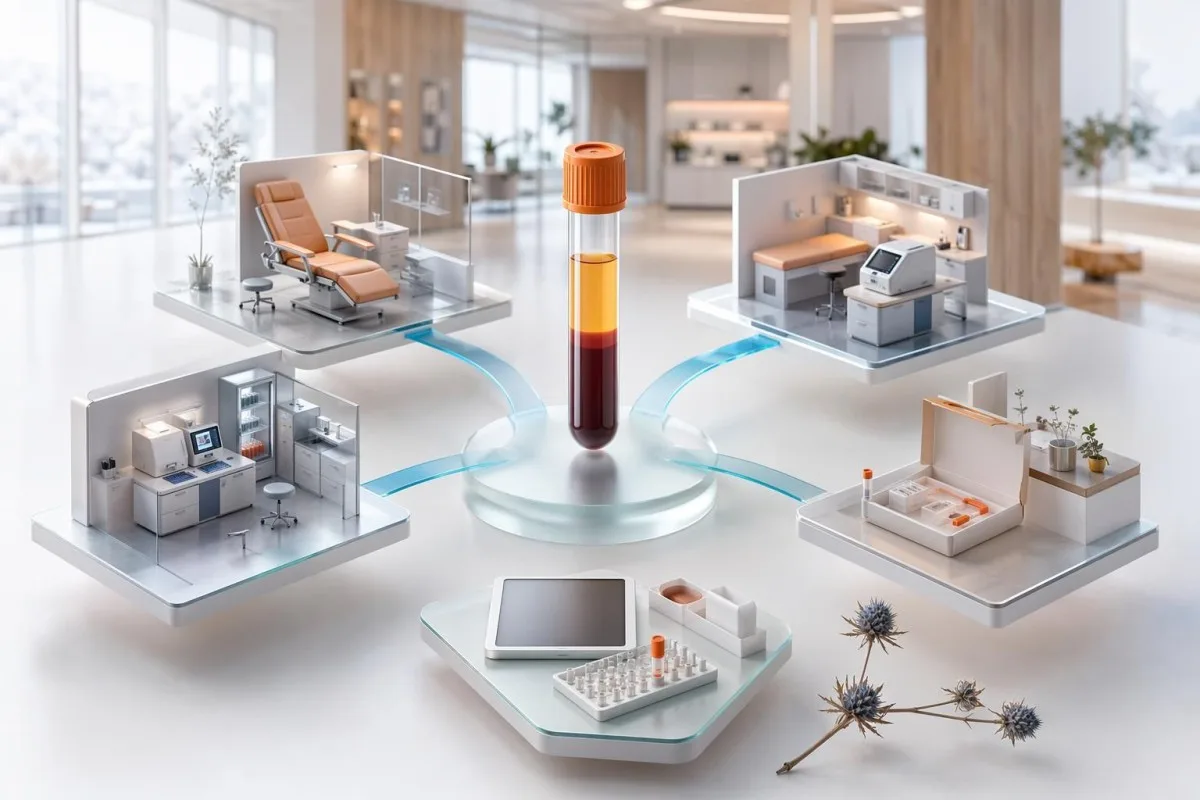
Per a la major part dels anàlisis de sang rutinàries, els laboratoris independents superen clarament en preu les tarifes de l’atenció urgent i de l’ER. L’elecció correcta depèn dels símptomes, del temps de resposta i de si necessites un metge ara mateix o només una extracció.


- Entorn més barat Els laboratoris independents normalment cobren $15-$50 per a les anàlisis rutinàries habituals de pagament directe, mentre que l’atenció urgent sovint acaba en $120-$300 total.
- Preus de l’ER Les anàlisis de sang de l’departament d’urgències habitualment superen $500 i poden arribar a $1,500-$6,000+ un cop s’afegeixen les taxes del centre i del metge.
- Tarifa en efectiu de la CBC Un CBC sovent costa $15-$35 en un laboratòri ambulatòri.
- tarifa en cash del CMP A CMP se tròba generalament $15-$40 cash al laboratòri local.
- valor de HbA1c Un A1c de 6.5% , totun lo recambi dels globuls roges pòt far que aquela estimacion siá picada dins qualques personas. o mai sostèn lo diabèt; aquesta analisi sovent capta de personas que lor glucòsa en dejú es solament un pauc nauta, mas que la gestion après repàs es clarament descalibrada. al long del temps.
- limits capil·lars los kits domiciliari son mai propensos a errors per potassi, CBC, e coagulacion perque de pichòts mostres se coàgulan e s’hemolisen mai aisidament.
- regla de l’accès directe l’ordenament de proves de sang en linha es comun en fòrça estats, mas demòra restringit o modificat en Nòva York, Nòva Jersey e Rhode Island.
- Primièr melhor Se siatz estable e cal un seguiment rutinari, causissètz en primièr un laboratòri ambulatòri; reservatz l’ER per la dolor de pit, los signes d’ictus, la sepsis, o una desidratacion severa.
Quin entorn té el cost més baix per a una anàlisi de sang?
Los laboratòris ambulatòris independents son generalament lo luòc mai economic per una prova de sang rutina. Un pacient que paga de sa pòca CBC sovent $15-$35, un CMP $15-$40, e a panèl lipid $20-$50. Urgéncia apondre de comoditat e de temps del clinician, de biais que la meteissa visita sovent acaba a $120-$300 total. los servicis d’urgéncia son bastits per l’atenció urgenta, pas per de prètzes de ganga; amb de taxas d’establiment, quitament un simple trabalh de sang pòt costar $500-$3,000+. Se cercatz lo prètz de las proves de sang mai que pas un tractament d’urgéncia, començatz amb Kantesti AI.
Lo prètz de l’invòice mai bassa es pas totjorn lo còst final mai bàs. Un laboratòri de passegada pòt citar un $29 CBC, mentre que l’atenció urgenta integra aquela meteissa prova dins una tarifa de visita e una taxa de manipulacion; se volètz l’anatomia de la facturacion, veiretz nòstra descomposicion de perqué los prètz dels laboratoris variàn.
Sóm Thomas Klein, MD, e l’error que vei mai sovent es que un pacient utiliza l’ER per una fatiga estable, una pèrda de pels, o un seguiment anual, perque sembla mai rapid. Es mai rapid per STAT medicina, mas un còst de l’establiment, un còst del clinician, e las reïteracions de tests aponduts, un trabalh rutinari pòt passar de jos $100 a plan mai de $1,000.
Lo bèl preu es un objectiu erronèu quand los simptòmas son perilhós. Dolor de pit, manca de respiracion severa, debilitat d’un sol costat, desmai, o confusió an de se trobar dins l’atenció d’urgéncia, encara se la factura pica; un prètz baix es sens significat se lo luòc pòt pas descartar una atac de cori, una sepsis, o una alteracion importanta dels electrolytes.
Quant paga realment la gent el 2026
Prètz real dels analyses de sang en 2026 se tròba dins de bandas previsiblas: los laboratoris ambulatòris son generalament los mai bàs, l’òrdre dirècte en linha es similar, l’atenció urgenta es de mejan prètz, e los SAI son los mai naut per una granda diferéncia. En 17 de mai de 2026, la màger part dels pacients que paguen d’ela-meteissa als EUA veson de panèls rutinièrs comuns que tomban entre $15 e $70 per test als laboratoris locaus, abans tot còst de visita del clinician.
A CBC sovent s’escapa de $15-$35, un CMP $15-$40, HbA1c $20-$45, TSH $25-$60, e ferritina $25-$70 a de prètz a pagament cash. Se sètz sens assegurança o sus un plan amb deduccion nauta, nòstre guia per los prètz dels laboratoris rutinièrs sens assegurança dona las gamas d’etiqueta mai frequentas que los pacients vertadièrament rapòrtan.
L’atenció urgenta cambia las matematicas, perque la visita n’es lo producte. La màger part dels centres cargan aperaquí $90-$200 per èsser vist, puèi apondon d’analyses al luòc o mandan de tests fora, de biais que una visita per un simple test de sang pròche de ieu sovent fa un total de $120-$300, e qualques còps mai se s’apondon de fluids IV, d’imatgeria, o de constants vitalas reïteradas.
Los departaments d’urgéncia facturan de manièra encara mai diferenta: còst d’establiment, còst del mèstre, e sovent de cargaments separats de laboratòri e d’ECG. Dins mon experiéncia, un trabalh per dolor de pit amb CBC, BMP, troponina, e ECG pòt tombar alara ont que siá entre $1,500 e $6,000+ per un pacient que paga d’ela-meteissa, encara quand lo diagnostic final es benign coma reflux o desidratacion.
Per què els laboratoris independents solen guanyar en preu
Los laboratoris independents donan generalament lo melhor rapòrt prètz-per-qualitat per un test de sang rutinari. Son bastits per un volum nauta, de frais generals bas, e una manipulacion estandardizada dels especimèns, per aquò un laboratòri local es generalament lo primièr luòc ont mandèi de pacients estables que cal un CBC, CMP, panèl lipidic, A1c, TSH, o ferritina.
Se tapàs “analisi de sang pròche de ieu” dins vòstre telefòn, cercatz un centre de prèlevament ambulatòri que publica de prètz en espècias, respecta d’òrdres de temps, e a un personal de flebotomia erudit. Nòstre checklist sus causir un laboratòri local fiable es lo que vòli que mai de pacients legiguèsson abans d’entrar dins la botiga mai pròcha.
Eccí una detalh practica que la màger part de las listas de prètz amaguen: los temps de cortadura del messatgèr importan. Manquar un 3 oras de recuèlh e vòstra ferritina, vitamina D, o panèl d’ormònas pòt pas quitament sortir del bastiment abans lo matin que ven, çò que transforma un prèlevament del jorn en una demora de 24-48 oras.
. Los problèmas de qualitat als laboratoris ambulatòris son generalament pre-analitics, pas analitics. Un prèlevament difficultós, un tub que clòta, o un especimen que hemoliza pòt falsament elevar potassi, AST, e LDH; quand vei una sola potassi 5,8 mmol/L dins un pacient d’autra manièra ben portant, sovent demandi coma l’especimen foguèt recuèlhit abans d’assumir una vertadièra hiperpotassèmia.
Quan l’atenció urgent val la taxa extra
L’urgéncia medica val lo còst suplementari quand cal un clinician uèi e la question es encara de gravetat bassa a mejana. Es pas lo luòc mai economic per un seguiment rutinari, mas pòt èsser lo bon mitan per la vertij, la desidratacion, de simptòmas urinàris, una infeccion leugièra, o d’efèctes secundaris de medicaments quand las analisas de sang cambian lo tractament del meteis jorn.
La màger part de las facturas d’urgéncia medica son impulsadas pel besonh de visita, pas pel vial. Un centre pòt anunciar d’analísas rapidàs, mas lo vertadièr còst es generalament la tarifa de visita plus la tarifa d’analisi, per aquò un sol BMP pòt costar cinc a zèt a còps mai que lo meteis panèl de quimia dins un laboratòri independent.
Una autra nuance: pas totas las urgéncias medicas fan las meteissas analiticas sul site. Nombroses pòdon far la glucòsa, la pregància, l’influenza, o un panèl limitat de quimia immediatament, mas un panèl complet CMP, d’examens tiroïdians, d’estudis del fèrre, o de trabalh autoimmune sovent sortisson cap a un laboratòri de referéncia; se sètz pas çò que i es inclús, revisatz la diferéncia entre las analisas CMP e BMP abans de pagar per un panèl mai grand que çò que vos cal.
Ieu, utilizè l’urgéncia medica per de certans pacients. Un òme o una femna de 29 ans en bona santat amb vomiments e sensacion de desfaliment pòt profechar d’un BMP, anàlisi d’orina, i fluids uèi, mentre que el mateix pacient que va a l’ER sens senyals d’alarma normalament paga preus d’hospital per un problema que una atenció urgent pot gestionar de manera segura.
Quan el preu de l’ER està justificat
L’ER es l’ambient mai car, e aqueste prètz justifica solament quand una malautiá sensible al temps es sus la taula. Se avètz de la dolor de pit, una dolor abdominal severa, una febre auta amb confusió, una feblesa importanta, o de simptòmas d’ictus o de sepsis, lo servici d’urgéncia es ont los analyses de sang devenon part d’un triatge que salva de vides, mai que pas de far de botiga.
Las labòratòris d’urgéncia son diferentas perque son STAT e dirigidas per protocòl. Una potassi, lactat, troponina, CBC, e hemocultius pòdon èsser processats dins de minutes a oras, e aqueles resultats pòdon desencadenar oxigèn, fluids, antibiòtics, anticoagulacion, o cateterisme abans que un laboratòri ambulatòri acabèsse encara d’accedir al mostre.
Las proves cardiacas son l’exemple classic. Sensibilitat auta troponina es generalament interpretada coma una seria, pas pas un sol nombre, per aquò los pacients amb de simptòmas de pit inquietants besonhan de mesuras repetidas pendent 1-3 oras e correlacion amb l’ECG; nòstre guia per troponina e enzims cardiacs explica perqué una sola prova barata pòt pas remplaçar de manièra segura un “rule-out” de l’ER.
La màger part dels pacients subestiman lo cost de l’observacion. Una troponina repetida extra, un bolus de sèrum fisiologic, e qualques oras de seguiment pòdon transformar una visita basica a l’ER en una factura fòrça mai granda, mas quand la question es infart de miocardi, embolia pulmonària, sepsis, o sangatge GI, aquò encara es lo drech d’esplechar.
Com l’ordenació en línia d’analítiques de sang canvia el cost
L’òrdre de proves de sang en linha es sovent una de las manèras mai cost-efficaces d’obténer de labòratòris rutinari se vòstre estat permet l’accès dirècte a las proves. Lo prètz es generalament transparent d’entrada, e per un seguiment simple coma HbA1c, lipids, TSH, o vitamina D, sovent s’alinha fòrça pròche als tarifs en cash d’un laboratòri independent.
L’avantatge principal d’un tèst de sang en linha es pas de prètz magic; es de visibilitat del prètz. Causissètz los marcaires exactes, pagatz abans la presa, puèi utilizatz un site de recòlta partenaire, e nòstra visita guiada sus comandar de tèsts sens mètge mòstra ont aquel modèl fonciona ben.
La lei del país encara conta. Las proves per accès dirècte demòran restringidas o modificadas dins qualques endreches, subretot Nòva York, Nòva Jersey e Rhode Island, de biais que lo meteis flux d’òrdre en linha que fonciona en Texas o Florida pòt requerir una autorizacion addicional del metge o pòt pas èsser ofert en tot.
La trapa es la fragmentacion. Se lo resultat es anormal, podètz encara besonhar un clinician per l’interpretar, lo repetir, o lo ligam als simptòmas, de biais que l’òrdre en linha es melhor per un seguiment planificat que pas per una dolor de pit novèla, una jaundícia, o una fatigà rapidament en creissença.
Kits a casa: bé per a alguns marcadors, dolent per a d’altres
Los kits a domicili son convenients, mas non son intercanviables amb un mostre venós pres en laboratòri. Funcionan raonablement plan per qualques marcadors coma HbA1c, qualques las mesuras de mesuraments, e d’anticòrps seleccionats, mas son mai febles per de tests que depenen d’un processament rapid, d’un volum de mostre mai grand, o de comptatges de cèl·lules impecables.
En la meuna experiéncia, la mès comuna error es d’utilizar un kit a domicili per la tòca equivocada. Nòstre ressenya de l’acuïtat e las limitas dels analisis de sang a la casa explica perqué potassi, Numeracion formula sanguina amb diferencial, las proves de coagulacion, e fòrça panèls d’ormonas son mai vulnerables a l’error de recòlta fòra d’un laboratòri controlat.
La mostre capil·lar sembla simpla, mas los pichòts tubs se clòten mai aisidament e los pichòts mostres s’hemolisen mai aisidament. Un specimen capil·lar parcialament clòtat pòt distorsionar plaquetas, MCV, e potassi, e aquò es una de las rasons per las qualas un kit a domicili que sembla bèl e barat a $49 pòt menar a una segonda extraccion venosa una setmana aprèp.
M’agrada los kits a domicili per la seguiment quand la question es estrecha e non urgenta. Se verificatz que de cambiaments d’estrategia de vida an desplaçat HbA1c de 6.0% a 5.7%, o se la tendéncia d’un hs-CRP s’es melhorada, pòdon èsser utils; mas se lo resultat conta per l’administracion de medicaments o per la triatge a l’urgéncia, utilizatz un mostre de la clinica o de l’espital.
Assegurança, pagament en efectiu i trucs de codificació que canvien la factura
Los cambiaments d’assegurança fan que lo cost d’un anàlisi de sang siá mai naut que çò que la màger part dels pacients pensan. Un panèl preventiu codificat per un examen anual pòt costar $0 de sa butxaca, mentre que lo meteis panèl de lipids o un test de glucòsa codificat per la fatiga, la disconfort toracic, o l’obesitat pòt tocar vòstre deduïble o èsser refusat.
Las errors de preparacion creant tanben de còsts amagats. La dejunada es pas necessària per totes los tests, mas arribar aprèp un cafè amb crema o aprèp un entrenament pòt forçar una recòlta repetida per la glucòsa, los triglicerids o las enzimas liver, e donc val la pena de verificar quins tests comuns necessitan realament de dejunar abans de reservar.
La codificacion del diagnostic importa tant. Un clinician que ordena HbA1c per lo cribratge de la diabetis, TSH per la pèrda de pels, o vitamina D per una fatiga vagua pòt desencadenar de regles de cobertura fòrça diferentas, e una lista d’aviada sensata d’un nòu visit a laboratòri amb checklist pòt arrestar de te far pagar per set complements que jamai serián cobèrts; la vitamina D es un refus comun, levat se lo diagnostic justifica la necessitat medica.
Los pacients amb deduccion auta an de totjorn demandar doas questions abans que la mostra siá recaptada: quin es lo prètz en espècias uèi, e quin es lo tarif d’assegurança contractat. Ai vist de prètz en espècias de $29 que baton las facturas ajustadas pel segurador de $84, subretot per de panèls comuns e per seguiment de contraròtle. Las cartas HSA e FSA trabalhan sovent per las analiticas comandadas que son elegiblas, incloent fòrça crompadas de laboratòri de via directa.
Conveniència i temps de resposta: qui et dona els resultats més ràpid?
Lo temps de tornada depend mai de l’urgéncia e del flux de trabalh del laboratòri que pas de quin recampa la mostra. Las ER son mai rapidàs per STAT la quimica e la troponina; los laboratoris independents son sovent los mai rapidàs per de panèls rutinèrs planificats; la medicina urgenta se tròba al mitan; e los kits a domicili son generalament los mai lents, perque la spedicion apond un retard.
Un espital pòt tornar potassi o troponina dins 30-90 minutas, mentre que un laboratòri ambulatòri sovent publica CBC, BMP, o CMP mai tard lo meteis jorn o abans la pròcha matinada. Se lo moment es important per vos, nòstre guia a resultats del meteis jorn vs. trameses (send-outs) es mai realista que la màger part del contengut de marketing.
La medicina urgenta pòt semblar rapida al comptador e lenta al darrèr. Un test de glucòsa levat (waived) o de mononucleòsi pòt èsser prèst en 15-30 minutas, mas TSH, ferritina, B12, e la màger part dels tests d’ormònas son sovent mandats defòra e prenen 1-3 jorns de trabalh.
Lo moment del cap de setmana fa trencar de gent. Una mostra recaptada divendres a las 17:00 pòt pas èsser sensiblement diferenta d’una punccion de dilluns al matin, se lo lot del laboratòri de referéncia corre los jorns de trabalh, çò que es per aquò que disi als pacients de pas pagar lo prètz de la medicina urgenta solament per l’illusion de velocitat.
La qualitat de les proves és diferent als laboratoris, a l’atenció urgent i a les ER?
Per de tests comuns de quimica e d’ematologia, la qualitat analitica sovent es similar entre de bons laboratoris locals, de centres de medicina urgenta e de laboratoris d’espital. Las diferéncias mai importantas son la integritat de la mostra, quant lèu la mostra arriba a l’analizator, e se qualqu’un interpreta lo resultat dins lo contèxte clinic.
Es per aquò que me’n sòc mai de l’acreditacion, de la manipulacion de la mostra e de la revision del resultat que pas del marketing polida. Nòstra resumida de normas de validacion medica explica las partidas plan avorridas mas crucialas: calibratge, contraròtle de qualitat, intervals de referéncia, e rapòrt de valor critica, e Kantesti AI legís lo PDF cargat dins aquel meteis contèxte.
La variabilitat biologica compta tanben. Un cambiament de creatinina de 0.90 a 0.96 mg/dL o un cambiament d’ALT de 22 a 28 U/L es sovent mens significatiu que çò que pensan los pacients, e nòstre article sus quand los cambiaments de laboratòri son vertadièrament importants explica perqué un pauc de movement pòt èsser de bruch normal que pas una malautiá; qualques laboratoris europèus rapòrtan tanben los lipids en mmol/L en luòc de mg/dL, çò que fa naisser una panica inutila se las unitats son ignoradas. Thomas Klein, MD vei aquò amb la creatinina mai sovent que çò que los pacients s’imaginan.
Certs tests recompensan la simplificacion. Un A1c de 6.5% correspond a una glucosa mejana estimada d’environ o mai sostèn lo diabèt; aquesta analisi sovent capta de personas que lor glucòsa en dejú es solament un pauc nauta, mas que la gestion après repàs es clarament descalibrada. al long del temps, per aquò qu’una escòla basica e pas cara de diabetis es sovent pro per l’avaloracion iniciala del risc (Nathan et al., 2008). E per los lipids, la guia 2018 AHA/ACC basa encara la màger part de las decisions de tractament sus LDL-C, colesterol non-HDL, e sus lo risc global, e non pas sus d’addicions exoticas per l’adult mejans (Grundy et al., 2019).
Millor lloc per fer anàlisis de sang rutinàries habituals
La màger part dels analyses de sang rutinièrs fan pas mestièr d’anar a un laboratòri independent o a un centre de prèlevament per accès dirècte, pas a la medicina urgenta ni a l’ER. . CBC, CMP, panèl lipid, HbA1c, TSH, ferritina, B12, e vitamina D Lo melhor rapòrt valor-preu per.
Eccí la version corta. Utilizatz los laboratoris locaus per un seguiment estable, la medicina urgenta per una valoracion del meteis jorn e de tests limitats, e l’ER per troponina, lactat, cultures de sang, o de preocupacions severas d’electrolits; se volètz una carta mai larga, nòstre guida de biomarcaires mòstra justament quant de tests pòdon èsser comandats sens besonh de despenas a nivèl d’espital.
Las bandas de prètz en cash son remarcablament consistentas: CBC $15-$35, CMP $15-$40, panèl de lipids $20-$50, HbA1c $20-$45, TSH $25-$60, e ferritina $25-$70 a tarifes ambulatòris. Per la màger part dels adults sans, aqueste manol de marcadors cobre fòrça territòri util que pas un paquet de benestar de marca, e nòstre guia dels analyses de sang mai importants explica perqué. Un panèl lipidic sens dejunar es generalament acceptabla levat se s’erpera d’èsser fòrça elevats los triglicerids, e dins Kantesti aquestes marcadors fonamentals son encara los panèls que la màger part dels usatgièrns cargan primièr.
Las proves de ronyó es l’unica plaça ont encoratgi los pacients a pas crompar ciegament lo panèl mai bèl. Creatinina sens eGFR es incomplet, e las nòvas equacions CKD-EPI an cambiat la classificacion per un nombre significatiu de pacients, subretot a l’entorn de punts de decission coma eGFR 60 mL/min/1.73 m² (Inker et al., 2021).
Què cal fer després de l’extracció de sang
Aprèp la presa de sang, lo movement mai intelligent es d’organizar lo rapòrt, lo comparar amb vòstre darrièr resultat, e interpretar los patrons mai que pas de senhals isolats. Un sol valor naut o bais pòt trompar; la combinason dels marcadors, la tendéncia al long del temps, e vòstres simptòmas decidisson se cal de vos rassurar, de tornar far una presa, o de telefonar lo meteis jorn.
Comença amb el rapport original, non pas una captura retallada. Nòstre guia per cargament segur de PDF d’analisi de sang mòstra perqué las unitats, los intervals de referéncia, las nòtas sus l’especimen e lo temps de recòlta pòdon cambiar lo sens del meteis nombre.
La revision de las tendéncias es ont fòrça pacients finisson per pagar pas tant de còps. Dins nòstra analisi de mai de 2 milions rapòrts cargats, la màger error de facturacion es la repeticion de tests sens verificar se lo marcador melhora ja, e nòstre article sus lo gràfic de tendència de laboratori explica cossí las pendents importan mai que un petit “tremol” d’un sol jorn.
La logica clinica de Kantesti es revisada per de metges sus nòstre Conselh Consultatiu Medical, e nòstras practicas amb marca CE foncionan jos de contraròtles HIPAA, GDPR e ISO 27001. Se volètz los metòdes, nòstre estudi de validacion clinica es public. Lo document de desplegament de triatge multilingüe es public tanben.
La màger part dels resultats borderline necessitan pas una visita a l’ER ni una segonda factura d’urgéncia. Podètz cargar un PDF o una fotografia del telefòn a nòstre analizador de analisi de sang amb IA per una interpretacion dins aperaquí 60 segondas, puèi decidir se l’etapa seguenta es lo seguiment, una visita planificada, o l’atenció urgenta.
Com triar avui l’entorn adequat de menor cost
Causissètz lo contèxte per acuïtat primièr, puèi lo prètz. Se vos sentissètz ben e cal un seguiment rutinier, utilizatz un laboratòri local o una comanda en linha; se cal un clinician uèi mas sètz estables, l’atenció urgenta pòt valdre la pena; se los simptòmas fan pensar a un infart, un ictus, una sepsis, o una desidracion grèva, anatz a l’ER e vos preocupar del còst pus tard.
Per la màger part dels adultes, la meuna règla rapida es simpla. La fatiga establa, lo seguiment del colesterol, lo seguiment de la tiroida, las analisis del fèrre, lo cribratge de la diabetis, e lo seguiment dels medicaments pòdon generalament començar amb una presa de sang planificada ambulatòria, e nòstre guia de laboratòri basada sus los simptòmas ajuda a afinar quins tests demandar abans de pagar per un panèl gigant.
Se volètz saber cossí pensam aquò clinicament, podètz legir mai sus nòstre equipa. Coma Thomas Klein, MD, preferissi que un pacient gastè $40 sus lo bon test ambulatòri e una interpretacion atenta que pas $400 sus la comoditat o $4,000 sus las despenas generals de l’espital per una question que n’es pas d’urgéncia.
Conclusions: laboratori independent en primi lloc per a analisis de sang rutinàries, atenció urgent per a decisions de baixa gravetat el mateix dia, ER només per a senyals d’alarma, kits a casa per a seguiment seleccionat, i comandes en línia d’analisis de sang per a un seguiment planificat transparent. Si ja tens resultats i vols una segona revisió ràpida, prova el nostre demostracion liura d’analisi de sang abans de pagar per una segona extracció que potser no necessites.
Questions frequentas
Quant costa una analisi de sang rutinària sens assegurança?
Una anàlisi de sang rutinària sense assegurança normalment costa $15-$35 per un CBC, $15-$40 per un CMP, $20-$50 per a un panell lipídic, i $20-$45 per HbA1c en un laboratori ambulatori independent. L’atenció urgent sovint converteix aquesta mateixa sol·licitud en una $120-$300 visita un cop s’inclouen les taxes d’examen. Un ER rarament és el lloc adequat per al seguiment rutinari perquè les proves en centres sovint superen $500 i poden arribar a $1,500-$6,000+ si es fan proves repetides.
L’assisténcia urgenta es mai bassa en prètz que l’ER per far d’analísis de sang?
Sí, l’atenció urgent gairebé sempre és més barata que l’ER per a analisis de sang quan el problema està prou estable per a l’atenció urgent. Una visita típica d’atenció urgent amb laboratoris limitats costa aproximadament $120-$300 total, mentre que una visita a un servei d’urgències sovint comença per sobre de $500 abans de càrrecs de metge, ECG, imatge o proves de laboratori repetides. L’atenció urgent encara és més cara que un laboratori independent, per això el cribratge rutinari de colesterol, tiroides i diabetis normalment pertany a un laboratori local.
Pòdi comandar los meus analises de sang en linha?
En molts estats dels EUA, pots demanar les teves pròpies anàlisis de sang en línia i després utilitzar un centre de recollida associat. Les proves habituals demanades per un mateix inclouen CBC, CMP, panell lipídic, HbA1c, TSH, ferritina, vitamina D i cribratges d’ITS, sovint amb tarifes en efectiu semblants a les dels laboratoris ambulatoris. Les proves d’accés directe encara estan restringides o modificades a Nòva York, Nòva Jersey e Rhode Island, de manera que la disponibilitat depèn de les normes locals i de la supervisió mèdica de l’empresa.
Les anàlisis de sang a domicili son tan precises coma una extraccion al laboratòri?
Les anàlisis de sang a casa són raonablement precises per a alguns marcadors, però no són equivalents a una extracció venosa estàndard per a cada prova. Les proves amb punció al dit o amb mostres seques poden funcionar per a HbA1c, algunes mesures lipídiques i proves d’anticossos seleccionades, però potassi, Numeracion formula sanguina amb diferencial, exàmens de coagulacion, i alguns assajos hormonals són més vulnerables a la coagulació, el retard en el transport o el dany de la mostra. Si un resultat a casa és anormal o afecta el tractament, la majoria de clínics ho confirmen amb una mostra de laboratori venosa.
Quina rapidesa puc obtenir resultats analisi de sang?
Els resultats de les anàlisis de sang el mateix dia són realistes per a proves hospitalàries STAT i molts panells ambulatoris rutinaris, però no per a cada marcador. Un hospital pot informar potassi o troponina dins 30-90 minutas, mentre que un ambulatori CBC, BMP, o CMP sovint publica més tard el mateix dia o abans del matí següent. La ferritina, B12, vitamina D, anticossos tiroïdals i moltes proves hormonals són sovint enviaments que triguen 1-3 jorns de trabalh.
Quand deuriái anar a l’urgéncia (ER) en luòc d’un laboratòri local per far d’analísis de sang?
Has de triar l’ER en lloc d’un laboratori local si els símptomes indiquen una condició que pot empitjorar al llarg d’hores en lloc de dies. Dolor al pit, manca d’aire severa, confusió novèla, debilitat d’un sol costat, desmai, desidratacion grèva, o febre auta amb aparéncia tòxica cal una avaloracion d’urgéncia, perque i calguèsson possiblamen d’analisis de sang en repeticions seriadas, monitoratge ECG, imatge, o tractament immediat. Un laboratòri local pòt recuélher la mostra, mas pòt pas gerir de biais segur un infart de cor, un ictus, una sepsis, o una emergéncia de potassi.
L’assegurança cobre los analisis de sang preventius?
L’assegurança sovent cobèrte d’un biais diferent los analyses de sang preventius que los analyses de sang diagnostics. Un panèl lipidic, una analisi de glucòsa, o HbA1c ordenat coma part d’una visita preventiva annadièra pòt costar $0 de sa butxaca, mentre que la meteissa analisi, ordenada per la fatiga, la pèrda de pels, la disconfort al pit, o l’obesitat, pòt èsser facturada al deduccion o a la coassegurança. Vitamina D las analisis son una denegacion comuna, levat se la diagnòsi sustèn la necessitat medica, donc los pacients devon demandar se lo panèl es facturat coma preventiu o coma diagnostic abans que la mostra siá recuèlhuda.
Demandei se devètz jeunar abans de las analisis de sang de rutina?
Demandei se devètz jeunar abans de las analisis de sang de rutina? Las lipidicas e las analisis de glicemia pòdon aver d'instruccions diferentas, alara confirmatz amb lo clinician prescripteur o lo laboratòri ; bevètz d'aiga levat se vos es estat dit lo contrari, e n'arrestatz pas los medicaments prescriches sens avís.
Pòt mon mèstre enviar una òrdre de presa de sang a un autre laboratòri?
D’òrdinari, òc. Pregatz l’oficina del clinician de mandar l’òrdre electronicament o de vos far una requisicion imprimida, puèi confirmatz que lo laboratòri causit fa totes los tests e accepta vòstra assegurança; qualques tests especializats an de se far en un laboratòri particular.
Qué deu far se la meva factura d’analisi de sang es fòrça mai auta que lo prètz que m’avián citat?
Demanda una factura detalhada e compara-la amb lo prètz escrit o en linha, incloent totas las tarifas de tiratge, de manipulacion, del clinician o de l’installacion. Se quicòm sembla picat, telefonar al servici de facturació e demandar una ajustament per pagament en cash, una revisió del codi, o una remesa per pagament prompt.
Obtén uèi una analisi de sang amb IA
Joinhètz mai de 2 milions d’utilizaires al mond que confian en Kantesti per una analisi instantanèa e precisa dels analisis de laboratòri. Mandatz vòstres resultats analisi de sang e recebetz una interpretacion complèta de 15,000+ biomarcadors en segondas.
📚 Publicacions de recerca citadas
Klein, T., Mitchell, S., & Weber, H. (2026). IA multilingüe d'ajuda a la decision clinica per la tria precòça de l'Hantavirus: concepcion, validacion d'engenhariá e desplegament real sus 50 000 rapòrts de bilans sanguins interpretats. Kantesti IA Recèrca Medicala.
Klein, T., Mitchell, S., & Weber, H. (2026). Guia de l’analisi de sang del complement C3 C4 e del títol ANA. Kantesti IA Recèrca Medicala.
📖 Referéncias mèdicas externes
⚕️ Avertiment medical
Aqueste article es solament per tòcas educatius e constituís pas de conselh medical. Consultatz totjorn un professional de la sant qualificat per las decisions de diagnostica e de tractament.
Senhals de confiança E-E-A-T
Experiéncia
Revisión clinica menada pel metge de las practicas d’interpretacion de las analisis.
Expertisa
Fòcus sus la medicina de laboratòri sus cossí los biomarcadors se comportan dins un contèxte clinic.
Autoritat
Escrich pel Dr. Thomas Klein amb revisión pel Dr. Sarah Mitchell e Prof. Dr. Hans Weber.
Fisança
Interpretacion basada sus d’evidéncias amb de camins de seguiment clars per reduzir l’alarmisme.