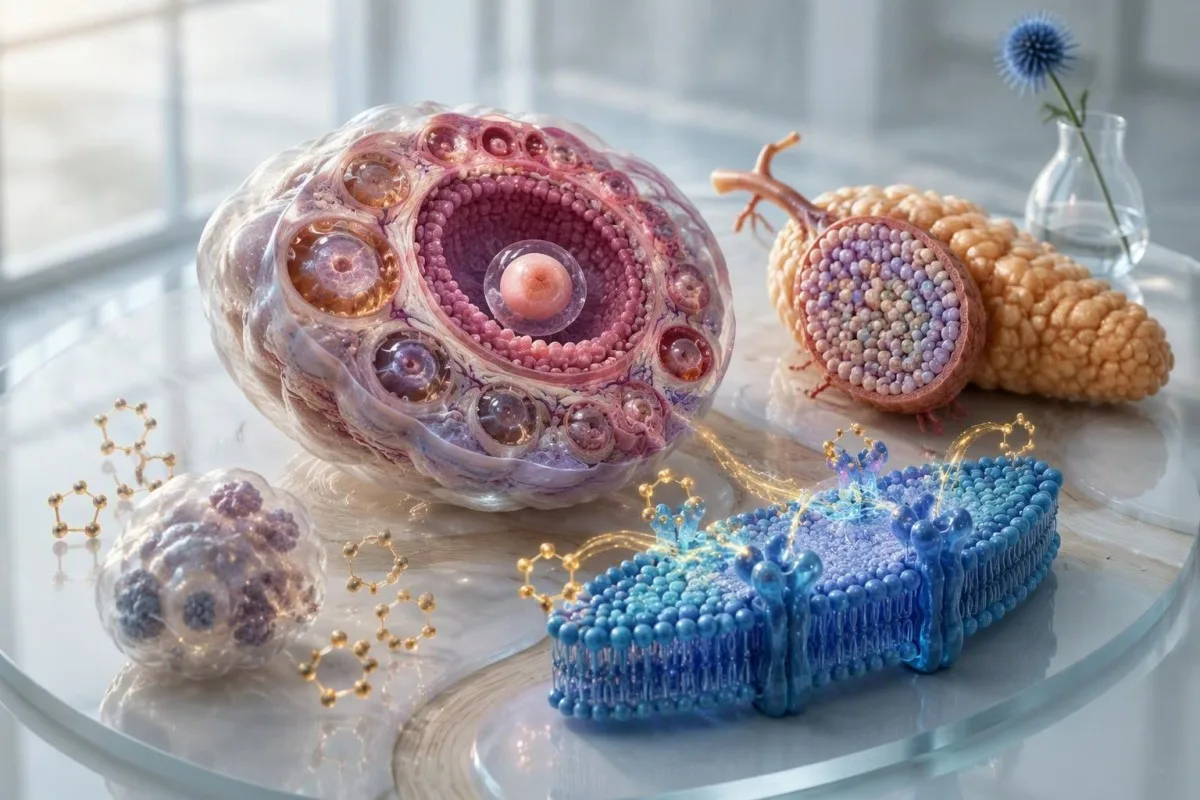
Myo-inositol may modestly improve cycle regularity and some metabolic markers in PCOS, but it is not a substitute for diagnosis, lifestyle care, metformin when indicated, or fertility treatment.


- Best-studied dose is myo-inositol 2,000 mg twice daily, usually assessed after 12 weeks rather than a few days.
- 40:1 ratio means 40 parts myo-inositol to 1 part D-chiro-inositol; it is widely marketed, but direct proof that it is superior remains limited.
- Cycle response is variable: ovulation and period timing may improve over 3 to 6 months, but some patients notice no meaningful change.
- Metabolic effect is generally modest; fasting glucose, triglycerides, HbA1c, and waist measures still need standard clinical follow-up.
- Guideline position is cautious: the 2023 international PCOS guideline allows inositol based on preference, while noting limited clinical benefit and uncertain supplement quality.
- Nėštumo planavimas requires clinician review because inositol is not a replacement for ovulation-induction medicines such as letrozole.
- Saugumas is usually favourable at 2 to 4 g daily, with nausea, loose stools, headache, and dizziness reported most often.
- Stebėsena should focus on symptoms, cycle length, blood pressure, weight, HbA1c or glucose, lipids, and other causes of irregular periods.
Does inositol help PCOS symptoms and cycles?
Inositol for PCOS can help some people achieve more regular cycles and modest metabolic improvements, but the average effect is smaller and less certain than supplement advertising suggests. I advise a 12-week trial only when the diagnosis is secure, goals are clear, and there is a plan for follow-up.
As of September 30, 2026, the strongest practical case for inositol is a patient with PCOS who prefers a low-risk adjunct for irregular cycles or insulin-resistance features. The 2023 International Evidence-based Guideline for PCOS states that inositol may be considered according to patient preference, although clinical benefits are limited and no specific type, dose, or combination can be recommended with confidence (Teede et al., 2023).
In my clinic, the useful conversation is not “Will this cure PCOS?” but “Which outcome are we trying to move?” A person with cycles every 55 to 90 days may see intervals shorten over 3 to 6 months; a person already cycling every 30 days may notice nothing measurable. PCOS remains a syndrome, not a single laboratory abnormality.
Thomas Klein, MD, recommends recording the first day of every bleed, acne or hair-growth changes, body weight, and adverse effects before starting. That simple diary prevents a common error: attributing a spontaneous cycle to a supplement started only 10 days earlier. Read our overview of LH ir FSH modeliai when cycle hormones are confusing.
Myo-inositol and D-chiro-inositol are not interchangeable
Myo-inositol and D-chiro-inositol are related stereoisomers that participate in insulin signalling, yet they have different tissue roles and should not be treated as identical ingredients. Most PCOS research has evaluated myo-inositol alone or a myo-inositol-dominant combination.
Myo-inositol is abundant in many tissues and is often discussed in relation to ovarian signalling, while D-chiro-inositol is produced from myo-inositol through an insulin-dependent conversion step. Insulin resistance may alter that conversion in some tissues, but this biochemical observation does not prove that every person needs a mixed product.
The often-quoted 40:1 D-chiro-inositol ratio copies an estimated plasma relationship, not a universally validated prescription. Products containing 2,000 mg myo-inositol plus 50 mg D-chiro-inositol twice daily provide that ratio; however, head-to-head trials are too small and heterogeneous to establish it as clinically superior to 2,000 mg myo-inositol twice daily.
Kantesti yra AI kraujo tyrimo analizatorius that places fasting glucose, HbA1c, triglycerides, ALT, and androgen results in the same PCOS context rather than treating one result as the whole story. For a practical discussion of insulin values, see pas.
What does the 40:1 D-chiro-inositol ratio really mean?
A 40:1 myo-inositol-to-D-chiro-inositol ratio is commonly studied and generally well tolerated, but it is not an evidence-based requirement for every person with PCOS. The label ratio matters less than total dose, product reliability, adherence, and whether the treatment addresses the patient’s main problem.
High-dose D-chiro-inositol alone has created concern because early reproductive studies suggested that excessive ovarian D-chiro exposure could adversely affect oocyte-related signalling. That concern is biologically plausible, yet the exact dose at which it becomes relevant in real-world supplements is not firmly established.
A 40:1 product typically supplies 4,000 mg myo-inositol and 100 mg D-chiro-inositol daily when taken twice daily. This dose is a reasonable conventional option, but it should not be sold as precision medicine; people with the same PCOS diagnosis can have markedly different glucose tolerance, BMI, androgen levels, and fertility needs.
When I review results, I also look for conditions that can imitate PCOS, particularly thyroid disease and hyperprolactinaemia. Our guide to šiek tiek padidėjęs prolaktino kiekis explains why a repeat morning sample can change the entire interpretation.
Evidence-based inositol dosage for PCOS
The most commonly studied inositol dosage for PCOS is 2,000 mg of myo-inositol twice daily, with or without 200 micrograms of folic acid. A lower dose may reduce stomach upset, but evidence for meaningful benefit below 2 g twice daily is thinner.
I usually suggest taking a new product consistently for 12 savaičių before judging cycle or laboratory response, unless adverse effects occur. Taking it with food is reasonable for nausea, although trials have used varying schedules and there is no proven best time of day.
More is not necessarily better. Doses above 4 g daily of myo-inositol are not supported by strong PCOS outcome data, and combining several products can quietly duplicate folic acid, vitamin B6, or chromium. Check the full label, not only the front-panel claim.
Kantesti yra AI kraujo tyrimo rezultatų interpretavimo platforma that can compare repeated glucose and lipid panels over time, but it cannot decide whether a supplement is appropriate for you. If you use several products, our papildų vartojimo laiko vadovas can help you prepare for more interpretable blood work.
How quickly can periods become more regular?
When inositol helps cycle regularity, a realistic assessment window is 3 months, with some people requiring 6 months to see a stable pattern. It does not reliably trigger a withdrawal bleed in the way prescribed progestogen can.
A useful clinical endpoint is not merely “a period happened” but whether cycle length moves toward a predictable range. Cycles consistently longer than 90 dienų need medical review because prolonged anovulation can leave the endometrium unopposed by progesterone.
Anovulatory PCOS can coexist with ovulation in occasional months, especially after weight change, illness recovery, or stopping hormonal contraception. That is why I ask patients to log cervical mucus changes, pregnancy tests when relevant, and the exact bleeding pattern rather than relying on memory.
If a period has not occurred for 3 months, contact a clinician rather than simply increasing the dose. The evaluation may include pregnancy testing, thyroid testing, prolactin, and a discussion about endometrial protection; our PCOS testing after the pill explains timing pitfalls.
What can inositol change in glucose and lipid tests?
Inositol may produce small improvements in fasting insulin, glucose tolerance, and triglycerides in some people with PCOS, but it should not be expected to normalize diabetes-risk markers by itself. Metformin, nutrition, activity, sleep, and weight management often have stronger evidence for metabolic outcomes.
Nevalgius gliukozė žemiau 100 mg/dL (5,6 mmol/L) is generally considered normal, while 100 to 125 mg/dL indicates impaired fasting glucose; PCOS can still involve insulin resistance when fasting glucose remains normal. HbA1c of 5.7%–6.4% indicates prediabetes, although an oral glucose tolerance test can reveal abnormalities that HbA1c misses.
The 2023 PCOS guideline recommends a 75 g geriamojo gliukozės toleravimo testą as the most accurate assessment of glycaemic status in PCOS, regardless of BMI. Fasting insulin is not recommended as a diagnostic test because assay results vary substantially between laboratories (Teede et al., 2023).
Kantesti’s AI pagrindu veikiantis kraujo tyrimų analizės įrankis reads triglycerides, HDL cholesterol, ALT, and glucose as a metabolic pattern, not as proof that a supplement has worked. For context on insulin-related lipid changes, review didelės nevalgius insulino koncentracijos požymius.
Can inositol lower testosterone, acne, or unwanted hair?
Inositol can modestly improve biochemical androgen measures in selected trials, but acne and excess terminal hair usually change slowly and inconsistently. A lower testosterone result is not the same thing as a visible improvement in hair growth.
Total testosterone, free testosterone, and SHBG are affected by assay method, body weight, insulin resistance, and combined hormonal contraception. SHBG often falls with hyperinsulinaemia, so a low SHBG can make free androgen exposure higher even when total testosterone sits inside the laboratory reference interval.
Acne often improves over 8–12 savaičių with targeted dermatologic treatment, whereas terminal hair follows a 4- to 6-month growth cycle and commonly requires cosmetic treatment as well as hormonal management. Inositol is not a substitute for treatments such as combined hormonal contraception, anti-androgens with reliable contraception, or specialist acne care when these are indicated.
Rapid virilisation, new deepening of the voice, or rapidly progressive hair growth needs prompt assessment for causes beyond routine PCOS. Our DHEA-S prieš DHEA vadovas explains why adrenal and ovarian androgen patterns are interpreted differently.
Why inositol works best as an adjunct, not a replacement
Inositol works best as an optional adjunct to sustainable lifestyle and medical care, not as a replacement for either. Even a 5% weight reduction can improve ovulation frequency for some people with higher weight, but weight loss is neither mandatory nor the only meaningful PCOS outcome.
The metabolic target should be individual: better energy, fewer glucose spikes, lower HbA1c, improved lipids, or fertility planning. Aiming for 150 minučių per savaitę of moderate physical activity plus two resistance sessions is a useful public-health benchmark, but the best program is the one a patient can keep doing.
In my experience, patients often overestimate the effect of a capsule and underestimate the impact of sleep apnea, highly irregular meal patterns, or untreated depression on insulin resistance. A 10-minute walk after meals can be more sustainable than a dramatic diet overhaul, and it is a perfectly respectable starting point.
For food choices that support cardiometabolic risk without rigid rules, see our priešuždegiminių maisto produktų sąrašas. PCOS care should avoid blame; biology, access to care, medicines, and stress all shape results.
Inositol for PCOS when trying to conceive
Inositol may be used as an adjunct while trying to conceive, but it has not replaced letrozole as first-line ovulation induction for anovulatory infertility in PCOS. Do not postpone fertility evaluation for months solely to see whether a supplement works.
The international guideline recommends letrozole as first-line pharmacological ovulation induction for infertile anovulatory women with PCOS when there are no other infertility factors. Inositol has uncertain effects on live birth and miscarriage because the available studies are relatively small and use different formulations.
Nestler and colleagues reported improved insulin-related measures with D-chiro-inositol in obese women with PCOS, but that 1999 trial does not establish that modern combination products improve live-birth rates for every patient (Nestler et al., 1999). This distinction matters enormously in a fertility clinic.
Preconception care should include folate, blood pressure, HbA1c or an oral glucose tolerance test, medication review, and partner factors when appropriate. Read our priešpastojiminio kraujo tyrimo gidas before assuming PCOS is the only variable.
Inositol safety, side effects, and supplement quality
Myo-inositol is usually well tolerated at 2 to 4 g daily, with mild gastrointestinal upset, headache, dizziness, and fatigue being the most reported side effects. Stop the product and seek advice for a suspected allergic reaction, persistent vomiting, or a major change in mood.
Unlike prescription medicines, supplements may have inconsistent content and may not be tested to the same manufacturing standard in every country. I suggest choosing a product with independent quality testing, a transparent ingredient list, and no unnecessary “hormone balance” blends that obscure the actual dose.
People with bipolar disorder or a history of mania should speak with their psychiatric clinician before starting high-dose inositol. Evidence on mood effects is incomplete, but changing neuroactive supplements without coordination is an avoidable risk, especially when medicines are being adjusted.
Kantesti yra AI laboratorinio tyrimo interpretavimo paslaugoje designed to help users prepare informed questions from their results; it does not verify supplement purity or replace a pharmacist. Our B-complex safety guide is useful when a product also contains high-dose B vitamins.
Who should seek clinician guidance before taking inositol?
Clinician guidance is sensible before inositol if you are pregnant, breastfeeding, using diabetes medicines, pursuing fertility treatment, managing bipolar disorder, or have liver or kidney disease. The issue is usually not a dangerous direct interaction; it is avoiding fragmented care and missed monitoring.
Anyone using insulin, sulfonylureas, or other glucose-lowering medicines should monitor for symptoms of hypoglycaemia, even though clinically significant low glucose from inositol alone appears uncommon. Sweating, tremor, confusion, or a measured glucose below 70 mg/dL (3,9 mmol/L) needs timely assessment.
Pregnancy is a special case. Some studies have evaluated myo-inositol for gestational diabetes prevention, but dose, eligibility, and outcome data do not justify self-prescribing it as a universal prenatal intervention; obstetric care should lead the decision.
Thomas Klein, MD, would also pause before recommending inositol to someone with unexplained weight loss, galactorrhoea, severe pelvic pain, or new neurological symptoms. Those clues deserve diagnosis first; our endometriosis testing guide clarifies one common source of overlapping pelvic symptoms.
Which PCOS laboratory tests matter during an inositol trial?
The most useful monitoring tests depend on your goal, but glucose status, lipids, liver enzymes, kidney function, and targeted hormone tests often matter more than repeating fasting insulin. Repeat testing at 3 to 6 months is usually more informative than checking every few weeks.
For metabolic risk, clinicians commonly check HbA1c, fasting glucose or an oral glucose tolerance test, triglycerides, HDL cholesterol, LDL cholesterol, ALT, blood pressure, and waist measurement. Triglycerides of 150 mg/dL (1.7 mmol/L) or higher are considered elevated and should prompt attention to diet, alcohol exposure, diabetes risk, medicines, and inherited factors.
For diagnosis or a change in symptoms, useful tests may include total testosterone by a reliable assay, SHBG, calculated free testosterone, prolactin, TSH, and 17-hydroxyprogesterone. A normal result does not erase symptoms, but it helps rule out conditions that should not be labelled PCOS.
Kantesti’s AI biomarkerių interpretavimo platforma can trend results from separate laboratory reports while preserving the original units and reference intervals. Use our kraujo biomarkerių gidas to understand why two laboratories may flag the same value differently.
How to tell when inositol is not enough
Inositol is not enough when cycles remain longer than 90 days, glucose markers worsen, fertility goals are time-sensitive, or symptoms point to another disorder. Increasing the dose is rarely the right next step without reassessment.
A lack of change after 12 to 16 weeks of consistent use is useful information, not a personal failure. Consider adherence, product formulation, sleep, weight trajectory, contraception, and whether the original diagnosis was based on the Rotterdam criteria: two of oligo-anovulation, hyperandrogenism, and polycystic ovarian morphology after exclusions.
Escalate sooner for HbA1c in the diabetes range of 6.5% ar daugiau, fasting glucose of 126 mg/dL or higher, blood pressure of 140/90 mmHg or higher on repeat checks, or significant depression and eating-disorder symptoms. These require standard medical care, not supplement experimentation.
Kantesti can support structured result review through its clinical oversight framework, while treatment decisions remain with the clinician who knows your history. A good follow-up question is: “What problem are we treating next, and how will we know it improved?”
A sensible 12-week plan for inositol in PCOS
A sensible inositol plan starts with a confirmed PCOS diagnosis, a defined goal, myo-inositol 2,000 mg twice daily if appropriate, and reassessment after 12 weeks. It should include a stop rule rather than an open-ended promise.
Week 0 is for baseline: record cycle dates, symptoms, medications, blood pressure, weight if relevant, and recent laboratory values. Take the product consistently, preferably at the same two points each day, and do not begin three other supplements simultaneously—otherwise you cannot tell what caused a change.
At week 12, review cycle length, side effects, pregnancy status, acne or hair symptoms, and goal-specific measures. A repeat HbA1c is often most useful after about 3 mėnesius, because it reflects average glucose exposure over roughly 8 to 12 weeks.
Kantesti is used by people in more than 127 countries as an AI pagrindu veikiantis kraujo tyrimų analizės įrankis for organising laboratory trends, but my medical team’s advice is deliberately conservative: bring the actual package, dose, and your symptom diary to a clinician. You can meet the people behind our medical review at the Medicinos patariamoji taryba.
Dažnai užduodami klausimai
What is the best inositol dose for PCOS?
The most commonly studied dose for PCOS is myo-inositol 2,000 mg twice daily, for a total of 4,000 mg daily. Combination products often add D-chiro-inositol in a 40:1 ratio, which usually equals 50 mg D-chiro-inositol twice daily. Most clinicians assess response after 12 weeks because cycle and HbA1c changes are not meaningful after only a few days. Higher doses have not shown clearly better PCOS outcomes.
Is myo-inositol or D-chiro-inositol better for PCOS?
Myo-inositol has the broader PCOS evidence base, while D-chiro-inositol is commonly added in a myo-inositol-dominant 40:1 combination. There is not enough high-quality direct comparison evidence to say that a 40:1 product is better than myo-inositol alone for every person. Myo-inositol 2,000 mg twice daily is a reasonable conventional starting point when a clinician agrees. D-chiro-inositol alone at high doses is not the usual first choice for reproductive goals.
How long does inositol take to regulate periods in PCOS?
Inositol may take 3 months to produce a credible change in cycle regularity, and some people need 6 months to show a stable pattern. A period occurring once does not prove that the supplement caused ovulation because PCOS cycles can vary spontaneously. Cycles longer than 90 days need medical assessment regardless of supplement use. Pregnancy testing is appropriate whenever a period is late and conception is possible.
Can inositol replace metformin for PCOS?
Inositol should not automatically replace metformin because metformin has stronger evidence for several metabolic outcomes in PCOS. The 2023 international PCOS guideline describes inositol as an option based on preference, with limited clinical benefits and uncertain optimal formulation. Metformin can be particularly relevant when glucose tolerance is impaired, HbA1c is 5.7% or higher, or type 2 diabetes risk is substantial. The choice depends on goals, side effects, pregnancy plans, and medical history.
Is inositol safe in pregnancy with PCOS?
Myo-inositol has been studied in pregnancy, including for gestational diabetes prevention, but it should be discussed with an obstetric clinician rather than started automatically. Pregnancy changes glucose targets, medication choices, and the urgency of monitoring. People with PCOS are often advised to have a 75-g oral glucose tolerance test early in pregnancy and again at 24 to 28 weeks if appropriate. A prenatal vitamin containing 400 to 800 micrograms of folic acid remains standard preconception care unless a clinician recommends more.
What blood tests should I check while taking inositol for PCOS?
Useful PCOS follow-up tests often include HbA1c, fasting glucose or a 75-g oral glucose tolerance test, triglycerides, HDL cholesterol, LDL cholesterol, and ALT. HbA1c of 5.7% to 6.4% indicates prediabetes, while 6.5% or higher is in the diabetes range and needs clinical confirmation and management. Testosterone, SHBG, TSH, and prolactin are selected according to symptoms and diagnostic uncertainty. Fasting insulin can add context but is not a standardized diagnostic test for insulin resistance.
Gaukite AI pagrįstą kraujo tyrimo analizę jau šiandien
Prisijunkite prie daugiau nei 2 milijonų naudotojų visame pasaulyje, kurie pasitiki Kantesti dėl momentinės, tikslios laboratorinių tyrimų analizės. Įkelkite savo kraujo tyrimo rezultatus ir per kelias sekundes gaukite išsamią 15,000+ biomarkerių interpretaciją.
📚 Nuorodomis pagrįsti moksliniai leidiniai
Klein, T., Mitchell, S., & Weber, H. (2026). Kantesti LTD. (2026). Iš anksto registruotas, rubric pagrįstas automatizuotas techninis Kantesti kraujo tyrimų interpretacijos variklio etaloninis vertinimas 100 000 sintetinių testų atvejų. Figshare. https://doi.org/10.6084/m9.figshare.32095435. ResearchGate: https://www.researchgate.net/. Academia.edu: https://www.academia.edu/.. Kantesti AI Medical Research.
Klein, T., Mitchell, S., & Weber, H. (2026). Kantesti LTD. (2026). Klinikinio patvirtinimo sistema v2.0 (Medicininio patvirtinimo puslapis). Zenodo. https://doi.org/10.5281/zenodo.17993721. ResearchGate: https://www.researchgate.net/. Academia.edu: https://www.academia.edu/.. Kantesti AI Medical Research.
📖 Išorinės medicininės nuorodos
⚕️ Medicininis atsakomybės apribojimas
Šis straipsnis skirtas tik mokymo tikslais ir nesudaro medicininės konsultacijos. Visada kreipkitės į kvalifikuotą sveikatos priežiūros specialistą dėl diagnozės ir gydymo sprendimų.
E-E-A-T patikimumo signalai
Patirtis
Gydytojo vadovaujama klinikinė laboratorinių tyrimų interpretavimo darbo eigų peržiūra.
Ekspertizė
Laboratorinės medicinos dėmesys tam, kaip biomarkeriai elgiasi klinikiniame kontekste.
Autoritetas
Parašyta dr. Thomas Klein, peržiūrėjo dr. Sarah Mitchell ir prof. dr. Hans Weber.
Patikimumas
Įrodymais pagrįsta interpretacija su aiškiais tolesnių veiksmų keliais, siekiant sumažinti nerimą.