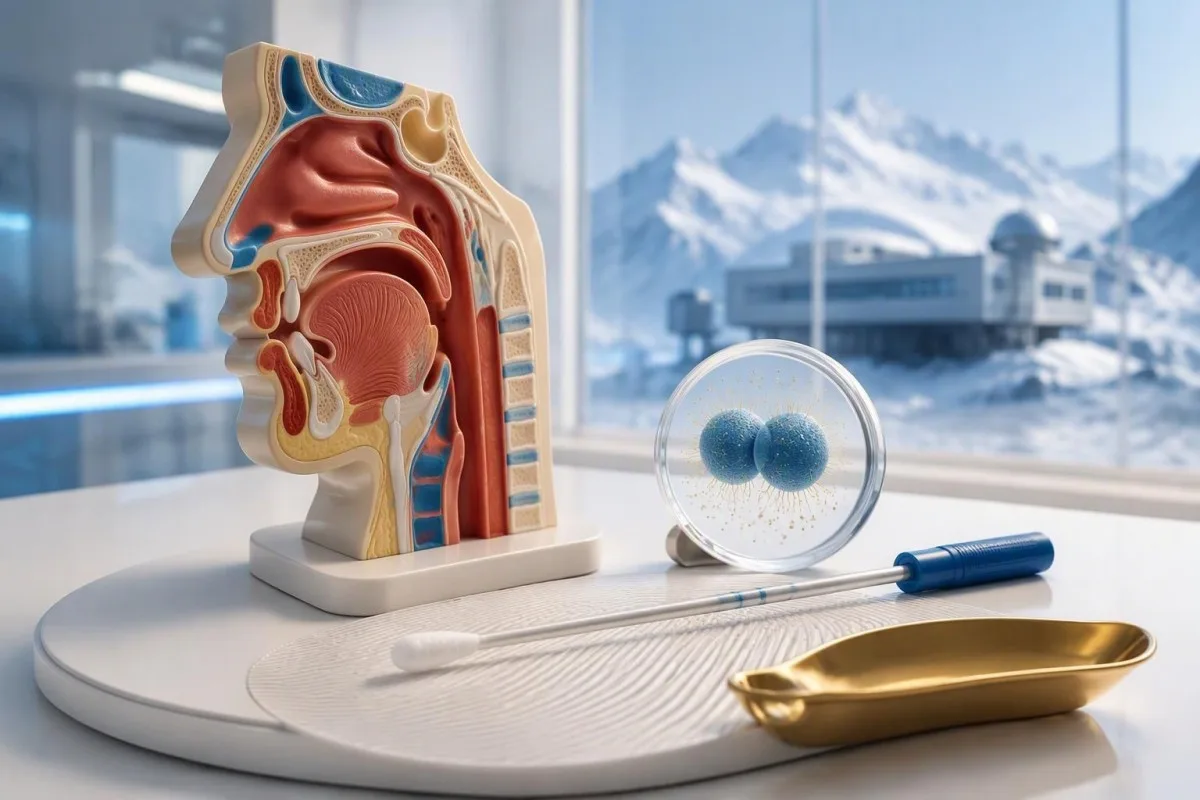
Тамактан алынган сүртүндү анализи дарылоонун натыйжалуу болгонун текшерет; кийинчерээк жүргүзүлгөн текшерүү гонореянын кайра пайда болгонун аныктайт. Бул кабыл алуулар ар башка суроолорго жооп берет.


- Тамактагы гонореяны кийинки көзөмөлдөө CDC көрсөтмөлөрүнө ылайык, симптомдор жоголуп кетсе да, дарылоодон 7–14 күн өткөндөн кийин айыкканын текшерүү үчүн анализ тапшырууну талап кылат.
- Жыныс органдарындагы жана көтөн чучуктагы татаалдашпаган гонорея CDC сунуштаган же кабыл алынган альтернативдүү режим менен дарылоодон кийин, адатта, айыкканын текшерүү үчүн анализ тапшырууну талап кылбайт.
- Үч айдан кийин гонореяга кайра текшерилүү кайра жуктуруп алууну аныктайт жана өнөктөштөр дарыланганын билдирген-билдирбегенине карабастан, дарылоодон кийин сунушталат.
- NAATты эрте тапшыруу дарылоо жок кылып салган бактериялардын генетикалык материалын аныкташы мүмкүн; 7-күнү алынган оң жыйынтык дарылоо натыйжасыз болгонун автоматтык түрдө далилдебейт.
- Туура алынган үлгү маанилүү: зааранын анализинин жыйынтыгы тамактагы инфекция жоголгонун тастыктай албайт.
- Тамактан алынган NAAT оң жыйынтык кайрадан дарылоодон мурун дарыгердин баалоосуна жана ырастоочу культураны алууга аракет кылууга негиз болушу керек, айрыкча башында культура алынбаса.
- Туруктуу белгилер 3–5 күндүн ичинде басылбаган белгилер үч айлык скринингге чейин күтпөстөн, текшерүүнү талап кылат.
- Дарылоодон кийинки жыныстык катнаш кеминде 7 күн күтүп, өнөктөштөр дарыланып, белгилер басылганга чейин жыныстык катнашка барбоо керек; клиникаңыздын мындан да катуу көрсөтмөлөрүн аткарыңыз.
Гонореяга кайра текшерилүү эки башка көзөмөлдөөчү анализди билдирет
Тамактагы гонореяны дарылоодон 7–14 күн өткөндөн кийин айыкканын текшерүү керек, анткени аны жок кылуу кыйыныраак жана инфекциянын жоюлганын ырастоо зарыл. Сунушталган дарылоодон кийин жыныс органдарындагы жана көтөн чучуктагы татаалдашпаган инфекцияларды адатта мындай текшерүүнүн кереги жок. Гонореядан дарыланган ар бир адам кайра жуктуруп албаганын текшерүү үчүн болжол менен 3 айдан кийин кайра тест тапшырышы керек; эрте жасалган NAAT бактериянын калган генетикалык материалынан улам оң бойдон калышы мүмкүн.
A айыкканын текшерүү баштапкы инфекция дарылоодон аман калган-калбаганын аныктайт; ал эми кайра жуктурууну скринингден өткөрүү дарылоодон кийин дагы бир инфекция пайда болгон-болбогонун аныктайт. CDC бул жолугушууларды 2021-жылдагы ЖЖЖИ боюнча дарылоо көрсөтмөлөрүндө ачык бөлүп, жуткундагы инфекция үчүн эрте текшерүүнү, ал эми гонореядан дарылангандардын баарына болжол менен 3 айдан кийин скрининг өткөрүүнү сунуштайт (Workowski et al., 2021).
Кабыл алуунун аталышы чыгаруу боюнча нускамаңызда көрсөтүлүшү керек, жөн гана “кайра тест” деген сөз эмес. 21-октябрда дарыланган шарттуу бейтапты элестетип көрүңүз: тамактагы инфекциянын айыкканын текшерүү 28-октябрдан 4-ноябрга чейин, ал эми кайра жуктурууну скринингден өткөрүү болжол менен 21-январда жүргүзүлөт. Биздин түшүндүрмөбүз хламидиозго тест тапшыруу мөөнөттөрү чогуу дайындалган тесттердин да кийинки текшерүү күндөрү ар башка болушу мүмкүн экенин көрсөтөт.
Кантести - бул AI кан анализинин жыйынтыгы платформасы, бирок гонореянын айыкканын ырастоо күнүмдүк кан анализине эмес, инфекция жайгашкан жерге жараша жүргүзүлгөн микробиологиялык изилдөөгө таянат. Мен, башкы медициналык директор Томас Кляйн, бул материалды жазып жатып, тестирлөөнүн ушул 2 түрүн өз-өзүнчө кароону клиникалык артыкчылык деп эсептейм. Биздин компаниянын тарыхы бул билим берүүчү ресурстун артында турган уюмду түшүндүрөт; ал жыныстык саламаттык боюнча кабыл алуунун ордун баспайт.
Тамактагы гонореяны айыкканын текшерүү үчүн эмне үчүн 7–14 күндөн кийин анализ тапшыруу керек
Жуткундагы гонореяны жыныс органдарындагы же көтөн чучуктагы татаалдашпаган инфекцияга караганда жок кылуу кыйыныраак. Ошондуктан CDC тамактагы инфекция аныкталган ар бир бейтапка, сунушталган дарылоону же башка дарылоо схемасын алса да, дарылоодон 7–14 күн өткөндөн кийин айыкканын текшерүүнү сунуштайт.
Жуткунда антибиотиктин таасири боюнча өзгөчө талаптар бар жана дарылоонун бир эле натыйжасы бардык анатомиялык аймактарда болот деп болжолдоого болбойт. CDC көрсөтмөсүндө жуткундагы фармакокинетикалык өзгөчөлүктөр инфекция жыныс органдарында жайгашкан учурга салыштырмалуу микроорганизмдин минималдуу ингибирлөөчү концентрациясынан жогору деңгээлдеги таасир узагыраак болушун талап кылышы мүмкүн экени белгиленет. Бул өзүнчө 7–14 күндүк ырастоо кадамынын негиздеринин бири, бирок дарыланган тамак инфекцияларынын көбү сакталып калат дегенди билдирбейт.
Тамактагы инфекция клиникалык белгилерсиз өтүшү мүмкүн, ошондуктан тамак оорубаганы айыкканын текшерүү үчүн жарабайт. Эгер адамда дарылоого чейин да, андан кийин да белгилер болбосо, айыкканын аныктоого жардам бере турган белгилердеги өзгөрүүлөрдүн саны 0 болот. Тамактан кайра үлгү алуу бейтаптын өзүнүн белгилерди байкоосу бере албаган далилди камсыздайт; өзүн жакшы сезүү жана микробиологиялык жактан айыгуу — эки башка көрүнүш.
Тамакта Neisseria тукумундагы башка түрлөр да кездешет, бул антимикробдук туруктуулукка тиешеси бар генетикалык алмашуу мүмкүнчүлүгүн жаратат. Бул жагдай кылдат кийинки текшерүүнү колдойт, бирок 7-күнү алынган оң жыйынтыкты дароо туруктуулук деп белгилебестен, чечмелөө зарыл. Биздин колдонмо антибиотиктерден кийин ЖЖЖИге тест тапшыруу дагы бир практикалык айырманы түшүндүрөт: антибиотиктердин таасири микроорганизмди түз аныктоочу тесттерге антителолорго негизделген кан тесттерине караганда башкача таасир этет.
Жыныс органдарындагы жана көтөн чучуктагы инфекцияларда айыкканын текшерүү эмне үчүн адатта талап кылынбайт
CDC сунуштаган же кабыл алынган башка дарылоо схемасы менен дарыланган жыныс органдарындагы же көтөн чучуктагы татаалдашпаган инфекцияда гонореянын айыкканын күнүмдүк текшерүү зарыл эмес. Бул өзгөчөлүк болжол менен 3 айдан кийин кайра жуктурууну скринингден өткөрүү зарылдыгын жокко чыгарбайт жана белгилер сакталып калган, дарылоо натыйжасыз болгон деп шектелген же татаалдашкан инфекция учурларына тиешеси жок.
The decision is based on the infection site, treatment regimen, and clinical course—not simply whether the original result said “positive.” For example, an uncomplicated rectal infection treated correctly with resolving symptoms generally needs the 3-month reinfection appointment rather than an automatic early NAAT. Adding an unnecessary early test can create an ambiguous result without changing appropriate care.
A treatment course outside the guideline changes the conversation. If someone received leftover tablets, vomited an oral dose, missed prescribed doses, or cannot identify the medication, there are at least 4 reasons not to assume the usual no-cure-test rule applies. A clinician should first establish whether adequate treatment occurred; ordering another test alone cannot repair an inadequate regimen.
Persistent discharge or urinary discomfort may come from another infection or a noninfectious condition, even after gonorrhea has cleared. Symptoms continuing beyond 3–5 days deserve reassessment, with testing selected for the symptoms and exposures rather than reflexively repeating every organism on a broad panel. Our discussion of positive Ureaplasma results explains why detecting another organism does not always mean another antibiotic is needed.
Эмне үчүн NAATтын алгачкы оң жыйынтыгы тирүү гонорея бар дегенди билдирбеши мүмкүн
A gonorrhea NAAT can remain positive after successful treatment because it detects bacterial DNA or RNA, not necessarily living bacteria. Testing at the early end of the 7–14-day throat follow-up window increases the chance of a misleading positive result, particularly when the assay detects residual genetic material.
RNA detection does not reliably solve the live-versus-dead problem. In a prospective cohort using an RNA-based throat assay, Barbee and colleagues reported a median clearance time of 3 days, but clearance in more than 95% of participants required approximately 12 days (Barbee et al., 2022). The slower-clearing minority is precisely why a population median should not become an individual testing deadline.
That 12-day finding is useful, but it is not a universal rule for every laboratory. The study involved a particular assay and a cohort of men who have sex with men; specimen collection, assay targets, and patient populations can differ. For an asymptomatic patient, arranging NAAT toward days 12–14 may reduce ambiguity, provided the clinic agrees and follow-up is not lost.
A qualitative positive result does not provide a standardized measure of bacterial burden or contagiousness. There is no universally validated gonorrhea cycle-threshold cutoff that a patient can use to declare cure, and 2 different assay systems may not report comparable signals. Our guide to сапаттык жана сандык натыйжалар explains why “detected” should not be treated as a severity score.
Дарылоодон кийин культура жана NAAT ар башка суроолорго жооп берет
NAAT is generally more sensitive for detecting gonorrhea, while culture can demonstrate viable organisms and support antibiotic-susceptibility testing. For throat test of cure at 7–14 days, CDC guidance allows either method; a positive NAAT should prompt an attempt at confirmatory culture before retreatment.
Culture requires careful collection and handling because gonococci are demanding organisms outside the body. Transport delays, collection problems, or antibiotics given before sampling can reduce recovery; a negative culture therefore does not always settle a discordant positive NAAT. The practical question is whether the laboratory received an appropriate throat specimen under suitable conditions, not merely whether 1 test was marked negative.
Susceptibility testing becomes particularly valuable when a cure-check culture is positive. The CDC recommends antimicrobial-susceptibility testing on positive test-of-cure cultures, allowing the clinician to investigate whether the treatment drug remains active (Workowski et al., 2021). Before another antibiotic is given, ask whether 2 specimens—one for NAAT and one for culture—would help preserve the evidence needed to resolve the case.
Кантести - бул AI лабораториялык тест чечмелөө кызматы аркылуу жарыяланат; in gonorrhea follow-up, explaining 2 discordant results is not the same as establishing whether viable bacteria remain. Our клиникалық валидация тәсілі describes the importance of defined evidence and oversight. The AI report safety guide also explains why source checking matters when a result could lead to additional antibiotic treatment.
Кайра текшерүүнүн жыйынтыгын чечмелөөдөн мурун дарылоо дозасы маанилүү
Adequate treatment must be established before a gonorrhea retest after treatment can be interpreted. CDC guidance recommends ceftriaxone 500 mg intramuscularly once for uncomplicated infection in people weighing under 150 kg, and 1 g once for people weighing 150 kg or more.
Dosing recommendations differ internationally, so a number on the treatment record should be interpreted against the applicable guideline. WHO’s 2024 recommendations suggest ceftriaxone 1 g intramuscularly once for gonococcal infection, while the CDC uses the 500 mg and 150 kg threshold described above (WHO, 2024; Workowski et al., 2021). Neither difference means that a patient should supplement an already prescribed dose without advice.
A separate chlamydia prescription may accompany gonorrhea treatment when chlamydia has not been excluded. Under CDC guidance, nonpregnant patients may receive doxycycline 100 mg twice daily for 7 days for that purpose; pregnancy requires a different chlamydia treatment choice. Finishing doxycycline does not substitute for the ceftriaxone dose needed to treat gonorrhea, and it does not remove the throat cure-check appointment.
A penicillin-allergy label is not automatically a ceftriaxone contraindication. CDC guidance reports cross-reactivity below 1% between third-generation cephalosporins and IgE-mediated penicillin allergy, but a history of severe reactions still demands individual assessment. Our guide to penicillin allergy reassessment explains why the reaction history matters; for pharyngeal gonorrhea, severe ceftriaxone allergy warrants specialist advice because reliably effective alternatives are limited.
Тамактагы инфекциянын айыкканын текшерүү оң болсо, эмне болот?
A positive throat cure check needs prompt clinician review, but it does not by itself distinguish residual genetic material, reinfection, or treatment failure. The next steps depend on the assay, whether the sample was collected on day 7 or day 14, symptoms, treatment documentation, and sexual exposure after treatment.
The most useful first questions are concrete: what drug and dose were given, on what date, which site was sampled, and was there sexual contact afterward? Those 4 details can change the interpretation more than the word “positive.” If the patient is stable, obtaining culture before additional antibiotics may help distinguish a microbiological problem from an early-NAAT timing problem.
CDC guidance considers treatment failure when symptoms do not resolve within 3–5 days, or when culture remains positive more than 72 hours after treatment or NAAT remains positive more than 7 days afterward, without sexual re-exposure. These are investigation triggers—not proof of resistance. The known persistence of nucleic acids, especially in the throat, makes timing and confirmatory testing central to that assessment.
A normal white-cell count or CRP cannot establish that a positive throat swab is harmless. There are 0 routine inflammatory-marker thresholds that confirm gonorrhea cure; localized infection may produce little systemic signal. My approach is to avoid letting an unrelated reassuring panel override microbiology, a distinction explored in our guide to WBC менен CRP көрсөткүчтөрүнүн дал келбеши тууралуу түшүндүрмөбүз.
Эмне үчүн ар бир адам үч айдан кийин гонореяга кайра текшерилиши керек
Gonorrhea retesting at approximately 3 months screens for reinfection, even after a negative throat test of cure. CDC guidance recommends this later screen regardless of whether patients believe their partners were treated, because a documented cure does not provide immunity against another infection.
A negative early throat result answers a question about that specimen at that time. It cannot protect against infection acquired weeks later or certify that every anatomical site was negative. At the 3-month visit, exposure history should determine whether urine, vaginal, rectal, or throat sampling is appropriate; the later screen is not necessarily just another copy of the original swab.
Booking the later appointment before leaving treatment is more reliable than expecting yourself to remember it. If approximately 3-month testing cannot happen, the CDC recommends retesting at the next healthcare encounter within 12 months. That fallback is a practical safety net, not a reason to postpone an available earlier screen or ignore symptoms occurring before the appointment.
Reinfection prevention also requires treating each diagnosed infection according to its own rules. Gonorrhea, chlamydia, and trichomoniasis can appear in the same sexual-health workup, but 1 negative gonorrhea result does not clear the others. Our guide to trichomoniasis test timing explains why follow-up schedules and specimen choices should be documented separately rather than combined into a vague “STI retest.”
Качан жыныстык катнашка барса болот жана өнөктөштөрдүн кайсылары дарыланышы керек?
CDC guidance advises avoiding sexual activity for 7 days after gonorrhea treatment and until partners have been treated and symptoms have resolved. Recent partners from the preceding 60 days should be evaluated, tested, and presumptively treated; follow any stricter throat-specific instructions from your clinic.
The 7-day interval is not a substitute for partner treatment. If one person receives treatment on Monday and the partner receives treatment later, the couple should not use the first person’s Monday date as permission to resume sex. Ask the clinic to clarify when its abstinence instructions are satisfied for both people, including whether a pending throat cure check changes local advice.
The most recent partner still needs evaluation and treatment when the last sexual contact occurred more than 60 days before diagnosis. Partner-notification services can help when direct disclosure is difficult, and expedited partner treatment may be available where legally permitted and clinically appropriate. However, a partner’s throat exposure deserves attention because oral partner regimens may be less dependable at the pharyngeal site.
A gonorrhea diagnosis should also trigger testing for chlamydia, syphilis, and HIV; HIV-negative patients should be offered discussion of PrEP where appropriate. Kantesti’s educational material keeps those 3 additional infections separate from gonorrhea cure assessment. If a possible HIV exposure occurred within 72 hours, seek urgent PEP assessment rather than waiting for the gonorrhea appointment; our PEPден кийинки ВИЧ тестирлөө guide explains the later testing schedule.
Зааранын терс анализи тамактагы инфекциянын жоголгонун тастыктай албайт
Throat gonorrhea follow-up requires a throat specimen; a urine NAAT does not test the pharynx. Gonorrhea can be present at 1 anatomical site while absent at another, so testing must match the diagnosed site and relevant exposures rather than relying on a general “negative STI test.”
The original report should identify both the organism and the specimen source. Before a 7–14-day cure check, confirm that the request says pharyngeal or throat gonorrhea, especially if scheduling staff only see a generic retest order. An accurately processed urine sample can still answer the wrong clinical question when the infection being followed was in the throat.
Routine urinalysis is not a gonorrhea NAAT, and a standard urine culture for urinary pathogens is not a substitute either. That leaves at least 3 distinct urine-based investigations that patients may understandably confuse: dipstick testing, routine culture, and organism-specific NAAT. Our explanation of urine dipstick findings helps distinguish urinary inflammation clues from a test that actually targets gonorrhea.
Collection instructions differ between specimen types, so follow the laboratory’s directions rather than improvising. Many urine NAAT protocols use first-catch urine, whereas routine urine culture commonly uses a different collection approach; 1 collection technique is not appropriate for every order. Throat sampling quality also matters, and an uncollected or inadequately collected throat specimen cannot be rescued by a reassuring result from another site.
Белгиленген кайра текшерүүгө чейин күтпөш керек болгон симптомдор
Persistent symptoms beyond 3–5 days after treatment need clinical reassessment, and severe symptoms need urgent care sooner. New severe pelvic pain, sudden testicular pain, fever with joint pain or rash, or eye pain and discharge should not be managed by simply booking another gonorrhea NAAT.
Sudden testicular pain is an emergency because torsion must be excluded, even when an STI diagnosis seems to explain the discomfort. Severe pelvic pain, especially with fever or possible pregnancy, also requires prompt assessment for conditions beyond uncomplicated gonorrhea. Neither the 7–14-day cure window nor the 3-month reinfection schedule is a safe waiting period for these symptoms.
Fever with a painful swollen joint or a new rash can suggest disseminated gonococcal infection, although other illnesses can produce the same combination. Complicated infection requires examination, appropriate sampling, and a different treatment plan; the single 500 mg outpatient dose discussed for uncomplicated infection is not the whole protocol. Eye symptoms warrant urgent assessment because gonococcal eye disease can threaten vision.
Continuing genital symptoms may require evaluation for herpes, chlamydia, trichomoniasis, or noninfectious causes rather than another automatic gonorrhea prescription. A separate positive antibody result also has its own confirmation rules, particularly when it is a low-positive screening result. Our guide to HSV-2 confirmation steps illustrates why 2 positive tests for different infections should not be interpreted as equivalent evidence of active disease.
Кош бойлуулук жана өзгөчө жагдайлар кийинки көзөмөл планын өзгөртөт
Pregnancy does not remove the need for a 7–14-day throat gonorrhea test of cure. Pregnancy, complicated infection, severe antibiotic allergy, suspected resistance, and safeguarding concerns require individualized care; additional antenatal screening may be needed even when routine genital gonorrhea cure testing is not indicated.
Gonorrhea and chlamydia have different pregnancy follow-up requirements. CDC guidance recommends a chlamydia NAAT test of cure approximately 4 weeks after treatment during pregnancy, whereas the throat gonorrhea check remains at 7–14 days. A patient treated for both infections may therefore receive 2 cure-check dates without either appointment being a scheduling mistake; documenting the organism beside each date prevents confusion.
Pregnant patients treated for gonorrhea should still have repeat testing approximately 3 months later, with third-trimester screening guided by age, ongoing risk, and antenatal policy. The appropriate schedule depends on gestational timing as well as exposure, so the sexual-health service and maternity team should share the plan. Our women’s health context guide offers background education, but hormonal symptoms cannot establish STI clearance.
Children, sexual-assault survivors, and people with complicated or suspected resistant infection should not be placed into a standard adult self-service retesting pathway. Consent, safeguarding, specialist sampling, and public-health involvement may be required, with decisions extending beyond the usual 2 follow-up appointments. Confidential care is still available; tell the clinic when sharing appointment details or contacting a partner could create a safety risk.
Лабораториялык отчет айыккандыгы тууралуу эмнени айта алат жана эмнени айта албайт
A useful gonorrhea follow-up report identifies the organism, specimen site, test method, and collection date. A report without those 4 details is harder to interpret, and routine blood biomarkers cannot fill the gap; the treatment date and any re-exposure history also need to accompany the result.
Кантести - бул AI кан анализи анализатору, and the 7–14-day throat cure decision belongs with the treating sexual-health clinician and microbiology laboratory. Our platform’s blood-panel role does not establish gonorrhea clearance, prescribe retreatment, or replace a throat swab. Even when a broader lab report includes STI information, the relevant evidence remains the actual site-specific result and its clinical context.
A personal follow-up record needs only a few reliable fields: treatment date and dose, original positive sites, planned cure-check date, result, and approximately 3-month screening date. Keeping these 6 items together is more useful than collecting repeated nonspecific blood panels. If the report says “detected” without identifying the method or specimen, ask the clinic for clarification before drawing conclusions about persistence or contagiousness.
Sexual-health information deserves deliberate privacy choices, especially on shared phones or family accounts. Review safe report-upload practices before uploading a document, and remove unnecessary identifiers where possible. Our купуялык жана маалыматтар боюнча колдонмо explains handling considerations; consent to share 1 family member’s results does not authorize disclosure of another person’s STI history.
Тамактагы гонореяга кийинки көзөмөл боюнча практикалык текшерүү тизмеңиз
Before leaving treatment, confirm the correct dose, book the throat cure check for 7–14 days, and arrange reinfection screening at approximately 3 months. If symptoms persist, a cure check is positive, or sexual re-exposure occurs, contact the clinic rather than independently repeating tests or taking leftover antibiotics.
The most useful question is often, “Is this appointment checking cure or checking for reinfection?” Follow it with, “Will the sample actually come from my throat, and will you need culture if the NAAT is positive?” Those 3 questions prevent common workflow errors without requiring you to become a microbiologist; ask for the answers in writing if the treatment visit feels rushed.
As of October 21, 2026, this article’s named sources are the CDC’s 2021 STI Treatment Guidelines, WHO’s 2024 treatment recommendations, and Barbee’s 2022 pharyngeal-clearance study—not an unverified claim about a newly issued 2026 guideline. Local services may use a different operational schedule, especially for NAAT-only follow-up. Follow the treating clinic’s current instructions and ask what evidence supports any timing that differs from the CDC window.
Thomas Klein’s editorial emphasis for Kantesti is simple: 2 correctly timed appointments are more useful than repeated testing without a defined question. Our медициналык мазмундун стандарттары describe the evidence and review principles used for health education. The practical endpoint is documented clearance where required, treated partners, and a booked reinfection screen—not merely a result that looks reassuring on a phone.
Көп берилүүчү суроолор
Тамак гонореясын дарылоодон кийин качан кайра анализ тапшырышым керек?
CDC көрсөтмөлөрүндө дарылоодон 7–14 күн өткөндөн кийин тамактагы гонореяны айыкканын текшерүү сунушталат; бул үчүн культура же NAAT колдонулат. Дарылоодон кийин ийгиликтүү айыкканына карабастан, 7-күнү NAAT менен текшерүүдө бактериялардын калган генетикалык материалы аныкталып калуу коркунучу жогору. Белгилери жок бейтап үчүн клиника түшүнүксүз жыйынтыктардын санын азайтуу максатында бул мөөнөттүн кийинки бөлүгүн тандашы мүмкүн. Белгилердин сакталышы же жаңыдан жуктуруп алуу ыктымалдыгы белгиленген мазокту күтүп отурбастан, дарыгердин баалоосун талап кылат.
Жыныс органдарынын же көтөн чучуктун инфекциясынан кийин гонореянын айыкканын текшерүү үчүн анализ тапшырышым керекпи?
0 Татаалдашпаган жыныс органдарынын жана көтөн чучуктун гонореясында, адатта, CDC сунуштаган же кабыл алынган альтернативдүү дарылоо режиминен кийин айыкканын текшерүү талап кылынбайт. Кайра жугузуп алганды аныктоо үчүн болжол менен 3 айдан кийин кайра тест тапшыруу сунушталат. Белгилердин сакталышы, дарылоонун так жүргүзүлгөнү белгисиз болушу, дарылоонун натыйжасыздыгына шек же татаалдашкан инфекция башкача баалоону талап кылат. Жыныс органдарындагы инфекциянын жыйынтыгы терс болуп калган күндө да, аныкталган тамак инфекциясы үчүн 7–14 күндөн кийин өзүнчө айыкканын текшерүү керек.
0 Гонореяны дарылоодон кийин NAAT анализим эмне үчүн дагы эле оң чыкты?
Дарылоодон кийин гонореяга NAAT оң чыгышы бактериянын калдыктуу ДНКсын же РНКсын, кайра жугузуп алууну же инфекциянын сакталып калышын билдириши мүмкүн. Тамактан алынган 7-күндөгү анализдин жыйынтыгын чечмелөө өзгөчө кыйын, анткени ийгиликтүү дарыланган айрым бейтаптарда аныкталуучу генетикалык материал али тазалана элек болушу мүмкүн. Жуткундагы РНКнын тазаланышын изилдеген бир изилдөөдө 95% тазаланууга болжол менен 12 күн талап кылынган. Дарылоочу клиникага кайрылыңыз; CDC нускамалары боюнча, тамактан алынган айыкканын текшерүүчү NAAT оң болсо, кайра дарылоодон мурда культура менен ырастоого аракет кылуу сунушталат.
Дарылангандыгыңызды текшерүү анализинин жыйынтыгы терс болсо, үч айдан кийин кайрадан анализ тапшырышым керекпи?
Ооба, гонореяны айыктырууну текшерүү үчүн алынган тесттин терс жыйынтыгы болжол менен 3 айдан кийин кайра жуктуруп алуу боюнча скринингден өтүү сунушун жокко чыгарбайт. Айыкканын текшерүү баштапкы дарыланган инфекцияны баалайт, ал эми кийинчерээк жүргүзүлгөн скрининг андан соң жуккан инфекцияны аныктайт. Гонорея айыккандан кийин ишенимдүү коргоочу иммунитет түзбөйт. Эгер үч айдан кийин тест тапшыруу мүмкүн болбосо, CDC нускамасы боюнча 12 айдын ичинде кийинки медициналык жардам алуу учурунда кайра тест тапшыруу сунушталат.
Заара анализи же кан анализи тамактагы гонореянын айыкканын көрсөтө алабы?
Заарадан алынган гонореяга NAAT тамактагы инфекциянын айыкканын тастыктай албайт, анткени анда дененин башка анатомиялык бөлүгү текшерилет. CDC көрсөтмөлөрүнө ылайык, тамактагы инфекциянын айыкканын текшерүү үчүн дарылоодон 7–14 күн өткөндөн кийин тамактан үлгү алуу керек. Кандагы жалпы анализ, CRP жана башка стандарттуу кан биомаркерлер да гонореянын айыкканын аныктай албайт. Кайра текшерүүгө берилген жолдомодо үлгүнүн булагын жана анализ ыкмасын тактап берүүсүн клиникадан сураңыз.
Гонореяны дарылоодон кийин канча убакыт жыныстык катнаштан кармануум керек?
CDC көрсөтмөсүндө гонореяны дарылоодон кийин жана өнөктөштөр дарыланып, симптомдор басылганга чейин 7 күн жыныстык катнаштан алыс болуу сунушталат. Биринчи дарыланган адамдын дарыланган күнүн өнөктөштү дарылоо боюнча көрсөтмөлөрдү кыйгап өтүү үчүн колдонбоо керек. Кекиртектеги инфекция айыкканын текшерүү күтүлүп жатканда айрым клиникалар катуураак көрсөтмөлөрдү беришет, андыктан сизди дарылап жаткан кызматтын көрсөтмөлөрүн аткарыңыз. Жыныстык катнаш аркылуу кайра жугуу инфекциянын кайрадан жугушуна алып келип, кийинчерээк оң чыккан анализдин жыйынтыгын чечмелөөнү татаалдаштырышы мүмкүн.
Дарылоодон кийин гонореянын белгилери жакшырбасачы?
Гонореяны дарылоодон кийин 3–5 күндүн ичинде басылбаган симптомдорду клиникалык жактан кайра баалоо керек. Дарыгер гонореянын сакталып калганын, башка инфекцияны же инфекциялык эмес себепти текшерип, кошумча антибиотиктерди жазардан мурун себиндиге үлгү алышы мүмкүн. Урук безинин капыстан оорушу, жамбаштын катуу оорушу, көз симптомдору же муун оорусу менен коштолгон ысытма пайда болсо, тез арада медициналык баалоодон өтүү керек. Катуу симптомдор пайда болгондо, айыгуу текшерүүсү үчүн 7–14 күндү же үч айлык скринингди күтпөңүз.
Бүгүн AI менен күчөтүлгөн кан анализин талдоону алыңыз
Дүйнө жүзү боюнча 2 миллиондон ашык колдонуучу Kantestiти заматта, так лабораториялык анализ талдоосу үчүн ишенет. Кан анализиңизди жүктөп, бир нече секунд ичинде 15,000+ биомаркерлеринин комплекстүү чечмелөөсүн алыңыз.
📚 Шилтемеленген изилдөө басылмалары
Кляйн, Т., Митчелл, С., & Вебер, Х. (2026). Аялдардын ден соолугу боюнча колдонмо: Овуляция, менопауза жана гормоналдык симптомдор. Kantesti AI медициналык изилдөө.
Кляйн, Т., Митчелл, С., & Вебер, Х. (2026). Коп тилдүү AI жардам берген клиникалык чечимдерди колдоо, Хан авасынын алдын алуу, долбоорлоо, инженерияны текшерүү жана 50,000 кан анализинин отчетторун чечмелөө боюнча реалдуу дүйнөлүк жайылтуу. Kantesti AI медициналык изилдөө.
📖 Тышкы медициналык шилтемелер
Barbee LA et al. (2022). Time to Clearance of Neisseria gonorrhoeae RNA at the Pharynx following Treatment. Journal of Clinical Microbiology.
Дүйнөлүк саламаттык сактоо уюму (2024). Updated recommendations for the treatment of Neisseria gonorrhoeae, Chlamydia trachomatis and Treponema pallidum (syphilis), and new recommendations on syphilis testing and partner services. Дүйнөлүк саламаттык сактоо уюмунун көрсөтмөсү.
⚕️ Медициналык эскертүү
Бул макала билим берүү максатында гана жана медициналык кеңеш болуп саналбайт. Диагноз коюу жана дарылоо чечимдери үчүн дайыма квалификациялуу саламаттыкты сактоо адисине кайрылыңыз.
E-E-A-T ишеним сигналдары
Тажрыйба
Дарыгер жетектеген лабораториялык чечмелөө иш процесстерин клиникалык кароо.
Экспертиза
Биомаркерлер клиникалык контекстте кандай жүрөрүнө лабораториялык медицина багыты.
Авторитеттүүлүк
Доктор Томас Клейн жазган, доктор Сара Митчелл жана профессор доктор Ханс Вебер тарабынан каралган.
Ишенимдүүлүк
Тынчсызданууну азайтуу үчүн так кийинки кадамдар менен далилге негизделген чечмелөө.