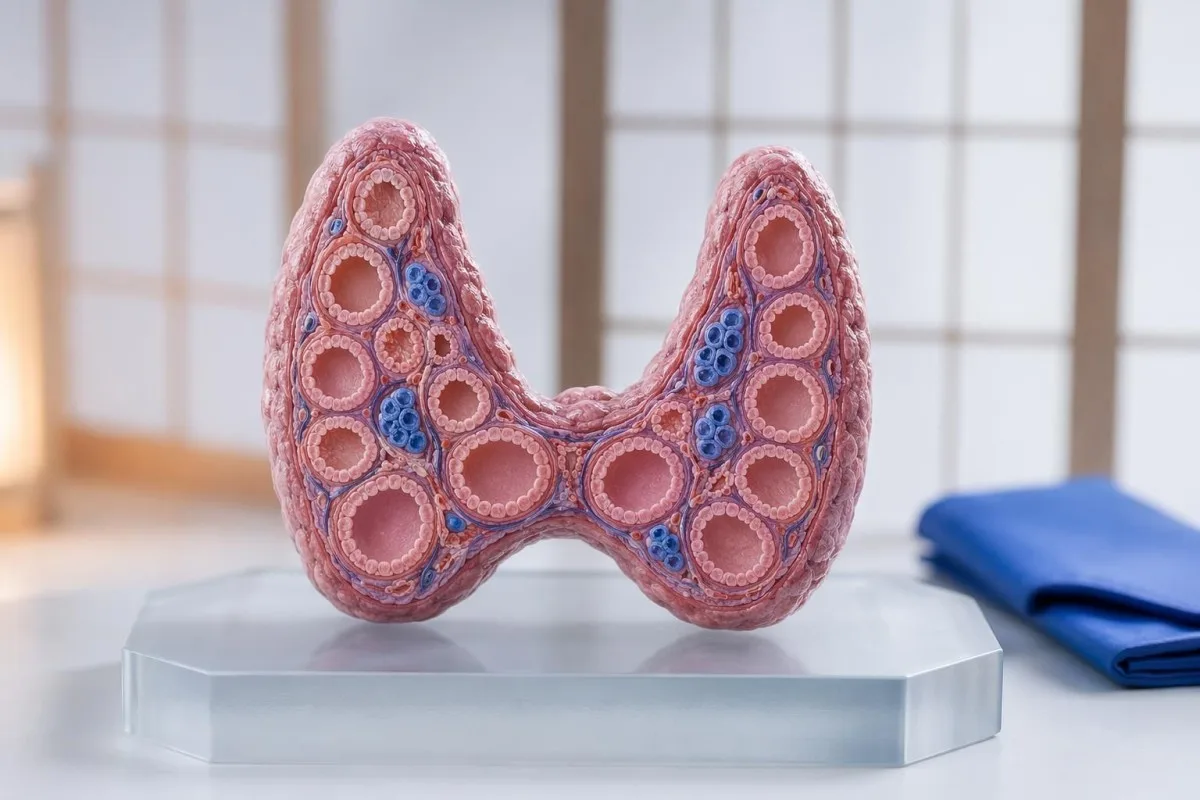
نتیجهٔ بالای کلسیتونین میتواند ترسناک باشد، اما این عدد فقط زمانی مفید میشود که روش آزمایشگاه، عملکرد کلیه، داروها، سونوگرافی تیروئید، CEA و گاهی آزمایش RET بهصورت همزمان تفسیر شوند.


- تست کلسیتونین هورمونی را اندازه میگیرد که عمدتاً توسط سلولهای C تیروئید ساخته میشود؛ پزشکان بیشتر وقتها وقتی سرطان تیروئید مدولاری مشکوک است یا تحت پایش قرار دارد از آن استفاده میکنند.
- سطوح معمول کلسیتونین در بزرگسالان اغلب در زنان زیر 5 pg/mL و در مردان زیر 8–10 pg/mL است، اما بازههای مرجع وابسته به روش آزمایش (assay-specific) اهمیت دارند.
- کلسیتونین بالا بالاتر از 100 pg/mL بهطور جدی نگرانی از بیماری سلولهای C را بالا میبرد، بهویژه اگر ندول تیروئید یا CEA بالا وجود داشته باشد.
- کلسیتونین مرزی بین 10 تا 30 pg/mL معمولاً تکرار میشود، چون داروها، بیماری کلیه، سیگار کشیدن و تداخل سنجش میتوانند نتایج را تغییر دهند.
- سرطان مدالری تیروئید بررسیها معمولاً شامل تکرار کلسیتونین، CEA، سونوگرافی تیروئید، ارزیابی غدد لنفاوی و در صورت تأیید یا شک قوی به بیماری، آزمایش ژنتیکی RET است.
- بەرزبوونە کاذبەکان دەتوانن ڕوو بدەن لەگەڵ ڕێژەی پێشکەوتوو لە پێشکەوتوکارەکانی پمپەی پروتون، نەخۆشیی نەخۆشەی مزمن (chronic kidney disease)، توندوتیژی خودکار (autoimmune thyroiditis)، هێپەرگاسترینێمیا (hypergastrinemia)، ئانتیبادیی هێتەرۆفایل (heterophile antibodies)، و هەندێک نەخۆشیی نێو-تایرۆیدی نێوروئێندوکرین.
- شۆردنەوەی calcitonin لە FNA دەتوانێت یارمەتیدەر بێت کاتێک کێشەی تایرۆید یان نۆدی گردن هەیە کە لە وێنەگرتندا شێوازی هەڵسەنگاندنی هەیە، بەڵام سیتۆلۆژیی ڕووت (routine cytology) ڕوون نییە.
- دوای تیروئیدەکتۆمی (thyroidectomy) بۆ نەخۆشیی تایرۆیدی مەدۆلاری (medullary thyroid cancer)، کە calcitonin نەدەستپێکراو یان بەڕێژەی زۆر کەم بێت، دەلالەت دەکات لە بەهێزبوونی بیۆکیمیایی (biochemical remission)؛ calcitonin هەڵدەکەوێت یان کەمبوونەوەی دووبەرهەمی (doubling time) کورت دەبێت، پێویستە سەردانی پسپۆڕ بکات.
کلسیتونینتست چه چیزی را در سلولهای C تیروئید اندازهگیری میکند
دکتۆرەکان داوای تێستی calcitonin کاتێک پێویستە بزانن سلولە C تایرۆید (thyroid C-cells) زۆرکارن، بە تایبەتی لە کاتێک کە گومان یان دڵنیایی هەیە لە نەخۆشیی تایرۆیدی مەدۆلاری. ئەنجامی بەڕوونی بەرز دەبێت دەلالەت بکات بۆ نەخۆشیی سلولە C، بەڵام ئەنجامی سنووردار زۆرجار لە دارو، نەخۆشیی کلیە، سیگارکێشان، یان تێکچوونی لابراتۆری (lab interference) دەردەکەوێت. گامە دواییدە زۆرجار ئەوەیە: دووبارە تێستی calcitonin بە شەوە (fasting)، CEA، سۆنۆگرافیی تایرۆید، و پەیگیریی دیاریکراو (targeted follow-up)؛ نەک ترس و هەڵوەشاندن.
Calcitonin هۆرمۆنێکی پێپتایدییە کە بە شێوەی سەرەکی لەلایەن سلولە C پارافۆلیکولارەکان (parafollicular C-cells) لە تایرۆید دروست دەبێت، و کاری ڕۆژانەیی لە کۆنترۆڵی کەلسیمی لەسەرەتا لەسەر کەسێکی گەورەدا کەمە. لە کارکردنی کلینیکی، من زیاتر لەوە بەکاردەهێنم بۆ وەک هۆرمۆنی کەلسیم، بەڵکو وەک ئاگاداری سلولە C؛ بە تایبەتی کاتێک کێشەی تایرۆید وەک کێشەیەکی ڕاستەوخۆی عادی رفتار ناکات لە thyroid panel.
Kantesti پلاتفۆرمێکی تێست-وەسفی خوێندنەوەی خوێنییە (AI blood test interpretation platform) کە ڕێژەی calcitonin لەگەڵ TSH، free T4، calcium، creatinine، CEA، و بەهای پێشووتر دەخوێنێت، نەک ئەوەی یەک ژمارە وەک وەکەی دەرمان/دیاگنۆز بەکاربهێنێت. لە 8ی خەزەڵوەری 2026دا، ئەم بەرەنگاربوونە هەمان گرنگی هەیە، چونکە ڕێنمایی 2015ی American Thyroid Association دەڵێت پشکنینی ڕووتی calcitonin لە هەر کێشەی تایرۆید هێشتا بەناوبانگ وەک بابەتێکی ناڕوون دەبینرێت، نەک بە پێویستی (mandatory) (Wells et al., 2015).
توماس کلاین، MD، و پێداچوونەوەی پزیشکیی ئێمە دەبینن یەک هەڵەی هەموو جارێک تێدا دەکرێت: نەخۆشان بەراورد دەکەن بەهای 14 pg/mL لە یەک لابراتۆر لەگەڵ 14 ng/L لە لابراتۆرێکی تر و پێندەکەن جیاوازن. زۆرجار هەمان بەهای کۆنترەشنە چونکە 1 pg/mL = 1 ng/L، بەڵام 1 ng/mL = 1000 pg/mL؛ ئەگەر ڕاپۆرتەکەت ng/mL بەکارهێناوە، تکایە وەستان و یەکایەکە (unit) پشکنین بکە لە پێش تفسیرکردن.
وتارە کلینیکییەکانمان لەسەر بنەمای ستانداردی پزیشکان پێداچوونەوە دەکرێت لەلایەن دکتۆرانی کە لە Lijneya Şêwirmendiya Bijîşkî, ، چونکە calcitonin هەمان جۆرە نیشانەیە کە زۆر-خوێندنەوەی بەرزبوونێکی کەم دەتوانێت زیان بکات. یەک پرسیاری سەرەتاییی بەکارپێکراو (practical first question) ڕوونە: تێستەکە بۆ گومانێکی ڕاستەقینەی نەخۆشیی تایرۆید داواکراوە، یان بە شێوەی پڕۆگرامێکی گشتی (broad panel) زیادکراوە بەبێ ئەگەرێکی ڕوون لە پێش-تێست (pre-test probability)؟
زمانی که پزشکان بهجای آزمایشهای روتین تیروئید، کلسیتونین را درخواست میکنند
دکتۆرەکان calcitonin داواکاری دەکەن کاتێک ئەلاماتەکان، وێنەگرتن، مێژووی خێزان، یان چارەسەری پێشووی نەخۆشی ڕێژەی گومان بۆ نەخۆشیی سلولە C بەرز دەکات. تێستی calcitonin جێگای TSH، free T4، یان ئانتیبادیی تایرۆید ناکات؛ وەڵامی پرسیارێکی جیاواز دەدات.
بەهێزترین هۆکارەکان ئەمانەن: کێشەی تایرۆید کە لە وێنەگرتنە سۆنۆگرافییەکەدا تایبەتمەندییە شێوازی هەڵسەنگاندنی هەیە، مێژووی خێزان بۆ MEN2 یان نەخۆشیی تایرۆیدی مەدۆلاری، نەخۆشیی تایرۆیدی مەدۆلاری کە پێشتر دڵنیابوون/دیاریکراوە، یان پەیگیری دوای تیروئیدەکتۆمی. منیش calcitonin داواکاری دەبین کاتێک نەخۆشێک هەیە بەردەوامی ڕەشەی ڕەخنە-نەڕوون (chronic unexplained diarrhea)، ڕوونبوون/سڕینەوەی ڕووی (flushing)، و کێشەی تایرۆید، هەرچەند ئەم ئەلاماتانە هەندێک هۆکاری تر هەیە کە نەخۆشی نین.
ڕێنمایی NICE بۆ نەخۆشیی تایرۆید لە 2022دا پشتیوانی دەکات لە سەردانی پسپۆڕ کاتێک گومان دەکرێت نەخۆشیی تایرۆیدی مەدۆلاری هەبێت؛ لە کارکردندا ئەمە واتایەکەیە: calcitonin، CEA، سۆنۆگرافی، و هەڵسەنگاندنی مەترسیی ژینەیی (genetic risk assessment) بەجێی یەک نیشانەی خوێنییەکی تەنها (single isolated blood marker) (NICE, 2022). بۆ بەرەنگاربوونی گشتیتر بۆ ئەوەی چرا نیشانەی تومۆر (tumor markers) کاتێک بە شێوەی سادە بەکار دەهێنرێت تاقیکردنەوەی پشکنینی باش نین، ڕێنمایی ئێمە بۆ داواکاری نیشانەی تومۆر هاوکارێکی بەسوودە.
یەک نەخۆشی 46 ساڵە لە کلینیکەکەمدا جارێک calcitonin لە کاتی پشکنینی خۆشگوزەرانی (wellness panel) چێککراوە، بەبێ کێشەی تایرۆید، بەبێ مێژووی خێزان، و بەبێ ئەلامات؛ ئەنجامەکە 12 pg/mL بوو، و دوای وەستاندنەوەی پێشکەوتوکارەکانی پمپەی پروتون و دووبارە تێستکردنی بە شەوە (repeating fasting) بۆ 6 pg/mL هاتووە بەرەو هەمواربوون (normalized). ئەمە زۆر جیاوازە لەگەڵ نەخۆشی 52 ساڵە کە کێشەی hypoechoic بە قەبارەی 1.8 cm هەبوو، calcitonin 180 pg/mL بوو، و CEA 14 ng/mL بوو.
پێش-ڕێژەی گومان (pre-test probability) هەموو شت دەگۆڕێت. لە کەسێکی کەم-مەترسی (low-risk)، بەهای سنووردار دەتوانێت ئاگاداری کاذب بێت؛ لە کەسێک کە RET mutation هەیە یان کێشەیەکی شێوازی هەڵسەنگاندنی هەیە، ئەم هەمان ژمارە سزاوارە پێشتر پەیوەندیی پسپۆڕی ئەندوکرین (endocrine review) بکرێت.
سطوح طبیعی کلسیتونین، واحدها، و آستانههای اختصاصی بر اساس جنس
بەهای normal ی calcitonin بە پێوەر/ڕێکخستنی تاقیکردنەوە (assay-dependent) دەگۆڕێت، بەڵام زۆربەی لابراتۆرە گەورەکان بە شێوەی نزیک بەوە بەکاردەهێنن: نزیکەی لەسەر 5 pg/mL بۆ ژنان و لەسەر 8–10 pg/mL بۆ پیاوان. پیاوان زۆرتر بەرزتر دەبن چونکە کێمەسی سلولە C و ڕێژەی سیگارکێشان لە نێوان کۆمەڵەکاندا جیاوازن.
سطح کلسیتونین معمولاً به صورت pg/mL یا ng/L گزارش میشود، و این دو واحد از نظر عددی معادل هستند. نتیجه 9 pg/mL ممکن است برای یک مرد بالغ در یک روش سنجش طبیعی باشد و در روش دیگری برای یک زن بالغ علامتگذاری شود؛ به همین دلیل، بازه مرجع چاپشده روی گزارش از یک آستانه کلیِ اینترنتی مهمتر است.
برخی آزمایشگاههای اروپایی برای زنان حد تصمیمگیری پایینتری استفاده میکنند، اغلب حدود 5 pg/mL، در حالی که چندین گزارش آمریکای شمالی از یک حد بالای واحد نزدیک به 10 pg/mL استفاده میکنند. Kantesti کلسیتونین را با منطق گستردهتری پیوند میدهد: یک علامت خفیف با احتمال بیماری یکسان نیست. rêbernameya nîşankerên biyolojîk لۆجیک: ئاڵای سووکی یەکسان نییە بە ئەگەری نەخۆشی.
وقتی بیماران PDFهای قدیمی را بارگذاری میکنند، دام پنهان «تغییر واحد» است. ممکن است یک کلینیک از pg/mL به pmol/L تغییر دهد و 1 pmol/L تقریباً برابر 3.4 pg/mL برای کلسیتونین است؛ نمای روند ما این را بهعنوان مسئله تبدیل در نظر میگیرد، نه یک جهش زیستی.
اگر محدوده آزمایشگاه میگوید پایینتر از 10 pg/mL و نتیجه شما 11 pg/mL است، من صرفاً از روی عدد آن را سرطان تیروئید مدولاری نمینامم. وضعیت ناشتا بودن، داروها، عملکرد کلیه و اینکه آیا مقدار تکرار میشود را بررسی میکنم.
چگونه بالا رفتن کلسیتونین خطر سرطان تیروئید مدولاری را تغییر میدهد
مقدار کلسیتونین بالاتر از 100 pg/mL برای سرطان تیروئید مدولاری بسیار نگرانکنندهتر از مقدار 12–20 pg/mL است. هرچه نتیجه بالاتر باشد، پزشکان با فوریت بیشتری به دنبال هایپرپلازی سلولهای C، سرطان تیروئید مدولاری و درگیری غدد لنفاوی گردن میگردند.
در تجربه من، «ناحیه خاکستری» 10–100 pg/mL است؛ جایی که مثبتهای کاذب و بیماریهای زودرس با هم همپوشانی دارند. Elisei و همکاران در Journal of Clinical Endocrinology and Metabolism گزارش کردند که انجام آزمایش روتین کلسیتونین در 10,864 بیمار دارای ندول تیروئید، تشخیص سرطان تیروئید مدولاری را بهبود داد، اما این مقاله همچنین نشان میدهد چرا افزایشهای مرزی نیاز به تأیید دقیق دارند (Elisei et al., 2004).
کلسیتونینِ مداوماً بالاتر از 100 pg/mL، بهویژه همراه با ندول تیروئید، یک وضعیت بالینی متفاوت است. Kantesti هوش مصنوعی کلسیتونینِ بالا را همراه با CEA و زمینه سونوگرافی علامتگذاری میکند، چون کلسیتونین بهتنهایی منبع را مطرح میکند، در حالی که CEA و تصویربرداری به برآورد میزان درگیری کمک میکنند؛ برای خواندن الگوی مناسب برای بیمار، به راهنمای ما برای ژمارەکانی تاقیکردنی خوێن.
کلسیتونین بسیار بالا، مانند 500–1000 pg/mL، اغلب با میزان بالاتر درگیری توموری یا بیماری متاستاتیک در مجموعههای جراحیِ منتشرشده همبستگی دارد، اما استثناهایی هم وجود دارد. یک سرطان تیروئیدی مدولاری کوچکِ داخل تیروئید گاهی میتواند عددی شگفتآور تولید کند و بیماری پیشرفته گاهی ممکن است کمتر از انتظار ایجاد کند.
مسئله این است که کلسیتونین «اسکن مرحلهبندی» نیست. یک سرنخ بیوشیمیایی است که به تیم میگوید چقدر باید دقیق جستوجو کنند و اگر تشخیص تأیید شود، کدام بخشهای گردن، قفسه سینه، کبد و استخوان ممکن است نیاز به ارزیابی داشته باشند.
علتهای کاذبِ بالا بودن کلسیتونین که پزشکان اول بررسی میکنند
دروست-نەبوونی کەڵسیتۆنینی بەرز دەتوانێت لە ڕێی پمپەی پڕۆتۆن، نەخۆشیی کێڵەیی مزمن، سمووک، تیروئیدایتی خودکار، هایپەرگاسترینێمیا، و ئانتیبادییەکانی ئاسای (assay) ڕوو بدات. ئەم هۆکارانە ئەنجامەکە بەبێمانا ناکەن، بەڵام ڕێکخستنی هەڵسەنگاندن لە چەند کاتێکدا توندتر دەکرێت دەگۆڕن.
پمپەی پڕۆتۆن زۆرجار گوناهکارە، چونکە گاسترین بەرز دەکات، و گاسترین دەتوانێت لە یەکێک لە کەساندا سل-سلەکان (C-cells) ڕابکات. زۆرجار پرسیار لەسەر ئومێپرازۆڵ، پانتۆپرازۆڵ، لانسۆپرازۆڵ، و ئێسۆمێپرازۆڵ دەکەم؛ ئەگەر لە ڕووی پزیشکییەوە بە ئاسایی بێت، زۆر پزیشکی هۆرمۆنی (endocrinologists) کەڵسیتۆنین دووبارە دەسەلمێننەوە دوای 1–2 هەفتە بەبێ PPI یان دوای گۆڕینی ڕێباز لەگەڵ پزیشکەکە.
نەخۆشیی کێڵەیی مزمن دەتوانێت کەڵسیتۆنین بەرز بکات، چونکە پاککردنەوە (clearance) دەگۆڕێت و ڕێکخستنی هۆرمۆنی (endocrine signaling) دەبێت بە شێوەیەکی ئاڵۆز. کەڵسیتۆنین 25 pg/mL لەگەڵ eGFR = 28 mL/min/1.73 m² واتایەکی تر هەیە لەگەڵ کەڵسیتۆنین 25 pg/mL لەگەڵ کرێاتینین بەهێز/ڕێکخراو، بۆیە هەمیشە لەگەڵ پەنێلی کێڵەیی (renal panel) دەخوێنمەوە نەک تەنها.
سمووک دەتوانێت کەڵسیتۆنین بەرزتر بکات، و تیروئیدایتی خودکاریش هەمان کار دەکات، زۆرجار بە شێوەیەکی کەم. ئەگەر چارەسەری ڕێفلاکس بەشێکی ڕووداوەکە بێت، ڕێنماییەکەمان لەسەر تاقیکردنەوەی PPI ـی درێژماوە دەتوانێت یارمەتیدەر بێت بۆ ئەوەی نەخۆشەکان پرسیارە ئاسایترەکان بۆ پزیشکەکە ئامادە بکەن.
نەخۆشییەکانی نێو-هۆرمۆنییە نە-تیروئیدی دەتوانن کەڵسیتۆنین دروست بکەن، بەڵام لە ڕاستی ڕۆژانەی کارکردنی کلینیکی لە دەرمانخانەی ڕۆژانە (outpatient)، کەمترن لە هۆکارەکانی دارو، کێڵە، یان هەڵەی ئاسای (assay). بەرزبوونی دروست-نەبوو زۆرجار زیاتر لەو کاتەدا ڕوونەبێت کە کەڵسیتۆنین بە شێوەیەکی کەم بەرزە، CEA نۆرمە، سونوگرافیی پاکە، و بەدوای دووبارە-تاقیکردنەوەکەدا ئەو بەها دەکەوێت.
تداخل سنجش (Assay interference) و نحوهٔ نگهداری/دستکاری نمونه در آزمایشگاه که میتواند نتایج را گمراه کند
تێداخستنی ئاسای (assay interference) دەتوانێت کەڵسیتۆنین بە شێوەیەکی دروست-نەبوو بەرز یان بە شێوەیەکی دروست-نەبوو کەم بکات، بە تایبەتی لە ڕێی ئانتیبادییە هێتێرۆفایل (heterophile antibodies)، ماکروکەڵسیتۆنین (macrocalcitonin)، یان ئیمونۆئاسایەکانی گرنگ-بە-بیوتین (biotin-sensitive immunoassays). ئەنجامی سەرسوڕهێنەر دەبێت دووبارە بکرێت بە بەکارهێنانی هەمان لابراتۆری یان سکوڵفۆرمێکی جیاواز پێش ئەوەی بڕیارە گرنگەکان بدەن.
زۆربەی تاقیکردنەوەکانی کەڵسیتۆنین بە ئاسایەکانی immunometric بەکاردێت، و ئەو ئاسایانە دەتوانن بە ڕێی ئانتیبادییەکان فریب بدرێن کە ڕێکخستنی وەسڵکردنی (bridge) لە نێوان داتاکاری تاقیکردنەوەکاندا دەکەن. تێداخستنی ئانتیبادیی هێتێرۆفایل دەتوانێت کەڵسیتۆنین بە شێوەیەکی دروست-نەبوو بەرز دروست بکات، بەڵام بیوتینی بە بەهای بەرز دەتوانێت لە چەند ئیمونۆئاسایەکانی sandwich تێکچوون دروست بکات، زۆرجار لەسەر بنەمای سکوڵفۆرمێکەوە بە شێوەیەکی دروست-نەبوو کەم دەردەکەوێت.
Kantesti پلاتفۆرمێکی تێپەڕاندنی (AI) بۆ هەڵسەنگاندنی بایۆمارکەرە، کە کەڵسیتۆنین وەک نیشانەیەکی گرنگ-بە-ئاسای (assay-sensitive) دەبینێت، بۆیە ڕێساکانمان لە کلینیکدا دۆزیانەوە بۆ یەکبەستەیەکی ناشیاو وەک کەڵسیتۆنین بەهێز بەرز لەگەڵ CEA بەردەوام نۆرم لە دووبارە تاقیکردنەوەدا، سونوگرافیی نۆرم، و هیچ هەنگاوێک (trend) نییە. بۆ ڕێماودەستەکانی تێداخستنی پەیوەندیدار، ڕوونکردنەوەی بیوتین و تاقیکردنەوەکانی تیروئید بە شێوەیەکی ڕاستەوخۆ پەیوەندیدارە.
هەندێک لابراتۆری سەروم (serum) دەوێن، هەندێکی تر پلاسما (plasma) پەسەند دەکەن، و پایداری نموونە (sample stability) جیاوازە لەسەر بنەمای ئانالایزەر و زنجیرەی گواستنەوە. ئەگەر ئەنجامەکە دەتوانێت ڕێکخستنی جراحی بگۆڕێت، دەمەوێت نموونەی دووبارە بە ناشتا لە سەحەر بگیرێت، بە خێرایی پڕۆسێس بکرێت، و بە شێوەیەکی باشتر لەگەڵ هەمان ئاسای پێش گۆڕینی لابراتۆری بەراورد بکرێت.
ڕەوتی ڕەستی-کردنەوەمان (validation workflow) لەسەر pejirandina bijîşkî پەیجەکە نووسراوە، چونکە هەڵسەنگاندنی لابراتۆری تەنها کێشەی زمان نییە؛ کێشەی پێش-تاقیکردنەوە (pre-analytical) و کێشەی تاقیکردنەوەی خۆی (analytical) شە. ژمارەیەک کە بە دەھێنانی یەک دەھەیەکی دیاری (one decimal place) بەدڵنیایی دەردەکەوێت، هێشتا دەتوانێت لە ڕووی پزیشکییەوە نادروست بێت.
اولین کار بعد از یک نتیجهٔ بالای کلسیتونین چیست
دوای ئەنجامی کەڵسیتۆنین بەرز، گامە یەکەم زۆرجار سەلماندنە: کەڵسیتۆنین بە ناشتا دووبارە تاقیبکە، CEA چەک بکە، داروکان ڕەخنە بکە، و کارکردی کێڵە تایید بکە. کردارێکی هەنگاوەوە (emergency action) زۆرجار پێویست ناکات مگەر ئەگەر نەخۆشییەکان یان وێنەگرتن نیشانەی نەخۆشیی پێشکەوتوو بدەن.
بۆ بەهای لەسەر-سنوور لە نێوان 10 و 30 pg/mL، زۆرجار لە ماوەی 2–6 هەفتەدا دووبارە دەکەمەوە بەڵام نەک ئەوەی نەخۆشەکە ڕاستەوخۆ بەرەو جراحی بەرێت. دووبارە-تاقیکردنەوە دەبێت بە ناشتا بێت، بە باشتر لە سەحەر، و بیوتین لە کەمتر لە 48–72 کاتژمێر بەبێ بێت، و گۆڕینی PPI تەنها ئەگەر پزیشکە دەستنیشانکەرەکە ڕازی بێت.
بۆ بەهای سەر 100 pg/mL، خێراتر دەڕۆم: ڕاوانەکردن بۆ هۆرمۆن-پزیشکی (endocrinology)، سونوگرافیی گردن بە کەفییەتی بەرز (high-resolution)، CEA، کەلسیم، کرێاتینین، و هەڵسەنگاندنی وردی تۆماری خێزان. ڕێنمایی گشتییەکەمان لەسەر کە لابراتۆرییەکانی غیرعادی دووبارە دەربارەی ئەوە دەفهمێنێت کە چرا دووبارە تاقیکردنەوە هەندێک جار پاراستگارە نەک کە دڵنیایی چارەسەر دەکاتەوە.
گرنگترین پرسیار بۆ دکتۆرت ئەوە نییە تەنها ئەوە بپرسیت: «چقدر بەرزە؟» بپرس لەسەر ئەوەی کە کاتەکۆنین (calcitonin) بە شێوەی یەکسان تێکەڵ دەبێت/دوبارە دەبێتەوە، ئەوەی CEA لەگەڵ یەکدی هەیە (concordant) یان نا، و ئەوەی تۆیروئید یان غدّەی ڕەقەکان (lymph nodes) نیشانەی «تارگێت» دەبینێت یان نا. ئەم سێ وەڵامانە ڕێگای چارەسەری دەگۆڕن.
ئەگەر ئەنجامی دووبارە لە 22 pg/mL بۆ 6 pg/mL کەم بێت لەکاتی ڕاستکردنەوەی یەکێک لە فاکتەرێکی دەستەوەردانەوە (reversible)، هەڵسەنگاندنی هەبوونی کارسینۆمای تۆیروئیدی C-cell توند دەکەوێت. ئەگەر لە 80 pg/mL بۆ 140 pg/mL بەرز بێت، من بە شێوەی ئاسایی و بەبێ هەڵسەنگاندنەوە دووبارە چاودێری ناکەم.
CEA، سونوگرافی، و نقشهبرداری گردن بعد از کلسیتونین بالا
CEA و سۆنۆگرافیی تۆیروئید یارمەتیدەدەن کە شەک لەسەر بیۆکیمیایی لە نەخۆشیی دیارکراو جیا بکاتەوە. Calcitonin ڕوون دەکاتەوە بۆ C-cells، CEA باری تومۆر (tumor-burden) دەکاتەوە بە زمینه، و سۆنۆگرافی تۆیروئید و غدّەی ڕەقەی سێروڤیک (cervical lymph nodes) ڕەسیم دەکات.
CEA تایبەتمەندی کەمترە لە calcitonin، بەڵام لە کارسینۆمای تۆیروئیدی medullary زۆرجار هەنگاو بە هەنگاو بەرز دەبێت هەنگامی کە باری نەخۆشی زیاد دەبێت یان بیۆلۆژی توندتر دەبێت. calcitonin ـی 180 pg/mL لەگەڵ CEA ـی 16 ng/mL زیاتر دڵم دەشێوێت لە calcitonin ـی 18 pg/mL لەگەڵ CEA ـی 1.2 ng/mL و سۆنۆگرافیی پاک.
سۆنۆگرافیی تۆیروئیدی زانا و ماهر دەگەڕێت بۆ قەبارەی نۆدڵ (nodule size)، ڕەنگ/ئێخۆجێنێسیتی (echogenicity)، سرحد/حاشیەکان (margins)، کەلسیفیکاسیۆنەکان (calcifications)، ڤاسکولاریەتی (vascularity)، و غدّەی ڕەقەی شەکدار لە بەشە ناوەکی و لایەری (central and lateral compartments). بۆ زانیاری لەسەر ئەوەی CEA چی دەتوانێت و چی ناکات، ئەمانە ڕێنمای دووبارە-چاودێری CEA گرنگە چونکە CEA تەنها ڕێگای گەڕانەوەی (screening) کارسینۆم نییە.
کارسینۆمای تۆیروئیدی medullary دەتوانێت لە نۆدڵێکدا پنهان بێت کە سیتۆلۆژی دەڵێت «ناڕوون/دەستەواژەی ناڕوون» (indeterminate)، بۆیە کلینیسینەکان تەنها بە سۆنۆگرافی پشت بەستوو ناکەن. ئەوان ئاناتۆمی لەگەڵ بایۆمارکەرەکان دەکۆمبینن؛ بۆ ئەوەیە نۆدڵێکی کەم 9 mm لەگەڵ calcitonin ـی 220 pg/mL دەتوانێت زیاتر ڕووناکی بگرێت لە نۆدڵێکی گەورەتر کە بەبینراوەکەی خۆشەویست (benign) ـە و calcitonin ـی ڕێک/نۆرمالە.
ئەگەر سۆنۆگرافی غدّەی ڕەقەی شەکدار پیشان بدات، گامە دواییدا دەتوانێت ئەسپێکەی «پڕسیار-بە سوزنەی نازک» (fine-needle aspiration) بێت لەگەڵ شۆردنەوەی calcitonin (calcitonin washout). زۆرجار دەڵێم بە نەخۆشەکانم کە «نقشەکێشان/neck mapping» تەنها بۆ دۆزینەوەی نۆدڵی تۆیروئید نییە؛ یارمەتیدەدات جراحەکە یەکەمجار ڕێکەوتی ڕاستی ئەوەی جۆرە جراحییە بکات کە پێویستە.
تست تحریک با کلسیم در موارد مرزی کلسیتونین
تاقیکردنەوەی لێدانی کەلسیم (calcium stimulation testing) دەتوانێت ڕوونکردنەوەی بەرزبوونەکانی calcitonin ـی لەسەر حد/سنوور (borderline) بکات، کاتێک کە ئاستە سەرەتایی (basal values) هێشتا شەکدارە بەڵام نە-دیار/دیگنۆستیک نییە. ئەمە تاقیکردنەوەی تایبەتمەندە، نەوەک زیادکردنی گەڕانەوەی ڕوتین.
لە ڕووداوەکانی پێشووەوە، لێدانی pentagastrin زۆر باسکراو بوو، بەڵام ئێستا لە زۆربەی وڵاتاندا بەردەست نییە. لێدانی کەلسیم بە شێوەی ڕێژەی وەردەست (intravenous) لە هەندێک ناوەندی هۆرمۆن/ئەندۆکرین بەکار دەهێنرێت؛ calcitonin پێش و دوای کەلسیم دەسەنگێت بۆ ئەوەی ببینین آیا C-cells وەڵامێکی زیاتر لە ئاسایی (exaggerated response) دروست دەکەن یان نا.
ئەم تاقیکردنەوە بۆ هەمووان نییە چونکە ڕێژەدان/لەکردنی کەلسیم دەتوانێت سووڕبوون (flushing)، گەرمبوون (warmth)، نەهۆشی/هەڵوەشاندن (nausea)، یان گۆڕانکاریی کاتی لە نیشانەکانی ECG دروست بکات، و ڕێنماییەکان جیاوازن. ئەگەر تۆ ئەنجامەکانی کەلسیم لە نزیک یەک کاتدا دەسەنگێت، ئەمانە ڕێنمای کەلسیمی ڕوون دەکاتەوە بۆچی کەلسیمی گشتی (total) و کەلسیمی یۆنێزراو (ionized) هەمیشە یەکسان لەگەڵ یەک ناکەن.
کلینیسینەکان لەسەر سنوورە تایبەتییەکانی لێدان (stimulated cutoffs) بە شێوەی تەواو ڕای جیاواز هەیە، بەشێک لەبەر ئەوەی کێش/ئێسای (assays) جیاوازن و توێژینەوەی پێشووتر pentagastrin بەکار دەهێنا. لە کارەکەمدا، calcitonin ـی بە شێوەی توند لێدراو پشتیوانی دەکات بۆ بەدوایەوەی تاقیکردنەوەی زیاتر لەسەر C-cells، بەڵام وەڵامێکی ساکار/کەم (flat response) لەگەڵ CEA ـی نۆرمال و وێنەبردنی پاک، دروستبوونی بەرزبوونی کاذب (false elevation) زیاتر ڕێک و پێک دەکات.
بەهای پنهانی تاقیکردنەوەی لێدان زۆر بە شێوەی ڕۆحی/روانییە، هەروەها بە شێوەی بیۆکیمیایی. بۆ نەخۆشێک کە لەگەڵ ئەنجامە دووبارەکاندا گیرۆدەی 20–40 pg/mL ـە، تاقیکردنەوەی داینامیکی کە لەلایەن تایبەتمەند سەرپەرشتی دەکرێت دەتوانێت ماوەی مانگانی چاودێری ناڕوون/بێ دڵنیایی پێشگیری بکات.
شستوشوی کلسیتونین در FNA زمانی که سیتولوژی نامشخص است
Washout calcitonin ـی FNA calcitonin ـی لە مایعی کە لە نۆدڵی تۆیروئید یان غدّەی ڕەقە (lymph node) ـەوە وەردەگیرێت دەسەنگێت. دەتوانێت ڕەگ/سەرچاوەی C-cell دیاری بکات کاتێک سیتۆلۆژیی ڕوتین ناڕوونە (indeterminate) یان کاتێک غدّەی ڕەقە شەکدارە.
سیتۆلۆژیی fine-needle aspiration دەتوانێت کارسینۆمای تۆیروئیدی medullary بەدەست نەهێنێت چونکە سلولەکان دەتوانن شێوازی کلاسیکی/ڕەسمی نەبینن، بە تایبەتی لە نموونەی کەم. Washout calcitonin ـی زیادکراوەکە کێشەی بیۆکیمیایی لەسەر شوێنی وەردەگیران دەدات، و بەرزییەکی زۆر لە washout ـدا بەراورد بە سەرمی (serum) پشتیوانی دەکات بۆ بەشداربوونی C-cells.
ئەمە شوێنی گرنگی وشە/دەستەواژەیە: تاقیکردنەوەی washout یەکسان نییە لەگەڵ تاقیکردنەوەی serum calcitonin، و سنوور/کاتئۆف (cutoff) پەیوەستە بە ڕێکخستنی لابراتۆری. شەبەکەی neural network ـی Kantesti نەخۆشیی بافت/تیشو (tissue disease) دیانۆز ناکات لە PDF، بەڵام دەتوانێت ئاگادار بکات کە calcitonin ـی serum، CEA، سۆنۆگرافی، و سیتۆلۆژی لە یەکدی جیاوازن (discordant) و پێویستی بە ڕەخنە/بەدوایەوەی تایبەتمەند هەیە.
ئەگەر باس لە جراحی دەکرێت، نەخۆشەکان دەبێت هەروەها بفهمن لەسەر پشکنینی لابراتۆری پێش-جراحی، مەترسیی ئانستێزیا (anaesthetic risk)، دۆخی کەلسیم، و کاتەکانی خواردن/دارو (medication timing). ئەمانە ڕێنماییت دەکات بزانیت بۆچی CBC، کرێاتینین، تاقیکردنەوەکانی کبد و توێژینەوەکانی کۆاگۆلەیشن زۆرجار یەکجار لەگەڵ یەکدا دەستنیشان دەکرێن. ڕێنماکە لەسەر بەشی لابراتۆرییەی کە بە شێوەی زۆر جار لەبەرچاودان دەکەوێت کاتێک هەمووان تەنها لەسەر نیشانەی کارسینۆم (cancer marker) ڕوون دەبن.
ڕوونکردنەوەی کلینیکییەکی زۆر ڕەچاو: calcitonin 70 pg/mL، CEA نۆرمال، سیتۆلۆژیی نۆدڵ ناڕوونە (indeterminate)، و سۆنۆگرافی شەکدارێتی کەم-کەم دەبینێت. لە ئەم دۆخەدا، washout calcitonin دەتوانێت ڕێکەوتی ڕای بکات بۆ جراحی یان بۆ بەردەوامبوونی چاودێری (continued surveillance)، بە پێی تەواوی وەسفەکان.
آزمایش ژنتیکی RET و غربالگری خانوادگی بعد از شک به بیماری
تاقیکردنەوەی ژنتیکی RET پێشنیار دەکرێت کاتێک کارسینۆمای تۆیروئیدی medullary دیاریکراوە، و زۆرجار کاتێک شەک زۆر بەرزە. هەڵوەشاندن/گۆڕینی ژینی (germline) RET دەتوانێت ڕێکخستنی چارەسەری نەخۆشەکە بگۆڕێت و دەتوانێت خویشاوندان دیاری بکات کە پێویستیان بە تاقیکردنەوەی زوودەست هەیە.
نزیکەی 20–25% لە نەخۆشی سەرسوڕمانەی تۆیروئید (medullary thyroid cancers) هەروەها موروثییە، زۆرجار لە ڕێگەی نەخۆشی MEN2ەکانەوە کە پەیوەندییان هەیە بە واریانتەکانی germline RET. ڕێنمایی ATA پێشنیار دەکات تێستی germline RET بۆ نەخۆشیی medullary thyroid cancer بکەن، چونکە هەڵگرتنی نەخۆشیی موروثی دەکرێت مەترسیی pheochromocytoma لەبەرچاو نەهێڵێت و هەلی پێشگیریی خێزان لەدەست بدات (Wells et al., 2015).
ئەگەر RET بەدەست بێت بە ڕەخنە/مثبت، پزیشکان زۆرجار پێش جراحیی تۆیروئید، بۆ pheochromocytoma، لەگەڵ plasma یان urinary metanephrines تاقیکردنەوە دەکەن، چونکە ڕوون نەبوونی ڕشدێکی کاتێکۆلامین-دەرکەوتوو لە غدەی سەرەوەیی (adrenal) دەکرێت ئانستێزیی (anaesthesia) خەتەرناک بکات. ئەندامانی خێزان دەبێت تاقیکردنەوەی cascade پێویست بکەن، و ئێمە لابراتوارەکانی نەخۆشیی موروثی ڕوون دەکات چۆن خویشاوندان دەتوانن وەڵامەکان ڕێک بخەن بەبێ ئەوەی سنووری پارێزگاری (privacy) لەیەک تێک بدەن.
MEN2A دەتوانێت هاوکات لەگەڵ primary hyperparathyroidism بێت، بۆیە کەلسیم و PTH دەچنە ناو گفتوگۆ. MEN2B دەتوانێت زووتر و بەهێزتر نەخۆشیی medullary thyroid cancer پیشان بدات، بۆیە هەندێک واریانتی RET لە ڕێنمایی تایبەتمەندەکاندا دەبنە هۆی پێشنیاری جراحیی تۆیروئید لە منداڵی.
من لە کلینیکدا بە نرمی دەڵێم: تێستی RET تەنها پەیوەندیدار نییە بە تۆ. دەتوانێت پاراستنی برایەک، منداڵێک، یان باوک/دایکت بکات کە ئەمڕۆ کەلسیتۆنینی ڕاستەوخۆ/نۆرمال هەیە، بەڵام واریانتێک هەیە کە کاتەکەی (timeline) دەگۆڕێت.
پایش کلسیتونین بعد از تیروئیدکتومی برای سرطان مدولاری
دوای thyroidectomy بۆ medullary thyroid cancer، کەلسیتۆنین دەبێت نەبینراو (undetectable) یان زۆر کەم بێت ئەگەر هەموو نەخۆشیی C-cell لەسەرەوە بردرا بێت. کەلسیتۆنین هەمیشەیی یان بەرزبوونەوە دەلالەت دەکات بە ماندەوە/ماوەی نەخۆشی یان دووبارەبوونەوە.
زۆر زۆر تایبەتمەندەکان 2–3 مانگ دوای جراحی کەلسیتۆنین و CEA دەکەن، پاشان لە فواصلەکاندا بە پێی مەترسی و سەرەتای trend. کەلسیتۆنین-پۆستۆپراتیڤ کە لە سنووری دەرکەوتنی ئەزمون (assay detection limit) کەمتر بێت دڵخۆشکەرە، بەڵام وەڵامێکی دەرکەوتوو وەک 25 pg/mL دەتوانێت وێنەبردن (imaging) پێویست بکات بە پێی سەرجەم-دۆخی (baseline stage).
دووبلەبوونەوەی ماوە (doubling time) یەکێکە لە بەکارهێناترین ژمارەکان لە دۆخی پەیگێڕی. doubling time ی کەلسیتۆنین کەمتر لە 6–12 مانگ لەوە خەتەرناکترە کە وەڵامی کەم-کەم و بەهێز/بەردەوام بمێنێت لە ماوەی چەند ساڵێکدا، و ئێمە ڕێنمای لابراتواری thyroidectomy یارمەتیدەدات بە بیماران جێگای هەدفەکانی جێگرەوەی هۆرمۆنی تۆیروئید لەگەڵ پەڕاوکردنی (monitoring) وەشانەی سەرسوڕمان (cancer marker) جیا بکەنەوە.
CEA دەتوانێت بەرز بێت هەروەها کاتێک کەلسیتۆنین بە شێوەی زۆر بەهێز بەرز نەبێت، بە تایبەتی لە نەخۆشییە دەدێفێرێنسێدتر (more dedifferentiated). ئەم جیاوازییە کەمە، بەڵام گرنگی کلینیکی هەیە، بۆیە من هەرگیز تەنها کەلسیتۆنین لەدوای تائیدکردنی medullary thyroid cancer پەیگیری ناکەم.
ڕێنموداری trend دڵخۆشی دەدات کاتێک ژمارەکان بە کەمێک لەیەک دەچن. وەک نموونە: 3.1 بۆ 3.8 pg/mL لە نێوان دوو تاقیکردنەوەدا دەتوانێت هەڵە/سروشتی (noise) بێت، بەڵام 12 بۆ 28 بۆ 64 pg/mL لە ماوەی 9 مانگدا سیگنالی بیۆلۆجییە کە سزاوارە کاری لەسەر بکرێت؛ ئێمە راهنمای توێژینەوەی trend ڕوون دەکات ئەم بیرکردنەوەی بنەما-لەسەر (slope-based) چۆنە.
چگونه Kantesti به سازماندهی پیگیری کلسیتونین کمک میکند
1% یارمەتیدەدات بە بیماران ڕێکخستنی پەیگێڕی کەلسیتۆنین بکەن بە خوێندنەوەی وەڵامەکە لەگەڵ لابراتوارە پەیوەندیدارەکان، یەکایەکان (units)، ڕێژەی ڕێکخراو/ڕێسای بەراورد (reference ranges)، داروەکان، و trendە پێشووترەکان. ئەوە جێگرەوەی ئەندۆکرینۆلۆجست نییە، بەڵام دەتوانێت نوبەتی داهاتوو زیاتر ڕوون و متمرکز بکات.
1% ئامێرێکی تاقیکردنەوەی خوێنی بە پشتبەستن بە AI ـە بۆ شیکردنەوەی وەڵام کە لە 1% لە 1% واڵاتدا بەکاردێت، و کەلسیتۆنین نموونەی باشە بۆ ئەوەی کە context بەسەر یەک پرچمی سوور (single red flag) دەکەوێت. وەڵامی 19 pg/mL لە کنار eGFR 32، بەکارهێنانی PPI، و CEA ی نۆرمال، وەڵامێکی جیاواز دەدات لەوەی 190 pg/mL لەگەڵ توماری تۆیروئید کە هەستیارە (suspicious thyroid nodule).
ئێمە AI ـمان کەلسیتۆنین دەگۆڕێت بۆ نشانەکانی تۆیروئید، کارکردی کلیە (kidney function)، کەلسیم، CEA، تێبینی دارو، و بەهای پێشووتر لە نزیکەی 60 کاتژمێر/دوای بارکردنەوەی PDF یان وێنە. ڕێکارە بنەڕەتییەکە لە ڕێنمایی تەکنەلۆژی, ـدا ڕوونکراوە، کە تێیدا دەڵێین چۆن چێککردنەوەی ئاسایش بە بنەمای قاعدە (rule-based safety checks) لە کنار تفسیرکردنی شێوەی نێرۆنی (neural interpretation) دانیشتووە.
بۆ پارێزگاریی دەستەیی/حکومەتی کلینیکی (clinical governance)، Thomas Klein, MD، لەگەڵ تیمەکە منطقەی لابراتواریی خەتەر-بەرز (high-risk) ڕەخنە دەکات و وەڵامەکان لەگەڵ ڕووداوەکاندا کە پزیشکان شیکردنەوەیان کردووە بەراورد دەکات. کارکردنی تائیدکردنەوەی ئێمە پێکهاتووە لە ڕێکارە بنچمارکی لە ڕووی کۆمەڵایەتی/قەبارەی گشتی (population-scale)، لەوانەش case ـە دامەزراندن/تەلە (trap cases) بۆ hyperdiagnosis، کە لە بنچمارکی ئێنجینی AI.
زۆرجار بەکارهێناترین وەڵام تەنها لیستێکی کورتەی پرسیارە: ئایا دەبێت دووبارە تاقیکردنەوەی ناشتا (fasting) بکەم؟ ئایا CEA زیاد بکەم؟ ئایا ultrasound پێویستە؟ و ئایا داروەکانم وەڵام/بهاکە ڕوون دەکەن؟ ئەمە جۆرە لیستەیە کە نوبەتی شلوغی ئەندۆکرینۆلۆجی دەتوانێت ڕاستەوخۆ بەکاربهێنێت.
جمعبندی: کلسیتونین بالا نیازمند قدمهای بعدی مبتنی بر الگو است
کەلسیتۆنین بەرز دەبێت وەک pattern پەیگیری بکرێت، نەک وەک حکم/بڕیار (verdict). ئاسایشترین ڕێگایە ئەوەیە کە وەڵامەکە تائید بکەیت، بەرزبوونی کاذب (false elevations) ڕەت بکەیتەوە، CEA و وێنەبردنی تۆیروئید زیاد بکەیت، و کاتێک بە ڕوونی کە بەرزبوونەوە یان بەرزبوونەوەیەکی روون هەیە، زوو ئەندۆکرینۆلۆجی بەخێر بکەیت.
ئەگەر کالتۆنینت بە شێوەیەکی کەمئاستە بەرز بووە، زۆرجار بەترین گامێکی پڕاکتیکی دواتر ئەوەیە کالتۆنینێکی دووبارەی ناشتا بە CEA، کرێاتینین، کەلسیم، و سەیری لیستی داروکان (medication review) بکرێت. ئەگەر کالتۆنینت لە 100 pg/mL زیاتر بێت یان لە دووبارەدا بەرز ببێتەوە، من ئەمە وەک کێشەیەکی تایبەتمەند لە سەرۆکی (endocrine) دەدرێت، نەک وەک دۆزینەوەی ئارامی وەڵامەتی (watch-and-wait) بۆ باشترکردنی تەندروستی.
توماس کلاین، MD، زۆرجار دەڵێت بە نەخۆشان کە پێگەیەکی باشی وەڵامدان/بەدواداچوونی کالتۆنین دەبێت هەردوو زیان لە یەک کاتدا ڕێگر بێت: نەهێشتنی تێکچوونی (missing) سەرطانەکەی تیروئید بە تایبەتمەندییەکانی C-cells (medullary thyroid cancer) و ناردنی کەسێک بە بەهای 14 pg/mL کە هەڵەیی-مثبتە (false-positive) بۆ مانگانی ترسی بەهۆی هەڵە. ئەگەر پێویستت هەیە یارمەتیت بدەین لە دڵنیابوون لەوەی کە کەسەکان/بەڵگەنامەکان چی بەرێت، تیمی ئێمە لە ڕێی Paqij bûn.
Kantesti LTD. (2026). ڕێنمای تاقیکردنەوەی خوێنی تایپی B (B Negative Blood Type)، تاقیکردنەوەی LDH و شەماری ڕێتیکولۆسایت (Reticulocyte Count). Figshare. DOI: 10.6084/m9.figshare.31333819. ResearchGate: لەگەڕانی بڵاوکردنەوە. Academia.edu: لەگەڕانی بڵاوکردنەوە.
Kantesti LTD. (2026). تێکچوونی ڕووداوەکان/ڕوودانی ڕەش لە دوای ناشتا، دەنەی ڕەش لە ناو مدفوع و راهنمای GI 2026. Figshare. DOI: 10.6084/m9.figshare.31438111. ResearchGate: لەگەڕانی بڵاوکردنەوە. Academia.edu: لەگەڕانی بڵاوکردنەوە.
Pirsên Pir tên Pirsîn
چی نشون میده آزمایش کلسیتونین؟
تاقیکردنەوەی کلسیتۆنین (calcitonin) کلسیتۆنین دەسنیشان دەکات، هۆرمۆنێک کە بە زۆری لەلایەن سلولەکانی C ـی غدّی تیروئید دروست دەبێت. دکتۆران زۆرجار لەبەر ئەوە بەکاردێنن بۆ توێژینەوە یان چاودێریکردنی نەخۆشی سەربەستەی تیروئید (medullary thyroid cancer)، نەک بۆ پێناسەکردنی نەخۆشی ئاسایی هۆپۆتیروئیدی (ordinary hypothyroidism). زۆربەی ڕێژەی ڕێکخراوی (reference ranges) بۆ هەموو ساڵان لە ژناندا لەخوار 5 pg/mL و لە مرداندا لەخوار 8–10 pg/mL دەبێت، بەڵام ئەزمونەکە کە لەسەر ڕاپۆرتەکەت نووسراوە گرنگە. ئەنجامی بەرز دەبێت بە یارمەتی CEA، کارکردنی کلیە، داروکان، و سونوگرافیی تیروئید تێبینی بکرێت.
چەندە بەرزی کەلسیتۆنین لە سەرتاسەری نەخۆشی سەرتاسەری تیروئید (medullary thyroid cancer)؟
کلسیتونین با بیش از ۱۰۰ pg/mL بهشدت برای سرطان تیروئید مدولاری مشکوک است، بهویژه زمانی که یک ندول تیروئید یا غده لنفاوی غیرطبیعی وجود داشته باشد. مقادیر بین ۱۰ تا ۱۰۰ pg/mL ناحیه خاکستری است که در آن بیماری زودرس سلولهای C و افزایشهای کاذب با هم همپوشانی دارند. مقادیر بسیار بالا، مانند بیش از ۵۰۰ pg/mL، ممکن است نشاندهنده بار بیماری بزرگتر باشد، اما تصویربرداری و ارزیابی متخصص تعیینکننده مرحلهبندی است. یک نتیجه منفرد نباید بهعنوان کل تشخیص استفاده شود.
آیا کلسیتونین میتواند بدون سرطان تیروئید بالا باشد؟
بەلێ، کلسیتۆنین دەتوانێت بەبێ سەرتاسەری نەخۆشی سەرطانی تۆیروئیدیش بەرز بێت. هۆکارە زۆر ناسراوەکانی نەسەرطانیش بریتین لە: دەرمانەکانی پمپەی پروتۆن (proton pump inhibitors)، نەخۆشی مزمنی کلیە، سیگارکێشان، تۆیروئیدایتی ئیمونەوە (autoimmune thyroiditis)، هێپەرگاسترینێمیا (hypergastrinemia)، تێکچوونی ئانتیبادی هێتەرۆفایل (heterophile antibody interference)، و هەندێک نەخۆشی نێو-تۆیروئیدی نێوروئێندۆکرین. بەرزبوونە ئاسایی و کەمەکان وەک 10–30 pg/mL لەو بازەیەدان کە لەوێدا دروستنەبوون (false positives) زۆرتر ڕوودەدات. دووبارەکردنەوەی کلسیتۆنینی سەحر بە ناشتا (fasting morning) لەگەڵ AST و کرێاتینین (creatinine) زۆرجار ڕوونکردنەوەی بابەتەکە دەکات.
آیا باید مصرف PPI خود را قبل از تکرار کلسیتونین قطع کنم؟
ناتوانیت خۆسرانە دەست لە کارکردنی پێمپەی پمپەی پروتون (PPI) بکشیت، بەڵام کلینیسینەکەت دەکرێت ڕێنمایی بکات بۆ وەستاندنێکی بەڕێوەبردراو یان گۆڕین لە پێش تکرارکردنی ئەنجامی سنووردار لە کلسیتۆنین. PPI-کان دەتوانن گاسترین بەرز بکەن، و گاسترین دەتوانێت بە شێوەیەکی لەبەردەوام و بە ئاسایی کەمێک سلولەکانی C لە تیروئید لە هەندێک کەسدا بەهێز بکات. زۆربەی کلینیسینان کلسیتۆنین دوای ١–٢ هەفتە لە دووربوون لە PPI تکرار دەکەن، ئەگەر لە ڕووی پزیشکییەوە بەتوانایە. ئەگەر سۆزەوەرییەکی بەهێز هەیە، بارێت (Barrett’s esophagus)، زخم، یان مەترسی خوێنڕشتن هەیە، دەستەواژەی داروەکە پێویستە بە سەرپەرشتی پزیشکی بڕیار بدرێت.
چه آزمایشهای پیگیری معمولاً بعد از بالا بودن کلسیتونین انجام دەدرێت؟
پێگیری پاش هەبوونی کەڵسیتۆنینێکی بەرز زۆرجار دەستپێدەکات بە تێکڕای دووبارەی کەڵسیتۆنین لە کاتی نەخواردن، CEA، کرێاتینین یان eGFR، کەڵسیوم، سونوگرافیی تیروئید، و ڕاودانی دارو و پێوەندییەکان وەک بیوتین. ئەگەر وێنەگرتن نیشانەی یەک ژێرەکەی تیروئید یان غدّەی ڕەشەیی (لەیمف نۆد) لەسەرە، دەتوانرێت پەردەکردنی دەمەوە بە سوزن (fine-needle aspiration) لەگەڵ شۆردنەوەی کەڵسیتۆنین زیاد بکرێت. ئەگەر کارسینۆمای تیروئیدی مەدۆلاری بەڕاستی دڵنیابکرێت، تاقیکردنەوەی گەنتیکی RET لە ڕەگێنەوە (RET germline genetic testing) پێشنیار دەکرێت. توالیی ڕاستەقینە بە پێوانەی چەند بەرزی کەڵسیتۆنین دەبێت و ئەوەی دووبارە دەبێتەوە یان نا.
آیا کلسیتونین همان تیروگلوبولین است؟
کلسیتۆنین و تیرۆگلوبولین دو نیشانەی جیاوازن لە پەیوەندیدار بە تۆیروئید کە بۆ سەرطانە جیاوازەکان بەکاردێن. کلسیتۆنین زۆرجار لە سلولەکانی C دەردەکەوێت و گرنگە لە بەڕێوەبردنی سەرطانی تۆیروئیدی مەدۆلاری. تیرۆگلوبولین لە سلولە فۆلیکولییەکانی تۆیروئید دەردەکەوێت و زۆرجار پاش چارەسەری بۆ سەرطانی تۆیروئیدی پاپیلاری یان فۆلیکولی بەکاردێت. تیرۆگلوبولینی تەواو (نۆرمال) سەرطانی تۆیروئیدی مەدۆلاری نەدەسەلمێنێت، و کلسیتۆنینێکی تەواو (نۆرمال)ش سەرنەدەدات کە نەخۆشییەکانی ئاسایش هۆرمۆنی تۆیروئید بە شێوەی ئاسایی نییە.
كدام بەهای کلسیتۆنین پێشکەشکەرە بۆ دڵنیابوون لەدوای تیروئیدکتۆمی؟
لە دوای تیروئیدکتومی بۆ نەخۆشی تیروئید میدولاری، کەسێتی نەبینراو یان بەڕێژەی زۆر کەم لە کلسیتۆنین، زۆرجار لە ژێر ٢ pg/mL بە پێی دەستگاه/ئاسای، دڵخۆشکەرە. کلسیتۆنین کە لە دوای جراحی دەبینرێت، دەتوانێت بە مانای ماندەوەی بەشەکانی C-cell یان نەخۆشی هەمانەوە (پێشکەوتنی هەمان نەخۆشی) بێت، بە تایبەتی ئەگەر لە ماوەی کاتدا بەرز دەبێت. کلسیتۆنین و CEA زۆرجار نزیکەی ٢–٣ مانگ لە دوای جراحی دەکەونەوە و پاشان لە فواصلەکاندا بە پێی ڕێژەی ڕیسک. کەمبوونەوە/کورتبوونی دووبارەبوونی کلسیتۆنین (calcitonin doubling time) بە تایبەتی لە ژێر ٦–١٢ مانگ، پێویستی بە سەردانی پسپۆڕ هەیە.
ئایا ئەنجامی ئاسایی کالستۆنین دەتوانێت هەموو جۆرەکانی شێرپەنجەی غوددە لابەرێت؟
نەخێر. کالستۆنین سەرەتا یارمەتی دەدات بۆ دەستنیشانکردنی شێرپەنجەی غوددەی مێدولاری، کە لە خانەکانی C دەستپێدەکات؛ زۆربەی شێرپەنجە غوددەکانی پاپیلاری و فۆلیکولار کالستۆنین بەرز ناکەنەوە. گرێیەکی گوماناوی غوددە هێشتا پێویستی بە هەڵسەنگاندنی سۆنار و، کاتێک گونجاو بێت، نموونەگرتنی مژدار هەیە.
ئەگەر من سەرتانی مێدولاری تۆیروئیدم هەبێت، ئایا منداڵەکانم دەبێت بۆ هەڵسەنگاندنی گۆڕانکاری RET تاقیبکرێن؟
ئەگەر گۆڕانکاری موروثی RET ـی زیانبار (pathogenic) دەستنیشان بکرێت، هەر منداڵێک 50% شانس هەیە کە ئەوە بەدەست بێنێت. خویشاوندانی یەکەم-درەجە دەبێت پیشنیاری ڕێنمایی ژینەتی و تاقیکردنەوەی بەهەدف بکرێن؛ جۆری گۆڕانکارییەکە یارمەتیدەری پسپۆڕ دەبێت بۆ ئەوەی ڕێکەوتی دەستپێکردنی چاودێری تۆیروئید یان چارەسەری پێشگیرانە لە کاتێکدا دەبێت دەست پێبکرێت.
لە ویزیتە یەکەمەکەت لەسەر پزیشکی هۆرمۆن (اندوکرینۆلۆژی) پێویستە چی هێنبێت لەدوای ئەنجامێکی بەرزبوونی کلسیتۆنین؟
ڕاپۆرتی سەرەتایی لابراتۆرەکە هێنبێت، هەر ئەنجامێکی پێشوو لە کلسیتۆنین یان CEA، و وێنەکانی سونوگرافی تیروئید، ئەزمونەکانی کارکردی کلیە، و لیستێک لە دارو و سوپڵێمێنتەکان. ئەمە یارمەتیدەدات پزیشکەکەت بڕیار بدات کە ئایا پێویستە ئەزمون تکرار بکات، بۆ بەرزبوونە کاذبەکان بپێچەوە لێکۆڵینەوە بکات، یان بەڕاستی بڕوانامەی وێنەبردن و پلانی بایۆپسی دەستپێ بکات.
ئەمڕۆ AI-پاوەرد لەسەر تاقیکردنەوەی خوێن بەدەست بهێنە
بە یارمەتی زیاتر لە 2 ملیۆن بەکارهێنەر لە هەموو جیهاندا کە Kantesti دەستپێدەکەن بۆ تاقیکردنەوەی لابراتۆری ڕاست و بەهێز لە کاتێکی کەم. ڕەخنەی تاقیکردنەوەی خوێنت بنێرە و تفسیرێکی تەواو لە 15,000+ نیشانەی زیستی (biomarkers) لە ماوەی چرکەکاندا وەرگرە.
📚 توێژینەوە سەرچاوە پەیوەندیدارەکان
کلاین، ت.، میچێڵ، س.، & وێبەر، ه. (2026). Kantesti LTD. (2026). جۆری خوێنی B-، ڕێنمایی تاقیکردنەوەی LDH و شەماری ڕەتیكولۆسایت. Figshare.. Kantesti توێژینەوەی پزیشکی AI.
کلاین، ت.، میچێڵ، س.، & وێبەر، ه. (2026). Kantesti LTD. (2026). ئاسهرهوەی ڕۆژانە/ڕێژەی ڕۆژەوە دوای ناشتا، دەنەگ/نەخشەی سەوزی-سیاه لە ناو خوێنەوە/ستۆڵ و ڕێنمایی GI 2026. Figshare.. Kantesti توێژینەوەی پزیشکی AI.
📖 سەرچاوەی پزیشکی دەرەکی
موسسەی نیشتمانیدا بۆ تەندروستی و چارەسەری باشتر (National Institute for Health and Care Excellence) (2022). سەرطانەکەی تیروئید: بەدواداچوون و چارەسەری. ڕێنمایی NICE NG230. ڕێنمایی NICE.
⚕️ Daxuyaniya Bijîşkî
ئەم مادەیە تەنها بۆ. I think I must continue but user expects all items.
سەنگەری باوەڕپێکردن E-E-A-T
Tecribe
ڕەوی پشکنینی کلینیکی لەلایەن پزیشکەوە بۆ ڕێکخستنی ڕووداوەکانی لێکدانەوەی ئازمایش.
Pisporî
گرێدانی لابراتۆرییەی پزیشکی بەوەی چۆن بایۆمارکەرەکان لە کۆنتێکستی کلینیکی دەگۆڕن.
Desthilatdarî
نووسراوە لەلایەن د. توماس کلاین بە پشکنینی لەلایەن د. سارا میچێڵ و پڕۆف. د. هانس وێبەر.
Bawerî
لێکدانەوە بە بنەمای دڵنیابوون (Evidence-based) بە ڕێڕەوی دوایینەوەی ڕوون بۆ کەمکردنەوەی هەست بە ترس/هەڵوەشاندن.