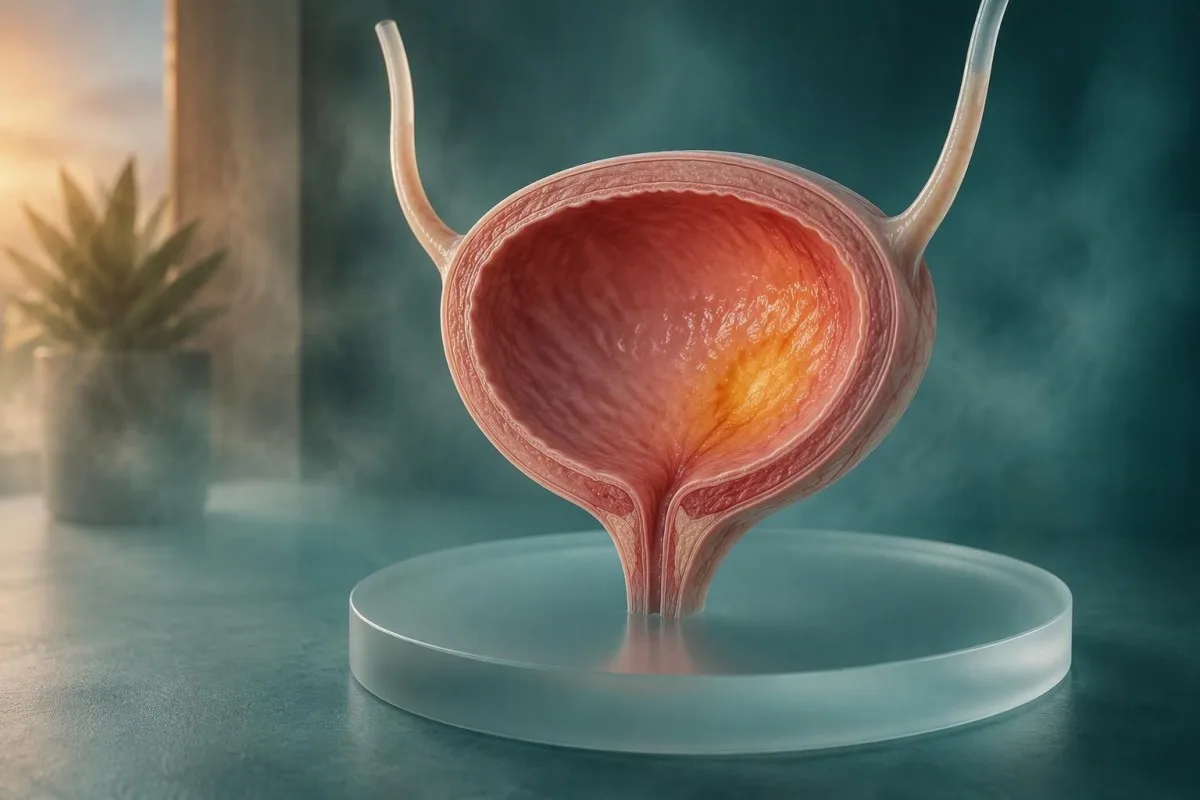
Painless visible blood in urine is the bladder cancer warning sign people should never explain away. Most urinary symptoms have benign causes, but the pattern, timing, and your risk factors determine how quickly to act.


- Visible blood in urine should be assessed promptly even if it happens once, causes no pain, and disappears within hours.
- Painless blood in urine is a classic bladder cancer warning sign; urinary infection and stones can also cause it, so testing identifies the cause.
- ಮೈಕ್ರೋಸ್ಕೋಪಿಕ್ ಹೀಮ್ಯಾಚುರಿಯಾ means 3 or more red cells per high-power field on a properly collected urine microscopy test.
- ತುರ್ತು ಲಕ್ಷಣಗಳು include inability to pass urine, large clots, fever with flank pain, fainting, or rapidly worsening weakness.
- Smoking history remains the strongest modifiable bladder cancer risk factor and matters even after quitting.
- Urine dipsticks detect heme but cannot diagnose bladder cancer or reliably distinguish red cells from myoglobin.
- Cystoscopy directly examines the bladder lining and remains the key test when visible hematuria or higher-risk microscopic hematuria is present.
- ರಕ್ತ ಪರೀಕ್ಷೆಗಳು can identify anemia or kidney impairment but do not rule out bladder cancer when results are normal.
Which bladder cancer symptoms should prompt action now?
Painless visible blood in urine needs prompt medical assessment, even when the urine clears after one trip to the toilet and you otherwise feel well. Bladder cancer can cause urgency, frequency, burning, pelvic discomfort, or no symptom beyond red, pink, or cola-coloured urine; most people with these symptoms do not have cancer, but the visible-blood pattern is not safe to self-diagnose.
As of October 2, 2026, I advise patients to contact a clinician the same day or next working day for new visible hematuria. A clot, inability to pass urine, dizziness, fever above 38.0°C, or severe side or back pain changes that advice to urgent or emergency care. The useful starting point is our detailed guide to ಮೂತ್ರದಲ್ಲಿನ ರಕ್ತದ ಎಚ್ಚರಿಕೆ ಸೂಚನೆಗಳು.
In my clinical experience, the misleading reassurance is, “It only happened once.” Intermittent bleeding is compatible with a stone, infection, an enlarged prostate, kidney disease, medication-related bleeding, and bladder cancer; the stop-start nature does not tell us which cause is present.
ಕಾಂತೆಸ್ಟಿ ಒಬ್ಬ AI ರಕ್ತ ಪರೀಕ್ಷಾ ವಿಶ್ಲೇಷಕ that helps people understand accompanying results such as hemoglobin, creatinine, and inflammatory markers, but it cannot inspect the bladder or exclude cancer. Dr. Thomas Klein’s practical rule is simple: a normal full blood count never cancels the need to investigate visible urinary blood.
A note on colour
Pink, red, rusty-brown, and tea-coloured urine can all represent urinary bleeding, although food pigments, medicines, bilirubin, and muscle pigment can mimic it. Photographing the colour before flushing can help the clinician, but do not delay evaluation to collect a perfect sample.
Why painless blood in urine carries special weight
Painless visible blood in urine is the urinary symptom most associated with bladder cancer evaluation. It does not prove cancer, and infection remains common, yet painlessness removes the reassuring clue that many people expect from a stone or acute cystitis.
Visible hematuria occurs in roughly 80% to 90% of people who present with bladder cancer, although the reverse is not true: many visible-hematuria episodes arise from benign causes. The clinical question is therefore not “Is cancer likely from colour alone?” but “Has the urinary tract been examined enough to safely exclude an important cause?”
The EAU non-muscle-invasive bladder cancer guideline identifies hematuria as the most common presenting sign and supports cystoscopy as part of diagnostic assessment when bladder cancer is suspected (Babjuk et al., 2022). Red urine after beetroot, blackberries, rifampicin, phenazopyridine, or dehydration may be harmless, but a dipstick and microscopy settle that uncertainty far better than guesswork.
Do not assume anticoagulants explain the finding. Apixaban, rivaroxaban, warfarin, and aspirin can make bleeding more noticeable, but they do not create a bladder source from nothing; clinicians generally still evaluate unexplained hematuria. If you take warfarin, an unexpectedly high INR deserves separate attention in our INR ಫಲಿತಾಂಶಗಳ ಮಾರ್ಗದರ್ಶಿ.
What microscopic blood in urine means
Microscopic hematuria means at least 3 red blood cells per high-power field on urine microscopy from one properly collected specimen. A positive dipstick alone is not microscopic hematuria because exercise, menstrual contamination, and muscle pigment can make the strip positive without urinary red cells.
The American Urological Association guideline defines microhematuria at the threshold of 3 red cells per high-power field, then uses age, smoking exposure, persistence, and prior gross hematuria to guide risk-based testing (Barocas et al., 2020). The threshold is deliberately low because microscopy is a triage signal, not a cancer diagnosis.
A clean-catch midstream sample collected away from menstruation and at least 48 hours after strenuous endurance exercise reduces avoidable false alarms. Red cells with substantial protein, casts, or dysmorphic shapes can point toward a kidney-filter problem rather than a bladder source; our urine sediment explainer shows why morphology matters.
Persistence matters more than a single borderline count. In a low-risk younger adult with 3 to 10 red cells per field after a recent viral illness, a clinician may repeat testing; in a 67-year-old former smoker, the same count usually warrants more direct urologic discussion.
Can urgency, burning, or frequency be early signs?
Urgency, frequent urination, burning, and new nighttime urination can occur with bladder cancer, but infection, menopause-related tissue change, diabetes, stones, and overactive bladder are much more common. The concern rises when symptoms persist after treatment, recur without a positive culture, or appear alongside blood.
I see this pattern most often when a patient receives two or three antibiotic courses for “UTIs” but cultures repeatedly show no bacterial growth. A urine culture taken before antibiotics is especially valuable: symptoms plus pyuria can occur without conventional bacterial infection, while a negative culture should prompt clinicians to widen the differential.
Burning that lasts more than 2 weeks after a treated infection, or returns within 6 weeks, deserves review rather than endless empirical antibiotics. Frequency without burning can also reflect high glucose, diuretic medication, excess fluid intake, sleep apnea, or diabetes; compare these pathways in our frequent urination blood test guide.
Carcinoma in situ, a flat high-grade bladder change, may cause marked irritative symptoms while imaging appears unrevealing. That is one reason a clinician may recommend cystoscopy even when a urine scan looks reassuring.
When urinary bleeding becomes an emergency
Go to urgent care or an emergency department for urinary bleeding with clots, inability to urinate, fever, severe flank pain, fainting, or new confusion. These combinations can signal blockage, a serious kidney infection, significant blood loss, or another condition requiring immediate treatment.
Clot retention is more than an inconvenience: clots can obstruct urine flow and stretch the bladder painfully over hours. If you have not passed urine for 6 to 8 hours despite a strong urge, especially with visible clots, do not wait for a routine appointment.
Fever above 38.0°C with chills, flank pain, vomiting, or rapid heart rate points more toward upper urinary infection than bladder cancer, but both can coexist. A clinician may check urine culture, kidney function, complete blood count, and imaging; our overview of ಲ್ಯೂಕೋಸೈಟ್ ಎಸ್ಟರೇಸ್ ಫಲಿತಾಂಶಗಳು explains why one strip result is not enough.
Heavy bleeding can lower hemoglobin, yet a normal hemoglobin level does not mean an episode is trivial because acute changes may lag by several hours. New shortness of breath, chest pressure, collapse, or pale clammy skin needs emergency assessment regardless of the urine colour.
Common causes that mimic bladder cancer warning signs
Urinary infection, stones, vigorous exercise, menstrual contamination, enlarged prostate, kidney disease, and certain medicines commonly mimic bladder cancer symptoms. A plausible benign explanation is useful only when the symptom resolves and objective testing supports that explanation.
A stone often causes sudden one-sided colicky pain that comes in waves, nausea, and blood in urine, whereas bladder cancer bleeding is often painless. That distinction is imperfect: small stones may be quiet, and cancer can coexist with infection or stones, so symptoms should guide testing rather than replace it.
Distance runners can develop transient hematuria after prolonged impact and dehydration, usually clearing within 24 to 72 hours. I still recommend a urine check if it is visible, repeats, lasts beyond 72 hours, or occurs without a hard workout; see ರನ್ನರ್ಸ್ ಹಿಮಟೂರಿಯಾ for a careful return-to-training approach.
Cloudiness is not the same as blood. Crystals, vaginal discharge, phosphate sediment, and concentrated urine can all make urine look cloudy, while true bleeding can leave it clear-looking; our cloudy urine guide separates those visual clues.
Who has a higher pre-test risk of bladder cancer?
Age over 50, current or previous smoking, occupational aromatic-amine exposure, pelvic radiation, cyclophosphamide, and chronic bladder irritation increase bladder cancer risk. Risk factors do not diagnose cancer, but they lower the threshold for complete evaluation when hematuria appears.
Tobacco exposure is the dominant modifiable factor; smoking is linked to roughly one-half of bladder cancer cases in many high-income populations. The risk falls after quitting but does not instantly return to baseline, so a remote 20-pack-year history remains clinically relevant decades later.
Ask specifically about work with dyes, rubber, leather, paint, printing, combustion products, and some chemical manufacturing, especially before modern protective standards. The question is not meant to assign blame—exposure histories are often incomplete—but it helps a urologist select the appropriate work-up.
Long-term cyclophosphamide exposure and previous pelvic radiotherapy deserve explicit mention at referral. Dr. Thomas Klein also asks about family patterns of urothelial cancers and Lynch syndrome, though inherited causes account for a small minority of cases; our family cancer testing overview explains what routine blood panels can and cannot screen for.
Why bladder symptoms in women can be missed
Women with bladder cancer are more likely to have early symptoms attributed to urinary infection, particularly when burning and frequency occur without dramatic bleeding. Any visible blood, recurrent culture-negative symptoms, or symptoms that persist after treatment should reset the clinical assessment.
A practical safeguard is to ask for the actual culture result, not merely whether an antibiotic was prescribed. A culture with no growth after symptoms recur twice in 6 months should make clinicians consider stone disease, atrophic change, interstitial cystitis, tuberculosis in relevant settings, and bladder pathology.
Menstrual blood can contaminate a urine specimen, but it should lead to repeat collection after bleeding ends—not dismissal of persistent findings. Midstream collection is helpful, and catheter-collected specimens are occasionally used when contamination repeatedly obscures the result.
Kantesti AI ಒಂದು AI-ಚಾಲಿತ ರಕ್ತ ಪರೀಕ್ಷೆ ವಿಶ್ಲೇಷಣೆ ಸಾಧನ that can organize kidney function, glucose, and anemia trends for a clinician conversation, but urinary symptoms still require urine-based and anatomical testing. For urinary bacteria found without symptoms, read our separate guide on when bacteriuria needs treatment.
What tests are used after blood is found in urine?
Initial hematuria assessment usually includes urinalysis with microscopy, urine culture when infection is plausible, kidney function testing, and risk-based imaging plus cystoscopy. The exact sequence varies by age, kidney function, pregnancy status, contrast allergy, and whether blood is visible.
Urinalysis checks red cells, white cells, protein, nitrite, glucose, and specific gravity; microscopy confirms whether red cells are actually present. A culture is most informative before antibiotics, while proteinuria or casts may redirect referral toward nephrology as well as urology.
Serum creatinine and estimated GFR help clinicians choose imaging safely, particularly when CT contrast is considered. An eGFR below 30 mL/min/1.73 m² often triggers a more individualized contrast discussion, rather than an automatic cancellation of all imaging; see our ಮೂತ್ರಪಿಂಡದ ಕಾರ್ಯ ಮಾರ್ಗದರ್ಶಿ.
Kantesti’s AI ಲ್ಯಾಬ್ ಟೆಸ್ಟ್ ಇಂಟರ್ಪ್ರಿಟೇಶನ್ ಸೇವೆ can place creatinine, eGFR, hemoglobin, and platelet results into longitudinal context after a clinician orders them. We describe safeguards and clinical limits in our ವೈದ್ಯಕೀಯ ಮಾನ್ಯತಾ ವಿಧಾನ.
Which blood test results matter—and what they cannot tell you
A complete blood count and kidney panel can show consequences or alternative explanations for urinary symptoms, but no routine blood test screens reliably for bladder cancer. Normal hemoglobin, creatinine, CRP, and white-cell counts cannot rule out a small bladder growth.
Hemoglobin below approximately 120 g/L in many non-pregnant women ಅಥವಾ 130 g/L in many adult men meets common anemia definitions, although laboratory ranges vary. Persistent urinary bleeding can contribute to iron deficiency, but gastrointestinal and gynecologic sources are often more common and must be considered in parallel.
Creatinine can rise with dehydration, urinary obstruction, medicines, or chronic kidney disease; one number without a baseline is less informative than a trend. A sudden fall in eGFR together with reduced urine output is more urgent than an isolated mildly low eGFR on a stable outpatient result.
Urine cytology looks for abnormal shed cells and is more sensitive for some high-grade cancers than low-grade growths, but a negative cytology does not clear a person with visible hematuria. Our urine dipstick explanation details the difference between a strip result and a diagnosis.
What cystoscopy and imaging can find
Cystoscopy examines the bladder lining directly and is the definitive first-line visual test for many people with visible hematuria or higher-risk microscopic hematuria. Ultrasound, CT urography, and sometimes MRI evaluate the kidneys, ureters, and surrounding structures that a cystoscope cannot fully assess.
Flexible outpatient cystoscopy usually takes only several minutes and commonly causes brief burning or urinary frequency afterward. Patients often fear it more than the procedure warrants; discomfort is real but most tolerate it with local anesthetic gel and clear explanation.
CT urography provides detailed upper-tract imaging and can detect stones, kidney masses, and urothelial abnormalities, but it involves ionizing radiation and contrast considerations. Ultrasound avoids radiation and is useful in many lower-risk situations, though it can miss small bladder or ureter abnormalities.
The final choice should reflect risk rather than a one-size-fits-all scan. The AUA risk-stratified approach was designed partly to avoid exposing low-risk patients to unnecessary CT radiation while ensuring visible hematuria is not minimized (Barocas et al., 2020).
What if symptoms continue after normal tests?
Persistent or recurrent visible blood in urine needs reassessment even after an initially normal work-up, particularly when the bleeding pattern changes or new urinary symptoms develop. A normal evaluation is reassuring, but it describes what was detectable at that point in time rather than offering a lifetime guarantee.
Keep a short symptom record: date, colour, clots, pain score from 0 to 10, fever, exercise, medication changes, and culture results. This is more clinically useful than a vague report of “on and off for months,” and it can reveal whether bleeding follows anticoagulant dosing, exercise, or infection episodes.
Recurrent microscopic hematuria after a negative evaluation is handled differently across health systems because evidence on repeat timing is not perfect. In my experience, shared decision-making works best when the clinician explains what was checked, what could still be missed, and what specific change should trigger earlier return.
Kantesti can help preserve a chronological record of blood results while you prepare for review, and our ರಕ್ತ ಪರೀಕ್ಷೆಯ ಟೈಮ್ಲೈನ್ ಮಾರ್ಗದರ್ಶಿ shows how illness and hydration alter values. Do not use lab tracking as a substitute for repeat urine testing or urology follow-up.
What not to do while waiting for assessment
Do not self-treat unexplained urinary bleeding with leftover antibiotics, stop prescribed anticoagulants without advice, or assume hydration will solve persistent red urine. Hydration can improve concentration-related dark urine, but it does not diagnose the source of confirmed red cells.
Antibiotics can sterilize a culture and obscure whether infection was actually present, especially if started before sample collection. If you are feverish or acutely unwell, seek care urgently rather than delaying treatment to obtain an ideal specimen.
Non-steroidal anti-inflammatory drugs such as ibuprofen may worsen bleeding risk in some people and can affect kidney function, particularly with dehydration or ACE inhibitors. Bring every medication, supplement, and dose to the appointment; even herbal products can influence bleeding or urine colour.
Avoid high-dose vitamin C immediately before a urine dipstick if possible, because it can occasionally interfere with some strip reactions. That is a technical detail, but it has prevented more than one confusing repeat test in my own clinic.
How to prepare for a useful bladder symptom appointment
Bring a concise timeline, medication list, smoking and exposure history, prior urine cultures, and any photographs of visible urine changes to a hematuria appointment. These details often determine whether a clinician repeats a urine test, orders imaging, or refers directly for cystoscopy.
Write down whether blood appeared at the beginning, throughout, or only at the end of urination, because the timing can occasionally offer anatomical clues. Also record whether there was pain, fever, recent exercise, travel, a new medicine, or vaginal bleeding; none is definitive alone, but together they sharpen the assessment.
Ask three direct questions: Was microscopy performed? Was a culture positive before antibiotics? Do my age, smoking, and visible-blood history mean I need cystoscopy or upper-tract imaging? Most patients find these questions cut through rushed consultations without sounding confrontational.
ಕಾಂತೆಸ್ಟಿ ಒಬ್ಬ AI ಬಯೋಮಾರ್ಕರ್ ವ್ಯಾಖ್ಯಾನ ವೇದಿಕೆ built to make laboratory reports more understandable across 75+ languages, while medical decisions remain with qualified clinicians. Our medical content is reviewed with oversight from the ವೈದ್ಯಕೀಯ ಸಲಹಾ ಮಂಡಳಿ, ಮತ್ತು ನಮ್ಮ ಬಯೋಮಾರ್ಕರ್ ಮಾರ್ಗದರ್ಶಿಯಲ್ಲಿ can help you decode the blood tests ordered alongside urinary evaluation.
A simple safety-net plan for bladder warning signs
Treat painless visible blood in urine as a prompt-evaluation symptom, treat clots or inability to urinate as urgent, and treat repeated unexplained urinary symptoms as a reason to revisit the diagnosis. This approach catches serious disease without pretending that every urinary symptom is cancer.
For a single new red or pink episode without emergency symptoms, arrange medical contact within 24 to 48 hours where local services allow. For persistent microscopic blood, follow the repeat-testing or referral plan your clinician gives you; the right interval can range from weeks to months depending on individual risk.
For fever, vomiting, severe back pain, clots, faintness, or urinary retention, seek same-day urgent assessment. These red flags are about immediate complications, not simply cancer probability, and waiting for a scheduled scan is the wrong trade-off.
If anxiety is high, say so plainly. A clear plan with named tests, expected result dates, and return precautions is better medicine than casual reassurance; our ಕ್ಲಿನಿಕಲ್ AI ತಂತ್ರಜ್ಞಾನ ಮಾರ್ಗದರ್ಶಿ explains how we communicate uncertainty around lab interpretation.
ಪದೇ ಪದೇ ಕೇಳಲಾಗುವ ಪ್ರಶ್ನೆಗಳು
ಮೂತ್ರದಲ್ಲಿ ನೋವಿಲ್ಲದ ರಕ್ತ ಯಾವಾಗಲೂ ಮೂತ್ರಕೋಶದ ಕ್ಯಾನ್ಸರ್ ಆಗುತ್ತದೆಯೇ?
ಮೂತ್ರದಲ್ಲಿ ನೋವಿಲ್ಲದ ರಕ್ತ ಯಾವಾಗಲೂ ಮೂತ್ರಕೋಶದ ಕ್ಯಾನ್ಸರ್ ಆಗಿರುವುದಿಲ್ಲ, ಆದರೆ ಇದು ಯಾವಾಗಲೂ ಸಕಾಲಿಕ ವೈದ್ಯಕೀಯ ಮೌಲ್ಯಮಾಪನಕ್ಕೆ ಅರ್ಹವಾಗಿದೆ. ಮೂತ್ರದ ಸೋಂಕು, ಕಲ್ಲುಗಳು, ಮೂತ್ರಪಿಂಡದ ಕಾಯಿಲೆ, ದೊಡ್ಡದಾದ ಪ್ರಾಸ್ಟೇಟ್, ಔಷಧಿಗಳು ಮತ್ತು ವ್ಯಾಯಾಮಗಳು ಕೂಡ ಗೋಚರಿಸುವ ರಕ್ತಕ್ಕೆ ಕಾರಣವಾಗಬಹುದು. ಮೂತ್ರಕೋಶದ ಕ್ಯಾನ್ಸರ್ ಸಾಮಾನ್ಯವಾಗಿ ഇടക്കിടെಯ ನೋವಿಲ್ಲದ ಹೆಮಟೂರಿಯಾವನ್ನು ತೋರಿಸುತ್ತದೆ, ಆದ್ದರಿಂದ 24 ಗಂಟೆಗಳಲ್ಲಿ ಕಡಿಮೆಯಾಗುವ ಒಂದು ಕಂತು ಸಹ ತಳ್ಳಿಹಾಕಬಾರದು. ರಕ್ತ ಹೆಪ್ಪುಗಟ್ಟುವಿಕೆ, ಮೂತ್ರವಿಸರ್ಜನೆಯಲ್ಲಿ ಹಿಂಸೆ, 38.0°C ಗಿಂತ ಹೆಚ್ಚಿನ ಜ್ವರ, ತೀವ್ರವಾದ ನೋವು, ಮೂರ್ಛೆಹೋಗುವುದು ಅಥವಾ ದೌರ್ಬಲ್ಯ ಸಂಭವಿಸಿದಲ್ಲಿ ತಕ್ಷಣವೇ ತುರ್ತು ಆರೈಕೆಯನ್ನು ಪಡೆಯಿರಿ.
ಮೂತ್ರಕೋಶದ ಕ್ಯಾನ್ಸರ್ನ ಆರಂಭಿಕ ಲಕ್ಷಣಗಳು ಯಾವುವು?
ಮೂತ್ರಕೋಶದ ಕ್ಯಾನ್ಸರ್ನ ಆರಂಭಿಕ ಚಿಹ್ನೆಯು ಸಾಮಾನ್ಯವಾಗಿ ನೋವಿಲ್ಲದೆ ಮೂತ್ರದಲ್ಲಿ ರಕ್ತ ಕಾಣಿಸಿಕೊಳ್ಳುವುದು, ಆದರೆ ಕೆಲವರಿಗೆ ತೀವ್ರವಾದ ತುರ್ತು, ಉರಿ, ಆಗಾಗ್ಗೆ ಮೂತ್ರ ವಿಸರ್ಜನೆ, ಅಥವಾ ರಾತ್ರಿಯ ಸಮಯದಲ್ಲಿ ಮೂತ್ರ ವಿಸರ್ಜನೆಯಂತಹ ಲಕ್ಷಣಗಳು ಕಂಡುಬರುತ್ತವೆ. ಆರಂಭಿಕ ಮೂತ್ರಕೋಶದ ಕ್ಯಾನ್ಸರ್ ತೂಕ ನಷ್ಟ, ಅಸಹಜ ರಕ್ತದ ಎಣಿಕೆ, ಮತ್ತು ತೀವ್ರ ನೋವನ್ನು ಉಂಟುಮಾಡುವುದಿಲ್ಲ. ಊಹಿಸಲಾದ ಮೂತ್ರದ ಸೋಂಕಿಗೆ ಚಿಕಿತ್ಸೆ ನೀಡಿದ ನಂತರವೂ ಮುಂದುವರಿಯುವ ಲಕ್ಷಣಗಳು, ವಿಶೇಷವಾಗಿ ಮೂತ್ರದ ಕಲ್ಚರ್ಗಳು ನೆಗೆಟಿವ್ ಆಗಿರುವಾಗ, ಹೊಸ ಕ್ಲಿನಿಕಲ್ ವಿಮರ್ಶೆಯನ್ನು ಬಯಸುತ್ತವೆ. ಮೂತ್ರಕೋಶದ ಕ್ಯಾನ್ಸರ್ ಇದೆಯೇ ಎಂಬುದನ್ನು ರೋಗಲಕ್ಷಣಗಳು ಮಾತ್ರವಲ್ಲ, ಸಿಸ್ಟೋಸ್ಕೋಪಿ ಮತ್ತು ಸೂಕ್ತ ಚಿತ್ರಣವು ನಿರ್ಧರಿಸುತ್ತದೆ.
ಮೂತ್ರ ಪರೀಕ್ಷೆಯಿಂದ ಮೂತ್ರಕೋಶದ ಕ್ಯಾನ್ಸರ್ ಪತ್ತೆ ಹಚ್ಚಬಹುದೇ?
ಮೂತ್ರ ಪರೀಕ್ಷೆಯು ರಕ್ತ, ಸೋಂಕಿನ ಸೂಚನೆಗಳು, ಪ್ರೋಟೀನ್ ಮತ್ತು ಅಸಹಜ ಕೋಶಗಳನ್ನು ಪತ್ತೆಹಚ್ಚಬಹುದು, ಆದರೆ ಇದು ಸ್ವತಂತ್ರವಾಗಿ ಮೂತ್ರಕೋಶದ ಕ್ಯಾನ್ಸರ್ ಅನ್ನು ವಿಶ್ವಾಸಾರ್ಹವಾಗಿ ರೋಗನಿರ್ಣಯ ಮಾಡಲು ಅಥವಾ ತಳ್ಳಿಹಾಕಲು ಸಾಧ್ಯವಿಲ್ಲ. ಸೂಕ್ಷ್ಮದರ್ಶಕೀಯ ಹೆಮಟೂರಿಯಾವನ್ನು ಸೂಕ್ಷ್ಮದರ್ಶಕದ ಮೂಲಕ ಪ್ರತಿ ಹೈ-ಪವರ್ ಫೀಲ್ಡ್ಗೆ 3 ಅಥವಾ ಅದಕ್ಕಿಂತ ಹೆಚ್ಚು ಕೆಂಪು ರಕ್ತ ಕಣಗಳು ಎಂದು ವ್ಯಾಖ್ಯಾನಿಸಲಾಗುತ್ತದೆ, ಆದರೆ ಡಿಪ್ಸ್ಟಿಕ್ ದೃಢೀಕರಣದ ಅಗತ್ಯವಿದೆ ಏಕೆಂದರೆ ಇದು ಕೆಂಪು ರಕ್ತ ಕಣಗಳಲ್ಲದ ಮೂಲಗಳಿಂದ ಹೀಮ್ ಅನ್ನು ಪತ್ತೆಹಚ್ಚಬಹುದು. ಮೂತ್ರ ಸೈಟಾಲಜಿ ಹೆಚ್ಚಿನ-ದರ್ಜೆಯ ರೋಗದ ಮೌಲ್ಯಮಾಪನವನ್ನು ಬೆಂಬಲಿಸುತ್ತದೆ ಆದರೆ ಕಡಿಮೆ-ದರ್ಜೆಯ ಮೂತ್ರಕೋಶದ ಬೆಳವಣಿಗೆಗಳನ್ನು ಕಳೆದುಕೊಳ್ಳಬಹುದು. ಗೋಚರ ಹೆಮಟೂರಿಯಾ ಅಥವಾ ಹೆಚ್ಚಿನ-ಅಪಾಯದ ಸೂಕ್ಷ್ಮದರ್ಶಕೀಯ ಹೆಮಟೂರಿಯಾವು ಸಿಸ್ಟೊಸ್ಕೋಪಿ ಮತ್ತು ಇಮೇಜಿಂಗ್ ಅನ್ನು ಇನ್ನೂ ಅವಶ್ಯಕವಾಗಿಸಬಹುದು.
When should I worry about blood in urine after exercise?
Blood in urine after hard endurance exercise often clears within 24 to 72 hours, but visible blood should still be checked at least once. Seek prompt assessment if it persists beyond 72 hours, recurs, appears without intense exercise, includes clots, or occurs in someone older than 50 or with a smoking history. Exercise can explain transient hematuria but does not safely exclude stones, kidney disease, or bladder cancer. A urine microscopy test after rest and good hydration is usually more informative than a dipstick alone.
Can bladder cancer cause UTI-like symptoms?
Bladder cancer can cause urgency, frequency, burning, and nighttime urination that resemble a urinary tract infection. Infection is much more common, but repeated symptoms with negative cultures or poor response to antibiotics should trigger reassessment. A urine culture obtained before antibiotics is particularly helpful because treatment can make later cultures falsely unrevealing. Visible blood in urine alongside UTI-like symptoms needs timely evaluation even if burning is present.
Do normal blood tests rule out bladder cancer?
Normal blood tests do not rule out bladder cancer because many early bladder growths do not cause anemia, kidney impairment, raised CRP, or abnormal white-cell counts. A full blood count may show anemia when bleeding is prolonged, and creatinine helps clinicians select safe imaging, but neither test visualizes the bladder. Hematuria assessment relies on urine microscopy, risk history, cystoscopy when indicated, and upper urinary tract imaging. A normal hemoglobin result should never be used to dismiss painless visible blood in urine.
ಇಂದು AI-ಸಕ್ರಿಯ ರಕ್ತ ಪರೀಕ್ಷೆ ವಿಶ್ಲೇಷಣೆಯನ್ನು ಪಡೆಯಿರಿ
ತಕ್ಷಣದ, ನಿಖರವಾದ ಲ್ಯಾಬ್ ಪರೀಕ್ಷಾ ವಿಶ್ಲೇಷಣೆಗೆ Kantesti ಅನ್ನು ನಂಬುವ ವಿಶ್ವದಾದ್ಯಂತ 2 ಮಿಲಿಯನ್ಗಿಂತ ಹೆಚ್ಚು ಬಳಕೆದಾರರಿಗೆ ಸೇರಿ. ನಿಮ್ಮ ರಕ್ತ ಪರೀಕ್ಷೆ ಫಲಿತಾಂಶಗಳನ್ನು ಅಪ್ಲೋಡ್ ಮಾಡಿ ಮತ್ತು ಕೆಲವೇ ಸೆಕೆಂಡುಗಳಲ್ಲಿ 15,000+ ಬಯೋಮಾರ್ಕರ್ಗಳ ಸಮಗ್ರ ಅರ್ಥೈಸಿಕೆಯನ್ನು ಪಡೆಯಿರಿ.
📚 ಉಲ್ಲೇಖಿತ ಸಂಶೋಧನಾ ಪ್ರಕಟಣೆಗಳು
Klein, T., Mitchell, S., & Weber, H. (2026). ಉಪವಾಸದ ನಂತರ ಅತಿಸಾರ, ಮಲದಲ್ಲಿ ಕಪ್ಪು ಚುಕ್ಕೆಗಳು ಮತ್ತು ಕರುಳಿನ ಚಿಕಿತ್ಸೆ ಮಾರ್ಗದರ್ಶಿ 2026. Kantesti AI ವೈದ್ಯಕೀಯ ಸಂಶೋಧನೆ.
Klein, T., Mitchell, S., & Weber, H. (2026). ಮಹಿಳೆಯರ ಆರೋಗ್ಯ ಮಾರ್ಗದರ್ಶಿ: ಅಂಡೋತ್ಪತ್ತಿ, ಋತುಬಂಧ ಮತ್ತು ಹಾರ್ಮೋನುಗಳ ಲಕ್ಷಣಗಳು. Kantesti AI ವೈದ್ಯಕೀಯ ಸಂಶೋಧನೆ.
📖 ಬಾಹ್ಯ ವೈದ್ಯಕೀಯ ಉಲ್ಲೇಖಗಳು
⚕️ ವೈದ್ಯಕೀಯ ಹಕ್ಕುತ್ಯಾಗ
ಈ ಲೇಖನವು ಕೇವಲ ಶಿಕ್ಷಣ ಉದ್ದೇಶಗಳಿಗಾಗಿ이며 ವೈದ್ಯಕೀಯ ಸಲಹೆಯನ್ನು ನೀಡುವುದಿಲ್ಲ. ರೋಗನಿರ್ಣಯ ಮತ್ತು ಚಿಕಿತ್ಸೆ ನಿರ್ಧಾರಗಳಿಗಾಗಿ ಸದಾ ಅರ್ಹ ಆರೋಗ್ಯ ಸೇವಾ ಪೂರೈಕೆದಾರರನ್ನು ಸಂಪರ್ಕಿಸಿ.
E-E-A-T ವಿಶ್ವಾಸ ಸಂಕೇತಗಳು
ಅನುಭವ
ಲ್ಯಾಬ್ ಅರ್ಥೈಸುವ ಕಾರ್ಯಪ್ರವಾಹಗಳ ಮೇಲೆ ವೈದ್ಯರಿಂದ ನೇತೃತ್ವದ ಕ್ಲಿನಿಕಲ್ ವಿಮರ್ಶೆ.
ಪರಿಣಿತಿ
ಕ್ಲಿನಿಕಲ್ ಸಂದರ್ಭದಲ್ಲಿನ ಬಯೋಮಾರ್ಕರ್ಗಳು ಹೇಗೆ ವರ್ತಿಸುತ್ತವೆ ಎಂಬುದರ ಮೇಲೆ ಪ್ರಯೋಗಾಲಯ ವೈದ್ಯಕೀಯದ ಕೇಂದ್ರೀಕರಣ.
ಅಧಿಕಾರಯುತತೆ
ಡಾ. ಥಾಮಸ್ ಕ್ಲೈನ್ ಬರಹ; ಡಾ. ಸಾರಾ ಮಿಚೆಲ್ ಮತ್ತು ಪ್ರೊ. ಡಾ. ಹಾನ್ಸ್ ವೆಬರ್ ಅವರ ವಿಮರ್ಶೆಯೊಂದಿಗೆ.
ವಿಶ್ವಾಸಾರ್ಹತೆ
ಎಚ್ಚರಿಕೆಯನ್ನು ಕಡಿಮೆ ಮಾಡಲು ಸ್ಪಷ್ಟವಾದ ಮುಂದಿನ ಹಂತಗಳೊಂದಿಗೆ ಸಾಕ್ಷ್ಯಾಧಾರಿತ ಅರ್ಥೈಸಿಕೆ.