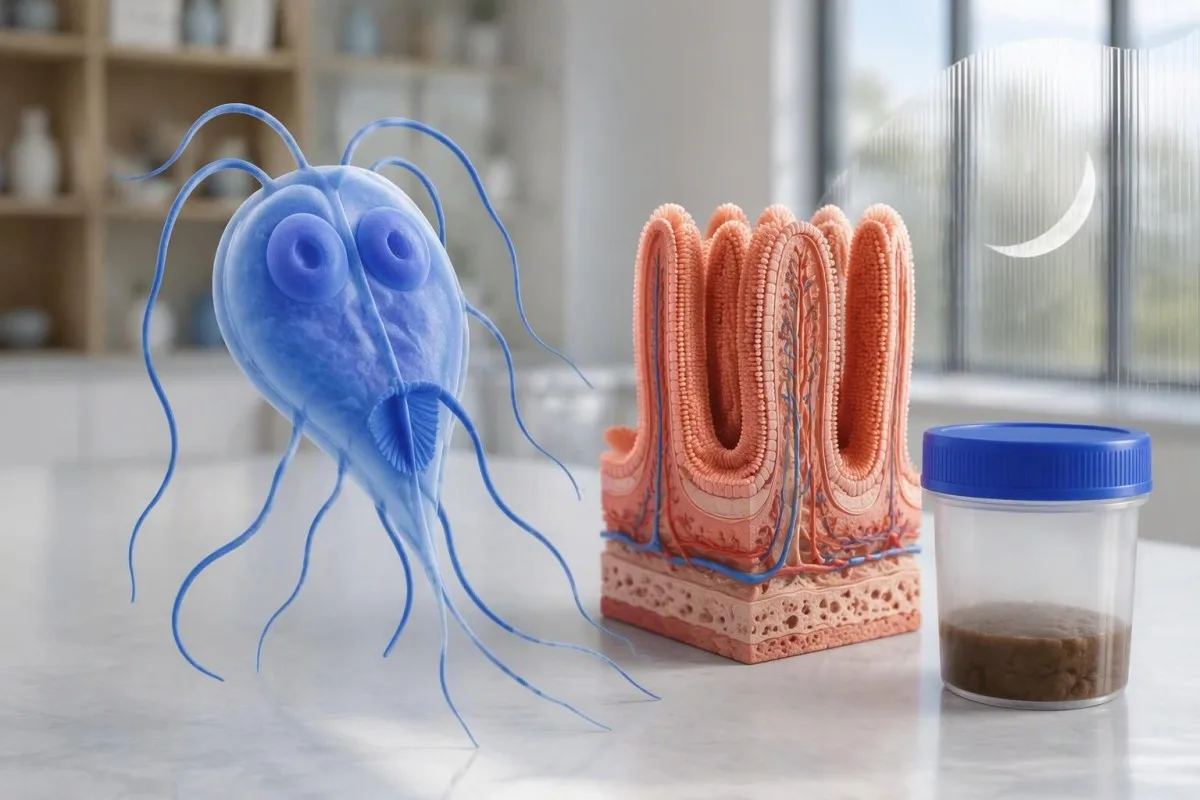
A positive stool antigen usually supports giardiasis, but treatment response and digestive recovery follow different timelines. Here is how clinicians separate ongoing infection from a gut that is still healing.



- Detected antigen means Giardia proteins were identified in stool; it usually supports infection but does not measure parasite burden or illness severity.
- Treatment selection depends on symptoms, age, pregnancy, previous medicines, and availability—not the strength of a positive antigen result.
- Тинидазол is commonly prescribed to adults as a single 2 g dose with food; it requires a prescription and an individual safety assessment.
- Illness duration is commonly 2–6 weeks without treatment, although untreated infection can last longer and symptoms may fluctuate.
- Digestive recovery can lag behind parasite clearance because temporary lactose malabsorption and post-infectious bowel dysfunction may continue.
- Қайта тапсыру is generally unnecessary when symptoms resolve; suspected treatment failure requires attention to timing and specimen collection.
- Persistent infection checks commonly involve 3 stool specimens collected over several days, with CDC guidance advising at least 2 weeks after the last medication dose before re-examination for treatment failure.
- Swimming precautions continue for 2 weeks after diarrhea stops because Giardia can still spread after someone feels better.
- Шұғыл бағалау is needed for inability to retain fluids, markedly reduced urination, fainting, bloody stool, or severe localized abdominal pain.
What does a detected Giardia stool antigen mean?
Giardia antigen detected means a stool assay found proteins from Giardia, a microscopic intestinal parasite. A positive result usually supports giardiasis and warrants clinical assessment; symptomatic patients commonly receive prescription treatment. Symptoms can persist after clearance, and repeat testing is usually reserved for persistent or recurrent illness rather than routinely performed after recovery.
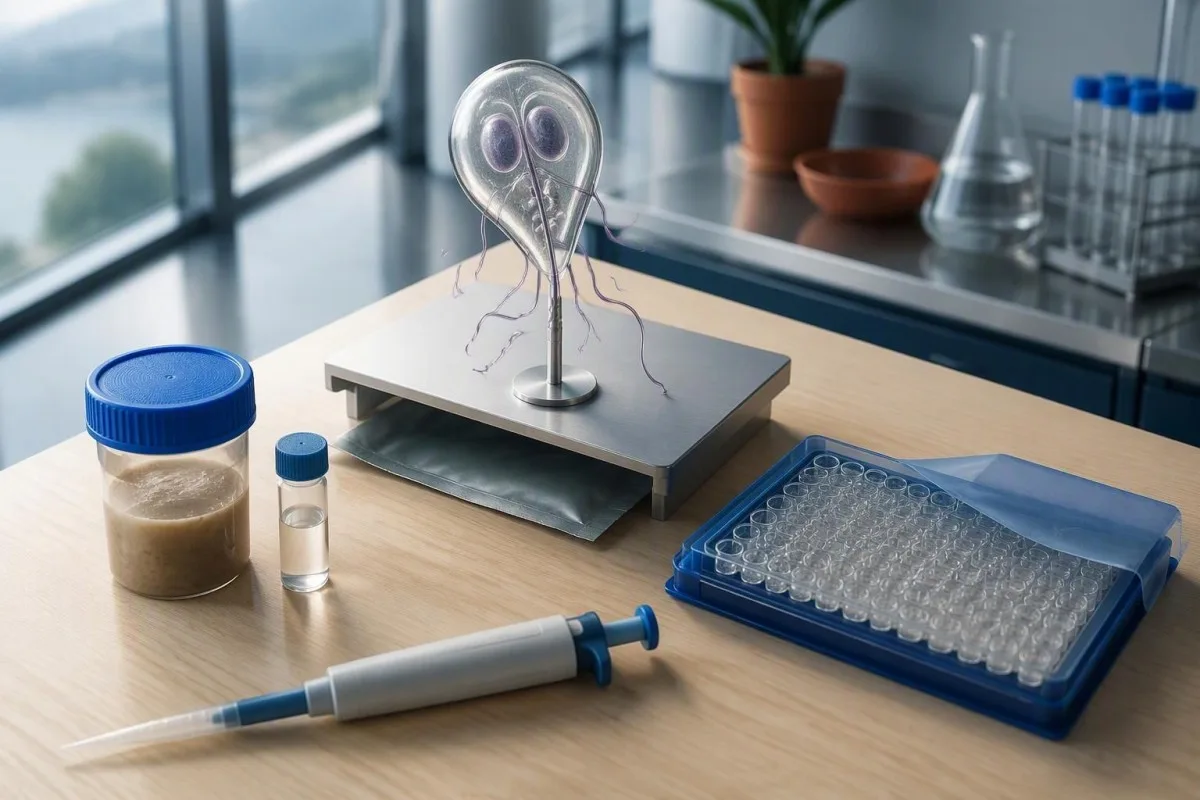
A result reported as giardia stool antigen positive is usually qualitative: detected or not detected, rather than a concentration that predicts how sick you should feel. Laboratories may produce internal assay signals, but these are not interchangeable parasite counts; our explanation of сапалық және сандық нәтижелер осы айырмашылықты түсіндіреді.
The timing changes the interpretation. A first positive sample collected before treatment is different from a positive sample collected 2 days after finishing medication, when residual target material and testing limitations complicate the question of cure; neither result tells you precisely when the parasite was acquired.
My clinical approach, as Thomas Klein, MD, is to separate 3 questions: does the result fit the symptoms, is treatment appropriate, and is the person becoming dehydrated? Kantesti is an AI blood test analyzer that explains associated laboratory findings, not a substitute for a Giardia stool assay or a prescribing clinician; біздің ұйымымыз туралы көбірек оқи аласыз. describes that distinction.
How antigen testing differs from PCR and microscopy
Giardia antigen testing detects parasite proteins, PCR detects parasite genetic material, and microscopy looks for parasite structures. These 3 approaches can disagree because their targets, sensitivity, specimen requirements, and vulnerability to collection problems differ. A positive antigen is not an antibody result and does not mean immunity from a previous infection.
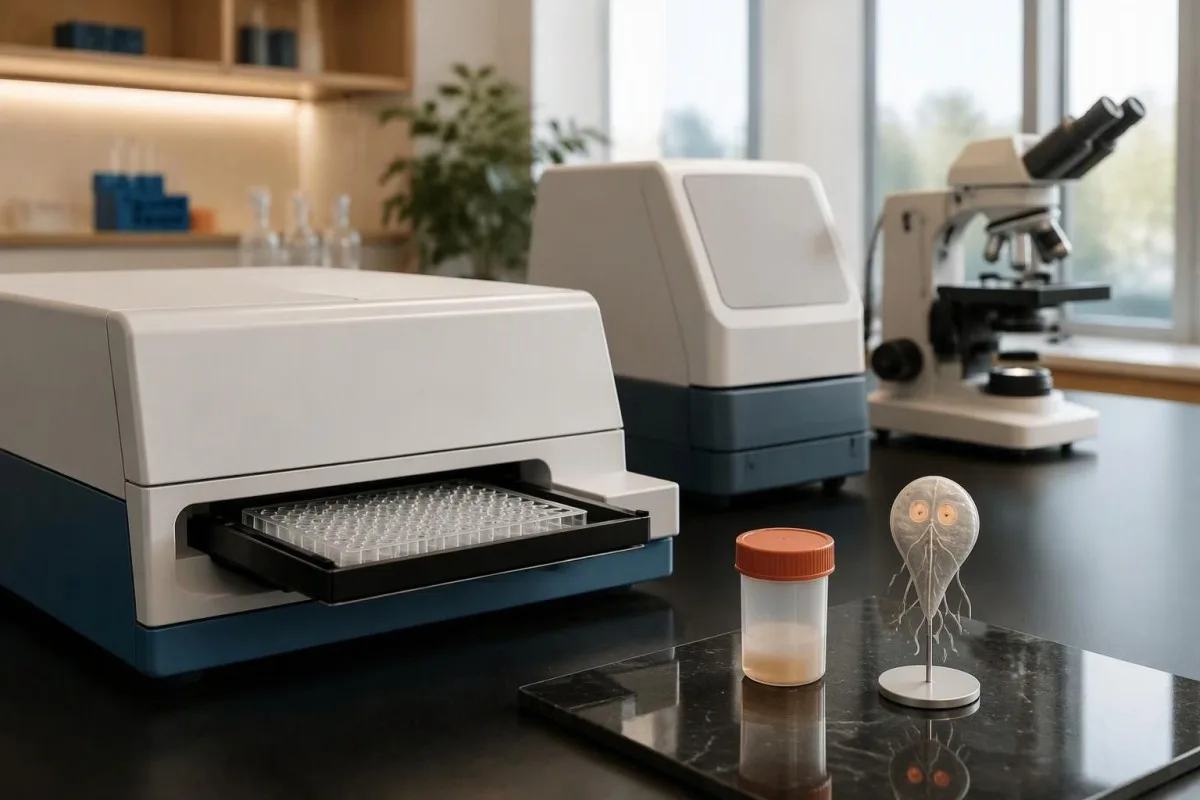
PCR, often included in a multiplex gastrointestinal panel, can detect Giardia alongside several other organisms in 1 specimen. That broader panel may reveal a second explanation for diarrhea, but detecting genetic material does not independently establish organism viability, and PCR signal values should not be interpreted as a standardized severity score.
Microscopy depends on what reaches the slide and who examines it. Routine ova-and-parasite examination may miss intermittent shedding; direct fluorescent antibody microscopy is a different, highly sensitive technique that CDC identifies as a diagnostic gold standard, so a report saying only 'microscopy negative' leaves at least 1 useful question unanswered: which method?
Discordance deserves context rather than a vote between tests. If 1 antigen assay is positive but microscopy is negative in a person with greasy diarrhea after untreated-water exposure, the positive remains clinically meaningful; a blood antibody result answers a different question, as explained in positive antibody interpretation.
How long does Giardia last, and which symptoms fit?
Giardia symptoms commonly begin 1–2 weeks after exposure and last 2–6 weeks, although untreated infection can persist longer. Typical symptoms include watery or greasy diarrhea, gas, abdominal cramps, nausea, fatigue, and weight loss. Some infected people have no symptoms, and others experience alternating better and worse days.
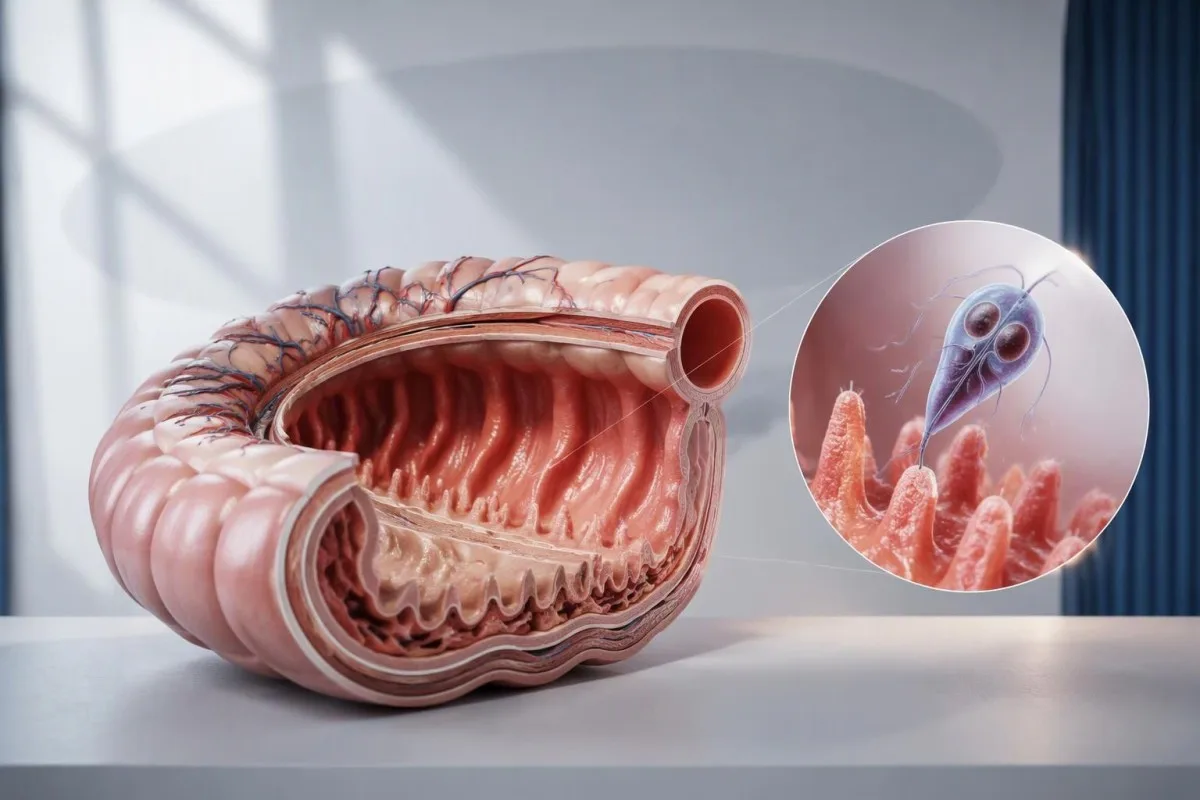
Greasy, foul-smelling stool reflects impaired absorption rather than a unique visual fingerprint of Giardia. Floating stool alone can result from gas, and yellow stool has several causes; yellow stool patterns are more useful when considered alongside weight change and the number of loose stools over 24 hours.
Consider an illustrative 34-year-old traveler whose diarrhea improves for 3 days and then returns before treatment. That interruption does not establish spontaneous clearance: intermittent symptoms and shedding can make the illness feel like separate episodes, while a household member with no diarrhea may still carry and transmit the parasite.
Successful treatment often brings noticeable improvement within several days, but there is no reliable deadline by which every bowel movement must normalize. A 7-day symptom diary recording stool frequency, food triggers, hydration, and weight direction provides better follow-up information than comparing today's stool appearance with yesterday's photograph.
How clinicians choose Giardia infection treatment
Giardia infection treatment commonly uses tinidazole, metronidazole, or nitazoxanide. The choice depends on age, pregnancy or breastfeeding, interactions, previous treatment, formulation, and local availability. A detected antigen does not identify drug susceptibility, so clinicians cannot choose the best medicine from the positive result alone.
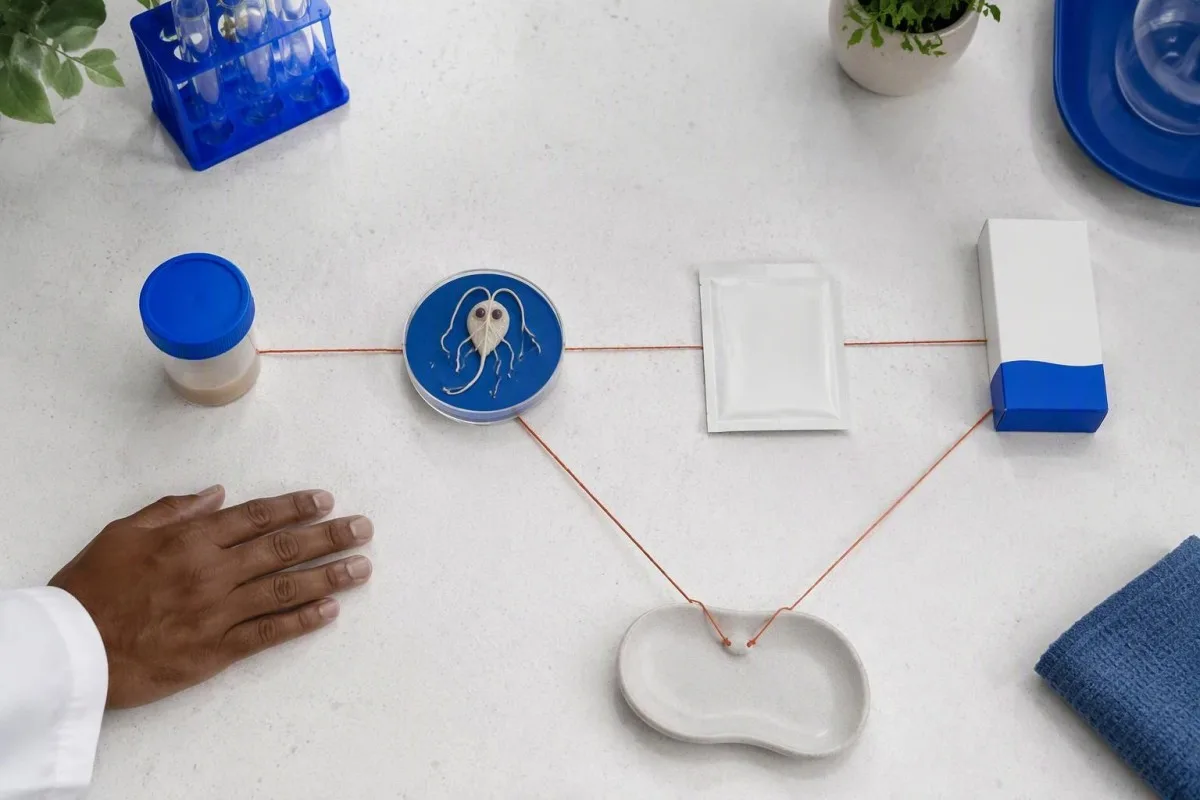
Common adult regimens include tinidazole 2 g once with food, metronidazole 250 mg three times daily for 5–7 days, or nitazoxanide 500 mg twice daily with food for 3 days. These are examples, not instructions for self-treatment; local guidelines, product labeling, and individual circumstances can justify a different regimen.
Tinidazole combines a short schedule with strong efficacy evidence. Ordóñez-Mena, McCarthy, and Fanshawe's network meta-analysis found greater parasitological cure with tinidazole than metronidazole across the included trials, although study quality and follow-up varied (Ordóñez-Mena et al., 2018); completing 1 prescribed dose can also be easier than remembering multiple daily doses.
An asymptomatic positive result does not always require the same decision as symptomatic diarrhea. Clinicians may consider treatment when household transmission, vulnerable contacts, or occupational rules make carriage consequential; Kantesti cannot prescribe these medicines, and our discussion of medication safety monitoring distinguishes result interpretation from treatment authorization.
Which treatment precautions change the prescription?
Pregnancy, breastfeeding, childhood, anticoagulant use, and previous drug reactions can change the safest Giardia prescription. These circumstances should be disclosed before the first dose. Product-specific advice matters: 2 medicines used for the same parasite may have different age approvals, feeding precautions, and interaction risks.

Pediatric doses are generally weight-based, not a fraction of an adult tablet guessed at home. For example, tinidazole labeling permits a single 50 mg/kg dose, up to 2 g, for giardiasis in children older than 3 years; the child's clinician must check local approval, formulation, and whether another medicine is more appropriate.
Pregnancy needs an individual assessment of symptom severity, hydration, gestational timing, and drug evidence—not an automatic decision to delay all care. Tinidazole is generally avoided in pregnancy, particularly early pregnancy, and its labeling recommends interrupting breastfeeding during treatment and for 72 hours after the last dose; alternatives require clinician advice.
Metronidazole and tinidazole can increase warfarin's anticoagulant effect, making an INR monitoring plan relevant even for a short course. See INR антибиотиктерден кейін өзгерсе for the reasoning; alcohol restrictions also follow the prescribed product's instructions, commonly extending 72 hours after nitroimidazole treatment, rather than an assumption that 1 symptom-free evening proves safety.
What helps during the first days of recovery?
Oral rehydration and adequate food intake support Giardia recovery, but neither replaces antiparasitic treatment when it is indicated. Use a commercial oral rehydration solution mixed exactly as directed when diarrhea is substantial. Review the direction of change over 24–48 hours rather than expecting a normal stool immediately after medication.

Small, frequent sips can be easier to retain than a large glass taken quickly. For many otherwise healthy adults, roughly 200–250 mL of additional oral rehydration solution after each loose stool is a practical starting point, adjusted to thirst and losses; children and people with heart or kidney disease need individualized advice.
Plain water is useful, but substantial diarrhea also removes sodium and other electrolytes. Potassium below 3.5 mmol/L is generally low, although the laboratory range applies, and worsening weakness or palpitations can justify checking an электролиттер панелі rather than simply drinking progressively larger amounts of water.
Dehydration can raise creatinine and temporarily lower calculated eGFR without proving chronic kidney disease. Kantesti is an AI blood test interpretation platform that can explain those accompanying results in context; a dehydration-related eGFR change is best reassessed after clinical recovery when appropriate, not labeled permanent from 1 dehydrated sample.
Why symptoms can persist after Giardia clears
Digestive symptoms can continue after Giardia clears because intestinal recovery is slower than parasite elimination. Temporary lactase deficiency, altered bowel sensitivity, and post-infectious irritable bowel syndrome are recognized explanations. A negative follow-up investigation and ongoing symptoms are not contradictory; they may describe 2 different stages of the same illness.
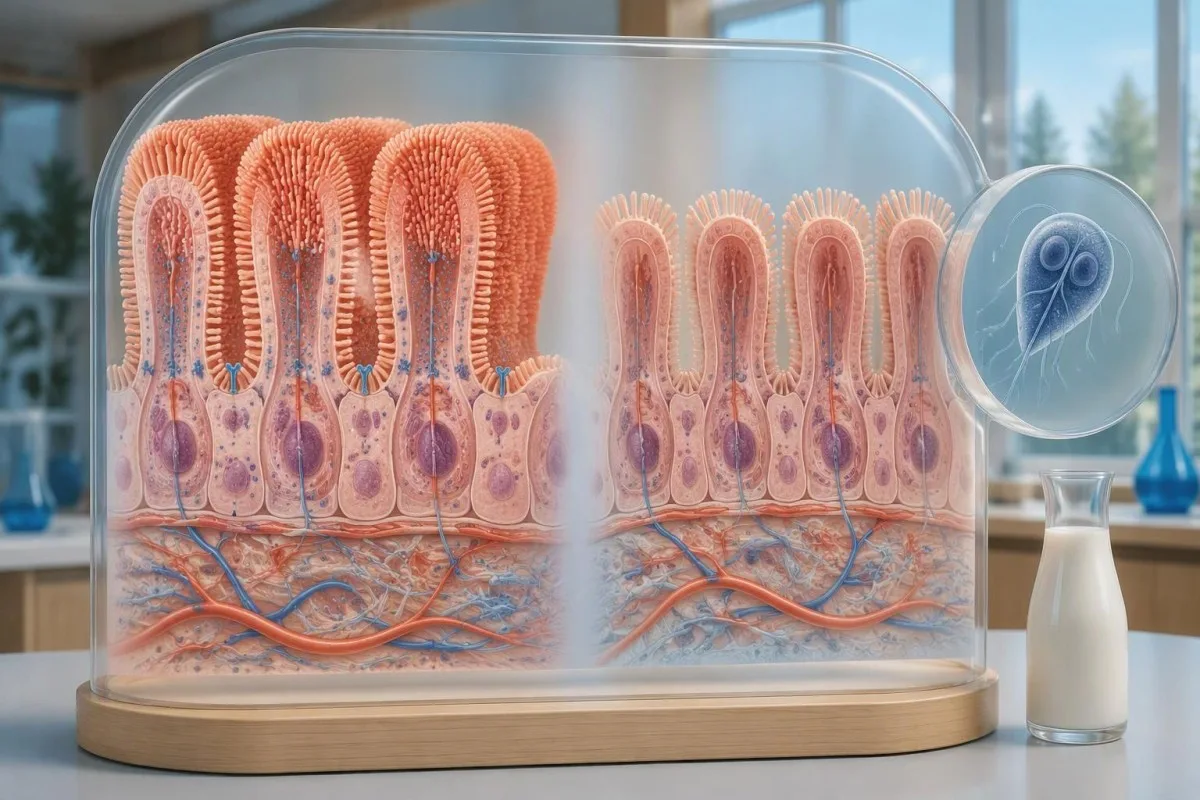
Lactase sits on the small-intestinal brush border, so Giardia-related surface disruption can make previously tolerated milk trigger gas and diarrhea. A 1–2 week trial of reduced lactose, followed by gradual reintroduction as symptoms settle, may be reasonable; lactose-free dairy retains protein and calcium, and complete dairy avoidance is not automatically necessary.
Post-infectious symptoms can also last much longer than temporary food intolerance. In a Norwegian outbreak cohort assessed 6 years later, IBS occurred in 39.4% of previously infected participants versus 11.6% of controls (Hanevik et al., 2014); those figures describe that particular cohort, not the expected outcome for every person with a positive antigen.
The pattern helps choose the next step: milk-triggered symptoms suggest malabsorption, whereas pain linked to defecation and fluctuating stool consistency may suggest post-infectious bowel dysfunction. In children, stool pH interpretation has limitations; 1 low result cannot identify Giardia or prove that a restrictive diet is needed.
What else should be checked if diarrhea continues?
Persistent diarrhea after Giardia treatment may reflect ongoing infection, reinfection, medication effects, or a separate digestive condition. Once appropriate stool investigations are negative, repeating antiparasitic prescriptions without reassessment can delay the correct diagnosis. Symptoms lasting 4 weeks or longer usually deserve a structured chronic-diarrhea review, sooner if warning signs appear.
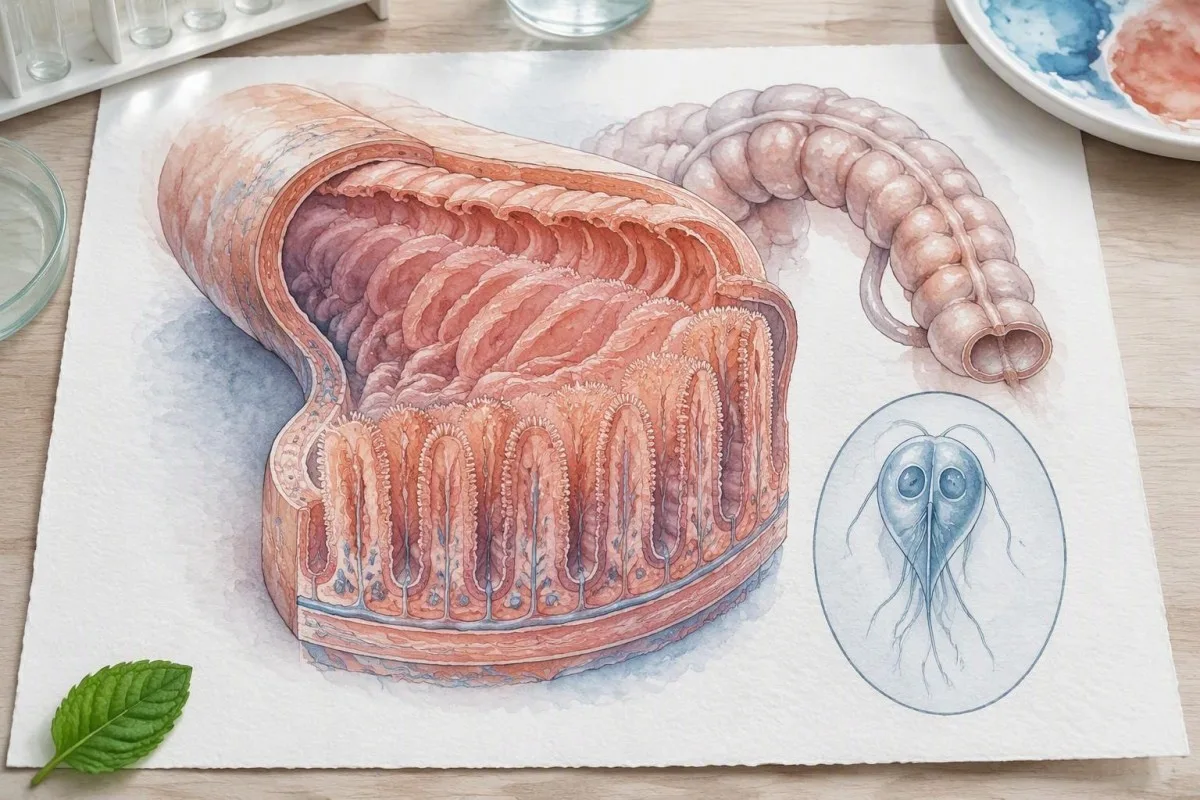
Persistent bloating is not enough to diagnose small-intestinal bacterial overgrowth. A clinician may consider breath testing when risk factors and the symptom pattern support it, but test preparation and interpretation matter; our explanation of SIBO breath test limits shows why 1 positive-looking curve should not automatically trigger another antibiotic.
Celiac disease, inflammatory bowel disease, pancreatic problems, and another intestinal pathogen can enter the differential when weight loss, prolonged diarrhea, or nutritional abnormalities persist. If celiac testing is planned, removing gluten first can reduce test sensitivity; gluten exposure before testing should be discussed before starting a restrictive diet for 2 or more weeks.
The medication timeline often provides a simpler explanation than a new diagnosis. Nausea beginning with treatment, diarrhea associated with magnesium supplements, or symptoms after another antibiotic should be recorded with dates; in an illustrative patient whose stools improve by day 4 but bloating worsens after dairy, I would reassess the trigger before assuming resistance.
When should a positive Giardia test be repeated?
Repeat Giardia testing is usually appropriate when symptoms persist or recur, not routinely after symptoms resolve. In its treatment-failure pathway, CDC advises waiting at least 2 weeks after the last anti-Giardia medication dose before re-examination, using 3 stool specimens collected over several days. Worsening illness requires assessment without waiting for that interval.
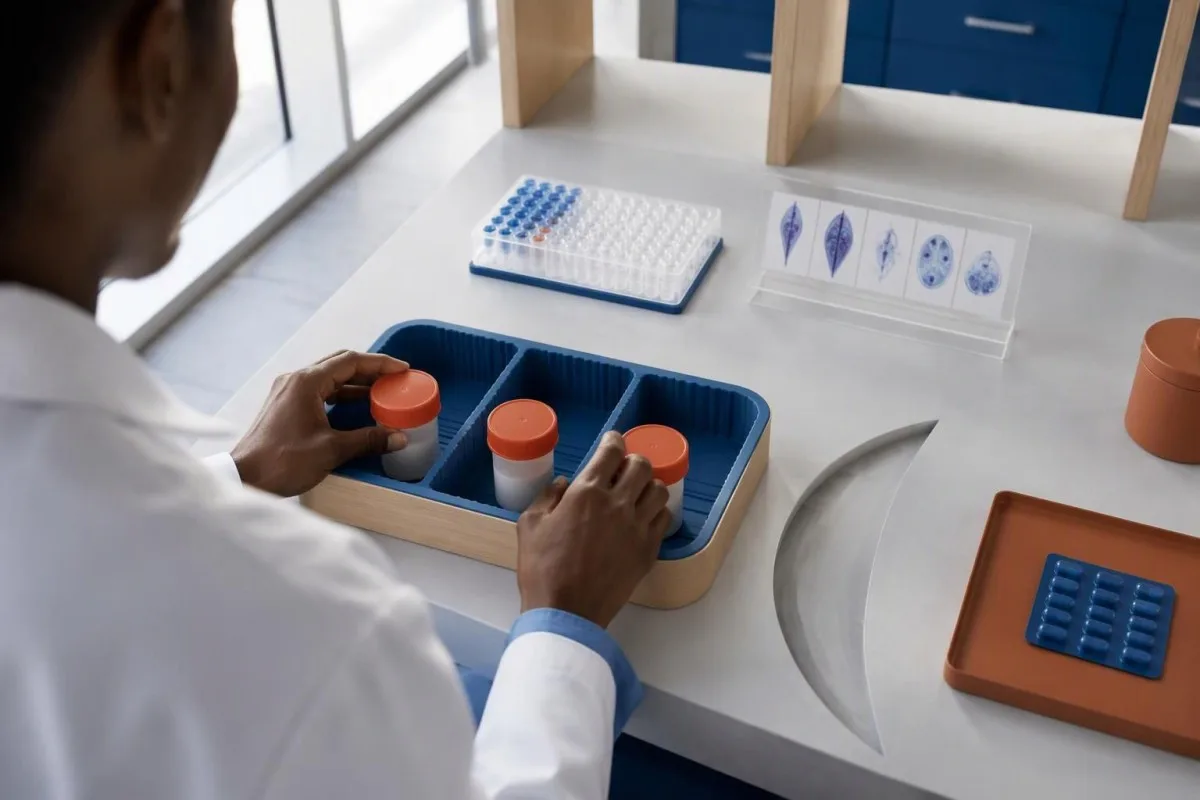
The CDC Patient Care for Giardia Infection guidance uses antigen testing or microscopy on 3 specimens to assess whether infection remains (CDC, 2024). If those investigations are negative, ongoing infection becomes less likely even when symptoms continue; serial specimens address intermittent shedding rather than representing 3 identical confirmations from the same container.
An early positive result is harder to use as a clean treatment endpoint. Antigen proteins and genetic targets do not disappear according to 1 universal timetable, and laboratories differ in assay performance; ask which method was used, the collection date relative to the final dose, and whether the result would actually change management.
Public-health or workplace requirements can create exceptions, particularly during outbreaks or for specific childcare and food-handling roles. Kantesti separates test interpretation from clearance decisions; our клиникалық әдістеме стандарттары explain why a positive or negative result must be interpreted with specimen timing and the relevant local rule, not 1 generic return-to-work promise.
What happens when Giardia remains positive after treatment?
A persistently positive Giardia result should prompt checks for reinfection and inadequate treatment before assuming drug resistance. Clinicians review the exact prescription, doses taken, vomiting, repeat exposures, and specimen timing. Confirmed infection despite an adequate regimen may require specialist-directed treatment using a different medicine or combination rather than blindly repeating the first course.
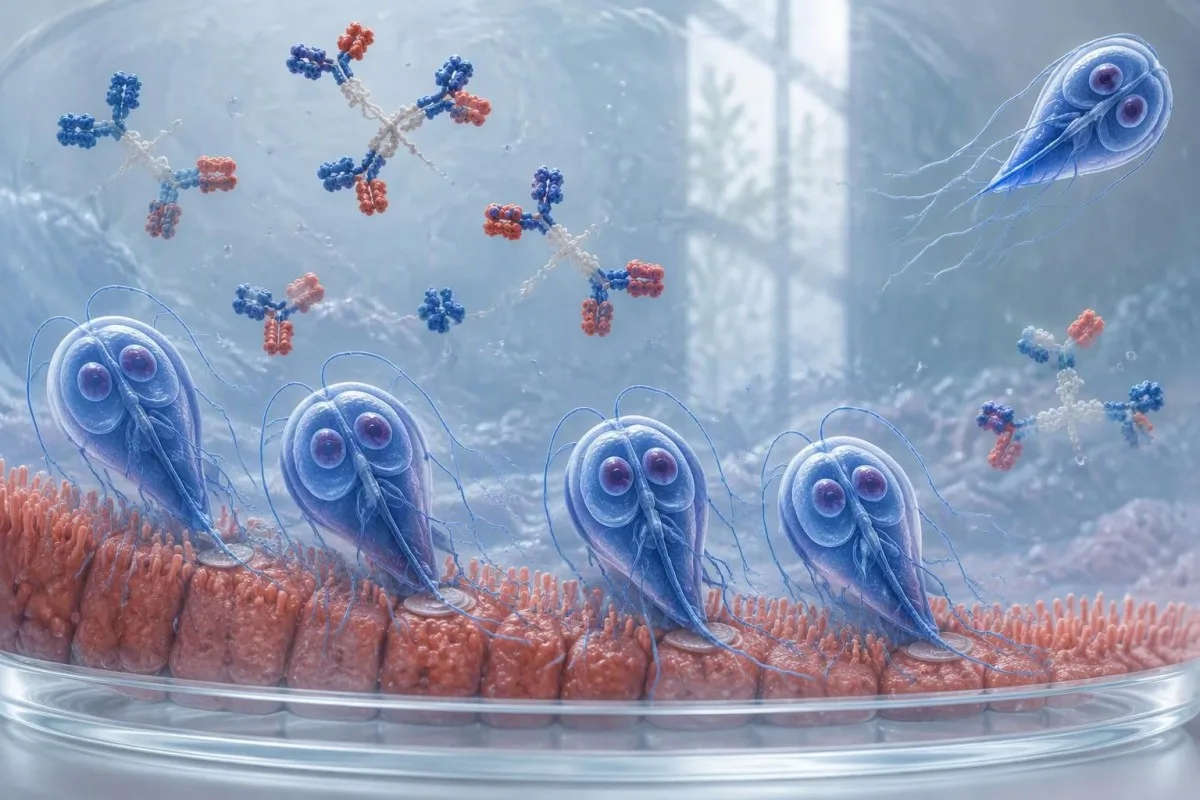
A returning positive result does not distinguish relapse from a fresh exposure. Ask whether untreated water is still being consumed, a symptomatic household member remains unassessed, or childcare exposure continues; a 2-week gap between improvement and renewed diarrhea can fit several explanations, so that interval alone cannot establish resistance.
Medication delivery is another practical checkpoint. Vomiting soon after a single dose, stopping a 7-day course early, or receiving an incorrect weight-based dose can reduce effective treatment; CDC places reinfection and inadequate treatment checks before combination therapy in its persistent-infection pathway (CDC, 2024).
Repeated confirmed giardiasis despite appropriate treatment can justify evaluating immune function, especially with other recurrent infections or unexplained nutritional decline. Clinicians may review IgG, IgA, and IgM together rather than ordering 1 isolated measurement; our иммуноглобулин нәтижелеріне арналған нұсқаулықымыз explains why low IgA and broader antibody deficiencies require different follow-up.
How to prevent spread and reinfection during recovery
Giardia spreads when microscopic cysts from fecal contamination are swallowed through water, food, hands, or contaminated objects. People may remain infectious after symptoms improve. Avoid swimming while diarrhea continues and for 2 weeks after it stops; routine pool chlorination does not immediately eliminate Giardia.
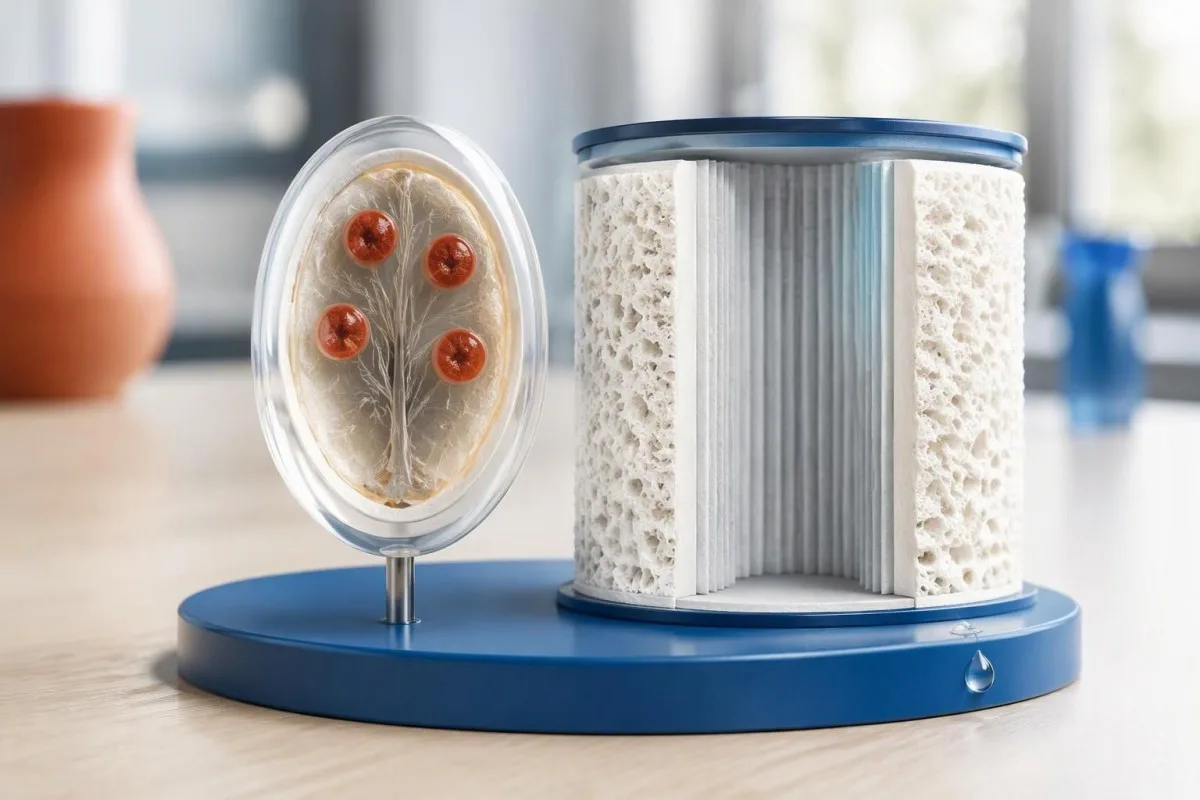
Soap-and-water handwashing after toilet use or diaper changes and before food preparation is a practical priority. Clean visible contamination before applying a suitable disinfectant according to its instructions; 1 quick wipe of a still-soiled surface is less reliable because organic material can interfere with disinfection.
For drinking water of uncertain safety, CDC recommends bringing water to a rolling boil for 1 minute, or 3 minutes above 6,500 feet, approximately 2,000 metres. A filter specifically rated to remove cysts, such as an appropriate absolute 1-micron filter, can help with Giardia but does not automatically remove every virus or chemical contaminant.
Household contacts with symptoms should seek assessment rather than share the patient's prescription. Food handling, childcare attendance, and intimate contact involving possible fecal exposure need additional precautions; contagiousness after gastroenteritis illustrates why feeling well and no longer transmitting are 2 separate questions, although each organism has its own rules.
Which symptoms need urgent medical assessment?
Seek urgent assessment for severe dehydration, inability to retain fluids, fainting, confusion, bloody or black stool, or severe localized abdominal pain. Giardia does not explain every abnormal symptom in someone with a positive test. Infants, older adults, pregnant patients, and immunocompromised people may need review earlier, even within the first 24 hours of worsening diarrhea.
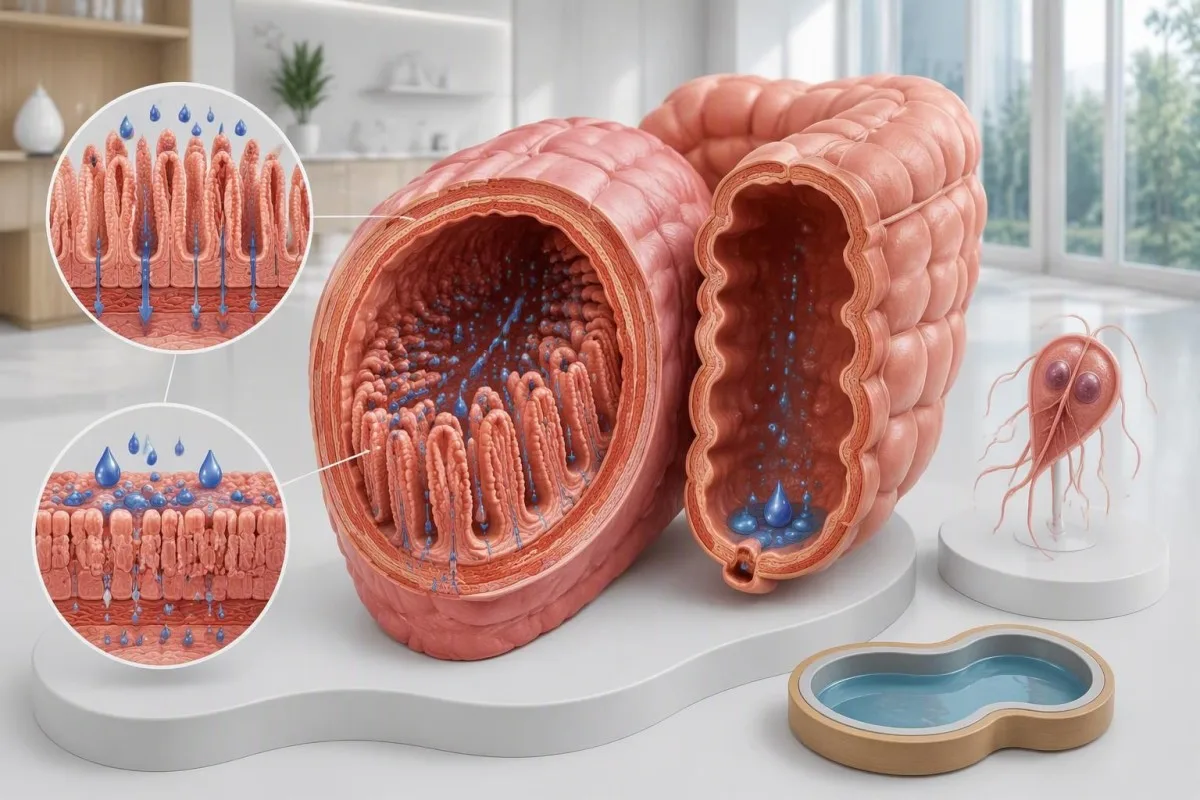
Markedly reduced urination matters more than a reassuring stool result. An adult producing little or no urine for roughly 8–12 hours despite attempted drinking, particularly with dizziness or a rapid pulse, should obtain urgent advice; do not use that interval as a reason to wait if confusion, collapse, or rapid deterioration develops.
Visible blood, black tarry stool, or high fever should broaden the diagnosis beyond uncomplicated giardiasis. A temperature around 39°C with worsening abdominal symptoms warrants prompt review, and our guide to нәжістегі қанның шұғылдығы explains why color, volume, and associated symptoms change the response.
A normal inflammatory marker does not make severe abdominal pain safe to monitor at home. For example, a CRP of 3 mg/L may fall within a laboratory's normal range but cannot exclude an early abdominal emergency; WBC және CRP сәйкессіздігі is a reminder that clinical examination takes priority over 1 reassuring number.
Where blood tests and AI interpretation can help
Blood tests assess consequences of Giardia illness, such as dehydration or nutritional problems; they do not replace stool testing to establish infection or clearance. A CBC, electrolytes, kidney function, or selected nutritional markers may be useful when symptoms or examination justify them. An uncomplicated, improving case does not automatically require 1 large laboratory panel.

Persistent fatigue after diarrhea can reflect inadequate intake, sleep disruption, iron deficiency, or post-infectious illness. A hemoglobin below about 12 g/dL in a nonpregnant adult woman or 13 g/dL in an adult man generally suggests anemia, but local ranges and clinical context apply; fatigue alone cannot identify the cause or justify every supplement.
Kantesti is an AI biomarker interpretation platform that helps explain accompanying CBC, electrolyte, and kidney results rather than diagnosing Giardia from them. Our AI технологиясы бойынша нұсқаулық describes the interpretation workflow; 1 uploaded report should be considered alongside symptoms, medicines, hydration, and the actual stool assay.
My editorial rule as Thomas Klein, MD, is simple: never let a normal blood panel overrule a worrying history, and never let an AI explanation authorize another antiparasitic course. Kantesti's медициналық консультативтік кеңес provides information about our medical expertise; ongoing symptoms beyond 4 weeks deserve clinician-led reassessment rather than escalating diet restrictions or repeatedly checking the same biomarker.
Зерттеу дереккөздері және байланысты зертханалық жарияланымдар
The clinical recommendations here draw on CDC Giardia guidance and peer-reviewed research on treatment and post-infectious outcomes. As of October 24, 2026, the practical distinction remains infection clearance versus symptom recovery. The 2 Zenodo guides below address accompanying kidney or urine findings; neither is evidence that a Giardia stool antigen has cleared.
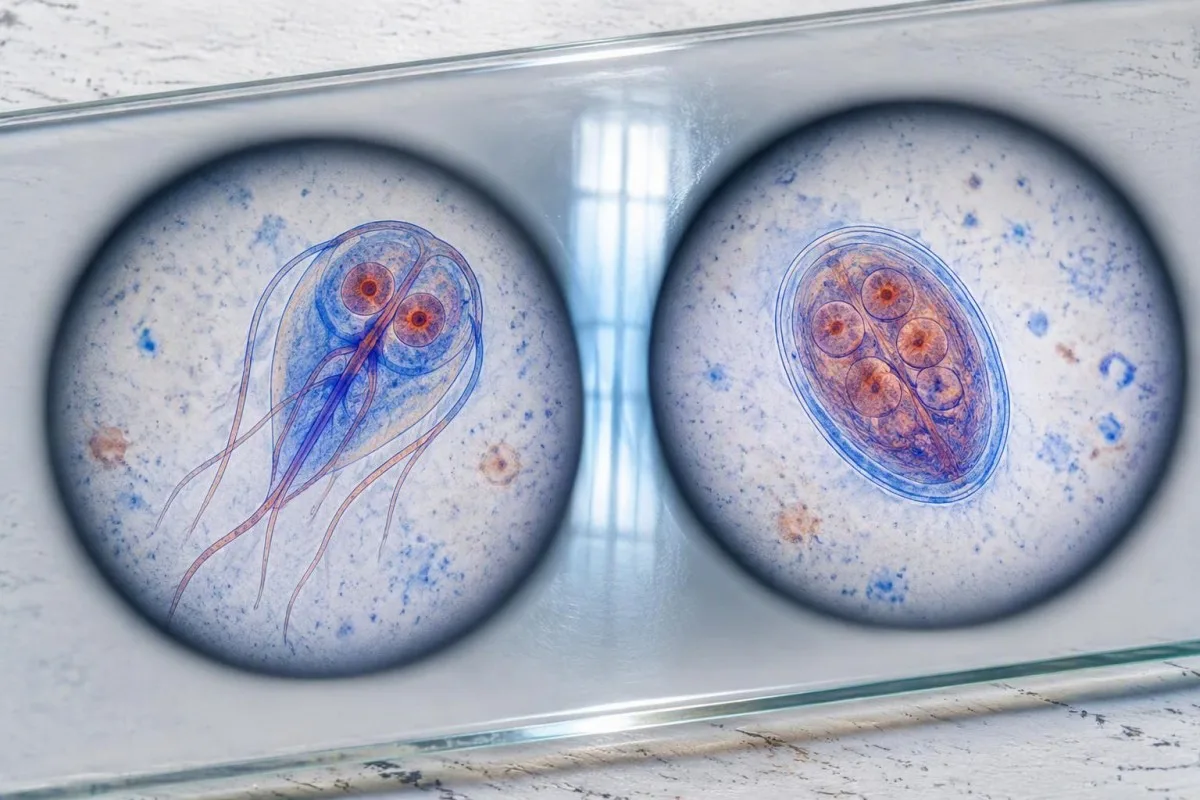
Treatment comparisons come from Ordóñez-Mena et al. (2018), while the 6-year post-infectious outcomes come from Hanevik et al. (2014); CDC's clinical-care pathway supplies the repeat-testing and treatment-failure framework. Kantesti's медициналық мазмұн стандарттары distinguish clinical research from educational repository publications, because a DOI identifies a document but does not establish peer review.
BUN/Creatinine Ratio Explained: Kidney Function Test Guide. (n.d.). Zenodo. https://doi.org/10.5281/zenodo.18207872. This publication provides background for kidney markers during dehydration, not a diagnostic rule for Giardia; the ResearchGate жарияланымдарын іздеу және Academia.edu жарияланым іздеу are discovery links, not verified hosted copies.
Urobilinogen in Urine Test: Complete Urinalysis Guide 2026. (n.d.). Zenodo. https://doi.org/10.5281/zenodo.18226379. The несеп талдауын түсіндіру жөніндегі нұсқаулық concerns urinary findings rather than parasite clearance; its ResearchGate іздеу және Academia.edu іздеу likewise do not establish an independently reviewed publication record.
Жиі қойылатын сұрақтар
Лямблия антигенінің анықталуы менде белсенді инфекция бар дегенді білдіре ме?
Лямблия антигенінің анықталуы нәжістен паразит ақуыздары табылғанын білдіреді және әдетте, әсіресе тән симптомдары бар адамда емге дейін анықталса, қазіргі инфекцияны растайды. Нәтиже паразит жүктемесінің мөлшерін көрсетпейді және жұқтырған нақты уақытты анықтамайды. Дәрі қабылдағаннан кейін 2 күн өткенде алынған үлгіні емнің сәтсіздігінің дәлелі ретінде түсіндіру, тиісті уақытта алынған бақылау үлгісіне қарағанда, қиынырақ. Әсіресе симптомдар сақталса немесе нәтиже күтпеген болса, оны дәрігермен талқылаңыз.
Giardia нәжіс антигені оң нәтиже бергенде әдетте қандай ем қолданылады?
Симптомдары бар лямблиоз кезінде әдетте рецепт бойынша тинидазол, метронидазол немесе нитазоксанид тағайындалады. Ересектерге арналған кең таралған емдеу сызбаларының бірі — тамақпен бірге бір рет 2 g тинидазол қабылдау; балама нұсқаларға 5–7 күн бойы метронидазол немесе 3 күн бойы нитазоксанид қабылдау жатады. Жас, жүктілік, емшекпен емізу, дәрілердің өзара әсері, бұрынғы емдеу және жергілікті қолжетімділік тағайындалатын емді өзгертуі мүмкін. Қалған дәрілерді қолданбаңыз және үйдегілердің емін бөлісіп қабылдамаңыз.
Емдеуден кейін лямблия қанша уақыт сақталады?
0 Giardia белгілері тиімді емнен кейін бірнеше күн ішінде жиі жақсара бастайды, бірақ ас қорыту жүйесінің толық қалпына келуі ұзағырақ уақыт алуы мүмкін. Емделмеген симптомды ауру әдетте 2–6 аптаға созылады, кейде одан да ұзаққа жалғасады. Паразит жойылғаннан кейін де лактозаны уақытша көтере алмау немесе инфекциядан кейінгі ішек қызметінің бұзылысы сақталуы мүмкін. Симптомдар күшейсе, сусыздану немесе тұрақты диарея болса, дәріні автоматты түрде қайта тағайындаудың орнына жағдайды қайта бағалау қажет.
Лямблияға нәжіс талдауын қашан қайталауым керек?
Симптомдар басылған жағдайда лямблияға қайталап жоспарлы тестілеу әдетте қажет емес. Емнің сәтсіздігіне күдік болса, CDC қайта тексеруден бұрын лямблияға қарсы дәрінің соңғы дозасын қабылдағаннан кейін кемінде 2 апта күтуді және бірнеше күн бойы жиналған 3 нәжіс үлгісін пайдалануды ұсынады. Жергілікті қоғамдық денсаулық сақтау ережелерінде ерекшеліктер болуы мүмкін. Ауру ауыр немесе асқынып бара жатса, тестілеу аралығын күтпей, дереу бағалау қажет.
Лямблияға талдауым теріс болса да, ішім неге әлі кебеді?
Лямблияға жүргізілген зерттеулер теріс нәтиже бергеннен кейінгі іштің кебуі лактозаның уақытша сіңірілмеуін, инфекциядан кейінгі ішек сезімталдығын немесе ас қорытудың басқа бұзылысын білдіруі мүмкін. Лактозасы азайтылған диетаны 1–2 апта ұстану ішек қызметі қалпына келгенше тағамдық түрткі болатын өнімді анықтауға көмектесуі мүмкін. Симптомдардың сақталуы өздігінен лямблияның әлі де бар екенін дәлелдемейді. Салмақ жоғалту, түнгі диарея, нәжісте қан болуы немесе симптомдардың 4 аптадан ұзаққа созылуы дәрігердің жүйелі тексеруін қажет етеді.
Іш өтуім тоқтағаннан кейін лямблиозды жұқтыра аламын ба?
Диарея басылғаннан кейін де лямблия жұғуы мүмкін, себебі микроскопиялық цисталар нәжіспен бөлінуін жалғастыруы ықтимал. CDC диарея тоқтағаннан кейін 2 апта бойы суға түспеуге кеңес береді. Дәретхананы пайдаланғаннан кейін және тамақ дайындамас бұрын қолды сабынмен және сумен жуыңыз, сондай-ақ жергілікті тағаммен жұмыс істеу немесе бала күтімі ережелерін сақтаңыз. Белгілері бар үй мүшелері дәріні ортақ пайдаланбай, өздері медициналық тексеруден өткені жөн.
Бүгін AI арқылы қан талдауы нәтижесін алыңыз
Kantesti-ті лезде әрі дәл зертханалық талдау үшін сенетін бүкіл әлем бойынша 2 миллионнан астам пайдаланушыға қосылыңыз. Қан анализінің нәтижелерін ж.үктеп, бірнеше секунд ішінде 15,000+ биомаркерлерінің жан-жақты түсіндірмесін алыңыз.
📚 Сілтеме жасалған ғылыми жарияланымдар
Кляйн, Т., Митчелл, С., & Вебер, Х. (2026). BUN/креатинин қатынасының түсіндірмесі: бүйрек функциясын тексеруге арналған нұсқаулық. Kantesti AI медициналық зерттеулер.
Кляйн, Т., Митчелл, С., & Вебер, Х. (2026). Зәрдегі уробилиноген: 2026 жылға арналған толық зәр анализі бойынша нұсқаулық. Kantesti AI медициналық зерттеулер.
📖 Сыртқы медициналық сілтемелер
Ауруларды бақылау және алдын алу орталықтары (2024). Patient Care for Giardia Infection. CDC Clinical Care Guidance.
Ordóñez-Mena JM, McCarthy ND, Fanshawe TR (2018). Comparative efficacy of drugs for treating giardiasis: a systematic update of the literature and network meta-analysis of randomized clinical trials. Journal of Antimicrobial Chemotherapy.
Hanevik K et al. (2014). Irritable bowel syndrome and chronic fatigue 6 years after Giardia infection: a controlled prospective cohort study. Клиникалық жұқпалы аурулар (Clinical Infectious Diseases).



⚕️ Медициналық ескерту
Бұл мақала тек білім беру мақсатында ғана және медициналық кеңес болып табылмайды. Диагноз және ем туралы шешімдер үшін әрдайым білікті медицина қызметкеріне жүгініңіз.
E-E-A-T сенім сигналдары
Тәжірибе
Дәрігер басқаратын зертханалық талдауды түсіндіру жұмыс ағындарын клиникалық шолу.
Сараптама
Биомаркерлердің клиникалық контексте қалай әрекет ететініне зертханалық медицина фокусы.
Билік
Доктор Томас Клейн жазған, доктор Сара Митчелл және профессор доктор Ханс Вебер шолған.
Сенімділік
Дабыл қаупін азайту үшін айқын бақылау жолдарымен дәлелге негізделген түсіндіру.
