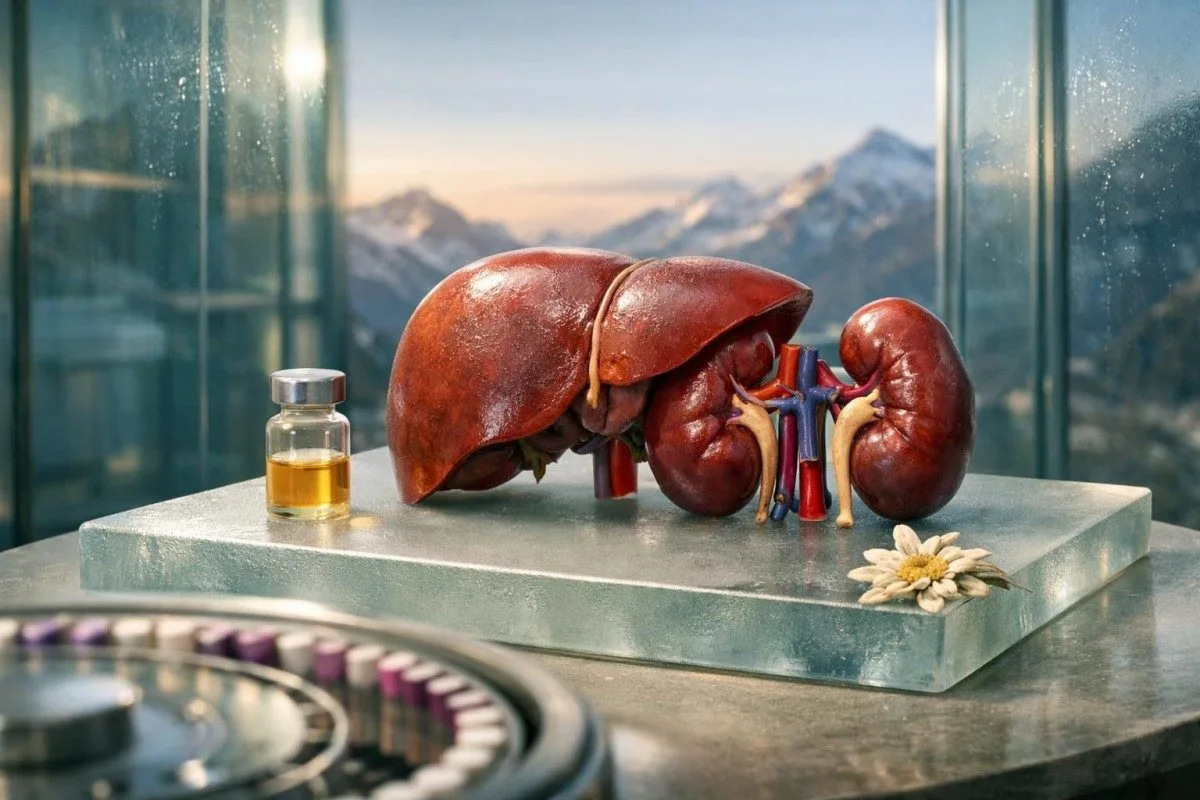
BMP answers the kidney-electrolyte question quickly. CMP asks the same question and adds liver plus protein clues that often change what I do next.


- Overlap BMP and CMP share 8 markers: sodium, potassium, chloride, CO2, glucose, calcium, BUN, and creatinine.
- CMP adds 6 extra markers: albumin, total protein, ALP, ALT, AST, and bilirubin.
- 空腹時血糖 of 100-125 mg/dL suggests prediabetes; 126 mg/dL or higher needs confirmation for diabetes.
- Potassium urgency はおよそ <3.0 or >6.0 mmol/L, especially with weakness, palpitations, or ECG changes.
- Creatinine change of +0.3 mg/dL within 48 hours meets KDIGO criteria for possible acute kidney injury.
- ジルバート症候群 often causes isolated bilirubin around 1.3-3.0 mg/dL with normal ALT, AST, and ALP.
- Fasting is not always required, but 8-12 hours improves interpretation when glucose is the main question.
- Panels miss a lot: magnesium, CBC, ferritin, thyroid markers, lipids, and HbA1c are not included on standard BMP or CMP.
CMP blood test vs BMP at a glance
CMP blood test そして BMP blood test share 8 chemistry markers, but a 総合代謝パネル adds 6 liver and protein tests—albumin, total protein, ALP, ALT, AST, and bilirubin. If I mainly need electrolytes, glucose, hydration, and kidney function, I usually start with BMP; if I also want liver context, I choose CMP, and our Kantesti AI血液検査分析装置 can interpret either panel alongside our CMP and lab abbreviation guide.
BMP is not a lesser-quality test; it is a narrower test. In clinic, I order BMP after vomiting, diarrhea, new diuretics, dehydration, palpitations, or diabetes checks because sodium, potassium, bicarbonate, glucose, BUN, and creatinine usually answer the first question fast.
CMP is BMP plus liver-protein information. As of April 6, 2026, most adult US labs still report 14 analytes on CMP and 8 on BMP, although some automatically append eGFR そして anion gap without changing the panel name. That lab-to-lab variation confuses patients more often than the actual numbers.
The thing is, the right panel depends on the clinical decision in front of us. A person with ankle swelling and dark urine gets more value from a CMP than a BMP, while a person with heat illness after a half-marathon often needs a BMP first because the immediate risk is electrolyte shift, not subtle liver disease.
Which biomarkers overlap, and what does CMP add?
The overlap is exact in most labs: sodium, potassium, chloride, bicarbonate or CO2, glucose, calcium, BUN, and creatinine. Those eight markers cover fluid balance, acid-base status, kidney filtration, and a single-time-point glucose reading; our 15,000+ バイオマーカ―ガイド is useful if your report names the same analyte differently.
Sodium normal range is 135 to 145 mmol/L, potassium is 3.5 to 5.1 mmol/L, chloride is 98 to 107 mmol/L, and CO2 is 22 to 29 mmol/L in many adult labs. These numbers look simple, but together they tell me whether the body is retaining water, losing acid, compensating for lung disease, or reacting to medications like diuretics and ACE inhibitors.
CMP adds albumin, total protein, ALP, ALT, AST, and total bilirubin. Those six markers matter because they catch patterns a BMP simply cannot see—cholestasis, hepatocellular irritation, low protein states, and the very common isolated bilirubin bump of ジルバート症候群, where total bilirubin is often 1.3 to 3.0 mg/dL with normal ALT and AST.
Here is a subtle point I wish more patients heard: CO2 on a metabolic panel is not the same thing as an arterial blood gas bicarbonate, even though it often tracks with it. And reference limits are not universal; some European labs use an ALT upper limit closer to 35 U/L, while older US reports may still label values in the 45 to 56 U/L range as normal, which is why Kantesti AI flags borderline results in context rather than by color alone.
Why some reports show eGFR or anion gap
eGFR and anion gap are often calculated extras, not ordered analytes. If your report shows them on a BMP or CMP, the lab derived them from creatinine and electrolytes; that is clinically helpful, but it does not mean the panel itself suddenly became a different test.
What the BMP blood test tells you in real practice
A BMP blood test is best for kidney function, electrolytes, acid-base clues, and glucose. It is the panel I reach for when I need to know whether the patient is dry, retaining potassium, losing bicarbonate, or drifting into hyperglycemia.
Sodium normal range is 135 to 145 mmol/L in most adults, and potassium normal range is 3.5 to 5.1 mmol/L. Sodium below 125 mmol/L or potassium above 6.0 mmol/L can turn into an urgent problem quickly, which is why even a supposedly routine BMP sometimes leads to a same-day phone call.
Creatinine normal range is roughly 0.6 to 1.3 mg/dL, but muscle mass changes the meaning. I often send patients to our creatinine interpretation guide そして BUN guide because a creatinine of 1.3 mg/dL can be trivial in a muscular 25-year-old and more concerning in a frail 78-year-old. A rise in creatinine of 48時間以内に 0.3 mg/dL 上昇することは meets KDIGO criteria for possible acute kidney injury.
BUN normal range is about 7 to 20 mg/dL, but BUN is a hydration marker as much as a kidney marker. High protein intake, gastrointestinal bleeding, steroid use, and dehydration can push BUN up without intrinsic kidney damage, while low BUN can show up in pregnancy, low protein intake, or advanced liver disease. Many labs now auto-report eGFR because creatinine alone misses a lot.
What the comprehensive metabolic panel adds beyond BMP
The comprehensive metabolic panel adds liver enzymes, bilirubin, albumin, and total protein. That makes CMP the better choice when symptoms point above the kidneys—right upper abdominal pain, jaundice, itching, medication monitoring, or unexplained swelling.
ALT and AST most often rise with liver cell stress, while ALP tends to rise with bile flow problems or bone activity. In practice, I look at pattern before magnitude; an ALT of 78 U/L with normal ALP suggests a different workup than an ALP of 220 U/L with normal ALT. Our liver enzyme pattern guide goes deeper into that split.
Total bilirubin normal range is usually 0.2 to 1.2 mg/dL, and values above 2 to 3 mg/dL are often visible in the eyes before the skin. A mildly high bilirubin with normal ALT, AST, and ALP is often benign Gilbert syndrome, especially after fasting, illness, or hard exercise; our bilirubin guide is where I send anxious patients first.
Albumin normal range is about 3.5 to 5.0 g/dL, and total protein normal range is 6.0 to 8.3 g/dL. Low albumin can reflect liver synthetic problems, kidney protein loss, chronic inflammation, or inadequate intake, and it can make total calcium look falsely low because roughly 40% of serum calcium rides on albumin. If albumin is 2.8 g/dL, a measured calcium of 8.1 mg/dL may not represent true ionized hypocalcemia; our eGFRの記事 explains that math, the A/G ratio, and why a globulin gap above about 4.0 g/dL gets my attention.
When clinicians order BMP vs CMP after symptoms or routine screening
Doctors usually order BMP for immediate electrolyte or kidney questions, and CMP when they also need liver or protein context. In the emergency department, BMP is common after dehydration, diarrhea, heat illness, palpitations, or suspected diabetic decompensation; CMP is more common when nausea comes with dark urine, abdominal pain, or medication concerns.
Symptoms matter more than panel size. A patient with muscle cramps after starting hydrochlorothiazide needs sodium, potassium, calcium, bicarbonate, BUN, and creatinine right away, while a patient with pale stools and itching needs bilirubin and ALP just as much as creatinine.
Pre-op and medication monitoring often decide the panel. Surgeons commonly start with a targeted chemistry panel before anesthesia, especially if the patient uses diuretics, ACE inhibitors, or has diabetes; our 手術前の血液検査ガイド shows how that decision is usually made. I also choose CMP more often for people taking valproate, methotrexate, terbinafine, or chronic acetaminophen overuse, because liver context actually changes what I do next.
Honestly, routine screening is one of those areas where practice varies. Some primary-care clinicians default to CMP during annual visits because it gives more context for only a small extra lab cost, while others prefer BMP unless there is a reason to look at liver proteins or bilirubin; both approaches can be reasonable if the symptoms and risk factors are clear.
Do you need to fast, and how are the labs run?
Fasting is not always required for a CMP blood test or BMP blood test, but it still matters for glucose interpretation. If the panel is being used to assess fasting glucose, I prefer 8〜12時間 of no calories, while plain water is fine and often helpful; our 血液検査前の絶食ガイド は実務上の詳細をカバーしています。.
A nonfasting glucose can still be useful, but it answers a different question. A glucose of 108 mg/dL after breakfast is not the same as 108 mg/dL after a 10-hour fast, which is why I often pair the interpretation with our fasting glucose range explainer. ADA cutoffs still define fasting glucose of 100〜125 mg/dL を前糖尿病と定義し、 126 mg/dL以上 as diabetes if confirmed.
Most labs run BMP and CMP on serum or plasma using automated chemistry analyzers and ion-selective electrodes. Delayed sample processing can lower glucose by roughly 5% to 7% per hour in an unseparated sample, and hemolysis can falsely raise potassium and AST. Kantesti AI also down-ranks isolated glucose outliers when the report documents sample delay or hemolysis because bad samples create bad stories.
Turnaround is usually fast. Inpatients can get results within 1 to 3 hours, many outpatient labs return them the same day, and almost all routine results are back within 24 hours; if you are unsure what a pending result timeline means, our real-world lab timing guide is the clearest explanation I know.
How to interpret common abnormal CMP and BMP patterns
The safest way to read a metabolic panel is to read the pattern, not the isolated flag. A mildly abnormal single value is common; a cluster of abnormalities—such as high BUN, high creatinine, low bicarbonate, and high potassium—is what changes urgency.
A BUN/creatinine ratio above about 20 often points to dehydration or reduced kidney perfusion, not necessarily intrinsic kidney injury. I see this after stomach flu, poor oral intake, fever, and sometimes gastrointestinal bleeding, but I have also seen it in healthy people who simply did a long sauna session before labs. Our 検査上のアーティファクトは軽視できません。毎週、人々をだますからです。EDTA依存性の血小板凝集は、見かけ上の低値を生み出すことがあります。末梢血塗抹標本、またはクエン酸チューブでの再検は、しばしば謎を解決します。より広いパネルでも腎疾患、肝疾患、または蛋白異常が示唆される場合、読者は私たちの explains why context matters more than the ratio by itself.
ALT or AST above 3 times the upper limit of normal usually deserves a medication, alcohol, and viral review. I would not overreact to a single ALT of 62 U/L after a viral illness, but I do pay attention to a rising trend or to AST that stays high after hard exercise; our ALT range guide is a useful next read. When ALP is high and the source is unclear, a GGT add-on test often tells me whether the signal is really hepatobiliary.
Low albumin changes the interpretation of calcium, and isolated bilirubin changes the differential. A measured calcium of 8.0 mg/dL with albumin 2.5 g/dL may be near normal after correction, while bilirubin of 1.8 mg/dL with normal ALT, AST, and ALP often points to Gilbert syndrome rather than liver failure. This is one of those areas where context beats red highlight boxes.
What CMP and BMP miss
CMP and BMP are useful, but they miss many common causes of fatigue, cramps, neuropathy, and chronic disease risk. Neither panel includes a complete blood count, magnesium, phosphorus, ferritin, vitamin B12, thyroid hormones, lipids, or HbA1c.
Anemia and infection are invisible on a metabolic panel. I still see patients reassured by a normal CMP even though their hemoglobin is 9.8 g/dL or their neutrophil count is markedly elevated, which is why a CBC分画ガイド is often the missing half of the story.
Magnesium is not included on BMP or CMP, and low magnesium can make low potassium hard to fix. If someone has palpitations, muscle twitching, or recurrent low potassium, I usually add magnesium because levels below about 1.7 mg/dL 未満の値は can matter even when the metabolic panel looks only mildly off; our マグネシウムの範囲ガイド が、その理由を説明しています。.
Glucose on BMP or CMP is a snapshot, while HbA1c reflects roughly 3 months of exposure. A single fasting glucose of 101 mg/dL and an HbA1c of 5.8% tell me more about true metabolic risk than either number alone. The evidence is honestly mixed on how much screening every healthy adult needs, but one random normal glucose never rules out insulin resistance.
Common reasons a normal person gets an abnormal panel
False alarms on metabolic panels are common, and the usual culprits are hemolysis, dehydration, hard exercise, IV fluids, supplements, and low muscle mass. I spend a surprising amount of clinic time explaining that abnormal does not always mean sick.
Hemolyzed samples can falsely raise potassium and AST. A potassium of 5.8 mmol/L with no symptoms and a lab note about hemolysis is a very different conversation from a clean sample showing 5.8 mmol/L with muscle weakness or ECG changes. Severe hypertriglyceridemia can also cause pseudohyponatremia in labs that use indirect ion-selective electrodes, which is a nuance many top search results skip.
Exercise can distort a CMP in ways that look scary on paper. As Thomas Klein, MD, I still remember a 52-year-old marathon runner whose AST came back at 89 U/L with normal bilirubin and only minimal ALT change the morning after a race; the repeat test 5 days later was nearly normal because the source was muscle, not liver. Creatine supplements and high muscle mass can also push creatinine upward, while frailty can hide kidney disease behind a supposedly normal creatinine.
Context-aware interpretation reduces overreaction. In our analysis of more than 2 million uploaded reports across 127 countries, Kantesti AI most often catches metabolic-panel misreads when calcium is interpreted without albumin or when borderline creatinine is read without age and body size context. You can review how we benchmark those methods in our 医学的な検証基準.
When to repeat the panel and when to seek urgent care
Seek urgent care for severe electrolyte abnormalities, rapidly rising creatinine, or symptoms that match the lab. In adults, potassium above 6.0 mmol/L, sodium below 125 mmol/L, bicarbonate below 18 mmol/L, glucose above 300 mg/dL with symptoms, or a creatinine jump of 0.3 mg/dL in 48 hours deserve same-day medical attention.
Repeat timing depends on the pattern. I usually repeat mild dehydration-related BMP abnormalities within 24〜72時間, medication-related potassium changes within about 1 week, and mildly elevated liver enzymes on CMP within 2〜8週間 after removing the likely trigger. If jaundice, confusion, persistent vomiting, chest symptoms, or reduced urine output are present, I do not wait on a routine repeat.
Trend data beats one isolated panel. 私たちの 医療諮問委員会を helped train Kantesti to compare prior labs, medication context, and reference-range drift, which is often more useful than staring at a single red value. Most patients find that a graph answers the question their lab portal never really answers: is this new, stable, or getting worse?
If you have results in a PDF or a photo, upload them rather than retyping them. You can try the 無料の血液検査の読み方デモ, use our secure PDF lab upload guide, or analyze the panel directly on 私たちのプラットフォームにアップロードできます。. As Thomas Klein, MD, I built my review style around trend interpretation because one number almost never tells the whole story.
Research publications and clinical reading
These research publications are the next stop when a CMP blood test raises protein-balance or immune-context questions that the basic panel cannot fully answer. They also reflect how Kantesti approaches medical writing: start with the lab value, then explain the physiology that makes it meaningful.
Reference 1. 血清タンパク質ガイド:グロブリン、アルブミン、A/G比の血液検査. (n.d.). Zenodo. https://doi.org/10.5281/zenodo.18316300 | リサーチゲート | アカデミア.edu. This paper is especially useful when CMP shows low albumin, a wide protein gap, or a confusing calcium result.
Reference 2. C3 C4補体血液検査とANA力価ガイド. (n.d.). Zenodo. https://doi.org/10.5281/zenodo.18353989 | リサーチゲート | アカデミア.edu. I do not order complement levels because of a mildly abnormal CMP alone, but they matter when protein shifts sit beside rashes, joint symptoms, or unexplained kidney findings.
The practical takeaway is simple. BMP answers the urgent chemistry question quickly, CMP broadens the picture to liver and protein balance, and neither should be read without symptoms, medications, and trend data.
よくある質問
CMPはBMPよりも優れていますか?
CMPはBMPより自動的に優れているわけではありません。CMPはより幅広い検査です。BMPは8つの指標を測定しますが、CMPはそれら同じ8つに加えて、肝臓とたんぱくに関する6つの指標も測定します。臨床的な疑問が脱水、電解質の不均衡、または腎臓のモニタリングである場合は、BMPで十分なことが多いです。肝臓の症状、服薬のモニタリング、または原因不明のむくみが含まれる場合は、CMPのほうが通常、より有用な情報が得られます。.
CMPには腎機能検査が含まれますか?
はい、CMPには、BMPに含まれるのと同じ腎臓関連の指標が含まれます。具体的には、BUN、クレアチニン、そして腎状態の解釈に役立つ電解質セットです。多くの検査機関では、クレアチニン、年齢、性別からeGFRを自動計算しますが、eGFRは別個の検査項目というより導出された値であることが多いです。クレアチニンが0.6〜1.3 mg/dL程度であっても、筋肉量によって意味が変わり得ます。そのため、単一の正常範囲フラグよりも、推移と文脈のほうが重要です。.
BMPで肝臓の問題を検出できますか?
直接的には違います。BMPにはALT、AST、ALP、ビリルビン、アルブミン、総タンパクが含まれないため、CMPのように肝臓をスクリーニングすることはできません。BMPが完全に正常でも、脂肪肝、肝炎、胆汁うっ滞、またはアルブミン低下の問題が起きている可能性があります。症状に黄疸、濃い尿、右上腹部の痛み、または薬剤に関連した肝臓の懸念が含まれる場合は、通常CMPのほうが最初に選ぶ検査パネルとして適しています。.
CMPまたはBMPの前に絶食が必要ですか?
CMPまたはBMPでは必ずしも絶食が必要ではありませんが、絶食時血糖が問題となる場合、絶食による血糖の解釈が改善されます。私は通常、カロリーなしで8〜12時間の絶食を勧めます。水のみは問題なく、むしろ役立つことが多いです。絶食時血糖が100〜125 mg/dLの場合は前糖尿病を示唆し、126 mg/dL以上の場合は通常、糖尿病のために再確認が必要です。多くの腎機能や電解質の検査では、絶食をしなくても、パネルの残りの項目は臨床的に有用なままです。.
なぜ医師はCMPまたはBMPを再検するのでしょうか?
医師は、予期しない結果を確認するため、治療の経過をモニタするため、または異常が新たに起きたものか改善しているかを確認するために、これらの検査パネルを繰り返します。軽度の脱水に関連する変化は、しばしば24〜72時間以内に再検されます。薬剤に関連するカリウムの変化は約1週間以内に再検されることが多く、軽度の肝酵素の上昇は2〜8週間以内に再検されます。溶血、検体処理の遅れ、運動、そして点滴(IV)による輸液は、いずれも結果を歪める可能性があります。私の経験では、より良い文脈を踏まえた再検査を行うことで、不必要な心配の多くを防げます。.
CMPまたはBMPの結果のうち、最も緊急性が高いのはどれですか?
最も緊急性の高い代謝パネルの結果には、カリウムが3.0 mmol/L未満または6.0 mmol/L超、ナトリウムが125未満または155 mmol/L超、重炭酸塩が18 mmol/L未満、症状を伴う血糖が300 mg/dL超または54 mg/dL未満があります。48時間でクレアチニンが0.3 mg/dL上昇すること、または基準値から50%上回ることも、急性腎障害の懸念を高めます。総ビリルビンが3.0 mg/dL超であっても、それ自体で常に緊急事態とは限りませんが、黄疸、痛み、発熱、または濃い尿を伴う場合は速やかな確認が必要です。症状があるほど緊急性は常に高まります。.
何も問題がないのに、CMPでカルシウムが低く見えるのはなぜですか?
CMPの総カルシウムは一部がアルブミンによって運ばれているため、アルブミンが低いと、イオン化カルシウムが正常でもカルシウムが低く見えることがあります。アルブミンの正常範囲は通常3.5〜5.0 g/dLで、それがこの範囲を下回ると、総カルシウムはそのままの数値として解釈しにくくなります。よく使われるベッドサイドでの補正式は「測定カルシウム+0.8×(4−アルブミン)」ですが、この式は重症疾患では信頼性が低くなります。カルシウムの問題が本当に重要な場合は、推測よりもイオン化カルシウムの測定を優先します。.
今日、AIによる血液検査分析を
いますぐ利用しませんか。即時で正確な検査分析を提供するKantestiを信頼する、世界中の200万人以上のユーザーに参加してください。血液検査結果をアップロードすると、15,000+のバイオマーカーについて数秒で包括的な解釈が得られます。.
⚕️ 医療免責事項
この記事は教育目的のみを対象としており、医療助言を構成するものではありません。診断や治療の判断を行う際は、必ず有資格の医療提供者にご相談ください。.
E-E-A-T 信頼性シグナル
経験
医師主導による、検査結果解釈ワークフローの臨床レビュー。.
専門知識
臨床的な文脈においてバイオマーカーがどのように振る舞うかに焦点を当てた検査医学。.
権威
トーマス・クライン博士が執筆し、サラ・ミッチェル博士およびハンス・ヴェーバー教授によるレビュー。.
信頼性
アラームを減らすための明確なフォローアップ経路を備えた、エビデンスに基づく解釈。.