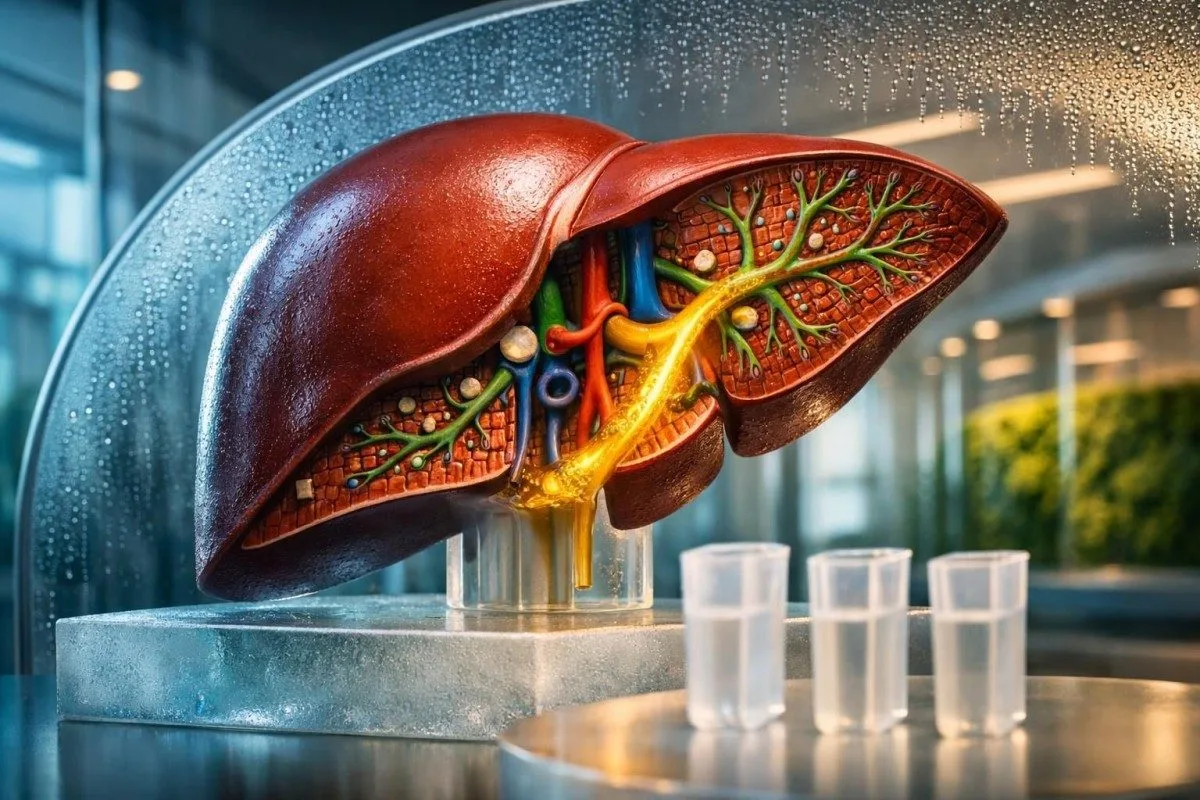
A mildly high bilirubin result with normal ALT, AST, and ALP is often benign, but not always. The fraction of bilirubin, your symptoms, and a few overlooked clues usually tell the real story.


- Bilirubin normal range is usually 0.2-1.2 mg/dL (3-21 µmol/L) in adults, although some labs use an upper limit of 1.0 mg/dL.
- Gilbert syndrome commonly causes bilirubin levels of 1.3-3.0 mg/dL with normal ALT, AST, and ALP.
- Fasting effect can raise bilirubin 2-3 fold within 24-48 hours, especially in people with reduced UGT1A1 activity.
- Direct bilirubin above 0.3 mg/dL or more than 20% of total deserves closer review even when liver enzymes are normal.
- Hemolysis pattern usually includes high indirect bilirubin, reticulocytes above 2.5%, higher LDH, and lower haptoglobin.
- Urine bilirubin suggests conjugated bilirubin because unconjugated bilirubin is not water-soluble.
- Urgent follow-up is sensible when total bilirubin exceeds 5 mg/dL, rises quickly, or comes with fever, pale stools, confusion, or abdominal pain.
- Repeat testing works best when you are well hydrated, not after intense exercise, and not after an unnecessary fast.
Isolated high bilirubin with normal liver enzymes: what it usually means
A high bilirubin result with normal ALT, AST, and ALP usually means bilirubin handling is off, not that liver cells are being injured. In adults, the bilirubin normal range is commonly 0.2-1.2 mg/dL (3-21 µmol/L), and a mild isolated rise is far more often caused by Gilbert syndrome, recent fasting, or mild hemolysis than hepatitis.
I see this pattern weekly. A total bilirubin of 1.6 mg/dL with ALT 22 U/L, AST 19 U/L, and ALP 78 U/L is usually not silent liver failure; it is more often a transport or clearance issue. On Kantesti AI, our triage logic flags this as isolated hyperbilirubinemia, and most patients relax once they compare it with our bilirubin normal range guide.
The part many people miss is laboratory variation. Some US labs still use 1.2 mg/dL as the upper limit for total bilirubin, while some European labs use 17 µmol/L or even slightly lower, so the same person can look normal in one lab and abnormal in another. That is why I care more about the pattern than the red highlight.
As Thomas Klein, MD, I worry much more when bilirubin rises above 3 mg/dL, when the direct fraction is elevated, or when the person has dark urine, pale stools, or new jaundice. A mild isolated rise that has appeared before usually gives us room for proper reasoning rather than panic.
Why the rest of the panel matters
Normal liver enzymes make severe hepatocellular injury less likely because ALT and AST tend to rise when liver cells are inflamed or damaged, and ALP usually rises when bile flow is chronically blocked. This is not perfect, but it changes the odds dramatically.
How bilirubin fractions change the meaning of normal ALT, AST, and ALP
The bilirubin fraction is the pivot point. Indirect or unconjugated bilirubin points us toward Gilbert syndrome or hemolysis, while direct or conjugated bilirubin with normal enzymes is less common and deserves a second look.
A direct bilirubin normal range is typically 0.0-0.3 mg/dL (0-5 µmol/L), and many clinicians also use a proportion rule: direct bilirubin should be less than 20% of total bilirubin. If the direct fraction is above that threshold, I become less comfortable calling the result simple Gilbert syndrome. For a refresher on the rest of the panel, our liver function test guide explains how these markers usually move together.
There is a practical bedside clue here: urine bilirubin appears only when bilirubin is conjugated, because unconjugated bilirubin is not water-soluble. So a patient with yellow eyes and a positive urine bilirubin strip is not showing a classic unconjugated Gilbert pattern, even if the ALT and AST are still normal.
Another nuance that gets lost online is assay behavior. The 'direct bilirubin' number reported by many chemistry analyzers is an approximation from a diazo method, and at very low levels it can slightly overread, so a direct bilirubin of 0.4 mg/dL is not interpreted the same way as 1.2 mg/dL. Enzymes can also lag in the first 24-72 hours of early obstruction or viral illness, which is why timing matters.
Gilbert syndrome is the most common cause of this pattern
Gilbert syndrome is the most common explanation for mild high bilirubin with normal liver enzymes. It reflects reduced UGT1A1 activity, often to roughly 30% of typical, and many patients drift between 1.3 and 3.0 mg/dL without any liver damage.
Most population studies put Gilbert syndrome somewhere around 5-10% of adults, although estimates vary by ancestry and test method. One of my memorable cases was a medical student whose bilirubin hit 2.4 mg/dL during exam week; ALT, AST, ALP, CBC, and haptoglobin were normal, and the pattern repeated twice. Our Medical Advisory Board reviews this scenario often because it is common, benign, and still very anxiety-provoking.
Fasting is a classic trigger. In people with Gilbert syndrome, 24-48 hours of calorie restriction can raise bilirubin 2-3 fold, and even skipping breakfast before a morning blood draw can move a result from 1.1 to 1.9 mg/dL. If you want that mechanism in plain language, our piece on fasting before blood tests is surprisingly relevant here.
Diagnosis is usually clinical rather than genetic. Repeated unconjugated bilirubin elevation with normal liver enzymes, normal hemolysis markers, and no bilirubin in urine is often enough. Bosma and colleagues linked common UGT1A1 promoter variants to Gilbert syndrome in the New England Journal of Medicine back in 1995, but in practice I reserve genetic testing for uncertain cases or when chemotherapy planning, especially irinotecan, is on the table.
Fasting, illness, hard training, and dehydration can push bilirubin up
Short-term metabolic stress can raise bilirubin while liver enzymes stay normal. In someone prone to it, a missed meal, a viral bug, or a hard endurance session can move total bilirubin by 0.5-1.5 mg/dL without any structural liver disease.
I see this in athletes all the time. A 34-year-old marathon runner recently showed bilirubin 2.4 mg/dL, ALT 26 U/L, AST 31 U/L, and ALP 71 U/L after a long run and too little water; one rested, hydrated recheck later he was back at 1.3 mg/dL. Our article on dehydration-related false highs covers why hemoconcentration can make interpretation messier than it looks.
Illness matters too. Fever, low calorie intake, keto dieting, poor sleep, and postoperative fasting all increase catabolic stress, and bilirubin handling becomes less efficient, especially in people already sitting near the top of the normal range. This is one of those places where context matters more than the number itself.
My practical rule is simple: do not judge a mild bilirubin rise from a bad testing day. Repeat it when you are well hydrated, not after intense exercise for 24 hours, and ideally without an unnecessary fast unless your clinician specifically wants a fasting chemistry panel. Most patients find that one careful repeat answers the question better than five extra tests.
When normal liver enzymes point to hemolysis instead of liver disease
Hemolysis can produce high bilirubin with normal ALT, AST, and ALP because the liver is processing extra pigment from red cell breakdown rather than suffering damage itself. The usual laboratory cluster is indirect bilirubin high, reticulocytes high, LDH high, and haptoglobin low.
A reticulocyte count above about 2.5% or an absolute retic count above 120 × 10^9/L strengthens the hemolysis argument, although ranges vary by lab. LDH often rises above 250 U/L, and haptoglobin below 25 mg/dL is a classic clue. If you are unsure how the red-cell part of the panel fits together, our CBC differential guide gives the broader context.
What surprises patients is that hemoglobin can still be normal early on. Mild hereditary hemolysis, a recent transfusion reaction, or autoimmune hemolysis in its first phase may show bilirubin drift before hemoglobin drops dramatically. Our guide to reticulocytes and LDH clues is helpful when the bilirubin story starts to look more hematologic than hepatic.
One subtle but important point: a hemolyzed blood specimen in the tube can falsely raise potassium and LDH, but it usually does not explain a genuine patient bilirubin pattern all by itself. Chronic hemolysis can also lead to pigment gallstones years before anyone labels the person anemic, which is why recurrent 'isolated bilirubin' in a younger adult should not always be waved away.
Less common causes: medications and direct bilirubin patterns
A direct bilirubin rise with normal liver enzymes is less common, but it happens. Hereditary transport disorders, medication effects, and very early or intermittent cholestasis can all do this before ALP or GGT fully declares itself.
A positive urine bilirubin test is one of the cleanest practical clues because only conjugated bilirubin reaches the urine. That is why I often add a urine dip when direct bilirubin is even modestly elevated. Our urinalysis guide explains why bilirubin and urobilinogen together can sharpen the differential.
Medication history is not optional here. Atazanavir and indinavir can raise unconjugated bilirubin by inhibiting UGT1A1, while irinotecan exposure matters because certain UGT1A1 variants increase toxicity risk; rifampin can alter bilirubin uptake as well. I have seen perfectly normal ALT and AST in all of these situations.
When I am uneasy, I add GGT and often move to ultrasound sooner than websites suggest. GGT can rise earlier than ALP in some cholestatic patterns, even though it is far from specific. If direct bilirubin is repeatedly above 0.6 mg/dL or more than 20% of total, our article on high GGT patterns becomes more relevant than a Gilbert discussion.
Rare inherited transport syndromes
Dubin-Johnson syndrome and Rotor syndrome can present with chronic conjugated hyperbilirubinemia and otherwise modest or normal enzyme findings. They are uncommon, but they are exactly why the direct fraction should not be ignored.
When this pattern needs urgent follow-up
Most isolated bilirubin elevations are not emergencies, but some are. Urgent evaluation is warranted when bilirubin is rising quickly, when the direct fraction is high, or when jaundice comes with fever, right-upper-quadrant pain, pale stools, confusion, or repeated vomiting.
A total bilirubin above 3 mg/dL with symptoms, or above 5 mg/dL even without an obvious trigger, deserves prompt review within days rather than months. A direct bilirubin above 1.0 mg/dL or more than 50% of total is not a classic Gilbert pattern. Our article on elevated liver enzyme red flags is useful here because the symptom logic overlaps, even when the enzymes do not.
Some symptom combinations change the whole picture. Dark tea-colored urine plus pale stools plus itching points toward conjugated bilirubin and bile flow trouble; bilirubin plus anemia, fast heartbeat, or shortness of breath points toward hemolysis. If you want a symptom-first framework, our blood test symptoms decoder helps map lab patterns back to what the body is doing.
Pregnancy is different, and newborns are different again. This article is for adults, not neonatal jaundice. In pregnancy, new jaundice or severe itching needs same-day clinician review even if the first ALT is not dramatic; if you need help sorting the urgency, use Contact Us and our team will point you toward the safest next step.
What doctors usually order next
The next test is usually fractionated bilirubin, not a reflex scan. A sensible workup often includes total and direct bilirubin, CBC, reticulocyte count, LDH, haptoglobin, and a quick check for urine bilirubin.
If the pattern screams Gilbert syndrome, I still like one careful repeat. In a well person with bilirubin between 1.5 and 2.8 mg/dL, normal enzymes, and no anemia, the repeat often settles the issue without an ultrasound. If you are comparing reports from different labs or dates, our blood test PDF upload guide explains how to keep the context intact.
Kantesti AI interprets this pattern best when it sees several markers together, not a single number in isolation. Our AI technology guide shows how the model weighs bilirubin fraction, CBC trends, timing clues, and enzyme stability rather than overreacting to one red flag.
As of April 10, 2026, our platform classifies isolated bilirubin elevation differently from mixed liver injury because the probability tree is different. Repeated indirect bilirubin elevation with stable enzymes and normal hemolysis markers is usually low risk, while repeated direct bilirubin elevation triggers more aggressive follow-up in Kantesti's neural network. The rules and thresholds behind that are described in our medical validation standards.
Tests I order less often than people expect
I do not automatically order a hepatitis panel, autoimmune liver screen, or CT scan for every bilirubin of 1.7 mg/dL with normal enzymes. Over-testing is common here, and the false-positive rate becomes the new problem.
Who needs a closer look even when liver enzymes are normal
Normal liver enzymes are less reassuring in a few groups. People who are pregnant, recently had surgery, take HIV or cancer medications, or have known anemia deserve a lower threshold for follow-up.
After surgery, bilirubin can rise from fasting, absorption of a bruised tissue collection, transfusion effects, or transient bile flow changes. A postoperative bilirubin of 2.2 mg/dL with normal enzymes may still be benign, but if the direct fraction rises or the patient feels unwell, I look harder. Our pre-op blood test guide helps explain why recent procedures can change the context of routine labs.
Pregnancy shifts the rules. New jaundice or severe itching is not something to watch casually, because intrahepatic cholestasis of pregnancy can begin with symptoms before the enzymes look dramatic. Our women's health guide is broader than bilirubin, but it is useful when symptoms and hormone state overlap.
Age also changes the odds. In a thin 24-year-old with years of stable bilirubin around 1.8 mg/dL, Gilbert syndrome is likely; in a 67-year-old with new painless jaundice, unintended weight loss, or bilirubin that climbed from 0.8 to 2.6 mg/dL over six months, I do not assume benignity just because the ALT happens to be normal that day.
How Kantesti interprets high bilirubin and what to do today
Kantesti AI interprets high bilirubin by checking the bilirubin fraction, the stability of liver enzymes, the CBC pattern, and timing factors such as fasting, illness, and exercise. In our analysis of more than 2 million reports across 127+ countries, isolated bilirubin elevation is far more often benign than patients fear.
If you upload a PDF or a phone photo to our AI blood test platform, the system compares bilirubin with ALT, AST, ALP, CBC, and prior trends in about 60 seconds. That matters because a bilirubin of 1.9 mg/dL means something very different when it has been stable for five years than when it appeared for the first time this week.
Our trend data are revealing. In the latest global health report, isolated bilirubin spikes clustered after routine checkups done during illness recovery, heavy training blocks, or prolonged fasting periods. Most of those cases normalized on repeat testing, which is exactly why we built trend analysis into Kantesti rather than giving single-number advice.
Bottom line: if your bilirubin is above 1.2 mg/dL, ask whether it is direct or indirect, check whether the rest of the panel is truly normal, and review the timing of the draw. When I review these cases as Thomas Klein, MD, that sequence solves the mystery more often than any exotic test. You can run your report through the free demo if you want a rapid second read before your appointment.
Research publications and medical review notes
As of April 10, 2026, this article has physician editorial oversight and regular lab-reference review. If you want to know how we handle research governance at About Kantesti, we keep our publication trail visible and update articles when interpretation standards change.
APA citation 1: C3 C4 Complement Blood Test & ANA Titer Guide. (2026). Zenodo. https://doi.org/10.5281/zenodo.18353989. ResearchGate. Academia.edu.
APA citation 2: Nipah Virus Blood Test: Early Detection & Diagnosis Guide 2026. (2026). Zenodo. https://doi.org/10.5281/zenodo.18487418. ResearchGate. Academia.edu.
These DOI-linked publications are not bilirubin studies; they are included to show the transparency of our medical publishing process. For bilirubin itself, we rely mainly on hepatology, hematology, and clinical chemistry literature, then pressure-test the interpretation against real-world report patterns seen across Kantesti's user base.
Frequently Asked Questions
Can high bilirubin be harmless if liver enzymes are normal?
Yes. A mild high bilirubin result can be harmless when ALT, AST, and ALP are normal, especially if total bilirubin is around 1.3-3.0 mg/dL and the rise is mostly unconjugated bilirubin. The most common explanation is Gilbert syndrome, which does not cause progressive liver damage. It becomes more concerning when the direct bilirubin is high, the number is rising, or symptoms such as dark urine, pale stools, fever, or abdominal pain appear.
What bilirubin level is typical in Gilbert syndrome?
Gilbert syndrome usually produces total bilirubin levels between 1.3 and 3.0 mg/dL, although short spikes to 4-5 mg/dL can happen during fasting, illness, dehydration, or strenuous exercise. The rest of the liver panel is usually normal, including ALT, AST, and ALP. The bilirubin pattern is usually indirect or unconjugated, and urine bilirubin is typically negative. Repeated stability over time is one of the strongest clues.
Does fasting before a blood test raise bilirubin?
Yes. Fasting can raise bilirubin, and in people with Gilbert syndrome the increase can be 2-3 fold within 24-48 hours. Even skipping breakfast before a morning blood draw can shift total bilirubin from a normal baseline to a mildly abnormal result. That is why a repeat test is often most useful when you are eating normally, well hydrated, and not recovering from illness or heavy exercise.
Which tests help tell Gilbert syndrome from hemolysis?
The most useful tests are fractionated bilirubin, CBC, reticulocyte count, LDH, haptoglobin, and often urine bilirubin. Gilbert syndrome usually shows isolated unconjugated bilirubin with normal reticulocytes, normal LDH, and normal haptoglobin. Hemolysis more often shows reticulocytes above 2.5%, higher LDH, and lower haptoglobin, even when liver enzymes remain normal. A falling hemoglobin strengthens the hemolysis argument, but it can be normal early on.
Should I worry if my urine is dark but liver enzymes are normal?
Yes, persistent dark urine deserves attention even if ALT, AST, and ALP are normal. Bilirubin in urine usually means the bilirubin is conjugated, and that is not the typical pattern of Gilbert syndrome. The concern is higher if dark urine comes with pale stools, itching, jaundice, or abdominal pain. In that situation, doctors usually recheck bilirubin fractions and often look for cholestasis or biliary obstruction.
Can medications cause high bilirubin without liver damage?
Yes. Several medications can raise bilirubin while liver enzymes remain normal, especially atazanavir, indinavir, irinotecan-related settings, and sometimes rifampin. Some of these interfere with UGT1A1 or bilirubin transport rather than directly injuring liver cells. The pattern often becomes clearer when the bilirubin fraction is checked, because medication effects may favor either an unconjugated or a conjugated rise. A medication review is one of the highest-yield steps in this lab pattern.
Get AI-Powered Blood Test Analysis Today
Join over 2 million users worldwide who trust Kantesti for instant, accurate lab test analysis. Upload your blood test results and receive comprehensive interpretation of 15,000+ biomarkers in seconds.
📚 Referenced Research Publications
Klein, T., Mitchell, S., & Weber, H. (2026). C3 C4 Complement Blood Test & ANA Titer Guide. Kantesti AI Medical Research.
Klein, T., Mitchell, S., & Weber, H. (2026). Nipah Virus Blood Test: Early Detection & Diagnosis Guide 2026. Kantesti AI Medical Research.
⚕️ Medical Disclaimer
This article is for educational purposes only and does not constitute medical advice. Always consult a qualified healthcare provider for diagnosis and treatment decisions.
E-E-A-T Trust Signals
Experience
Physician-led clinical review of lab interpretation workflows.
Expertise
Laboratory medicine focus on how biomarkers behave in clinical context.
Authoritativeness
Written by Dr. Thomas Klein with review by Dr. Sarah Mitchell and Prof. Dr. Hans Weber.
Trustworthiness
Evidence-based interpretation with clear follow-up pathways to reduce alarm.